Blog

  • Politics and the Military don’t gel

    Politics and the Military don’t gel

    It would be in the interest of the political establishment to desist from politicising the military. Creating an uncontrollable monster, that will go on to bite the hand that feeds it, is nothing but sheer stupidity.

    The former President of the United States, Donald Trump, has always had the reputation of being a man of questionable moral and ethical integrity with close connections to the radical right. Yet, there were those who voted for him in 2016 because they genuinely believed that he was the lesser of the two evils, and strongly felt that only an “outsider” like him was capable of draining the “Washington Swamp”, a phrase alluding to the seemingly all-pervasive corruption surrounding the Washington power elite. They would certainly have been disappointed by his insipid performance as President, especially the extent of his chicanery and selfishness. These have been laid bare in a recent book by two Pulitzer Prize-winning Washington Post journalists, investigative staff writer Carol Leonnig and former White House Bureau Chief Philip Rucker, on Trump’s final year in power, titled “I Alone Can Fix It”. A fitting sequel, and as perceptive and illuminating, is “A Very Stable Genius”.

    One of the most fascinating aspects of their latest book pertains to the manner in which the Chairman of the Joint Chiefs of Staff, General Mark Milley, responded to President Trump’s brazen attempts to overturn the election results by peddling his “Big Lie” that the elections had been “stolen” by the Democrats resorting to widespread fraud. Despite his legal challenges being summarily dismissed, he continues to peddle these allegations to this day. There can be little doubt that his incitement of his supporters culminated in a violent but abortive attempt on January 6 to disrupt proceedings at Capitol Hill to formalise the election results.

    Prior to this, one may recall, General Milley had been excoriated by military veterans, politicians and the media for having unwittingly dragged the military into politics by being present, in uniform, at Trump’s infamous “Bible photo op” at the St John’s Church, immediately after peaceful protestors had been forcefully evicted while demonstrating for racial equality. Indeed, that he then went on to tender a public apology for his error of judgement speaks volumes of his forthrightness, integrity and strength of character.

    On Trump’s attempts to cling to power through force, General Milley reportedly told his colleagues in the Joint Chiefs: “They may try, but they’re not going to f@@###g succeed…You can’t do this without the military. You can’t do this without the CIA and the FBI. We’re the ones with the guns.” His actions have lessons that our military leadership would do well to imbibe. 

    He then initiated action to ensure that the military was not dragged into the political sphere, despite Trump having appointed his own lackeys to key positions within the Pentagon. If the authors are to be believed, he went so far as to compare Trump to Hitler and refer to the January 6 insurrection as the “Reichstag Moment” for the US. On Trump’s attempts to cling to power through force, he reportedly told his colleagues in the Joint Chiefs: “They may try, but they’re not going to f@@###g succeed…You can’t do this without the military. You can’t do this without the CIA and the FBI. We’re the ones with the guns.”

    His actions have lessons that our military leadership would do well to imbibe. It is inconceivable that our senior military hierarchy can, or ever will, adopt such a confrontational attitude towards the leadership of a democratically elected Government, whatever be the provocation, or however unconstitutional be their actions. The aloofness displayed by the military during the 1977 Emergency is a case in point. True, there have been the likes of General Thimmayya, Field Marshal Manekshaw and a few more of that vintage who have displayed spine and opposed Government directions, but these have been few and far between, and restricted only to professional matters within their purview. Moreover, till recently, the military’s senior leadership has been quite circumspect in ensuring that its actions were completely unbiased, apolitical, secular and within constitutional parameters. In fact, it was their adherence to such behaviour that made the military the most popular and respected institution within the country.

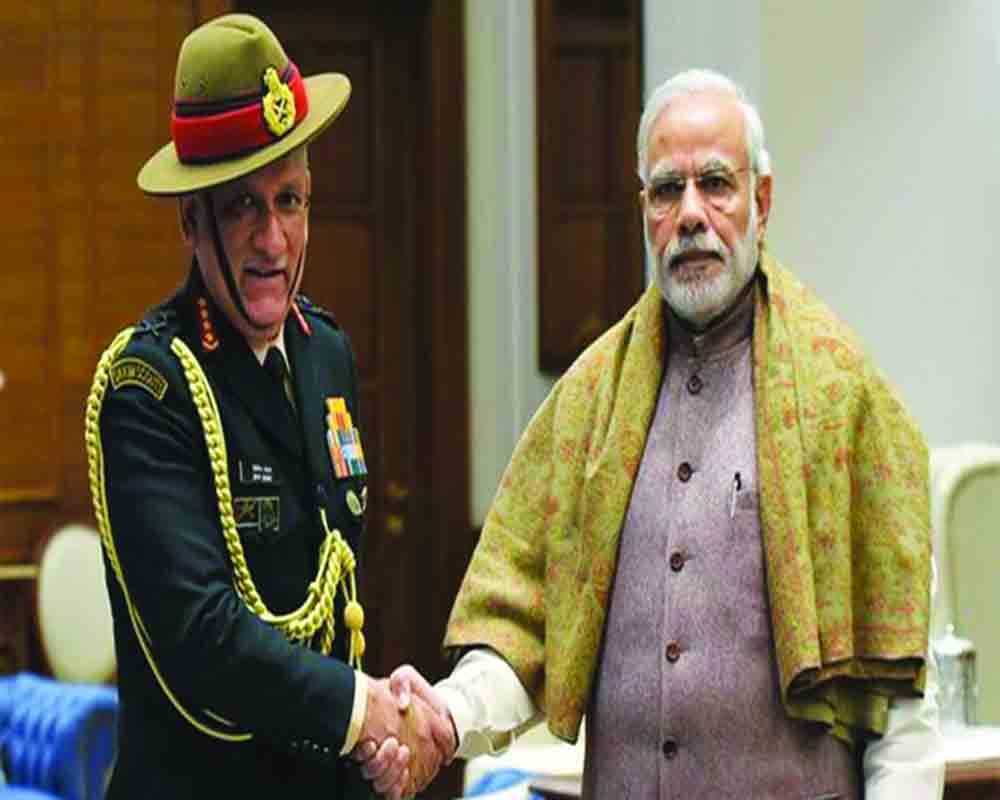
    Unfortunately, while the bulk of our military remains apolitical and secular, the actions and public statements of the Chief of Defence Staff, General Bipin Rawat, have created perceptions that the military’s senior leadership has become excessively politicised. Then there is the fact that some very senior officers have taken the plunge into active politics immediately on shedding their uniform.

    While some within the ruling elite may see this turn of events as advantageous to their ideological cause, and in fact encourage this shift within the military hierarchy through the process of “deep selection”, as some allege, they may well be biting off more than they can chew. If there is anything to learn from history, it is that once the military gets sucked into politics, it will not be satisfied acting as a mere handmaiden of those in power. As General Milley so eloquently put it, they are the ones with the guns! We just need to look closely at our own neighbourhood for examples.

    The Government and the legislative would do well to put rules in place that prevent members of the military and even the Civil Services from joining politics without an appropriate cooling- off period.

    It would be in the interest of the political establishment to desist from politicising the military. Creating an uncontrollable monster, that will go on to bite the hand that feeds it, is nothing but sheer stupidity. The Government and the legislative would do well to put rules in place that prevent members of the military and even the Civil Services from joining politics without an appropriate cooling- off period. That would go a long way in insulating them, especially the military, from politics.

    This article was published earlier in the pioneer.

    The views expressed are those of the author.

    Feature Image: www.dailypioneer.com

  • Exploitation Across Borders Indian migrant workers fight for their right to get paid in Serbia

    Exploitation Across Borders Indian migrant workers fight for their right to get paid in Serbia

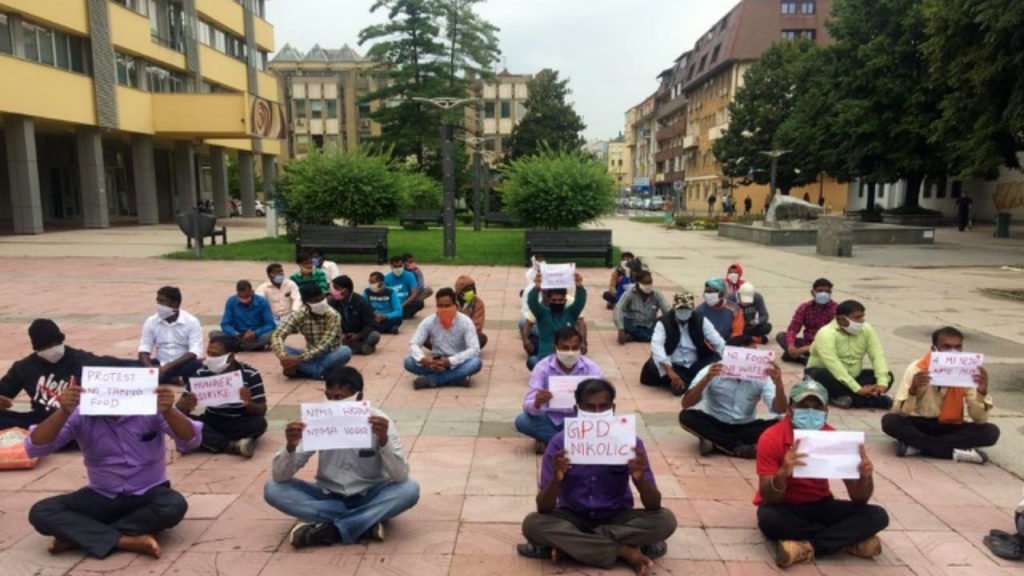
    Indian migrant workers have been targeted to work at mega construction projects in EU-candidate state Serbia. A group of workers is not willing to give up fighting for their salary, despite the legal loopholes that a company registered in America has used to contract them for work in Serbia

    When Boobalan Dhanapal, 41, arrived in Serbia in July 2019, he was eager to work and send money back home. He was joined by fellow construction workers from Chennai, a coastal city in the southern Indian state of Tamil Nadu. Boobalan, who has a degree in civil engineering, was recruited to work as a construction foreman for a monthly salary of Є 440 (approx. 38,500 Indian rupees), inclusive of food and housing. At the time, it sounded like a good deal.

    In 2019, over 150 men from various Indian states began working for GP Nikolić, a Serbian construction company, on a number of infrastructure projects across the Balkan country.


    Read More

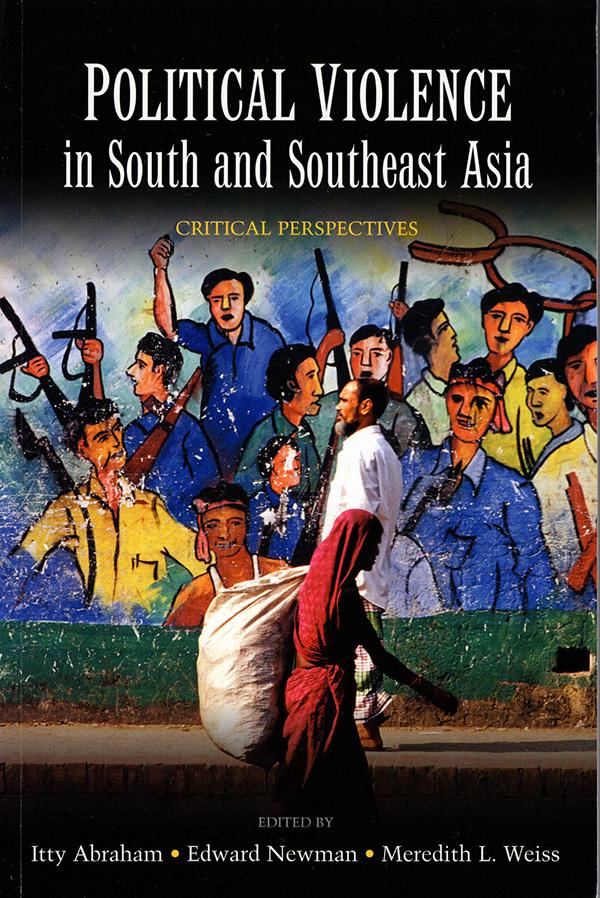
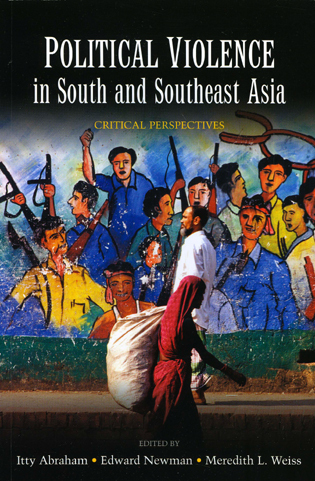
  • Book Review: Political Violence in South and Southeast Asia: Critical Perspectives

    Book Review: Political Violence in South and Southeast Asia: Critical Perspectives


    Political Violence in South and Southeast Asia: Critical Perspectives
    Editor: Itty Abraham, Edward Newman, Meredith L. Weiss
    Publisher: UNU Press, Tokyo, 2010. 224 Pages


    Written against the framework of persistent threats to human security, ‘Political Violence in South and Southeast Asia: Critical Perspectives’ is a volume of extreme relevance and consequence. The book brings together numerous political scientists and anthropologists with in-depth knowledge of the socio-political environment of the two regions. It aims at understanding the interaction between violent and non-violent politics, and in doing so, it defines political violence as consequential and strategic, as opposed to spontaneous and senseless. Intending to shift the narrative of understanding violence solely from the standpoint of terrorism, the book develops a critical understanding of violence by dwelling on its social and structural context.

    Divided into eight distinct chapters, the book takes cognizance of both state and non-state actors in a violent landscape. While concentrating on the local events of political violence in countries of South and Southeast Asia, the authors underline the significance of identities and the process of their consolidation, the character of states, geographic borders, external influences, and patterns of rebellion, in determining the manifestations of political violence.

    Arguing that the theories of economic greed, grievance, regime type, and state collapse are guilty of facile claims and problematic conceptualization of political violence, the authors critique the narrow construction of the concept and the premature assumptions regarding its victims and perpetrators. In doing so, they focus on exploring the aims, approaches, consequences, and conceptual dimensions of such violence, without dwelling deep into the causes of the same. In analyzing the different brands of violence, the authors place their focus on assassinations, riots, pogroms, ethnic cleansing, and genocides in the two regions.

    In his first chapter, Sankaran Krishna compares the assassinations of two political leaders in India – Mohandas Gandhi, and Rajiv Gandhi.  The author presents a key argument underlining the changing moral economy of political killing in South Asia. Highlighting the context in which the two killings took place, Krishna argues that assassinations in the region have shifted from being carried out in the name of a larger cause or principle (Godse’s idea of saving India) to ‘a consequence of a blowback’ – which represented India’s choice of active participation in the Sri Lankan civil war, in the case of Rajiv Gandhi. Buttressing his argument, the author also takes into account the killings of Benazir Bhutto and Indira Gandhi.  He does, however, present an uncomfortable and curious narrative by viewing these assassinations as attempts of suicide. Claiming that Gandhi’s insistence on fasting until death and refusal to be protected by the state, and Rajiv and Indira Gandhi’s deliberate lax in their security were rehearsals for eventual suicides, the author makes rather unsettling and complex arguments, one, defining Gandhi’s killing as a moral assassination, and two, by dwelling deep into the writings of Godse and portraying him as a man of rationality against the mainstream narrative of associating him solely with terrorism.

    Later, presenting one of the central arguments of the book, Paul Brass, in his chapter on forms of collective and state violence in South Asia, argues against violence being defined as senseless. Asserting that all kinds of violence have their strategic purpose, he lays down the critical concept of an Institutionalised Riot System, arguing that riots are systematic and organised. Claiming that riot production consists of different stages, which are usually analogous to a staged production of drama, Brass states that the first stage is that of rehearsal, followed by enactment, and interpretation. While the rehearsal stage consists of those who arouse sentiments, consisting of politicians, ‘respectable’ group of university professors, and the lower ‘unrespectable’ groups of informants, local party workers, and journalists, the stage of enactment consists of false and inflammatory media reports. It brings together, on the one hand, university professors and students forming a part of the local crowd, and on the other hand, criminals recruited to burn, loot and kill. The final stage of interpretation and explanation is especially crucial to understanding the sustenance of such violence, which involves attempts at making the riot appear as spontaneous, as opposed to planned. What is witnessed is an active shift in responsibility to those who are not directly involved in riots, and even those who vehemently oppose the idea of rioting. The author substantiates his claims by associating the Riot System with examples from Northern India, particularly citing the killings in Meerut in 1982 and 1987.

    The second half of the book is majorly devoted to a comparative approach to study mass violence and the impact of external influences in the region. The authors, in their respective chapters, provide detailed empirical evidence by dwelling deep into the case studies of different countries. Geoffrey Robinson, in his chapter, identifies three distinct ways in which the countries of Southeast Asia have witnessed violence. The states are either defined as principal perpetrators, as in the case of Indonesia in East Timor and the regime of Khmer Rouge in Cambodia; or as facilitating violence through propaganda and militia or inaction during mass violence, as with the case of Indonesia during the 1965-66 massacre. Finally, the state, according to Robinson, has also served as a vital link in the formation and spread of violent societal norms and modes of political action. He identifies the patterns and correlations between a level of violence and the character of states. An argument is made that because the military is designed to organize violence, any state where the military had an active role in the past has experienced more violence, as in the individual cases of Thailand, Philippines, Indonesia, or Burma. On the other hand, religious and ethnic violence, including riots, occurs almost always in newly democratizing states.

    While Naureen Chowdhury Fink points out the contestations surrounding the borders of Bangladesh, Natasha Hamilton-Hart lays down the extent of external influences on political violence in Southeast Asia. She identifies the first wave of such influence, in the form of overt support to principal perpetrators, starting with the large-scale military support by China and the Soviet Union to the Vietnamese communists after the conflict escalated to open warfare involving American troops from 1964. Citing the United States military support and its deliberate silence during the massacre in Indonesia, the author identifies a direct link between the United States and the ongoing political violence in Indonesia. She also cites the US’ support to the Philippine government’s suppression of the rebellion, and to non-communist insurgent groups in Cambodia, and the Western support to Khmer Rouge – where lethal weapons from China, the US, and the UK flooded the country. In citing these examples, the author presents the extent to which external support has been instrumental in sustaining violence in the region.  Later, external support is reported to have taken the form of training of police, militaries, insurgents, and other actors, along with a provision of intelligence and logistical support.

    Vince Boudreau, in his chapter on recruitment and attack in Southeast Asian collective violence, argues that the patterns of collective violence in the region are influenced by trade-offs between efforts to recruit supporters and strike at adversaries. He also identifies a correlation between the nature of violence and the mode and strategies used for targeting the victims. A riot, for example, even when purposely produced by professionals – will likely be less discriminate than a coordinated attack by guerrillas; or a bomb detonated in a marketplace will likely be less discriminating than one thrown into a church. Identifying five such degrees of discrimination, Boudreau ranks them in an order of descending brutality – from indiscriminate attacks to indiscriminate categorical violence which employs a strategy designed to hit anyone who belongs to a particular socio-cultural category. Then comes to discriminate functional, referring to a strategy that targets individuals playing a particular occupational or political role, followed by the third strategy – discriminate personal, implying attacks on specific individuals based on something they have done, and lastly attacks on property.

    Finally, towards the end of the book, an argument is made regarding the totalizing logic of sovereignty of the state, where the author takes into account different political movements and illustrates how these movements are perceived as subversive irrespective of their motive. The argument implies that the ideological movements because they embody a critique of the state, are much more difficult for the state to subsume without violence.

    By adopting a comparative approach to study violence perpetrated by both, state and non-state actors, the book successfully underlines the conceptual similarities that exist within the societies, with regards to patterns and dimensions of violence. Because the book employs detailed contemporary evidence in explaining its critical concepts, it becomes a rather pertinent reading providing a wide scope for further analysis of similar events. Further, it successfully illustrates the correlations that exist between the character of states and the level and modes of violence, and in the reviewer’s opinion, can successfully go beyond the regions of South and Southeast Asia, to explain behavioural politics in more violent societies of West Asia and Africa.
  • Re-Emergence of Global Terror

    Re-Emergence of Global Terror

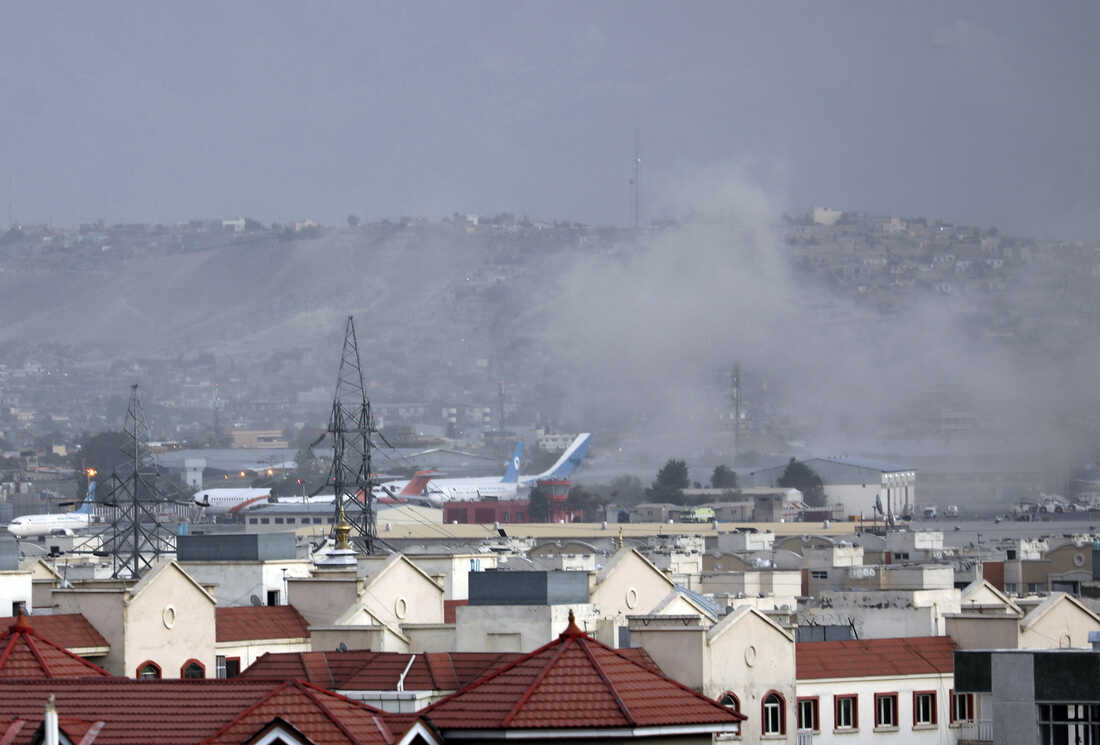
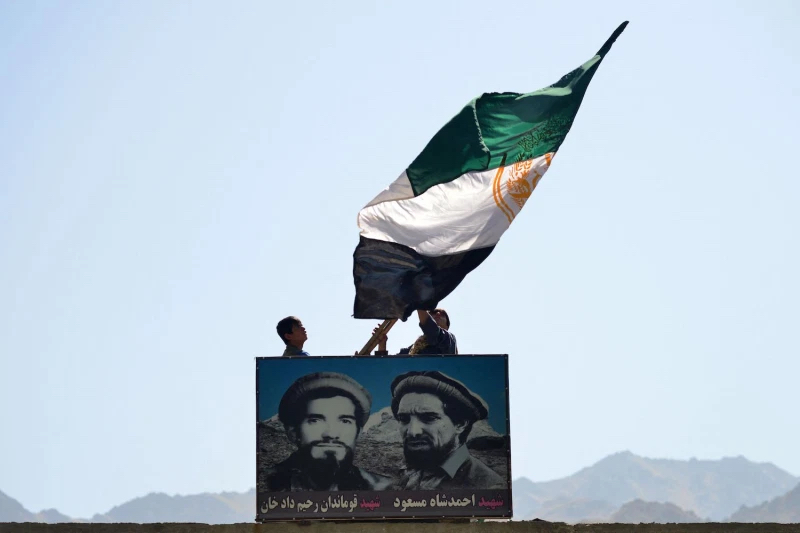
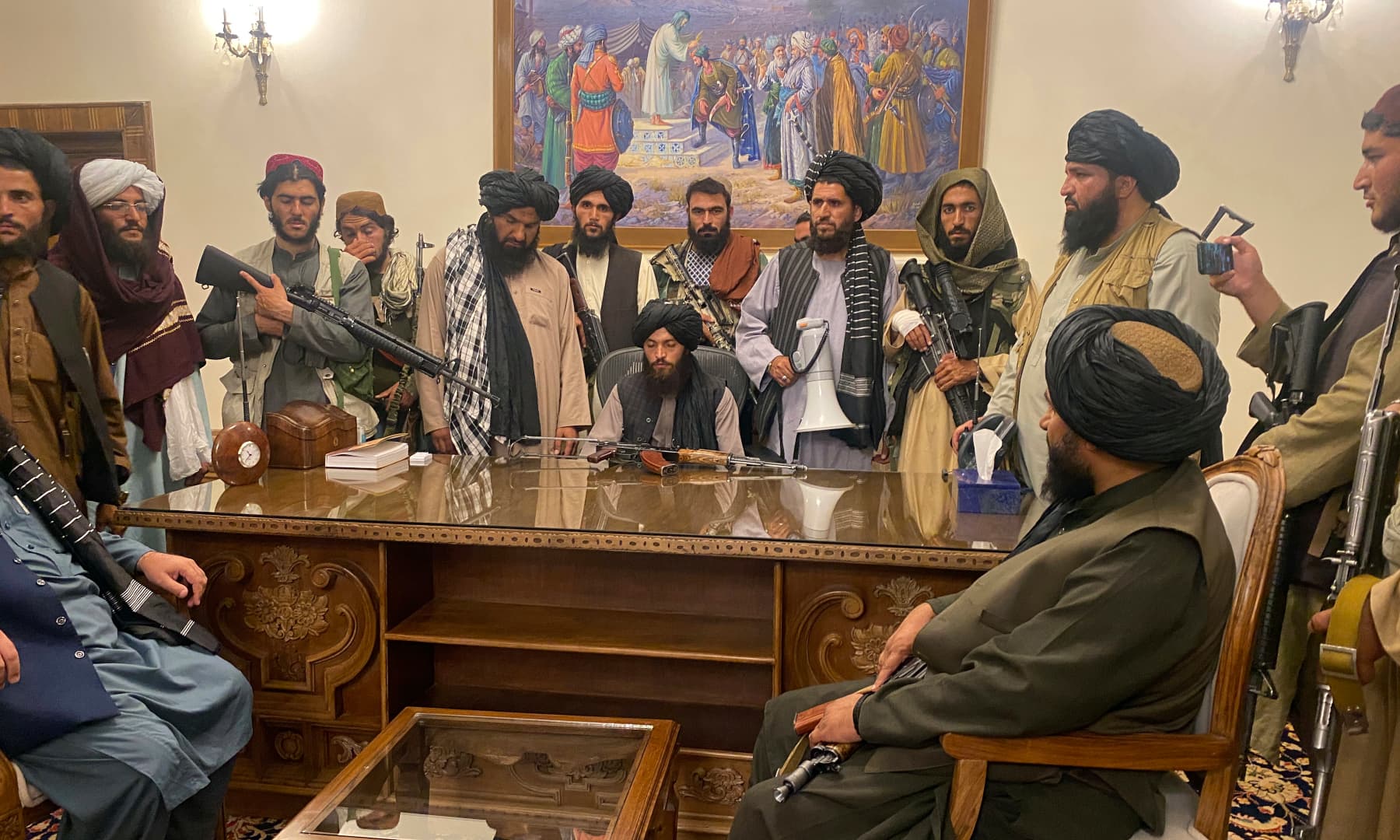
    That Terrorism is the scourge of the world is a harsh truism of the times is beyond dispute since the last few decades. That global challenges necessitate global solutions requires no elaboration is also a universally accepted imperative—yet only in lip service and hardly ever adopted in practice. Why else would then the world, with inexplicable insensitivity and inaction, accept the most tragic happenings and the grave humanitarian crisis in intensely fratricidal violence driven AfghanistanFailing to heed to the lessons of history,  US President Joe Biden has committed a monumental  strategic  blunder in  the undue hasty  and unplanned exit  of American troops from Afghanistan is now more than apparent beckoning dismay and condemnation  from even US allies and sympathizers across the world especially by the hapless Afghans.

    Failing to heed to the lessons of history, US President Joe Biden has a monumental strategic blunder in the undue hasty and unplanned exit of American troops from Afghanistan is now more than apparent beckoning dismay and condemnation from even US allies and sympathisers across the world especially by the hapless Afghans.


    Read More

  • Harmony – the soft power of the East-Asian civilizations

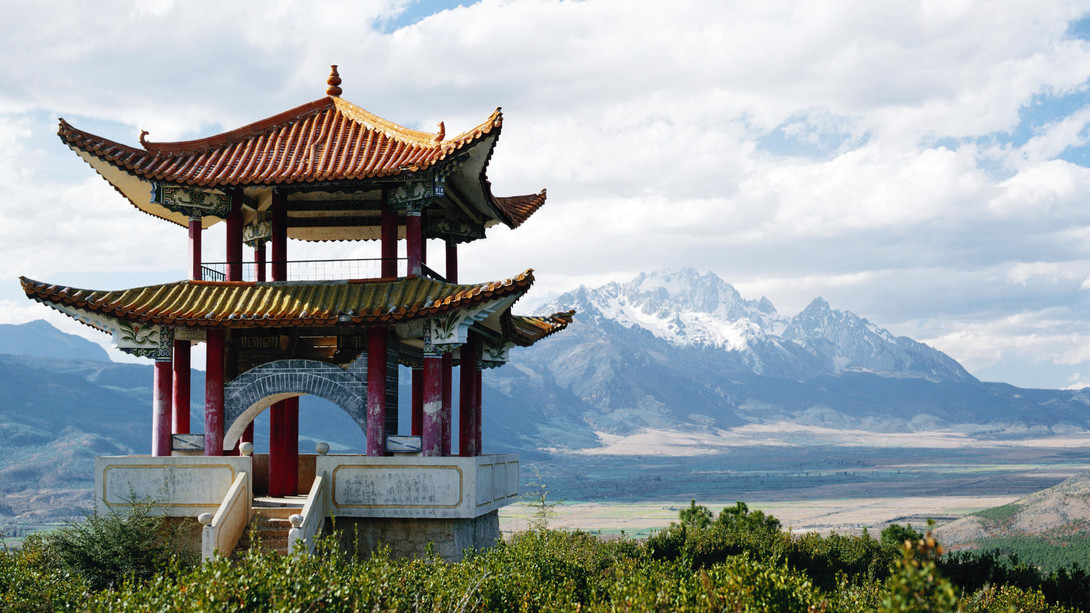
    Harmony – the soft power of the East-Asian civilizations

    To date, the Western understanding of freedom as liberation still seems to be the hegemonic discourse. But as we know from Thomas Hobbes excessive freedom is leading to civil wars – and the ideology of unlimited freedom in the market economy and over excessive consumption is burning the world in climate change.

    East Asia and South-East Asia are emerging as the world’s largest economic powerhouse and perhaps even as a technological superpower.  Nevertheless, a deeper understanding of the consequences of this process will remain elusive, unless we squarely look at the puzzles surrounding the norms and preferences of major East Asian states. In contrast to the Western neo-liberal model, which puts excessive emphasis on individual freedom leading in the Western countries to the dissolution of the social fabric of the societies, there is an authoritarian temptation to maintain social cohesion in light of the dramatic social transformation worldwide. But mere authoritarianism is not compatible with the progress of societies because it does lack the incentive to rise above your current situation. We all know we started to live in a new world different from what we used to. But it is still early to name or define this Chameleon-like world of incessant transformation. Western triumphalism, perhaps understandable after the end of the Cold War, was long gone. Perhaps, we are destined to live in limbo for the near future. In order to cope with this process, East Asia needs not only economic and technological progress but also the soft power of ideas. To date, the Western understanding of freedom as liberation still seems to be the hegemonic discourse. But as we know from Thomas Hobbes excessive freedom is leading to civil wars – and the ideology of unlimited freedom in the market economy and over excessive consumption is burning the world in climate change.

    Harmony in the Confucian tradition is also not a fixed status, but the task is to harmonize the contrasts and opposites.

    An alternative value system might be the Confucian and East Asian concepts of harmony.  Harmony is not sameness but implies tensions like those in a symphony. In music, we find a lot of contrasts for example in a symphony of Beethoven but at the same time, we enjoy the harmony of the whole composition. Already in the first very old appearances of the concept of harmony, it is related to the singing of birds and music in general. Harmony is therefore related to the balancing of contrasts. Harmony in the Confucian tradition is also not a fixed status, but the task is to harmonize the contrasts and opposites. And of course, a part of harmony is related to freedom, but unrestricted freedom is not the ultimate goal. The question, therefore, is how to limit unrestricted freedom without suppressing the people? The answer might be to harmonize and balance freedom with equality.

    The question, therefore, is how to limit unrestricted freedom without suppressing the people? The answer might be to harmonize and balance freedom with equality.

    As in a symphony, real harmony is achieved when we are able to balance the contrasts of life: between the whole and the part, being born and dying, the individual and the community, between freedom and equality. We could compare such a balance with a water wave. If there are no movements and waves at all, the sea is dying – if it is a Tsunami the waves are destructive for the individual and the community. Harmony is superseding the Western discourse of absolute freedom because in a harmonious society freedom is not abandoned but a part of the greater whole.  Neither the authoritarian rule nor excessive freedom should be the alternative for world order in the twenty-first century – what we desperately need in a burning world is a harmony or floating balance between and within our societies as well as us as individuals.


    Feature Image: The Idea of Harmony wsimag.com

  • The Taliban Occupation of Afghanistan: Impact on India

    The Taliban Occupation of Afghanistan: Impact on India

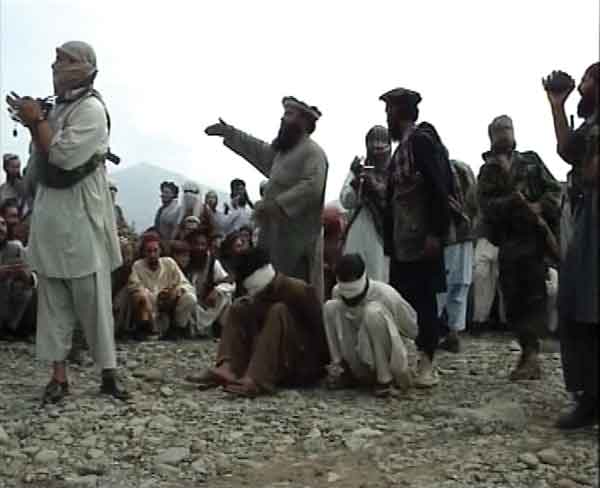
    The swift and relatively unopposed takeover of Afghanistan by the Taliban, in a matter of just days and not months as expected,has caught the United States and its Allies,as well as the international community, completely off-guard.It has led to a serious humanitarian crisis as countries scramble to get their own citizens, stranded in-country, out of harm’s way. An effort greatly complicated and impeded by the frenzy and sheer desperation of the tens of thousands of Afghans, who had worked with the Coalition, and are also attempting to flee to avoid retribution.


    Read More

  • Religion and Governance: An Important Lesson from India’s History

    Religion and Governance: An Important Lesson from India’s History

    The fortunes of India had irrevocably changed on May 29, 1658, when two Indian armies clashed on the dusty fields of Samugarh, near Agra. India’s history changed forever. Aurangzeb’s victory over his brother Dara Shikoh marked the beginning of Islamic bigotry in India that not only alienated the Hindus but also the much more moderate Sufis and Shias as well.

    Aurangzeb’s narrow Sunni beliefs were to make India the hotbed of Muslim fundamentalists, long before the Wahabis of Saudi Arabia sponsored the fanatics of the Taliban and the Islamic State. It was not only a battle for the Mughal throne but also a battle for the very soul of India

    Aurangzeb’s victory here and other successful campaigns resulted in the creation of the greatest and biggest imperial India till then. But the seeds of India’s collapse were sowed.

    In 1620 India had the world’s greatest national income, over a third of it, and was its greatest military power as well. It was the envy of Europe. The European traders came to seek Indian goods for their markets. But no sooner was the iron hand of Aurangzeb no more that his imperial India began to disintegrate. The iron hand that ruled by dividing rather than uniting and that sought to impose a hierarchy by theological preferences gave rise to much discordance. But for Aurangzeb, Shivaji Bhonsle might have remained a minor western Indian feudatory? There are important lessons to be learned from all this for those who rule and seek to rule India.

    The weakening central rule and profit-seeking peripheral kingdoms allowed European trading posts to be established. Weakening regimes led to the trading posts raising armed guards. Soon the overseas trading companies began warring each other and with so many minor states now free to make their destinies joining hands with one or the other it was the Europeans who got gradually got established. The Anglo-French wars of the Carnatic were fought by Indian armies beefed up by trading company levies. The East India Company of the British ultimately prevailed and the French, Dutch, Portuguese and Danish got reduced to pockets.

    A hundred years later, in 1757, the era of total foreign supremacy over India began when the East India Company’s troops drawn from South India and officered by English company executives defeated the army of Nawab Siraj-ud-Daulah at Plassey (Palashi) in Bengal, with the now usual mix of superior drilling, resolute leadership and a bit of treachery. At a crucial time, Mir Jaffar and his troops crossed over. India lay prostrate before Robert Clive.

    Within a decade, on August 12, 1765, Clive obtained a firman from the then Mughal Emperor, Shah Alam, granting the Diwani of Bengal, Bihar, and Odisha to the Company. A Muslim contemporary indignantly exclaims that so great a “transaction was done and finished in less time than would have been taken up in the sale of a jackass”. By this deed the Company became the real sovereign ruler of 30 million people, yielding a revenue of four millions sterling. The John Company grew from strength to strength, and by 1857 the Grand Mughal was reduced to his fort conducting poetry soirees. It was the golden age of Urdu poetry.

    The events of 1857 led to the formal establishment of India as a directly ruled colony of the British empire. It was yet another epochal event. India changed, for the better and for the worse. Once again India absorbed from outsiders, as it absorbed from the Dravidians, Aryans, Greeks, Persians, Kushans, Afghans, Uzbeks, and all those who came to seek their fortunes here. The British were the only ones who came to take away its vast wealth in a systematic manner. The wealth taken from India to a great extent financed the Industrial Revolution in England.

    From then to another epochal year ending with seven took ninety years. In 1947, India became independent. Its GDP is now the world’s third-biggest. In a few decades, it could conceivably become its biggest. But have we learned any lessons from history?

    Given its abject failures on the economic front, the BJP/RSS regime in New Delhi is now pushing India towards a Hindutva nationhood, by seeking to victimise a minority for the perceived wrongs and slights of the past. An intolerant religion can never be the basis of nationhood and national unity in India. The legacy of Aurangzeb tells us that. Aurangzeb had created the greatest empire that India had seen since Ashoka the Great. But it didn’t take very long for it to dissipate. In the hundred years that followed, a foreign mercantile company gained control over all of India.

    The BJP under Narendra Modi might keep gaining electoral dominion over all or most of India. But has the BJP learned any lessons from history? Does the PM  want to become the Hindu Aurangzeb? What is worrisome is that we know well that history is not Narendra Modi’s forte.


    This article was published earlier in Deccan Chronicle. The opinions expressed in the article are the author’s personal views and do not reflect TPF’s institutional position or analysis.

    Featured Image: Shah Alam conveying the grant of the Diwani to Lord Clive. en.wikipedia.org

  • Elections and Democracy: Germany’s Mixed Member Proportional System

    Elections and Democracy: Germany’s Mixed Member Proportional System

    It is now well-established that the First Past The Post system of elections followed in Indian democracy is thoroughly unsuited to Indian conditions, as it is more feudal and less of democracy. The German mixed system is better suited to India to ensure a more representative system of elections and accountability.   

    When it comes to choosing an electoral formula, the world often takes extreme positions which range between any variant of the Majoritarian System or that of the Proportional Representation. Proportional representation, to a great extent, has been an apt choice for ethnically divided societies with scholars such as Arend Lijphart asserting that it would strengthen the consociational approach in the political system. Yet, it has been criticized for the unstable governments it may produce and its inability to connect a voter with its representative. On the other hand, Majoritarian systems while praised for their simplicity and ability to produce stable governments, lack inclusivity, and induce tactical voting due to wastage of votes. However, the Parliamentary Council of Germany structured a mid-point for the two extremes to meet, which was initially considered provisional but has remained unchanged. It follows the Mixed-Member Proportional System.

    The Mixed-Member Proportional System combines First Past The Post (FPTP) system (Majoritarian System) with Closed-Party List System (Proportional Representation) and thereby, enables the formation of a Government that is inclusive, stable, and remains connected with the voters.

    Understanding how MMP works in Germany

     The Bundestag (the German Parliament), elected for a four-year term, has 598 seats, distributed among the 16 federal states in proportion to the states’ voting population. Out of the 598 seats, 299 seats are filled through the FPTP system and the other 299 through the Closed-Party List System. This means that every voter has two votes on the day of the election: a constituency vote and a party-list vote. The first vote of electors decides the 299 representatives to be elected through the FPTP system, won based on a plurality of votes, and the second vote decides the proportional number of seats each party would get in the national assembly.

    Once the FPTP seats are filled, the second votes are totalled. Those parties that obtained 5% of votes at the national level or have three representatives elected directly through the single-member constituencies are considered for the allocation of PR seats. The PR seats are allotted in proportion to each party’s vote share using the Sainte-Laguë formula.

    The Sainte-Laguë formula divides the parties’ total votes using a series of divisors (i.e., 1,3,5,7,9….) to form a table of averages. The seats are then allotted to the parties with the highest averages in the table.

    source: Washington university

    Furthermore, these allotted seats are then subtracted from the respective party’s FPTP seats, and the remaining seats are the actual number of party-list seats allocated in the Bundestag. Often, the number of seats allocated to a party through FPTP is greater than those allocated through the Party List and these surplus seats are then kept by the party leading to an increase in the number of seats in the Bundestag for that governing year.

    Implications of the electoral formula

    • Electoral participation

    Over the years, scholars have suggested that Proportional Representation tends to increase the voter turnout in a country. This is said to stem from the fact that the disproportionality between the number of votes received and seats allotted is significantly lower thereby reducing vote wastage, which encourages more voters to go and vote. Unlike FPTP’s ‘winner takes all’ formula, PR provides a chance to even smaller parties to secure their representation in the legislative council. This encourages their support base to vote and at the same time provides an incentive to the party to not limit their campaigning to specific areas (Blais & Carty, 1990). Germany’s electoral participation was 78.5% in 1949 and escalated to 86%, 87.8%, 86.8%, 91%… in successive elections. The lowest turnout was in 2009 with 70.8% and escalated slightly to 76.2% in 2017.

    • Gallagher index

    The Gallagher index created by Michael Gallagher is a statistical analysis methodology used to measure an electoral system’s relative disproportionality between votes received and seats allotted in a legislature. While countries following the PR system do generally tend to do well, Arend Lijphart points out that the German system, which is a mixed system, does exceedingly well compared to pure PR variants.

    Germany scored an average of 1.95 in the 2017 national elections and has consistently maintained a low average in terms of disproportionality in comparison to others. Their highest average was 7.83 for the year 2013. On the other hand, countries that continue to use FPTP such as Canada, Bangladesh, and India record pretty averages of 12.01 (2015), 21.38 (2001), and 16.06 (2019) respectively.

    • Representation

     PR systems generally enable conditions for a more representative legislative council because political parties no longer restrict their discourse and activities to the interests of the dominant communities, given winning a plurality of votes is no longer a deciding factor in their pursuit to secure a seat in the parliament. This provides an incentive for them to look appealing to a larger voter base.

    Germany has seen a steady increase in the percentage of women representatives in the Parliament, starting from 7% in 1949 to 31% in 2017. The need to encourage ethnic minorities to cast a vote provides an incentive to political parties to field candidates who are non-German in origin, and this has enabled the participation of candidates originating from Turkey, Poland, Austria, Romania, and so on.

    • Effects on the Far-Right

    Lisa Harrison in her paper ‘Maximizing Small Party Potential: The Effects of Electoral System Rules on the Far Right in German Sub-National Elections’ writes that far-right or extremist parties see limited success at the national level elections, but they may play a significant role at the sub-national level elections. A major hindrance that keeps these far-right parties away from the Bundestag is Germany’s minimum threshold of votes policy, which allows only those parties that have won 5% votes or 3 FPTP seats to claim representation in the parliament.

    This however changed in 2017 when Alternative for Germany became the first nationalist far-right party to secure seats in the German Parliament since World War II. They received 12.6% of votes, translating into 94 seats in the Bundestag. The rise of the party coincides with the rise of hate crimes against immigrants. In March 2021, it was reported that Germany’s domestic intelligence forces have kept the party under surveillance on the suspicion of trying to undermine the democratic constitution.

     Conclusion

    Electoral systems don’t come up in a vacuum. Rather, they are selected and implemented within the socio-political conditions of a particular nation. This implies that there is no electoral system that is universally applicable. Depending upon the suitability, countries could either side with the Majoritarian system or the Proportional Representation system or could apply both, as in the case of Germany. Germany’s Mixed-Member Proportional System catered to the needs of a constituent assembly which was divided over the question of an apt electoral system and at the same time has continued to do the two things that the constituent members hoped for, maintain stability and remain inclusive.

    As India enters the 75th year of its independence, and as the world’s largest democracy, its electoral experiences of the last seven decades point to the unsuitability of the present FPTP system. Given the large population and the diversity of India, the FPTP system has proved to be a complete failure. The FPTP system does not truly reflect the principle of “one person one vote”, according to which each ballot should have ‘equal force’ in the sense of the share of seats in the parliament. Indian elections system has resulted in a skewed system of vote-bank politics, endemic corruption, and the feared majoritarian tyranny in the name of democracy.  The German model of a mix of Proportional Representation and the FPTP system is what India needs at this to revive and strengthen its democracy.


    References:

    Gallagher, M., & Mitchell, P. (2008). The Politics of Electoral Systems (Illustrated ed.). Oxford University Press.

    Zittel, T. (2017). Electoral systems in context: Germany. Oxford Handbooks Online. Published.

    https://doi.org/10.1093/oxfordhb/9780190258658.013.37

    https://www.statista.com/statistics/753732/german-elections-voter-turnout/

    https://www.tcd.ie/Political_Science/people/michael_gallagher/ElSystems/Docts/ElectionIndices.pdf

    https://blogs.lse.ac.uk/europpblog/2017/09/21/measuring-the-diversity-of-each-partys-candidates-in-the-german-election/

    https://www.statista.com/statistics/753494/seat-distribution-bundestag-germany/

    https://www.thehindu.com/news/international/how-serious-is-germanys-far-right-problem/article30952770.ece

    https://www.reuters.com/article/us-germany-security-afd-idUSKBN2AV1M3


    Feature Image: angusreid.org

  • Olympics | To win medals, sports needs to be part of India’s health culture

    Olympics | To win medals, sports needs to be part of India’s health culture

    India’s approach to sports is flawed because the accent is on winning a medal here and there, in some discipline or the other. There has to be mass participation in sports right from the earliest stage in the life of an individual.

    No doubt it is quite creditable that India was at her best at the Olympics Games Tokyo 2020 in terms of the medals won (1 gold, 2 silver and 4 bronze). But the most remarkable feature has been the first ever athletics gold in 121 years of participation in the Olympics through the efforts of Neeraj Chopra in javelin throw. Incidentally, India fielded its largest ever contingent (127 sportspersons) in Tokyo.

    While saluting those who have won medals, what is called for is introspection as to why a country that is poised to overtake the population of China by the time the 2024 Paris Olympics comes around, ranks in the late 40s in medals tally. At the same time, China is way ahead and almost tops the medals register. Another Asian country, Japan, is close behind China.


    Read More

  • Viability of Universal Healthcare in India: Case Study of Sonipat

    Viability of Universal Healthcare in India: Case Study of Sonipat

    The Covid-19 pandemic is a global catastrophe that has disrupted the economies and national health of countries and the livelihood millions across the world. In India, the impact in 2020 was presumably well controlled, and the beginning of 2021 saw the Indian government projecting prematurely the return of normalcy. This sense of normalcy led to a lowering of the precautions, and the month of April saw the rise of the second wave. The second wave was vicious, crippling the healthcare system and resulting in a huge number of deaths, primarily attributed to the shortage of oxygen supply in most states. This crisis exposed the shortcomings of the Indian healthcare system and the wide disparities that exist in access to healthcare between different sections of the society, a result of the shockingly low investment in healthcare and human resources. The catastrophe has led many to question the efficacy of the healthcare system and the level of expenditure incurred on it, and whether universal healthcare would have allowed the country to tackle these events. Analysis of the impact of universal healthcare requires insight into the structure and efficacy of healthcare in India, given our history and experiences.

    The principle behind universal healthcare states that every individual who is a citizen of the country must have access to essential health services, without the obstruction of financial hardship. Among the most efficient methods of ensuring that this principle is adhered to is bringing it under the constitutional mandate. Although the Supreme court has, in its various judgements, recognized health as a fundamental right, it is not yet recognized in the constitution. Article 21 of the constitution reiterates the right to life, with the landmark judgment of Maneka Gandhi v The Union of India specifying that the article also includes the right to live a dignified life and access to all basic amenities to ensure the same. This statement has been given a new context in light of the recent crisis, in which most of the fatalities caused were due to respiratory problems caused by the virus where providing oxygen availability became an essential requirement for the cure. In such a scenario, the oxygen availability constitutes part of basic amenities, which the government failed to supply in adequate quantity. The government fulfils its obligation towards healthcare in the form of government hospitals and healthcare centres, but their situation was synonymous with the private sector. The government claims that the hospitals under their control are sufficient, but the recent predicament has proven that the aforementioned claim is not true. The healthcare services provided by the government will be meaningful only if access to such hospitals is convenient for the common people and the hospitals are well-endowed with investment and human resources. An analysis of our constitution, especially Article 21, which guarantees protection of life and personal liberty, makes it evident that the principles on which our democracy is founded dictate that healthcare is one of the most important obligations of the government, and the most efficient method for fulfilling said obligation is the introduction of Universal healthcare in India.

    An attempt at examining the applicability of universal healthcare was made by the Planning Commission through the 12th Five-Year plan. The first-ever framework for universal health coverage was developed by a High-Level Expert Group, which planned to develop a system that was in accordance with the nation’s financial capabilities. The primary objective of these reforms was to reduce the out-of-pocket expenditures incurred by lower-income groups on healthcare services and increase the number of people covered under the Rashtriya Swasthya Bima Yojana. Around this time the Rashtriya Swasthya Bima Yojana was scrutinized by many due to its low enrolment rates, high transaction costs due to insurance intermediaries, and allegations that the government was using it as a pathway to hand over public funds to the private sector. The objective of reducing out-of-pocket expenditure even though expressly mentioned did not come to fruition because of the lack of extensively funded facilities, especially in rural areas which were covered by RSBY. These facilities were lacking not only in medical infrastructure but also the medicines required for treatment, which compelled the patient to bear the expenses of medicines on their own. The 12th Five-year Plan also proposed an increase in Budget allocation for health from 1.58% to 2.1% of the GDP, which was again criticized because it was very low in relation to the global median of 5%, despite the population size of the country. The healthcare reforms also failed to take note of the important role played by nutrition and the Public Distribution System in aiding the advancement of healthcare. The 12th five-year plan is not considered successful due to the poor implementation of the reforms introduced and provides valuable lessons for the implementation of universal healthcare coverage in the future.

    The need for implementation of universal healthcare coverage can be made evident through a case study of the town of Sonipat, which is near Delhi and is a rural area. The case study is done through the observation of a survey conducted by the Institute of Economic Growth in 2017. The table below shows the data that became available as a result of the last survey conducted.

    CDMO Office, Sonipat District (2017)

    CDMO Office, Sonipat District (2017)

    An analysis of the data portrays that even though the resources and infrastructure are adequate to the population of Sonipat, the facilities are lacking in human resources. The data shows that 6 posts for the Medical Officers (MO) were sanctioned, but only 3 were filled. Despite the high number of deliveries, there was no sanctioned post of a gynaecologist, which can probably be a reason behind the high number of maternal deaths in the area. It was also found that the Non-Communicable Disease (NCD) program was not functioning in the district for the past 2 years. O.P. Jindal University, which is in the heart of Sonipat, houses a total of 7482 individuals, and has an adequate number of facilities, with 5 in-house doctors and 10 nurses. It has an isolation facility ward for cases of communicable diseases. It has an ambulance and referral service to hospitals in the NCR. These facts show that there is an acute shortage of human resources for healthcare in the area. Even though an adequate number of posts were sanctioned, there was no qualified personnel to fill them, and there were no sanctions for important positions. The case of O.P. Jindal university shows that good healthcare requires good investment and incentive for the staff, which the Sonipat administration has failed to provide to the staff of healthcare centres owned by the state.

    The arguments mentioned above portray the acute necessity of universal healthcare in India. The ideals of our constitution implore for the right to health to be established, which gives universal healthcare constitutional support. The failure of the 12th Five-year Plan showcases the failures that can happen if the framework for such a plan is not well-thought-out or well-invested. The example of Sonipat further portrays the need for increased investment in healthcare, which can be achieved by the utilization of universal healthcare. Although there is no concrete data available for the crisis which the nation recently endured, it can be concluded that the approach of universal healthcare could have allowed us to endure this crisis better, as there would have been lesser chances of shortage of supplies like oxygen because of the increased investment. The first step towards the policy of universal healthcare should be to strengthen existing institutions of insurance and learn from the mistakes in the implementation of the RSBY.


    References

    1.http://iegindia.org/upload/uploadfiles/Sonipat%20Haryana%202017.pdf

    2.http://ijariie.com/AdminUploadPdf/RIGHT_TO_HEALTH__A_CONSTITUTIONAL_MANDATE_IN_INDIA_ijariie5596.pdf

    3.http://jsslawcollege.in/wp-content/uploads/2013/12/RIGHT-TO-HEALTH-AS-A-CONSTITUTIONAL-MANDATE-IN-INDIA.pdf

    4.http://nhsrcindia.org/sites/default/files/Twelfth%20Five%20Year%20Plan%20Health%202012-17.pdf

    5.https://www.hindustantimes.com/health/why-india-s-national-health-insurance-scheme-has-failed-its-poor/story-6TIXYO0A8CyxTfGYPRdkYK.html


    Image Credit: www.financialexpress.com