Blog

  • Environmental Impacts of the Belt And Road Initiative

    Environmental Impacts of the Belt And Road Initiative

    China’s Belt and Road Initiative (BRI), initially known as One Belt One Road (OBOR), was first announced in 2013 by President Xi Jinping. It aims to interconnect Asia, Europe, and Africa through two interlinked projects: the Belt as the land route, and the Road as the maritime route. The BRI aims to contribute significantly to overall economic or monetary development, as well as in the power generation area, it can further develop energy access and unwavering reliability in regions with quickly developing energy demand. Nonetheless, the BRI’s financial advantages and development of power frameworks might come at the cost of significant  environmental degradation. The sheer size of the BRI has ignited increasing global concerns about the potential environmental damage. These concerns include ecologically sensitive areas, concern about the large amounts of raw materials needed, and locking in of various environmentally detrimental forms of infrastructure, for example, non-renewable energy (fossil fuel) related framework.

    The BRI projects are instrumental in meeting the global CO2 emission targets; if all the BRI member states fail to reach the CO2 emission targets, that would result in a 2.7° C increase in the average global temperature.

    There are numerous BRI projects which would pass through ecologically sensitive areas, thus compromising on such fragile regions. Some have even described BRI as the “riskiest environmental project in history”. The BRI has far-reaching influence, and it is estimated that the BRI investments are impacting over 60 per cent of the global population. The BRI projects are instrumental in meeting the global CO2 emission targets; if all the BRI member states fail to reach the CO2 emission targets, that would result in a 2.7° C increase in the average global temperature.

    Securing and protecting the environment while encouraging financial advancement under the BRI will be extremely difficult and challenging, as the initiative crosses a different scope of fragile and delicate environments. Biophysical conditions range from woods and steppes in Russia; to ice, snow, and permafrost across the Tibetan Plateau; and tropical rainforests in Malaysia. Observers are worried about the natural threat that the BRI presents. Infrastructure advancement, trade, and investment ventures under the BRI could bring negative ecological impacts that might offset its economic gains. The possible effects of the BRI are complex and manifold. Foundation projects affect biological systems and wildlife, yet in addition aberrant impacts like logging, poaching, and settlement, adding to deforestation and other land related changes. The BRI could result in biodiversity loss because of fragmentation and debasement of various habitats, and cause increment in greenhouse gas emission due to the development and upkeep of transportation infrastructures and further Chinese interest in coal-terminated power plants. It could likewise speed up extraction of natural resources, like water, sand, and ferrous metal minerals and ores in nations along the BRI.

    One such danger from BRI is the Russia–China Amur Bridge transport corridor, which takes apart two nature reserves with old growth forests. BRI framework will influence practically all of Eurasia’s biggest stream frameworks. Also, numerous BRI courses, for example the Karakoram Highway, go through geo-dynamically active regions. The Karakoram Highway linking the Xinjiang province in China to Gwadar Port in Pakistan, goes through Himalayan areas known for “extremely high geodynamic action” like seismic tremors, avalanches, frigid disintegration and erratic storms, but alternative pathways are even worse. In the Aral Sea, Central Asia, combined effects from the socio-ecological communications between misadministration, over-water system and serious contamination causing water shortage are amplified by truly dysfunctional transboundary management which can possibly result in armed conflicts. Heavily polluting Chinese concrete plants migrating to Tajikistan has been referred to as one illustration of this. Also, a logging ban in China’s Heilongjiang area caused spill-over impacts for forests overseas. Additionally, trade changes methods of production and utilization, changing income and along these lines contamination levels. As indicated by the Kuznets curve, pollution increments at first as income develops, yet over a defining moment, contamination falls as higher earnings bring innovative upgrades and expanding interest for ecological conveniences. Financial development might build the modern contamination base, known as scale effects. Negative scale effects and positive effects for the climate are hard to separate observationally, and quantitative examinations differ on whether the scale or procedure impact is bigger. Various toxins likewise respond diversely to exchange related changes. For instance, a Chinese report joining scale and method effects proposed that trade expanded SO2, and dust fall, however, decreased substance oxygen interest, arsenic and cadmium.

    Arranging and resolving natural issues related with the BRI is colossally complex and multi-scaled. Understanding the attributes of the effects of BRI on the environment is the initial step for conceiving strategy and plans for addressing its effects on guaranteed sustainable development. The main mechanism to achieve the sustainability objectives of the BRI is cooperation, “characterized by governance guidance, business commitment, and social participation”. In any case, environmental governance accompanies different difficulties, first, BRI specific and related approaches are not unyielding, but rather dependent on intentional and corporate self-administrative instruments. China’s vision of a “green BRI” is probably not going to be acknowledged without any stricter approaches that set out concrete and substantial set of activities. Second challenge, for the environmental governance of the BRI is to address tele couplings.

    The Chinese government is taking a functioning, yet delicate way to deal with the environmental governance of the BRI. China utilizes the BRI as a stage to introduce itself as the rule-maker/rule-taker in global ecological administration as it further mobilizes existing environmental governance organisations and assembles new ones. Be that as it may, the environmental stability of the BRI doesn’t just rely on the environmental governance endeavours of Chinese actors, however, strikingly on the implementation, checking, and authorization of environmental laws and guidelines in BRI host nations. Finally, and most importantly the most significant errand for future research is to exactly explore whether environmental standards or norms be subject to California or Shanghai effects.


    References


    Callahan, William A. China dreams: 20 visions of China’s future Oxford University Press, 2013, p. 1

    Adolph, C., Quince, V., & Prakash, A. (2017). The Shanghai effect: Do exports to China affect labor practices in Africa? World Development, 89, 1–18. https://doi.org/10.1016/j.worlddev.2016.05.0091

    Andrews-Speed, P., & Zhang, S. (2018). China as a low-carbon energy leader: Successes and limitations. Journal of Asian Energy Studies, 2(1), 1–9. https://doi.org/10.24112/jaes.02010123

    Abbott, K. W. (2017). Orchestration: Strategic ordering in polycentric climate governance. In A. Jordan, D. Huitema, H. Van Asselt, & J. Forster (Eds.), Governing climate change (pp. 188–209). Cambridge: Cambridge University Press. https://doi.org/10.1017/9781108284646.01221

    Cefic 2011 Cefic (2011) Guidelines for Measuring and Managing CO2 Emission from Freight Transport Operations, http://www.cefic.org/Documents/RESOURCES/Guidelines/Transport-and-Logistics/Best%20Practice%20Guidelines%20-%20General%20Guidelines/Cefic-ECTA%20Guidelines%20for%20measuring%20and%20managing%20CO2%20emissions%20from%20transport%20operations%20Final%2030.03.2011.pdf?epslanguage=eni

    Randrianarisoa, Laingo M., Anming Zhang, Hangjun Yang, Andrew Yuen, and Waiman Cheung. “How ‘belt’and ‘road’are related economically: modelling and policy implications.” Maritime Policy & Management 48, no. 3 (2021): 432-460.

    Cockburn , Henry. “China’s $8 Trillion ‘Silk Road’ Construction Programme ‘Riskiest Environmental Project in History’.” The Independent. Independent Digital News and Media, May 20, 2018. https://www.independent.co.uk/climate-change/news/china-belt-and-road-initiative-silk-route-cost-environment-damage-a8354256.html.

    “Decarbonizing the Belt and Road Initiative: A Green Finance Roadmap.” Vivid Economics. Accessed October 1, 2021. https://www.vivideconomics.com/casestudy/decarbonizing-the-belt-and-road-initiative-a-green-finance-roadmap/.

    Ascensão, F.; Fahrig, L.; Clevenger, A.P.; Corlett, R.T.; Jaeger, J.A.G.; Laurance, W.F.; Pereira, H.M. Environmental challenges for the Belt and Road Initiative. Nat. Sustain. 2018, 1, 206–209.

    Teo, Hoong C., Alex M. Lechner, Grant W. Walton, Faith K.S. Chan, Ali Cheshmehzangi, May Tan-Mullins, Hing K. Chan, Troy Sternberg, and Ahimsa Campos-Arceiz. 2019. “Environmental Impacts of Infrastructure Development under the Belt and Road Initiative” Environments 6, no. 6: 72. https://doi.org/10.3390/environments6060072


    Feature Image Credit: USC US-China Institute

    Map Credit: Brookings Institution


  • Dagshai And Kasauli – The Afghanistan Connection

    Dagshai And Kasauli – The Afghanistan Connection

    With Afghanistan, the Taliban, and the for-ever conflict grabbing the headlines across the world over the last few months, it is well to recognise that the histories of India and Afghanistan are intertwined from time immemorial. Anand Sethi digs into the 19th and 20th-century history to bring out some fascinating connections between Dagshai in Himachal Pradesh and Afghanistan – Team TPF

    The Automatic Teller Machine (ATM) in Dagshai Cantonment is quite unique. Set up some 14 years ago at the instance of a dynamic Commanding Officer of the then Gorkha Rifles Battalion stationed in Dagshai, the ATM is housed in a smallish, stand-alone, colonial-era stone-built sloped roof hutment which most likely served as an extension of the kitchen facilities for a cluster of similarly constructed nearby barracks. It is quite unique. It communicates with the infrastructure by means of a huge, floor-mounted, satellite dish antenna. Given the nearly non – existent banking facilities, this ATM has served as our ‘go-to’ facility to withdraw cash for our personal expenses during the exasperating COVID times!

    On normal working times and days, with the troops busy with their official duties, there is usually only a rare person ahead of one at the ATM. Social distancing is the least of the problems here. However, on this particular day a few months back there were two persons ahead of me to use the ATM. This prompted a little ‘walkabout’ to while away the time and to maintain social distancing. While returning I noticed that there was some inscription or lettering on a whitish background near the top of the hutment but quite obscured due to the collection of grime, mud, rainwater stains that had accumulated over many years. Upon completing the ATM transaction I managed to clamber up and did a vigorous cleaning of the inscription.  What emerged was the signage: ’40 A GHAZNI LINES’. This was quite incredible! There has never been any mention of Dagshai having had a ‘Ghazni Lines’. Certainly not in any maps or documents painstakingly collected over the years by me for our ‘Dagshai Jail Museum’. Evidently, some Regiment(s) had gone from Dagshai to fight in the battles at Ghazni during the Afghan wars (or stationed in Dagshai afterward), received their ‘Battle Honours’ there.

    Research conducted indicates that no formations linked with Dagshai were involved in the Battle of Ghazni (‘Ghuznee’) in September 1842. However, two Regiments with clear Dagshai connections were very much in the ‘Battle Order’ during the First Battle of Ghazni in July 1839 (Gen. Sir John Keane versus Hyder Khan). Both received the Ghazni Battle Honours. One was the 1st Bengal Fusiliers who had been stationed in Dagshai during the tumultuous period of 1856 – 57. They of course had the dubious distinction of having as one of their Officers the ‘infamous’ (Brevet) Major William Hodson (whose portrait hangs amongst the ‘infamous Dagshaiites’ in our Jail Museum), the one who in 1857 apprehended Bahadur Shah Zafar and killed the royal princes. However, it is somewhat doubtful that the 1st Bengal Fusiliers had the Ghazni Lines in Dagshai named after their Battle Honours. The unit was away from Dagshai for a large part of their stay doing duties in and around Delhi during the 1857 ‘troubles’.

    The most likely formation to have the Ghazni Lines in Dagshai named after them would thus be the 2ndRegiment of Foot (Queen’s Royal West Surrey – the Queen, in this case, being Queen Catherine of Braganza, wife of King Charles II), presently operating as the Princess of Wales Royal Regiment.  This was the second senior-most line Regiment (after the Royal Scots) in the regular British Army. (The 1stBengal Fusiliers, on the other hand, was a formation of the East India Company’s Army, during their Dagshai stay). They were first garrisoned in Dagshai in 1870 -71. They not only took part in the 1839 battle at Ghazni but also got Battle Honours at the Battle of Khelat later that year. The Regimental History of the 2nd Regiment of Foot carries this interesting piece – “The formidable Ghazni fortress protected by thick 60 feet high walls prevented a major problem especially due to the lack of heavy artillery. The capture of Ghazni fortress was made possible only because Mohan Lal, a Kashmiri interpreter, spy, and assistant to the Political Officer Captain Sir Alexander Burnes, managed to discover that one of the gates to the fortress was somehow left poorly defended”. An interesting trivia about the 2nd Regiment of Foot – they were the only British Regiment where the Officers were allowed to remain seated while drinking the Loyal Toast to the Monarch. Apparently, this was so because the Regiment had been attached to the Royal Navy for a period of time and adopted the Navy’s tradition of sitting!

    The case for the 2nd Regiment of Foot for having set up Dagshai’s Ghazni Lines gets strengthened by the fact that they returned to Dagshai for the period 1895 – 96.  The Regiment went back to fight in Afghanistan in 1897, this time in Tirah (now in Khyber Pakhtunkhwa, Pakistan) before being garrisoned in Peshawar in 1902. They returned to Dagshai in 1916 for a short third spell in the garrison.

    Arguably, the Regiment with Dagshai as well as old Afghanistan links would be the Gordon Highlanders (earlier the 92nd Regiment of Foot). First stationed in Dagshai in 1860, the Regiment acquired as their Regimental Tune (still is the Regimental Tune and my mobile phone caller tune), the now-classic Pipes and Drums composition “Dagshai Hills” in 9/8 format march by the famous John Wallace. The Gordons fought in the Second Afghan War (1878 – 80) and saw action at Charasaib, Sherpur, and Kandahar where they took part in a winning battle after marching 320 miles from Kabul in just 23 days.

    The greatest battle achievement of the Gordons, however, was at Dargai (near Tirah and now part of Pakistan’s Kabul Pakhtunkhwa). In 1897 the heights at Dargai were held by a strong contingent of Afridi tribesmen. As part of the Tirah campaign, at the time the 21 valiant soldiers of the 36th Battalion (Now 4th Sikhs) of the Sikh Regiment were putting up their heroic stand at Saragarhi, the Gordons were tasked to capture the Dargai height at all costs. On October 20th, 1897 the Gordon Highlanders, with their flanks protected by the Gurkhas and Sikhs, attacked the Afridi-held hilltop redoubt. Despite numerous attempts, the Gordon’s were unable to take the height and had suffered numerous casualties. The Commanding Officer called out to his Pipers, led by Sergeant Piper George Findlater to keep playing ‘Dagshai Hills’ until the hill was taken. Findlater, despite being shot all over his body and bleeding profusely kept on playing the Regimental Tune until Dargai Hill was captured.

    For his extraordinary valour, Piper Findlater was awarded the Victoria Cross which he received in person from Queen Victoria. A huge painting to commemorate this famous battle hangs in the Officers Mess room of the Gordon Highlanders in Aberdeen, Scotland.  A large replica is available to view in our Dagshai Jail Museum along with other exhibits related to the Gordon Highlanders. The Pipe Bands of every formation that gets posted to Dagshai learns to play ‘Dagshai Hills’ and is played at the beginning of the Army Band display at the annual ‘Dagshai Concert’.

    Several of the formations garrisoned in Kasauli (then ‘Kussowlie’) also took part in the various Afghan Wars. Most notable amongst these were the Somerset Light Infantry (action at Jalalabad), 9th Regiment of Foot – Norfolks (action at Kabul), 66th Regiment – King’s Royal Rifles (action at Maiwand), and the 8thKing’s Regiment of Foot (action in the Kurram Valley). However, Kasauli’s Afghanistan connection is predominantly that of the famous Warburton family.

    During the First Afghan War in 1839 when the Bengal and Bombay Divisions of the East India Company (‘John Company’) Army along with some formations of regular British Army troops in India, in support of the ousted Shah Shuja, attacked Afghanistan in an attempt to retake Afghanistan from the ‘usurper’ Amir Dost Mohammed Khan’s forces and their allied tribal warriors.

    Amongst the ‘John Company’ troops was a 27-year-old Lt. Robert Warburton of the 6th Battalion, Bengal Foot Artillery. During the war, Lt. Robert Warburton found himself imprisoned in an Afghan lockup near the famous Buddhist site of Bamyan. A young lady named Shah Jahan Begum Durrani, a niece of Shah Shujah as well as that of Amir Dost Mohammed Khan was married (apparently against her wishes) to Sardar Faiz Talab Khan, a senior advisor to Dost Mohammed, and had a son (named Jahandad Khan) born from him in August 1840. Dost Mohammed and Faiz Talab Khan fled Kabul late in 1839 as the British troops advanced. Dost Muhammad was later to be exiled to Mussoorie.

    What ensued seems like scenes from a potboiler Hindi movie. Apparently, Shah Jahan Begum had met Lt. Robert Warburton in Kabul before she was married off. Clearly, as it turned out, Shah Jahan Begum had already become fond of Robert and this may have been the reason that she was hastily married off against her wishes. With her husband, Sardar Faiz Talib Khan having left along with Amir Dost Mohammed, Shah Jahan Begum managed to get hold of a few of her Durrani tribesmen and went hastily to Bamyan.

    At Bamyan, she and her Durrani followers somehow managed to free Robert Warburton from custody and hastily fled, escorted by the Durrani tribesmen. Somewhere during this daring escape, in November of 1840, Lt. Robert Warburton and Shah Jahan Begum got officially married. A son (also named Robert Warburton) was born to them in July 1842 whilst they were still holed up in Ghilzai (aka ‘Khilji’) fort. By early 1843 the four of them, Lt. Warburton, Shah Jahan Begum, Jahandad Khan, and little Robert Warburton) somehow managed to sneak into Peshawar. On arrival in Peshawar Lt. Robert Warburton officially adopted young Jahandad Khan and had him renamed John Paul Warburton.

    In 1864 John Paul Warburton joined the Punjab Police. Over the next few years, he had a spectacular career as a highly efficient Police Officer busting many criminal gangs and putting into jail scores of offenders. For his efforts, John Paul Warburton (aka Jahandad Khan) became popularly known all across Punjab as ‘Button Saheb – Controller of Devils”. From 1864 through 1900 when he retired, ‘Button Saheb’ had successful postings at Karnal, Delhi, Ludhiana, etc. In a rare eulogy, the famous Rudyard Kipling wrote – “He is supposed to have the gift of invisibility and executive control over many devils.” Needless to say, Kipling’s character Strickling (“Plain Tales From The Hills”) is based on Button Saheb. The then government in appreciation of his services gifted John Paul Warburton a large piece of land in Gujranwala District. This town with its own mainline railway station still exists in Pakistan as ‘Warburton’.

    From 1900 through 1909 Button Saheb served as the Special Advisor to the Patiala State Police with the rank of Inspector General. On his finally quitting service in 1909 John Paul Warburton along with his family came to live in Kasauli after having acquired ‘Gilbert House’ (presently the residence of the Brigade Commander and the former home of the historic figure  Maj. General Walter Raleigh Gilbert. In 1919 Button Saheb tragically died in the driveway of ‘Gilbert House’ after he fell off his favourite horse which had been ‘disturbed’ by his grandchildren and friends playing nearby.

    John Paul Warburton and his wife Mary Meakins had seven children. His youngest son’s (Robert Paul) granddaughter, Pamela Warburton (aka Durrani Warburton) was the last of the family to occupy ‘Gilbert House’. Old-time residents of Kasauli still talk about the regal style that Durrani Warburton lived in and especially about her going around Kasauli in an ornate Rickshaw pulled by fully liveried bearers.

    Durrani or Dani Warburton occupied ‘Gilbert House’ in Kasauli until 1943. She never married but was reputed to be a spectacular tennis player having been Punjab Singles Champion five times. Durrani Warburton did yeoman community service through the years of World War II and for her efforts was awarded the title of ‘Kaiser –i- Hind’.

    The senior Robert Warburton died in Peshawar on Nov. 10th, 1863. Button Saheb’s half-brother, Col. Sir Robert Warburton Jr, KCIE, also joined the Royal Artillery. Later he went on to found the ‘Khyber Rifles’ and died in April 1899 in Kensington, London.

    Needless to say, there have been other individuals and families that have Dagshai / Kasauli – Afghanistan connections. Most notably of course being Rudyard Kipling and the three redoubtable Lawrence brothers. But let this wait for another piece someday.

  • India’s Education: Sacrificing Scientific Temper and Academic Rigour for right wing Ideology

    India’s Education: Sacrificing Scientific Temper and Academic Rigour for right wing Ideology

    The Indian governmental apparatus has been making international headlines, but unfortunately not for the most positive of reasons.

    Most recently, the V-Dem institute based in Sweden has raised alarm about the rapidly deteriorating state of Indian democracy. Since 2017, this non-profit research organization has churned out data-heavy global democracy reports. In its 2021 report, it categorized India as an “electoral autocracy” rather than an electoral democracy.

    Considering such harsh international condemnation and national tumult, it is perhaps the need of the hour to analyse the present regime and its mechanisms that pose a threat to the constitutional values and democratic foundation of India. The developments in Education and Academia are a fitting avenue to carry out this analysis.

    Since the Bhartiya Janata Party came to power in 2014, India’s public policy formulation has changed dramatically. Most changes in educational policies can be divided into two categories: the first pertains to changes in educational institutes’ curriculum, and the second pertains to the violation of scientific integrity by advancing exclusively ideology-based interests.

    Changes in Course Content and Curriculum

    In a bid to lessen the pressure on students who had to adapt to an online mode of learning, the Central Board of Secondary Education announced a 30 percent reduction in the curriculum. Although at first glance, this exercise appears to be a rational and ingenious move catered towards the best interest of students, deeper scrutiny of this initiative presents many glaring issues and unveils a covert saffronisation agenda.

    Under this provision, chapters on federalism, secularism, democratic rights need not be taught, Class 10 political science syllabus also saw the removal of chapters such as “popular struggles and movements” and “democracy and diversity”. The content that these themes deal with has raised rightful concerns from critics that these cuts could have a political motivation.

    These omissions have invited considerable disapproval from scholars and experts across fields. Former director of the National Council of Education Research and Training, Krishna Kumar himself commented that the cuts have rendered some remaining topics “incomprehensible.” The removal of topics that many educators argue promote criticality and self-reflection, must compel one to question the motivations of the bureaucratic apparatus’s policies.

    The effort to rewrite textbooks has seen a parallel launch at both national and state levels. In BJP ruled states the administration is openly pursuing to propagate a counter idea of history, elevating the role of ideologically conservative Hindu organizations and subsequently minimizing the educational attention accorded to efforts made to nurture secularism in Free India.

    The state board in Rajasthan, for example, removed all references to Jawaharlal Nehru, India’s first prime minister and champion of a diverse and secular India, while adding numerous references to V.D. Savarkar, a staunch believer of Hindutva ideology. Dr B.R. Ambedkar, a leader of the Dalit community who converted to Buddhism has been referred to as a “Hindu social reformer and his work towards Dalit activism has been grossly minimized. In Gujrat too, as far back as 2000, there was a move that made it compulsory for teachers to attend Sanskrit training camps in preparation for when the subject would be made mandatory.

    The Indian political climate has taken a shape wherein the Bhartiya Janata Party’s government has created a perception of an Idea of India that is exclusionary, theocratic, and intolerant. The analysis of public policies and governmental initiatives thus must proceed in this context and be astutely informed by the idea that the policies of the state are not divorced from the charged Indian political climate. To that end, the association between BJP and the Rashtriya Swayamsevak Sangh can explain much of the government’s political orientation.

    The Rashtriya Swayamsevak Sangh is an ultranationalist organization that has long nurtured the idea of a Hindu Rashtra. The Bhartiya Janata Party, having had its roots in the political wing of RSS shares much of the same core values which invariably determine the shape and implications of the official government policies. The looming perils of such an association have made themselves visible at a variety of junctures in Indian political history from 2014 onwards- a manifestation of the same is abundantly visible in the violation of academic integrity and rigour under the current political regime.

    Violation of Academic Integrity and Scientific Rigour

    The appointment of ideological and political loyalists for important roles in academia is a pattern that the current regime has religiously followed. Without scholarly pedigree to their name, their appointment as heads of such prestigious institutions is a nod to the government’s priorities of installing right-wing stalwarts in arenas requiring objective intellectual leadership.

    This regime’s impact on academia has been one warranting pointed criticism.  The government’s policies have the effect of harbouring anti-intellectualism and in analysing the various policies during this tenure, one can identify a systematic erosion of academic integrity- new heads of acclaimed public institutions to HRD ministers all align with the core ideology of BJP rather than having any significant reputation and merit in education or academia. Simply put, those in important positions within the educational sector have come to occupy these positions only because of their socio-political location and ideological stance.

    Smriti Irani, the HRD minister from 2014-2016 was accused of heavy-handed approach and interference in dealing with the universities and higher education institutions. The controversy over the minister’s academic credentials claim made it worse, and ultimately, she was shifted from the ministry.  Similarly, the appointment of Gajendra Chauhan as the FTII chairman in 2015 was met with scorn and dissatisfaction from students and critics alike who alleged that he clamped down on artistic liberty of the institution and that his political affiliation with BJP landed him the role he was unfit for. In counter to these criticisms, the government has argued, not without some merit, that the past dispensations have neglected various nuances of Indian culture and civilisation under the rubric of liberalism, pseudo-secularism, and Marxist influence.

    The appointment of ideological and political loyalists for important roles in academia is a pattern that the current regime has religiously followed. Sudershan Rao’s appointment as the head of the Indian Council of Historical Researchand Braj Bihari Kumar’s appointment as the head of the Indian Council of Social Sciences were some other governmental decisions that raised grave concerns. Without scholarly pedigree to their name, their appointment as heads of such prestigious institutions is a nod to the government’s priorities of installing right-wing stalwarts in arenas requiring objective intellectual leadership.

    In the present scenario then, the inroads being made into the educational sphere by ultranationalist ethos are a cause of serious concern – be it changes to curriculum or violation of academic integrity through subverting requirements to become institutional heads. Open and overt- these trends all point to the one larger agenda: systematic saffronisation of education.


    Views expressed are those of the author.


  • Are we on the path to World War III? The rise of Asia and lessons from World War I

    Are we on the path to World War III? The rise of Asia and lessons from World War I

    Robert McNamara, the US Secretary of State during the Cuban Missile Crisis, famously noted that it was sheer luck, not rationality, that prevented the escalation of this crisis into a world war.

    The rise of East Asia and South-East Asia is inevitable – unless there would be World War III in this region. Whereas World War I was fought by the powers located at the shore of the North-Atlantic, World War II by those of the North-Atlantic and North-Pacific, World War III would be fought by those powers solely at the North-Pacific and the Indian Ocean. Are there lessons to be learned from the devastating conduct and outcome of World War I for our times? Is there only one lesson to be learned – that you can learn nothing from history? Or are we doomed to repeat history if we don’t learn anything from it? History will not repeat itself precisely, but wars repeatedly occur throughout history, even great wars. We are living in an age in which a war between the great powers is viewed as unlikely because it seems to be in no one’s interest, as the outcome of such a war would be so devastating that each party would do the utmost to avoid it. Rationality seems to dominate the assumptions and way of thinking in our times. But no war would have been waged if the losing side, or even both sides, would have known the outcome in advance.


    But what if conflicts in Asia would not be fought to pursue national interests so much as recognition? What would this mean: to be accepted as equal again after the humiliation in the course of European colonization and subsequent American hegemony? Indeed, acknowledgement of past suffering seems to be a trauma in the conscience of many Asian nations. Are those desires only irrational or a different kind of rationality, which we have to take into account?


    There are striking similarities between the Pre-World War I era and the current developments in Asia: World War I signifies the danger, not the inevitability, of a new world war in the decades to come. World War I is a symbolic representation of the risk that war amongst the great powers could erupt although nobody would benefit from it. It is a writing on the wall, that rationality is not a guarantee for avoiding self-destruction. All reckonings regarding the repetition of World War I in Asia are based on the assumption that it would be in no one’s interest to fight a large-scale war, even with WMD, which could lead to the destruction of great parts of Asia. But what if conflicts in Asia would not be fought to pursue national interests so much as recognition? What would this mean: to be accepted as equal again after the humiliation in the course of European colonization and subsequent American hegemony? Indeed, acknowledgement of past suffering seems to be a trauma in the conscience of many Asian nations. Are those desires only irrational or a different kind of rationality, which we have to take into account? At present, we have apparently a conflict between democracies in the Pacific and the Indian Ocean on one side and authoritarian China on the other. But during my few visits I got the impression that the trauma of colonization and the non-recognition of the Asian civilizations is more counting in the cultural memory of the Asian nations. And especially India should be wary to be instrumentalised by the US in their conflict with China.


    During her last visit to Beijing in September 2012, then US secretary of state Hillary Clinton held a press conference in which she stated that the world would soon see, but for the first time in history, that a rising power and an established power would not engage in a war. Of course, her statement was related to China and the US. Additionally, she even compared the competition between China and the US with that of the Peloponnesian War between Sparta and Athens – authoritarian Sparta against democratic Athens. Athens, the strongest city-state in Greece before the war, was reduced to a state of near-complete subjection, while Sparta became established as the leading power. Thucydides, the chronicler of the Peloponnesian War and one of the ancient world’s most important historians, saw the initial cause of this war in the growth of Athenian power: “What made war inevitable was the growth of Athenian power and the fear which this caused in Sparta.”

    Unlike Plato, though, Thucydides argues that it was not the striving for power in itself but rather fear of loss of power and, in the long term, fear of being oppressed, robbed of one’s freedom, and enslaved that caused the escalation leading to war. In Thucydides’ account, fear was the cause of war on both sides. Sparta was afraid of the growth of Athenian power, and Athens was afraid of what might happen if it gave in to an escalating series of demands and threats, the result of which could not be foreseen.

    The Europeans who went to war assumed they would be home by Christmas 1914. We know now, of course, that World War I not only happened but that it also resulted in the self-destruction of the European powers in two world wars. World War I is foremost a lesson that a limited conflict could escalate into a nightmare of millions of deaths and unspeakable suffering, for which no rational explanation could be found.


    No one wanted World War I to happen. Or, at least, no one wanted the kind of war that actually took place. The general assumption was that the conflict would be very limited. The Europeans who went to war assumed they would be home by Christmas 1914. We know now, of course, that World War I not only happened but that it also resulted in the self-destruction of the European powers in two world wars. World War I is foremost a lesson that a limited conflict could escalate into a nightmare of millions of deaths and unspeakable suffering, for which no rational explanation could be found. Military aims and strategies gained priority above meaningful political purposes. Although the generals of the German empire believed that they were relying on Clausewitz’s theory, in fact, they perverted him. Tactics replaced strategy, strategy substituted politics, politics gained momentum above policy, and policy was militarized. It was as if everybody was saying: being at war would mean a stop to thinking.


    This does not mean a simple equation of rising China with the then rising German Empire. Although the actors then and today seem to be quite different, the dynamics generated by the conflict between emerging, rising and declining powers are strikingly comparable.


    Perhaps the deepest and hidden reason for this escalation was that no war party could admit neither defeat nor failure. Striking evidence for this assumption is that the proclaimed war aims of the German Empire got momentum the more they got unrealistic and irrational. The pride, honour and identity of the German Reich prohibited the acknowledgement of defeat and failure. This was the same with Russia, France, England and the Habsburg Empire – and the Turk Empire too. Perhaps especially these Empires knew that their rule wouldn’t survive if they would have had to acknowledge military defeat or failure. Military defeat or failure would have humiliated their identity and their “face”: their social recognition within their society and community. A military defeat would signal their “symbolic death” – and so, the empires fought a war for life and death. This does not mean a simple equation of rising China with the then rising German Empire. Although the actors then and today seem to be quite different, the dynamics generated by the conflict between emerging, rising and declining powers are strikingly comparable.

    Robert McNamara, the US Secretary of State during the Cuban Missile Crisis, famously noted that it was sheer luck, not rationality, that prevented the escalation of this crisis into a world war. In 1983 the world did even need twice more than a great fortune to avoid a nuclear disaster. In current times all great powers are using military means to pursue their political and economic interests. But we just should not allow ourselves to bet in a casino-like style that military conflicts and strategies could not lead to the escalation of limited conflicts into great power wars. The path to World War III would not be similar to that leading to World War II, but comparable to the pre-World War I era.

    This article is an amended version of the Introduction in his book “Lessons from World War I for the Rise of Asia” by Stuttgart:Ibidem Publishers.

    Feature Image Credit: www.express.co.uk 

    Article Images: www.fr21news.com , www.bloomberg.com , L’EXPRESS

  • Indian Foreign Secretary visits Colombo: Attempt to reset India-Sri Lanka ties

    Indian Foreign Secretary visits Colombo: Attempt to reset India-Sri Lanka ties

    India and Sri Lanka are immediate neighbours that share cultural, historical and religious ties spanning over thousands of years. Indian tourists to Sri Lanka are a major source of tourism revenue for the island nation. Despite all these ties, the bilateral relations continue to be impacted by considerable mistrust. Recent increase in tensions between the two South Asian neighbours is a result of the island nation allowing China to enhance its strategic footprints in Sri Lanka and increase its influence in the region. Despite certain inconsistencies in the Indo-Sri Lankan bilateral relationship, it will still be in the best interests of both countries to enhance their relationship amid the uncertain shifts in the geopolitical landscape.

    Indian Foreign Secretary’s visit to Colombo

    India’s foreign secretary Harsh Vardhan Shringla concluded a four-day state visit to the Island nation on October 5. His sojourn commenced at a time when Colombo expressed her eagerness to ink a few defence pacts with New Delhi.

    The visit was eventful as well as broad-based. The Foreign Secretary  held a meeting with the Sri Lankan President Gotabaya Rajapaksa on tourism, power generation, and cooperation in economic recovery. To reset the strained relations with Colombo, Shringla’s schedule was kept tight and focused on closed-door discussions. He called on Sri Lankan Prime Minister Mahinda Rajapaksa, Finance Minister Basil Rajapaksa, Foreign Minister G.L. Peiris and Foreign Secretary Admiral Jayanath Colombage (Rerd). From the capital, Shringla hopped from one town to another. He visited and held meetings in Kandy, Trincomalee and Jaffna to enhance bilateral ties.


    While in Trincomalee, he explored the possibilities for materializing the India-Sri Lanka energy partnership. In separate meetings with  Tamil National Alliance (TNA), Tamil Progressive Alliance (TPA), and Ceylon Workers’ Congress (CWC), Shringla voiced India’s firm support to the implementation of the 13th Amendment, a constitutional amendment that would empower the Tamil minorities but continues to be held in abeyance by the Sri Lankan government. During his visit, Shringla launched a few Indian initiatives like Model Housing Village’ in the northern district of Vavuniya, a school building at Vadamarachchi in Jaffna, and the Saraswathy Central College building in Pussellawa in Kandy. India had earlier constructed over 46,000 houses for the war-affected families in north.

    New Delhi has supplied to Colombo 100 tons of liquid medical oxygen, 26 tons of medicines and ambulances as part of its support to the Island’s efforts to overcome the pandemic. The state has also received about half a million Covid vaccines from India. Sri Lanka’s Suwa Seriya programme was supported by India. Sri Lanka and India together have implemented a USD 400 million currency swap agreement and one more is expected to happen.

    Colombo Crisis

     India’s External Affairs minister S. Jaishankar and Sri Lankan Foreign minister GL Peiris had a tête-à-tête on the side lines of UNGA in September. Weeks after Dr S. Jaishankar’s visit to Sri Lanka in the first week of January this year, Indian fishermen were killed by the Sri Lankan Navy, which resulted in renewed tensions between the two countries.  Moreover, the cancellation of the tripartite Memorandum of Understanding (MoU) between Sri Lanka, India, and Japan for the development of the strategically located East Container Terminal (ECT) at the Colombo Port in February, added more salt to the already strained relations between the two neighbours.

    What became an even more controversial issue was when Sri Lanka cleared a Chinese energy project in three islands off the Jaffna peninsula that is barely 50 km from Tamil Nadu coast. Recently, Sri Lankan parliament passed the Colombo Port City Economic Commission Act to oversee a huge Chinese luxury oceanside development project. This gives China a significant foothold in the country and will allow it to enhance its strategic presence throughout the region. Accordingly, India emphasised that it expected Sri Lanka to be “mindful” of ties with New Delhi, particularly in the security realm.

    Interestingly, the series of events that have taken place this year came after the statement given by Sri Lankan Foreign Secretary Jayanath Colombage last year regarding Sri Lanka’s adoption of an “India first approach”, which reflects Colombo’s supposed willingness to protect New Delhi’s strategic interests in the region. However, despite these guarantees, the geopolitical shifts occurring in South Asia make it arduous for Sri Lanka to maintain consistently positive relations with its neighbour.

    Ties that continue to stand

     China has become a critical factor in the Indo-Sri Lankan bilateral equation. The East Asian giant’s deep pockets have become a more attractive economic option for Sri Lanka vis-à-vis India. While India took five months to approve a loan moratorium requested by Sri Lanka last year, China approved an additional USD 500 million loan expeditiously. Moreover, the issue involving the Tamil cause continues to sustain the long-standing trust deficit between the two South Asian neighbours.

    However, this is not to say that Sri Lanka will disregard India for its partnership with China. Colombo is aware of the risks involved in engaging deeply with China. Sri Lanka is no stranger to Beijing’s debt trap that compromises its sovereignty. Despite Rajapaksa’s cordial ties with China, Sri Lanka will have to inevitably reconsider its priorities if this continues to persist.

    While China may have the upper hand in mega-infrastructure projects, India’s role in cementing its people-to-people ties with Sri Lanka and taking the lead in the education, health, and tourism sectors, continue to give it considerable edge in the overall inter-state dynamics. Apart from being its major trading partner, India has also demonstrated its proactive partnership by being the first responder in humanitarian assistance.  Most importantly, India has no interest in compromising Sri Lanka’s territorial integrity and sovereignty. Additionally, India continues to reiterate that it gives priority to Sri Lanka under key regional frameworks such as its Neighbourhood First Policy and Security and Growth for All in the Region (SAGAR).

    Sri Lanka is also aware of this and has tried to make up for its decisions that have compromised India’s interests. Despite cancelling the ECT tri-partite MoU, Sri Lanka has taken the prerogative to permit Indian companies to develop its West Container Terminal (WCT). Moreover, the scheduled address by Pakistani Prime Imran Khan, to the Sri Lankan Parliament during his visit to Sri Lanka in February, was also cancelled. Recently, much attention has been placed on Sri Lanka’s “roadmap” to restore ties with India and address several important issues such as the fishermen’s issues, building connectivity, trade and investment, and promoting religious links.

    A way forward

     At a time when India’s Indo-Pacific concerns are on the rise, New Delhi is perturbed by Beijing’s diplomatic successes in Sri Lanka and throughout South Asia. China’s quick responses and its its large funding are attractions that has swayed the Island nation towards a pro-China policy. Given the endemic corruption and the Chinese-engineered Sinhala chauvinism with anti-India stance has forced Indian companies to become very cautious about investing in Sri Lanka. But India is ahead of China when it comes to tourism, and health care. Sri Lankan students are now eligible to compete in India’s National Eligibility cum Entrance Test (NEET) and Joint Entrance Examination for the IITs. Last year India’s allocation of $50million for counter-terrorism and $15 million for promoting the Buddhist links drew tremendous positive attention of Lankan policymakers. The first pilgrims’ flight from Sri Lanka to Kushinagar in Uttar Pradesh is expected to take off soon. From the days of Julius Jeyawardane Sri Lanka has evolve a very crafty and nuanced diplomatic strategy, a truly Chanakyan approach. India will need to be equally crafty to checkmate the Chinese inroads into Sri Lanka. [TPF].


    Feature Image Credit: Lankaxpress


  • The US retreat from Afghanistan: Looking back on an ill-conceived peace deal and a hasty withdrawal

    The US retreat from Afghanistan: Looking back on an ill-conceived peace deal and a hasty withdrawal

    Under an agreement signed on February 29, 2020, between Qatar, The US and the Taliban, the US agreed to withdraw all its troops within 14 months of signing the accord. In return, the Taliban pledged to prevent any terrorist group from operating in Afghanistan against the US and its allies. The pact also envisaged a prisoner swap, the start of intra-Afghan dialogue and sanction removals against the Taliban. But, as we have seen, the peace deal accelerated the collapse of the Afghan state on which the US spent trillions of dollars.

    Trump also permitted the US chief negotiator Zalmay Khalilzad to place the withdrawal of US forces on the negotiating table with the Taliban, throwing away their biggest bargaining chip. The Taliban themselves seemed surprised that the US put the withdrawal of US troops on the negotiating table.

    The US started the peace talks with four specific goals. An end to violence by declaring a ceasefire, an Intra-Afghan political settlement, Taliban renunciation of Al-Qaeda and long-term presence of intelligence assets and special operation forces in Afghanistan for counterterrorism operations, and a timeline for US troops withdrawal[1]. However, with the presidential elections approaching in 2020, Trump was being increasingly restless and wanted a quicker exit. So, to accelerate talks, the long-standing demand for the presence of special operation forces in a counterterrorism mission along with inter-Afghan led peace talks were jettisoned. Trump also permitted the US chief negotiator Zalmay Khalilzad to place the withdrawal of US forces on the negotiating table with the Taliban, throwing away their biggest bargaining chip. The Taliban themselves seemed surprised that the US put the withdrawal of US troops on the negotiating table.

    The US committed itself to a set of measurable commitments, while the Taliban did not. The idea was to create an environment of good faith. However, the Taliban never reciprocated the ‘good faith’ shown by the US, except to ensure safe passage for the retreating US troops. Once the deal was struck, violence increased in the country.

    The Taliban never agreed to a ceasefire or a political settlement. While the intra-afghan dialogue was a part of the deal struck between the Taliban and the US, there was a lack of progress, with the Afghan government and the Taliban blaming each other for the impasse. Violence escalated by almost 50% after the start of the intra-afghan dialogue.

    The peace deal also included a prisoner swap agreement where the Taliban would release up to 1000 prisoners and the Afghan government release up to 5000 prisoners. The Afghan government asked the Taliban prisoners for a written guarantee that they would not return to the battlefield. However, thousands immediately rejoined the insurgency. The Taliban commander, Maulawi Talib, who led a Taliban assault on the capital of Helmand, Lashkargah, was one among the 5000 prisoners released. There was an uptick in violence after the prisoner swap was completed. Afghan officials said the agreement went through only because of pressure from Washington.

    The Taliban proved reluctant to break ties with Al-Qaeda, too, according to a UNSC report. Under the peace deal, the Taliban agreed not to allow al-Qaeda or any other extremist group to operate in areas under their control. However, the Taliban needs allies and Al-Qaeda is one reliable ally. Further, the Haqqani network, an integral part of the Taliban, is known to harbour close links with Al-Qaeda. While stopping a future terrorist attack emanating from Afghanistan will be in the Taliban’s interests, it is unlikely they will break relations with Al-Qaeda after years of close collaboration.

    It was clear from the beginning that the viability of the agreement depended on the US willingness to call off the withdrawal in the future if the Taliban renegade on their promises. But that decision fell to president Biden, who has always made it clear that Afghanistan is a lost cause.

    When Biden came to power, the situation in Afghanistan was deteriorating. The choice he had, according to Biden himself, was to either expand US presence or follow through with the agreement. The dilemma was a result of poor policies pursued during the trump era. The US has been bogged down in Afghanistan for 20 years, and the resolve of president Biden to not escalate meant that the US followed through with the agreement. The peace talks became a cover for complete US disengagement.

    The US withdrawal accelerated the collapse of the Afghan state. The uncertainty of the Doha talks demoralized the Afghan military, who saw it as a deal between the Taliban and the US that guaranteed Taliban victory.

    With the collapse of morale, everything that was rotting started collapsing as well.  Around 30000 troops existed on paper, but the numbers were inflated due to a phenomenon called ‘ghost’ soldiers – soldiers on the official payroll but who never showed up for fighting. There were reports that the soldier was not paid and there were not enough supplies.

    Jack Watling, a research fellow for land warfare and military sciences at the Royal United Services Institute in London, said that the Afghan military collapse was not a reflection of military capability, but a reflection of a collapse in the will to fight.

    In truth, ever since the surge in troops authorized by the Obama administration right after coming to power, what every successive US President wanted was an orderly withdrawal from Afghanistan. The most baffling thing is that the US resorted to negotiation when its leverage was the weakest. Perhaps, in hindsight, greater efforts could have been made during the time of President Obama to find a peaceful solution to the conflict.

    In the end, it was more of a retreat than a withdrawal. The US made concrete measurable commitments while the Taliban made promises, which they can now afford to renegade on.

    The scenes in Kabul airport was anything but orderly. More than 2000 marines had to be brought in to secure the Kabul airport as the Taliban rolled into Kabul for the first time since 2001. “The past 17 days have seen our troops execute the largest airlift in U.S. history, evacuating over 120,000 U.S. citizens, citizens of our allies, and Afghan allies of the United States,” the US president said in the statement. An attack by the Islamic State in Khorasan Province (ISKP) on Kabul airport killed 13 U.S. service members and 170 Afghans.

    In the end, it was more of a retreat than a withdrawal. The US made concrete measurable commitments while the Taliban made promises, which they can now afford to renegade on.


    [1] Pg. 667, carter


    Feature Image Credit: www.npr.org

  • The Game of Thrones in Kabul: Taliban’s 2nd Innings

    The Game of Thrones in Kabul: Taliban’s 2nd Innings

    The trajectory of politics in the volatile region of Afghanistan and its neighbourhood is in flux. A month has gone by since the Taliban rebels swept into the capital and occupied the Presidential Palace in Kabul on August 15. Many faces in the interim government announced by the Taliban are globally designated, terrorists. Till now there are only scanty details about the Taliban’s plans for governance. As the Taliban is an integrated group of multiple tribal power centres, there are conflicting views given by different factions. The hard-line zealots are looking to reimpose their harshly interpreted version of the Sharia laws. The graffiti on the walls are being erased across Afghan towns. Music is muted. Schools and cultural institutions are currently shut. The Taliban has changed the name of the democratic state to the name during Taliban 1.0, an  Islamic Emirate of Afghanistan, a theological state where democracy has no place.

    Surprising everyone, the Taliban announced their ministerial portfolios and postponed the swearing-in ceremony that was planned for September 9, the 20th anniversary of the 9/11 terror attacks. Mullah Hassan Akhund has been named the prime minister. Whether he is acceptable to all the factions is still in doubt. The Haqqani group, a virulent anti-Indian faction, has garnered powerful ministries. The Interior Ministry will be headed by Alhaj Mullah Sirajuddin Haqqani of the Haqqani Network, while Taliban co-founder Mullah Abdul Ghani Baradar has been accredited with the portfolio of the deputy prime minister.

    Sirajuddin Haqqani is long designated as a global terrorist by the US.  The cabinet is likely to expand later. The leaders are yet to come up with some heavyweight names including the judiciary chief. The Islamic Emirate of Afghanistan will be under the supreme leadership of Sheikh Haibatullah Akhundzada. He was head of Sharia courts under the Taliban 1.0 regime from 1996 to 2001 and was responsible for the harsh and brutal interpretation and implementation of Sharia law.  Molvi Muhammad Yaqoob is in charge of the Ministry of Defence, while Molvi Ameer Khan Muttaqi is announced as the Foreign Minister.

     Four Haqqani leaders are allocated portfolios in the cabinet. The tussle between the Haqqani and Yaqoob factions is already public. The Haqqani network intends to retain complete control of Kabul and thus dominate Afghanistan while the Yaqoob faction led by Mullah Baradar, with their power centre in Kandahar, favours an inclusive government featuring the minorities as well. The Haqqani faction functions with the full support of Pakistan and is masterminded by the ISI. This factional feud could spill out to weaken the Taliban ultimately.

    The Taliban’s cabinet doesn’t reflect the ethnic diversity of Afghanistan, and nearly half the strength consists of members from the previous government in 1996-2001. A slew of challenges has already emerged for the new regime. The first is the problem of recognition and legitimacy by the general population and non-voter citizens across the state. The second challenge will be ensuring inclusive governance, claiming undisputed leadership across the territory, as well as dealing with Al Qaida and the Islamic State Khorasan. Economic reconstruction of the devastated economy, coupled with achieving diplomatic recognition by the global community is the major challenge.

    Afghanistan is known for its mosaic culture. In Article 4 of the Afghan Constitution, 14 major ethnic groups are recognized. Apart from the major populace belonging to Pashtun, Tajik, Hazara and Uzbek, there are ethnic minorities like Turkmen, Baluch, Pashai, Nuristani, Aymaq, Arab, Qirghiz, Qizilbash, Gujur,  Brahui. There are also micro-ethnic settlements across the state.

    Taliban has neither showed empathy towards the minorities nor respected the constitution. Out of the thirty-three ministers and high-level names in the Taliban’s cabinet, two appointees are Tajik (Qari Din Mohammad Hanif, Minister of Economic Affairs and Qari Faseehuddin, Army Chief), and only one name is Uzbek (Molvi Abdul Salam Hanafi, Second deputy to PM). Despite a considerable Hazara demography, no ministry is allocated to anyone belonging to Hazaras or even Shia Islam. .

    Women make up almost half of the 40 million Afghan population. Significantly, no female candidate is projected as a minister in the newly formed ministry. Even though Abdul Baqi Haqqani, the Higher Education Minister clarified that females will be permitted to pursue higher education, there are serious concerns over girls’ education. During the Taliban’s incumbency between 1996-2001, girls and women were barred from attending classes and working outside. The Taliban has renamed the Women’s Affairs Ministry the Ministry of Vice and Virtue.

    After the collapse of Amrullah Saleh led interim government in Panjshir, Afghanistan is being ruled by only one incumbent – The Taliban. But Amrullah Saleh and Ahmed Massoud have formed the Government in Exile in Dushanbe, Tajikistan. With this announcement, the global community is likely to recognize only one among the two- the government of the Islamic Republic of Afghanistan in Exile and the Taliban-led Islamic Emirate of Afghanistan.


    In order to alter the negative global perception towards them, the Taliban will have to ensure civic rights, human rights and women’s right to work and study. Establishing political stability and non-violence should be clearly demonstrated. To continue ruling poverty-stricken, strife-torn and war-ravaged Afghanistan, the Taliban will have to work on better external engagements within their ideological frameworks. The United Nations and European Union will continue to engage the Taliban on humanitarian grounds, provided the Taliban works to ensure hope and optimism. Through an official communique to Secretary-General on September 15, the Taliban nominated Mohammad Suhail Shaheen and appealed for the UN representation of the Taliban.

    Aid and trade – these two remain the most significant challenges for the Taliban. Apart from the Islamic states like Pakistan, Iran, Qatar and Turkey, the Taliban has been engaging Russia and China for their support. Under these circumstances, Pakistan is expected to negotiate with the Taliban on Haqqani’s power and control in the provinces along the Durand line. Bringing Tehrik-e-Taliban (Pakistan) under control will be a challenge for Islamabad. Pakistan’s military establishment will seek to cut commercial channels between Afghanistan and India and gains in favour of Pakistan.  India continues its wait and watch policy towards considering diplomatic or political links with the Taliban.

    The tussle for power and dominance between the main factions may spawn severe political instability and civil war. The perennial inter-tribe rivalries across the provinces of Afghanistan will complicate the issues further. [TPF]

    Image Credit: inews.co.uk

  • Narcotic Jihad | Can science and reason defeat religious polarisation in Kerala?

    Narcotic Jihad | Can science and reason defeat religious polarisation in Kerala?

    It is surprising that in today’s Kerala the well-educated religious lot, who are expected to have had a smattering of science, and who are expected to be the ones who see reason, are the ones who are raising the bogeys of ‘love jihad’ and ‘narcotic jihad’.

    Bertrand Russell, the great mathematician-philosopher and polymath had famously held that “Religion is something left over from the infancy of our intelligence; it will fade away as we adopt reason and science as our guidelines”. When we reflect on Russell’s quotation and introspect the religious realm in India per se, not to talk about contemporary events in Kerala, it is quite disconcerting and distressing; and a few crucial issues ensue from there.

    First and foremost, either Russell was wrong in his assertion as regards the fading away of religion in the wake of the adoption of reason and science by humans, or his understanding and definition of ‘religion’, ‘intelligence’, ‘reason’, and ‘science’ were at variance with the general, and usually acceptable, notions/definitions that are prevalent in civic society at large.

    It is rather surprising that in today’s Kerala the well-educated religious lot, the clergy, who are expected to have had a smattering of science, and who are expected to be the ones who see reason, are the ones who are raising the bogeys of ‘love jihad’ and ‘narcotic jihad’, notwithstanding the fact that probes by different agencies, including the National Investigation Agency, have debunked such allegations.

    The clergy concerned, particularly the bishop of Pala and other priest(s) who have indulged in such rhetoric, may not necessarily have played on into the hands of the Sangh Parivar, but have certainly touched the hearts and endeared themselves to the latter to the extent that the latter are ecstatic. Also, they have, along with other Right-wing groups, extolled the bishop of Pala, and have extended their support to him.

    However, something that has been very heartening and positive in this dark and murky scenario has been the bold and defiant stand of a group of nuns who not only spoke out against the bishop but also walked out of the mass of the priest who preached hate by going to the extent of beseeching his flock to boycott Muslims traders as also Muslim autorickshaw drivers.

    One would not have been surprised if insinuations and allegations of ‘love jihad’ and ‘narcotic jihad’ were made by Right-wing extremist groups because it is, inevitably, their wont to do so. But coming from the clergy in a state which has historically seen relatively amicable and amiable relations between Muslims and Christians wherein they have prospered together, belies logic.

    Pre-Islamic Arab contact with Kerala and the rest of the west coast of India dates back to the ‘Before Christ’ era, which gradually transformed into the Islamic one from the seventh century AD onwards.

    The oldest mosque to be built in the Indian subcontinent was the Cheramaan Juma Mosque in Methala, Thrissur district, in 629 CE. It is significant to point out that the north-centric way of looking at and referring to Islam in India by certain historians is quite misplaced. By the time Islam made any impact in the northwest and north of India, full-fledged Islamic societies had been formed in Kerala that extended beyond and along the Coromandel Coast in Tamil Nadu and spread towards South East Asia.

    Similarly, the Christian connection and the advent of Christianity in Kerala go back to 52 CE. For centuries, these religious groups, namely, Christians and Muslims, have coexisted and inhabited common spaces all over Kerala, along with the pre-existing indigenous communities. Also, there has been a high degree of acculturation between the various religious groups in terms of language, food, clothing, and other cultural practices including in the religious realm.

    There were, no doubt, skirmishes between the Christians and Muslims with the arrival of the Portuguese during the late fifteenth and early sixteenth century, but these have to be treated more as aberrations for economic gains than something that disturbed the overall ambiance of peace and communal harmony. The erstwhile situation as regards peaceful coexistence between the different religious communities prevailed in Kerala in spite of quite a few communal riots in other parts of India, both before and after the Independence.

    It is felt in some circles in Kerala that due to the COVID-19 pandemic and the restrictions as regards congregations, the footfalls have declined to result in drastically reduced revenues in the churches, and that has made some clergy feel insecure; and one way of getting back the faithful could be to polarise the communities in the expectation that would help in consolidating their own followers.

    Of late, the anti-Muslim rant that has emanated in Kerala is not confined to the borders of the state. The overt and manifest support in social media and through videos, for Israel’s bombing of Gaza during the recent conflict vis-à-vis the Palestinians, too, is, at one level quite disturbing, and at another level, points to the mindset that such perpetrators are embedded in.

    The proclivity to reduce the Palestinian identity to just a Muslim/Islamic one is one of the most irrational ways of looking at a people and explicating their ethnicity. Christian Palestinians too are at the forefront in their resistance to Israeli imperialism, and the occupation of Palestine. The well-known academic and crusader for peace, late Professor Edward Said, was one such.

    This article was published earlier in moneycontrol.com

    Featured Image: keralakaumudi.com

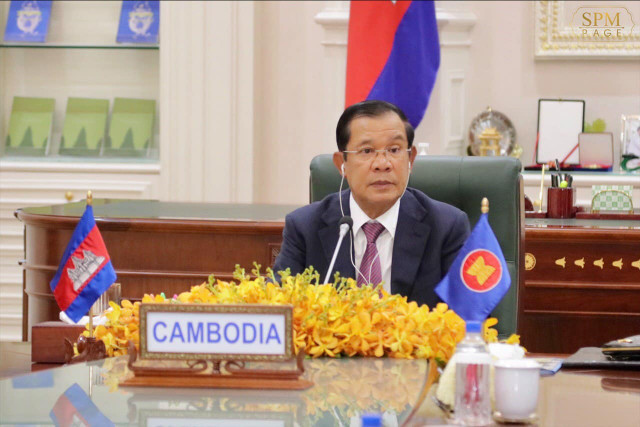
  • Does ASEAN Need a New Approach to Code of Conduct for the South China Sea?

    Does ASEAN Need a New Approach to Code of Conduct for the South China Sea?

    Reference to Declaration on the Conduct of Parties in the South China Sea (DOC), Guidelines for the Implementation of the DOC, and formulations such as early adoption of a Code of Conduct in the South China Sea (COC) have featured in the ASEAN Chairman’s Statement of East Asia Summit Foreign Ministers’ Meeting since 2013 when Brunei Darussalam had held the Chairmanship of the ASEAN. These references were reiterated, and the section relating to the South China Sea in the ASEAN Chairman’s Statement for the 11th East Asia Summit Foreign Ministers’ Meeting in August 2021 under the leadership of Brunei Darussalam, is no different.

    While the Chinese intent is a welcome development, its new “Maritime Traffic Safety Law of the People’s Republic of China” (MTSL) that came into effect on 01 September 2021, has caused turbulence among the claimant States.

    Meanwhile, China’s Ministry of Foreign Affairs Statement of 5 August 2021 notes that a new goal has been set by China under which Beijing and ASEAN would “refrain from unilateral actions that aggravate tensions and widen differences, or using force or threat of force in particular”. While the Chinese intent is a welcome development, its new “Maritime Traffic Safety Law of the People’s Republic of China” (MTSL) that came into effect on 01 September 2021, has caused turbulence among the claimant States. As per the MTSL guidelines and procedures, vessels must “report the name, call sign, current position, next port of call and even estimated time of arrival to Chinese authorities”.

    The Philippines has decided to “ignore” the new Chinese Regulations and Philippine Defence Secretary Delfin Lorenzana has clarified his country’s stand on the issue that “we do not honour those laws by the Chinese within the West Philippine Sea because we consider that we have the sovereign right within this waters. So we will not recognise this law of the Chinese,” The Vietnamese Foreign Ministry too has reiterated strict compliance with the 1982 UNCLOS “when promulgating documents of domestic law related to the sea”.

    The Pentagon has accused China of “Unlawful and sweeping maritime claims, including in the South China Sea, pose a serious threat to the freedom of the seas, including the freedoms of navigation and overflight, free trade and unimpeded lawful commerce, and the rights and interests of the South China Sea and other littoral nations,” and the Defense Department spokesman has stated that the country will “ continue to fly, sail and operate wherever international law allows,”

    By all counts, an early conclusion of CoC in the South China Sea is only wishful given that the idea has been on the table for over two and a half decades since 1996. At that time there was euphoria among ASEAN foreign ministers that a CoC in the South China Sea could be the “foundation for long term stability in the area and foster understanding among claimant countries.”

    There is now a view that it is time to change the “objective from coming up with a comprehensive CoC”; instead, ASEAN and China must work towards “incremental development of a series of agreements” that could “eventually become the CoC in the future”

    The ASEAN has made earnest efforts and continues to negotiate a legally binding CoC but its finalization has eluded it. There is now a view that it is time to change the “objective from coming up with a comprehensive CoC”; instead, ASEAN and China must work towards “incremental development of a series of agreements” that could “eventually become the CoC in the future”. This can be achieved by developing “more realistic” and “smaller accords” that can help “de-escalate potential contentious situations”.

    The above argument merits attention for at least two important reasons. First, the South China Sea is simmering due to US-China military contestations. The US Navy continues to engage in exercises and the current deployment in the South China Sea by USS Carl Vinson Carrier Strike Group and Air Wing of the Future is a reflection of the US’ commitment to field “combat-ready force to protect and defend the collective maritime interests of the U.S. and its regional allies and partners”. Also, the US Navy has conducted FONOPs relentlessly and is now joined by the US Coast Guard. The Quad Member States have also dispatched their warships to the South China Sea for Malabar Naval exercises and the European navies led by France and Britain are operating in the region. These multi-nation naval manoeuvers have prompted China to respond through similar actions and the PLA Navy and the Air Force are persistently deployed in the region. This ‘state of affairs’ will continue.

    Second, there is a view that while the CoC should necessarily be consistent with the 1982 UNCLOS and should not “prejudice legitimate rights and interests of nations not a party to discussions,” this assessment can potentially trigger clamour among other stakeholders who have politico-diplomatic, economic and strategic interests in the region and have vehemently argued for a rules-based system and have challenged China’s expansive claims in the South China Sea as also its non-adherence to the 2016 PCA ruling.

    Under such circumstances, there are no incentives for China and it is deliberately delaying the finalization of the COC; it prefers to pursue a “business as usual” approach causing immense insecurity in the minds of the claimant States. Meanwhile, there is now a sense of urgency among the ASEAN Member States to finalize the CoC and their “patience” is wearing thin.


    Feature Image Credit: Nikkei Asia

  • Bonded Labour in India: Prevalent, Yet Overlooked

    Bonded Labour in India: Prevalent, Yet Overlooked

    In 1976, India stood out as the first country in South Asia to enact legislation prohibiting bonded labour. However, the system has not been uprooted owing to the different barriers posed by socio-cultural norms and administrative and legislative incompetency. The country’s most vulnerable and disadvantaged sections of society are at risk of being trapped into such a form of modern slavery. The prevalence of this system over the decades necessitates the need to understand the root causes of the emergence of such bonded labour situations and why it is still prevalent in the country.

    Bonded labour in India

    The Bonded Labour System Abolition Act (1976) defines a bonded labour system as a relationship evolved out of a debtor-creditor agreement. It is identified as a form of forced labour where the debtor comes into an agreement, oral or written, with the creditor and receives a loan amount in exchange for his labour or that of his family members. The obligation need not just be an economic consideration such as a loan or an advance amount received from the creditor. People also become bonded with social, customary, hereditary or caste obligations and often agree to enter service with no wages or for nominal wages. The labourer finds it difficult to settle the debt amount as the provided wages are too low even to meet their basic sustenance needs. Eventually, they end up in the same form of labour again and again. Thus their choice to join such a system is out of distress or coercion to some extent. They may also be restricted from switching to another job or to ask for the provision of minimum wages given the conditions of the contract and the lack of awareness of their rights.

    Indebtedness is identified as a major trigger for people to join as bonded labour, especially migrants from poor rural households. However, the need for money arises out of the existing disadvantages in society that these communities are subjected to. Caste, unequal distribution of resources, increased dependence on agriculture, low levels of education and food insecurity pushes them into such unfree labour choices.

    We can identify that this system was prevalent in the country from the pre-colonial era characterised by class hierarchies. Such class hierarchies and high caste exploitations are continuing to function even in this democratic era and consequently, has pushed certain groups of the society to be economically weaker; weak in terms of assets, income and bargaining power. Globalisation and industrialisation have only resulted in the further exclusion of such groups of labour from mainstream jobs.  Indebtedness is identified as a major trigger for people to join as bonded labour, especially migrants from poor rural households. However, the need for money arises out of the existing disadvantages in society that these communities are subjected to. Caste, unequal distribution of resources, increased dependence on agriculture, low levels of education and food insecurity pushes them into such unfree labour choices. Owing to these social and economic factors, marginalised communities in the lower strata of the society, especially the women and children, are trapped in such a system.

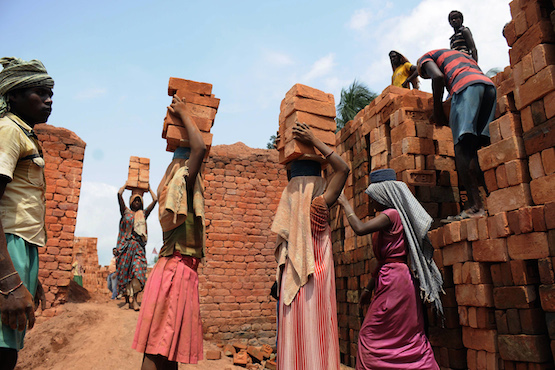
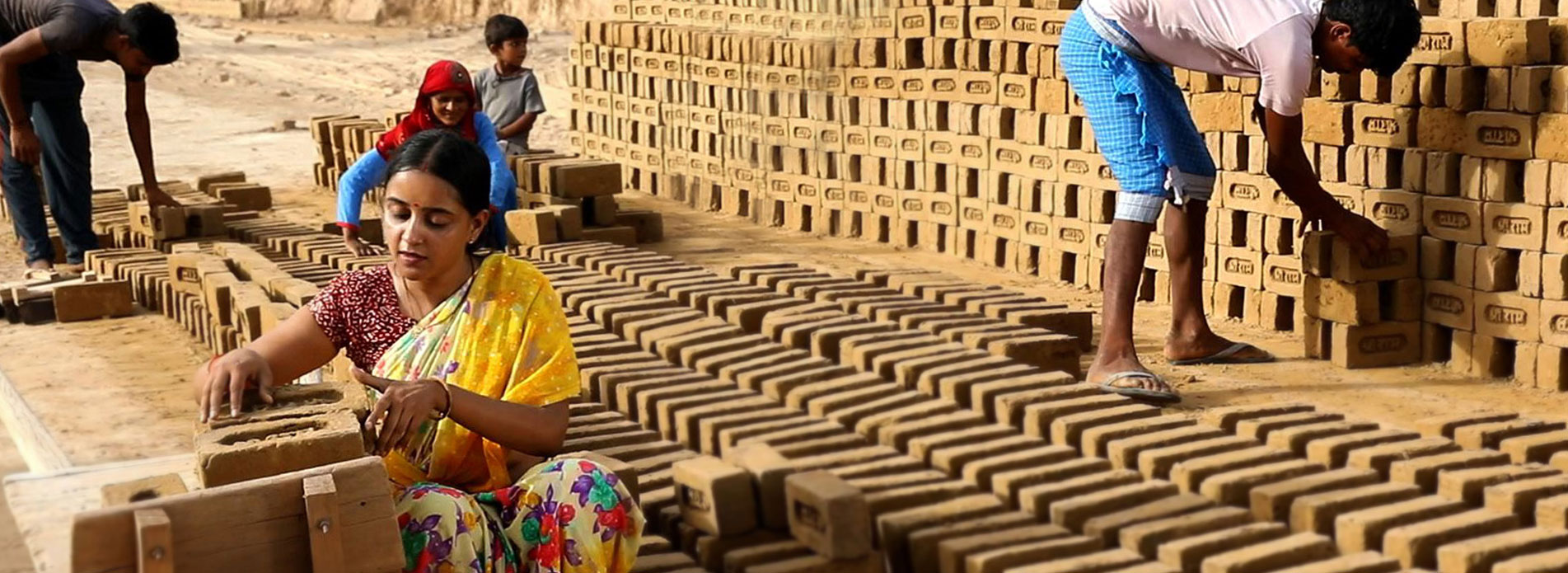
    Over the years, the system of bonded labour has existed and evolved under different names and forms across India. Bonded labour arising out of traditionally accustomed social relations is one of the oldest forms and is still prevalent in the country. For example, the system of “jajamani” wherein the workers receive food grains in exchange for working as barbers and washermen for the upper caste. Labourers in agriculture, seasonal inter and intrastate migrants and child labour in informal sectors of brick kiln, rice mills, quarries, domestic work etc. are the other areas where debt bondage is currently more persistent. There has been a considerable shift from traditional debt bondage relation to aneo-bondage labour system among migrant workers. The former was characterised by an element of patronage amongst the considerable amount of exploitation. However the latter is at a higher tone of exploitation and eliminates patronage relations. This has made employers deny the responsibility of employee’s welfare and the labourers have lost the minimum livelihood security which they had secured under the patronage system. The neo-bondage system is further manipulated by the role of intermediaries.

    Thus, with structural transformation in the economy, the system of bonded labour has evolved into a much worse form of exploitation in the country and specifically marginal and backward communities are the main victims of this system.

    Interventions to abolish bonded labour

    Upon identifying the prevalence and exploitation of bonded labour in the pre-independence era, constitutional provisions prohibiting forced labour were assigned under Article 23. Under the Directive Principle of State Policy, Article 42 and 43 ensured fair and humane working conditions and living wages to workers.

    Post-independence, legislation against bonded labour was enacted at a regional level.  Orissa, Rajasthan and Kerala were the first states to enact state legislation against bonded labour.  In 1954, India ratified the International labour organization (ILO) Convention on forced labour (C029). Despite the constitutional provisions, regional and international interventions in bonded labour, construction and implementation of a uniform law took time.

    In 1976, the Bonded Labour System (Abolition) Act was enacted to abolish any form of bonded labour system arising out of debt, customary or hierarchical obligations. In brief, the act has identified and defined bonded labour, provided for extinguishment of past or existing debt, established duties of district magistrate in implementing the provisions of the act, sanctioned the state governments to form a vigilance committee in each district to guide and ensure competent implementation of the act by the magistrate and stated the penal actions against those compelling people into bonded labour. The act was amended in 1985 to bring contract and migrant workers under its ambit.

    In 1978, a new centrally sponsored scheme for Rehabilitation of Bonded Labour was enacted to provide financial assistance to the state government for rehabilitating rescued bonded labourers, to conduct surveys, evaluation studies and awareness campaigns across districts. In 2016, the government restructured the scheme. The restructuring involved an increase in the provision of funds to bonded labour for rehabilitation and to states for conducting surveys. Under the restructured scheme, rescued bonded labour is only provided with the full amount of financial assistance after the conviction of the accused and a Bonded Labour Rehabilitation Fund corpus was to be created at every district.

    The interplay of caste-based exploitation and subsequent impoverishment in terms of resources and assets combined with underdeveloped rural areas devoid of standard education, health and employment opportunities push marginalised people into bonded labour.

    Why and how does the system still sustain?

    Many factors contributing to the prevalence of bonded labour continue to prevail despite after years of legislative action to abolish the same. The interplay of caste-based exploitation and subsequent impoverishment in terms of resources and assets combined with underdeveloped rural areas devoid of standard education, health and employment opportunities push marginalised people into bonded labour. Such an environment accompanied by the inept implementation of legislations and schemes further aids in sustaining bonded labour systems.

    BLS(A) act 1976 failed to be effectively implemented owing to apathy, corruption, lack of administrative and political will. The vigilance committees were often defunct and working for the employer. The act was criticised on the grounds that it stated only mediocre and minor punitive actions and the rates of prosecution were also low. Moreover, some states remain in denial of accepting the existence of bonded labour. This indifference results in the loss of comprehensive data on bonded labour hindering the further implementation of provisions of the act.

    The Central Sector Scheme for Rehabilitation of Bonded Labour also has its loopholes. After the restructuring of the scheme, financial aid is provided only after the accused is convicted and convictions are rare owing to poor implementation of the BLS(A) Act and the absence of a review of cases. Thus, in most cases the rescued labourers do not receive the full financial aid they are entitled to immediately after the rescue. Often, it takes years to receive the full amount or may not even receive any.

    The situation is even grave as the rescued labourers have asymmetric knowledge of the rights and entitlements they can avail themselves of. Even when they are fully aware, most of them lack the will to attain these entitlements due to the dismal behaviour of officials and delayed processes.

    Moving towards Abolishment

    First and foremost, recognition and acceptance of the prevalence of bonded labour should be ensured. Only then the bonded labourers could be identified, rescued and rehabilitated effectively. The collection of comprehensive data is essential for further implementation of the provisions of the legislation. Also apart from the vigilance committee, a new committee composed of the magistrate, members of the marginalised communities, NGO’s and other civil bodies working in the field would enable to get a more comprehensive view of the issues in the sector.

    From a long term perspective, there is a need to address the caste induced structural inequalities. One way through which this could be attained is through land redistribution.

    Mere financial aid is not sufficient for the rescued labourers to foster a livelihood plan. The Human rights law network suggests the same and recommends a comprehensive rehabilitation package providing for education and job security.

    From a long term perspective, there is a need to address the caste induced structural inequalities. One way through which this could be attained is through land redistribution. Apart from this, the government should also focus on skill development and training of rural poor, especially migrants caught up in bonded labour. Varied skills can enhance their employment opportunities and provide more freedom to move towards other areas of work.


    References

    1. B.L.S., A. (2020, June 30). Telangana: Two Years After Rescue From Bonded Labour, 12 Tribals Receive Compensation. The Wire. https://thewire.in/rights/telangana-bonded-labour-rescue-tribals-compensation
    2. Breman, J. (2010). Neo-bondage: A fieldwork-based account. International Labor and Working-Class History78(1), 48-62. https://www.jstor.org/stable/40931303
    3. Gabra, L. (2021, March 21). Will Bonded Labor in India Ever Come To An End? BORGEN. https://www.borgenmagazine.com/bonded-labor-in-india/
    4. Human Rights Law Network. (n.d.). Release and Rehabilitation of Bonded Labour — HRLN. Human Rights Law Network (HRLN). Retrieved August 15, 2021, from https://hrln.org/initiative/release-and-rehabilitation-of-bonded-labour
    5. Human Rights Watch. (n.d.). Small Change. Human Rights Watch (HRW). Retrieved August 6, 2021, from https://www.hrw.org/reports/2003/india/India0103-05.htm
    6. J, S. (2019, September 15). Rescue of bonded labourers up, convictions rare. Times of India Blog. https://timesofindia.indiatimes.com/blogs/tracking-indian-communities/rescue-of-bonded-labourers-up-convictions-rare/
    7. Khan, J. A. (2019, April 30). How effective are the Policies for Rehabilitations of Bonded Labour in India? CBGA India. https://www.cbgaindia.org/blog/effective-policies-rehabilitations-bonded-labour-india/
    8. Mantri, G., & Suresh, H. (2020, January 31). The News Minute | Delve. The News Minute. https://www.thenewsminute.com/article/it-s-2020-bonded-labour-still-reality-india-here-s-why-116977.
    9. Molfenter, C. (2013). Overcoming bonded labour and slavery in South Asia: the implementation of anti-slavery laws in India since its abolition until today. Südasien-Chronik-South Asia Chronicle3, 358-82. https://edoc.hu-berlin.de/bitstream/handle/18452/9122/358.pdf?sequence=1&isAllowed=y
    10. Murugesan, D (2018). HANDBOOK ON BONDED LABOUR. NATIONAL HUMAN RIGHTS COMMISSION (NHRC), New Delhi. https://nhrc.nic.in/sites/default/files/Hand_Book_Bonded_Labour_08022019.pdf
    11. NCABL. (2016). Joint Stakeholders’ Report on Situation of Bonded Labour in India for Submission to United Nations Universal Periodic Review III. NATIONAL COALITION FOR ABOLITION OF BONDED LABOUR (NCABL), Bhubaneswar Odisha. https://www.upr-info.org/sites/default/files/document/india/session_27_-_may_2017/js34_upr27_ind_e_main.pdf
    12. Prasad, K. K. (2015). Use of the Term’Bonded Labour’ is a Must in the Context of India. Anti-Trafficking Review, (5), 162.
    13. Sabhapathi, V. (2020, June 11). An Analysis of Bonded Labour System in India. Legal Bites – Law And Beyond. https://www.legalbites.in/bonded-labour-system-in-india/
    14. S, B. (2016, April 2). Caught in a vicious cycle of bonded labour. The Hindu. https://www.thehindu.com/news/national/karnataka/caught-in-a-vicious-cycle-of-bonded-labour/article7720754.ece
    15. Sethia, S. The Changing Nature of Bonded Labour in India.
    16. Srivastava, R. S. (2005). Bonded labour in India: Its incidence and pattern.https://www.ilo.org/wcmsp5/groups/public/—ed_norm/—declaration/documents/publication/wcms_081967.pdf 

    17. THE BONDED LABOUR SYSTEM (ABOLITION) ACT, 1976. (ACT NO. 19 OF 1976). (India). https://labour.gov.in/sites/default/files/TheBondedLabourSystem(Abolition)Act1976.pdf


    Image Credits: starfishasia.com