Blog

  • Divided World: The UN Condemnation of Russia is endorsed by Countries run by the richest, oldest, Whitest people on Earth but only 41% of the World’s population

    Divided World: The UN Condemnation of Russia is endorsed by Countries run by the richest, oldest, Whitest people on Earth but only 41% of the World’s population

    On March 2 of this year the UN General Assembly met in an Emergency Session to pass a non-binding resolution condemning Russia’s February 24 intervention in Ukraine.1 141 countries voted for the resolution, 5 voted against, 35 abstained, and 12 did not vote. (Reported: Guardian, Al Jazeera, iNews)

    although the war is nominally a conflict between two developed and ethnically white nations, Russia and Ukraine, this UN vote suggests the war may be viewed by much of the world as a fight over the global political and economic system that institutionalizes the imperial hierarchy, the distribution of nations between rich and poor, and global white supremacy


    In the absence of any reliable opinion poll of the world’s 7.9 billion people, this vote may indicate that the majority of humanity sympathizes with Russia in Ukraine. The statistics presented below show that only 41% of the world’s people live in countries that joined the U.S. in voting for the UN resolution.

    This lopsided vote is even more striking if you consider the demographics. Populations represented by governments that did not vote for the resolution are much more likely to include the world’s poorest nations, nations with younger populations, “nations of color,” nations of the Global South, and nations in the periphery of the world economic system.

    To put it another way, although the war is nominally a conflict between two developed and ethnically white nations, Russia and Ukraine, this UN vote suggests the war may be viewed by much of the world as a fight over the global political and economic system that institutionalizes the imperial hierarchy, the distribution of nations between rich and poor, and global white supremacy.


    The UN vote by population

    41% or 34% amounts to a resounding, humiliating defeat for the U.S. on this non-binding UN resolution. Instead it is reported in the west as a U.S. victory and an “overwhelming” worldwide condemnation of Russia.

    Of the world’s 7,934,000,000 people, 59% live in countries that did not support the resolution and only 41% live in countries that did.2 But that last figure drops to 34% outside of the immediate belligerents and their allies: Ukraine, U.S., and NATO countries, and on the other side, Russia, Armenia, Belarus, Kazakhstan, Kyrgystan, and Tajikistan (all the countries of the Collective Security Treaty Organization).

    41% or 34% amounts to a resounding, humiliating defeat for the U.S. on this non-binding UN resolution. Instead it is reported in the west as a U.S. victory and an “overwhelming” worldwide condemnation of Russia.

    The UN vote and GDP per capita

    All the countries in the top third of the GDP per capita (nominal) rankings, including Japan and all the countries of Western Europe and North America, voted for the resolution, Venezuela being the only country in the top third that did not.

    Of the countries that did not vote for the resolution, most are ranked the poorest in the world, and almost none came above the approximate midpoint rank of 98. The exceptions were: Venezuela (58), Russia (68), Equatorial Guinea (73), Kazakhstan (75), China (76) Cuba (82), Turkmenistan (92), South Africa (95), Belarus (97).3

    The UN vote and the core/periphery divide

    Another way to show the wealth divide in the UN vote is by distinguishing core and peripheralcountries. In world-systems theory the surplus value of labor flows disproportionately to the core countries: “The countries of the world can be divided into two major world regions: the ‘core’ and the ‘periphery.’ The core includes major world powers and the countries that contain much of the wealth of the planet. The periphery has those countries that are not reaping the benefits of global wealth and globalization.” (Colin Stief, ThoughtCo.com, 1/21/20)

    The countries usually considered in the core are: Australia, Austria, Belgium, Canada, Denmark, Finland, France, Germany, Greece, Iceland, Ireland, Italy, Japan, Luxembourg, Netherlands, New Zealand, Norway, Portugal, Singapore, Spain, Sweden, Switzerland, United Kingdom, United States.

    The difference here is stark. Every single core country voted for the resolution and every country that did not is either in the periphery or in some cases, like Russia or China, in the semi-periphery.


    The UN vote and median age

    All the countries ranked in the top third of median age rankings, from Monaco (51.1 years) to Iceland (36.5 years), voted for the resolution, with the following exceptions: China (37.4), Russia (39.6), Belarus (40), Cuba (41.5).

    Of the twenty entries with the lowest median ages (15.4 to 18.9), only half voted for the resolution.

    The UN vote and “countries of color”

    Of the 7,934,000,000 people in the world, 1,136,160,000 live in what are usually recognized as “white countries” (consistently or not) with about 14% of the world’s population. Yet “white countries,” by population, represent about 30% of the total vote in favor of the resolution. This “white vote” accounts for every one of the core countries (except Singapore and Japan). Compare: 97% of the population in the countries that did not vote for the resolution live in “countries of color.” Only Russia, Belarus and Armenia (which did not vote for the resolution) have dominant populations classed as “white.”

    Therefore “white countries” are overrepresented in the group that voted for the resolution (30% vs. 14%), and underrepresented in the group that did not (3% vs. 14%).

    Before the intervention

    What follows is a brief sketch of events leading to the February 24 Russian intervention that prompted the UN resolution. It is a history seldom mentioned in the mainstream media, though it is easily found in selected alternative and now-suppressed media. It is presented here as a possible, partial explanation of why the UN resolution had so little support measured by population.

    U.S./NATO has directed aggression toward Russia for decades, advancing NATO forces ever closer to Russia’s western border, ringing Russia with military bases, placing nuclear weapons at ever closer range, and breaching and discarding treaties meant to lessen the likelihood of nuclear war. The U.S. even let it be known, through its planning documents and policy statements, that it considered Ukraine a battlefield on which Ukrainian and Russian lives might be sacrificed in order to destabilize, decapitate and eventually dismember Russia just as it did Yugoslavia. Russia has long pointed out the existential security threat it sees in Ukrainian territory, and it has made persistent, peaceful, yet fruitless efforts over decades to resolve the problem (See Monthly Review’s excellent editors’ note).

    Recent history includes the 2014 U.S.-orchestrated coup in Ukraine, followed by a war of the central government against those in the eastern regions of Donetsk and Lugansk resisting the coup government and its policies. Those policies include a ban on the Russian language, the native tongue of the region and a significant part of the country (ironically, including President Zelensky).

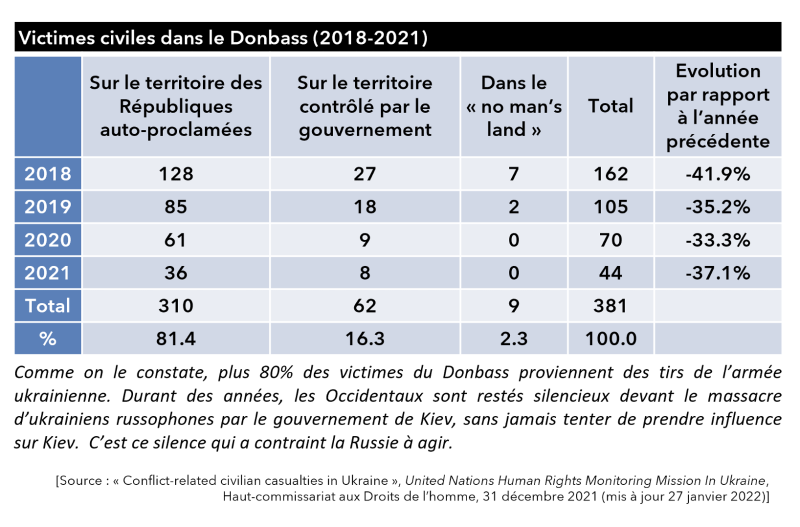
    By the end of 2021 the war had taken 14,000 lives, four-fifths of them members of the resistance or civilian Russian speakers targeted by the government. Through years of negotiations Russia tried and failed to keep the Donetsk and Lugansk regions inside a united Ukraine. After signing the Minsk agreements that would do just that, Ukraine, under tight U.S. control, refused to comply even with step one: to talk with the rebellion’s representatives.

    As to why the intervention happend now, Vyacheslav Tetekin, Central Committee member of Russia’s largest opposition party, the Communist Party of the Russian Federation, explains:

    Starting from December, 2021 Russia had been receiving information about NATO’s plans to deploy troops and missile bases in Ukraine. Simultaneously an onslaught on the Donetsk (DPR) and Lugansk People’s Republics (LPR) was being prepared. About a week before the start of Russia’s operation the plan was uncovered of an offensive that envisaged strikes by long-range artillery, multiple rocket launchers, combat aircraft, to be followed by an invasion of Ukrainian troops and Nazi battalions. It was planned to cut off Donbas from the border with Russia, encircle and besiege Donetsk, Lugansk and other cities and then carry out a sweeping “security cleanup” with imprisonment and killing of thousands of defenders of Donbas and their supporters. The plan was developed in cooperation with NATO. The invasion was scheduled to begin in early March. Russia’s action pre-empted Kiev and NATO, which enabled it to seize strategic initiative and effectively save thousands of lives in the two republics.

    All this may have informed the world’s overwhelming rejection of the U.S.-backed UN resolution condemning Russia, which western media perversely considers a U.S. victory simply because the resolution passed. Never mind that it passed in a voting system where Liechtenstein’s vote carries the same weight as China’s.

    The Global South also knows from bitter experience that unlike the West, neither Russia nor its close partner China habitually engage in bombings, invasions, destabilization campaigns, color revolutions, coups and assassinations against the countries and governments of the Global South. On the contrary, both countries have assisted the development and military defense of such countries, as in Syria, Venezuela, Nicaragua, Cuba, Iran and elsewhere.

    Conclusion

    Just as the imperial core of North America, Europe and Japan does not represent the world in their population numbers, demographics, wealth, or power, neither does the imperial core speak for the world on crucial issues of war, peace, justice, and international law. Indeed the Global South has already spoken to the Global North so many times, in so many ways, with patience, persistence and eloquence, to little avail. Since we in the North have not been able to hear the words, perhaps we can listen to the cry of the numbers.


    Notes:

    1. The resolution “Deplores in the strongest terms the aggression by the Russian Federation against Ukraine in violation of Article 2 (4) of the Charter.” (Article 2 (4) reads: “All Members shall refrain in their international relations from the threat or use of force against the territorial integrity or political independence of any state, or in any other manner inconsistent with the Purposes of the United Nations.”) The resolution also “[d]eplores the 21 February 2022 decision by the Russian Federation related to the status of certain areas of the Donetsk and Luhansk regions of Ukraine as a violation of the territorial integrity and sovereignty of Ukraine and inconsistent with the principles of the Charter.” Beyond Russia, the resolution “[d]eplores the involvement of Belarus in this unlawful use of force against Ukraine, and calls upon it to abide by its international obligations.”
    2. The population of countries voting for the UN resolution is 3,289,310,000. The population of countries voting against the resolution, abstaining, or not voting is 4,644,694,000 (Against: 202,209,000; abstaining: 4,140,546,000; not voting: 301,939,000).
    3. Here are the countries that did not vote for the resolution, with their GDP per capita rankings (the higher the GDP the higher the rank). 5 countries voted against the resolution: Russia 68, Belarus 97, North Korea 154, Eritrea 178, Syria 147. 35 countries abstained: Algeria 119, Angola 128, Armenia 115, Bangladesh 155, Bolivia 126, Burundi 197, Central African Republic 193, China 76, Congo 143, Cuba 82, El Salvador 121, Equatorial Guinea 73, India 150, Iran 105, Iraq 103, Kazakhstan 75, Kyrgyzstan 166, Laos 140, Madagascar 190, Mali 174, Mongolia 118, Mozambique 192, Namibia 102, Nicaragua 148, Pakistan 162, Senegal 160, South Africa 95, South Sudan 168, Sri Lanka 120, Sudan 171, Tajikistan 177, Tanzania 169, Uganda 187, Vietnam 138, Zimbabwe 144. 12 countries did not vote: Azerbaijan 110, Burkina Faso 184, Cameroon 158, Eswatini 117, Ethiopia 170, Guinea 175, Guinea-Bissau 179, Morocco 130, Togo 185, Turkmenistan 92, Uzbekistan 159, Venezuela 58.


    This article was published earlier in MRonline and is republished under the Creative Commons License 4.0.

    Feature Image Credit: Alarabianews.

    Map and Table: Wikipedia

  • TPF Analysis Series on Russia – Ukraine Conflict #1

    TPF Analysis Series on Russia – Ukraine Conflict #1

    The Peninsula Foundation is releasing a series of analysis papers on the Ukraine-Russia conflict to help the public have a better understanding of the geo-political and security dimensions underlying the conflict. The first paper of the series will introduce you to an overview of the historical, political and humanitarian aspects of the ongoing conflict which is snowballing to be a major conflict and a turning point in Europe’s history since World War II.

    Russia – Ukraine History

    Russia and Ukraine have had a long interwoven history, since as early as the 18th century. One of the most contested territories, Crimea, was first annexed by the Russian empire in 1783 back when it was controlled by the Crimean Khanate. The territory then became a part of the erstwhile Soviet Union in 1921, to be later controlled by Nazi Germany for a brief period in 1942. Following the end of World War II, the autonomous status of Crimea was dissolved as it now became a province of the USSR, but was later handed over to Ukraine as a goodwill gesture by Nikita Khrushchev in 1954 to mark the 300th anniversary of Ukraine’s reunification with the USSR.

    Crimea: White Russian refugees gathering at a Crimean port during the Russian Civil War.

    Image: Library of Congress, Washington, D.C.

    With the dissolution of the Soviet Union in 1991, many had expected Boris Yelsten to take up the issue and bring back Crimea to Russia, but instead, the Crimean parliament proclaimed the independence of its territory in May 1992, a proclamation only to be annulled by Ukraine. Over twenty years later, a similar referendum, with most of the Crimean population voting to join Russia – a referendum declared illegal by Ukrainian and European governments alike. What followed next was a dramatic escalation with the deployment of the Russian Black Sea Fleet.

    Some have argued that NATO’s expansion towards the East is the primary cause of the war, since the organisation was formed primarily to counter the Soviet Union during the Cold War. While it must be acknowledged that such expansion was to be viewed by Russian officials as a provocation even back in the 1990s, the arguments, however, also take away the agency of states in Eastern Europe with most of them ‘demanding’ to join NATO, eager to reap the benefits of the West’s economic system. Over the years, several small states, including Georgia, Ukraine, Uzbekistan, Azerbaijan and Moldova, have seen their relationship with the West as a tool to bring regional stability, and increase their bargaining power against Russia.

    Events leading up to the war

    2021 was a year of security challenges that shook the world amid an ever-mutating Covid-19 pandemic. In October 2021, Russia started moving its troops and military equipment closer to the Ukraine border rekindling concerns of a potential invasion. By mid-December 2021, Russia’s Foreign Minister, Sergey Lavrov released a set of security guarantees and assurances to be met by the U.S. and NATO in exchange for non-intervention in Ukraine. Putin also threatened unspecified ‘military technical’ measures if the West fails to accede to his demands. Putin’s major demands were; (i) Ban on Ukraine entering NATO, (ii) No further expansion of NATO in the Eastern European region, (iii) Withdrawal of any troops or weapons deployed in countries which entered NATO after 1997 (Poland, Estonia, Lithuania, Latvia, and the Balkan countries), (iv) No NATO drills to be conducted in Ukraine, Georgia and Central Asia without prior agreement with Russia. Although NATO was formed to counter the USSR during the Cold War,  it continued its expansion into Eastern Europe territories even long after the dissolution of the USSR. Putin was threatened by the continuous NATO expansionism, the security implications and the loss of the Russian sphere of influence in Eastern Europe.

    The U.S. and NATO immediately rejected these main demands warning if Russia invades Ukraine, there will be serious retaliation and Russia will be met with a ‘massive forceful package’ of economic sanctions. Ukraine’s Foreign Minister Kuleba had said that although they were expecting and already experiencing aggressive Russian cyber-attacks and destabilisation of the Ukrainian economy, the number of Russian troops on the border was ‘insufficient’ and the build-up was missing some key military indicators to execute an imminent ‘full-scale invasion’ of Ukraine. Many experts and theorists also opined that despite Putin’s bold demands and his game of brinkmanship, the reality of war was in question.

    On 21st February, in a televised address Putin said that ‘Ukraine is an integral part of Russia’s history’ and declared the regions of Donetsk and Luhansk as independent Republic States and sent Russian troops into those regions for ‘peacekeeping’.

    The beginning of February showed some positive signs of diplomacy or at the least maintenance of the status quo between Ukraine and Russia despite the West’s declining Putin’s demands. However, it was only calm before the storm. On 21st February, in a televised address Putin said that ‘Ukraine is an integral part of Russia’s history’ and declared the regions of Donetsk and Luhansk as independent Republic States and sent Russian troops into those regions for ‘peacekeeping’. As a response to this, the US and other NATO members imposed economic sanctions on Russian parliament members, banks and other assets and Germany decisively halted the Nord Stream 2 gas pipeline project.

    ‘Special Military Operation’

    On 24th February, Putin announced a ’special military operation’ and Russian forces launched missile and artillery attacks on major Ukrainian cities including Kyiv. Ukrainian Foreign Minister affirmed that Russia has launched a ‘full-scale invasion of Ukraine’, following which Ukraine shut down its entire airspace as a response to the Russian operation in Donbas. The West imposed further sanctions on Russia including but not limited to, removing select Russian banks from the SWIFT system, freezing the assets of the Russian Central Bank and curbing products exported to Russia.

    Zaporizhzhia is a vital asset in fulfilling Ukraine’s energy requirements with six nuclear reactors with a capacity of generating 950MW per reactor. Capturing Zaporizhzhia nuclear power plant would have been a major plan of the invading forces given its strategic nature.

    Nearly four weeks since the Russian Federation launched a ‘special military operation’, the situation on the ground in Ukraine continues to remain dire. The United Nations Human Rights Monitoring Mission in Ukraine (HRMMU) has been responsible for documenting civilian casualties in Ukraine since 2014. In the span of three weeks, Ukraine’s infrastructure and cultural heritage have suffered irreparable damage or been completely destroyed. The ceaseless shelling by Russian forces of cities and hospitals have exacerbated the human toll.

    According to a press briefing released by the Office of the High Commissioner for Human Rights (OHCHR), civilian casualties as of 26 March 2022 stand at 2,909 – 1,119 people killed and 1,790 injured.

    The OHCHR assesses that actual figures might be higher than what is currently being reported as they wait for figures to be corroborated. Most of the civilian casualties are reportedly caused by explosive weapons with a wide impact area. This includes shelling from heavy artillery and multiple-launch rocket systems and missile and air strikes.

    In a rather unexpected move, on 4th March, 2022 the Russian forces attacked and captured the Zaporizhzhia nuclear power plant, located in Energodar, Ukraine. Zaporizhzhia is a vital asset in fulfilling Ukraine’s energy requirements with six nuclear reactors with a capacity of generating 950MW per reactor. Capturing Zaporizhzhia nuclear power plant would have been a major plan of the invading forces given its strategic nature.

    The Russian attack on the nuclear plant raised alarm bells among nations and nuclear watchdogs. Intense shelling on the complex caused a fire in one of the training buildings. Reports have noted the damage to multiple locations within the complex. The Ukrainian government was quick to act and called it an “act of terror”. Contrary to Ukrainian claims, the Russian Ministry of Defence spokesperson Maj. Gen. Igor Konashenkov claimed that the entire event was a sabotage act by the Ukrainian forces. With Chernobyl captured very early in the invasion, the attack on Zaporizhzhia nuclear power plant raises questions about the safety and security of nuclear infrastructures during times of crisis.

    On March 9, 2022, a hospital in Mariupol that also housed a maternity ward came under attack. It was reported that at least 4 people were killed in the bombing, including a pregnant woman. Presently, Mariupol is seeing some of the fiercest attacks, since the port city is a strategic target for Russia. It is estimated that some 300,000 people are trapped with supplies running low. The Russian Federation’s offer of safe passage out of Mariupol for the Ukrainian people has been summarily rejected by Ukraine’s Deputy Prime Minister Iryna Vereshchuk who was quoted saying, “There can be no question of any surrender, laying down of arms”.

    Other areas to have been hit include Kyiv, Kharkiv, Borodyanka, Ochakiv, Sumy, Mykolaiv, Odessa etc. On March 1, the Central Freedom Square in Kharkiv was bombed that leaving both the administrative building and surrounding structures destroyed. On 14 March the Ukrainian health minister Viktor Liashko reported that nearly 100 hospitals had been damaged. As of 17 March, the World Health Organisation (WHO) has verified 44 instances of attacks on healthcare facilities in Ukraine. 

    West’s Sanctions

    The global media coverage of the invasion can be best described as a cacophony of partisanship. The western media has been charged with accusations of brushing off Russian security concerns and, of course, brazen racism. It has followed its own orientalist approach to present the crisis as a result of Russian imperialism.

    The West has swiftly responded by imposing sanctions; a course of action meant to deter and halt Russia’s actions in Ukraine. Germany’s Chancellor Olaf Scholz announced halting final approval for the Nord Stream 2 gas pipeline following Russia’s recognition of two breakaway regions of Eastern Ukraine – Luhansk and Donetsk.

    On 8 March, President Biden, with bipartisan support, announced that the US would be banning imports of Russian oil, gas and energy. The UK also announced that it would phase out Russian oil imports by the end of 2022 on the same day. Both the US and the UK are working with their European counterparts to reduce dependency on Russian hydrocarbon imports. The European Commission responded to Russia’s aggression in Ukraine by stating that the EU countries would work to become independent of Russian energy imports “well before 2030”. Other economic deterrents imposed have been the ban on exports of luxury goods like vehicles, fashion and art to Russia by the UK and EU. The UK has also imposed a 35% tax on imports from Russia, including vodka. Russian oligarchs’ assets in the US, UK and the EU have been targeted. Sanctions have also been imposed on former Russian leaders, ministers and current members of the Russian Parliament.

    Russian flights and private jets have been banned from the US, UK, EU and Canadian airspaces. The G7 countries have also stripped Russia of its “most favoured nation” status; a move that will impact Russia’s trade. Assets of most Russian banks have been frozen and some of them have been removed from the international financial system SWIFT. Other countries to have imposed sanctions on Russia include Japan, Taiwan, New Zealand, Australia and Switzerland. Australia moved to ban exports of alumina and aluminium ore, including bauxite to Russia. Russia relies on Australia for 20% of its alumina requirements – aluminium being a major export for Russia. Several energy, automobile, tech, financial, food and fashion companies have also halted operations in Russia – Exxon, Shell, Apple, Alphabet, Goldman Sachs, JP Morgan, Ferrari, Harley-Davidson, Nike, McDonald’s etc.

    Globally, the impact of the Russia-Ukraine war has been felt in oil markets as prices continue to surge to well over $100 per barrel. Russia’s response to being hit with global sanctions has been to ban the exports of over 200 products, including telecoms, electrical equipment, agricultural, medical goods etc. However, this list does not include energy and raw material resources. It has also banned and blocked interest payments to foreign investors and dividends to overseas shareholders and also banned the sale of Russian stocks and bonds held by foreign investors. It has also passed a decree suspending the IP rights of ‘unfriendly countries’.

    On 15 March, President Zelensky said that it must be accepted that Ukraine will not become a member of NATO, possibly appeasing one of Putin’s major security concerns. Additionally, on 15 March, Moscow announced its decision to withdraw from the Council of Europe after 26 years of membership, hours ahead of a formal decision taken by the Council to expel Russia over its aggression in Ukraine. The move also means that Russia will no longer be a signatory to the European Convention on Human Rights, depriving its citizens of the right to appeal to the European Court of Human Rights. A statement from the Russian foreign ministry cited that the EU and NATO had “destroyed” the Council of Europe and turned the organisation into an “anti-Russia policy tool”.

    Russia also made the decision to sanction President Biden, Prime Minister Trudeau and several top US officials. The list includes Secretary of State Anthony Blinken, Defence Secretary Lloyd Austin, National Security Advisor Jake Sullivan, CIA Director William Burns, WH Press Secretary Jen Psaki and former Secretary of State and Democratic Presidential candidate Hilary Clinton.

    The global media coverage of the invasion can be best described as a cacophony of partisanship. The western media has been charged with accusations of brushing off Russian security concerns and, of course, brazen racism. It has followed its own orientalist approach to present the crisis as a result of Russian imperialism. Popular Russian media channels such as RT and Sputnik have been banned by YouTube across Europe, essentially leading to the West dominating the information warfare, controlling the narrative and presenting a one-sided perspective to the world.  The Russian Federal Service for Supervision of Communications, Information Technology and Mass Media, commonly known as the Roskomnadzor, released a statement informing media and other information sources that any publication regarding the ‘special military operation’ must only use the information received from Russian officials. Several independent Russian media outlets like Ekho Moskvy, InoSMI, Mediazona, New Times, Dozhd, Svobodnaya Pressa, Krym, Realii, Novaya Gazeta, Journalist, Lenizdat etc. were sent notifications by the Roskomnadzor on allegations of reporting false information regarding the actions of the Russian Army, shelling in Ukrainian cities and referring to the military operation as ‘war’, ‘invasion’ and ‘attack’. Nonetheless, some media houses have stood up to the pressure to report more appropriately.

    The war in Ukraine could also leave lasting environmental damage, being a highly industrialised state. The threat of radiation resulting from an attack on any one of Ukraine’s nuclear plants could have devastating consequences. Carcinogenic dust from bombed buildings, groundwater contaminations from spilled chemicals and attacks on industrial facilities will have a lasting impact on the health of the people in the country.

    UN Response

    As Russian troops continue to shell Ukrainian cities, the various United Nations bodies have called for emergency meetings, albeit with no successful outcome to halt the war. In February 2022, a Security Council meeting calling for a resolution to condemn the Russian military operations and demanding an end to Russian attacks had similarly failed with the resolution having been vetoed by Russia.

    Although Putin’s end may not justify his means, one needs to look at this crisis holistically and historically. Putin may have been the one to declare war, but the triggering and contributing events and actions by NATO and the US should also be taken into consideration while analysing this conflict.

    However, the United Nations has been swift with its humanitarian response, an effort visible with its coordinated appeals calling for the allocation of an estimated USD 1.7 billion to help the Ukrainians. Dividing the allocation of funds into two categories – one for people within Ukraine, and the other for its comprehensive response towards refugees coming from Ukraine, the United Nations’ relief efforts have seen one of the most generous responses to its funding appeal. Further, as fighting continues amidst multiple rounds of talks between Russia and Ukraine, UN Agencies, including UNICEF, continue to supply humanitarian aid, including medical supplies to the country. As part of its cash-response strategy, the UN agencies have additionally planned to implement its program of cash-for-rent assistance, where they seek to provide the affected population with the resources to find themselves an accommodation, in order to avoid large-scale displacement.

    Although Putin’s end may not justify his means, one needs to look at this crisis holistically and historically. Putin may have been the one to declare war, but the triggering and contributing events and actions by NATO and the US should also be taken into consideration while analysing this conflict. It seems to be that Putin has not entered into an all-out war yet, as his objectives and weaponry employed are limited. In the forthcoming series of analyses, The Peninsula Foundation delves into each of the facets of the conflict mentioned in this paper.

    Featured Image Credits: The Times

    NATO Expansion Image Credits: Statista

    Russian General Image Credits: Moscow Times

    UNSC Image Credits: Harvard Law Today

  • The Need for National Aerospace Strategy

    The Need for National Aerospace Strategy

    India needs a comprehensive and coherent national aerospace strategy to accelerate indigenous development in the rapidly evolving geopolitical environment.

    As the 2022 edition of the ‘DefExpo’ gets underway in a few days, it is important to recognise the fact India’s ‘Defence and Aerospace’ sector is growing significantly, aided by the Government’s policy initiatives such as ‘Make in India’ that have created opportunities for many joint ventures with international companies. Platforms like the ‘DefExpo’ and ‘Aero India’ are providing the necessary boost and visibility to Indian manufacturing.

    Recent announcements on the agreement with the Philippines to export ‘BRAHMOS’ missile is a significant achievement. Similarly, last week’s news that DRDO and SAFRAN will jointly develop the 125 KN engine for the AMCA is major news that could be transformational if the collaboration is well crafted keeping Indian interests in perspective. However, one must keep in mind that much work needs to be done beyond the optics of a defence exhibition. Translating the MoUs into real JVs is a big challenge. Unless the Indian defence industry breaks into the export market in a big way by becoming part of the global supply, the challenges to the Indian industry will continue to be significant.

    [powerkit_button size=”lg” style=”info” block=”true” url=”https://raksha-anirveda.com/the-need-for-national-aerospace-strategy/” target=”_blank” nofollow=”false”]
    Read More
    [/powerkit_button]

  • CIA Director William F. Burns’ misinformation strategy: spreading the big lie that Russia’s invasion of Ukraine was “unprovoked”

    CIA Director William F. Burns’ misinformation strategy: spreading the big lie that Russia’s invasion of Ukraine was “unprovoked”

    CIA Director Bill Burns testified before the Senate Intelligence committee in early March that Russia and Vladimir Putin were “losing the information war over its war in Ukraine.

    “In all my years I spent as a career diplomat, I saw too many instances where we lost information wars with the Russians,” Burns said, but “this is one information war that I think Putin is losing…. In this case, I think we have had a great deal of effect in disrupting their tactics and calculations and demonstrating to the entire world that this is premeditated and unprovoked aggression built on a body of lies and false narratives”.

    George Orwell must be rolling over in his grave with Burns’ performance. While hypocritically excoriating Russia for promoting a “body of lies” and “false narratives,” Burns admitted to using the very same tactics in an information war in which both sides were twisting the truth.

    The U.S. Big Lie centers on the claim of unprovoked Russian aggression.

    As CAM has previously reported, the war was actually started by Ukraine eight years agowhen it sent troops into Eastern Ukraine in an attempt to subdue pro-Russian secessionists who resisted a February 2014 U.S. backed coup d’état.

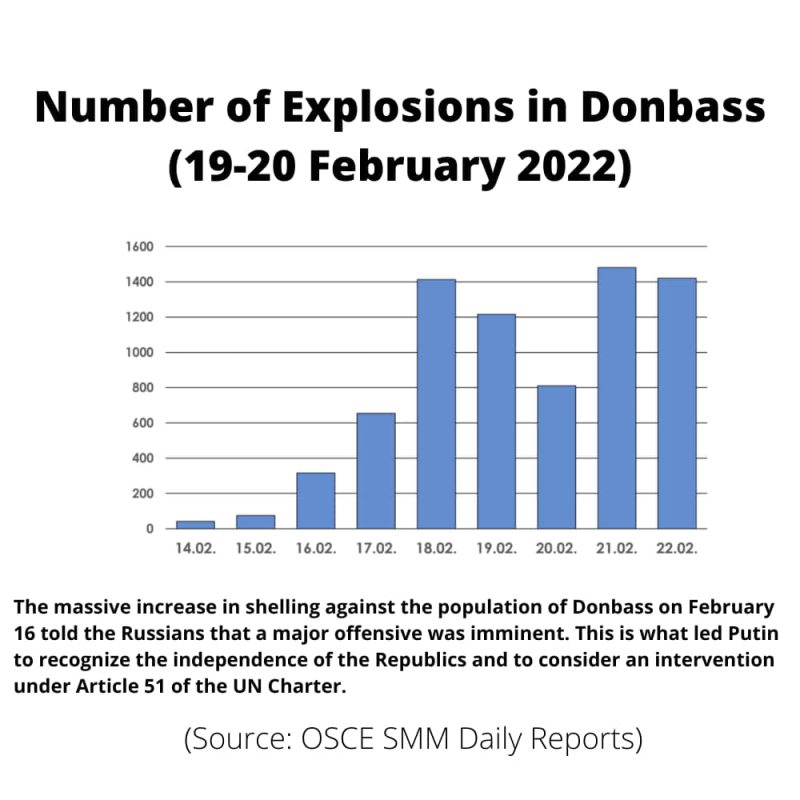
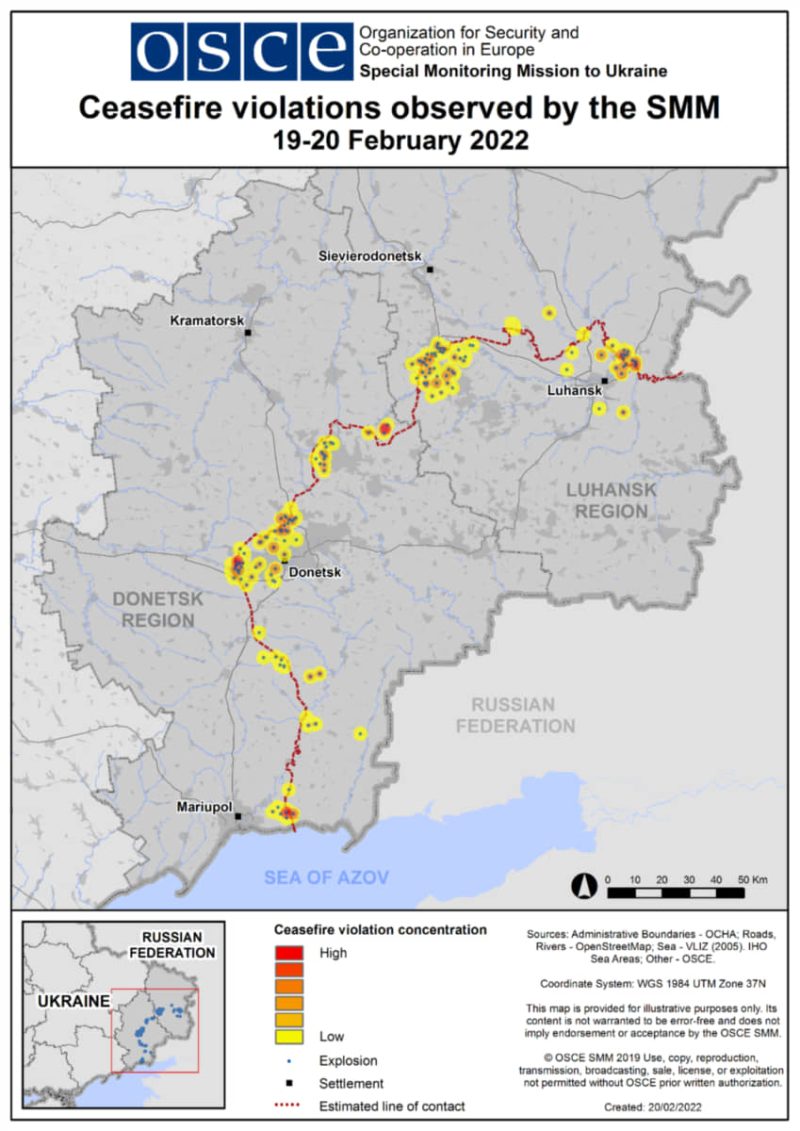
    Prior to the Russian invasion of Ukraine on February 24, Organization For Security and Cooperation in Europe (OSCE) maps showed that shelings that violated ceasefire arrangements under the Minsk accords were carried out mostly by the Ukrainian government, which had forced the people of Luhansk and Donetsk to live in underground bunkers for years.

    According to the Russian Deputy Foreign Minister, Ukraine had massed 122,000 troops on the border with Donbass on the eve of the war. The Duma claimed to have intelligence indicating that these troops were planning an offensive into Donbass, which the Russian invasion preempted.

    Russia reported on February 21 that it had captured a Ukrainian soldier and killed five others after they crossed into Russian territory in Rostov, just over the border with Ukraine.

    Map showing Ukrainian troops concentrations on the eve of the Russian invasion on February 24, 2022.
    Source: covertactionmagazine.com

    The U.S. further provoked the war by refusing to abide by Putin’s legitimate demand that the North Atlantic Treaty Organization (NATO) not be expanded to Ukraine or anywhere further to Russia’s border—going against a promise made in 1990 by U.S. Secretary of State James A. Baker that NATO would not expand “one inch eastward.”

    The U.S. also armed and equipped the Ukrainian military with lethal weaponry for years, including Javelin anti-tank missiles, which have shot down at least 50 tanks in the war so far, and CIA trained Ukrainian paramilitary units in sniper techniques and irregular warfare.

    Biolabs, False Flags, Chemical Weapons and Atrocity Stories

    At the heart of the current information war lies allegations about wide scale atrocities, false flag attacks and chemical warfare.

    Russia has also accused the U.S. of possessing biowarfare labs within Ukraine. Press Secretary Jen Psaki claimed that the latter allegation was part of a Russian disinformation operation. However, undersecretary of state Victoria Nuland admitted that bioweapons labs existed in Ukraine and that she was afraid that Russian troops would seek to gain control of them, with leaked documents showing that Pentagon contractors had access to the labs.

    Atrocities

    On March 13th, Russia was accused of bombing a maternity ward in Mariupol, killing a pregnant woman and her baby. Russian officials claimed the maternity hospital had been taken over by Ukrainian extremists to use as a base, and that no patients or medics were left inside. Russia’s ambassador to the U.N. and the Russian Embassy in London called the images “fake news,” which appears in this case to be untrue.However, the Western media made the Russians look like the only bad guys in the war by failing to report on Ukrainian atrocities such as Ukraine’s deployment of a cluster bomb in the Donetsk city center, killing dozens of civilians (including six people riding a city bus) and forcing many more to evacuate.

    The U.S. media also failed to report on how Azov battalion men dragged civilians who were trying to leave Mariupol from their cars and then shot them dead, as was captured on video. Russia was further blamed for bombing a movie theater in Mariupol where residents had taken shelter, when eyewitness reports said it was the work again of Azov militants associated with the Ukrainian army.


    CNN and other U.S. media blamed Russia for destroying the movie theater in Mariupol when eyewitness said it was Azov militants within the Ukrainian army. Source: thedailybeast.com.


    The extent to which the CIA is behind the media’s one-sided coverage of the Ukraine war is uncertain. In the past, the CIA has planted journalists and funded intellectual journals and continued to do so under the guise of the National Endowment for Democracy (NED).

    Burns’ statements indicate, however, that the nation’s media have been enlisted in the information war unequivocally. RT News has been shut down and mainstream publications like the New York Times parrot the State Departments’ views about the war, attributing any criticisms of U.S. policy to Russian disinformation.

    Last week, the White House went so far as to invite and brief some 30 top social media “influencers,” especially those on TikTok, a short video platform which has become very popular among the youth. Using similar material provided to mainstream news reporters, this clearly represents an extra effort by Washington to more widely propagate disinformation on Ukraine.

    In his 1928 book, Falsehoods in a Time War, Sir Arthur Ponsonby provided a blueprint of war propaganda that could be summarized as follows:

    1. We do not want war.
    2. The opposite party alone is guilty of war.
    3. The enemy is inherently evil and resembles the devil.
    4. We defend a noble cause, not our own interests.
    5. The enemy commits atrocities on purpose; our mishaps are involuntary.
    6. The enemy uses forbidden weapons.
    7. We suffer small losses, those of the enemy are enormous.
    8. Recognized artists and intellectuals back our cause.
    9. Our cause is sacred.
    10. All who doubt our propaganda are traitors.

    Right out of the CIA’s playbook circa 2022.


    This article was published earlier in MRonline

    TPF is happy to republish it with the permission of the author and under Creative Commons Licence.

  • From Cold War to Hot Peace

    From Cold War to Hot Peace

    In a world shaped by the iron logic of markets and national interests, Vladimir Putin’s atavistic war of conquest has mystified the “deep” strategists of realpolitik. Their mistake was to forget that under global capitalism, cultural, ethnic, and religious conflicts are the only forms of political struggle left.

    With the Russian invasion of Ukraine, we are entering a new phase of warfare and global politics. Aside from a heightened risk of nuclear catastrophe, we are already in a perfect storm of mutually reinforcing global crises – the pandemic, climate change, biodiversity loss, and food and water shortages. The situation exhibits a basic madness: at a time when humanity’s very survival is jeopardized by ecological (and other) factors, and when addressing those threats should be prioritized over everything else, our primary concern has suddenly shifted – again – to a new political crisis. Just when global cooperation is needed more than ever, the “clash of civilizations” returns with a vengeance.

    Why does this happen? As is often the case, a little Hegel can go a long way toward answering such questions. In the Phenomenology of Spirit, Hegel famously describes the dialectic of master and servant, two “self-consciousnesses” locked in a life-or-death struggle. If each is ready to risk his own life to win, and if both persist in this, there is no winner: one dies, and the survivor no longer has anyone to recognize his own existence. The implication is that all of history and culture rest on a foundational compromise: in the eye-to-eye confrontation, one side (the future servant) “averts its eyes,” unwilling to go to the end.

    But Hegel would hasten to note that there can be no final or lasting compromise between states. Relationships between sovereign nation-states are permanently under the shadow of potential war, with each epoch of peace being nothing more than a temporary armistice. Each state disciplines and educates its own members and guarantees civic peace among them, and this process produces an ethic that ultimately demands acts of heroism – a readiness to sacrifice one’s life for one’s country. The wild, barbarian relations between states thus serve as the foundation of the ethical life within states.

    North Korea represents the clearest example of this logic, but there are also signs that China is moving in the same direction. According to friends in China (who must remain unnamed), many authors in Chinese military journals now complain that the Chinese army hasn’t had a real war to test its fighting ability. While the United States is permanently testing its army in places like Iraq, China hasn’t done so since its failed intervention in Vietnam in 1979.

    At the same time, Chinese official media have begun to hint more openly that since the prospect of Taiwan’s peaceful integration into China is dwindling, a military “liberation” of the island will be needed. As ideological preparation for this, the Chinese propaganda machine has increasingly urged nationalist patriotism and suspicion toward everything foreign, with frequent accusations that the US is eager to go to war for Taiwan. Last fall, Chinese authorities advised the public to stock up on enough supplies to survive for two months “just in case.” It was a strange warning that many perceived as an announcement of imminent war.

    This tendency runs directly against the urgent need to civilize our civilizations and establish a new mode of relating to our environs. We need universal solidarity and cooperation among all human communities, but this objective is made far more difficult by the rise of sectarian religious and ethnic “heroic” violence and a readiness to sacrifice oneself (and the world) for one’s specific cause. In 2017, the French philosopher Alain Badiou noted that the contours of a future war are already discernible. He foresaw:

    “…the United States and their Western-Japanese group on the one side, China and Russia on the other side, atomic arms everywhere. We cannot but recall Lenin’s statement: ‘Either revolution will prevent the war or the war will trigger revolution.’ This is how we can define the maximal ambition of the political work to come: for the first time in history, the first hypothesis – revolution will prevent the war – should realize itself, and not the second one – a war will trigger revolution. It is effectively the second hypothesis which materialized itself in Russia in the context of the First World War, and in China in the context of the second. But at what price! And with what long-term consequences!”

    The Limits of Realpolitik

    Civilizing our civilizations will require radical social change – a revolution, in fact. But we cannot afford to hope that a new war will trigger it. The far more likely outcome is the end of civilization as we know it, with the survivors (if there are any) organized in small authoritarian groups. We should harbor no illusions: in some basic sense, World War III has already begun, though for now it is still being fought mostly through proxies.

    Abstract calls for peace are not enough. “Peace” is not a term that allows us to draw the key political distinction that we need. Occupiers always sincerely want peace in the territory they hold. Nazi Germany wanted peace in occupied France, Israel wants peace in the occupied West Bank, and Russian President Vladimir Putin wants peace in Ukraine. That is why, as the philosopher Étienne Balibar once put it, “pacifism is not an option.” The only way to prevent another Great War is by avoiding the kind of “peace” that requires constant local wars for its maintenance.

    Whom can we rely on under these conditions? Should we place our confidence in artists and thinkers, or in pragmatic practitioners of realpolitik? The problem with artists and thinkers is that they, too, can lay the foundation for war. Recall William Butler Yeats’s apt verse: “I have spread my dreams under your feet, / Tread softly because you tread on my dreams.” We should apply these lines to poets themselves. When they spread their dreams under our feet, they should spread them carefully because actual people will read them and act upon them. Recall that the same Yeats continuously flirted with Fascism, going so far as to voice his approval of Germany’s anti-Semitic Nuremberg Laws in August 1938.

    Plato’s reputation suffers because of his claim that poets should be thrown out of the city. Yet this is rather sensible advice, judging from the experience of recent decades, when the pretext for ethnic cleansing has been prepared by poets and “thinkers” like Putin’s house ideologue, Aleksandr Dugin. There is no longer ethnic cleansing without poetry, because we live in an era that is supposedly post-ideological. Since great secular causes no longer have the force to mobilize people for mass violence, a larger sacred motive is needed. Religion or ethnic belonging serve this role perfectly (pathological atheists who commit mass murder for pleasure are rare exceptions).

    Realpolitik is no better guide. It has become a mere alibi for ideology, which often evokes some hidden dimension behind the veil of appearances in order to obscure the crime that is being committed openly. This double mystification is often announced by describing a situation as “complex.” An obvious fact – say, an instance of brutal military aggression – is relativized by evoking a “much more complex background.” The act of aggression is really an act of defense.

    This is exactly what is happening today. Russia obviously attacked Ukraine, and is obviously targeting civilians and displacing millions. And yet commentators and pundits are eagerly searching for “complexity” behind it.

    There is complexity, of course. But that does not change the basic fact that Russia did it. Our mistake was that we did not interpret Putin’s threats literally enough; we thought he was just playing a game of strategic manipulation and brinkmanship. One is reminded of the famous joke that Sigmund Freud quotes:

    “Two Jews met in a railway carriage at a station in Galicia. ‘Where are you going?’ asked one. ‘To Cracow,’ was the answer. ‘What a liar you are!’ broke out the other. ‘If you say you’re going to Cracow, you want me to believe you’re going to Lemberg. But I know that in fact you’re going to Cracow. So why are you lying to me?’”

    When Putin announced a military intervention, we didn’t take him literally when he said he wanted to pacify and “denazify” Ukraine. Instead, the reproach from disappointed “deep” strategists amounts to: “Why did you tell me you are going to occupy Lviv when you really want to occupy Lviv?”

    This double mystification exposes the end of realpolitik. As a rule, realpolitik is opposed to the naivety of binding diplomacy and foreign policy to (one’s version of) moral or political principles. Yet in the current situation, it is realpolitik that is naive. It is naive to suppose that the other side, the enemy, is also aiming at a limited pragmatic deal.

    Force and Freedom

    During the Cold War, the rules of superpower behavior were clearly delineated by the doctrine of mutual assured destruction (MAD). Each superpower could be sure that if it decided to launch a nuclear attack, the other side would respond with full destructive force. As a result, neither side started a war with the other.

    By contrast, when North Korea’s Kim Jong-un talks about dealing a devastating blow to the US, one cannot but wonder where he sees his own position. He talks as if he is unaware that his country, himself included, would be destroyed. It is as if he is playing an altogether different game called NUTS (Nuclear Utilization Target Selection), whereby the enemy’s nuclear capabilities can be surgically destroyed before it can counterstrike.

    Over the past few decades, even the US has oscillated between MAD and NUTS. Though it acts as if it continues to trust the MAD logic in its relations with Russia and China, it has occasionally been tempted to pursue a NUTS strategy vis-à-vis Iran and North Korea. With his hints about possibly launching a tactical nuclear strike, Putin follows the same reasoning. The very fact that two directly contradictory strategies are mobilized simultaneously by the same superpower attests to the fantasy character of it all.

    Unfortunately for the rest of us, MADness is passé. Superpowers are increasingly testing each other, experimenting with the use of proxies as they try to impose their own version of global rules. On March 5, Putin called the sanctions imposed on Russia the “equivalent of a declaration of war.” But he has repeatedly stated since then that economic exchange with the West should continue, emphasizing that Russia is keeping its financial commitments and continuing to deliver hydrocarbons to Western Europe.

    In other words, Putin is trying to impose a new model of international relations. Rather than cold war, there should be hot peace: a state of permanent hybrid war in which military interventions are declared under the guise of peacekeeping and humanitarian missions.

    Hence, on February 15, the Russian Duma (parliament) issued a declaration expressing “its unequivocal and consolidated support for the adequate humanitarian measures aimed at providing support to residents of certain areas of the Donetsk and Lugansk regions of Ukraine who have expressed a desire to speak and write in Russian language, who want freedom of religion to be respected, and who do not support the actions of the Ukrainian authorities violating their rights and freedoms.”

    How often in the past have we heard similar arguments for US-led interventions in Latin America or the Middle East and North Africa? While Russia shells cities and bombs maternity wards in Ukraine, international commerce should continue. Outside of Ukraine, normal life should go on. That is what it means to have a permanent global peace sustained by never-ending peacekeeping interventions in isolated parts of the world.

    Can anyone be free in such a predicament? Following Hegel, we should make a distinction between abstract and concrete freedom, which correspond to our notions of freedom and liberty. Abstract freedom is the ability to do what one wants independently of social rules and customs; concrete freedom is the freedom that is conferred and sustained by rules and customs. I can walk freely along a busy street only when I can be reasonably sure that others on the street will behave in a civilized way toward me – that drivers will obey traffic rules, and that other pedestrians will not rob me.

    But there are moments of crisis when abstract freedom must intervene. In December 1944, Jean-Paul Sartre wrote: “Never were we freer than under the German occupation. We had lost all our rights, and first of all our right to speak. They insulted us to our faces. … And that is why the Resistance was a true democracy; for the soldier, as for his superior, the same danger, the same loneliness, the same responsibility, the same absolute freedom within the discipline.”

    Sartre was describing freedom, not liberty. Liberty is what was established when post-war normality returned. In Ukraine today, those who are battling the Russian invasion are free and they are fighting for liberty. But this raises the question of how long the distinction can last. What happens if millions more people decide that they must freely violate the rules in order to protect their liberty? Is this not what drove a Trumpian mob to invade the US Capitol on January 6, 2021?

    The Not-so-Great Game

    We still lack a proper word for today’s world. For her part, the philosopher Catherine Malabou believes we are witnessing the beginning of capitalism’s “anarchist turn”: “How else are we to describe such phenomena as decentralized currencies, the end of the state’s monopoly, the obsolescence of the mediating role played by banks, and the decentralization of exchanges and transactions?”

    Those phenomena may sound appealing, but with the gradual disappearance of the state’s monopoly, state-imposed limits to ruthless exploitation and domination will also disappear. While anarcho-capitalism aims at transparency, it also “simultaneously authorizes the large-scale but opaque use of data, the dark web, and the fabrication of information.”

    To prevent this descent into chaos, Malabou observes, policies increasingly follow a path of “Fascist evolution…with the excessive security and military build-up that goes along with it. Such phenomena do not contradict a drive towards anarchism. Rather, they indicate precisely the disappearance of the state, which, once its social function has been removed, expresses the obsolescence of its force through the use of violence. Ultra-nationalism thus signals the death agony of national authority.”

    Viewed in these terms, the situation in Ukraine is not one nation-state attacking another nation-state. Rather, Ukraine is being attacked as an entity whose very ethnic identity is denied by the aggressor. The invasion is justified in the terms of geopolitical spheres of influence (which often extend well beyond ethnic spheres, as in the case of Syria). Russia refuses to use the word “war” for its “special military operation” not just to downplay the brutality of its intervention but above all to make clear that war in the old sense of an armed conflict between nation-states does not apply.

    The Kremlin wants us to believe that it is merely securing “peace” in what it considers its geopolitical sphere of influence. Indeed, it is also already intervening through its proxies in Bosnia and Kosovo. On March 17, the Russian ambassador to Bosnia, Igor Kalabukhov, explained that, “If [Bosnia] decides to be a member of any alliance [such as NATO], that is an internal matter. Our response is a different matter. Ukraine’s example shows what we expect. Should there be any threat, we will respond.”

    Moreover, Russian Foreign Minister Sergei Lavrov has gone so far as to suggest that the only comprehensive solution would be to demilitarize all of Europe, with Russia with its army maintaining peace through occasional humanitarian interventions. Similar ideas abound in the Russian press. As the political commentator Dmitry Evstafiev explains in a recent interview with a Croatian publication: “A new Russia is born which lets you know clearly that it doesn’t perceive you, Europe, as a partner. Russia has three partners: USA, China, and India. You are for us a trophy which shall be divided between us and Americans. You didn’t yet get this, although we are coming close to this.”

    Dugin, Putin’s court philosopher, grounds the Kremlin’s stance in a weird version of historicist relativism. In 2016, he said:

    “Post-modernity shows that every so-called truth is a matter of believing. So we believe in what we do, we believe in what we say. And that is the only way to define the truth. So we have our special Russian truth that you need to accept…. If the United States does not want to start a war, you should recognize that United States is not any more a unique master. And [with] the situation in Syria and Ukraine, Russia says, ‘No you are not any more the boss.’ That is the question of who rules the world. Only war could decide really.”

    This raises an obvious question: What about the people of Syria and Ukraine? Can they not also choose their truth and belief, or are they just a playground – or battlefield – of the big “bosses”? The Kremlin would say they don’t count in the big division of power. Within the four spheres of influence, there are only peacekeeping interventions. War proper happens only when the four big bosses cannot agree on the borders of their spheres – as in the case of China’s claims to Taiwan and the South China Sea.

    A New Non-Alignment

    But if we can be mobilized only by the threat of war, not by the threat to our environment, the liberty we will get if our side wins may not be worth having. We are faced with an impossible choice: if we make compromises to maintain peace, we are feeding Russian expansionism, which only a “demilitarization” of all of Europe will satisfy. But if we endorse full confrontation, we run the high risk of precipitating a new world war. The only real solution is to change the lens through which we perceive the situation.

    While the global liberal-capitalist order is obviously approaching a crisis at many levels, the war in Ukraine is being falsely and dangerously simplified. Global problems like climate change play no role in the hackneyed narrative of a clash between barbaric-totalitarian countries and the civilized, free West. And yet the new wars and great-power conflicts are also reactions to such problems. If the issue is survival on a planet in trouble, one should secure a stronger position than others. Far from being the moment of clarifying truth, and when the basic antagonism is laid bare, the current crisis is a moment of deep deception.

    While we should stand firmly behind Ukraine, we must avoid the fascination with war that has clearly seized the imaginations of those who are pushing for an open confrontation with Russia. Something like a new non-aligned movement is needed, not in the sense that countries should be neutral in the ongoing war, but in the sense that we should question the entire notion of the “clash of civilizations.”

    According to Samuel Huntington, who coined the term, the stage for a clash of civilizations was set at the Cold War’s end, when the “iron curtain of ideology” was replaced by the “velvet curtain of culture.” At first blush, this dark vision may appear to be the very opposite of the end-of-history thesis advanced by Francis Fukuyama in response to the collapse of communism in Europe. What could be more different from Fukuyama’s pseudo-Hegelian idea that the best possible social order humanity could devise had at last been revealed to be capitalist liberal democracy?

    We can now see that the two visions are fully compatible: the “clash of civilizations” is the politics that comes at the “end of history.” Ethnic and religious conflicts are the form of struggle that fits with global capitalism. In an age of “post-politics” – when politics proper is gradually replaced by expert social administration – the only remaining legitimate sources of conflict are cultural (ethnic, religious). The rise of “irrational” violence follows from the depoliticization of our societies.

    Within this limited horizon, it is true that the only alternative to war is a peaceful coexistence of civilizations (of different “truths,” as Dugin put it, or, to use a more popular term today, of different “ways of life”). The implication is that forced marriages, homophobia, or the rape of women who dare to go out in public alone are tolerable if they happen in another country, so long as that country is fully integrated into the global market.

    The new non-alignment must broaden the horizon by recognizing that our struggle should be global – and by counseling against Russophobia at all costs. We should offer our support to those within Russia who are protesting the invasion. They are not some abstract coterie of internationalists; they are the true Russian patriots – the people who truly love their country and have become deeply ashamed of it since February 24. There is no more morally repulsive and politically dangerous saying than, “My country, right or wrong.” Unfortunately, the first casualty of the Ukraine war has been universality.

    This essay was published earlier in Project Syndicate.

  • Chinese Roulette: Which Way Will the Wind Blow?

    Chinese Roulette: Which Way Will the Wind Blow?

    The 2022 campaigning season along the Sino-Indian Line of Actual Control (LAC) opens up in just a matter of months. By all reckoning, the situation is likely to continue remaining extremely volatile, uncertain and tense. While some believe that it may have been this Government’s abrogation of Article 370 and the Home Minister’s statement in Parliament that invited a strong response from the Chinese, the truth is that we are yet to fully comprehend the Chinese leadership’s motivation for damaging, if not jettisoning, over three decades of Confidence Building Measures (CBMs) and growing economic ties, though the latter seems not to have been impacted in the short term, by resorting to unprovoked aggressive action in Eastern Ladakh and elsewhere.

    In addition, we continue to see a steady build-up of forces and infrastructure, as well as cartographic aggression in the form of renaming of villages in Arunachal Pradesh and the passage of the Land Border Law, effective from 1st January 2022. All of this strongly suggests that the situation will get much worse before it gets better, and we are more likely to see increased Chinese assertiveness and determination to settle territorial disputes on its own terms. Moreover, by its actions in Eastern Ladakh, it has already occupied territory up to its Claim Line of 1959. This begs the question, obviously difficult to answer with any degree of certainty, as to whether there is a likelihood of further Chinese escalation leading to a limited conflict?

    Clearly, the Government is also seized of the problem, as is obvious from the Defence Minister’s statement, while inaugurating border infrastructure, that “We faced our adversary in the northern Sector recently with grit and determination. It could not have been done without proper infrastructural development. In today’s uncertain environment, the possibility of any kind of conflict cannot be ruled out.”i It must be emphasised that conflict is not something that we either desire or is in our interest, especially given the Omicron tsunami that appears to be gathering momentum and the adverse impact that the pandemic has already had on our economy.

    It is therefore quite apparent from the Modi Government’s actions that it has been extremely circumspect and cautious in its response following China’s occupation of our territory, by some estimates extending over a 1600 Sq. Km. Clearly, it has no intention of either attempting to push back the PLA from the intrusion sites, or for that matter, occupying territory elsewhere, as a quid pro quo and bargaining chip for later. However, there is a view that occupying Indian claimed territory in Aksai Chin as a quid pro quo is not a bargain but an acknowledgement that Aksai Chin is alien territory. Therefore this Government has attempted to engage China in talks, both at the diplomatic and military level, though with little success to show for its efforts. Given the mismatch in force levels, this level of military and diplomatic engagement is understandable, though Mr. Modi’s unwillingness to personally call out the Chinese for their provocative behaviour may well give, them and the world at large, an impression of an eagerness to crawl, when just asked to bend.

    However, a deeper examination of events does suggest that the Government has not taken Chinese bullying lightly, and has, in fact, responded in an extremely measured manner, militarily. Following the Galwan incident, it has mirrored Chinese troop accretions by deploying additional forces in Eastern Ladakh, along with armour and other supporting elements. Its pro-active occupation of the Kailash Heights, though these troops were subsequently withdrawn as a part of reciprocal action by the PLA in the Pangong Tso Sector, hinted at the possibility of similar, but more offensive actions, being replicated elsewhere. The reorientation of the Army with the earmarking of a second Mountain Strike Corps for offensive operations has substantially added to the Army’s capabilities and would adversely impact the PLA’s force ratio dynamics. Most importantly, the upgrade of communication infrastructure, not just in Ladakh but elsewhere along the LAC as well, has been greatly speeded up and is coming to fruition, thereby significantly enhancing our defensive capabilities.

    To help us understand if China is likely to resort to force in the ongoing stand-off, an examination of historical precedent may give us some vital clues. As Prof M Taylor Pravel of MIT notes, two characteristics have defined China’s use of force. Firstly, “along its continental border, China has employed force in frontier disputes where it has faced militarily powerful opponents (i.e., states that could possibly challenge its otherwise strong claims). Although the local military balance is difficult to measure with precision, China has on average been vastly stronger in the overall military balance…. India in 1962, the Soviet Union in 1969, and Vietnam in the early 1980s. At the same time, China has refrained from employing force against its weaker continental neighbours. Second, China has used force in disputes where the strength of its claims have been weak, especially when it has occupied little or none of the contested territory. In these disputes, China has been sensitive to any further decline in its bargaining power.”ii

    This suggests that even with neighbours that de facto accept Chinese interpretations of its territorial claims, China is still extremely wary of actions that they may undertake to change the existing relative balance of power along with its disturbed periphery, and prefers to use force against them to delay/stop their progress. For example, there is evidence to suggest Nehru’s Forward Policy and the refuge given to the Dalai Lama were a serious cause of concern to the Chinese leadership. This is borne out by declassified United States documents pertaining to the capture of Longju in August 1959, which reveal that “the late August clashes point of a mode of thought which has remained an ingredient in the Chinese leaders’ calculations on the border dispute: ‘When the Indians show a temperament to advance on the ground, we must alter their frame of mind by letting military action take over political caution. Besides, military risk itself is negligible, because we are the stronger side’.”iii A perception within the Chinese leadership that appears to have remained unchanged in the intervening years, and is especially pertinent at the present time, given President Xi Jinping’s penchant for following in the footsteps of late Chairman Mao Zedong.

    In addition, there are some other factors that have a bearing on this issue of force escalation. For one, it is fairly common for autocratic governments to attempt to conjure up external threats to unify the people against a common enemy, and divert their attention from serious domestic challenges that may lead to unrest or hurt their own leadership position. In this context, as Kalpit Mankikar, a Fellow with the Observer Research Foundation who focuses on China points out, prior to the 1962 Conflict Chairman Mao faced serious internal dissension against his leadership and it had more to do with the intra-CCP power struggle. Mao’s Great Leap Forward (GLP) had been criticised, and for the first time, he had to demit office as State President, forced to hand over to his heir apparent Liu Shaoqi, which came as a huge jolt to him.

    President Xi now finds himself in rather similar circumstances as the economy stutters, in no small measure due to his government’s crackdown on multiple Chinese sectors and companies that have been mascots of growth over the years. His emphasis has been on the idea of “common prosperity” or “reasonable adjustment of excessive incomes and encouraging high-income groups and businesses to return more to society”iv, a blatantly populist measure, that was initially very well received by the average Chinese citizen. However, the enforcement of new regulations in this regard, the so-called “Three Red Lines”, has had a devastating impact on real estate companies such as Evergrande, which hold approximately 75% of all retail investments, bringing them to the verge of bankruptcy, and creating internal turmoil, uncertainty and dissent as the average citizen sees his savings completely wiped out. The likelihood of a domino effect on other facets of the economy cannot be wished away and is bound to adversely impact President Xi’s efforts to stay in power after the end 2022, when his term officially ends.

    In these circumstances creating and tackling an external threat along its borders, as the prevailing situation along the LAC is made out to be, will certainly divert attention and may very well pay great dividends. For example, while President Xi would have preferred to undertake actions to integrate Taiwan, he is hampered by the very real likelihood of The United States and its allies coming to the aid of Taiwan. Taking on India at the LAC is a relatively easier option, as interference by the United States and its allies is likely to be restricted to providing moral and material support at best. Furthermore, it could be viewed as a dress-rehearsal that would allow the PLA to gain vital operational experience, something it has been bereft of since the Sino- Vietnam Conflict of 1979, apart from ensuring a protected flank. Moreover, a successful termination of such a campaign would setback Indian aspirations by decades and severely dent Mr. Modi’s reputation and popularity, much as 1962 did in the case of Pandit Nehru. Not only would such action have a sobering impact on Taiwan’s dealings with the Chinese, but also in the manner other South East and Central Asian neighbours respond to Chinese hegemonistic designs as well.

    It is in this context that the new Land Border Law, now in effect, is likely to be extremely problematic for two reasons, and may well act as the trigger for any future conflict. Firstly, it attempts to give Chinese acts of cartographic aggression, such as differing perceptions on the exact alignment of the LAC, renaming of towns and villages in Arunachal Pradesh, and its acts of ‘salami- slicing’ over the years, a veneer of legality. Secondly, there is a clause in the Law that can be interpreted to suggest that it prohibits the construction of permanent facilities in the vicinity of the LAC without sanction from Chinese authorities, which would obviously be unacceptable to any sovereign state, especially given the manner in which it is rapidly developing communication infrastructure and settlements bordering the LAC.

    Increasing troop concentrations, especially in terms of armour and ballistic/air-defence missiles, in the Tibet Autonomous Region (TAR) along with the external and internal difficulties confronting President Xi suggests a high possibility of a conflict breaking out within the year. There are analysts, including some in this country, who believe that the PLA will be able to achieve a decisive victory given the over-all force disparity, especially in cyber, space and missile capabilities, as was the case in the 1962 Conflict. However, they have tended to disregard the adverse impact of climate and altitude, both on personnel and equipment, that gives a distinct advantage to a military fighting internal lines.

    The PLA can hardly afford to ignore its extended and extremely vulnerable lines of communication, however well developed, and the uncertain internal security environment within TAR and Xingjian. Most importantly, the PLAAF will be operating with greatly reduced capabilities from bases within TAR because of the altitudes involved, while being adversely impacted while operating from bases outside the Region given the extended ranges involved. Finally, the Indian Military does have a sizeable force, reasonably well-equipped with two Mountain Strike Corps and a Division plus of Special Operations Forces in place for offensive operations that will act as a deterrent to Chinese misadventure.

    It understands, however contrarian its public pronouncements may be, that the Indian Armed Forces are a very different force from what they encountered in 1962. Not only is the Indian Army far more experienced and battle-hardened in high altitude and mountain warfare than the PLA, but it will be the Indian Air Force, not utilised in 1962, that will be the battle-winning factor in any conflict. In addition, the employment of the Tibetan manned Special Frontier Force (SFF) in the Kailash Ranges, which received worldwide accolades, would have certainly caused immense disquiet within the Chinese leadership. The SFFs actions and rise of the Taliban have surely given an immense boost to the Independence Movements in both TAR and Xinjiang. Most importantly President Xi and his acolytes must be fully aware that anything other than a decisive victory, will for all intents and purposes, be perceived as a defeat and be the final nail in his coffin.

    Will all of this be sufficient to deter the Chinese from escalating the stand-off? The truth is that while we are inherently placed in an advantageous position, primarily due to location and circumstance, neither deterrence nor success is guaranteed. The fact of the matter is that over the past two decades the military has not just been neglected, but has also been deliberately discriminated against by the political and bureaucratic establishment. The damage that has been done, both to its organisational culture, morale and capabilities will need focus, effort and time to reverse. Most importantly, threats of this nature are best tackled by a nation that is united and willing to place its complete trust in its political leadership. Does our political establishment have the maturity, foresight, integrity and vision to provide the leadership we deserve and need? To quote the poet, philosopher and singer, Bob Dylan, “the answer, my friend, is blowing in the wind”…

    i The Times of India, New Delhi 29 December 2021, p 19.

    ii M Taylor Fravel, Power Shifts and Escalation: Explaining China’s Use of Force in Territorial Disputes, International Security, Winter 2007/2008, Vol 32 No 3, p 56

    https://www.jstor.org/stable/30130518?seq=1&cid=pdf-reference#references_tab_contents

    iii The Sino-Indian Dispute, Section 1:1950-59, DD/I Staff Study, CIA/RSS March 02, 1963, Approved for Release May 2007, p 33.

    iv Bloomberg News, China Eyes Wealth Redistribution in Push for ‘Common Prosperity’, 18 August 2021

    The article was originally published in Indian Defence Review, Jan – Mar 2022, Vol 37 (1) Pg 50.

    Featured Image Credits: CNBC

  • Truths and lies about pledges made to Russia

    Truths and lies about pledges made to Russia

    The ongoing Russia-Ukraine war is a senseless one. However, we must realise that much of the blame for this war lies at the door steps of the USA, NATO, and the EU. In this article, author Guy Mettan demolishes the myths put out by the Western press, and highlights the real causes of the war. TPF is delighted in republishing this excellent article by the eminent author, journalist, and parliamentarian. He responded to our request with a refreshing candour –

    “I would be very pleased and honoured if you republish my article. I know that Indian people have a very balanced, non-aligned vision of the world that doesn’t exist any more in the West. But I think – and hope – that this hegemonic way of thinking and doing will soon end for a more equitable world.”

    – TPF Editorial Team

    Zbigniew Brzezinski, author of the famous book “The Grand Chessboard: American Primacy and its Geostrategic Imperatives”, in which he explains why the United States should definitely grab Ukraine

    In particular, it is necessary to correct numerous articles that claimed that the pledge made by the United States to Gorbachev in 1991, according to which NATO “would not move an inch in the East” in exchange for German reunification and the withdrawal of Red Army troops from Eastern Europe, was a “myth” forged by the Kremlin in order to neutralise or even invade Ukraine.

    This thesis is based on an article published in Foreign Affairs magazine in 2014, at the time of the Ukrainian crisis, and reaffirmed in a book published last November. Its author, Mary E. Sarote, is a member of the most influential think tank in U.S. imperial politics, the Council on Foreign Relations, whose opinions are more propaganda than impartial study.

    For this so-called “myth” could not be truer. It is essential to be aware of it if we want to both understand what is happening and find a negotiated solution to the conflict.


    “we consider that the consultations and discussions in the framework of the 2+4 mechanism should provide a guarantee that German reunification will not lead to an expansion of the NATO military organisation to the east”

      – James Baker, US Secretary of State, February 9, 1990. 


    On February 9, 1990, James Baker, then U.S. Secretary of State, said exactly this: “we consider that the consultations and discussions in the framework of the 2+4 mechanism should provide a guarantee that German reunification will not lead to an expansion of the NATO military organisation to the east.” The next day, Chancellor Helmut Kohl echoed, “We consider that NATO should not expand its sphere of activity.”

    Declassified documents show security assurances against NATO expansion to Soviet leaders from Baker, Bush, Genscher, Kohl, Gates, Mitterrand, Thatcher, Hurd, Major and Woerner.

    In December 2017, the National Security Archive at George Washington University published memos, minutes and telegrams from that time, from which it emerges that Western assurances appear in numerous documents recorded or written during chancellery exchanges in 1990 and 1991. All the details can be found on the university’s dedicated website, under the heading “NATO Expansion: what Gorbachev Heard. Declassified documents show security assurances against NATO expansion to Soviet leaders from Baker, Bush, Genscher, Kohl, Gates, Mitterrand, Thatcher, Hurd, Major and Woerner. Slavic Studies Panel Addresses ‘Who Promised What to Whom on NATO Expansion?’”

    Former American ambassador to Moscow, Jack Matlock, also confirmed these facts in his various publications. Guarantees have therefore been given, even if they are not contained in a treaty signed in due form.

    But you have to be willing to take note and recognise that a word is a word.

    President Bill Clinton decided to ignore them and succeeded, in 1997, in expanding NATO eastwards by admitting new members in exchange for a $4 billion “bribe” to his friend Boris Yeltsin, as Yeltsin later called this gift.

    It was only later, with the rise of the neoconservatives, that President Bill Clinton decided to ignore them and succeeded, in 1997, in expanding NATO eastwards by admitting new members in exchange for a $4 billion “bribe” to his friend Boris Yeltsin, as Yeltsin later called this gift.

    At that time, the most resolute anti-Russian in the American administration, Zbigniew Brzezinski, author of the famous book “The Grand Chessboard. American Primacy and its Geostrategic Imperatives”, in which he explains why the United States should definitely grab Ukraine, foresaw what would happen today: “If Russia is dismissed or rejected, it will be filled with resentment and its vision of itself will become more anti-European and anti-Western.” And he urged Clinton to hurry: “The longer we wait, the louder Moscow’s objections will be,” he predicted in the mid-1990s, while warning against an overly abrupt expansion.


    George Kennan, in a February 5, 1997 New York Times article, prophesized the current situation by writing that, following the breach of the given word to Gorbachev, the expansion of NATO is a ‘Fateful Error’.


    This danger was not overlooked by the father of the Soviet Union’s containment, George Kennan. In a 1997 New York Times article, he prophesized the current situation by writing that, following the breach of the given word to Gorbachev, the admission of Poland, Hungary and the Czech Republic into NATO would be “the biggest mistake of post-Cold War American politics and would only serve to inflame nationalistic, anti-Western and militaristic tendencies in the Russian public.”

    Since then, NATO has only made things worse, admitting seven new states in 2004 and promising membership to Ukraine and Georgia in April 2008, before encouraging the latter to attack South Ossetia in August of the same year. This was barely ten months after Putin’s speech at the Munich conference, in which he had expressed the wish that NATO should stop expanding! In 25 years, NATO has doubled the number of its members, all in the East.

    At the same time, it accumulated aggressions by brazenly lying and twisting international law: the Gulf War in 1991 (with the fabricated affair of the babies thrown out of Kuwaiti incubators); the dismemberment of Yugoslavia in 1992, the illegal bombing of Serbia in 1999 and secession of Kosovo (justified by the pseudo-massacre of Raçak and the so-called Operation Horseshoe imputed to Serbia); the invasion of Afghanistan in 2001; the Iraq war in 2003 (started thanks to Colin Powell’s lies to the UN); the destruction of Libya and the assassination of Gaddafi (falsely accused of slaughtering his own population) in 2011; the attempted destruction of Syria and the overthrow of its president between 2011 and 2019; the war in Yemen since 2015, carried out under Saudi flag and considered by the UN to be the most important humanitarian catastrophe of our time.

    It is therefore very difficult to regard the American-led NATO as an innocent and harmless bridge club.

    It should therefore come as no surprise that, after the U.S.-organised coup in February 2014 to overthrow democratically elected Ukrainian President Viktor Yanukovych, whose mistake was to wish for Ukraine to seek a balance between Russia and Europe, Russia regained control of Crimea while the Donbass provinces rebelled against this forfeiture.

    The United States and NATO are of course free to renege on their word and continue their aggressive course at the risk of starting a war. But at least the public has the right to know why and how it has come to this without being misled about who is really responsible for what would be a real mess for Europe.


    This article was published earlier in MRonline. It is republished under Creative Commons License,

    Feature Image: www.ft.com

    James Baker Image: www.bakerinstitute.org

    George Kennan Image: Foreign Policy and his article ‘A Fatefull Error’ in NYT.


  • Entrepot Development and Diversification: A comparative case study of Singapore and Dubai

    Entrepot Development and Diversification: A comparative case study of Singapore and Dubai

    [powerkit_button size=”lg” style=”info” block=”false” url=”https://admin.thepeninsula.org.in/wp-content/uploads/2022/03/Entrepot-Development-and-Diversification_Adithya-Subramoni-converted_compressed-1.pdf” target=”_blank” nofollow=”false”]
    Download
    [/powerkit_button]

    Introduction

    Dubai is a small city-state in the United Arab Emirates (henceforth UAE), which is renowned internationally for being a logistics hub. With hydrocarbon revenues accounting for less than 1% of its GDP, it is the most diversified sheikhdom in the region. Dubai’s development model is considered ideal and is being followed by other Gulf countries in the region. Dubai’s development approach was inspired by the Singaporean development model. Singapore developed by welcoming foreign firms to set up shop for export-oriented manufacturing and thus used its entrepot status to its advantage. The emirate followed a similar approach to development because it was historically an entrepot and housed merchants but not entrepreneurs. Thus, it followed the Singaporean model by opening its borders to foreign firms and sought to diversify its economy by building on its entrepot characteristics. However, the outcome of this approach has been different vis-à-vis Dubai and Singapore in terms of sectoral diversification which is interesting. This paper conducts a qualitative study that reviews literature about their development policies and follows the most similar systems design to explain the outcome in sectoral diversification based on the differences in inputs of their development policies. The study finds that domestic wage policies and initiatives to encourage technologically advanced firms to relocate were key factors that encouraged a service-oriented diversification of Dubai’s economy.

    While the author appreciates that Singapore developed without the support from hydrocarbon revenues that Dubai was privileged with, this study questions why Dubai, an emirate blessed with the resources and capability to direct its development narrative, witnessed a different outcome in its diversification experience. This research provides insight into two cases of late development which is not often discussed by late development theorists. This study has the potential to further encourage economic historians and development practitioners in this region’s context to think about how development approaches are affected by factors like history, geographic location, and political conditions. The paper uses primary data sources such as government publications and newspaper reports, and secondary sources such as scholarly work for this study. Following this, the methodology of the study is addressed, after key factors of Singapore’s development are highlighted, then literature regarding Dubai’s development is reviewed, and then the discussion is presented followed by the conclusion.

    [powerkit_button size=”lg” style=”info” block=”true” url=”https://admin.thepeninsula.org.in/wp-content/uploads/2022/03/Entrepot-Development-and-Diversification_Adithya-Subramoni-converted_compressed-1.pdf” target=”_blank” nofollow=”false”]
    Read the Full Paper
    [/powerkit_button]

  • Small States, Sovereign Wealth Funds and Subtle Power: A study of Qatar  and the United Arab Emirates

    Small States, Sovereign Wealth Funds and Subtle Power: A study of Qatar and the United Arab Emirates

    [powerkit_button size=”lg” style=”info” block=”false” url=”https://admin.thepeninsula.org.in/wp-content/uploads/2022/03/Adithya-Swf-Research-Paper_compressed.pdf” target=”_blank” nofollow=”false”]
    Download
    [/powerkit_button]

    Abstract

    This paper argues that Sovereign Wealth Funds can be an important foreign policy tool for small states. The author analyzes select investments of the Sovereign Wealth Funds of Qatar, Abu Dhabi and Dubai in the theoretical framework of subtle power. Subtle power is a means of exerting influence behind the scenes. This paper categorically analyzes sovereign wealth fund investments to understand how they contribute to the three sources of subtle power; physical and military protection, branding efforts, and diplomacy. The author does not dispute that these Sovereign Wealth Funds have financial motives, but adds nuance to the literature by arguing that they also hold political motivations. The paper finds that the structural difference in the governance model of Qatar and the UAE has resulted in a variation in the foreign policy roles of their Sovereign Wealth Funds. In the UAE’s case, Abu Dhabi’s Sovereign Wealth Fund takes the lead in matters related to physical security and diplomacy, whereas Dubai’s Sovereign Wealth Fund focuses on national branding efforts. Meanwhile, for Qatar, QIA acts as the primary instrument exuding subtle power across all three categories.

    [powerkit_button size=”lg” style=”info” block=”true” url=”https://admin.thepeninsula.org.in/wp-content/uploads/2022/03/Adithya-Swf-Research-Paper_compressed.pdf” target=”_blank” nofollow=”false”]
    Read the Full Paper
    [/powerkit_button]

  • Vietnam-China Relations in 2022: Continuity and No Change

    Vietnam-China Relations in 2022: Continuity and No Change

    The year 2022 has begun on a positive note for Vietnam and China, and the General Secretary of the Communist Party of Vietnam (CPV) Central Committee Nguyen Phu Trong and General Secretary of the Communist Party of China (CPC) Central Committee and President Xi Jinping exchanged Spring Festival congratulatory messages.

     President Xi Jinping impressed on upholding the “spirits of good neighbours, good friends, good comrades and good partners, consolidate traditional friendship ….push for new achievements in China-Vietnam relations, elevate regional cooperation to new heights, and build a community with a shared future for mankind”.….”, and  General Secretary of CPV Nguyen Phu Trong emphasised on “promoting the sustainable, sound and stable development of relations both between the two parties and between the two countries… inject new impetus into the efforts to push Vietnam-China good-neighbourly friendship and comprehensive strategic partnership of cooperation to a higher level.”

    Both leaders expressed satisfaction with the state of relations between the CPV and CPC, and, looking ahead to 2022, hoped to maintain close communication. Also, Vietnamese Prime Minister Pham Minh Chinh and Premier Li Keqiang agreed to “properly manage differences, to push forward the China-Vietnam comprehensive strategic cooperative partnership”.  While that may be so, the bilateral relationship between the two countries presents a mixed bag of economic opportunities as well as strategic challenges. 

    the China-Vietnam freight train (launched in August 2017) run by the China Railway Nanning Group Co Ltd is a success story. It connects South China’s Guangxi Zhuang autonomous region with the Vietnam border and carries a variety of goods between China and ASEAN countries. In 2021, as many as 346 train trips were made, representing an increase of over 108 per cent from the previous year

     As far as bilateral economic relations are concerned, bilateral trade has grown.  In this regard, the China-Vietnam freight train (launched in August 2017) run by the China Railway Nanning Group Co Ltd is a success story. It connects South China’s Guangxi Zhuang autonomous region with the Vietnam border and carries a variety of goods between China and ASEAN countries. In 2021, as many as 346 train trips were made, representing an increase of over 108 per cent from the previous year. A total of 400 China-Vietnam freight train trips are expected to be made in 2022. China is also willing to provide more “customs clearance convenience for Vietnam’s high-quality agricultural products”, particularly durians, mangosteens, and longans.


    Prime Minister Pham Minh Chinh and Premier Li Keqiang have agreed to give a boost to their bilateral ties through the Regional Comprehensive Economic Partnership (RCEP) that came into force earlier this year. China has assured Vietnam that it is ready to “push for the effective implementation of the agreement, promote the regional economic integration to a higher level and bring more benefits to the people in the region”.

    at the strategic level, Vietnam continues to confront contentious initiatives by China, particularly on the issue of the South China Sea

     However, at the strategic level, Vietnam continues to confront contentious initiatives by China, particularly on the issue of the South China Sea. On March 7, pursuant to Hainan Maritime Safety Administration’s announcement on China’s military drills in the East Sea, Vietnam requested China to “respect and not to violate the nation’s exclusive economic zone and continental shelf, and not to take actions that complicate the situation, thereby contributing to maintaining peace, security and stability in the East Sea area. Vietnam has exchanged views with China on this issue”.

     Vietnamese Foreign Ministry spokesperson Le Thi Thu Hang observed that part of the area where Chinese military drills are planned is under the jurisdiction of Vietnam (exclusive economic zone and continental shelf of Vietnam) and reiterated that Vietnam always adheres to international law, especially the 1982 United Nations Convention on the Law of the Sea (UNCLOS). This has been refuted by China and it’s Foreign Ministry spokesman Zhao Lijian defended the military exercises by stating that the drill is lawful…“China’s military exercise on its own doorstep is reasonable and lawful. It is beyond reproach.” It is now learnt that China may have cordoned a part of the sea area close to Vietnam ostensibly to salvage a crashed military aircraft “while its forces searched for it, and also to conduct drills”.


    Notwithstanding the above challenges, it is fair to argue that the trajectory of Vietnam-China bilateral relations will not change in 2022 and can be expected to follow trends of the last year.  Vietnam is steadfast in its adherence to the one-China principle and supports China to play a greater role in regional and international affairs. This should go as a signal to the US which can be expected to send many political-diplomatic-military delegations to Vietnam in 2022 to influence the leadership, but Hanoi can be expected to pursue an independent foreign policy. 

    Feature Image: The Independent

    Map: www.isanrealestate.com