Blog

  • How blockchain can help dismantle corruption in government services

    How blockchain can help dismantle corruption in government services

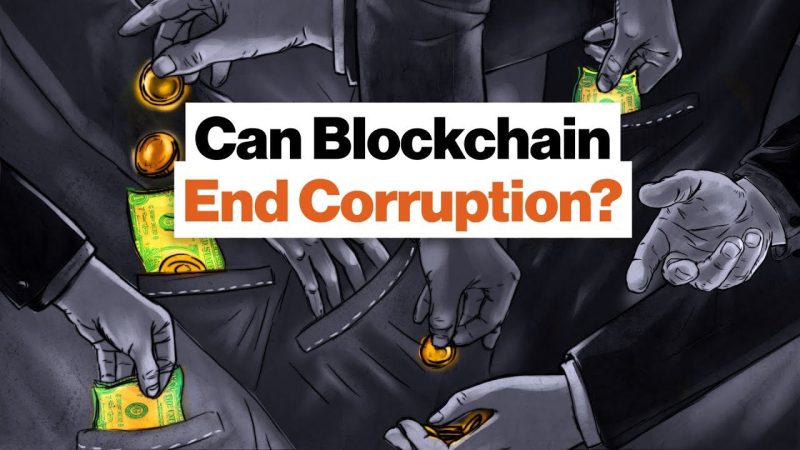
    As India celebrated its 76th independence day with great fanfare and jubilation, it is time to introspect on the most serious threat to India’s growth and emergence as a world. This threat is corruption, which is internal and societal. Over the 75 years of modern India’s journey, corruption has become endemic in Indian society. Infused by the political culture, corruption has seeped into every aspect of governance, be it the executive, legislature, or judiciary. This is so because an average citizen has come to accept bribing as a routine and inevitable part of daily life. Hence, if India has to eliminate the scourge of corruption it needs a massive transformation of its society. This can come only through the sustained practice of transparency, ruthless accountability, efficiency, and deterrent punishment. Corruption is commonly perceived as related to monetary benefits but it is much more in terms of misuse of power, coercion, disinformation, lack of transparency, non-performance, inefficiency and delay tactics, and the lack of accountability/responsibility. There is a misconception that digitisation will overcome corruption. Unless timelines, tamper-proof records, and transparency are ensured the corrupt will find ways to get around. These are clearly seen in the revenue tax systems, licensing systems, land registration systems etc. Even though these departments have digitised the processes well, there is a proliferation of middlemen linking the client and the department. This can only be eliminated by the right policies that enforce strict timelines, respond to citizens’ complaints, enforce accountability and transparency on the officials and create clarity for the public in the usage of such systems. The adoption of blockchain technologies could go a long way toward eliminating corruption in India. Widespread corruption has been India’s greatest threat and it is never more urgent than now to address this problem through innovative technologies like blockchain.

    TPF republishes this article on ‘Blockchain and Governance’  from the World Economic Forum under the creative commons license 4.0

    TPF Editorial Team

    Key Points

    • Blockchain could increase the fairness and efficiency of government systems while reducing opportunities for corruption;
    • Blockchain could improve the transparency and disclosure of procurement processes, investment in which can be lost to corruption;
    • The emerging technology can also enhance the property and land registry systems, streamlining lengthy processes and protecting people’s rights.

    Governments regularly have to make trade-offs between efficiency and fairness in their services. Unfortunately, choosing one over the other often increases the likelihood of corruption. In efficient systems, the public is largely content to operate within the bounds of that system; inefficient systems cause large numbers of individuals to seek less-than-legal workarounds. Similarly, fair systems engender trust, pride and a sense of community; while unfair systems encourage individuals to seek out illegal alternatives without remorse.

    Occasionally, new technologies come along that offer the opportunity to increase both efficiency and fairness. Blockchain is one such opportunity and it has a variety of use-cases for government applications. Here are two in more detail:

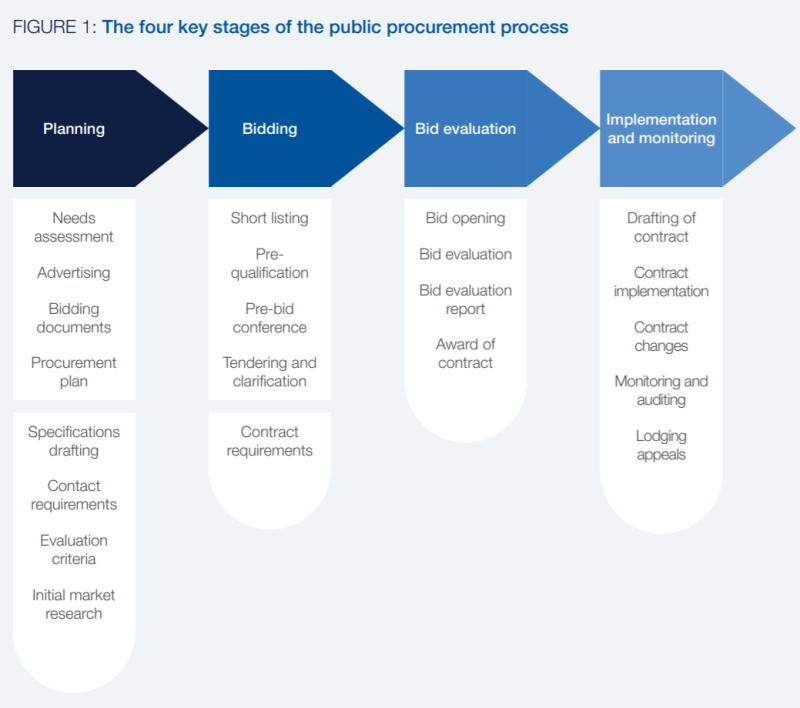
    Blockchain and procurement

    Public procurement is the process of governments acquiring goods, services and works. It represents a significant portion of governmental budgets, accounting for 29% of general government expenditure totalling €4.2 trillion in OECD countries in 2013. With so much money at stake, it is unsurprising that OECD estimates that 10-30% of the investment in publicly funded construction projects may be lost to corruption.

    Public procurement is vulnerable to corruption for a number of reasons. Parties in the procurement process, both on the public and private sides, are induced into corrupt acts by the size of potential financial gains, the close interaction between public officials and businesses, and how easy it is to hide corrupt actions. Blockchain has the potential to protect against these weaknesses at almost every stage of the procurement process.

    In the planning stage, public officials create evaluation criteria by which bidding companies will be judged. In the bidding evaluation stage, public officials assign scores to companies using the evaluation criteria as their rubric. Without transparency, there are many opportunities for compromised public officials to rig the outcome of the evaluation process. Evaluation criteria could be retroactively changed or company bids altered, for example. Blockchain can guarantee any change is public, the original information is retained and there is a record of who made the change.

    Blockchain can also encourage a wider coalition of stakeholders to participate in and monitor procurement cycles. Too often, the most active stakeholders in any given procurement process are the public officials and the businesses directly involved – a potential problem when more than half of all foreign bribery cases likely occur to obtain public procurement contracts. Watchdog organizations, end-users, the media and citizens are discouraged from participating because procurement information is not readily available, untrustworthy, modified and/or delayed. Blockchain can provide an easily accessible, tamper-proof and real-time window into ongoing procurement processes

    Projects integrating blockchain into procurement, such as this pilot programme in Colombia, conclude that “blockchain-based e-procurement systems provide unique benefits related to procedural transparency, permanent record-keeping and honest disclosure.” The Colombia project noted several drawbacks, such as scalability and vendor anonymity, but newer proposals like this one to overhaul India’s public procurement system are taking steps to overcome those and other shortcomings.

    Blockchain and registries

    Land title registries track the ownership of land and property for a given region. Registration titling systems have had important consequences for the economy, leading to “better access to formal credit, higher land values, higher investment in land, and higher income.” Yet they are far from perfect. They are inefficient, for example, closing a property sale can take months and typically consumes 2-5% of the purchase price of a home. Registration systems can act as bottlenecks for land transactions. There are complaints going back to 2015 of England’s Land Registry having six-month transaction delays and similar complaints persisted in 2020.

    The inefficiencies in land titling systems are a major source of corruption. The Organized Crime and Corruption Reporting Project’s 2019 report on land registry corruption in Bangladesh found that obtaining a licence as a deed writer incurs a bribe to the highest-level administrators. Land registry corruption is not restricted to developing regions: in regions with longer histories of legal stability, it simply becomes more complex. Anti-corruption NGO, Global Witness, estimated in 2019 that £100 billion worth of property in England and Wales was secretly owned by anonymous companies registered in tax havens.

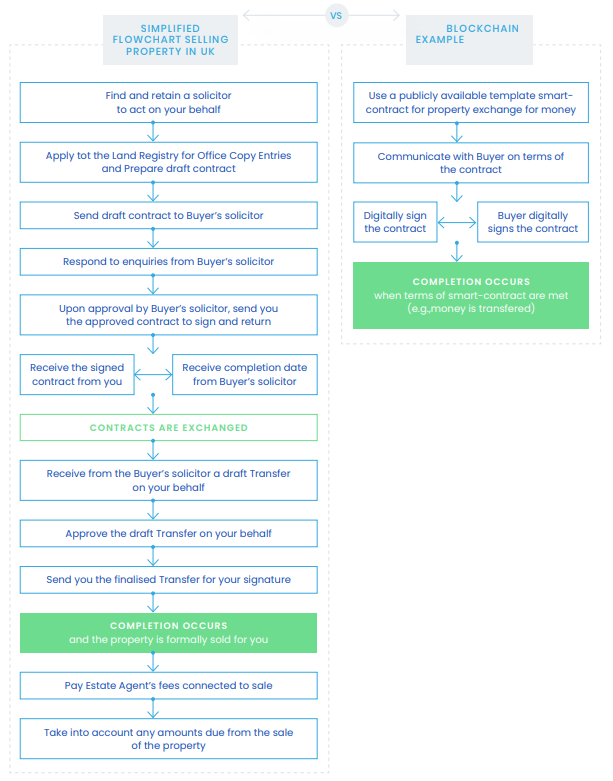
    A good first step to fighting corruption is by cutting down on inefficiencies. Blockchain can streamline much of the process. Take, for example, the number of steps required in the UK for one person to sell the property to another person and compare this with a blockchain-based registry system.

    Some countries are already experiencing positive results. In 2018, Georgia registered more than 1.5 million land titles through their blockchain-based system.

    An urban land registry project underway in Africa uses blockchain to address the problems of digitizing urban land registries. In many densely populated impoverished urban areas, no pre-existing land registry or paper trail exists. Relying on the meagre data available often causes legal disputes. Courts quickly become overwhelmed and digitization efforts stall.

    Blockchain is now being added to the project. To confirm property rights, the new system seeks out and consults community elders. Through a blockchain-based application, those elders receive the authority to confirm the validity of land registry claims. The elders can check directly with residents if they consent to the land assessment. By delegating cryptographically guaranteed authority to respected community members, the quality of the data is improved and the number of land dispute cases handled by the judiciary should decrease. Finally, the remaining cases should resolve faster since the elders’ cryptographic confirmations are admissible as evidence for land dispute resolution.

    The final challenge: Adoption

    The government blockchain-based projects referenced in this article represent just a few of a growing number of pilot or in-production applications of blockchain. This shows that governments are serious about fixing inefficient and unfair services. The potential gains from blockchain are substantial, yet as a new technology, there are many challenges in designing and implementing blockchain-based applications. For large institutions such as governments to deploy blockchain-based applications in a timely fashion and reap the benefits, education and tools are imperative.

  • The Bridge on River Chenab

    The Bridge on River Chenab

    “The only way to discover the limits of the possible is to go beyond them into the impossible”

    -Arthur C. Clarke

    Introduction

    On 13 Aug 2022, the bridge on the River Chenab in the Reasi District of J&K was finally completed. It was a case of the impossible becoming possible. It all happened because of a very high degree of self-belief of those who planned it and the sincerity of thousands of those who worked hard for the last 18 years.   Indeed, it was the best gift the Indian Railway in general and Indian Engineers, in particular, could give to India on the 76th Independence Day of India. It is also highly symbolic that it is located in the State of J&K and in a way appeared to be a giant step towards the integration of J&K with the rest of the country.

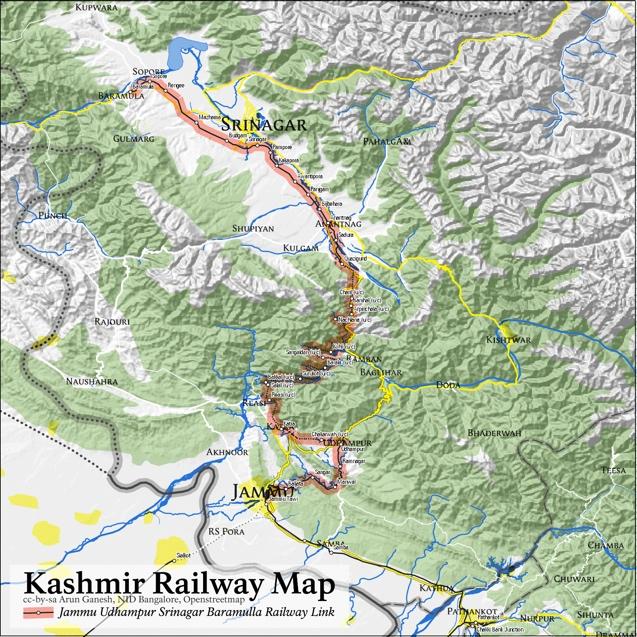
    The Bridge over the River Chenab is part of the Jammu-Udhampur-Baramulla Railway line, which is being constructed. While Sections of Jammu-Udhampur, Udhampur-Katra and Banihal-Baramulla are already completed and opened for traffic, section Katra- Banihal is still not complete. The degree of difficulty in this section is enormous. Besides this Bridge on Chenab (more about it a little later), the Bridge on Anji Khad (which is under construction) and a total of 35 tunnels and 37 bridges make this section of 111 km in the mountainous terrain extremely challenging and an engineering marvel in the making.

    Progress of the Project –  It is a 356 km railway project, starting at Jammu and going up to Baramulla. It was started in 1983 with the objective of connecting Jammu Tawi to Udhampur.  Construction of the route faced natural challenges including major earthquake zones, extreme temperatures and inhospitable terrain.  Finally, in 2005  The 53 km long Jammu–Udhampur section opened after 21 years with 20 tunnels and 158 bridges. The cost of the project had escalated to ₹515 crores from the original estimated cost of ₹50 crores.  In 1994 The railway accepted the necessity to extend the track to Baramulla. However, at that point it was thought that the project will have two disconnected arms; one from Jammu to Udhampur and the second from Qazigund to Baramulla. In 2002 the GoI declared this project to be a national project. This means hereafter, the entire funding will be from the Central Budget. At that time the necessity was also accepted to connect the two disconnected arms. The estimated cost of the project assessed then was   ₹6,000 crore.  In 2008 the 66 km section between Anantnag and Manzhama (outside Srinagar) was opened for traffic. In 2009 this Service was extended to Baramulla. During the same year, the line from Anantnag was extended to Qazigund.

    Also  Around the same time, an extension of the track from Baramulla to Kupwara was proposed, and its survey got completed in 2009. In 2009 itself, work on the section between Katra and Qazigund resumed after a review based on geotechnical studies. In 2011, an 11.215 Km long Banihal Qazigund tunnel across the Pir Panjal Range was completed.  This paved the way for a trial run in Dec 2012 from Banihal to Qazigund. In 2014 the train route from Udhampur to Katra was also operationalised. Now the only missing link in this nationally vital rail line was Katra-Banihal. Finally, in 2018 the GoI approved the extension of the railway line to Kupwara.

    Degree of Difficulty in Katra- Banihal Section – This is a 111 km long stretch. 97.34 km of this stretch will be through tunnels. There are 20 Major (including the bridge across the Chenab river and a bridge on Anji Khad) and 10 minor bridges on this stretch. 

    Bridge Across Chenab

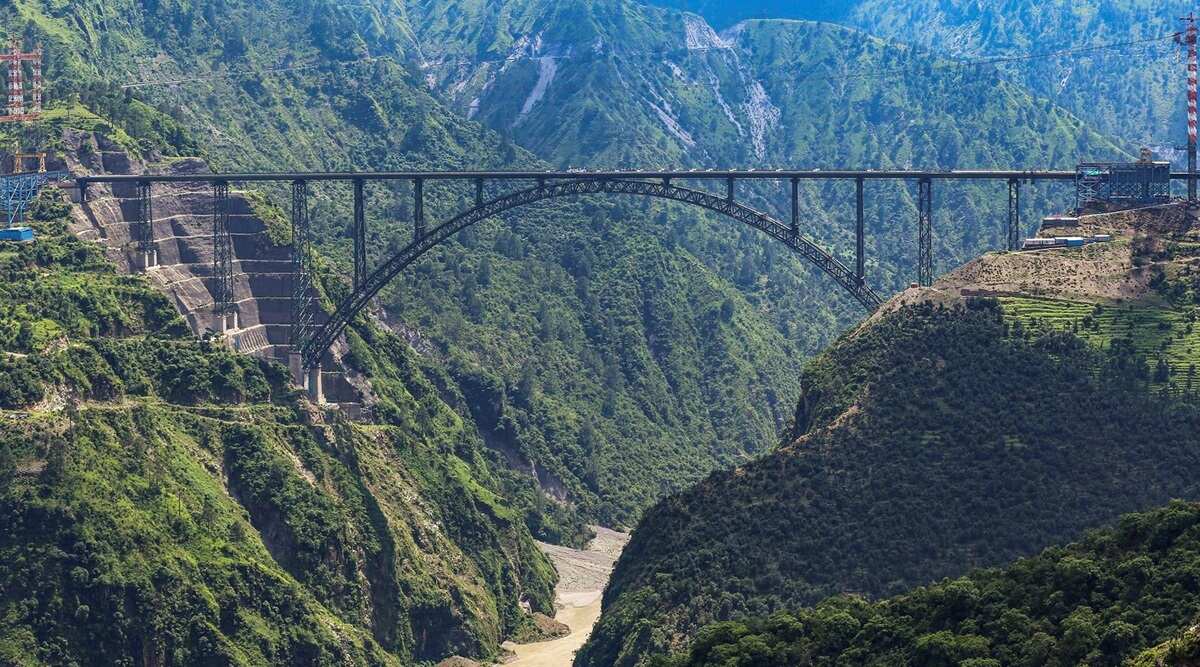
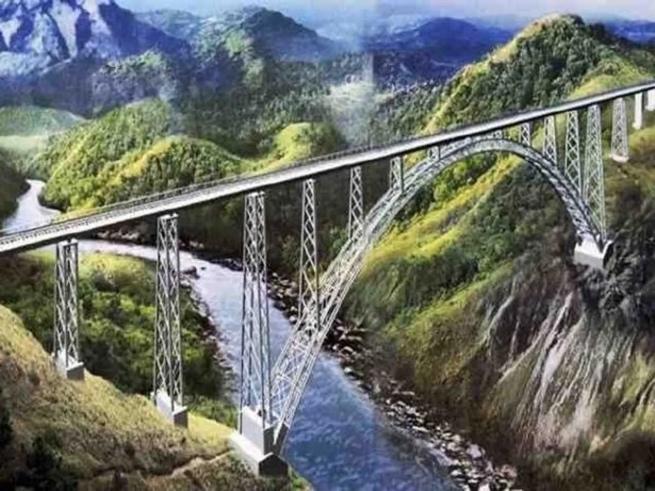
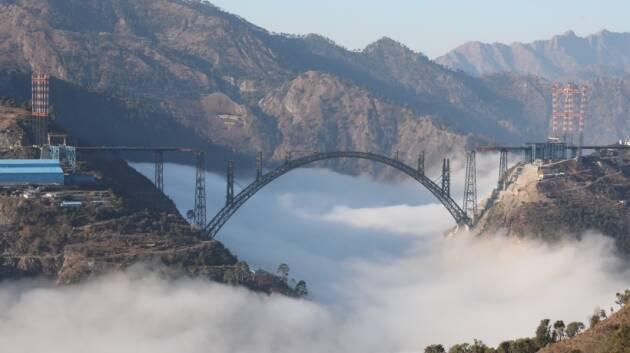
    Location: The Chenab Rail Bridge is a steel and concrete arch bridge between Bakkal and Kauri in the Reasi district of J&K, India.  It needs to be noted that it is the highest railway bridge in the world. After many hick-ups, finally in 2012 excavation of the foundation of the bridge commenced. The tender was with Afcons Infrastructure Limited. The alignment crosses a deep gorge of the Chenab River, which necessitates the construction of a long-span railway bridge with a viaduct for approaches on either side. 

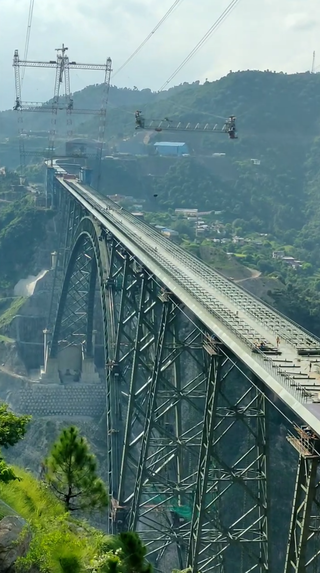
    Details: It is a 785 meters long single arch bridge where the main arch is 467 meters. The total span of the bridge is 1315 meters including a viaduct of 650 meters on the Northern side, Deck height is 359 meters above the river bed and 322 meters above the water surface which is 35 meters more than the height of the Eiffel Tower. The project also entails the construction of 203 km of access roads.  The deck is 13.5 meters wide, where two rail tracks will be available. The total cost of the Bridge is Rs 1486 Crores.


    Design: The steel arch has been planned because the construction of the pillar was difficult and the load had to be distributed. Chords have been provided to cater for the swaying load. The steel structures of the bridge were manufactured in workshops built in the mountains. The workshops had been moved to the building site because there is no proper road network in the challenging terrain. The longest building parts that could be delivered to the site were 12 meters in length. Therefore, four workshops were established in the mountains. Workshops and paint shops were built on both sides of the valley. All steel materials, except for the smallest rolled profiles, were delivered to the mountains as steel boards. The insufficient infrastructure of the area caused additional problems. There was no electricity and the water of the river was not suitable for manufacturing concrete. All electricity had to be produced at the site and the water was delivered from further away in the mountains. The job was also challenging because the track had a curvature in the approach bridge. In this section, the construction stage bearings had been designed in such a way that it was possible to launch the steel deck in the curvature portion as well. The bridge consists of about 25000 tonnes of steel structures, the main portion of which was used for the arch bridge section. It is a unique design and as such none of the Indian codes fully catered for the design validation. Therefore it was decided to follow the BS Code. The design also caters for wind load effects as per wind tunnel tests. It can cater for wind pressure of 1500 Pa. It is a blast resistance design. The design of the decking has been checked for fatigue as per the BS Code. The most important aspect is that it caters for redundancy within the structure, for a lower level of operation during mishaps and against collapse in extreme cases of one-pier failure. The area has high seismicity and the design was planned to withstand earthquakes of the severity of 8 on the Richter Scale. The bridge design is for a rail speed of 100 kmph. This means it can withstand very high-intensity of vibrations. The designed life of the bridge is 120 years and to take care of assessed steel fatigue the fatigue design selected is BS:5400 Part-10. The bridge will be able to withstand a temperature of minus 200C and a wind speed of 266 kmph.

    Team: The viaduct and foundation have been designed by M/s WSP(Finland) and the Arch design has been made by M/s Leonhart, Andra and Partners (Germany), the foundation protection has been designed by IISc Bangalore. The executing agency has been M/s Konkan Railway Corporation Limited.

    Status of Katra-Banihal project

    Although, the construction of Chenab Bridge is a major milestone in the progress of the project, however, still many more landmarks are required to be crossed before the completion of the project. Foremost of them is the Anji Khad bridge which is expected to be ready only by Dec 2022. It is expected that this rail Section will finally be operational by the middle of 2023.

    Conclusion

    The Jammu-Udhampur-Katra-Banihal-Srinagar-Baramulla Rail project is a vital national project which has a major bearing on national security and nation building. It is a matter of pride that Indian Engineers have achieved what at one point had appeared impossible. It will help in the integration of J&K with the rest of the country and will help strategically in many ways. The completion of the project will also give confidence to expeditiously complete other projects of national importance like; the railway line to Leh and the Railway line to Tenga in the North-East.

    End Note:

    1. Conceptual Design of the Chenab Bridge in India by Pekka Pulkkine WSP Finland, S Hopf and A Jutila. Available on Research Gate: https://www.researchgate.net/publication/257725212_Conceptual_Design_of_the_Chenab_Bridge_in_India.

    2. An internet upload: https://byjus.com/current-affairs/chenab-bridge/

    3. A Report by OT Staff, “Once the bridge is completed, it will provide all-weather connectivity between Kashmir and the rest of India” reported on 07 Apr 2021 and uploaded on https://www.outlookindia.com/outlooktraveller/travelnews/story/71397/all-about-the-chenab-bridge

    4. An internet upload: https://en.wikipedia.org/wiki/Jammu–Baramulla_line

    5. An internet upload: https://en.wikipedia.org/wiki/Chenab_Rail_Bridge

    6. An internet upload: https://www.pib.gov.in/PressReleasePage.aspx?PRID=1709652

    7. Zee Media Bureau, “Indian Railways: Delhi-Kashmir, Katra-Banihal train route to open soon, project nears completion” dated 08 Aug 2022 and uploaded on https://zeenews.india.com/railways/indian-railways-delhi-kashmir-katra-banihal-train-route-to-open-soon-project-nears-completion-2494827.html

    Image 1 Credits: Arun Ganesh

    Image 2 Credits: Indian Railways

    Image 3 Credits: Indian Express

    Image 4 Credits: Indian Railways

    Feature Image Credits: The Indian Express

  • Rural Agriculture and the new wave of Migrant Workers to Rural Space

    Rural Agriculture and the new wave of Migrant Workers to Rural Space

    Abstract

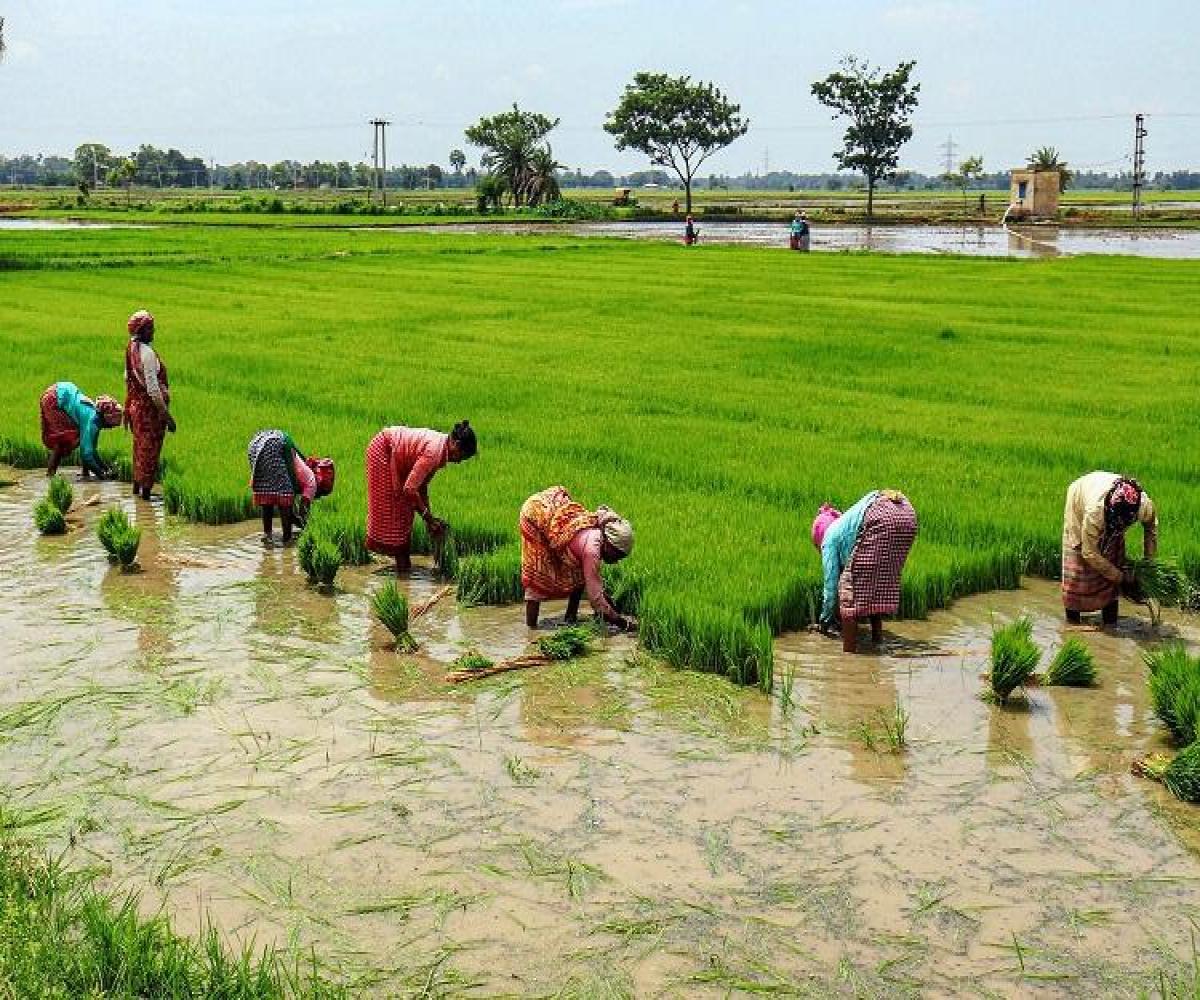
    Home, belongingness, and identity bring comfort to human existence, but local communities are challenged and become highly volatile by the sudden influx of people from different regions in search of livelihood and survival. Some migrate in their quest to find new opportunities in education, employment, and better living conditions from their home state, but some are displaced due to loss of livelihood, low employment, and lack of safety. This article analyses internal migration toward Tamil Nadu. The migrant population in Tamil Nadu accounts for 18.85 lakh according to the 2011 census, whereas other state migrants account for only 6.2% (Radhakrishnan & Vasanth, 2019). Most migration in the past has been towards the cities for chances of better livelihood and stable jobs. However, migrant workers travelling towards rural areas have been increasingly found working as agricultural labourers. S. Irudaya Rajan, a professor at the Centre for Developmental studies in his work, points out the importance of migrants to this economy as there is a constant outflow of the young population, with reservation wages in this region being high (Radhakrishnan & Vasanth, 2019). A report by the Federation of Tamil Nadu Agricultural Association suggests that over 8,67,582 farmers have stopped agricultural practices, and the market has been taken over by private players who require agricultural labourers (Sreemathi, 2019). This demand can attract migrant workers to rural areas. This article examines the migration pattern in Tamil Nadu to understand the inflow and outflow population, the reasons behind the outflow of farmers from the system and the new wave of migrant workers to rural Tamil Nadu.    

    Introduction

    Millions of people move every year hoping for a better livelihood and future, but the reality may be bitter for some. Nine million people have been migrating annually between states as per the Railway’s data from 2011 to 2016. Around 30% of the Indian population represents the varied level of the migrant population (Migration, 2022). Various factors have contributed to migration. The pull factors which attract people towards the destination include better living conditions, better employment, quality education, absence of violence and high wage rates. The push factors, on the other hand, include the lack of welfare activity, discrimination towards a community, lack of employment and lower wage rates. In both instances, economic ambition occupies the centre space. Thus, it is crucial to form a developmental economy for the residing population and the migrating one. The pull factors usually replace the push factors when the socio-economic condition in the country facilitates good life. People have been moving towards cities, hoping to find better employment and livelihood in the globalised world, making cities the hub for development. In Tamil Nadu, the movement toward the city area was triggered by early industrialisation in the 1980s, when manufacturing capacity accounted for around 26% of its GDP, higher than the national average of 15% (Mahambare & Dhanaraj, 2021). The 1990s liberalisation policy created mobility and development by expanding the economic horizons to telecom, software and banking (Migration to Chennai, 2010). This socio-economic mobility has greatly impacted the state’s rural economy and continues to be one of the few contributors to migration from agriculture. In recent times, farmers are selling out their lands and changing their occupations or working as agricultural labourers. The agricultural sector requires a considerable labour population. This demand for labour forces along with the lockdown during the Covid pandemic has fuelled a new wave of migrant workers in rural areas in south India. However, it is essential to study the causes of the movement of the traditional population from the industry, which helps understand the patterns that need to be avoided.

    Migration out of Agriculture

    Agriculture has long been a community practice in Tamil societies, but the migration of farmers continues to challenge the status quo. A report by the Federation of Tamil Nadu Agricultural Association mentions that over 8,67,582 farmers have stopped agricultural practices (Sreemathi, 2019). Lower wage rates, discrimination, heavy workload, lack of welfare and crop failure are the main reasons for displacement. Since the agricultural sector is seasonal, the wages are decided by workdays, seasons, and piece/ quantity rate, which leads to an unsteady wage rate based on the season, with fewer or no jobs in some seasons. People, thus, prefer to work non-farm jobs for a steady income throughout the year. Some have been living as labourers for generations on the farm since only a handful of the population possess larger farmlands. A study by Sato Keiko (2011) traces this class difference, farmland size, and the employment status of migrants from a rural village in Madurai. He points out that the village’s upper-class children with larger farms migrated to the city and acquired white-collar jobs. The middle class and the marginal groups, on the other hand, usually landed in blue-collar jobs.  Interestingly, he notes that the aspiration to educate and climb the socio-economic ladder has recently been high among the latter (Keiko, 2011). This aspiration leads them to migrate to cities and take up factory jobs, which are comparatively better than being engaged as farm labourers. Educational aspiration attempts to shake the traditional class structure and disparity that exists with it. 

    Additionally, only 27.1% adolescent population and 24.18% of the youth population were involved as agricultural labourers in 2014 (Sivakumar, 2014). Another reason for the migration is crop failure induced by unpredictable heavy rainfall and drought. Farmers who cannot profit or make ends meet when the crop collapses, end up falling into debt.  

    More than 85% of people working in the state under MGNREGA are women, higher than the national average of 56% and 28% of the Dalit population (Ramakrishnan, 2017)

    The Mahatma Gandhi Rural Employment Guarantee Act (MGNREGA) Scheme has been argued to be one of the major reasons behind the declining numbers of farm labourers When the scheme started, it provided the rural population with a higher income of Rs. 100 compared to farm jobs which offered Rs. 40 a day (In Tamil Nadu labourers, 2010). MGNREGA acts as a precursor for the high wage rate in agriculture as it competes with the scheme to attract more people for work. In 2020, the wage rate for agriculture labourers had increased to Rs. 392, and the notified MGNREGA stood at Rs. 273, which was lower than the farm wage (Aditi, 2021). However, along with steady wages and less workload, MGNREGA has continued to be a source of economic empowerment for women. It enables pathways to formal financial institutions and personal saving habits – “I would be working like a bonded labourer again under any big landowning agriculturist, if there was no Mahatma Gandhi National Rural Employment Guarantee Scheme (MGNREGS)” (Ramakrishnan, 2017). These interviews collected by Ramakrishnan, senior journalist for The Hindu, shed light on the women’s attitude and discontent toward farm jobs. More than 85% of people working in the state under MGNREGA are women, higher than the national average of 56% and 28% of the Dalit population (Ramakrishnan, 2017). These marginal groups are frequently abused and sexually harassed by employers and landowners. In this regard, MGNREGA has provided them with a space to work with dignity. However, some experts like Vijayanand, former Secretary of the Union Minister of Panchayat Raj, opposed the arguments favouring MGNREGA arguing that the scheme did not provide jobs throughout the year and phased out the jobs in accordance with the lean season (Radhakrishnan, 2017). 

    Involvement of Migrants in Agriculture

    Tamil Nadu is a growing economy which renders a stay to 18.85 lakhs migrants, of which 6.2 % are from other states. The origin states of these migrant workers are Bihar, West Bengal, Odisha, Jharkhand, Chattishgarh and states of Northeast India. Some tribal communities migrated from areas with rich mineral resources like the Santal areas of West Bengal, MP and a few other areas in Jharkhand and Chattisgarh because of the prevalent mining practice and dam building. Also, tribal people were displaced because of the settlement of non-tribals in the region and deforestation. In some areas, low human development indicators have led to their displacement. Apart from these push factors, Tamil Nadu has a lot to offer in terms of its higher wage rates, better living conditions and political, religious and social freedom (Sami, Crossin, Jayapathy, Martin, et al., 2016). Once they migrate to Tamil Nadu through contractors, migrants are channelled to Chennai, Coimbatore, Tiruvallur, Tiruppur, Kancheepuram and Chengalpattu to work in manufacturing factories and construction sites. These migrants fill the state’s requirement for 3D jobs, as Dr Irudaya Rajan from the Tiruvananthapuram Centre for Developmental Studies mentioned (Radhakrishnan & Vasanth, 2019). These jobs are mostly dirty, demeaning and dangerous. Since the wage expectation of the state youth is high, the desperation to take up these jobs is low and job positions are thus occupied by migrant workers (Vasanth & Radhakrishnan, 2019).

    The Periodic Labour Force Survey (PLFS) data from 2018 to 2020 shows a sharp increase in employment in agriculture from 42.5 % in 2018 -19 to 45.6% in 2019-20 (CMIE, 2021)

    In the pre-Covid job market, population movement was constantly moving from rural villages to urban spaces in search of white and blue-collar jobs. However, Covid has shifted the employment market. The Periodic Labour Force Survey (PLFS) data from 2018 to 2020 shows a sharp increase in employment in agriculture from 42.5 % in 2018 -19 to 45.6% in 2019-20 (CMIE, 2021). Most people who changed jobs were formerly employed in construction and manufacturing. While the existing population migrates to cities in search of skilled labour, migrant workers find the farm jobs more appealing. Tamil Nadu provides an average salary of Rs. 392 per day for farm workers, which is higher than the national average of Rs. 348. Most states from which the migrants are displaced have far fewer wage rates; for instance, Jharkhand offered Rs. 258 in 2020 while the wage rate was Rs. 234 in Chhattisgarh (Directorate of Economics and Statistics, 2021). While their movement is unexpected, these migrant populations can contribute to the agricultural sector and rural development, but that cannot be done without good government policies. The GDP contribution of agriculture reduced from 55.3% in the 1950s to 21.8% in the 2000s (Gothoskar, 2021). Most government budgets have little concern for the agricultural economy. Thus, it is essential to implement policies for the existing agrarian population and the migrants. Also, there has been increasing distress caused by the growing movement of the migrants to farmland which continues to be heavily unorganised. Dr Irudaya Rajan, in his interviews, warns that this unexpected surplus labour availability in rural areas cannot accommodate everyone in the existing jobs, which may result in increased poverty and starvation (Nirupama, 2020).

    Furthermore, it backfires on the urban economy once industries open up completely and face a shortage of labour (Viswanathan, 2020). To know the current situation of migrant workers, state-level data collection is needed. Tamil Nadu collected the migrant database only once in 2015, following the fall of the Moulivakkam multistorey building. While Thangam Thennarasu, the Tamil Nadu Minister of Industries, mentioned collecting data on migrant workers in a press release, the agriculture sector was not mentioned (Kumar, 2021). Data collection is vital in formulating policies to accommodate the migrant workers in rural economies and avoid unexpected problems. 

    Measures to be taken

    Since the Agricultural sector offers seasonal employment, other sources of organised employment or schemes to assure livelihood during times of distress should be in place. While farming requires work like ploughing and harvesting, which is to be done all year-round, the revenue can be earned only in a particular season. If affected by climate calamities and crop failure, people are most likely to end up in debt. Hence, it is essential to employ migrants during the off-season and distress times in sustainable jobs. Most agricultural products are exported as raw materials or semi-processed to other countries, and therefore, the MSMEs in the rural areas can be focused on enhancing the exporting sector of agriculture.

    MOUS between states: The Tamil Nadu government has fewer memorandums of understanding (MOUs) on migrants, with focus mainly placed on Sri Lankan refugees. Thus, signing MOUs with the source state can improve the conditions of migrants and help governments to maintain a database of migrants (Sreelakshmi,2021). The databases can help in formulating policies.

    Welfare policies – Rashtriya Swasthya Bima Yojana (RSBY), a central-run health insurance scheme for people working in the unorganised sector and for those below the poverty line, has to be implemented appropriately, and the records should be maintained. Quality schooling for children of migrants working in rural spaces should be provided. Some states have offered regional language subject notebooks and learning kits through MOUs. Tamil Nadu should recruit staff in the favoured language. Further, skill enhancement training for the migrants should be provided.

    Conclusion

    Agriculture and rural development go hand in hand since 70% of rural households depend upon agriculture for their livelihood. Still, there is an increased pattern of traditional farmers moving out of the business and choosing other industries or being employed as agricultural labourers. This shift, accompanied by the Covid lockdown, has triggered an increased flow of migrant population back to farms as agricultural labourers. Unlike industries, the agricultural sector is unorganised and seasonal, making it highly vulnerable. Thus, it becomes essential to build a safety net for the traditional population and the migrants. These migrants, without proper policies and data entries, can be stranded; lacking identity, rights and political representation. Further, this sudden labour surplus cannot be accommodated immediately, creating a labour shortage in urban areas.  It is, thus, important to record migrant workers who return, the sector they are involved in, their security nets and most importantly, their availability in rural agriculture.

    Reference

    Aditi R. (2021, May 16). MGNREGA workers in Tamil Nadu allege underpayment and wage disparity. The times of India. Retrieved from https://timesofindia.indiatimes.com/city/chennai/mgnrega-workers-in-tamil-nadu-allege-underpayment-and-wage-disparity/articleshow/82673961.cms

    Dhanaraj Sowmya & Mahambare Vidya (2021, March 31). Tamil Nadu left Punjab, Bengal far behind. Here’s what it needs to do now. The Print. Retrieved from https://theprint.in/opinion/tamil-nadu-left-punjab-bengal-far-behind-heres-what-it-needs-to-do-now/631213/

    Directorate of Economics and Statistics. (2021). Agricultural wages India: 2019 – 20. Ministry of Agriculture & Farmers welfare. 

    Gothaskar Sujata. (2021, May 12). To Fully Understand the Migrant Worker Crisis, We Need a Larger Perspective. The Wire. Retrieved from https://thewire.in/rights/migrant-worker-crisis-larger-perspective-farm-land-industry

    In Tamil Nadu labourers choosing NREGA over farms. (2010, Nov 29). NDTV. Retrieved from https://www.ndtv.com/india-news/in-tamil-nadu-labourers-choosing-nrega-over-farms-440546

    Keiko Sato. (2011). Employment structure and Rural-Urban Migration in a Tamil Nadu Village: Focusing on difference by economic class. Southeast Asia Studies. Vol.49. Pg.22-51.

    Kumar Vijay. (2021, July 26). Tamil Nadu to create a databank of migrant workers. The Hindu. Retrieved from https://www.thehindu.com/news/national/tamil-nadu/databank-of-migrant-workers-soon-says-tamil-nadu-industries-minister/article35530808.ece

    Migration to Chennai follows industrial growth, but quality. (2010, April 13). The Times of India. Retrieved from https://timesofindia.indiatimes.com/city/chennai/migration-to-chennai-follows-industrial-growth-but-quality-of-life/articleshow/5798687.cms

    Radhakrishnan V & Vasanth B. A. (2019, September 08). Migrants in Tamil Nadu: case of much ado about nothing? The Hindu. Retrieved from https://www.thehindu.com/news/national/tamil-nadu/migrants-in-tamil-nadu-case-of-much-ado-about-nothing/article29364682.ece

    Ramakrishnan T. (2017, February 05). Job scheme, a mixed bag for rural labourers. The Hindu. Retrieved from https://www.thehindu.com/news/national/tamil-nadu/Job-scheme-a-mixed-bag-for-rural-labourers/article17197043.ece

    Sami Bernard. Crossin Sebastian, Jayapathy, Martin. P. O. (2016). A survey on Interstate migrants in Tamil Nadu. LISSTAR & Indian Social Institute. 

    Sivakumar B. (2014, November 02). Most of Tamil Nadu’s adolescents, youth live in rural areas, shows census. The times of India. Retrieved from https://timesofindia.indiatimes.com/city/chennai/most-of-tamil-nadus-adolescents-youth-live-in-rural-areas-shows-census/articleshow/45008956.cms

    Sreelakshmi Anjana. (2021, November 07). Distress Migration: A case study KBK districts in Odisha. The Peninsula Foundation. Retrieved from https://admin.thepeninsula.org.in/2021/11/07/distress-migration-a-case-study-of-kbk-districts-in-odisha/

    Sreemathi M. (2021, November 23). Migrants now enter agri fields in Nellai. The New Indian Express. Retrieved from https://www.newindianexpress.com/states/tamil-nadu/2021/nov/23/migrants-now-enter-agri-fields-in-nellai-2386930.html

    Viswanathan Nirupama. (2020, May 20). We have not factored in Tamil Nadu’s migrant workers in our realm of things: Expert. The new Indian Express. Retrieved from https://www.newindianexpress.com/states/tamil-nadu/2020/may/20/we-have-not-factored-in-tamil-nadus-migrant-workers-in-our-realm-of-things-expert-2145578.html

    Vyas Mahesh. (2021, August 09). Migration from factories to farms. Centre for Monitoring Indian Economy. Retrieved from https://www.cmie.com/kommon/bin/sr.php?kall=warticle&dt=20210809122441&msec=850

    Feature Image Credits: The News Minute
  • At 75, A time to Celebrate and Introspect

    At 75, A time to Celebrate and Introspect

    As modern, democratic India turns 75, it is indeed a time for celebration and introspection

    Addressing the historic session of the Constituent Assembly on the night of 14-15 August 1947, at the cusp of India’s independence, Jawaharlal Nehru voiced the yearning of millions of Indians when, in his matchless eloquence, he declared: “Long years ago, we made a tryst with destiny, and now the time comes when we shall redeem our pledge…At the stroke of the midnight hour, when the world sleeps, India will awake to life and freedom”.

    In what’s considered to be one of the finest speeches of the last century, Nehru also voiced the aspiration of Gandhiji, that their work would not be over till they wiped “every tear from every eye,” adding “this is no time for petty and destructive criticism, no time for ill-will or blaming others. We have to build the noble mansion of free India where all her children may dwell.”

    [powerkit_button size=”lg” style=”info” block=”true” url=”https://www.deccanherald.com/opinion/in-perspective/at-75-a-time-to-celebrate-and-introspect-1136410.html” target=”_blank” nofollow=”false”]
    Read More
    [/powerkit_button]

  • Ukraine War: India’s Stature in the Emerging World Order

    Ukraine War: India’s Stature in the Emerging World Order

    The war between Russia and Ukraine has caused a major disruption not only in that region, but the entire world. Power centres are shifting; a new world order is emerging out of this global churn. The world anxiously waits for India to take a more active role in a bid to end hostilities. What will India do?

    India’s firm stand of neutrality about the conflict in Ukraine has attracted considerable attention from the world’s strategic thinkers and governments. In this regard, many see the rise of India as a future pole power of the 21st century, as the current world order has entered a phase of instability, conflict, and competition. The Ukraine war may be the tipping point for the Euro-American dominance in the last three centuries, as a multi-polar world order is emerging, albeit slowly. India’s stature in this world order transformation is critical, as the non-western countries that constitute two-thirds of the world will meticulously observe and monitor it. A careful analysis of the ongoing transformation of the world order amidst the massive cacophony of propaganda and a plethora of biased reports (masquerading as research and academic outputs) is a huge challenge for serious researchers and policymakers.

    [powerkit_button size=”lg” style=”info” block=”true” url=”https://raksha-anirveda.com/ukraine-war-indias-stature-in-the-emerging-world-order/” target=”_blank” nofollow=”false”]
    Read More
    [/powerkit_button]

  • Macrovariable Projections in Uncertain Times

    Macrovariable Projections in Uncertain Times

    International factors and faulty data will impact India’s projections of GDP, inflation and balance of payments

    The Fed has raised its benchmark interest rate again by a whopping 0.75%. The Reserve Bank of India has also been forced to raise interest rates further but also take other steps. These decisions in the Monetary Policy Committee (MPC) meeting are based on what the members of the MPC see as the likely course of…

    [powerkit_button size=”lg” style=”info” block=”true” url=”https://www.thehindu.com/opinion/lead/macrovariable-projections-in-uncertain-times/article65747423.ece” target=”_blank” nofollow=”false”]
    Read More
    [/powerkit_button]

  • Indian Economy at 75: Trapped in a Borrowed Development Strategy

    Indian Economy at 75: Trapped in a Borrowed Development Strategy

    In 1947, at the time of Independence, India’s socio-economic parameters were similar to those in countries of South East Asia and China. The level of poverty, illiteracy, and inadequacy of health infrastructure was all similar. Since then, these other countries have progressed rapidly leaving India behind in all parameters. ‘Why is it so?’ should be the big question for every Indian citizen in this time of our 75th anniversary celebrations.


    Introduction

    India at 75 is a mixed bag of development and missed opportunities. The country has achieved much since Independence but a lot remains to be done to become a developed society. The pandemic has exposed India’s deficiencies in stark terms. The uncivilized conditions of living of a vast majority of the citizens became apparent. According to a report by Azim Premji University, 90% of the workers said during the lockdown that they did not have enough savings to buy one week of essentials. This led to the mass migration of millions of people, in trying conditions from cities to the villages, in the hope of access to food and survival.

    Generally, technology-related sectors, pharmaceuticals and some producing essentials in the organized sectors have done well in spite of the pandemic. So, a part of the economy is doing well in spite of adversity but incomes of at least 60% of people at the bottom of the income ladder have declined (PRICE Survey, 2022). The great divide between the unorganized and organized parts of the economy is growing. The backdrop to these developments is briefly presented below.

    Structure and Growth of the Economy

    In 1947, at the time of Independence, India’s socio-economic parameters were similar to those in countries of South East Asia and China. The level of poverty, illiteracy, and inadequacy of health infrastructure was all similar. Since then, these other countries have progressed rapidly leaving India behind in all parameters. So, India has fallen behind relatively in spite of improvements in health services and education, diversification of the economy and development of the industry.

    In 1950, agriculture was the dominant sector with a 55% share of GDP which has now dwindled to about 14%. The share of the services sector has grown rapidly and by 1980 it surpassed the share of agriculture and now it is about 55% of GDP. The Indian economy has diversified production `from pins to space ships’.

    Agriculture grows at a trend rate of a maximum of 4% per annum while the services sector can grow at even 12% per annum. So, there has been a shift in the economy’s composition from agriculture to services, accelerating the growth rate. The average growth rate of the economy between the 1950s and the 1970s was around 3.5%. In the 1980s and 1990s, it increased to 5.4% due to the shift in the composition. There was no acceleration in the growth rate of the economy in the 1990s compared to the 1980s. This rate again increased in the period after 2003 only to decline in 2008-09 due to the global financial crisis. Subsequently, the rate of growth has fluctuated wildly both due to global events and the policy conundrums in India.

    There was the taper tantrum in 2012-13 which cut short the post-global financial crisis recovery. Demonetization in November 2016 adversely impacted growth. That was followed by the structurally flawed GST. These policies administered shocks to the economy. Then came the pandemic in 2020. The economy’s quarterly growth rate had already fallen from 8% in Q4 2017-18 to 3.1% in Q4 2019-20, just before the pandemic hit.

    1980-81 marked a turning point. Prior to that, a drought would lead to a negative rate of growth in agriculture and of the economy as a whole. For instance, due to the drought in 1979-80, the economy declined by 6%. But, that was the last one. After that, a decline in agriculture has not resulted in a negative growth rate for the economy. The big drought of 1987-88 saw the economy grow at 3.4%. After 1980-81, the economy experienced a negative growth rate only during the pandemic which severely impacted the services sector, especially the contact services.

    Employment and Technology Related Issues

    Agriculture employs 45% of the workforce though its share in the economy (14%) has now become marginal. It has been undergoing mechanisation with increased use of tractors, harvester combines, etc., leading to the displacement of labour. Similar is the case in non-agriculture. So, surplus labour is stuck in agriculture leading to massive disguised unemployment.

    India is characterized by disguised unemployment and underemployment.Recent data points to growing unemployment among the educated youth. They wait for suitable work. The result is a low labour force participation rate (LFPR) in India (in the mid-40s) compared to similar other countries (60% plus).The gender dimension of unemployment and the low LFPR is worrying with women the worst sufferers.

    India’s employment data is suspect. The reason is that in the absence of unemployment allowance, people who lose work have to do some alternative work otherwise they would starve. They drive a rickshaw, push a cart, carry a head load or sell something at the roadside. This gets counted as employment even though they have only a few hours of work and are underemployed. So, India is characterized by disguised unemployment and underemployment.

    Recent data points to growing unemployment among the educated youth. They wait for suitable work. The result is a low labour force participation rate (LFPR) in India (in the mid-40s) compared to similar other countries (60% plus). It implies that in India maybe 20% of those who could work have stopped looking for work. No wonder for a few hundred low-grade government jobs, millions of young apply. The gender dimension of unemployment and the low LFPR is worrying with women the worst sufferers.
    These aspects of inadequate employment generation are linked to automation and the investment pattern in the economy. New technologies that are now being used in the modern sectors are labour displacing. For instance, earlier in big infrastructure projects like the construction of roads, one could see hundreds of people working but now big machines are used along with a few workers.

    Further, the organized sectors get most of the investment so little is left for the unorganized sector. This is especially true for agriculture. Thus, neither the organized sector nor agriculture is generating more work. Consequently, entrants to the job market are mostly forced to join the non-agriculture unorganized sector, which in a sense is the residual sector, where the wages are a fraction of the wages in the organized sector. The unorganized sector also acts as a reserve army of labour keeping organized sector wages in check

    Lack of a Living Wage

    To boost profits, the organized sector is increasingly, employing contract labour rather than permanent employees. This is true in both the public and private sectors. So, not only the workers in the unorganized sector, even the workers in the organised sector do not earn a living wage. Thus, most workers have little savings to deal with any crisis. They are unable to give their children a proper education and cannot afford proper health facilities. Most of the children drop out of school and can only do menial jobs requiring physical labour. They cannot obtain a better-paying job and will remain poor for the rest of their lives.

    The Delhi socio-economic survey of 2018 pointed to the low purchasing power of the majority of Indians. It showed that in Delhi, 90% of households spent less than Rs. 25,000 per month, and 98% spent less than Rs. 50,000 per month. Since Delhi’s per capita income is 2.5 times the all India average, deflating the Delhi figures by this factor will approximately yield all India figures. So, 98 per cent of the families would have spent less than Rs.20,000 per month, and 90 per cent less than Rs.10,000 per month. This effectively implies that 90 per cent of families were poor in 2018, if not extremely poor (implied by the poverty line). During the pandemic, many of them lost incomes and were pauperized and forced to further reduce their consumption.

    Unorganized Sector Invisibilized

    In the unorganized sector, labour is not organized as a trade union and therefore, is unable to bargain for higher wages, when prices rise. It constitutes 94% of the workforce and has little social security. No other major world economy has such a huge unorganized sector. No wonder when such a large section of the population faces a crisis in their lives, the economy declines, as witnessed during the pandemic. India’s official rate of growth fell more sharply than that of any other G20 country.

    The micro sector has 99% of the units and 97.5% of the employment of MSME and is unlike the small and medium sectors. The benefits of policies made for the MSME sector do not accrue to the micro units.

    Policymakers largely ignore the unorganized sector. The sudden implementation of the lockdown which put this sector in a deep existential crisis points to that. The micro sector has 99% of the units and 97.5% of the employment of MSME and is unlike the small and medium sectors. The benefits of policies made for the MSME sector do not accrue to the micro units.

    Invisibilization of the unorganized sector in the data is at the root of the problem. Data on this sector become available periodically, called the reference years. In between, it is assumed that this sector can be proxied by the organized sector. This could be taken to be correct when there is no shock to the economy and its parameters remain unchanged.

    Demonetization and the flawed GST administered big shocks to the economy and undermined the unorganized sector. Its link with the organized sector got disrupted. Thus, the methodology of calculating national income announced in 2015 became invalid.

    The implication is that the unorganized sector’s decline since 2016 is not captured in the data. Worse, the growth of the organized sector has been at the expense of the unorganized sector because demand shifted from the latter to the former. It suited the policymakers to continue using the faulty data since that presented a rosy picture of the economy. This also lulled them into believing that they did not need to do anything special to check the decline of the unorganized sector.

    Policy Paradigm Shift in 1947

    Growing unemployment, weak socio-economic conditions, etc., are not sudden developments. Their root lies in the policy paradigm adopted since independence.
    In 1947, the leadership, influenced by the national movement understood that people were not to blame for their problems of poverty, illiteracy and ill-health and could not resolve them on their own. So, it was accepted that in independent India these issues would be dealt with collectively. Therefore, the government was given the responsibility of tackling these issues and given a key role in the economy.

    Simultaneously, the leadership, largely belonging to the country’s elite, was enamoured of Western modernity and wanted to copy it to make India an ’advanced country’. The two paths of Western development then available were the free market and Soviet-style central planning. India adopted a mix of the two with the leading role given to the public sector. This path was chosen also for strategic reasons and access to technology which the West was reluctant to supply. But, this choice also led to a dilemma for the Indian elite. It had to ally with the Soviet Union for reasons of defence and access to technology but wanted to be like Western Europe.

    Both the chosen paths were based on a top-down approach. The assumption was that there would be a trickle down to those at the bottom. People accepted this proposition believing in the wider good of all. Resources were mobilized and investments were made in the creation of big dams and factories (called temples of modern India) that generated few jobs. They not only displaced many people trickle down was minimal. For instance, education spread but mostly benefitted the well-off.

    The Indian economy diversified and grew rapidly. An economy that for 50 years had been growing at about 0.75% grew at about 4% in the 1950s. But, the decline in the death rate led to a spurt in the rate of population growth. So, the per capita income did not show commensurate growth, and poverty persisted. Problems got magnified due to the shortage of food following the drought of 1965-67 and the Wars in 1962 and 1965. The Naxalite movement started in 1967, there was BOP crisis and high inflation in 1972-74 due to the growing energy dependence and the Yom Kippur war. Soon thereafter there was political instability and the imposition of an Emergency in 1975. The country went from crisis to crisis.

    Planning failed due to crony capitalism. The prevailing political economy enabled the business community to systematically undermine policies for their narrow ends by fueling the growth of the black economy.

    The failure of trickle-down and the cornering of the gains of development by a narrow section of people led to growing inequality and people losing faith in the development process. Different sections of the population realized that they needed a share in power to deliver to their group. Every division in society — caste, region, community, etc. — was exploited. The leadership became short-termist and indulged in competitive populism by promising immediate gains.

    The consensus on policies that existed at independence dissipated quickly. Election time promises to get votes were not fulfilled. For instance, PM Morarji Desai said that promises in the Janata Dal manifesto in 1977 were the party’s programme and not the government’s. Such undermining of accountability of the political process has undermined democracy and trust and aggravated alienation.

    Black Economy and Policy Failure

    The black economy has grown rapidly since the 1950s with political, social and economic ramifications. Even though it is at the root of the major problems confronting the country, most analysts ignore it.

    So, the black economy controls politics and to retain power it undermines accountability and weakens democracy.

    It undermines elections and strengthens the hold of vested interests on political parties. The compromised leadership of political parties is open to blackmail both by foreign interests and those in power. When in power it is willing to do the bidding of the vested interests. So, the black economy controls politics and to retain power it undermines accountability and weakens democracy.

    The black economy controls politics and corrupts it to perpetuate itself. The honest and the idealist soon are corrupted as happened with the leadership that emerged from the anti-corruption JP movement in the mid-1970s. Many of them who gained power in the 1990s was accused of corruption and even prosecuted. Proposals for state funding of elections will only provide additional funds but not help clean up politics.

    The black economy can be characterized as ’digging holes and filling them’. It results in two incomes but zero output. There is activity without productivity with investment going to waste. Consequently, the economy grows less than its potential. It has been shown that the economy has been losing 5% growth since the mid-1970s. So, if the black economy had not existed, today the economy could have been 8 times larger and each person would have been that much better off. Thus, development is set back. In 1988, PM Rajiv Gandhi lamented that out of every rupee sent only 15 paisa reaches the ground. P Chidambaram as FM said, `expenditures don’t lead to outcomes’.

    The black economy leads to the twin problem of development. First, black incomes being outside the tax net reduce resource availability to the government. If the black incomes currently estimated at above 60% of GDP could be brought into the tax net, the tax/GDP ratio could rise by 24%. This ratio is around 17% now and is one of the lowest in the world. Further, as direct tax collections rise, the regressive indirect taxes could be reduced, lowering inflation.

    India’s fiscal crisis would also get resolved. The current public sector deficit of about 14% would become a surplus of 10%. This would eliminate borrowings and reduce the massive interest payments (the largest single item in the revenue budget). It would enable an increase in allocations to public education and health to international levels and to infrastructure and employment generation.

    In brief, curbing the black economy would take care of India’s various developmental problems, whether it be lack of trickle-down, poverty, inequality, policy failure, employment generation, inflation and so on. It causes delays in decision-making and a breakdown of trust in society.

    Due to various misconceptions about the black economy, many of the steps taken to curb it have been counterproductive, like demonetization. Dozens of committees and commissions have analysed the issues and suggested hundreds of steps to tackle the problem. Many of them have been implemented, like reduction in tax rates and elimination of most controls but the size of the black economy has grown because of a lack of political will.

    Policy Paradigm Shift in 1991

    Failure of policies led to crisis after crisis in the period leading up to 1990. The blame was put on the policies themselves and not the crony capitalism and black economy that led to their failure. The policies prior to 1990 have been often labelled as socialist. Actually, the mixed economy model was designed to promote capitalism. At best the policies may be labelled as state capitalist and they succeeded in their goal. Private capital accumulated rapidly pre-1990. The Iraq crisis of 1989-90 led to India’s BOP crisis and became the trigger for a paradigm change in policies in favour of capital. The earlier more humane and less unequal path of development was discarded.

    Marketization has led to the ’marginalization of the marginals’, greater inequality and a rise in unemployment.

    In 1991, a new policy paradigm was ushered in. Namely, ’individuals are responsible for their problems and not the collective’. Under this regime, the government’s role in the economy was scaled back and individuals were expected to go to the market for resolving their problems. This may be characterized as ’marketization’. This brought about a philosophical shift in the thinking of individuals and society.

    Marketization has led to the ’marginalization of the marginals’, greater inequality and a rise in unemployment. These policies have promoted ’growth at any cost’ with the cost falling on the marginalized sections and the environment, both of which make poverty more entrenched. So, the pre-existing problems of Indian society have got aggravated in a changed form.

    Poverty is defined in terms of the ’social minimum necessary consumption’ which changes with space and time. Marketization has changed the minimum due to the promotion of consumerism and environmental decay imposing heavy health costs.
    The highly iniquitous NEP is leading to an unstable development environment. The base of growth has been getting narrower leading to periodic crises. Additionally, policy-induced challenges like demonetization, GST, pandemic and now the war in Ukraine have aggravated the situation. These social and political challenges can only grow over time as divisions in society become sharper.

    Weakness in Knowledge Generation

    Why does the obvious not happen in India? No one disagrees that poverty, illiteracy and ill health need to be eliminated. In addition to the problems due to the black economy and top-down approach, India has lagged behind in generating socially relevant knowledge to tackle its problems and make society dynamic.

    Technology has rapidly changed since the end of the Second World War. It is a moving frontier since newer technologies emerge leading to constant change and the inability of the citizens to cope with it. The advanced technology of the 1950s is intermediate or low technology today.

    Literacy needs to be redefined as the ability to absorb the current technology so as to get a decent job. Many routine jobs are likely to disappear soon, like, driver’s jobs as autonomous (self-driving) vehicles appear on the scene. Most banking is already possible through net banking and machines, like, ATMs. Banks themselves are under threat from digital currency.

    So, education is no more about the joy of learning and expanding one’s horizon. No wonder, the scientific temper is missing among a large number of the citizens.

    India’s weakness in knowledge generation is linked to the low priority given to education and R&D. Learning is based substantially on `rote learning’ which does not enable absorption of knowledge and its further development. So, education is no more about the joy of learning and expanding one’s horizon. No wonder, the scientific temper is missing among a large number of the citizens. Dogmas, misconceptions and irrationalities rule the minds of many and they are easily misled. This is politically, socially and economically a recipe for persisting backwardness.

    In spite of policy initiatives regarding education, like, the national education policy in 1968 and 1986, there is deterioration. This is because the milieu of education is all wrong. Policy is in the hands of bureaucrats, politicians or academics with bureaucratized mindsets. So, policies are mechanically framed. Like the idea that ’standards can be achieved via standardization’.

    Learning requires democratization. So, institutions need to be freed from the present feudal and bureaucratic control. Presently, institutions treat dissent as a malaise to be eliminated rather than celebrated. Courses are sought to be copied from foreign universities. JNU is told to be like Harvard or Cambridge. This is a contradiction in terms; originality cannot be copied. Courses copied from abroad tend to be based on the societal conditions there and not Indian conditions. Gandhi had said that the Indian education system is alienating and for many it still is.

    The best minds mostly go abroad and even if they return, they bring with them an alien framework not suited to India. So, as a society, we need to value ideas, prioritize education and R&D and generate socially relevant knowledge.

    Learning is given low priority because ideas are sought to be borrowed from abroad. So, the rulers have little value for institutions that could generate new ideas and inadequate funds are allotted to them. The best minds mostly go abroad and even if they return, they bring with them an alien framework not suited to India. So, as a society, we need to value ideas, prioritize education and R&D and generate socially relevant knowledge.

    Conclusion

    The growth at any cost strategy has been at the expense of the workers and the environment. This has narrowed the base of growth and led to instability in society — politically, socially and economically.

    India is a diverse society and the Indian economy is more complex than any other in the world. This has posed serious challenges to development in the last 75 years but undeniably things are not what they were. The big mistake has been to choose trickle-down policies that have not delivered to a vast number of people who live in uncivilized conditions. Poverty has changed its form and the elite imply that the poor should be grateful for what they have got. They should not focus on growing inequality, especially after 1991, when globalization entered the marketization phase which marginalizes the marginals.

    The growth at any cost strategy has been at the expense of the workers and the environment. This has narrowed the base of growth and led to instability in society — politically, socially and economically. The situation has been aggravated by the recent policy mistakes — demonetization, flawed GST and sudden lockdown. The current war in Ukraine is likely to lead to a new global order which will add to the challenges. The answer to ’why does the obvious not happen’ in India is not just economic but societal. Unless that challenge is met, portents are not bright for India at 75.

    This paper is based substantially on, `Indian Economy since Independence: Persisting Colonial Disruption’, Vision Books, 2013 and `Indian Economy’s Greatest Crisis: Impact of Coronavirus and the Road Ahead’, Penguin Random House, 2020.

    This article was published earlier in Mainstream Weekly.

    Feature Image Credit: Financial Express

    Other Images: DNA India, news18.com,  economictimes, rvcj.com

  • Three Years as a Union Territory: Human Rights in J&K

    Three Years as a Union Territory: Human Rights in J&K

    [powerkit_button size=”lg” style=”info” block=”true” url=”https://admin.thepeninsula.org.in/wp-content/uploads/2022/08/Our-Annual-Report-Human-Rights-JK-2022_compressed-1.pdf” target=”_blank” nofollow=”false”]
    Download
    [/powerkit_button]

    The Forum for Human Rights in Jammu and Kashmir comprises an informal group of concerned citizens who believe that, in the prevailing situation in the former state of Jammu and Kashmir, an independent initiative is required so that continuing human rights violation do not go unnoticed.

    The aim of the Forum is to highlight, report and seek action. It will primarily focus on human rights protected by the constitutions of India and Jammu and Kashmir, as well as those identified in international treaties/instruments which India has ratified. It will research evident violations, and may take suo moto notice of any violation, irrespective of whether or not a formal complaint is received.

    The Forum for Human Rights in Jammu and Kashmir will receive information/materials on human rights violation to its email hrforumjk@gmail.com and through other means, and it may report/forward complaints to relevant authorities with recommendations for action. Please note that this is not an anticipatory body.

    This is the fourth report issued by the Forum. It has largely been compiled local first-hand accounts, governments sources, media accounts (carried in well-established and reputed newspaper or television), and NGO fact-finding reports. The various sources listed above have been fact-checked against each other to ensure the information is as accurate as possible, and only that information has been carried that appears to be well-founded.

    The members of the Forum for Human Rights in Jammu and Kashmir take allegations of inaccuracy, bias, or any other criticism founded in fact, very seriously. Criticism of this nature will be considered and responded in real-time.

    Air Vice Marshal Kapil Kak (Retd) is a Distinguished Fellow and a member of the Governing Council of The Peninsula Foundation (TPF). He is a member of the Forum for Human Rights in Jammu and Kashmir.

    Disclaimer: The views represented herein are those of the Forum and not necessarily reflect the views of The Peninsula Foundation, its staff, or its trustees.

    [powerkit_button size=”lg” style=”info” block=”true” url=”https://admin.thepeninsula.org.in/wp-content/uploads/2022/08/Our-Annual-Report-Human-Rights-JK-2022_compressed-1.pdf” target=”_blank” nofollow=”false”]
    Download
    [/powerkit_button]

  • Beyond Unipolarity and the Euro–American Horizons of IR Thought: Reflections on the Emergent World Order

    Beyond Unipolarity and the Euro–American Horizons of IR Thought: Reflections on the Emergent World Order

    Abstract

    Amidst the continuing conflict in Ukraine, Russian President Vladimir Putin made a notable pronouncement of the end of the US-led unipolar world and the rise of multipolar world order. Against this backdrop of the debate on polarity, my research paper seeks to address the following questions. To what extent have global institutions, mainstream IRT (International Relations Theory) and academia as well as policies reflected if not reinforced Euro-American norms and interests? Does this purported shift to multipolarity require a shift in institutional and theoretical practices reflecting the broad concerns of the Global South? Using global and regional case studies like India (especially in regard to the representation within academia and the glass ceiling affecting institutional practices like Young Professionals Programme), I draw from critical and post-colonial theoretical IR frameworks to argue for a comprehensive reform of the prevalent global institutional and theoretical structures. 

    Introduction

    The Euro-American hegemony runs very deep, pervading a range of institutions, norms, global practices, knowledge and even academic teaching practices.

    The month of February this year witnessed one of the most defining moments of the post-Cold war era. Marking a major escalation of the simmering conflict that began with the insurgency in Eastern Ukraine in 2014, Russia invaded Ukraine resulting in thousands of casualties and millions of refugees.[1] This conflict inevitably has given rise to a wide range of debates in the global arena, including global governance, institutions, conflict and security. In this regard, one of the most interesting debates that have seen a resurgence is the question of the future of the world order. 

    The notion of a shift to multipolar world order has emerged as a prominent theme in the wake of this crisis. This is best exemplified by Vladimir Putin in his address to the St Petersburg International Economic Forum Plenary session, “a multipolar system of international relations is now being formed. It is an irreversible process; it is happening before our eyes and is objective in nature.” It is indeed widely recognised that the brief period of unipolarity, dominated by the US, following the end of the Cold War, has given way to the era of multipolar world order, characterised by ‘new powerful and increasingly assertive centres.’ [2] However, even as this shift to multipolarity seems almost deterministic, there persist legitimate questions on the conduciveness of the current world order to the emergence of these multiple power-centres. 

    Against this backdrop, my work shall be organised as follows. I commence with a discussion on the shift towards multipolarity, providing the conceptual capital of notions like power and polarity. This shall be followed by my argument that the current global order, exemplified in its norms, institutions, and intellectual resources, fall severely short of the expectations required of the multipolar world order. To illustrate this point, I draw from the case study of India, in particular. I conclude by providing some prescriptions necessary for the transition to multipolarity to be meaningful. Towards this pursuit, I draw from critical post-colonial theoretical frameworks, employing secondary literature review as the overarching method.

    Shifts towards multipolarity

    Before proceeding to the premise of the shift towards multipolarity, a few conceptual clarifications are in order. Polarity in this context is understood as the modes of distribution of power in the international system. Typically, it is classified as unipolar (e.g. US hegemony in the post-Cold-War era), bipolar (e.g. Russia-US dominance during the Cold War era) and multipolar (e.g. Europe during the pre-World War era). [3] While there are myriad debates on what constitutes power in the global landscape, I draw from the useful typology provided most famously by Joseph Nye – hard, soft, and smart power. Hard power is often described as the typical carrot and stick approach, involving coercion and is often measured in terms of “population size, territory, geography, natural resources, military force, and economic strength.” On the other hand, soft power is described as the ability to influence state preference using intangible attributes like “attractive personality, culture, political values, institutions, and policies” resulting in the perception of legitimacy or moral authority. Smart power is often understood as the instrumental deployment of a combination of both to secure political ends.[4] 

    The end of the Cold War era, prematurely lauded as the end of history by a scholar, resulted in a brief unipolar moment of US hegemony. As Putin puts it, the US was the predominant power with a limited group of allies which resulted in “all business practices and international relations … interpreted solely in the interests of this power.”[2]  However, a range of factors in the twenty-first century led to a crisis in American leadership. The interventionist atrocities carried out in the wake of the September 11 attacks as well as the crisis of global capitalism during the financial crisis of 2008 led to a crisis in American leadership.[5] This period also saw the emergence of new powers like the BRICS nations, who posed a serious challenge to the notion of unipolarity.[3] 

    As Amitav Acharya and Burry Buzan argue, this diffusion of power has resulted in the ‘rise of the rest’ characterised by the absence of a single superpower. Instead, a number of great and regional powers have emerged with their respective institutions and models of growth. Such a world order is also shaped by a greater role accorded to non-state actors including global organisations, corporations, and social movements as well as non-state actors.[6] Thus, the current global landscape is often termed as multipolar, multi-civilizational and multiplex offering myriad opportunities and benefits for states.[7] The crisis in Ukraine has only bolstered this multipolar moment even further. Consider India as a case in point. The likes of the U.S. (and even China) have competed for India’s affection and India’s seemingly pro-Russia stance has not prevented Delhi’s deeper engagement with her counterparts in the West. These initiatives can only enhance India’s great power status, resulting in potentially a higher degree of multipolarity.[8]

    Thus, even as there is an increasing scholarly and policy-based consensus on the shift towards multipolarity, there remain important reservations on whether the current global arena is equipped to deal with the seismic shifts posed by the emergent world order. In other words, does this purported shift to multipolarity require a shift in institutional and theoretical practices reflecting the broad concerns of the Global South? In the next section, I answer in the affirmative, arguing that the dominant norms, institutions, and intellectual resources are broadly skewed towards the preservation of Euro-American hegemony. 

    The maintenance of Euro-American hegemony: norms, institutions, and academia

    The exercise of U.S. hegemonic power involved the projection of a set of norms and their embrace by elites in other nations.

    Drawing from Persaud, I argue that dominant powers forge an “academic/foreign policy/security ‘complex’ dedicated to the maintenance of a hegemonic world order.” [9] Such a complex is constituted by an intricate network of norms, institutions and theoretical/ intellectual practices which seek to uphold the status quo. In this section, I examine each of these aspects in detail.

    Consider norms, in the first instance. Norms can be defined broadly as the “collective expectations for the proper behaviour of actors.”[10] When certain norms which serve certain interests are considered as general interests, it results in hegemony. The dominant powers socialise and hegemonise other countries into an ideological worldview that best serves their interests. In other words, actors have to orient themselves according to a ‘logic of appropriateness’ framed by these intersubjective notions. In the post World War era, the Roosevelt-led US administration projected a series of norms and principles guided by liberal multilateralism, to shape the post-war international order. Such a form of ‘institutional materiality’ posited a clear separation between the political and the economic realm. The embrace of these norms outside the US occurred through various modes of socialisation including external inducement (e.g. Britain and France), direct intervention and internal reconstruction (e.g. Germany and Japan) as well as military and economic dominance.[11] 

    The exercise of U.S. hegemonic power involved the projection of a set of norms and their embrace by elites in other nations. Socialisation did occur since U.S. leaders were largely successful in inducing other nations to buy into this normative order. But the processes through which socialisation occurred varied from nation to nation. In Britain and France, shifts in norms were accomplished primarily by external inducement; in Germany and Japan, they resulted from direct intervention and internal reconstruction. In all cases, the spread of norms of liberal multilateralism was heavily tied to U.S. military and economic dominance. [11]

    Such norms are often manipulated (and flouted) to their advantage. For example, consider the liberal norm of conditional sovereignty, linked to human rights, spearheaded by the likes of the US and many countries in Western Europe. Assuming the primacy of the individual over the state, it has legitimised intervention on ‘humanitarian’ grounds. However, the execution of these norms has been far more uniform as best exemplified in their differential application in the wake of the atrocities in Kosovo and Rwanda. An intra-state conflict resulting in a humanitarian crisis in Kosovo precipitated a successful multilateral intervention. However, the same decisiveness was starkly absent with regard to a similar (if not greater) conflict in Rwanda which resulted in almost 800,000 casualties and more than two million refugees. Multiple studies have traced the rationale of intervention to the “strategic interests in Europe’s future and the NATO alliance.” Rwanda on the other hand was considered peripheral to the national interests of either Western Europe or the US.[12] This substantiates the argument that the norm of ‘humanitarian intervention’ is often tied more to brutal national interests rather than the protection of human rights.

    A range of global norms, ranging from economic norms, dealing with the management of finance, to those dealing with water governance has been shown to be skewed towards the interests of great powers rather than participative in nature.

    Consider another instance. The Liberal International Order (LIO) asserts the concept of ‘conditional sovereignty’ where sovereign nation-states are bound to look after their entire populations. A failure to that end invites interference and comments from other nation-states and external agencies. This norm has been pushed forward and spearheaded by first-world countries like the US and Western Europe, much to their advantage. Contrary to this, the neo-Westphalian order is a proponent of the ‘classical sovereignty’ model where nation-states are sovereign within their own territory to administer in any manner they want, obviously with a necessary reverence to human rights, but others are not authorized to interfere in the same. China and other authoritarian regimes have been advocating for the same. So, while the LIO talks about the equality of every individual, the neo-Westphalian order focuses more on the equality of all nation-states.[13] Similarly, a range of global norms, ranging from economic norms, dealing with the management of finance, to those dealing with water governance has been shown to be skewed towards the interests of great powers rather than participative in nature. 

    Similarly, Cox and Gill have argued how global governance through institutions play a critical role in maintaining hegemony.[14] The multilateral institutions which the US had created both in the political and economic realm have played a critical role in the sustenance of Euro-American (and especially the U.S.) dominance. In other words, even as the international world order shifts to a multipolar one, it has not exactly been accompanied by multilateralism.[15] While multilateralism puts forward the interests of multiple states, most so-called multilateral institutions reflect and reinforce prevailing power configurations. 

    Consider the United Nations, for instance. It cannot be a mere coincidence that the UN has been ineffectual against most of the contemporary global challenges like climate change, the pandemic etc. when it has not been responsive to the reality of the increasing number of power centres in the multipolar world order.[16] The most glaring evidence is the UNSC. Despite an increasing number of voices on the rise of Asia, Africa, and Latin America, the P5 includes only one representative from Asia (which is China) and no members from either Africa or Latin America. In addition, while there has been more than a threefold rise in UN membership, the number of non-permanent seats has only risen from 11 to 15. Even at the administrative levels, the lack of non-western representation is indeed a concern. Besides the absence of a UNSC permanent seat, it is also disheartening to see that it has been years since the Young Professionals Program has been held for the likes of India.

    These same institutions are often undermined by the likes of the US, under the facade of NATO. Consider the harrowing intervention in Libya. The NATO intervention on supposedly ‘humanitarian’ grounds in 2011 led to the death of Muamar Gaddafi, violating the legal structures of the UN charter in the process and resulting in a proxy war. The result has been a prolonged state of near-anarchy characterised by arbitrary detentions, executions, mass killings and kidnappings. [17]

    The WTO is plagued with similar issues. While it ostensibly reflects the ‘global’ norm of neoliberal free trade, it is “structured and ordered to promote monopolistic competition rather than genuine free trade. These institutional roadblocks include the exclusion of developing countries from several informal decision-making sessions, lack of transparency, coercive decision-making in meetings involving developing countries, astronomical costs involved in Dispute settlement Understanding and so on. The result is that the Western countries have an overwhelming advantage against their counterparts from the Global South. [18]

    Lastly, as highlighted earlier, the international policy making apparatus cannot be divorced from the intellectual resources churned by IR academia. Zvobgo, in an insightful piece, has argued how the big three of IR theory – realism, liberalism and constructivism – are built on Eurocentric, raced and racist foundations.[19] The role of imperial policymakers in shaping contemporary IR knowledge has been well acknowledged. Kwaku Danso and Kwesi Aninghave argued about the prevalence of methodological whiteness, which projects White experience as a universal experience.[20] It is no coincidence that the principles of the Westphalian treaty are not significantly different from those underlying the current UN charter. Acharya has argued that racism was integral to the emergence of the US-led world order exemplified in the scant focus on colonialism in UNDHR as well as the “privileging of sovereign equality’ over ‘racial equality.’[21] 

    These forms of methodological whiteness have had devastating impacts across the world. The projection and the forceful projection of the Weberian state as the fundamental unit of security and conflict management has resulted in disastrous policy-level consequences in Africa which have always been characterised by a range of hybrid political systems beyond the nation-state.[20] Similarly, much of the problematic policies carried out today based on the binaries of ‘developed’ v/s ‘developing’ nations have direct continuities with the legacy of empire and race reflected in dichotomies like ‘civilised v/s uncivilised’. 

    There also exists historical amnesia of racism in academia, whether in terms of representation or teaching practices. For example, in the US, only 8% of the faculty identify themselves as Black or Latino. Similarly, the configurations of colonialism and racism in building the modern world order are either glossed over or overlooked in most academia.[19] Indian academia is a case in point. As Behera argues, despite the strong tradition of Indian independent IR thought as well as the long history of colonialism, Indian IR has imbibed a definite set of givens including  “the infallibility of the Indian state modelled after the Westphalian nation-state as well as a thorough internalization of the philosophy of political realism and positivism.[22] Rohan Mukherjee, for instance, has highlighted an unpublished survey of IR faculty within India wherein the majority self-identified as either liberal or realist.[23]

    Thus, the Euro-American hegemony runs very deep, pervading a range of institutions, norms, global practices, knowledge and even academic teaching practices. In the next section, I conclude by outlining certain prescriptions for a future world order which responds to and is far more conducive to the inevitable multipolar shifts. 

    Conclusion

    India has umpteen intellectual resources from Gita and the Sangam literature to stellar modern political philosophers like Gandhi, Tagore and so on, which need to be strategically combined with contemporary IR notions and questions of security, justice and so on.

    This paper first established the backdrop of the shift towards multipolarity within the world order by outlining the myriad modes of power through which the ‘Rest’ has caught up with the ‘West.’ In the succeeding section, I demonstrated how a range of norms, institutions and intellectual practices had been historically constructed to maintain Euro-American hegemony as well as promote the interests of the West. In such a world order, certain parochial interests have masqueraded themselves as common or global interests. In the concluding section, I outline certain prescriptions which have become necessary for a more equitable, multi-civilisational world order. 

    Institutions like the UN require urgent and seismic reforms reflecting the interests of emerging power centres. The number of seats within the Permanent and non-permanent seats must be expanded to include more nation-states from Asia, Africa and Latin America. A revitalisation of the UNGA is highly overdue and requires a focussed and timely debate on the problems of the highest priority at any given time through rationalization of its agenda. [24] Similarly, the proposed WTO reforms, which seeks to move away from multilateralism to impose plurilateralism, should be opposed at all costs. [25]

    As Zvobjo puts it eloquently, how IR is taught perpetuates the inequalities which are detailed above. Besides the dominant IR triumvirate, there needs to be an increased focus on critical perspectives as well as increased engagement with the uncomfortable questions of race, empire, colour, and caste.[19] This should be complemented by more diversity in terms of representation within academia. In India specifically, there needs to be increased efforts to construct Indian or South Asian IR notions. India has umpteen intellectual resources from Gita and the Sangam literature to stellar modern political philosophers like Gandhi, Tagore and so on, which need to be strategically combined with contemporary IR notions and questions of security, justice and so on. However, as Mallavarapu reminds us, care needs to be taken to ensure they can address existing inequities in the world order without succumbing or falling prey to jingoism or nativism.[26]

    References

    [1] Alex Leeds Matthews, Matt Stiles, Tom Nagorski, and Justin Rood, ‘The Ukraine War in data’, Grid, August 4, 2022

    https://www.grid.news/story/global/2022/08/04/the-ukraine-war-in-data-12-million-people-driven-from-their-homes/

    [2] Address to participants of 10th St Petersburg International Legal Forum, President of Russia, June 30, 2022

    http://en.kremlin.ru/events/president/news/68785

    [3]Andrea Edoardo Varisco, ’Towards a Multi-Polar International System: Which Prospects for Global Peace?’, E-International Relations, June 3, 2013.

    https://www.e-ir.info/2013/06/03/towards-a-multi-polar-international-system-which-prospects-for-global-peace/

    [4]Aigerim Raimzhanova, ‘Power in IR: hard, soft and smart’, Institute for Cultural Diplomacy and the University of Bucharest, December 2015

    http://www.culturaldiplomacy.org/academy/content/pdf/participant-papers/2015-12_annual/Power-In-Ir-By-Raimzhanova,-A.pdf

    [5]Ashraf, N. (2020). Revisiting international relations legacy on hegemony: The decline of American hegemony from comparative perspectives. Review of Economics and Political Science

    [6] Kukreja, Veena. “India in the Emergent Multipolar World Order: Dynamics and Strategic Challenges.” India Quarterly 76, no. 1 (2020): 8-23.

    [7] Ashok Kumar Beheria, ‘Ask an Expert’, IDSA, April 1, 2020. 

    https://idsa.in/askanexpert/world-moving-towards-multipolarity-akbehuria

    [8]Derek Grossman, ‘Modi’s Multipolar Moment Has Arrived’, RAND blog, June 6, 2022

    https://www.rand.org/blog/2022/06/modis-multipolar-moment-has-arrived.html

    [9]Persaud, Randolph B. “Ideology, socialization and hegemony in Disciplinary International Relations.” International Affairs 98, no. 1 (2022): 105-123.

    [10]Shannon, Vaughn P. “International Norms and Foreign Policy.” Oxford Research Encyclopedia of Politics (2017).

    [11]Ikenberry, G. John, and Charles A. Kupchan. “Socialization and hegemonic power.” International organization 44, no. 3 (1990): 283-315.

    [12] Tracy Kuperus, ‘Kosovo And Rwanda: Selective Interventionism?’, Centre for Public Justice

    https://www.cpjustice.org/public/page/content/kosovo_and_rwanda

    [13] Falit Sijariya, ‘Democratizing Norms: Jaishankar’s Comments and the Challenge to US Hegemony’, April 22, 2022

    https://thegeopolitics.com/democratizing-norms-jaishankars-comments-and-the-challenge-to-us-hegemony/

    [14] Overbeek, Henk. “Global governance, class, hegemony.” Contending Perspectives on Global Governance: Coherence and Contestation 39 (2005).

    [15] Tourangbam, Monish. “The UN and the Future of Multilateralism in a Multipolar World.” Indian Foreign Affairs Journal 14, no. 4 (2019): 301-308.

    [16] The UN Turns Seventy-Five. Here’s How to Make it Relevant Again, Council on Foreign Relations, Sep 14, 2020.

    https://www.cfr.org/councilofcouncils/global-memos/un-turns-seventy-five-heres-how-make-it-relevant-again

    [17] Ademola Abbas, ‘Assessing NATO’s involvement in Libya’, United Nations University, 27 October 2011

    https://unu.edu/publications/articles/assessing-nato-s-involvement-in-libya.html

    Lansana Gberi, ‘Forgotten war: a crisis deepens in Libya but where are the cameras?’, Africa Renewal, December 2017 – March 2018

    https://www.un.org/africarenewal/magazine/december-2017-march-2018/forgotten-war-crisis-deepens-libya-where-are-cameras

    [18] Ed Yates, ‘The WTO Has Failed as a Multilateral Agency in Promoting International Trade’,E-International Relations, April 29, 2014

    https://www.e-ir.info/2014/04/29/the-wto-has-failed-as-a-multilateral-agency-in-promoting-international-trade/

    [19] Kelebogile Zvobgo, ‘Why Race Matters in International Relations’, Foreign Policy, June 19, 2020

    https://foreignpolicy.com/2020/06/19/why-race-matters-international-relations-ir/

    [20]Danso, Kwaku, and Kwesi Aning. “African experiences and alternativity in International Relations theorizing about security.” International Affairs 98, no. 1 (2022): 67-83.

    [21]Acharya, Amitav. “Can Asia lead? Power ambitions and global governance in the twenty-first century.” International affairs 87, no. 4 (2011): 851-869.

    [22]Behera, Navnita Chadha. “Re-imagining IR in India.” In Non-Western international relations theory, pp. 102-126. Routledge, 2009.

    [23]Rohan Mukherjee https://mobile.twitter.com/rohan_mukh/with_replies

    [24]United Nations Reform: Priority Issues for Japan, Ministry of Foreign Affairs Japan, January 2006

    https://www.mofa.go.jp/policy/un/reform/priority.html

    [25]Abhijit Das, ‘Reform the WTO: do not deform it’, the Hindu Business Line, December 1, 2021

    https://www.thehindubusinessline.com/opinion/reform-the-wto-do-not-deform-it/article37792701.ece

    [26]Shahi, Deepshikha, and Gennaro Ascione. “Rethinking the absence of post-Western International Relations theory in India:‘Advaitic monism’as an alternative epistemological resource.” European Journal of International Relations 22, no. 2 (2016): 313-334.

    Feature Image Credits: Foreign Affairs

  • Fight Against Corruption Vs Saving Democracy: Which Is Critical?

    Fight Against Corruption Vs Saving Democracy: Which Is Critical?

    The ruling party justifies the actions of ED, CBI and Income Tax department by arguing that these are independent agencies. They dismiss the harassment of the opposition leaders and others by calling it a fight against corruption.

    The Supreme Court verdict on the Prevention of Money Laundering Act (PMLA) has sanctified its draconian provisions. The opposition which is facing the brunt of these provisions has criticized the judgment while the ruling dispensation is highly pleased. A seal of approval has been put on the recent actions of the Enforcement Directorate (ED). The provisions of PMLA are such that there is little escape. So, opponents have been arrested/harassed or silenced or have switched sides to join the ruling party which then has toppled governments in the opposition-ruled states. Considering the misuse already visible, the judges could have weighed in on the laws and protected the fundamental rights of the citizens guaranteed by the Constitution.

    The ruling party justifies the actions of ED, CBI and Income Tax department by arguing that these are independent agencies. They dismiss the harassment of the opposition leaders and others by calling it a fight against corruption. No one can deny that wrongdoing has to be punished and corruption impacts the common person adversely. So, reducing corruption is arguably a pro-people policy.

    [powerkit_button size=”lg” style=”info” block=”true” url=”https://hwnews.in/news/opinion/fight-against-corruption-vs-saving-democracy-which-is-critical-ed/” target=”_blank” nofollow=”false”]
    Read More!
    [/powerkit_button]