Blog

  • Indian Economy at 75: Trapped in a Borrowed Development Strategy

    Indian Economy at 75: Trapped in a Borrowed Development Strategy

    In 1947, at the time of Independence, India’s socio-economic parameters were similar to those in countries of South East Asia and China. The level of poverty, illiteracy, and inadequacy of health infrastructure was all similar. Since then, these other countries have progressed rapidly leaving India behind in all parameters. ‘Why is it so?’ should be the big question for every Indian citizen in this time of our 75th anniversary celebrations.


    Introduction

    India at 75 is a mixed bag of development and missed opportunities. The country has achieved much since Independence but a lot remains to be done to become a developed society. The pandemic has exposed India’s deficiencies in stark terms. The uncivilized conditions of living of a vast majority of the citizens became apparent. According to a report by Azim Premji University, 90% of the workers said during the lockdown that they did not have enough savings to buy one week of essentials. This led to the mass migration of millions of people, in trying conditions from cities to the villages, in the hope of access to food and survival.

    Generally, technology-related sectors, pharmaceuticals and some producing essentials in the organized sectors have done well in spite of the pandemic. So, a part of the economy is doing well in spite of adversity but incomes of at least 60% of people at the bottom of the income ladder have declined (PRICE Survey, 2022). The great divide between the unorganized and organized parts of the economy is growing. The backdrop to these developments is briefly presented below.

    Structure and Growth of the Economy

    In 1947, at the time of Independence, India’s socio-economic parameters were similar to those in countries of South East Asia and China. The level of poverty, illiteracy, and inadequacy of health infrastructure was all similar. Since then, these other countries have progressed rapidly leaving India behind in all parameters. So, India has fallen behind relatively in spite of improvements in health services and education, diversification of the economy and development of the industry.

    In 1950, agriculture was the dominant sector with a 55% share of GDP which has now dwindled to about 14%. The share of the services sector has grown rapidly and by 1980 it surpassed the share of agriculture and now it is about 55% of GDP. The Indian economy has diversified production `from pins to space ships’.

    Agriculture grows at a trend rate of a maximum of 4% per annum while the services sector can grow at even 12% per annum. So, there has been a shift in the economy’s composition from agriculture to services, accelerating the growth rate. The average growth rate of the economy between the 1950s and the 1970s was around 3.5%. In the 1980s and 1990s, it increased to 5.4% due to the shift in the composition. There was no acceleration in the growth rate of the economy in the 1990s compared to the 1980s. This rate again increased in the period after 2003 only to decline in 2008-09 due to the global financial crisis. Subsequently, the rate of growth has fluctuated wildly both due to global events and the policy conundrums in India.

    There was the taper tantrum in 2012-13 which cut short the post-global financial crisis recovery. Demonetization in November 2016 adversely impacted growth. That was followed by the structurally flawed GST. These policies administered shocks to the economy. Then came the pandemic in 2020. The economy’s quarterly growth rate had already fallen from 8% in Q4 2017-18 to 3.1% in Q4 2019-20, just before the pandemic hit.

    1980-81 marked a turning point. Prior to that, a drought would lead to a negative rate of growth in agriculture and of the economy as a whole. For instance, due to the drought in 1979-80, the economy declined by 6%. But, that was the last one. After that, a decline in agriculture has not resulted in a negative growth rate for the economy. The big drought of 1987-88 saw the economy grow at 3.4%. After 1980-81, the economy experienced a negative growth rate only during the pandemic which severely impacted the services sector, especially the contact services.

    Employment and Technology Related Issues

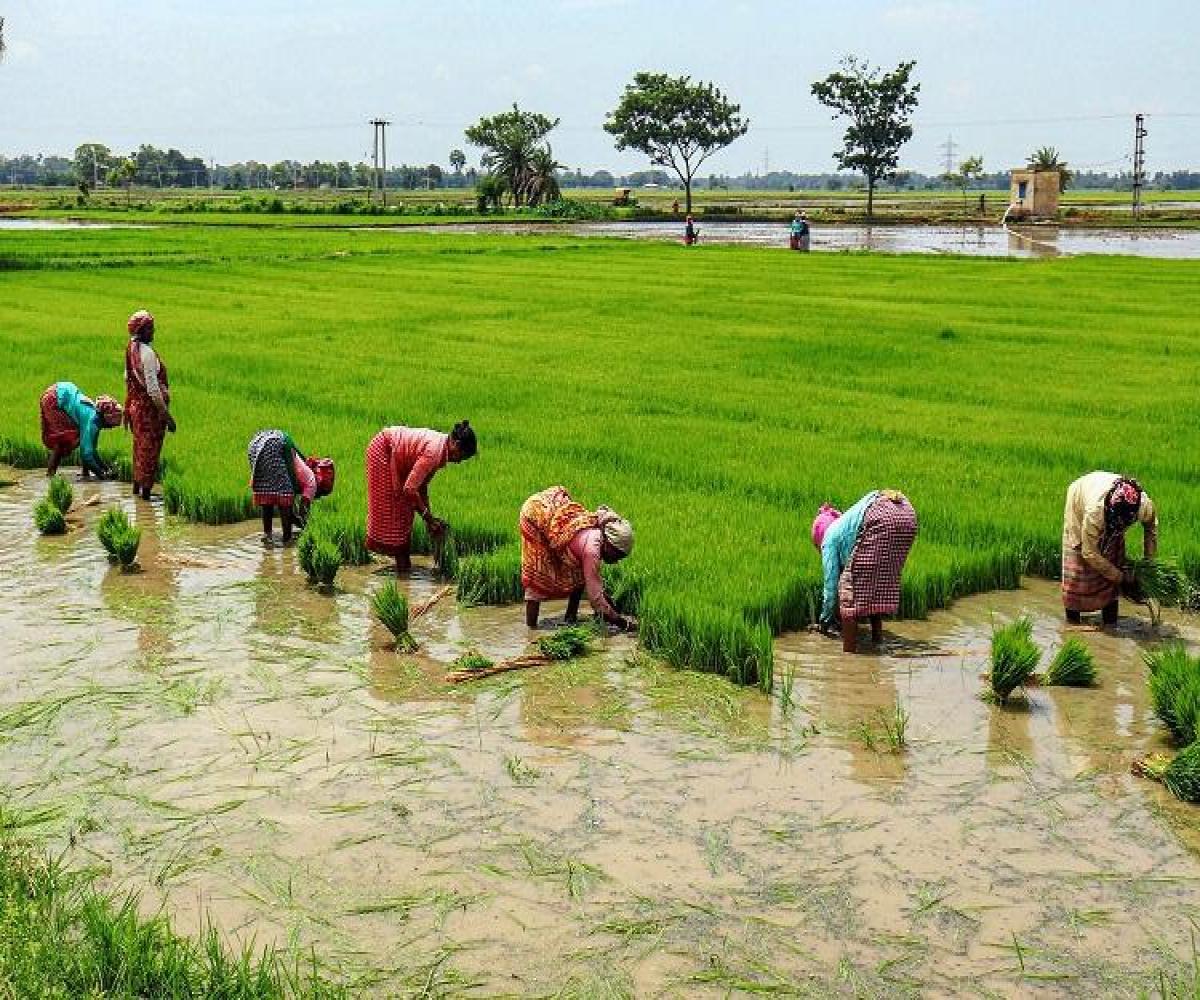
    Agriculture employs 45% of the workforce though its share in the economy (14%) has now become marginal. It has been undergoing mechanisation with increased use of tractors, harvester combines, etc., leading to the displacement of labour. Similar is the case in non-agriculture. So, surplus labour is stuck in agriculture leading to massive disguised unemployment.

    India is characterized by disguised unemployment and underemployment.Recent data points to growing unemployment among the educated youth. They wait for suitable work. The result is a low labour force participation rate (LFPR) in India (in the mid-40s) compared to similar other countries (60% plus).The gender dimension of unemployment and the low LFPR is worrying with women the worst sufferers.

    India’s employment data is suspect. The reason is that in the absence of unemployment allowance, people who lose work have to do some alternative work otherwise they would starve. They drive a rickshaw, push a cart, carry a head load or sell something at the roadside. This gets counted as employment even though they have only a few hours of work and are underemployed. So, India is characterized by disguised unemployment and underemployment.

    Recent data points to growing unemployment among the educated youth. They wait for suitable work. The result is a low labour force participation rate (LFPR) in India (in the mid-40s) compared to similar other countries (60% plus). It implies that in India maybe 20% of those who could work have stopped looking for work. No wonder for a few hundred low-grade government jobs, millions of young apply. The gender dimension of unemployment and the low LFPR is worrying with women the worst sufferers.
    These aspects of inadequate employment generation are linked to automation and the investment pattern in the economy. New technologies that are now being used in the modern sectors are labour displacing. For instance, earlier in big infrastructure projects like the construction of roads, one could see hundreds of people working but now big machines are used along with a few workers.

    Further, the organized sectors get most of the investment so little is left for the unorganized sector. This is especially true for agriculture. Thus, neither the organized sector nor agriculture is generating more work. Consequently, entrants to the job market are mostly forced to join the non-agriculture unorganized sector, which in a sense is the residual sector, where the wages are a fraction of the wages in the organized sector. The unorganized sector also acts as a reserve army of labour keeping organized sector wages in check

    Lack of a Living Wage

    To boost profits, the organized sector is increasingly, employing contract labour rather than permanent employees. This is true in both the public and private sectors. So, not only the workers in the unorganized sector, even the workers in the organised sector do not earn a living wage. Thus, most workers have little savings to deal with any crisis. They are unable to give their children a proper education and cannot afford proper health facilities. Most of the children drop out of school and can only do menial jobs requiring physical labour. They cannot obtain a better-paying job and will remain poor for the rest of their lives.

    The Delhi socio-economic survey of 2018 pointed to the low purchasing power of the majority of Indians. It showed that in Delhi, 90% of households spent less than Rs. 25,000 per month, and 98% spent less than Rs. 50,000 per month. Since Delhi’s per capita income is 2.5 times the all India average, deflating the Delhi figures by this factor will approximately yield all India figures. So, 98 per cent of the families would have spent less than Rs.20,000 per month, and 90 per cent less than Rs.10,000 per month. This effectively implies that 90 per cent of families were poor in 2018, if not extremely poor (implied by the poverty line). During the pandemic, many of them lost incomes and were pauperized and forced to further reduce their consumption.

    Unorganized Sector Invisibilized

    In the unorganized sector, labour is not organized as a trade union and therefore, is unable to bargain for higher wages, when prices rise. It constitutes 94% of the workforce and has little social security. No other major world economy has such a huge unorganized sector. No wonder when such a large section of the population faces a crisis in their lives, the economy declines, as witnessed during the pandemic. India’s official rate of growth fell more sharply than that of any other G20 country.

    The micro sector has 99% of the units and 97.5% of the employment of MSME and is unlike the small and medium sectors. The benefits of policies made for the MSME sector do not accrue to the micro units.

    Policymakers largely ignore the unorganized sector. The sudden implementation of the lockdown which put this sector in a deep existential crisis points to that. The micro sector has 99% of the units and 97.5% of the employment of MSME and is unlike the small and medium sectors. The benefits of policies made for the MSME sector do not accrue to the micro units.

    Invisibilization of the unorganized sector in the data is at the root of the problem. Data on this sector become available periodically, called the reference years. In between, it is assumed that this sector can be proxied by the organized sector. This could be taken to be correct when there is no shock to the economy and its parameters remain unchanged.

    Demonetization and the flawed GST administered big shocks to the economy and undermined the unorganized sector. Its link with the organized sector got disrupted. Thus, the methodology of calculating national income announced in 2015 became invalid.

    The implication is that the unorganized sector’s decline since 2016 is not captured in the data. Worse, the growth of the organized sector has been at the expense of the unorganized sector because demand shifted from the latter to the former. It suited the policymakers to continue using the faulty data since that presented a rosy picture of the economy. This also lulled them into believing that they did not need to do anything special to check the decline of the unorganized sector.

    Policy Paradigm Shift in 1947

    Growing unemployment, weak socio-economic conditions, etc., are not sudden developments. Their root lies in the policy paradigm adopted since independence.
    In 1947, the leadership, influenced by the national movement understood that people were not to blame for their problems of poverty, illiteracy and ill-health and could not resolve them on their own. So, it was accepted that in independent India these issues would be dealt with collectively. Therefore, the government was given the responsibility of tackling these issues and given a key role in the economy.

    Simultaneously, the leadership, largely belonging to the country’s elite, was enamoured of Western modernity and wanted to copy it to make India an ’advanced country’. The two paths of Western development then available were the free market and Soviet-style central planning. India adopted a mix of the two with the leading role given to the public sector. This path was chosen also for strategic reasons and access to technology which the West was reluctant to supply. But, this choice also led to a dilemma for the Indian elite. It had to ally with the Soviet Union for reasons of defence and access to technology but wanted to be like Western Europe.

    Both the chosen paths were based on a top-down approach. The assumption was that there would be a trickle down to those at the bottom. People accepted this proposition believing in the wider good of all. Resources were mobilized and investments were made in the creation of big dams and factories (called temples of modern India) that generated few jobs. They not only displaced many people trickle down was minimal. For instance, education spread but mostly benefitted the well-off.

    The Indian economy diversified and grew rapidly. An economy that for 50 years had been growing at about 0.75% grew at about 4% in the 1950s. But, the decline in the death rate led to a spurt in the rate of population growth. So, the per capita income did not show commensurate growth, and poverty persisted. Problems got magnified due to the shortage of food following the drought of 1965-67 and the Wars in 1962 and 1965. The Naxalite movement started in 1967, there was BOP crisis and high inflation in 1972-74 due to the growing energy dependence and the Yom Kippur war. Soon thereafter there was political instability and the imposition of an Emergency in 1975. The country went from crisis to crisis.

    Planning failed due to crony capitalism. The prevailing political economy enabled the business community to systematically undermine policies for their narrow ends by fueling the growth of the black economy.

    The failure of trickle-down and the cornering of the gains of development by a narrow section of people led to growing inequality and people losing faith in the development process. Different sections of the population realized that they needed a share in power to deliver to their group. Every division in society — caste, region, community, etc. — was exploited. The leadership became short-termist and indulged in competitive populism by promising immediate gains.

    The consensus on policies that existed at independence dissipated quickly. Election time promises to get votes were not fulfilled. For instance, PM Morarji Desai said that promises in the Janata Dal manifesto in 1977 were the party’s programme and not the government’s. Such undermining of accountability of the political process has undermined democracy and trust and aggravated alienation.

    Black Economy and Policy Failure

    The black economy has grown rapidly since the 1950s with political, social and economic ramifications. Even though it is at the root of the major problems confronting the country, most analysts ignore it.

    So, the black economy controls politics and to retain power it undermines accountability and weakens democracy.

    It undermines elections and strengthens the hold of vested interests on political parties. The compromised leadership of political parties is open to blackmail both by foreign interests and those in power. When in power it is willing to do the bidding of the vested interests. So, the black economy controls politics and to retain power it undermines accountability and weakens democracy.

    The black economy controls politics and corrupts it to perpetuate itself. The honest and the idealist soon are corrupted as happened with the leadership that emerged from the anti-corruption JP movement in the mid-1970s. Many of them who gained power in the 1990s was accused of corruption and even prosecuted. Proposals for state funding of elections will only provide additional funds but not help clean up politics.

    The black economy can be characterized as ’digging holes and filling them’. It results in two incomes but zero output. There is activity without productivity with investment going to waste. Consequently, the economy grows less than its potential. It has been shown that the economy has been losing 5% growth since the mid-1970s. So, if the black economy had not existed, today the economy could have been 8 times larger and each person would have been that much better off. Thus, development is set back. In 1988, PM Rajiv Gandhi lamented that out of every rupee sent only 15 paisa reaches the ground. P Chidambaram as FM said, `expenditures don’t lead to outcomes’.

    The black economy leads to the twin problem of development. First, black incomes being outside the tax net reduce resource availability to the government. If the black incomes currently estimated at above 60% of GDP could be brought into the tax net, the tax/GDP ratio could rise by 24%. This ratio is around 17% now and is one of the lowest in the world. Further, as direct tax collections rise, the regressive indirect taxes could be reduced, lowering inflation.

    India’s fiscal crisis would also get resolved. The current public sector deficit of about 14% would become a surplus of 10%. This would eliminate borrowings and reduce the massive interest payments (the largest single item in the revenue budget). It would enable an increase in allocations to public education and health to international levels and to infrastructure and employment generation.

    In brief, curbing the black economy would take care of India’s various developmental problems, whether it be lack of trickle-down, poverty, inequality, policy failure, employment generation, inflation and so on. It causes delays in decision-making and a breakdown of trust in society.

    Due to various misconceptions about the black economy, many of the steps taken to curb it have been counterproductive, like demonetization. Dozens of committees and commissions have analysed the issues and suggested hundreds of steps to tackle the problem. Many of them have been implemented, like reduction in tax rates and elimination of most controls but the size of the black economy has grown because of a lack of political will.

    Policy Paradigm Shift in 1991

    Failure of policies led to crisis after crisis in the period leading up to 1990. The blame was put on the policies themselves and not the crony capitalism and black economy that led to their failure. The policies prior to 1990 have been often labelled as socialist. Actually, the mixed economy model was designed to promote capitalism. At best the policies may be labelled as state capitalist and they succeeded in their goal. Private capital accumulated rapidly pre-1990. The Iraq crisis of 1989-90 led to India’s BOP crisis and became the trigger for a paradigm change in policies in favour of capital. The earlier more humane and less unequal path of development was discarded.

    Marketization has led to the ’marginalization of the marginals’, greater inequality and a rise in unemployment.

    In 1991, a new policy paradigm was ushered in. Namely, ’individuals are responsible for their problems and not the collective’. Under this regime, the government’s role in the economy was scaled back and individuals were expected to go to the market for resolving their problems. This may be characterized as ’marketization’. This brought about a philosophical shift in the thinking of individuals and society.

    Marketization has led to the ’marginalization of the marginals’, greater inequality and a rise in unemployment. These policies have promoted ’growth at any cost’ with the cost falling on the marginalized sections and the environment, both of which make poverty more entrenched. So, the pre-existing problems of Indian society have got aggravated in a changed form.

    Poverty is defined in terms of the ’social minimum necessary consumption’ which changes with space and time. Marketization has changed the minimum due to the promotion of consumerism and environmental decay imposing heavy health costs.
    The highly iniquitous NEP is leading to an unstable development environment. The base of growth has been getting narrower leading to periodic crises. Additionally, policy-induced challenges like demonetization, GST, pandemic and now the war in Ukraine have aggravated the situation. These social and political challenges can only grow over time as divisions in society become sharper.

    Weakness in Knowledge Generation

    Why does the obvious not happen in India? No one disagrees that poverty, illiteracy and ill health need to be eliminated. In addition to the problems due to the black economy and top-down approach, India has lagged behind in generating socially relevant knowledge to tackle its problems and make society dynamic.

    Technology has rapidly changed since the end of the Second World War. It is a moving frontier since newer technologies emerge leading to constant change and the inability of the citizens to cope with it. The advanced technology of the 1950s is intermediate or low technology today.

    Literacy needs to be redefined as the ability to absorb the current technology so as to get a decent job. Many routine jobs are likely to disappear soon, like, driver’s jobs as autonomous (self-driving) vehicles appear on the scene. Most banking is already possible through net banking and machines, like, ATMs. Banks themselves are under threat from digital currency.

    So, education is no more about the joy of learning and expanding one’s horizon. No wonder, the scientific temper is missing among a large number of the citizens.

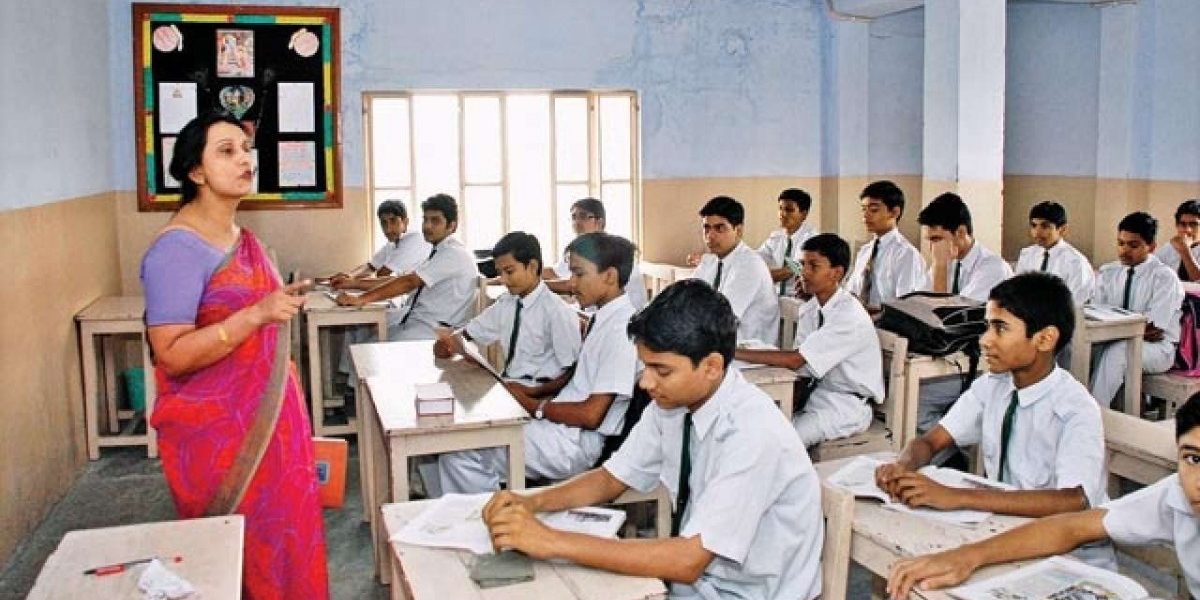
    India’s weakness in knowledge generation is linked to the low priority given to education and R&D. Learning is based substantially on `rote learning’ which does not enable absorption of knowledge and its further development. So, education is no more about the joy of learning and expanding one’s horizon. No wonder, the scientific temper is missing among a large number of the citizens. Dogmas, misconceptions and irrationalities rule the minds of many and they are easily misled. This is politically, socially and economically a recipe for persisting backwardness.

    In spite of policy initiatives regarding education, like, the national education policy in 1968 and 1986, there is deterioration. This is because the milieu of education is all wrong. Policy is in the hands of bureaucrats, politicians or academics with bureaucratized mindsets. So, policies are mechanically framed. Like the idea that ’standards can be achieved via standardization’.

    Learning requires democratization. So, institutions need to be freed from the present feudal and bureaucratic control. Presently, institutions treat dissent as a malaise to be eliminated rather than celebrated. Courses are sought to be copied from foreign universities. JNU is told to be like Harvard or Cambridge. This is a contradiction in terms; originality cannot be copied. Courses copied from abroad tend to be based on the societal conditions there and not Indian conditions. Gandhi had said that the Indian education system is alienating and for many it still is.

    The best minds mostly go abroad and even if they return, they bring with them an alien framework not suited to India. So, as a society, we need to value ideas, prioritize education and R&D and generate socially relevant knowledge.

    Learning is given low priority because ideas are sought to be borrowed from abroad. So, the rulers have little value for institutions that could generate new ideas and inadequate funds are allotted to them. The best minds mostly go abroad and even if they return, they bring with them an alien framework not suited to India. So, as a society, we need to value ideas, prioritize education and R&D and generate socially relevant knowledge.

    Conclusion

    The growth at any cost strategy has been at the expense of the workers and the environment. This has narrowed the base of growth and led to instability in society — politically, socially and economically.

    India is a diverse society and the Indian economy is more complex than any other in the world. This has posed serious challenges to development in the last 75 years but undeniably things are not what they were. The big mistake has been to choose trickle-down policies that have not delivered to a vast number of people who live in uncivilized conditions. Poverty has changed its form and the elite imply that the poor should be grateful for what they have got. They should not focus on growing inequality, especially after 1991, when globalization entered the marketization phase which marginalizes the marginals.

    The growth at any cost strategy has been at the expense of the workers and the environment. This has narrowed the base of growth and led to instability in society — politically, socially and economically. The situation has been aggravated by the recent policy mistakes — demonetization, flawed GST and sudden lockdown. The current war in Ukraine is likely to lead to a new global order which will add to the challenges. The answer to ’why does the obvious not happen’ in India is not just economic but societal. Unless that challenge is met, portents are not bright for India at 75.

    This paper is based substantially on, `Indian Economy since Independence: Persisting Colonial Disruption’, Vision Books, 2013 and `Indian Economy’s Greatest Crisis: Impact of Coronavirus and the Road Ahead’, Penguin Random House, 2020.

    This article was published earlier in Mainstream Weekly.

    Feature Image Credit: Financial Express

    Other Images: DNA India, news18.com,  economictimes, rvcj.com

  • Three Years as a Union Territory: Human Rights in J&K

    Three Years as a Union Territory: Human Rights in J&K

    [powerkit_button size=”lg” style=”info” block=”true” url=”https://admin.thepeninsula.org.in/wp-content/uploads/2022/08/Our-Annual-Report-Human-Rights-JK-2022_compressed-1.pdf” target=”_blank” nofollow=”false”]
    Download
    [/powerkit_button]

    The Forum for Human Rights in Jammu and Kashmir comprises an informal group of concerned citizens who believe that, in the prevailing situation in the former state of Jammu and Kashmir, an independent initiative is required so that continuing human rights violation do not go unnoticed.

    The aim of the Forum is to highlight, report and seek action. It will primarily focus on human rights protected by the constitutions of India and Jammu and Kashmir, as well as those identified in international treaties/instruments which India has ratified. It will research evident violations, and may take suo moto notice of any violation, irrespective of whether or not a formal complaint is received.

    The Forum for Human Rights in Jammu and Kashmir will receive information/materials on human rights violation to its email hrforumjk@gmail.com and through other means, and it may report/forward complaints to relevant authorities with recommendations for action. Please note that this is not an anticipatory body.

    This is the fourth report issued by the Forum. It has largely been compiled local first-hand accounts, governments sources, media accounts (carried in well-established and reputed newspaper or television), and NGO fact-finding reports. The various sources listed above have been fact-checked against each other to ensure the information is as accurate as possible, and only that information has been carried that appears to be well-founded.

    The members of the Forum for Human Rights in Jammu and Kashmir take allegations of inaccuracy, bias, or any other criticism founded in fact, very seriously. Criticism of this nature will be considered and responded in real-time.

    Air Vice Marshal Kapil Kak (Retd) is a Distinguished Fellow and a member of the Governing Council of The Peninsula Foundation (TPF). He is a member of the Forum for Human Rights in Jammu and Kashmir.

    Disclaimer: The views represented herein are those of the Forum and not necessarily reflect the views of The Peninsula Foundation, its staff, or its trustees.

    [powerkit_button size=”lg” style=”info” block=”true” url=”https://admin.thepeninsula.org.in/wp-content/uploads/2022/08/Our-Annual-Report-Human-Rights-JK-2022_compressed-1.pdf” target=”_blank” nofollow=”false”]
    Download
    [/powerkit_button]

  • Beyond Unipolarity and the Euro–American Horizons of IR Thought: Reflections on the Emergent World Order

    Beyond Unipolarity and the Euro–American Horizons of IR Thought: Reflections on the Emergent World Order

    Abstract

    Amidst the continuing conflict in Ukraine, Russian President Vladimir Putin made a notable pronouncement of the end of the US-led unipolar world and the rise of multipolar world order. Against this backdrop of the debate on polarity, my research paper seeks to address the following questions. To what extent have global institutions, mainstream IRT (International Relations Theory) and academia as well as policies reflected if not reinforced Euro-American norms and interests? Does this purported shift to multipolarity require a shift in institutional and theoretical practices reflecting the broad concerns of the Global South? Using global and regional case studies like India (especially in regard to the representation within academia and the glass ceiling affecting institutional practices like Young Professionals Programme), I draw from critical and post-colonial theoretical IR frameworks to argue for a comprehensive reform of the prevalent global institutional and theoretical structures. 

    Introduction

    The Euro-American hegemony runs very deep, pervading a range of institutions, norms, global practices, knowledge and even academic teaching practices.

    The month of February this year witnessed one of the most defining moments of the post-Cold war era. Marking a major escalation of the simmering conflict that began with the insurgency in Eastern Ukraine in 2014, Russia invaded Ukraine resulting in thousands of casualties and millions of refugees.[1] This conflict inevitably has given rise to a wide range of debates in the global arena, including global governance, institutions, conflict and security. In this regard, one of the most interesting debates that have seen a resurgence is the question of the future of the world order. 

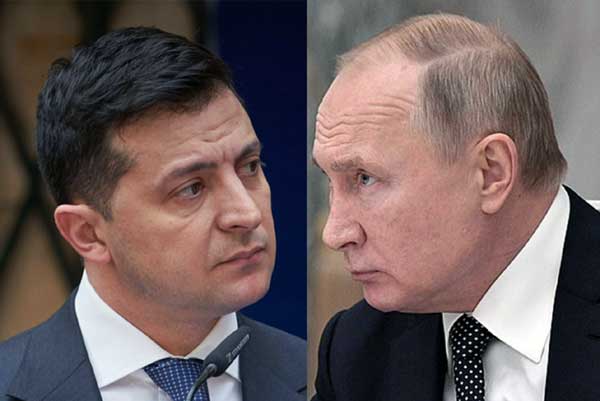
    The notion of a shift to multipolar world order has emerged as a prominent theme in the wake of this crisis. This is best exemplified by Vladimir Putin in his address to the St Petersburg International Economic Forum Plenary session, “a multipolar system of international relations is now being formed. It is an irreversible process; it is happening before our eyes and is objective in nature.” It is indeed widely recognised that the brief period of unipolarity, dominated by the US, following the end of the Cold War, has given way to the era of multipolar world order, characterised by ‘new powerful and increasingly assertive centres.’ [2] However, even as this shift to multipolarity seems almost deterministic, there persist legitimate questions on the conduciveness of the current world order to the emergence of these multiple power-centres. 

    Against this backdrop, my work shall be organised as follows. I commence with a discussion on the shift towards multipolarity, providing the conceptual capital of notions like power and polarity. This shall be followed by my argument that the current global order, exemplified in its norms, institutions, and intellectual resources, fall severely short of the expectations required of the multipolar world order. To illustrate this point, I draw from the case study of India, in particular. I conclude by providing some prescriptions necessary for the transition to multipolarity to be meaningful. Towards this pursuit, I draw from critical post-colonial theoretical frameworks, employing secondary literature review as the overarching method.

    Shifts towards multipolarity

    Before proceeding to the premise of the shift towards multipolarity, a few conceptual clarifications are in order. Polarity in this context is understood as the modes of distribution of power in the international system. Typically, it is classified as unipolar (e.g. US hegemony in the post-Cold-War era), bipolar (e.g. Russia-US dominance during the Cold War era) and multipolar (e.g. Europe during the pre-World War era). [3] While there are myriad debates on what constitutes power in the global landscape, I draw from the useful typology provided most famously by Joseph Nye – hard, soft, and smart power. Hard power is often described as the typical carrot and stick approach, involving coercion and is often measured in terms of “population size, territory, geography, natural resources, military force, and economic strength.” On the other hand, soft power is described as the ability to influence state preference using intangible attributes like “attractive personality, culture, political values, institutions, and policies” resulting in the perception of legitimacy or moral authority. Smart power is often understood as the instrumental deployment of a combination of both to secure political ends.[4] 

    The end of the Cold War era, prematurely lauded as the end of history by a scholar, resulted in a brief unipolar moment of US hegemony. As Putin puts it, the US was the predominant power with a limited group of allies which resulted in “all business practices and international relations … interpreted solely in the interests of this power.”[2]  However, a range of factors in the twenty-first century led to a crisis in American leadership. The interventionist atrocities carried out in the wake of the September 11 attacks as well as the crisis of global capitalism during the financial crisis of 2008 led to a crisis in American leadership.[5] This period also saw the emergence of new powers like the BRICS nations, who posed a serious challenge to the notion of unipolarity.[3] 

    As Amitav Acharya and Burry Buzan argue, this diffusion of power has resulted in the ‘rise of the rest’ characterised by the absence of a single superpower. Instead, a number of great and regional powers have emerged with their respective institutions and models of growth. Such a world order is also shaped by a greater role accorded to non-state actors including global organisations, corporations, and social movements as well as non-state actors.[6] Thus, the current global landscape is often termed as multipolar, multi-civilizational and multiplex offering myriad opportunities and benefits for states.[7] The crisis in Ukraine has only bolstered this multipolar moment even further. Consider India as a case in point. The likes of the U.S. (and even China) have competed for India’s affection and India’s seemingly pro-Russia stance has not prevented Delhi’s deeper engagement with her counterparts in the West. These initiatives can only enhance India’s great power status, resulting in potentially a higher degree of multipolarity.[8]

    Thus, even as there is an increasing scholarly and policy-based consensus on the shift towards multipolarity, there remain important reservations on whether the current global arena is equipped to deal with the seismic shifts posed by the emergent world order. In other words, does this purported shift to multipolarity require a shift in institutional and theoretical practices reflecting the broad concerns of the Global South? In the next section, I answer in the affirmative, arguing that the dominant norms, institutions, and intellectual resources are broadly skewed towards the preservation of Euro-American hegemony. 

    The maintenance of Euro-American hegemony: norms, institutions, and academia

    The exercise of U.S. hegemonic power involved the projection of a set of norms and their embrace by elites in other nations.

    Drawing from Persaud, I argue that dominant powers forge an “academic/foreign policy/security ‘complex’ dedicated to the maintenance of a hegemonic world order.” [9] Such a complex is constituted by an intricate network of norms, institutions and theoretical/ intellectual practices which seek to uphold the status quo. In this section, I examine each of these aspects in detail.

    Consider norms, in the first instance. Norms can be defined broadly as the “collective expectations for the proper behaviour of actors.”[10] When certain norms which serve certain interests are considered as general interests, it results in hegemony. The dominant powers socialise and hegemonise other countries into an ideological worldview that best serves their interests. In other words, actors have to orient themselves according to a ‘logic of appropriateness’ framed by these intersubjective notions. In the post World War era, the Roosevelt-led US administration projected a series of norms and principles guided by liberal multilateralism, to shape the post-war international order. Such a form of ‘institutional materiality’ posited a clear separation between the political and the economic realm. The embrace of these norms outside the US occurred through various modes of socialisation including external inducement (e.g. Britain and France), direct intervention and internal reconstruction (e.g. Germany and Japan) as well as military and economic dominance.[11] 

    The exercise of U.S. hegemonic power involved the projection of a set of norms and their embrace by elites in other nations. Socialisation did occur since U.S. leaders were largely successful in inducing other nations to buy into this normative order. But the processes through which socialisation occurred varied from nation to nation. In Britain and France, shifts in norms were accomplished primarily by external inducement; in Germany and Japan, they resulted from direct intervention and internal reconstruction. In all cases, the spread of norms of liberal multilateralism was heavily tied to U.S. military and economic dominance. [11]

    Such norms are often manipulated (and flouted) to their advantage. For example, consider the liberal norm of conditional sovereignty, linked to human rights, spearheaded by the likes of the US and many countries in Western Europe. Assuming the primacy of the individual over the state, it has legitimised intervention on ‘humanitarian’ grounds. However, the execution of these norms has been far more uniform as best exemplified in their differential application in the wake of the atrocities in Kosovo and Rwanda. An intra-state conflict resulting in a humanitarian crisis in Kosovo precipitated a successful multilateral intervention. However, the same decisiveness was starkly absent with regard to a similar (if not greater) conflict in Rwanda which resulted in almost 800,000 casualties and more than two million refugees. Multiple studies have traced the rationale of intervention to the “strategic interests in Europe’s future and the NATO alliance.” Rwanda on the other hand was considered peripheral to the national interests of either Western Europe or the US.[12] This substantiates the argument that the norm of ‘humanitarian intervention’ is often tied more to brutal national interests rather than the protection of human rights.

    A range of global norms, ranging from economic norms, dealing with the management of finance, to those dealing with water governance has been shown to be skewed towards the interests of great powers rather than participative in nature.

    Consider another instance. The Liberal International Order (LIO) asserts the concept of ‘conditional sovereignty’ where sovereign nation-states are bound to look after their entire populations. A failure to that end invites interference and comments from other nation-states and external agencies. This norm has been pushed forward and spearheaded by first-world countries like the US and Western Europe, much to their advantage. Contrary to this, the neo-Westphalian order is a proponent of the ‘classical sovereignty’ model where nation-states are sovereign within their own territory to administer in any manner they want, obviously with a necessary reverence to human rights, but others are not authorized to interfere in the same. China and other authoritarian regimes have been advocating for the same. So, while the LIO talks about the equality of every individual, the neo-Westphalian order focuses more on the equality of all nation-states.[13] Similarly, a range of global norms, ranging from economic norms, dealing with the management of finance, to those dealing with water governance has been shown to be skewed towards the interests of great powers rather than participative in nature. 

    Similarly, Cox and Gill have argued how global governance through institutions play a critical role in maintaining hegemony.[14] The multilateral institutions which the US had created both in the political and economic realm have played a critical role in the sustenance of Euro-American (and especially the U.S.) dominance. In other words, even as the international world order shifts to a multipolar one, it has not exactly been accompanied by multilateralism.[15] While multilateralism puts forward the interests of multiple states, most so-called multilateral institutions reflect and reinforce prevailing power configurations. 

    Consider the United Nations, for instance. It cannot be a mere coincidence that the UN has been ineffectual against most of the contemporary global challenges like climate change, the pandemic etc. when it has not been responsive to the reality of the increasing number of power centres in the multipolar world order.[16] The most glaring evidence is the UNSC. Despite an increasing number of voices on the rise of Asia, Africa, and Latin America, the P5 includes only one representative from Asia (which is China) and no members from either Africa or Latin America. In addition, while there has been more than a threefold rise in UN membership, the number of non-permanent seats has only risen from 11 to 15. Even at the administrative levels, the lack of non-western representation is indeed a concern. Besides the absence of a UNSC permanent seat, it is also disheartening to see that it has been years since the Young Professionals Program has been held for the likes of India.

    These same institutions are often undermined by the likes of the US, under the facade of NATO. Consider the harrowing intervention in Libya. The NATO intervention on supposedly ‘humanitarian’ grounds in 2011 led to the death of Muamar Gaddafi, violating the legal structures of the UN charter in the process and resulting in a proxy war. The result has been a prolonged state of near-anarchy characterised by arbitrary detentions, executions, mass killings and kidnappings. [17]

    The WTO is plagued with similar issues. While it ostensibly reflects the ‘global’ norm of neoliberal free trade, it is “structured and ordered to promote monopolistic competition rather than genuine free trade. These institutional roadblocks include the exclusion of developing countries from several informal decision-making sessions, lack of transparency, coercive decision-making in meetings involving developing countries, astronomical costs involved in Dispute settlement Understanding and so on. The result is that the Western countries have an overwhelming advantage against their counterparts from the Global South. [18]

    Lastly, as highlighted earlier, the international policy making apparatus cannot be divorced from the intellectual resources churned by IR academia. Zvobgo, in an insightful piece, has argued how the big three of IR theory – realism, liberalism and constructivism – are built on Eurocentric, raced and racist foundations.[19] The role of imperial policymakers in shaping contemporary IR knowledge has been well acknowledged. Kwaku Danso and Kwesi Aninghave argued about the prevalence of methodological whiteness, which projects White experience as a universal experience.[20] It is no coincidence that the principles of the Westphalian treaty are not significantly different from those underlying the current UN charter. Acharya has argued that racism was integral to the emergence of the US-led world order exemplified in the scant focus on colonialism in UNDHR as well as the “privileging of sovereign equality’ over ‘racial equality.’[21] 

    These forms of methodological whiteness have had devastating impacts across the world. The projection and the forceful projection of the Weberian state as the fundamental unit of security and conflict management has resulted in disastrous policy-level consequences in Africa which have always been characterised by a range of hybrid political systems beyond the nation-state.[20] Similarly, much of the problematic policies carried out today based on the binaries of ‘developed’ v/s ‘developing’ nations have direct continuities with the legacy of empire and race reflected in dichotomies like ‘civilised v/s uncivilised’. 

    There also exists historical amnesia of racism in academia, whether in terms of representation or teaching practices. For example, in the US, only 8% of the faculty identify themselves as Black or Latino. Similarly, the configurations of colonialism and racism in building the modern world order are either glossed over or overlooked in most academia.[19] Indian academia is a case in point. As Behera argues, despite the strong tradition of Indian independent IR thought as well as the long history of colonialism, Indian IR has imbibed a definite set of givens including  “the infallibility of the Indian state modelled after the Westphalian nation-state as well as a thorough internalization of the philosophy of political realism and positivism.[22] Rohan Mukherjee, for instance, has highlighted an unpublished survey of IR faculty within India wherein the majority self-identified as either liberal or realist.[23]

    Thus, the Euro-American hegemony runs very deep, pervading a range of institutions, norms, global practices, knowledge and even academic teaching practices. In the next section, I conclude by outlining certain prescriptions for a future world order which responds to and is far more conducive to the inevitable multipolar shifts. 

    Conclusion

    India has umpteen intellectual resources from Gita and the Sangam literature to stellar modern political philosophers like Gandhi, Tagore and so on, which need to be strategically combined with contemporary IR notions and questions of security, justice and so on.

    This paper first established the backdrop of the shift towards multipolarity within the world order by outlining the myriad modes of power through which the ‘Rest’ has caught up with the ‘West.’ In the succeeding section, I demonstrated how a range of norms, institutions and intellectual practices had been historically constructed to maintain Euro-American hegemony as well as promote the interests of the West. In such a world order, certain parochial interests have masqueraded themselves as common or global interests. In the concluding section, I outline certain prescriptions which have become necessary for a more equitable, multi-civilisational world order. 

    Institutions like the UN require urgent and seismic reforms reflecting the interests of emerging power centres. The number of seats within the Permanent and non-permanent seats must be expanded to include more nation-states from Asia, Africa and Latin America. A revitalisation of the UNGA is highly overdue and requires a focussed and timely debate on the problems of the highest priority at any given time through rationalization of its agenda. [24] Similarly, the proposed WTO reforms, which seeks to move away from multilateralism to impose plurilateralism, should be opposed at all costs. [25]

    As Zvobjo puts it eloquently, how IR is taught perpetuates the inequalities which are detailed above. Besides the dominant IR triumvirate, there needs to be an increased focus on critical perspectives as well as increased engagement with the uncomfortable questions of race, empire, colour, and caste.[19] This should be complemented by more diversity in terms of representation within academia. In India specifically, there needs to be increased efforts to construct Indian or South Asian IR notions. India has umpteen intellectual resources from Gita and the Sangam literature to stellar modern political philosophers like Gandhi, Tagore and so on, which need to be strategically combined with contemporary IR notions and questions of security, justice and so on. However, as Mallavarapu reminds us, care needs to be taken to ensure they can address existing inequities in the world order without succumbing or falling prey to jingoism or nativism.[26]

    References

    [1] Alex Leeds Matthews, Matt Stiles, Tom Nagorski, and Justin Rood, ‘The Ukraine War in data’, Grid, August 4, 2022

    https://www.grid.news/story/global/2022/08/04/the-ukraine-war-in-data-12-million-people-driven-from-their-homes/

    [2] Address to participants of 10th St Petersburg International Legal Forum, President of Russia, June 30, 2022

    http://en.kremlin.ru/events/president/news/68785

    [3]Andrea Edoardo Varisco, ’Towards a Multi-Polar International System: Which Prospects for Global Peace?’, E-International Relations, June 3, 2013.

    https://www.e-ir.info/2013/06/03/towards-a-multi-polar-international-system-which-prospects-for-global-peace/

    [4]Aigerim Raimzhanova, ‘Power in IR: hard, soft and smart’, Institute for Cultural Diplomacy and the University of Bucharest, December 2015

    http://www.culturaldiplomacy.org/academy/content/pdf/participant-papers/2015-12_annual/Power-In-Ir-By-Raimzhanova,-A.pdf

    [5]Ashraf, N. (2020). Revisiting international relations legacy on hegemony: The decline of American hegemony from comparative perspectives. Review of Economics and Political Science

    [6] Kukreja, Veena. “India in the Emergent Multipolar World Order: Dynamics and Strategic Challenges.” India Quarterly 76, no. 1 (2020): 8-23.

    [7] Ashok Kumar Beheria, ‘Ask an Expert’, IDSA, April 1, 2020. 

    https://idsa.in/askanexpert/world-moving-towards-multipolarity-akbehuria

    [8]Derek Grossman, ‘Modi’s Multipolar Moment Has Arrived’, RAND blog, June 6, 2022

    https://www.rand.org/blog/2022/06/modis-multipolar-moment-has-arrived.html

    [9]Persaud, Randolph B. “Ideology, socialization and hegemony in Disciplinary International Relations.” International Affairs 98, no. 1 (2022): 105-123.

    [10]Shannon, Vaughn P. “International Norms and Foreign Policy.” Oxford Research Encyclopedia of Politics (2017).

    [11]Ikenberry, G. John, and Charles A. Kupchan. “Socialization and hegemonic power.” International organization 44, no. 3 (1990): 283-315.

    [12] Tracy Kuperus, ‘Kosovo And Rwanda: Selective Interventionism?’, Centre for Public Justice

    https://www.cpjustice.org/public/page/content/kosovo_and_rwanda

    [13] Falit Sijariya, ‘Democratizing Norms: Jaishankar’s Comments and the Challenge to US Hegemony’, April 22, 2022

    https://thegeopolitics.com/democratizing-norms-jaishankars-comments-and-the-challenge-to-us-hegemony/

    [14] Overbeek, Henk. “Global governance, class, hegemony.” Contending Perspectives on Global Governance: Coherence and Contestation 39 (2005).

    [15] Tourangbam, Monish. “The UN and the Future of Multilateralism in a Multipolar World.” Indian Foreign Affairs Journal 14, no. 4 (2019): 301-308.

    [16] The UN Turns Seventy-Five. Here’s How to Make it Relevant Again, Council on Foreign Relations, Sep 14, 2020.

    https://www.cfr.org/councilofcouncils/global-memos/un-turns-seventy-five-heres-how-make-it-relevant-again

    [17] Ademola Abbas, ‘Assessing NATO’s involvement in Libya’, United Nations University, 27 October 2011

    https://unu.edu/publications/articles/assessing-nato-s-involvement-in-libya.html

    Lansana Gberi, ‘Forgotten war: a crisis deepens in Libya but where are the cameras?’, Africa Renewal, December 2017 – March 2018

    https://www.un.org/africarenewal/magazine/december-2017-march-2018/forgotten-war-crisis-deepens-libya-where-are-cameras

    [18] Ed Yates, ‘The WTO Has Failed as a Multilateral Agency in Promoting International Trade’,E-International Relations, April 29, 2014

    https://www.e-ir.info/2014/04/29/the-wto-has-failed-as-a-multilateral-agency-in-promoting-international-trade/

    [19] Kelebogile Zvobgo, ‘Why Race Matters in International Relations’, Foreign Policy, June 19, 2020

    https://foreignpolicy.com/2020/06/19/why-race-matters-international-relations-ir/

    [20]Danso, Kwaku, and Kwesi Aning. “African experiences and alternativity in International Relations theorizing about security.” International Affairs 98, no. 1 (2022): 67-83.

    [21]Acharya, Amitav. “Can Asia lead? Power ambitions and global governance in the twenty-first century.” International affairs 87, no. 4 (2011): 851-869.

    [22]Behera, Navnita Chadha. “Re-imagining IR in India.” In Non-Western international relations theory, pp. 102-126. Routledge, 2009.

    [23]Rohan Mukherjee https://mobile.twitter.com/rohan_mukh/with_replies

    [24]United Nations Reform: Priority Issues for Japan, Ministry of Foreign Affairs Japan, January 2006

    https://www.mofa.go.jp/policy/un/reform/priority.html

    [25]Abhijit Das, ‘Reform the WTO: do not deform it’, the Hindu Business Line, December 1, 2021

    https://www.thehindubusinessline.com/opinion/reform-the-wto-do-not-deform-it/article37792701.ece

    [26]Shahi, Deepshikha, and Gennaro Ascione. “Rethinking the absence of post-Western International Relations theory in India:‘Advaitic monism’as an alternative epistemological resource.” European Journal of International Relations 22, no. 2 (2016): 313-334.

    Feature Image Credits: Foreign Affairs

  • Fight Against Corruption Vs Saving Democracy: Which Is Critical?

    Fight Against Corruption Vs Saving Democracy: Which Is Critical?

    The ruling party justifies the actions of ED, CBI and Income Tax department by arguing that these are independent agencies. They dismiss the harassment of the opposition leaders and others by calling it a fight against corruption.

    The Supreme Court verdict on the Prevention of Money Laundering Act (PMLA) has sanctified its draconian provisions. The opposition which is facing the brunt of these provisions has criticized the judgment while the ruling dispensation is highly pleased. A seal of approval has been put on the recent actions of the Enforcement Directorate (ED). The provisions of PMLA are such that there is little escape. So, opponents have been arrested/harassed or silenced or have switched sides to join the ruling party which then has toppled governments in the opposition-ruled states. Considering the misuse already visible, the judges could have weighed in on the laws and protected the fundamental rights of the citizens guaranteed by the Constitution.

    The ruling party justifies the actions of ED, CBI and Income Tax department by arguing that these are independent agencies. They dismiss the harassment of the opposition leaders and others by calling it a fight against corruption. No one can deny that wrongdoing has to be punished and corruption impacts the common person adversely. So, reducing corruption is arguably a pro-people policy.

    [powerkit_button size=”lg” style=”info” block=”true” url=”https://hwnews.in/news/opinion/fight-against-corruption-vs-saving-democracy-which-is-critical-ed/” target=”_blank” nofollow=”false”]
    Read More!
    [/powerkit_button]

  • Gendered Politics at the Local Level: An Analysis of Tamil Nadu

    Gendered Politics at the Local Level: An Analysis of Tamil Nadu

    The institution of panchayat raj, a milestone in the journey of administrative institutions at the grass-root level, is not an exception to proxy candidature, caste-based violation of rights or gendered politics

    The political domain continues to be considered a male bastion, with women in politics often seen as a paradox. The domain is conspicuous by the very low presence of women, with very few of them making it to positions of power. Elizabeth I, Margaret Thatcher, Indira Gandhi, and Golda Meir have often been regarded as minorities in politics despite being some of the most powerful women in domestic and international politics. In the minuscule group of women politicians, ‘self-made’ women are often considered an exception rather than a rule. The political transitions are short-term solutions to break the pattern of exclusion. From the suffragette of the 20th century up till now, feminists have fought a lengthy battle for women’s right to vote and hold office. With the development that is slow and choppy, women continue to be underrepresented in politics, and parliament. While we talk about women’s political participation, it is easy for us to imagine empty seats in the parliament. However, women in India have been involved in politics since pre-independent times even when they had no voting rights. The aspect of politics that has always held an uncertain position in our minds is the relationship between women and politics.

    Constitutional Provision

    The world of urban local politics associated with political decentralisation in India was constitutionalised in 1992 through the 74th Constitutional Amendment. It ensured a reservation of at least one-third of the total number of seats for women. Additionally, for the office of chairperson one-third of the seats are reserved for women in the Urban Local Body (ULB). However, the bill for the reservation of seats for women in parliament has remained pending for years. The Constitution allows 50% of seats to be reserved for women in the local body elections. In Tamil Nadu, the High Court has directed the State Election Commission to ensure that the reservation stays at 50% in ULB as mandated by law.

    Proxy Politics and Tamil Nadu

    Despite the reservation mandated by law, the participation of women in state and national politics has barely improved. Gender inequality, hierarchy, and stigma against women in politics along with structural, social, economic and cultural barriers continue to obstruct women’s effective participation in politics. Within the urban local body, it is witnessed that husbands or male relatives wield actual power and control even though women relatives or wives are the ones elected for the position and appointed officially. Men continue to control the wards while most elected women work as proxies. This is evident in the case of the Tambaram corporation where Nagarajan, husband of DMK councillor Geetha, took the chair on her behalf in official meetings, a clear violation of legislative procedures and law. In such cases, women are shadowed and they are not free to make their own decisions. Proxy politics is rampant at the grassroots level of panchayat and local body elections where women get posts filled with responsibilities but without effective power or control.

    The term ‘proxy women’ needs further elaboration. In the 2022 urban local body elections in Tamil Nadu, while women councillors were elected in accordance with the 50% reservation policy, the actual power and control were exercised by their husbands. Though the Greater Chennai Corporation has a majority of women in elected seats, it is effectively run by men. In a few wards, for instance, in wards number 24 and 34, it was the husbands who were attending to complaints, and deciding over issues, while operating the office. In some wards, husbands address themselves as councillors.  And while people in the ward complain of not having seen their councillor since her election to the post, it is to be noted here that this problem does not end with councillors. Even the top-most positions held by women in the municipal body continue to be dictated by her veteran politician family members or, they are in the hands of the political party itself. 

    Participation in PRI

    The institution of panchayat raj, a milestone in the journey of administrative institutions at the grass-root level, is not an exception to proxy candidature, caste-based violation of rights or gendered politics. Retired IAS officer Ashok Varadhan Shetty stated a case in Dindigul in 2008 where the husband of a woman member of block panchayat was caught participating in council meetings while she stayed at home. Even when the obstacles for women in politics and panchayats in specific are diverse, male dominance automatically tops the list of obstructing women’s participation in politics.

    Theories of Representation

    The gendered pattern of politics in most parts of India is deeply patriarchal with low sex ratio, patrilocal marriage, and patrilineal inheritance, with women being denied access to the public sphere. In Omvedt’s words, “Girls are socialised to be mothers, wives and domestic workers under other’s authority”. As literature explains, women in political bodies argue that mere representation is not sufficient. A formal seat is not the same as active participation. In India, most women are less educated, less exposed, and more dependent, and proxy women are more likely to be seen as token representatives in political organisations.

    Philip’s study of the political representation of women has set up a foundation to shift from ‘politics of ideas’ to ‘politics of presence’. The twin democratic principles of equality in politics and popular control, help in ensuring equal representation of men and women. He has presented four arguments for politics of presence: the importance of symbolic representation; the need to tackle exclusion inherent in ideas of the political party; the need for vigorous support to the disadvantaged groups; and the importance of politics of presence in arriving at policy options.

    Does the concept of proxy politics leave a mark on female politicians alone? Certainly not. Various male politicians act as mere mouthpieces of the political party. Hence, it is not just women who become prey to proxy politics, the practice is widespread at the lower level. But the difference that lies here is men are instructed while women are dominated. Gender equality is, thus, an essential element for the sustainable progress of any nation. The goal of all-round development can be achieved only through equal representation of all genders in various fields. In the Global Gender Gap Report, released by the World Economic Forum, based on the key dimensions of Economic Participation and Opportunity, Educational Attainment, Health, Survival and Political Empowerment, India has ranked 140 out of 156 countries slipping 28 ranks from the 2020 report. It is evident how deep and strong the roots of discrimination in the country are.

    References

    The Constitution 112th Amendment. (n.d.). Amendment to Article 243T of the Constitution to provide for 50 percent reservation for women in Urban Local Bodies. Retrieved August 9, 2022, from https://mohua.gov.in/upload/uploadfiles/files/243T_Constitution_15.pdf

    Mahanta, K. (n.d.). Home | Government of India. Retrieved August 9, 2022, from https://censusindia.gov.in/census.website/

    Menon, J. (2021, October 8). Tamil Nadu: Many women in panchayat race, but will they take the podium? | Chennai News. Times of India. Retrieved August 9, 2022, from https://timesofindia.indiatimes.com/city/chennai/tamil-nadu-many-women-in-panchayat-race-but-will-they-take-the-podium/articleshow/86858818.cms

    Omvedt, G. (n.d.). Women in governance in South Asia. Economic and Political Weekly.

    Phillips, A. (1998). The Politics of Presence. Clarendon Press.

    Sarpanch Pati Culture: DMK’S Women Councillors, Their Proxy Husbands, Relatives Abuse Power in TN. (2022, April 9). Times Now. Retrieved August 9, 2022, from https://www.timesnownews.com/videos/times-now/specials/sarpanch-pati-culture-dmks-women-councillors-their-proxy-husbands-relatives-abuse-power-in-tn-video-90747544

    Tamil Nadu Municipal Laws (Amendment) Act, 2016. (2016, February 27). TAMIL NADU GOVERNMENT GAZETTE. Retrieved August 9, 2022, from http://www.stationeryprinting.tn.gov.in/extraordinary/2016/56-Ex-IV-2.pdf

    Feature Image Credits: The Federal

  • Xi is Not Mao

    Xi is Not Mao

    The ongoing conflicts and crises across the world, be it in Ukraine or in the South China Sea, reflect a serious flaw in the current international order and in the politics of relations amongst nations. The singular focus on the demonisation of leaders, aided by perception management through devious media control, reflects a significant danger to global safety and stability. The current hyper noise in US-China relations is driven by hyperbole about Xi and other leaders. It is time to take a step back and review the information holocaust.

    Rebecca E Karl’s perceptive article highlights the vagaries of flawed picture portrayals of China and Xi that can be very far from the truth. This article was published earlier in Dissent Magazine.

    – Editorial Team

    Mao and Xi’s historical projects couldn’t be more different, and it is high time to move beyond the bad history that conflates them.

    Commentary on China these days often presents lazy thinking that leads to some ridiculous historical statements. That President Xi Jinping is a would-be Mao Zedong or that China is facing a “new Cultural Revolution” are examples of this laziness. In a charitable light, such assertions stem from a broad misunderstanding of the logics of contemporary China and its role in the world today. In a less charitable light, they are driven by ideological fealty to some of the most outdated and frankly racist aspects of Cold War Western anti-communism. My premise in the following comments: China today is not Maoist, and Xi is not Mao redux. China today is also not communist in any genuine sense of that term, even though the Communist Party presides over the country with an increasingly iron grip.

    The difference between Mao and now could not be starker. Mao’s twentieth-century anti-capitalist and anti-feudal revolution in politics and culture sought to transform China’s domestic social relations by mobilizing masses of people against the systems of domination that constrained their everyday lives. He sought to demonstrate to the non-capitalist world the superiority of socialism as a mode of material and cultural production. Those experiments must be judged a failure on both counts. Xi’s twenty-first-century goal, by contrast, is to release economic forces from the burden of sustaining socialist relations in order to build China’s global wealth and power. To that end, he has pursued domestic stability and has repressed potentially insurgent political, social, and cultural impulses along with challenges from internal peripheries—all while enhancing the power and privileges of the Communist Party itself. To date, his efforts to redefine and defend capitalist logics in China seem to have found success.

    China today is not Maoist, and Xi is not Mao redux. China today is also not communist in any genuine sense of that term, even though the Communist Party presides over the country with an increasingly iron grip.

    Mao and Xi’s historical projects couldn’t be more different, and it is high time to move beyond the bad history that conflates them. We need to grapple with how the past several decades of social and political realignment, not just in China but around the world, are leading to a global future not yet foretold.

    The “new Cold War” rhetoric that permeates public discourse these days is dangerous, to be sure, yet it appeals to a version of the world that is long gone. Socialism has disappeared, and capitalism has prevailed. The fundamental antagonism between these two irreconcilable social and ideological systems—the antagonism that informed a struggle between two different cultural imaginings of the future—has not existed since at least the mid-1990s, when the post-1989 Chinese capitalist order came into full view and took material and ideological root in China and the world. (And, as anyone in Asia or Africa knows, the concept of the “cold” war was always of questionable utility in places that hosted a continuous series of hot wars.)

    Indeed, the huge dissension within the “West,” the United States included, about how to even specify these problems—or whether to specify them at all—gives the lie to the fiction of unified nation-states facing off across elemental ideological divides.

    We live in a capitalist world, but that doesn’t reduce the stakes of current conflicts. Will we blow each other up in militarized one-upmanship? Will we so pollute our environments that we destroy the natural world’s capacity to sustain life? Will we tear each other and ourselves apart in the attempt to come to human solutions to human-made problems? Will the speed of disease and pathology outstrip our ability to lock down and vaccinate, or will we look the other way as the necropolitical selection of those who live and die proceeds apace? These are apocalyptic stakes, but they do not break down analytically on fundamental lines of systemic antagonism. The definition of and solutions to these problems do not depend on such outmoded analytics as the “West” and the “rest,” or the United States and China. Indeed, the huge dissension within the “West,” the United States included, about how to even specify these problems—or whether to specify them at all—gives the lie to the fiction of unified nation-states facing off across elemental ideological divides.

    We need to confront the possibility that our leaders—whoever they may be, whether so-called democrats or so-called authoritarians, so-called liberals, leftists, or rightists—all are leading us into disaster.

    What we need to confront today is that our accustomed systems of analysis based in the imaginary unities of nation-states are exhausted. We need to confront the possibility that our leaders—whoever they may be, whether so-called democrats or so-called authoritarians, so-called liberals, leftists, or rightists—all are leading us into disaster. Those of us outside China must oppose attempts by our governments and ventriloquist media to create ever more unequal and violent capitalist relations that ratchet up tensions between peoples and nations. At the same time, we must try to support those within China who are opposing their own government’s and ventriloquist media’s commitments to suppressing the critical voices and anti-capitalist practices in their midst. The stakes are high, and now is the time to rise to the occasion of critical engagement rather than sink into facile historical analogies. What we face today are not conflicts between civilizations but conflicts over what kind of civilization we wish to inhabit moving forward. Neither the Chinese state nor Western ones have the kinds of answers that we need these days, but there are activist elements in all of our societies striving to find solutions. It is to such activists that we must look for hope.

    Feature Image Credit: Nikkei Asia

  • China’s Role in the Infrastructure Development in Post-Civil War Sri Lanka: A Causal Factor for Current Crisis

    China’s Role in the Infrastructure Development in Post-Civil War Sri Lanka: A Causal Factor for Current Crisis

    It is also obvious that the way China handles Sri Lanka’s issue will have a significant impact on the future of China’s debt strategy in other developing nations across the world

    Sri Lanka and China share an ‘all-weather friends’ relationship. Long-standing diplomatic ties between Sri Lanka and China have developed into an infrastructure-focused economic partnership. Beginning in the early 1970s, China began to offer support for the economic development of some landmark projects in the country. The financial assistance offered by China has increased significantly since 2005. Soon their relationship transformed into a model that made use of interest-bearing loans and foreign direct investments. With Chinese assistance, the Mahinda Rajapaksa administration launched significant transportation, energy, and telecommunications projects. Some of these were the coal-fired Norocholai power station in 2006, the Hambantota port in 2007, the Mattala International Airport in 2010, the Colombo International Container Terminal at the Colombo port in 2011, and the Lotus Tower in 2012. With the launch of China’s BRI (Belt and Road Initiative) strategy in 2013, projects like Colombo Port City were taken up and further investment was made in earlier projects like the Hambantota port deal (Wignaraja et al. 2020).

    During the period between 2006 and 2019, the total value of Chinese investment in Sri Lanka was around $12.1 Billion (Wignaraja et al. 2020). According to a data analysis, China’s bilateral assistance and export credit loans have tripled from US $386.1 million in 2007 to US$1.2 billion in 2009 (Nilanthi Samaranayake 2011). The major sector of Chinese investment is the road and expressway, which accounts for over 68% of the country’s total expressway length. The other significant sector which has received Chinese investment and loans is the port projects.

    Port City – Colombo

    The Port City of Colombo (PCC) is the dream project of Sri Lanka that was unveiled during Chinese President Xi Jinping’s visit in 2014. Since Colombo is one of the top 25 busiest ports in the world, the proposed project promoted Colombo as a “world-class city” not only for Sri Lanka but also for South Asia as a whole (Revi 2021), with the government expecting to turn it into a financial centre like Singapore and Dubai. The initiative is supposed to improve Sri Lanka’s economy, which is primarily dependent on the export of tea and tourism, to more prosperity through a wide range of service sectors. It is projected to cost $14 billion, with China investing $1.4 billion to assist PCC in reclaiming 269 hectares of land in the Indian Ocean. In return, China received a 99-year lease over 116 hectares of the surrounding area. The initiative is a private-public partnership project between the Sri Lankan government and CHEC Port City Colombo Pvt. Ltd. It is also the first Special Economic Zone of Sri Lanka. CHEC Port City Colombo Pvt. Ltd is a part of China Communication Construction Enterprise, which is the state-run infrastructure company that oversees the Belt and Road Initiative (Basu 2022). However, even if Port City manages to produce a sixth of Sri Lanka’s present economic production by 2041, as suggested by an independent study, it will still be a costly venture. Even though China is funding its construction, these commercial activities will provide little income for the debt-ridden country (Mukherjee 2022).

    The Hambantota Port 

    The Hambantota port is in southern Sri Lanka. Its construction began in 2008. The port was built under the state-owned enterprises – China Harbour Engineering and Sinohydro Corporation. Around $1.4 billion was financed by EXIM Bank China in the form of three fixed interest rate loans (Wignaraja et al. 2020, 9). The project’s first phase was finished in 2010 at a cost of US $361 million (Samaranayake 2011), and the port started operations in November 2011. The second phase started in 2012 and ended in 2015. The project took more time than was expected to complete, and was not very successful, leading to a substantial capital loss. By 2016, the Sri Lanka Ports Authority, which owned the Hambantota Port, had suffered losses roughly amounting to SLR 46.7 billion. By this time, it was also evident that this extravagant project was not commercially viable, as had been demonstrated in preliminary feasibility studies (Gupta 2022). To counter this financial loss, the government, in 2017, decided to grant the port to the Chinese state-owned enterprise – China Merchant Port Holdings Company Limited – for a 99-year lease. The revenue from the contract was primarily utilised to address the balance of payment problems brought on by the rising cost of debt payments in the country. 

    The leasing of the port also represents Sri Lanka’s current external sector crisis (Moramudali 2020). Despite restructuring and turning it over to a Chinese entity for 99 years, Sri Lanka is still responsible for paying the debt associated with the failed port. The presence of the established trans-shipment hub, Colombo Port, which is 200 kilometres from Hambantota also makes the port commercially unviable. Because of this proximity issue, even though the port possesses several berths for diverse purposes, just about 400 vessels visit it each year as compared to 4,000 vessels in Colombo Port (Gupta 2022). Moreover, the Mattala Rajapaksa International Airport (MRIA) constructed in the southern Hambantota district with a $200 million loan from China, is referred to as the “emptiest airport in the world” (Shepard 2016). 

    Investments in the Energy sector

    Another key sector that has received Chinese investment is the energy sector. The Norocholai power station was built by the China Machinery Engineering Corporation over a seven-year period in three phases. Three loans from the EXIM Bank of China totalling $1.4 billion and extra funding from the Sri Lankan government contributed to its co-financing. The power plant is now the largest and a vital contributor to the nation’s electricity supply (Wignaraja et al. 2020).

    Projects’ Viability and Performance

    In the Global Competitiveness Report 2019, released by the World Economic Forum, Sri Lanka ranked 84 out of 141 countries, which shows that the country’s infrastructure performance is far worse than that of other middle-income economies like Malaysia (Wignaraja et al. 2020). According to the publicly available figures, the Chinese debt is around 10% of Sri Lanka’s total foreign debt of $55 Billion and the actual figures are much higher than that. Chinese loans to Sri Lankan state-owned firms and other sorts of loans are not included in the current official estimates. According to some experts, this might amount to more than the US $6 billion, or about 20% of Sri Lanka’s external debt with higher interest rates (Gupta 2022). 

    The protracted effects of  Chinese investments must be carefully re-examined by the Sri Lankan government so as to prevent an increase in China’s coercive influence

    Hambantota Port which was built in the home district of the Rajapaksa family clearly portrays the family’s interest in their hometown. The 99-year lease of the port reflects the ever-increasing hold of China on the trade in the strategic Indian Ocean region and there are also prevailing accusations that China is likely to use the port for military purposes in future. In the case of Port City Colombo, scholars worry that it might develop into another Hambantota. Given the present situation, where Sri Lanka is unable to pay its obligations, Colombo Port City may also fall into Chinese control. Due to the political upheaval and financial issues the project construction has been interrupted multiple times. 

    The main causes behind the failures of these projects are that many of these were undertaken for political expediency and electoral considerations rather than for sound economic analysis and commercial viability. The government did not conduct proper feasibility studies to establish the commercial viability of these projects. Unbridled corruption made it worse. For the Hambantota port, more connectivity projects would provide more market and for the Port City Colombo, proper management plans should be given during its ongoing construction period.

    The protracted effects of such Chinese investments must be carefully re-examined by the Sri Lankan government so as to prevent an increase in China’s coercive influence. In light of the current economic crisis in Sri Lanka, China as the largest creditor in the country should offer reasonable restructuring on its loans. China’s response to the current crisis, particularly in the aftermath of the large-scale protests and a new government, will impact the relations between the two countries. It is also obvious that the way China handles Sri Lanka’s issue will have a significant impact on the future of China’s debt strategy in other developing nations across the world (Latiff and Wijesinha 2022).

    References

    Basu, Nayanima. 2022. “Crisis-Hit Sri Lanka Bets Big on $14 Bn China-Backed Port City, Wants Reluctant India to Invest.” ThePrint. March 24, 2022. https://theprint.in/diplomacy/crisis-hit-sri-lanka-bets-big-on-14-bn-china-backed-port-city-wants-reluctant-india-to-invest/883643/.

    Gupta, Shishir. 2022. “Was Cash Strapped Sri Lanka Duped by China in Hambantota Port?” Hindustan Times. June 26, 2022. https://www.hindustantimes.com/world-news/was-cash-strapped-sri-lanka-duped-by-china-in-hambantota-port-101656205405799.html.

    Latiff, Aquilah, and Anushka Wijesinha. 2022. “Understanding China’s Role in Sri Lanka’s Debt Restructuring Efforts.” Thediplomat.com. August 2, 2022. 

    Moramudali, Umesh. 2020. “The Hambantota Port Deal: Myths and Realities.” Thediplomat.com. January 1, 2020. https://thediplomat.com/2020/01/the-hambantota-port-deal-myths-and-realities/.

    Mukherjee, Andy. 2022. “Port City Colombo: The Great Chinese White Elephant of Sri Lanka.” Business Standard India, April 14, 2022. https://www.business-standard.com/article/international/port-city-colombo-the-great-chinese-white-elephant-of-sri-lanka-122041400365_1.html.

    Revi, Vinitha. 2021. “Colombo Port City Project: Controversial since Its Inception.” ORF. December 28, 2021. https://www.orfonline.org/expert-speak/colombo-port-city-project/.

    Samaranayake, Nilanthi. 2011. “Are Sri Lanka’s Relations with China Deepening? An Analysis of Economic, Military, and Diplomatic Data.” Asian Security 7 (2): 119–46. https://doi.org/10.1080/14799855.2011.581603.

    Shepard, Wade. 2016. “For Sale: The World’s Emptiest International Airport.” Forbes. July 18, 2016. https://www.forbes.com/sites/wadeshepard/2016/07/18/for-sale-the-worlds-emptiest-international-airport-mattala-international-hambantota-sri-lanka/?sh=74595f4c1e3b.

    Wignaraja, Ganeshan, Dinusha Panditaratne, Pabasara Kannangara, and Divya Hundlani. 2020. “Chinese Investment and the BRI in Sri Lanka.” Chatham House – International Affairs Think Tank. March 24, 2020. https://www.chathamhouse.org/2020/03/chinese-investment-and-bri-sri-lanka-0/2-economy.

    Feature Image Credits: South China Morning Post

  • India’s Fighter Aircraft Needs: Strategies in the face of Geopolitical and Economic Crisis

    India’s Fighter Aircraft Needs: Strategies in the face of Geopolitical and Economic Crisis

    Having lost out big time due to short-sighted piecemeal procurements, India’s acquisition process needs an overhaul and improve its track-record. With correct lessons derived and applied diligently, India can truly emerge as a globally competitive defence manufacturer and achieve control over critical technologies

    The ongoing Russia-Ukraine war, now in its fifth month, has major lessons for India and the rest of the world, not only in terms of the future of war and military operations but more importantly on the importance of military capability and technological sovereignty. The war will be studied for its various aspects: the role and effectiveness of air dominance and air defence, Ukrainian use of anti-tank missiles and shoulder-fired missiles, anti-shipping missiles, heavy use of artillery, urban warfare, Russia’s use of long-range and hypersonic precision missiles, it’s artillery dominated grinding nature of the land campaign, use of drones by both sides, communications and the use of satellite networks, and the overbearing influence of ISR. The geopolitical fall-out of the war on India needs to be considered carefully. The comprehensive and large-scale sanctions imposed on Russia are already resulting in a multi-dimensional impact on the rest of the world.

    The USA and its allies have pressurised India to not only denounce Russia’s military action against Ukraine but to go along with their sanctions by severing India’s military armament and energy relationship with Russia. When analysed carefully, we can see that the real objective of their strategy is to severe economic and military-industrial relations of the former Soviet republics with Russia and incorporate them into the western economic system. This has been done successfully in countries like Poland, the Czech Republic, Baltic states, Romania, and now is being attempted in Ukraine. A sanction is an important tool for this strategy. While the war is on in Europe, India’s lucrative defence market has been the primary objective of this strategy ever since 2014 and later when CAATSA was introduced. India has been careful to safeguard its strategic relations with not only Russia but the US and Western Europe as well. The US has gone on record to say that its objective is to wean India away from its reliance on military imports from Russia. The Ukrainian crisis has given a sense of urgency to the USA about its India strategy.

    [powerkit_button size=”lg” style=”info” block=”true” url=”https://raksha-anirveda.com/indias-fighter-aircraft-needsstrategies-in-the-face-of-geopolitical-and-economic-crisis/” target=”_blank” nofollow=”false”]
    Read More
    [/powerkit_button]

  • PM Modi May Decry ‘Revdi Culture’ – But it Still Runs Our Political Economy

    PM Modi May Decry ‘Revdi Culture’ – But it Still Runs Our Political Economy

    There is little doubt that the practice of handing out freebies undermines both democracy and development. But the problem doesn’t lie just with the opposition

    Constitutional authorities in India have recently spoken about key challenges the country is facing.

    The Chief Justice of India (CJI) has said that there is “diminishing” space for the opposition, that there was no longer any mutual respect between the Union government and the opposition, and that these developments pose a threat to Indian democracy.

    The chief minister of Rajasthan recently spoke about lack of “tolerance” in the country and urged the prime minister to speak out against violence.

    The Union law minister flagged the issue of pendency of cases in courts – almost 5 crore.

    Finally, the CJI blamed the government for the inadequacy of judicial infrastructure and lamented that 80% of the 6.1 lakh prisoners are undertrials and the “process has become the punishment”. He labelled prisons as ‘black boxes’ and prisoners the most vulnerable.

    The CJI’s comments a few days later in Ranchi point to the anguish in the upper echelons of the judiciary when he said that media is “running kangaroo courts”, expresses “biased views” and runs “agenda driven debates”. He stated that many issues are difficult for the judges to decide but the media jumps into the fray all too quickly. He highlighted the threat to the judges after retirement. He also responded to the argument that judges – being unelected – should not get into legislative and executive areas by pointing to the constitutional responsibilities placed on the judiciary.

    [powerkit_button size=”lg” style=”info” block=”true” url=”https://thewire.in/political-economy/narendra-modi-revdi-culture-political-economy” target=”_blank” nofollow=”false”]
    Read More
    [/powerkit_button]

  • The Tamils Are The Original Inhabitants Of Sri Lanka

    The Tamils Are The Original Inhabitants Of Sri Lanka

    Many of history writing across the world is heavily influenced by nationalist narratives, religion, mythologies, and dominant accounts. However, it is now possible to re-establish past histories with the assistance of modern science through the use of anthropology, genetics, linguistics, etc. Sri Lanka’s history is intimately tied to that of the subcontinent, more particularly the Peninsula and Tamilnadu. Justice C M Wigneswaran provides a very incisive analysis of the island nation’s origins.

    Ruwanwalisay Temple at Anuradhapura – Image Credit: M Matheswaran

    Someone asked me; We read in the press your response to a question recently. You seem to be making sweeping statements about the Sinhalese. As far as we know the Sinhalese were the original inhabitants of this Island and the Tamils came in the 10th Century AD after the Chola Conquest. What proof have you about what you say?

    My response was; Professor Wijeyanayake from London like many other Sinhala Scholars wrote in the Sunday Observer of 17th November 1996 as follows- “The Origin of the Sinhala Race is in Lanka. There is no scientific evidence of Indians originating in India who spoke Sinhala”. Sinhalese are those who speak the Sinhala Language. Of course these days there are Sinhalese who have forgotten their mother language and have embraced other languages like English and French in their countries of emigration. But in early times the Sinhalese would have been those who spoke the Sinhala Language mainly. Without the Sinhala Language, there could have been no Sinhalese.

    When did the Sinhala Language come into being?

    The earliest Sinhala work was Siyabaslakara around 848 CE (9th Century AD). The next was Dhampiya-atuva Gatapadayo which came out around 918 CE (10th Century AD). Pali words are used both in a modified and pure form quite heavily in this latter work. The first Sinhala grammar Sidath Sangaraya belongs to the 13th Century AD. The inscriptions before the 7th Century AD do not mention Sinhala as a language and ethnicity of the people. The term “Sihala” (Lion in Pali) occurs for the first time in the Dipawansa (5th Century AD). Only once is the term coming up to say the Island was known as Sihala on account of the presence of Lions.

    In the Mahawansa the term Sihala appears twice. But there is no reference to the people called Sinhalese nor the Language called Sinhala. R.A.L.H. Gunawardana in his book “The People of the Lion: The Sinhala Identity and ideology in History and Historiography” (Sri Lanka Journal of the Humanities Vol V:1-2 (1979)) claims that before the 12th Century AD the Sinhala identity did not cover a whole people in Sri Lanka but only a small ruling class. This meant even by the 12th Century AD Sinhala had not become a full-fledged people’s language yet. What you have been fed to believe as per your question is pseudo-history created before the 1970s.

    After the 1970s even Sinhala historians have begun to doubt the story of Sri Lanka’s history starting with the coming of Vijaya from North India. Now our history books do not start with the coming of Vijaya as before. They start with the Stone Age civilization which was long prior to (the fictitious) Vijaya landing in Sri Lanka. Our history books now accept that permanent settlements, agriculture, use of skills, use of iron, urbanisation etc took place in this Island before the coming of (the fictitious) Vijaya. It is interesting to note that none of the books on the ancient history of any of the States in North India refers to the emigration of a person called Vijaya with 700 followers from their shores at any time in their ancient history. So now we start history from dates anterior to the coming of (the fictitious) Vijaya. Historically it is more plausible to believe that Mahawamsa written in Pali was a fiction written for the glorification of Buddhism. In fact, the author mentions so at the end of every stanza.

    But so far our Sinhala historians have not officially identified who these people who lived in this country before the coming of (the fictitious) Vijaya were. This is because any attempt, to tell the truth, will be beneficial to the Tamils and the pseudo-history of the Sinhalese hitherto purveyed would get exposed! I am told there was pressure recently to prevent the author of “Demala Baudhayo” bringing out a reprint of his book.

    The importance of the 1970s and the post-1970s period lies in the fact that scientific archaeological research began to take place here from then on. Not only that, our local researchers were helped by erudite foreign archaeologists from France, Germany, Britain and USA together with UNESCO experts. The pseudo-Sinhala Buddhist historians found it difficult to make progress due to this.

    A view of the Twin tanks: Archaelogical site at Anuradhapura – Photo Credit: M Matheswaran

    There is now archaeological evidence that pre-historic Stone Age people lived on this Island from over 125000 years ago according to excavations made in Iranaimadu in Kilinochchi District and in certain areas in Southern Sri Lanka. Dr Siran Deraniyagala brought these matters out, through his researches.

    The Stone Age could be generally divided into three periods 1. Paleolithic (Old Stone Age) (Before 10000 BC) 2. Mesolithic (Middle Stone Age) (Between 10000 BC and 8000 BC) 3. Neolithic (New Stone Age) (from 8000 BC to 3000BC). (Greek – lithos – Stone). But in certain regions, the Mesolithic period may have started even before 10000 BC.

    There is evidence that from 30000 years ago the Mesolithic people lived in our Hill Country as well as the Low Lands. About 75 evidences have been unearthed. Also, there is evidence to show that majority of these Mesolithic people lived mainly in the Northern and Eastern parts of Sri Lanka. They led a nomadic life. Their advancement in civilization is perceivable from the findings in caves, hills and on level ground.

    Thus the idea that the early inhabitants of Sri Lanka came from North India is now not accepted. It is agreed that long before the time of Mahawamsa, Sri Lanka enjoyed a culture similar to South India and those ancients were the progenitors of the present Sinhalese and Tamils.

    They attribute close similarities in lifestyle between these people and those who lived in the South of present Tamil Nadu. These are confirmed by experts in the fields of archaeology, humanities, philology and history. About 200 words found in the Tamil Language spoken by these people were taken into the Sinhala language later.

    It has been authoritatively said that the stone implements used by our Mesolithic people were the same as those used in Thirunelveli District in South India. According to Professor Indrapala, this civilization spread from South India to North Sri Lanka and thereafter spread to other parts of Sri Lanka.

    Around 3000 years ago early Iron Age was introduced to this Island. There too we see very close similarities between what was found in Southern Tamil Nadu and Sri Lanka. Vimala Begley who conducted researches in Kantharodai in the 1970s concluded that those who inhabited the Jaffna Peninsula in ancient times had very close relationship with the Southern part of present Tamil Nadu.

    Their cultural affinity in Sri Lanka extended from Kantharodai up to Puttalam. Pomparipu in the Puttalam District especially had very close resemblance to what is found in Kantharodai. Professor Sudarshan Seneviratne too has confirmed this finding. Professor Indrapala too confirms that the culture of the Stone Age people in Sri Lanka came within the ambit of the South Indian cultural ambience of that time.

    Thus the idea that the early inhabitants of Sri Lanka came from North India is now not accepted. It is agreed that long before the time of Mahawamsa, Sri Lanka enjoyed a culture similar to South India and those ancients were the progenitors of the present Sinhalese and Tamils. Professor Senaka Bandaranayake has said that these ancients had no ethnic differences but only cultural differences. These differences he says could have existed even before the time of the visit of the so-called Vijaya to the Island. If we examine the culture and life habits of the ancient Stone Age people they had a habit of inscribing their name or the names of those who shaped the clay pots and utensils, on them. This habit is seen to have existed both in South India and Sri Lanka during that period. This habit is not visible in any other part of India. These writings on clay pots have been unearthed in Tamil Nadu and in Anuradhapura. Anuradhapura pots belong to a period over 2750 years ago. The writings on pots have been identified as Tamil letters in the Tamil Language. Writing started in North India only about 2300 years ago. But both in Tamil Nadu and Sri Lanka these writings have been found to exist much earlier. Now historians believe that the art of writing went from the South to North India.

    Recent Keeladi excavations in Madurai, South India has shown evidence of a civilization anterior to all others in India. Thus, before the introduction of Buddhism to Sri Lanka, the fact that the progenitors of the present Sinhalese and the Tamils lived here, has been accepted scientifically. The recent DNA tests confirmed this.

    When we examine the writings in Sinhala, Professor Fernando, Professor Saddha Mangala Karunaratne and Professor Ariya Abeysinghe have said that before the North Indian Prakrit was introduced with Buddhism into Sri Lanka, the Script similar to the South Indian Script was available in Sri Lanka. We could gather from their researches that Tamil Script and Tamil Language and Dravidian words were in use in Sri Lanka before Sinhala Language came into use. That is why I boldly said the language of our ancients was Tamil and the original indigenous population of Sri Lanka were Tamil.

    Buddhism spread in this Island from the 3rd Century BC onwards. Over 1500 identified inscriptions confirm this. These inscriptions have Brahmi script from North India plus Tamil Script inscribed on them. There was no Sinhala script nor Sinhala language nor Sinhalese people then. Thus it is clear that the Tamil Language was in use in Sri Lanka prior to the introduction of Buddhism and before the introduction of the North Indian Brahmi Script.

    Even though Professor Paranavithana tried to identify the North Indian Prakrit as an old Sinhala Script and tried to show wherever Prakrit was in use the Sinhalese lived there, this statement of the Professor is now not accepted because with the spread of Buddhism, the Prakrit script too spread all over South and South East Asia and was in use for over 700 years as the script of inscriptions. Prakrit was not old Sinhala. If it was, the Sinhala language should have been spoken in other South East Asian countries too.

    But in Tamil Nadu the language of the Buddhist inscriptions was Tamil. If we examine the 1500 Brahmi inscriptions in Sri Lanka even though Northern Brahmi was generally used, in addition, many Tamil words were also used. Specially the names of individual Tamils were referred to in Tamil. Relationships among individuals were referred to in the Tamil Language. Place names have been written in Tamil. Even titles of Tamil rulers were written in Tamil. This shows the existence of the Tamil language in Sri Lanka before the introduction of Buddhism and hence Tamils were the original inhabitants of this Island at the time Buddhism was introduced.

    If we examine the evolution of the Sinhala language we have a parallel in the evolution of Malayalam. The present Kerala was part of Tamil-speaking regions in Tamil Nadu. They were ruled by Chera Kings. The transformation of Tamil to Malayalam took place due to the heavy influence of Sanskrit from the 10th  Century AD on the Tamil language. Tamil plus Sanskrit brought in Malayalam. Hence I referred to a new language in the offing in Chennai today. Tamil plus English might produce Tamilish in 25 to 50 years.

    Similarly, the introduction of the Pali language in Sri Lanka as the language of Buddhism when it mixed with the local Tamil language it developed into a new language called Sinhalese around the 6th or 7thCentury AD.

    The evidence for this could be found in Sigiriya. Sigiriya inscriptions of 5th Century AD portray early Sinhalese not yet developed into a proper language. Thus there is no evidence that the Sinhala language existed before the 7th Century AD. The Sinhala Script has developed due to the mixing of Brahmi letters with the Pallava period grantha letters.

    The Sinhala literature like Rajavaliya and Poojavaliya belongs to the 13th Century AD.

    Your question contains a reference to the Tamils coming here only during the Chola conquest in 10thCentury. There had been Tamils living on this Island from a long, long time ago. May be from the time of the Lemurian Continent which is now under the Indian Ocean. The earliest Tamil Sangam period and the Second Sangam period (Muthal Sangam and Idai Sangam) have been referred to in the last Sangam period (Kadai Sangam) literature and the literary works of the earlier Sangam Periods are referred to in the Kadai Sangam literature. Tamil is one of the earliest languages of this World if not the earliest. There have been Pandya, Pallava, and Chola conquests of Sri Lanka from ancient times. Thus there have been waves of Tamil intrusions. But the original Tamils of Sri Lanka have been occupying this Country from over 3000 years ago. The present tendency to refer to Buddhism as that of the Sinhalese and Hinduism as that of the Tamils is erroneous. When religions are introduced into a Country they are not introduced to be followed only by particular races. When Buddhism was introduced into this Island there were no Sinhalese. Thus the Tamil King Devanampiya Theesan got converted to Buddhism.

    There is considerable evidence to show the existence of Tamil Buddhists in Pali literature and Brahmic inscriptions. Tamil Kings were given the titles Buddha thasan and Buddhadevan when they supported Buddhism and Buddhist causes.

    Up to 15 th or 16 th  Century there were Tamil Buddhists according to Pali literature. The inscriptions of Nainatheevu in North Sri Lanka refer to Tamil Buddhists. Professor Sunil Ariyaratne in his “Demala Baudhayo” refers to Tamil Buddhists.

    In recent times Sinhalese portraying themselves as Buddhists and Tamils as Hindus have brought about polarization says Professor Pushparatnam. This could have been avoided he says.

    When I was living in the old Anuradhapura Town in the 1940s there were Tamils who owned lots of lands around Nuwara Wewa who were more or less Demala Baudhayos. Even I used to go to Ruwanwelisaya and Mahabodhi to worship with my parents (both Hindus). We joined the Buddhists who came from nearby villages to do “Pongal” during Poson. Buddhist philosophy influenced me considerably. Together with Dr Adikaram and others, we were votaries of Philosopher J. Krishnamurthi whose teachings were close to Buddhist philosophy. Of course, later, Hindu Saints were able to point out the limitations of the Buddhist philosophy to me.

    Professor Pushparatnam has said even the Mahawansa is a useful reference Book to prove the existence of Tamils at the time of the arrival of Vijaya.

    Mahawansa refers to 700 Tamil Brides from Madurai together with 1000 Tamil families employed in 18 professions being brought down to Sri Lanka on Vijaya’s request. That means more Tamil families came into the Country from Madurai than the 701 who came from elsewhere! This is according to the Mahawansa!

    Even the so-called statement of Dushta Gamini that the Tamils are on one side and the sea on the other side refers to the existence of a large amount of Tamils in the country at that time says Professor Pushparatnam. Ellalan was a Tamil King thus how could anyone say Tamils for the first time arrived at the time of the Chola conquest in the 10th century AD?

    Finally a word about Homeland of the Tamils. Before the Bakthi Cult was born in Tamil Nadu there is evidence of Tamils living outside the North and East as well. Pali Literature and certain inscriptions refer to the presence and influence of Tamils in Anuradhapura.

    Before Independence, the influence of Tamils in Anuradhapura was considerable in the Old Town. The new Town was constructed, one is forced to deduce, to reduce and negate the Tamil influence in Anuradhapura.

    Mahawansa refers to 32 Petty Tamil Kings Dutugemunu had to overcome before reaching Ellalan’s Capital. Coins of that period have been unearthed which point to Tamil presence from South to North. There are Tamil letters in those Coins. Names of Tamil Petty Kings are found in some of them. After the Bakthi Cult prospered in the North and East many Tamils living in other parts of Sri Lanka preferred to go to the North and East since the famous Hindu Temples lay there. This was a time when Jainism and Buddhism were beginning to go out of vogue due to the re-emergence of Saivaism consequent to the Bakthi Cult. The Thevarams of Nayanmars in South India referred to Thiruketheeswaram and Thirukoneswaram in Sri Lanka.

    Especially there is reference to Trincomalee being a full-fledged Saivite Tamil City. When the Cholas were ruling from Polonnaruwa their commercial outlet was Trincomalee. The North and East were distinct areas of Tamil habitation during the Chola Rule. The Jaffna Kingdom was consequent and subsequent to the Chola Rule. From the 13th Century to the 17th Century the Jaffna Kingdom existed. Puttalam came under the rule of the Jaffna King. Udapu is still a Tamil Village.

    When the Dutch during their rule brought out Coins they referred to the North and East separately and had them minted in Tamil. Thus the North and East were the homelands of the Tamils.

    To conclude – the Tamils were the Original inhabitants of this Island and there have been several waves of Tamil conquest but they only added to the Original indigenous Tamils who continued to live here from pre-historic times. Chola conquest was only one such intrusion from South India. Sinhala Language and Sinhala Race are very recent chronologically though the Sinhalese and the Tamils have had common progenitors from ancient times.

    Feature Image: Kandy Temple Precincts – Photo Credit: M Matheswaran

    This article was published earlier in Colombo Telegraph.