Blog

  • Education in India at 75: The Challenges Facing the System, Students and Teachers

    Education in India at 75: The Challenges Facing the System, Students and Teachers

    While much has been achieved in the field of education in numerical terms since independence, the crisis is in the content.

    Teachers’ Day this year should be the time to review the state of education and the role of teachers in India since Independence. Teaching is said to be the mother of all professions. It is supposed to help build the future of society by preparing the young to take over the reins in the coming years.

    Undoubtedly, compared to 1947, literacy rates and enrolment in schools and colleges have shot up. Building nuclear plants, sending rockets to Mars, production of vaccines, etc. can be listed as the gains of the Indian education system. India becoming the fifth largest economy and home to the third largest number of billionaires in the world may also be listed by the ruling elite as gains of the education system. But, 75 years after Independence, has the nation done what was expected of it?

    The role of education

    The role of higher education is to take the young to the cutting edge of knowledge and help society generate socially relevant knowledge. It is in this respect that India has not done well with few getting to the frontiers of knowledge or generating socially relevant knowledge. Given the population size, even a small per cent is a large absolute number. So, Indians are visible all over the world in top positions. But that represents only the tip of the iceberg.

    [powerkit_button size=”lg” style=”info” block=”true” url=”https://thewire.in/education/education-in-india-at-75-challenges-system-students-teachers” target=”_blank” nofollow=”false”]
    Read More
    [/powerkit_button]

  • The Curious Case of Indian Silence over damning UN Human Rights Report on China

    The Curious Case of Indian Silence over damning UN Human Rights Report on China

    Not surprisingly, India has not come out with any condemnation of China for its atrocities in Xinjiang, a classic example of India in recent times trying to steer clear of global contestations.

    Down the ages, the phenomenon of imperial overreach has been prevalent across the world.  The evils for which it gets perpetrated would, by and large, be known to those who succumbed to it for supposedly national aspirations, religious fervour or even self-glory by some megalomaniacs!

    That the country relentlessly aspiring with rapidity to be the next global superpower, China, can be unquestionably placed in the category of an imperialist power brooks no emphasis. China thus, without remorse or any humanitarian considerations pursues its ambitions of forcible, bordering on evil, integration of people of all faiths and regions in its vast nation. Its threat of military intervention in tiny Taiwan in recent months bespeaks China’s hegemonistic ambitions.

    Though rather late, the UN has rightly condemned China’s woeful human-rights record in its restive Xinjiang province where for the last many years, China has been committing genocide on its Muslim minorities, the Uyghur and Turkic communities. That the world, at large, and the Islamic nations, in particular, have cast a blind eye on this monumental human tragedy conveys, unmistakably, how the sheer pursuit of mere national interests dwarfs humanitarian considerations elsewhere. The significance of the UN Report on Human Rights just released, accordingly, cannot be understated.

    [powerkit_button size=”lg” style=”info” block=”true” url=”https://www.southasiamonitor.org/index.php/indo-pacific-china-watch/curious-case-indian-silence-over-damning-un-human-rights-report-china” target=”_blank” nofollow=”false”]
    Read More
    [/powerkit_button]

  • The West’s False Narrative about Russia and China

    The West’s False Narrative about Russia and China

    The relentless Western narrative that the West is noble while Russia and China are evil is simple-minded and extraordinarily dangerous.

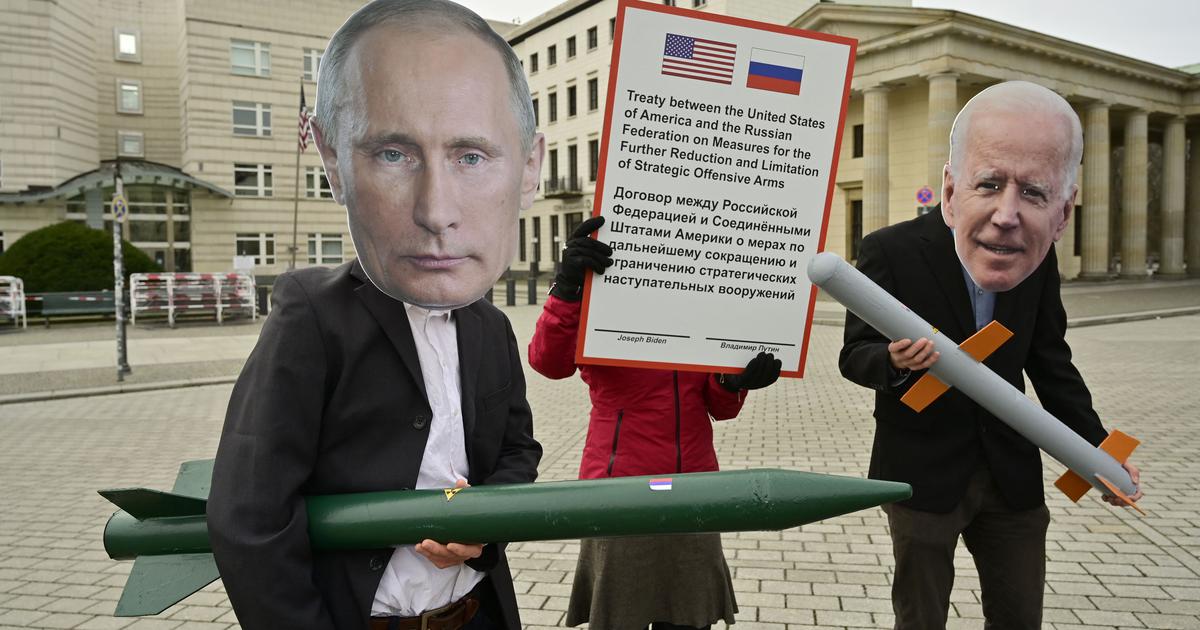
    The world is on the edge of nuclear catastrophe in no small part because of the failure of Western political leaders to be forthright about the causes of the escalating global conflicts.  The relentless Western narrative that the West is noble while Russia and China are evil is simple-minded and extraordinarily dangerous.  It is an attempt to manipulate public opinion, not to deal with very real and pressing diplomacy.

    The essential narrative of the West is built into US national security strategy.  The core US idea is that China and Russia are implacable foes that are “attempting to erode American security and prosperity.”  These countries are, according to the US, “determined to make economies less free and less fair, to grow their militaries, and to control information and data to repress their societies and expand their influence.”

    The irony is that since 1980 the US has been in at least 15 overseas wars of choice (Afghanistan, Iraq, Libya, Panama, Serbia, Syria, and Yemen just to name a few), while China has been in none, and Russia only in one (Syria) beyond the former Soviet Union.  The US has military bases in 85 countries, China in 3, and Russia in 1 (Syria) beyond the former Soviet Union.

    US security strategy is not the work of any single US president but of the US security establishment, which is largely autonomous, and operates behind a wall of secrecy.  

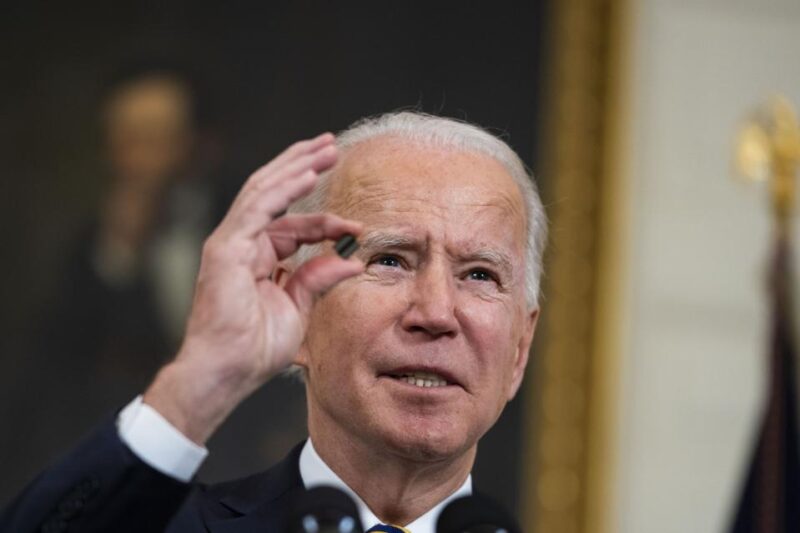
    President Joe Biden has promoted this narrative, declaring that the greatest challenge of our time is the competition with the autocracies, which “seek to advance their own power, export and expand their influence around the world, and justify their repressive policies and practices as a more efficient way to address today’s challenges.”  US security strategy is not the work of any single US president but of the US security establishment, which is largely autonomous, and operates behind a wall of secrecy.

    The overwrought fear of China and Russia is sold to a Western public through manipulation of the facts.  A generation earlier George W. Bush, Jr. sold the public on the idea that America’s greatest threat was Islamic fundamentalism, without mentioning that it was the CIA, with Saudi Arabia and other countries, that had created, funded, and deployed the jihadists in Afghanistan, Syria, and elsewhere to fight America’s wars.

    Or consider the Soviet Union’s invasion of Afghanistan in 1980, which was painted in the Western media as an act of unprovoked perfidy.  Years later, we learned that the Soviet invasion was actually preceded by a CIA operation designed to provoke the Soviet invasion! The same misinformation occurred vis-à-vis Syria.  The Western press is filled with recriminations against Putin’s military assistance to Syria’s Bashar al-Assad beginning in 2015, without mentioning that the US supported the overthrow of al-Assad beginning in 2011, with the CIA funding a major operation (Timber Sycamore) to overthrow Assad years before Russia arrived.

    Or more recently, when US House Speaker Nancy Pelosi recklessly flew to Taiwan despite China’s warnings, no G7 foreign minister criticized Pelosi’s provocation, yet the G7 ministers together harshly criticized China’s “overreaction” to Pelosi’s trip.

    The Western narrative about the Ukraine war is that it is an unprovoked attack by Putin in the quest to recreate the Russian empire.  Yet the real history starts with the Western promise to Soviet President Mikhail Gorbachev that NATO would not enlarge to the East, followed by four waves of NATO aggrandizement: in 1999, incorporating three Central European countries; in 2004, incorporating 7 more, including in the Black Sea and the Baltic States; in 2008, committing to enlarge to Ukraine and Georgia; and in 2022, inviting four Asia-Pacific leaders to NATO to take aim at China.

    Nor do the Western media mention the US role in the 2014 overthrow of Ukraine’s pro-Russian president Viktor Yanukovych; the failure of the Governments of France and Germany, guarantors of the Minsk II agreement, to press Ukraine to carry out its commitments; the vast US armaments sent to Ukraine during the Trump and Biden Administrations in the lead-up to war; nor the refusal of the US to negotiate with Putin over NATO enlargement to Ukraine.

    Of course, NATO says that is purely defensive so that Putin should have nothing to fear.  In other words, Putin should take no notice of the CIA operations in Afghanistan and Syria; the NATO bombing of Serbia in 1999; the NATO overthrow of Moammar Qaddafi in 2011; the NATO occupation of Afghanistan for 15 years; nor Biden’s “gaffe” calling for Putin’s ouster (which of course was no gaffe at all); nor US Defense Secretary Lloyd Austin stating that the US war aim in Ukraine is the weakening of Russia.

    The US has a mere 4.2% of the world population, and now a mere 16% of world GDP (measured at international prices).  In fact, the combined GDP of the G7 is now less than that of the BRICS (Brazil, Russia, India, China, and South Africa), while the G7 population is just 6 per cent of the world compared with 41 per cent in the BRICS. 

    At the core of all of this is the US’s attempt to remain the world’s hegemonic power, by augmenting military alliances around the world to contain or defeat China and Russia.  It’s a dangerous, delusional, and outmoded idea.  The US has a mere 4.2% of the world population, and now a mere 16% of world GDP (measured at international prices).  In fact, the combined GDP of the G7 is now less than that of the BRICS (Brazil, Russia, India, China, and South Africa), while the G7 population is just 6 per cent of the world compared with 41 per cent in the BRICS.

    There is only one country whose self-declared fantasy is to be the world’s dominant power: the US.  It’s past time that the US recognized the true sources of security: internal social cohesion and responsible cooperation with the rest of the world, rather than the illusion of hegemony.  With such a revised foreign policy, the US and its allies would avoid war with China and Russia, and enable the world to face its myriad environment, energy, food and social crises.

    European leaders should pursue the true source of European security: not US hegemony, but European security arrangements that respect the legitimate security interests of all European nations

    Above all, at this time of extreme danger, European leaders should pursue the true source of European security: not US hegemony, but European security arrangements that respect the legitimate security interests of all European nations, certainly including Ukraine, but also including Russia, which continues to resist NATO enlargements into the Black Sea.  Europe should reflect on the fact that the non-enlargement of NATO and the implementation of the Minsk II agreements would have averted this awful war in Ukraine.  At this stage, diplomacy, not military escalation, is the true path to European and global security.

    Feature Image Credit: Big Stock

    This article was published earlier in Pearls and Irritations.

  • Indian Armed Forces @75: The Challenges Ahead

    Indian Armed Forces @75: The Challenges Ahead

    India overall, since 1947, has done reasonably well in keeping at bay the many diverse security challenges which came its way. However, the strategic and military lessons from our confrontations, since 1947, must never be forgotten.

    As India completes 75 years of its independence from 200 years of British yoke, there is much to celebrate about and equally much to introspect. Revisiting the functioning with stark honesty of all its institutions and governance structures will produce realistic mid-course corrections and suggest better paths for the nation to traverse. The Indian Armed Forces, unquestionably, one of the few institutions of the nation, which has lived up to its assigned responsibilities with elan and the desired results has much to be proud of. Nevertheless, many emerging aspects, nuances of the nation’s security and well-being have to be factored in and pursued earnestly with vision and resolve. For the nation’s honour, its Armed Forces can never be found wanting.

    By any standards, India is located in one of the most geo-politically troubled regions of the world. That it is surrounded by two consistently anti-India neighbours, China and Pakistan, both individually and collusively posing threats, only aggravates the formidable challenges it has to confront for its security. Both these nations being nuclear powers, synergistically anti-India, also adept at asymmetric warfare makes India’s strategic challenges mind-boggling.

    [powerkit_button size=”lg” style=”info” block=”true” url=”https://thedailyguardian.com/indian-armed-forces-75-the-challenges-ahead/” target=”_blank” nofollow=”false”]
    Read More
    [/powerkit_button]


  • How blockchain can help dismantle corruption in government services

    How blockchain can help dismantle corruption in government services

    As India celebrated its 76th independence day with great fanfare and jubilation, it is time to introspect on the most serious threat to India’s growth and emergence as a world. This threat is corruption, which is internal and societal. Over the 75 years of modern India’s journey, corruption has become endemic in Indian society. Infused by the political culture, corruption has seeped into every aspect of governance, be it the executive, legislature, or judiciary. This is so because an average citizen has come to accept bribing as a routine and inevitable part of daily life. Hence, if India has to eliminate the scourge of corruption it needs a massive transformation of its society. This can come only through the sustained practice of transparency, ruthless accountability, efficiency, and deterrent punishment. Corruption is commonly perceived as related to monetary benefits but it is much more in terms of misuse of power, coercion, disinformation, lack of transparency, non-performance, inefficiency and delay tactics, and the lack of accountability/responsibility. There is a misconception that digitisation will overcome corruption. Unless timelines, tamper-proof records, and transparency are ensured the corrupt will find ways to get around. These are clearly seen in the revenue tax systems, licensing systems, land registration systems etc. Even though these departments have digitised the processes well, there is a proliferation of middlemen linking the client and the department. This can only be eliminated by the right policies that enforce strict timelines, respond to citizens’ complaints, enforce accountability and transparency on the officials and create clarity for the public in the usage of such systems. The adoption of blockchain technologies could go a long way toward eliminating corruption in India. Widespread corruption has been India’s greatest threat and it is never more urgent than now to address this problem through innovative technologies like blockchain.

    TPF republishes this article on ‘Blockchain and Governance’  from the World Economic Forum under the creative commons license 4.0

    TPF Editorial Team

    Key Points

    • Blockchain could increase the fairness and efficiency of government systems while reducing opportunities for corruption;
    • Blockchain could improve the transparency and disclosure of procurement processes, investment in which can be lost to corruption;
    • The emerging technology can also enhance the property and land registry systems, streamlining lengthy processes and protecting people’s rights.

    Governments regularly have to make trade-offs between efficiency and fairness in their services. Unfortunately, choosing one over the other often increases the likelihood of corruption. In efficient systems, the public is largely content to operate within the bounds of that system; inefficient systems cause large numbers of individuals to seek less-than-legal workarounds. Similarly, fair systems engender trust, pride and a sense of community; while unfair systems encourage individuals to seek out illegal alternatives without remorse.

    Occasionally, new technologies come along that offer the opportunity to increase both efficiency and fairness. Blockchain is one such opportunity and it has a variety of use-cases for government applications. Here are two in more detail:

    Blockchain and procurement

    Public procurement is the process of governments acquiring goods, services and works. It represents a significant portion of governmental budgets, accounting for 29% of general government expenditure totalling €4.2 trillion in OECD countries in 2013. With so much money at stake, it is unsurprising that OECD estimates that 10-30% of the investment in publicly funded construction projects may be lost to corruption.

    Public procurement is vulnerable to corruption for a number of reasons. Parties in the procurement process, both on the public and private sides, are induced into corrupt acts by the size of potential financial gains, the close interaction between public officials and businesses, and how easy it is to hide corrupt actions. Blockchain has the potential to protect against these weaknesses at almost every stage of the procurement process.

    In the planning stage, public officials create evaluation criteria by which bidding companies will be judged. In the bidding evaluation stage, public officials assign scores to companies using the evaluation criteria as their rubric. Without transparency, there are many opportunities for compromised public officials to rig the outcome of the evaluation process. Evaluation criteria could be retroactively changed or company bids altered, for example. Blockchain can guarantee any change is public, the original information is retained and there is a record of who made the change.

    Blockchain can also encourage a wider coalition of stakeholders to participate in and monitor procurement cycles. Too often, the most active stakeholders in any given procurement process are the public officials and the businesses directly involved – a potential problem when more than half of all foreign bribery cases likely occur to obtain public procurement contracts. Watchdog organizations, end-users, the media and citizens are discouraged from participating because procurement information is not readily available, untrustworthy, modified and/or delayed. Blockchain can provide an easily accessible, tamper-proof and real-time window into ongoing procurement processes

    Projects integrating blockchain into procurement, such as this pilot programme in Colombia, conclude that “blockchain-based e-procurement systems provide unique benefits related to procedural transparency, permanent record-keeping and honest disclosure.” The Colombia project noted several drawbacks, such as scalability and vendor anonymity, but newer proposals like this one to overhaul India’s public procurement system are taking steps to overcome those and other shortcomings.

    Blockchain and registries

    Land title registries track the ownership of land and property for a given region. Registration titling systems have had important consequences for the economy, leading to “better access to formal credit, higher land values, higher investment in land, and higher income.” Yet they are far from perfect. They are inefficient, for example, closing a property sale can take months and typically consumes 2-5% of the purchase price of a home. Registration systems can act as bottlenecks for land transactions. There are complaints going back to 2015 of England’s Land Registry having six-month transaction delays and similar complaints persisted in 2020.

    The inefficiencies in land titling systems are a major source of corruption. The Organized Crime and Corruption Reporting Project’s 2019 report on land registry corruption in Bangladesh found that obtaining a licence as a deed writer incurs a bribe to the highest-level administrators. Land registry corruption is not restricted to developing regions: in regions with longer histories of legal stability, it simply becomes more complex. Anti-corruption NGO, Global Witness, estimated in 2019 that £100 billion worth of property in England and Wales was secretly owned by anonymous companies registered in tax havens.

    A good first step to fighting corruption is by cutting down on inefficiencies. Blockchain can streamline much of the process. Take, for example, the number of steps required in the UK for one person to sell the property to another person and compare this with a blockchain-based registry system.

    Some countries are already experiencing positive results. In 2018, Georgia registered more than 1.5 million land titles through their blockchain-based system.

    An urban land registry project underway in Africa uses blockchain to address the problems of digitizing urban land registries. In many densely populated impoverished urban areas, no pre-existing land registry or paper trail exists. Relying on the meagre data available often causes legal disputes. Courts quickly become overwhelmed and digitization efforts stall.

    Blockchain is now being added to the project. To confirm property rights, the new system seeks out and consults community elders. Through a blockchain-based application, those elders receive the authority to confirm the validity of land registry claims. The elders can check directly with residents if they consent to the land assessment. By delegating cryptographically guaranteed authority to respected community members, the quality of the data is improved and the number of land dispute cases handled by the judiciary should decrease. Finally, the remaining cases should resolve faster since the elders’ cryptographic confirmations are admissible as evidence for land dispute resolution.

    The final challenge: Adoption

    The government blockchain-based projects referenced in this article represent just a few of a growing number of pilot or in-production applications of blockchain. This shows that governments are serious about fixing inefficient and unfair services. The potential gains from blockchain are substantial, yet as a new technology, there are many challenges in designing and implementing blockchain-based applications. For large institutions such as governments to deploy blockchain-based applications in a timely fashion and reap the benefits, education and tools are imperative.

  • The Bridge on River Chenab

    The Bridge on River Chenab

    “The only way to discover the limits of the possible is to go beyond them into the impossible”

    -Arthur C. Clarke

    Introduction

    On 13 Aug 2022, the bridge on the River Chenab in the Reasi District of J&K was finally completed. It was a case of the impossible becoming possible. It all happened because of a very high degree of self-belief of those who planned it and the sincerity of thousands of those who worked hard for the last 18 years.   Indeed, it was the best gift the Indian Railway in general and Indian Engineers, in particular, could give to India on the 76th Independence Day of India. It is also highly symbolic that it is located in the State of J&K and in a way appeared to be a giant step towards the integration of J&K with the rest of the country.

    The Bridge over the River Chenab is part of the Jammu-Udhampur-Baramulla Railway line, which is being constructed. While Sections of Jammu-Udhampur, Udhampur-Katra and Banihal-Baramulla are already completed and opened for traffic, section Katra- Banihal is still not complete. The degree of difficulty in this section is enormous. Besides this Bridge on Chenab (more about it a little later), the Bridge on Anji Khad (which is under construction) and a total of 35 tunnels and 37 bridges make this section of 111 km in the mountainous terrain extremely challenging and an engineering marvel in the making.

    Progress of the Project –  It is a 356 km railway project, starting at Jammu and going up to Baramulla. It was started in 1983 with the objective of connecting Jammu Tawi to Udhampur.  Construction of the route faced natural challenges including major earthquake zones, extreme temperatures and inhospitable terrain.  Finally, in 2005  The 53 km long Jammu–Udhampur section opened after 21 years with 20 tunnels and 158 bridges. The cost of the project had escalated to ₹515 crores from the original estimated cost of ₹50 crores.  In 1994 The railway accepted the necessity to extend the track to Baramulla. However, at that point it was thought that the project will have two disconnected arms; one from Jammu to Udhampur and the second from Qazigund to Baramulla. In 2002 the GoI declared this project to be a national project. This means hereafter, the entire funding will be from the Central Budget. At that time the necessity was also accepted to connect the two disconnected arms. The estimated cost of the project assessed then was   ₹6,000 crore.  In 2008 the 66 km section between Anantnag and Manzhama (outside Srinagar) was opened for traffic. In 2009 this Service was extended to Baramulla. During the same year, the line from Anantnag was extended to Qazigund.

    Also  Around the same time, an extension of the track from Baramulla to Kupwara was proposed, and its survey got completed in 2009. In 2009 itself, work on the section between Katra and Qazigund resumed after a review based on geotechnical studies. In 2011, an 11.215 Km long Banihal Qazigund tunnel across the Pir Panjal Range was completed.  This paved the way for a trial run in Dec 2012 from Banihal to Qazigund. In 2014 the train route from Udhampur to Katra was also operationalised. Now the only missing link in this nationally vital rail line was Katra-Banihal. Finally, in 2018 the GoI approved the extension of the railway line to Kupwara.

    Degree of Difficulty in Katra- Banihal Section – This is a 111 km long stretch. 97.34 km of this stretch will be through tunnels. There are 20 Major (including the bridge across the Chenab river and a bridge on Anji Khad) and 10 minor bridges on this stretch. 

    Bridge Across Chenab

    Location: The Chenab Rail Bridge is a steel and concrete arch bridge between Bakkal and Kauri in the Reasi district of J&K, India.  It needs to be noted that it is the highest railway bridge in the world. After many hick-ups, finally in 2012 excavation of the foundation of the bridge commenced. The tender was with Afcons Infrastructure Limited. The alignment crosses a deep gorge of the Chenab River, which necessitates the construction of a long-span railway bridge with a viaduct for approaches on either side. 

    Details: It is a 785 meters long single arch bridge where the main arch is 467 meters. The total span of the bridge is 1315 meters including a viaduct of 650 meters on the Northern side, Deck height is 359 meters above the river bed and 322 meters above the water surface which is 35 meters more than the height of the Eiffel Tower. The project also entails the construction of 203 km of access roads.  The deck is 13.5 meters wide, where two rail tracks will be available. The total cost of the Bridge is Rs 1486 Crores.


    Design: The steel arch has been planned because the construction of the pillar was difficult and the load had to be distributed. Chords have been provided to cater for the swaying load. The steel structures of the bridge were manufactured in workshops built in the mountains. The workshops had been moved to the building site because there is no proper road network in the challenging terrain. The longest building parts that could be delivered to the site were 12 meters in length. Therefore, four workshops were established in the mountains. Workshops and paint shops were built on both sides of the valley. All steel materials, except for the smallest rolled profiles, were delivered to the mountains as steel boards. The insufficient infrastructure of the area caused additional problems. There was no electricity and the water of the river was not suitable for manufacturing concrete. All electricity had to be produced at the site and the water was delivered from further away in the mountains. The job was also challenging because the track had a curvature in the approach bridge. In this section, the construction stage bearings had been designed in such a way that it was possible to launch the steel deck in the curvature portion as well. The bridge consists of about 25000 tonnes of steel structures, the main portion of which was used for the arch bridge section. It is a unique design and as such none of the Indian codes fully catered for the design validation. Therefore it was decided to follow the BS Code. The design also caters for wind load effects as per wind tunnel tests. It can cater for wind pressure of 1500 Pa. It is a blast resistance design. The design of the decking has been checked for fatigue as per the BS Code. The most important aspect is that it caters for redundancy within the structure, for a lower level of operation during mishaps and against collapse in extreme cases of one-pier failure. The area has high seismicity and the design was planned to withstand earthquakes of the severity of 8 on the Richter Scale. The bridge design is for a rail speed of 100 kmph. This means it can withstand very high-intensity of vibrations. The designed life of the bridge is 120 years and to take care of assessed steel fatigue the fatigue design selected is BS:5400 Part-10. The bridge will be able to withstand a temperature of minus 200C and a wind speed of 266 kmph.

    Team: The viaduct and foundation have been designed by M/s WSP(Finland) and the Arch design has been made by M/s Leonhart, Andra and Partners (Germany), the foundation protection has been designed by IISc Bangalore. The executing agency has been M/s Konkan Railway Corporation Limited.

    Status of Katra-Banihal project

    Although, the construction of Chenab Bridge is a major milestone in the progress of the project, however, still many more landmarks are required to be crossed before the completion of the project. Foremost of them is the Anji Khad bridge which is expected to be ready only by Dec 2022. It is expected that this rail Section will finally be operational by the middle of 2023.

    Conclusion

    The Jammu-Udhampur-Katra-Banihal-Srinagar-Baramulla Rail project is a vital national project which has a major bearing on national security and nation building. It is a matter of pride that Indian Engineers have achieved what at one point had appeared impossible. It will help in the integration of J&K with the rest of the country and will help strategically in many ways. The completion of the project will also give confidence to expeditiously complete other projects of national importance like; the railway line to Leh and the Railway line to Tenga in the North-East.

    End Note:

    1. Conceptual Design of the Chenab Bridge in India by Pekka Pulkkine WSP Finland, S Hopf and A Jutila. Available on Research Gate: https://www.researchgate.net/publication/257725212_Conceptual_Design_of_the_Chenab_Bridge_in_India.

    2. An internet upload: https://byjus.com/current-affairs/chenab-bridge/

    3. A Report by OT Staff, “Once the bridge is completed, it will provide all-weather connectivity between Kashmir and the rest of India” reported on 07 Apr 2021 and uploaded on https://www.outlookindia.com/outlooktraveller/travelnews/story/71397/all-about-the-chenab-bridge

    4. An internet upload: https://en.wikipedia.org/wiki/Jammu–Baramulla_line

    5. An internet upload: https://en.wikipedia.org/wiki/Chenab_Rail_Bridge

    6. An internet upload: https://www.pib.gov.in/PressReleasePage.aspx?PRID=1709652

    7. Zee Media Bureau, “Indian Railways: Delhi-Kashmir, Katra-Banihal train route to open soon, project nears completion” dated 08 Aug 2022 and uploaded on https://zeenews.india.com/railways/indian-railways-delhi-kashmir-katra-banihal-train-route-to-open-soon-project-nears-completion-2494827.html

    Image 1 Credits: Arun Ganesh

    Image 2 Credits: Indian Railways

    Image 3 Credits: Indian Express

    Image 4 Credits: Indian Railways

    Feature Image Credits: The Indian Express

  • Rural Agriculture and the new wave of Migrant Workers to Rural Space

    Rural Agriculture and the new wave of Migrant Workers to Rural Space

    Abstract

    Home, belongingness, and identity bring comfort to human existence, but local communities are challenged and become highly volatile by the sudden influx of people from different regions in search of livelihood and survival. Some migrate in their quest to find new opportunities in education, employment, and better living conditions from their home state, but some are displaced due to loss of livelihood, low employment, and lack of safety. This article analyses internal migration toward Tamil Nadu. The migrant population in Tamil Nadu accounts for 18.85 lakh according to the 2011 census, whereas other state migrants account for only 6.2% (Radhakrishnan & Vasanth, 2019). Most migration in the past has been towards the cities for chances of better livelihood and stable jobs. However, migrant workers travelling towards rural areas have been increasingly found working as agricultural labourers. S. Irudaya Rajan, a professor at the Centre for Developmental studies in his work, points out the importance of migrants to this economy as there is a constant outflow of the young population, with reservation wages in this region being high (Radhakrishnan & Vasanth, 2019). A report by the Federation of Tamil Nadu Agricultural Association suggests that over 8,67,582 farmers have stopped agricultural practices, and the market has been taken over by private players who require agricultural labourers (Sreemathi, 2019). This demand can attract migrant workers to rural areas. This article examines the migration pattern in Tamil Nadu to understand the inflow and outflow population, the reasons behind the outflow of farmers from the system and the new wave of migrant workers to rural Tamil Nadu.    

    Introduction

    Millions of people move every year hoping for a better livelihood and future, but the reality may be bitter for some. Nine million people have been migrating annually between states as per the Railway’s data from 2011 to 2016. Around 30% of the Indian population represents the varied level of the migrant population (Migration, 2022). Various factors have contributed to migration. The pull factors which attract people towards the destination include better living conditions, better employment, quality education, absence of violence and high wage rates. The push factors, on the other hand, include the lack of welfare activity, discrimination towards a community, lack of employment and lower wage rates. In both instances, economic ambition occupies the centre space. Thus, it is crucial to form a developmental economy for the residing population and the migrating one. The pull factors usually replace the push factors when the socio-economic condition in the country facilitates good life. People have been moving towards cities, hoping to find better employment and livelihood in the globalised world, making cities the hub for development. In Tamil Nadu, the movement toward the city area was triggered by early industrialisation in the 1980s, when manufacturing capacity accounted for around 26% of its GDP, higher than the national average of 15% (Mahambare & Dhanaraj, 2021). The 1990s liberalisation policy created mobility and development by expanding the economic horizons to telecom, software and banking (Migration to Chennai, 2010). This socio-economic mobility has greatly impacted the state’s rural economy and continues to be one of the few contributors to migration from agriculture. In recent times, farmers are selling out their lands and changing their occupations or working as agricultural labourers. The agricultural sector requires a considerable labour population. This demand for labour forces along with the lockdown during the Covid pandemic has fuelled a new wave of migrant workers in rural areas in south India. However, it is essential to study the causes of the movement of the traditional population from the industry, which helps understand the patterns that need to be avoided.

    Migration out of Agriculture

    Agriculture has long been a community practice in Tamil societies, but the migration of farmers continues to challenge the status quo. A report by the Federation of Tamil Nadu Agricultural Association mentions that over 8,67,582 farmers have stopped agricultural practices (Sreemathi, 2019). Lower wage rates, discrimination, heavy workload, lack of welfare and crop failure are the main reasons for displacement. Since the agricultural sector is seasonal, the wages are decided by workdays, seasons, and piece/ quantity rate, which leads to an unsteady wage rate based on the season, with fewer or no jobs in some seasons. People, thus, prefer to work non-farm jobs for a steady income throughout the year. Some have been living as labourers for generations on the farm since only a handful of the population possess larger farmlands. A study by Sato Keiko (2011) traces this class difference, farmland size, and the employment status of migrants from a rural village in Madurai. He points out that the village’s upper-class children with larger farms migrated to the city and acquired white-collar jobs. The middle class and the marginal groups, on the other hand, usually landed in blue-collar jobs.  Interestingly, he notes that the aspiration to educate and climb the socio-economic ladder has recently been high among the latter (Keiko, 2011). This aspiration leads them to migrate to cities and take up factory jobs, which are comparatively better than being engaged as farm labourers. Educational aspiration attempts to shake the traditional class structure and disparity that exists with it. 

    Additionally, only 27.1% adolescent population and 24.18% of the youth population were involved as agricultural labourers in 2014 (Sivakumar, 2014). Another reason for the migration is crop failure induced by unpredictable heavy rainfall and drought. Farmers who cannot profit or make ends meet when the crop collapses, end up falling into debt.  

    More than 85% of people working in the state under MGNREGA are women, higher than the national average of 56% and 28% of the Dalit population (Ramakrishnan, 2017)

    The Mahatma Gandhi Rural Employment Guarantee Act (MGNREGA) Scheme has been argued to be one of the major reasons behind the declining numbers of farm labourers When the scheme started, it provided the rural population with a higher income of Rs. 100 compared to farm jobs which offered Rs. 40 a day (In Tamil Nadu labourers, 2010). MGNREGA acts as a precursor for the high wage rate in agriculture as it competes with the scheme to attract more people for work. In 2020, the wage rate for agriculture labourers had increased to Rs. 392, and the notified MGNREGA stood at Rs. 273, which was lower than the farm wage (Aditi, 2021). However, along with steady wages and less workload, MGNREGA has continued to be a source of economic empowerment for women. It enables pathways to formal financial institutions and personal saving habits – “I would be working like a bonded labourer again under any big landowning agriculturist, if there was no Mahatma Gandhi National Rural Employment Guarantee Scheme (MGNREGS)” (Ramakrishnan, 2017). These interviews collected by Ramakrishnan, senior journalist for The Hindu, shed light on the women’s attitude and discontent toward farm jobs. More than 85% of people working in the state under MGNREGA are women, higher than the national average of 56% and 28% of the Dalit population (Ramakrishnan, 2017). These marginal groups are frequently abused and sexually harassed by employers and landowners. In this regard, MGNREGA has provided them with a space to work with dignity. However, some experts like Vijayanand, former Secretary of the Union Minister of Panchayat Raj, opposed the arguments favouring MGNREGA arguing that the scheme did not provide jobs throughout the year and phased out the jobs in accordance with the lean season (Radhakrishnan, 2017). 

    Involvement of Migrants in Agriculture

    Tamil Nadu is a growing economy which renders a stay to 18.85 lakhs migrants, of which 6.2 % are from other states. The origin states of these migrant workers are Bihar, West Bengal, Odisha, Jharkhand, Chattishgarh and states of Northeast India. Some tribal communities migrated from areas with rich mineral resources like the Santal areas of West Bengal, MP and a few other areas in Jharkhand and Chattisgarh because of the prevalent mining practice and dam building. Also, tribal people were displaced because of the settlement of non-tribals in the region and deforestation. In some areas, low human development indicators have led to their displacement. Apart from these push factors, Tamil Nadu has a lot to offer in terms of its higher wage rates, better living conditions and political, religious and social freedom (Sami, Crossin, Jayapathy, Martin, et al., 2016). Once they migrate to Tamil Nadu through contractors, migrants are channelled to Chennai, Coimbatore, Tiruvallur, Tiruppur, Kancheepuram and Chengalpattu to work in manufacturing factories and construction sites. These migrants fill the state’s requirement for 3D jobs, as Dr Irudaya Rajan from the Tiruvananthapuram Centre for Developmental Studies mentioned (Radhakrishnan & Vasanth, 2019). These jobs are mostly dirty, demeaning and dangerous. Since the wage expectation of the state youth is high, the desperation to take up these jobs is low and job positions are thus occupied by migrant workers (Vasanth & Radhakrishnan, 2019).

    The Periodic Labour Force Survey (PLFS) data from 2018 to 2020 shows a sharp increase in employment in agriculture from 42.5 % in 2018 -19 to 45.6% in 2019-20 (CMIE, 2021)

    In the pre-Covid job market, population movement was constantly moving from rural villages to urban spaces in search of white and blue-collar jobs. However, Covid has shifted the employment market. The Periodic Labour Force Survey (PLFS) data from 2018 to 2020 shows a sharp increase in employment in agriculture from 42.5 % in 2018 -19 to 45.6% in 2019-20 (CMIE, 2021). Most people who changed jobs were formerly employed in construction and manufacturing. While the existing population migrates to cities in search of skilled labour, migrant workers find the farm jobs more appealing. Tamil Nadu provides an average salary of Rs. 392 per day for farm workers, which is higher than the national average of Rs. 348. Most states from which the migrants are displaced have far fewer wage rates; for instance, Jharkhand offered Rs. 258 in 2020 while the wage rate was Rs. 234 in Chhattisgarh (Directorate of Economics and Statistics, 2021). While their movement is unexpected, these migrant populations can contribute to the agricultural sector and rural development, but that cannot be done without good government policies. The GDP contribution of agriculture reduced from 55.3% in the 1950s to 21.8% in the 2000s (Gothoskar, 2021). Most government budgets have little concern for the agricultural economy. Thus, it is essential to implement policies for the existing agrarian population and the migrants. Also, there has been increasing distress caused by the growing movement of the migrants to farmland which continues to be heavily unorganised. Dr Irudaya Rajan, in his interviews, warns that this unexpected surplus labour availability in rural areas cannot accommodate everyone in the existing jobs, which may result in increased poverty and starvation (Nirupama, 2020).

    Furthermore, it backfires on the urban economy once industries open up completely and face a shortage of labour (Viswanathan, 2020). To know the current situation of migrant workers, state-level data collection is needed. Tamil Nadu collected the migrant database only once in 2015, following the fall of the Moulivakkam multistorey building. While Thangam Thennarasu, the Tamil Nadu Minister of Industries, mentioned collecting data on migrant workers in a press release, the agriculture sector was not mentioned (Kumar, 2021). Data collection is vital in formulating policies to accommodate the migrant workers in rural economies and avoid unexpected problems. 

    Measures to be taken

    Since the Agricultural sector offers seasonal employment, other sources of organised employment or schemes to assure livelihood during times of distress should be in place. While farming requires work like ploughing and harvesting, which is to be done all year-round, the revenue can be earned only in a particular season. If affected by climate calamities and crop failure, people are most likely to end up in debt. Hence, it is essential to employ migrants during the off-season and distress times in sustainable jobs. Most agricultural products are exported as raw materials or semi-processed to other countries, and therefore, the MSMEs in the rural areas can be focused on enhancing the exporting sector of agriculture.

    MOUS between states: The Tamil Nadu government has fewer memorandums of understanding (MOUs) on migrants, with focus mainly placed on Sri Lankan refugees. Thus, signing MOUs with the source state can improve the conditions of migrants and help governments to maintain a database of migrants (Sreelakshmi,2021). The databases can help in formulating policies.

    Welfare policies – Rashtriya Swasthya Bima Yojana (RSBY), a central-run health insurance scheme for people working in the unorganised sector and for those below the poverty line, has to be implemented appropriately, and the records should be maintained. Quality schooling for children of migrants working in rural spaces should be provided. Some states have offered regional language subject notebooks and learning kits through MOUs. Tamil Nadu should recruit staff in the favoured language. Further, skill enhancement training for the migrants should be provided.

    Conclusion

    Agriculture and rural development go hand in hand since 70% of rural households depend upon agriculture for their livelihood. Still, there is an increased pattern of traditional farmers moving out of the business and choosing other industries or being employed as agricultural labourers. This shift, accompanied by the Covid lockdown, has triggered an increased flow of migrant population back to farms as agricultural labourers. Unlike industries, the agricultural sector is unorganised and seasonal, making it highly vulnerable. Thus, it becomes essential to build a safety net for the traditional population and the migrants. These migrants, without proper policies and data entries, can be stranded; lacking identity, rights and political representation. Further, this sudden labour surplus cannot be accommodated immediately, creating a labour shortage in urban areas.  It is, thus, important to record migrant workers who return, the sector they are involved in, their security nets and most importantly, their availability in rural agriculture.

    Reference

    Aditi R. (2021, May 16). MGNREGA workers in Tamil Nadu allege underpayment and wage disparity. The times of India. Retrieved from https://timesofindia.indiatimes.com/city/chennai/mgnrega-workers-in-tamil-nadu-allege-underpayment-and-wage-disparity/articleshow/82673961.cms

    Dhanaraj Sowmya & Mahambare Vidya (2021, March 31). Tamil Nadu left Punjab, Bengal far behind. Here’s what it needs to do now. The Print. Retrieved from https://theprint.in/opinion/tamil-nadu-left-punjab-bengal-far-behind-heres-what-it-needs-to-do-now/631213/

    Directorate of Economics and Statistics. (2021). Agricultural wages India: 2019 – 20. Ministry of Agriculture & Farmers welfare. 

    Gothaskar Sujata. (2021, May 12). To Fully Understand the Migrant Worker Crisis, We Need a Larger Perspective. The Wire. Retrieved from https://thewire.in/rights/migrant-worker-crisis-larger-perspective-farm-land-industry

    In Tamil Nadu labourers choosing NREGA over farms. (2010, Nov 29). NDTV. Retrieved from https://www.ndtv.com/india-news/in-tamil-nadu-labourers-choosing-nrega-over-farms-440546

    Keiko Sato. (2011). Employment structure and Rural-Urban Migration in a Tamil Nadu Village: Focusing on difference by economic class. Southeast Asia Studies. Vol.49. Pg.22-51.

    Kumar Vijay. (2021, July 26). Tamil Nadu to create a databank of migrant workers. The Hindu. Retrieved from https://www.thehindu.com/news/national/tamil-nadu/databank-of-migrant-workers-soon-says-tamil-nadu-industries-minister/article35530808.ece

    Migration to Chennai follows industrial growth, but quality. (2010, April 13). The Times of India. Retrieved from https://timesofindia.indiatimes.com/city/chennai/migration-to-chennai-follows-industrial-growth-but-quality-of-life/articleshow/5798687.cms

    Radhakrishnan V & Vasanth B. A. (2019, September 08). Migrants in Tamil Nadu: case of much ado about nothing? The Hindu. Retrieved from https://www.thehindu.com/news/national/tamil-nadu/migrants-in-tamil-nadu-case-of-much-ado-about-nothing/article29364682.ece

    Ramakrishnan T. (2017, February 05). Job scheme, a mixed bag for rural labourers. The Hindu. Retrieved from https://www.thehindu.com/news/national/tamil-nadu/Job-scheme-a-mixed-bag-for-rural-labourers/article17197043.ece

    Sami Bernard. Crossin Sebastian, Jayapathy, Martin. P. O. (2016). A survey on Interstate migrants in Tamil Nadu. LISSTAR & Indian Social Institute. 

    Sivakumar B. (2014, November 02). Most of Tamil Nadu’s adolescents, youth live in rural areas, shows census. The times of India. Retrieved from https://timesofindia.indiatimes.com/city/chennai/most-of-tamil-nadus-adolescents-youth-live-in-rural-areas-shows-census/articleshow/45008956.cms

    Sreelakshmi Anjana. (2021, November 07). Distress Migration: A case study KBK districts in Odisha. The Peninsula Foundation. Retrieved from https://admin.thepeninsula.org.in/2021/11/07/distress-migration-a-case-study-of-kbk-districts-in-odisha/

    Sreemathi M. (2021, November 23). Migrants now enter agri fields in Nellai. The New Indian Express. Retrieved from https://www.newindianexpress.com/states/tamil-nadu/2021/nov/23/migrants-now-enter-agri-fields-in-nellai-2386930.html

    Viswanathan Nirupama. (2020, May 20). We have not factored in Tamil Nadu’s migrant workers in our realm of things: Expert. The new Indian Express. Retrieved from https://www.newindianexpress.com/states/tamil-nadu/2020/may/20/we-have-not-factored-in-tamil-nadus-migrant-workers-in-our-realm-of-things-expert-2145578.html

    Vyas Mahesh. (2021, August 09). Migration from factories to farms. Centre for Monitoring Indian Economy. Retrieved from https://www.cmie.com/kommon/bin/sr.php?kall=warticle&dt=20210809122441&msec=850

    Feature Image Credits: The News Minute

  • At 75, A time to Celebrate and Introspect

    At 75, A time to Celebrate and Introspect

    As modern, democratic India turns 75, it is indeed a time for celebration and introspection

    Addressing the historic session of the Constituent Assembly on the night of 14-15 August 1947, at the cusp of India’s independence, Jawaharlal Nehru voiced the yearning of millions of Indians when, in his matchless eloquence, he declared: “Long years ago, we made a tryst with destiny, and now the time comes when we shall redeem our pledge…At the stroke of the midnight hour, when the world sleeps, India will awake to life and freedom”.

    In what’s considered to be one of the finest speeches of the last century, Nehru also voiced the aspiration of Gandhiji, that their work would not be over till they wiped “every tear from every eye,” adding “this is no time for petty and destructive criticism, no time for ill-will or blaming others. We have to build the noble mansion of free India where all her children may dwell.”

    [powerkit_button size=”lg” style=”info” block=”true” url=”https://www.deccanherald.com/opinion/in-perspective/at-75-a-time-to-celebrate-and-introspect-1136410.html” target=”_blank” nofollow=”false”]
    Read More
    [/powerkit_button]

  • Ukraine War: India’s Stature in the Emerging World Order

    Ukraine War: India’s Stature in the Emerging World Order

    The war between Russia and Ukraine has caused a major disruption not only in that region, but the entire world. Power centres are shifting; a new world order is emerging out of this global churn. The world anxiously waits for India to take a more active role in a bid to end hostilities. What will India do?

    India’s firm stand of neutrality about the conflict in Ukraine has attracted considerable attention from the world’s strategic thinkers and governments. In this regard, many see the rise of India as a future pole power of the 21st century, as the current world order has entered a phase of instability, conflict, and competition. The Ukraine war may be the tipping point for the Euro-American dominance in the last three centuries, as a multi-polar world order is emerging, albeit slowly. India’s stature in this world order transformation is critical, as the non-western countries that constitute two-thirds of the world will meticulously observe and monitor it. A careful analysis of the ongoing transformation of the world order amidst the massive cacophony of propaganda and a plethora of biased reports (masquerading as research and academic outputs) is a huge challenge for serious researchers and policymakers.

    [powerkit_button size=”lg” style=”info” block=”true” url=”https://raksha-anirveda.com/ukraine-war-indias-stature-in-the-emerging-world-order/” target=”_blank” nofollow=”false”]
    Read More
    [/powerkit_button]

  • Macrovariable Projections in Uncertain Times

    Macrovariable Projections in Uncertain Times

    International factors and faulty data will impact India’s projections of GDP, inflation and balance of payments

    The Fed has raised its benchmark interest rate again by a whopping 0.75%. The Reserve Bank of India has also been forced to raise interest rates further but also take other steps. These decisions in the Monetary Policy Committee (MPC) meeting are based on what the members of the MPC see as the likely course of…

    [powerkit_button size=”lg” style=”info” block=”true” url=”https://www.thehindu.com/opinion/lead/macrovariable-projections-in-uncertain-times/article65747423.ece” target=”_blank” nofollow=”false”]
    Read More
    [/powerkit_button]