Blog

  • Russia: The Migration Dimension of the War in Ukraine

    Russia: The Migration Dimension of the War in Ukraine

    Abstract

    The Russian invasion of Ukraine on February 24, 2022 has drastically changed both the internal situation in the Russian Federation (RF) and the country’s relationship with the international community. The impact of these developments is multidimensional and has a significant human dimension, including the formation of new migration flows marked by high shares of young people, males, and members of various elite groups. The elite migrant flow generally includes four major categories of migrants: academic personnel, highly skilled workers (including representatives of professional, business, creative, and athletic elites), students, and so-called investment migrants.

    Economic Impact

    Shrinking economic output1 and the withdrawal of numerous transnational companies from the RF have threatened the jobs and livelihoods of a large segment of the Russian population, hurting first and foremost its elite segments. Indeed, the introduction of new sanctions cut the long-term international ties established in the economic, political, academic, artistic, and athletic spheres, to name just a few, impacting the lives of millions of people, chief among them the representatives of various professional, business, academic, cultural, and athletic elites.

    This negative impact has been aggravated by both the transborder transfers of transnational corporations’ offices and the flight of numerous Russian businesses, as well as individual enterpreneurs, to locations outside the RF. These movements, mostly economically and professionally motivated, have been supplemented by the emigration of people opposing the war as a matter of principle.

    Second Wave Exceeds First

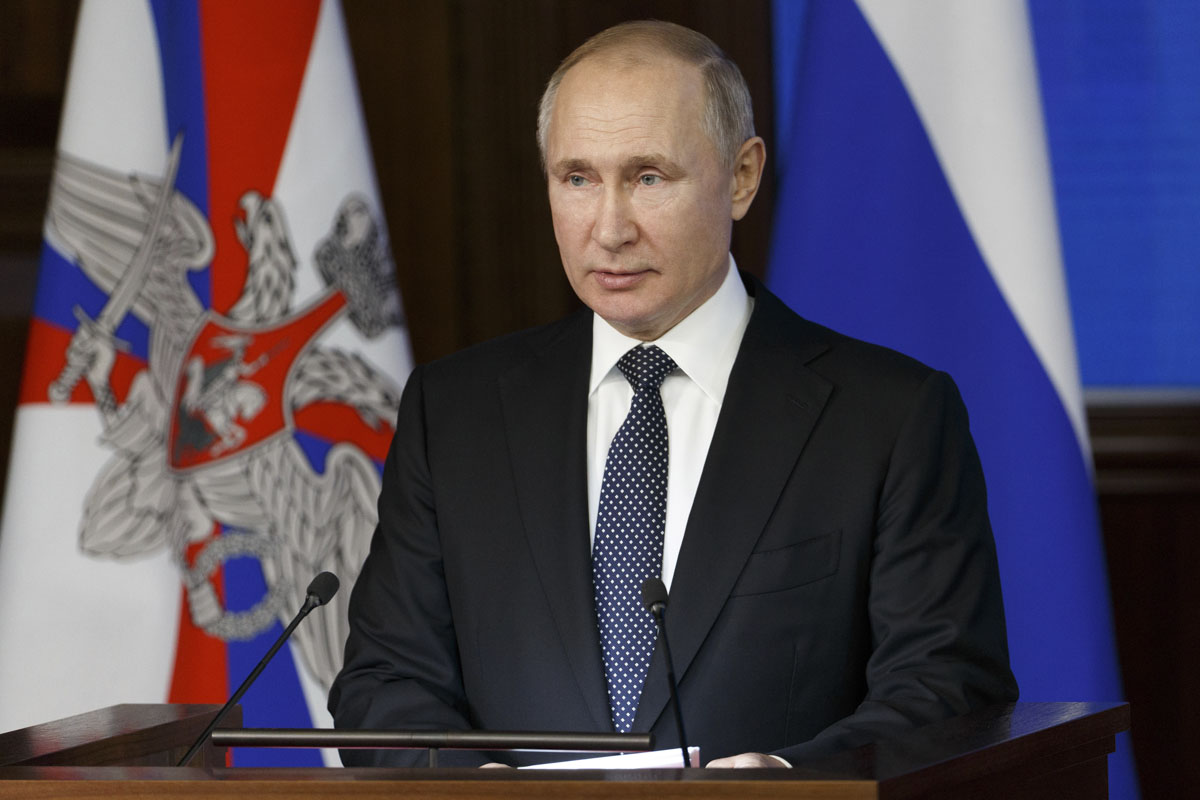
    The second wave of emigration, significantly larger than the first, formed as a direct consequence of the declaration by Russian President Vladimir Putin on September 21 of a 300,000-strong “partial” mobilization and the subsequent announcement by RF Defense Minister Sergei Shoigu that up to 25 million Russian citizens might be eligible for mobilization orders—an announcement that de facto involved in the war the majority of the RF’s population (between the potential reservists and their family members). These developments and the subsequent mishandling of the mobilization process, marked by disorganization and numerous widely reported instances of corruption and abuse, acted as additional push factors of migration, which took on an increasingly politicized character.

    Thus, the migration flow in 2022 has essentially consisted of two—separate and consecutive—subflows. These are far from the only large-scale population movements in post-Soviet Russian history: they follow the “brain drain” of the 1990s and the smaller in scale but consistent population movements of the first two decades of the current century. Yet there are huge differences between the current developments and previous trends.

    Historical Perspective

    Russia saw its position in the global migration chain change drastically after the dissolution of the USSR in 1991. In its aftermath, the RF quickly became an active participant in the globalization process, following the general trend among those states that were previously the centers of multinational empires: the United Kingdom, France, Spain, Portugal, the Netherlands, Belgium, and especially the territorially contiguous empires (Germany, Austria, and Turkey) have received, since their empires’ collapse, considerable migrant flows of two major types. The first wave was the permanent—and mostly politically motivated—return migration of the representatives of the former “imperial” nation to their ethnic homelands (the Britons, French, Spaniards, Turks, etc.). They were soon followed by migrants from developing countries—primarily the former colonies of the metropole. These were people who spoke its language, knew its culture, and could rely on the support there of their long-established ethnic diasporas.

    As a result, Russia—previously one of the most isolated countries in the world—quickly became, after 1991, the center of a vast Eurasian migration system that was one of the four largest in the world (alongside those in North America; Western Europe; and the Middle East, centered on the Persian Gulf). By 2010, more than 12 million RF residents (about 8.5% of its population) had been born outside the country. In 2015, Russia ranked third in the world—after India and Mexico—in terms of its number of emigrants: 10.5 million.2 While most of these migrants moved within the post-Soviet space, in 1991–2005 alone, more than 1.3 million Russian citizens obtained permits for permanent emigration to the West.3 Overall, the number of those who were born in Russia but currently live in countries outside the former USSR is estimated at approximately 3,000,000.4

    This flow was generated by both the “pull” and “push” factors of migration. In the case of emigration outside the post-Soviet region, an important role was played by the liberalization of the migration regime and the emergence of opportunities to work and study abroad; higher living standards; prospects for professional growth; and the genearally welcoming atmosphere for Russian scholars, students, and professionals at that time. “Push” factors included the economic and political instability in Russia, specifically the rapid degradation of Russian state-run industry and of the academic sphere. Research expenditure as a share of Russian GDP was 0.50% in 1992 and 0.24% in 2000 (representing 2.43% and 1.69% of the federal budget, respectively). During this period (1992–2000), the number of those employed by the academic institutions fell from 1,532,000 to 887,729 (a 42% drop), while the number of researchers declined from 804,000 to 425,954 (a 47% drop).5

    With the economic and political stabilization of the early Putin years, budgetary expenditures increased, peaking in 2015 at 2.81% of the federal budget (0.53% of GDP).

    These processes led to the formation of significant elite Russian diasporas in the major receiving countries. Already by 2010–11, more than 660,000 university educated Russians were living abroad, putting the RF into the category of states with large elite diasporas (300,000 to 1,000,000 migrants with a university degree)—along with such countries as Mexico, South Korea, Vietnam, Iran, Taiwan, Morocco, and Colombia.6 Of particular importance was the massive emigration of Russian scholars and educators: I previously estimated the size of this elite diaspora at about 300,000–350,000 in 2012, including, as of 2015, approximately 56,000 students studying abroad. The academic flow was heavily dominated by basic and technical sciences experts, while specialists in social sciences and the humanities accounted for just 6.1% of the total in 2002–03.7 The flow was also skewed geographically toward the two highly developed Global North regions of North America and Western Europe, which respectively accounted for 30.4% and 42.4% of the intellectual migration flow. The largest receiving countries were the United States (28.7%) and Germany (19%); these two states also held first and second place, respectively, among receiving countries in practically all academic subfields.8

    With the economic and political stabilization of the early Putin years, budgetary expenditures increased, peaking in 2015 at 2.81% of the federal budget (0.53% of GDP). This served to slow down the academic personnel decline and the elite outflow: between 2000 and 2019, the number of those employed in the academic sphere declined from 887,729 to 682,464 (or by 23.1%), while the number of researchers fell from 425,954 to 348,221 (or by 18.2%9 —see Figures 1a and 1b below and Table 1 on p. 11). While the number of Russian students studying abroad remained relatively stable at 50,000–60,000, the RF during that period rebuilt its position as one of the leading hubs for international students—ranking sixth in the world behind the US, the UK, Australia, France, and Germany.10 Their numbers grew steadily, from 153,800 in 2010/2011 to 298,000 in the 2019/2020 academic year.11

    Figure 1a: Russian R&D Dynamics, 1992–2019: Personnel (mln.)

    Figure 1b: Russian R&D Dynamics, 1992–2019: Expenditures

    Source: Federal’naia sluzhba gosudarstvennoi statistiki, “Rossiia v Tsifrakh—2020,” 2021, https://gks.ru/bgd/regl/b20_11/Main.htm; Federal’naia sluzhba gosudarstvennoi statistiki, Rossiiskii Statisticheskii ezhegodnik 2009 (Moscow, 2009), 543, 553; Federal’naia sluzhba gosudarstvennoi statistiki, Rossiiskii Statisticheskii ezhegodnik 2020 (Moscow, 2020), 495–6, https://rosstat.gov.ru/storage/mediabank/Ejegodnik_2020.pdf; Gosudarstvennyi komitet Rossiiskoi Federatsii po statistike, Rossiiskii Statisticheskii ezhegodnik 2003 (Moscow, 2003), 531.

    Russia, while losing its elite migrants to the more developed countries of the Global North, was at least partially substituting for their loss with immigration from less developed states, primarily those in the post-Soviet space.

    Overall, it could be concluded that Russia transformed in the early 2000s from the country in deep economic and social crisis—and source of massive elite outflows— that it had been in the 1990s into a state with a moderate level of development that played multiple roles in the world migration chain: both sending and receiving migrants as well as acting as a migrant transit country. Russia, while losing its elite migrants to the more developed countries of the Global North, was at least partially substituting for their loss with immigration from less developed states, primarily those in the post-Soviet space. The impact of the “pull” factors of migration increased, while that of the “push” factors decreased, at least in relative terms.

    After the Invasion

    This multiplicity of roles was for the most part retained by the RF after the first invasion of Ukraine in 2014 (even under the conditions of the expanding sanctions
    regime) and during the general decline of migration activity worldwide as a result of COVID-19 restrictions. Yet the events of 2022 have drastically changed the migration environment, returning it to a crisis level, with the “push” factors of migration (such as the deteriorating political situation, sharp disagreements with governmental policies among certain segments of society, the unwillingness of many to serve in the RF military, the fear of losing jobs and sources of income, etc.) coming to the forefront.

    When it comes to the contrast between current migration flows and previous post-Soviet flows, the following points should be noted:

    • The 2022 migration waves are defined primarily by “push” factors, which have frequently forced people to leave even in the absence of adequate preparation
      (previous experience of work or study abroad, personal or professional networks) or clear prospects in destination countries.
    • Migration in 2022 is frequently directed toward smaller and economically weaker countries than in the 1990s, including those in Eastern Europe, the post-Soviet space (Central Asia, the Caucasus), and the Persian Gulf, as well as Turkey and Mongolia. This may lead to the reversal of the trends that have dominated (especially elite) migration patterns in Central Eurasia for the last three decades. This reversal, which has important symbolic value, may create significant long-term labor-market and demographic problems for the RF.
    • In contrast to previous migration waves, the current ones are marked by their hectic, spontaneous character and the heavy presence in the flow of young people working in the IT and business sectors, who are relatively flexible and could either seek jobs or create private-sector businesses. At the same time, there is also a significant share of people, especially within the academic bloc, who hold Humanities and Social Sciences degrees and have very limited prospects of finding jobs that correspond to their qualifications. Thus, even under the current crisis conditions, substantial return migration can be expected.
    • In 2022, movement is further complicated by the heritage of the COVID-19 pandemic and the new limitations resulting from the 2022 sanctions— these are related to the blocking of RF-issued credit cards, the break-up of direct transportation links with most European countries, complications with getting visas, and frequently prohibitive airfare rates. An additional complication is presented by the recent proposals, in a number of Western countries, to arrest RF citizens or confiscate their property.
    • A particular feature of the 2022 flows has been their “explosive,” emergency character, marked by very high intensity in the initial weeks and a relatively
      quick decline thereafter.

    There also exist visible differences between the flow that followed the developments of February 2022 and the flow that followed the events of September 2022. In particular,

    • A noticeable discrepancy exists in terms of their scale and gender structure. The first flow was on the order of 100,000–150,000 people and was relatively balanced in gender terms, frequently including whole families with children. The second, which followed Putin’s mobilization announcement, has been heavily dominated by young males. This in itself poses significant problems for Russia’s demographic and economic future.
    • The first flow was directed, first and foremost, toward all the countries neighboring Russia. The current one, meanwhile, is taking place under the conditions of
      changing public attitudes and governmental policies toward RF citizens, even those who oppose Putin’s actions. This dynamic could lead to general change in the direction of migration flows.
    • The flow of the first half of 2022 was marked by heavy presence of foreign citizens and people with dual citizenship or other legal status, who moved to the countries where they held such status. The participants in the current flow, who are primarily RF citizens, face additional legal problems in receiving countries by comparison.
    • The original flow included large numbers of people who worked in the RF offices of transnational companies that relocated, along with their personnel, to other countries. These people had some social guarantees, had experience of work for a TNC, and could rely on their companies’ support. People emigrating in the newest waves lack these opportunities.
    • The large-scale arrival of migrants in countries with relatively weak infrastructure and limited economic capacity (the states of the Baltic, the Transcaucasus, and Central Asia) has put significant pressure on these states’ economies and labor markets. Successive waves of migrants will therefore increasingly  encounter competition, economic hardship, and negative public attitudes.

    While there exist huge discrepancies in the estimates of migration flows made by various entities—both governmental agencies and non-governmental organization —in Russia as well as the receiving states, it is clear that the most recent flow has been much larger than the one in the first half of 2022. The most frequently cited figure is on the order of 700,000 people.12 How-ever, a major problem is that most estimates rely on the statistical data of the national border guard services, which report the number of border crossings in a particular period of time without accounting for repeat crossings, return migration, movement to the third countries, “shuttle” activities, irregular migration, etc.13 Because of these limitations, it is likely that the overall number of migrants in the “second wave” is currently in the range of 350,000–450,000. Thus, the overall number of migrants who have left the RF in the two urgent and chaotic waves of 2022 can be estimated at about 500,000. Even this figure represents a substantial potential loss for a country—particularly one like Russia that was already experiencing population decline.14 It is a special concern considering the skewed gender, age, and qualification structure of those currently leaving the RF.

    Table 1: Russian R&D Dynamics, 1992–2019

    Source: Federal’naia sluzhba gosudarstvennoi statistiki, “Rossiia v Tsifrakh—2020,” 2021, https://gks.ru/bgd/regl/b20_11/Main.htm; Federal’naia sluzhba gosudarstvennoi statistiki, Rossiiskii Statisticheskii ezhegodnik 2009 (Moscow, 2009), 543, 553; Federal’naia sluzhba gosudarstvennoi statistiki, Rossiiskii Statisticheskii ezhegodnik 2020 (Moscow, 2020), 495–6, https://rosstat.gov.ru/storage/mediabank/Ejegodnik_2020.pdf; Gosudarstvennyi komitet Rossiiskoi Federatsii po statistike, Rossiiskii Statisticheskii ezhegodnik 2003 (Moscow, 2003), 531.

    While these factors represent some very important arguments for putting an immediate end to the military action, it is clear that demographic, labor market, and socio-economic considerations are of minor significance for Vladimir Putin. More than that, following Alexander Lukashenka’s example in Belarus following the protests there in 2020, the RF leadership could perceive the current migration outflows as politically useful, ridding it of opponents to the war and regime and further weakening the country’s civil society. Thus, the disastrous 2022 policies might continue, aggravating both the domestic socio-economic situation and the RF’s position in the world.

    References:

    1. In particular, Russia’s industrial output in September 2022 was 9% of that in September 2021 (Federal’naia Sluzhba Gosudarstvennoi Statistiki, “Operativnye Pokazateli,” 2022, https://rosstat.gov.ru/).
    2. United Nations Department of Economic and Social Affairs, Population Division, Trends in International Migration Stock: The 2015 Revi- sion (New York: United Nations, 2015).
    3. Anatolii Vishnevskii, , Naseleniie Rossii 2003-2004: Odinnadtsatyi-dvenadtsatyi ezhegodnyi demograficheskii doklad (Moscow: Nauka, 2006), 325.
    4. “‘Meduza’ ob emigratsii iz Rossii,” Demoscope 945–6 (17–30 May 2022), http://www.demoscope.ru/weekly/2022/0945/gazeta01.php.
    5. Federal’naia sluzhba gosudarstvennoi statistiki, “Rossiia v Tsifrakh—2020,” 2021, https://gks.ru/bgd/regl/b20_11/Main.htm; Gosudarst- vennyi komitet Rossiiskoi Federatsii po statistike, Rossiiskii Statisticheskii ezhegodnik 2003 (Moscow, 2003),
    6. This group is second to that of countries with extra-large diasporas (more than 1,000,000 people). As of 2015, that group included India (2,080,000), China (1,655,000), the Philippines, the UK, and See Irina Dezhina, Evgeny Kuznetsov, and Andrei Korobkov, Raz- vitie Sotrudnichestva s Russkoiazychnoi Diasporoi: Opyt, Problemy, Perspektivy (Moscow, 2015), http://russiancouncil.ru/upload/Report- Scidiaspora-23-Rus.pdf, 18.
    7. V. Korobkov and Zh. A. Zaionchkovskaya, “Russian Brain Drain: Myths and Reality,” Communist and Post-Communist Studies 45, no. 3-4 (September-December 2012): 332.
    8. , 335–6. See also Andrei Korobkov, “Russian Academic Diaspora: Its Scale, Dynamics, Structural Characteristics, and Ties to the RF,” in Migration from the Newly Independent States: 25 Years After the Collapse of the USSR, ed. Mikhail Denisenko, Salvatore Strozza, and Matthew Light (New York: Springer, 2020), 299–322.
    9. Federal’naia sluzhba gosudarstvennoi statistiki, “Rossiia v Tsifrakh—2020;” Federal’naia sluzhba gosudarstvennoi statistiki, Rossiiskii Stat- isticheskii ezhegodnik 2020 (Moscow, 2020), 495–6, https://rosstat.gov.ru/storage/mediabank/Ejegodnik_2020.pdf.
    10. “Mezhdunarodnye studenty,” Unipage, 2019, https://unipage.net/ru/student_statistics.
    11. Federal’naia sluzhba gosudarstvennoi statistiki, “Rossiia v Tsifrakh—2020;” Federal’naia sluzhba gosudarstvennoi statistiki, Rossiiskii Stat- isticheskii ezhegodnik 2020, 206, https://rosstat.gov.ru/storage/mediabank/Ejegodnik_2020.pdf.
    12. See, for instance, “Forbes: posle ob”iavleniia mobilizatsii Rossiiu pokinuli primerno 700 chelovek,” Kommersant, October 4, 2022, https://www.kommersant.ru/doc/5594533.
    13. For example, the Interior Ministry of Kazakhstan reported at the beginning of October that in the wake of the mobilization announcement by Vladimir Putin on September 21, 2022, more than 200,000 people had crossed the country’s border with Russia, of whom just seven had been deported back to the At the same time, this report noted that 147,000 of them had already left Kazakhstan within a period of less than two weeks. See Mikhail Rodionov, “V Kazakhstan s 21 sentiabria v”ekhali bolee 200 tysiach rossiian. Deportirovali semerykh,” Gazeta. ru, October 4 2022, https://www.gazeta.ru/politics/2022/10/04/15571807.shtml.
    14. In 2019, the fertility rate in Russia was 1.504. See Federal’naia sluzhba gosudarstvennoi statistiki, “Rossiia v Tsifrakh—2020;” Federal’naia sluzhba gosudarstvennoi statistiki, Rossiiskii Statisticheskii ezhegodnik 2020, 103.

    This article was originally published at the Center for Security Studies (CSS)

    Featured Image Credits: Politico

  • Xi’s third term, the 20th Party Congress and Implications for India

    Xi’s third term, the 20th Party Congress and Implications for India

    The historic 20th National Congress of the Communist Party of China (CPC) concluded on October 23rd. The week-long extravagant event – beginning on October 16th – has brought new faces of the Chinese political elite to the forefront along with a few surprises. Xi’s report before the 20th National Party Congress (NPC) at the opening ceremony and his appointments to the highest posts in the country are very telling of what his third term could look like for the world. Most importantly, the implications for India cannot be clearer – politically, economically, diplomatically, and militarily. India will need to acquaint herself with these new appointments and developments and come up with a strategy to level the playing field.

    What the report says and implies

    Xi’s report to the 20th NPC was in stark contrast to the report delivered in 2017 to the 19th NPC. In 2017, Xi was triumphant of all that China had achieved and hoped to achieve in the future – particularly on the economic front and of its growing international influence. He was proud of China’s assertive foreign policy and soft power. That sentiment has not necessarily changed in the 20th NPC report. However, Xi’s report did strike a sombre tone, predicting a tough future for China – “…strategic opportunities, risks, and challenges are concurrent and uncertainties and unforeseen factors are rising. Various “black swan” and “grey rhino” events may occur at any time.” His speech and report come across as a rallying call meant to safeguard the primacy and authority of the CPC and their way of life against external interference.

    “China’s overall development objectives for the year 2035 are as follows: Significantly increase economic strength, scientific and technological capabilities, and composite national strength; substantially grow the per capita GDP to be on par with that of a mid-level developed country”.              – Xi Jinping in his address to the 20th Party Congress.

    The importance of “national security” (mentioned 81 times) and China’s external and regional challenges is given highest priority and significance. Other key phrases that find frequent mention in the report are “military”, “strategic/strategy” and “risks”. There is a concerted focus on military modernisation and ramping R&D. Simultaneously, Xi is also realistic of the economic challenges ahead of China – “…many bottlenecks hindering high-quality development, and China’s capacity for scientific and technological innovation is not yet strong enough. Many major issues need to be resolved in order to guard against financial risks and ensure that food, energy, and industrial and supply chains are secure and reliable.” Interestingly, China’s economy was not in the spotlight. There was a glaring omission of the development of and plans for the BRI; mentioned only twice in the entire report. Predictably, there was no change in China’s policy towards Taiwan except a veiled threat directed at the US for its interference in its neighbourhood. It appears that Xi’s plans for his third term are to focus on China’s security and strategic challenges through assertive diplomacy.

    Xi stacks the deck in his favour

    Xi Jinping’s appointment as General Party Secretary of the CPC for a third term was the least surprising outcome from the 20th NPC; owing to constitutional amendments made in his previous term i.e., the removal of the constraint of a term limit. He also retains his position as Chairman of the party’s Central Military Commission (CMC). His appointments to the state’s top bodies have broken with the CPC’s age norm of ‘7-up, 8-down’; officials eligible to serve another term at 67 years have been given the boot while people like Zhang Youxia (VC of the CMC), at 72 years, has been given another term when he should ideally have been retired.

    The reshuffling of the Politburo Standing Committee (PBSC) appears to have only one important criterion – loyalty to Xi Jinping. The move is also an indication of the concentration of power that now rests with Xi and his men. With the introduction of the “Two Establishes” and “Two Safeguards”, Xi elevated himself to be on par with Mao Zedong and above Deng Xiaoping, Hu Jintao and Jiang Zemin. Indeed, the inclusion of Xi Jinping’s Thoughts on Socialism with Chinese characteristics in the Party Constitution along with the “Two Establishes” and “Two Safeguards” has cemented Xi Jinping as the core of the CPC. His appointments to the PBSC reflect this. Premier Li Keqiang, widely believed to be a dissenter and protégé of former President Hu Jintao was dropped. Hu Chunhua, slated for a position in the PBSC and considered for the premiership was unable to secure a position in the 7-member powerful body and was even dropped from the Politburo. Other members to be removed were Wang Yang, Han Zheng and Li Zhangshu. Both Wang Yang and Han Zheng were closely linked to Li Keqiang and former President Jiang Zemin respectively. The new members of PBSC are Li Qiang, Cai Qi, Ding Xuexiang and Li Xi. Zhao Leji and ideology tsar Wang Huning were the only members to retain their seats; having closely aligned themselves with Xi Jinping in the period between the 19thNPC and 20th NPC. The composition of the 20th PBSC indicates Xi’s success in removing all factional opposition present within the Party. All the members who were left off the PBSC were a part of the Communist Youth League and rose within its ranks to become powerful men. Their removal, along with Hu Jintao being escorted out during the 20th National Congress is both a signal to Xi’s loyalists and opposition.

    Similarly, the selection of people into the 24-member Politburo and Central Committee are all Xi loyalists and will have a direct impact on China’s domestic and foreign policies going forward. Xi’s prioritisation of security and S&T is reflected in some of the new appointments to the Politburo – Chen Wenqing (an intelligence officer and former minister of the Ministry of State Security), engineers with specialisation in aerospace Ma Xingrui and Yuan Jiajin, Li Ganjie (nuclear engineering), Zhang Youxia (VC of the CMC), Hei Weidong (VC of the CMC and Commander of CMC’s Joint Command Center), Chen Jining (environmental sciences), and Yin Li (public health expert). Notably, both the PBSC and Politburo have no women participation.

    The backgrounds of the appointees to these bodies are also an indicator of the growing premium Xi is placing on technocrats. Beyond party and political loyalty, they are expected to fall in line with his policy agenda and thus, have backgrounds in aerospace, technology, finance, economics, engineering, and advanced manufacturing in sectors like semiconductors. 

    The backgrounds of the appointees to these bodies are also an indicator of the growing premium Xi is placing on technocrats. Beyond party and political loyalty, they are expected to fall in line with his policy agenda and thus, have backgrounds in aerospace, technology, finance, economics, engineering, and advanced manufacturing in sectors like semiconductors. The number of officials with backgrounds in S&T in the Central Committee is at par with Jiang Zemin’s first term in 1992. According to a study by the Brookings Institution, 81 seats in the 20th Central Committee – around 40% – are occupied by Chinese officials with technical expertise. The belief that technocrats generally lack political factions, prefer working in silos and are solution-oriented also works in Xi’s favour.


    A stronger and more loyal CMC

    The new CMC appointees stand out for several reasons. For one, Xi has broken with the established retired norms by placing Army veteran Zhang Youxia as VC of the CMC. Further, the placement of He Weidong as the second VC of the CMC is unusual since he has essentially jumped two grades without serving as either a member of the CMC or Central Committee of the CPC. Second, Xi appears to have rewarded those that he has personal and familial connections with.

    Zhang Youxia’s father, Zhang Zongxun was a founding member of the PLA and served with Xi’s father, Xi Zongxun in the 1940s. General Zhang’s decorated career, combat experience (Sino-Vietnamese war in the 1980s) and position as head of the Equipment Development Department of the CMC make him one of Xi’s most trusted allies in the PLA. On the other hand, General He Weidong’s catapult to second VC is significant given his operational experience with both the Western Theatre Command (WTC) and Eastern Theatre Command (ETC) ground forces. Reportedly, both Xi and He are also close friends owing to the time they both spent in Fujian province and Zhejiang province during Xi’s days working in the provincial government.

    The other new appointment with operational and combat experience is General Liu Zhenli. He takes over as Chief of the Joint Staff Committee of the CMC and was previously Chief of Staff and Commander of the PLA Army and Chief of Staff of the PAP. His experience in the Sino-Vietnam border skirmishes in the 1980s as well as his stint with the PAP makes him an important addition to the CMC.

    Finally, General Li Shangfu’s (potentially Minister of National Defense) elevation to the CMC is notable in that it signals a close linkage between the aerospace domain and the military. Li is a technocrat and is widely regarded as the man behind China’s manned and unmanned space program. His time as Deputy Commander of the PLA Strategic Support Force and his current appointment as Director of the Equipment Development Department reflects Xi’s aim of achieving the centenary goal of the PLA Army and modernising its military and national defence.

    The other two members to retain their position in the CMC are Admiral Miao Hua and General Zhang Shengmin. They both rose through the ranks in the Political Work Department as political commissars. Admiral Miao will continue to head the Political Work Department. He is also a close ally of Xi from when they both served in the Fujian province in the 1990s and 2002. No doubt his work as a political commissar in the PLA Navy makes him a strong candidate for a second term in the CMC. Similarly, General Zhang continues to head the Central Commission for Discipline Inspection as he serves in the PLA Rocket Force. His appointment is particularly significant given the fact that he replaced Du Jincai who was being investigated with then VC’s Guo Boxiong and Xu Caihou on corruption. Zhang Shengmin’s retainment signals, one, Xi’s trust in him and two, that his anti-corruption campaign is far from over.

    Other appointments such as Airforce General Xu Qilang and PLA Generals Wei Fenghe and Li Zuocheng to the State Commission indicate an overwhelming prioritisation of the WTC and ETC, meaning India and Taiwan – China’s two biggest security challenges. The appointment of several serving chiefs of the ground forces will have far-reaching implications for the LAC and India’s national security.

    The combination of technocrats and veterans in the CMC is a nod towards Xi’s vision for the Chinese military – “…continue integrated development of the military through mechanization, informatization, and the application of smart technologies and work faster to modernize military theory, organizational forms, personnel, and weaponry and equipment. We will enhance the military’s strategic capabilities for defending China’s sovereignty, security, and development interests…”.

    However, the success of these appointments remains to be seen given the relatively limited operational experience some of the members have.

     What do we make of China’s economy?

    The “common prosperity for all” is another major tenet at the heart of China’s domestic economic policy. Whilst outlining all the strides the CPC has made in the last five years to the 20th NPC, Xi is also aware of the economic challenges China faces – the effects of the Covid-19 pandemic, the rise of unilateralism and protectionism, a sluggish global economy and regional conflicts and disturbances. To combat these challenges, China is pursuing the “dual circulation” strategy and “high-quality development”. Notably, these two mechanisms have made their way to the Party Constitution. The dual circulation strategy is aimed at improving domestic demand, building secure and resilient supply chains, and reducing China’s dependency on foreign trade for its economic growth.

    China is pursuing the “dual circulation” strategy and “high-quality development”. Notably, these two mechanisms have made their way to the Party Constitution. The dual circulation strategy is aimed at improving domestic demand, building secure and resilient supply chains, and reducing China’s dependency on foreign trade for its economic growth.

    Along with a faster recovery of its industrial production equipment manufacturing and high-tech manufacturing, China’s GDP grew by 3.9% in the third quarter. However, this does not take away from the fact that, presently, China’s exports have diminished. The strict zero-covid policy that China continues to enforce is severely impacting its industries. The recent US Chips Act and export controls targeted at China are affecting foreign enterprises in the country as well as its tech industry.

    Further, the absence of market-reform oriented economists like Premier Le Keqiang, Vice Premier Liu He, head of the Central Bank Yi Gang, financial regulator Guo Shuqing and Finance Minister Liu Kun from the PBSC and Politburo will surely be felt. Li Qiang, the potential candidate for the Premiership does not have an economic background and it is likely that most of the heavy lifting will fall to He Lifeng (tapped for Vice Premier) in the Politburo. He is a supporter of Xi’s “self-reliance” policies and economic nationalism. He will have big shoes to fill as Liu He, the outgoing Vice Premier, had a powerful portfolio that included economic policy and the financial sector. The Harvard-trained economist was also Xi’s go-to man for trade negotiations with Washington.

    India’s continued economic growth is evidence contrary to what China dictates. Even as China seeks membership in the Comprehensive and Progressive Agreement for Trans-Pacific Partnership (CPTPP) and uses the Regional Comprehensive Economic Partnership (RCEP), there are signs of decoupling with the Chinese economy emerging. Already, the US-imposed export controls are impacting China’s production and manufacturing. While China proposes a more “secure” and inward-looking economic policy, achieving this goal will take a long time. This is an opportunity for India to exploit. India becoming the next manufacturing hub for the world will challenge China’s position in Asia and thus, presents an obstacle for the latter.

    China’s wolf-warrior diplomacy to continue

    With Yang Jiechi’s retirement, the position of head of China’s Central Foreign Affairs Commission is set to move to Wang Yi, another seasoned career diplomat. His appointment to the Politburo, at 69 years of age, is yet another display of Xi’s disregard for the Party age norms. But it also indicates that Xi looks to Wang’s expertise as China enters its most challenging period of international engagements. Wang has been the face of China’s foreign policy for quite some time and is another ‘wolf-warrior diplomat’. His appointment signals the continuity of the wolf-warrior diplomacy that China practices. With Wang Yi at the helm, it is expected that Qin Gang, the current ambassador to the US, will become the next Foreign Minister. The other potential appointee to the position is Liu Haixing who is a career diplomat specialising in European affairs and served multiple postings in China’s embassy in France. He is also the Deputy Director of the Office of the National Security Commission (NSC). Other diplomats on the roster are Liu Jianchao and Qi Yu. Liu Jianchao was recently made Director of the International Liaison Department of the Central Committee of the Chinese Communist Party (CCID) this June and it is unlikely to change so soon. He also previously served at the Office of the Foreign Affairs Commission (FAC). Qi Yu, serving as Party Secretary of the Foreign Ministry has no diplomatic experience.

    The choice between Liu Haixing and Qin Gang will also dictate the future direction of China’s foreign policy. The choice of diplomats to the Central Committee also indicates the importance Xi places on public relations. China’s need to sway public opinion, both domestically and internationally, is reflected in the choice of Liu Jianchao and Qin Gang. Both have ample experience serving as spokespersons for the Party and the PRC respectively. Further, Liu Jianchao’s and Liu Haixing’s elevation to the Central Committee also indicates the importance of serving in Party Commissions. Their time at the FAC and NSC, respectively, within the last five years has earned them a fast-tracked promotion to the Central Committee. The path to the top is even closer for Liu Haixing given the fact that his senior, Cai Qi who served in the NSC, now sits in the PBSC.

    The road ahead for India

    The appointments to the PBSC, Politburo and CMC are a reflection of China’s assertiveness on the international stage. The military appointees are of particular importance to India. The overwhelming emphasis on ground forces and service chiefs with experience in the WTC could mean more skirmishes along the LAC and a concerted focus towards engaging in hybrid warfare. The LAC is a priority security concern for India as well and the nationalistic fervour that Xi exemplified in his speech to the 20th NPC is no different from what Prime Minister Modi engages in. That said, India’s military forces must be prepared for an escalation along the LAC at any point in time.

    The Central Committee of 205 members, the majority of whom hold doctorates, includes 47 military leaders. This is reflective of China’s governance structure that is techno-military focused along with the necessary expertise in political, economic, and social domains.

    However, leaving aside the anti-Chinese rhetoric of the West, it is important for India to recognise the competence; educational qualifications, experience, and expertise; and the varied techno-military-politico composition of the Chinese leadership. CCP’s Central Committee consists of 205 full committee members from which are chosen the top leadership forming the Politburo of 24 members inclusive of the apex standing committee of seven members and the Central Military Commission of seven members. All 205 members are highly qualified in various disciplines such as economics, education, politics, philosophy, sciences, engineering, medicine, aerospace, nuclear, space, telecommunications, sociology, history, management, international relations, law, jurisprudence, geopolitics etc. The majority hold doctorates in their chosen fields. Xi Jinping holds a degree in Chemical Engineering and a doctorate in Marxian philosophy and Political Science. In addition, the leadership has a significant presence of military leadership, both serving and veterans that includes 27 Generals and 17 Lieutenant Generals out of the 205 members.

    China’s economic downturn and security-oriented economic policy that Xi has propounded is an opportunity for India to become the next manufacturing hub in Asia. However, India must remain cautious of what competition with China could look like for the neighbourhood.

    The changes to the diplomatic cadre in the 20th NPC do not take away from the fact that India’s standing and position are stronger and more sure-footed than it has ever been. Our diplomacy in the face of the ongoing Russia-Ukraine war showcases that. India’s strategic autonomy, respect for international law and norms and growing strategic partnerships with the Indo-Pacific countries are an advantage to her engagement with Beijing.

    Feature Image Credit: orcasia.org

  • India’s Unorganised Sector Is Being Engulfed, Further Marginalised

    India’s Unorganised Sector Is Being Engulfed, Further Marginalised

    The organised sector must consider how much can the unorganised sector be run down without hurting its own interest.

    The corporate sector is doing well, as indicated by the stock market which reflects its health. But the corporates represent only a few thousand businesses out of the crores operating in the country. Ninety-nine percent of the businesses are in the unorganised sector and reports suggest that they are declining. The official GDP for Q1 of the current financial year 2022-23 was 3.3% above its pre-pandemic level. Yet, the stock markets are close to their historic high achieved in 2021. This disjuncture between the stock market and the economy reflects the surge in corporate profits in a stagnant economy – and there is a story behind it.

    The Reserve Bank of India data on around 2,700 non-government, non-financial companies released in August 2022 shows that the sales of these companies surged 41% and net profits increased by 24% over the last year. Even if these figures are deflated by the wholesale price index (WPI) which has been rising at above 10% during this period, the corporate sector surge far exceeds the growth of the economy. If one component of the economy is rising so rapidly, the other part, the non-corporate sector in industry, must be shrinking. The difficulty with the official data is that it does not independently capture the decline of the unorganised sector (it is proxied by the growing organised sector). If the true rate of growth could be obtained, the disjuncture between the official growth rate and the rise in the stock market would be even greater.

    [powerkit_button size=”lg” style=”info” block=”true” url=”https://thewire.in/economy/indias-unorganised-sector-is-being-engulfed-further-marginalised” target=”_blank” nofollow=”false”]
    Read More
    [/powerkit_button]

  • BRICS Real Value: One Step Towards New World Order

    BRICS Real Value: One Step Towards New World Order

    While “BRICS” has been a frequently occurring acronym in our discourse in recent years, not many seem to have grasped the reality of Brics and its actual utility.

    The post-Cold War era has seen the economic and political rise of a host of nations — Brazil, China and India being foremost among them. Since 2000 and the advent of Vladimir Putin, Russia has with some help from soaring oil prices made impressive economic gains. The new South Africa, based equally on the industrial inheritance of the robust but unequal and exploitative apartheid regime and the bounty of nature, now finds itself as an advancing economic power. Unlike Nigeria, which has frittered its oil wealth and has been looted by its native kleptocracy, South Africa has been a relative symbol of responsible government and probity in public life. Each one of these nations is now a major economic player and some already have bigger GDPs than many countries in the Group of Seven. Together, in the next two decades, Brics is likely to outstrip the G-7.

    [powerkit_button size=”lg” style=”info” block=”true” url=”https://www.deccanchronicle.com/opinion/columnists/270722/mohan-guruswamy-brics-real-value-one-step-towards-new-world-orde.html” target=”_blank” nofollow=”false”]
    Read More
    [/powerkit_button]

  • The Geopolitical Significance of Chabahar Port to India 

    The Geopolitical Significance of Chabahar Port to India 

    The port of Chabahar is a seaport in south-eastern Iran, located on the Gulf of Oman, at the mouth of the Strait of Hormuz. It is situated in Sistan-va-Baluchestan, one of Iran’s least developed provinces. Contrary to Bandar Abbas, the busiest port in Iran, Chabahar is a deep-water port with direct access to the Indian Ocean that is outside the Hormuz Strait. It is Iran’s only seaport and consists of two separate ports called Shahid Beheshti and Shahid Kalantari. The last Shah of Iran proposed the port’s development in 1973. Work in Chabahar began when the Shah of Iran, Reza Pahlavi, was in power. The Iranian Revolution of 1979 hindered the development of this port. Following the 1979 Islamic revolution, US firms involved in various infrastructure investments fled the country. The new government took on these projects. The port of Chabahar grew in importance during the Iran-Iraq war of 1983 when ships were hesitant to enter the Strait of Hormuz. The port’s first phase opened during the Iran-Iraq war, when Iran began shifting maritime trade up the east coast toward the Pakistani border to reduce the reliance on Persian Gulf ports which were susceptible to attack by the Iraq Air Force. Chabahar is substantial for its fishing industry and will serve as a major trade hub designed to connect South Asia, Central Asia, and the Middle East. Chabahar can emerge as a potential global trading hub – and an arena for geopolitical competition. Chabahar is vital for both India and Iran to reduce their dependence on the Suez Canal for transporting cargo to Europe. Chabahar is a strategic port from an Indian perspective. Apart from being easily accessible from India’s western coasts, it serves several important functions. For starters, by having access to the port, India can reduce its commute time to Central Asia by one-third. Second, a link between Afghanistan and India could be built without going through Pakistan and this could help the already established diplomatic, security and economic relationship between New Delhi and Kabul. Third, India gains road access to four cities in Afghanistan via Chabahar: Herat, Kandahar, Kabul, and Mazar-e-Sharif. This will help India strengthen its trade with Afghanistan (“Chabahar and Beyond” 2016). However, the Taliban’s return to power in 2021 gives rise to a certain level of uncertainty. The current geopolitical environment, both regional and global, creates opportunities for India to overcome possible uncertainties.

    New Delhi views Chabahar port as a means of bypassing Pakistan’s land routes to gain access to the Afghan and Central Asian markets.

    Being one of the world’s fastest-growing economies, expansion of trade relations and access to new markets is a necessity for India. As an investor, New Delhi views Chabahar port as a means of bypassing Pakistan’s land routes to gain access to the Afghan and Central Asian markets. Pakistan’s Gwadar port is one possible route for India to access Central Asian markets, India has long aimed for alternative routes due to its adversarial relationship with Pakistan (“Chabahar Port: A Step toward Connectivity for India and Afghanistan,” n.d.). Additionally, the port will strengthen relations between India and Iran, which may help counterbalance strong Sino-Pakistani cooperation. According to the Minister of Foreign Affairs (MEA), India and Iran share close historical and civilizational ties, “Our bilateral relations are marked by strong linkages across institutions, cultures and people-to-people ties,” the MEA said in a statement. Afghanistan also seeks to explore new trade routes to reach international markets. It aims to reduce its dependence on Pakistan, which handles most of the Afghan trade due to the country’s landlocked status. 

    Afghanistan is crucial for India’s ‘neighbourhood first’ strategy. India assisted Afghanistan in becoming a full member state of SAARC in 2007. It signed a Preferential Trade Agreement with Kabul in 2003 following the establishment of the interim government post the US’s intervention in 2001. Under the North-South Transport Corridor framework, India, Afghanistan, and Iran signed the Chabahar port agreement in 2003, allowing all three countries to use the Chabahar port as a trade hub. India is working on constructing the Chabahar port primarily to compete with the Gwadar port project and to connect it to Russia’s International North-South Transport Corridor (INSTC). India has already built a 218-km-long road from Delaram to Zaranj (“India Completes Zaranj-Delaram Highway in Afghanistan” 2008) and now plans to connect this road to Chabahar port and deliver goods through this route. India is also keen on using the Chabahar port to connect the oil-rich Central Asian countries by road connectivity via the Milak (Iran) and Zaranj-Dilaram (Afghanistan) roads. For India, the port, which is only 940 kilometers from Mundra in Gujarat, is about more than just facilitating the flow of trade with Afghanistan. Rather, the development of Chabahar is a crucial component of the country’s grand strategy to connect with Central Asia. India’s justification for wanting to develop the Chabahar Port goes beyond its interest in Afghanistan. Enhancing regional trade and connectivity as well as thwarting China’s expanding influence in the Indian Ocean are other top priorities for Indian foreign policy (“What Are India, Iran, and Afghanistan’s Benefits from the Chabahar Port Agreement? Manohar Parrikar Institute for Defense Studies and Analyses,” n.d.).

    Geopolitical Challenges

    The port of Chabahar will be of little use if Afghanistan is not stable. Indian interest in the Chabahar Port, therefore, continues to be closely linked to the geopolitical changes the region is currently experiencing.

    The competition for regional dominance between India and China can be seen in the development of ports in the regions. Indian involvement in the Chabahar port is important in securing India’s interest in the region. A calculative China will seize any opportunity that India might present in the port facility. If China moves in, Indian investments in the Chabahar port may be unfavorably affected (Pant and Mehta, 2018). A significant barrier is the complex nature of India-Iran relations, in which the former does not hold a privileged position. Given India’s priorities in the Middle East, it is unlikely that the relationship with Iran could compete with the comprehensive partnership that China and Pakistan share, which includes a strong defence and security arrangement. Iran may find it challenging to ignore or exclude China, its largest foreign investor, from the Chabahar project. Additionally, China has successfully completed several infrastructure projects in Iran, including the Tehran Metro, and has allocated US$ 1.5 billion through its EXIM Bank for the electrification of the Tehran-Mashhad railway line (“$1.5b China Loan for Iranian Rail Project” 2017).

    Peace and stability in Afghanistan will also impact the performance of the Chabahar Port. The tumultuous security situation in Afghanistan could jeopardise trilateral efforts between India, Iran, and Afghanistan to operate the Chabahar Port facility. And finally, the port of Chabahar will be of little use if Afghanistan is not stable. Indian interest in the Chabahar Port, therefore, continues to be closely linked to the geopolitical changes the region is currently experiencing.

    References

    “$1.5b China Loan for Iranian Rail Project.” 2017. Financial Tribune. July 25, 2017. https://financialtribune.com/articles/economy-domestic-economy/68986/update-15b-china-loan-for-iranian-rail-project.

    Amirthan, Shawn. 2016. “What Are India, Iran, and Afghanistan’s Benefits from the Chabahar Port Agreement?” Strategic Analysis 41 (1): 87–93. https://doi.org/10.1080/09700161.2016.1249184.

    “Chabahar and Beyond.” 2016. Www.thehindubusinessline.com. May 25, 2016. https://www.thehindubusinessline.com/opinion/editorial/chabahar-and-beyond/article8646239.ece.

    “Chabahar Port: A Step toward Connectivity for India and Afghanistan.” n.d. Thediplomat.com. https://thediplomat.com/2019/07/chabahar-port-a-step-toward-connectivity-for-india-and-afghanistan/.

    “India Completes Zaranj-Delaram Highway in Afghanistan.” 2008. Development News from Afghanistan, August 24, 2008. https://afghandevnews.wordpress.com/2008/08/24/india-completes-zaranj-delaram-highway-in-afghanistan/.

    Pant, Harsh V., and Ketan Mehta. 2018. “India in Chabahar.” Asian Survey 58 (4): 660–78. https://doi.org/10.1525/as.2018.58.4.660.

    “What Are India, Iran, and Afghanistan’s Benefits from the Chabahar Port Agreement? Manohar Parrikar Institute for Defence Studies and Analyses.” n.d. Idsa.in. https://idsa.in/strategicanalysis/40_1/india-iran-and-afghanistans-benefits-from-the-chabahar-port-agreement.

    Featured Image Credit: Lowy Institute

  • India’s Self-Inflicted Economic Catastrophe

    India’s Self-Inflicted Economic Catastrophe

    Noted economist Jayati Ghosh reviews India’s economic recovery from the impact of the pandemic. She asserts that the major economic problems of unemployment, poverty, and inadequate healthcare are due to poor strategies and policies implemented by the government. In her analysis, COVID-19’s devastating impact on India has been compounded by the BJP government’s disastrous decision to impose nationwide lockdowns without providing any support to workers. Instead, the BJP used the pandemic to consolidate its power and suppress dissent. Even with existing socio-political constraints, she says India can do much better as there is scope for different economic strategies.

    This article was published earlier in Project Syndicate. The views expressed are the author’s own.

                                                                                                                                                                          -TPF Editorial Team

    Nearly 80% of the estimated 70 million people around the world who fell into extreme poverty at the onset of COVID-19 in 2020 were from India, a recent World Bank report has revealed. But even this shocking figure could be an underestimate, as the lack of official data makes it difficult to assess the pandemic’s human costs.

    What accounts for this alarming rise in Indian poverty? COVID-19 was undoubtedly India’s worst health calamity in at least a century. But the pandemic’s economic and social consequences go beyond the direct effects on health and mortality. As I argue in my recent book, The Making of a Catastrophe: The Disastrous Economic Fallout of the COVID-19 Pandemic in India, very significant policy failures – owing to government action and inaction – were responsible for widespread and significant damage to Indian livelihoods and for the country’s decline in terms of many basic indicators of economic well-being.

    But the devastating impact of the pandemic on India has been compounded by economic policies that reflected the country’s deeply-embedded inequalities.

    This judgment may seem excessively harsh. After all, India’s government did not cause the pandemic, and many other countries experienced economic setbacks after they failed to control the virus. But the devastating impact of the pandemic on India has been compounded by economic policies that reflected the country’s deeply-embedded inequalities.

    To be sure, the pandemic did not create India’s many economic vulnerabilities. But it did highlight India’s many societal fissures and fault lines. And while the country already suffered from glaring inequalities of income, wealth, and opportunities long before COVID-19, the government’s pandemic response has taken them to unimaginable extremes.

    Even as Indian workers faced poverty, hunger, and ever-greater material insecurity due to the pandemic, money and resources continued to flow from the poor and the middle class to the country’s largest corporations and wealthiest individuals. The intersecting inequalities of caste, gender, religion, and migration status have become increasingly marked and oppressive. The result has been a major setback to social and economic progress.

    At the beginning of the pandemic, the central government imposed a prolonged nationwide lockdown with little notice. It then adopted containment strategies that were clearly unsuited to the Indian context, with immediately devastating effects on employment and livelihoods.

    The grim state of affairs reflects the priorities of the ruling Bharatiya Janata Party (BJP) response. At the beginning of the pandemic, the central government imposed a prolonged nationwide lockdown with little notice. It then adopted containment strategies that were clearly unsuited to the Indian context, with immediately devastating effects on employment and livelihoods.

    Instead of using the breathing space provided by the lockdown to bolster local health systems, the central government left state authorities to manage as best they could with minimal and inadequate resources. And when the resulting economic disaster threatened to spiral out of control, the government eased restrictions to “unlock” the economy even as the number of cases mounted, thereby putting more people at risk.

    At a time when governments worldwide were significantly increasing public spending to fight the pandemic and mitigate its economic impact, the Indian government preferred to control expenditures (after adjusting for inflation) as its revenues declined.

    But at the heart of India’s self-inflicted economic catastrophe is the government’s decision to provide very little compensation or social protection, even as COVID-19 lockdowns deprived hundreds of millions of their livelihoods for several months. At a time when governments worldwide were significantly increasing public spending to fight the pandemic and mitigate its economic impact, the Indian government preferred to control expenditures (after adjusting for inflation) as its revenues declined.

    But in a country where median wages are too low to provide more than the most basic subsistence, losing even a week’s income could lead millions to the brink of starvation. Given that more than 90% of all workers in India are informal – without any legal or social protection – and that around half of those are self-employed, the effect was immediate and devastating.

    The government’s decision not to increase spending aggravated the shock of the lockdown, generating a humanitarian crisis that disproportionately affected women and marginalized groups, including millions of migrant workers who were forced to return home under harrowing conditions.

    But the effects of the official response to the pandemic are only one side of the story. COVID-19 safety measures have been a natural fit for the country’s still-pervasive caste system, which has long relied on forms of social distancing to enforce the socioeconomic order and protect those at the top. It also further entrenched India’s persistent patriarchy.

    Instead of taking appropriate countermeasures, like providing greater support to the population, the BJP used the pandemic to consolidate its power and suppress dissent. This, in turn, limited the central government’s ability to generate the widespread social consensus and public trust needed to contain the virus.

    Even within India’s deep-seated social and political constraints, there is scope for a different economic strategy that would enable a just, sustainable, and more equitable recovery.

    None of this was inevitable. Even within India’s deep-seated social and political constraints, there is scope for a different economic strategy that would enable a just, sustainable, and more equitable recovery. To ensure that most Indians, not just the stock market or large companies, benefit from growth, India’s voters must reject the BJP’s policies, which threaten to impoverish them further.

    Feature Image Credit: textilevaluechain.in

  • Right to Work: Feasible and Indispensable for India to be a Truly Civilized and Democratic Nation

    Right to Work: Feasible and Indispensable for India to be a Truly Civilized and Democratic Nation

    Executive Summary of
    Report of People’s Commission on Employment and Unemployment
    Set up by Desh Bachao Abhiyan

    Introduction

    When society faces a problem and is unable to resolve it, it implies that something basic is wrong. One needs to look for its basic causes to solve the problem. The causes may lie in the system that has evolved over time and which conditions the dominant social and political thinking in society. The onus of finding the solution and rectifying the problem is on the rulers. Their failure to do so over time implies a lack of motivation/commitment to solve the problem.

    All this applies to the issue of employment generation and unemployment in India which has been growing over time and affects the vast majority of the citizens.

    The Basic Issue

    Gandhi said that India is the only country capable of giving a civilizational alternative. The time has come to take this seriously since unemployment has become a critical issue that needs to be urgently tackled. The issue is multi-dimensional since it is a result of multiple causes and has widespread implications. It impacts the growth of the economy, inequality, poverty, etc. It has a gender dimension and impacts the marginalized sections adversely reflecting a lack of social justice. It is entrenched among the youth. The more educated they are greater the unemployment they face. Consequently, it has political and social implications, like, social relations.

    The rapidly growing incomes of the top 1% in the income ladder indicate that the economy has the resources but they are mal-distributed. The rich at the top has created a system that enables them to capture most of the gains from development with little trickling down to the rest.

    This Report presents a framework that spells out the causes, consequences, and possible remedies. Further, it looks at the historical process underlying the evolution of policies so as to understand how they can be changed.

    If any form of distortion persists over a long period, as unemployment in India, its origins lie in society’s perceptions and priorities. In India, these can be traced to the adoption of state capitalism and persisting feudal tendencies of the elite policy makers who in their own self-interest adopted a trickle-down model of development.

    Further, Capitalism has globally taken the form of marketization which promotes `profit maximisation’. But is it then legitimate to keep workers unemployed? It implies loss of output and therefore reduces the size of the economy which leads to a lower level of profits. So, by the logic of individual rationality, the system should create productive employment for all.

    The market’s notion of `efficiency’ is status quoist since it seeks to perpetuate the historical injustice in society. `Consumer sovereignty’ implies that individuals should be left free to do whatever they wish. The collectivity should not intervene in their choices no matter how socially detrimental they may be. It promotes the notion that if I have the money I can do what I like. The ratio of incomes is 10,000 times and more between the big businessmen and the poor workers. The market sees nothing wrong in this; in fact, society has come to celebrate it.

    Marketization is determining society’s choices through its principles penetrating all aspects of society. One of these principles is the `dollar vote’. The policy makers accept it and prioritize the choices of the well-off over those of the marginalized. The well-off dictate the social judgments of policy makers. Consequently, not only equality is not on the agenda even equity is not.

    With marketization stripping off the social aspect of life, individuals become automatons. Their individual distress and situation in life are no one’s or society’s concern. Unemployment becomes just a switching off of a machine. No social concern need to be attached to it. In fact, capitalists welcome unemployment as an efficient’ device to discipline labour and neo-classical economics considers it as natural. Inflation further weakens large numbers of workers as they lose purchasing power.

    In essence, whether or not society should aim to give productive employment to all reflects its view of individuals. Society needs to choose what is more important – profits or the welfare of the marginalized majority. The Gandhian view, largely rejected by the Indian elite, was `last person first’ which defined what the priority should be.

    [powerkit_button size=”lg” style=”info” block=”true” url=”https://admin.thepeninsula.org.in/wp-content/uploads/2022/10/PCAU-Executive-Summary-of-Report-1.pdf” target=”_blank” nofollow=”false”]
    Read the Full Executive Summary
    [/powerkit_button]

    Disclaimer:

    The views represented herein are those of the author and do not necessarily reflect the views of The Peninsula Foundation, its staff, or its trustees.

    The report’s executive summary is republished with the permission of the author.

    Feature Image:

    Economic and Political Weekly

  • An Identity Crisis: Book Review of “The Battle of Belonging”

    An Identity Crisis: Book Review of “The Battle of Belonging”

    Book Name: The Battle Of Belonging: On Nationalism, Patriotism, And What It Means To Be Indian

    Author: Shashi Tharoor

    Publisher: Aleph Book Company

    Year of Publication: October 2020

    Pages: 462


    The cataclysm of Right-wing extremism has seized global politics. From the United States to Britain and New Zealand, the agenda appears dominant. Among them, in the present context, India is no exception. From cow vigilantism to scathing attacks on minority groups, the question of what it means to be an Indian is contested and debated as never before. Dr Shashi Tharoor, Member of Parliament for the Tiruvananthapuram constituency, in his latest book, ‘The Battle of Belonging’ attempts to redefine what exactly it meant to be an Indian and addresses the present identity crisis in India. Dr Tharoor writes about the subtle mechanism which provides more space for civic nationalism in India in the present times.

    From multiple angles, The Battle of Belonging comes out as a sequel to his previous books, ‘Why I am a Hindu’ and ‘The Paradoxical Prime Minister’. In this book, Tharoor addresses the concept of nationalism and patriotism. According to him, the concept of nationalism in India is flawed unlike the concept of nationalism enshrined in the Indian constitution. Through this book, the author asks the readers to dive into the Indian constitution and understand its rationale. He raises key questions such as, ‘has India’s nationalism really been reshaped?’ and stresses the pitfalls that India would face in the future as the plague of extremism spreads. He also envisions a space for civic nationalism, as envisioned by Mahatma Gandhi, Jawaharlal Nehru, B R Ambedkar, and Rabindranath Tagore. The book is divided into six volumes and each section narrates the evolution of nationalism till the current phase.

    According to Tharoor, civic nationalism is cemented on the principles of liberal democracy and equality for all. However, ethnic nationalism or ethnocentric nations erode these principles and peddles a path for Majoritarianism.

    In the first phase, Tharoor unravels the evolution of the concept of ‘Nationalism’ and distinguishes it from the concept of ‘Patriotism’. To furnish a literary overview of the concept, the author espouses the visions of Kautilya, Thomas Hobbes, Ernest Hemmingway, Jawaharlal Nehru, Mahatma Gandhi, and Rabindranath Tagore. He also takes insights from his former diplomatic career. In this very section, Tharoor offers different typologies of nationalism. Among them ‘ethnic nationalism’ and ‘civic nationalism’ dominates the discourse. According to him, civic nationalism is cemented on the principles of liberal democracy and equality for all. However, ethnic nationalism or ethnocentric nations erode these principles and peddles a path for Majoritarianism. Throughout the book, he lashes out at the ruling Bhartiya Janata Party (BJP) for breaking the fabric of civic nationalism.

    The second section of the book is vast and extensively researched. In this section, the author gleans several facts on the concepts of unity in diversity. The book also extensively discusses the difference between Hinduism and Hindutva, where the Rashtriya Swayamsevak Sangh (RSS) is fabricating a new ethos of Hindu Dominance. The book also advances in a way all Indians are a minority in one way or other from a vantage point of view. The author raises the question of an individual’s right to choose his identity regardless of his caste, gender, or whatsoever criteria. 

    The third section explores the Hindutva version of India, investigating how right-wing fringe groups attempt to fabricate a dawn of Hindutva society, where minorities are pushed aside. Here in part, the author delves into the philosophies of Savarkar, Golwankar, and Deen Dayal Upadhaya and how they opposed the Indian constitution. B R Ambedkar envisioned a society that opened space for all. On the other hand, the aforesaid champions envisioned a ‘Hindu Rashtra’, that was contrary to the ideas of Gandhi, Nehru, Ambedkar, and Tagore. In this section, Tharoor speaks on one of his controversial comments, ‘Hindu Pakistan’. He expresses his prolonged anxiety about the possibility of India turning into an autocratic nation like Pakistan. Even though the concept is far-fetched, the ruling party’s majority in the lower house provides no guarantee in this matter.

    India has a prolonged history of accommodating persecuted minorities, whether it be Jews, Parsis and Bangladeshis, and offering them a platform to instil their roots in India and be a part of the nation.

    The fourth section of the book talks about recent events such as the abrogation of Article 370 in Jammu and Kashmir, the Citizenship Amendment Act (CAA), the issue of the National Register of Citizens (NRC), the act of imposing Hindi on the non-Hindi speaking states and the case of the Ayodhya Ram temple. Tharoor condemns the act of imposing Hindi onto the shoulders of non-Hindi speaking states. He also questions the flag bearers of Hindi on whether they will dare to take up the challenge of learning another language other than Hindi.

    The CAA and the NRC shook the nation, creating a wave of panic among citizens. The author claims that the freedom struggle of India was to secure a nation that accommodated all, regardless of their identity. India has a prolonged history of accommodating persecuted minorities, whether it be Jews, Parsis and Bangladeshis, and offering them a platform to instil their roots in India and be a part of the nation. It is also an evident reality that the documentation system is a flawed mechanism and that the poor and uneducated who are not aware of this mechanism are the ones who will suffer in the process of NRC. Tharoor claims that these acts of the ruling party are against the concept of liberal constitutionalism.

    He later discusses the much-debated Kashmir issue. This piece clearly indicates just how well-versed Tharoor is in the Constitution of India. Tharoor strongly condemns the act of abrogating Article 370 without consulting the cabinet members and the manner it was passed in the parliament. The author sees it as a clear violation of democracy. Subsequently, the author discusses the Ayodhya dispute. He sees the verdict as dubious, where the demolition of the mosque is condemned as ‘criminal vandalism’ and on the other side, the land is awarded to the ones who perpetuated the act. He also sees this act as remoulding India against the backdrop of Hindutva ideology.

    India is a nation that accommodates all sorts of diversity, and it is a sheer act of intolerance, where a majoritarian idea is imposed over a minority group.

    In the sixth section, the author addresses the ‘Anxiety of Nationhood’, where Indian nationalism is undergoing fundamental changes. Shashi Tharoor, in the first part of this section, narrates the stark contrast between the idea of Hinduism by Mahatma Gandhi and the current Hindutva ideology. Gandhi was a champion of inclusive nationalism.  He even went to the extent of declaring himself as an amalgamation of all religions. His views are very relevant in today’s climate of intolerance. Tharoor, then takes up the contest between the concepts of Bharat and India. The author strongly condemns fringe groups asserting their ideology. India is a nation that accommodates all sorts of diversity, and it is a sheer act of intolerance, where a majoritarian idea is imposed over a minority group. He also claims that the crux of Indian thought is liberal and tolerant in nature which accepts all faiths as its own.

    The author raises a key question on whether the constitution will be able to tame the Hindutva monologue in the present circumstances. Going further, Tharoor narrates how the right-wing groups condemned the constitution for being anglophone in context and their belief that the constitution does not resonate with the Hindu culture of India. Tharoor also raises his apprehension regarding a Hindutva infused constitution on the pile of a majoritarian ideologue. In the Conclusion, the author also explores how the internet has wrapped India into its network. It is indeed true that social media aids Indians to socialise and raise various issues with the public. However, on the flip side, the author also points out and condemns the social media groups that play an active role in spreading fake news and in inciting violence.

    In the final part, Tharoor speaks on how the soul of India can be reclaimed. Here, the author dwells on the ethos of Indian Nationalism that is built on the foundation of diversity and pluralism, and how it is now being tampered with, and how it can be retrieved. Tharoor raises the clarion call against ethno-religious nationalism, which would distort the future of India’s democracy. He also asserts that it is the responsibility of Indians to reclaim India’s diversity and plurality. He foresees an India that respects all regions with patriotism stemming from unity.

    Shashi Tharoor’s ‘Battle of Belonging’ would definitely interest those who love to analyse facts and information thoroughly. It is indeed a thoroughly researched book, and his arguments are supported by a vast amount of facts. The most interesting aspect of this book is the way Tharoor has sewed his thoughts with impeccable and strong language. To summarise, the book takes the reader through the soul and heart of India.

  • The Great Chips War

    The Great Chips War

    The supply chain disruptions for semiconductor chips and the increasing sanctions imposed by the US on high-tech chips access to China and Russia has signalled the critical relevance of control over this technology and process for national security. Chip design and manufacture involve heavy capital investments and access to special machinery that is monopolised by very few American-controlled/influenced companies in Europe and East Asia. India, having missed the boat earlier due to poor investment decisions, has recognised chip manufacturing as a critical strategic industry and is investing efforts to establish significant capabilities. This could take years as challenges still remain.  – TPF Editorial Team

    Following the US Commerce Department’s announcement of severe new restrictions on sales of advanced semiconductors and other US high-tech goods to China, the Sino-American rivalry has entered an important new phase. Even under the best circumstances, China will have a difficult time adapting to its new reality.

    In addition to dealing with the fallout from open warfare in eastern Europe, the world is witnessing the start of a full-scale economic war between the United States and China over technology. This conflict will be highly consequential, and it is escalating rapidly. Earlier this month, the US Commerce Department introduced severe new restrictions on the sale of advanced semiconductors and other US high-tech goods to China. While Russia has used missiles to try to cripple Ukraine’s energy and heating infrastructure, the US is now using export restrictions to curtail China’s military, intelligence, and security services.

    The new chip war is a war for control of the future.

    Moreover, in late August, US President Joe Biden signed the CHIPS Act, which includes subsidies and other measures to bolster America’s domestic semiconductor industry. Semiconductors are and will remain, at the heart of the twenty-first-century economy. Without microchips, our smartphones would be dumb phones, our cars wouldn’t move, our communications networks wouldn’t function, any form of automation would be unthinkable, and the new era of artificial intelligence that we are entering would remain the stuff of sci-fi novels. Controlling the design, fabrication, and value chains that produce these increasingly important components of our lives is thus of the utmost importance. The new chip war is a war for control of the future.

    The semiconductor value chain is hyper-globalized, but the US and its closest allies control all the key nodes. Chip design is heavily concentrated in America, and production would not be possible without advanced equipment from Europe, and fabrication of the most advanced chips – including those that are critical for AI – is located exclusively in East Asia. The most important player by far is Taiwan, but South Korea is also in the picture.

    In its own pursuit of technological supremacy, China has become increasingly reliant on these chips, and its government has been at pains to boost domestic production and achieve “self-sufficiency.” In recent years, China has invested massively to build up its own semiconductor design and manufacturing capabilities. But while there has been some progress, it remains years behind the US; and, crucially, the most advanced chips are still beyond China’s reach.

    It has now been two years since the US banned all sales of advanced chips to the Chinese telecom giant Huawei, which was China’s global technology flagship at the time. The results have been dramatic. After losing 80% of its global market share for smartphones, Huawei was left with no choice but to sell off its smartphone unit, Honor, and reorient its corporate mission. With its latest move, the US is now aiming to do to all of China what it did to Huawei.

    This dramatic escalation of the technology war is bound to have equally dramatic economic and political consequences, some of which will be evident immediately, and some of which will take some time to materialize. China most likely has stocked up on chips and is already working to create sophisticated new networks to circumvent the sanctions. (After Huawei spun it off in late 2020, Honor quickly staged a comeback, selling phones that use chips from the US multinational Qualcomm.)

    Still, the new sanctions are so broad that, over time, they will almost certainly strike a heavy blow not only to China’s high-tech sector but also to many other parts of its economy. A European company that exports to China now must be doubly sure that its products contain no US-connected chips. And, owing to the global nature of the value chain, many chips from Taiwan or South Korea also will be off-limits.

    The official aim of the US policy is to keep advanced chips out of the Chinese military’s hands. But the real effect will be to curtail China’s development in the sectors that will be critical to national power in the decades ahead.

    The official aim of the US policy is to keep advanced chips out of the Chinese military’s hands. But the real effect will be to curtail China’s development in the sectors that will be critical to national power in the decades ahead. China will certainly respond with even stronger efforts to develop its own capabilities. But even under the best circumstances, and despite all the resources it will throw at the problem, any additional efforts will take time to bear fruit, especially now that US restrictions are depriving China of the inputs that it needs to achieve self-sufficiency.

    The new chips war eliminates any remaining doubt that we are witnessing a broader Sino-American decoupling. That development will have far-reaching implications – only some of them foreseeable – for the rest of the global economy.

    Ukraine is already repairing and restarting the power stations that have been hit by Russian missile barrages since the invasion began in February. But it will be much more difficult for China to overcome the loss of key technologies. As frightening as Russia’s twentieth-century-style war is, the real sources of power in the twenty-first century do not lie in territorial conquest. The most powerful countries will be those that master the economic, technological, and diplomatic domains.

    This article was published earlier in Project Syndicate.

    Images Credit: Globaltimes.cn

  • Ghosts in the Machine: The Past, Present, and Future of India’s Cyber Security

    Ghosts in the Machine: The Past, Present, and Future of India’s Cyber Security

    [powerkit_button size=”lg” style=”info” block=”false” url=”https://admin.thepeninsula.org.in/wp-content/uploads/2022/10/Research-Paper-TPF-1.pdf” target=”_blank” nofollow=”false”]
    Download
    [/powerkit_button]

    Introduction

    When the National Cybersecurity Policy was released in 2013, the response from experts was rather underwhelming [1], [2]. A reaction to a string of unpalatable incidents, from Snowden’s revelations [3] and massive compromise of India’s civilian and military infrastructure [4] to the growing international pressure on Indian IT companies to fix their frequent data breaches [5], the 2013 policy was a macro example of weak structures finding refuge in a haphazard post-incident response. The next iteration of the policy is in formulation under the National Cybersecurity Coordinator. However, before we embark upon solving our cyber-physical domain’s future threat environment, it is perhaps wise to look back upon the perilous path that has brought us here.  

    Early History of Electronic Communications in India

    The institutional “cybersecurity thinking” of post-independence Indian government structures can be traced to 1839 when the East India Company’s then Governor-General of India, Lord Dalhousie, had asked a telegraph system to be built in Kolkata, the then capital of the British Raj. By 1851, the British had deployed the first trans-India telegraph line, and by 1854, the first Telegraph Act had been passed. Similar to the 2008 amendment to the IT Act which allowed the government to intercept, monitor and decrypt any information on any computer, the 1860 amendment to the Telegraph Act too granted the British to take over any leased telegraph lines to access any of the telegraphs transmitted. After all, the new wired communication technology of the day had become an unforeseen flashpoint during the 1857 rebellion.

    Post-independence, under the socialist fervour of Nehruvian politics, the government further nationalised all foreign telecommunications companies and continued the British policy of total control over telecommunications under its own civil service structure, which too came pre-packaged from the British.

    Historians note that the telegraph operators working for the British quickly became targets of intrigues and lethal violence during the mutiny [6], somewhat akin to today’s Sysadmins being a top social engineering priority for cyber threat actors [7]. One of the sepoy mutineers of 1857, while on his way to the hangman’s halter, famously cried out at a telegraph line calling it the cursed string that had strangled the Indians [8]. On the other side of affairs, after having successfully suppressed the mutiny, Robert Montgomery famously remarked that the telegraph had just saved India [9]. Within the telegraph system, the problems of information security popped up fairly quickly after its introduction in India. Scholars note that commercial intelligence was frequently peddled in underground Indian markets by government telegraph clerks [10], in what can perhaps be described as one of the first “data breaches” that bureaucrats in India had to deal with. 

    British had formulated different rules for telecommunications in India and England. While they did not have the total monopoly and access rights over all transmissions in Britain, for the purpose of maintaining political control, in India they did [11]. Post-independence, under the socialist fervour of Nehruvian politics, the government further nationalised all foreign telecommunications companies and continued the British policy of total control over telecommunications under its own civil service structure, which too came pre-packaged from the British.

    The Computer and “The System”

    Major reforms are often preceded by major failures. The government imported its first computer in 1955 but did not show any interest in any policy regarding these new machines. That only changed in 1963, when the government under the pressure to reform after a shameful military defeat and the loss of significant territory to China, instituted a Committee on Electronics under Homi Jehangir Bhabha to assess the strategic utilities that computers might provide to the military [12].  

    In 1965, as punitive sanctions for the war with Pakistan, the US cut off India’s supply of all electronics, including computers. This forced the government to set up the Electronics Committee of India which worked alongside the Electronics Corporation of India (ECIL), mandated to build indigenous design and electronic manufacturing capabilities. But their approach was considered highly restrictive and discretionary, which instead of facilitating, further constrained the development of computers, related electronics, and correspondingly useful policies in India [13]. Moreover, no one was even writing commercial software in India, while at the same the demand for export-quality software was rising. The situation was such that ECIL had to publish full-page advertisements for the development of export-quality software [12]. Consequently, in the early 1970s, Mumbai-based Tata Consultancy Services managed to become the first company to export software from India. As the 1970s progressed and India moved into the 1980s, it gradually became clearer to more and more people in the government that their socialist policies were not working [14]. 

    In 1984, the same year when the word ‘Cyberspace’ appeared in a sci-fi novel called Neuromancer, a policy shift towards computing and communications technologies was seen in the newly formed government under Rajiv Gandhi [12]. The new computer policy, shaped largely by N. Sheshagiri who was the Director General of the National Informatics Centre, significantly simplified procedures for private actors and was released within twenty days of the prime minister taking the oath. Owing to this liberalisation, the software industry in India took off and in 1988, 38 leading software companies in India came together to establish the National Association of Software and Service Companies (NASSCOM) with the intent to shape the government’s cyber policy agendas. As we are mostly concerned about cybersecurity, it should be noted that in 1990, it was NASSCOM that carried out probably the first IT security-related public awareness campaign in India which called for reducing software piracy and increasing the lawful use of IT [5].   

    Unfortunately, India’s 1990s were mired by coalition governments and a lack of coherent policy focus. In 1998, when Atal Bihari Vajpayee became the Prime Minister, the cyber policy took the most defining turn with the development of the National IT Policy. The IT Act, thus released in 2000 and amended further in 2008, became the first document explicitly dealing with cybercrime. Interestingly, the spokesman and a key member of the task force behind the national IT policy was Dewang Mehta, the then president of NASSCOM. Nevertheless, while computer network operations had become regular in international affairs [15], there was still no cyber policy framework or doctrine to deal with the risks from sophisticated (and state-backed) APT actors that were residing outside the jurisdiction of Indian authorities. There still is not.  

    In 2008, NASSCOM established the Data Security Council of India (DSCI), which along with its parent body took it upon itself to run cybersecurity awareness campaigns for law enforcement and other public sector organisations in India. However, the “awareness campaign” centric model of cybersecurity strategy does not really work against APT actors, as became apparent soon when researchers at the University of Toronto discovered the most massive infiltration of India’s civilian and military computers by APT actors [4]. In 2013, the Snowden revelations about unrestrained US spying on India also ruffled domestic feathers for lack of any defensive measures or policies [3]. Coupled with these surprise(?) and unpalatable revelations, there was also the increasing and recurring international pressure on Indian IT to put an end to the rising cases of data theft where sensitive data of their overseas customers was regularly found in online underground markets [16].  

    Therefore, with the government facing growing domestic and international pressure to revamp its approach towards cybersecurity, MeitY released India’s first National Cybersecurity Policy in 2013 [17]. Ministry of Home Affairs (MHA) also released detailed guidelines “in the wake of persistent threats” [18]. However, the government admitted to not having the required expertise in the matter, and thus the preparation of the MHA document was outsourced to DSCI. Notwithstanding that, MHA’s document was largely an extension of the Manual on Departmental Security Instructions released in 1994 which had addressed the security of paper-based information. Consequently, the MHA document produced less of a national policy and more of a set of instructions to departments about sanitising their computer networks and resources, including a section on instructions to personnel over social media usage. 

    The 2013 National Cybersecurity Policy proposed certain goals and “5-year objectives” toward building national resilience in cyberspace. At the end of a long list of aims, the 2013 policy suggested adopting a “prioritised approach” for implementation which will be operationalised in the future by a detailed guide and plan of action at national, sectoral, state, ministry, department, and enterprise levels. However, as of this writing the promised implementation details, or any teeth, are still missing from the National Cybersecurity Policy. As continued APT activities [19] show, the measures towards creating situation awareness have also not permeated beyond the technical/collection layer.

    In 2014, the National Cyber Coordination Centre (NCCC) was established, with the primary aim of building situational awareness of cyber threats in India. Given the underwhelming response to the 2013 policy [1], [2], the National Cybersecurity Policy was surmised to be updated in 2020, but as of this writing, the update is still being formulated by the National Cybersecurity Coordinator who heads the NCCC. The present policy gap makes it an opportune subject to discuss certain fundamental issues with cyber situation awareness and the future of cyber defences in the context of the trends in APT activities. 

    Much to Catch Up

    Recently, the Government of India’s Kavach (an employee authentication app for anyone using a ‘gov.in’ or ‘nic.in’ emails-id) was besieged by APT36 [20]. APT36 is a Pak-affiliated actor and what one might call a tier-3 APT i.e., what they lack in technical sophistication, they try to make up for that with passion and perseverance. What makes it interesting is that the malicious activity went on for over a year, before a third-party threat observer flagged it. Post-pandemic, APT activities have not just increased but also shown an inclination towards integrating online disinformation into the malware capabilities [21]. APT actors (and bots), who have increasingly gotten better at hiding in plain sight over social networks, have now a variety of AI techniques to integrate into their command and control – we’ve seen the use of GANs to mimic traffic of popular social media sites for hiding command and control traffic [22], an IoT botnet that had a machine-learning component which the attacker could switch on/off depending upon people’s responses in online social networks [21], as well as malware that can “autonomously” locate its command and control node over public communication platforms without having any hard-coded information about the attacker [23]. 

    Post-pandemic, APT activities have not just increased but also shown an inclination towards integrating online disinformation into the malware capabilities.

    This is an offence-persistent environment. In this “space”, there always exists an information asymmetry where the defender generally knows less about the attacker than the opposite being true. Wargaming results have shown that unlike conventional conflicts, where an attack induces the fear of death and destruction, a cyber-attack generally induces anxiety [24], and consequently, people dealing with cyber attacks act to offset those anxieties and not their primal fears. Thus, in response to cyber-attacks, their policies reflect risk aversion, not courage, physical or moral. It need not be the case if policymakers recognise this and integrate it into their decision-making heuristics. Unfortunately, the National Cybersecurity Policy released in 2013 stands out to be a fairly risk-averse and a placeholder document. Among many other, key issues are: 

    • The policy makes zero references to automation and AI capabilities. This would have been understandable in other domains, like poultry perhaps, but is not even comprehensible in present-day cybersecurity.   
    • The policy makes zero references to hardware attacks. Consequently, developing any capability for assessing insecurity at hardware/firmware levels, which is a difficult job, is also overlooked at the national level itself. 
    • There are several organisations within the state, civilian and military, that have stakes and roles of varying degrees in a robust National Cybersecurity Policy. However, the policy makes zero attempts at recognising and addressing these specific roles and responsibilities, or any areas of overlap therein.
    • The policy does not approach cyber activity as an overarching operational construct that permeates all domains, but rather as activity in a specific domain called “cyberspace”. Consequently, it lacks the doctrinal thinking that would integrate cyber capabilities with the use of force. A good example of this is outer space, where cyber capabilities are emerging as a potent destabiliser [25] and cybersecurity constitutes the operational foundation of space security, again completely missing from the National Cybersecurity Policy.   
    • The policy is also light on subjects critical to cybersecurity implementation, such as the approach towards internet governance, platform regulation, national encryption regime, and the governance of underlying technologies. 

    A Note on the Human Dimension of Cybersecurity

    There exist two very broad types of malicious behaviour online, one that is rapid and superficial, and another that are deep and persistent. The present approaches to building situation awareness in cyberspace are geared towards the former, leading to spatiotemporally “localised and prioritised” assessments [26], matters pertaining to the immediate law and order situations and not stealthy year-long campaigns. Thus, while situation awareness itself is a psychological construct dealing with decision-making, in cybersecurity operations it overwhelmingly has turned into software-based visualisation of the incoming situational data. This is a growing gap that must also be addressed by the National Cybersecurity Policy. 

    The use of computational tools and techniques to automate and optimise the social interactions of a software agent presents itself as a significant force multiplier for cyber threat actors.

    In technology-mediated environments, people have to share the actual situation awareness with the technology artifacts [27]. Complete dependence on technology for cyber situation awareness has proven to be problematic, for example in the case of Stuxnet, where the operators at the targeted plant saw on their computer screens that the centrifuges were running normally, and simply believed that to be true. The 2016 US election interference only became clearer at the institutional level after several months of active social messaging and doxing operations had already been underway [28], and the story of Telebots’ attack on Ukrainian electricity grids is even more telling – a powerplant employee whose computer was being remotely manipulated, sat making a video of this activity, asking his colleague if it could be their own organisation’s IT staff “doing their thing” [29].

    This lack of emphasis on human factors has been a key gap in cybersecurity, which APTs never fail to exploit. Further, such actors rely upon considerable social engineering in initial access phases, a process which is also getting automated faster than policymakers can play catchup to [30]. The use of computational tools and techniques to automate and optimise the social interactions of a software agent presents itself as a significant force multiplier for cyber threat actors. Therefore, it is also paramount to develop precise policy guidelines that implement the specific institutional structures, processes, and technological affordances required to mitigate the risks of malicious social automation on the unsuspecting population, as well as on government institutions.  

    Concluding Remarks

    There is a running joke that India’s strategic planning is overseen by accountants and reading through the document of National Cybersecurity Policy 2013, that does not seem surprising. We have had a troubling policy history when it comes to electronics and communications and are still in the process of shedding our colonial burden. A poorly framed National Cybersecurity Policy will only take us away from self-reliance in cyberspace and towards an alliance with principal offenders themselves. Notwithstanding, an information-abundant organisation like NCCC has undoubtedly to make some choices about where and what to concentrate its attentional resources upon, however, the present National Cybersecurity Policy appears neither to be a component of any broader national security strategy nor effective or comprehensive enough for practical implementation in responding to the emerging threat environment. 

    References

    [1] N. Alawadhi, “Cyber security policy must be practical: Experts,” The Economic Times, Oct. 22, 2014. Accessed: Sep. 14, 2022. [Online]. Available: https://economictimes.indiatimes.com/tech/internet/cyber-security-policy-must-be-practical-experts/articleshow/44904596.cms

    [2] A. Saksena, “India Scrambles on Cyber Security,” The Diplomat, Jun. 18, 2014. https://thediplomat.com/2014/06/india-scrambles-on-cyber-security/ (accessed Sep. 18, 2022).

    [3] C. R. Mohan, “Snowden Effect,” Carnegie India, 2013. https://carnegieindia.org/2013/06/19/snowden-effect-pub-52148 (accessed Sep. 18, 2022).

    [4] R. Dharmakumar and S. Prasad, “Hackers’ Haven,” Forbes India, Sep. 19, 2011. https://www.forbesindia.com/printcontent/28462 (accessed Sep. 18, 2022).

    [5] D. Karthik and R. S. Upadhyayula, “NASSCOM: Is it time to retrospect and reinvent,” Indian Inst. Manag. Ahmedabad, 2014.

    [6] H. C. Fanshawe, Delhi past and present. J. Murray, 1902.

    [7] C. Simms, “Is Social Engineering the Easy Way in?,” Itnow, vol. 58, no. 2, pp. 24–25, 2016.

    [8] J. Lienhard, “No. 1380: Indian telegraph,” Engines Our Ingen., 1998.

    [9] A. Vatsa, “When telegraph saved the empire – Indian Express,” Nov. 18, 2012. http://archive.indianexpress.com/news/when-telegraph-saved-the-empire/1032618/0 (accessed Sep. 17, 2022).

    [10] L. Hoskins, BRITISH ROUTES TO INDIA. ROUTLEDGE, 2020.

    [11] D. R. Headrick, The invisible weapon: Telecommunications and international politics, 1851-1945. Oxford University Press on Demand, 1991.

    [12] B. Parthasarathy, “Globalizing information technology: The domestic policy context for India’s software production and exports,” Iterations Interdiscip. J. Softw. Hist., vol. 3, pp. 1–38, 2004.

    [13] I. J. Ahluwalia, “Industrial Growth in India: Stagnation Since the Mid-Sixties,” J. Asian Stud., vol. 48, pp. 413–414, 1989.

    [14] R. Subramanian, “Historical Consciousness of Cyber Security in India,” IEEE Ann. Hist. Comput., vol. 42, no. 4, pp. 71–93, 2020.

    [15] C. Wiener, “Penetrate, Exploit, Disrupt, Destroy: The Rise of Computer Network Operations as a Major Military Innovation,” PhD Thesis, 2016.

    [16] N. Kshetri, “Cybersecurity in India: Regulations, governance, institutional capacity and market mechanisms,” Asian Res. Policy, vol. 8, no. 1, pp. 64–76, 2017.

    [17] MeitY, “National Cybersecurity Policy.” Government of India, 2013.

    [18] MHA, “NATIONAL INFORMATION SECURITY POLICY AND GUIDELINES.” Government of India, 2014.

    [19] S. Patil, “Cyber Attacks, Pakistan emerges as China’s proxy against India,” Obs. Res. Found., 2022.

    [20] A. Malhotra, V. Svajcer, and J. Thattil, “Operation ‘Armor Piercer:’ Targeted attacks in the Indian subcontinent using commercial RATs,” Sep. 23, 2021. http://blog.talosintelligence.com/2021/09/operation-armor-piercer.html (accessed Sep. 02, 2022).

    [21] NISOS, “Fronton: A Botnet for Creation, Command, and Control of Coordinated Inauthentic Behavior.” May 2022.

    [22] M. Rigaki, “Arming Malware with GANs,” presented at the Stratosphere IPS, Apr. 2018. Accessed: Oct. 19, 2021. [Online]. Available: https://www.stratosphereips.org/publications/2018/5/5/arming-malware-with-gans

    [23] Z. Wang et al., “DeepC2: AI-Powered Covert Command and Control on OSNs,” in Information and Communications Security, vol. 13407, C. Alcaraz, L. Chen, S. Li, and P. Samarati, Eds. Cham: Springer International Publishing, 2022, pp. 394–414. doi: 10.1007/978-3-031-15777-6_22.

    [24] J. Schneider, “Cyber and crisis escalation: insights from wargaming,” 2017.

    [25] J. Pavur, “Securing new space: on satellite cyber-security,” PhD Thesis, University of Oxford, 2021.

    [26] U. Franke and J. Brynielsson, “Cyber situational awareness – A systematic review of the literature,” Comput. Secur., vol. 46, pp. 18–31, Oct. 2014, doi: 10.1016/j.cose.2014.06.008.

    [27] N. A. Stanton, P. M. Salmon, G. H. Walker, E. Salas, and P. A. Hancock, “State-of-science: situation awareness in individuals, teams and systems,” Ergonomics, vol. 60, no. 4, pp. 449–466, Apr. 2017, doi: 10.1080/00140139.2017.1278796.

    [28] “Open Hearing On The Intelligence Community’s Assessment on Russian Activities and Intentions in the 2016 U.S. Elections.” Jan. 10, 2017. Accessed: Dec. 22, 2021. [Online]. Available: https://www.intelligence.senate.gov/hearings/open-hearing-intelligence-communitys-assessment-russian-activities-and-intentions-2016-us#

    [29] R. Lipovsky, “Tactics, Techniques, and Procedures of the World’s Most Dangerous Attackers,” presented at the Microsoft BlueHat 2020, 2020. [Online]. Available: https://www.youtube.com/watch?v=9LAFV6XDctY

    [30] D. Ariu, E. Frumento, and G. Fumera, “Social engineering 2.0: A foundational work,” in Proceedings of the Computing Frontiers Conference, 2017, pp. 319–325.

    [powerkit_button size=”lg” style=”info” block=”true” url=”https://admin.thepeninsula.org.in/wp-content/uploads/2022/10/Research-Paper-TPF-1.pdf” target=”_blank” nofollow=”false”]
    Download
    [/powerkit_button]