Blog

  • A Fairy Tale that is The Kerala Story

    A Fairy Tale that is The Kerala Story

    The Kerala Story has been making waves ever since it opened in theatres but its content is far from reality, it is a fantasy at best.

    The central theme of the film revolves around three girls who fell victim to “manipulative conversion” to Islam that practically destroyed their lives. The main protagonist is Shalini Unnikrishnan, a convert to Islam. She narrates her ordeal from her prison in Afghanistan, of how she once wanted to become a nurse but was brainwashed and manipulated by religious vanguards, turned into an ISIS terrorist and sent on her way to Syria.

    It is loosely based on the accounts of three women from Kerala who converted to Islam and travelled with their husbands to join ISIS in Afghanistan between 2016 and 2018, along with two other women and their husbands. Their husbands were killed in the fighting and these women remain in an Afghan prison. Incidentally, only one of these women, Nimisha Nair alias Fathima Isa, was Hindu and married to a Christian, who subsequently converted to Islam as well. The other two women were Christians before their conversion. The Government of India has refused to repatriate them as they remain hardcore adherents of ISIS philosophy, unlike what has been depicted in the movie.

    [powerkit_button size=”lg” style=”info” block=”true” url=”https://www.dailypioneer.com/2023/columnists/a-fairy-tale-that-is-the-kerala-story.html” target=”_blank” nofollow=”false”]
    Read More
    [/powerkit_button]

  • Rs 2,000 Banknotes and the Mysteries of This Mini-Demonetisation

    Rs 2,000 Banknotes and the Mysteries of This Mini-Demonetisation

    None of the arguments that the RBI has given to justify the move are valid.

    In a sudden though not unexpected move, currency notes of denomination Rs 2,000 are being withdrawn from circulation. This is announced via a notification released by the Reserve Bank of India and not the government (as at the time of demonetisation). These notes are not being withdrawn from circulation, but actually, they will stop circulating right away given that they will have to be deposited in a bank or exchanged for lower denomination notes.

    So, no one will accept these notes in transactions which is as good as being withdrawn from circulation. This will create confusion in the public for a while.

    Further, as transactions face problems, especially for small businesses – producers and traders – the economy will be impacted.

    Arguments Given

    The RBI press release gives the logic of the move.

    First, the objective of introducing these notes at the time of demonetisation was met as smaller denomination notes became available in larger numbers. It is argued that the availability of these smaller notes is adequate.

    [powerkit_button size=”lg” style=”info” block=”true” url=”https://thewire.in/economy/rs-2000-rbi-demonetisation” target=”_blank” nofollow=”false”]
    Read More
    [/powerkit_button]

  • Squaring the Circle

    Squaring the Circle

    John Paul Rathbone, writing in the Financial Times, on the United Kingdom’s efforts to transform its military amid public spending constraints and growing strategic challenges, puts it extremely well when he wonders as to how its military will “square the circle of being everything, everywhere, all at once.” 

    This, however, is not just a problem that afflicts the UK or its European and NATO Allies, but the rest of the international community as well. The impact of the Russo-Ukrainian Conflict, in what increasingly appears to be an unwinnable war, is restricted not only to the geo-political or and national security spheres but also calls for a clear understanding of how future conflicts will play out and what kind of a military capability is essential if that country is to remain relevant in the changing global order.

    In our context, the challenges are far more complex and greater as we face two hostile neighbours, both nuclear armed, and unwilling to give any quarter. Indeed, it is quite ironic that while China poses the greater threat to our aspirations, ambitions and future prosperity, it is the dysfunctional and dystopian Pakistan, that threatens us with Armageddon, looking to take us down with it, as it seems intent on committing hara-kiri

    [powerkit_button size=”lg” style=”info” block=”true” url=”https://timesofindia.indiatimes.com/blogs/para-phrase/squaring-the-circle/” target=”_blank” nofollow=”false”]
    Read More
    [/powerkit_button]

  • Caste Census: India’s Affirmative Action Policy is Based on 90+ Years Old Data

    Caste Census: India’s Affirmative Action Policy is Based on 90+ Years Old Data

    “The data that we have for all castes as well as the Other Backward Classes is from the 1931 census. The population of the OBCs at that time was about 52 percent of the total population of India”.

    Congress president Mallikarjun Kharge is the latest to join the band of politicians and activists advocating caste census. However, the Bharatiya Janata Party-led central government has so far stonewalled all pleas and comes across as definitely averse to the idea. Before we delve into the ostensible reasons for the reluctance, a quick look at the genesis and history of the census in India.

    The census exercise was launched by the colonial government for various stated (and unstated) reasons in the realm of social engineering for their strategy of governance during the second half of the nineteenth century.

    Sociologist Michael Mann in his book South Asia’s Modern History avowed that the census exercise was more telling of the administrative needs of the British than of the social reality for the people of British India.

    [powerkit_button size=”lg” style=”info” block=”true” url=”]https://www.moneycontrol.com/news/opinion/caste-census-indias-affirmative-action-policy-is-based-on-90-years-old-data-10463611.html” target=”_blank” nofollow=”false”]
    Read More
    [/powerkit_button]

  • The War in Ukraine Was Provoked—and Why That Matters to Achieve Peace

    The War in Ukraine Was Provoked—and Why That Matters to Achieve Peace

    By recognizing that the question of NATO enlargement is at the center of this war, we understand why U.S. weaponry will not end this war. Only diplomatic efforts can do that.

    George Orwell wrote in 1984 that “Who controls the past controls the future: who controls the present controls the past.” Governments work relentlessly to distort public perceptions of the past. Regarding the Ukraine War, the Biden administration has repeatedly and falsely claimed that the Ukraine War started with an unprovoked attack by Russia on Ukraine on February 24, 2022. In fact, the war was provoked by the U.S. in ways that leading U.S. diplomats anticipated for decades in the lead-up to the war, meaning that the war could have been avoided and should now be stopped through negotiations.

    Recognizing that the war was provoked helps us to understand how to stop it. It doesn’t justify Russia’s invasion. A far better approach for Russia might have been to step up diplomacy with Europe and with the non-Western world to explain and oppose U.S. militarism and unilateralism. In fact, the relentless U.S. push to expand NATO is widely opposed throughout the world, so Russian diplomacy rather than war would likely have been effective.

    The Biden team uses the word “unprovoked” incessantly, most recently in Biden’s major speech on the first-year anniversary of the war, in a recent NATO statement, and in the most recent G7 statement. Mainstream media friendly to Biden simply parrot the White House. TheNew York Times is the lead culprit, describing the invasion as “unprovoked” no fewer than 26 times, in five editorials, 14 opinion columns by NYT writers, and seven guest op-eds!

    There were in fact two main U.S. provocations. The first was the U.S. intention to expand NATO to Ukraine and Georgia in order to surround Russia in the Black Sea region by NATO countries (Ukraine, Romania, Bulgaria, Turkey, and Georgia, in counterclockwise order). The second was the U.S. role in installing a Russophobic regime in Ukraine by the violent overthrow of Ukraine’s pro-Russian President, Viktor Yanukovych, in February 2014. The shooting war in Ukraine began with Yanukovych’s overthrow nine years ago, not in February 2022 as the U.S. government, NATO, and the G7 leaders would have us believe.

    The key to peace in Ukraine is through negotiations based on Ukraine’s neutrality and NATO non-enlargement.

    Biden and his foreign policy team refuse to discuss these roots of the war. To recognize them would undermine the administration in three ways. First, it would expose the fact that the war could have been avoided, or stopped early, sparing Ukraine its current devastation and the U.S. more than $100 billion in outlays to date. Second, it would expose President Biden’s personal role in the war as a participant in the overthrow of Yanukovych, and before that as a staunch backer of the military-industrial complex and very early advocate of NATO enlargement. Third, it would push Biden to the negotiating table, undermining the administration’s continued push for NATO expansion.

    The archives show irrefutably that the U.S. and German governments repeatedly promised to Soviet President Mikhail Gorbachev that NATO would not move “one inch eastward” when the Soviet Union disbanded the Warsaw Pact military alliance. Nonetheless, U.S. planning for NATO expansion began early in the 1990s, well before Vladimir Putin was Russia’s president. In 1997, national security expert Zbigniew Brzezinski spelled out the NATO expansion timeline with remarkable precision.

    U.S. diplomats and Ukraine’s own leaders knew well that NATO enlargement could lead to war. The great US scholar-statesman George Kennan called NATO enlargement a “fateful error,” writing in the New York Times that, “Such a decision may be expected to inflame the nationalistic, anti-Western and militaristic tendencies in Russian opinion; to have an adverse effect on the development of Russian democracy; to restore the atmosphere of the cold war to East-West relations, and to impel Russian foreign policy in directions decidedly not to our liking.”

    President Bill Clinton’s Secretary of Defense William Perry considered resigning in protest against NATO enlargement. In reminiscing about this crucial moment in the mid-1990s, Perry said the following in 2016: “Our first action that really set us off in a bad direction was when NATO started to expand, bringing in eastern European nations, some of them bordering Russia. At that time, we were working closely with Russia and they were beginning to get used to the idea that NATO could be a friend rather than an enemy … but they were very uncomfortable about having NATO right up on their border and they made a strong appeal for us not to go ahead with that.”

    In 2008, then U.S. Ambassador to Russia, and now CIA Director, William Burns, sent a cable to Washington warning at length of grave risks of NATO enlargement: “Ukraine and Georgia’s NATO aspirations not only touch a raw nerve in Russia, they engender serious concerns about the consequences for stability in the region. Not only does Russia perceive encirclement, and efforts to undermine Russia’s influence in the region, but it also fears unpredictable and uncontrolled consequences which would seriously affect Russian security interests. Experts tell us that Russia is particularly worried that the strong divisions in Ukraine over NATO membership, with much of the ethnic-Russian community against membership, could lead to a major split, involving violence or at worst, civil war. In that eventuality, Russia would have to decide whether to intervene; a decision Russia does not want to have to face.”

    Ukraine’s leaders knew clearly that pressing for NATO enlargement to Ukraine would mean war. Former Zelensky advisor Oleksiy Arestovych declared in a 2019 interview “that our price for joining NATO is a big war with Russia.”

    Nuland makes clear on the call that she was coordinating closely with then Vice President Biden and his national security advisor Jake Sullivan, the same Biden-Nuland-Sullivan team now at the center of U.S. policy vis-à-vis Ukraine.

    During 2010-2013, Yanukovych pushed neutrality, in line with Ukrainian public opinion. The U.S. worked covertly to overthrow Yanukovych, as captured vividly in the tape of then U.S. Assistant Secretary of State Victoria Nuland and U.S. Ambassador Geoffrey Pyatt planning the post-Yanukovych government weeks before the violent overthrow of Yanukovych. Nuland makes clear on the call that she was coordinating closely with then Vice President Biden and his national security advisor Jake Sullivan, the same Biden-Nuland-Sullivan team now at the center of U.S. policy vis-à-vis Ukraine.

    After Yanukovych’s overthrow, the war broke out in the Donbas, while Russia claimed Crimea. The new Ukrainian government appealed for NATO membership, and the U.S. armed and helped restructure the Ukrainian army to make it interoperable with NATO. In 2021, NATO and the Biden Administration strongly recommitted to Ukraine’s future in NATO.

    In the immediate lead-up to Russia’s invasion, NATO enlargement was center stage. Putin’s draft US-Russia Treaty (December 17, 2021) called for a halt to NATO enlargement. Russia’s leaders put NATO enlargement as the cause of war in Russia’s National Security Council meeting on February 21, 2022. In his address to the nation that day, Putin declared NATO enlargement to be a central reason for the invasion.

    Historian Geoffrey Roberts recently wrote: “Could war have been prevented by a Russian-Western deal that halted NATO expansion and neutralised Ukraine in return for solid guarantees of Ukrainian independence and sovereignty? Quite possibly.” In March 2022, Russia and Ukraine reported progress towards a quick negotiated end to the war based on Ukraine’s neutrality. According to Naftali Bennett, former Prime Minister of Israel, who was a mediator, an agreement was close to being reached before the U.S., U.K., and France blocked it.

    While the Biden administration declares Russia’s invasion to be unprovoked, Russia pursued diplomatic options in 2021 to avoid war, while Biden rejected diplomacy, insisting that Russia had no say whatsoever on the question of NATO enlargement. And Russia pushed diplomacy in March 2022, while the Biden team again blocked a diplomatic end to the war.

    By recognizing that the question of NATO enlargement is at the center of this war, we understand why U.S. weaponry will not end this war. Russia will escalate as necessary to prevent NATO enlargement to Ukraine. The key to peace in Ukraine is through negotiations based on Ukraine’s neutrality and NATO non-enlargement. The Biden administration’s insistence on NATO enlargement to Ukraine has made Ukraine a victim of misconceived and unachievable U.S. military aspirations. It’s time for the provocations to stop, and for negotiations to restore peace to Ukraine.

    This article was published earlier in commondreams.org and is republished under Creative Commons(CC BY-NC-ND 3.0).

    Feature Image Credit: columbian.com

  • The Implications of Pakistan’s Implosions

    The Implications of Pakistan’s Implosions

    “Much like in Pakistan, religion and ethnicity are increasingly seen as tools to spread divisiveness aimed at fulfilling political agendas”.

    As we watch Pakistan crash and burn on live television, it is too early to say if we are witnessing the beginning of the end or just the end of the beginning. Even in this age of misinformation and deep fakes what can be said with certainty is that, much in the manner of Humpty Dumpty, Pakistan has had a great fall and all the Imrans, Shariefs, Bhutto’s and Asims put together, can never make Pakistan whole again.

    Of course, none of this was unexpected. We have seen Pakistan slowly go bankrupt, with inflation soaring and its currency collapsing as the impact of climate change, the pandemic, endemic corruption and sheer mismanagement have taken their toll, leaving its economy in tatters. While always known for its rather rumbustious politics, with opposition parties at each other’s throats and the military always looming over their shoulders, this time things seem a bit different.

    For one, the Army’s image has been badly scorched with public accusations of corruption against the top brass, which has lost much of its public support and created cracks within its ranks. Now, as per unconfirmed reports, dissensions at the very top, have adversely impacted its cohesion. Add to that increasing terror attacks by the Pakistani Taliban (TTP), radicalisation within and troubles in the provinces, especially Balochistan. All in all, it has been lashed by a perfect storm for some time now, and something had to give. So, it did, with Imran Khan’s arrest becoming the hair that broke the proverbial Camel’s back.

    [powerkit_button size=”lg” style=”info” block=”true” url=”https://www.dailypioneer.com/2023/columnists/the-implications-of-pakistan—s-implosion.html” target=”_blank” nofollow=”false”]
    Read More
    [/powerkit_button]

  • Inculcating Pride In the People: Can This Be The Way Forward?

    Inculcating Pride In the People: Can This Be The Way Forward?

    Atmanirbharta, self-reliance, is a complex idea. India has strived for it since its Independence. Colonial rule had caused a deterioration in India’s socio-economic conditions which led to mass poverty.

    In a recent interview, Mr. Nripen Mishra, Chairperson of the Committee to construct the Ram Janmabhumi Temple said, `Our youth are very sensitive to the call that India must become a big power  … I think we have to inject this … the temple as one more reason for being proud’.

    Clearly, the ruling establishment has set a goal of inculcating a sense of pride among the citizens, especially the youth. Building the grand Ram Janambhumi Temple is one more way of doing that. So were the building of the tallest statue, a grand Central vista, Parliament House, etc..

    Atmanirbharta and Vishwaguru

    The slogans of Atmanirbharta and India as Vishwaguru have been used continuously to inculcate pride. The package of Rs. 22 lakh crore announced in May 2020 soon after the start of the pandemic was called Atmanirbhar. Greater self-reliance is sought by raising customs duties since at least 2017. Reminds one of the 1960s ideas that Indian industries need protection from imports. India is currently heavily dependent on the import of armament. So, indigenous defense production is sought to be increased to reduce this dependence and also to enable exports to earn foreign exchange.

    But, if we are dependent on others for critical supplies, are we already Vishwaguru? Maybe atmanirbharta could make us Vishwaguru in the future. Are we doing the right things to achieve it

    The `Vishwa guru’ status is currently claimed on the basis of soft power, like, yoga and film music. In economic terms we claim to be the fastest-growing large economy and that our production has surpassed that of our colonial master, Britain, to make us the 5th largest world economy. But the true measure of prosperity is per capita income which is abysmally low. For the poor and unemployed what does being vishwaguru mean?

    Premature claims of being vishwaguru breed complacency. Do other nations accept our claim? In January 2021 at WEF the PM announced that the world could learn from India how to handle the pandemic. By March, the country suffered grievously in the second wave.

    Self-Reliance

    Atmanirbharta, self-reliance, is a complex idea. India has strived for it since its Independence. Colonial rule had caused a deterioration in India’s socio-economic conditions which led to mass poverty. India lagged way behind the advanced countries in 1947. To gain independence, the national movement used the idea of self-reliance to raise people’s consciousness against colonization. Gandhi suggested `Swaraj’ or self-rule and said, `There are no people on earth who would not prefer their own bad government to the good government of an alien power’. This idea persisted among the leadership after independence since India had to contend with neo-colonialism and given its backwardness, India depended on other nations for aid, technology, etc.

    The notion of self-reliance had to be differently interpreted in a different context. In a globalizing world, it may be in the nation’s interest to import in a big way and exchange ideas with others. But, if other nations try to capture their markets, as they often do, self-reliance may require protecting the home market.

    Globalization and Atmanirbharta

    Is globalization consistent with Atmanirbharta? Colonization was also globalization. Political independence does not imply insularity but the ability to deal with other nations to serve the national interest. India gained considerable autonomy in policy to pursue a path in its self-interest through industrialization, development of social and physical infrastructure, etc. The public sector and a reasonable technology base were developed to gain a modicum of economic independence. Pressures from the international financial institutions to follow their agenda or to allow consumerism were warded off till 1980.

    The big shift came in 1991 with the new economic policies which were imposed by the IMF as conditionalities. Atmanirbharta which was slowly eroded post the mid-1970s got breached.

    Can Borrowing Lead to Atmanirbharta?

    In a globalizing world, dealing with other nations as equals requires a rapid generation of technology and socially relevant knowledge. This is not possible without a strong education and R&D infrastructure which we are lacking in.

    The government has reversed direction since 2017 and is attempting greater self-reliance. But, is the strategy for achieving it right? In a globalizing world, dealing with other nations as equals requires a rapid generation of technology and socially relevant knowledge. This is not possible without a strong education and R&D infrastructure which we are lacking in. The government claims that the National Education Policy (NEP) 2020 will help in this direction. But its emphasis on inviting the top foreign universities to come to India, something UGC is pushing, can only further undermine indigenous strengths.

    Schemes to get foreign faculty and borrow syllabi from foreign universities have existed but they undermine Indian academia’s autonomy. India has long had faculty members who earned their degrees abroad. If that could not impart dynamism to Indian institutions would the recent steps succeed? The idea that originality can be copied is a contradiction in terms. Even if some good foreign Universities do come, they can only be a shadow of the original.

    It would also relegate Indian institutions and academia to second-rate status. Foreign faculty will only come on privileged terms not available to Indian academics. The lesson for good students would be to go abroad and from there return to Indian institutions. That would deprive Indian institutions of good students for research thereby adversely impacting research in India. Further, India has its own unique problems that are unlikely to be the concerns of foreign institutions and academics.

    The change in focus of Indian institutions would further undermine the generation of relevant knowledge, the absence of which has been a cause of the lack of dynamism in Indian institutions. Indian academics have largely been `derived’ intellectuals, borrowing ideas from the West and recycling them in India. This trend would be reinforced to the detriment of those who were generating socially relevant knowledge because their work would be largely characterized as not of international standard and discounted in recruitment and promotions.

    The disadvantage of a Late Start

    It could be argued that one should not reinvent the wheel; therefore, there is no harm in borrowing ideas from abroad. In growth literature it is called `advantage of a late start’ – technology already developed becomes available to the late starters. A pre-requisite for this strategy to succeed, in a fast changing world, is a strong research environment in the borrowing country. Without that the borrowing country could become permanently dependent, leading to a `disadvantage of a late start’. This is true for most developing countries, including India.

    With NEP 2020, a new experiment has started without addressing the root cause of the failure of earlier policies. Our institutions of higher learning operate in a feudal mode where the autonomy and originality of academics are undermined.

    In India with every pay commission, steps to strengthen teaching and research in institutions of higher education were put into place but they have not delivered in the absence of basic reforms. With NEP 2020, a new experiment has started without addressing the root cause of the failure of earlier policies. Our institutions of higher learning operate in a feudal mode where the autonomy and originality of academics are undermined. Independence in thought is seen as a malaise to be eliminated little realizing that that is the key to new knowledge generation. No wonder, those Indians who deliver when in foreign institutions fail to do so working in India.


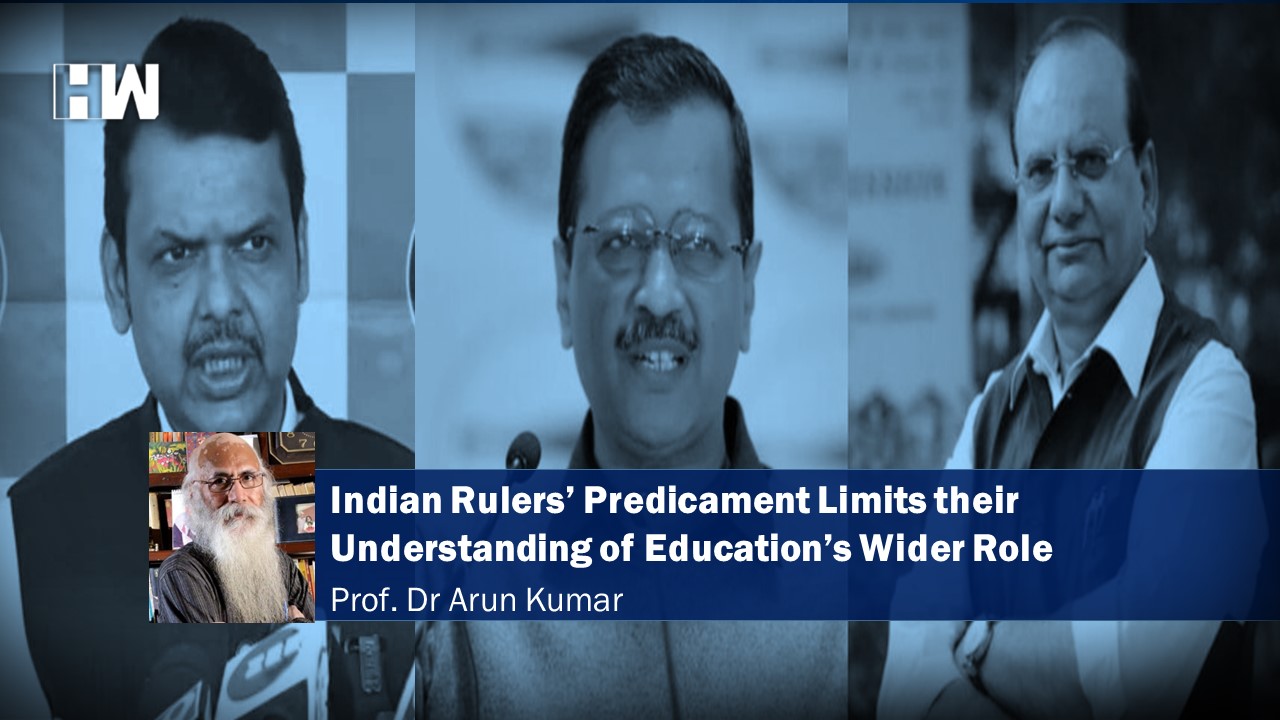
    In brief, borrowing from abroad without changing the systems in the country will not lead to atmanirbharta. The deficiencies in our education system need to be rectified before the strategy to borrow can succeed. Are we not putting the cart before the horse when the leadership talks of atmanirbharta while doing everything to curtail originality in thought and seeking compliance with their diktats?

    The slogan of Vishwaguru and atmanirbharta have not yet instilled pride in the nation, how will building a big temple do so? Will the poor and unemployed become proud citizens forgetting their misery? During the colonial period, perhaps religiosity was greater but pride was missing.

    This article was published earlier in hwnews.in
    Views expressed are author’s own.

    Feature Image Credit: newslaundry.com

    Students in Foreign University Image: business-standard.com


  • Colonial exploitation included heritage theft, and that continues to this day

    Colonial exploitation included heritage theft, and that continues to this day

    Museums and private collectors in the West have prided themselves on the vast collections of heritage treasures, antiquities, and archaeological and epigraphic treasures from across the world. In truth, these are stolen treasures from the non-western world enabled by colonialism and imperialism. It is time the victim nations work towards global policies to ensure these treasures are returned to their original owners. This is truly a massive public policy challenge in global governance and for a fair, equitable, multi-polar world. Professor M A Kalam looks at the continuing theft of India’s heritage treasures.


    The whole idea of establishing a colony was to exploit the resources there and enrich the home coffers. And all colonials—irrespective of whether they were British, Danes, Dutch, Italians, Belgians, Portuguese, Spanish, or American—indulged in this exercise and over a period turned it into a fine art. As ill luck would have it, a host of countries in many parts of the world were less developed than these colonials, particularly in terms of technology, but were very rich and well-endowed in terms of resources of various kinds. Though they possessed natural wealth, they lacked adequate technology and hence were not in a position to resist the onslaught and machinations of different kinds of the technologically-advanced colonials. The resource-rich countries were, in the main, in Asia, Africa and Latin America. Highly developed naval vessels and a state-driven overpowering desire to explore resources in different regions of the world enabled the colonials to adopt different strategies for befriending and subsequently subjugating the peoples of the resource-rich areas.

    Genesis Of Exploitation

    Because of her tremendous naval power, Britain spread its net of exploration quite wide in South Asia and Africa. In India, the British came in as traders established the East India Company and then gradually started flexing their arms and took control of administration and became the rulers of the country. Though they allowed some pockets to be “ruled” by rajas, maharajas, nizams and nawabs, these provinces were not independent in the real sense of the term but were virtually servile to the British, if not their minions, in many ways. That is how the genesis of exploitation took shape in India. Subsequently, there were myriad ways in which colonial exploitation occurred—physical exploitation of the people including sexual abuse and exploitation of labour was one of the forms of that

    Other ways of exploitation were the draining of different kinds of agricultural and forest resources; these included: jute, cotton, sugar, tea, coffee and wheat. The goods developed in British factories were sold back in India for rich benefits. Also, commercial crops like tea, coffee, indigo, opium, cotton, jute, sugarcane and oilseed were introduced and these had impacted their profits tremendously but had different environmental implications in different regions of the country, as plantations always do, due the exercise of clear felling of the forests in almost all cases of extensive plantation activities.

    Repatriating The Kohinoor

    To top it all, regarding exploitation, was the brazen way in which India’s heritage wealth, antiquities and artefacts, were exported to their home bases, by the colonials, to unabashedly adorn their own museums and galleries. Many of these artefacts were stolen without any hesitation. Today it is being argued that one of the most famous diamonds in the world, the Kohinoor, was not necessarily snatched from the people of India but was offered on a platter to the British as part of the peace treaty of Lahore by the king of Punjab Maharaja Dalip Singh. Arm-twisting gets another name in diplomatic parlance—offer. And the British have the temerity to continue to adorn their crown with the Kohinoor though they refrained from its display on the head of the recently crowned queen, the wife of King Charles III during the latter’s coronation, in a rare diplomatic courtesy, apparently not to provoke the sensibility of the Indian delegation attending the coronation.

    As Rishi Sunak is more loyal than the queen, there is no chance of him taking the initiative in repatriating to India the Kohinoor or the innumerable other artefacts that were stolen/snatched from India and today adorn the British Museum and many other of their galleries.

    Last week the Standing Committee on Transport, Tourism and Culture headed by YSR Congress MP Vijay Sai Reddy, adopted the Report ‘Heritage Theft – The Illegal Trade in Indian Antiquities and the Challenges of Retrieving and Safeguarding Our Tangible Cultural Heritage’. The Committee conferred with the Culture Ministry officials who apparently think that while efforts were being made to bring back the stolen antiquities from different foreign locations, the case of Kohinoor diamond is “contentious since it was surrendered by Maharaja Dalip Singh as part of the 1849 peace treaty with the British”.

    Reversing Colonial Exploitation

    To recapitulate and also to highlight the way in which different forms of exploitation occurred, we can argue that in the first instance, it was human exploitation wherein there was sexual abuse, killings and decimation of populations. The second way was the exploitation of the agricultural and natural resources which can be conceived of as resources that were “consumables” and “non-durables”. The third was the exploitation of the heritage wealth that falls in the realm of non-consumables and durables.

    So, today, when we explore measures that could be thought of in terms of “getting back” things and reversing the impact that colonial exploitation had on India, we can think of some strategies: in the case of the first two, that is human exploitation and the draining of consumables, there can only be reparations if the Britishers’ conscience pricks them enough; or at least unqualified apologies. But in the case of the third, that is the loss of heritage wealth, there can, and should indeed be repatriation of the stolen antiquities.

    A host of “art dealers” in different parts of the country are smuggling out artefacts and antiquities from India, particularly from ancient temples, and at times from museums, on a large scale. Only a fraction of this comes to light.

    Now, talking about the loss of heritage wealth, we also have to bring into the picture the fact that it is happening, quite rampantly, even today though the colonials left the shores years back on India becoming independent. A host of “art dealers” (read thieves) in different parts of the country are smuggling out artefacts and antiquities from India, particularly from ancient temples, and at times from museums, on a large scale. Only a fraction of this comes to light when these items are exhibited in galleries and museums in different parts of the world; often times these are hidden in private collections. India is trying to regain some of this heritage wealth but there seem to be obstacles, at times quite unsurmountable, of the diplomatic and other kinds. Let us hope the Standing Committee on Transport, Tourism and Culture succeeds in its exertions.


    A version of this article was published earlier in moneycontrol.com

    Feature Image Credit: Kohinoor Diamond in Queen’s Crown, now safely kept in the Tower of London. smithsonianmag.com 

    Picture of Idols: The three 15th century ‘panchaloga’ idols of Shri Rama, Sita, and Laxman were stolen in 1978 from a Vijaynagara era temple (15th Century) in Anandamangalam village in Tamilnadu, India. These were identified and finally restored to India by the UK government in 2020. www.bbc.com


  • Towards a Conversation Across Civilisations

    Towards a Conversation Across Civilisations

    Alongside the BRICS, the construction of regional trade and development projects in Africa, Asia, and Latin America that are not controlled by the Western states or Western-dominated institutions – including the Shanghai Cooperation Organisation (2001) the Belt and Road Initiative (2013), the Community of Latin American and Caribbean States (2011), and the Regional Comprehensive Economic Partnership (2022) – heralds the emergence of a new international economic order.


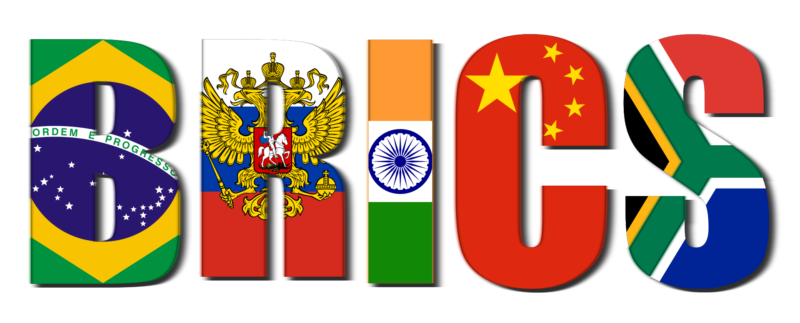
    It has become increasingly difficult to engage in reasonable discussions about the state of the world amid rising international tensions. The present environment of global instability and conflict has emerged over the course of the past fifteen years driven by, on the one hand, the growing weakness of the principal North Atlantic states, led by the United States – which we call the West – and, on the other, the increasing assertion of large developing countries, exemplified by the BRICS (Brazil, Russia, India, China, and South Africa). This group of states, along with several others, have built the material conditions for their own development agendas, including for the next generation of technology, a sector that had previously been the monopoly of Western states and firms through the World Trade Organisation’s intellectual property rights regime. Alongside the BRICS, the construction of regional trade and development projects in Africa, Asia, and Latin America that are not controlled by the Western states or Western-dominated institutions – including the Shanghai Cooperation Organisation (2001) the Belt and Road Initiative (2013), the Community of Latin American and Caribbean States (2011), and the Regional Comprehensive Economic Partnership (2022) – heralds the emergence of a new international economic order.

    Since the world financial crisis of 2007–08, the United States and its North Atlantic allies have become acutely aware that their hegemonic status in the world has deteriorated. This decline is the consequence of three key forms of overreach: first, military overreach through both enormous military expenditure and warfare; second, financial overreach caused by the rampant waste of social wealth into the unproductive financial sector along with the widespread imposition of sanctions, dollar hegemony, and control of international financial mechanisms (such as SWIFT); and, third, economic overreach, due to the investment and tax strike of a minuscule section of the world’s population, who are solely fixated on filling their already immense private coffers. This overreach has led to the fragility of the Western states, which are less able to exercise their authority around the world. In reaction to their own weakness and the new developments in the Global South, the United States has led its allies in launching a comprehensive pressure campaign against what it considers to be its ‘near peer rivals’, namely China and Russia. This hostile foreign policy, which includes a trade war, unilateral sanctions, aggressive diplomacy, and military operations, is now commonly known as the New Cold War.

    In Western societies today, any effort to promote a balanced and reasonable conversation about China and Russia, or indeed about the leading states in the developing world, is relentlessly attacked by state, corporate, and media institutions as disinformation, propaganda, and foreign interference.

    In addition to these tangible measures, information warfare is a key element of the New Cold War. In Western societies today, any effort to promote a balanced and reasonable conversation about China and Russia, or indeed about the leading states in the developing world, is relentlessly attacked by state, corporate, and media institutions as disinformation, propaganda, and foreign interference. Even established facts, let alone alternative perspectives, are treated as matters of dispute. Consequently, it has become virtually impossible to engage in constructive discussions about the changing world order, the new trade and development regimes, or the urgent matters which require global cooperation such as climate change, poverty, and inequality, without being dismissed. In this context, dialogue between intellectuals in countries such as China with their counterparts in the West has broken down. Similarly, dialogue between intellectuals in countries of the Global South and China has also been hampered by the New Cold War, which has strained the already weak communication channels within the developing world. As a result, the conceptual landscape, terms of reference, and key debates that are taking place within China are almost entirely unknown outside of the country, which makes the holding of rational cross-country discussions very difficult.

    The New Cold War has led to an enormous spike in Sinophobia and anti-Asian racism in the Western states, frequently egged on by political leaders. The rise in Sinophobia has deepened the lack of genuine engagement by Western intellectuals with contemporary Chinese perspectives, discussions, and debates; and due to the immense power of Western information flows around the world, these dismissive attitudes have also grown in many developing countries. Although there are increasing numbers of international students in China, these students tend to study technical subjects and generally do not focus on or participate in the broader political discussions within and about China.

    This diversity of thought is not reflected in external understandings or representations of China – even in the scholarly literature – which instead largely reproduces the postures of the New Cold War.

    In the current global climate of conflict and division, it is essential to develop lines of communication and encourage exchange between China, the West, and the developing world. The range of political thinking and discourse within China is immense, stretching from a variety of Marxist approaches to the ardent advocacy of neoliberalism, from deep historical examinations of Chinese civilisation to the deep wells of patriotic thought that have grown in the recent period. Far from static, these intellectual trends have evolved over time and interact with each other. A rich variety of Marxist thinking, from Maoism to creative Marxism, has emerged in China; although these trends all focus on socialist theories, history, and experiments, each trend has developed a distinct school of thought with its own internal discourse as well as debates with other traditions. Meanwhile, the landscape of patriotic thinking is far more eclectic, with some tendencies overlapping with Marxist trends, which is understandable given the connections between Marxism and national liberation; whereas others are closer to offering culturalist explanations for China’s developmental advances. This diversity of thought is not reflected in external understandings or representations of China – even in the scholarly literature – which instead largely reproduces the postures of the New Cold War.


    This article was published earlier in thetricontinental.org

  • India and Myanmar: Two Years after the Coup

    India and Myanmar: Two Years after the Coup

    [powerkit_button size=”lg” style=”info” block=”true” url=”https://admin.thepeninsula.org.in/wp-content/uploads/2023/05/India-and-Myanmar-Two-years-after-the-Coup-1.pdf” target=”_blank” nofollow=”false”]
    Download
    [/powerkit_button]

    Relegated to the sidelines with the ongoing Ukraine war and other crises like Taiwan, Myanmar has resurfaced in world headlines. In a recent dispatch, Associated Press (AP) reported that on 11 April 2023 ‘a fighter jet dropped bombs directly onto a crowd of people who were gathering at 8 am for the opening of a local office of the country’s opposition movement outside Pazigyi village in Sagaing region’s Kanbalu township….’ 1 . Subsequent information indicates that the number of dead including women and children is over 170. If so, this is the deadliest aerial attack carried out by the Myanmar military on its own people in the bloody aftermath of the military coup two years ago.

    With various Ethnic Armed Organisations (EAOs) and Peoples’ Defence Forces (PDFs) battling the Tatmadaw, martial law has been declared in 47 townships in Myanmar, cutting across states and regions. 2 More than 154,000 people have been displaced in the first two months of 2023, with total numbers of Internally Displaced People (IDPs) since the military takeover now at 1.3 million. Heavy fighting rages in Kachin State, the South East and North West of the country, 3 and overall 3000 civilian deaths since February 2021 are estimated 4 . Targeted assassination of military appointed government officials continues, the latest victim being the deputy director-general of the Union Election Commission who was shot dead on 22 April this year 5 . In 2022, up to 30,000 civilian infrastructures, including schools are reported to have been destroyed during military operations 6 . This situation has compelled the Tatmadaw to again postpone elections earlier scheduled for August 2023. The state of emergency has been extended.

    Important Developments Post February 2021

    The above statistics provide a telling perspective of the current violence in Myanmar. Yet there are other noteworthy developments in the country post the February 2021 coup. First of these is the increasing relevance of the opposition National Unity Government (NUG) around which civilian support appears to have coalesced.

    [powerkit_button size=”lg” style=”info” block=”true” url=”https://admin.thepeninsula.org.in/wp-content/uploads/2023/05/India-and-Myanmar-Two-years-after-the-Coup-1.pdf” target=”_blank” nofollow=”false”]
    Read More
    [/powerkit_button]

    Featured Image Credits: CNBC Indonesia