Category: Science, Technology & Security

  • The San Juan Incident

    The San Juan Incident

    K N Sushil   December 08, 2017

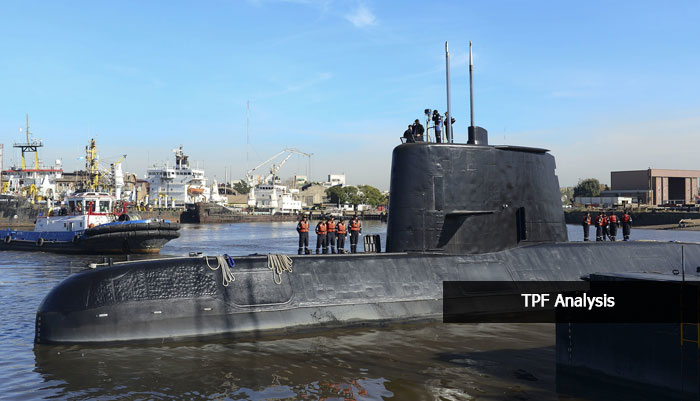
    The ARA San Juan disappeared a few hundred kilometers off Argentina’s coast on November 15, and despite an extensive air and sea search no sign of the sub has been found. Eight days after the sub vanished, the Vienna-based Comprehensive Nuclear Test-Ban Treaty Organisation said that it had detected hydro-acoustic anomaly” about 30 nautical miles (60km) north of the sub’s last-known position at 10:31 (13:31 GMT) few hours after the sub’s last contact. The analysis of the acoustic incident was reported as follows.

    The acoustic signal associated with the loss of the Argentina Submarine ARA SANJUAN confirms the following:

    That acoustic signal originated near 46-10S, 59-42W at 1358Z (GMT) on 15 November 2017. It was produced by the collapse (implosion) of the ARA SAN JUAN pressure-hull at a depth of 1275-feet. Sea pressure at the collapse depth was 570 PSI. The frequency of the collapse event signal (bubble-pulse) was about 4.4Hz. The energy released by the collapse was equal to the explosion of 12,500 pounds of TNT at the depth of 1275-feet. That energy was produced by the nearly instantaneous conversion of potential energy (sea-pressure) to kinetic energy, the motion of the intruding water-ram which entered the SAN JUAN pressure-hull at a speed of about 1800 mph.
    The entire pressure-hull was completely destroyed (fragmented/compacted) in about 40 milliseconds (0.040s or 1/25th of a second), the duration of the compression phase of the collapse event which is half the minimum time required for cognitive recognition of an event. Although the crew may have known collapse was imminent, they never knew it was occurring. They did not drown or experience pain. Death was instantaneous.
    The SAN JUAN wreckage sank vertically at an estimated speed between 10 and 13 knots. Bottom impact would not have produced an acoustic event detectable at long range

    The ARA San Juan was an IKL(German) designed type 1700 submarine built by TKMS in their Essen yard in 1985 at about the same time the Indian type 1500 was being built at HDW(Kiel). Both the submarines have great deal of similarities. Therefore, having commanded two type 1500s I will venture to hazard a guess on what could have afflicted the submarine.

    Facts as gleaned from various reports.

    15 Nov 0030Hrs. Submarine surfaced to report Water ingress through snort system causing a short circuit in the forward battery group. The forward battery group was isolated. The submarine charged her batteries on surface

    At 0600 The message is transmitted through normal communication channels.

    At 0730 the Captain informs base that he intend to continue his passage dived (Presumably because the sea was rough) At 1031, according to the CTBT report the submarine imploded at a depth of 1275 ft.

    From the above it would appear that the submarine was snorting before she surfaced at 0030hrs. If there was water ingress through the snort mast that caused a short in the forward battery group then the submarine was unable to maintain snorting depth, because the sea may have been too rough and the “head valve” (that prevents water from coming into the mast, when the mast dips even momentarily) was not functioning. As part of the SOP the snort induction drain, which drains into the bilges is kept open for the duration of the snort.  In any case during the snorting, the diesel engines are used to create the suction that draws all the foul air from all over the submarine. The fresh air coming from the snort mast merely spreads to fill the vacuum. Therefore flooding through the snort system would normally have no effect on the battery groups.

    The submarine remained on surface for seven hours post an incident of fire and smoke, which was attributed to short circuiting of the forward battery group. The crew, it seems, did not see any fire but managed to clear the smoke after isolating the forward battery group.

    A fire in a battery group is one of the most dreaded emergencies on board any submarine. Therefore the damage control actions and subsequent analysis would have been painstakingly thorough. If there was a fire in the battery pits the firefighting system would have been activated (manually or automatically). Once the system is activated the battery pits are to be kept in a sealed condition for at least one hour. Thereafter the pit is ventilated for at least an hour before inspecting it. In these types of submarines one has to lie down on a trolley and manoeuvre manually over the batteries. If the sea is rough it becomes extremely difficult and dangerous.  It may therefore be possible that they may have dispensed with the inspection whilst on surface.

    In the seven hours on surface the crew must have thoroughly examined the power distribution network and come to the conclusion that the problem was contained, and the submarine was reasonably safe to continue dived with a single battery group. They may even have considered that it would be safer and easier to inspect the battery pit while the submarine is underwater.

    The submarine dived at 0730 hrs. After 3 hours it appears to have imploded at a depth of 388 Meters. 388 Meters is of course below the normal operating depth but well above the crushing depth. If the submarine did indeed implode at that depth the inescapable inference is that there were severe structural problems that had weakened the pressure hull. The Argentinean Navy must have known if any structural limitations were reported or imposed.

    If the structural problems were not severe enough then some event that occurred in the 3 hours she was submerged must have been responsible. That event was so catastrophic that the submarine was unable to prevent an uncontrolled descent. Given the background situation the captain would have ordered the submarine to dive to 50 Meters. As soon as he settled down to that depth, he would have ordered the inspection of the battery pit. Unless there are clear tell tale signs, it is possible to miss some things which may have the potential to cause damage. Anyhow the inference and action post this inspection is not known. Did they reconnect the forward group? We will never know. The inspection would have taken about 45 minutes to an hour. The fact that they did not surface immediately after the inspection indicates that they did not notice anything alarming.

    In the three hours that the submarine was under water, if there had been a gradual flooding, the crew would have taken action to mitigate the effects, and would have ample reaction time to surface. Therefore loss of control must have been triggered by a sudden event. A pressure hull breech and flooding that must have cause to rapidly lose depth. The most immediate response is to use speed to create dynamic vectors to aid depth control. Since the submarine had only one battery group connected the speed of the submarine would be restricted to about 8 Knots ahead and about 4 Knots astern.  This would not be sufficient to delay the descent so that de-ballasting and pumping out capacities can effectively annul or reduce the rate of flooding. The rate of flooding keeps on increasing with depth.

    Now we have a situation where the submarine with the forward (or all) ballast tank probably blown going down. At depths greater than 180 meters the effect of blowing ballast with High Pressure air (250Bar)is painstakingly slow. The next stage is when the submarine crosses 15 meters more than the operational depth the Hydrazine emergency de-ballasting system will be triggered. This system is designed to clear the forward and aft main ballast tanks in 12 seconds at any depth. The problem would be if the Ballast tanks already contain air the Hydrazine will cause an explosion in the ballast tanks. If that happens there is nothing left to create positive buoyancy.

    The Next question is why did the submarine implode at 388 meters? As brought out earlier it clearly points to structural weakness in the pressure. If such a situation did not pre-exist then it may be possible that the battery pit event may have cause massive spillage of acid into the pit causing the pit to corrode in the almost 10 hours this corrosion may have weakened the hull sufficiently to cause a substantial breech in the pressure hull. The flooding of the pits could an explosion as the water level reaches to short the terminal connectors.  This is only a conjecture.

    San Juan went down without a trace. The crew did not even have the time or opportunity to release the systems and tell tale indicators that were meant tell the outside world that the submarine is in distress.

    It is said what goes up must come down. Submariners know that what goes down need not necessarily come up. San Juan RIP.

    In the language of the submarine community San Juan is on eternal patrol.

    Vice Admiral K N Sushil (retd) is a Indian Navy Veteran, and the former Flag Officer commanding-in-Chief of Southern Naval Command.[/vc_column_text][/vc_column][/vc_row]
  • Investments In Genome Editing Technologies

    Investments In Genome Editing Technologies

    S Chandrasegaran   February 10, 2018

    Introduction

    India is soon poised to become the world’s most populous nation, overtaking China. India faces the critical challenge of producing sufficient food for a growing population living in a changing climate. Substantial research investments have been made to sequence, assemble, and characterize the genomes of major crop plants by other countries, which have led to important discoveries of crop genes and their functions. This knowledge will be valuable in increasing agricultural production by using synthetic biology and genome editing, technological advancements for precise plant engineering. Genome editing and synthetic biology are unprecedented technological breakthroughs, with great potential for crop improvement. Defining gene sequences from diverse species and cultivars has far outpaced our ability to alter those genes in crops. Recent advances in genome engineering (aka genome editing) make it possible to precisely alter DNA sequences in living cells, providing unprecedented control over a plant and animal genetic material.

    Potential future crops derived through gene editing and synthetic biology include those that better withstand pests, those that are salt and drought tolerant, that have enhanced nutritional value, and that are able to grow on marginal lands. In many instances, crops with such traits will be created by altering only a few nucleotides among the billions that comprise plant genomes. With the appropriate regulatory structures and oversight in place, crops created through genome editing might prove to be more acceptable to the public than plants that carry foreign DNA in their genomes. Public perception and the performance of the engineered crop varieties will determine the extent to which genome editing and synthetic biology contribute towards securing the world’s food supply.

    It is critical for India to make substantial investments in these technologies to make them readily available to indigenous Indian scientists so that they can be part of the upcoming revolution in agriculture. Government of India needs to embrace policies that lift all barriers towards the potential applications of these breakthrough technologies for crop and animal improvement. Such forward thinking policies will not only assure India’s food and economic security, but also to insure that it can compete with other Western nations and China in industrial innovation and production and remain self-reliant.

    What is genome editing?

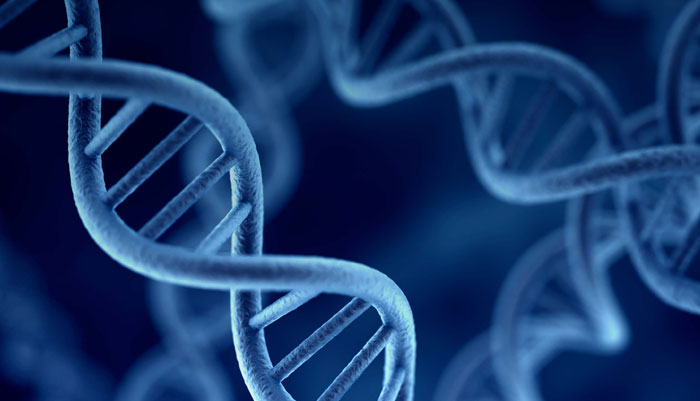
    Programmable nucleases, such as zinc finger nucleases (ZFNs), transcription activator like effector nucleases (TALENs) and RNA-guided CRISPR-associated Cas9 nuclease, induce a DNA double-strand break (DSB) at a user-defined genomic site of living cells. Since DSBs are lethal to cells, they are immediately repaired through one of the two evolutionarily conserved pathways: (1) non-homologous end joining (NHEJ), which is error prone; or (2) homology-directed repair (HDR). Using these repair processes (Figure 1), scientists have been able to disrupt specific genes, or correct mutations in disease-causing genes, or insert exogenous DNA sequences at a pre-determined locus within the genome of living cells, which were not possible prior to the creation of programmable nucleases. As a result, the genome editing technologies have revolutionized life sciences research as well as biotechnology and biomedical fields. These disruptive technologies have the potential to have a great impact on agriculture through precise crop engineering, animal husbandry in the near future and on human therapeutics through engineered autologous cell-based therapies in the future.


    What is synthetic biology?

    Synthetic biology can be broadly defined as the design and construction of novel artificial biological pathways or organisms, or the redesign of existing natural biological systems. It is an emerging discipline where artificially synthesized genetic material from nucleotides, are introduced into an organism. Synthetic biology brings the application of engineering principles to biology; it aims to design and fabricate biological components and systems that do not already exist in the natural world. Synthetic genomics is a sub-discipline of synthetic biology; it refers to the synthetic assembly of complete chromosomal DNA that is designed from natural genomic sequences. The power of these techniques lies in the use of interchangeable and standardized bio-parts to construct complex genetic networks that include sensing, information processing and effector modules and in the creation of redesigned chromosomes and genomes. They have the potential to create complex new organisms with novel biological pathways and genes constructed to user specifications. Synthetic biology has great potential in biotechnology, agriculture and regenerative medicine.

    Work done by us in genome editing and synthetic genomics:

    I have been very fortunate to be involved in two exciting areas of life sciences research over 30-year career in the Department of Environmental Health Sciences at the Johns Hopkins School of Public Health. First is the creation of zinc finger nucleases (ZFNs), which was a culmination of seven year research effort on the study of FokI restriction endonuclease. Later, in collaboration with Dana Carroll lab, we showed stimulation of gene targeting by a ZFN-induced targeted double-strand break using frog oocytes as a model system, which ushered in the era of genome editing. We have continued this research to date, with the current focus being on the generation and genetic correction of disease-specific human induced pluripotent stem cells for human therapeutics.

    Second is the total synthesis of a functional designer eukaryotic (yeast) chromosome III (aka synIII). We have embarked on the creation of a synthetic yeast genome (Sc2.0), in collaboration with Jef Boeke at NYU and several other international collaborators. Our lab reported the creation of the first fully functional synthetic 272-kb synIII yeast chromosome with numerous changes compared to the native chromosome. Currently, our focus is on completing another designer yeast chromosome IX (aka synIX).

    Project 1: Genome Engineering using Programmable Nucleases

    Our lab originally showed that FokI, a type IIs endonuclease, is comprised of two separable protein domains: a sequence- specific DNA binding and non-specific nuclease domain. We then reported the creation of custom zinc finger nucleases (ZFNs). Later, in collaboration with Dana Carroll’s lab in Utah, we showed stimulation of gene targeting by a ZFN-induced targeted double-strand break, using frog oocytes as a model. Recently, we have shown generation and genetic correction of human pluripotent stem cells using designer ZFNs/TALENs. Our contribution includes the application of ZFN/TALEN/Cas9 technology for targeted modification of human induced pluripotent stem cells. Recently, we reported the generation of precisely targeted genetically well-defined disease-specific hiPSCs using TALENs. Our current focus is on genetic engineering of patient-specific hiPSCs to achieve functional disease correction of monogenic diseases either by targeted genome editing (i.e. gene correction) of the defective gene or by targeted insertion of wild-type therapeutic gene to the CCR5 locus of patient-specific hiPSCs (Ramalingam et al 2013; 2014). The precisely targeted genetically well-defined disease-specific hiPSCs will be very valuable for disease modeling and for drug discovery by screening small compound libraries against the disease-specific hiPSCs. The ZFN/TALEN/Cas9-mediated approach is widely applicable to a variety of other mammalian cells as well and to generate various animal disease models to study and treat human disease in the future. We are currently conducting research to develop a hiPSC-derived HSPCs-based therapy as a curative alternative to the expensive non-curative GCase enzyme replacement therapy (ERT) to treat type 1 GD.

    Key Publications:
    Chandrasegaran S and Carroll D. (2016). Origins of Programmable Nucleases for Genome Engineering. J. Mol. Biol. 428: 963-989. PMID: 26506267
    Ramalingam S, Annaluru N, Kandavelou K and Chandrasegaran S. (2014) TALEN-mediated generation and genetic correction of disease-specific human induced pluripotent stem cells. Current Gene Therapy 14: 461-472. PMID: 25245091
    Ramalingam S, London V, Kandavelou K, Cebotaru L, Guggino W, Civin CI and Chandrasegaran S. (2013). Generation and genetic engineering of human induced pluripotent stem cells using designed zinc finger nucleases. Stem Cells and Development 22: 595-610. PMID: 22931452
    Bibikova M, Carroll D, Segal DJ, Trautman JK, Smith J, Kim YG and Chandrasegaran S. (2001) Stimulation of homologous recombination through targeted cleavage by chimeric nucleases. Mol. Cell Biol. 21: 289-297. PMID: 11113203
    Smith J, Bibikova M, Whitby FG, Reddy AR, Chandrasegaran S and Carroll D. (2000) Requirements for double-strand cleavage by chimeric restriction enzymes with zinc finger DNA-recognition domains. Nucleic Acids Res 28: 3361-3369. PMID: 10954606
    Kim YG, Cha J and Chandrasegaran S (1996) Hybrid restriction enzymes: zinc finger fusions to Fok I cleavage domain. Proc Natl Acad Sci USA 93: 1156-1160. PMID: 8577732
    Kim Y-G and Chandrasegaran S (1994) Chimeric restriction endonuclease. Proc Natl Acad Sci USA 91: 883-887. PMID: 7905633
    Li L, Wu LP and Chandrasegaran S. (1992) Functional domains in Fok I restriction endonuclease. Proc Natl Acad Sci USA 89: 4275‑4279. PMID: 1584761
    Project 2: Creation of a synthetic yeast (Sc2.0)

    In a 2014 Science paper, our lab reported a synthetic designer version of yeast Saccharomyces cerevisiae chromosome III (synIII) with numerous changes, including a built-in recombination system (SCRaMbLE) for inducing genome alterations of the synIII strain [Annaluru et al 2014; 2015; Richardson et al 2016]. The design changes had no impact on cell fitness and phenotype, suggesting plasticity of the yeast genome to the changes introduced. The Sc2.0 consortium, which comprises of a group of international scientists, have recently reported synthesis of five more yeast chromosomes in April, 2017. The ultimate goal of Sc2.0 consortium is to create a designer synthetic yeast genome. Our lab is currently working to complete the synthetic yeast chromosome IX (synIX). The final streamlined minimal yeast genome would serve as a valuable ‘chassis’ organism for the industrial production of biochemical and biological products, including nutraceuticals.

    Key Publications:
    Richardson SM, Mitchell LA, Stracquadanio G, Yang K, Dymond JS, et al. (2017) Design of a synthetic yeast genome. Science 355: 1040-1044. PMID: 28280199
    Annaluru N, Ramalingam S and Chandrasegaran S. (2015) Rewriting the blueprint of life by synthetic genomics and genome engineering. Genome Biology 16: 125-136. PMID: 26076868
    Annaluru N, Müller H, Mitchell L, Ramalingam S, et al. (2014) Total synthesis of a functional designer eukaryotic chromosome. Science 344: 55-58. PMID: 24674868
    Dymond J, Richardson S, Coombes C, Muller H, Narayana A, Blake W, Wu J, Dai J, Lindstrom D, Boeke A, Gottschling D, Chandrasegaran S, Bader J and Boeke J. (2011) Synthetic chromosome arms function in yeast and generate phenotypic diversity by design. Nature 477: 471-476. PMID: 21918511
    Dr S Chandrasegaran is a Senior Professor at the Bloomberg School of Public Health in John Hopkins University, Baltimore. He is a Trustee of TPF.