Category: Science, Technology & Security

  • The Rich World’s Climate Hypocrisy

    The Rich World’s Climate Hypocrisy

    Many people around the world already consider the United Nations Climate Change Conference (COP26) in Glasgow a disappointment. That is a massive understatement. Global leaders – especially in the developed world – still fail to grasp the gravity of the climate challenge. Although they acknowledge its severity and urgency in their speeches, they mostly pursue short-term national interests and make conveniently distant “” emissions pledges without clear and immediate commitments to act.

    Many of the statements by developed-country leaders at the COP26 summit in Glasgow are at odds with their actual climate policies, and with what they say in other settings. Their short-sighted strategy ultimately benefits no one – including the powerful corporate interests whose immediate financial interests it serves

    For example, could the real US government please stand up and declare itself? In his recent address in Glasgow, President Joe Biden said that “as we see current volatility in energy prices, rather than cast it as a reason to back off our clean energy goals, we must view it as a call to action.” Indeed, “high energy prices only reinforce the urgent need to diversify sources, double down on clean energy deployment, and adapt promising new clean-energy technologies.”

    But just three days later, the Biden administration claimed that OPEC+ is endangering the global economic recovery by not increasing oil production. It even warned that the United States is prepared to use “all tools” necessary to reduce fuel prices.

    This is one of the most blatant recent examples of climate hypocrisy by a developed-country leader, but it is by no means the only one. And the duplicity extends to the proceedings at COP26 itself, where developing-country negotiators are apparently finding that advanced economies’ positions in closed-door meetings are quite different from their public stances.

    Rich countries, which are responsible for the dominant share of global carbon-dioxide emissions to date, are dithering on longstanding commitments to provide climate finance to developing countries. They are also resisting a proposed operational definition that would prevent them from fudging what counts as climate finance. And they are still treating adaptation to climate change as a separate stream and refusing to provide finance to avert, minimize, and address the loss and damage associated with climate change in the worst-affected countries.

    The declared COP26 promises also reveal the developed world’s double standards. A group of 20 countries, including the US, pledged to end public financing for “unabated” fossil-fuel projects, including those powered by coal, by the end of 2022. But the prohibition applies only to international projects, not domestic ones. Significantly, the US and several other signatories refused to join the 23 countries that separately committed to stop new coal-power projects within their borders and phase out existing coal infrastructure.

    But even if the pledges in Glasgow had been more solid, rich-country governments, in particular, face a major credibility problem. They have previously made too many empty climate promises, undermining the interests of developing countries that have contributed little to climate change. Advanced economies have made emissions-reduction commitments that they have not kept, and reneged on their assurances to developing countries regarding not only climate finance but also technology transfer.

    The climate finance commitment is now 12 years old. At COP15 in Copenhagen, advanced economies promised to provide $100 billion per year to the developing world, and the 2015 Paris climate agreement made it clear that all developing countries would be eligible for such financing. This amount is trivial relative to developing countries’ need, which is in the trillions of dollars, and also when compared to the vast sums that rich countries have spent on fiscal and monetary support for their economies during the COVID-19 pandemic.

    But the developed world has not fulfilled even this relatively modest pledge. In 2019, total climate finance channeled to developing countries was less than $80 billion; the average amount each year since 2013 was only $67 billion. And this figure massively overstated the actual flows from developed-country governments, because bilateral public climate finance (which should have been provided to the developing world under the Paris accord) averaged less than $27 billion per year. The remainder came from multilateral institutions – including development banks – and private finance, which rich-country governments sought to take credit for mobilizing. Compared to this paltry sum, global fossil-fuel subsidies amounted to an estimated $555 billion per year from 2017 to 2019.

    Likewise, the rich world’s promises of green technology transfer have become mere lip service. Developed-country governments allowed domestic companies to cling to intellectual-property rights that block the spread of critical knowledge for climate mitigation and adaptation. When countries like China and India have sought to encourage their own renewable-energy industries, the US, in particular, has filed complaints with the World Trade Organization.

    This short-sighted strategy ultimately benefits no one, including the firms whose immediate financial interests it serves, because it accelerates the planet’s destruction and the revenge of nature on what now appears to be terminally stupid humanity. The student and activist marches in Glasgow against this myopic approach are important but are nowhere near enough to force governments to change course.

    The problem is that powerful corporate interests are clearly intertwined with political leadership. People around the world, and especially in the Global North, must become much more vociferous in insisting on meaningful climate action and a real change in economic strategy that resonates beyond national borders. Only that can end the rich world’s green hypocrisy and save us all.

    This article was published earlier in project-syndicate.org

  • Climate Change: A Review of the Rural Electrification Policies and Barriers to adopting Renewable Energy in Rural India

    Climate Change: A Review of the Rural Electrification Policies and Barriers to adopting Renewable Energy in Rural India

    Energy is crucial for a country’s growth and sustainable development. But over one-third of the world’s population, mostly consisting of people in rural areas of developing countries, do not have access to clean, affordable energy.

    The climate crisis is a battle that countries have been fighting for decades now. The policies and strategies developed by different countries have helped in small ways in achieving their energy and climate goals. One strategy among all countries is the development and improvement in the use of renewables. Various studies, across different fields, have shown us the need for countries to shift to this alternative set of energy sources that will sustain life in the long run. The use of renewable energy in both urban and rural areas should be monitored and developed to achieve the sustainable development goals that countries have vowed to achieve.

    Energy is crucial for a country’s growth and sustainable development. But over one-third of the world’s population, mostly consisting of people in rural areas of developing countries, do not have access to clean, affordable energy. This is an important factor contributing to the low standards of living in rural areas of developing countries.

    In India, more than two-thirds of the population live in rural areas whose primary source of income is agricultural activities. But a large proportion of the rural population does not have consistent access to energy. To this population, new alternative sources of energy remain unaffordable and inaccessible due to poverty and lack of adequate infrastructure, respectively. Hence, we find that the rural populations continue to use traditional sources of energy such as coal, fuelwood, agricultural waste, animal dung, etc. Not only do these cause pollution and quick erosion of natural resources, but they impact negatively on people’s health. The need for transitioning to the use of renewable energy, especially in the country’s rural areas is of prime importance. But, to achieve this, the government must bring out policies that will guide this transition. Moreover, it is important that the government positively supports companies – both private and public – that generate the required technology and research that transforms the available renewable energy sources into energy that the public can consume.

    Rural Electrification in India

    The Electricity Act of 2003 enabled the building of electricity infrastructure across the rural and remote regions of the country and thus, easy access to electricity for most of the people. The Indian Government launched the Rajiv Gandhi Grameen Vidyutikaran Yojana (RGGVY) in 2005, to extend electricity to all unelectrified villages. The programme focused largely on developing electrification infrastructure across villages in India and providing free connections to all rural households living below the poverty line. Further, state governments received a 90% grant from the central government which aided in extending electrification infrastructure to over one lakh villages during the period 2005–2013. Moreover, the central government worked towards increasing implementation efficiencies by engaging central PSUs in some states.

    In 2015, the NDA Government launched the Deen Dayal Upadhyaya Gram Jyoti Yojana (DDUGJY) under which, the villages that remained un-electrified under the RGGVY, were electrified. The scheme has also been significant in supporting distribution networks in rural areas, largely concerning metering distribution transformers, feeders, and consumers in rural areas (Gill, Gupta, and Palit 2019).

    The central government further introduced standalone mini-grids programs, under the DDUGJY in 2016. Guided by the National mini-grid policy, State governments also contributed through various mini-grid policies to promote decentralised renewable energy solutions. Further, the Unnat Jyothi Affordable LEDs for All was introduced to encourage the efficient use of energy and under this scheme, LED bulbs were distributed to all households with a metered connection at subsidised rates. The Ujwal DISCOM Assurance Yojana was also introduced under the DDUGJY to allow a financial turnaround and operational improvement of Discoms. According to the UDAY scheme, discoms were expected to improve operational efficiency and bring AT&C losses down to 15%.

    While the schemes were successfully implemented then, the rate of rural household electrification was still slow. Evaluations of the schemes found various limitations, such as high upfront connection costs, poor quality of supply, poor maintenance services, to name a few. Additionally, some states had also started initiating their electricity-access programmes to accelerate the electrification process, such as the West Bengal Rural Electrification Programme, the Har Ghar Bijli scheme in Bihar, the Bijuli Bati mobile-based app to enable last-mile connectivity and household connections in Odisha (Gill, Gupta, and Palit 2019). To address this issue, the central government then launched the Pradhan Mantri Sahaj Bijli Har Ghar Yojana (PM Saubhagya) in September 2017, with the ambitious target of providing electricity connections to all un-electrified rural households by March 2019. Under this scheme, the government has electrified all of 597,464 census villages in the country (Bhaskar 2019).

     Barriers to adopting Renewable Energy in Rural Areas

    This section focuses on the issues that restrict the efficient adaptation of renewable energy in rural areas. As the government continues to promote renewable energy in rural communities, it should keep in mind these following limitations and develop mechanisms to overcome them as and when they arise. While employing renewables to supply electricity, the problem of grid integration arises. Most electricity grids and the technology used, are designed and placed around fossil fuels. However, when they transition now to more non-conventional forms of energy such as wind and solar, the designs and placements of power generation systems have to change rapidly. Thus, heavy emphasis should be placed on improving the research and infrastructure required to make this transition as smooth as possible. That is, the government should research the most optimal locations for wind turbines and solar panels, as not all lands in rural areas can be employed for this purpose. Otherwise, it may negatively impact the quality of agricultural lands. Upon conducting the required research, the infrastructure to connect all areas to the electricity grids must be developed and well-financed by the government to satisfy the energy demands of the rural population. For instance, in Germany, while the wind power potential is in the northern regions, major demand for it is in the southern region. Thus, the country’s energy transition process emphasizes upgrading the electricity grid infrastructure that would make it possible for power to flow from north to south (UNCTAD 2019). Further, the planning should also focus on balancing the energy mix in the power grid. The transition to renewables will not be a quick one, which implies that for the short term the power grid will be a mix of different sources of energy. Thus, the plans should design the grids in such a way that the proportion of each energy source balances one another so that there is no leakage or wastage in the system, especially given the fact that energy storage technology is still underdeveloped in the country.

    For many years now, there has been an emphasis on the potential of decentralised electricity comprising off-grid or mini-grid systems to help with rural electrification. The government introduced a national mini-grid policy in 2016 to promote decentralised renewable energy. With the increase in the use of solar energy, solar-powered mini-grid systems were found to be more economical and accessible to rural households (Comello et al. 2016). These systems could substantially improve the people’s standard of living and eliminate the use of harmful fuels such as kerosene oil for simple household appliances such as lamps and cooking stoves. However, an IEA report found evidence that this potential is limited, and would not be beneficial for large, productive, income-generating activities. Thus, mini-grids are often considered a temporary solution, until grid connectivity is achieved (IEA 2017).

    Whether a grid system or an off-grid system is implemented, high connection charges will automatically limit the rural population’s ability to connect to the grid.

    A major challenge that the government must keep in mind is affordability. Whether a grid system or an off-grid system is implemented, high connection charges will automatically limit the rural population’s ability to connect to the grid. On the one hand, better access to electricity will increase productivity and lead to the growth and development in the region but on the other hand, most of the rural communities live below the poverty line and will not be able to afford the connection, even if they have access to it. While decentralised energy sounds economical and sounds like an obvious solution, it is also limited in capacity.

    Another factor that the government must keep in mind for the adaptation of renewable energy in rural areas is the situation of state and private distribution companies (discoms) in India that play a pivotal role in the rural electrification process. While the government set the goals and adopted a strategy to electrify all rural households under the Saubhagya scheme, it was the discoms’ responsibility to implement these strategies and achieve the goals. A TERI report found that the discoms had difficulty carrying out the electrification process because the strategy adopted by the government had not considered the difference in demographics in the rural areas (Gill, Gupta, and Palit 2019). That is, each area differs in population size, density, and topography and the discoms found it hard to implement a similar strategy to all places alike. Moreover, the financial status of many state-run discoms has been stressed over the past year due to increasing losses and lack of adequate support from the respective State governments. Over the past year, dues to power generators have increased to Rs 1.27 trillion (Economic Times 2021). The annual 2021 budget’s outlay of over Rs 3 trillion, to be spent over five years, to improve the viability of state-run discoms, is a step in the right direction. The TERI report also found that discoms face institutional burdens in the electrification process (Gill, Gupta, and Palit 2019). The companies are most often strapped for time and must deal with huge amounts of paperwork. Simultaneously, they have to be physically present to install the necessary infrastructure and manage the labour employed in different states. In the end, it remains to be seen how the discoms will manage to monitor and review the electricity infrastructure in the rural areas, especially given the huge amounts of debt that they are trapped in.

    The government must also work towards increasing and incentivising private sector participation. While the private companies were interested in taking up tenders for the production of electricity through renewable energy sources in the past, the recent withdrawal of benefits such as accelerated depreciation has been a cause for concern. Companies like Suzlon Energy Ltd. face lower returns on their investment, thus deterring them from investing in future projects. Removal of benefits also discourages smaller companies that are looking to invest in this sector as it increases not only the cost but uncertainty about the government’s policies. Companies will refrain from investing if they do not anticipate a high return in the future. For grid connection systems to be successful and efficient in the long term, the government must ensure a strong governance structure, and a stable and enabling policy environment that constantly encourages fresh private sector participation. Concerning the rural electrification process, the government must encourage private sector participation because it would complement the public sector companies thus sharing the burden of production, installations, and technology as well as the process of maintenance and regular checks once the grid connection is complete.

    A shift to renewable energy in rural areas will no doubt have a positive impact on the health and well-being of the population. It will also improve the standard of living and in most cases, the productivity of the people. But the change has to be a gradual process. Even if renewable energy and electricity are affordable and accessible to the people, alternative cooking fuels and technology will take time to be accepted in practice as they may not have the same performance quality as traditional stoves and appliances that the people are used to. To overcome this hurdle, the government must ensure that the policies formed will guide the adjustment to renewables for many years to come. Moreover, the government must spread knowledge and awareness about the benefits of shifting to appliances that are sourced through renewable sources of energy. Besides, some rural households collect firewood for not just individual consumption but also to sell it (IEA 2017). This is a source of income for these households hence, the government should tread carefully when they implement programs that seek to reduce the collection and use of firewood. For years now, the government has promoted and subsidised the use of LPG within rural communities, as an alternative for other harmful sources of energy. While it has helped improve people’s health to some extent, it would be beneficial for the government to gradually nudge the decrease in the use of LPG and increase the use of renewable alternatives. Apart from the definite benefits to the environment, such a change would serve to reduce the rural-urban energy gap in India.

    The shift to renewable energy sources holds huge amounts of risks and uncertainty. But, despite this, there is a need to make long-term, accurate forecasts of energy demand and develop drafts of policies beforehand that would guide the process of supplying energy to satisfy the demand. Energy supply projects necessitate this because they have long gestation and implementation periods. With the climate crisis advancing rapidly, it would serve the government well to be prepared.

    International Collaboration

     International cooperation can play a crucial role in expanding the distribution of renewables. It can help countries benefit from shared infrastructure, technology, and lessons. The challenge thus lies in designing policies that will facilitate this technology and infrastructure transfer, especially in countries where the renewable energy sector is emerging. International organizations such as the Commission on Science and Technology for Development can play an important role in supporting such collaborations. Policies should also facilitate mechanisms that will help improve the current capabilities in developing countries.

    For instance, the Indo-German Energy Programme – Access to Energy in Rural Areas was signed to create a favourable environment for rural renewable energy enterprises so that they can provide easily accessible energy services to the rural population.

    The bilateral collaboration brought in local and international professional expertise to support private sector development, to identify and improve viable sources of finance, and to help design government schemes to achieve sustainable energy security and provide clean cooking energy solutions to the rural population. The GIZ – the German Corporation for International Cooperation – worked closely with India’s Ministry of New and Renewable Energy (MNRE) to successfully implement the program. The program succeeded in training more than 10,000 professionals to qualify as energy auditors. It has also helped increase private sector investment and develop a calculation to determine the CO2 emissions for the Indian electricity supply grid.

    Way Forward

     Research and innovation are essential to improve renewable options for producing clean cooking fuel. There is also a need for location-based research to produce appropriate workable technologies. Long-term policies and outcomes are important to consider. So, conducting significant research will not only help understand the present conditions but will also help policymakers make informed decisions in the future. It is also important to educate and communicate to the rural population about the relative advantages of using modern energy sources over traditional sources. For instance, consumers may be unaware of the health impacts of using traditional sources of energy for cooking. Moreover, they may distrust conventional alternatives due to their unfamiliarity with them. Thus, the responsibility falls on the government to properly inform them of the need for the shift to renewables and curb the spread of misinformation.

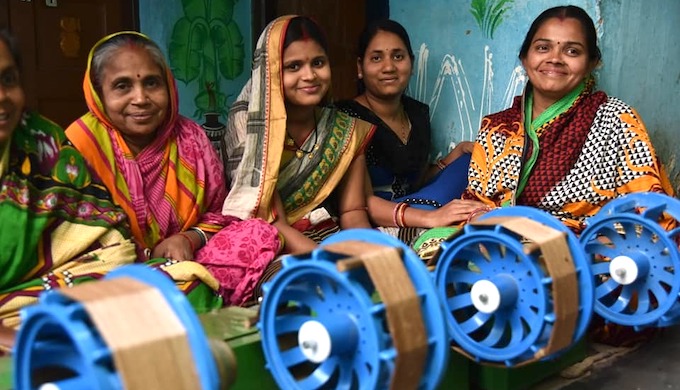
    Further, alternative solutions will only succeed if they are established in cooperation with the local users. “The women in rural areas play an important role when it comes to energy transition” (IEA 2017). Several initiatives such as the Global Alliance for Clean Cookstoves, SEforALL, and ECOWAS address the joint issues of gender empowerment, energy poverty, health, and climate (IEA 2017). Training and capacity building are key to the shift to renewable sources of power. And in rural energy applications, this can be improved by taking into account the gender issues that plague society. There is a high possibility that rural engineers, once trained, might migrate to urban areas in search of more lucrative work. In response to this, the Barefoot College International Solar Training Programme takes a different approach to capacity-building in rural areas and trains the grandmothers in villages who are more certain to stay and help develop the community.

    a shift to clean energy in rural areas that houses the section of the population that lives below the poverty line will be more successful if it is seen as a strategy to broaden community development.

    Thus, a shift to clean energy in rural areas that houses the section of the population that lives below the poverty line will be more successful if it is seen as a strategy to broaden community development. This includes higher employment, better infrastructure, roads, and telecommunications.  This process requires careful design of policies and the establishment of a supportive environment that includes not just innovative business models but also maintenance systems that will sustain the development in the long run.

    Conclusion

     To summarize, rural electrification and the transition to renewable energy in rural areas have been a part of the government’s agenda for many years now, irrespective of the ruling party at the centre. Necessary policies have been introduced to guide the process. While it is great that the government recently achieved universal electrification, it remains to be seen whether the quality of power provided to these villages meets the needs of the population. Further, in this process, state-owned discoms have taken a serious financial hit and it is a tough road to recovery from here. Adding on, the COVID pandemic has slowed down the development and recovery of these discoms. The government should first increase budget outlays in the following years and create a system to monitor the use of these finances. Second, it could turn to privatisation. Privatising discoms on a larger scale would reduce the financial and risk burden on the government and ensure efficient functioning of the companies. Additionally, it is important that while policies are being designed, the deciding parties have a complete understanding of the socio-economic situation of the communities within which they will make changes. To do this, experts who have studied the layout of these rural areas extensively should be involved in the process, along with leaders from the respective districts who are bound to be more aware of the situation and the problems in their areas. More importantly, the government should keep the process of the transition to alternative energy sources transparent and keep an open line of communication with the rural population to earn their trust before they make significant changes. Finally, India is one of the largest consumers of different renewable sources of energy. While it is important to make changes to the policies in this sector, it is also imperative that the government tries to maintain stability in policies that support the companies which help satisfy the growing energy demand in the country.


    References

    1. Bhaskar, Utpal. 2019. “All villages electrified, but last-mile supply a challenge.” mint, December 29, 2019. https://www.livemint.com/industry/energy/all-villages-electrified-but-last-mile-supply-a-challenge-11577642738875.html.
    2. Comello, Stephen D., Stefan J. Reichelstein, Anshuman Sahoo, and Tobias S. Schmidt. 2016. “Enabling Mini-grid Development in Rural India.” Stanford University. https://law.stanford.edu/wp-content/uploads/2016/04/IndiaMinigrid_Working_Paper2.pdf
    3. Economic Times. 2021. “Discom debt at Rs 6 trillion; negative outlook on power distribution: ICRA.” The Economic Times. https://economictimes.indiatimes.com/industry/energy/power/discom-debt-at-rs-6-trillion-negative-outlook-on-power-distribution-icra/articleshow/81431574.cms?from=mdr.
    4. Gill, Bigsna, Astha Gupta, and Debajit Palit. 2019. “Rural Electrification: Impact on Distribution Companies in India.” The Energy and Resources Institute. https://www.teriin.org/sites/default/files/2019-02/DUF%20Report.pdf.
    5. IEA. 2017. “Energy Access Outlook: From Poverty to Prosperity.” International Energy Agency. https://www.iea.org/reports/energy-access-outlook-2017.
    6. UNCTAD. 2019. “The Role of Science, Technology and Innovation in Promoting Renewable Energy by 2030.” United Nations Conference on Trade and Development. https://unctad.org/system/files/official-document/dtlstict2019d2_en.pdf.

    Feature Image: The Better India 

    Image 1: www.alliancemagazine.org

    Image 2: indiaclimatedialogue.net

  • New ‘Drone Rules’ is set to transform Drone business in India

    New ‘Drone Rules’ is set to transform Drone business in India

    Not many would know that Goldman Sachs has predicted that in the next five years the drone market will be worth over a hundred billion US dollars. India became an IT hub in the 1990s and Indian programmers were sought-after during the dot-com boom. This was not because of some great policy decisions that we took at that time but rather it was because of no policy on the subject. There were times when computers gathered dust in some ministries because the minister felt computers are sinister equipment that could take away people’s livelihood.

    ‘Drones’ are said to be the next big thing that the world has ever seen since IT and Dotcom in terms of technology disruption and touching the lives of people in all spheres. Traditional modes of transportation of goods, surveillance, survey, and foraying into newer areas like agriculture, marine et cetera are some areas where the drone is already making waves.

    The recent ‘Draft Drone Rules’, released for public comments by the civil aviation ministry, is a welcome change from the previous one which gave the impression that obtaining a license would be a herculean task. Some companies like AutomicroUAS Aerotech Pvt ltd and many others did obtain a license using provisions of the previous policy. The new draft policy is a more user and business-friendly drone policy. This is a very good and the first decision by the new civil aviation minister, Jyotiraditya Scindia, after assuming office.  Some of the highlights of the new drone policy are: –

    • Up to 500 kgs of drone Aircraft Rules, 1937 is no more applicable. This is a significant change because the Aircraft rules 1937 is specifically applicable for airplanes that carry humans and therefore, have been made with that purpose.
    • There are a significant number of people who fly nano and micro drones in India. Including operators of model aircraft. Ubiquitous drones include drones flying at marriage parties and increased use of drone shots in the entertainment field. These people now can fly these drones/model aircraft without having a drone pilot license. This singular step itself will bolster not only self-employment but also reduce unemployment in the country. Being a drone pilot is also looked at as one of the coolest things today.
    • Drone imports will still be controlled by DGFT (director-general foreign trade). This currently could be looked at as a bit of an impediment for those entrepreneurs who are dependent on imports of certain drone parts. However, in the long run, this provision could bolster making those parts in India and selling them abroad. Easing of import of drones/drone parts currently and bringing in stricter rules as time goes by would have been a better option. This aspect could be looked at by the government to promote innovators and children who are looking to learn, for who importing certain critical drone components is vital. It is highly recommended that drone imports controlled by DGFT be done away with for the time being.
    • The creation of a drone corridor is likely to change the face of the Indian Economy. Logistics Operation, last-mile connectivity, the short haul of goods between two towns, and the cost of connectivity between places are set to change dramatically. This change alone, in my opinion, is likely to bring a significant impact in times to come. Not many have realized the power of creating drone corridors and all that remains to be seen is how this rule is taken forward by the government in improving logistics connectivity and creation of drone highways in times to come.
    • The drone research and development Organisation as a provision in the rule is futuristic and is likely to change the face of the drone industry in India. Correctly harnessed and nurtured, this rule could enable the development of many centres of excellence of drones. The government needs to create an equivalence of ‘Silicon Valley’ for the drones so that organisations dealing with hardware, software, artificial intelligence et cetera can come together and take this endeavour forward.
    • There are several companies across the world that are working on unmanned traffic management (UTM) including an Indian company called Avianco. These companies now could collaborate with the government of India in providing unmanned traffic information and could work as a service provider for tracking of drones as well as providing drone operators with simple NPNT permission, which is one of the provisions in the new drone policy.
    • Third-party drone insurance could be adequate as specified in the rules. However, drones are costly equipment. Readers would be surprised to know that most of these drones are costlier than small hatchback cars. Therefore, owners of these drones may want to go for comprehensive insurance. This is a huge opportunity for insurance and insurance facilitation companies like TropoGo, in the area of drone insurance. In times to come, the number of drone insurance policies may well overtake the number of vehicle insurance policies in the world. Since drones are set to replace many of the traditional workforce and industries.
    • ‘Drone promotion Council’ as specified in these rules should have come up as of yesterday, but it’s never too late. Those countries who missed this ‘Drone-Bus’ may get left behind in the overall economic progress in times to come. Therefore, setting up the ‘drone promotion council’ is the need of the hour.
    • Highlights of the new ‘Draft Drones Rules’ are shown below:


    The new drone policy of India is a welcome change. It is a well-thought-out, simplified policy that India has seen in recent times. This policy aligns with Prime Minister Modi‘s vision for India in terms of reducing unemployment, improving ease of doing business, self-employment, making India go digital, and becoming a technology leader in the world. What the future holds will entirely depend on how these rules are interpreted and implemented efficiently without the usual horrors of the red-tapism of the past.


    Image Credit: www.geospatialworld.net


  • Drone Threats: Detecting and Countering Them

    Drone Threats: Detecting and Countering Them

    The drone attack at the Jammu airbase in the early hours of Sunday, June 27, was a first-of-its-kind in India. It has rattled the security forces, but more than that, it has shown how acts of terror can be perpetrated in the future. To get battle-ready, we need to understand the different kinds of drones, how they work and how lethal they can be.

    Size Matters

    Drones come in different sizes and shapes. Their major classification is fixed-wing and rotary-wing. They can be classified as per:

    1. Weight
    2. Function
    3. Area of application

    In India, the Ministry of Civil Aviation (MoCA) classifies them as per their weight. Drones weighing below 250 gms are called nano drones, above 250 gms but below 2 kgs are called micro drones, above 2 kgs but below 25 kgs are small drones. Anything above 25 kgs is a large drone, as per MoCA in India.

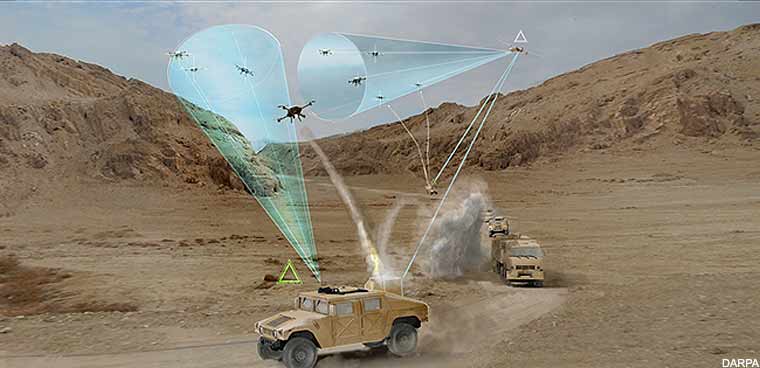
    Small toy drones can be classified as nano drones. Although these nano drones can be quite lethal in intelligence gathering, like armed drones without artificial intelligence and machine learning (AI/ML) (which would give it pinpoint accuracy), they aren’t lethal. Most countries have exempted these drones from the legal gamut because they largely fall in the toy category. However, swarms of these drones designed to explode and controlled by a mother ship can be quite lethal. And currently, no countermeasures to such drones exist. Recently, F/A-18 Hornet launched such a swarm to demonstrate the capability of such nano drones.

    Equation quickly changes in the micro drone category. As the weight of the drone increases, so does its lethality, and being a manageable size, these drones have found favour with many enthusiasts. These are the class of drones that were researched by the open source communities in the early 2000s. They indeed ushered in the age of drones. Designed well, they have an endurance limit of over 40 minutes and can travel in an autonomous mode for over 30 km one way. Mostly made of plastics, polymers, these drones can be difficult to detect and prosecute.

    Small drones are the ones that are increasingly being used by anti-national elements. Be it to drop contraband, weapons, or to carry out a Kamikaze-style attack. Even the low-end of small drones (up to 6 kgs) can carry an adequate amount of explosives to cause serious damage. These are also the drones that are used in helping humanity. These drones can be fixed-wing, rotary-wing, or hybrid.

    To own and fly a drone weighing more than 250 gms and less than or equal to 25 kgs, whether, for commercial or recreational purposes, one would need Operator Permit-I. To get this permit one needs to go through the due diligence process of the DGCA (Directorate General of Civil Aviation), MoCA.

    The same procedure applies if you want to become a drone pilot in India. The due diligence, examination, and certification process is similar to that of a manned aircraft pilot. The only difference, you just need to clear the 10th standard exams to become a drone pilot. The due diligence process includes paperwork like police verification, checking Aadhaar, and passport details, among other things. Therefore, only a bonafide citizen of India with no criminal record can become a drone pilot in India.

    How to Counter Drones

     Drones can be countered through three methods, namely:

    1. By jamming the drone controller frequency (2.4 GHz, 5.8 GHz, occasionally 433 MHz and 900 MHz).
    2. By jamming the GNSS or Global Navigation Satellite Systems, like GPS, GLONASS, GAGAN, the Indian Regional Navigation Satellite System, also known as NAVIC, etc.
    3. The hard kill option of shooting the drone down using guns, lasers, and electromagnetic guns always exists.

    To counter drones, you need to detect them first. It can be done in three ways, namely:

    1. Use drone radar: It works like a conventional radar, which sends out energy and looks for reflected energy to pick up these drones. Challenge however is that the reflected energy from the small drones is so low that it becomes impossible to pick nano and micro drones with drone radars.
    2. Pick up drone control signal: Picking up drone control signals is fairly easy because they operate in the ISM (industrial, scientific, and medical) band of frequencies. However, most WiFi and other equipment work on this frequency, and separating drone frequency signatures from these becomes a challenge.
    3. Pick up noise generated by the propeller tips: This is another method to pick up drones. In ideal conditions, it has proven effective in picking up drones at a very large range. However, the challenge is if the ambient noise is higher and ambient conditions are not suitable, drones don’t get picked up at all.

    Drones for Good

     Drones today are being used for a variety of services, beyond the military.

    1. Disaster relief and humanitarian assistance: Drones are proving to be indispensable in this area. Be it floods, forest fire, COVID assistance or locust control, drones are everywhere, doing what they do, silently.
    2. In scientific quest: Drones are doing a wonderful job in this area, be it marine applications, studying agriculture, soil/ water pollution, carrying out weather surveys, name an area and drones can be put to task.
    3. In the entertainment industry: Drones have replaced expensive helicopters, and today even the producer of a low-budget show can get a drone shot at minimum cost. As a result, drone shots are now seen in shows and movies more than ever.

    Tip of the Iceberg

    Drones for good far outweigh the application of drones for anti-national and terror activities. The drone industry needs to be nurtured if any country aspires to become an economic giant in the future. No wonder Goldman Sachs has said that the $100-billion drone industry is just the tip of the iceberg in terms of its business potential over the next five years.

  • Analysing Denmark’s Offshore Wind Energy Sector: Lessons for India

    Analysing Denmark’s Offshore Wind Energy Sector: Lessons for India

    Globally, Europe has the highest capacity of power generated from offshore wind energy. Amongst the European countries, Denmark, the UK and Germany have been pioneers and are currently leading as the largest power producers from offshore wind energy. Danish assistance has been in high demand to help countries shorten their implementation time for offshore wind turbine projects. In 2019, India entered into a bilateral agreement with Denmark to develop an offshore wind market and related technical capabilities. According to a document published by the Danish government, their authorities have specialised technical knowledge that can help Indian authorities establish framework conditions for the rollout of offshore wind power.

    Denmark’s Offshore Wind Energy Sector  

    The Danish Government has set a target of reducing greenhouse gas emissions by 70%, as compared to 1990 levels, by 2030 and having 100% of Danish energy supplied through renewable sources by 2050, apart from achieving net-zero emissions by the same time. The scarcity of proper onshore sites and the abundance of shallow waters with wind resources drove its move to offshore wind, in the early 1990s,. In Denmark, there is a strong symbiosis between energy and industrial policy because of many leading offshore wind energy companies having Danish roots such as DONG, Vestas, Bladt, Siemens Wind, etc. India must achieve such a symbiosis in its offshore wind policies so that the industry can be successful in the long term.

    Denmark’s ambitious targets coupled with their evolving policies in terms of bureaucratic procedures, environmental safety, and finance, among others, have driven the growth of the offshore wind energy sector since the 90s. This analysis looks at each of these segments.

    Consent Procedures:         The Danish Energy Agency (DEA) has been a single point of access to all offshore wind energy companies when it comes to issues related to permits. Meaning, the DEA grants all permits which include permits from other appropriate government authorities such as the Danish Nature Agency, Ministry of Defence, and the Danish Maritime Authority. This is the one-stop-shop and has been adopted not only in Denmark but in many other European countries. Such a method ensures rapid and un-bureaucratic application processing and ease of doing business. This also avoids a lot of confusion.

    Grid Connectivity:             The financing of the grid connection for offshore wind farms depends on how it is established:

    • Enterprises can follow the Government’s action plan for offshore wind development wherein the DEA will invite bids to tender for pre-specified sites or
    • Enterprises can follow the ‘open-door principle’ wherein independent applications can be made for any site and upon complete assessment by the DEA, it will invite bids to tender for the site, given that the results of the assessment are positive.

    In the first case, the grid operator will finance the connection, including step-up transformers. Such socialisation of grid costs is an attractive feature for project developers in Denmark.

    However, in the second case, the responsibility falls on the developer. We may also expect costs of any necessary grid reinforcement to be borne by the developer. The three private offshore wind farms established in Denmark, following the ‘open-door principle’ – Samsø, Rønland, and Middelgrunden – have had no notable problems. These projects are, however, within 3km of the coast, which would imply that the grid connection costs were not exorbitant.

    Environmental Assessment:          In Denmark, an extensive environmental assessment takes place before the construction of an offshore wind farm. The DEA provides companies or enterprises a license to conduct preliminary studies, including environmental (Environmental Impact Assessment) and technical (ground investigation) studies, either directly after a tender (first process) or following the receipt of the first satisfactory planning documentation (second process).

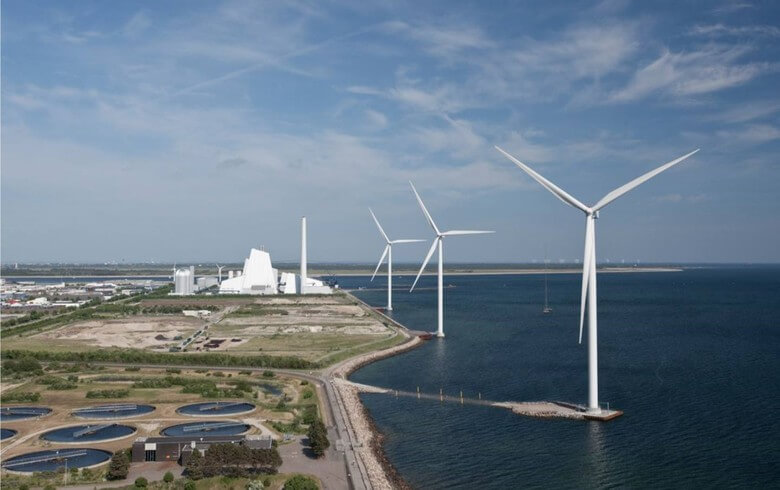
    For instance, in the case of the Anholt farm, one of the largest offshore wind farms with a capacity of 400 MW, the project team performed an extensive environmental assessment that included the impact on marine animals in the area and their habitats, noise calculations, air emissions, and the potential risk to ship traffic. Using data from other wind farm projects like Denmark’s Nysted Wind Farm, and undergoing their analysis, the Anholt project team projected only minor, insignificant affects.

    Financial Incentives:          In Denmark, they support offshore wind farms through a feed-in tariff system, which is set through a competitive auction process. Power off-take in Denmark is largely managed through the DEA. There is no renewable purchase obligation in place in Denmark, but electrical power from renewable energy has priority access to the grid. In some cases, the owner may choose to sell the electrical power to utilities or other power suppliers through a Power Purchase Agreement (PPA). If the power price drops to zero or negative, there is an oversupply of electricity – then renewable projects do not receive any support. Hence this motivates generators to curtail output and help supply-side grid management.

    De-risking the development process:          The Danish Government undertakes geotechnical studies, wind resource assessment, and environmental surveys before a site being leased. The lease areas are then auctioned off to the lowest bidder. This hugely benefits developers as the site is effectively de-risked, leading to a lower tender price. If this were not the case, the developers would have to include risk provisions and contingency, owing to uncertainty regarding the ground conditions. Further, de-risking a site would increase willingness to plan and bid for the sites leased.

    Simply put, the Danish offshore wind energy policies developed by the DEA and the Government have evolved over the years to tackle situations as they occur. This has led to sustained growth in the sector and has succeeded in powering close to 50% of the country’s electricity demand. Besides successfully developing its sector, it has been an outstanding example to many countries in Europe such as the UK and Germany. The UK has adopted the one-stop-shop model to ease procedural difficulties. Germany has adopted the open-door procedure of establishing offshore wind farms.

    India’s Offshore Wind Energy Sector

    The offshore wind energy sector in India is in its nascent stage. Its 2015 National Offshore Wind Energy Policy shows that the Ministry of New and Renewable Energy (MNRE) will act as the nodal Ministry for the development of Offshore Wind Energy in India that will monitor offshore wind energy development in the country. It will also work closely with other government entities for the use of maritime space within the Exclusive Economic Zone (EEZ).

    The Ministry has set a short-term target of 5.0 GW of offshore wind installations by 2022 and a long-term target of 30 GW by 2030 which, according to government documents, is expected to give the confidence to project developers in the Indian market. Over 95% of commercially exploitable wind resources are concentrated in seven states – Andhra Pradesh, Gujarat, Karnataka, Madhya Pradesh, Maharashtra, Rajasthan, and Tamil Nadu. But the land resources required for onshore wind projects are gradually becoming a major constraint. This could very well cause an increase in the market-determined tariffs of onshore wind energy in the future. Offshore wind power, however, offers a viable alternative in such a scenario. The Indian government, like Denmark, has to make policies to the best of their effort that will bring confidence to developers and de-risk the development of the sector to further encourage developers.

    Although India has a huge potential in the renewable energy sector, the developers’ issues remain unresolved. For instance, Gujarat and Tamil Nadu have most of the high potential sites off their coasts to develop offshore wind energy. But a major concern for offshore wind developers would be the problem of grid integration. The two states already have a high degree of solar and wind renewables integrated into their power grid. By adding on power generated through offshore wind energy, they will face a significant hurdle with the evacuation and integration of this additional power. Without proper renewable energy storage systems, there is also the added burden to maintain an equilibrium between the supply and demand of power generated through the variable sources as otherwise, there will be a great deal of wastage and an unnecessary surge in the prices.

    Adding on to the problems faced by developers, benefits such as accelerated depreciation were recently withdrawn and as a result, investments have slowed down. Thus, project developers not only want accelerated depreciation to be reintroduced, but they also want assurance from the government that such fiscal benefits will continue for the long-term. If these fiscal benefits are reintroduced, developers will feel more optimistic about their prospects in the sector. Further, it would also encourage small developers to invest more in the sector.

    Another area that is causing considerable angst for the wind project developers in India is the delay in realising the payments due to them from the state electricity boards. These delays affect the cash flows, thereby threatening the viability of many of these projects. Such experiences will make offshore project developers cautious in venturing into making large investments into the sector.

    In terms of policies that Indian policymakers can adopt from Denmark are the one-stop-shop and an open-door procedure of establishing offshore wind farms. Having the MNRE as a single point of access would make the bidding and tendering process more efficient. This is because a developer has to coordinate with various departments such as the MNRE, the ministry of defence, the ministry of external affairs, nature and wildlife, etc before they can start producing in an offshore wind farm. It would also benefit to have an open-door procedure, but only in the long term. Initially, though, the government should identify possible sites and work on de-risking the development process to encourage more participation in the bidding process.

    Conclusion

    In line with its Paris Agreement commitments, India is working to ensure that by 2030, 40% of its power generation capacity will come from non-fossil fuel sources. Currently, renewable energy makes up 36% of India’s power capacity through mainly small and large hydro, onshore wind, and solar energy. Producing power through offshore wind energy will be a welcome addition to the existing sources.

    During the RE-Invest 2020 conference, the MNRE Joint Secretary announced that the Indian government is looking into setting up structures for power purchase agreements and offshore wind auctions. Thus, to successfully implement its plans, it will require further offshore wind resource data and analysis to identify viable project sites and, revive industry demand for this market.

    Feature Image Credit: www.renewablesnow.com

    Image: Anholt Offshore Wind Farm


  • To Become Atmanirbhar, Bharat Needs Strong R&D

    To Become Atmanirbhar, Bharat Needs Strong R&D

    India has gone full circle from Gandhi’s days of Swadeshi to Nehru’s vision of self-reliant India to New Economic Policies of indiscriminate opening of the economy to Atmanirbhar Bharat. In between lip service was paid to Swadeshi in 1998 but the government continue with the indiscriminate opening up of the economy. Even agriculture was not left untouched with the opening up of 1400 commodities after the Seattle round of negotiations in 1999.

    What is Atmanirbharta?

    What do we understand by atmanirbhar – is it at the narrow level of producing most things that we need ourselves or at the wider philosophical level? If the latter, it implies independence of thought and development of socially relevant knowledge. It could lead to an alternate vision of development and prosperity for the nation.

    In an open economy people will then buy the foreign produced cheaper goods. So, the more important aspect of atmanirbharta is the philosophical aspect.

    The idea of producing most things ourselves runs into a contradiction in a globalizing world which is premised on marketization. Most things are being produced cheaper and better somewhere else, including our cultural symbols such as gulal, diyas and ganesh statue. In an open economy people will then buy the foreign produced cheaper goods. So, the more important aspect of atmanirbharta is the philosophical aspect.

    Opening up the Economy

    In 1991, with the New Economic Policies we gave up the idea of ourselves producing most things that we need. Our global trade increased dramatically with the percentage of export plus import of goods and services in GDP rising from around 17% in 1991 to about 55.8% by 2013. In 2019 it is down to about 40%.

    With the evolution of Washington Consensus in the 1980s, based on the idea of marketization, the world started to integrate in the 1990s with all countries showing a sharp rise in trade to GDP ratio. China captured a large share of the world markets and built a huge trade surplus. Its foreign exchange reserves rose to over $3.5 trillion. This gave it enormous clout globally not only with developing countries but also with the developed countries.

    The idea of atmanirbharta or self-reliance underwent a change. It became a matter of global competition to gain market share globally. One imported more to export more. Growth was supposed to depend on this. South East Asia and China were given as examples of success of such openness and rapid improvement in the living standard of the population. China post-Mao successfully adopted such a strategy. It was a large economy so it could not even be said that India cannot do what Singapore can do.

    Globalization is all about development of technology and India has lagged behind in that.

    Lessons from China

    What are the lessons India can learn from China’s achievements in the last thirty years? Apart from the fact that it is an authoritarian state with a strong sense of nationalism, its advances in research are stupendous.

    China has invested huge sums in building a strong infrastructure and research base in Universities, Institutions and Industry. It has one of the highest investment and savings rate in the world at 44 per cent in 2019. India’s comparative figure for 2019 is around 30%. It has developed the 5G technology faster than others and is willing to provide it cheaper than its competitors. This is also the case with many other lines of production such as, electronics, pharmaceuticals, automobiles and toys. It has moved rapidly in various fields such as development of artificial intelligence and applications of internet for commerce and financial sectors.

    Globalization is all about development of technology and India has lagged behind in that.

    China has had the long term vision to develop this rapidly by investing heavily in Research and Development. After getting technology from foreign companies, it has advanced the same by mastering it. Unfortunately, India has not done so and has repeatedly imported the next level of technology.

    Need for strong R&D

    India’s investment in R&D has been minimal. The private sector has been investing little in technology development. And, the public sector has been hamstrung in technology development by lack of autonomy, bureaucratization and corruption.

    Global competitiveness requires rapid development of technology. It requires massive investment in both absorption and development of technology. Instead, India’s investment in R&D has been minimal. The private sector has been investing little in technology development. And, the public sector has been hamstrung in technology development by lack of autonomy, bureaucratization and corruption.

    Research and Development require autonomy for researchers and a long term vision. Of course resources are also required but autonomy and vision are crucial and these have been weak in India. The same Indian researchers are able to do well in foreign lands but when in India they are not able to deliver. Our research establishment are rather feudal in approach and work within rigid hierarchies so that often talent gets suppressed.

    a culture of promoting independent and critical thinking is largely missing and that reacts back on research and generation of new ideas.

    Universities are the places where autonomy is greater and a long term vision can flourish away from the immediate profit motive. But unfortunately most of our universities are also bureaucratized and do not give autonomy to the academics. The authorities largely with bureaucratized and feudal mindset see independent thinking as a threat to themselves and, therefore, put up road blocks in the path of the independent thinkers thereby frustrating them and making their functioning difficult. Often the independent minded are seen as trouble makers and a challenge to the domination of the authorities. This is true not only in social sciences but also in the case of sciences in most universities. Thus, a culture of promoting independent and critical thinking is largely missing and that reacts back on research and generation of new ideas.

    Imperatives of Strengthening R&D

    Atmanirbharta in the present day world does not imply closing the economy but having the strength to face the challenge from other nations. This has to be based on a long term vision and cannot be achieved in the short run or by ad hoc measures.

    It requires high quality education right from the school stage. Thus, the education budget has to be expanded and teaching paid much higher attention than given at present. The status of teachers has to be enhanced so that talented people come in to academia.

    The world has been globalizing for thousands of years with trade and exchange of knowledge across nations and across continents. But earlier it was a slow two way process. Colonization turned into a one way process with western knowledge and thought establishing its hegemony globally and more so in India. That killed the internal dynamism of Indian society. It reinforced feudalism in India and decimated the quest for socially relevant knowledge generation.

    There has to be a continuum in knowledge generation but with an Indian perspective. India has to have the self-confidence that it can move ahead without denying the last few hundred years. Denial is only a sign of weakness.

    As Gandhi suggested, there is need for Indian modernity. Achieving that is crucial. Can it be based on denying what has happened over the last 250 years and going to what existed prior to that? Such a gap would undermine our understanding of social developments in India. That would be a recipe for repeating our mistakes. There has to be a continuum in knowledge generation but with an Indian perspective. India has to have the self-confidence that it can move ahead without denying the last few hundred years. Denial is only a sign of weakness.

    Denial would prevent us from understanding the nature of globalization we are undergoing and therefore we would not be able to work out any correctives that are needed. It would lead to much confusion in society. For instance, we would not be able to understand why consumerism is sweeping the world, including the poor in India or why our research lacks dynamism. In brief, Atmanirbharta requires India to move with self-confidence and not be in denial.


  • Evaluating the Make in India Policy for Defence Manufacturing and Technology Acquisition

    Evaluating the Make in India Policy for Defence Manufacturing and Technology Acquisition

    Led by the Department of Industrial Policy & Promotion, Ministry of Commerce, the Make in India policy (“MII”) extends to 25 focused sectors. Among these is the defence sector, where the nature of the sector renders MII extremely important and relevant. This is outlined by India’s status as the second-largest standing army and third-largest military spender in the world.[1] Yet, it remains the second-largest arms importer and its exports merely amount to 0.2% of the global pie.[2] China is the fifth-largest arms exporter at 5.5% of the global share.[3] However, this is likely to fall in the post-pandemic world, where China’s credibility has been severely tainted.[4] This represents an opportunity for Indian defence manufacturers to attract present and future foreign investment.

    Against this background, MII was enacted with two objectives: (1) to increase domestic manufacturing of defence equipment; and (2) address the national security interest of self-sufficiency over key technologi. There are two ways in which technology up-gradation can happen: (1) indigenous efforts; and (2) transfer of technology, through international agreements. In this article, I flag the main challenges to argue that India has significantly underperformed in both. Subsequently, I propose macro-policy changes to address identified challenges.

    Evaluating technological upgradation in the Defence sector in india

    1. Evaluating ‘Indigenous Efforts’

    Indigenous efforts are confronted with three main challenges:

    • Inadequate Investment for Research & Development (R&D)

    Only 5.7% of the defence budget is allocated to R&D,[5] despite successive parliamentary committees recommending at least 10% to meet minimum requirements.[6] The average allocation among global rivals like USA, UK, France, and China is well above 15%.[7] Even private-sector players in India, like Tata, L&T, and Mahindra and Mahindra, invest less than 1% of their turnover in R&D, as against the average of 10% in the aforementioned countries.[8] The producer lacks the basic R&D required even for making marginal improvements in performance to the product, or altering it based on user-specifications.[9] The effect of this is that the resulting product is obsolete in an already disruptive market. Thus, a buyer, even if domestic, is unwilling to accept such an obsolete product at higher prices merely for the sake of indigenous production.

    • Shortage of Skilled Workforce

    A skilled workforce is the key to achieving self-sufficiency in defence manufacturing because of the highly specialized nature of this sector and the workforces’ vision and skills determine the efficacy of the produced/procured domestic technology. This shortage exists at both the research and procurement level.

    At the research level, there is a severe shortage of skilled human resources, in terms of quantity and quality, at R&D organizations like DRDO.[10] With more than 3,500 engineering colleges producing about 1.5 million engineering graduates annually, India has an unparalleled talent availability.[11] However, only 17.5% of these graduates are employable because colleges lack proper infrastructure and faculty,[12] along with current curriculum ignoring industry skills, defined career paths, and evolving technologies.[13] Thus, organizations are compelled to spend significantly in making fresh talent “employable”.

    While India has a decent pool of highly qualified low-cost engineers and scientists,[14] they are unwilling to work in the public sector due to limited opportunities and low growth potential,[15] where most defence R&D is undertaken. As the departure of 132 scientists in the last five years from DRDO shows,[16] even those employed mostly do not continue long-term due to better opportunities elsewhere.[17] The contribution of most of these scientists has been limited to the production of academic articles,[18] which hasn’t seen any significant and meaningful absorption in the policy. Therefore, the policy has been unable to capture the huge latent employment potential in this sector.[19]

    This position must be contrasted against global competitors like the US and China, where the highly skilled and employable workforce is significantly and routinely absorbed into the most impactful R&D organization, whether private or public.[20] Moreover, unlike other leading countries, India lacks any training and education infrastructure specialized for R&D personnel in the defence sector. These countries have developed specialist defence schools that have managed to produce large pools of exclusive talent. France itself has managed to produce 134,000 specialist employees.[21]

    At the procurement level, the asset acquisition process is not tasked to a dedicated cadre of the workforce.[22] Further, there are no educational or training programs for employees involved in this process.[23] Thus, there is the loss in terms of the benefits of specialization, especially in a sector where progress is characterized by specialization.

    • Limited Involvement of the Private Sector

    There is a significant lack of incentive for greater private sector involvement. The private sector is commercially motivated to establish its manufacturing base only when it has a good chance, or preferably guarantee, of getting frequent and sizeable orders.[24] However, the current manufacturing and procurement process has ignored this motivation but is also completely converse to it.

    As the BJP government’s Rafale fiasco indicates, the procurement processes lack transparency, and frequently fraught with allegations and counter-allegations.[25] This disincentivizes both domestic and global private sector players from conducting business.

    Despite unprecedented inclusion of the private sector, it is widely believed in the private sector that the government is biased towards public sector undertakings, denying a level-playing field for the private sector and even denying opportunities to bid.[26]

    The government’s Strategic Partnership Model, aimed at inviting world-class defence giants to collaborate with Indian entities, has unduly restricted autonomy. Under this program, the government chooses the Indian partner for the foreign OEM, without consulting them.[27] Global defence giants, like Airbus, Lockheed Martin, ThyssenKrupp, and Dassault, have shown interest in contracting with the Indian private sector.[28] However, it is a combination of these factors that this interest has largely failed to materialise into successfully concluded deals.

    Even where, despite these disincentives, the private sector has been involved, this has been in non-critical and less required areas. Most of India’s defence imports are in the category of major platforms such as fighter aircraft, helicopters, naval guns, and anti-submarine missiles.[29] However, the private sector initiatives are predominantly in the category of ammunitions (including rockets and bombs), and surveillance and tracking systems.[30]

    1. Evaluating ‘Transfer of Technology’

    There has been no transfer of technology (“ToT”) in the critical defence procurement process. All major contracts under MII have been “off the shelf”, and without any crucial ToT.[31] As per the CAG Report, between 2007 and 2018, the government concluded 46 offset contracts but failed to implement the ToT agreements in any of them.[32]

    The failure here can be attributed to successive governments unduly hoping that India’s status as a large arms importer would necessarily make international players compliant as regards sharing their intellectual property (“IP”). While foreign companies have shown interest in contracting with Indian players, the large purchase orders have been inadequate to incentivize foreign players to share their IP.[33]

    The government has also been overly ambitious of ToT as a means of technology upgradation. Even implementing the negotiated ToT is not the end because the more challenging issues of absorption of this technology and ownership of IP remain.[34] Moreover, the ToT route provides India only with the ‘know-how’, without any insight into the ‘know-why’.[35] As India’s acquisition of the Sukhoi Su-30 has shown, the public sector is critically dependent on the OEMs, here the Russians, for even minor systemic upgradations.

    Way Forward

    The government must increase allocation to defence R&D to at least 10% and must incentivize greater contributions from the private sector. Existing capabilities and services at training and diploma centres must be upgraded through public-private partnerships. There must be a separate and devoted institutional structure for all procurement-related functions. The procurement policy must also aim at buying talent, besides technology, to bridge technology gaps. The education curriculum at engineering universities needs to be modernized, with a focus on employability. Specialist defence schools must also be established. However, it is most important that the public sector aims at retaining its talent through unique and lucrative incentive structures.

    To incentivize the private sector through minimum order guarantees, the government must utilize ‘public procurement of innovation’. Under this policy tool, the government uses its exchequer to artificially generate demand for an emerging innovative solution, unavailable on a commercial scale.[36] The private sector can further be incentivized by streaming the procurement and dispute resolution process. As for procurement, a fast-track procedure with single-window clearances can be adopted.[37] As for dispute resolution a permanent arbitration tribunal must be established to expeditiously settle disputes with finality.[38]

    Conclusion

    Firstly, the indigenous efforts at technology up-gradation have failed due to limited R&D output, shortage of skilled workforce, and limited private sector involvement. The R&D budgetary allocation is way below the recommended and global standard. The shortage of skilled workforce is both at the research and procurement due to a lack of education and training infrastructure specific to the defence sector, low employability among most graduates, and unwillingness to work in the public sector among highly qualified graduates. The private sector has been disincentivized due to a lack of order guarantees, the unrealistic and retroactive manner of the procurement process, the constant allegations and counter-allegations, and the continued bias towards the public sector. Moreover, the private sector has been involved in non-critical and less required areas.

    Secondly, while the government has concluded ToT agreements, it has been inefficient in enforcing them. Moreover, even if this were to succeed, it has not established any action plan for absorbing this technology and addressing ownership of IP. It has also been overly ambitious of the utility of ToT.


    References

    [1] Kuldip Singh, ‘Yes, Indian Military Can Go the ‘Make in India’ Way – Just Not Yet’ (The Quint, 25 May 2020) <https://www.thequint.com/voices/opinion/india-armed-forces-defence-sector-military-expenditure-budget-technology-upgrade-make-in-india> accessed 19 December 2020.

    [2] Arjun Srinivas, ‘Private defence business gets one more nudge’ (LiveMint, 1 October 2020) <https://www.livemint.com/news/india/private-defence-business-gets-one-more-nudge-11601460654397.html> accessed 19 December 2020.

    [3] Snehesh Alex Philip, ‘China has become a major exporter of armed drones, Pakistan is among its 11 customers’ (The Print, 23 November 2020) <https://theprint.in/defence/china-has-become-a-major-exporter-of-armed-drones-pakistan-is-among-its-11-customers/549841/> accessed 4 January 2021.

    [4] Rajan Kochhar, ‘Preparing defence sector for post COVID-19 world: Time to treat private sector as equal partner’ (Economic Times, 5 May 2020) <https://government.economictimes.indiatimes.com/news/governance/opinion-make-in-india-a-dream-or-reality-for-the-armed-forces/75552970> accessed 19 December 2020.

    [5] Jayant Singh, ‘Industry Scenario’ (Invest India) <https://www.investindia.gov.in/sector/defence-manufacturing> accessed 19 December 2020.

    [6] Prof (Dr) SN Misra, ‘Make in India: Challenges Before Defence Manufacturing’ (2015) 30(1) Indian Defence Rev <http://www.indiandefencereview.com/news/make-in-india-challenges-before-defence-manufacturing/2/> accessed 19 December 2020.

    [7] ‘Government Expenditures on Defence Research and Development by the United States and Other OECD Countries: Fact Sheet’ (2020) Congressional Research Service R45441 <https://fas.org/sgp/crs/natsec/R45441.pdf> accessed 19 December 2020; A Sivathanu Pillai, ‘Defence R&D’ in Vinod Misra (ed), Core Concerns in Indian Defence and the Imperatives for Reforms (Pentagon Press & IDSA 2015) 132-133.

    [8] Misra (n 6).

    [9] Amitabha Pande, ‘Defence, Make in India and the Illusive Goal of Self Reliance’ (The Hindu Centre for Public Policy, 11 April 2019) <https://www.thehinducentre.com/the-arena/current-issues/article26641241.ece> accessed 19 December 2020.

    [10] Azhar Shaikh, Dr. Uttam Kinange, & Arthur Fernandes, ‘Make in India: Opportunities and Challenges in the Defence Sector’ (2016) 7(1) Intl J Research in Commerce & Management 13, 14-15.

    [11] Kishore Jayaraman, ‘How Can India Bridge The Skill Gap in Aerospace & Defence Sector?’ (All Things Talent, 24 September 2018) <https://allthingstalent.org/2018/09/24/how-can-india-bridge-skill-gap-in-aerospace-defence-sector/> accessed 30 December 2020.

    [12] Dr. JP Dash & BB Sharma, ‘Skilling Gaps in Defence Sector for ‘Make in India’’ (2017) 32(2) Indian Defence Rev <http://www.indiandefencereview.com/spotlights/skilling-gaps-in-defence-sector-for-make-in-india/> accessed 30 December 2020.

    [13] Jayaraman (n 10); Dhiraj Mathur, ‘Unlocking defence R&D in India – Do we have the skill?’ (Firstpost, 6 April 2016)<https://www.firstpost.com/business/unlocking-defence-rd-in-india-do-we-have-the-skill-2715650.html> accessed 30 December 2020.

    [14] Mathur (n 13).

    [15] PR Sanjai, ‘Indian aerospace sector needs one million skilled workforce in next 10 years’ (Livemint, 20 February 2015) <https://www.livemint.com/Politics/hRJQjq7ZKVXQ5RFkzWbmAJ/Indian-aerospace-sector-needs-one-million-skilled-workforce.html> accessed 30 December 2020.

    [16] PTI, ‘132 scientists left DRDO on personal grounds in last 5 years: Govt’ (Economic Times, 12 March 2020) <https://economictimes.indiatimes.com/news/defence/132-scientists-left-drdo-on-personal-grounds-in-last-5-years-govt/articleshow/74579857.cms?from=mdr> accessed 30 December 2020.

    [17] Dash (n 12).

    [18] PTI, ‘India is world’s third largest producer of scientific articles: Report’ (Economic Times, 18 December 2019) <https://economictimes.indiatimes.com/news/science/india-is-worlds-third-largest-producer-of-scientific-articles-report/articleshow/72868640.cms?from=mdr> accessed 30 December 2020.

    [19] ‘Make in India: An Overview of Defence Manufacturing in India’ (2015) Singhania & Partners LLP Report <https://www.gita.org.in/Attachments/Reports/Make-in-India-Defence-Manufacturing-in-India.pdf> accessed 19 December 2020.

    [20] Ranjit Ghosh, ‘Defence Research and Development: International Approaches for Analysing the Indian Programme’ (2015) IDSA Occasional Paper 41, 11-34 <https://idsa.in/system/files/opaper/OP41__RanjitGhosh_140815.pdf> accessed 19 December 2020.

    [21] Dash (n 12).

    [22] Shaikh (n 10) 15.

    [23] Ibid.

    [24] Rohit Srivastava, ‘New measures for self-sufficiency in defence – industry perspective’ (Indian Defence Industries, 19 May 2020) <https://indiandefenceindustries.in/defence-reforms-industry-perspective> accessed 19 December 2020.

    [25] Pradip R Sagar, ‘How ‘Make in India’ in defence sector is still an unfulfilled dream’ (The Week, 25 May 2019) <https://www.theweek.in/theweek/current/2019/05/25/how-make-in-india-in-defence-sector-is-still-an-unfulfilled-dream.html> accessed 19 December 2020.

    [26] Ibid; Lt. Gen. (Retd.) (Dr). Subrata Saha, ‘Execution key for defence manufacturing in India’ (LiveMint, 2 April 2020) <https://www.livemint.com/Opinion/Gx9NVPGvIsVbVzLTJ0VouK/Execution-key-for-defence-manufacturing-in-India.html> accessed 19 December 2020.

    [27] Prasanna Karthik, ‘India’s strategic partnership policy is counter-productive in its current form’ (Observer Research Foundation, 8 June 2020) <https://www.orfonline.org/expert-speak/indias-strategic-partnership-policy-is-counter-productive-in-its-current-form-67511/> accessed 19 December 2020.

    [28] Sagar (n 25).

    [29] Srinivas (n 3).

    [30] Ibid.

    [31] Singh (n 1); Sagar (n 25).

    [32] Joe C Mathew, ‘Defence offset policy performance dismal: CAG’ (Business Today, 24 September 2020) <https://www.businesstoday.in/current/economy-politics/defence-offset-policy-performance-dismal-cag/story/416872.html> accessed 19 December 2020.

    [33] Lieutenant Commander L Shivaram (Retd), ‘Understanding ‘Make in India’ in the Defence Sector’ (2015) 145(601) J United Service Institution of India <https://usiofindia.org/publication/usi-journal/understandingmake-in-india-in-the-defence-sector/> accessed 19 December 2020.

    [34] Lt Gen A B Shivane, ‘India needs outcome oriented defence reforms’ (Indian Defence Industries, 22 May 2020) <https://indiandefenceindustries.in/india-outcome-oriented-reforms> accessed 19 December 2020.

    [35] Misra (n 6).

    [36] E. Uyarra & J. Edler, ‘Barriers to Innovation through Public Procurement: A Supplier Perspective’ (2014) 34(10) Science Direct <https://www.sciencedirect.com/science/article/pii/S0166497214000388> accessed 19 December 2020.

    [37] Kochhar (n 4).

    [38] Lt. Gen. (Retd.) Dalip Bharadwaj, ‘‘Make in India’ in defence sector: A distant dream’ (Observer Research Foundation, 7 May 2018) <https://www.orfonline.org/expert-speak/make-in-india-defence-sector-distant-dream/> accessed 19 December 2020.

  • Revisiting India’s Renewable Energy Sector Policy and Limitations

    Revisiting India’s Renewable Energy Sector Policy and Limitations

    One of the most important results in India from the pandemic-driven lockdown that began in March 2020 was the reduction in carbon emissions and its beneficial impact on the environment. Travel restrictions and a decrease in industrial production have caused significant reductions in emissions. But these reductions were temporary. The results, however, highlights the need for India to reduce its dependence on carbon-emitting energy sources and shift the majority of its energy production to renewable sources that will better equip India towards achieving and even exceeding its  Paris Agreement targets.

    The Indian renewable energy sector is the world’s fourth-largest, after the US, China, and Germany. Its wind energy sector has the fourth-highest total installed capacity, 38.124 GW, in the world. Tamil Nadu, Maharashtra, Karnataka, and Gujarat are the leading states in wind energy.  The solar energy sector has emerged as a significant player in the power generation capacity since the establishment of the National Solar Mission 2010. India achieved 5th global position in solar power distribution with an installed capacity of 35,739 MW as of August 2020.

    Yet, over the years, the wind energy sector faced several problems such as an imbalance between demand and supply, persistent energy shortages, insufficient funds, high-transmission and distribution losses, and poor institutional infrastructure. Thus, it is important to identify the exact causes and find solutions so that upcoming projects can be better planned. This article identifies and analyses a few important barriers faced by the renewable energy sector.

    Barriers to the sector

    First, India’s renewable energy infrastructure, despite its considerable growth over the decades, lacks consistent standards as compared to other countries. Wind energy technology has not kept pace with the modernisation achieved across the world.  Research, both in public and private sectors, is one way to mitigate the problem. Despite 80% of the technology being domestic, a significant quantity of manufactured components is imported from China. A mix of foreign and indigenous parts (with different quality and technical standards) results in inconsistency in the technology used which reduces the power plants’ overall efficiency. The Government, in a move to promote domestic manufacturers and “self-sufficiency”, has levied customs duty of 20-25% on solar cells imported from China.

    A 2019 study suggests that the country would require an investment of Rs 1.65-1.75 lakh crore per year to generate cheaper power.

    Second, the renewable energy sector is capital-intensive and requires high capital investment initially to set up the farms. One way to source funds is to increase private sector participation. With increased competition among the private sector to develop technology, the country would gain from the lower costs of power generation and higher employment opportunities. A 2019 study suggests that the country would require an investment of Rs 1.65-1.75 lakh crore per year to generate cheaper power. The Government needs to encourage companies like ReGen Powertech Pvt Ltd., through generation-based incentives and tax holidays, that will invest in renewable energy power plants for its long-term financial benefits, despite the risk factors involved. At a time when investments in the sector are growing, the Government’s move to rescind benefits, may not impact the big players but will certainly have an adverse impact on the volume of investments from small investors, who largely depend on the Government’s support.

    Another financial barrier the sector faces is the lack of proper reinvestment. As the benefits from this sector are usually accrued in the long-term, the Government invests revenue from power generation in short-term development projects instead of reinvesting in the energy sector. Thus, for new solar energy projects to succeed, the efficient allocation of funds is pertinent. Alternatively, India could also follow Germany’s path. In Germany, since the energy transition set off in 2000, tens of thousands began investing in solar panels on their houses and buying shares in wind turbine producing companies, thus increasing capital. The government has actively engaged people in small cooperatives to favour energy transition from fossils to renewable sources.

     According to a recent report by the Institute for Energy Economics and Financial Analysis (IEEFA), the total hybrid capacity is at 148 MW and is expected to increase almost 80 times in the next three years.

    Third, the intensity of the wind and solar energy availability is unstable, and it restricts the total power generated. Additionally, the setting up of separate wind and solar power plants is expensive. Thus, the government’s National Wind Solar Hybrid Policy of 2018 is highly pertinent. According to the policy, the two sources of energy complement each other, since solar can fuel power in the day and wind at night. This also means that the solar panels and wind turbines can be set up on the same farm, thus reducing costs. According to a recent report by the Institute for Energy Economics and Financial Analysis (IEEFA), the total hybrid capacity is at 148 MW and is expected to increase almost 80 times in the next three years.

    In relation, the renewable energy sector also faces the problem of storage. Although India has developed battery storage facilities, it lacks a central framework to control the use of energy storage systems. The technology available is not enough to store energy from all power grids. This implies that an equilibrium has to be maintained between the demand and supply of power from renewable energy to reduce wastage. But this is an onerous task. The Solar Energy Corporation of India (SECI) has recently encouraged bids for designing, engineering, and constructing new solar projects with provisions for battery storage systems. The recent World Energy Outlook report by the International Energy Agency (IEA) predicts that India will become the largest market for utility-scale battery storage by 2040.

    The Government should treat PV waste separately and bring out recycling policies that will sustain the solar energy sector in the long run.

    Lastly, the sector faces disposal issues as there is no proper system in place to dispose of broken solar panels and wind blades. Broken solar panels emanate harmful chemicals that are detrimental to the environment and consequently, public health. Solar PV waste is by default considered e-waste and is therefore guided by the e-Waste Management Rules, 2016. According to this, manufacturers are liable for the disposal of PV waste. But this regulation is inadequate. The Government should treat PV waste separately and bring out recycling policies that will sustain the solar energy sector in the long run. Europe, for instance, has set up a recycling plant that separates the different parts of the panel and recycles them individually. Given the increasing pace at which the solar energy sector is growing in India, setting up a similar method of waste management will benefit the sector and ergo the country’s future.

    Conclusion

    While India is responsible for nearly 6.65% of total global carbon emissions, it is also leading in the renewable energy sector. Its share of coal-based power plants in new installations declined significantly from 62% in 2016 to just 19% in 2017, whereas solar power led with around 45% of total power capacity additions. But to maintain this development, the Central and State governments should make coordinated efforts and bring out policies that ensure that power is affordable to all people, and efficiently manage renewable energy waste to not only reach its energy targets but also to ensure its overall development and growth.

  • GM insect-resistant Bt cotton boosted India’s crop yields? Differing Experts

    GM insect-resistant Bt cotton boosted India’s crop yields? Differing Experts

    India was the world’s leading cotton and textile producer for millenniums. In the 1990s the traditional ‘desi’ variety of cotton was upstaged by imported hybrid cotton varities in the hopes of increased production and profits. They soon became vulnerable to pests and resulted in increased use of fertilisers and pesticides, thus increasing the production costs. The failure of hubrid cotton led to the introduction of Bt cotton in 2002 as India’s first genetically modified crop. GM crops have been strongly opposed by increasing believers of traditional agriculture and scientists, possibly for very good reasons. India’s cotton production has quadrupled by 2010 and proponents of GM crops have attributed this to Bt cotton. This has been hotly contested. The recent assertion in favour of Bt cotton by Dr Ramesh Chander of Niti Aayog, early this year, has come under scathing criticism in an article by Professor Andrew Paul Gutierrez, Dr. Hans R.Herren, and Dr. Peter E.Kenmore  as also by Sujatha Byravan. The claims by the advocates of GM crops and Bt cotton were questioned in a well-researched article early this year by scientists K R Kranthi and G D Stone. This article counters their arguements.

                                                                                                                                                                                                        – TPF
    This article was originally posted on the non-profit GeneticLiteracyProject.org website.

    Authors: Cameron English, Jon Entine, and Matin Qaim

    Was the introduction of transgenic (GMO) cotton seeds to India in 2002 the beginning of the renaissance of the country’s then struggling cotton industry? Or was it a non-event, hyped by biotechnology advocates, especially agro-businesses, to bolster the case for a technology struggling for public acceptance?

    After years of farmers losing crops to tobacco budworms, cotton bollworms and pink bollworms, costing billions of dollars a year in losses, Monsanto developed insect-resistant Bt cotton in the early 1990s. The engineered crop has become widespread since its commercial release in China and the United States in 1996, followed by its introduction to India in 2002.

    Within just a few years, India’s troubled cotton industry had done a 180, emerging as one of the world’s largest producers of GMO cotton, as exports boomed, helping to fuel India’s rapid rise as an emerging nation. But not everyone accepts this version of events. Agricultural biotechnology critics maintain that the success of Bt cotton was more smoke and mirrors than science, a story deceptively promoted by the beleaguered agricultural biotechnology industry and its supporters

    Competing research conclusions

    The Bt cotton debate was reignited this year following the publication of contrasting scholarly analyses, one challenging the success narrative and several others defending it. The latest volley of criticism was launched in March when Indian entomologist K. R. Kranthi and Washington University anthropologist Glenn Davis Stone wrote a scathing analysis of Bt cotton success claims in Nature Plants, an article widely disseminated by the global media. Reviewing 20 years of data, the authors claimed that the dramatic success of India’s first (and only) GMO crop was largely hype, and may have even been a failure. According to Stone in a press release put out by Washington University in St. Louis:

    Yields in all crops [in India] jumped in 2003, but the increase was especially large in cotton,” Stone said. “But Bt cotton had virtually no effect on the rise in cotton yields because it accounted for less than 5% of India’s cotton crop at the time.
    Now farmers in India are spending more on seeds, more on fertilizer and more on insecticides …. Our conclusion is that Bt cotton’s primary impact on agriculture will be its role in making farming more capital-intensive — rather than any enduring agronomic benefits.

    That led to a rebuke by long-time scholars in the field. In early May, four scientists at the South East Asia Biotechnology Center in New Dehli weighed in with their own take down in the open access Cold Spring Harbor Laboratory Publication bioRxiv, concluding:

    This study [Kranthi and Stone] conspicuously ignores positive shifts that occurred with Bt adoption at reduced real cost of production in all states resulting in large welfare benefits netting out increased cost of cultivation. [The fallacy] associated with increasing yield trends even before [the] introduction of Bt cotton as claimed by Kranthi and Stone does not stand [up to] scrutiny of increasing yield trends from 2002-03 to 2009-10, with some years showing significant yield dips due to drought [only] to bounce back …. in 2017-18. The ignorance of drought impact tends to attribute the yield reduction entirely [to] the failure of Bt technology.

    In June, GLP published a detailed critique by plant geneticist Deepak Pental, who wrote:

    The article’s authors claim to have carried out ‘a new analysis of unprecedented scope, time depth and detail’ on cotton cultivation in India to find the real reasons behind the doubling of yields between 2000 and 2006, followed by yield stagnation. While the avowed goal of the analysis is to set the record right on the contribution of the Bt trait to cotton cultivation in India, the real purpose of the report is to cast doubts on the utility of GE technologies.

    Most recently, a number of scientists who have crunched the data responded sharply to the Stone-Kranthi hypothesis in letters published in Nature Plants. One of the most prominent is Ian Plewis, an emeritus professor at the University of Manchester in England, who has written extensively on debunked claims that the introduction of Bt cotton led to a surge in farmer suicides in India. Last year, he analyzed much of the same data cited by Stone and Kranthi in a paper in the Review of Agrarian Studies, arriving at a much more nuanced conclusion.

    The conclusions from these analyses are mixed. The more expensive Bt hybrid seeds have lowered insecticide costs in all three States, but only in Rajasthan did yields increase. An important message of this paper is that conclusions about the effectiveness of Bt cotton are more nuanced than many researchers and commentators recognise. The paper does not refute the assertions about the success of Bt cotton, but it does show that the benefits are not evenly distributed across India.

    In a letter to the journal, Plewis  challenged Kranthi’s and Stone’s methodology.

    Kranthi and Stone do not present state-wide analyses of insecticide use, relying instead on unpublished market research data for India as a whole. Their assertion that farmers are spending more on insecticide than they were before the introduction of Bt is not supported by my analyses which are based on publicly available data and show that the technology reduced the proportion of farmers’ costs going to insecticides in all three states.
    Kranthi and Stone make some important points but their approach prevents them from reaching soundly based assessments of the long-term impacts of Bt cotton on Indian farmers in different states.

    Other critics were equally challenging of their data. In a letter originally published in Nature Plants, agricultural economist Matin Qaim, who has been writing about the impacts of Bt cotton in India since its introduction, jumped into the fray:

    Kranthi and Stone’s attempt to analyze long-term effects of Bt cotton is laudable, as the effects of the technology can change over time due to evolving pest populations and other dynamics. However, their claim that Bt contributed little to the yield increases observed in India between 2002 and 2008 is unconvincing ….

    Strong arguments on both sides. What do the facts say? Let’s separate the cotton from the sharp ends of the boll.

    What is Bt cotton?

    Bt seeds produce over 200 different Bt toxins, each harmful to different insects. Bt cotton is an insect-resistant transgenic crop (GMO) designed to combat many destructive insects, most notably the bollworm. It was created by genetically altering the cotton genome to express a natural, non-pathogenic microbial protein from the bacterium Bacillus thuringiensis that is found in the soil. Bt in its natural and transgenic forms has been extensively evaluated and found to be safe to all higher animals tested. Bt has been used as an insecticide in organic farming since the middle of the 20th century.

    Screen Shot at PM
    Bollworm resistance to Bt cotton problematic for farmers worldwide.

    Traditionally, pesticides have been used to combat the cotton bollworm. However, in developing nations like India, the expense of using large amounts of pesticide is often too high for marginal farmers. Bt cotton was developed with the intention of reducing the amount of pesticide needed for cotton cultivation, thereby reducing production costs for farmers, environmental impact, and the pesticide exposure of applicators, often women and children.

    Numerous independent studies have attributed anywhere from 14-30% of the cotton yield increase in India to the cultivation of Bt seeds. Five years after the introduction of Bt cotton, a professor at Jawaharlal Nehru University and visiting fellow at Centre de Sciences Humaines, New Delhi would write in the Wall Street Journal about India’s recently flagging cotton production: “By 2007-08, India became the largest producer of cotton with the largest acreage under Bt cotton in the world, pushing China into second place.” Many scientists and news organizations cited the surge in production of Indian cotton as one of the clearest GMO success stories.

    After its introduction, within a decade, Bt cotton accounted for more than 95% of all cotton cultivation in India, as yields increased.

    zjoyqkdyts
    During that same period marking a 55% rise in yields, overall use of insecticides remained below absolute levels from 2003, while per- hectare usage dropped precipitously.

    chart
    Source: KR Kranthi (December 2016), News reports from Reuters, Financial Express

    Stone’s critique and pink bollworm resistance

    Despite its initial success, Bt cotton seed is more costly than non-transgenic (but lower yielding) varieties, making it a target for some critics who are skeptical of crop biotechnology. One of those longtime skeptics is Washington University professor Stone. Stone is part of a cohort of scholars and activists, including Indian-philosopher Vandana Shiva, which fervently believes that the Indian Green Revolution that dramatically reduced hunger and is credited with saving more than a billion lives was a failure.

    As far back as 2012, Stone challenged a plethora of studies generally supporting the view behind the success of India’s Bt cotton crops and the resurrection of the nation’s once-threatened cotton industry. Stone looked at the data from a cultural anthropology perspective and saw more hype than substance. Writing in his influential paper in 2012, “Constructing Facts: Bt Cotton Narratives in India,” Stone maintained, “We simply cannot say how Bt seed has affected cotton production in India.”  The “triumph narrative” of Bt cotton in India, he claimed, “flows mainly from economists and the biotech industry (and its academic allies)” in “industry-journal authentication systems” (peer-reviewed journals), which “serve the interests of their constituent parties.” The arrangement is a “cosy alliance between GM manufacturers and ostensibly independent researchers,” he added.

    Problems emerged in 2017, as the pink bollworm ravaged cotton crops in India, suggesting the pest had developed resistance. A January 2018 study released by Central Institute of Cotton Research (CICR) showed how the proportion of pink bollworm on green bolls of Bt cotton plants in Maharashtra, Gujarat and Madhya Pradesh rose from 5.71 percent in 2010 to 73.82 percent in 2017. GMO-skeptic Stone tweeted a link to a scathing article in Bloomberg, sarcastically asking why GMO supporters seemed to be ignoring the Bt’s failure in India.screen shot at pm

    As reporter Mark Lynas noted in an analysis for the Cornell Alliance for Science, the debate is nuanced than either pro or anti factions often maintain. The Bloomberg report did notice that similar problems have not turned up in Australia and China, where Bt cotton is grown, suggesting the resistance may be unique to conditions in India. Lynas interviewed Ronald Herring, author of numerous peer-reviewed papers on the impacts of Bt cotton in India. He acknowledged the reality of the problem, but suggested the issue was murky. The problem could be linked to a variety of issues, including the use of counterfeit Bt seeds, which are rampant in India, or the fact that many financially-pressed Indian farmers abandoned the recommended rotations of a second crop, which can be less profitable than the cash-crop cotton.

    Bt cotton has had an up and down history in India. From 2002 to 2009, cotton production, productivity and acreage grew steadily. Soon, the pink bollworm began developing resistance. Studies between 2013 and 2015 of Indian Council of Agricultural Research and CICR concluded that pink bollworm had developed resistance to Bollgard-II. Insecticide use shot up to levels not seen in a decade.

    Vijay Paranjape, the associate director of the USAID-funded Bt brinjal project in Bangladesh, and an expert in Bt cotton in India, told Lynas that the problem was largely focused in one region, Vidarbha. “[T]here is some pattern to it that could be due to [poor] agronomic practices being followed,” in that area. In other words, the facts are complicated.

    Another Bt expert, Srinivasan Ramasamy, then a visiting scientist at Cornell University, told Lynas: “I don’t agree that Bt cotton has failed in India.” Ramasamy, he said, pointed out that Bt cotton “was developed against three different bollworms — Helicoverpa armigeraEarias spp. and Pectinophora gossypiella” (the latter is pink bollworm).

    Bt cotton effectively reduced these bollworms, except the pink bollworm, that too in Maharashtra only. If the other two species remained as a major threat, the pesticide use might have been several-folds higher than the current use. Hence, Bt cotton has contributed to pesticide reduction.

    Stone’s disputations and Qaim’s response

    This nuanced history of course is often not reflected in the commentaries, or even academic studies, by supporters of GMO crops. Setbacks are often portrayed by hardened critics as absolute failures.

    Jump to 2020, and Stone, joined by K. R. Kranthi, the former director of India’s Central Institute for Cotton Research and now the head of a technical division at the Washington-based International Cotton Advisory Committee, reemerged as a sharp critic of Bt cotton—though the success narrative appears even stronger now. Since 2012, water usage has dropped sharply in Indian while Bt cotton yields have continued to climb, and are at or near historic highs, up more than 150% since the early 2000s.
    f large

    Despite these numbers, Kranthi and Stone argued that “the largest production gains came prior to widespread [Bt] seed adoption and must be viewed in line with changes in fertilization practices and other pest population dynamics.” They also cited the pink bollworm’s evolved resistance to Bt insecticide and the threat posed by other pests that are impervious to the insecticidal power of Bt cotton.

    Qaim found these arguments lacking, however. Building on previous scholarship, the agricultural economist explains that, when other relevant factors are accounted for, Bt cotton did indeed boost crop yields in India. Here are his conclusions:

    The agronomic and socioeconomic effects of insect-resistant Bacillus thuringiensis (Bt) cotton in India have long been debated. In their recent Perspective article, Kranthi and Stone [1] used 20 years of data to analyze associations between the adoption of Bt cotton, crop yields and insecticide use, claiming that Bt technology had little yield effects and did not produce any enduring benefits.

    Here, I argue that the methods used by Kranthi and Stone are not suitable to make statements about causal effects, so their conclusions are misleading. As earlier studies showed [2–7], Bt cotton has contributed to sizeable yield gains and important benefits for cotton farmers and the environment. Kranthi and Stone’s attempt to analyze long-term effects of Bt cotton is laudable, as the effects of the technology can change over time due to evolving pest populations and other dynamics.

    However, their claim that Bt contributed little to the yield increases observed in India between 2002 and 2008 is unconvincing, as this part of their analysis looks at the same time period that was also analyzed previously by other authors with more precise microlevel data and better methodologies [7,8]. Kranthi and Stone use simple graphical analysis to compare time trends for Bt adoption, fertilizer use and yield at national and state levels.

    Comparing the graphs, they find a stronger correspondence between the fertilizer and yield trends than between the Bt adoption and yield trends. Thus, they conclude that the observed yield increases were primarily due to the higher use of fertilizer and other inputs, and not to Bt technology. The problem is that such a simple graphical comparison of time trends is inappropriate to analyze causal effects. Crop yields may increase because of more fertilizer or because of better pest control through the adoption of insect-resistant Bt varieties. It is also possible that some farmers decided to use more fertilizer because of Bt adoption. Many other factors, such as changes in irrigation, other inputs and technologies, agronomic practices, training of farmers or simple weather fluctuations may also affect cotton yields and broader socioeconomic benefits.

    In principle, Kranthi and Stone acknowledge these complexities but they do nothing to control for any of the confounding factors. Previous studies used microlevel data and more sophisticated statistical techniques to control for confounding factors and possible bias, hence leading to more reliable effect estimates. Kathage and Qaim [7] used panel data collected between 2002 and 2008 from over 500 randomly selected cotton farms in four states of India. They used statistical differencing techniques and controlled for the use of fertilizer, irrigation, pesticides, agronomic practices and many other factors, including location and time trends, to deal with selection bias and cultivation bias.

    screenshot bt cotton yields and farmers benefits qaim natureplants pdf

    Results showed that—after controlling for all other factors—Bt adoption had increased cotton yields by 24%, farmers’ profits by 50% and farm household living standards by 18%, with no indication that the benefits were fading during the 2002–2008 period. The same data also revealed that chemical insecticide quantities declined by more than 40% through Bt adop-tion, with the largest reductions in the most toxic active ingredients previously sprayed to control the American bollworm [9–11].

    There are not many other examples from India or elsewhere where a single technology has caused agronomic, economic and environmental benefits in a similar magnitude.Against this background, Kranthi and Stone’s statement that “the surge in yields has been uncritically attributed to Bt seed” is not correct. Of course, there are other factors that contributed to the observed doubling of yields between 2002 and 2008 but the 24% estimate by Kathage and Qaim is the net effect of Bt technology after controlling for other factors [7]. Using longer-term data but inap-propriate methodologies to challenge earlier results, as Kranthi and Stone do in their article, is not convincing. Bt cotton has increased yields through better pest control and has benefited adopting farm-ers in India and several other developing countries [12–14].

    References
    1. Kranthi, K. R. & Stone, G. D. Long-term impacts of Bt cotton in India. Nat. Plants6, 188–196 (2020).
    2. Datta, S. et al. India needs genetic modification technology in agriculture. Curr. Sci.117, 390–394 (2019).
    3. Qaim, M. The economics of genetically modified crops. Annu. Rev. Resour. Econ.1, 665–693 (2009). Bt cotton, yields and farmers’ benefitsMatin Qaim ✉arising from K. R. Kranthi and G. D. Stone Nature Plants https://doi.org/10.1038/s41477-020-0615-5 (2020)–70–50–30–1010305070Cotton yieldInsecticidequantityCotton profitFarm householdliving standardBt effect (%)Fig. 1 |Net effects of Bt cotton adoption in India (2002–2008). Mean percentage effects are shown with standard error bars. Results are based on plot-level and household-level panel data collected in four rounds between 2002 and 2008. Net effects of Bt cotton were estimated with panel data regression models and differencing techniques to control for observed and unobserved confounding factors 7,9,11 Nature Plants| www.nature.com/natureplants matters arisingNature PlaNts
    4. Crost, B., Shankar, B., Bennett, R. & Morse, S. Bias from farmer self-selection in genetically modified crop productivity estimates: evidence from Indian data. J. Agric. Econ.58, 24–36 (2007).
    5. Qaim, M., Subramanian, A., Naik, G. & Zilberman, D. Adoption of Bt cotton and impact variability: insights from India. Rev. Agric. Econ.28, 48–58 (2006).
    6. Subramanian, A. & Qaim, M. The impact of Bt cotton on poor households in rural India. J. Dev. Stud.46, 295–311 (2010).
    7. Kathage, J. & Qaim, M. Economic impacts and impact dynamics of Bt(Bacillus thuringiensis) cotton in India. Proc. Natl Acad. Sci. USA109, 11652–11656 (2012).
    8. Krishna, V., Qaim, M. & Zilberman, D. Transgenic crops, production risk and agrobiodiversity. Eur. Rev. Agric. Econ.43, 137–164 (2016).
    9. Krishna, V. V. & Qaim, M. Bt cotton and sustainability of pesticide reductions in India. Agric. Syst.107, 47–55 (2012).
    10. Veettil, P. C., Krishna, V. V. & Qaim, M. Ecosystem impacts of pesticide reductions through Bt cotton adoption. Aust. J. Agric. Resour. Econ.61, 115–134 (2017).
    11. Kouser, S. & Qaim, M. Impact of Bt cotton on pesticide poisoning in smallholder agriculture: a panel data analysis. Ecol. Econ.70, 2105–2113 (2011).
    12. Ali, A. & Abdulai, A. The adoption of genetically modified cotton and poverty reduction in Pakistan. J. Agric. Econ.61, 175–192 (2010).
    13. Qiao, F. Fifteen years of Bt cotton in China: the economic impact and its dynamics. Wo r l d D e v.70, 177–185 (2015).
    14. Qaim, M. Role of new plant breeding technologies for food security and sustainable agricultural development. Appl. Econ. Perspect. Policy42, 129–150 (2020)
    Matin Qaim is a professor in the Department of Agricultural Economics and Rural Development at the University of Goettingen in Germany. Visit his website. Follow Matin on Twitter @MatinQaim
    The letter was originally published in Nature Plants and has been republished here with permission. Nature Plants can be found on Twitter @NaturePlants
    Cameron English is a Science writer and the Managing Editor at Genetic Literacy Project.
    Jon Entine is a renowned journalist, author, though-leader and the Founder and Executive Director of the Genetic Literacy Project.
    This article is republished from the Genetic Literacy project under the Creative Commons 4.0

    Image Credit: GLP and India Times

  • Contemporary and Upcoming Issues In the Field of Intellectual Property Rights

    Contemporary and Upcoming Issues In the Field of Intellectual Property Rights

    1.1   Contemporary Issues: IP Awareness and Drug Price Caps

    1.1.1. Introduction

    The realm of intellectual property (IP) rights has been in existence and been a driving force for novelty and innovation for centuries and can be dated back to at least 500 BC when a state in Greece provided protection for 1 year to innovators of ‘a new refinement in luxury’, ensuring innovators can monopolize and reap benefits out of their innovations.[i] That being the case, the first international convention (known as the ‘Paris Convention’) was enforced much later in the year 1883, establishing a union for the protection of ‘industrial property’. Since then, we have seen rapid growth in the field of IP rights. It goes without saying that till the time entrepreneurs are incorporating companies, innovators are inventing technology or artists are creating their works of art and/or literature, the domain of IP will only progress further.

    Although the evolution of international IP regime has been rapid and the laws have become a lot more complicated than they initially were, it appears that we have only scratched the surface of the extent and reach of IP rights. It cannot be stressed enough that IP rights are crucial to every company, creator and inventor since it ensures that their rights and interests are protected and gives them the right to claim relief against any violation.

    Insofar as the Indian IP regime is concerned, we have seen a gradual but crucial development in our laws which has now motivated not only foreign corporations to seek IP protection in India but has also supported start-ups in seeking protection of their IP to the extent that these enterprises have the liberty to seek the protection of their IP at significantly reduced fees (barring copyright and geographical indications). The Indian Intellectual Property Office (IPO) has also taken measures to promote e-filing by reducing costs associated therewith and improving its e-filing system/mechanism. However, the issues arise when start-ups and small enterprises seek to register their IP and are unaware of these common, but cost-effective mechanisms in place.

    Besides, our intellectual property policies (especially patent policies) have been a subject matter of criticism for a long time at a global stage due to the government’s intervention in the enforcement of patent rights. One of the primary concerns for foreign corporations and organizations have been related to working of patented inventions in India and the issue of compulsory licensing.

    1.1.2. Lack of Awareness of Intellectual Property Rights

    Launched by the Government of India in 2014, the ‘Make in India’ project has motivated entrepreneurs to establish their business with the help of government funding and foreign direct investments (FDI) of up to 100%.[ii] This step has led to a boost in people exploiting their entrepreneurial skills to establish a successful business (in most cases). Although the Make in India project also focuses on the importance of IP rights by attempting to educate the entrepreneurial minds of the importance and benefits of their IP, it appears that small businesses are yet to benefit from the IP aspect of the project. These businesses/start-ups do not realize the importance of their IP and tend to often misuse violate another’s. This leads to the institution of a lawsuit seeking infringement (or passing off) against such businesses by big corporations and since defending such Suits is an expensive and time-consuming process, it becomes an uphill task for the entrepreneurs to defend the Suits and run their business effectively. Entrepreneurs are often misinformed and miseducated of the basics of IP by professionals who do not have an expertise in the area of IP law, which leads them to believe that their acts of adopting an identical or deceptively similar trademark would go unnoticed or would not constitute infringement or passing off. Due to their lack of knowledge in the domain of IP and lack of proper guidance by professionals, these entrepreneurs tend to believe that: –

    • Adopting an identical mark (intentionally) in a different class does not constitute infringement or passing off;
    • Adopting a similar mark in the same (or allied and cognate) class does not constitute infringement or passing off;
    • Even if the competing marks are identical or deceptively similar, filing a trademark application with a user claim would give them a defensible stand against the true proprietor’s claim.

    Needless to say, these are some of the common misconceptions which lead to a claim of infringement or passing off being raised by true proprietors of the marks. Also, the possibility of the Court of law imposing damages and/or costs on a defendant cannot be ruled out either. In such a scenario, due to the limited funding of these start-ups, they are often forced to reconsider their entire business strategy in-line with the pending lawsuit. This can, however, be avoided if the entrepreneurs are either well-educated in the field of IP law or take necessary steps to ensure that they receive proper guidance regarding risks involved in registration and use of their mark, from a professional with expertise in the field of IP laws. Instances of start-ups adopting a similar or identical mark of a big corporation/start-up are quite common nowadays with some of the known cases being instituted by ‘Bookmyshow’ against ‘Bookmyoffer’, ‘Shaadi.com’ seeking relief against use of ‘Secondshaadi.com’, ‘Naukri.com’ suing ‘naukrie.com’, etc.[iii]

    In instances involving the pharmaceutical industry, the issue becomes far severe since adopting a similar or identical mark can result not only in infringement of IP but can only be extremely harmful to the patients/consumers. Unlike any other consumable item, patients/consumers are at much greater risk if they consume wrong medication and such instances where corporations adopt a similar or identical mark for its pharmaceutical drug, the consequence can be fatal to the extent that it may even lead to death. In one such famous instance in India where the Defendant was a repeated/hardened infringer, the High Court of Bombay while imposing exemplary costs of INR 1.5 crores stated “Drugs are not sweets. Pharmaceutical companies which provide medicines for the health of the consumers have a special duty of care towards them. These companies have a greater responsibility towards the general public. However, nowadays, the corporate and financial goals of such companies cloud the decision of its executives whose decisions are incentivized by profits, more often than not, at the cost of public health. This case is a perfect example of just that”.

    Another issue these entrepreneurs/start-ups tend to face in the realm of IP law is vis-a-vis use of copyrighted material without knowledge/intention to infringe upon someone else’s IP rights. For instance, when start-ups launch their online portals, they tend to use images/GIFs or music for their videos which are copyrighted and use thereof without permission is illegal. On account of lack of knowledge of IP laws and consequences of such misuse, they often violate rights residing in the copyrighted work and are then subject to either a legal notice from the owner/proprietor of the copyrighted material or a lawsuit before the Court of law.

    The United States of America’s (USA) Chamber of Global Innovation Policy Center (GIPC) which promotes innovation and creativity through intellectual property standards, in its 2019 list of countries performing in the field of IP law, places India at a substantially low rank of 40 out of 53[iv] which indicates that USA considers India as a major threat when it comes to development and investment the field of IP rights in India (especially in the field of patents). Additionally, India also lacks in the number of patent applications filed before the Indian Patent Office, averaging at around 9,500 filings per year, compared to 2,69,000 filings in the USA.[v] One of the primary reason behind this difference might have something to do with India’s lack of support towards the encouragement of IP protection, especially for start-ups.

    1.1.3. Raising Awareness on Intellectual Property Laws for Entrepreneurs

    With almost 50% of litigations within the domain of IP pertaining to trademark infringement and passing off,[vi] entrepreneurs and small businesses must take the following necessary steps to ensure that their rights and interests in their business are protected: –

    • Entrepreneurs/Business owners must entrust lawyers/law firms specializing in the field of IP rights to advise and prosecute their trademark applications;
    • Understand or attempt to understand each and every step involved in prosecuting and registering a trademark application and participate in discussions leading to every step taken in the prosecution of their IP; and,
    • Approach IP lawyers/law firms to get a gist of importance of IP protection along-with freedom to use a mark either before registering it or using the said mark for goods in classes not forming part of the trademark registration.

    It is also the duty of IP lawyers/law firms to promote IP protection for entrepreneurs and small businesses by organizing interactive sessions with new and/or domestic clients and providing competitive charges for prosecuting and enforcing IP rights of these entrepreneurs and businesses.

    Statistics reflect that majority of IP infringement cases in India involve a small enterprise being unaware of the basics of IP rights and therefore, using an IP that is either deceptively similar or virtually identical to a registered and/or well-known IP.[vii] Often businesses expanding their presence in the online portal (either through their website or a social media page) use copyrighted material without realizing that their use of the same would tantamount infringement.   Raising awareness of the importance of IP and consequences of infringement (and passing off) would ensure that start-ups avoid misusing an IP belonging to someone else.

    1.1.4. The imposition of Price Caps on pharmaceutical drugs in India and its work-around

    One of the primary reasons why the USA considers India’s IP regime a major threat has something to do with India’s patent laws, especially vis-à-vis the pharmaceutical industry. Albeit the US Trade Representative (USTR) last year stated that the USA is attempting to restrict patentability for new pharmaceutical drugs which are “essentially mere discoveries of a new form of a known substance which does not result in enhancement of the known efficacy of that substance ….. machine or apparatus” (which is identical to Section 3(d) of the Indian Patents Act, 1970),[viii] it still considers India as a threat to its IP regime, especially due of India’s patent laws.

    To better understand the problems faced in the Indian pharmaceutical industry, it would be prudent to point out that unlike developed nations, the Indian government (through its Patents Act and policies) keeps strict control over the drug pricing with an intention to make healthcare (specifically medication) accessible amongst all States and income groups. This can especially be observed in pharmaceutical drugs for cancer and diabetes medication. The Government of India has imposed strict price restrictions for its pharmaceutical drugs, thereby diluting IP rights and causing a severe impact on IP valuation of those pharmaceutical drugs.[ix]Although the impact might seem insignificant to consumers since they benefit from these price reductions, making cancer medicines 90% cheaper due to price control would not make IP holders happy or promote invention. Simply put, once the government slashes prices of pharmaceutical drugs intending to make them easily accessible to the majority of patients, it severely impacts the profit margin of the pharmaceutical industries, forcing them to invest more into the industry of generic drug manufacturers because of a bigger profit margin and lesser costs, rather than invest into inventing new drugs, which might although tackle a currently incurable disease (or a curable disease more effectively), but would at the same time, lead the corporation into losses. These price cuts would also force the pharmaceutical corporations to compromise on the quality of drugs which might, in a longer run, have a severe impact on healthcare.

    India’s investment in its healthcare sector has been a major concern since the Indian States ideally spend as low as 1.3% of their gross domestic product (GDP) on healthcare which results in a substantial increase in out-of-pocket expenses and placement of poor healthcare mechanisms.[x] India’s heavy reliance on generic drugs supporting the lesser privileged consumers has been expressed as a concern by the USTR[xi] and global pharmaceutical giants to the extent that investors and pharmaceutical corporations have restricted their investment into the Indian pharmaceutical industry since their price margin would result in government either forcing price caps on the drugs or implement compulsory licensing for the expensive and life-saving drugs.

    As stated above, this approach of placing price caps towards the Indian and global (vis-à-vis their sale of drugs in India) pharmaceutical industry has a major impact on India’s patent laws since it affects innovation, and since innovation is an essential part of the invention in the healthcare sector, pharmaceutical industries tend to focus more on generic drug production, profit from out-of-pocket expenses of consumers/patients, hospitalization costs, etc.[xii] The imposition of price caps has shown to have no significant improvement in accessibility of pharmaceutical drugs.

    Although the imposition of price caps is necessary for a developing nation, the same should be practiced to a limited extent. For instance, instead of capping the price of a pharmaceutical drug and dropping its price by 90%, the price caps should be dependent on the situation and need for the drug. For instance, cancer and diabetes medication are in high requirements in India[xiii] (and other nations) and therefore, the government can impose price caps and reduce the cost of the drugs by 50%. Insofar as other (less crucial/critical) pharmaceutical drugs are concerned, the government can either refrain from price caps or impose a price cap of a maximum of 20%. This would not only promote investment in innovating patented drugs but would also increase FDI in the Indian pharmaceutical sector, thereby permitting Indian pharmaceutical corporations to invent new and possibly better pharmaceutical drugs.

    At the same time, a concerned person always reserves their right under Section 84(1)[xiv] of the Indian Patents Act, 1970 to request for issuance of a compulsory license (after the expiry of three years from the date of grant of the patent) against the said pharmaceutical drug in case it does not comply with the guidelines issued under Section 83[xv]  of the afore-mentioned Act like in the case of Bayer Corporation v. Union of India.[xvi] In essence, the Indian government must invest more in its healthcare sector policies to reduce out-of-pocket expenses incurred by patients/consumers and reduce the price caps by a significant amount to promote innovation in the field of patent laws, especially in the pharmaceutical sector.

    1.2. A Global Upcoming Issue: Impact of Use/Commercialization of Artificial Intelligence on Intellectual Property Rights

    1.2.1. Introduction

    “Can machines think?” – Alan Turing, 1950

    A few years after Alan Mathiso Turing, a renowned English mathematician, cryptanalyst and computer scientist played a pivotal role in defeating Hitler’s Nazi Germany, he wrote a paper titled ‘Computing Machinery and Intelligence’ (1950) where he asked a simple, yet intriguing question: “Can machines think?”. His paper and subsequent research established the basis of what we refer to as ‘Artificial Intelligence’ (AI) or machine learning/intelligence. Fast forward to today, the concept of AI has become a lot more complex than what had been imagined by researchers around half a century ago. AI or a machine which reflects the ability to think and act in as close of a manner as a human mind is as of date, an exciting new development in the field of technology.

    From ‘The Turin Test’ in the year 1950 to creation of Sophia, a humanoid robot created by Hanson Robotics in the year 2016, technology, especially in the field of AI has progressed at a drastic rate, with some of the major developments being the creation of Google’s Home device (2016), Apple’s virtual assistant ‘Siri’ (2011), Microsoft’s virtual assistant ‘Cortana’ (2014), Amazon’s home assistant ‘Alexa’ (2014), etc. occurring in the past decade (2010 to 2019) itself. It is safe to say that with this progress, it is not far-fetched to assume that we may soon see the age of commercialization of much smarter versions of currently existing machine learning devices. The technology relating to AI has seen explosive growth in recent times with the number of patent applications for technologies relating to AI exceeding 1,00,000.[xvii]

    Today, AI can be dissected into two types of intelligence, namely:

    • Weak AI: This is a more common type of AI which is used amongst major corporations like Google, Apple, Microsoft, etc. and although it is being used widely, its abilities are limited to performing tasks that it has been trained to perform. Such AI can store data and present it to the consumer upon enquiry or on need-basis. However, the algorithms do not permit this AI to think and act in a manner a human mind would and therefore, this AI does not pose a threat within the domain of IP.
    • Strong AI: Unlike weak AI, this form of AI would perform more cognitive functions that imitate a human mind more closely as against weak AI. Even though weak AI is known to perform basic functions more efficiently (when compared to humans), the strong AI will not only perform those basic functions of a weak AI but also will also perform more complex tasks such as inventing or creating a new IP (like a new copyrightable sound or video or a unique design, etc.).

    To a certain extent, researchers worry about the consequences of AI in case its goals end up being misaligned to ours. But at this stage, AI seems to be more promising than dangerous, especially in the field of healthcare and agriculture which is a critical industry for India.

    Needless to say, corporations are investing a lot of resources to develop this field of technology which is said to have revolutionary impacts including prediction of epidemics, advanced disaster warnings and damage prevention methods, increased productivity in all industries, etc. The possibilities and benefits (and in many cases, risks) of AI are innumerable and at the current rate of its development, it will quite possibly be overwhelming. Regardless of its pros and cons, commercialization of AI is inevitable and therefore, this raises a material question: Do we have the appropriate laws in place to tackle issues arising out of commercialization (or use) of AI? The answer, unfortunately, is no.

    1.2.2. The Current Scenario

    Being an upcoming digital frontier, it is apparent that AI will have a huge impact on our current laws and practices. For instance, our current world IP regime only permits a ‘person’ to be a proprietor and/or owner of an IP (see Naruto v. Slater[xviii]) which implies that any form of IP that is generated/invented by an AI cannot be a subject matter of registration. However, a recent decision by the Chinese Court wherein a tech giant ‘Tencent’ claimed copyright infringement against a local financial news company overwork created by its Dreamwriter robot might reflect a contrary view. The Court in the said case held that an article generated by AI is protectable under Chinese copyright law.[xix] Holding a contrary view, the European Patent Office (EPO) in the case pertaining to patent applications filed by ‘DABUS’ an AI technology, gave a finding similar to the Naruto case wherein it held that application has to be filed by a human being.[xx] Professor Ryan Abbott along-with his multi-disciplinary team at the University of Surrey had filed (through their AI called DABUS) the first-ever patent application without a human inventor[xxi] indicating that the move towards AI-based IP filing is underway, however, given that the laws are currently not in place, the application was, unfortunately, refused.

    Although an old principle, the Courts around the world at times rely (either directly or indirectly) on the principle of “sweat of the brow”, which indicates the inventor’s effort and hard work invested in creating an IP. However, the application of the said principle becomes rather complicated when the issue of IP generated by AI comes into the picture. At the same time, the commercialization of AI might also lead to dilution of IP rights, given that the possibility of AI being better and quicker at generating IP than human beings cannot be ruled out. Undoubtedly, AI might eventually be considered as a ‘smarter’ variant of a human inventor since an AI would require a significantly less amount of time and effort to generate a registrable IP. Apart from the ones already mentioned above, several unknown issues are likely to arise upon commercialization of AI (to generate IP) and there is a dire need to highlight and resolve these issues at the earliest.

    The World Intellectual Property Organization (WIPO) has recently taken an initiative to invite public feedback on possible impacts of AI on the world IP regime[xxii] by conducting press conferences to tackle the impending issues vis-à-vis IP laws upon commercialization or use of AI. Although the topic of discussion during the previous conference was somewhat restricted to Patent laws and did not tackle IP laws holistically, the next round of sessions might emphasize on all IP laws and be more holistic towards progress. Needless to say, AI will impact our IP regime all the way from the creation of an IP to valuation, commercialization, transfer/assignment, etc. thereof, which would require a complete overhaul of our current laws in order to inculcate and appreciate the investment (in terms of time and costs) and labour involved in the creation of the AI, as well as use/transfer/assignment of an IP generated by that AI.

    1.2.3. India’s Approach towards Artificial Intelligence

    India has seen rapid growth in its information technology (IT) sector which has further contributed to other primary sectors like agricultural sector, healthcare sector, etc. by developing various mechanisms such as a system for online trading or integrated crop management system (amongst other things). It is safe to say that technology has a big role to play in India’s growth. Apart from the agricultural industry, the software industry has played a pivotal role in India’s move towards becoming the fastest-growing trillion-dollar economy.[xxiii]

    Being amongst the most profitable investment jurisdictions, India has recently been a hub for tech-related start-ups. Understanding the importance of technology, Indian entrepreneurs, along-with government support, have started to invest heavily in the technology field and with the help of FDI, there has been a substantial boom in the field of technology. Since other fields such as agriculture, healthcare and education are all somewhat dependent on this field, the scope of AI transforming all the other sectors through the tech sector is clearly perceivable.

    As discussed earlier, India’s healthcare sector is in a dire need for investment and development and on account of lack of funding and need to make medication accessible, reliance on AI would drastically reduce costs incurred in labour, research and development, trials, etc., which would eventually reduce the costs of pharmaceutical drugs themselves, thereby impacting the final sale price of the drug. Reliance on AI (by developing the tech sector) would extinguish the need for State governments to invest heavily in their healthcare programmes. Although the current investment might not cut it, a substantial investment, in that case, would not be required. AI support in the development and marketing of pharmaceutical drugs, thereby reducing the overall costs and increasing production and sale would also invite more FDI in India’s healthcare sector. This will also eventually make healthcare more accessible in less developed regions in India. Statistics indicate that healthcare is majorly accessible/available in limited States/Cities like Bengaluru, Chennai, Gurugram, etc.[xxiv] while cities like Singrauli continue to suffer.[xxv] With the major impediment of drug pricing out of the way, access to healthcare will become more of a focus and would eventually thrive with AI support.

    Insofar as the agricultural sector is concerned, the same plays an essential role in our developing economy. According to a report issued by India Brand Equity Foundation (IBEF), around 58% of Indian population relies on India’s agricultural sector with a contribution of an estimated $265.51 billion (approximately INR 18.55 lakh crore) of gross value added to its economy (in Financial Year 2019).[xxvi] This implies that majority of the lesser developed States and Cities in India rely solely on production and sale of their agricultural produce.[xxvii] With an FDI inflow of up to 100% and an increasing reliance on technology, the sector keeps looking for methods to increase crop yields in a cost-effective manner. Having said that, the agricultural sector still faces some major issues like weather instability and fluctuations, condition of agricultural labourers, poor farming techniques, inadequate irrigation facilities, etc.[xxviii]  Unlike the healthcare sector, the agricultural sector is already witnessing the impact of AI from companies like Microsoft India and Intello Labs which have introduced mechanisms to maximize crop yield and reduce wastage/infestation. For instance, Microsoft India has introduced an AI-based sowing app which determines and informs the farmers of the best time to sow their crop based on analysis of climate data for the specific area and amount of rainfall and soil moisture the crops have received.[xxix]  Farmers can benefit from these AI-based apps without spending any additional costs on installing sensors.

    Indian (and foreign) tech industries have already played an important role in providing ease of business through reliance on weak AI and therefore, if India invests and conducts thorough research into strong AI, the implications of AI can be countless. However, since research and investment in the field of strong AI are extremely limited in India, commercialization thereof seems far-fetched as of date. Due to lack of expertise in the field of AI, it has been difficult to conduct research and yield any result. Colleges/Universities often refrain from investing in the field of AI research due to lack of participation and heavy research costs. Also, since the education system in the majority of institutions is somewhat traditional, graduates (or post-graduates) lack the required skill set to work in this technical field.[xxx]

    In contrast, however, the Chinese government is already taking steps to become a leader in the AI space by 2030s. It has adopted a three-step method which involves appreciating AI-based applications by the year 2020, making cutting edge breakthroughs in the said field by 2025 and leading in the industry by 2030. To support this process, a Chinese Court has already ruled in favour of AI-generated copyright work in its decision favouring Tencent,[xxxi] a tech company focusing on communication and social platforms. Since India (through its tech industry) has started taking steps to work towards its AI technology (albeit weak AI for now) and has also entrusted its think-tank ‘NITI (National Institution for Transforming India ) Aayog’ for assistance in such development through the National Program on AI,[xxxii] we hope to see India catch-up to tech giants like China, USA and Europe.

    1.2.4. Development of Intellectual Property Laws on Artificial Intelligence: An Indian Perspective

     Since WIPO has only recently started discussing the implications of AI on global IP laws, the member states of WIPO are yet to come out with laws pertaining to AI-based IP. While beginning its public consultation process on AI and IP policy, Director General of WIPO Mr Francis Gurry said: “Artificial intelligence is set to radically alter the way in which we work and live, with great potential to help us solve common global challenges, but it is also prompting policy questions and challenges,”.[xxxiii]  On December 13, 2019 WIPO also published ‘Draft Issues Paper on Intellectual Property Policy and Artificial Intelligence’ with an intent to invite feedback/opinion on the most pressing issues IP policymakers will face in the near future. One of the most crucial questions where jurisdictions conflict is whether AI can be an inventor/owner of an IP. While the EPO held that an AI cannot be the inventor of a patent application, the Chinese Court observed the contrary, holding that an AI can be an inventor of a copyrightable subject matter. Apart from the issues arising vis-à-vis prosecution of such applications (assuming an AI can be an inventor/originator of an IP), another important issue would pertain to enforcement by or against IP owned by an AI. For instance, if an AI generates a copyrightable subject matter which is deceptively similar or identical to a copyrighted matter, against whom will a Suit claiming infringement and damages lie? Further, in case of a finding against the AI wherein damages have been awarded, will the AI be expected to bear the damages or the owner of the AI? To answer these complex questions, WIPO has invited inputs from member States on issues (not exhaustive) published on December 13, 2019.[xxxiv]

    In view afore-mentioned development, India should establish a team of technical and legal (IP) experts to review the current laws and issues drafted by the WIPO Secretariat, draft possible answers to the issues and suggest required amendments to our current laws to inculcate rights of AI in the best way possible and then discuss the same at a larger stage, i.e., at the 25th Session of the WIPO Committee on Development and Intellectual Property (CDIP). Until now, India’s role/participation in WIPO’s sessions/meetings has been passive and considering how AI would impact its various sectors, especially the agricultural and healthcare sector (a sector which needs an improvement), India must play an active role in the development of IP laws to support AI. Given the fact that India is one of the fastest-growing economies and one of its cities is also considered as the ‘Silicon Valley’ of India,[xxxv] commercialization/use of AI would greatly benefit its economy to the extent that it would substantially reduce labour costs and at the same time, benefit a lot of entrepreneurs in the tech industry. Additionally, AI would also be crucial for government offices as it would greatly reduce delay in processing time and errors. For instance, the use of AI in Indian Intellectual Property Offices would enable machines to review applications for basic defects such as non-filing of an essential document or improper authentication, etc. In case strong AI is adopted by these departments, it would also enable machines to raise basic objections on applications and upon clearance thereof, advertise or register the same, thereby reducing significant costs and time.

    It goes without saying that AI is the next big thing in the field of technology and once it is commercialized at a large scale, it is going to have a huge impact on our laws (especially IP laws). Given India’s interests and possible benefits in the field of AI, its involvement in the development of our current IP regime is pivotal.


    Notes

    [i] Jeff Williams, The Evolution of Intellectual Property, Law Office of Jeff Williams PLLC; link: https://txpatentattorney.com/blog/the-history-of-intellectual-property(published on November 11, 2015).

    [ii] Foreign Direct Investment, published by Make in India; link: http://www.makeinindia.com/policy/foreign-direct-investment.

    [iii] Top 17 Startup Legal Disputes, published by Wazzeer; link: https://wazzeer.com/blog/top-17-startup-legal-disputes (published on May 02, 2017).

    [iv] GIPC IP Index 2020, published by Global Innovation Policy Center; link: https://www.theglobalipcenter.com/ipindex2020-details/?country=in.

    [v] Darrell M. West, India-U.S. relations: Intellectual property rights, Brookings India; link: https://www.brookings.edu/opinions/india-u-s-relations-intellectual-property-rights (published on June 04, 2016).

    [vi] Thehasin Nazia & Rajarshi Choudhuri, The Problem of IPR Infringement in India’s Burgeoning Startup Ecosystem, IPWatchdog; link: https://www.ipwatchdog.com/2019/11/16/problem-ipr-infringement-indias-burgeoning-startup-ecosystem/id=116019 (published on November 16, 2019).

    [vii] Press Trust of India, Absence of legal awareness root cause of rights’ deprivation, Business Standard, Nagpur; link: https://www.business-standard.com/article/pti-stories/absence-of-legal-awareness-root-cause-of-rights-deprivation-119081800664_1.html (published on August 18, 2019).

    [viii] Kristina M. L. Acri née Lybecker, India’s Patent Law is No Model for the United States: Say No to No Combination Drug Patents Act, IP Watch Dog; link: https://www.ipwatchdog.com/2019/06/26/indias-patent-law-no-model-united-states/id=110727 (published on June 26, 2019).

    [ix] Amir Ullah Khan, India’s drug price fix is hurting healthcare, Live Mint; link: https://www.livemint.com/politics/policy/india-s-drug-price-fix-is-hurting-healthcare-11572334594083.html (published on October 29, 2019).

    [x] Ibid.

    [xi] E Kumar Sharma, Hard bargaining ahead, Business Today; link: https://www.businesstoday.in/magazine/focus/us-to-pressure-india-change-intellectual-property-ipr-regime/story/214440.html (published on February 01, 2015).

    [xii] Amir, supra note 9 at __(page No.)__.

    [xiii] Key diabetes, anti-cancer drugs among 92 in price-ceiling list, published by ET Bureau, The Economic Times; link: https://economictimes.indiatimes.com/industry/healthcare/biotech/pharmaceuticals/key-diabetes-anti-cancer-drugs-among-92-in-price-ceiling-list/articleshow/65433283.cms?from=mdr (published on August 17, 2018).

    [xiv] Section 84(1) of the Patents Act, 1970 :-

    Compulsory licenses –

    (1) At any time after the expiration of three years from the date of the 170 [grant] of a patent, any person interested may make an application to the Controller for grant of compulsory license on patent on any of the following grounds, namely:-

    (a) that the reasonable requirements of the public with respect to the patented invention have not been satisfied, or

    (b) that the patented invention is not available to the public at a reasonably affordable price, or

    (c) that the patented invention is not worked in the territory of India.

    [xv] Section 83 of the Patents Act, 1970:-

    General principles applicable to working of patented inventions –

    Without prejudice to the other provisions contained in this Act, in exercising the powers conferred by this Chapter, regard shall be had to the following general considerations, namely;-

    (a) that patents are granted to encourage inventions and to secure that the inventions are worked in India on a commercial scale and to the fullest extent that is reasonably practicable without undue delay;

    (b) that they are not granted merely to enable patentees to enjoy a monopoly for the importation of the patented article;

    (c) that the protection and enforcement of patent rights contribute to the promotion of technological innovation and to the transfer and dissemination of technology, to the mutual advantage of producers and users of technological knowledge and in a manner conducive to social and economic welfare, and to a balance of rights and obligations;

    (d) that patents granted do not impede protection of public health and nutrition and should act as instrument to promote public interest specially in sectors of vital importance for socio-economic and technological development of India;

    (e) that patents granted do not in any way prohibit Central Government in taking measures to protect public health;

    (f) that the patent right is not abused by the patentee or person deriving title or interest on patent from the patentee, and the patentee or a person deriving title or interest on patent from the patentee does not resort to practices which unreasonably restrain trade or adversely affect the international transfer of technology; and

    (g) that patents are granted to make the benefit of the patented invention available at reasonably affordable prices to the public.

    [xvi] Special Leave to Appeal (C) No(S). 30145 of 2014.

    [xvii] Ryan N. Phelan, Artificial Intelligence & the Intellectual Property Landscape, Marshall Gerstein & Borun LLP, published by Lexology; link: https://www.lexology.com/library/detail.aspx?g=8c2b5986-95bb-4e8e-9057-e4481bfaa471 (published on September 14, 2019).

    [xviii] No. 16-15469 (9th Cir. 2018).

    [xix] Stefano Zaccaria, AI-written articles are copyright-protected, rules Chinese court, World Intellectual Property Review (WIPR); published on January 10, 2020 (link:https://www.worldipreview.com/news/ai-written-articles-are-copyright-protected-rules-chinese-court-19102).

    [xx] EPO refuses DABUS patent applications designating a machine inventor, European Patent Office; link: https://www.epo.org/news-issues/news/2019/20191220.html(published on December 20, 2019).

    [xxi] Laura Butler, World first patent applications filed for inventions generated solely by artificial intelligence, University of Surrey; published on 01 August, 2019 (link: https://www.surrey.ac.uk/news/world-first-patent-applications-filed-inventions-generated-solely-artificial-intelligence).

    [xxii] WIPO Begins Public Consultation Process on Artificial Intelligence and Intellectual Property Policy, published by World Intellectual Property Organization (WIPO); PR/2019/843; published on December 13, 2019 (link: https://www.wipo.int/pressroom/en/articles/2019/article_0017.html).

    [xxiii] Caleb Silver, The Top 20 Economies in the World, Investopedia; link: https://www.investopedia.com/insights/worlds-top-economies/#5-india (published on November 19, 2019).

    [xxiv] Akriti Bajaj, Working towards building a healthier India, Invest India; link: https://www.investindia.gov.in/sector/healthcare (published on January 18, 2020).

    [xxv] Leroy Leo, Niti Aayog calls healthcare system a ‘sinking ship,’ urges private participation in Ayushman Bharat, Live Mint; link: https://www.livemint.com/news/india/niti-aayog-calls-healthcare-system-a-sinking-ship-urges-private-participation-in-ayushman-bharat-11574948865389.html (published on November 29, 2019).

    [xxvi] Agriculture in India: Information About Indian Agriculture & Its Importance, Indian Brand Equity Foundation (IBEF); link: https://www.ibef.org/industry/agriculture-india.aspx (published on November 2019).

    [xxvii] Ayushman Baruah, Artificial Intelligence in Indian Agriculture – An Industry and Startup Overview, Emerj; link: https://emerj.com/ai-sector-overviews/artificial-intelligence-in-indian-agriculture-an-industry-and-startup-overview (published on November 22, 2019).

    [xxviii] Vidya Sethy, Top 13 Problems Faced by Indian Agriculture, Your Article Library; link: http://www.yourarticlelibrary.com/agriculture/top-13-problems-faced-by-indian-agriculture/62852.

    [xxix] Ibid.

    [xxx] Neha Dewan, In the race for AI supremacy, has India missed the bus?, The Economic Times; link: https://economictimes.indiatimes.com/small-biz/startups/features/in-the-race-for-ai-supremacy-has-india-missed-the-bus/articleshow/69836362.cms (published on June 19, 2019).

    [xxxi] Rory O’Neill and Stefano Zaccaria,

    AI-written articles are copyright-protected, rules Chinese court, World Intellectual Property Review (WIPR); link: https://www.worldipreview.com/news/ai-written-articles-are-copyright-protected-rules-chinese-court-19102 (published on January 10, 2020).

    [xxxii] National Strategy On Artificial Intelligence, published by NITI Aayog; link: https://niti.gov.in/national-strategy-artificial-intelligence.

    [xxxiii] WIPO Begins Public Consultation Process on Artificial Intelligence and Intellectual Property Policy, PR/2019/843, World Intellectual Property Organization (WIPO), Geneva; link: https://www.wipo.int/pressroom/en/articles/2019/article_0017.html (published on December 13, 2019).

    [xxxiv] WIPO Secretariat, WIPO Conversation on Intellectual Property (IP) and Artificial Intelligence (AI), Second Session, WIPO/IP/AI/2/GE/20/1, World Intellectual Property Organization (WIPO); link: https://www.wipo.int/edocs/mdocs/mdocs/en/wipo_ip_ai_ge_20/wipo_ip_ai_2_ge_20_1.pdf (published on December 13, 2019).

    [xxxv] Bangalore, published by Wikipedia; link: https://en.wikipedia.org/wiki/Bangalore (last updated on February 07, 0220).


    Image Credit: WIPO