Category: Regions

  • Then & Now: A Reflective Study of Development Initiatives in Bangladesh

    Then & Now: A Reflective Study of Development Initiatives in Bangladesh

        Yamuna Matheswaran                                                                               March 31, 2019/Analysis

    Towards the end of 2010, I travelled to Bangladesh with the rest of my graduate school cohort to study various developmental approaches within the country’s healthcare, garment, banking, and agricultural sectors. It was an enlightening trip–one that allowed me to understand not only the intricacies of international development but to also gain a more nuanced perspective of the country as a whole.


    “To understand Bangladesh, you have to understand the war.”

    – Omar Rahman, Professor, Independent University, Bangladesh


    Scores of Bangladeshis lost their lives in the struggle for independence in 1971 in what was then known as East Pakistan, and nearly 10 million crossed the border into India as the war waged on. They had no army, minimal weaponry and, realistically speaking, not much of a chance for survival against the genocidal tactics employed by the Pakistani Army–actions that its allies, the United States and China, refused to condemn. They fought back, however, and in doing so displayed the same extraordinary resilience that was demonstrated by its students during the Bengali Language Movement of 1952. On 16 December 1971, the new nation of Bangladesh was born.

    A street in Dhaka ©YamunaMatheswaran

    Taking a bus ride through the cacophonic streets of Dhaka, thoughts raced through my mind: how simultaneously similar and different Bangladesh was from my own home country of India, how accommodating its people were, and how–despite growing up in congested Indian cities–Dhaka’s traffic was the craziest thing I’d ever seen. It still is. After all, Dhaka has a density of 47,400 people per sq. km, and around 37,000 cars are said to be added to its roads every year.

    In 2017, Bangladesh’s population stood at approx. 164 million compared to 152 million in 2010. But the population growth rate has been in steady decline since 1986, and the implementation of various developmental approaches have contributed significantly to that decline. (Population Data from World Bank)

    An Overview of the Facts

    Bangladesh has its share of problems, and then some. For starters, there is the tangible dilemma of overpopulation. But unlike India, which is well on its way to becoming the most populated country on the planet, the total fertility rate in Bangladesh has been successfully lowered from nearly 7 births per woman in the late 60s to 2.104 in 2016. Even so, Dhaka remains one of the world’s most densely populated cities. And with increased longevity, concerns have arisen over the lack of facilities and infrastructure required to care for the country’s growing elderly population.

    All around Dhaka, construction sites are aplenty, and dust from these sites worsens the already noxious city air. It’s no surprise then that Bangladesh experiences issues of environmental degradation, while also being susceptible to the devastating impacts of climate change. Scores of people, including millions whose livelihoods depend upon agriculture, have been affected by the frequent cyclones, floods and droughts.

    Illustration ©YamunaMatheswaran

    The drainage systems aren’t too different from the ones in Indian cities, and heavy rains even for brief periods can disrupt normal life and cause flooding and waterlogging. Setbacks with the electricity supply, cases of arsenic poisoning in groundwater and ineffective methods of trash disposal are some of the issues that constitute the miscellany of Bangladesh’s woes. Political tensions, attacks on journalists and widespread problems of corruption hinder effective governance of the nation.

    In spite of these modern-day problems, Bangladesh is on the right track to eliminating extreme poverty by 2030. According to data from the World Bank, the percentage of the population living in extreme poverty ($1.90, 2011 PPP) fell below 14% in recent years, compared to over 40% in 1991-92. And while it still ranks among the poorest highly populated countries in the world, the GDP growth rate of Bangladesh hit an astounding 7.86% in 2018.

    In its less-than-fifty-years of existence, Bangladesh has pioneered breakthroughs in the fields of public health and microfinance, passed noteworthy drug policies, significantly improved aspects of agricultural production, and achieved unprecedented growth in its GDP largely attributed to the development of its garment industry. Notably, it has attained these goals by incorporating its women into the national economy by means of several women-centric initiatives. Institutions such as icddr,b, BRAC, and Proshika are models of the kind of development that is directed by the locals and is, hence, ultimately more sustainable.

    The Microfinance Revolution

    After Mohammad Yunus founded Grameen Bank in 1982, microfinance became a phenomenon in the developing world, providing small loans free of collateral, lifting thousands of people out of poverty and making businesspersons out of the extremely poor.

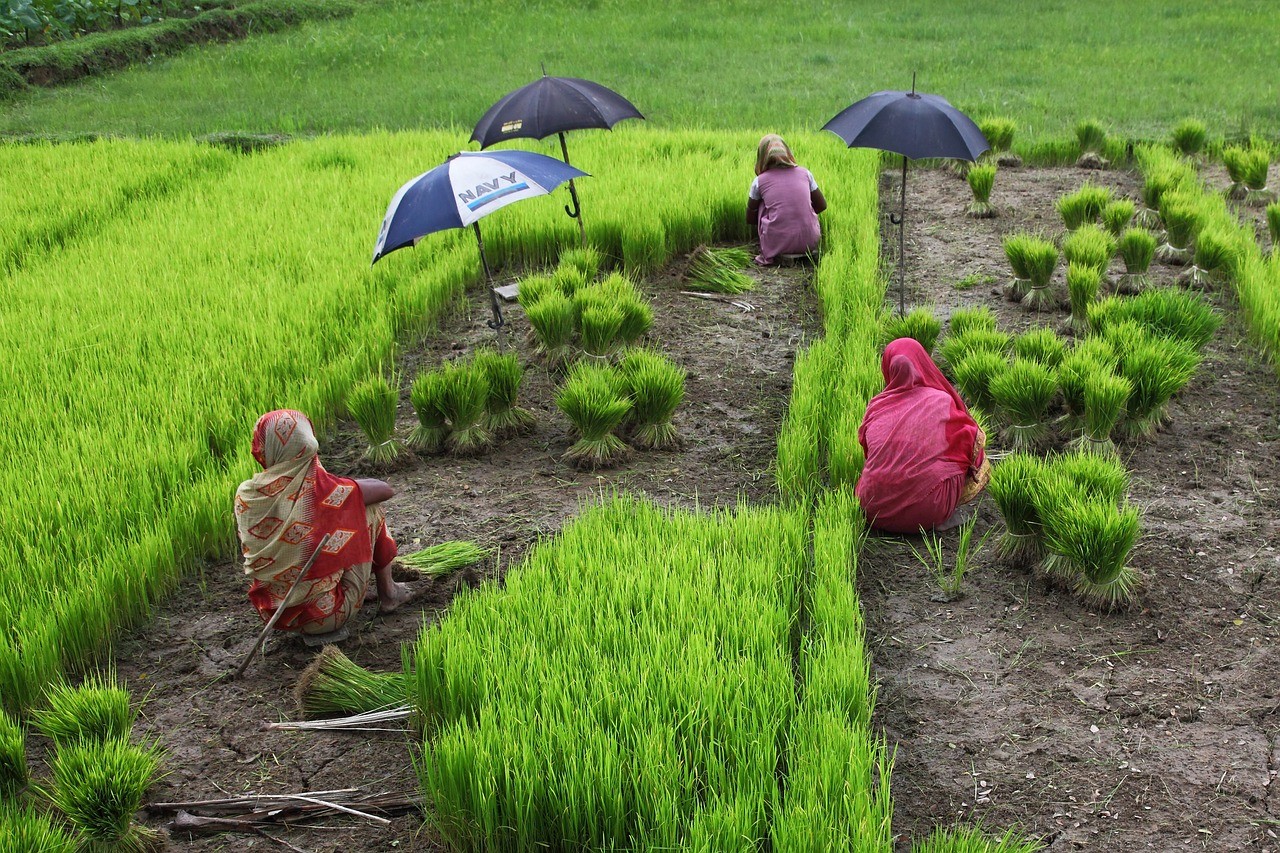
    women in rice fields
    Women working in rice fields ©pixabay

    Over the years, however, the field has been tainted by reports of corruption and mismanagement. Criticism has focused on the fact that loans are frequently issued to the poor with the sole purpose of reaping profits, thus overlooking the necessary supplementary steps. Does the borrower have a plan for increasing income generation with the help of the loan? Do they have the necessary qualities/resources for said business plan? Is the money in actuality utilised in income generating projects or elsewhere? Often borrowers, who are ill-educated about the various facets of microcredit loans, make use of the newly acquired capital to purchase goods, pay school fees, etc. With no increment in revenues, they inevitably enter into a vicious cycle of debt, and are forced to undertake another loan in order to repay the previous one. MFI collection agents and their coercion tactics have also been listed as a reason for an increase in suicides among borrowers.

    In contrast, Gonoshasthaya Kendra’s seasonal loans, which require the borrowers to start making repayments after the harvest, seem more logical. Nonetheless, researchers have pointed out that although microfinance might not have a transformative effect on the lives of people, it does have a positive impact. For one, increasing reliability of and access to credit leads to an increased sense of agency and freedom in one’s life.

    Pioneering Healthcare Initiatives

    From facilitating the local manufacture of drugs to offering affordable health insurance to poorer sections of society, Bangladesh has made extraordinary advancements in the public health sector.

    Set up in 1972, Gonoshasthaya Kendra (GK) was the first health centre in newly independent Bangladesh. It was established by Dr Zafrullah Chowdhury with the aim of making basic healthcare accessible to the rural population. Dr Chowdhury was also instrumental in the conceptualisation of the breakthrough National Drug Policy of 1982, which ensured the safety, availability and affordability of essential drugs. GK’s services have since expanded beyond affordable primary healthcare to include work education, nutrition, agricultural cooperatives, disaster management, rehabilitation and women’s empowerment. Hygiene and sanitation in many of GK’s wards has been a persistent issue however, and poses high threats of nosocomial infections.

    Routine checkup at a village health camp in Savar ©YamunaMatheswaran

    The International Centre for Diarrhoeal Disease Research, Bangladesh (icddr,b) originated in 1960 as the Cholera Research Laboratory in the sub-district of Matlab and was officially named icddr,b in 1978. Primarily a research institute, it has been credited with playing a key role in the discovery of oral rehydration therapy (ORS) to combat cholera and diarrhoea, the latter being a leading cause of infant mortality. The institute also focuses on neonatal care, treatments for tuberculosis, malaria and HIV/AIDS, and carries out meticulous demographic surveillance. At the time working on rotavirus vaccine trials, icddr,b’s clinical studies have since contributed to the development of affordable rotavirus vaccines. The institute relies on the funding it receives from several donors, since government expenditure on healthcare (as percentage of total GDP and budget) has reduced to a point where it is the lowest among 21 Asian countries, according to a 2018 United Nations survey.

    Cleanliness and technological resources of icddr,b’s hospital in Dhaka appeared to be far better than that of the GK hospital in Savar. However, doctors at icddr,b were quick to commend GK on its effective performance. It’s a matter of concern for GK, though, that a number of its students that graduate from its university, Gono Bishwabidyalay, choose to work for other institutions/hospitals, either for economic reasons or to pursue further specialization or be able to contribute to the research arena, leading to a shortage of doctors.

    The Façade of the Fashion Industry

    Bangladesh is the world’s second largest exporter of readymade apparel, second only to China. Garments constitute 80% of the nation’s earnings from exports, and in 2015, Bangladesh exported clothing worth over $26 billion, mainly to Europe and the United States.

    The garment industry has revolutionised Bangladesh’s economy and significantly impacted its society. A large majority of its workers are female; increased economic freedom has led to women bearing fewer children, thus contributing to declining fertility rates and tackling the dilemma of overpopulation. From the looks of it, it seemed like a win-win situation: the garment industry employed numerous people in developing countries, increased foreign investment and was responsible for an increase in the annual GDP growth rate. International brands now paid a fraction of the production costs that they used to, while oblivious buyers continued shopping at Zara, Forever 21, Russell Europe and Walmart, unaware that they were paying starkly different prices for clothes that had all been manufactured under the roof of the same factory.

    garment industry
    A garment factory in Bangladesh ©YamunaMatheswaran

    But the entire world got a reality check with the tragic Rana Plaza building collapse in 2013, which claimed 1,134 lives and was termed a “mass industrial homicide”. But long before that horrifying incident, workers had already been calling for liveable wages and safer work environments, and other deadly incidents had led to periodic loss of lives.

    On 12 December 2010, on our way to the airport, we drove past one of Bangladesh’s export processing zones and caught a glimpse of what appeared to be a peaceful protest against delays in the implementation of a wage hike. We later came to learn that the protest had turned violent, claiming at least three lives and leaving dozens of people injured.

    The factory we visited at the time, Knit Asia Ltd., boasted good working conditions and facilities including a free childcare centre and regular fire drills. It was one of Bangladesh’s leading garment manufacturers, and also owned the largest biological effluent treatment plant in the country.  However, that is more the exception than the norm.

    In 2010, Bangladesh’s garment workers received the lowest wages in the world – as little as $45 per month. That amounted to a measly $0.25 an hour, when compared to the hourly wages of $0.48 and $0.57 earned by workers in China and India at the time, respectively. From what I garnered, it cost Russell Europe $3 to manufacture a polo shirt in 2010, which was then sold for approximately $7.

    The profit made from the sale of a single piece of the polo shirt exceeded the factory worker’s daily wage.

    In 2019, minimum wage for garment workers in Bangladesh is approximately $95 (or 8,000Tk) a month. It was not enough to make a decent living then, and it still isn’t today, and workers are still fighting to be paid a living wage. Since consumer demand dictates how the garment industry functions, we as buyers have a responsibility to utilise this power to generate awareness and take a stand against inhumane practices by choosing ethical brands over fast fashion.

    The Role of Women in Development

    “Bangladesh shows what happens if you take women seriously as agents of development. It not only halved the rate of fertility within a generation, but also increased women’s influence within their own households. For the first time, wives controlled the size of families.” – Out of the Basket, The Economist (3 Nov 2012)

    women in sarees
    A village microfinance meeting ©YamunaMatheswaran

    The role of women in mainstream Bangladeshi society is a contradiction of sorts. Women are the principal participants in the microfinance sector, a majority of the paramedics that work in villages are female, and they constitute 80% of the workers in garment factories. Nearly every institution that we came into contact with – BRAC, GK, icddr,b, Proshika – had a project that focussed on empowering rural women. However, like in other countries rooted in patriarchy, sexual harassment is rampant, female enrolment rate in universities is low, and women do not enjoy the same freedom and social stature as men.

    Regardless, the empowerment of women is crucial to development. It has been demonstrated that women are more likely than men to spend their incomes/loans on the welfare of the entire family as opposed to squandering it on nonessential goods. Increasing women’s access to education and economic security also results in reduced birth rates, which ultimately alleviates myriad issues associated with overpopulation.

    To Harbour a Dream

    Upon the conclusion of our study tour, what stood out to me most was the hospitality of the people who went out of their way to ensure that we were comfortable and well-fed at all times, with plenty of tea and biscuits between meals. To this day, I remember my experience of travelling around Bangladesh fondly. The lessons that it has taught me in the field of development – about what works as well as what doesn’t – remain invaluable. Considering the number of NGOs that are at work in Bangladesh – reportedly over 2,500 – I wonder if collaboration might render them more effective.

    En route ©YamunaMatheswaran

    Nevertheless, this land that has been twice occupied and weathered innumerable floods and famines is a prime example of what locally pioneered methods of just and sustainable development can achieve.

    Working with iDE during the last few days of our tour provided the most tangible example of how something as simple and affordable as a treadle pump can truly empower families. How I’d love to hear that the bottle gourd-growing couple eventually realized their dream of travelling abroad! But the essential part is the fact that one is prepared to harbour a dream.

    Yamuna Matheswaran is a freelance writer, artist, and technical editor at TPF. She has a Master’s degree in International Studies from the University of Denver and is currently based in New Delhi.

  • Will Venezuelan Parliamentary Elections End the Deadlock?

    Will Venezuelan Parliamentary Elections End the Deadlock?

    Andrei Korobkov                                                                                   March 05, 2019/Analysis

    The crisis in Venezuela grows more complex with each passing day. At first, President Nicolas Maduro declared that he was willing to consider the possibility of early parliamentary elections. But it is clear that this proposal is absolutely unacceptable for the opposition, which already wields a majority in the legislature and has the US firmly behind it. The opposition is urging the President to resign and takes a dim view of an early presidential election, no matter how rapidly it can be organized. The “interim president” appointed by parliament, Juan Guaido, is counting on the West’s financial and political support. He is feeling increasingly confident now that the US has frozen Venezuela’s government bank accounts and announced that the pretender president would be given control of them. This means that the government will immediately lose $7 billion deposited in US banks and another $11 billion in expected revenues from 2019 oil sales. Given that, Guaido, dizzy as he is with what he sees as his success, is unlikely to be willing to agree to serious talks or compromises, although he can suggest holding simultaneous presidential and parliamentary elections. Maduro, for his part, is not going to surrender and has already issued a warning that the growing confrontation and the mounting Western interference in his country’s internal affairs could lead to a civil war.

    There are a number of reasons why the current crisis in Venezuela is of such great interest and may have far-reaching political consequences. The US has always regarded Latin America as its backyard where it is free to lay down the law and punish disobedient. The 1823 Monroe Doctrine, in effect, introduced a “limited sovereignty” model that became increasingly pertinent during the Cold War.

     The United States has made huge investments in Latin American economies; Latin elites have been educated in the US for generations; the Americans have trained Latin militaries and supplied them with arms for centuries. The region is highly dependent on the US technologically. Besides, Venezuela is one of America’s main oil suppliers. The Americans are exasperated not only by the demonstrative independence of Venezuelan foreign policy but also by the 20 years of leftist reforms under the Chavez and Maduro governments. The same is true of the increasingly noticeable political, economic and military presence of Russia and China in the country. Of no small importance, too, is Venezuela’s good relationship with Cuba.After the Cold War, the Americans initially decided to at least formally follow the rules and refrain from toppling democratically elected governments in the region. Instead they used other, more flexible methods to influence the situation in individual Latin American countries. The exceptions were the abortive coup attempts in Honduras in 2009 and Venezuela (against Chavez) in 2002. From this point of view, the attempt to displace Maduro is relatively out of step with the new US policy in the region and may signal yet another revision of regional strategy.

    One more specific feature of the current situation in Venezuela is that the US line consists of an eclectic array of approaches that the US has used in a number of Latin American countries over the last 60 years. The contras’ failed landing in the Bay of Pigs in 1961 is one notorious example. A more obscure aspect of the story is how the CIA thought about the operation. After all, no one expected that the team in question would be able to launch a large-scale operation and fight Fidel Castro’s government. The plan was for them to dig in on a limited territory, proclaim an alternative government that would be immediately recognized by Washington, and request US troops be sent in to “support the legitimate government.” The gambit was a scandalous failure, but the “alternative government” idea is still alive and being used in Caracas in the form of a constitutional coup.

    Another precedent was set in Chile in 1973. Older people remember well the TV footage of well-fed and clearly not overworked housewives banging pots and pans at protests in Santiago and shouting that they were starving. The same tactics are being used today. The US has introduced economic sanctions and is intentionally destabilizing the economic situation in a country that has already been weakened by the government’s experiments with “Bolivarian socialism” to accuse Maduro of being an ineffective leader and to arouse popular disaffection. (But even today, Maduro’s opponents are failing to turn the lower strata that form the majority in that developing country against him: these people remember that it was Chavez and Maduro after him who gave them access to education and healthcare and enabled them to enjoy far better living standards).

    A third model still in the works is based on the 1989 Panama operation. If the first two options don’t work, outbursts of violence will be provoked through assassination attempts against opposition leaders or assaults on US nationals. This would lay the groundwork for a US invasion under the pretext of restoring law and order and guaranteeing the safety of US citizens.

    The first two models have been tested in Venezuela, without much success. The question is whether the third option will be attempted. This also raises two more interesting questions. Latin American coups usually become possible if military leaders turn on the government, but in Venezuela they continue to support Maduro. Moreover, it was the military who saved Hugo Chavez in 2002 and thwarted the coup masterminded from outside the country. The question is whether this support endures and whether the US succeeds in offering military leaders enough “carrots” for them to change their outlook.

    The second question concerns the US president. Donald Trump took over two years ago with his coterie of right-wing political reformers determined to fundamentally alter both America’s domestic and foreign policy. In the foreign policy arena, this new approach was based on renouncing interventionism, shifting emphasis towards domestic growth, acknowledging that the center of the world system was migrating from the northern Atlantic Ocean to the Pacific, and recognizing China as the major geopolitical threat to the United States. The last point implies that the US must create a new system aimed at containing China, which, in turn, requires better relations with Russia as a counterweight to China, the start of tariff wars against the PRC, and the destabilization of the WTO and the free trade system as a whole, which allegedly are more beneficial for China than for the United States. But, seen by the US elite (and not without reason) as a systemic threat, Trump is under continuous attack and unable to implement many of these ideas (with the greatest obstacles put in the way of his attempts to improve US-Russia relations). Gradually, the majority of the right-wing reformers left his administration (the biggest loss was the departure of Steve Bannon and Sebastian Gorka) to be replaced by traditional neocons and interventionists like John Bolton, the current national security advisor.

    Along with the loss of Republican control of the House of Representatives in November 2018, the approach of the presidential primaries, growing stock market volatility, relatively low presidential approval ratings, and unending attacks on Trump from the political establishment and the “elite” press, this is strengthening the hand of those who are urging the president to stage a “small victorious war” of his own. After all, Trump is still the only US president in two generations who has not yet launched a single new military intervention. Meanwhile, Trump himself is between a rock and a hard place, as he is being pressured by both the traditional US right, who dream of the US flexing its military might and toppling the disobedient regime, and the Democrats, who hope to force the president to break his election promises, mire him in a protracted military conflict and thus discredit and politically weaken him ahead of his re-election campaign.

    The current situation has yet another, broader international dimension. The international community is divided over Venezuela. The United States is supported by Canada, Brazil, and many European and Latin American countries. But that is a far cry from unity. Many right-wing governments in Europe, including Italy, whose government is very close to Trump ideologically, have been skeptical of attempts to give Venezuela away to a different suitor.

    An even more important factor is that the new leftist president of Mexico, Andres Manuel Lopez Obrador, is well aware of the possibility that Mexico will be the next target, if a constitutional coup is allowed to happen in Venezuela. Moreover, opposing Trump is a win-win for any Mexican politician amid the growing US-Mexican friction over immigration, tariffs, and much else. President Erdogan in Turkey is thinking along the same lines.

    Most important, of course, is the stance taken by Russia and China. Both have actively cooperated with Venezuela in recent years, with Chinese investment in the Venezuelan economy exceeding Russia’s by almost 400 percent. Nevertheless, China is very cautious about its moves, as it is currently under pressure from the US and unwilling to furnish Trump with another pretext to accuse it of growing expansionism.

    This is why the initiative in supporting President Maduro will most likely remain in Russian hands. Though inferior to China in terms of investment, Russia is the main arms supplier to Venezuela (with sales totaling $12 billion). Russia has also invested heavily in Venezuela’s oil industry and a number of other sectors.Thus, the current situation includes many unknowns linked to actors’ moves both in Venezuela and the United States, as well as Russia, China and a number of other countries. As such, both the course of the conflict and its outcome can be of global importance, influencing, among other things, the prospect of whether the US reverts to its traditional imperial interventionism or opts for a somewhat different policy.

    The course of this crisis and its outcome may also have serious impact on the domestic political situation in the United States. The potential for a “controlled crisis” looms large in this situation, because the chances of a political provocation aimed at drawing the Trump administration into a military conflict are sufficiently high. Therefore, the dynamics of the Venezuelan drama may decide the fate of both Maduro and Trump himself in the long run.

    Dr Andrei Korobkov is Professor of Political Science at the Middle Tennessee State University, and is Non-Resident Visiting Distinguished Fellow at TPF. This article is the English translation of the original published earlier in Valdai Discussion Club.

    The views expressed are the author’s own.

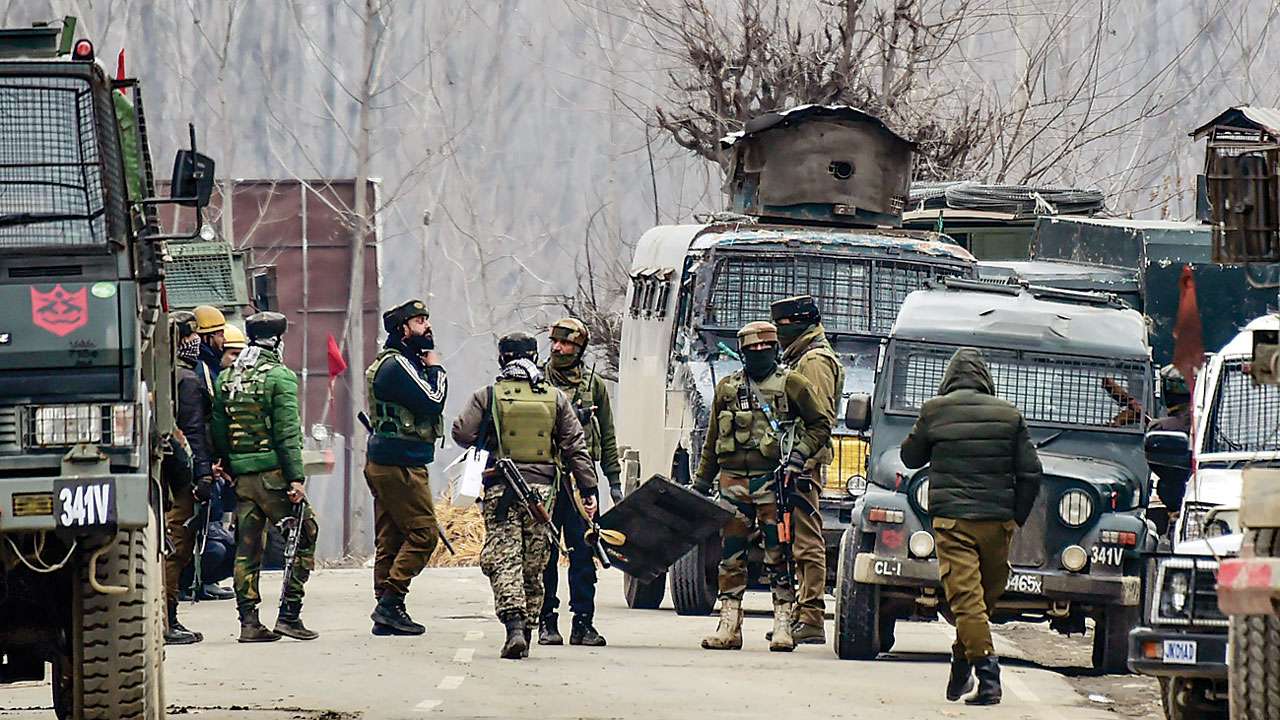
  • Reaping the Whirlwind: Pulwama and After

    Reaping the Whirlwind: Pulwama and After

    Deepak Sinha                                                                                                         01 Mar 2019

    It was the military disaster of 1971 that forced the Pakistani establishment, the military which runs the country for all practical purposes, to face up to the fact that it could never win a conventional war against India. If it was to avenge its humiliation and cut India down to size, it had little choice but to fight through proxies, bleed India through a thousand cuts.

                This idea must surely have germinated from its successful employment of Islamic militants, the forerunners of the Taliban, used to oppose the rule of the Marxist People’s Democratic Party of Afghanistan (PDPA) that had deposed President Mohammed Daud Khan in what came to be known as the Saur or April Revolution of 1978, It was this Pakistani fomented insurgency which finally led to the Soviet intervention and occupation of Afghanistan in Dec 1979. Incidentally, while conventional wisdom would have us believe that it was the CIA that came up with the idea of using militants to fight the Soviets, facts show that they came to the party much later and only added their considerable resources to the techniques perfected by Pakistan’s Inter-Services Intelligence in the use of irregulars for its own ends.

                Thus from the early Eighties Pakistan commenced its support for secessionist elements within India that were involved in fighting against the State, firstly the Khalistan Movement and subsequently, with greater success, in Jammu and Kashmir. It clearly had advantages as there was credible deniability, economy of effort with the dirty work being done by proxies keeping Indian Security Forces tied down and finally, the most important of all, creating fear and anxiety within the general population that impacted every aspect of our democratic way of life.

                There is of course one major disadvantage of using proxies, they tend to have a mind of their own and often times respond inappropriately and at cross purposes to what its mentors may be wishing to achieve. The Pulwama suicide attack falls in this category. There have been numerous statements over the past four years that have made clear that Pakistan prefers to deal with Indian Governments run by the more “liberal and secular” parties compared to having to deal with the more conservative, Hindutva driven BJP. With elections around the corner and with the BJP facing the very real likelihood of a serious decline, if the recent state elections were any indication, it would have been in Pakistan’s best interest to maintain a low profile.

                Masood Azhar, the Jaish- e- Mohammed supremo, obviously had a different view. Not only did his organization carry out the suicide attack that led to the death of 45 policemen, but also went on to claim credit for the action. Thus, in one thoughtless act he not only destroyed the Pakistan Government’s attempts at deniability, but he also made Imran Khan’s call for India to provide credible evidence infructuous. Most importantly, the timing of the devastating attack left the Modi Government with little choice but to respond overtly and with speed, if it was to still retain any hope of doing well at the hustings. There was also the possibility that if India responded in an effective manner to the outrage, the Governments stock would go up rapidly and that would enhance Mr. Modi’s reputation and chances of return to power, just as the earlier cross- border strike helped the BJP in the Uttar Pradesh elections. This could hardly have been to Pakistan’s advantage and in the event it was facilitated by the Army, then General Bajwa has certainly made a serious miscalculation.

                Regardless of the number of casualties that the Indian Air Force’s attack on terror camps deep inside Pakistan may have caused, the very fact that the Indian Government displayed the intent to take on terrorists inside Pakistan has clearly changed the narrative prevalent for the past four decades. It has also shown up Pakistan’s repeated threats of a nuclear riposte as sheer hyperbole and bluster. More importantly the initiative has finally shifted in India’s favour along with world opinion which has had enough of Pakistan’s duplicitous behaviour. Moreover, any escalation above a perfunctory retaliation, which was to be expected to assuage domestic opinion, by Pakistan, would destroy the fig leaf of deniability it has used over the years. Most importantly, it would force their military into a direct confrontation, something that the proxy war waged by them over the years allowed them to avoid.

                In this context one can only hope better sense will prevail and we will be able to avoid a serious escalation of the conflict which can hardly help either side given the huge challenges that we face in lifting vast swathes of our population out of the twin evils of poverty and illiteracy.  However, it must be emphasized that true progress will only occur as and when Pakistan starts to wind up the Jihad factory it has built over these years. In any case the Indian cross- border raid cannot be a one- off affair and we must be willing to do all that it takes to neutralize the Jihadi network and its vast army of financiers, mangers and facilitators.

                Finally, while all our attention may be taken in dealing with the issue at hand, the fact as to what led to the Pulwama attack must not be lost sight off. For this serious lapse on the part of our intelligence services, it is imperative that heads must roll. There have also been clear indications that despite increasing numbers of militants being neutralized in the Valley the Army and other Security Forces were being increasingly marginalized, especially in South Kashmir, because of popular discontent. They had consequently lost their ability to dominate the countryside, thereby losing out on intelligence. These aspects continued to be ignored by the Central Government and the military hierarchy. Little thought was given to the necessity for reviewing either counter insurgency strategies or tactical procedures and the leadership continued to be swayed by tactical successes with little attempt to resolve the growing disillusionment and radicalization within the population, especially the youth. This must certainly change.


    The writer, a military veteran is a Consultant with the Observer Research Foundation, New Delhi and Senior Visiting Fellow with The Peninsula Foundation, Chennai.

    This article was also published in the Pioneer https://www.dailypioneer.com/2019/columnists/stifle-the-jihadi-network.html. Opinions expressed in the article are those of the author alone.

  • Looking Beyond the Rafale Imbroglio

    Looking Beyond the Rafale Imbroglio

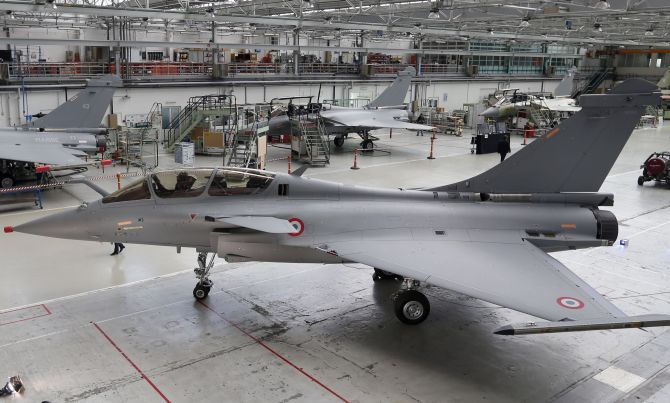
    The tenor of the debate, especially in the election year, can hardly be expected to be moderate or mature. While wild assertions made by the politicians in hope of swaying the electorate is to be expected and accepted, there is also a vital need for politicians to ensure that matters pertaining to National Security are kept out of the ambit of politics. Just as Georges Clemenceau, French Prime Minister during the Great War, commented that “War is too serious a matter to entrust to military men”, so too is the case with entrusting national security to just politicians. But politicians being politicians care little for such niceties, which explains why allegations of wrongdoing are flying so thick and fast in the ongoing Rafale procurement imbroglio, who, unfortunately, have been joined by respected academics and researchers, who should know better.

    Attempts to garner the limelight and the few minutes of fame that goes with it is understandable in the case of politicians, but for academics to do so by drawing conclusions based on speculation that passes for facts and little else, seems to be rather hasty, if not downright fallacious and unprofessional.  A respected academic, for example, has concluded that the decision to procure just 36 jets instead of the original 126 with the attendant increase in unit cost shows “extraordinary ineptitude can only be explained by the circumvention of laid down procedures.” He further  goes on to equate the manner in which this decision was made to that of demonetization, berates the Government for being “parsimonious and incompetent” and suggests that their action was “worse than a crime—it was a blunder.”

    He may well be proved right in his conclusions subsequently, but the truth is that it is one thing to question the Governments’ motivation or influence in the selection of the aircraft or the offset partners, but quite another to question the decisions it takes, however much we may disagree with them. For one, Mr. Modi was elected by a substantial majority to do just that, since that is what is expected of a leader. Moreover, we are wholly unaware as to circumstances that led to the Government to take the decision that it did, and therefore to question his decisions clearly smacks of arrogance, if not an ulterior motive. It is all very well to rant about the ineptitude and incompetence of this Government and its adverse impact on defence modernization, but what then are we to conclude at the previous Governments’ inability to push through the earlier deal in the seven years that it had to do so? Surely ineptitude or Incompetence may be too mild a term in their case.

    There is no gainsaying the fact that defence procurement and corruption have had a symbiotic relationship ever since Independence and our first procurement scandal, the infamous “Jeep Scandal” of 1948. Politicians have always seen defence procurement as a lucrative source of funds and as long as our political funding regulations remain opaque, nothing is going to change. Therefore, if this Government has actually resorted to underhand means as alleged, despite it being a government to government deal, then they have only trod on the well-beaten path of their illustrious predecessors. Thus, if precedent is to be our guide, then all the brouhaha on the issue will only result in a setback for the Air Force while politicians and their minions involved getting away, as we saw in the Bofors case.

    If it is accountability that we are interested in, then we need to look beyond this specific issue of procurement and ask ourselves as to why the Air Force finds itself in such desperate straits today, with regard to its combat strength. The fact that its combat strength has fallen from its authorized forty-two squadrons to the present thirty plus, over the past two decades, was neither unanticipated nor unexpected.  Like all machines, aircraft have a quantifiable life span, which while possible to extend with mid-life upgrades, will at a point in time require replacement by the next generation, if the Air Force is to be able to match and overcome the adversary’s capabilities. This does not call for either vision or foresight, just common sense and a practical understanding of the facts, which somehow the Government of India with its vast resources was unable to do. Surely someone must be held accountable for this negligence because not only does it put our national security at risk but endangers pilots who are expected to make do with shoddy outdated aircraft.

    While the Air Force hierarchy must carry some of the blame, not least for lack of moral fibre for its inability to stand up for its rights, governments over the years, especially the Ministry of Defence and Hindustan Aeronautics Limited (HAL) that it controls, have much to answer for. For the most part, much of our current problems can be traced to the utter failure of HAL to produce the hugely over-budget, inordinately delayed and ostensibly indigenous Light Combat Aircraft, the Tejas. In this context, the existing perceptions within the Air Force that quality control in HAL is all but non- existent have been borne out by the recent crash of the Mirage 2000 aircraft undergoing upgradation. Initial reports doing the rounds suggest that the nose wheel broke while it was taking off resulting in the tragic death of two test pilots, the best of the best.  It also brings to mind a similar case when three paratroopers slithering down from a HAL manufactured Advanced Light Helicopter at the Army Day Parade in January 2018 fell and were grievously injured because the “strong point” to which their rope was tied broke and separated from the aircraft’s body. The question that needs answering is not just how many such cases have happened in the past, but also how many in HAL have been held accountable for such shoddy work?

    This also explains to a large extent the previous governments’ inability to successfully close the deal for the 126 aircraft. It was reportedly blocked by the unwillingness of the Air Force hierarchy to accept aircraft manufactured by HAL without certification by Dassault Aviation, the manufacturers of the Rafale, something they refused to do.  That they would prefer to work with an untried and untested offset partner, allegedly thrust on them, rather than with HAL speaks volumes about what they think of the capabilities of this Defence PSU!

    Therefore, politicians and academics critical of this governments’ decision to keep HAL out of the loop in this case, especially their accusation that by doing so we have lost out on technology transfer, are either being deliberately obtuse or completely out of touch with reality. In this context, Mr. Rahul Gandhi has been particularly vocal, even to the extent of meeting workers of HAL. It would be wonderful if he took the initiative to volunteer to fly in one of these aircraft or take time off to interact with the pilots who do. Maybe, just maybe, he would have a change of heart and leave national security issues out of the realm of politics.  Finally, our leaders would do well to remember that even after these aircraft are inducted into service, they will continue to be confronted by that gargantuan problem, where will the other hundred-odd aircraft desperately need come from? After all what is sauce for the goose is also sauce for the gander!


    Brigadier Deepak Sinha (retd), an Army veteran, is a Visiting Senior Fellow at the TPF and is also a Consultant at ORF, New Delhi.

    This article was published earlier in the Times of India. The views expressed are the author’s own. 

  • The state of Bihar!?

    The state of Bihar!?

    The Prime Minister in the run up to the Bihar assembly elections announced a Rs.50,000 crores package for the state. Just as he announced a Rs.100,000 crores package for Jammu and Kashmir that July. Bihar has a population of over 103 million and J&K has a population of 12.5 million.

    This is not a new story. Bihar has been systematically exploited by denying it its rightful and deserved share of central funds from the First Plan.

    That Bihar is India’s poorest and most backward state is undeniable. The facts speak for themselves. But what makes its situation truly unique is that Bihar is the only state in India where the incidence of poverty is uniformly at the highest level (46-70%) in all the sub-regions. The annual real per capita income of Bihar of Rs. 3650 is about a third of the national average of Rs.11, 625. Bihar is also the only Indian state where the majority of the population – 52.47% – is illiterate.

    But Bihar has its bright spots also. Its infant mortality rate is 62 per 1000, which is below the national average of 66 per 1000. But what is interesting is that it is better than not just states like UP (83) and Orissa (91), but better than even states like Andhra Pradesh and Haryana (both 66).

    Even in terms of life expectancy, the average Bihari male lives a year longer (63.6 yrs.) than the average Indian male (62.4 yrs) and the state’s performance in increasing life spans has been better than most during the past three years.

    Bihar has 7.04 mn. hectares under agriculture and its yield of 1679 kgs. per hectare, while less than the national average of 1739 kgs. per hectare is better than that of six other states, which include some big agricultural states like Karnataka and Maharashtra.

    Despite this, in overall socio-economic terms, Bihar is quite clearly in a terrible shape.

    As opposed to an All-India per capita developmental expenditure during the last three years of Rs.7935.00, Bihar’s is less than half at Rs.3633.00. While development expenditure depends on a bunch of factors including a state’s contribution to the national exchequer, no logic can explain away the per capita Tenth Plan size, which at Rs. 2533.80 is less than a third of that of states like Gujarat (Rs.9289.10), Karnataka (Rs.8260.00) and Punjab (Rs.7681.20).

    Simple but sound economic logic tells us that when a region is falling behind, not just behind but well behind, it calls for a greater degree of investment in its progress and development. It is analogous to giving a weak or sick child in the family better nutrition and greater attention. Only in the animal kingdom do we see survival of the fittest with the weak and infirm neglected, deprived and even killed.

    But instead of this we see that Bihar is being systematically denied, let alone the additional assistance its economic and social condition deserves, but also what is its rightful due.

    From the pitiful per capita investment in Bihar, it is obvious that the Central Government has been systematically starving Bihar out of funds. Quite obviously Bihar has also paid the price for being politically out of sync with the central government for long periods. The last one was for a dozen years from 1992 to 2004. For the last one year Bihar had a government in New Delhi that was supposed to be favorably disposed to the regime in Patna.

    Quite clearly states that are in political sync do much better in terms of central assistance. Lets take a look at how Andhra Pradesh, a state that has stayed largely in political sync with New Delhi, has fared in the past few years. In terms of grants from the Central Government (2000 to 2005), Bihar fared poorly receiving only Rs. 10833.00 crores while AP got Rs. 15542.00 crores.

    Bihar has also been neglected as far as net loans from the center are concerned. It received just Rs.2849.60 as against Rs.6902.20 received by AP from 2000-02. It’s only in terms of per capita share of central taxes do we see Bihar getting its due. This gross neglect by the central government is reflected in the low per capita central assistance (additional assistance, grants and net loans from the center) received by Bihar in 2001. While AP received Rs.625.60 per capita, Bihar got a paltry Rs.276.70.

    The results of the economic strangulation of Bihar can be seen in the abysmally low investments possible in the state government’s four major development thrusts. Bihar’s per capita spending on Roads is Rs.44.60, which is just 38% of the national average, which is Rs.117.80. Similarly for Irrigation and Flood Control Bihar spends just Rs.104.40 on a per capita basis as opposed to the national average of Rs.199.20.

    Now the question of how much did Bihar “forego”? If Bihar got just the All-India per capita average, it would have got Rs. 48,216.66 crores for the 10th Five Year Plan instead of the Rs.21,000.00 crores it has been allocated.

    This trend was established in the very first five-year plan and the cumulative shortfall now would be in excess of Rs. 80,000.00 crores. That’s a huge handicap now to surmount. Then it would have got Rs. 44,830 crores as credit from banks instead of the Rs. 5635.76 crores it actually got, if it were to get the benefit of the prevalent national credit/deposit ratio.

    Similarly Bihar received a pittance from the financial institutions, a mere Rs.551.60 per capita, as opposed to the national average of Rs.4828.80 per capita. This could presumably be explained away by the fact that Bihar now witnesses hardly any industrial activity. But no excuses can be made for the low investment by NABARD. On a cumulative per capita basis (2000 to 2002) Bihar received just Rs.119.00 from NABARD as against Rs.164.80 by AP and Rs.306.30 by Punjab. It can be nobody’s argument that there is no farming in Bihar.

    If the financial institutions were to invest in Bihar at the national per capita average, the state would have got Rs.40, 020.51 crores as investment instead of just Rs.4571.59 crores that it actually received.

    Quite clearly Bihar is not only being denied its due share, but there is a flight of capital from Bihar, India’s poorest and most backward state. This is a cruel paradox indeed. The cycle then becomes vicious. This capital finances economic activity in other regions, leading to a higher cycle of taxation and consequent injection of greater central government assistance there. If one used harsher language one can even say that Bihar is being systematically exploited, and destroyed by denying it its rightful share of central funds.

    To even make a dent on the abysmal state that Bihar is now in, Bihar will need at least twice what it gets from the Centre, as of yesterday.


    Mohan Guruswamy is a prolific commentator on politics, economics, development and governance. He is a trustee of TPF. The views expressed are the author’s own.

  • Poll Trail in India’s Backyard

    Poll Trail in India’s Backyard

    This article was published earlier in ‘The Tribune’.

    A DEVELOPMENT that has received scant notice in global politics is the democratisation of South Asia, where elected governments rule all the regional countries. An alliance of Maoists and the Communist Party (UML) was voted to power in Nepal in November-December 2017. Scheduled elections were held this year in Bhutan, where the enlightened monarchy voluntarily ceded power to elected governments. Pakistan saw a change in government recently, when the Imran Khan-led Tehreeq-e-Insaf party was voted to power, though there is evidence that the victory was ‘facilitated’ by the army. The Maldives saw a welcome change in government, with opposition parties joining hands to nominate the soft-spoken Ibrahim Mohammed Solih, to oust the authoritarian and anti-India government of President Abdullah Yameen.

    Bangladesh is now headed for general election on December 30. This will be followed by the General Election in India next year. Presidential elections are also scheduled in Afghanistan next year. Interestingly, it is President Ghani who is determined to hold these elections next year. The Trump administration, however, seems keen to thrust a government with Taliban participation on the Afghan people, to facilitate the expeditious withdrawal of its troops from Afghanistan, instead of backing a constitutionally mandated election.

    After going through the traumatic experience of having its elected government arbitrarily dismissed and its legislature dissolved by President Sirisena, Sri Lanka has seen its elected government and parliament being restored, with the judiciary asserting its constitutional authority. Presidential and parliamentary elections in Sri Lanka are scheduled in 2020. But given the continuing personal and policy differences between President Sirisena and PM Wickremesinghe, the island nation appears headed for uncertain times politically and economically in coming months.

    Developments in South Asia will also be seriously affected by what transpires in the elections in Bangladesh, the results of which will have a bearing on the security of India’s Northeast. The results could shape the contours of Pakistan-sponsored terrorism against India, by groups operating from Bangladesh. India has seen a vast improvement in relations with Bangladesh during the past decade, because of the cooperation and understanding of the Awami League government headed by Sheikh Hasina.

    The last decade saw the resolution of the long-pending problem of demarcation of India’s borders with Bangladesh and exchange of enclaves, which was completed in 2016. Likewise, the demarcation of the maritime boundary with Bangladesh was completed, with a UN tribunal awarding Bangladesh 19,467 sq km of the disputed 25,602 sq km in the Bay of Bengal. Sheikh Hasina’s two terms in office in recent years have also seen a remarkable strengthening of anti-terrorism cooperation with India. This involved firm action against Indian separatist groups, which were provided a haven by Khaleda Zia and her Bangladesh National Party, with Pakistani involvement. India and Bangladesh have acted jointly against Pakistan-sponsored terrorism on their soil by measures like the decision not to participate in the SAARC Summit to be held in Islamabad.

    India’s economic cooperation with Bangladesh has increased substantially in recent years, with projects for the supply of over 3600 MW hydroelectric and thermal power by India. This has been accompanied by substantial expansion in road and rail communication links. Moreover, under Sheikh Hasina’s leadership, Bangladesh achieved an unprecedented rise in economic growth, with a threefold increase in per capita income and a reduction of people living below the poverty line, from 19 per cent to 9 per cent. Bangladesh is no longer classified as a ‘least developed country’. A booming textile industry and moves to step up growth in areas like pharmaceuticals and IT have spurred optimism that Bangladesh could soon reach a 9 per cent growth rate.

    Hasina has virtually decimated her rival Khaleda and her party. Also, the formidable Jamat-e-Islami has been banned from participating in elections. Khaleda is in jail, convicted on charges of corruption. Accusations of authoritarianism against Sheikh Hasina have, however, resulted in the forging of opposition unity. The octogenarian Dr Kamal Hossain, who played a leading role in the Bangladesh freedom struggle and became a close associate of Sheikh Mujibur Rahman, engineered this development. The opposition parties, including Khaleda’s BNP and members of the Jamat-e-Islami, have joined this alliance, labelled as the Jatiya Oikya Front (National Unity Front), to take on the Awami League. Pakistan has maintained close ties with the BNP and Jamat-e-Islami.

    Sheikh Hasina has welcomed Chinese assistance, including financing of important projects. China has committed $38 billion in loans, though Bangladesh officials have made it clear that they have no intention of walking into a debt trap, like Pakistan and Sri Lanka. But Bangladesh has welcomed Chinese efforts to find an amicable solution to the Rohingya issue. Sheikh Hasina has averred that Bangladesh will not get involved in US-China rivalries, stating: ‘Our foreign policy is very clear. We want friendly relations with everyone. What China and US are doing is between them.’ But China let the cat out of the bag about its preferences in Bangladesh, when Khaleda met President Xi in 2016 during his visit to Bangladesh. A press note by the Chinese embassy in Dhaka noted: ‘President Xi Jinping appreciated that the BNP has firmly maintained a friendly policy towards China for years.’ Despite protestations of ‘non-interference’, China has given indications of its involvement in the internal politics of Sri Lanka and the Maldives, where Chinese and Pakistani preferences have been identical. Sheikh Hasina and the Awami League are approaching the electorate with a creditable record on economic development. The challenge by a united opposition can’t, however, be ignored.

    Ambassador G Parthasarathy is a former diplomat and a prolific commentator on geopolitics. He is a trustee of TPF. The views expressed are his own.

    Note: Since the time this article was published, Bangladesh went to polls and Sheikh Hasina has won a land-slide victory. This is bound to have a very positive impact on the region, and on India-Bangladesh relations in particular – TPF research team.

  • Assess Pakistan’s Sincerity to end cross-border Terror

    Assess Pakistan’s Sincerity to end cross-border Terror

    Published earlier in ‘The New Indian Express’.

    It is unfortunate that the solemnity of events marking the 10th anniversary of the barbarous terrorist attack on Mumbai, by the Lashkar-e-Taiba (LeT) was negated, by the hype and drama surrounding Indian participation in the opening of the Sikh holy shrine in Kartarpur. The Israelis sought out and arrested, or eliminated those German Nazis responsible for the holocaust of Jews during World War II. Even those Nazi War Criminals living in countries as far off as Argentina were sought out, eliminated, or brought to justice. Those responsible for, or involved in, the Mumbai massacres of March 12, 1993 and November 26, 2008, ranging from Dawood Ibrahim to Lashkar military commander Zakiur Rehman Lakhvi, live comfortably in Pakistan.

    Imran Khan, like other Pakistani leaders, has resorted to the usual Pakistani excuses, citing absence of evidence and “lack of cooperation” by India as being responsible for their inability to prosecute the perpetrators of the Mumbai attacks. But former chief of Pakistan’s Federal Investigative Agency Tariq Khosa exposed such ploys in an article in the Dawn newspaper in 2015. He was, however, later compelled to retract. Khosa acknowledged that the Commander and Deputy Commander of the 26/11 terrorists were traced and arrested. He averred that the investigations led to the FIA obtaining detailed evidence about the import and transportation from Japan to Lahore, of the fishing trawler used by the terrorists.

    The money trails were followed and linked to an accused in Pakistan, who was arrested. A couple of foreign-based financiers were also brought to trial. The room in Karachi from which the operation was commanded and controlled was located and the communications equipment used retrieved.

    The sheer brazenness of Pakistani denials of involvement was also evident from evidence available in the trial in Chicago of two persons of Pakistani origin, David Coleman Headley (born Daood Sayed Gilani) and Tahawwur Hussain Rana. They received long prison terms and the trial proceedings reveal the extent of Pakistani involvement in the planning and execution of the 26/11 strike. The so-called ‘trial’ of Lakhvi was a farce. The then ISI chief Lt Gen Shuja Pasha periodically visited Lakhvi in jail. His wife was allowed freely to meet him and their new baby was born while Lakhvi was in jail. Lakhvi is now a free man and continues his role in the LeT.

    Every time a new ruler emerges in Pakistan, his “friends” in India issue loud calls about why we should immediately enter into a serious dialogue with the new messiah, because of the goodwill towards India that he claims he has. Imran Khan is no exception. People seem to forget that Imran, popularly known as ‘Taliban Khan’, has been elected to office, thanks to the support of the powerful army. Under international economic pressure, the army is now trying to persuade the world that it oozes goodwill for India. We should interact with the military and civilian establishment in Pakistan to first assess how sincere they are in eliminating cross-border terrorism. Imran has realistically recognised that any formal dialogue can commence only after General Elections in India in 2019.


    Ambassador G Parthasarathy is a former diplomat and a prolific commentator on Geopolitics. He is a Trustee of TPF. The views expressed are the author’s own,


  • India and China Talks: No Give, No Take

    India and China Talks: No Give, No Take

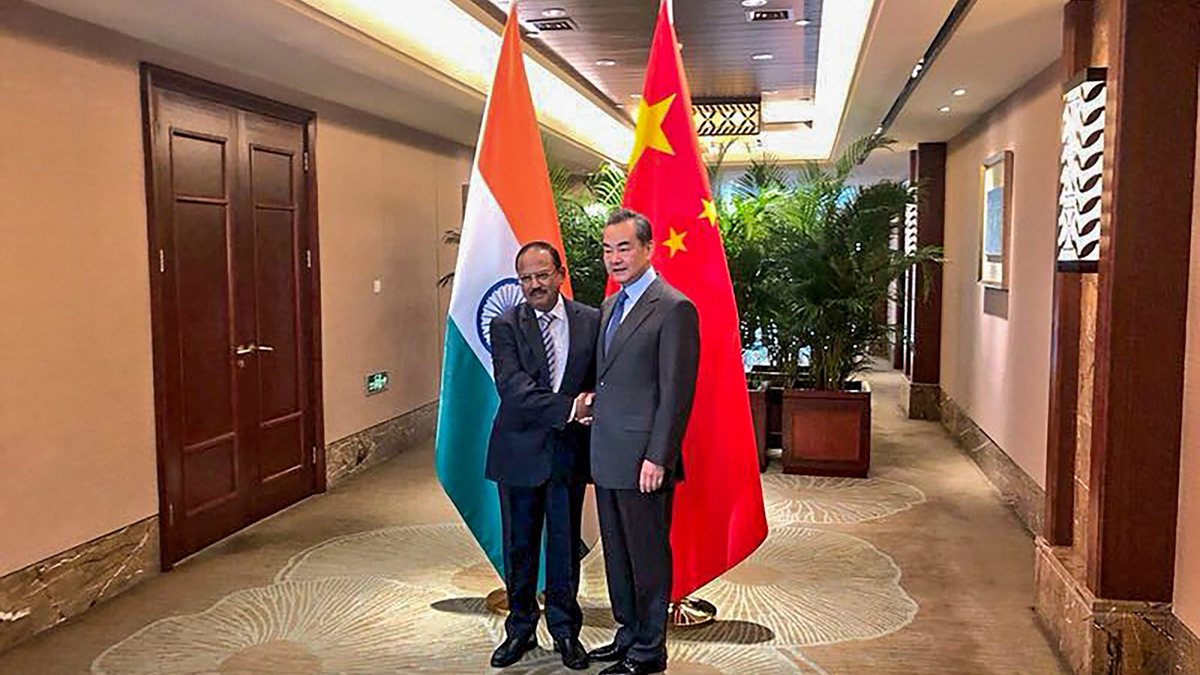
    The Indian and Chinese Special Representatives, National Security Advisor Ajit Doval and State Councillor and Foreign Minister Wang Yi, had the 21st round of talks ostensibly to discuss the “Border Issue” on November 24 at the picturesque town of Dujiangyan in Sichuan province. Though this was the first appearance of Wang Yi at these talks, there is now a monotonous regularity in this and no resolution of the vexatious border issue seems to be in sight, let alone be discussed.  Since the border issue now seems very intractable, the two representatives have broadened the scope of the talks to discuss other bilateral issues. Nevertheless, while it is clearly understood that the resolution of the border territories dispute may never be on the horizon, but at least agreeing on where the interim lines of control lie the military vigil on the borders will ease off into a less tense standstill. Sadly for us, there was a time when with a little bit of give and take this contentious and now protracted problem seemed solvable.

    In 1960 Chinese Premier Zhou Enlai suggested something akin to a status quo as a permanent solution. This was repeated in 1982 by Chairman Deng Xiaoping to India’s Ambassador in Beijing, G Parthasarathy. Once again it was offered during Rajiv Gandhi’s tenure as Prime Minister to the then Indian Ambassador AP Venkateshwaran and senior advisor to then Chinese PM Zhao Ziyang. But when Rajiv Gandhi visited Beijing in 1988, both countries decided to keep a permanent solution aside and focus on immediate “doable’s”. All along India felt that the internal political situation will not allow the government of the day the room to go with it. It hasn’t changed much, with the historical issues even less understood and inflamed public opinions prevailing on both sides.

    What is commonly referred to as the “Border Dispute” between India and China has now manifested itself into two distinct disputes. The first is the dispute over two large and separated tracts of territories. One is Aksai Chin, a virtually uninhabited high altitude desert expanse of about 37000 square kilometers. The other is what is now the Indian state of Arunachal Pradesh, a diversely populated hill region with a population of around 1.4 million people spread out over 84,000 square kilometers, which China claims as Lower Tibet.

    Aksai Chin lies between the state of Jammu and Kashmir, and China’s Xinjiang province, both regions that are also riven by separatist conflicts. Arunachal Pradesh borders Tibet, which also has a separation conflict with China. India claims that these borders were agreed upon by British India, and independent or semi-independent authorities, in Xinjiang and Tibet in the early days of the last century. China doesn’t agree with these. Both countries agree that these are legacies of history and cannot be solved in the immediate or near term and best be left to the future to resolve.

    But what causes the frequent frictions between the two is that they do not have agreed Lines of Actual Control (LAC) to separate the jurisdictions under the control of the armies of the two countries. The perceptions of the LAC differ at many places. At some places it might be by just a few meters, and elsewhere by tens of kilometers.

    To minimize the inflammability due to actively patrolling of security personnel of both sides, the two countries have a Border Defence Cooperation Agreement that sets out norms of behavior for both sides. The important things being that nothing of a permanent nature will be built on these disputed areas, and that the patrols take all precautions not to confront each other. Which simply means, if they come face to face they will both withdraw. The corollary to this is that the patrols will not tail each other. The agreement also requires local commanders to frequently meet and exchange views and sort out local differences across the table.

    Despite the adverse geographical and climatic conditions, and the overarching tensions between Asia’s biggest economies, the troops on the ground are able to show surprising bonhomie and friendliness. But periodically, either due to misunderstanding or local level posturing by either side, there are frictions that threaten to erupt into a conflict with use of arms. But it has not happened since 1967 when the two armies fought a fierce localized battle in the Sikkim sector, quite close to where the recent Dokolam dispute took place.

    The two countries have been engaged in frequent talks at various levels since 1981. After Prime Minister Rajiv Gandhi’s visit to Beijing in 1988, both countries had agreed to set up a task force to find a solution to the “border issue”. Chairman Deng welcoming his “ young friend” suggested they “forget the past” as they stood in the centre of the cavernous Great Hall of the People and the handshake lasted three long minutes.

    For three long decades since then the two countries have been meeting to discuss the border issue, but so far we have seen unwillingness by both sides to forget the past. Since 2003 these talks were elevated to a high level political dialogue between Special Representatives, in India’s case the National Security Advisor and in China’s case an official at the level of State Councilor. The first meeting at this level took place between Indian NSA Brajesh Mishra and Chinese State Councilor Dai Bing Guo. We are now having the 20thround of this dialog between India’s National Security Advisor, Ajit Doval, and China’s State Councilor, Yang Jeichi.

    A former Indian NSA once told me that the talks are high in style and hospitality, with the Indian side trying hard to match the Chinese, but there has been little traction. This is because of the versions of the claims that have been internalized and now form public opinion in both countries. Both countries are gripped by strong nationalism bordering on jingoism, which makes give and take, so vital in the resolution of such vexatious disputes, extremely difficult.

    But the Border Management and Cooperation Agreement is a major outcome of these talks and that has by and large worked. The next logical step of these talks should be to agree on an LAC. But unfortunately even that is now being weighed down by aggressive nationalism driven by social media that equates “giving up” with national loss of face. This is something increasingly very important to both countries. We will not be seen giving up anything, even our obduracy and historical short sightedness.

    Both countries are now very different then what they were in the last century. Both, India and China, are relatively prosperous and militarily powerful, but not so powerful to take by force what they desire.  The new geopolitics and the new interdependent economics also will not permit a major dislocation in the world order.  But the rise of new nationalisms has also led to a hardening of hearts. Neither now seems capable of giving or taking. So once again when Ajit Doval and Wang Yi met, both sides did not give away anything and we will have to wait for another time for that.


    Mohan Guruswamy is a Distinguished Fellow and Trustee of TPF. This article was earlier published in ‘The Citizen’.


  • Pakistan continues to support terrorism

    Pakistan continues to support terrorism

    Kamal Davar                                                                                                     November 30, 2018/Op-Ed

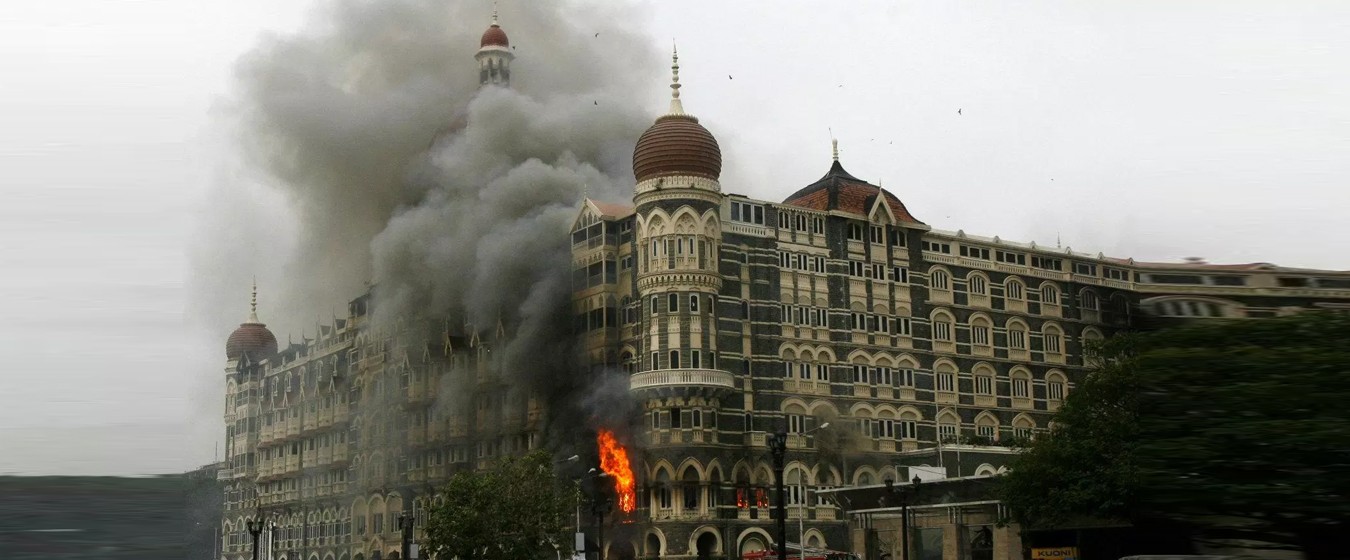
    As India observes the 10th anniversary of the ghastly Mumbai terror attack on 26 November 2008, which resulted in 166 fatalities including of foreign tourists and over 600 injuries, certain misgivings continue to agitate the minds of its concerned citizens and the security establishment alike.

    For decades, India has been the target of deliberate, well-planned Pakistani sponsored terrorism. Though India’s financial capital, Mumbai, has been a chosen destination for terror acts earlier too in 1993 and the Mumbai train massacres in 2006, those four horrific days of 26-29 November 2008 shook the nation and many civilized countries around the world. In matters of counter-terrorism endeavours, India woke up from its traditional languorous slumber, to a large extent, as it laboured to counter its own version of the infamous 9/11 terror strike on the American homeland. Was it a failure of intelligence, inadequate response mechanisms or, importantly, a systemic failure of the Indian security establishment? The candid answer lies in a combination of all these factors which resulted in this attack.

    In today’s increasingly troubled world, terrorism remains an ever burgeoning scourge outwitting advanced nations and their security forces time and again. Terrorism has explicitly developed into a rabidly dangerous reality with an expanding footprint, both regional and globally. The South Asian region, thanks to the original perpetrator of global terror, Pakistan, remains a hotbed of this plague, with no end in sight owing to continuing Pakistani machinations in India and Afghanistan. To Pakistan, the employment of terror as an extension of state policy appears to be more than a productive stratagem. Regrettably, Pakistan persists with its myopic and self-destructive terror policies in the region, continuing to foment terror in J&K, parts of the Indian hinterland through Nepal and, to some extent, in the north-east via Bangladesh.

    To successfully ward off cataclysmic events, a hard-nosed study and detailed addressal of the many professional and preparedness shortcomings which contribute to the likelihood of such occurrences is an imperative which security agencies can only disregard at the nation’s peril. It is the considered view of many security analysts that Indian commercial, public, military and other iconic, high-value institutions and infrastructure—perennial and lucrative targets for Pakistan-sponsored terror—have to have their security preparedness of the desired order to be vastly buttressed.

    Global problems beckon global solutions. With terrorism now a common threat confronting like-minded nations, intelligence sharing between friendly nations is sine qua non. To a large extent, especially after 26/11, the US intelligence community has established professional links with their Indian counterparts. Though some level of intelligence sharing does exist with certain friendly nations, India must forge far more deliberate intelligence cooperation with intelligence agencies of terror-afflicted nations like the UK, France, Russia, Afghanistan, Iran, Bangladesh and the Central Asian Republics. Though it is not a simple affair to develop seamless coordination resulting in speedy sharing of hard, actionable intelligence with foreign agencies, the criticality of effective counter-terrorism interoperability requires the same. Thus, India must take the lead with like-minded security outfits to get them on the same page. UN protocols on counter-terrorism and agencies like Interpol and the Paris-based Financial Action Task Force must endeavour towards greater cooperation to combat the common enemies of humanity.

    Looking inwards, it is endemic with some intelligence agencies in India to try and be ‘one up’ on each other by not fully sharing their inputs with sister institutions. This malaise, where existing, must be rooted out by the NSA. In addition, it is common knowledge that terrorists today are not merely in rag-tag outfits but with advanced technology and continually improving modern weaponry and tools to support their nefarious designs. Thus, security agencies have to keep abreast of all technological innovations taking place. As the nation endeavours to improve its technical intelligence capabilities in its myriad applications, human intelligence capabilities need also to be sharpened.

    A large number of terror outfits are labelled as ‘non-state’ actors which is a stark misnomer as some of the nations they are located in are supporting these terror conglomerates. In the case of Pakistan, its notorious spy agency, the ISI, funds, trains and equips a large number of these terror ‘tanzeems’ such as the Hafiz Saeed-led Lashkar-e-Taiba which carried out the Mumbai attacks under its watchful eye, the Jaish-e-Mohd, Harkat-ul-Mujahideen, and Sipaha-e-Sahaba, among others. US President Donald Trump’s recent imposition of financial sanctions on Pakistan for its duplicity in the war on terror was a long overdue measure. Similarly, Indian financial intelligence set-ups must keep a hawk’s eye on suspicious financial transactions from abroad to accounts in India.

    As Pakistan displays no signs of mending its ways, the Indian security establishment must factor in its preparedness the ever-looming and innovative terror threats from Pakistan and its proxies. Thus, for India, eternal vigilance and security upgrades remain the price to pay to fire-wall itself from terrorism.

    Lt Gen Kamal Davar is an Indian Army veteran and is former chief of India’s Defence Intelligence Agency. He is a visiting distinguished fellow at the TPF.

    This article was published earlier on November 25th, 2018 on Livemint.

  • Changing Paradigms of Political Canvas in Sri Lanka

    Changing Paradigms of Political Canvas in Sri Lanka

    The intransigent ethno-political emotional divide amongst the Sri Lankan society of 1980s manifested into a bloodiest insurgency with the Tamil separatists almost succeeding in carving out a separate Tamil Elam in the North and Eastern regions of the island nation. The political divide at that juncture was result of a racial cleavage between the Sinhala majority and oppressed Tamil minority which prompted the later to rebel in the face of socio-economic denials of all kinds.

    It was India who came to rescue of the Sri Lankan government of the day in 1987 to ensure territorial integrity of the country even at the cost of negative political repercussions within India. The India had to pay the price of this political outreach to Sri Lanka with life of Rajiv Gandhi, the prime minister who went out of way to help them in their hour of crisis. The deeply indebted Sinhala dominated Sri Lanka of 80s seem to be chartering a different trajectory now with self serving opportunist afflictions due to inducements of easy money from extra regional players, especially China.

    While encashing the apparent Chinese benevolence, the gullible Sri Lankan politicians seem to have ignored the basic dictum that ‘there are no free lunches’ in this world. And the slip is showing wherein the Sri Lankan political dispensation seems to have compromised on their territorial integrity by leasing out Habantota port and 15000 acres of land in lieu of repayment of Chinese loans. A precedence has been set for more such sovereign compromises in times to come for which India had fought a bloody battle against their own co ethnic insurgents.

    The motive of the ongoing political drama appears to be focused on facilitating the Chinese cause even if it amounts to tempering with the constitutional jurisprudence. Indeed, there is a paradigm shift in political thinking with its doctrine of development through Chinese support which has obvious inherent centrifugal tendencies as against focus on internal economic consolidation. Instead of reclaiming the lost politico-economic ground to China post Habantota episode, a major part of Sri Lankan polity seem to be under compulsion to toe the Chinese lines due to debt diplomacy so cleverly orchestrated by the Chinese.

    The close scrutiny of Sri Lankan political conduct in the past hinges on the non accommodation of rival ethnic, social or political groups within the Sri Lankan society which seem to continue even today in some form or other. Earlier it was based on ethnic rivalry between Sinhala and Tamils, and now it is intra Sinhala dispensation vying for more political and money power in a political set up with opportunist tendencies. Despite a vibrant democratic political dispensation to take care of well being of its subjects, the island nation has witnessed spells of changing political priorities and concomitant societal upheavals in the recent times. The military driven turbulent ethno- political complexion of 80s gave way to consolidation of socio-political synergies alongside resolving the internal security issues for almost three decades.

    Subsequently, in the aftermath of subjugation of Tamil insurgency in 2009, the priorities changed to the much needed economic development of the nation. However, the tourist predominant economy had woeful inadequacies of infrastructure and public conveniences to tap the potential of the nation at par with other international tourist destinations close by. To do that, there was no money due to prolonged war effort which in turn prompted Sri Lankan polity to look outwards paving way for externally influenced politico-economic opportunism.

    Chinese concept of BRI suited both China as well as the Sri Lanka as a mutually beneficial mechanism to take care of each other’s interests. The BRI concept envisages development of communication and transportation net work, industrial and power corridors as part of Chinese grand game for their global economic expansion. As far as China is concerned all the countries in the Indian Ocean are important for Chinese geo political matrix as a response mechanism for the security of her economic interests. Chinese conduct when hyphenated with their ‘’String of Pearls in the Indian Ocean’’, and their defiant politico-military stance in the South China Sea speaks of their seriousness and sensitivities of their interest in the Indo Pacific region. Sri Lanka happens to be in a pivotal position to serve the Chinese geo political interests.

    In the given circumstances, close affiliation with the China is a win -win situation for Sri Lanka for their economic buoyancy and a politically strong anchor to stand by their side in the time of crisis. However, there are also apprehensions of negative fallouts of new found political bonhomie with an outsider with prospects of disturbing existing stable regional political equilibrium fully aligned with socio- cultural emotional bind of Indian legacy. Accordingly, there is an emerging pattern of an internal political divide amongst Sri Lankan parties and individuals believing in encashing the pragmatic opportunism as against continuation of stability through India centric regional cohesiveness.

    The Mahindra Rajpaksha during his premiership was given loans worth $ 6 billion for various infrastructural projects including Hambantota port. Later the dept trap diplomacy of China got highlighted in their demand of ownership of the port plus land adjacent to it. It, surely, has exposed the dubious ways of China which has prompted number of recipients of Chinese benevolence to revisit their commitments with them as regards to BRI scheme. Sri Lankan civil society is ceased with this Chinese conduct and there is a resistance to encouraging Chinese intrusion into Sri Lankan affairs beyond a point.

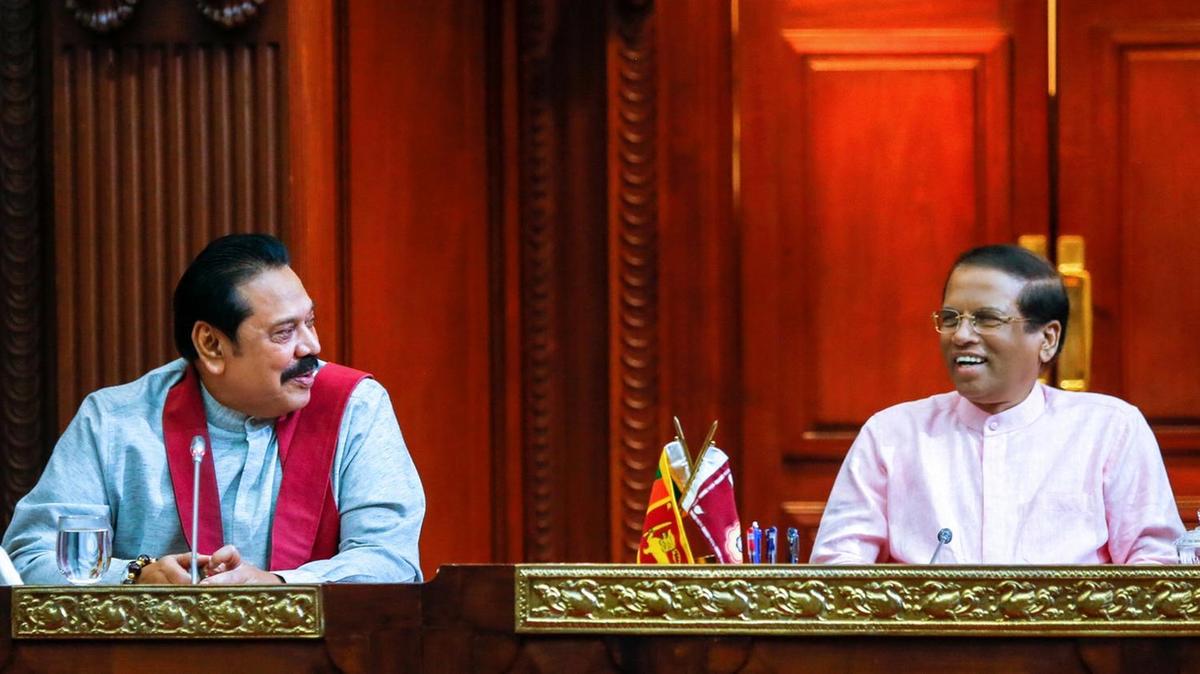
    The opponent Ranil Wickremasinghe, is known to be a proponent of the Indian lobby who had, recently , cancelled housing project of more than 50,000 houses in North and Eastern Tamil areas given earlier to China in favour of Indian companies. The Rajapaksha was brought back as the prime minister by the president through an untenable political move leaving the country in a political chaos. The parliament was dissolved paving way for fresh elections. However, the Supreme Court ruled against this unconstitutional move by the president. It was probably done as Rajapakshe, like his previous tenure, would facilitate better relationship with the China looking at their current political compulsions and national interests.

    What is happening in the Sri Lankan political canvas seem to have imprints of pro India vs pro China lobbies. The fact that there is an outstanding loan of almost $ 5 billion despite handing over the Hambantota port to them, China may be pulling the strings to bring in a political dispensation favourable to them to do their bidding. The way the democratic norms are being flouted do indicate a desperate situation precipitated by the looming economic catastrophe waiting to happen.

    The military geography of Sri Lanka has bestowed her with a unique location to take care of the most vulnerable security concerns of China with 70% of trade and 90% of energy supplies passing through the Indian Ocean. Therefore, it is obvious that China is here to stay as a permanent feature and to do that they seem to have acquired a substantial political space in the Sri Lanka. Whereas, the Sri Lanka seem to have lost out on her autonomy to some extent as there is a probability of China dictating their terms when they find the policies are not in sync with Chinese interests.

    The likely Chinese naval presence at Hambantota port barely few hundred miles from Indian shores is a security concern for India. The Chinese politico-military afflictions in Sri Lanka is likely to prompt the western powers also to further enhance their military presence closer to the Indian shores. It, obviously, would impact the Indian security matrix with the extra regional players milling around in the areas of Indian influence all this time. The new nomenclature of ‘Indo Pacific ‘ referring to erstwhile IOR and Asia Pacific is manifestation new US maritime doctrine as a response mechanism to Chinese geo political expansion. The increase in the US sponsored military diplomacy in the region and revival of Quad are all indicative of new global strategic grand games being unfolded closer to the Indian shores.

    India has no choice but to upgrade her military capabilities to take care of the inimical developments around her periphery both on land as well as maritime domain. It warrants looking beyond defensive doctrines and acquire offensive capabilities for optimum power projection in the areas of concern, besides defence of the island territories and international maritime obligations. Given the distances from the main land and bottle necks for shipping, China would always be militarily vulnerable in the Indian Ocean. It stands to an advantage for India which need to be factored in the design of the military doctrine and its political strategic outreach.

    The Sri Lanka needs to recall that they stand integrated today due to unflinching support by India in their hour of crisis and sacrifices made by the Indian soldiers to hold their country together. They should also appreciate that the India continues to be the stabilizing factor for Sri Lanka and a friend in need. China on other hand is here to exploit the Sri Lankan geographical space for their geo political motives sans any benevolent emotional connect. In fact, China has already usurped their strategically located land through their manipulative ways. If the Sri Lankan polity has not understood their game plan then they should be prepared for more such disintegrating moves as part of their dubious debt diplomacy. The Sri Lanka is in economic crisis and stands vulnerable which is reflective in their recent political conduct. In that, there seem to be tell tale signs of Chinese complicity in the ongoing happenings in the Sri Lankan political space which is not a good news.

    India, obviously, has not been pro active enough to sense the aspirations of her neighbours and propensity of China to exploit the political deficit on the strength of her deep pockets and liberal military outreach. The Sri Lanka has a great significance for Indian security and we need to take all the possible measures to neutralize the Chinese foot prints in the island nation. India fortunately has a large influence in the Sri Lankan society and reckonable political leverages which needs to be nurtured and exploited in our national interests. India as a responsible regional country need to go all out to extend a helping hand to Sri Lanka in her testing times as their political stability is essential to the Indian strategic interests.

    Lt Gen Rameshwar Yadav is an Indian Army veteran and former Director General, Infantry. The views expressed are his own. This article was published earlier in https://cenjows.gov.in/article-detail?id=122