As one writes, a phase of the events in the Galwan valley near the Line of Actual Control (LAC) has come to an end. Inputs from government, media and private commentators, have provided a perspective of the events preceding the incidents of 15/16 June and thereafter till the current day. For the world, the occasion has provided the opportunity yet again to witness the fighting spirit and junior leadership of all ranks of the Indian Army, who despite being outnumbered, were able to inflict far greater casualties on their adversaries, in inhospitable terrain under fading light conditions. The sacrifices of the men of 16 BIHAR, 3 PUNJAB, 3 Medium Regiment, and individual personnel from 81 Field Regiment, Corps of Signals and the Army Medical Corps have added lustre to the reputation of the Indian military. Their deeds shall remain enshrined in the memory of a grateful nation. At this watershed moment, we salute them.
China is contesting control over settled areas (Galwan), exploiting laid down rules and norms of border management by resorting to use of primitive weapons instead of firearms, and pushing the envelope on the ground in attempting to increase areas under control such as at Hot Springs and Pangong Tso – all actions just short of war.
One theory gaining currency in attempting to understand China’s recent behaviour, pertains to its unhappiness over what it perceives as alteration of the status quo on the LAC by designating Ladakh as a Union Territory – resulting in active collusion with Pakistan which shares Beijing’s sentiments on this issue, amongst others. However, there is no doubt that the strategy applied by China in East Ladakh comes straight out of its manual on Grey Zone Warfare. It is contesting control over settled areas (Galwan), exploiting laid down rules and norms of border management by resorting to use of primitive weapons instead of firearms, and pushing the envelope on the ground in attempting to increase areas under control such as at Hot Springs and Pangong Tso – all actions just short of war.

While the situation on the Pangong Tso awaits resolution, what is amply clear is that the era of explaining away patrol clashes on the LAC to the Indian public, in terms of ‘varying perceptions held by both sides’, is past. By its perfidious actions in East Ladakh this year, China has shredded in letter and spirit the border agreements built up over the last three decades. The recent incidents have brought greater clarity to the public mind, with a consensus that China’s salami slicing tactics cannot be tolerated any further. Indian soldiers see the LAC as a line marked on the map. Commanders are clear that the areas up to that line are to be either physically occupied or patrolled at will from bases in the vicinity, supplemented by other forms of surveillance. As per media reports, the Government has over the weekend ‘revised the Rules of Engagement’, giving ‘a free hand to the Army’ to deal with occurrences of this nature. By implication, in future if patrols cannot resolve their face offs peacefully, there will be no resorting to hand to hand scuffles with primitive weapons – unsuccessful efforts at border management will give way to border defence, through resort to tactical military operations.
As per media reports, the Government has over the weekend ‘revised the Rules of Engagement’, giving ‘a free hand to the Army’ to deal with occurrences of this nature. By implication, in future if patrols cannot resolve their face offs peacefully, there will be no resorting to hand to hand scuffles with primitive weapons – unsuccessful efforts at border management will give way to border defence, through resort to tactical military operations.
Response to this new paradigm places another set of challenges before the Indian Army. Prior to May 2020, Galwan was not in the category of disputed areas, as understood in LAC parlance. Neither had any Chinese activity been sensed in the preceding years. While construction of the DSDBO road could be the trigger, the fact that an area where the LAC had lain undisturbed since 1962 could become the scene of such a violent action, warrants scrutiny of PLA intent across the board. Previous assumptions with respect to the PLAs likely areas of interest across the entire Northern border, therefore, certainly warrants a relook. Conclusions drawn would mandate contingency planning and consequent tasking at strategic, operational and tactical levels. Such plans doubtless exist. However, it is obvious that their scope, timelines, and imperatives for successful implementation will need review in conjunction with the other services.
Outcomes of such reviews would inevitably renew the focus on capability building and in the middle term, might even alter priorities for the same. Substantial enhancements in the areas of surveillance, tactical and strategic air mobility and real time communication links continue to retain their importance. Induction of greater varieties of kinetic non-contact weapon systems, complemented by force multipliers such as cyber warriors and special forces too remain on top of the list. Also, the continued ceasefire violations on the Line of Control to the West, and the relentless tempo of counter terrorist operations in the Valley during this period smack of collusion and tell a tale which defence planners must take note of. Developing the desired capability will be predicated on guaranteed funding and fast track procedures. It is heartening to peruse reports in the Economic Times of 22 June that the Government has granted emergency financial powers up to Rs 500 crore per procurement project to each service for buying weapons and ammunition. Even if new projects cannot be initiated immediately because of fund constraints imposed by the Covid-19 pandemic and otherwise, it is time for stalled ones like the Mountain Strike Corps to be quickly completed. The example of the PLA which has almost completed its reorganisation for fighting wars of the future and tested the response of its field force during the Covid-19 pandemic, must be taken note of.
Thanks to the Galwan episode, the vital aspect of border infrastructure has gained nationwide attention. There is perceptive increase in the pace of development over the last few years. The sequence and methodology however are dictated essentially by two factors – availability of resources (funds and specialist equipment) and the need for calibrating messages implicit in such actions to China. Despite Covid-19 constraints, the current crisis mandates that funds currently earmarked for infrastructure development continue to flow so that development progresses, albeit at a slower pace. As regards messaging to China, we have reached a watershed moment. As high level military talks continue and spell out the Indian position on the ground to the Chinese, creating an ‘all of nation approach’ for tackling China becomes necessary.
Galwan incident has ensured that the negative perception of China worldwide is now shared by almost all sections of Indian society. This bitterness is fuelled by the sheer brutality of the Chinese military and duplicity of the Chinese government, bringing back memories of 1962 for many who have only heard of that era. It is driven further by a realisation of the scale of India’s dependence on China, be it in the import of manufactured goods of all hues, or technology, and the consequent harm to Indian interests and livelihoods. Awareness has spread amongst Indians that China’s constant working against India’s interests in world fora, be it in vetoing expansion of the permanent membership of the Security Council for ‘technical reasons’, blocking its membership in the Nuclear Suppliers Group or introducing discussions on Kashmir are all part of its plan to obstruct India’s progress to its rightful place in the comity of nations. In attempting to correct an unequal economic relationship, ensuring that India retains its position in the region and preventing erosion of its influence in South Asia and beyond, all elements of the Indian state have their tasks cut out. It becomes imperative now to prepare a different toolkit with a wider range of options (including those not envisaged earlier) to manage India-China relations. Such options now require to be coordinated at all levels of the government and intimated to stakeholders including industry and other influencers for implementation. This coordination is long overdue. Resetting the economic relationship will not be easy. However, announcement of a practical time bound and holistic road map which has been thought through with all stakeholders would be a beginning.
Galwan incident has ensured that the negative perception of China worldwide is now shared by almost all sections of Indian society.
To supplement the proposed policy outlined above, articulation of a holistic Strategic Narrative vis-a-vis China becomes necessary. Such a narrative would pertain to as many aspects as possible – bilateral issues (including border management), local and regional matters, so that consistent, coherent and long term views are voiced, keeping in mind the national interest. information operations would be a subset of such a narrative, and briefings organised as frequently as possible would be useful force multipliers. It might be necessary for the concerned sections in the newly formed Department of Military Affairs and the Department of Defence to coordinate these aspects. India must also actively consider the possibilities that other forms of conflict, including hybrid warfare, are necessary to exploit and invest in the same. Here too, employment of such methodologies by China is an example. China has been refining its doctrine of ‘Unrestricted Warfare’ since the early 90s. The effects are there to see in South China Sea and elsewhere. It is executing certain aspects of this strategy against India on the Northern borders.
Managing relations with China is destined to remain the major preoccupation for Indian strategic thinkers in coming years. Tensions along the LAC are but one manifestation of this problem. Both nations are hostage to geography. China’s behaviour over the last decade has influenced Indian foreign and military policies like no other, causing India to take decisions that were not in the realms of possibility earlier. Articulating a holistic China strategy through an all of government approach within the overall ambit of a National Security Strategy to ensure that India achieves its rightful place, has never been so important.
Image Credit: ASPI:The Strategist – Nathan Ruser
Category: Regions
-

What After The Galwan Incident?
-

Lebanon’s Economic Crisis and Political Unrest
The Lebanon crisis illustrates the outcome of an inefficiently regulated market economy, shaped by long-term instant gratification of economic policies. Economy is run by corrupt institutions with ingrained crony capitalism, bureaucratic regulations and over-reliance on foriegn exchange.
Lebanon is a free market economy in West Asia, bordered by Syria and Israel and the Mediterranean Sea, and hence, was a frequent recipient of spillovers of unrest and refugee crisis from the neighbouring countries. It is a service-sector dominated (majorly, banks and tourism) economy with a GDP of $56.9 billion─ growth rate of 0.2%, compared to 0.6% the previous year and a workforce of 2.4 million out of which 30 percent include Syrian refugees. The country relies heavily on imports (consumer goods, machinery and equipment etc) with a low dependence on exports (vegetables, non-precious metals and textiles). For years, Lebanon used foreign remittances such as transfers from non-resident Lebanese, foreign deposits and high government loans to balance the trade deficit. Lebanon exchange rate had been kept fixed at 1500 pounds per dollar which was also a fiduciary currency in Lebanon. Thus the higher demand for dollars to fixate the exchange rate, and meet the domestic demand for dollars, is levelled using foreign deposits by offering high yield rates, which had to be further funded by more deposits at even higher interest rates. These faulty policies had sustained the economy until interest payments had snowballed into heavy burden.

Figure 1: trend of GDP per capita in Lebanon
Source: Trading Economics
Lebanese economy is also characterized by high government debt, substantially from domestic banks, borrowed primarily for reconstruction of the economy post civil war (1975-90). Over the years, the government relied more heavily on deficit financing to meet government spending, while the weak governance and corrupt politicians moved along with unfulfilled reforms and poor economic development. There was an underprovision of basic necessities like hassle-free electricity supply, regular water and waste management. On the other hand, crony capitalism had built up, with favours laid out to private businesses which were ultimately owned by rich, exploitative politicians. The debt-to-GDP ratio peaked to 150% by 2019, with a budget deficit of 11.5% of GDP and 50% of the revenues are consumed in debt servicing. This led to an economic crisis, followed by a political crisis, and ultimately snowballed into a financial crisis, rendered vulnerable and in desperate need of foreign aid to see the day.
Evidently, though Lebanon crisis started in late 2019, it is the result of long term economic policies mismanaged by corrupt political elite; when the government proposed to tax ‘free-calls in Whatsapp’ to meet the mounting budget deficit in October 2019, protests erupted across the country, catapulting into political unrest and ousting the prime minister. Investors and citizens lost confidence in the system, and led to reducing capital inflows.

Their sovereign bonds were rated as highly risky assets (probable default), leading to interest rates as high as 15%. The political uncertainty and the liquidity crunch, led to freezing of external deposits, while the steady domestic and foreign demand for dollars persisted, leading to a shortage of USD. The banks levied restrictions (weekly quotas) on dollar withdrawals, the dollar rate spiked, depreciating the pound, and reducing the purchasing power of the pound. This had squeezed the middle and low income strata the most, draining their last pounds of savings, since their debts substantially constituted dollar repayments. Businesses relying on dollars for most part were affected as the price of imports sky-rocketed, and the oil crunch tightened until the central government stepped in to ease the situation. The condition degraded further by the onset of Coronavirus and the lockdown, which led to widespread unemployment and inflation. The World Bank estimated that 50% of Lebanese population could be pushed below the poverty line by 2020 if immediate action is not taken.
The debt of Lebanon has built up to 124464 billion LBP, i.e nearly $82 billion and the country has become the 3rd most indebted country in the world. In March 2020, Lebanon government, as a decisive step to prioritize the domestic concerns of the country and retain sustainable foreign exchange reserves in the economy, had defaulted on the Eurobond debt of $1.2 billion for the first time. The ailing economy seeks to restructure the other outstanding debts amounting to $31 billion and has been seeking advice, especially from the IMF on debt restructuring measures. There is a need for an ‘economic rescue plan’ to protect the depositors from this worst economic crisis Lebanon has faced.

Figure 2: trend of Lebanon government’s debt
Source: Trading Economics
Foreign aid from the institutions is a big responsibility, as it would demand austerity measures from the economy that had dwelled in capitalistic pleasures for so long. Though, CEDRE and foreign countries like France and UK have promised ‘soft’ loans to the Lebanese government, economists believe that external aid would be unproductive, and will become an additional debt burden on the already bleeding financial system unless government inculcates greater transparency and accountability to the public, ousting corruption and following through on long-term economic policies with commitment. Lebanon government is also seeking aid from the IMF. But this would certainly entail strict reform targets linked to the outflow of credit and hence, is very unlikely.
For the immediate future, Lebanon’s economic policies should be directed towards increasing self-reliance in the economy, with higher focus on manufacturing sectors to create employment. Financial policies to stabilize the economy are of primary concern. It is time to make up for the blunders of non-performing investments in the electricity industry. Investments on infrastructural development should be realized and substantial attention should be given to improving socio-economic conditions of the people. Construction and manufacturing industries should be supported. Actions should be taken to handle the refugee situation, and check the drain of human capital out of the country. It could be said that Lebanon’s government has a long way to go before it can regain the confidence of its people and the foreign investors in order to stabilize the economy.
Current Scenario
Covid 19 has a destructive and deleveraging impact on all the economies, and Lebanon is no exception. The economy is heavily dependent on the service sector, especially tourism, and foreign remittances. The impact of the coronavirus pandemic has been devastating on the money the expats send home, which makes up nearly 12.7% of the GDP, making Lebanon the second-most remittances dependent middle-eastern country, only behind Palestine. Amid the collapsing economy and the disruption triggered by the Covid-19 pandemic, the only certainty is the gathering pace of Lebanon’s political unrest.
REFERENCES
https://www.nytimes.com/2020/05/10/world/middleeast/lebanon-economic-crisis.html
https://www.trtworld.com/magazine/what-s-behind-lebanon-s-economic-crisis-35874
https://www.nytimes.com/2020/03/07/world/middleeast/lebanon-debt-financial-crisis.html
https://www.nytimes.com/2019/10/23/world/middleeast/lebanon-protests.html
DATA- https://data.worldbank.org/country/lebanon
https://www.britannica.com/place/Lebanon/Trade
https://tradingeconomics.com/lebanon/government-debt
Image Credit: Adobe Stock
-

Multilateralism in the Indian Ocean Region
A number of multilateral initiatives have emerged in the last two decades in the Indian Ocean Region. The composition has been varied, comprising of inside powers, some comprise of a combination of inside and outside powers, given the geographical construct of the region. Their efficiency has been varied. As such, trends indicate that the older, post-world war II multilateral institutions are gradually losing relevance. Newer coalitions appear to hold promise, some to deal with the foregoing challenges and other to facilitate economic aspirations. Dr Sunod Jacob makes an assessment of multilateralism contributing to an inclusive rule based order in the IOR.
This article is being published as a chapter in the book titled – “Foreign Policy Perspectives for Sri Lanka 2021”.
Image Credit: Photo by Kyle Glenn on Unsplash.Download Full Paper
-

The Law of Armed Conflict and its continuing relevance to the South Asian Region
The South Asian region has had its share of recent historical experiences with large scale violations as well as allegations of large scale violations of international humanitarian law (IHL).2 This applies as much to instances of international and non-international armed conflict as it does to the situations created by new threats to peace and security such as terrorism. Memories of some of these unfortunate events have not faded over the years. For the sake of convenience, the paper is divided into two parts. The first part elaborates specific examples of IHL related issues in South Asia and also deals with some of the major thematic issues in the context of the region. The second part highlights the challenges to IHL application and implementation in this region. The conclusion summarizes the main strands in IHL’s relevance to the South Asian context. The most interesting aspect of our enquiry that stares us in the face is the fact that IHL related issues apply to almost all South Asian countries. The degree of intensity may differ but the fact remains that acts that attract universally applicable IHL provisions are found aplenty in the region.
Image Credit: New York Times
Download Full Paper
-

Taiwan Elections 2020: Emphasising Taiwan’s Democracy, Nationalism and Sovereignty
Taiwan’s first female President, Tsai Ing-Wen of the pro-democratic DPP Party won a landslide victory for second term in the national elections held in January. China condemns Tsai’s victory by reiterating its “one country, two systems model.
Election Results: Voice for Democracy and SovereigntyTaiwan’s president, Tsai Ing-wen won re-election on January 11rth by a historic landslide, a decisive result widely seen as a rebuke to Beijing’s efforts to integrate Taiwan into the ‘one-China’ concept. The DPP (Democratic Progressive Party), rode on Tsai’s popularity and maintained control of the Legislative Yuan, the country’s parliament. DPP has consistently taken a very ‘Taiwan nationalistic’ approach and has been a strong opponent of Beijing’s ‘one-China policy’ and the so-called ‘1992-consensus’. This landslide victory and a second term gives Tsai the power to uphold Taiwan’s commitment to democracy. Taiwanese voted to reject China’s “one country, two systems model” while still maintaining support for Tsai’s stand on the “1992 consensus”, which would dictate the Cross-Strait ties based on “peace, parity, democracy and dialogue”.
On winning the elections, President Tsai remarked – China must ‘face reality’ of Taiwan’s independence and called on China to ‘review’ it’s current policy toward the de facto nation that Beijing claims is part of its territory.
China refuses to acknowledge the victory of pro-democratic forces and maintains that this development would not alter its “one-China” principle. China’s Foreign Ministry stated that “regardless of what happens in Taiwan, the basic facts won’t change: there is only one China in the world and Taiwan is part of China.”
In the voting week, Xi Jinping ushered in a range of measures “to further promote economic and cultural exchanges and cooperation between the two sides of the Taiwan Strait”. Despite these positive announcements, he sent a Chinese aircraft carrier to sail through the Straits to intimidate, should Tsai’s victory initiate a declaration of independence.
The Chinese army also conducted a naval and air force drill on 9-10 February in a threatening attempt to which Washington responded with the US Air Force sending two surveillance planes as an expression of solidarity with Taiwan.
Election results and impact on KMT
In the aftermath of the astounding defeat in January, the opposition KMT has been forced to re-examine its policies and priorities. The party elected Mr Johnny Chiang, a 48-year old lawyer, as its president in March first week. Chiang represents the younger generation who are more focused on separate Taiwan identity, reflecting DPP’s resonance across the young voters. KMT has some serious issues to resolve if it wants to remain relevant in Taiwan. It is constrained by its linkage to the inconvenient history of Taiwan and a support base that is seen as focused on benefitting from cross-Strait engagement, and in some cases, unique access to the CCP through party-to-party ties. The main internal issue is the party’s cross-Strait policy with China, whether 1992 consensus will endure as the foundation for official mechanisms. Chiang is seen as one who will most likely ‘discard’ the 1992 consensus arguing that the consensus has lost its utility and undergone ‘distortion’ when linked with the ‘one country, two systems’ model used in Hong Kong.
Background: 1992 Consensus – discarded by rising Taiwanese identity?
Taiwan was ruled for more than three decades by the nationalist army, the Kuomintang (KMT),which fled to the island in 1949 after being defeated by the Chinese Communist Party (CCP) and created a rival government, the Republic of China, better known as today’s Taiwan. It has since transformed into a multiparty democracy, under a government and political system, completely separate from China’s. KMT’s position stems from the legacy of the Chinese civil war with the CCP, which is a complicated history of KMT and CCP vying to represent ‘one China’ as the ‘Republic of China’ by KMT and the ‘People’s Republic of China’ by CCP. KMT, in view of this history, is seen as the most pro-mainland of Taiwan’s two major political parties. In contrast, the DPP has always maintained much tougher stance with Beijing. It has played a prominent role in democratisation of Taiwan and places greater emphasis on uniqueness of Taiwanese identity and a history of more than 100 years that is separate from that of China’s. From the late 1980s when democratisation of Taiwan began, more and more Taiwanese are embracing a Taiwanese consciousness and favouring independence even though maintaining status quo still remains the majority priority for the moment. Majority of the youth, and 60-70% of Taiwanese are fiercely conscious of their Taiwanese identity, and view Taiwan as an independent and sovereign nation-state. This also means that the idea and legacy of nationalist party’s ROC is seen as impractical, in consonance with geopolitical realities.
The 1992 Consensus, seen as having enabled the growth of Taipei-Beijing cooperation, revolves around the issue of ‘one-China’ interpretation – ‘that there is only one China and that Taipei and Beijing agree to disagree on which government is its legitimate representative’ has been the foundation of cross-Strait relations. It was curated by the KMT and the PRC wherein in principle they agree that there is “One China”. However, the contentious terminology “One China” can be interpreted by either side having accorded its own meaning. The CCP believes “one China” is the “People’s Republic of China,” while Taiwan believes “one China” should mean the ROC established in 1912 and hitherto exists.
The KMT government in 2008-16, led by Ma Ying-jeou used the so-called 1992 Consensus to strengthen economic, trade and cultural relations between Taiwan and PRC. It led to rapid development of economic links and integration with PRC while political issues were kept away. Trade, indirect investment, and travel via Hong Kong grew steadily. By 2014, over 40% of Taiwan’s trade was with the mainland, and some 80% of its foreign direct investment (FDI) went to China; Taiwan businesses operated more than one hundred thousand businesses on the mainland. Taiwan-China two ay trade in 2019 was USD 244.35 billion. The trade balance has, consistently been in Taiwan’s favour.
KMT’s strategy, under Ma’s leadership, focused on reviving Chinese nationalism and was aimed at anchoring Taiwan in the Chinese nation, bridging the gap with PRC, opposing Taiwan independence, favouring reconciliation and eventually unification between the two sides of the Straits. By 2012-13 this approach gave rise to suspicions amongst the Taiwanese about Ma’s rapprochement policy. Paradoxically it strengthened the predominance of Taiwanese identity, which is stronger amongst the youth. This resulted in KMT’s internal fractures in 2012-13, its loss in local elections of 2014, the turbulence of the Sunflower revolution of 2014, and its huge loss to DPP in the presidential elections of 2016.
The ideological battle between the Democratic Progressive Party(DPP) and the Kuomintang (KMT) has persisted since 2016 (when Tsai became President) and the DPP refused to recognise the “1992 consensus”. In 2000, Tsai as the minister of Mainland Affairs Council (MAC) said, “The so-called ‘one China, differing interpretations’ is only a usage by our side to describe the process of the meeting. It is a way of description that the new government can accept, but it does not mean that we have accepted Beijing’s ‘one-China, two models principle.’
Though DPP lost the local elections in 2018 to the pro-China Kuomintang party (KMT), and had no hopes of winning the presidential 2020 elections, Tsai has been trying to replace the Chinese identity with the Taiwanese identity by promising people that the Taiwanese sovereignty will be protected. By articulating “maintenance of status quo”, she indicates that she may not actually pursue outright independence in order to maintain a peaceful environment that helps growth and development; in effect allowing PRC to see it as a support for “One China” in principle and being open to cross-Strait dialogue. But she makes it clear to rest of the world – “we don’t have a need to declare ourselves an independent state. We are an independent country already and we call ourselves the Republic of China, Taiwan.”
Diversifying Economic and Trade Strategies
During her presidency in 2016, she had initiated “new south-bound policy (NSP)” to strengthen relations with selected countries in South and South-East Asia and gain entry into regional blocs. As the US unveiled its Indo-Pacific strategy of Free and Open Indo-Pacific (FOIP), Taiwan saw great benefits in dove-tailing it’s NSP strategy into the Indo-Pacific. The NSP has made notable gains in the first term, and Tsai’s re-election offers great opportunity to diversify the gains in the second term. The Chinese have been aggressively countering this strategy by compelling nations to switch allegiance to China. This had resulted in Taiwan having only close to 16 diplomatic allies which include small nations like Belize and Naru. Despite this, major nations have come around the issue to strengthen ties with Taiwan through economic and cultural centres. Nevertheless, the ‘New South-bound Partnership’ strategy is a conscious effort by Taiwan to reduce its economic dependency on the mainland. Taiwan has aggressively pursued economic partnerships with countries like India, and has encouraged investments by Taiwanese companies. Its investments in South-East Asia has more than doubled in this period.
China has also been accused of meddling with local Taiwanese elections in 2018, according to Wang William Liqiang, a self-identified Chinese spy presently seeking political asylum in Australia. As a counter-strategy and to prevent foreign influence in the country’s elections, Taiwan’s legislature passed the anti-infiltration act on 31 December 2019, which criminalises external meddling. According to MAC Chief Chen Ming-tong, “[the act] aims to counter infiltration”. He added that it acts “as a corrective measure to ensure normal cross-Strait exchanges and reduce politically-motivated infiltration and intervention by Beijing. The Act prevents hostile external powers from engaging, through local collaborators, in illegal lobbying and election campaigning, disrupting rallies and assemblies, and making political donations.”
Rising anti-Chinese sentiment has gained momentum due to the recent protests in Hongkong. Young voters have been deeply influenced by this and are supporting Tsai. This is supplanted by the economic slowdown which affected Taiwan and has divided the Taiwanese voters—those who support the Economic Cooperation Framework Agreement (ECFA) with China and those who don’t.
Taiwan had also altered its economic policy since the election of DPP in 2016, wherein industrial restructuring has resulted in a large businesses (heavy industries) moving to China in order to reduce the labour cost. This has led to an increase in trade and investment in China. However, the catch is that since both governments don’t recognise each other, the Taiwanese companies are exposed to high risk and no dispute settlement is prevalent currently nor is it guided by international norms. China continues to be Taiwan’s largest trading partner, accounting for nearly 30% of the island’s total trade. However, Taiwan’s investment into the mainland has been declining over the last five years, and so also mainland’s investment in Taiwan.
The Future
The ‘one-China policy’ is a zero-sum game between the PRC and the ROC. China has always reiterated that only by accepting China’s authoritarian rule can the Taiwanese people attain prosperity and peace. From the beginning of 2005, the “carrots and sticks” policy has been predominant in the Cross-Strait relations. Since China’s policy has backfired, she is capable of adopting coercive measures—economic crippling, isolation by cutting off diplomatic allies, direct invasion or meddling with internal politics. If Beijing decides to use force, it could spiral into a regional conflict inviting Taiwan’s allies and heavy economic repercussions.
China’s isolation strategy with respect to Taiwan is a constant challenge, which influences majority of the Taiwanese to maintain status quo in current environment. Status quo can mean different things to different people. Chinese president Xi’s aggressive articulation in 2019 of ‘one-China policy’ with respect to Taiwan and the events in Hong Kong has triggered a massive nationalistic fervour in support of democracy and Taiwan identity amongst the younger population.
China has repeatedly said that it will bring Taiwan under its authority by any means necessary, including force. Analysts believe Xi Jinping aims to achieve that by 2049, the deadline for the country to achieve its ‘great rejuvenation’. Beijing’s refusal of renouncing the possible use of force for unification is reflected in the continued military build-up on the Fujian coast. By 2014, PLA had over 1500 ballistic and cruise missiles targeting Taiwan, ten times more than in 2000, and more accurate and destructive than in 2000.
Chinese state media have downplayed President Tsai’s election, but there is no doubt that China considers it as a major setback to its reunification efforts. The election has resulted in a cooling off period for cross-Strait relations, and the global ‘Corona Virus pandemic’ has only added to put this off any priority for some time.
Only time will tell if Taiwan and China manage to engage in dialogue and come to a consensus regarding their irreconcilable differences. As democracy and pro-democratic forces continue to strengthen and sustain Taiwanese identity and nationalism, Taiwan’s functioning as a sovereign independent state is stronger than ever, while Beijing’s strategy of geo-economic boxing-in Taiwan into accepting its ‘one-China’ policy looks less probable. On the other hand, giving legitimacy to Tsai’s government will be a tricky call for many countries as they have to walk a tight rope in order not to rupture relations with China. How different nations recognise and engage with the new Taiwanese government will definitely be a contributing factor in determining Taiwan’s future.
-

Modi’s move to engage SAARC on COVID-19 shows his capacity to surprise
Category : Global Health/SAARC
Title : Modi’s move to engage SAARC on COVID-19 shows his capacity to surprise
Author : Kanwal Sibal 16-03-2020
Former foreign secretary, Kanwal Sibal, observes that Prime Minister Modi’s initiative to organise a video-conference of Saarc leaders to develop together a roadmap to fight the challenge of COVID-19 is a well thought out strategy and shows his capacity to surprise. Modi’s move could inject new life into Saarc, just when India was seen as downgrading the Saarc platform for stronger regional cooperation and promoting Bimstec.
Read More
-

High expectations during Vietnam’s Chairmanship of the ASEAN
Vietnam assumed ‘2020 Chairmanship of the ASEAN’ in November 2019 from Thailand in accordance with Article 31 of the ASEAN Charter under which the Chairmanship rotates annually. Hanoi announced the theme for its Chairmanship as ‘Cohesive and Responsive’, in which ‘Cohesive reflects the need to enhance ASEAN unity and solidarity, economic integration, ASEAN awareness and identity, and work toward a “people-centered” community’ and ‘Responsive underlines the importance of promoting ASEAN pro-activeness, creativity and capacity in response to opportunities and challenges brought about by rapid changes in regional and global landscape’.
Soon after taking over the 2020 Chairmanship, Vietnam was confronted with a ‘black swan’ event i.e. COVID-19. It delivered admirably by taking bold measures to control the spread of the virus in the country and announced that the ASEAN Coordinating Council (ACC) will compile a report on the COVID-19 to be submitted to ASEAN leaders at the 36th ASEAN Summit scheduled in Vietnam in April.
Vietnam’s Deputy Foreign Minister Nguyen Quoc Dung, who is the Secretary-General of the 2020 ASEAN National Committee, has identified five key priorities for his country’s Chairmanship Year and it is not surprising to see reference to Hanoi’s commitment to ‘regional peace and stability amid strategic complexities’. Boundary and associated disputes including illegal occupation, reclamation and weaponization of islands and features in South China Sea are central to ASEAN, and as a corollary a major issue for Vietnam’s 2020 Chairmanship. There is now evidence of a push back against Beijing’s intimidation. This is evident from the forceful statements and credible operational initiatives in South China Sea by the claimant states against China which has deployed law enforcement and paramilitary vessels.
In this context there are expectations from Vietnam to vigorously pursue and make substantive contributions towards keeping the South China Sea less turbulent and more peaceful, and address issues that threaten regional peace and security. It would also be Hanoi’s endeavor to prevent any confrontation and further escalation in disputes in the South China Sea. However, this may not be the case as a number of incidents in the South China Sea over resources i.e. fishing and offshore energy exploration have begun rather very early in Vietnam’s ‘2020 Chairmanship of the ASEAN’.
First is about Indonesia and China. The former does not claim any island or features in the Spratly Islands and therefore does not have any dispute in South China Sea; but presence of Chinese coast guard vessel escorting Chinese fishermen to fish in Natuna, part of Indonesian waters, which China claims to be the traditional fishing ground, prompted political and military response from Jakarta. There was also a standoff between China and Vietnam in the Vanguard Bank involving 50 Vietnamese and 40 Chinese vessels over the operations of the drilling rig Hakuryu 5 operated by Russia’s Rosneft in Vietnam’s oil and gas Block 06-01.
Another three-way standoff over oil and gas operations is playing out between China and Malaysia in which the state-owned Petronas is exploring on the extended continental shelf of a ‘Malaysian oil and gas block in the area for which Hanoi and Kuala Lumpur had submitted a joint claim’. China has resorted to intimidation similar to the Vanguard Bank between China and Vietnam.
At another level, United States military response in support of Taiwan after Chinese military airplanes flew across the Taiwan Straits and the Bashi Channel is noteworthy. Likewise, US’ support has been forthcoming for Vietnam against China and could trigger enhanced defence and security cooperation between the two sides as also create new opportunities for Hanoi to inform Beijing about its confidence to deal with China on the South China Sea issue at its own terms.
However, the Philippines would be a different challenge for Vietnam after President Rodrigo Duterte announced annulment of the Visiting Forces Agreement (VFA) notwithstanding the fact that the US has been the most important ally of the Philippines in countering China’s expansive claims in the disputed Philippines Sea. It is useful to mention that Philippines is critical for US’ Indo-Pacific strategy of a free and open oceans.
Second is the about the Code of Conduct (CoC), an upgraded document of the earlier Declaration on the Conduct of Parties in the SCS (DOC), which is under negotiation between China and ASEAN member states and is expected to be adopted in 2021.Vietnam must concentrate on the CoC. The onus will be on Vietnam to not only build consensus among the ASEAN , Hanoi will have to work hard to put in place a workable COC which can then be taken forward by Brunei Darussalam who would assume the ‘2021 Chairmanship of the ASEAN’.
Third is about the contestation between the US and China over freedom of navigation operation (FONOP). During the last three years, the US forces have routinely conducted FONOP which Washington claims to be in accordance with international law and that its military will fly, sail, and operate wherever international law permits. Chinese reaction and response to the FONOP has been at the political, diplomatic and strategic levels. It has exercised coercion at sea through dangerous maneuvers and more recently a PLA Navy destroyer fired a military grade laser at a US P-8 surveillance aircraft.
ASEAN Chairmanship is a challenging position and attracts high expectations from the member countries. The position entails building upon the work done by the previous Chair as also pursue new regional issues that are always as challenging as the earlier ones. Besides, there are anticipations by regional and other global players to not only follow up the ongoing challenges but address new questions that confront the ASEAN. More often than not, the ASEAN countries have delivered and received appreciation from the international community.
By all counts Vietnam’s chairmanship of the ASEAN can be expected to be both challenging and rewarding. Hanoi is expected to live up to the expectations on the responsibilities enshrined in the ASEAN charter and deliver to the peoples of the ASEAN as also build upon the themes and priorities set by previous Chairmanship. Vietnam will also be under pressure to adopt a tougher line against China on the South China Sea issue in view of the recent spats between China and other claimant states. But Vietnamese leaders are known for their maturity and diplomatic skills and would play a pragmatic role to manage tensions in the region.
Image Credit: Vietnam Economic Times
-

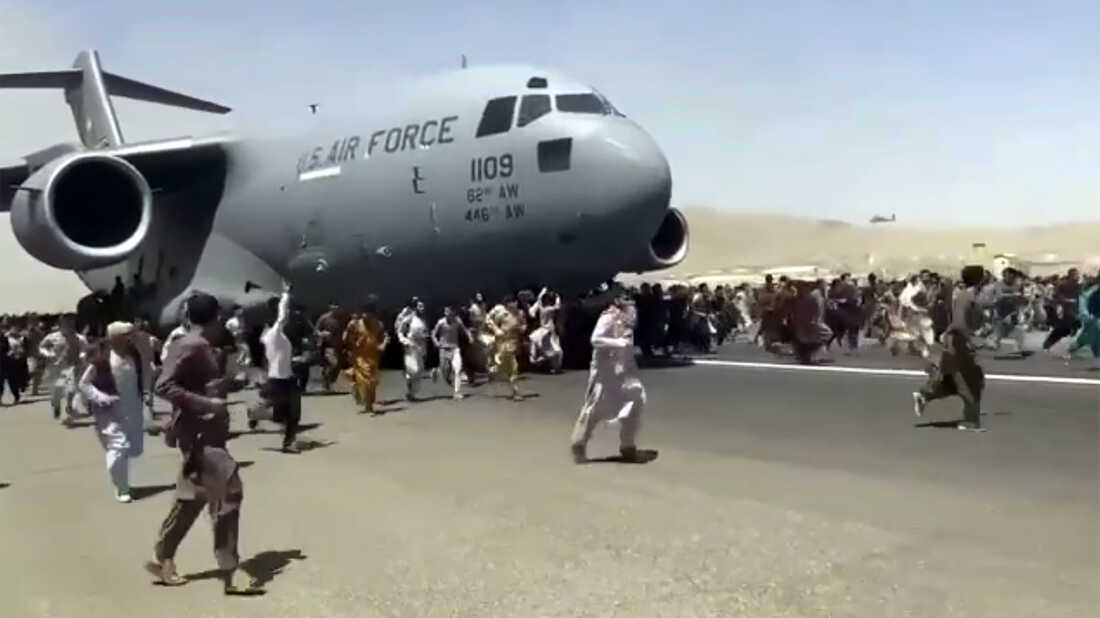
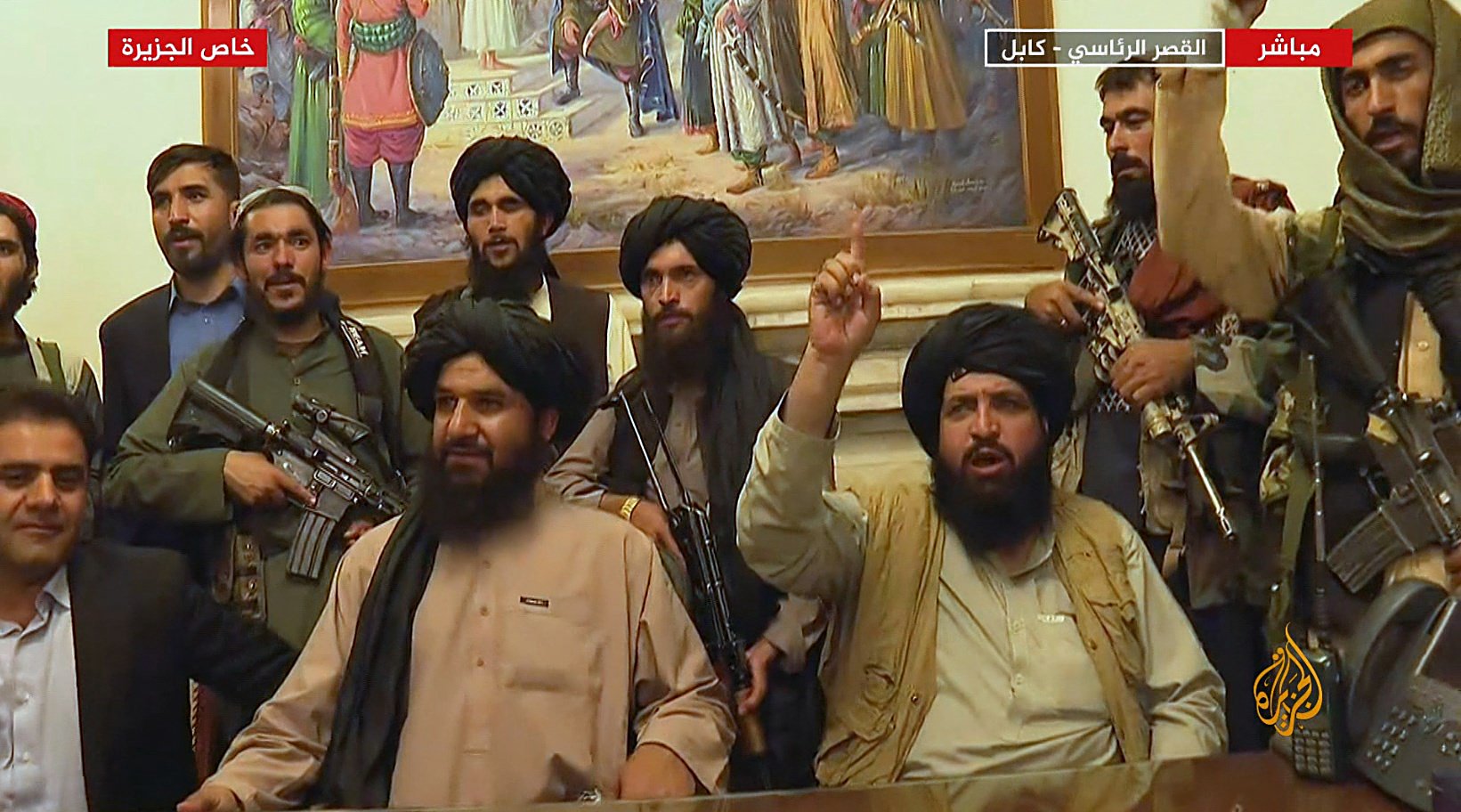
Reflections on “Peace” in Afghanistan: Leaving a Misguided War and Choosing Not to Look Back
Kahlil Gibran, the Lebanese-American poet, artist, writer and philosopher, famously said ‘History does not repeat itself except in the minds of those who do not know history’. In today’s generation very few know and understand history, and so it is most likely that very few will see that the recent US-Taliban peace deal has an eerie resemblance to the end stage of the Vietnam war. US Special envoy, Zalmay Khalilzad and Taliban political chief, Mullah Abdul Ghani Baradar signed a ‘historic’ peace deal on February 29, 2020 in Doha, capital of Qatar paving the way for ending two decades of American military fighting in Afghanistan and their return. In the context of the US-Taliban peace deal that raises more questions than answers, TPF revisits an article written by Andrew J Bacevich few months ago. Comparing the two similar situations (US-Vietcong deal and US-Taliban deal) in a very incisive analysis, Andrew Bacevich raises very relevant observations. Effectively this means that the US is exiting after conceding defeat to the Taliban and abandoning the Afghan government that it supported all this while. It would be only a matter of time before the Taliban, with active support from Pakistan, dismantles whatever semblance of stable governance and democracy that has been built over the last 15 years in war-torn Afghanistan. TPF
This article was first published in “TomDispatch.com” The Peninsula Foundation is happy to republish this article with permission from ‘TomDispatch.com’. TPF
Andrew J Bacevich
When the conflict that the Vietnamese refer to as the American War ended in April 1975, I was a U.S. Army captain attending a course at Fort Knox, Kentucky. In those days, the student body at any of our Army’s myriad schools typically included officers from the Army of the Republic of Vietnam (ARVN).
Since ARVN’s founding two decades earlier, the United States had assigned itself the task of professionalizing that fledgling military establishment. Based on a conviction that the standards, methods, and ethos of our armed forces were universally applicable and readily exportable, the attendance of ARVN personnel at such Army schools was believed to contribute to the professionalizing of the South Vietnamese military.
Evidence that the U.S. military’s own professional standards had recently taken a hit — memories of the My Lai massacre were then still fresh — elicited no second thoughts on our part. Association with American officers like me was sure to rub off on our South Vietnamese counterparts in ways that would make them better soldiers. So we professed to believe, even while subjecting that claim to no more scrutiny than we did the question of why most of us had spent a year or more of our lives participating in an obviously misbegotten and misguided war in Indochina.
For serving officers at that time one question in particular remained off-limits (though it had been posed incessantly for years by antiwar protestors in the streets of America): Why Vietnam? Prizing compliance as a precondition for upward mobility, military service rarely encourages critical thinking.
On the day that Saigon, the capital of the Republic of Vietnam, fell and that country ceased to exist, I approached one of my ARVN classmates, also a captain, wanting at least to acknowledge the magnitude of the disaster that had occurred. “I’m sorry about what happened to your country,” I told him.
I did not know that officer well and no longer recall his name. Let’s call him Captain Nguyen. In my dim recollection, he didn’t even bother to reply. He simply looked at me with an expression both distressed and mournful. Our encounter lasted no more than a handful of seconds. I then went on with my life and Captain Nguyen presumably with his. Although I have no inkling of his fate, I like to think that he is now retired in Southern California after a successful career in real estate. But who knows?
All I do know is that today I recall our exchange with a profound sense of embarrassment and even shame. My pathetic effort to console Captain Nguyen had been both presumptuous and inadequate. Far worse was my failure — inability? refusal? — to acknowledge the context within which that catastrophe was occurring: the United States and its armed forces had, over years, inflicted horrendous harm on the people of South Vietnam.
In reality, their defeat was our defeat. Yet while we had decided that we were done paying, they were going to pay and pay for a long time to come.
Rather than offering a fatuous expression of regret for the collapse of his country, I ought to have apologized for having played even a minuscule role in what was, by any measure, a catastrophe of epic proportions. It’s a wonder Captain Nguyen didn’t spit in my eye.
I genuinely empathized with Captain Nguyen. Yet the truth is that, along with most other Americans, soldiers and civilians alike, I was only too happy to be done with South Vietnam and all its troubles. Dating back to the presidency of Dwight D. Eisenhower, the United States and its armed forces had made a gargantuan effort to impart legitimacy to the Republic of Vietnam and to coerce the Democratic Republic of Vietnam to its north into giving up its determination to exercise sovereignty over the entirety of the country. In that, we had failed spectacularly and at a staggering cost.
“Our” war in Indochina — the conflict we chose to call the Vietnam War — officially ended in January 1973 with the signing in Paris of an “Agreement Ending the War and Restoring Peace in Vietnam.” Under the terms of that fraudulent pact, American prisoners of war were freed from captivity in North Vietnam and the last U.S. combat troops in the south left for home, completing a withdrawal begun several years earlier. Primary responsibility for securing the Republic of Vietnam thereby fell to ARVN, long deemed by U.S. commanders incapable of accomplishing that mission.
Meanwhile, despite a nominal cessation of hostilities, approximately 150,000 North Vietnamese regulars still occupied a large swathe of South Vietnamese territory — more or less the equivalent to agreeing to end World War II when there were still several German panzer tank divisions lurking in Belgium’s Ardennes Forest. In effect, our message to our enemy and our ally was this: We’re outta here; you guys sort this out. In a bit more than two years, that sorting-out process would extinguish the Republic of Vietnam.
Been There, Done That
The course Captain Nguyen and I were attending in the spring of 1975 paid little attention to fighting wars like the one that, for years, had occupied the attention of my army and his. Our Army, in fact, was already moving on. Having had their fill of triple-canopy jungles in Indochina, America’s officer corps now turned to defending the Fulda Gap, the region in West Germany deemed most hospitable to a future Soviet invasion. As if by fiat, gearing up to fight those Soviet forces and their Warsaw Pact allies, should they (however improbably) decide to take on NATO and lunge toward the English Channel, suddenly emerged as priority number one. At Fort Knox and throughout the Army’s ranks, we were suddenly focused on “high-intensity combined arms operations” — essentially, a replay of World War II-style combat with fancier weaponry. In short, the armed forces of the United States had reverted to “real soldiering.”
And so it is again today. At the end of the 17th year of what Americans commonly call the Afghanistan War — one wonders what name Afghans will eventually assign it — U.S. military forces are moving on. Pentagon planners are shifting their attention back to Russia and China. Great power competition has become the name of the game. However we might define Washington’s evolving purposes in its Afghanistan War — “nation building,” “democratization,” “pacification” — the likelihood of mission accomplishment is nil. As in the early 1970s, so in 2019, rather than admitting failure, the Pentagon has chosen to change the subject and is once again turning its attention to “real soldiering.”
Remember the infatuation with counterinsurgency (commonly known by its acronym COIN) that gripped the national security establishment around 2007 when the Iraq “surge” overseen by General David Petraeus briefly ranked alongside Gettysburg as a historic victory? Well, these days promoting COIN as the new American way of war has become, to put it mildly, a tough sell. Given that few in Washington will openly acknowledge the magnitude of the military failure in Afghanistan, the incentive for identifying new enemies in settings deemed more congenial becomes all but irresistible.
Only one thing is required to validate this reshuffling of military priorities. Washington needs to create the appearance, as in 1973, that it’s exiting Afghanistan on its own terms. What’s needed, in short, is an updated equivalent of that “Agreement Ending the War and Restoring Peace in Vietnam.”
Until last weekend, the signing of such an agreement seemed imminent. Donald Trump and his envoy, former ambassador to Afghanistan Zalmay Khalilzad, appeared poised to repeat the trick that President Richard Nixon and National Security Advisor Henry Kissinger pulled off in 1973 in Paris: pause the war and call it peace. Should fighting subsequently resume after a “decent interval,” it would no longer be America’s problem. Now, however, to judge by the president’s Twitter account — currently the authoritative record of U.S. diplomacy — the proposed deal has been postponed, or perhaps shelved, or even abandoned altogether. If National Security Advisor John Bolton has his way, U.S. forces might just withdraw in any case, without an agreement of any sort being signed.
Based on what we can divine from press reports, the terms of that prospective Afghan deal would mirror those of the 1973 Paris Accords in one important respect. It would, in effect, serve as a ticket home for the remaining U.S. and NATO troops still in that country (though for the present only the first 5,000of them would immediately depart). Beyond that, the Taliban was to promise not to provide sanctuary to anti-American terrorist groups, even though the Afghan branch of ISIS is already firmly lodged there. Still, this proviso would allow the Trump administration to claim that it had averted any possible recurrence of the 9/11 terror attacks that were, of course, planned by Osama bin Laden while residing in Afghanistan in 2001 as a guest of the Taliban-controlled government. Mission accomplished, as it were.
Back in 1973, North Vietnamese forces occupying parts of South Vietnam neither disarmed nor withdrew. Should this new agreement be finalized, Taliban forces currently controlling or influencing significant swaths of Afghan territory will neither disarm nor withdraw. Indeed, their declared intention is to continue fighting.
In 1973, policymakers in Washington were counting on ARVN to hold off Communist forces. In 2019, almost no one expects Afghan security forces to hold off a threat consisting of both the Taliban and ISIS. In a final insult, just as the Saigon government was excluded from U.S. negotiations with the North Vietnamese, so, too, has the Western-installed government in Kabul been excluded from U.S. negotiations with its sworn enemy, the Taliban.
A host of uncertainties remain. As with the olive branches that President Trump has ostentatiously offered to Russia, China, and North Koea, this particular peace initiative may come to naught — or, given the approach of the 2020 elections, he may decide that Afghanistan offers his last best hope of claiming at least one foreign policy success. One way or another, in all likelihood, the deathwatch for the U.S.-backed Afghan government has now begun. One thing only is for sure. Having had their fill of Afghanistan, when the Americans finally leave, they won’t look back. In that sense, it will be Vietnam all over again.
What Price Peace?
However great my distaste for President Trump, I support his administration’s efforts to extricate the United States from Afghanistan. I do so for the same reason I supported the Paris Peace Accords of 1973. Prolonging this folly any longer does not serve U.S. interests. Rule number one of statecraft ought to be: when you’re doing something really stupid, stop. To my mind, this rule seems especially applicable when the lives of American soldiers are at stake.
In Vietnam, Washington wasted 58,000 of those lives for nothing. In Afghanistan, we have lost more than 2,300 troops, with another 20,000 wounded, again for next to nothing. Last month, two American Special Forces soldiers were killed in a firefight in Faryab Province. For what?
That said, I’m painfully aware of the fact that, on the long-ago day when I offered Captain Nguyen my feeble condolences, I lacked the imagination to conceive of the trials about to befall his countrymen. In the aftermath of the American War, something on the order of 800,000 Vietnamese took to open and unseaworthy boats to flee their country. According to estimates by the United Nations High Commissioner for Refugees, between 200,000 and 400,000 boat people died at sea. Most of those who survived were destined to spend years in squalid refugee camps scattered throughout Southeast Asia. Back in Vietnam itself, some 300,000 former ARVN officers and South Vietnamese officials were imprisoned in so-called reeducation camps for up to 18 years. Reconciliation did not rank high on the postwar agenda of the unified country’s new leaders.
Meanwhile, for the Vietnamese, north and south, the American War has in certain ways only continued. Mines and unexploded ordnance left from that war have inflicted more than 100,000 casualties since the last American troops departed. Even today, the toll caused by Agent Orange and other herbicides that the U.S. Air Force sprayed with abandon over vast stretches of territory continues to mount. The Red Cross calculates that more than one million Vietnamese have suffered health problems, including serious birth defects and cancers as a direct consequence of the promiscuous use of those poisons as weapons of war.
For anyone caring to calculate the moral responsibility of the United States for its actions in Vietnam, all of those would have to find a place on the final balance sheet. The 1.3 million Vietnamese admitted to the United States as immigrants since the American War formally concluded can hardly be said to make up for the immense damage suffered by the people of Vietnam as a direct or indirect result of U.S. policy.
As to what will follow if Washington does succeed in cutting a deal with the Taliban, well, don’t count on President Trump (or his successor for that matter) welcoming anything like 1.3 million Afghan refugees to the United States once a “decent interval” has passed. Yet again, our position will be: we’re outta here; you guys sort this out.
Near the end of his famed novel, The Great Gatsby, F. Scott Fitzgerald described two of his privileged characters, Tom and Daisy, as “careless people” who “smashed up things and creatures” and then “retreated back into their money or their vast carelessness” to “let other people clean up the mess they had made.” That description applies to the United States as a whole, especially when Americans tire of a misguided war. We are a careless people. In Vietnam, we smashed up things and human beings with abandon, only to retreat into our money, leaving others to clean up the mess in a distinctly bloody fashion.
Count on us, probably sooner rather than later, doing precisely the same thing in Afghanistan.
Image Credit: www.upi.com
-

President Trump’s India Visit : Balancing Optics with Substance
As President Donald Trump arrives in India today, 24 February 2020,on his maiden official visit to India, there is significant level of discussions amongst the academics, strategists, and foreign policy experts about whether this visit is more about optics than substantive discussions on strategies and agreements to strengthen the US-India strategic partnership. On arrival the president’s first public engagement is a super spectacle, ‘Namaste Trump’ at the new Motera Stadium in Ahmedabad that will have more than 100,000 people, which is Prime Minister Modi’s way of reciprocating for ‘Howdy, Modi’ at Houston last year. Most opine that while Mr Trump’s visit will be packed with pageantry, it will be light on policy and therefore, unlike previous presidential visits this one may not yield many break-through agreements. There are, however, some important developments that are very unique to the Trump-Modi era when compared to the previous visits of American presidents. Both leaders excel in showmanship and also in projecting strong nationalistic orientation to each one’s domestic constituency. Trump, with his transactional and disruptive approach comes off as more unpredictable when it comes to foreign policy and strategic issues.
Politics and Showmanship
It has taken Mr Trump, more than three years since he assumed office to visit India. This could mean that India was not a high priority for the Trump regime in the initial years, or as it turned out India was not the target of Trump’s disruptive strategy that he employed against USA’s traditional allies, China, Russia, and others. The final year of a POTUS term is generally termed as the ‘lame duck year’, where very few presidents have had a good last year and many were hampered by major controversies. It is important to note that India is the first country that President Trump is traveling to after his impeachment trial. There is more to Mr Trump’s India relationship than just this visit. One must remember that he is a shrewd businessman, and even before he became the president, India was already home to the most Trump ventures outside of North-America. While India’s strategic importance is well recognised by all presidents since Bill Clinton, President Trump’s approach is considerably different than the others. His daughter Ivanka Trump made headlines when she visited Hyderabad, as White House Advisor, for the Global Entrepreneurship Summit in Nov 2017 and the prime minister broke protocol to host a dinner in her honour.
That the Trump administration has followed a calibrated strategy of recognising and enhancing PM Modi’s image for significant gains to the American defence industry in particular is evident. The current visit, therefore, focuses primarily on strengthening strategic partnership issues in areas such as defence trade, intelligence sharing, counter terrorism, and visa issues. American side may make a token mention about Trump’s offer to facilitate improvement of India-Pakistan talks, China and issues of religious freedom. However, these will get swamped by the more visible spectacle that will be on display at Ahmedabad and Agra.
Defence Relationship – the most substantive progress
India – US defence partnership has progressed significantly over the last decade and a half. The two militaries are exercising together more frequently than ever, and the strategic interactions are moving more towards equitable approach to various aspects. The Trump administration has covered significant ground in nudging India, despite its reluctance, towards partnerships such as the ‘Quad’ and moving towards interoperability by concluding various agreements including the foundational agreements through Defence-Trade-Technology relationship mechanisms.
Defence trade between the two countries has grown exponentially since 2007. Two major procurements are likely to be signed by the Indian government during this visit: acquisition of 24 Sea-Hawk naval multi-role helicopters (NMRH) from Lockheed Martin worth $ 2.6 billion for the Indian Navy and six AH-64E Apache attack helicopters from Boeing worth $ 930 million for the Indian Army. Both procurements will be through the FMS (Foreign Military Sales) route. Trump administration cleared the decks for enhanced defence cooperation with India by approving India as a major Non-NATO defence partner in 2019, thus smoothening the process for exporting or selling hi-tech weapon systems to India. This is often confused with India becoming a major Non-NATO ally, which is clearly not the case.
What is clear is that the US has secured major business deals with India to its great advantage, without India gaining much in terms of technology access or industrial production of hi-tech weaponry. The US objective is clearly to wean India away from its heavy dependence on Russian weaponry and secure much broader business relationship with American arms industry. The MIC (military industrial complex) of the USA is clearly focused on India now as its major avenue of business in the 21st century. The Americans were clearly unhappy that India went ahead with S-400 purchase from Russia despite the threat of CAATSA. That India has decided to buy an air defence missile system from the US, again through FMS route, worth $ 1.9 billion seems to be a compensation for such a decision.
The US-India defence deal will scale $ 20 billion this year after the Trump visit. Many of these weapon system procurements, in terms of numbers, are not of a scale sufficient to create major industrial partnerships for manufacturing. India, however, will need to look at ways and means of acquiring significant technologies from the US through joint ventures, co-design and co-development. Otherwise, there lurks the danger of India being trapped in an all too familiar pattern of buyer-seller relationship rather than as strategic partners.
Strategic gains?
The visit’s focus is in areas of trade, defence, counter-terrorism, energy, and co-ordination on regional and global issues. These are areas in which considerable ground has been covered and is a continuing process. The agreement on trade deal, which was keenly expected, has been deferred. With President Trump accusing India of high tariffs and dashing all hopes of a deal before the visit, it is clear that the USA intends to push hard for favourable access to Indian markets for American companies. There are some positives that are emerging. The prospects for increased collaboration in space between ISRO and NASA looks bright.
The focus of the American side is primarily on Defence trade. Increase in investments in defence production may become a possibility with major projects in the pipeline. Both Boeing and Lockheed Martin are pushing hard for IAF’s 114 aircraft order, which will be processed under the strategic partnership model of ‘Make in India’ program. This could expand the production run to over 200 aircraft. Similarly, the naval helicopter (NMRH) procurement has a possibility of expanding into ‘Make in India’ project for over 100 helicopters. Boeing’s S-76D is a contender for Navy’s utility helicopter procurement under ‘make in India’ program.
The spectacle of this visit will certainly contribute to both leaders’ constituencies, for President Trump’s re-election campaign and for PM Modi it may divert people’s attention from current issues of flagging economy, Delhi electoral reverses, the Kashmir issue and ongoing protests on CAA and NRC. India however, will need to negotiate hard and leverage the expanding defence business to address technology access and strengthen Indian industry by enabling them into global supply chain. For this the Indian establishment will need to see well beyond the optics to assess real gains.
Air Marshal M Matheswaran AVSM VM PhD (retd) is the President of TPF and a former Deputy Chief of the Integrated Defence Staff.