Category: Policy Brief

  • National Education Policy, 2020 – Policy Brief

    National Education Policy, 2020 – Policy Brief

    [powerkit_button size=”lg” style=”info” block=”true” url=”https://admin.thepeninsula.org.in/wp-content/uploads/2022/04/Policy-Brief-NEP-2020.docx-1_compressed-1.pdf” target=”_blank” nofollow=”false”]
    Download – Policy Brief on National Education Policy, 2020
    [/powerkit_button]

    Executive Summary:

    In line with the New Education Policy (NEP) 2020 mandate, the UGC released the draft National Higher Educational Qualifications Framework (NHEQF) in February 2022. Its release has reignited the controversy over the policy that was criticized and even rejected by many state governments. The inclusion of Education in the concurrent list gives overriding powers to the centre. However, the sweeping changes the NEP is set to bring have raised concerns that the states would turn into mere implementing agencies while all the decisions regarding education will be taken by the centre. At the root of the controversy lies the federal structure of India which would be jeopardized by the implementation of the policy. Hence, significant and appropriate amendments to the draft are required to address the grievances of the states.

    What is NEP (2020)?

    The NEP, released in July of 2020 by the Union Government, seeks to overhaul the entire education system of the country by replacing the thirty four-year-old National Policy on Education (1986). In the domain of pre-University education, the new policy aims to transform the curricula structure from 10+2 to 5+3+3+4, mandates the Three Language Formula (TLF), reduces the syllabus to make board exams “easier” and gives thrust to vocational training and skill development. In the realm of higher education, it envisions a single regulator- the Higher Education Council India (HECI)- for Higher Education Institutes (HEIs) by merging UGC, AICTE and other regulatory bodies. The HECI is further divided into four verticals, namely the National Higher Education Regulatory Council (NHERC), National Accreditation Council (NAC), Higher Education Grants Council (HEGI) and General Education Council (GEC). 

    The policy introduces four-year undergraduate programmes with multiple exit options, along with proposing a national Academic Bank of Credit and a national entrance exam for all universities. It further allows higher education to be taught in regional languages. Additionally, it proposes the National Testing Agency (NTA) conduct a “high quality” common entrance test and a common specialized subject exam in sciences, humanities, language, arts, and vocational subjects, at least twice a year. It blurs the distinction between research-oriented and employment-oriented education, emphasizing a multidisciplinary approach to education. Additionally, it proposes facilitation to top global universities to set up campuses in India and to top Indian Universities to establish campuses abroad.

    The policy also touches upon the issue of Adult Education. It proposes strong and innovative government initiatives to achieve 100% adult literacy, educate about critical life skills (including financial literacy, digital literacy, commercial skills, health care and awareness etc.), impart vocational skills and provide basic education to adults. It also ensures providing the necessary infrastructure for adults to facilitate its implementation.  

    Why is it a problem? 

    Since its release, the policy has been opposed by a few states. Though other states have voiced their reservations, none have been as vocal and vehement as Tamil Nadu. 

    • The foremost reason pertains to the Three Language Formula. The policy states that out of the three languages that ought to be taught at the pre-University level, two must be Indian. This leaves the students from the southern states to learn Hindi, along with English and the regional language in their curriculum. The formula was brought forward in 1968 by the then Indira Gandhi government as recommended by Kothari Commission. All states adopted the policy except Tamil Nadu, which continued its two language policy.

    The Three Language Formula finds its explicit mention in Section 4.13 of the Draft policy. In order to promote multilingualism, the draft states that, “The three-language formula will continue to be implemented”. Moreover, a student is given the option to change one of the three languages only once- in Grade 6 or 7. Though the formula has been in continuance since the 1970s, an exclusive emphasis upon it raises eyebrows. The draft further falls short of assuring the states unwilling to implement the formula of any compulsion by the centre, instead offering “greater flexibility” in its implementation. 

    Learning Hindi has always been a controversial issue in Tamil Nadu. The state has seen numerous instances of violence and public protests against the imposition of Hindi. The state has also actively promoted Tamil learning in schools. In 2006, the state enacted Tamil Nadu Tamil Learning Act, making it compulsory for every school operating in the state to teach Tamil. The state government is also opposed to the establishment of Navodaya Schools by the centre in the state.

    • The draft also places an unprecedented emphasis on learning Sanskrit. Section 4.16 stresses the need for learning Sanskrit since most of the Indian other languages attribute “their origins and sources of vocabularies” to it. Section 4.17 emphasizes the importance of classical literature possessed by the language. It thus offers its teaching “at all levels of school and higher education”. Moreover, it promotes the teaching of the language through its classical literature in mathematics, philosophy, grammar, music, politics, medicine, architecture, metallurgy, drama, poetry etc.

    Laying such a huge emphasis upon an archaic language in schools and even HEIs at “all levels” would leave a student burdened with an unnecessary curriculum. Offering courses in Sanskrit to college students, for instance, in non-Hindi speaking states would decrease their grades. Worse still, in Central Universities- mostly dominated by Hindi speakers, such courses will make naked and even exacerbate the language barrier the non-Hindi speaking students face. Further, the postulate that most of the major Indian languages owe their “origins” to Sanskrit is not even remotely true. Additionally, the literature in Sanskrit can be discriminatory against varna, caste or group, especially in social sciences. 

    • However, the major concern relates to the federal structure of India. The policy proposes the establishment of the all-powerful HECI and its verticals. The NHERC, one of its verticals, reserves the power to regulate every facet of HEIs, including financial probity, good governance, and the full online and offline public self-disclosure of all finances, audits, procedures, infrastructure, faculty/staff, courses, and educational outcomes[Section 18.3]. It further envisions a “graded accreditation” system to be given by the NAC, that will “specify phased benchmarks for all HEIs to achieve set levels of quality, self-governance, and autonomy…to attain the highest level of accreditation over the next 15 years” [Section 18.4]. The GECI, another of its verticals, will frame “expected learning outcomes for higher education programmes” and mandate the identification of “specific skills that students must acquire during their academic programmes” [Section 18.6].

    Owing to its vague language, the draft lacks clarity on the extent of jurisdiction of HECI and its verticals. It reserves the power to regulate the faculty/staff, courses, educational outcomes etc., thus infringing upon the state’s rights on reservations and education. Moreover, the students are required to acquire “specific skills” and “learning outcomes” framed by the central government, making it difficult for them to cater to the needs of their respective states. Further, the vocabulary used, such as “good governance”, leaves room for significant manipulation in the future.

    • The policy veritably promotes the centralization of education at every level. For instance, it envisages a nation-wide “high-quality” common aptitude test for admission into the universities, as well as “specialized common subject exams in the sciences, humanities, languages, arts, and vocational subjects” [Section 4.42], which it assumes will reduce the burden on students. Moreover, an all-India test is to be conducted by NTA for admission into pre-service teacher preparation programmes of Teacher Education Institutions (TEIs) [Section 15.7], which it envisions to convert into multidisciplinary institutions [Section 15.4]. Moreover, it places an undue emphasis on centralized vocational training in all schools and HEIs which would be overseen by the National Committee for the Integration of Vocational Education (NCIVE) [Section 16.8]. In the field of academic research, the policy envisions the establishment of the National Research Foundation to provide funding for research [Section 17.9]. Further, it proposes to establish the National Research Foundation (NRF) which is meant to provide funding for research to the institutions, and “undertake major initiatives to seed and grow research at the state universities and other public institutions”[Section 17.9], centralizing disbursement of research-oriented funding. It is further empowered to ensure that the Research Scholars are “constantly made aware of the most urgent national research issues” to allow breakthroughs to be optimally brought into policy [Section 17.11(c)].

    Tamil Nadu’s objection to a country-wide entrance test is premised upon the recommendations of the M. Anandakrishnan committee. Constituted in 2006, it recommended the abolition of the Common Entrance Test (CET) in the state from the academic year 2007-08 (Srinivasan, 2016), due to the unaffordability of the high fees of coaching for the rural and underprivileged students. Furthermore, the NRF is empowered to fund the research on urgent “national” issues, thus again leaving the door ajar for manipulation of their jurisdiction, and depriving state-funded institutions of funding for research on regional issues.

    • The policy seizes the administrative autonomy from both public and private HEIs. It mandates every such institution to establish a Board of Governors (BoG) which would be empowered to govern the institution[Section 19.2], including the selection of leaders of the institution [Section 19.4]. Further, the policy subjugates the BoG to guidelines formulated by NHERC[Section 19.3]. Additionally, it makes it compulsory for every institution to formulate its own Institutional Development Plan [Section 19.5] to strategize its roadmap.

    In subjugating the administrative system of the colleges to a central body, the central government ignores the urban-rural divide and caste-based discrimination entrenched in them. Moreover, drafting the same guidelines for urban, rural, minority etc. institutions would, along with waning their autonomy, undermine the purpose they are meant to serve. 

    • The policy provides multiple exit and entry options to the students pursuing higher education[Section 11.9], along with the creation of an Academic Bank of Credits to digitally store credits earned by the student and different designs of Master’s programmes [Section 11.10].  

    The central government does not contemplate the unintended consequences of the above proposition, especially for the backward communities and female students. It leaves the students of the said groups with multiple exit options but few entry options. Multiple choices of exit will compel such students facing monetary or familial issues to quit their education in the middle. Further, it burdens a teenage student with critical life-changing decisions.  Moreover, the proposed system disallows a student to carry backlogs into the next year, bringing about the apprehension of exacerbation of the dropout rate, which currently stands at 12.6%.

    • Both the draft NHEQF and the draft policy suggest, in multiple instances, that all colleges either become multidisciplinary or merge with existing universities. However, both the documents do not provide any provision regarding how the same will be executed without any monetary assistance. This has raised concerns about many state government colleges becoming defunct due to a lack of finances to become multidisciplinary, thus depriving a large number of students of educational opportunities. 
    • The policy makes no mention of the Reservation System in educational institutions, both in admission and faculty recruitment, making it non-inclusive to all sections of the society. Further, it does not mention the drop-out rates among the backward communities, let alone ways to tackle them. The NEP policy-makers veritably fail to view education as a tool to uplift the poor and backward classes while formulating it.
    • The proposal also lacks a grievance redressal mechanism, either for the states or the institutions regarding any facet of the policy. The institutions and state governments are left with no choice but to follow the guidelines of the would-be central institutions. Institutions failing to comply with the guidelines are feared to become defunct. Moreover, the power of ‘light but tight’ regulation bestowed upon the central bodies also leaves the door ajar for manipulation of their jurisdiction. 

    Tamil Nadu’s response to NEP

    Since early on, Tamil Nadu’s policies have emphasized education as a modus operandi to uplift the backward castes. As early as 1919, certain legislations were in place to encourage and mandate local education authorities to establish schools at places that were accessible to everyone, thus broadening the social base of its educated bracket. The reasons for the Tamil Nadu government opposing NEP are manifold. 

    Tamil Nadu Chief Minister MK Stalin has explicitly stated that the policy will not be implemented in the state. He has called it a policy “for elites” and, if implemented, education “will be confined and limited to a few sections”. The state government has even set up a committee to formulate its own State Education Policy in a bid to replace the NEP. Furthermore, the state plans to implement only some ‘good aspects’ of the central policy (Sathyanarayana, 2021). It claims that the policy negates the efforts of more than a hundred years of social justice aspirations that were carefully envisaged in Tamil Nadu. State Education Minister K. Ponmudi noted that mandating entrance exams for getting admissions to arts and science colleges would affect the students from rural areas.

    Similar concerns were raised by L. Jawahar Nesan, head of the All India Save Education Committee, while complaining that the proposed Academic Bank of Credits (ABC) could result in “students dropping out of higher educational institutions before completing their course”. “The proposed system aims at furthering vocational education and creation of a workforce pool”, he added (“Academics call for the withdrawal of draft”, 2022). The State Platform for Common School System- Tamil Nadu (SPCSS-TN) termed the framework “a crude form of diarchy”(Sathyanarayana, 2022). Regarding the mandatory entrance test akin to NEET, PB Prince Gajendra Babu, General Secretary of the body, said that the students don’t have sufficient time and their family circumstances do not permit them to undergo separate coaching for entrance exams(ibid). In September last year, the Coimbatore-based Aram Seiya Virumbu Trust filed a writ petition in Madras High Court challenging the constitutionality of Section 57 of the 42nd Amendment that brought education in the concurrent list as a response to the policy, whose implementation, the trust alleged, will lead to “autonomy of the states in education be completely taken away thereby striking at the very root of the federal structure”(Imranullah S., 2021).

    The issue of centralization of education has always been a hot potato in the state. Back in 2006, M. Karunanidhi’s government constituted a committee under the chairmanship of M. Anandakrishnan to recommend measures for the abolition of the Common Entrance Test (CET) in the state from the academic year 2007-08. On the recommendations of the committee, the state government terminated its practice of conducting CET for admission into technical and medical courses, making it easier for underprivileged students to pursue the said graduate courses (Rajasekaran, 2021). Other policy decisions taken by the state for similar causes include the 50% ‘in-service’ super speciality seats quota in government medical colleges which was recently upheld by the Supreme Court. Prior to NEET, the quota had provided opportunities to the lower strata of society to enter the colleges which in turn helped the state government in providing an uninterrupted supply of doctors in primary health centres (P.M., 2019). 

    Other States’ Response

    Among other states, West Bengal has most emphatically opposed the implementation of the policy. Within a month of its release, Partha Chatterjee, the state Education Minister, announced the government’s unwillingness to implement the policy in the state “any time soon”, due to its undermining of the federal structure and non-inclusion of Bengali in the list of classical languages(“No NEP 2020 in West Bengal”, 2020). He also said that no one in the state government was consulted for its formulation. Kerala has also protested against the policy in the report of the six-member committee, chaired by Professor Prabhat Patnaik. 

    Delhi Education Minister Manish Sisodia accused the central government of encouraging the privatisation of education and reducing its responsibility as a government to provide quality education to all, while questioning the need to make board exams easier. Chhattisgarh CM Bhupesh Baghel termed it as centralization of education which goes against the federal structure of the country(Sharma, 2020). Rajasthan Education Minister Govind Datasra also criticized the draft for lack of clarity.

    Conclusion

    The policy possesses strong tendencies of centralization of education, contravening federalism as a basic structure of our constitution. It establishes bodies that are empowered to determine policies and curriculum for all educational institutions, including state institutions, with little or no role of the states in formulating them, turning them into mere implementing bodies. Moreover, it imposes teaching of Hindi and Sanskrit in all schools across the country with no consent of the states. The policy violates numerous Supreme Court rulings that have upheld federalism as a basic structure of the constitution. The central government must make significant changes to the draft policy to make it more reflective, just and fair to India’s diversity.

    Recommendations

    • The draft policy is an onslaught on federalism as a basic structure of our constitution. The concerned authorities, while acknowledging the competence of the states in educational planning and execution, and its role as a determinant of their development, must re-draft the policy to omit the provisions that dilute the federal structure.
    • The Three Language Formula must be waived off for the states unwilling to pursue it. Additionally, the students of the states that choose to implement the formula must be given the option to change any of the languages in secondary schooling.
    • In view of the large endemic socio-economic disparity in India, the states must be allowed to formulate their own processes of enrolling the students into higher education. Imposing a central exam on constituents of the backward community might disrupt the smooth process in which they have been uplifted from their backwardness in the last few decades.
    • The proposed provision of multiple exit options in higher education must be reformulated so as to prevent dropouts in the middle of the courses. The policy must also consider instating multiple options to clear backlogs to further reduce the number of dropouts.
    • The colleges must be given more autonomy in deciding their curriculum. To turn a vast number of government colleges into multidisciplinary ones might be expensive for the state governments, which could possibly result in these colleges being permanently closed.
    • The attempts to centralize education must be clamped down to address the grievances of various states. Moreover, the necessary central bodies proposed in the draft must be given adequate representation by all the states.
    • The policy must explicitly uphold the reservation system in educational institutions regarding admissions and jobs.
    • The draft lacks clarity on the extent of jurisdiction of the proposed central bodies. Hence, the government must elaborate on the roles of these institutions
    • The undue emphasis on vocational education must be dialled down. Instead, emphasis must be placed upon academic education and critical thinking.  

    References

    1. “Academics call for withdrawal of draft National Higher Education Qualification Framework”,(2022, March 9) The Hindu. https://www.thehindu.com/news/national/tamil-nadu/academics-call-for-withdrawal-of-draft-national-higher-education-qualification-framework/article65207193.ece
    2. Imranullah S., Mohamed. (2021, September 14) “Case in Madras HC challenges constitutional amendment shifting education from state list to concurrent list” The Hindu. https://www.thehindu.com/news/national/tamil-nadu/case-in-madras-hc-challenges-constitutional-amendment-shifting-education-from-state-list-to-concurrent-list/article36448046.ece
    3. “No NEP 2020 in West Bengal, it undermines role of states: Education minister”(2020, September 7) Livemint. https://www.livemint.com/politics/news/no-nep-2020-in-west-bengal-it-undermines-role-of-states-state-education-minister-11599477761391.html
    4. P.M., Yazhini.(2019, June 8) “Common Entrance Exams Like NEET Ignore India’s Gender and Social Realities”. The Wire. https://thewire.in/education/neet-tamil-nadu-caste-gender
    5. Rajasekaran, Ilangovan.(2021, May 29) “M. Anandakrishnan, an educationist who democratised technical education in Tamil Nadu, passes away”. Frontline. https://frontline.thehindu.com/dispatches/m-anandakrishnan-educationist-who-democratised-technical-education-in-tamil-nadu-passes-away/article34677215.ece
    6. Sathyanarayana, R.(2021, December 30) “Tamil Nadu to accept ‘good aspects’ of National Education Policy”. DT Next. https://www.dtnext.in/News/TopNews/2021/12/30135026/1336439/Tamil-Nadu-to-accept-good-aspects-of-National-Education-.vpf
    7. Sathyanarayana, R.(2022, February 22) “Experts flay draft higher education framework”. DT Next. https://www.dtnext.in/News/TopNews/2022/02/22022833/1354869/Experts-flay-draft-higher-education-framework.vpf
    8.  Sharma, Nidhi. (2020, August 18) “New Education Policy an attempt to centralise education: Opposition-ruled states” The Economic Times. https://economictimes.indiatimes.com/news/politics-and-nation/new-education-policy-an-attempt-to-centralise-education-opposition-ruled-states/articleshow/77604704.cms?from=mdr
    9. Srinivasan, R.(2016). Reservation in Educational Institutions: Who Gains from Abolishing the Common Entrance Test (CET) in Tamil Nadu. The Hindu Centre. https://www.thehinducentre.com/incoming/article23697651.ece/BINARY/Policy%20Watch%20No_3.pdf

    Featured Image: Deloitte

    [powerkit_button size=”lg” style=”info” block=”true” url=”https://admin.thepeninsula.org.in/wp-content/uploads/2022/04/Policy-Brief-NEP-2020.docx-1_compressed-1.pdf” target=”_blank” nofollow=”false”]
    Download – Policy Brief on National Education Policy, 2020
    [/powerkit_button]

  • Change in IAS (Cadre) Rules – Policy Brief

    Change in IAS (Cadre) Rules – Policy Brief

    [powerkit_button size=”lg” style=”info” block=”true” url=”https://admin.thepeninsula.org.in/wp-content/uploads/2022/02/Change-in-IAS-Cadre-Rules-1.pdf” target=”_blank” nofollow=”false”]
    Download – Change in IAS (Cadre) Rules
    [/powerkit_button]

    Executive Summary:

    The Centre’s proposal to amend the IAS Cadre Rules has sent shockwaves through the State governments and the bureaucratic community. Although the Centre already has the preponderance of power over the State government, it has always been the convention to depute All India Services (AIS) officers with the concurrence of the State government(s) and the Central government and the consent of the officer concerned. By providing overriding powers to the Central government, the proposal poses a fundamental risk to the federal structure of the Constitution. Not only should the proposal be recalled, but the annual intake of the IAS officers should be increased to address the issue of staff shortage, while recruiting suitable personnel from other Central Civil Services. The empanelment process also needs to be reformed to ensure transparency, objectivity and to uphold the principles of natural justice.

    The Centre’s proposal is a reflection of the long overdue need for the complete overhaul and reform of the Indian civil service system. These piecemeal amendments and a myriad of executive orders are not only unproductive to the civil service system but also counterproductive to the basic structure of the Constitution. A high-level committee should be established to undertake a holistic study to reform the Indian civil service system not only to bring in better performance and accountability but more importantly, to get rid of the colonial legacy once and for all.

    What is it?

    Deputation of IAS officers is governed under Rule 6 of The Indian Administrative Service (Cadre) Rules, 1954. Rule 6(1) mandates that the deputation of cadre officers to the Centre must be done with the concurrence of the concerned State government(s) and the Central government.

    The provision to Rule 6(1) states that in case of any disagreement, the Central government’s decision will prevail, and the State governments shall give effect to it.

    The proposal attempts to amend the Central Deputation rules by giving overriding powers to the Centre to transfer and post Cadre officers without the consent of the State government.

    Proposed Amendments (Singh, 2022)

    1. ‘Within a specified time’

    The proposal amends the proviso mandating the State governments to give effect to the final decision of the Central government within a specified time as decided by the Central government.

    2. ‘Officer shall stand relieved’

    In case, a State government delays a cadre officer’s deputation to the Centre and does not give effect to the Central government’s decision within a specified time, the concerned ‘officer shall stand relieved from the cadre from the date as may be specified by the Central government’.

    3. ‘Number of officers’

    Another change proposed is that the actual number of officers to be deputed to the Centre shall be decided by the Central government in consultation with the State government which is required to provide a list of eligible names.

    4. ‘Public interest’

    In a specific situation, if the need arises for the services of a cadre officer to be utilized by the Central government in the public interest, the State governments shall give effect to it within a specified time.

    The abovementioned amendments were sent to the State governments in a letter dated 12th January 2022 by the Department of Personnel and Training (DoPT) seeking comments until 25th January. The DoPT had earlier sent three similar letters (dated 20th,27th December and 6th January) which were strongly opposed by six States (including BJP ruled States) (Singh, 2022). As of now, more than 7 States have written to the DoPT opposing the proposed changes and other states such as Maharashtra, Kerala and Tamil Nadu have also raised their opposition. The CMs of Chhattisgarh and Rajasthan have also written to the PM opposing the proposed amendments to the cadre rules.

    Why is it a problem?

    The proposed amendments are essentially an attack on the federal structure of our Constitution since it derogates the State government’s power in posting and transferring its cadre officers without its consent. In spite of the rules giving preponderance of power to the Centre, it has always been the convention to depute officers to the Centre in concurrence with the State governments and the consent of the officer concerned (Dhingra, 2021).

    Mamata Banerjee, the CM of West Bengal wrote a strongly worded letter to the PM opposing this move and calling it a ‘unilateral decision’ which was ‘historically unprecedented and wholly unconstitutional’.

    The trigger for this move by the Centre is most likely the result of the tussle between the Centre and West Bengal over former IAS officer Mr. Alapan Bandhopadhyay. Given his experience in handling the Covid-19 crisis as the Chief Secretary of West Bengal, the State government had requested the Centre to extend his tenure and the latter acceded by extending his term for 3 months (24th May 2021). However, the Centre on 28th May 2021 did a complete 180° and issued an order to Mr. Bandhopadhyay informing him that he has been placed with the Government of India ‘with immediate effect’. Following this, the State government opposed the order and did not relieve him and the concerned officer also opted to retire from the services and is now appointed as the advisor to the CM. The Centre then issued a show-cause notice to Mr. Bandhopadhyay for his failure to report to the DoPT. There have been other similar tussles in the past between the Centre and Tamil Nadu government (2001) and West Bengal government (2020) (Agnihotri, 2021), but when the States refused to relieve the concerned IPS officers, the Centre upheld the convention of State government concurrence and did not insist on deputing them anyway.

    Shortage of officers in the Centre

    The DoPT cites the shortage of AIS officers in Union Ministries as the driving factor for these proposed amendments since the ‘States are not sponsoring an adequate number of officers for Central Deputation’. While this is true, it is pertinent to note that State governments also have been suffering from a shortage of officers, especially during the pandemic and have requested the DoPT multiple times to increase the cadre strength of IAS officers (West Bengal, Rajasthan, Bihar).

    Senior IPS officers advise that the problem of shortage of AIS officers has been perennial and does not warrant a knee-jerk reaction at the cost of violating the basic structure of our Constitution. The problem of shortage must be seen as secondary to upholding the federal structure especially since there are other ways to address this problem without seizing the State governments’ authority. While only AIS officers come under the common purview of both the Central and State governments, there are other Central Services with ample human resources over which the Central government has sole authority and the shortage can be filled by deputing these Central services officers.

    The Empanelment Process

    The empanelment process of AIS officers in India has been infested with executive arbitrariness and a lack of transparency. The procedure for empanelment is laid down in the Central Staffing Scheme which does not have any legislative sanction and is instead governed by a slew of Executive Orders (E.O), the primary dated 5th Jan 1996 (NO.36/77/94-EO(SM-I)). The flawed Annual Confidential Report system was replaced by the Annual Performance Appraisal Reports (APAR) system following a Supreme Court ruling to ensure more transparency.

    However, the additional layer of review with the 360° appraisal system or the Multi-Source Feedback system introduced by PM Modi in April 2015 allows the panel to override the recommendations of the APAR system.

    The 92nd Report of the Department-Related Parliamentary Standing Committee on Personnel, Public Grievances, Law and Justice in 2017
    reprimanded the 360° system for its opacity and lack of objectivity, thereby leaving the empanelment process ‘susceptible to manipulation’. Former Upper-level Secretaries have also been critical about the 360° system due to its

    ▪ Lack of transparency
    ▪ Absence of an appeal process
    ▪ Susceptible to bias and discrimination.
    (MS, 2018)

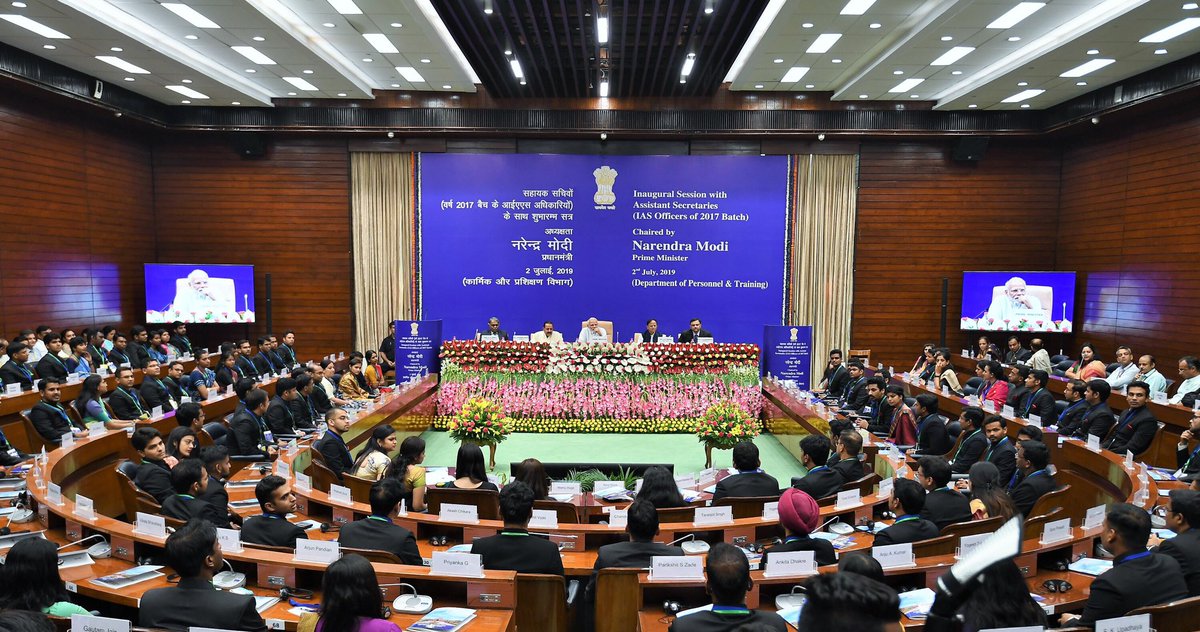
    The absence of legal backing for the empanelment procedure has led to the arbitrary exercise of power by the executive. Usually, officers start their career after training in State cadres and it would take up to 9 years for an officer to occupy Central government positions. But the present government has started a practice of appointing newly recruited officers, fresh from training, as Assistant Secretaries in the Union Ministries. Although this move was said to increase exposure for the new officers, it also may as easily be detrimental to their careers. This new pattern, initiated by the Modi govt, is characterised by a lack of transparency and establishing a core group of loyalist officers at the cost of building experience, knowledge, and performance. The loyalty of the officers of the civil services must be to the Constitution alone and not to any political party or even government of the day if it violates the constitutional provisions.

    Already, the AIS officers are in a bind where the State government and Central government are governed by opposing parties. The lack of fairness in the empanelment process has further discouraged and disheartened officers from Central Deputation. Although salaries and incentives remain the same, the State governments use transfers and postings as de facto punishment for AIS officers who do not follow suit with the State government’s decisions. Similarly, the Central government beguiles AIS officers with the temptation of post-retirement postings. The proposed amendments grant overreaching powers to the Central government which could be used to harass and corrupt an
    unwilling officer.

    Conclusion:

    In conclusion, the proposed amendments derogate the consent of State governments and the officer concerned. This not only gives rise to a lack of transparency and increased bias, but also has the potential to disintegrate the delicate federal structure that has been upheld since Independence. The Supreme Court has on many occasions emphasized that federalism is a part of the basic structure of our Constitution, and even a Constitutional amendment cannot do away with it. The Supreme Court has also affirmed cooperative federalism as a ‘cherished Constitutional goal’. Therefore, the Central government must look at other ways to overcome the issue of staff shortage, without granting itself overarching powers in direct violation of the Constitution.

    Recommendations:

    ▪ Recall the proposal amending the IAS (Cadre) Rules which will fundamentally damage India’s federal structure, thereby undermining national integrity and security.

    ▪ Shortage of officers can be addressed, in the short term, by recruiting suitable personnel from other Central Services such as IRS, Indian Defence Accounts service, Customs, etc. Alternatively, well-known professional experts in various fields can be inducted at senior positions, which will not only address the shortage but also the need for professional competence and experience in specialist departments as against the oft raised complaint of generalist nature of the IAS.

    ▪ Keeping in mind the demands of the Covid-19 pandemic, increase the annual intake of IAS officers to address the shortfall of 22 per cent in IAS posts.

    ▪ Increase Lateral recruitment for Central posts on a contract basis in the short term.

    ▪ The empanelment process, especially the 360° Appraisal system must be completely reformed to ensure equal opportunity and better transparency.

    ▪ The Centre’s proposal is a reflection of the long overdue need for the complete overhaul and reform of the Indian civil service system. These piecemeal amendments and a myriad of executive orders are not only unproductive to the civil service system but also counterproductive to the basic structure of the Constitution. A high-level committee should be established to undertake a holistic study to reform the Indian civil service system not only to bring in better performance and accountability but more importantly, to get rid of the colonial legacy once and for all.

    References:

    1. Agnihotri, S. (2021, June 4). Centre’s tussle with Bengal over chief secretary Reeks of uncooperative federalism. The Wire. Retrieved January 25, 2022, from https://thewire.in/politics/centres-tusslewith-bengal-over-chief-secretary-reeks-of-uncooperative-federalism

    2. Dev Dutt v. Union of India & Ors., (2008) 8 SCC 725

    3. Dhingra, S. (2021, June 7). Centre vs states, rules vs convention – who really controls IAS officers. ThePrint. Retrieved January 26, 2022, from https://theprint.in/india/governance/centre-vs-statesrules-vs-convention-who-really-controls-ias-officers/672013/

    4. Mishra, N. (2021, June 7). Explained: Chief secretary appointment controversy. TheLeaflet. Retrieved January 25, 2022, from https://www.theleaflet.in/explained-chief-secretary-appointmentcontroversy/

    5. MS, N. (2018, August 29). Why India’s civil servants are disaffected with the 360-degree empanelment process for top central government posts. The Caravan. Retrieved January 25, 2022, from https://caravanmagazine.in/government-policy/why-indias-civil-servants-disaffected-with-360-degree-empanelment

    6. Rajya Sabha, 92nd Report, Appraisal and Empanelment of Civil Servants under the Central Government, Department-Related Parliamentary Standing Committee on Personnel, Public Grievances, Law and Justice, August 2017, available at http://164.100.47.5/newcommittee/reports/EnglishCommittees/Committee%20on%20Personnel,%20PublicGrievances,%20Law%20and%20Justice/92.pdf

    7. Saxena, N. C. (2022, January 24). Who should control where IAS officers serve? The Wire. Retrieved January 25, 2022, from https://thewire.in/government/who-should-control-where-ias-officers-serve

    8. Singh, V. (2022, January 20). States weigh options on IAS cadre rule changes. The Hindu. Retrieved January 25, 2022, from https://www.thehindu.com/news/national/states-weigh-options-on-iascadre-rule-changes/article38293886.ece

    9. The Quint, Centre proposes new IAS Cadre Rules: What are they? why are they being opposed? (2022, January 21). Retrieved January 25, 2022, from https://www.thequint.com/news/india/ias-cadrerules-mamata-banerjee-narendra-modi-centre-states#read-more

    10. Yadav, S. (2022, January 22). Explained: IAS officers and central posting. The Indian Express. Retrieved January 25, 2022, from https://indianexpress.com/article/explained/ias-cadre-rules-amendmentswest-bengal-explained-7734310/

    Featured Image: Press Information Bureau (PIB)

    [powerkit_button size=”lg” style=”info” block=”true” url=”https://admin.thepeninsula.org.in/wp-content/uploads/2022/02/Change-in-IAS-Cadre-Rules-1.pdf” target=”_blank” nofollow=”false”]
    Download – Change in IAS (Cadre) Rules
    [/powerkit_button]

  • Blockchain Technology for Indian Defence Sector : Acquisition Process

    Blockchain Technology for Indian Defence Sector : Acquisition Process

                                                         KEY POINTS

    1. Block chain technology brings in transparency, immutability and accountability which can transform the acquisition process into a very scientific, transparent and efficient system.
    2. The benefits derived from implementing blockchain technology would include elimination of subjectivity, bring in accountability, completely eliminate the role of undue influence and middlemen, and will create a level playing field for all players .
    3. Smart contracts using blockchain technology can ensure efficient compliance and enabling greater auditability and real-time identification of responsibility.

    Introduction

    Blockchain technology has become a popular term today invariably because of the benefits it provides in a P2P (peer-to-peer) network like data immutability, irreversibility, accountability and transparency. It was first used by Satoshi Nakamoto, (a pseudonym of a person or a group of people), founder of bitcoins to prevent backdating and data tampering. Blockchain is an incorruptible, decentralized, digital ledger of transactions that can be programmed to record not only exchange of information. Critically, for information to be exchanged between any two nodes within in a blockchain system, all nodes (or most nodes, depending on the structure) must agree that the exchange of information is legitimate. They do this through a variety of methods; either acting as a recognized trusted party or by solving complex cryptographic problems. Once the exchange is accepted, that exchange is written into a shared copy of a digital ledger that contacts all records of transactions that is effectively unchangeable. The benefits blockchain provides has caught the eyes of a lot of people in the world and are looking forward to implementing this technology in almost all fields like healthcare, automobile, defence, banking, agriculture and so on. Countries like China, Russia, America and South Korea are highly interested in implementing this technology in defence and other sectors. One of the key reasons being this technology optimises business processes effectively wherever it is implemented. This paper focuses on the application of blockchain technology in the Indian defence acquisition process focusing on its advantages in its implementation.

    Analysis

    Blockchain technology is a trust-less architecture. ‘Through crypto-economics, users don’t need to trust in any individual or organisation but rather in the theory that humans will behave rationally when correctly incentivised’. Blockchain in defence acquisition process would be a phenomenal game changer as it would lead to faster and quality decision-making because all the parties in the acquisition process are thoroughly informed and committed. Blockchain offers a more secure record of supply chain management and enables greater auditability and real-time identification of responsibility.  Since blockchain acts as an important tool to take major decisions, it pushes all the nodes (participants like Service Headquarters, DRDO-Defence Research and Development Organisation, HQ IDS, Acquisition Wing of MOD, Defence Finance, and so on) in the network to feed high quality and accurate information in the network. It establishes clarity in the process ensuring clarification of responsibilities to all the nodes in the network.

    The inherent security that stems from the nature of immutability and peer-to-peer characteristics of the blockchain lends itself to some critical applications within defence. Successful exploitation of blockchain is dependent on stringent data governance and quality assurance. Once the data is stored on a blockchain it is immutable, and hence, it forces participants to become quality assured with their data/information prior to storage. Quite naturally, it will bring in a culture of professional diligence, accuracy, and integrity. Blockchain works as an immutable record of transactions that do not require to rely on an external authority to validate the authenticity and integrity of the data/information.

    Smart Contracts:      If blockchain technology is taken up in defence acquisition process, smart contracts become an essential part of it. Smart contracts are a set of computer programs on the blockchain that can automatically execute activities when certain conditions are met. They can be viewed as a normal contract with terms and conditions that is converted to a digital script and stored on the blockchain. Since blockchain works on a distributed decision making model and not a central party that is powered to make all the decisions, the process might get complicated at times. To ease this, smart contracts can automate parts of the process that can overcome this complexity. For example, smart contracts can track the transfer of equipment from the vendor to buyer. Once the buyer receives the equipment as per the conditions given in the smart contract, it will automatically expedite the funds to seal the transaction. Besides, smart contracts can eliminate the problems of delayed compliance or non-compliance to contractual issues and vendors’ propensity to contest penalties, a frequent problem in Indian defence contracts. Blockchain based smart contracts are legally fool-proof and hence, compliance is the only way out.,

    Since defence acquisition process and its inner workings function on a parallel basis to save time, the process could be more optimised if blockchain is effected fully.  The whole process can come under blockchain right from generating an RFI, (where it deals with acquiring information about vendor capabilities and their product features for making better buying decisions) till post-contract management. It is also important to recognise the need to invest in creating significant data-bases that store and process volumes of confidential, operational, and industrial information.

    This information can enable creation of verified and immutable data-base on the nation’s production capacity, indigenous technological status to ultimately enabling the decision on imports vs indigenous development, governed by operational requirements of time and relevance. It will also enable the users (military) to have a better mapping of Indian technological capabilities, resulting in more sound formulation of SQRs. Essentially the RFI process should collate:

    1. Production capabilities inside the country.
    2. Technological expertise available within the country for design and development within the required time frame.
    3. Identifying the solution of acquiring technologies through JV route.
    4. Establishing products and technologies available outside the country in the context of our operational requirements.
    5. Production capabilities outside the country.
    6. Armed forces modernisation requirements for enhancing the war fighting capability.

    All of this can be made a holistic process and come under the purview of blockchain technology, which will optimise the whole procedure bringing in accountability, transparency and data immutability that has been the dire need for a long time.

    The whole acquisition process involves multiple departments and stakeholders that interact through multiple meetings, discussions, brainstorming, and final decisions arrived at. Currently all these are controlled through bureaucratic procedures and centralised control . This classical procedure has given room for any number of accusations, scams, and delayed decisions. Blockchain technology overcomes all of these problems as it is based on innovative automation using AI, complete decentralisation, and the very fact that its structure is based on trust-less architecture. Hence, any decision that is committed to is recorded for posterity, and is immutable, transparent, and irrevocable. More importantly, there will no cases of missing files, no cases of mistaken attributability, and the question of illegal modification is simply impossible. While implementation will have technical challenges, blockchain technology will make the system unquestionably transparent, accountable, and of high integrity.

    Transparency is the biggest strength of the blockchain technology, and any attempt at post event modification or tampering with records, is impossible. This tamper-proof benefit offered by blockchain ensures integrity in the acquisition process resulting in trust amongst the nodes in the network.

    Important details in the selection process can be scrutinised even more effectively, for example:

    1. Company’s financial status
    2. Product features and specifications
    3. Annual report
    4. Past contract dealings and so on

    All of this can be witnessed by all the nodes in the network and a sound and swift decision can be made.

    Private Blockchain Network: While the general or public systems can use the public blockchain, the defence sector will necessarily be using the private blockchain network. A private blockchain is a permissioned blockchain. Permissioned networks place restrictions on who is allowed to participate in the network and in what transactions. It works with revealing the identity, role and organisation of the node before adding them to the concerned network, so one can determine whether the information has to be sent to them or not. This makes the nodes accountable to their actions in the process and any signs of actions by them, which can be detrimental, are easily exposed and corrective actions can be initiated. Where parties are culpable, penal actions can be made swift and effective. This type of blockchain is present in private enterprises for swift and sound decision making and meeting compliance requirements. Private and closed blockchain can be implemented within the procurement committee, who are in charge of making decisions regarding supply chain management and acquisition of products and spares across all ranges.

    Conclusion

                   Blockchain will be a total game changer if implemented in our defence acquisition system. By using blockchain technology teams building decentralised projects can take advantage of its most valuable strength – the ability to reach a shared truth that everyone agrees on without intermediaries or a centralised authority. The chain works as an immutable digital ledger. It is not possible to modify any block without changing the entire chain, this makes it highly valuable in what is often, a highly contested and complex defence domain.

    It is also highly beneficial for defence industries for their own functioning, transparency and efficiency. Recognizing the benefits offered by it, countries like the US, China and South Korea have already initiated the process of implementing blockchain in their respective defence industries. Issues like financial mismanagement, mysterious and anonymous order approvals, inability to track orders in supply chain and so on can easily be eliminated.

    Blockchain technology is seriously being looked at or being implemented by many countries in areas of defence and security, blockchain technology in defence, blockchain for military defence, blockchain for aerospace and defence etc.

    The immutability of blockchains allows all participants involved in the network to be confident in the fact that the data written to them hasn’t been tampered with or changed in anyway and that it will be available and accessible far into the future. India’s entrenched bureaucratic structure and its political culture tends to favour archaic and over-centralised systems for vested interests. Given the nature of India’s challenges in areas of defence modernisation, failure of its control over critical technologies, inefficiencies in its defence industries (both private and public), and a high import-dependency for defence equipment, it is imperative to start with innovative technologies like the blockchain to reform its defence architectures, acquisition system in particular. Political will is necessary to initiate this transformation. With the current Government mandate, modernisation in Indian defence being one of the main objectives, initiating it from the acquisition process would be the way to go about it.

    S Swaminathan is a research analyst with TPF. He holds a masters in Defence and Strategic Studies.

    Image Credit:Photo by André François McKenzie on Unsplash


  • Chennai’s Water Stress:  Urgent Need for Effective Water Security

    Chennai’s Water Stress: Urgent Need for Effective Water Security

    In Chennai, while the demand for water has been rising steeply with rapid urbanisation and growing population, water supply has been hit hard due to monsoon failures, over-exploitation of groundwater, heat waves and inadequate infrastructure. Following poor rainfall since 2018, all four major drinking water sources (four lakes) in the city dried up holding less than 1 percent of their capacities, aggravating the city’s water gap. The summer 2019 water crisis in Chennai has revealed the scale and magnitude of the water challenge, which can be viewed from two angles- one that is caused from a lack of safe water provisions and the other due to scarcity of available water resources.

    In Tamil Nadu, over 95 percent of surface water and 80 percent of groundwater have been utilised, with the per capita availability of water merely 900 cubic meters against a national average of 2200 cubic meters. Additionally, the state is, almost entirely, dependent on rainfall to restore its water resources. Erratic monsoon, therefore, create acute water shortage and droughts in the state. Further, Chennai being a coastal city, there is a high run off rate.

    Water Shortage – Man made Crisis

    Of the total water available, 75 percent of the available water is utilised for agriculture, leaving very little for industrial and personal consumption. The shortage has led to many unregulated private borewells and groundwater extraction. Others have resorted to private tankers who charge exorbitantly, in the absence of alternatives. While the coping costs is only 1 percent of the total income for high income groups, it is 15 percent for middle income groups and 40-50 percent for low income groups. To level the burden, state’s interventions are indispensable and all attempts towards regulating rates have failed due to tanker lobbies.

    In the absence of proper legislation, there has been an 85 percent decline of groundwater levels. Depleting groundwater level and intrusion of seawater have significantly reduced the water quality as well. Additionally, the state needs to build storage facilities and prevent water runoff, evident from the failure of at storing excessive water from 2015 flood which flowed back to the sea. The authorities have also ignored the illegal encroachment and excessive migration of people. An estimated 8,20,000 people live in slums, often without access to a consistent water supply. Poor infrastructure to retain water and low water holding capacity of soil have also affected green water within the soil that supports food and biomass production.

    The water shortage have spilled over to other dimensions as well. The unbalanced emphasis on the supply side issues has created water rage and incidents of local arguments over conservation methods, utilisation patterns, etc. Small businesses, schools, restaurants and others have evolved their own methods to tackle the crisis. Corporates encouraged work from home, many skipped daily wages waiting for water delivery and Chennai Metro temporarily stopped air conditioning in non-peak hours. The water disruptions also affected production, increased input costs and reduced investments in the city.

    Need for Active State Intervention

    Since water is a state subject, its management remains the responsibility of state government. The evident and growing water scarcity immediately demanded policy interventions and action programmes from the Tamil Nadu government. To tackle the high prices charged by tankers, the Municipal Administration hired water tankers for supplying water to the public and demanded that people refuse services of those charging steep rates. However, the Chennai Metro Water Supply and Sewerage Board was delivering 500 million litres, less than half of the city’s needs. In such a scenario, authorities should instead actively regulate the prices and penalise defaulters.

    Water Supply Scheme in Chennai has been approved under JNNURM for improving and strengthening water supply within the city. However, leak detection and rectification is only part of Phase 6 of the scheme. This needs to be prioritised to prevent water wastage. Further, proposal to extend basic amenities to unserved areas under the scheme is still pending. To stop the complete dependence on rainwater, the administration has taken up the construction of a third desalination plant, financed through a KFW loan and AMRUT funds. A Request for Interest has also been issued for setting up three small scale Seawater Reverse Osmosis desalination plants of 10MLD each. However, many argue that desalination should be the last resort since it is expensive, energy intensive and environmentally damaging. Instead, the government should restore and rejuvenate water bodies in the city (currently there are over 100 such bodies each ranging between 2-50 acres), currently polluted with untreated waste, plastic and water hyacinths. There should also be regulations in place to prevent encroachment and pollution of water boundaries by humans.

    To have a sustainable system, rainwater harvesting was made mandatory since 2003, requiring buildings to install rooftop water catchment system and collect rainwater. However, poor implementation and maintenance have proved this measure ineffective. Local and state buildings should lead in rainwater harvesting. Following this, there should be regular checks and local bodies should provide assistance in maintaining these structures. The government is also engaging with NGOs and experts to desilt rivers to improve storage capacity in time for North East monsoons. While the measure is not an immediate fix, it is a long term measure. Though CMWSSB has pushed for desilting, many suggested plans are yet to be approved by the Water Resources Department. Even approved projects are prolonged and poorly managed. For instance, 1.93 lakhs cubic metres of silt are yet to be cleared in Porur lake, the process is yet to begin at Cholavaram lake, etc.

    On a careful observation, it can be established that most efforts currently employed address supply side issues like desalination, mismanagement, restoring water sources, etc. While supply oriented approaches are necessary, it is dependent on availability of water that is largely a product of nature and climate. The demand for water, however, is largely dependent on humans, directly impacted by the population size, industrial use patterns, water efficiency, etc. Hence, there is a need to equally focus on demand management measures, to formulate proper policies for water security.

    TN government has rejected the pricing of agricultural electricity consumption stating that it will burden the farmers and raise food prices. However, the state should actively try to reduce water consumption through irrigation, by measures like fixed timing for supply of power (used to pump groundwater), training farmers on water conservation methods, encouraging efficient irrigation techniques(drip irrigation or spray irrigation instead of flood irrigation), etc.

    Data intensive Analysis should guide Effective Policy Formulation and Implementation

    With wide spread experience of water scarcity and data projecting a situation normalising drought, it is the right time to adopt water conservation methods and push for change to limited water use lifestyle. Cape Town, that faced a similar situation, successfully implemented behavioural nudges to reduce water use. Most effective nudges included offering conservation feedback to users on their performance in relation to neighbours, and creating Water Maps that highlighted areas compliant with the targets. Further, reuse of water should be encouraged for landscaping, flushing toilets, etc.

    More importantly, to develop ideal policies and evolve schemes, there is a need for water accounting to track and understand the extent of water scarcity, check inter basin river transfers for better negotiations and make trade-offs with other states, improve preparedness for emergencies, etc. There should also be public water audits on institutions, laws, public and private usages, etc for transparency and accountability.

    Currently, water is managed by multiple agencies – one to handle encroachment, one for lake rejuvenation, another for pollution control, and so on- with overlapping responsibilities and little coordination between them. For responsible and accountable water governance, these bodies should be under an integrated agency. Overall, the demand side measures should equally be managed by the state. Towards this, the model of city’s development should be altered to distribute migration across the state, especially to areas that receive higher annual rainfall and have abundant water sources. In addition to reducing the water stress faced by the city, it will hinder the overcrowding in Chennai’s urban space and bring equitable development across the state.

    Renuka Paul is a Research Analyst with ‘The Peninsula Foundation’.

    Photo by Adhithya Srinivasan on Unsplash