Manjari Balu Apr 10, 2019/Analysis
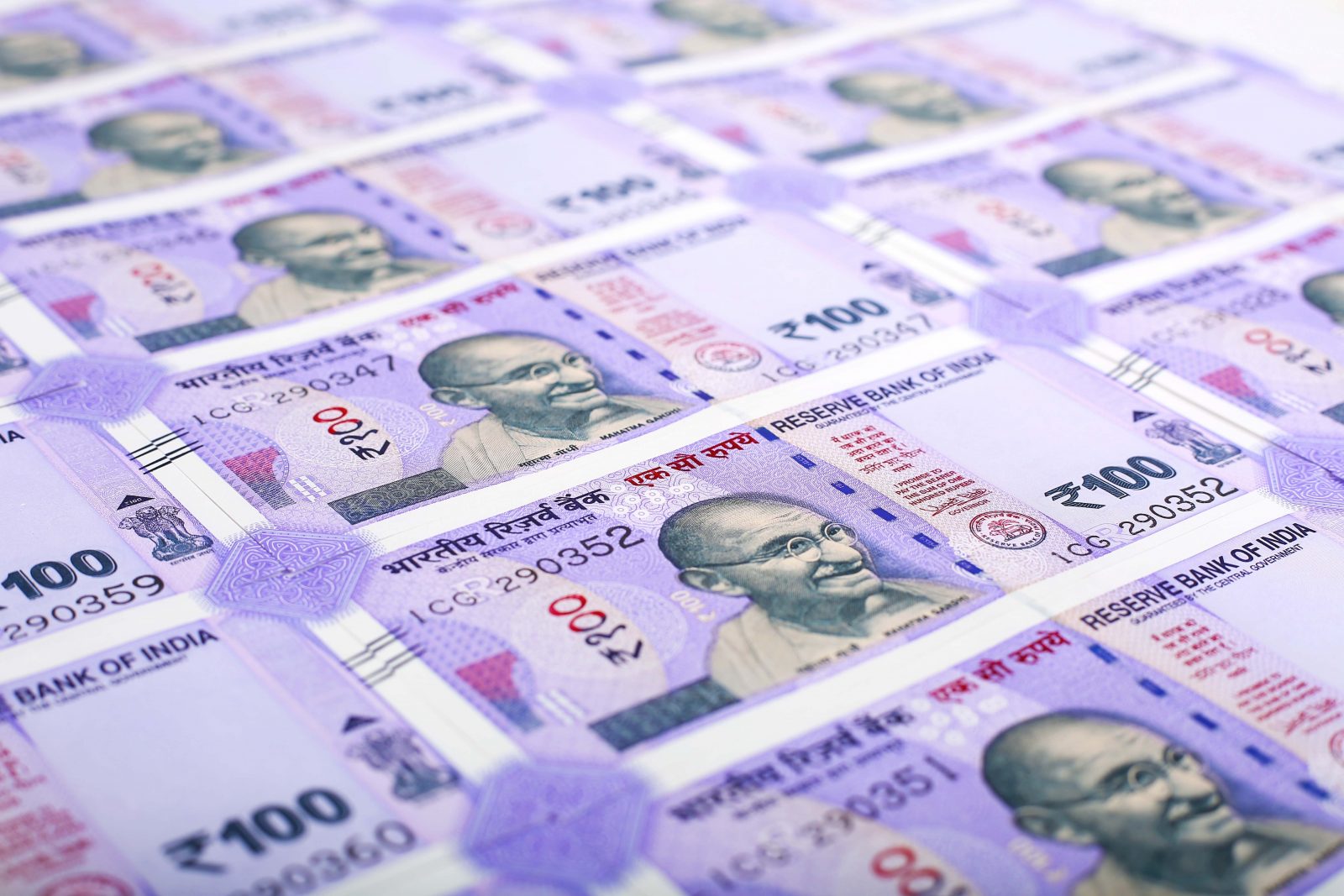
In democratic societies, economic policy often becomes hostage to electoral politics, devolving into quixotic pledges that are optimised for securing votes rather than social welfare. Qualifying as a polemical issue that has been most widely discussed, the 2016 shock therapy through demonetisation of 86 per cent of all Indian currency in circulation, is arguably a case in point. In a democratic polity, the political manifestos transcend to the policies to impress the masses paying minimal attention to market efficiency, rather, gain is considered a windfall. Intuitively, there are few factors that determine the eligibility of a policy to qualify in mass politics. The magnitude of the people affected by the policy, the organized structure of the people, and the kind of effect it has on the masses. It could be direct or indirect and short or long run depending on the execution of the policy.
The narratives have been changed from the original proclamation of extirpating black money and choking the funding for terrorism to tout for a cashless economy and digital payments as promoted by the relentless advertisements and social media campaigns.
Theoretically, proscribing a country’s currency for a short period by ceasing the value of the same is considered to be one of the strategies to deal with black money. History has, however, proven that demonetisation must be accompanied with a structured treatment to the economy as fall in inflation becomes intractable and aggregate demand tends to attenuate.
As per the Global corruption perception index, India is ranked 81stposition by Transparency International, an agency that adopts a specific methodology to evaluate the level of corruption in different countries. India has shown an improvement in score and for the first time, China has been assessed to have more corruption than India.
Though the score seems to be encouraging, a comparative analysis shows that developing countries have been taking up legislative measures bolstered with government initiatives and transfer of knowledge about corruption. Vanuatu, The Solomon Island and South Korea have improved their score by encouraging citizen partnership, passed various anti-corruption laws and pushed for social reforms to combat corruption.
The intent to strike the shadow economy through demonetisation had a substantial effect on the informal economy too. The loss suffered due to a cashless economy especially by the informal sector eclipsed the expected result of a reduction in the shadow economy. Further, the fundamental proposition to withdraw currency for a short period is premised on the assumption that there is a definite relationship between the currency in circulation and the so-called “shadow economy”. A simple glance at the data of different countries’ currency to GDP (Gross Domestic Product) ratios and shadow economy figures illustrates the misconception. There are countries with higher currency to GDP ratios than India but records smaller shadow economy – likewise, some countries have larger shadow economy despite lower currency to GDP figures. This is because black money is seldom held in cash. It is often converted to high-value items like real estate, diamonds, gold, films, etc. Also, the high-value stakeholders, politicians being the ironical suspect, have evolved to absorb the black money and have been scot free even post-demonetization.
Countering terrorism by making the fake currency illegal was the second claim that has been appreciated by the public. Terror incidents are a menace to people especially in conflicted areas, zones with extremisms and other local terror groups. While contemplating the effects of demonetization to counter the terror incidence, the Terrorism Index suggests that the index has increased to 7.57 in 2017 from 7.53 in 2016. There is no conspicuous result relating to terrorism if such a radical decision was intended to control terrorist incidence.
A thorough study entitled ‘Cash and the Economy: Evidence from India’s Demonetisation’ conducted at Harvard University used economic modelling techniques and satellite data to find that India’s demonetisation led to a contraction in ATM withdrawals and had an effect on both the formal and informal sector. The cross-sectional analysis of the districts recorded the reaction to the shock was uncertain and the withdrawal quantum changed with the proportion of the informal economy. The informal economy is estimated to account for 81 per cent of total employment and 44 per cent of total output which pertains to cash-intensive transaction. While the GDP rate has not fluctuated, the estimates for employment has caused a reduction in the national economic activity of roughly 3 percentage points in November and December 2016. There is a widespread opinion from various technocrats about the excess cost of executing demonetisation over the actually proposed benefit. In political terms, however, the policy has borne significant payoffs for the current establishment.
One point of evidence for this claim is the manner in which the decision was made. Reports reveal that the government made the decision to demonetise despite stiff opposition from the RBI board, meaning that leaders were alerted to the potential economic pitfalls prior to introducing the shock. It is likely that the prospect of political gains prevailed over economic ones, especially given that the current establishment exhibits a penchant for such conduct – similar tensions between economic and electoral considerations have been observed with respect to the calculation of GDP and the proposed methodology by Central Statistical Organization.
A slump in growth rate was expected on the account of demonetisation but India seems to be consistently growing. However, this does not harbinger a steady state of development. Agriculture sector accounts for almost 50 per cent of the total workforce experienced a severe deprivation due to their dependence on cash. Further, growth in real investment also plunged in the fourth quarter of 2016-17 which collapsed the rate of industrial credit in the last two quarters following demonetisation. An analysis from the Economic Survey 2016-17 volume 2 suggests no economy has experienced a 7 per cent growth rate with low investment and high levels of unemployment. This validates the contention posted by the economists regarding the methodology of GDP metric calculation.
Literature states that there is an internal paradox that is associated with the response of people in the informal sector. An unequivocal inference is hard to be drawn about the response due to the power hierarchies within the informal economy. Analysing informal labour and informal capital, factors of informal economy would help us identify the nuances of the effect. The informal capital faces the hardship of a cash crunch and exploits the informal labour during the crisis. Further, absence of a system to control the squeezing of labour corroborates the inefficiency of the state to mollify the situation.
There is an undeniable defilement of economy in the short run post-demonetisation, however, comment on the long run effects have to be reserved to the time when there is maximum accessibility of data. The ruling establishment has, indeed, managed to spin the policy as relying on the patriotic duty of its citizens in aiding their Prime Minister’s efforts to flush out black money from the economy. If one were to assume policymakers to be rational actors, it would stand to reason that demonetisation was done to avail electoral payoffs, even as broader society incurs a reduction, willingly, in social welfare. Unfortunately, India’s demonetisation bears testimony to a glaring ailment of all democracies – that bad economics can be good politics.
Manjari Balu is a Research Analyst at TPF. She holds a degree in economics.