Category: Opinion/Commentary

  • Changing Socio-Economic Situation of UP over the past Decade

    Changing Socio-Economic Situation of UP over the past Decade

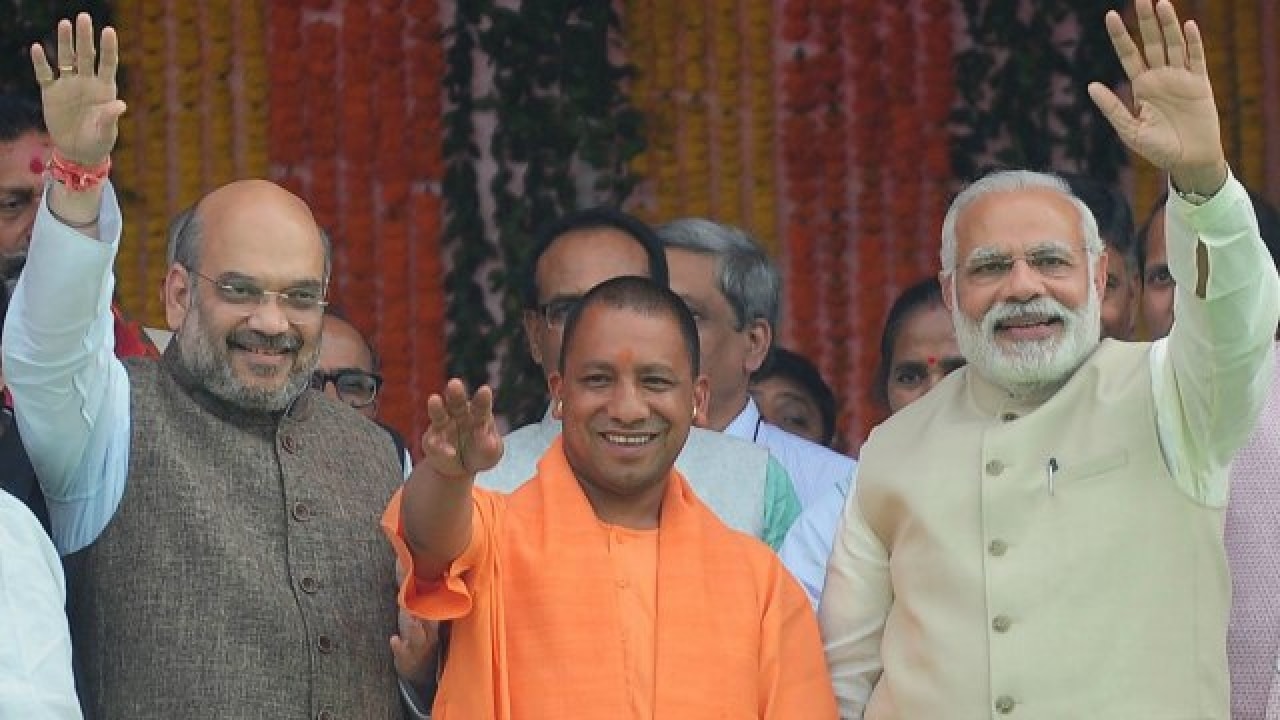
    Elections have been announced and UP will be crucial. Parties have been campaigning for them for at least the last 6. The media has been awash with advertisements portraying a rosy picture of UP. They needed this unprecedented blitzkrieg to overcome the negativity due to the poor of the COVID second wave. Anyway, the and the government try to present a positive image of their work. Other state governments followed the UP, to the delight of media which is garnering much revenue.

    What is the reality on the ground in UP? Farmers, workers and have been protesting. Why this protest if the situation is as rosy as is projecting? Where does lie? Citizens need to know, to make up their minds about who to vote for. Since there has been growth. Even when it is small but positive, will be visible in socio-economic parameters, like, education, longevity, etc. There will be more roads, bridges, agricultural production, and so on.

    So, it is no brainer that the last 5 years would show progress compared to the immediately preceding 5 years and the ones before that, etc.. The meaningful comparison has to be based on changes in the ratios and growth rates between the earlier period and the present one. That tells us whether matters will improve faster or stagnate. Also, comparisons with all India figures would yield a picture of where UP stands compared to other states.

    If the present regimes 5 years are compared to the 5 years earlier this would be unfair since the last two years have been unusual – hit by the pandemic and the lockdown. The economy as a whole experienced a downturn and so did UP. A meaningful comparison would be between the pre-pandemic three years and the 5 years before them.

    Growth has Decreased

    A difficulty arises regarding measuring the growth of the economy since the Indian economy’s data is suspect, especially after demonetization. A disjuncture has been created between the organized and unorganized sectors while the data is largely from the former. So, the latter goes largely unrepresented and this causes a large error in the growth rates.

    Ignoring this aspect for the moment, let us analyse the official data, assuming it to be correct. It shows that out of the 20 major states, UP’s position remains at 19 in the last 10 years. In effect, there is no relative improvement in UP’s situation at the all India level.

    This is because the official growth rate was 11.8% in 2016-17 and has fallen to 6.3% in 2018-19 before the pandemic. The decline is also visible in the real income per person. Between 2012-13 and 2016-17, it increased by 27.63%. If we take the average over three years it increased by 16.6%. Leaving out the pandemic year of 2020-21, it rose by 9.23% (including the pandemic year it was 0.43%, that is it hardly grew). Including inflation also the per-person income growth slowed down. It was 25% during 2017–21 as compared to an increase of 65% during 2012–17.

    Slower Structural Transformation

    UP’s income (GSDP) was Rs.19 lakh crore out of GDP of Rs.190 lakh crore in 2019-20 – 10% of the country’s income. But its population share is estimated at 17%. The situation has not changed in the last 5 years and that is why the per-person income capita income rank or UP remains at 19th out of the 20 major states.

    One of the factors underlying the slow growth of UP is that it has structurally not transformed as much as has happened for the country as a whole. In UP, the share of agriculture is 24% while that of services is 50%. The all-India figures are 19.7% and 54.3% respectively. So, UP’s structural transformation is lagging behind that of all of India. Since agriculture cannot grow as fast as the services sector, the state’s growth rate is bound to be less than that for the nation. This feature is also the reason for weak employment generation in UP because agriculture cannot absorb more workers, in fact, it is characterized by mechanization and disguised unemployment.

    UP employed 57.13 lakh under MGNREGS, in May 2020 which was the highest in India. This points to high rural unemployment in UP. The large scale migration of workers from other states to UP in 2020 is an indication of the weak employment generation in UP which forced many to look for work elsewhere. No wonder the state faced the biggest impact of Coronavirus in India both in terms of employment and health aspects.

    Unfortunately, data invisibilizes the unorganized sector and hence the poor. The country has suffered policy induced crisis due to demonetisation, implementation of GST, NBFC crisis and the pandemic induced lockdown. This has deeply impacted the unorganized sectors of the economy and they have suffered massive losses during 2016-17 to 2020-21. The total loss for the unorganized sector in UP is estimated at 10% of the national loss during this period and amounts to Rs. 7.1 lakh crore. That is an average loss per annum of Rs. 1.78 lakh crore. This loss is far more than what the social welfare schemes of the government give. In any case, the schemes are mired in corruption and inefficiency and do not reach everyone uniformly. So, the poor are the net losers in spite of the government schemes.

    Government’s Efforts Slowing

    Are the government schemes expanding? How much are they able to help UP develop and catch up with the other states of India?

    No doubt, the absolute budgetary expenditures rise with inflation and growth. So, on most items more is spent than in earlier years. But to know whether these expenditures will help improve the situation or not, one has to compare the expenditures as a ratio of the state’s income (GSDP). On this score, the Budget data shows:

    a) Development expenditure peaked in 2015-16 at 16.66% and declined to 13.28% in 2019-20. This signifies that development is decelerating.

    b) Non-Development expenditure rose from 6.81% in 2015-16 to 8.49% in 2018-19 and was at 7.12% in 2019-20. This reflects the expenditure on grandiose show schemes of the state government which resulted in a decline in developmental expenditures mentioned above.

    c) No wonder expenditure on Education, etc. peaked in 2016-17 at 4.21% and fell to 3.07% in 2018-19 and was at 3.3% in 2019-20. The target should have been 6% of GSDP on public education. Instead of moving towards that goal, there is retrogression.

    d) Similarly, health expenditure peaked in 2016-17 at 0.84% and fell to 0.79% in 2019-20. It should have been raised to at least 3% of GSDP and instead, it fell. The impact of this was visible during the pandemic with poor health facilities in large parts of the hinterland and unnecessary deaths.

    e) Budgetary Capital outlay peaked in 2015-16 at 5.66% and fell to 3.55% in 2019-20. This slows down infrastructure development and adversely impacts private investment.

    In brief, as the economy expands, there will be development in a state – more hospitals, schools, colleges and so on. Further, development may be skewed and leave the poor behind as is the case in recent times. The real picture becomes clear when one looks at the ratios and compares them with other states. In these respects, UP has lagged behind both its past performance and other states. The virtual campaigning required due to the spread of Omicron would marginalize the less tech-savvy parties and give BJP an advantage in painting a glorious image of itself, in spite of its recent indifferent performance.

    This article was published earlier in hwnews.in

    Feature Image Credit: www.dnaindia.com

  • The power of poetry in politics and indigenous people of India

    The power of poetry in politics and indigenous people of India

    O ancestral spirits!
    How now do we escape,
    From the conspiracies of time,
    Concocted on the flames
    That from the sweltering earth rise?
    Where all is slowly being roasted alive,
    The air, the forests, and the soil,
    And man – in body and in mind?

    – Lament in Songs (Geeton Ke Bilaap) through Jacinta Kerketta

    A profound political philosopher of ancient Athens whose administrational academics left people in admiration and aghast protested against poets and critiqued poetries. He feared the passion or public emotion evoked by poets, and he reckoned that rational thought could be ravaged by public passion.

    “For a poet is an airy thing, winged and holy, and he is not able to make poetry until he becomes inspired and goes out of his mind and his intellect is no longer in him.”

    ― Plato

    Poetry is one of the ancient art forms, the earliest kinds of poems were recited and passed on orally before the evolution of scripts. Administrative and ancestral accounts were more merely to remember due to the poem’s rhythmic and repetitious nature.

    Influence of poetry in politics

    Through triumph and terror or from pain to power, poetry allows people to paint different shades of human emotions. Poetry has served as a significant tool to convey meanings and messages since the beginning. It is also used as a channel to cast awareness on sound socio-economic concerns and personify political questions. Poems play a pivotal role in collective resonation to specific themes and it embraces the efficiency of words which could be serene as a sea or sharp as a sword.

    In the year 1821 Percy Bysshe Shelley wrote eloquently in his essay A Defence of Poetry that the poet creates humane values and imagines the forms that shape the social order and“Poets are the unacknowledged legislators of the world.” Political poetries pave a path to discuss injustice in the societies and build a bridge between the emotive expression of the state administrators and its citizens. Political poetries are not definitive they are not bureaucratic blueprints or literary balms either, they imprint the cyclic endurance of the past, present, and future. They massively represent the public’s fear and anguish or equip the endangered with empowerment.

    Adrienne Rich compellingly stated in a commentary that –

    “I’m both a poet and one of the “everybodies” of my country. I live with manipulated fear, ignorance, cultural confusion and social antagonism huddling together on the faultline of an empire”.


    Profile and position of indigenous people of India

    Histories have created many poets and many poets have influenced histories, traditionally archiving their histories through songs, folklore, and myths. Adivasis have aced their way through their ancestral accounts accumulation. Adivasis are folks who function their lives through flourishing flora and fauna encapsulated with enriching cultures and practices and lives among the areas of the Indian sub-continent. Adivasi is a common term that was coined in the 1930s to address the indigenous groups of India, while the legal term ”scheduled tribes” is used in the constitution. They are the most prehistoric inhabitants of the sub-continent who are a heterogeneous group with diverse ethnicity and linguistics. Post the Aryan intervention the Adivasis began to trade with people of the plains, it was during the mid-eighteenth century that the indigenous people of the east revolted against the political British and its intrusive regulation upon the mainlands of the indigenous folks.

    This renounced the defenceless position of the land and its people. Even, today the Adivasis encounter various forms of social discrimination, political power lash, and remain economically stagnant.

    Balance between battles and banquets- Political poetries of the past and the present

    Songs, myths, and folklore revolving around landscapes, political relations among the Adivasis or with the non-Adivasis, human emotions were all oral histories being passed on to the next generation. The stories of Adivasis were massively written by people who did not belong to the Adivasi community, the literary endeavours of the tribes were not adequately acknowledged due to the lack of recognition of languages amongst the state. The poems written by the poets or writers of the community have an extensive influence over the political lives of Adivasis in terms of the political periphery.  In most poems by the Adivasis, the muscles of metaphors were majorly merged with nature or the environment. The largest of them are written in their indigenous languages like Kotas, Santali, and Ho & others where some are translated to other vernacular languages and some are not. Many political poetries raise questions against the havoc harboured by a biased notion of “progress”. The following are a few poetical works of indigenous people of India which brought out Adivasi’s political proximity.

    The editor of Chandini Magazine, Susheela Samad was one of the earliest Adivasi writers in the 1920s, where two of her poetry were published in the 1940s. In the year 1960 several stories of Alice Ekka were published in the Adivasi Patrika who was also the first female Adivasi writer.

    The very famous Temsüla Ao an Ao Naga tribal poet and an ethnographer who worked on Oral histories published plenty of poetry from 1988 to 2007 shedding light on the word “song” in all her titles emphasizing the essence of poems in tribal song culture and expressing the voices of her community against land & cultural alienation.

    Referring to the violence in the valley, the poet says

      ” But to-day

       I no longer know my hills,

       The birdsong is gone,

       Replaced by the staccato

       Of sophisticated weaponry. ” (“My Hills” 19-23)

    The poet laments the loss of peace and verdure in her region.

    The director of Adivasi Bhasha Shodh Sansthan (Tribal Language Research Institute) Ushakiran Atram is a Koitur poet and a writer who held compelling narratives on patriarchal injustice and political vocalization from a woman’s scope of the lens.

    “Bata maan, main kiski hun? Baba-Bhaiya ki? Mere Shauhar ki? Sawkaar-Ranger-Patil ki? Jameendaar-Darzi-Sonaarki? Kiski hun main?”—Tell me, mother, whose am I? Father’s or brother’s? My husband’s? Moneylenders-Rangers-Patils? Landlords-Tailors-Goldsmiths? Whose am I?

    the mentioned poem is from one of her books named ‘Motiyarin’ A Gonti term which means a position given to a woman leader who supervises the overall activities in Gotul.

    “Unless you speak their dialect, you’re an outsider,” says Lakshmanan who accompanied Tamil Nadu Pazhankudi Makkal Sangam, a movement that worked for indigenous welfare. In 2010, he also wrote an anthology of poems titled ‘Odiyan’ which means the evil spirit through which he paints the colours of pain and anguish of the Irular community which was partly in their language.


    Jacinda Kerketta a young poet and a journalist of the Oraon tribe raises questions about the standpoint on “development” on tribal lands, In the poem “Oh Shahar” (Oh City) she writes

    Leaving behind their homes,

    Their soil, their bales of straw,

    Fleeing the roof over their heads, they often ask,

    O, City!

    Are you ever wrenched by the very roots?

    In the name of so-called progress?

    The author brings out the intensity of anthropocentrism imposed upon the Adivasi arena and all her poems do not victimize their position instead evokes thought-provoking questions.


    Recently, Arivu a resounding rapper and a political poet brought out many problematic political practices of history and the present against his community through his album called ‘Therukural’ (voices of the streets), and in 2021 the song “Enjoy Enjaami” which is a blend of Rap and ‘oppari'(lament song sung during mourning )took over the stage of multi-media, the artist poetically and politically protested in all his works intending to enlighten the traces of civilization before caste and issues of inequality.


    Waharu Sonavane, a Bhilli poet and an activist whose “Stage” was an icebreaker that questioned the leadership of a major movement – Narmada Bachao Andolan and indigenous representation in bearing the torch.


    Will the mainstream history intersect Adivasi’s ancestral accounts? or will they contradict? Poetical poems fade along with time, they lose their essence of eventual happenings but strikingly hold the public psychology of the period. Political poems of indigenous tribes of India pose their position into viewing history from a different lens – meaning to revisit the history not just from conventional collectives but also to learn from our oral archives, songs and stories.

    The following poem was written by Waharu Sonavane; translated by Bharat Patankar, Gail Omvedt, and Suhas Paranjape –

    Stage

     We didn’t go to the stage,

    nor were we called.

    With a wave of the hand

    we were shown our place.

    There we sat

    and were congratulated,

    and “they”, standing on the stage,

    kept on telling us of our sorrows.

    Our sorrows remained ours,

    they never became theirs.

    When we whispered out doubts

    they perked their ears to listen,

    and sighing,

    tweaking our ears,

    told us to shut up,

    apologize; or else…


    Feature Image Credit: www.climatescorecard.org

  • RCEP, Indo-Pacific Economic Framework and Vietnam

    RCEP, Indo-Pacific Economic Framework and Vietnam

    The World Bank projection for the RCEP is indeed very impressive and the Member States will see GDP increase by 1.5 per cent. Furthermore, by some estimates, the RCEP could add almost US$ 200 billion to the global economy by 2030.

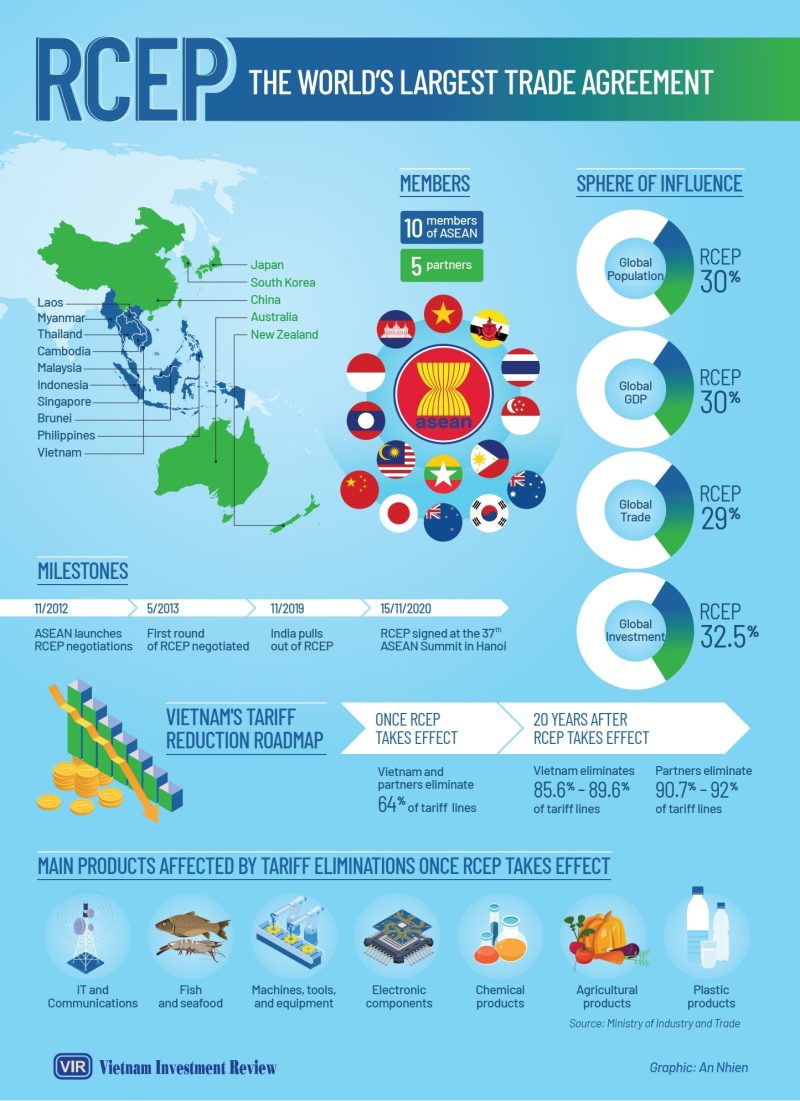
    ASEAN Member States, Australia, China, Japan, South Korea, and New Zealand have heralded the Regional Comprehensive Economic Partnership (RCEP) on 01 January 2022. This 15 Member consortium is the largest economic grouping and constitutes nearly 30 per cent of the global population which relates to a market of 2.3 billion people with an output value of about US$26.2 trillion with over a quarter in world exports. The World Bank projectionfor the RCEP is indeed very impressive and the Member States will see GDP increase by 1.5 per cent. Furthermore, by some estimates, the RCEP could add almost US$ 200 billion to the global economy by 2030.

    Infographics Credit: Vietnam Investment Review

    As far as Vietnam is concerned, the leaders in Hanoi must be happy to see the RCEP take concrete shape given that it was signed in November 2020 during the ASEAN Summit under Vietnam’s chairship. Vietnam, according to Fitch Solutions, is expected to benefit enormously from the RCEP particularly the IT, footwear, agriculture, automobiles, and telecommunications sectors being the major export categories. The RCEP will also provide Vietnam access to huge consumer markets which could be double the size of those included in the CPTPP. Vietnam can potentially move to become a high-tech manufacturer, and the RCEP can facilitate “local firms increase exports and attract high-quality goods for its consumers. Likewise, agriculture and fisheries product exports will benefit”.

    Vietnam, according to Fitch Solutions, is expected to benefit enormously from the RCEP particularly the IT, footwear, agriculture, automobiles, and telecommunications sectors being the major export categories

    Vietnam’s economic outlook for 2022 is positive with numerous growth opportunities. The National Assembly has identified (2021-2025 period) focus areas in sectors such as “digital economy, hi-tech industries, developing the urban economy, strengthening regional connectivity, strengthening the role of key economic zones, and restructuring to achieve a green and sustainable economy among others”. These sectors can be expected to grow given that the country has strong economic indicators notwithstanding the downturn in economic growth due to COVID-19. This is premisedon “investor-friendly policies, relative economic and political stability, cost efficiency, and consumer demand prospects, supply chains restructuring in Asia” which will attract both old and new investors.

    However, Vietnam should also be prepared for the ongoing and impending geo-economic and geopolitical triggers emerging from contestation between the US and China. During the East Asia Summit in October 2021, President Biden announced that the US was considering a major trade and economic initiative in the form of an “Indo-Pacific economic framework”. Soon thereafter Commerce Secretary Gina Raimondo visited Japan, Malaysia, Singapore, and South Korea to “begin discussions on potential negotiations that could start in early 2022”. Besides some Members of Congress, the new framework is also inspired by Australia and Japan, who had called for a “more active U.S. trade policy, including U.S. leadership in regional trade initiatives”. Above all, the initiative should be seen as a move by the Biden Administration to put to rest any doubts in the minds of regional leaders that the US “lacks an economic and trade strategy sufficient to counter China’s increasing economic influence” in the aftermath of President Trump decision to withdraw from the proposed 12-nation Trans-Pacific Partnership (TPP) in 2017.

    The new US economic framework, it is hoped, will also lessen fears in the minds of regional countries arising from the geopolitical-geostrategic issues between the US and China. The US’ “free and open Indo-Pacific” strategy which pivots on ‘rule of law’ is essentially diplomatic and military and is symbolized by the Quadrilateral Security Dialogue among the US, Japan, India, and Australia (the Quad) and the Australia-United Kingdom-United States (AUKUS) security partnership.

    The Quad has made significant progress and the first-ever in-person Leaders’ Summit was held in September 2021. It was agreed to advance practical cooperation on 21st-century challenges such as “ ending the COVID-19 pandemic, including by increasing production and access to safe and effective vaccines; promoting high-standards infrastructure; combatting the climate crisis; partnering on emerging technologies, space, and cyber security; and cultivating next-generation talent”. The leaders also called for building quality infrastructure in the Indo-Pacific region which was targeted against China’s Belt and Road Initiative (BRI).  As far as the AUKUS is concerned, the rationale is quite clear and is driven by the growing Chinese assertiveness amid fears of extreme coercion against regional countries particularly Taiwan and the claimants of the South China Sea.

    The RCEP and the “Indo-Pacific economic framework” are significant developments but can potentially pose a dilemma for Vietnam

    The RCEP and the “Indo-Pacific economic framework” are significant developments but can potentially pose a dilemma for Vietnam. There are numerous economic benefits to be accrued from the RCEP, but at the same time there are both economic and strategic rewards from the “Indo-Pacific economic framework”.  The US Indo-Pacific strategy has not found much favour in Hanoi; instead, Vietnam has chosen to support and pursue the ASEAN Outlook for Indo Pacific (AOIP) which envisages ASEAN Centrality and the East Asia Summit (EAS), as the underlying principle for promoting cooperation in the Indo-Pacific region.


    Feature Image Credit: worldakkam.com

  • The Cold War that Wasn’t

    The Cold War that Wasn’t

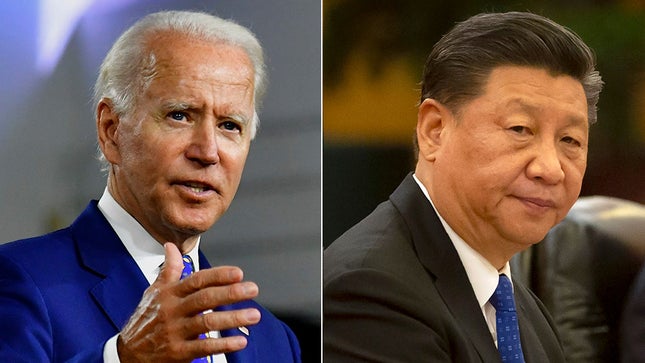
    US President Joe Biden has repeatedly cast his country’s rivalry with China as a battle between democracy and autocracy, an ideological clash reminiscent of the Cold War. This narrative is inaccurate – the United States and China are locked in a competition for strategic dominance – and all but precludes resolution. Whereas demands related to tangible assets and security concerns can be accommodated, ideological struggles typically end one way: with the unconditional defeat of one of the parties

    The US should not be attempting to “defeat” China, as it did the Soviet Union, because, first and foremost, China is not on a quest to spread “socialism with Chinese characteristics” around the world. When Chinese President Xi Jinping declared in 2017 that “war without the smoke of gunpowder in the ideological domain is ubiquitous, and the struggle without armament in the political sphere has never stopped,” he was mainly demanding that outsiders respect China’s institutions and cultural traditions.

    The US is an exhausted power, and it is now being challenged by a rising one. To ensure that this well-known geopolitical dynamic does not end in war, the US must abandon jingoistic rhetoric and replace megaphone diplomacy with wise and creative statesmanship.

    This partly reflects Chinese nationalism, fed by historical narratives, especially the memory of the “century of humiliation” (1839-1949), during which China faced interventions and subjugation by Western powers and Japan. But it is also pragmatic: The Communist Party of China recognizes that some domestic trends could destabilize the country and eventually even undermine the CPC’s rule.

    For example, China’s economic rise has produced an educated, well-connected, and fast-growing middle class. If these increasingly powerful consumers rejected restrictions on private-sector activity or limits to free expression, the CPC would have trouble on its hands. Given this, the CPC views US advocacy of political freedom and human rights in China as an effort to subvert its rule.

    Even America’s drive to export liberal democracy to Asia and Africa has been less an ideological problem for China than a strategic one. Functioning democracies are likely to be harder bargaining partners for China and might even be brought into US-led anti-Chinese alliances.

    On this front, China’s fears have probably been assuaged by recent developments. With the from Afghanistan and the Taliban’s quick reconquest of the country, America’s democratic “crusade” – to borrow the language of former US President George W. Bush – seems to have reached an ignominious conclusion.

    But even if the US is not bringing new countries into the democratic fold, its existing alliance system is formidable, and Biden is committed to strengthening it further. For example, he has worked to resuscitate NATO; created , a new defense and technology alliance with the United Kingdom and Australia; and deepened security cooperation among key democracies in the Indo-Pacific (Australia, India, Japan, and the US, known as the “Quad”).

    This focus on alliances is probably the biggest difference between Biden’s China policy and that of his predecessor, Donald Trump, who spearheaded the shift toward confrontation. (Prior to Trump, recent US presidents largely attempted to maintain good working relations with China, not least because they clung to the assumption that the country’s economic rise would gradually bring about political change.)

    For China, this difference is worrying. Though the US cannot contain China alone, it can apply strong diplomatic pressure if it has other powers on its side, and China is in no position to create an alliance system that can match that of the US. Far from stabilizing the situation, however, this imbalance could fuel China’s insecurity, making constructive engagement all the more difficult

    America’s position is hardly unassailable, either. Biden’s touted exposed the limits of ideology as a mobilizing tool for a global anti-China coalition. It does not help that America’s own democracy is plagued by polarization, paralysis, and discontent. Add to that the world’s highest numberof COVID-19 deaths, and the “shining city on a hill” has lost its luster, to say the least.

    While the US is no ancient Rome – not least because it retains extraordinary advantages in crucial areas, from defense and diplomacy to technology and finance – it is suffering from what the historian Edward Gibbon described as “the natural and inevitable effect of immoderate greatness.” It has failed to adapt its democratic institutions to meet the needs of its population and its responsibilities as a world power.

    Ultimately, the US is an exhausted power, and it is now being challenged by a rising one. This dynamic is as longstanding as it is dangerous. As the ancient historian Thucydides explained, the rise of Athens, and the fear that this instilled in Sparta, made the catastrophic Peloponnesian War inevitable. Harvard’s Graham Allison notes that there have been 16 similar cases in the last 500 years. War broke out in 12 of them.

    To avoid what Allison calls the Thucydides Trap, the US must abandon jingoistic rhetoric and Manichean thinking, replacing megaphone diplomacy with wise and creative statesmanship. The choice is not between capitulating to China and crushing it. The US must recognize China’s legitimate concerns and aspirations, and it must be prepared to negotiate accordingly. (Sooner or later, it will have to do the same with regard to the West’s current showdown vis-à-vis Russia over Ukraine and NATO’s expansion.)

    The US must accept that the days of American hegemony are over. In today’s multipolar world, different political cultures and systems will have to learn to coexist. The ideological defeat of the Soviet Union did not exactly usher in a liberal democracy. Perhaps more important, even if China somehow suddenly became a liberal democracy, its historical grievances and territorial aspirations would remain, as is the case with Russia today. In this sense, ideological competition is beside the point.

    This article was originally published by Project Syndicate.

    Feature Image Credit: The Hill

  • Infrastructure development is high priority for Vietnam-Lao PDR relations

    Infrastructure development is high priority for Vietnam-Lao PDR relations

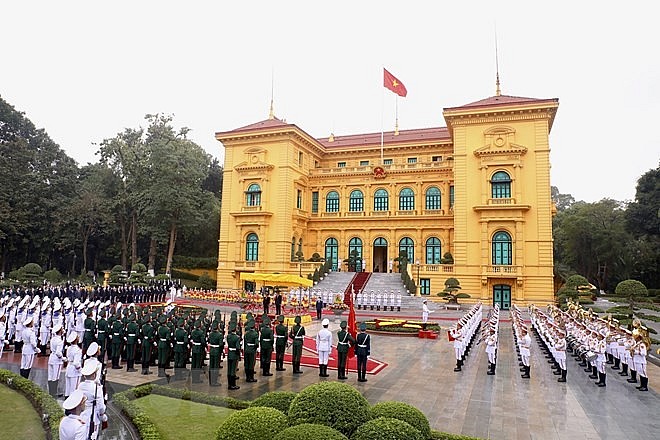
    The year 2022 is singularly important for Vietnam-Lao PDR relations. It marks the 60th anniversary of the bilateral diplomatic relations, and 45 years of the Vietnam-Laos Treaty of Amity and Cooperation. Both sides have accorded high priority to the current year, and Prime Minister Pham Minh Chinh extended the invitation to Lao Prime Minister Phankham Viphavanh to visit to commemorate the above events.  Accordingly, Prime Minister Viphavanh is in Vietnam and is leading a high-level delegation.

    Prime Minister Pham Minh Chinh, according to reports, will also co-chair the 44th meeting of the Vietnam-Laos Inter-Governmental Committee and launch the Vietnam-Laos Solidarity and Friendship Year 2022. This would help to “get a better understanding of each other’s socio-economic situation, development orientations and external policies” particularly during the ongoing COVID-19 pandemic.

    The visit is also intended to boost Vietnam-Laos cooperation strategy for the 2021-2030 period and the five-year cooperation plan for the 2021-2025 period that are now into the second year and involve bilateral engagements in multiple domains such as politics, diplomacy, security-defence, economy, science-technology, culture, and education-training.

    COVID-19 would be high on the agenda of both leaders given that the pandemic is impacting their countries. They are in the midst of the fourth wave with 8,236 and 354,075 active cases (as of 05 Jan 2022) respectively.

    In December 2021, the Lao government announced opening up of the country for trade and tourism in three phases: First phase – January 1, 2022; Second phase – April 1, 2022; and the Third phase July 1, 2022. In the first phase, 17 countries, including Vietnam and many neighbouring ASEAN countries, besides some European countries, China, the US, Australia and Canada would be welcomed. The Lao economy is impacted by COVID-19 and was projected to grow at 3 per cent, a figure lower than 4 per cent as approved by the Laotian National Assembly. This attributed to the pandemic and prolonged lockdowns that disrupted economic activities and companies, retail and wholesale shops had to shut down.

    Leaders in Vientiane recognize the importance of regional development particularly in the Cambodia-Laos-Vietnam Development Triangle Area (CLV-DTA)

    Vietnam and Lao PDR are also engaged in major connectivity projects. Lao is a landlocked country and ports in Vietnam provide the country access to the sea to engage in international seaborne commerce.

    Last year, during President Nguyen Xuan Phuc visit to Laos, 14 agreements spanning a wide range of issues were signed. The leaders agreed to fast-track joint projects including Vung Ang No.1, 2, 3 port projects, the Hanoi-Vientiane Expressway, Vientiane-Vung Ang Railway, Lao-Vietnam Friendship Park in Vientiane, Nongkhang Airport and hospitals in Lao Houaphan and Xiangkhouang Provinces.

    One of their flagship joint projects is the 1,450 kilometres long East-West Economic Corridor (EWEC). It is a road-building project and is supported by the Asia Development Bank (ADB). Its western leg includes Thailand, and in the east, it terminates at the Vietnamese port of Da Nang which is a major gateway to the Pacific.

    Similarly, the 555 kilometres railway link (452 kilometres in Laos and 103 kilometres in Ha Tinh central province in Vietnam) between Vientiane and the Vietnamese deep-water port of Vung Ang is important. It gives Laos yet another access to the sea. Importantly, it is being jointly developed and Laos would hold a 60% stake in the project, and Vietnam with 40%.

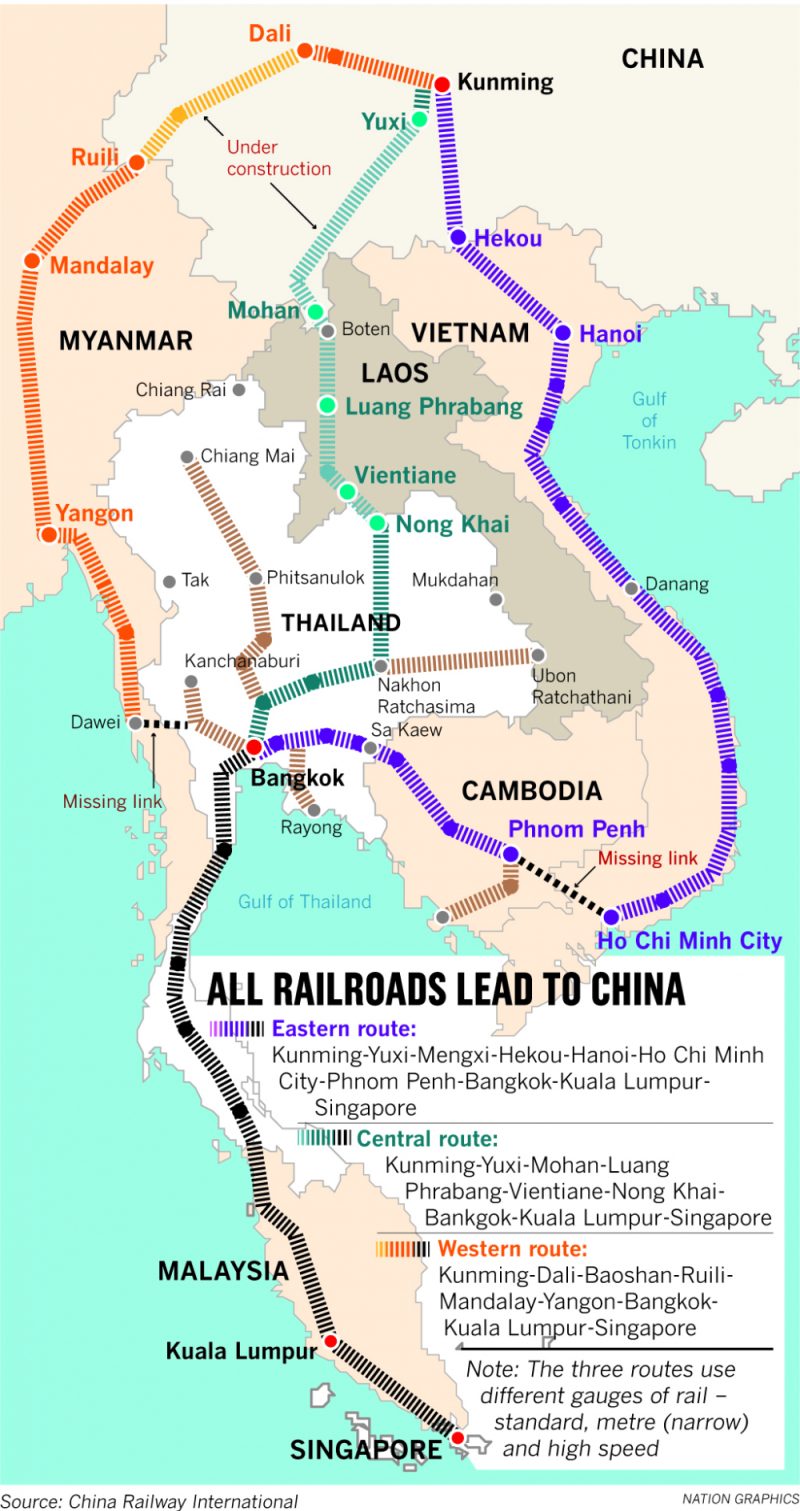
    China is also engaged in connectivity projects in Laos. In December 2021, after six years of construction, the Laos-China Railway project was finally operationalized. It is a complex project and includes 61 kilometres of bridges and 198 kilometres of tunnels and reduce travel time between Vientiane to the Chinese border from 15 hours by road to four hours. It will be operated by the Laos-China Railway Co., a joint venture between China Railway group and two other Chinese government-owned companies with a 70% stake and a Laotian state company with 30%.

    Vietnam offers Laos an alternative to Chinese infrastructure investments and it ranks third among investors in Lao with total investments of US$ 5.16 billion in 209 projects. There are fears that the Chinese funded projects do not generate economic benefits for Laos, instead these only benefit China.

    There are geopolitical dynamics at play in the CLV-DTA that are targeted against China, and Cambodia and Laos acknowledge Vietnam’s leadership

    Vietnam cannot match up with the Chinese investments in Laos, but leaders in Vientiane recognize the importance of regional development particularly in the Cambodia-Laos-Vietnam Development Triangle Area (CLV-DTA). Vietnam for example has invested nearly US$ 4 billion in Cambodia and as noted above over US$ 5 billion in Laos. It is fair to assume that there are geopolitical dynamics at play in the CLV-DTA that are targeted against China, and Cambodia and Laos acknowledge Vietnam’s leadership.

    Images Credit: Vietnam times

  • China’s New Land Border Law

    China’s New Land Border Law

    On October 23, 2021, the Standing Committee of the National People’s Congress, the highest legislative body of the People’s Republic of China passed the Land Boundary Law along adding to its new Maritime Law as well as China Coast Guard Law passed earlier in 2021, which shows China’s intention in pursuing an aggressive policy on its territorial claims. The land boundary law came into effect on January 1, 2022. The law is likely motivated partially by the possible implications over developments in Afghanistan that could potentially have a destabilising effect in Xinjiang, growing violence in Myanmar-China border but more by the India-China geopolitical tussle.  The timing of the law is clearly related to the escalating border tensions with India and in the South China Sea. India and China have been engaged in border stand-off since May 2020.[i] Closer scrutiny of this law, consisting of 62 articles in seven chapters, indicates that China is stepping up its aggressive tone when it comes to border disputes, demonstrated by its rhetoric that China will “resolutely defend territorial sovereignty and land border security.”[ii] It states that the main aim of the law is to “standardise and strengthen the security and stability of land borders” and “safeguard national sovereignty, security and territorial integrity.”[iii] In other words, Beijing will take all measures to safeguard its interests within its specified borders by any means be it military or economic. The law effectively uses a civil-military fusion strategy emphasising improvement of public services and infrastructure along the borders as also incorporating the local population in territorial defence. The law prohibits any party from engaging in any border activities which would “endanger national security or affect China’s friendly relations with neighbouring countries”.[iv]

    Zhang Yesui, a spokesperson for the National People’s Congress stated that the law became necessary to safeguard China’s interests at the border and to regulate national borders, border defence management, and international cooperation in border affairs.[v] This law has serious implications for all 14 countries sharing borders with China. By incorporating the sovereignty claim over disputed territories China has effectively legitimised the use of force along its 22,4577 kilometres of borders as of January 01, 2022. Even though China has guaranteed that these laws aren’t meant to dislodge any international laws and treaties, it is evident that China is adopting aggressive policies to attain its goals.

    The new law has serious implications for India. Firstly, since the 1962 war, the Line of Actual Control (LAC) is the de facto border between India and China, and both countries have different interpretations of the LAC over at least 13 different locations.[vi] Article 4 of the law states China’s sovereignty and territorial integrity as sacred and inviolable and applies this dictum to the disputed territories.[vii] Thus this law makes the earlier agreement of Peace and Tranquillity along the disputed Sino-India border almost irrelevant.  Secondly, the law forbids any form of construction of facilities “near” China’s border. This is elucidated in Article 10 deals with border defence construction including its river waters management under the term flood control. These issues are deliberately kept vague, and they could interfere with any form of construction on the border. This could again become contentious as both the countries are engaged in an “infrastructure arms race” on their sides of the border. Thirdly, the new law has made a special mention of the role of civilians concerning the development of villages and towns in the borderlands. The law reflects China’s intention to increase civilian settlements bordering India, Nepal, and Bhutan.[viii] This move goes in tandem with China’s agenda of “developing the border regions, enriching the local people” introduced in 1999 and is seen as a strategy to legitimise its territorial claims.[ix]

    The law has a problematic stance with international law, as Beijing is circumventing these by enacting domestic laws to give it legal backing for its unlawful actions. It shows that international law is ineffective against powerful states. The new law goes against the ethos of the Vienna Convention on Law of Treaties of 1969 (VCLT), which is an instrument that regulates the treaties between states. It establishes internationally recognised norms of behaviour by states in crisis or conflict situations. It is important to note that under the general principles of international law, unilateral declarations do tend to have a legal character of their own as explained under the Law of Treaties. It is imperative that such unilateral declarations must not affect the rights of other states and must go through two different stages to be considered legally acceptable. Firstly, there should be a unilateral statement by an actor and secondly, the said statement must either be accepted by the party/parties concerned or must go unchallenged. In this case, several parties have issues with China’s new land border law.[x]

     As Beijing’s ‘Land border law’ came into effect on January 1st, the PLA released a propaganda video showing the Chinese flag and soldiers in the Galwan valley, with a banner reading ‘never yield an inch of land’. Earlier China released a statement renaming 15 places in India’s border state of Arunachal Pradesh. Chinese maps have consistently shown the entire state of Arunachal Pradesh, Barahoti plains in Uttarakhand, and areas up to the 1959 claim line in Ladakh as its territory.[xi] China will use the new law to claim these areas as its sovereign territory thus deeming it non-negotiable. It is playing realpolitik to increase pressure on India by escalating the friction points.[xii] The current situation at the India-China border has the potential to spiral out of control, as both sides are deploying heavy armaments and forces on the border, and in essence, the new law makes the border dispute a ticking time-bomb with far-reaching consequences for the world.

    Reference

    [i] Philip, Snehesh Alex. “Chinese Troops Challenge India at Multiple Locations in Eastern Ladakh, Standoff Continues.” ThePrint, 24 May 2020, https://theprint.in/defence/chinese-troops-challenge-india-at-multiple-locations-in-eastern-ladakh-standoff-continues/428304/.

    [ii] Wei, Changhao. “NPCSC Adopts New Laws on Family Education and Land Borders, Amends Audit Law & Authorizes New Regulatory and Military Reforms.” NPC Observer, 18 Nov. 2021,https://npcobserver.com/2021/10/26/npcsc-adopts-new-laws-on-family-education-and-land-borders-amends-audit-law-authorizes-new-regulatory-and-military-reforms/.

    [iii]  Panag , Lt Gen H S. “China’s Land Border Law Is More Sinister than It Lets on. India Needs a Course Correction.” ThePrint, 11 Nov. 2021, https://theprint.in/opinion/chinas-land-border-law-is-more-sinister-than-it-lets-on-india-needs-a-course-correction/764463/.

    [iv] 13th National People’s Congress. “Land Border Law of the People’s Republic of China.” The National People’s Congress of the People’s Republic of China, 23 Oct. 2021, http://www.npc.gov.cn/npc/c30834/202110/5a3d27747cc542f8bcde9030a83218e2.shtml.

    [v] Huang, Kristin. “What ‘New Challenges’ Does China’s New Border Defence Law Aim to Tackle?” South China Morning Post, 31 Oct. 2021, https://www.scmp.com/news/china/diplomacy/article/3154139/what-new-challenges-does-chinas-new-border-defence-law-aim.

    [vi] Fravel, Taylor M. “Analysis | Why Are China and India Skirmishing at Their Border? Here’s 4 Things to Know.” The Washington Post, WP Company, 2 June 2020, https://www.washingtonpost.com/politics/2020/06/02/why-are-china-india-skirmishing-their-border-heres-4-things-know/.

    [vii] Kalita, Jayanta. “China’s New Border Law Could Further Complicate Boundary Disputes”, The Irrawaddy, November 22, 2021.  https://www.irrawaddy.com/opinion/guest-column/chinas-new-border-law-could-further-complicate-boundary-disputes.html

    [viii] Pasricha, Anjana. “Chinese Border Villages in Disputed Territory Put India on Alert.” VOA, 2 Apr. 2021, https://www.voanews.com/a/east-asia-pacific_voa-news-china_chinese-border-villages-disputed-territory-put-india-alert/6204062.html.

    [ix] Jianqiang, Yang. “Deputy Director of the National Ethnic Affairs Commission, Answered Questions from the Chinese Government Website on the ‘Eleventh Five-Year Plan’ for the Action to Promote Frontiers and Enrich the People.” Central Government Portal, 18 June 2007, http://www.gov.cn/zwhd/2007-06/18/content_652065.htm.

    [x] Pandey, Utkarsh. “The India-China Border Question: An Analysis of International Law and State Practices.” ORF, 23 Dec. 2020, https://www.orfonline.org/research/the-india-china-border-question/.

    [xi] “China’s new border laws implemented under Galwan video: All you need to know about the legislation and why is it a concern for India.” Firstpost, January 03, 2022.  https://www.firstpost.com/india/chinas-new-border-laws-implemented-amid-galwan-video-all-you-need-to-know-about-the-legislation-and-why-is-it-a-concern-for-india-10253481.html

    [xii] Siddiqui, Huma. “China continues its belligerence, renamed 15 places in Arunachal: India should expect more such actions, say experts”, Financial Express, December 31, 2021. https://www.financialexpress.com/defence/china-continues-its-belligerence-renamed-15-places-in-arunachal-india-should-expect-more-such-actions-say-experts/2395218/


    Feature Image Credi: Global Times

    Map Credit: jagranjosh.com

  • Vietnam Successfully Delivers at the UNSC

    Vietnam Successfully Delivers at the UNSC

    Vietnamese leaders and people have every reason to celebrate the successful completion of their country’s role as a non-permanent member of the United Nations Security Council (UNSC) for the years 2020 and 2021. Before assuming the responsibilities at the UNSC it had announced that it will “make the most of its two years to contribute to improving the effectiveness of the Council, to foster dialogue to help find peaceful solutions to conflicts and to bring the voice of small countries to the work of the council” with particular focus on “conflict prevention, preventive diplomacy, peaceful settlement of disputes, and strengthened implementation of Chapter VI of the UN Charter,” By all accounts, the country achieved all set goals notwithstanding the “complicated and unpredictable socio-economic, political, and security developments as well as unprecedented challenges, including the widespread impact of the COVID-19 pandemic”.

    Vietnam has accrued international prestige not only as an important regional actor but also responsible international actor whose focus is on Chapter VI and Chapter VIII of the UN Charter

    During the above period, Vietnam served twice as President of UNSC in January 2020 and April 2021. It led to several events and initiatives, and these were acknowledged by other members of the UNSC; above all, these received an active response. Some of the important proposals led by Vietnam were (a) two resolutions on reappointing the prosecutor and reviewing the two-year operation of the International Residual Mechanism for Criminal Tribunals (IRMCT)  and on the protection of essential infrastructure; (b) three President’s statements on respecting the UN Charter, strengthening the relationship between the UN and regional organisations in promoting trust-building and resolving the consequences of mines; (c) one press statement on the terrorist attack in Indonesia; and (d) the Hanoi declaration on women, peace and security. It also promoted issues concerning UN peacekeeping and called on the international community to “respond to and reduce climate change impacts on international peace and security”.

    Vietnam also supported issues raised by other non-permanent members of the UNSC. For instance, Prime Minister Pham Minh Chinh supported Indian Prime Minister Modi’s Five Principles and assured that Vietnam is “committed to working with India and other Council members in promoting dialogue, cooperation and mutual respect, for global peace and prosperity”. He too made three proposals i.e. (a) sustainably utilizing the oceans and seas; (b) comprehensive and holistic maritime security through “cooperation, dialogue and international law” and led by the UN; and (c) uphold legal obligations in line with international law, especially the United Nations Charter and UNCLOS 1982.

    In the context of the latter, Prime Minister Chinh made known that his country was “determined” to engage with ASEAN and China to “seriously, fully and effectively implement the 2002 Declaration of Conduct of Parties in the South China Sea (DOC) and negotiate an effective and substantive Code of Conduct of Parties in the South China Sea (COC) consistent with international law, in particular, UNCLOS 1982”.

    The country can be credited for raising the issue of the South China Sea at the United Nations 

    During its tenure-ship as a non-permanent member of the UNSC, Vietnam concurrently held the Chairship of the ASEAN in 2020.  The country can be credited for raising the issue of the South China Sea at the United Nations. In his message to the High-level General Debate of the UN General Assembly, President Nguyen Phu Trong conveyed that while Vietnam is committed to the “maintenance and promotion of peace, stability, maritime security and safety and freedom of navigation in the East Sea (South China Sea)” and upholding international law, particularly the 1982 UNCLOS, emphasised and called on “all concerned parties to exercise restraint, avoid unilateral acts that would complicate the situation, and settle disputes and differences through peaceful means with due respect for diplomatic and legal processes.” It is not surprising that there was a reaction from Beijing and the Chinese Foreign Ministry spokesperson stated that the “Security Council is not a suitable place to discuss the South China Sea issue,”

    In essence, Vietnam not only addressed international-transnational-global issues at the UNSC, but it also raised regional issues such as the South China Sea which is the collective voice of the ASEAN as well as the claimant States. This is a big politico-diplomatic advantage for the ASEAN and Vietnam has accrued international prestige not only as an important regional actor but also responsible international actor whose focus is on Chapter VI and Chapter VIII of the UN Charter.


    Feature Image Credit: VnExpress International

  • India and Vietnam Need to set up an Industry 4.0 Technology Task Force

    India and Vietnam Need to set up an Industry 4.0 Technology Task Force

    Amid the ongoing difficult times marked by the COVID-19 pandemic and the fear of its highly virulent Omicron variant spreading across the globe, India and Vietnam pledged to further deepen the Comprehensive Strategic Partnership.  In this context, the recent visit to India by National Assembly Chairman Vuong Dinh Hue to New Delhi this month has strengthened the relationship between the two countries.  Also, next year, India and Vietnam would be celebrating the 50thanniversary of the establishment of their diplomatic relations and their legislative bodies plan to organise commemorative joint events both in New Delhi and Hanoi.

    Chairman Vuong Dinh Hue held wide-ranging discussions in New Delhi with India’s Vice President of India and Chairman of Rajya Sabha, Shri M Venkaiah Naidu and these focused on international matters of common concern and other global challenges. Both sides aim to contribute to global peace, security, stability and development in the region. At the bilateral level, issues concerning COVID-9, socio-economic development in respective countries, economy, trade & investment, energy, security-defence, science-technology, air connectivity, culture, education and training were also the agenda. As many as 12 MoUs were exchanged between Vietnamese and Indian enterprises in the fields of public health, provision of pharmaceutical materials, drug and vaccine production, oil and gas, information technology and technology transfer, education, and tourism.

    India acknowledged and extended gratitude for the timely supply by Vietnam of oxygen and related equipment and the gifting of 40,000 facemasks to the Indian Red Cross Society. As a reciprocal and goodwill gesture, India has announced a donation of 2,00,000 doses of indigenously developed Bharat Biotech COVAXIN to Vietnam through Duc Minh, Bharat Biotech’s local partner in Vietnam. It is useful to mention that Bharat Biotech has been working with Duc Minh Medical JSC, towards the commercialisation of INDIRAB (Inactivated Rabies Vaccine).

    The bilateral cooperation and mutually beneficial partnership between India and Vietnam in the field of energy are noteworthy. For the last three decades, India’s ONGC Videsh Limited (OVL) has been engaged in Vietnam’s offshore energy projects in the South China Sea. New Delhi is now seeking a 15-year extension of the existing arrangement beyond May 2023 when the current MOU between OVL and PetroVietnam (PVN) expires. India hopes that Vietnam and other claimants including China can establish a binding ‘Conduct of Conduct’ and develop concrete mechanisms to institutionalize a regional dialogue among the claimants and other stakeholders to serve for de-escalation of tensions.

    During his interactions, Chairman Vuong Dinh Hue was also assured of India’s support for the ASEAN Outlook for Indo Pacific (AOIP). External Affairs Minister S Jaishankar has noted that “From the Indian perspective, Vietnam is a key partner both in the ASEAN and the Indo-Pacific context,” It was also reiterated that there is strong convergence between India’s Indo-Pacific Oceans Initiative (IPOI) and the AOIP and India is looking forward to continuing working closely with Vietnam.

    In an interview with a major Indian media house, Chairman Vuong Dinh Hue emphasised investments in the digital sphere to usher in Fourth Industrial Revolution in Vietnam. This fits into Vietnam’s call for greater investment from Indian corporations in fields such as information technology, innovation and renewable energy. Industry 4.0 technologies are high on Vietnam’s agenda and the Party and the State have introduced several policies, guidelines and programs to harness these technologies.  In particular, the country hopes that the digital component of the economy could account for about 20% of the GDP. According to a consulting company, Vietnam’s “GDP may rise by US$28.5-62.1 billion by 2030 depending on the level of technology put into use by businesses, or equivalent to an increase of between 7-16% of the GDP”.

    Earlier this year, Vietnam issued the National Strategy on the Fourth Industrial Revolution by 2030 under which Vietnam hopes to be named among the 40 top performers in the Global Innovation Index (GII), the top 30 in the International Telecommunication Union (ITU)’s Global Cybersecurity Index (GCI) and the top 50 in the United Nations (UN)’s e-Government Development Index (EGDI) by 2030.

    Vietnam is committed to expanding international cooperation and integration in science and technology, particularly the Fourth Industrial Revolution technologies. India too has similar ambitions and PM Modi highlighted the issue at the WEF’s Davos Digital Agenda, how India is harnessing AI and other technologies of the fourth industrial revolution for achieving its developmental objectives and for promoting social good. Given the political will of both sides, India and Vietnam could explore setting up a task force to ascertain areas of convergences.


    Image Credit: vir.com.vn

  • Vietnam and Russia Commit to Engagements across Domains

    Vietnam and Russia Commit to Engagements across Domains

    Vietnamese President Nguyen Xuan Phuc has completed a “very successful and meaningful” visit to Russia with both sides making commitments to reinforce the comprehensive strategic partnership that spans multifaceted engagements across domains. Vietnam figures prominently in the Russian foreign policy and their bonhomie is best demonstrated by the fact that President Vladimir Putin has visited the country five times, a number more than any other country.

    Russian President Vladimir Putin and President of Vietnam Nguyen Xuan Phuc made a statement in the wake of their talks in Moscow – “The relations of comprehensive strategic partnership between the Russian Federation and the Socialist Republic of Vietnam are based upon years-long traditions of friendship and mutually beneficial cooperation, laid down by the previous generations. They have been tested by time, they are not affected by conjuncture oscillations, and serve as an example of mutually respectful cooperation that corresponds to the basic interests of the two countries”

    President Nguyen Xuan Phuc’s visit to Russia merits attention from at least five perspectives. First at the politico-diplomatic levels: both sides have a common understanding of international issues; they endorse a multipolar world order; guided by the principles of resolving major conflicts in the world through diplomacy based on respect for international law. Moscow also acknowledges the increasing role of the ASEAN and Vietnam as important Member State. Russia has also agreed to “explore promising areas of cooperation” within the framework of the ASEAN Outlook for Indo-Pacific.

    Second, the Vietnam-Russia bilateral trade has made significant strides. Their bilateral trade reached US$4.05 billion in the first ten months of 2020 and Russia ranked 24 among 129 countries and territories investing in Vietnam. Russia plans to increase its offshore energy business in the country and the joint statement notes that “creation of favourable conditions for the expansion of activities of Russian and Vietnamese oil and gas companies in the territories of the two states and the implementation of joint projects in third countries in accordance with international law, including the 1982 UN Convention on the Law of the Sea, and the national legislation of Russia and Vietnam”;  however, it is important to mention that there are frequent standoffs. For instance, there was a major standoff in the Vanguard Bank involving 50 Vietnamese and 40 Chinese vessels over the operations of the drilling rig Hakuryu 5 operated by Russia’s Rosneft in Vietnam’s oil and gas Block 06-01.

    Third, their bilateral defence and security cooperation is well established and in September this year, Russian Foreign Minister Sergey Lavrov and his Vietnamese counterpart Bui Thanh Son announced plans to ramp up military-technical cooperation including setting up a centre for nuclear science and technologies in Vietnam. Vietnamese military has acquired Russian origin naval and air platforms (Kilo Class submarines and SU-30MKK fighter jets) and the bilateral trade in arms increased from US$ 293 million (1993-99) to US$ 6514 million (1999-2018) and constituted nearly 84 per cent of all its military purchases.

    Fourth is about the COVID-19 pandemic that continues to rage in the world and its new variant Omicron bringing new fears. Vietnam has been impacted severely by the pandemic and has recently begun to open up. The US and China have provided it with vaccines. During President of Vietnam Nguyen Xuan Phuc visit to Russia, the  Russian Direct Investment Fund has signed an agreement for the “expansion of cooperation with partners in Vietnam aimed at the production of the Russian Sputnik V vaccine” involving the Russian pharmaceutical company Binnopharm Group and Vietnam’s T&T GROUP. RDIF, leading to creating a full-cycle production of Sputnik V in Vietnam.

    Fifth is the US-led Indo Pacific initiatives that clearly target China.  It merits mention that the joint statement issued at the end of the Summit notes that Russia and Vietnam “do not enter alliances and do not sign agreements with third countries to carry out actions that harm each other’s independence, sovereignty, territorial integrity and basic interests,” and that “the development of Russian-Vietnamese relations is not aimed against any third side.”

    Vietnam has no plans to align with the US’ Indo Pacific strategy or any US initiatives that target China even though it has disputes with China in the South China Sea. Russia has stayed clear of the South China Sea disputes and has not supported China. It is conscious that it enjoys cordial relations with the majority of the ASEAN Member States.

    Meanwhile, the Russian Navy recently conducted joint exercises with the ASEAN navies including the Vietnamese Navy. The Russian ambassador to the ASEAN has stated that the exercises were about “peace, stability and prosperity in the region,” and the Indonesian first fleet commander said the exercise “enhance the interoperability and understanding between the Russian and ASEAN militaries”. Interestingly, these exercises are also being viewed as signalling ASEAN’s principle of non-alignment, particularly in current times of high regional tensions given that the ASEAN navies held similar exercises with the PLA Navy. The ASEAN Member States routinely conduct bilateral military-naval exercises with the navies of the US, Japan, Australia, India, France and the UK.

    Vietnam has adopted a pragmatic foreign policy and successive leadership have successfully managed tensions in the South China Sea. Likewise, Russia has major stakes in augmenting regional stability which provides for crucial convergences between Hanoi and Moscow.


    Feature Image Credit: tass.com

  • Cambodia Assumes Chairmanship of the ASEAN

    Cambodia Assumes Chairmanship of the ASEAN

    While there is euphoria in Phnom Penh over the new responsibility, Prime Minister Hun Sen inherits at least five challenges from the previous ASEAN Chairmanship under Brunei.

    The gavel representing the ASEAN has arrived in Phnom Penh and it is a proud moment for the country to hold the position of Chairmanship of the Association of Southeast Asian Nations (ASEAN) for the third time after joining the grouping in 1999. In his customary remarks, Prime Minister Hun Sen announced that his country is “committed to leading ASEAN by championing the 2022 theme of “ASEAN Act” – Addressing Challenges Together – to increase harmony, peace and prosperity across the whole region”. He also assured to “uphold the core spirit of ASEAN’s basic principles of “One Vision, One Identity and One Community,”

    While there is euphoria in Phnom Penh over the new responsibility, Prime Minister Hun Sen inherits at least five challenges from the previous ASEAN Chairmanship under Brunei. First is the South China Sea.  Prime Minister HunSen did not hesitate to refer to it as “an unwelcome guest which now turns up on ASEAN’s doorstep annually and without fail”. He even labelled it a “very hot rock” amid fears that his country could be  “tossed” requiring sophisticated diplomacy wherein it is necessary to “catching it to avoid getting burned”

    In this context, it is useful to recall the 26 October 2021 Chairman’s Statement of the 24th ASEAN-China Summit which emphasised the “importance of non-militarisation and self-restraint in the conduct of all activities by claimants and all other states, including those mentioned in the DOC that could further complicate the situation and escalate tensions in the South China Sea”. China continues to engage in exploration activities in the region much to the discomfort of the Philippines. Malaysia, Vietnam and Indonesia. Also, the Chinese coast guard vessels have engaged in coercion and their operations potentially undermine the ongoing negotiations on the Code of Conduct in the South China Sea (COC).

    The second is about ASEAN’s post-pandemic economic recovery. So far ASEAN Member States’ economic indicators are quite promising and marked by positive growth rates. Cambodia has an opportunity to prepare the region and the human resources for the impending disruption that will be marked by Industry 4.0 technologies. It requires regional digitalisation and impetus to fintech through innovation pivoting on resilience across sectors. This issue is also highlighted in the Chairman’s Statement of the 38th and 39th ASEAN Summits. The ASEAN Leaders’ Statement on Advancing Digital Transformation in ASEAN has also called for strengthening “regional digital integration and transformation to enhance the region’s competitiveness, and turn the current pandemic crisis into an opportunity through digital transformation.”

    The third issue is about Myanmar. It may be recalled that Myanmar did not participate in the 38th and 39thASEAN Summits after the ASEAN decided to bar Myanmar’s military chief Min Aung Hlaing to join the meeting. This decision, by all accounts, was a “rare bold step by a regional grouping known for its non-interference and engagement”. Prime Minister Hun Sen is concerned about the possibility of a humanitarian crisis in the country and was quite candid to note that the “situation in Myanmar could escalate – and maybe even turn into a full-scale civil war – and so Cambodia must be well-prepared and ready to deal with any potential crisis there.”

    The fourth priority for Cambodia as the Chairmanship of the ASEAN would be to take forward the objectives and principles of the ASEAN Outlook for Indo Pacific (AIOP) initiative. ASEAN’s engagement in the wider Asia-Pacific and Indian Ocean regions would be in four key areas i.e.  Maritime cooperation, connectivity, UN SDGs 2030, economic and other possible areas of cooperation. However, the grouping believes that the existing ASEAN-led mechanisms should drive the AIOP for which Cambodia would have to marshal all diplomatic skills at its disposal to convince the major players in the Indo-Pacific of the importance of the AOIP as also about ASEAN’s centrality.

    Although AUKUS did not feature in Prime Minister Hun Sen’s remarks or the Chairman’s statement on the 38th and 39th ASEAN Summits, it looms large in the minds of the Member States

    Fifth, Cambodia would have to develop a sophisticated response to the AUKUS which has added a new dimension to the existing security challenges emerging from the QUAD which is allegedly targeted against China. Although AUKUS did not feature in Prime Minister Hun Sen’s remarks or the Chairman’s statement on the 38th and 39th ASEAN Summits, it looms large in the minds of the Member States. Indonesian and Malaysian are concerned fearing that the development can result in an arms race and encourage the buildup of power projection capabilities; however, the Philippines has welcomed the AUKUS.  The current situation is akin to the division among the ASEAN Member States over the presence of the Western military in the region. AUKUS has provoked China too and it can potentially intensify US-China military contestation in the western Pacific that further adds to insecurities among the Southeast Asian countries.

    Finally, Cambodia’s Chairmanship of the ASEAN attracts numerous challenges but it remains to be seen how Phnom Penh steers the ASEAN in the coming months particularly when the US too has come down heavily with sanctions on Cambodia after it permitted a Chinese company to build military-naval infrastructure at the Ream Naval Base arguing that it threatens regional security.

    Image Credit: cambodianess.com