Category: Opinion/Commentary

  • The Rivers Linking Scheme: Will it Work or End up a Disaster?

    The Rivers Linking Scheme: Will it Work or End up a Disaster?

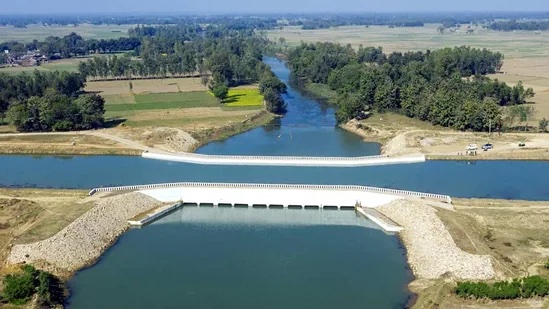
    I keep hearing that Modiji is going to unveil the often-spoken and then shelved Rivers Link Up Scheme as his grand vision to enrich the farmers and unite India. In a country where almost two-thirds of the agricultural acreage is rainfed, water is wealth. Telangana has shown the way. Once India’s driest region has in just eight years been transformed into another granary of India. Three years ago he had promised to double farmer’s incomes by 2022 and has clearly failed. He now needs a big stunt. With elections due in 2024, he doesn’t even have to show any delivery. A promise will do for now.

    This is also a Sangh Parivar favourite and I am quite sure the nation will once again set out to undertake history’s greatest civil engineering project by seeking to link all our major rivers. It will irretrievably change India. If it works, it will bring water to almost every parched inch of land and just about every parched throat in the land.

    On the other hand, if it doesn’t work, Indian civilization as it exists even now might then be headed the way of the Indus valley or Mesopotamian civilizations destroyed by a vengeful nature, for interfering with nature is also a two-edged sword. If the Aswan High Dam turned the ravaging Nile into a saviour, the constant diversion of the rivers feeding Lake Baikal has turned it into a fast-receding and highly polluted inland sea ranking it as one of the world’s greatest ecological disasters. Even in the USA, though the dams across mighty Colorado have turned it into a ditch when it enters Mexico, California is still starved for water.

    I am not competent to comment on these matters and I will leave this debate for the technically competent and our perennial ecological Pooh-Bahs. But the lack of this very debate is cause for concern. It is true that the idea of linking up our rivers has been afloat for a long time. Sir Arthur Cotton was the first to propose it in the 1800s. The late KL Rao, considered by many to be an outstanding irrigation engineer and a former Union Minister for Irrigation, revived this proposal in the late 60s by suggesting the linking of the Ganges and Cauvery rivers. It was followed in 1977 by the more elaborate and gargantuan concept of garland canals linking the major rivers, thought up by a former airline pilot, Captain Dinshaw Dastur. Morarji Desai was an enthusiastic supporter of this plan.

    The return of Indira Gandhi in 1980 sent the idea back into dormancy, where it lay all these years, till President APJ Abdul Kalam revived it in his eve of the Independence Day address to the nation in 2002. It is well known that Presidents of India only read out what the Prime Ministers give them and hence the ownership title of Captain Dastur’s original idea clearly was vested with Atal Behari Vajpayee.

    That India has an acute water problem is widely known. Over sixty per cent of our cropped areas are still rain-fed, much too abjectly dependent on the vagaries of the monsoon. The high incidence of poverty in certain regions largely coincides with the source of irrigation, clearly suggesting that water for irrigation is integral to the elimination of poverty. In 1950-51 when Jawaharlal Nehru embarked on the great expansion of irrigation by building the “temples of modern India” by laying great dams across our rivers at places like Bhakra Nangal, Damodar Valley and Nagarjunasagar only 17.4% or 21 million hectares of the cropped area of 133 million hectares was irrigated. That figure rose to almost 35% by the late 80s and much of this was a consequence of the huge investment by the government in irrigation, amounting to almost Rs.50, 000 crores.

    Ironically enough this also coincided with the period when water and land revenue rates began to steeply decline to touch today’s nothing level. Like in the case of power, it seems that once the activity ceased to be profitable to the State, investment too tapered off.

    The scheme is humongous. It will link the Brahmaputra and Ganges with the Mahanadi, Godavari and Krishna, which in turn will connect to the Pennar and Cauvery. On the other side of the country, it will connect the Ganges, Yamuna with the Narmada traversing in part the supposed route of the mythical Saraswathi. This last link has many political and mystical benefits too.

    There are many smaller links as well such as joining the Ken and Betwa rivers in MP, the Kosi with the Gandak in UP, and the Parbati, Kalisindh and Chambal rivers in Rajasthan. The project when completed will consist of 30 links, with 36 dams and 10,800 km of canals diverting 174,000 million cubic meters of water. Just look at the bucks that will go into this big bang. It was estimated to cost Rs. 560,000 crores in 2002 and entail the spending of almost 2% of our GNP for the next ten years. Now it will cost twice or more than that, but our GDP is now three times more, and it might be more affordable, and hence more tempting to attempt.

    The order to get going with the project was the output of a Supreme Court bench made up of then Chief Justice BN Kirpal, and Justices KG Balakrishnan and Arjit Pasayat, which was hearing a PIL filed by the Dravida Peervai an obscure Tamil activist group. The learned Supreme Court sought the assistance of a Senior Advocate, Mr Ranjit Kumar, and acknowledging his advice recorded: “The learned Amicus Curiae has drawn our attention to Entry 56 List of the 7th Schedule to the Constitution of India and contends that the interlinking of the inter-State rivers can be done by the Parliament and he further contends that even some of the States are now concerned with the phenomena of drought in one part of the country, while there is flood in other parts and disputes arising amongst the egalitarian States relating to sharing of water. He submits that not only these disputes would come to an end but also the pollution levels in the rivers will be drastically decreased, once there is sufficient water in different rivers because of their interlinking.”

    The only problem with this formulation is that neither the learned Amicus Curiae nor the learned Supreme Court is quite so learned as to come to such sweeping conclusions.


    Feature Image Credit: Hindustan Times


    This article was published earlier in deccanchronicle.com

  • What Ukraine needs to learn from Afghanistan about proxy wars

    What Ukraine needs to learn from Afghanistan about proxy wars

    The greatest enemy of economic development is war. If the world slips further into global conflict, our economic hopes and our very survival could go up in flames. The Bulletin of the Atomic Scientists has moved the hands of the Doomsday Clock to a mere 90 seconds to midnight. The world’s biggest economic loser in 2022 was Ukraine, where the economy collapsed by 35% according to the International Monetary Fund. The war in Ukraine could end soon, and economic recovery could begin, but this depends on Ukraine understanding its predicament as a victim of a US-Russia proxy war that broke out in 2014.

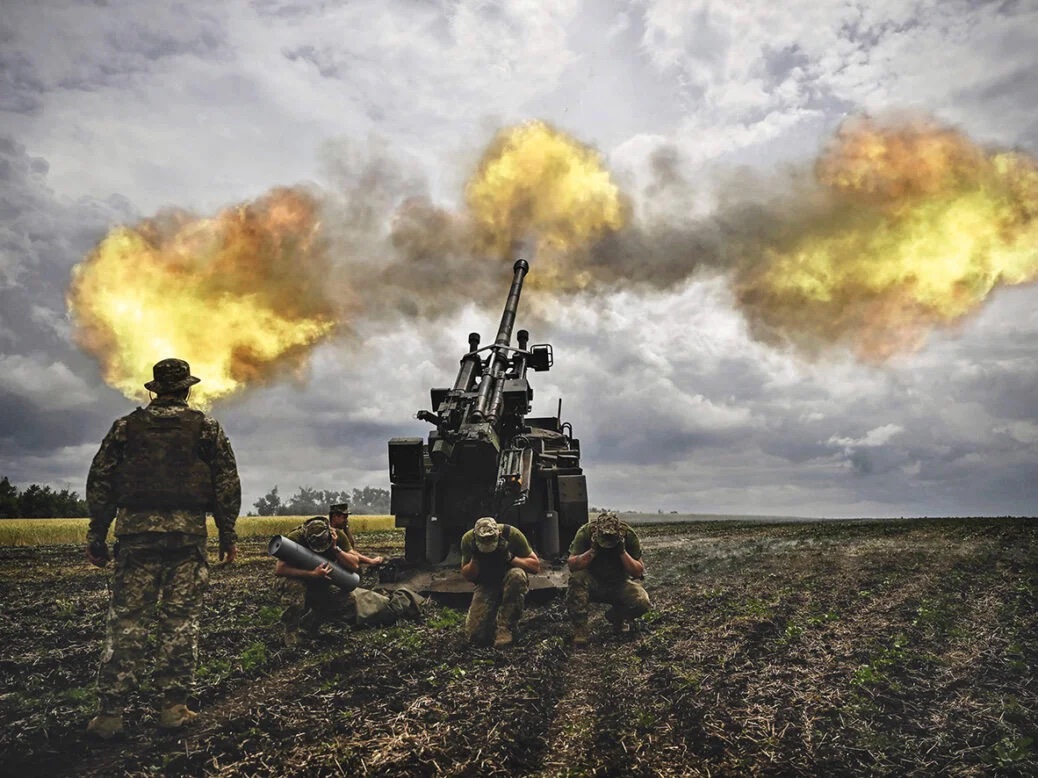
    The US has been heavily arming and funding Ukraine since 2014 with the goal of expanding Nato and weakening Russia. America’s proxy wars typically rage for years and even decades, leaving battleground countries like Ukraine in rubble.

    Unless the proxy war ends soon, Ukraine faces a dire future. Ukraine needs to learn from the horrible experience of Afghanistan to avoid becoming a long-term disaster. It could also look to the US proxy wars in Vietnam, Cambodia, Lao PDR, Iraq, Syria, and Libya.

    Starting in 1979, the US armed the mujahideen (Islamist fighters) to harass the Soviet-backed government in Afghanistan. As president Jimmy Carter’s national security advisor Zbigniew Brzezinski later explained, the US objective was to provoke the Soviet Union to intervene, in order to trap the Soviet Union in a costly war. The fact that Afghanistan would be collateral damage was of no concern to US leaders.

    The Soviet military entered Afghanistan in 1979 as the US hoped, and fought through the 1980s. Meanwhile, the US-backed fighters established al-Qaeda in the 1980s, and the Taliban in the early 1990s. The US “trick” on the Soviet Union had boomeranged.

    In 2001, the US invaded Afghanistan to fight al-Qaeda and the Taliban. The US war continued for another 20 years until the US finally left in 2021. Sporadic US military operations in Afghanistan continue.

    Afghanistan lies in ruins. While the US wasted more than $ 2 trillion of US military outlays, Afghanistan is impoverished, with a 2021 GDP below $400 per person! As a parting “gift” to Afghanistan in 2021, the US government seized Afghanistan’s tiny foreign exchange holdings, paralysing the banking system.

    The proxy war in Ukraine began nine years ago when the US government backed the overthrow of Ukraine’s president Viktor Yanukovych. Yanukovych’s sin from the US viewpoint was his attempt to maintain Ukraine’s neutrality despite the US desire to expand Nato to include Ukraine (and Georgia). America’s objective was for Nato countries to encircle Russia in the Black Sea region. To achieve this goal, the US has been massively arming and funding Ukraine since 2014.

    The American protagonists then and now are the same. The US government’s point person on Ukraine in 2014 was Assistant Secretary of State Victoria Nuland, who today is Undersecretary of State. Back in 2014, Nuland worked closely with Jake Sullivan, president Joe Biden’s national security adviser, who played the same role for vice president Biden in 2014.

    The US overlooked two harsh political realities in Ukraine. The first is that Ukraine is deeply divided ethnically and politically between Russia-hating nationalists in western Ukraine and ethnic Russians in eastern Ukraine and Crimea.

    The second is that Nato enlargement to Ukraine crosses a Russian redline. Russia will fight to the end, and escalate as necessary, to prevent the US from incorporating Ukraine into Nato.

    The US repeatedly asserts that Nato is a defensive alliance. Yet Nato bombed Russia’s ally Serbia for 78 days in 1999 in order to break Kosovo away from Serbia, after which the US established a giant military base in Kosovo. Nato forces similarly toppled Russian ally Moammar Qaddafi in 2011, setting off a decade of chaos in Libya. Russia certainly will never accept Nato in Ukraine.

    At the end of 2021, Russian president Vladimir Putin put forward three demands to the US: Ukraine should remain neutral and out of Nato; Crimea should remain part of Russia; and the Donbas should become autonomous in accord with the Minsk II Agreement.

    The Biden-Sullivan-Nuland team rejected negotiations over Nato enlargement, eight years after the same group backed Yanukovych’s overthrow. With Putin’s negotiating demands flatly rejected by the US, Russia invaded Ukraine in February 2022.

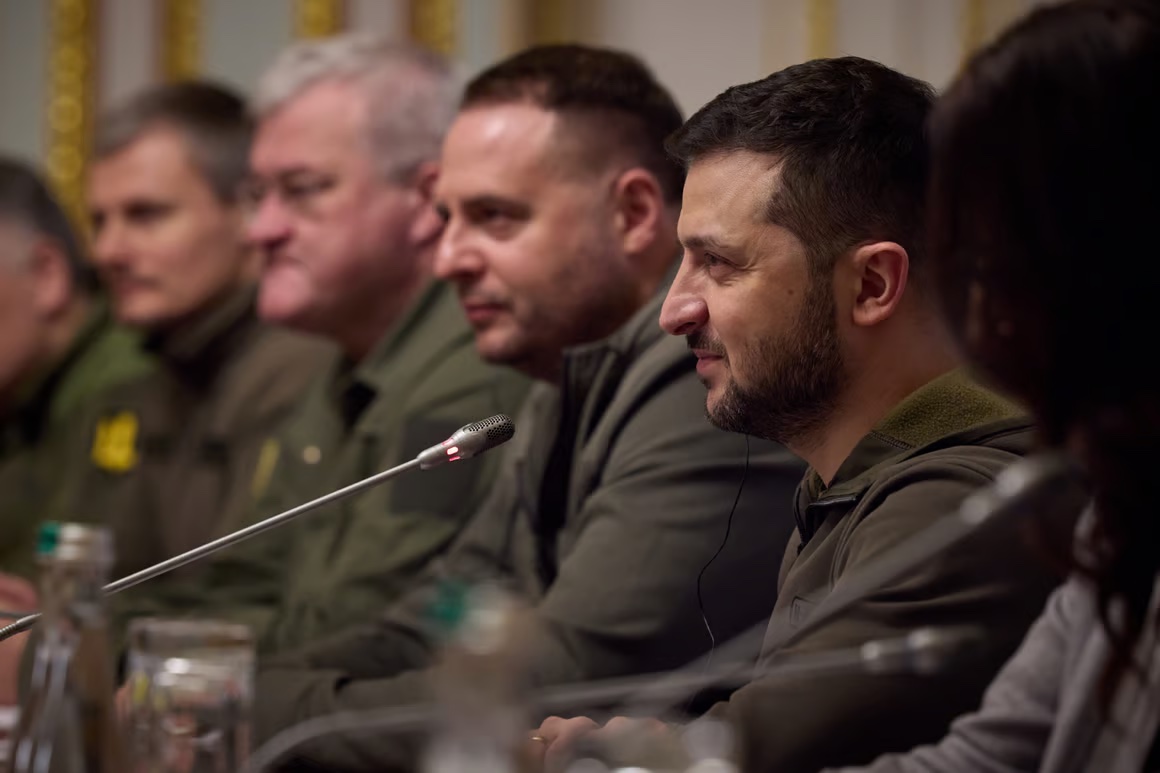
    In March 2022, Ukraine’s president Volodymyr Zelensky seemed to understand Ukraine’s dire predicament as a victim of a US-Russia proxy war. He declared publicly that Ukraine would become a neutral country, and asked for security guarantees. He also publicly recognised that Crimea and Donbas would need some kind of special treatment.

    Israel’s prime minister at that time, Naftali Bennett, became involved as a mediator, along with Turkey. Russia and Ukraine came close to reaching an agreement. Yet, as Bennett has recently explained, the US “blocked” the peace process.

    Since then, the war has escalated. According to US investigative reporter Seymour Hersh, US agents blew up the Nord Stream pipelines in September, a claim denied by the White House. More recently, the US and its allies have committed to sending tanks, longer-range missiles, and possibly fighter jets to Ukraine.

    The basis for peace is clear. Ukraine would be a neutral non-Nato country. Crimea would remain home to Russia’s Black Sea naval fleet, as it has been since 1783. A practical solution would be found for the Donbas, such as a territorial division, autonomy, or an armistice line.

    Most importantly, the fighting would stop, Russian troops would leave Ukraine, and Ukraine’s sovereignty would be guaranteed by the UN Security Council and other nations. Such an agreement could have been reached in December 2021 or in March 2022.

    Above all, the government and people of Ukraine would tell Russia and the US that Ukraine refuses any longer to be the battleground of a proxy war. In the face of deep internal divisions, Ukrainians on both sides of the ethnic divide would strive for peace, rather than believing that an outside power will spare them the need to compromise.
    Feature Image Credit: politico.eu

    This article was published earlier in dailymaverick.co.za and is republished with the permission of the author.

  • ‘World War 3 has already started’ between US and Russia/China, argues French scholar

    ‘World War 3 has already started’ between US and Russia/China, argues French scholar

    Ben Norton reviews the interview given by the prominent French Scholar, Emmanuel Todd. The interview was in French and published in the major French newspaper ‘Le Figaro’. Emmanuel Todd argues the Ukraine proxy war is the start of WWIII, and is “existential” for both Russia and the US “imperial system”, which has restricted the sovereignty of Europe, making Brussels into Washington’s “protectorate”. 

    America is fragile. The resistance of the Russian economy is pushing the American imperial system toward the precipice. No one had expected that the Russian economy would hold up against the “economic power” of NATO. I believe that the Russians themselves did not anticipate it –  Emmanuel Todd

    A prominent French intellectual has written a book arguing that the United States is already waging World War Three against Russia and China.

    He also warned that Europe has become a kind of imperial “protectorate”, which has little sovereignty and is essentially controlled by the US.

    Emmanuel Todd is a widely respected anthropologist and historian in France.

    In 2022, Todd published a book titled “The Third World War Has Started” (“La Troisième Guerre mondiale a commencé” in French). At the moment, it is only available in Japan.

    But Todd outlined the main arguments he made in the book in a French-language interview with the major newspaper Le Figaro, conducted by the journalist Alexandre Devecchio.

    According to Todd, the proxy war in Ukraine is “existential” not only for Russia, but also for the United States.

    The US “imperial system” is weakening in much of the world, he observed, but this is leading Washington to “strengthen its hold on its initial protectorates”: Europe and Japan.

    This means that “Germany and France had become minor partners in NATO”, Todd said, and NATO is really a “Washington-London-Warsaw-Kiev” bloc.

    US and EU sanctions have failed to crush Russia, as Western capitals had hoped, he noted. This means that “the resistance of the Russian economy is pushing the American imperial system toward the precipice”, and “the American monetary and financial controls of the world would collapse”.

    The French public intellectual pointed to UN votes concerning Russia, and cautioned that the West is out of touch with the rest of the world.

    “Western newspapers are tragically funny. They don’t stop saying, ‘Russia is isolated, Russia is isolated’. But when we look at the votes of the United Nations, we see that 75% of the world does not follow the West, which then seems very small”, Todd observed.

    He also criticized the GDP metrics used by Western neoclassical economists for downplaying the productive capacity of the Russian economy, while simultaneously exaggerating that of financialized neoliberal economies like in the United States.

    In the Le Figaro interview, Todd argued (all emphasis added):

    This is the reality, World War III has begun. It is true that it started ‘small’ and with two surprises. We went into this war with the idea that the Russian army was very powerful and that its economy was very weak.

    It was thought that Ukraine was going to be crushed militarily and that Russia would be crushed economically by the West. But the reverse happened. Ukraine was not crushed militarily even if it lost 16% of its territory on that date; Russia was not crushed economically. As I speak to you, the ruble has gained 8% against the dollar and 18% against the euro since the day before the start of the war.

    So there was a sort of misunderstanding. But it is obvious that the conflict, passing from a limited territorial war to a global economic confrontation, between the whole of the West on the one hand and Russia backed by China on the other hand, has become a war world. Even if military violence is low compared to that of previous world wars.

    The newspaper asked Todd if he was exaggerating. He replied, “We still provide weapons. We kill Russians, even if we don’t expose ourselves. But it remains true that we Europeans are above all economically engaged. We also feel our true entry into war through the inflation and shortages”.

    Todd understated his case. He didn’t mention the fact that, after the US sponsored the coup that overthrew Ukraine’s democratically elected government in 2014, setting off a civil war, the CIA and Pentagon immediately began training Ukrainian forces to fight Russia.

    The New York Times has acknowledged that the CIA and special operations forces from numerous European countries are on the ground in Ukraine. And the CIA and a European NATO ally are even carrying out sabotage attacks inside Russian territory.

    Nevertheless, in the interview, Todd continued:

    Putin made a big mistake early on, which is of immense sociohistorical interest. Those who worked on Ukraine on the eve of the war considered the country not as a fledgling democracy, but as a society in decay and a ‘failed state’ in the making.

    I think the Kremlin’s calculation was that this decaying society would crumble at the first shock, or even say ‘welcome Mom’ to holy Russia. But what we have discovered, on the contrary, is that a society in decomposition, if it is fed by external financial and military resources, can find in war a new type of balance, and even a horizon, a hope. The Russians could not have foreseen it. No one could.

    Todd said he shares the view of Ukraine of US political scientist John Mearsheimer, a realist who has criticized Washington’s hawkish foreign policy.

    Mearsheimer “told us that Ukraine, whose army had been taken over by NATO soldiers (American, British and Polish) since at least 2014, was therefore a de facto member of NATO, and that the Russians had announced that they would never tolerate a NATO member Ukraine,” Todd said.

    For Russia, this is there a war that is “from their point of view defensive and preventative,” he conceded.

    “Mearsheimer added that we would have no reason to rejoice in the eventual difficulties of the Russians because, since this is an existential question for them, the harder it was, the harder they would hit. The analysis seems to hold true.”

    Germany and France had become minor partners in NATO and were not aware of what was going on in Ukraine on the military level. French and German naivety has been criticized because our governments did not believe in the possibility of a Russian invasion. True, but because they did not know that Americans, British and Poles could make Ukraine be able to wage a larger war. The fundamental axis of NATO now is Washington-London-Warsaw-Kiev.

    However, Todd argued that Mearsheimer “does not go far enough” in his analysis. The US political scientist has overlooked how Washington has restricted the sovereignty of Berlin and Paris, Todd said:

    Germany and France had become minor partners in NATO and were not aware of what was going on in Ukraine on the military level. French and German naivety has been criticized because our governments did not believe in the possibility of a Russian invasion. True, but because they did not know that Americans, British and Poles could make Ukraine be able to wage a larger war. The fundamental axis of NATO now is Washington-London-Warsaw-Kiev.

    Mearsheimer, like a good American, overestimates his country. He considers that, if for the Russians the war in Ukraine is existential, for the Americans it is nothing but a power “game” among others. After Vietnam, Iraq and Afghanistan, one debacle more or less… What does it matter?

    The basic axiom of American geopolitics is: ‘We can do whatever we want because we are sheltered, far away, between two oceans, nothing will ever happen to us’. Nothing would be existential for America. Insufficiency of analysis which today leads Biden to a series of reckless actions.

    America is fragile. The resistance of the Russian economy is pushing the American imperial system toward the precipice. No one had expected that the Russian economy would hold up against the “economic power” of NATO. I believe that the Russians themselves did not anticipate it.

    The French public intellectual went on in the interview to argue that, by resisting the full force of Western sanctions, Russia and China pose a threat to “the American monetary and financial controls of the world”.

    This, in turn, challenges the US status as the issuer of the global reserve currency, which gives it the ability to maintain a “huge trade deficit”:

    If the Russian economy resisted the sanctions indefinitely and managed to exhaust the European economy, while it itself remained backed by China, the American monetary and financial controls of the world would collapse, and with them the possibility for United States to fund its huge trade deficit for nothing.

    This war has therefore become existential for the United States. No more than Russia, they cannot withdraw from the conflict, they cannot let go. This is why we are now in an endless war, in a confrontation whose outcome must be the collapse of one or the other.

    Todd warned that, while the United States is weakening in much of the world, its “imperial system” is “strengthening its hold on its initial protectorates”: Europe and Japan.

    He explained:

    Everywhere we see the weakening of the United States, but not in Europe and Japan because one of the effects of the retraction of the imperial system is that the United States strengthens its hold on its initial protectorates.

    If we read [Zbigniew] Brzezinski (The Grand Chessboard), we see that the American empire was formed at the end of the Second World War by the conquest of Germany and Japan, which are still protectorates today. As the American system shrinks, it weighs more and more heavily on the local elites of the protectorates (and I include all of Europe here).

    The first to lose all national autonomy will be (or already are) the English and the Australians. The Internet has produced human interaction with the United States in the Anglosphere of such intensity that its academic, media and artistic elites are, so to speak, annexed. On the European continent we are somewhat protected by our national languages, but the fall in our autonomy is considerable, and rapid.

    As an example of a moment in recent history when Europe was more independent, Todd pointed out, “Let us remember the war in Iraq, when Chirac, Schröder and Putin held joint press conferences against the war” – referring to the former leaders of France (Jacques Chirac) and Germany (Gerhard Schröder).

    The interviewer at Le Figaro newspaper, Alexandre Devecchio, countered Todd asking, “Many observers point out that Russia has the GDP of Spain. Aren’t you overestimating its economic power and resilience?”

    Todd criticized the overreliance on GDP as a metric, calling it a “fictional measure of production” that obscures the real productive forces in an economy:

    War becomes a test of political economy, it is the great revealer. The GDP of Russia and Belarus represents 3.3% of Western GDP (the US, Anglosphere, Europe, Japan, South Korea), practically nothing. One can ask oneself how this insignificant GDP can cope and continue to produce missiles.

    The reason is that GDP is a fictional measure of production. If we take away from the American GDP half of its overbilled health spending, then the “wealth produced” by the activity of its lawyers, by the most filled prisons in the world, then by an entire economy of ill-defined services, including the “production” of its 15 to 20 thousand economists with an average salary of 120,000 dollars, we realize that an important part of this GDP is water vapor.

    War brings us back to the real economy, it allows us to understand what the real wealth of nations is, the capacity for production, and therefore the capacity for war.

    Todd noted that Russia has shown “a real capacity to adapt”. He attributed this to the “very large role for the state” in the Russian economy, in contrast to the US neoliberal economic model:

    If we come back to material variables, we see the Russian economy. In 2014, we put in place the first important sanctions against Russia, but then it increased its wheat production, which went from 40 to 90 million tons in 2020. Meanwhile, thanks to neoliberalism, American wheat production, between 1980 and 2020, went from 80 to 40 million tons.

    Russia has therefore a real capacity to adapt. When we want to make fun of centralized economies, we emphasize their rigidity, and when we glorify capitalism, we praise its flexibility.

    The Russian economy, for its part, has accepted the rules of operation of the market (it is even an obsession of Putin to preserve them), but with a very large role for the state, but it also derives its flexibility from training engineers, who allow the industrial and military adaptations.

    This point is similar to what economist Michael Hudson has argued – that although Moscow’s economy is no longer socialist, like that of the Soviet Union was, the Russian Federation’s state-led industrial capitalism clashes with the financialized model of neoliberal capitalism that the United States has tried to impose on the world.


    The Peninsula Foundation is happy to republish this article with the permission of the author, Ben Norton.

    The article was published earlier in geopoliticaleconomy.com

    Feature Image Credit: newstatesman.com

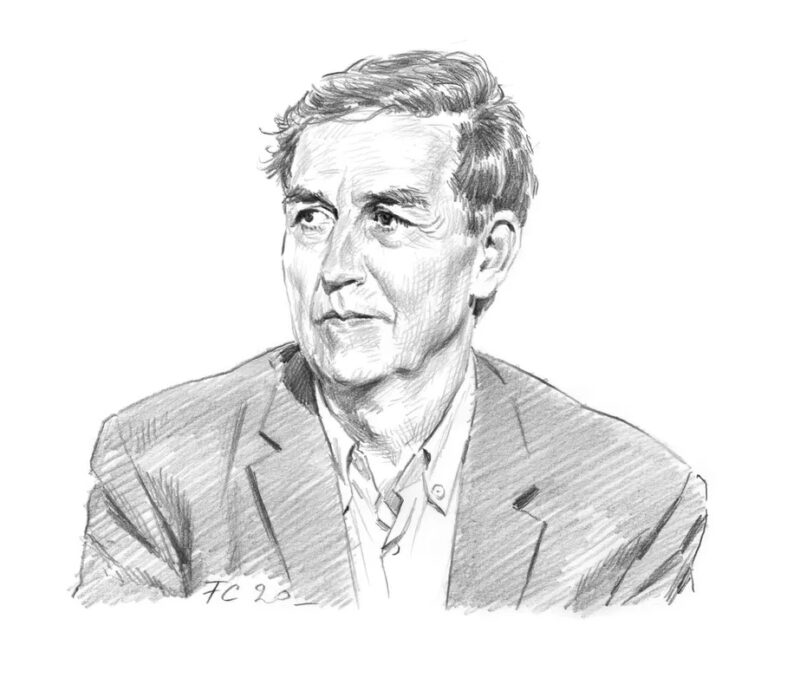
    Portrait Sketch of Emmanuel Todd: Fabien Clairefond


  • China’s People Crisis

    China’s People Crisis

    For the first time in sixty years, China’s population has fallen. The population in 2022 – 1.4118 billion – fell by 850,000 from 2021. Its national birth rate has fallen to 6.77 births per thousand people.
    Deaths have also outnumbered births for the first time last year in China. It logged its highest death rate since 1976 – 7.37 deaths per 1,000 people, up from 7.18 the previous year.
    China has now hit an impenetrable economic wall. The People’s Republic has a people crisis – it has now stopped growing and is getting old. The reason is paradoxical. China’s one-child policy worked exceedingly well for it in the past. By preventing almost 400 million births since 1979, it gave the Chinese greater prosperity. It is estimated that between 1980 and 2010, the effect of a favourable population age structure accounted for between 15% and 25% of per capita GDP growth.
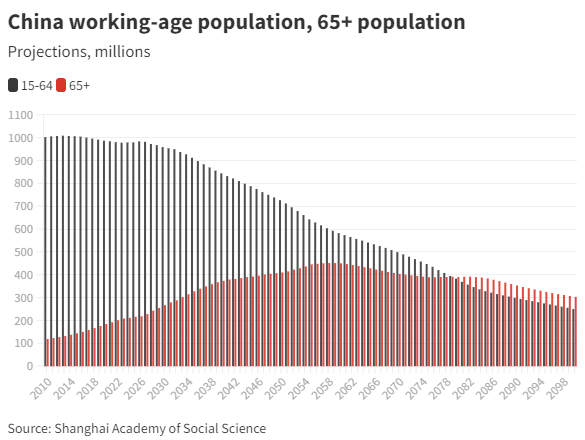
    That bonus with the demographic dividend has now ended. China’s population was expected to stabilise in 2030 at 1.391 billion, moving at a slow crawl from 1.330 billion in 2010. But it has hit that spot seven years ahead. In 2050, China is projected to decline to 1.203 billion.
    The flattening population and its somewhat unfavourable demographic profile have been causing concern in China for some years now. In 2013, the Communist Party of China’s Central Committee allowed couples to have a second child if one parent was an only child. But Chinese families have gotten used to one child existence. The demographic wall is not going to be crossed, and China’s workforce is not growing anymore.
    Whereas China added as many as 90 million individuals to its workforce from 2005 to 2015, in the decade from 2015, it will, at present trends, add only 5 million. In 2010, there were 116 million people aged 20 to 24. By 2020, the number will fall by 20% to 94 million. The size of the young population aged 20-24 will only be 67 million by 2030, less than 60% of the figure in 2010.
    One immediate consequence of this slowdown is that by 2030 the cohort aged above 60 years will increase from the present 180 million to 360 million. The other immediate economic consequence is that its savings rate will decline precipitously.
    As a nation climbs the economic ladder, people inevitably live longer. But old age is also more expensive. For instance, in the US, the old actually consume more than the rest due to medical expenses. Either they support themselves or their families have to support them. Apart from low consumption in the first few years of life, consumption is reasonably constant over the life cycle. But while income is earned and output produced, in the working life between 20 and 65 years, it is not so before and after. This ratio of working-age and non-working-age cohorts is called the dependency ratio.
    As Indian, African and (surprise, surprise) American dependency ratios turn increasingly favourable in the coming decades, China’s will go downhill and it will join Europe and Japan as the world’s aged societies.
    In comparison, in 2021, the United States recorded 11.06 births per 1,000 people, and in the United Kingdom, 10.08 births. The birth rate for the same year in India, which is poised to overtake China as the world’s most populous country, was 16.42.
    China’s total fertility rate – the average number of children born to each woman – is among the lowest in the world, at only 1.4. In contrast, the developed world average is 1.7. China’s replacement rate – the rate at which the number of births and deaths are balanced – is 2.1, as against India’s 2.5. At purchasing power parity, China’s per capita income is just a fifth or less of other large economies. At the same time, China’s fertility level is far below that of the US, UK or France (all around 2.0), and is on par with those of Russia, Japan, Germany and Italy – all countries with sharply declining populations. This is a big reason why Germany so readily accepted to take about a million refugees from Syria and Libya.
    Over the next 20 years, China’s ratio of workers to retirees will drop precipitously from roughly 5:1 today to just 2:1. Such a big change implies that the tax burden for each working-age person must rise by more than 150%. This assumes that the government will maintain its current level of tax revenue. In addition, mounting expenditure on pensions and healthcare will put China in a difficult position. If the government demands that taxpayers pay more, the public will demand better scrutiny of how their dollars are collected and spent. This could very well open the floodgates of challenges to the Communist Party.
    Can China succeed to get out of the low growth rate cycle? The conditions now are against it. The cost of rearing a child in China has increased hugely. The state may require more children, but most families will find the costs unaffordable. This is mainly because China is now a predominantly middle-class nation.
    How will this policy reversal pan out for China? Demographers give three scenarios. The highest outcome will mean 1.43 billion in 2050, while the more plausible outcome will be between 1.35- 1.37 billion. Either way, it is not going to alter the future much for China. It will become old before it becomes rich.
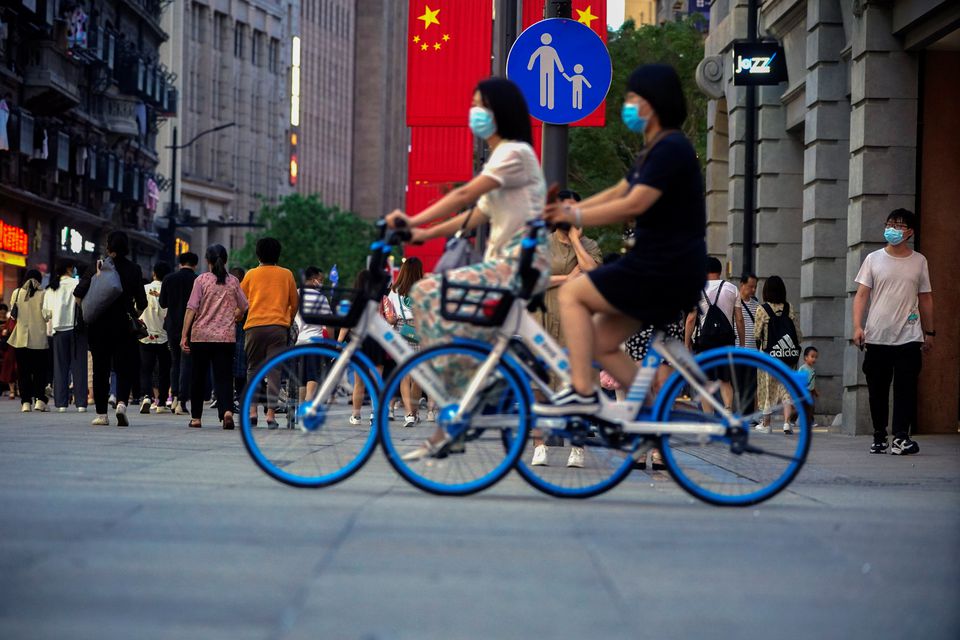
    Feature Image Credit: Reuters
    Graph Credit: World Economic Forum
  • Most of the world’s ocean is unprotected: This is why that needs to change

    Most of the world’s ocean is unprotected: This is why that needs to change

    • More than three billion people rely on the ocean for their livelihoods, most of them in developing countries.
    • Only 7% of the world’s ocean, a vital resource for fighting climate change, is under any protection, and just 3% is highly protected.
    • The ‘Blue Leaders’ campaign urges countries to join international treaties that would protect the ocean and all the benefits it provides to humanity.

    The ocean is a vital life support system for the planet, and we are running out of time to preserve the marine biodiversity that it is home to and upon which we all depend.

    Having played a key role thus far in the mitigation of climate change, our blue ally is quickly running out of steam. With water temperature and sea levels rising, acidification, pollution, unsustainable exploitation of marine resources, depletion of fish stocks, the near disappearance of coral reefs, and the destruction of fragile ecosystems, the ocean is being disproportionately impacted by human activities.

    Now, more than ever, we must consider the possible implications of its demise.

    The ocean plays an indispensable role in providing and regulating resources that are vital to sustaining life on Earth — from rainwater to drinking water, and as a source of our food, weather, and the oxygen we breathe

    Securing our ocean’s future

    Recognizing the key role that the ocean plays for people all over the world, the United Nations has adopted a sustainable development goal focused on conserving the ocean, with targets for action on an array of problems. While some progress has been made, more is yet needed to secure our ocean’s future.

    Scientists have called for securing at least 30% of marine waters as fully or highly protected sanctuaries, free from damaging human activities like bottom trawl fishing and seabed mining. By doing so, we can give the ocean a fighting chance in the face of climate change.

    Today, just 7% of the world’s ocean is under protection, and only 3% is highly protected. Moreover, there is no legal mechanism in place to establish fully protected marine areas in the high seas and deep seabed areas, our shared international waters that constitute nearly two thirds of the global ocean.

    Marine coastlines are home to 2.4 billion people — approximately 40% of the world’s population. More than three billion people rely on the ocean for their livelihoods, most of them in developing countries. Degradation of coastal and marine ecosystems threatens the physical, economic, and food security of communities around the world.

    Continuing along our current path towards ocean destruction will impact human lives and livelihoods.

    The role of the ocean and coastal and marine ecosystems in climate change mitigation is often overlooked. Protecting and restoring ocean habitats such as seagrass beds, salt marshes, and mangroves, and their associated food webs, can sequester carbon dioxide from the atmosphere at rates up to five times greater than tropical forests.

    Choosing not to prioritize the protection of our ocean is depriving us of the tools we desperately need to achieve our climate mitigation goals.

    Commitments are needed

    With multiple high-level ocean negotiations planned in 2022, this year is one filled with opportunity for the preservation of our oceans. Our only hope for a better future lies in the adoption of unprecedentedly bold ocean conservation commitments.

    The science is clear: to maximize the health and resilience of the global ocean, at least 30% of it must be protected through a network of “highly” and “fully” protected Marine Protected Areas (MPAs) by 2030.

    To achieve this goal, a new treaty for the conservation and management of marine life in the high seas must be concluded to ensure that human activities are managed to prevent significant adverse impacts, with robust oversight mechanisms and provisions to establish fully protected MPAs in the high seas.

    Governments who have joined the “Blue Leaders” campaign call on all countries to rally behind these commitments at the upcoming meeting of the Conference of the Parties to the Convention on Biological Diversity (CoP15), expected to take place in Kunming, China in August 2022.

    Another key moment is the UN Ocean Conference, which is scheduled to be held in Lisbon, Portugal, from 27 June to 1 July. Each of these meetings offers an opportunity for countries to come together, join the Blue Leaders, and take the action that our ocean desperately needs.

    The ocean knows no boundaries: it unites us all as a physical link between coastal countries, communities, and individuals, and as the source of our food, water, and air. We all face similar challenges and similar opportunities. Let us be bold for the ocean together.

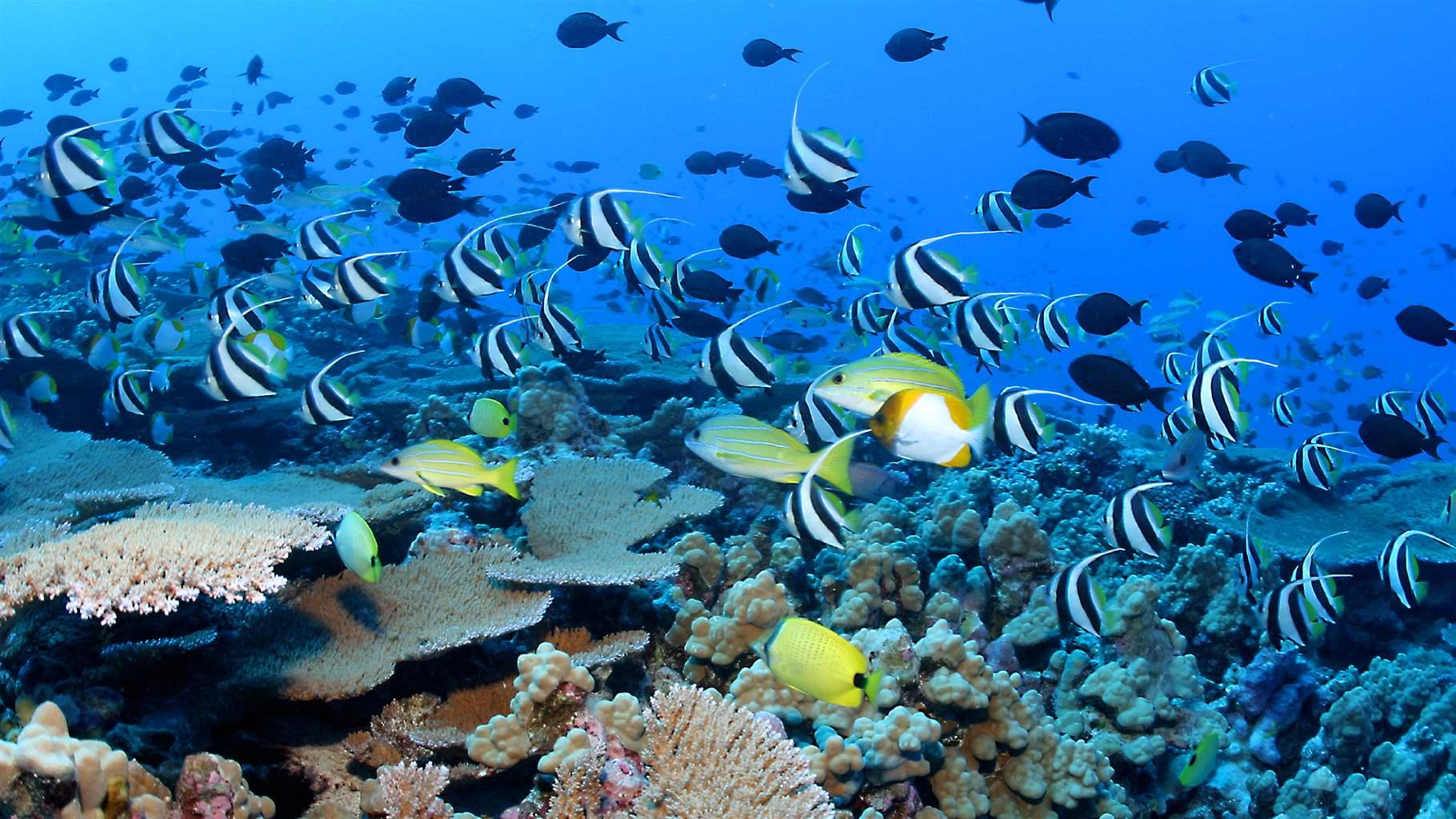
    Feature Image: pewtrusts.org
    This article was published earlier in weforum.org  and is republished under the Creative Commons 4.0 International Public License.
  • Ukraine War Tolls Death Knell for NATO

    Ukraine War Tolls Death Knell for NATO

    President Vladimir Putin addressed an expanded meeting of the Russian Defence Ministry Board, Moscow on Dec. 21, 2022

    The defining moment in US President Joe Biden’s press conference at the White House last Wednesday, during President Zelensky’s visit, was his virtual admission that he is constrained in the proxy war in Ukraine, as European allies don’t want a war with Russia. 

    To quote Biden, “Now, you say, ‘Why don’t we just give Ukraine everything there is to give?’  Well, for two reasons. One, there’s an entire Alliance that is critical to stay with Ukraine.  And the idea that we would give Ukraine material that is fundamentally different than is already going there would have a prospect of breaking up NATO and breaking up the European Union and the rest of the world… I’ve spent several hundred hours face-to-face with our European allies and the heads of state of those countries, making the case as to why it was overwhelmingly in their interest that they continue to support Ukraine… They understand it fully, but they’re not looking to go to war with Russia.  They’re not looking for a third World War.”

    Biden realised at that point that “I probably already said too much” and abruptly ended the press conference. He probably forgot that he was dwelling on the fragility of Western unity.

    The whole point is that the western commentariat largely forgets that Russia’s core agenda is not about territorial conquest — much as Ukraine is vital to Russian interests —but about NATO expansion. And that has not changed.

    Every now and then President Putin revisits the fundamental theme that the US consistently aimed to weaken and dismember Russia. As recently as last Wednesday, Putin invoked the Chechen war in the 1990s — “the use of international terrorists in the Caucasus, to finish off Russia and to split the Russian Federation… They [US]claimed to condemn al-Qaeda and other criminals, yet they considered using them on the territory of Russia as acceptable and provided all kinds of assistance to them, including material, information, political and any other support, notably military support, to encourage them to continue fighting against Russia.”

    Putin has a phenomenal memory and would have been alluding to Biden’s careful choice of William Burns as his CIA chief. Burns was Moscow Embassy’s point person for Chechnya in the 1990s! Putin has now ordered a nationwide campaign to root out the vast tentacles that the US intelligence planted on Russian soil for internal subversion. Carnegie, once headed by Burns, has since shut down its Moscow office, and the Russian staff fled to the West!

    The leitmotif of the expanded meeting of the Board of the Defence Ministry in Moscow on Wednesday, which Putin addressed, was the profound reality that Russia’s confrontation with the US is not going to end with the Ukraine war. Putin exhorted the Russian top brass to “carefully analyse” the lessons of the Ukraine and Syrian conflicts.

    Importantly, Putin said, “We will continue maintaining and improving the combat readiness of the nuclear triad. It is the main guarantee that our sovereignty and territorial integrity, strategic parity and the general balance of forces in the world are preserved. This year, the level of modern armaments in the strategic nuclear forces has already exceeded 91 per cent. We continue rearming the regiments of our strategic missile forces with modern missile systems with Avangard hypersonic warheads.”

    Equally, Defence Minister Sergei Shoigu proposed at Wednesday’s meeting a military build-up “to bolster Russia’s security,” including:

    • Creation of a corresponding group of forces in Russia’s northwest to counter Finland and Sweden’s induction as NATO members;
    • Creation of two new motorised infantry divisions in the Kherson and Zaporozhya regions, as well as an army corps in Karelia, facing the Finnish border;
    • Upgrade of 7 motorised infantry brigades into motorised infantry divisions in the Western, Central and Eastern military districts, and in the Northern Fleet;
    • Addition of two more air assault divisions in the Airborne Forces;
    • Provision of a composite aviation division and an army aviation brigade with 80-100 combat helicopters within each combined arms (tank) army;
    • Creation of 3 additional air division commands, eight bomber aviation regiments, one fighter aviation regiment, and six army aviation brigades;
    • Creation of 5 district artillery divisions, as well as super-heavy artillery brigades for building artillery reserves along the so-called strategic axis;
    • Creation of 5 naval infantry brigades for the Navy’s coastal troops based on the existing naval infantry brigades;
    • Increase in the size of the Armed Forces to 1.5 million service personnel, with 695,000 people serving under contract.

    Putin summed up: “We will not repeat the mistakes of the past… We are not going to militarise our country or militarise the economy… and we will not do things we do not really need, to the detriment of our people and the economy, the social sphere. We will improve the Russian Armed Forces and the entire military component. We will do it calmly, routinely and consistently, without haste.”

    If the neocons in the driving seat in the Beltway wanted an arms race, they have it now. The paradox, however, is that this is going to be different from the bipolar Cold War era arms race.

    If the US intention was to weaken Russia before confronting China, things aren’t working that way. Instead, the US is getting locked into a confrontation with Russia and the ties between the two big powers are at a breaking point. Russia expects the US to roll back NATO’s expansion, as promised to the Soviet leadership in 1989.

    The neocons had expected a “win-win” in Ukraine: Russian defeat and a disgraceful end to Putin’s presidency; a weakened Russia, as in the 1990s, groping for a new start; consolidation of western unity under a triumphant America; a massive boost in the upcoming struggle with China for supremacy in the world order; and a New American Century under the “rules-based world order”.

    But instead, this is turning out to be a classic Zugzwang in the endgame — to borrow from German chess literature — where the US is under obligation to make a move on Ukraine but whichever move it makes will only worsen its geopolitical position.

    Biden has understood that Russia cannot be defeated in Ukraine; nor are Russian people in any mood for an insurrection. Putin’s popularity is soaring high, as Russian objectives in Ukraine are being steadily realised. Thus, Biden is getting a vague sense, perhaps, that Russia isn’t exactly seeing things in Ukraine as a binary of victory and defeat, but is gearing up for the long haul to sort out NATO once and for all.

    The transformation of Belarus as a “nuclear-capable” state carries a profound message from Moscow to Brussels and Washington. Biden cannot miss it. (See my blog NATO nuclear compass rendered unavailing, Indian Punchline, Dec. 21, 2022

    Logically, the option open to the US at this point would be to disengage. But that becomes an abject admission of defeat and will mean the death knell for NATO, and Washington’s transatlantic leadership goes kaput. And, worse still, major west European powers — Germany, France and Italy — may start looking for a modus vivendi with Russia. Above all, how can NATO possibly survive without an “enemy”?

    Clearly, neither the US nor its allies are in a position to fight a continental war. But even if they are, what about the emerging scenario in the Asia-Pacific, where the “no limits” partnership between China and Russia has added an intriguing layer to the geopolitics?

    The neocons in the Beltway have bitten more than what they could chew. Their last card will be to push for a direct US military intervention in the Ukraine war under the banner of a “coalition of the willing.” 


    This commentary was published earlier on the author’s website – indianpunchline.com

    Feature Image Credit: Ministry of Defense of the Russian Federation


  • For Democracy to be real and vibrant it needs  people with impeccable Integrity at the Helm

    For Democracy to be real and vibrant it needs people with impeccable Integrity at the Helm

    Democracy at its core is the power of the people. But all over the world, it is becoming anything but that. Truly the fear is that democracy is dying, as most nations that call themselves democracies are in effect controlled by capitalist oligarchs and majoritarian fascists. The power of money and vested interests have vitiated democratic processes worldwide. Michael Hudson calls the USA, once the beacon of democracy, a deep state controlled by three main oligarchic groups: Military Industrial Complex (MIC); Oil, Gas, and Mining (OGAM); and Finance, Insurance, and Real Estate (FIRE).  Add the new emerging giant group – Big Tech – as the fourth. The UK, the world’s oldest parliamentary system, is in shambles as a democracy. India, seen as the world’s largest democracy, is heading the majoritarian way. Majoritarianism is not democracy but tyranny. This is what the Father of the Nation had to say about democracy at the height of the freedom struggle:

    My notion of democracy is that under it the weakest should have the same opportunity as the strongest….No country in the world today shows any but patronising regard for the weak….Western democracy, as it functions today, is diluted fascism….True democracy cannot be worked by twenty men sitting at the centre. It has to be worked from below by the people of every village.”    – Mahatma Gandhi

    His words could not have been more apt for the times we live in. This quote is placed in the Sabarmati Ashram. One wonders how many take a moment to stop by to read it carefully and take in the import of his words. The Mahatma is the shining example of personal integrity, character, and moral courage. Since democracy is primarily driven by people and politics, it is vital that those at the helm of governance display impeccable integrity to ensure real democracy.

    Professor Arun Kumar PhD, an eminent economist and our adjunct Distinguished Fellow, writes eloquently on the subject and says ‘absence of persons with impeccable integrity is the bane of India’s democracy’. TPF is happy to republish this article.

    A version of this article was published earlier in theleaflet.in

    TPF Editorial Team


    Gandhiji said that institutions reflect what the people are, and that they cannot function as they are intended to unless those manning them are people of integrity.


    A Supreme Court Constitution bench recently said that the Chief Election Commissioner should be one “with character” and who would not get “bulldozed” – a self-evident truth. Further, it suggested that the selection committee for the post should consist of an independent person like the Chief Justice of India (‘CJI’). It added that people and bureaucrats like the former Chief Election Commissioner late T.N. Seshan, who could act independently, “happen once in a while”.

    Perhaps without meaning to, these comments indict the election commissioners appointed since Seshan’s time. Therefore, they have given voice to recent public concerns about the independence of the institution.

    Integrity of Constitutional authorities

    Will the CJI’s presence in the committee to appoint the Election Commissioners make a difference? The CJI is a member of the committee to appoint the Director of the Central Bureau of Investigation (‘CBI’). But the Supreme Court itself has called the CBI a “caged parrot”. The problem arises since the party in power would prefer a sympathetic person as an Election Commissioner, not an independent person.

    The appointment of Supreme Court judges has become contentious, with the judges and the Union Law Minister currently at loggerheads. Judges themselves have talked of pressures and counter pressures from within and from the government. Appointments of some who are seen to be inconvenient have been withheld. Earlier this week, a division bench of the Supreme Court mentioned that by delaying appointments, good people are dissuaded from becoming judges. It is suspected that the appointment of certain judges is delayed so that they do not become CJI in due course of time. It appears that pliability is a desirable attribute to becoming a judge.

    The Supreme Court, by raising the issue of the appointment of the Election Commissioner, has also brought into question the integrity of the Prime Minister (‘PM’), who is key to the appointment. Thus, doubt has been raised about the country’s constitutional authorities, including the judiciary. The executive, in any case, does the bidding of the political masters. So, where are the people of integrity in the corridors of power in India?

    Defining integrity

    Institutions can run as they ought to only if they are manned by people with integrity. Its absence from the top down is a societal challenge. Mahatma Gandhi in ‘Hind Swaraj’ (Indian Home Rule), more than a century back, said, “As are the people, so is their Parliament.” Since the Parliament is key to the functioning of a democracy, this flaw afflicts institutions down the line.

    PMs heading the government are political persons. Since politics is about power, they try everything to keep themselves and their party in power. Their election depends on the support of vested interests who fund both them and their party and therefore, dominate the working of the party. So, staying in power is a high stake business which requires manipulation of the systems in their favour.

    The Supreme Court, by raising the issue of appointment of the Election Commissioner, has brought into question the integrity of the Prime Minister, who is key to the appointment. Thus, doubt has been raised about the country’s constitutional authorities, including the judiciary. 

    There is then a separation of the interest of the nation, and of the party and its head, the PM. Consequently, for the party, integrity means that which serves its interest, which is not necessarily what the nation needs. This separation is what Gandhi implies in Hind Swaraj. No wonder, it is only a rare PM who has the moral integrity to select independent people for important Constitutional positions like the Election Commission and the judiciary.

    Politicians go through years of such conditioning before becoming PMs and it becomes their second nature. It cannot be expected to change upon becoming the PM. The opposition in a democracy is supposed to check the misuse of power. But the leaders of the opposition also go through the same conditioning as leaders of the ruling party and therefore, act no differently. Politicians often pride themselves on managing conflicts by making compromises and accepting the manipulation of power. So, politicians take a pliable stand, based on the chair they occupy – in power or out of it.

    Gandhi on parliamentary democracy

    Gandhi, commenting on the British Parliamentary democracy in Hind Swaraj, wrote, “The Prime Minister is more concerned about his power than about the welfare of Parliament … [and] upon securing the success of his party.” He added that they may be considered to be honest “because they do not take what is generally known as bribes… [but] …they certainly bribe the people with honours.” Therefore, “… they neither have real honesty nor a living conscience”.

    Regarding the Members of Parliament who could keep the PM in check, he wrote, “… Members are hypocritical and selfish. Each thinks of his own little interest. … Members vote for their party without a thought.” Regarding the media, another institution that could help check misuse of public authority by creating public awareness, he wrote that they “are often dishonest. The same fact is differently interpreted … according to the party in whose interest they are edited.” Gandhi was also scathing about the legal profession when he wrote, “… the profession teaches immorality …”.

    Gandhi was pointing to the fundamental flaws in the functioning of democracies. It also applies in the current Indian context. He was pointing to weak public accountability of those in power since public awareness was low. The public has little choice but to accept the existing imperfect political system. The British Parliamentary democracy may be the best available system, but it is highly flawed and its defects appear more starkly in weak democracies like that in India.

    We may be called the largest democracy in the world and we have succeeded in preserving it in the last 75 years, but it is frayed, as made clear by the current political problems facing us.

    Feudal attitudes and democracy

    Indian democracy’s weakness is a result of the persistence of feudal consciousness among a majority who easily accept authority. This is true even in institutions of higher education, where people are expected to be the most conscious. Most of these institutions are headed by academics with a bureaucratised mindset, who expect compliance and treat dissent as a malaise to be eradicated. In turn, they yield to politicians and bureaucrats.

    A feudal system has its own concept of integrity. The ruler’s interest is broadly the nation’s interest. This congruity breaks in a parliamentary democracy where the consciousness is feudal. In such a case, integrity as defined by national interest is likely to be subverted, as is visible in India.

    In 1947, India with its feudal consciousness ingrained and copied parliamentary democracy, not because people were ready for it, but because the leadership desired it since they wanted to copy Western modernity. People blindly accepted it since it came from their leaders, not because they understood it. Liberality at the top frayed post mid-1960s, as retaining power became more difficult and leaders turned increasingly authoritarian. So, while retaining the façade of democracy, it increasingly got hollowed out.

    In 1947, India with its feudal consciousness ingrained and copied parliamentary democracy, not because people were ready for it, but because the leadership desired it since they wanted to copy Western modernity. People blindly accepted it since it came from their leaders, not because they understood it.

    The political economy also pushed policies that marginalised the majority in the interest of the few. The black economy grew rapidly, making elections formalistic and draining them of their representational character. Most importantly, the rulers realized that neither the people ask for liberality nor do they demand accountability from leadership.

    Need for accountability at the top

    Accountability has to come from the top, whether in politics or in the government or the courts. It is not going to automatically come about without public pressure. A few freebies are enough to divert public attention. So, is accountability a luxury when basic issues are many?

    The lack of integrity in public life is costly. The nation’s energy is diverted. Reforms favouring the marginalised are circumvented. Laws are framed ostensibly to improve matters, but when the spirit is not willing they fail to deliver. Perfect laws are not possible, since human ingenuity can circumvent any law. The result is more complex laws and growing cynicism.

    What Gandhi pointed out is playing itself out in India. He said institutions reflect what the people are, and that they cannot function as they are intended to unless those manning them are people of integrity. But, can people with integrity emerge when it is missing all around, feudal consciousness pervades and people bend to authority?

    Reform requires us to resolve the contradiction between parliamentary democracy and the prevailing feudal consciousness. This cannot happen from above. It requires the transformation of the people’s consciousness – Gandhi’s unfinished agenda.


    Opinions expressed are those of the author.

    Feature Image Credit: Gandhi in a public address – Painting at Sabarmati Ashram.
  • Putin’s statements suggest the Ukraine conflict could last for years

    Putin’s statements suggest the Ukraine conflict could last for years

    Most likely, the fighting will continue into 2023, and quite probably beyond, until either Moscow or Kiev is exhausted, or one side claims a decisive victory. For the US, Ukraine is a matter of principle; for the Kremlin, the matter is simply existential – the conflict with the West is not about Ukraine, but about the fate of Russia itself.

    Last week, Russian President Vladimir Putin commented, during a meeting with soldiers’ mothers, that he now regards the Minsk agreements of 2014 and 2015 as a mistake. This confession was stark in the context of the possibility of peace negotiations to end the fighting in Ukraine.

    Russian President Vladimir Putin commented, during a meeting with soldiers’ mothers, that he now regards the Minsk agreements of 2014 and 2015 as a mistake.

    It is worth remembering that in 2014, Putin acted on a mandate from the Russian parliament to use military force “in Ukraine,”not just in Crimea. In fact, Moscow did save the cities of Donetsk and Lugansk from being overrun by Kyiv’s army, and defeated Ukraine’s forces, but rather than clearing the whole region of Donbass, Russia stopped, and agreed to a cease-fire brokered in Minsk by Germany and France.

    Putin explained to the mothers that at the time, Moscow did not know for sure the sentiments of the Donbass population affected by the conflict, and hoped that Donetsk and Lugansk could somehow be reunited with Ukraine on the conditions laid down in Minsk. Putin might have added – and his own actions, as well as conversations with then-Ukrainian President Pyotr Poroshenko, confirm it – that he was prepared to give the new Kyiv authorities a chance to settle the issue and rebuild a relationship with Moscow. Until rather late in the game, Putin also hoped that he could still work things out with the Germans and the French, and the US leadership.

    Admissions of mistakes are rare among incumbent leaders, but they are important as indicators of lessons they have learned.

    Admissions of mistakes are rare among incumbent leaders, but they are important as indicators of lessons they have learned. This experience has apparently made Putin decide not that the decision to launch the special military operation last February was wrong, but that eight years before, Moscow should not have put any faith in Kyiv, Berlin, and Paris, and instead should have relied on its own military might to liberate the Russian-speaking regions of Ukraine.

    In other words, agreeing to a Minsk-style ceasefire now would be another mistake which would allow Kyiv and its backers to better prepare to resume fighting at the time of their choosing.

    The Russian leader realizes, of course, that many nations in the non-West, those who refused to join the anti-Russian sanctions coalition and profess neutrality on Ukraine, have called for an end to hostilities. From China and India to Indonesia and Mexico, these countries, while generally friendly toward Russia, see their economic prospects being impaired by a conflict that pits Russia against the united West. The Western media also promote the message that global energy and food security is suffering because of Moscow’s actions. Russia’s arguments and protestations to the contrary have only limited impact since Russian voices are rarely heard on Middle Eastern, Asian, African, or Latin American airwaves.

    Be that as it may, Moscow cannot ignore the sentiments of the larger part of humanity, which is now increasingly referred to in Russian expert circles as the Global Majority. Hence, official Russian statements that Moscow is open for dialogue without preconditions. However, any Russian delegation to talks would have to take into account the recent amendments to the country’s Constitution, which name the four former Ukrainian regions of Donetsk, Lugansk, Kherson, and Zaporozhye as part of the Russian Federation. As Foreign Minister Sergey Lavrov has put it, Russia will only negotiate on the basis of existing geopolitical realities. It should be noted that the Kremlin has not retracted the objectives of the military operation, which include the demilitarization and denazification of Ukraine, which means ridding the state and society of ultra-nationalist, anti-Russian elements.

    As for Kyiv, it has gone back and forth on the issue. Having nearly reached a peace agreement with Moscow in late March, it later reversed course to continue fighting (the Russians believe this was done on Western advice). Having achieved operational successes on the battlefield this past fall, Ukrainian President Vladimir Zelensky had all contacts with the Kremlin formally banned and formulated extreme demands which he addressed to Putin’s successors, whenever they may emerge. For the West, this was bad from the perspective of public relations, and Zelensky was asked to make it appear as if he was open for talks, but in reality, nothing changed.

    The reality is that the principal parties involved in the conflict in Ukraine, namely Washington and Moscow, do not consider the present, or the near future, as a good time for negotiations.

    The reality is that the principal parties involved in the conflict in Ukraine, namely Washington and Moscow, do not consider the present, or the near future, as a good time for negotiations. From the US perspective, despite the unprecedented sanctions imposed on Russia by the West and the recent setbacks that the Russian Army has experienced in Kharkov and Kherson, Moscow is far from being defeated on the battlefield or destabilized domestically. From the Kremlin’s perspective, any truce or peace that leaves Ukraine as an ‘anti-Russia’, hostile state, is tantamount to a defeat with highly negative consequences.

    Instead, both sides believe they can win. The West, of course, has vastly superior resources in virtually every field that it can use in Ukraine. But Russia is working to mobilize its own substantial reserves in both manpower and the economy.

    Where Moscow has an advantage is in escalatory dominance. For the US, Ukraine is a matter of principle; for the Kremlin, the matter is simply existential – the conflict with the West is not about Ukraine, but about the fate of Russia itself.


    It looks as if the war will continue into 2023, and possibly beyond that. Talks will probably not start before either side is prepared to concede due to exhaustion, or because both parties have reached an impasse. In the meantime, the death toll will continue to mount, pointing to the essential tragedy of major power politics. In the fall of 1962, then-US President John F. Kennedy was ready to walk to the edge of the nuclear precipice in order to prevent the Soviet Union from turning Cuba into its missile base. Sixty years later, Russian President Vladimir Putin ordered a military action to make sure that Ukraine does not become an unsinkable aircraft carrier for America.

    Whatever Soviet leader Nikita Khrushchev thought about his right to counter US missiles pointed at Moscow from Turkey with weapons of his own targeting Washington and New York from Cuba (with Havana’s consent), and whatever successive US presidents thought about their right to expand the NATO military bloc to include Ukraine (at Kyiv’s wish), there is always a horrendous price to pay for the failure to take into account the rival power’s security interests.


    There is a lesson to be learned from this. Whatever Soviet leader Nikita Khrushchev thought about his right to counter US missiles pointed at Moscow from Turkey with weapons of his own targeting Washington and New York from Cuba (with Havana’s consent), and whatever successive US presidents thought about their right to expand the NATO military bloc to include Ukraine (at Kyiv’s wish), there is always a horrendous price to pay for the failure to take into account the rival power’s security interests. Cuba went down in history as a narrow success for common sense. Ukraine is an ongoing story, with its outcome still hanging in the balance.

    Feature Image: rt.com

    Image: Khrushchev and Kennedy – rferl.org

    Image: Robert and Jack Kennedy – bostonglobe.com – The most important lesson of the Cuban Missile crisis.

  • Xi’s third term, the 20th Party Congress and Implications for India

    Xi’s third term, the 20th Party Congress and Implications for India

    The historic 20th National Congress of the Communist Party of China (CPC) concluded on October 23rd. The week-long extravagant event – beginning on October 16th – has brought new faces of the Chinese political elite to the forefront along with a few surprises. Xi’s report before the 20th National Party Congress (NPC) at the opening ceremony and his appointments to the highest posts in the country are very telling of what his third term could look like for the world. Most importantly, the implications for India cannot be clearer – politically, economically, diplomatically, and militarily. India will need to acquaint herself with these new appointments and developments and come up with a strategy to level the playing field.

    What the report says and implies

    Xi’s report to the 20th NPC was in stark contrast to the report delivered in 2017 to the 19th NPC. In 2017, Xi was triumphant of all that China had achieved and hoped to achieve in the future – particularly on the economic front and of its growing international influence. He was proud of China’s assertive foreign policy and soft power. That sentiment has not necessarily changed in the 20th NPC report. However, Xi’s report did strike a sombre tone, predicting a tough future for China – “…strategic opportunities, risks, and challenges are concurrent and uncertainties and unforeseen factors are rising. Various “black swan” and “grey rhino” events may occur at any time.” His speech and report come across as a rallying call meant to safeguard the primacy and authority of the CPC and their way of life against external interference.

    “China’s overall development objectives for the year 2035 are as follows: Significantly increase economic strength, scientific and technological capabilities, and composite national strength; substantially grow the per capita GDP to be on par with that of a mid-level developed country”.              – Xi Jinping in his address to the 20th Party Congress.

    The importance of “national security” (mentioned 81 times) and China’s external and regional challenges is given highest priority and significance. Other key phrases that find frequent mention in the report are “military”, “strategic/strategy” and “risks”. There is a concerted focus on military modernisation and ramping R&D. Simultaneously, Xi is also realistic of the economic challenges ahead of China – “…many bottlenecks hindering high-quality development, and China’s capacity for scientific and technological innovation is not yet strong enough. Many major issues need to be resolved in order to guard against financial risks and ensure that food, energy, and industrial and supply chains are secure and reliable.” Interestingly, China’s economy was not in the spotlight. There was a glaring omission of the development of and plans for the BRI; mentioned only twice in the entire report. Predictably, there was no change in China’s policy towards Taiwan except a veiled threat directed at the US for its interference in its neighbourhood. It appears that Xi’s plans for his third term are to focus on China’s security and strategic challenges through assertive diplomacy.

    Xi stacks the deck in his favour

    Xi Jinping’s appointment as General Party Secretary of the CPC for a third term was the least surprising outcome from the 20th NPC; owing to constitutional amendments made in his previous term i.e., the removal of the constraint of a term limit. He also retains his position as Chairman of the party’s Central Military Commission (CMC). His appointments to the state’s top bodies have broken with the CPC’s age norm of ‘7-up, 8-down’; officials eligible to serve another term at 67 years have been given the boot while people like Zhang Youxia (VC of the CMC), at 72 years, has been given another term when he should ideally have been retired.

    The reshuffling of the Politburo Standing Committee (PBSC) appears to have only one important criterion – loyalty to Xi Jinping. The move is also an indication of the concentration of power that now rests with Xi and his men. With the introduction of the “Two Establishes” and “Two Safeguards”, Xi elevated himself to be on par with Mao Zedong and above Deng Xiaoping, Hu Jintao and Jiang Zemin. Indeed, the inclusion of Xi Jinping’s Thoughts on Socialism with Chinese characteristics in the Party Constitution along with the “Two Establishes” and “Two Safeguards” has cemented Xi Jinping as the core of the CPC. His appointments to the PBSC reflect this. Premier Li Keqiang, widely believed to be a dissenter and protégé of former President Hu Jintao was dropped. Hu Chunhua, slated for a position in the PBSC and considered for the premiership was unable to secure a position in the 7-member powerful body and was even dropped from the Politburo. Other members to be removed were Wang Yang, Han Zheng and Li Zhangshu. Both Wang Yang and Han Zheng were closely linked to Li Keqiang and former President Jiang Zemin respectively. The new members of PBSC are Li Qiang, Cai Qi, Ding Xuexiang and Li Xi. Zhao Leji and ideology tsar Wang Huning were the only members to retain their seats; having closely aligned themselves with Xi Jinping in the period between the 19thNPC and 20th NPC. The composition of the 20th PBSC indicates Xi’s success in removing all factional opposition present within the Party. All the members who were left off the PBSC were a part of the Communist Youth League and rose within its ranks to become powerful men. Their removal, along with Hu Jintao being escorted out during the 20th National Congress is both a signal to Xi’s loyalists and opposition.

    Similarly, the selection of people into the 24-member Politburo and Central Committee are all Xi loyalists and will have a direct impact on China’s domestic and foreign policies going forward. Xi’s prioritisation of security and S&T is reflected in some of the new appointments to the Politburo – Chen Wenqing (an intelligence officer and former minister of the Ministry of State Security), engineers with specialisation in aerospace Ma Xingrui and Yuan Jiajin, Li Ganjie (nuclear engineering), Zhang Youxia (VC of the CMC), Hei Weidong (VC of the CMC and Commander of CMC’s Joint Command Center), Chen Jining (environmental sciences), and Yin Li (public health expert). Notably, both the PBSC and Politburo have no women participation.

    The backgrounds of the appointees to these bodies are also an indicator of the growing premium Xi is placing on technocrats. Beyond party and political loyalty, they are expected to fall in line with his policy agenda and thus, have backgrounds in aerospace, technology, finance, economics, engineering, and advanced manufacturing in sectors like semiconductors. 

    The backgrounds of the appointees to these bodies are also an indicator of the growing premium Xi is placing on technocrats. Beyond party and political loyalty, they are expected to fall in line with his policy agenda and thus, have backgrounds in aerospace, technology, finance, economics, engineering, and advanced manufacturing in sectors like semiconductors. The number of officials with backgrounds in S&T in the Central Committee is at par with Jiang Zemin’s first term in 1992. According to a study by the Brookings Institution, 81 seats in the 20th Central Committee – around 40% – are occupied by Chinese officials with technical expertise. The belief that technocrats generally lack political factions, prefer working in silos and are solution-oriented also works in Xi’s favour.


    A stronger and more loyal CMC

    The new CMC appointees stand out for several reasons. For one, Xi has broken with the established retired norms by placing Army veteran Zhang Youxia as VC of the CMC. Further, the placement of He Weidong as the second VC of the CMC is unusual since he has essentially jumped two grades without serving as either a member of the CMC or Central Committee of the CPC. Second, Xi appears to have rewarded those that he has personal and familial connections with.

    Zhang Youxia’s father, Zhang Zongxun was a founding member of the PLA and served with Xi’s father, Xi Zongxun in the 1940s. General Zhang’s decorated career, combat experience (Sino-Vietnamese war in the 1980s) and position as head of the Equipment Development Department of the CMC make him one of Xi’s most trusted allies in the PLA. On the other hand, General He Weidong’s catapult to second VC is significant given his operational experience with both the Western Theatre Command (WTC) and Eastern Theatre Command (ETC) ground forces. Reportedly, both Xi and He are also close friends owing to the time they both spent in Fujian province and Zhejiang province during Xi’s days working in the provincial government.

    The other new appointment with operational and combat experience is General Liu Zhenli. He takes over as Chief of the Joint Staff Committee of the CMC and was previously Chief of Staff and Commander of the PLA Army and Chief of Staff of the PAP. His experience in the Sino-Vietnam border skirmishes in the 1980s as well as his stint with the PAP makes him an important addition to the CMC.

    Finally, General Li Shangfu’s (potentially Minister of National Defense) elevation to the CMC is notable in that it signals a close linkage between the aerospace domain and the military. Li is a technocrat and is widely regarded as the man behind China’s manned and unmanned space program. His time as Deputy Commander of the PLA Strategic Support Force and his current appointment as Director of the Equipment Development Department reflects Xi’s aim of achieving the centenary goal of the PLA Army and modernising its military and national defence.

    The other two members to retain their position in the CMC are Admiral Miao Hua and General Zhang Shengmin. They both rose through the ranks in the Political Work Department as political commissars. Admiral Miao will continue to head the Political Work Department. He is also a close ally of Xi from when they both served in the Fujian province in the 1990s and 2002. No doubt his work as a political commissar in the PLA Navy makes him a strong candidate for a second term in the CMC. Similarly, General Zhang continues to head the Central Commission for Discipline Inspection as he serves in the PLA Rocket Force. His appointment is particularly significant given the fact that he replaced Du Jincai who was being investigated with then VC’s Guo Boxiong and Xu Caihou on corruption. Zhang Shengmin’s retainment signals, one, Xi’s trust in him and two, that his anti-corruption campaign is far from over.

    Other appointments such as Airforce General Xu Qilang and PLA Generals Wei Fenghe and Li Zuocheng to the State Commission indicate an overwhelming prioritisation of the WTC and ETC, meaning India and Taiwan – China’s two biggest security challenges. The appointment of several serving chiefs of the ground forces will have far-reaching implications for the LAC and India’s national security.

    The combination of technocrats and veterans in the CMC is a nod towards Xi’s vision for the Chinese military – “…continue integrated development of the military through mechanization, informatization, and the application of smart technologies and work faster to modernize military theory, organizational forms, personnel, and weaponry and equipment. We will enhance the military’s strategic capabilities for defending China’s sovereignty, security, and development interests…”.

    However, the success of these appointments remains to be seen given the relatively limited operational experience some of the members have.

     What do we make of China’s economy?

    The “common prosperity for all” is another major tenet at the heart of China’s domestic economic policy. Whilst outlining all the strides the CPC has made in the last five years to the 20th NPC, Xi is also aware of the economic challenges China faces – the effects of the Covid-19 pandemic, the rise of unilateralism and protectionism, a sluggish global economy and regional conflicts and disturbances. To combat these challenges, China is pursuing the “dual circulation” strategy and “high-quality development”. Notably, these two mechanisms have made their way to the Party Constitution. The dual circulation strategy is aimed at improving domestic demand, building secure and resilient supply chains, and reducing China’s dependency on foreign trade for its economic growth.

    China is pursuing the “dual circulation” strategy and “high-quality development”. Notably, these two mechanisms have made their way to the Party Constitution. The dual circulation strategy is aimed at improving domestic demand, building secure and resilient supply chains, and reducing China’s dependency on foreign trade for its economic growth.

    Along with a faster recovery of its industrial production equipment manufacturing and high-tech manufacturing, China’s GDP grew by 3.9% in the third quarter. However, this does not take away from the fact that, presently, China’s exports have diminished. The strict zero-covid policy that China continues to enforce is severely impacting its industries. The recent US Chips Act and export controls targeted at China are affecting foreign enterprises in the country as well as its tech industry.

    Further, the absence of market-reform oriented economists like Premier Le Keqiang, Vice Premier Liu He, head of the Central Bank Yi Gang, financial regulator Guo Shuqing and Finance Minister Liu Kun from the PBSC and Politburo will surely be felt. Li Qiang, the potential candidate for the Premiership does not have an economic background and it is likely that most of the heavy lifting will fall to He Lifeng (tapped for Vice Premier) in the Politburo. He is a supporter of Xi’s “self-reliance” policies and economic nationalism. He will have big shoes to fill as Liu He, the outgoing Vice Premier, had a powerful portfolio that included economic policy and the financial sector. The Harvard-trained economist was also Xi’s go-to man for trade negotiations with Washington.

    India’s continued economic growth is evidence contrary to what China dictates. Even as China seeks membership in the Comprehensive and Progressive Agreement for Trans-Pacific Partnership (CPTPP) and uses the Regional Comprehensive Economic Partnership (RCEP), there are signs of decoupling with the Chinese economy emerging. Already, the US-imposed export controls are impacting China’s production and manufacturing. While China proposes a more “secure” and inward-looking economic policy, achieving this goal will take a long time. This is an opportunity for India to exploit. India becoming the next manufacturing hub for the world will challenge China’s position in Asia and thus, presents an obstacle for the latter.

    China’s wolf-warrior diplomacy to continue

    With Yang Jiechi’s retirement, the position of head of China’s Central Foreign Affairs Commission is set to move to Wang Yi, another seasoned career diplomat. His appointment to the Politburo, at 69 years of age, is yet another display of Xi’s disregard for the Party age norms. But it also indicates that Xi looks to Wang’s expertise as China enters its most challenging period of international engagements. Wang has been the face of China’s foreign policy for quite some time and is another ‘wolf-warrior diplomat’. His appointment signals the continuity of the wolf-warrior diplomacy that China practices. With Wang Yi at the helm, it is expected that Qin Gang, the current ambassador to the US, will become the next Foreign Minister. The other potential appointee to the position is Liu Haixing who is a career diplomat specialising in European affairs and served multiple postings in China’s embassy in France. He is also the Deputy Director of the Office of the National Security Commission (NSC). Other diplomats on the roster are Liu Jianchao and Qi Yu. Liu Jianchao was recently made Director of the International Liaison Department of the Central Committee of the Chinese Communist Party (CCID) this June and it is unlikely to change so soon. He also previously served at the Office of the Foreign Affairs Commission (FAC). Qi Yu, serving as Party Secretary of the Foreign Ministry has no diplomatic experience.

    The choice between Liu Haixing and Qin Gang will also dictate the future direction of China’s foreign policy. The choice of diplomats to the Central Committee also indicates the importance Xi places on public relations. China’s need to sway public opinion, both domestically and internationally, is reflected in the choice of Liu Jianchao and Qin Gang. Both have ample experience serving as spokespersons for the Party and the PRC respectively. Further, Liu Jianchao’s and Liu Haixing’s elevation to the Central Committee also indicates the importance of serving in Party Commissions. Their time at the FAC and NSC, respectively, within the last five years has earned them a fast-tracked promotion to the Central Committee. The path to the top is even closer for Liu Haixing given the fact that his senior, Cai Qi who served in the NSC, now sits in the PBSC.

    The road ahead for India

    The appointments to the PBSC, Politburo and CMC are a reflection of China’s assertiveness on the international stage. The military appointees are of particular importance to India. The overwhelming emphasis on ground forces and service chiefs with experience in the WTC could mean more skirmishes along the LAC and a concerted focus towards engaging in hybrid warfare. The LAC is a priority security concern for India as well and the nationalistic fervour that Xi exemplified in his speech to the 20th NPC is no different from what Prime Minister Modi engages in. That said, India’s military forces must be prepared for an escalation along the LAC at any point in time.

    The Central Committee of 205 members, the majority of whom hold doctorates, includes 47 military leaders. This is reflective of China’s governance structure that is techno-military focused along with the necessary expertise in political, economic, and social domains.

    However, leaving aside the anti-Chinese rhetoric of the West, it is important for India to recognise the competence; educational qualifications, experience, and expertise; and the varied techno-military-politico composition of the Chinese leadership. CCP’s Central Committee consists of 205 full committee members from which are chosen the top leadership forming the Politburo of 24 members inclusive of the apex standing committee of seven members and the Central Military Commission of seven members. All 205 members are highly qualified in various disciplines such as economics, education, politics, philosophy, sciences, engineering, medicine, aerospace, nuclear, space, telecommunications, sociology, history, management, international relations, law, jurisprudence, geopolitics etc. The majority hold doctorates in their chosen fields. Xi Jinping holds a degree in Chemical Engineering and a doctorate in Marxian philosophy and Political Science. In addition, the leadership has a significant presence of military leadership, both serving and veterans that includes 27 Generals and 17 Lieutenant Generals out of the 205 members.

    China’s economic downturn and security-oriented economic policy that Xi has propounded is an opportunity for India to become the next manufacturing hub in Asia. However, India must remain cautious of what competition with China could look like for the neighbourhood.

    The changes to the diplomatic cadre in the 20th NPC do not take away from the fact that India’s standing and position are stronger and more sure-footed than it has ever been. Our diplomacy in the face of the ongoing Russia-Ukraine war showcases that. India’s strategic autonomy, respect for international law and norms and growing strategic partnerships with the Indo-Pacific countries are an advantage to her engagement with Beijing.

    Feature Image Credit: orcasia.org

  • India’s Self-Inflicted Economic Catastrophe

    India’s Self-Inflicted Economic Catastrophe

    Noted economist Jayati Ghosh reviews India’s economic recovery from the impact of the pandemic. She asserts that the major economic problems of unemployment, poverty, and inadequate healthcare are due to poor strategies and policies implemented by the government. In her analysis, COVID-19’s devastating impact on India has been compounded by the BJP government’s disastrous decision to impose nationwide lockdowns without providing any support to workers. Instead, the BJP used the pandemic to consolidate its power and suppress dissent. Even with existing socio-political constraints, she says India can do much better as there is scope for different economic strategies.

    This article was published earlier in Project Syndicate. The views expressed are the author’s own.

                                                                                                                                                                          -TPF Editorial Team

    Nearly 80% of the estimated 70 million people around the world who fell into extreme poverty at the onset of COVID-19 in 2020 were from India, a recent World Bank report has revealed. But even this shocking figure could be an underestimate, as the lack of official data makes it difficult to assess the pandemic’s human costs.

    What accounts for this alarming rise in Indian poverty? COVID-19 was undoubtedly India’s worst health calamity in at least a century. But the pandemic’s economic and social consequences go beyond the direct effects on health and mortality. As I argue in my recent book, The Making of a Catastrophe: The Disastrous Economic Fallout of the COVID-19 Pandemic in India, very significant policy failures – owing to government action and inaction – were responsible for widespread and significant damage to Indian livelihoods and for the country’s decline in terms of many basic indicators of economic well-being.

    But the devastating impact of the pandemic on India has been compounded by economic policies that reflected the country’s deeply-embedded inequalities.

    This judgment may seem excessively harsh. After all, India’s government did not cause the pandemic, and many other countries experienced economic setbacks after they failed to control the virus. But the devastating impact of the pandemic on India has been compounded by economic policies that reflected the country’s deeply-embedded inequalities.

    To be sure, the pandemic did not create India’s many economic vulnerabilities. But it did highlight India’s many societal fissures and fault lines. And while the country already suffered from glaring inequalities of income, wealth, and opportunities long before COVID-19, the government’s pandemic response has taken them to unimaginable extremes.

    Even as Indian workers faced poverty, hunger, and ever-greater material insecurity due to the pandemic, money and resources continued to flow from the poor and the middle class to the country’s largest corporations and wealthiest individuals. The intersecting inequalities of caste, gender, religion, and migration status have become increasingly marked and oppressive. The result has been a major setback to social and economic progress.

    At the beginning of the pandemic, the central government imposed a prolonged nationwide lockdown with little notice. It then adopted containment strategies that were clearly unsuited to the Indian context, with immediately devastating effects on employment and livelihoods.

    The grim state of affairs reflects the priorities of the ruling Bharatiya Janata Party (BJP) response. At the beginning of the pandemic, the central government imposed a prolonged nationwide lockdown with little notice. It then adopted containment strategies that were clearly unsuited to the Indian context, with immediately devastating effects on employment and livelihoods.

    Instead of using the breathing space provided by the lockdown to bolster local health systems, the central government left state authorities to manage as best they could with minimal and inadequate resources. And when the resulting economic disaster threatened to spiral out of control, the government eased restrictions to “unlock” the economy even as the number of cases mounted, thereby putting more people at risk.

    At a time when governments worldwide were significantly increasing public spending to fight the pandemic and mitigate its economic impact, the Indian government preferred to control expenditures (after adjusting for inflation) as its revenues declined.

    But at the heart of India’s self-inflicted economic catastrophe is the government’s decision to provide very little compensation or social protection, even as COVID-19 lockdowns deprived hundreds of millions of their livelihoods for several months. At a time when governments worldwide were significantly increasing public spending to fight the pandemic and mitigate its economic impact, the Indian government preferred to control expenditures (after adjusting for inflation) as its revenues declined.

    But in a country where median wages are too low to provide more than the most basic subsistence, losing even a week’s income could lead millions to the brink of starvation. Given that more than 90% of all workers in India are informal – without any legal or social protection – and that around half of those are self-employed, the effect was immediate and devastating.

    The government’s decision not to increase spending aggravated the shock of the lockdown, generating a humanitarian crisis that disproportionately affected women and marginalized groups, including millions of migrant workers who were forced to return home under harrowing conditions.

    But the effects of the official response to the pandemic are only one side of the story. COVID-19 safety measures have been a natural fit for the country’s still-pervasive caste system, which has long relied on forms of social distancing to enforce the socioeconomic order and protect those at the top. It also further entrenched India’s persistent patriarchy.

    Instead of taking appropriate countermeasures, like providing greater support to the population, the BJP used the pandemic to consolidate its power and suppress dissent. This, in turn, limited the central government’s ability to generate the widespread social consensus and public trust needed to contain the virus.

    Even within India’s deep-seated social and political constraints, there is scope for a different economic strategy that would enable a just, sustainable, and more equitable recovery.

    None of this was inevitable. Even within India’s deep-seated social and political constraints, there is scope for a different economic strategy that would enable a just, sustainable, and more equitable recovery. To ensure that most Indians, not just the stock market or large companies, benefit from growth, India’s voters must reject the BJP’s policies, which threaten to impoverish them further.

    Feature Image Credit: textilevaluechain.in