Category: Opinion/Commentary

  • After Balakot: India-Pak ties and nuclear bombast

    After Balakot: India-Pak ties and nuclear bombast

    Mohan Guruswamy                                                                      Apr 19, 2019/Commentary

    We know that in the aftermath of the Balakot airstrikes, India and Pakistan went into some form of nuclear readiness. The Indian Navy quietly announced last week that all its crucial assets, including the nuclear missile-launching INS Arihant, were deployed in the Arabian Sea. Unlike the United States and the erstwhile Soviet Union (now Russia), which had several stages of nuclear readiness to signal intent and gravity, India and Pakistan have no such signalling language. So, when it comes, it comes.

    Politicians on both sides of the border are prone to loose talk and nuclear sabre-rattling is part of their lexicon. But this is not without some reason and purpose. Even though there is little risk of a nuclear world war any longer, because of their awesome power and potential to inflict sudden and massive violence on large populations, nuclear weapons inspire tremendous and often irrational fear, however infinitesimal the probabilities of their use. When both adversaries have nuclear weapons, you have a balance of terror.

    As a matter of fact, in the prevailing international situation, any war involving even conventional forces cannot remain a local affair for long, to be sorted out by just the two adversaries. Where there is even the smallest risk of an escalation to nuclear conflict, that intervention could be quite quick. This is what the Pakistanis are counting on.

    But since nuclear weapons cannot be used, their only utility lies in the mere threat of their use. In nuclear theology, this has come to be known as “the utility in non-use”. From time to time declared and undeclared nuclear powers have tried to use nuclear weapons in this manner. The Pakistanis are only travelling down a well-trod path. Each time the Pakistanis threaten us with nuclear war, what they are in fact doing is semaphoring to the rest of the world, particularly those of the West, that have taken it upon themselves to supervise the international regime, to intervene.

    In the early days of the Yom Kippur war of 1973, an incident occurred which tells a great deal about how the game of nuclear diplomacy is played. The sudden and successful attack by Egyptian troops under the command of Gen. Saaduddin Shazli not only put the Egyptians back on the Sinai Peninsula but also unveiled a new generation of Soviet weapons and tactics to match. At the northern end of Israel, a Syrian armored attack under Gen. Mustafa Tlas was threatening to push the surprised Israelis down the slopes of the Golan Heights. In just the first three days of the conflict, the highly regarded Israeli Air Force lost over 40 fighter aircraft and a huge number of tanks to the new generation of Soviet anti-aircraft and anti-tank missiles. The panicked Israelis turned to the United States for assistance but found Washington quite reluctant. Both President Richard Nixon and his national security adviser Henry Kissinger till then were of the opinion that a degree of battlefield reverses was needed to get an increasingly intransigent Israel to the conference table. Caught, in a manner of speaking, between the devil and the deep sea, the Israelis then played their nuclear card.

    American surveillance satellites and high-flying reconnaissance aircraft suddenly began to pick up unusually heightened activity around the Israeli nuclear facility at Dimona near the Negev desert. Israeli defence minister Moshe Dayan, while imploring Dr Kissinger to start the airlift of urgently-needed weapons and military technical assistance, told him about how desperate their situation actually was and had already hinted that Israel might have to resort to nuclear weapons to halt the Arab armies. The alarmed Americans sent a SR-71 Blackbird reconnaissance aircraft fitted with special sensors to detect nuclear material over Dimona. The SR-71’s sensors picked up the signature of nuclear material on a bomb conveyor apparently loading an Israeli fighter-bomber. Whether the nuclear flare registered was from an actual nuclear weapon or radioactive material in a container to simulate a weapon will never be known.

    To the advantage of Israel, the Americans read this as preparations for an imminent nuclear attack. Would the Soviets sit quietly when their allies were subjected to a nuclear attack — would have been their immediate thought? Was this going to be the beginning of World War III? Within minutes, President Nixon was on the line to Prime Minister Golda Meir, telling her that a massive US airlift bearing much-needed weapons and military advisers was ordered and that the supply would begin within hours.

    In early 1952, as the Chinese poured in troops into Korea to grind to a halt the advance of the American-led UN forces, a highly placed US diplomat in Geneva conveyed through Indian diplomat K.M. Pannikar a warning to China that the United States will use nuclear weapons on it unless it agreed to talks immediately. China soon afterwards agreed to hold talks, which soon resulted in the armistice that holds till today.

    Others have done this somewhat differently. During the 1982 Falklands War, the British quietly deployed the nuclear submarine HMS Conqueror, armed with nuclear missiles, off the Argentine coast. As the fighting raged and the Argentines scored some naval victories by sinking the destroyer HMS Sheffield and the converted Harrier jet carrier Atlantic Conveyor, the Royal Navy revealed the presence of its nuclear submarine. The presence of the Conqueror with nuclear weapons was to tell its somewhat lukewarm ally, the United States, that if the war went badly for it Britain would be forced to use even nuclear weapons. It was therefore in America’s interest to not only using its enormous clout with the Argentines to end its occupation of the Falkland Islands but to also assist Britain. Soon after this the US tilted fully in favour of the British by giving it critical intelligence and political support.

    In 1992, then US President George H.W. Bush conveyed to Saddam Hussein that a poison gas attack on Israel using its Scud missiles would invite a nuclear strike upon it. The Iraqis fired several Scuds on Israel, but none with poison gas. After the war, UN inspectors scouring Iraq for weapons capable of mass destruction detected huge quantities of poison gas in ready to use explosive triggered canisters. Obviously, the threat had worked.

    Clearly, the threat of the first use of nuclear weapons, if provoked beyond a point, could be often as effective as nuclear deterrence. In recent times, to give credence to its irrationality, Pakistan has deployed or claims to have deployed tactical nuclear weapons to some of its formations. Since a tactical nuclear weapon has a much smaller destructive power, its use is considered somewhat more likely and hence more credible than a strategic nuclear weapon. A strategic weapon is a city or area-buster, whereas a tactical weapon is said to have only a battlefield application. But India’s response to this is that whatever the weapon, and wherever it is used, if it is used it will invite a full-scale retaliation. Many analysts think this is not credible, and India needs a flexible policy that will allow it to also match escalation up the ladder.

    But the frequent Pakistani outbursts that nuclear war can happen here if the Kashmir situation boils over is an addition to the known nuclear semaphoring practices. Here the Pakistanis are using the Western abhorrence of nuclear war to influence Indian policy. They are not threatening India, because that is not credible, more so since India has a far bigger nuclear arsenal. They are in fact threatening the world that the balance of terror might be breached, and inviting it to intervene. Whatever the nature of this intervention, it is deemed to be in its favour. We saw this happen in 2008 when within minutes of the 26/11 Mumbai attacks Presidents and Prime Ministers from all over began calling our Prime Minister calling for restraint. We have a somewhat ironical situation here. A cruel and ruthless military presiding over a notoriously lawless and corrupt nation is pleading for Kashmir’s supposed right to self-determination and is blackmailing the world to come to its assistance.

    The author is a Trustee and Distinguished Fellow of ‘The Peninsula Foundation’. He is a prolific commentator on economic, political, and security issues. The views expressed are his own.

    This article was published earlier in Deccan Chronicle.

    Photo Credit: PTI

  • Douse the anger within

    Douse the anger within

    Deepak Sinha                                                                              Apr 18, 2019/Opinion

    While the Government continues to celebrate the armed forces’ performance for electoral gains, it will do well to remember that the basic tenet of warfare is that the man behind the gun matters more than the gun. Its failure to grant non-functional upgrade is all the more hurtful.

    For those innocent souls still blissfully ignorant of what Non-Functional Financial Upgrade (NFU) implies, in brief, it simply ensures that when an IAS officer from a particular batch (one that includes everyone who joins service the same year) is promoted to a certain rank, all batchmates from Group A Central services automatically start drawing the same pay-scale two years after that individual’s promotion. Even as those officials continue to discharge earlier functions, they are upgraded to a higher pay grade. Thus, nearly all civil services officers, regardless of what rank they may retire with, get pension at the highest level of HAG+ or what those few appointed as Cabinet Secretaries are granted. If that isn’t hitting the jackpot, then what is?

    One doesn’t need to be a guru to figure out that such a system is contrary to all principles of management and without precedent anywhere in the world, either in the Government or corporate sector. As a matter of fact, Vivek Rae, the IAS member in the seventh Pay Commission, recommended that NFU be done away with on grounds that “to strive for uniform career progression across such a diverse set of services and cadres, with widely varying functions, violates fundamental management principles relating to organisational structures. Such a dispensation, with automatic career progression till the HAG level, completely buries the concept of merit-based career progression and undermines considerations of efficiency and accountability.”

    Singh’s motivation for approving this, despite pretensions to intellectual and moral honesty, is not difficult to guess. Pragmatism required a veil to cover the scandalous actions of his coalition partners, which the bureaucracy willingly provided, obviously in exchange for a quid pro quo. That Prime Minister Narendra Modi refused to do away with NFU, as the majority members of the seventh Pay Commission recommended, obviously suggests that he and his colleagues are as much a hostage to bureaucracy as was the previous Government, despite all his blather about good governance.

    It is in the nature of the beast that when hogs are given unlimited access to the feeding trough, other hogs will follow, even those, who may not see themselves as hogs as well. It was just a matter of time before the Central Armed Police Forces (CAPF) and the armed forces approached the Government for their inclusion and on  refusal, approached the courts. While the apex court has already directed the Government to commence NFU for CAPF — something the Government recently approved for implementation — the case of the armed forces still lingers with that august body.

    The irony in all this is difficult to miss. NFU was granted in order to address the wide disparity in career progression across different Organised Group ‘A’ services (Central services) and to bring parity between them and the IAS. It was accepted despite its “wide-ranging financial, organisational and governance implications” as the seventh Pay Commission put it especially with regard to inter-se status between various services and their military counterparts, which had been sacrosanct till then since independence.

    To quote Rathin Roy, the other member of the seventh Pay Commission, the “broad parity was disturbed by granting NFU to IPS, IFoS and organised group ‘A’ services after the sixth Central Pay Commission report, without a similar dispensation being extended to the Defence Forces.  Consequently, the Defence Forces officers, who are in no way lower in status or responsibility than Group ‘A’ Central services, though not classified as such, have fallen steeply behind IPS/IFoS and 49 organised group ‘A’ services.”

    Again, as it was bound to happen, all of this has had a particularly disastrous impact on the “armed forces’ morale, status, cohesion and national security”, to quote the seventh Central Pay Commission. In the present circumstances, especially given that it is an election season, it is more than likely that the issues raised will be disregarded, more so in light of the extraordinary performance of the armed forces over the past couple of years, despite acute deficits in weapons, equipment and ammunition.  After all, it is not just coincidence that every party attempts to include “surgical strikes” in its outreach — be it the fight against poverty or the measure of the leaders’ strength of character, as Modi has so effectively done till now.

    Unfortunately, this bombast by politicians, especially of the ruling party, is difficult to balance against the Government’s extensive efforts to deny NFU to the armed forces. The Press Information Bureau (PIB) on March 25 stated, “In the instant case, the recourse to judicial review was taken as per the existing policies and at the decision of the Government of India. Certain facts have been twisted and misrepresented in the media with the purpose of misleading the uniformed community and the general public. One, the Central Pay Commission has been incorrectly quoted to have recommended NFU/ NFU for the armed forces.

    “Two, there has been no attempt to malign the uniformed community or quote them as staying in ‘palatial houses’ as the hardships faced by military fraternity are well-known and deeply respected by everyone, including those in the Government. The counsel of the Government of India has only read out the recommendations of the seventh Central Pay Commission as the argument of the case in the apex court….”

    Clearly, the PIB’s statement is disingenuous. For one, it denies the existence of Para 17.55 of the seventh Central Pay Commission report that categorically states, “The Chairman is of the considered opinion that …the same will be available not only to all organised Central group ‘A’ services but also members of CAPFs, ICG and Defence forces.” Second, the PIB’s defence of the Government counsel’s arguments is at complete variance to the tweet by advocate for the litigants, Col Mukul Dev: “March 12, 2019, the Black Day in the history of Indian armed forces,  which I must observe it as, when I had to hear the most demoralising and damaging arguments of the Ministry of Defence (MoD)… the MoD babus have got objection to the CSD facilities, the Army public schools, the officers institutes, the free travel passes (in their terminology), the concessional air travel scheme, the grant of Military Service Pay, the free rations and the so-called palatial houses in which we are made to stay….In essence, the same very babus, who are entrusted to look after the interests of soldiers, are now trying to usurp everything. Times have definitely changed…..”

    While the Prime Minister can hold forth on how much better we would have fared if the Rafale had been in our inventory during the recent spat with Pakistan, he would do well to remember that the basic tenet of warfare is that the man behind the gun matters more than the gun.

    The writer is a military veteran, a consultant with the Observer Research Foundation and Visiting Senior Fellow with The Peninsula Foundation. The views expressed are the author’s own.

    This article was published earlier in The Pioneer.

  • Beware Pak’s intentions over Kartarpur

    Beware Pak’s intentions over Kartarpur

    Kamal Davar                                                                            Apr 18, 2019/Commentary

    During his celebrated cricketing career, Pakistan’s skipper Imran Khan was renowned primarily for his yorkers and inswingers. That in his new avatar as Pakistan’s Prime Minister, on prodding, in all likelihood from the supreme power centre in his nation — the Pakistan Army — Mr Khan recently bowled a “googly” successfully at the unsuspecting Indian establishment is a distinct possibility!

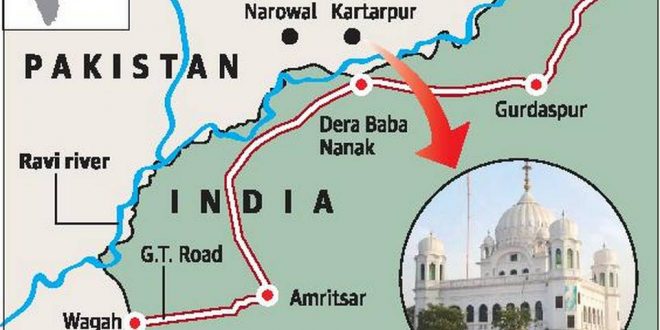
    Pakistan’s offer to accede to a long-standing Indian request to link up Gurudwara Kartarpur Sahib in its Narowal district across the Ravi river with the Dera Baba Nanak shrine in India’s Gurdaspur district clearly has overtones — far beyond what appears on the surface as a non-political, supposedly friendly gesture from Pakistan.

    Gurudwara Kartarpur Sahib has a unique place in the consciousness of Sikhs all over the world as it was here that the founder of the Sikh faith, Guru Nanak, spent the last years of his life till merging into eternity in September 1539. The revered Guru’s 550th birth anniversary falls in November 2019 and the proposed corridor is expected to be built and connected by both nations before this date to enable the proper conduct of celebrations as planned.

    Both India and Pakistan had the foundation stones for the proposed corridor laid in their respective areas in November 2018. This was followed up by a detailed meeting of their technical experts at the Attari-Wagah border on March 14, 2019. However, Pakistan did muddy the waters by mischievously including in their delegation for the next level of talks a few known “Khalistani” supporters based in Pakistan. India strongly objected and called off the proposed April 2, 2019 talks. However, India soon, somewhat surprisingly, agreed to Pakistan’s proposal for a technical meeting on 16 April, 2019, to iron out aspects on the exact alignment, coordinates, crossing points, etc in the proposed corridor. That all technical problems must be sorted out, requisite infrastructure and construction work should commence speedily and completed well in time brooks no emphasis. Equally, the rationale and, consequently, the long-term security ramifications of Pakistan’s acquiescence of India’s request to operationalise the Kartarpur corridor has to be borne in mind.

    Pakistan’s sinister Inter-Services Intelligence (ISI) has, over the years, been assiduously pursuing its nation’s cunningly crafted strategy of “bleeding India by a thousand cuts” in tandem with its infamous K2 strategy (Kashmir and Khalistan). In some parts of Jammu & Kashmir, the ISI has succeeded, to an extent, in keeping the pot boiling and sustaining insurgency-like conditions, especially in the last few years. However, its devious stratagem for whipping up discontent in Punjab over the years had failed miserably except briefly during the early Eighties. Nevertheless, the ISI has over the decades endeavoured to keep the Khalistani issue alive, setting up offices in the US, Canada, the UK and Germany to brainwash sections of the Sikh diaspora settled in these nations.

    The ISI’s latest malevolence has been to re-energise a Florida-based marginal Sikh separatist group called the Sikhs For Justice (SFJ) and made them establish their office in Lahore. The SFJ, flushed with liberal ISI resources, have had the temerity to publicly announce that that the Kartarpur Corridor would be a “bridge to Khalistan”. The SFJ is concurrently leading the “Khalistan Referendum Campaign — 2020” and will be recruiting, from all over the world, members of the Sikh community to participate in this nefarious separatist exercise. Their earlier effort in London, last year, proved to be a damp squib. Nevertheless, the ISI’s determined machinations to influence the Sikh community, both in India and abroad, must not be taken lightly by India’s security agencies.

    The ISI’s impious activities to destabilise Punjab in the future behind the veil of the Kartarpur Corridor must be seriously factored in by the Indian government. Notwithstanding the fact that India is currently in election mode, India’s security establishment in concert with the Punjab government, currently under an able soldier-politician Capt. Amarinder Singh, our foreign missions abroad and leaders of the Indian Sikh community must nip in the bud any future intrigues of Pakistan’s deep state to re-ignite trouble in Punjab.

    Our own innocent pilgrims to the Kartarpur shrine will have to be sensitised prior to embarking on their pilgrimage and feedback will have to be taken from them on their return. It will be in order for the Indian government to caution beforehand the Pakistan government to rein in its intelligence agencies and the Pakistan Shiromani Gurudwara Prabandhak Committee to desist from any anti-India activities.

    As all out efforts are made to ensure that the Kartarpur Corridor comes up well in time to celebrate the great Guru’s birthday, India and Pakistan must strive towards the proposed Kartarpur Corridor becoming a bridge for peace between the two nations.

    The writer, Lt Gen Kamal Davar (Retd), was founder of the Defence Intelligence Agency and deputy chief of the Integrated Defence Staff. He is a Distinguished Fellow and Trustee of TPF.

    This article was published earlier in Asian Age.

  • China grows, and grows

    China grows, and grows

    G Parthasarathy                                                                                       Apr 11, 2019/Commentary

    One of the most remarkable developments in recent decades has been the rise of China, spearheaded since 1978 by the visionary leadership and economic reforms of Deng Xiaoping. China registered the highest rate of economic growth in history, growing at an average rate of 9.5% annually, for over three decades. This followed the earlier rise of Japan between 1950 and 1989, with an average growth rate of 6.7%. Deng transformed a country crippled by centralised planning and state control of industries into a more decentralised economy, with increasing involvement of private initiative. This era saw market reforms leading to a surge in exports, with China emerging as the largest exporter in the world. China’s private sector today controls around 80% of its industry and virtually the entire agricultural sector. State farms today employ barely 1% of agricultural labour. There are 658 billionaires in China, which is ruled by a ‘Communist’ party, as against 584 in the US, ruled by Trump’s right-wing Republican Party.

    President Xi Jinping has emerged as China’s unquestioned leader, seeking to match Xiaoping. Among Xi’s ‘mantras’ to achieve his ambitions is the now famous Belt and Road (OBOR) project, involving the use of Chinese construction companies, which have huge surplus capacities. These companies did a stupendous job in China over the past three decades and have surplus capacity, including labour and machinery, arising from the relatively small number of projects yet to be undertaken. The Belt and Road Initiative is not only involved in building roads and bridges, but also railways, ports, dams, power stations and other infrastructure across 68 countries, spanning Asia, Africa and Europe. Estimates of total investments envisaged for these projects vary from $1 trillion to $1.3 trillion. The primary focus is on the Eurasian landmass.

    The main source of concern in India, however, pertains to Chinese projects across the Indian Ocean. While the OBOR focuses primarily on the construction of roads, bridges, electrical power projects and dams, the terms for such assistance are opaque. Relatively small attention is paid to developing indigenous skills and capacities for operations and maintenance. The terms of interest and repayment are far less generous than the vastly concessional assistance provided by institutions like World Bank and Asian Development Bank, or bilaterally by countries like Japan and Germany. The net result of this ‘generosity’ is that a number of developing countries, beguiled by Chinese protestations of altruistic assistance, soon find themselves handing over substantial tracts of territory and natural resources to the Chinese, with little development of indigenous expertise.

    India’s western Indian Ocean neighbourhood remains a primary source of concern about Chinese intentions. Using its aid as leverage, China has secured its first military base in the East African Port of Djibouti. China has, in turn, undertaken work on port facilities, construction of two airports and a rail line from Djibouti across landlocked Ethiopia. In neighbouring Kenya, China’s involvement in the strategic port of Mombasa and construction of a rail line, linking the port to the capital Nairobi, have also raised eyebrows internationally. There are growing apprehensions in Kenya that it would soon be unable to repay and be forced to make ‘concessions’ on the management and use of the port. China is the largest lender to Kenya, with debt liabilities reportedly amounting to about $42 billion.

    Reckless spending by the government of former President Abdulla Yameen in the Maldives has resulted in the country acquiring a debt of $3 billion on account of the usual Chinese infrastructure mix of roads, bridges, airports and housing. The newly elected government of President Ibrahim Solih has been more circumspect about such projects. Sri Lanka, too, when unable to repay its debts, was forced to concede substantial control of the Hambantota Port, with a 99-year lease to China. It was also compelled to allow Chinese N-submarines to berth in Colombo.

    Pakistan and Myanmar are inevitably going to experience similar dilemmas. The $62 billion CPEC involves road, rail, mining, port, power sector and agricultural projects, under conditions not known even to parliamentary committees and the country’s Central Bank. With its foreign exchange reserves dwindling and its pleas for an IMF bailout dependent on the goodwill of the US and its allies, Pakistan is faced with very difficult choices on economic management and its backing for groups like the Taliban and the JeM.

    Apart from developing and virtually taking over the Gwadar Port, China is set to build up Pakistan’s navy with the supply of four ‘most advanced’ warships and eight submarines by 2028. At the same time, an isolated Myanmar faces virtual Chinese blackmail to accept Beijing’s ‘aid’ to build a highly unpopular and ecologically dangerous hydroelectric project in the face of strong public protest. This will be part of a Chinese economic corridor linking its Yunnan province with Myanmar’s Kyaukpyu Port.

    The OBOR project has multiple aims. India cannot, however, overlook the fact that it is geared to establish Chinese domination of vital lanes of communication and oil supplies in the Indian Ocean. Responding to India’s concerns voiced over two decades ago, a Chinese admiral arrogantly remarked: ‘The Indian Ocean is not India’s Ocean.’ China’s designs have serious implications for the maritime security of not only India, but also several partner states, ranging from the US and Japan to Indonesia, Malaysia, Vietnam and South Korea.

    Ambassador G Parthasarathy is a former High Commissioner of India in Pakistan, and is a Distinguished Fellow and Trustee of TPF. Views expressed are the author’s own.

    This article was earlier published in The Tribune.

    Photo by zhang kaiyv from Pexels.

  • India Elections 2019: On Democracy, Secularism and  Nature of Religion

    India Elections 2019: On Democracy, Secularism and Nature of Religion

    Mohan Guruswamy                                                                                     Apr 11, 2019/Op-Ed

    As India goes into elections today, the largest democratic exercise in the world, it is time to reflect on the nature of religion, their promoters and what it means to be secular.

    When the late J. Jayalalithaa opened up the debate on conversions by passing an ordinance during her second tenure as chief minister of Tamil Nadu that made the choice of faith subject to the state’s approval, not surprisingly, the VHP, RSS and the BJP hailed it as a great achievement. Not surprisingly, their Muslim and Christian counterparts severely castigated it. To all these organisations, religion is not just a matter about heaven and hell and who gets to go where, but about power and profit. Modern religions are akin to great commercial enterprises like Coke and Pepsi constantly seeking greater marketshare while retaining the faith of existing customers.

    It is the consequent faith, mostly induced and sustained by these exertions, which sustain the huge uniformed bureaucracies and extravagantly titled organisations that are the edifices of our major religions. Witness the recent no-holds-barred struggle for the control of the Shiromani Gurdwara Prabandhak Committee in Delhi, which was nothing if not about getting one’s hands on the huge assets and cash flow of the gurdwaras. At least the Sikhs go about it democratically, in a manner of speaking. But all those of the great Hindu, Muslim and Christian institutions are beyond the grasp of even their most faithful. It is indeed unfortunate that debates on religion and faith are no longer about goodness and decency or even present day social concerns. But that is not for discussion now. At stake is something much more important.

    The acceptance of democracy as a way of life implies that we have accepted that we hold certain rights to be inalienable. The Indian Constitution therefore guarantees justice, liberty and equality. The rights emanating from these are considered fundamental to our being a free and democratic society. These fundamental rights, therefore, are inviolable in the sense that no law, ordinance, custom, usage or administrative order can ever abridge or take away any of them. The preamble elaborates liberty to be that of “thought, expression, belief, faith and worship”, leaving little room for ambiguity. Like Hinduism’s eternal truths these are eternal rights. Without these rights we will be no different than a Saudi Arabia or North Korea!

    Consequently, Article 19 guarantees the people of India seven fundamental freedoms. These are (a) freedom of speech and expression; (b) freedom of assembly; (c) freedom of association; (d) freedom of movement; (e) freedom of residence and settlement; (f) freedom of property; and (g) freedom of profession, occupation, trade or business.

    Article 25 guarantees “freedom of conscience and free profession, practice and propagation of religion”.

    This very simply means that people are free to believe whatever they may want to, convert others to this belief and perform whatever rituals or ceremonies that are required by one’s faith. In even more simple words, people are free to be Christians or Muslims or Hindus or whatever, free to preach and convert. Or that matter even Marxism, which now is no different than any faith with its own depleted philosophy and impossible mythology. So what is there to debate about conversion? This right is inviolable and is guaranteed by the Constitution, and so there is nothing to debate.

    It is another matter that religions as we know them to be practiced are usually premised on irrational and primitive ideas. The psychologist James E. Alcock writes: “We are magical beings in a scientific age. Notwithstanding all the remarkable achievements of our species in terms of understanding and harnessing nature, we are born to magical thoughts and not to reason.” Now this relative absence of reason in religion very clearly gives us cause for a debate. Very clearly the liberty of thought and conscience and the right to profess and practice one’s religion is not the issue.

    What can be the issue is our reticence to criticise religions, and subject their basic premises to scrutiny? Perhaps our bloodied history and particularly the conflicts of the recent past have made us want to seek accommodation by mutual tolerance. This is understandable and perhaps even commendable. Nonetheless, given the propensity of militant religionists like the VHP and the Jamaats to apply their doctrines to the political process and their constant endeavour to impose their views on others, not to challenge orthodox religiosity and fundamentalism would be a gross dereliction of our responsibilities.

    What we are in need of is not a debate on conversion but a debate on the stuff our beliefs are made of. But this is not on our agenda and will not appear on it as long as we have the present dubious consensus on what has come to be called secularism. To be truly secular is to be a sceptic, and therefore rational and reasonable. Merely to be silent on the unreason wrapped in ritual and ceremony that passes off as religion, or even to be fearful of criticising these lest we provoke irrational rage and violence, is not secularism. It is the silence of the truly secular and rational that has allowed the religious fanatics of all hues to seize the high ground from which the battle for our minds is being directed.

    This distorted notion on what is secularism makes even the maddest mullah cry stridently for it. To start with, to be a mullah or even a shankaracharya or a bishop is proof of one’s lack of secularism. To be secular is to consider organised religion little more than humbug. But now is not the time to discuss humbug, but the hullabaloo about conversion.

    It still leaves us with the rights and wrongs of converting by false inducements. Is the promise of life after life not a false inducement? Since all of us are inevitably sinners and since no religion promises a more comfortable hell, the inducements have to necessarily relate to the immediate, and more often than not, for material gain. For some reason hell in all religions is always a hot, dank and dark place and heaven with a surfeit of all the good things of life. Nobody seems to give a thought that it is just these good things that get us into trouble in the first place. Not just in terms of clogging our arteries, wrecking our livers and exposing us to HIV, but in terms of getting us into trouble with the authorities above!

    The criticism against Christian missionaries is that they dupe poor people into becoming Christians by giving them money. And ditto for Muslims preachers. If Hindus want to keep their flock the answer is staring them in the face. Put some money where your mouth is and the flock will not deplete? To be true, there is more than cash that goes with this. More often it is housing, clothes, education and the care and respect that comes with acceptance that are the inducements. The exchange of one set of primitive ideas with another set of not very different yet similarly primitive ideas is no big deal. Ordinary people can be very practical when it comes to matters pertaining to their well-being.

    Both the State and our predominantly Hindu society have failed to provide to the majority of this country the elementary essentials of living and quite often even the elementary decencies due to all human beings. Added to this, our society has systematically discriminated against the weak and the oppressed. Our former President, the late K.R. Narayanan, had a point when he wanted to know, from the then Atal Behari Vajpayee government, if no dalits or adivasis can be elevated to the Supreme Court? Why do they exist mostly below the poverty line? Why do more of them die younger? Now here are subjects worthy of a debate. The call for a debate on conversion lends itself to expansion to include these. Just as it lends itself to a discussion as to why people are so easily willing to give up their traditional faith. Clearly, the systematic exclusion of a majority from their rightful role in the community and the continuing discrimination against them is a great subject for a debate. If the Hindu upper castes were to be civilised in their treatment of the lower castes, would they now seek to escape from the social tyranny of the so-called Hindu society?

    Such an expanded debate could possibly shed light on why for most of the last millennium we were a conquered nation. It is over a thousand years since Mohammed bin Kasim conquered the Sind. Thus paving the way for a succession of Arabs, Persians, Turks, Uzbeks, Mongols, Portuguese, French and the English to invade and rule parts, if not all, of this country. In the process, we even became the only nation to be conquered by a private commercial enterprise — the East India Company. How much lower than that can you get? Our thousand years of shame quite clearly calls for a debate we have never had.

    Such a debate will almost certainly focus on the failures of the Hindu elites to defend the nation, to unite the country and harness its great resources. It is not very different even now. The lessons of history are yet to be learnt. And so we will want to debate what we shouldn’t be and not debate what we should be.

    The writer, a policy analyst studying economic and security issues, held senior positions in government and industry. He is a Distinguished Fellow and Trustee of TPF.

    Views expressed are the author’s own. A version of this article was published earlier in Asian Age.

    Photo by Darshak Pandya from Pexels.

  • The Politics of Balakot

    The Politics of Balakot

    Deepak Sinha                                                                                                        March 29, 2019/Op-Ed

    There is something about old proverbs. Take, for example, an old adage by Abraham Lincoln: “You can fool all the people some of the time, and some of the people all the time, but you cannot fool all the people all the time”. Certainly, this maxim is spot-on with regards to the Pulwama tragedy and its repercussions. Despite Pakistan’s best efforts to steer the narrative to its advantage, the truth that is emerging — though in dribs and drabs — paints a very different picture from what it would have wanted us to believe.

    For example, take a look at perceptions in Pakistan about the suicide attack itself. Not only most of us, but also much of the world, especially analysts focussing on this region, had little hesitation in accepting the involvement of Pakistan-based terrorist group, Jaish-e-Mohammed (JeM), in the suicide bombing attack, especially since the JeM itself publicly claimed responsibility. Yet, let alone the Pakistani establishment, not even one respected journalist or analyst over there uttered a word of condemnation against the JeM for this heinous act. Instead, they insisted that the attack was motivated by the brutal treatment meted out to Kashmiri locals by the Indian security forces.

    This is contrary to what has widely been reported about Pakistani Senator Mushahid Hussain Sayed, a senior politician and former Cabinet minister, who quite categorically stated that “what happened in Pulwama in February, in my view, was Pakistan’s finest hour after the nuclear tests of 1998.” Moreover, while Pakistan’s Foreign Minister acknowledged JeM chief Masood Azhar’s presence in Pakistan, the Director-General of Inter-Services Public Relations (ISPR) blandly contradicted him a day later, unequivocally stating that the JeM does not exist in Pakistan as it is a “proscribed terrorist organisation”.

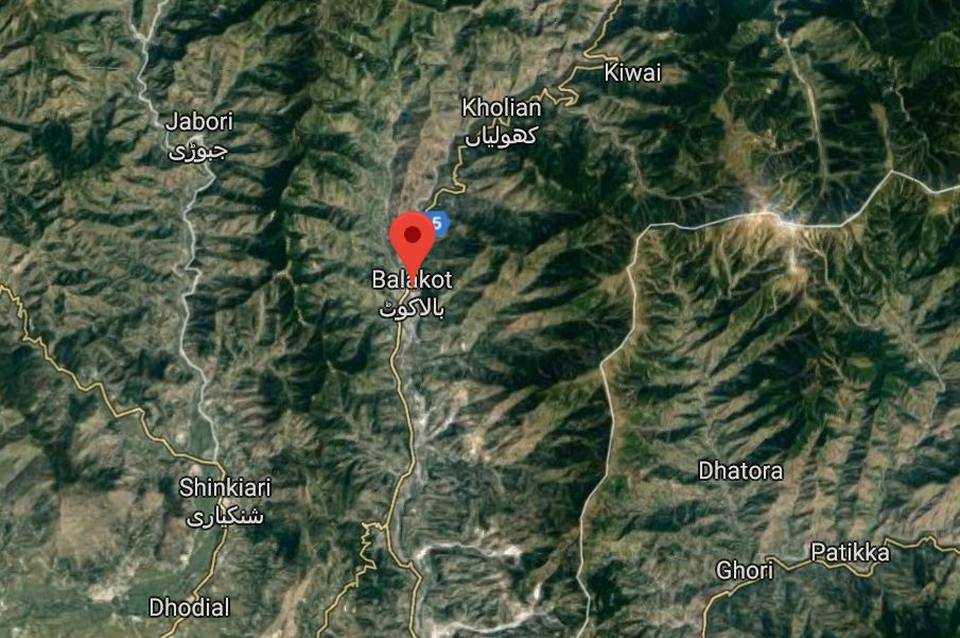
    Similarly, with regard to the Indian response, the ISPR spokesperson was the first one to admit that the Indian Air Force (IAF) had crossed the Line of Control (LoC) and carried out a strike in the vicinity of Balakot. He, however, attempted to mislead and obfuscate the issue by hinting that this attack was in the vicinity of the village, in close proximity to the LoC in Pakistan-occupied Kashmir (PoK), and not the town by that name in Khyber Pakhtunkhwa, deep inside Pakistan, where it actually struck. While the IAF claimed to have hit the terrorist training camp, the spokesman insisted that no damage or casualty was inflicted to the “seminary” located over there. However, the cordoning of the area by the Pakistani Army and its refusal till date to allow any access raises questions and suggests an attempt to cover up.

    Finally, there was the confusion about two Indian fighter aircraft having been shot down with both pilots taken prisoners. It, however, turned out that the IAF’s claim at that time of having lost one MIG-21, piloted by Wing Commander Abhinandan after he had downed a Pakistani F-16, was correct. Bizarrely, not only has Pakistan continued to deny the loss of its own aircraft, it even insists that the F-16s in its possession were not involved in operations in this sector. This despite the IAF having produced evidence.

    Clearly, obfuscation and deceit are embedded in the DNA of Pakistan, especially in the manner it deals with India and the international community. We have been experiencing this since decades. Remember, Pakistan denied any connection to the so-called “raiders”, who nearly captured Srinagar in 1948 or to the “militants”, who occupied the Kargil heights in 1999, only to recant and accept its involvement subsequently. It isn’t as if it reserved such treatment for India alone as Iran and Afghanistan have also found to their cost. Therefore, in the present instance, to have expected Pakistan to behave any differently was sheer fantasy, especially given that the military uses proxy war to retain its pre-eminent role within the country and the region.

    The sad truth is that its very foundation was built on the British construct — that it was religious antagonism and not its requirement for a pliable state that would help protect its interests in the region — which resulted in the horrors of partition. The formation of Bangladesh put paid to the two-nation theory and secret Cabinet documents in the UK, subsequently declassified, showed up the deceitful lengths the British had gone to in furthering their own interests.

    Leaving aside Pakistan’s desperate attempts to change perceptions what should be of immense concern to all right-thinking people, here is the horrendous manner in which this issue is being used by politicians and the media to gain attention for their selfish agenda even if it is at the cost of the nation’s interest. Neither free speech nor the looming elections justify such crass behaviour, especially since it is impacting the credibility and apolitical nature of our armed forces.

    While Prime Minister Narendra Modi deserves credit for his bold decision to aggressively respond in the manner that he did, it is no excuse for the Bharatiya Janata Party (BJP) to use the strike to tom-tom its nationalistic credentials, going so far as to shamefully depict Wing Commander Abhinandan in posters used for election rallies. Prime Minister Modi may well scream ‘Jai Jawan, Jai Kisan’ from the rooftops but it has not in any way stopped his Government from refusing to grant One Rank One Pension (OROP) to military veterans or opposing the grant of Non Functional Upgrade (NFU) in the Supreme Court using all manner of lies. That the NFU is already authorised to the Civil Services and the Central Armed Police Forces, thereby changing long-standing civil-military parity, has been deliberately ignored. Their efforts to humiliate and lower the prestige and standing of the armed forces continues unhindered.

    It isn’t as if other political parties, including the Congress, have behaved any less hypocritically. On the one hand, they have “officially” supported and praised the action of the IAF, while at the same time senior leaders of these very parties have questioned the efficacy of the attack, despite the Air Chief having clearly stated that the targets selected were destroyed as they had planned. It appears that they believe that the only manner in which the steadfastness and strength of character ‘Modi’ displayed on this occasion can be negated is by deliberately destroying the credibility of our military’s achievements. While we may be uncertain of who will succeed at the hustings, there is absolutely no doubt that our armed forces have lost out yet again.

    Brigadier Deepak Sinha (retd), an Army veteran, is a Visiting Senior Fellow at the TPF and is also a Consultant at ORF, New Delhi.

    This article was published earlier on March 19th, 2019, on The Pioneer.

    Image Credit: Google Maps

  • Accountability A Must for Armed Forces

    Accountability A Must for Armed Forces

    Kamal Davar                                                                                                            March 29, 2019/Op-Ed

    In democracies the world over, institutions are constitutionally mandated to serve their nation in consonance with the nation’s aspirations and objectives. An institution exists because of and for the nation, and not the other way around. Legally and logically, all institutions are accountable to the constitution from which they derive their responsibilities and strength.

    In India the image of most institutions over the years, since the country’s independence, has taken a beating with regard to their equity, performance, professional integrity — at least in public perception. However, if there is one institution which has unquestionably retained its awe and respect in the nation’s acuity and, equally, its emotions, it’s the Indian Armed Forces.

    Through challenging times faced by the nation since the violent 1947 Partition, India’s armed forces have acquitted themselves with the highest professionalism, uncommon valour and sacrifices to uphold the integrity and honour of the nation. However, events of the past month, namely, the Pulwama terrorist strike and India’s retaliatory air operations in Pakistan’s Balakot have raised significant points in the minds of some security analysts, the foreign media and even some doubting Thomases in India regarding the results of the military action. The dividing line between military transparency vis-a-vis military secrecy has been much debated.

    A few skeptics and some learned ones too have asked: Does the unique respect of the nation towards its armed forces make the latter remain in the comfort zone of its cocoon, answerable to no one but themselves? It is essential, in keeping with the glorious reputation of India’s tri-services, that doubts in the minds of anyone and anywhere are amply answered in the larger interests of the nation and the armed forces themselves.

    The defence forces exist to defend the country from external and internal aggression, to preserve and further national interests — something that they have consistently achieved with matchless sacrifices, aplomb and victories for the nation. However, it is equally important that wherever shortcomings in their operations surface, those must not be pushed under the carpet and ignored on some fuzzy notions of misplaced pride, secrecy or political considerations under pressure from the ruling establishment. Operational security considerations also must be given their due importance for the elements of surprise and secrecy substantially govern success in military operations.

    The dastardly Pakistan-inspired and supported terrorist strike on February 14, 2019, on a CRPF convoy in Pulwama in Jammu and Kashmir resulted in more than 40 fatalities. That this tragedy is attributable to a serious intelligence failure, shoddy road clearance drills besides the faulty decision to dispatch such huge numbers of paramilitary personnel by road and not by air (as now ordered) cannot be denied by security professionals anywhere. That India altered the counter-terror policy paradigm by launching retributive aerial attacks deep inside Pakistani territory was indeed a welcome change and, resultantly, would have sent the correct signal to a terrorism-sponsoring Pakistan.

    The Indian Air Force’s deep strike and the resultant casualties in and damage caused to Jaish-e-Mohammed’s training camp in Balakot in Pakistan’s Khyber-Pakhtunkhwa province and the next day’s shallow aerial counter strike in the Poonch-Naushera sector by Pakistan would have thrown up many lessons for India’s security hierarchy. That these lessons are addressed with alacrity and the seriousness they demand requires no elaboration.

    Even in a democracy where transparency is essential in certain policy matters, the media, especially the over-noisy electronic media, has to absorb the fact that strategies and tactics, operational details, targeting and timings, employment of new weapons and platforms, strengths and weaknesses must not be discussed in the public domain. However, at an opportune time, the official arm of the government/services can and must share relevant details with the public which do not compromise national security. Equally, lapses, where emerging, even within the security forces must be analysed in great depth for future improvements.

    Post the Kargil War, the Vajpayee government had, very appropriately, carried out a comprehensive review of India’s higher defence management under the aegis of the Kargil Review Committee (KRC) and the Group of Ministers (GoM). The KRC and the GoM had done a remarkable job and some of the security organisations now in place owe their existence to them. Though India was clearly victorious in the Kargil War, the government at that time did not hesitate to discuss openly whatever shortcomings in the defence structure there were, dispensing the garb of national security or jingoistic patriotism! In the US, it is commonplace for serving generals/admirals to depose and testify before congressional committees on matters pertaining to national security. Accountability to the nation is thus a very normal hallmark in all democracies.

    As the world’s largest democracy and an aspiring global player, India has to conduct itself like one. Consequently, all its institutions have to be scrupulously accountable to the nation’s Constitution and not to personalities or political dispensations. The Indian armed forces are held in near-reverence and affection by the nation, necessitating them to always display professional acumen, moral courage and integrity of the highest order. As the last bastion of the state, the three services, both in peace and war, must continue to serve the nation as only they can and never, ever compromise on the values of truth, honour and valour. For retaining their high-pedestal-esteem in a democratic set-up, the armed forces must also accept that they are no holy cows either and should welcome any legitimate queries from the government or the public as regards their functioning or performance as long as operational security considerations are not compromised.

    Equally, responsible people in the nation must acknowledge the simple fact that merely questioning the government or any institution on matters pertaining to national security is not being anti-national!

    Lt Gen Kamal Davar is an Indian Army veteran and is former chief of India’s Defence Intelligence Agency. He is a visiting distinguished fellow at the TPF.

    This article was published earlier on March 24th, 2019, on The Asian Age.

    Image Credit

  • Advantage India, after Balakot air strike

    Advantage India, after Balakot air strike

    G Parthasarathy                                                                                     March 8, 2019/Op-Ed

    After the precision air strikes by the Indian Air Force on the small town of Balakot in Pakistan’s Khyber Pakhtunkhwa Province, public attention in India is now focused on bringing the leaders of the Jaish-e- Mohammed, including Jaish Supremo Maulana Masood Azhar to justice.

    Ironically, Azhar would not have been such a threat today if we did not cravenly release him after being blackmailed, during the Kandahar hijacking of IC 814. Those then released, included terrorists like Omar Syed Sheikh, who funded the 9/11 hijackers in the US and murdered American journalist Daniel Pearl.

    Recurring pattern

    The mass killing of Indians in terrorist strikes organised by the ISI has been a continuing feature of Pakistani policies, since the Mumbai bomb blasts on March 12, 1993. People seem to forget that 253 people were killed and 713 injured in the terrorist strikes in Mumbai in 1993. These killings were organised by the then ISI Chief Lt. General Javed Nasir, who incidentally enjoyed the patronage of Nawaz Sharif for years.

    The mastermind of the 1993 bomb blasts, Dawood Ibrahim, lives under heavy security protection, in the elite locality of Clifton in Karachi. There is conclusive evidence that the attack on India’s Parliament in December 13, 2001 was organised by Maulana Masood Azhar’s Jaish-e-Mohammed.

    A former ISI Chief Lt. General Javed Akhtar admitted this, in March 2004, in Pakistan’s Parliament. In the Kargil conflict in 1999, 527 Indian soldiers had been killed and 453 wounded, which was ostensibly designed to disrupt India’s supply lines to its forces in Siachen.

    When the Jaish-e-Mohammed, thereafter, briefly receded into the background, the ISI backed Lashkar-e-Taiba mounted yet another terrorist attack on November 26, 2008 on Mumbai, when 139 Indians died and 256 were injured. This received huge international attention, as the casualties included citizens of countries like US, UK, France, Germany and Israel.

    Yet, within a few months, we were back to a “Composite Dialogue” with Pakistan, after the Sharm el Sheikh Summit, where the focus of attention was not the 26/11 terrorist strike on Mumbai, but unfounded Pakistani allegations of Indian involvement in the freedom struggle in Baluchistan! Sadly, this was a manifestation of Indian diplomacy, at its worst.

    The Balakot Air Strikes by IAF Mirage 2000 aircraft was marked by the use of precision guided Israeli Spice 2000 bombs, which function with deadly accuracy. There is now conclusive evidence that the target was a Jaish-e-Mohammed Madrassa, which was badly damaged.

    Hundreds of Jaish Jihadis, preparing for “martyrdom” in Jammu and Kashmir, were motivated and trained in Balakot, for “Jihad” in Kashmir. The training was embellished with promises of an after life in a heavenly abode. Our government would, however, have been better advised, if unverified claims of hundreds of casualties were not prematurely made, or publicised.

    What will, however, please our Russian friends, is the fact that an upgraded frontline American F-16 equipped with highly sophisticated AAM-RAM missiles, was shot down by a 1970s-1980s vintage, Russian Mig 21 BIS of the IAF. This incident again exposed the notorious inefficiency of our Defence Ministry, which has delayed a proposal for modernisation of the IAF’s fighter fleet for over two decades.

    Successive Defence Ministers must accept constitutional responsibility for the cavalier manner the entire issue of modernisation of our fighter fleet has been handled. More importantly, the decision-making organisational structure in our Defence Ministry, dominated by a generalist bureaucracy, needs to be drastically restructured and reformed.

    Pakistan should be made to realise that India’s air strike in Balakot marks only the beginnings of a new approach, which India will now undertake.

    Upgrade covert actions

    Firstly, it is time for decision-makers in New Delhi to realise that our covert actions capabilities on foreign soil need to be upgraded. I had occasion to recently read a book by journalist Sandeep Unnithan, due for release shortly, on how Prime Minister Indira Gandhi personally supervised covert actions in Bangladesh in 1971, which virtually destroyed maritime communications facilities there, even before the conflict started in December 1971.

    The Israelis spent years developing capabilities to seek out the perpetrators of the Second World War “Holocaust,” across the world. Their Iranian rivals have developed similar capabilities, which one saw recently, when Iran responded to a terrorist attack from Pakistani soil, which killed 29 Iranian Revolutionary Guards, near the border between Pakistani Baluchistan and the Sunni majority Iranian Province of Sistan-Baluchistan, where the port of Chabahar is located.

    In an almost immediate Iranian counter-strike, across the border, over eight Pakistani soldiers were killed and a large number injured.

    The time for developing capabilities for counter-strikes is now ripe. The global political, diplomatic and economic scenario in India and Pakistan has changed drastically, over the past two decades.

    Pakistan remains, in international perspectives, an economically bankrupt and politically dysfunctional country, which is ostensibly democratic, but run by a military elite, which is given to promoting religious extremism across its neighbourhood. Its actions, like hosting Osama bin Laden secretly for over a decade, promoting Taliban extremism in Afghanistan and using internationally discredited terrorist groups for Jihad abroad, have irreparably sullied its international image and reliability.

    Islamabad is addicted to seeking doles from rich Arab neighbours, China and international financial institutions like the IMF, Asian Development Bank and the World Bank. Pakistan is constantly dependent on these countries and international institutions, for its economic survival.

    In contrast, India is seen today as a country with the fastest growing economy in the world, which is increasingly attractive for foreign investment. India is at peace and enjoys excellent relations with all countries (except Pakistan) in its Indian Ocean neighbourhood.

    It has multiple free trade and comprehensive economic cooperation agreements within SAARC and with members of Bimstec and Asean. There are, likewise, Comprehensive Economic Cooperation Agreements with South Korea and Japan.

    Across its western maritime frontiers, India is the only country, which enjoys excellent relations at the same time, with the oil rich Arab Gulf States, Iran and Israel. Prime Minister Narendra Modi has publicly expressed India’s thanks for American understanding and support in recent days.

    These developments now need, in course of time, to be augmented by moves to engage people in Pakistan, making it clear that India wishes them well.

    They have to be made to realise that their present miseries are the result of actions by a power hungry and rogue army, which is undermining democracy and leading the country to economic disaster and international isolation.

    Ambassador G Parthasarathy IFS (Retd) is a former High Commissioner in Pakistan, and is a Trustee of ‘The Peninsula Foundation’. Views expressed are author’s own.

    This article was published earlier in ‘The Hindu-Businessline‘. 

    Image Credit

  • Reaping the Whirlwind: Pulwama and After

    Reaping the Whirlwind: Pulwama and After

    Deepak Sinha                                                                                                         01 Mar 2019

    It was the military disaster of 1971 that forced the Pakistani establishment, the military which runs the country for all practical purposes, to face up to the fact that it could never win a conventional war against India. If it was to avenge its humiliation and cut India down to size, it had little choice but to fight through proxies, bleed India through a thousand cuts.

                This idea must surely have germinated from its successful employment of Islamic militants, the forerunners of the Taliban, used to oppose the rule of the Marxist People’s Democratic Party of Afghanistan (PDPA) that had deposed President Mohammed Daud Khan in what came to be known as the Saur or April Revolution of 1978, It was this Pakistani fomented insurgency which finally led to the Soviet intervention and occupation of Afghanistan in Dec 1979. Incidentally, while conventional wisdom would have us believe that it was the CIA that came up with the idea of using militants to fight the Soviets, facts show that they came to the party much later and only added their considerable resources to the techniques perfected by Pakistan’s Inter-Services Intelligence in the use of irregulars for its own ends.

                Thus from the early Eighties Pakistan commenced its support for secessionist elements within India that were involved in fighting against the State, firstly the Khalistan Movement and subsequently, with greater success, in Jammu and Kashmir. It clearly had advantages as there was credible deniability, economy of effort with the dirty work being done by proxies keeping Indian Security Forces tied down and finally, the most important of all, creating fear and anxiety within the general population that impacted every aspect of our democratic way of life.

                There is of course one major disadvantage of using proxies, they tend to have a mind of their own and often times respond inappropriately and at cross purposes to what its mentors may be wishing to achieve. The Pulwama suicide attack falls in this category. There have been numerous statements over the past four years that have made clear that Pakistan prefers to deal with Indian Governments run by the more “liberal and secular” parties compared to having to deal with the more conservative, Hindutva driven BJP. With elections around the corner and with the BJP facing the very real likelihood of a serious decline, if the recent state elections were any indication, it would have been in Pakistan’s best interest to maintain a low profile.

                Masood Azhar, the Jaish- e- Mohammed supremo, obviously had a different view. Not only did his organization carry out the suicide attack that led to the death of 45 policemen, but also went on to claim credit for the action. Thus, in one thoughtless act he not only destroyed the Pakistan Government’s attempts at deniability, but he also made Imran Khan’s call for India to provide credible evidence infructuous. Most importantly, the timing of the devastating attack left the Modi Government with little choice but to respond overtly and with speed, if it was to still retain any hope of doing well at the hustings. There was also the possibility that if India responded in an effective manner to the outrage, the Governments stock would go up rapidly and that would enhance Mr. Modi’s reputation and chances of return to power, just as the earlier cross- border strike helped the BJP in the Uttar Pradesh elections. This could hardly have been to Pakistan’s advantage and in the event it was facilitated by the Army, then General Bajwa has certainly made a serious miscalculation.

                Regardless of the number of casualties that the Indian Air Force’s attack on terror camps deep inside Pakistan may have caused, the very fact that the Indian Government displayed the intent to take on terrorists inside Pakistan has clearly changed the narrative prevalent for the past four decades. It has also shown up Pakistan’s repeated threats of a nuclear riposte as sheer hyperbole and bluster. More importantly the initiative has finally shifted in India’s favour along with world opinion which has had enough of Pakistan’s duplicitous behaviour. Moreover, any escalation above a perfunctory retaliation, which was to be expected to assuage domestic opinion, by Pakistan, would destroy the fig leaf of deniability it has used over the years. Most importantly, it would force their military into a direct confrontation, something that the proxy war waged by them over the years allowed them to avoid.

                In this context one can only hope better sense will prevail and we will be able to avoid a serious escalation of the conflict which can hardly help either side given the huge challenges that we face in lifting vast swathes of our population out of the twin evils of poverty and illiteracy.  However, it must be emphasized that true progress will only occur as and when Pakistan starts to wind up the Jihad factory it has built over these years. In any case the Indian cross- border raid cannot be a one- off affair and we must be willing to do all that it takes to neutralize the Jihadi network and its vast army of financiers, mangers and facilitators.

                Finally, while all our attention may be taken in dealing with the issue at hand, the fact as to what led to the Pulwama attack must not be lost sight off. For this serious lapse on the part of our intelligence services, it is imperative that heads must roll. There have also been clear indications that despite increasing numbers of militants being neutralized in the Valley the Army and other Security Forces were being increasingly marginalized, especially in South Kashmir, because of popular discontent. They had consequently lost their ability to dominate the countryside, thereby losing out on intelligence. These aspects continued to be ignored by the Central Government and the military hierarchy. Little thought was given to the necessity for reviewing either counter insurgency strategies or tactical procedures and the leadership continued to be swayed by tactical successes with little attempt to resolve the growing disillusionment and radicalization within the population, especially the youth. This must certainly change.


    The writer, a military veteran is a Consultant with the Observer Research Foundation, New Delhi and Senior Visiting Fellow with The Peninsula Foundation, Chennai.

    This article was also published in the Pioneer https://www.dailypioneer.com/2019/columnists/stifle-the-jihadi-network.html. Opinions expressed in the article are those of the author alone.

  • Looking Beyond the Rafale Imbroglio

    Looking Beyond the Rafale Imbroglio

    The tenor of the debate, especially in the election year, can hardly be expected to be moderate or mature. While wild assertions made by the politicians in hope of swaying the electorate is to be expected and accepted, there is also a vital need for politicians to ensure that matters pertaining to National Security are kept out of the ambit of politics. Just as Georges Clemenceau, French Prime Minister during the Great War, commented that “War is too serious a matter to entrust to military men”, so too is the case with entrusting national security to just politicians. But politicians being politicians care little for such niceties, which explains why allegations of wrongdoing are flying so thick and fast in the ongoing Rafale procurement imbroglio, who, unfortunately, have been joined by respected academics and researchers, who should know better.

    Attempts to garner the limelight and the few minutes of fame that goes with it is understandable in the case of politicians, but for academics to do so by drawing conclusions based on speculation that passes for facts and little else, seems to be rather hasty, if not downright fallacious and unprofessional.  A respected academic, for example, has concluded that the decision to procure just 36 jets instead of the original 126 with the attendant increase in unit cost shows “extraordinary ineptitude can only be explained by the circumvention of laid down procedures.” He further  goes on to equate the manner in which this decision was made to that of demonetization, berates the Government for being “parsimonious and incompetent” and suggests that their action was “worse than a crime—it was a blunder.”

    He may well be proved right in his conclusions subsequently, but the truth is that it is one thing to question the Governments’ motivation or influence in the selection of the aircraft or the offset partners, but quite another to question the decisions it takes, however much we may disagree with them. For one, Mr. Modi was elected by a substantial majority to do just that, since that is what is expected of a leader. Moreover, we are wholly unaware as to circumstances that led to the Government to take the decision that it did, and therefore to question his decisions clearly smacks of arrogance, if not an ulterior motive. It is all very well to rant about the ineptitude and incompetence of this Government and its adverse impact on defence modernization, but what then are we to conclude at the previous Governments’ inability to push through the earlier deal in the seven years that it had to do so? Surely ineptitude or Incompetence may be too mild a term in their case.

    There is no gainsaying the fact that defence procurement and corruption have had a symbiotic relationship ever since Independence and our first procurement scandal, the infamous “Jeep Scandal” of 1948. Politicians have always seen defence procurement as a lucrative source of funds and as long as our political funding regulations remain opaque, nothing is going to change. Therefore, if this Government has actually resorted to underhand means as alleged, despite it being a government to government deal, then they have only trod on the well-beaten path of their illustrious predecessors. Thus, if precedent is to be our guide, then all the brouhaha on the issue will only result in a setback for the Air Force while politicians and their minions involved getting away, as we saw in the Bofors case.

    If it is accountability that we are interested in, then we need to look beyond this specific issue of procurement and ask ourselves as to why the Air Force finds itself in such desperate straits today, with regard to its combat strength. The fact that its combat strength has fallen from its authorized forty-two squadrons to the present thirty plus, over the past two decades, was neither unanticipated nor unexpected.  Like all machines, aircraft have a quantifiable life span, which while possible to extend with mid-life upgrades, will at a point in time require replacement by the next generation, if the Air Force is to be able to match and overcome the adversary’s capabilities. This does not call for either vision or foresight, just common sense and a practical understanding of the facts, which somehow the Government of India with its vast resources was unable to do. Surely someone must be held accountable for this negligence because not only does it put our national security at risk but endangers pilots who are expected to make do with shoddy outdated aircraft.

    While the Air Force hierarchy must carry some of the blame, not least for lack of moral fibre for its inability to stand up for its rights, governments over the years, especially the Ministry of Defence and Hindustan Aeronautics Limited (HAL) that it controls, have much to answer for. For the most part, much of our current problems can be traced to the utter failure of HAL to produce the hugely over-budget, inordinately delayed and ostensibly indigenous Light Combat Aircraft, the Tejas. In this context, the existing perceptions within the Air Force that quality control in HAL is all but non- existent have been borne out by the recent crash of the Mirage 2000 aircraft undergoing upgradation. Initial reports doing the rounds suggest that the nose wheel broke while it was taking off resulting in the tragic death of two test pilots, the best of the best.  It also brings to mind a similar case when three paratroopers slithering down from a HAL manufactured Advanced Light Helicopter at the Army Day Parade in January 2018 fell and were grievously injured because the “strong point” to which their rope was tied broke and separated from the aircraft’s body. The question that needs answering is not just how many such cases have happened in the past, but also how many in HAL have been held accountable for such shoddy work?

    This also explains to a large extent the previous governments’ inability to successfully close the deal for the 126 aircraft. It was reportedly blocked by the unwillingness of the Air Force hierarchy to accept aircraft manufactured by HAL without certification by Dassault Aviation, the manufacturers of the Rafale, something they refused to do.  That they would prefer to work with an untried and untested offset partner, allegedly thrust on them, rather than with HAL speaks volumes about what they think of the capabilities of this Defence PSU!

    Therefore, politicians and academics critical of this governments’ decision to keep HAL out of the loop in this case, especially their accusation that by doing so we have lost out on technology transfer, are either being deliberately obtuse or completely out of touch with reality. In this context, Mr. Rahul Gandhi has been particularly vocal, even to the extent of meeting workers of HAL. It would be wonderful if he took the initiative to volunteer to fly in one of these aircraft or take time off to interact with the pilots who do. Maybe, just maybe, he would have a change of heart and leave national security issues out of the realm of politics.  Finally, our leaders would do well to remember that even after these aircraft are inducted into service, they will continue to be confronted by that gargantuan problem, where will the other hundred-odd aircraft desperately need come from? After all what is sauce for the goose is also sauce for the gander!


    Brigadier Deepak Sinha (retd), an Army veteran, is a Visiting Senior Fellow at the TPF and is also a Consultant at ORF, New Delhi.

    This article was published earlier in the Times of India. The views expressed are the author’s own.