Category: Opinion/Commentary

  • The Fall of Kabul and dealing with the Taliban 2.0

    The Fall of Kabul and dealing with the Taliban 2.0

    The debacle of the democratic apparatus in Afghanistan was inevitable. After pumping billions in aid and significant bloodshed, the US government ended its longest war in defeat, the war in Afghanistan under the euphemism of ‘Global War on Terror’. Right after occupying the White House, the Biden administration has followed the path of its predecessors and commanded the complete withdrawal of troops from Afghanistan. The 2020 – Doha peace agreement between the US government and the Taliban brought a scant number of outcomes. Even during the presence of international forces in Afghanistan, the Taliban leaders disrespected the peace agreement and violated significant features of the agreement – that is a ceasefire. Following the agreement, over 5000 prisoners belonging to the separatist groups- were released by the Afghan government, under pressure from the US. Quite naturally, these prisoners were back with their militant outfits, thus strengthening the Taliban’s fighting capability.

    As of now, India has not taken any part in the peace negotiations with the Taliban. One of the major reasons is in the past the Indian government has never recognised the Taliban as a legitimate actor and vouched for a peace negotiation that should be Afghan-led, Afghan controlled and Afghan-owned. Currently, there are speculations about the likely power structure and composition of the government in Afghanistan, but it is quite clear the Taliban will govern the country by Sharia law. At this time of fast transition, the countries in South Asia are seeking to gain diplomatic leverage in the situation.

    India has a huge stake in Afghanistan’s reconstruction. In 2016 Indian Prime Minister and Afghan President Ashraf Ghani inaugurated the Salma dam project in Afghanistan. This 200 million dollar project is part of the larger developmental approach of the Indian government to Afghanistan. But recently, the equipment of the Salma dam was captured by the Taliban. In this scenario, it is unlikely that the Dam project will receive further Indian logistical support in future. Similarly, uncertainty beleaguers the Chabahar Project. India was one of the largest bilateral donors to Afghanistan during the war on terror. It ranges from infrastructure building to the promotion of democracy and small development projects. Almost $3 billion has been invested in and on Afghanistan in capacity building, education, infrastructure and security counts. This developmental commitment has made India the most dependable country and strategic partner for Afghanistan so far. However, now that the Taliban is in full control, the Indian government needs to find a diplomatic solution on how to go ahead with the various projects and commitments in Afghanistan.

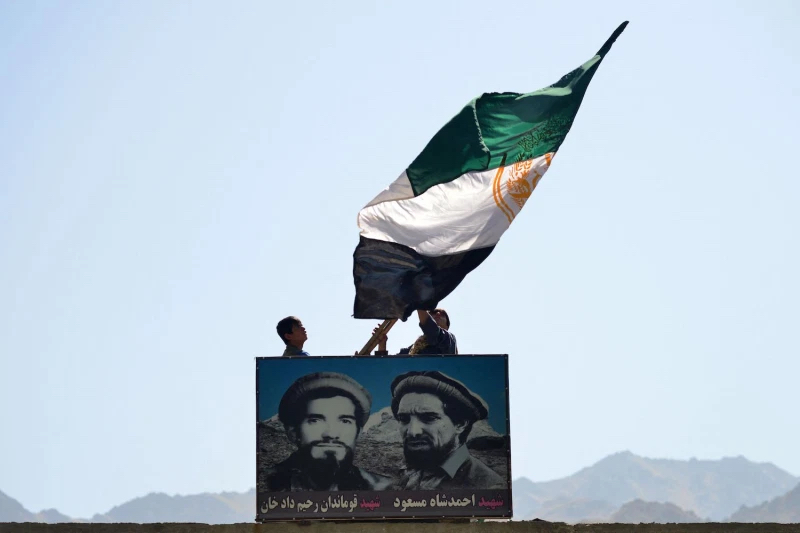
    Except for Panjshir province, the entire country is under Taliban control. The president, head of the state, has left the country. Led by interim President Amrullah Saleh and Ahamad Masoud, the Resistance Force from Panjshir Valley is fiercely fighting against the Taliban. Under such circumstances, the conservative approach of the Indian government, as it has begun to talk to the Taliban, could ruin the decades’ long reputation and developmental efforts in Afghanistan. India has legitimate concerns in Afghanistan and should protect its interests carefully. The absence of the US forces and elected Afghan government makes the task very difficult for the government of India. In the past, the Indian government cooperated with the elected Afghan government based on their shared interests and values of democracy, freedom, rule of law and respect for human rights. But the past approach may not work anymore under the Taliban leadership. In the past, the Ministry of External Affairs stated that it is in touch with ‘various stakeholders’ in Afghanistan and other regional countries. Indian officials believe that a ‘double’ peace’ i.e. one within Afghanistan and around the country is necessary for the region. To ensure safety for the Indians living in Afghanistan, the government has already evacuated all Indians employed by the Indian embassy. India has also started emergency E-visa facilities for Afghan citizens. With regard to the diplomatic relationship with the Taliban, the government is following a ‘wait and watch policy with its extended neighbour. The Taliban leadership has announced that they would like to have good relations with the Indian government and access to the Indian market through Pakistan. The Taliban also wants these two countries to resolve their issues as its interests are linked to the two countries. The government of India is yet to respond. The Afghan media personnel, translators, performance artists, civilians are being hunted down by the Taliban soldiers. In this scenario, India will carefully assess the situation and the reliability of the Taliban to make its further move.

    While India is still on the horns of a dilemma over the direct dialogue with the Taliban, India’s arch-rival Pakistan is busy re-establishing its hold and is trying to isolate India diplomatically from the region. Pakistan was one of the first countries to recognise the Taliban as a legitimate actor in the 90s. Last year, the government of Pakistan welcomed an Afghan Taliban delegation led by Mullah Abdul Ghani Baradar. In the meeting, Pakistan showed their support for peace and blamed India as a spoiler of peace in the war-torn country. But reports suggest otherwise. According to the US Defense Intelligence Agency, Pakistan harbours Taliban leaders along with other insurgent groups such as the Haqqani network, Jaish-e-Mohammed and Laskar-e-Taiba. Such groups have the potential to disrupt the security and stability in South Asia. The report also says that the strategic objective of the Pakistan government is to counter the Indian influence in Afghanistan. In a recent interview, Pakistan foreign affairs minister Shah Mahmood Qureshi said that the violence in Afghanistan led to a refugee exodus to Pakistan but they cannot take more refugees. Last year, the High Council for National Reconciliation leader Abdullah Abdullah said that Pakistan holds the key role in the Afghan peace process and India should keep their profile low in the Afghan situation.

    As the Taliban emerges in its second avatar while reframing its extremist Islamic ideology, China is poised to become the critical player in the region.  Under a slew of conditions negotiated with the Taliban, China will enhance its role through rapid investments and enabling Afghanistan to integrate into its Belt and Road Initiative. An unstable, dry and war-torn Afghanistan doesn’t offer any attractive economic proposition at the moment. As the economic challenges loom on the Taliban government, it can’t simply sustain on drugs. The Taliban have to rely on China, Pakistan and some Central Asian republics to rebuild its economy. Afghanistan’s unexploited mineral wealth, worth a trillion or more, is a great opportunity for the Taliban to leverage economic gains by engaging China, Iran, Russia, and Turkey. An alliance of China, Pakistan, Iran or Turkey may lead to the marginalisation of India’s role and effectiveness in Afghanistan.

    Whether India will recognize the Taliban is not clear yet but India can’t simply meditate either. Under India’s presidency, the UN Security Council passed Resolution 2593 on Afghanistan. Chairing a session India’s Foreign Secretary Harsh V Shringla has clarified that India won’t tolerate if Afghan territory turns into a sanctuary of terrorists and threat for the neighbouring states. Apart from human rights, Shringla emphasized Women’s participation in society.

    India along with its all partners should advocate for strict observation of the Taliban led governance. Having invested over $3 billion over the last two decades in the reconstruction of Afghanistan, India’s considerable contribution cannot be ignored. The recent meeting between India’s envoy Deepak Mittal and the Taliban’s foreign minister-designate Stanekzai at the Taliban’s request signals a possibility for a changed approach and environment from that of the Taliban 1.0. India’s immediate priority should be the safe evacuation of the Indian origin people and stranded Afghans.


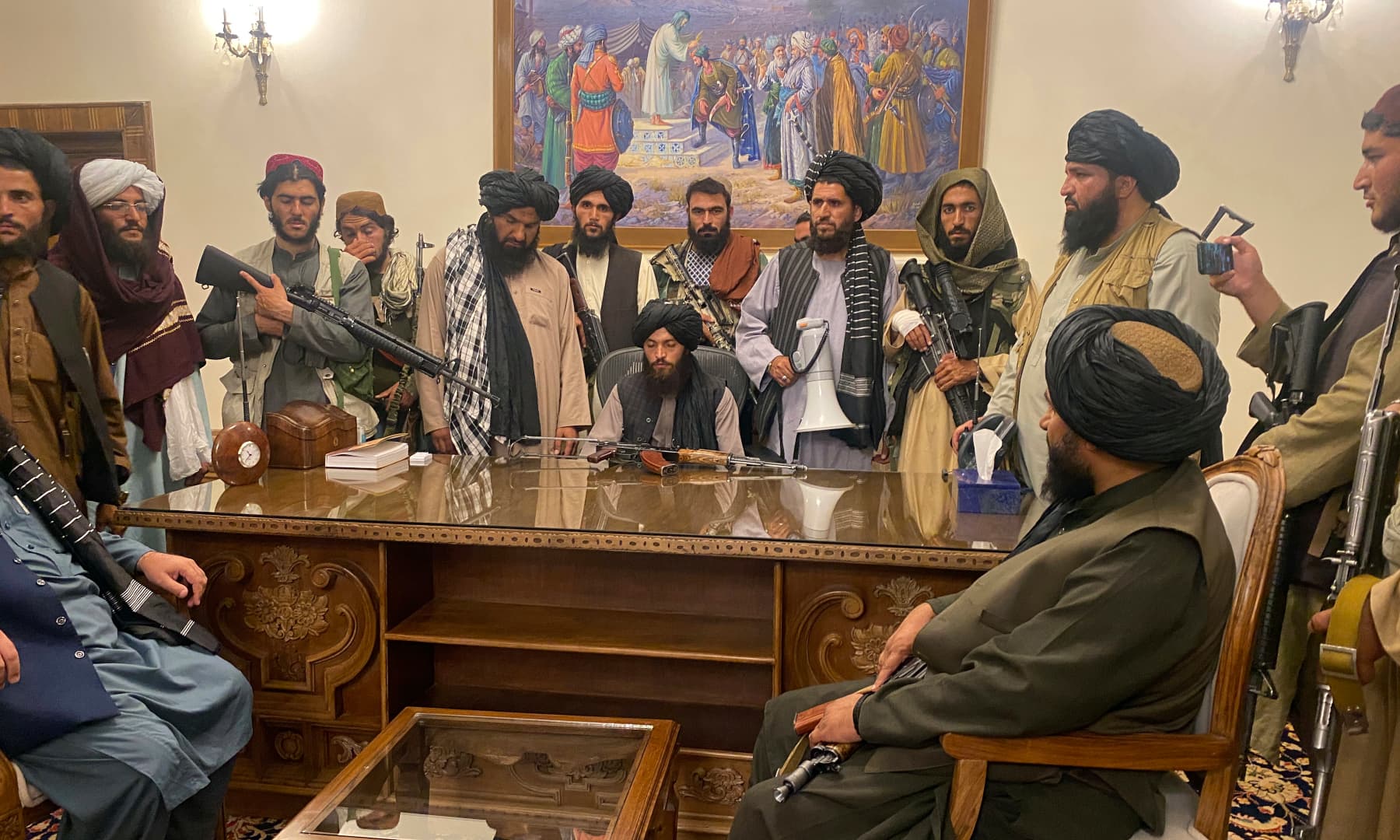
    Image Credit: www.dawn.com

  • Politics and the Military don’t gel

    Politics and the Military don’t gel

    It would be in the interest of the political establishment to desist from politicising the military. Creating an uncontrollable monster, that will go on to bite the hand that feeds it, is nothing but sheer stupidity.

    The former President of the United States, Donald Trump, has always had the reputation of being a man of questionable moral and ethical integrity with close connections to the radical right. Yet, there were those who voted for him in 2016 because they genuinely believed that he was the lesser of the two evils, and strongly felt that only an “outsider” like him was capable of draining the “Washington Swamp”, a phrase alluding to the seemingly all-pervasive corruption surrounding the Washington power elite. They would certainly have been disappointed by his insipid performance as President, especially the extent of his chicanery and selfishness. These have been laid bare in a recent book by two Pulitzer Prize-winning Washington Post journalists, investigative staff writer Carol Leonnig and former White House Bureau Chief Philip Rucker, on Trump’s final year in power, titled “I Alone Can Fix It”. A fitting sequel, and as perceptive and illuminating, is “A Very Stable Genius”.

    One of the most fascinating aspects of their latest book pertains to the manner in which the Chairman of the Joint Chiefs of Staff, General Mark Milley, responded to President Trump’s brazen attempts to overturn the election results by peddling his “Big Lie” that the elections had been “stolen” by the Democrats resorting to widespread fraud. Despite his legal challenges being summarily dismissed, he continues to peddle these allegations to this day. There can be little doubt that his incitement of his supporters culminated in a violent but abortive attempt on January 6 to disrupt proceedings at Capitol Hill to formalise the election results.

    Prior to this, one may recall, General Milley had been excoriated by military veterans, politicians and the media for having unwittingly dragged the military into politics by being present, in uniform, at Trump’s infamous “Bible photo op” at the St John’s Church, immediately after peaceful protestors had been forcefully evicted while demonstrating for racial equality. Indeed, that he then went on to tender a public apology for his error of judgement speaks volumes of his forthrightness, integrity and strength of character.

    On Trump’s attempts to cling to power through force, General Milley reportedly told his colleagues in the Joint Chiefs: “They may try, but they’re not going to f@@###g succeed…You can’t do this without the military. You can’t do this without the CIA and the FBI. We’re the ones with the guns.” His actions have lessons that our military leadership would do well to imbibe. 

    He then initiated action to ensure that the military was not dragged into the political sphere, despite Trump having appointed his own lackeys to key positions within the Pentagon. If the authors are to be believed, he went so far as to compare Trump to Hitler and refer to the January 6 insurrection as the “Reichstag Moment” for the US. On Trump’s attempts to cling to power through force, he reportedly told his colleagues in the Joint Chiefs: “They may try, but they’re not going to f@@###g succeed…You can’t do this without the military. You can’t do this without the CIA and the FBI. We’re the ones with the guns.”

    His actions have lessons that our military leadership would do well to imbibe. It is inconceivable that our senior military hierarchy can, or ever will, adopt such a confrontational attitude towards the leadership of a democratically elected Government, whatever be the provocation, or however unconstitutional be their actions. The aloofness displayed by the military during the 1977 Emergency is a case in point. True, there have been the likes of General Thimmayya, Field Marshal Manekshaw and a few more of that vintage who have displayed spine and opposed Government directions, but these have been few and far between, and restricted only to professional matters within their purview. Moreover, till recently, the military’s senior leadership has been quite circumspect in ensuring that its actions were completely unbiased, apolitical, secular and within constitutional parameters. In fact, it was their adherence to such behaviour that made the military the most popular and respected institution within the country.

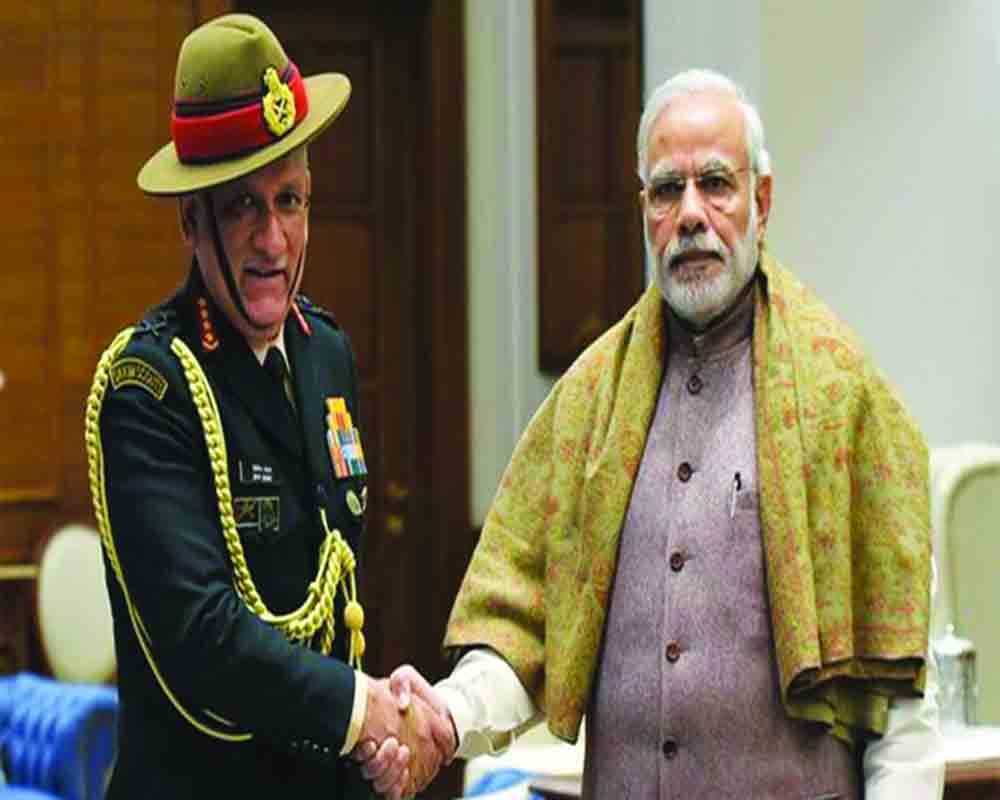
    Unfortunately, while the bulk of our military remains apolitical and secular, the actions and public statements of the Chief of Defence Staff, General Bipin Rawat, have created perceptions that the military’s senior leadership has become excessively politicised. Then there is the fact that some very senior officers have taken the plunge into active politics immediately on shedding their uniform.

    While some within the ruling elite may see this turn of events as advantageous to their ideological cause, and in fact encourage this shift within the military hierarchy through the process of “deep selection”, as some allege, they may well be biting off more than they can chew. If there is anything to learn from history, it is that once the military gets sucked into politics, it will not be satisfied acting as a mere handmaiden of those in power. As General Milley so eloquently put it, they are the ones with the guns! We just need to look closely at our own neighbourhood for examples.

    The Government and the legislative would do well to put rules in place that prevent members of the military and even the Civil Services from joining politics without an appropriate cooling- off period.

    It would be in the interest of the political establishment to desist from politicising the military. Creating an uncontrollable monster, that will go on to bite the hand that feeds it, is nothing but sheer stupidity. The Government and the legislative would do well to put rules in place that prevent members of the military and even the Civil Services from joining politics without an appropriate cooling- off period. That would go a long way in insulating them, especially the military, from politics.

    This article was published earlier in the pioneer.

    The views expressed are those of the author.

    Feature Image: www.dailypioneer.com
  • Harmony – the soft power of the East-Asian civilizations

    Harmony – the soft power of the East-Asian civilizations

    To date, the Western understanding of freedom as liberation still seems to be the hegemonic discourse. But as we know from Thomas Hobbes excessive freedom is leading to civil wars – and the ideology of unlimited freedom in the market economy and over excessive consumption is burning the world in climate change.

    East Asia and South-East Asia are emerging as the world’s largest economic powerhouse and perhaps even as a technological superpower.  Nevertheless, a deeper understanding of the consequences of this process will remain elusive, unless we squarely look at the puzzles surrounding the norms and preferences of major East Asian states. In contrast to the Western neo-liberal model, which puts excessive emphasis on individual freedom leading in the Western countries to the dissolution of the social fabric of the societies, there is an authoritarian temptation to maintain social cohesion in light of the dramatic social transformation worldwide. But mere authoritarianism is not compatible with the progress of societies because it does lack the incentive to rise above your current situation. We all know we started to live in a new world different from what we used to. But it is still early to name or define this Chameleon-like world of incessant transformation. Western triumphalism, perhaps understandable after the end of the Cold War, was long gone. Perhaps, we are destined to live in limbo for the near future. In order to cope with this process, East Asia needs not only economic and technological progress but also the soft power of ideas. To date, the Western understanding of freedom as liberation still seems to be the hegemonic discourse. But as we know from Thomas Hobbes excessive freedom is leading to civil wars – and the ideology of unlimited freedom in the market economy and over excessive consumption is burning the world in climate change.

    Harmony in the Confucian tradition is also not a fixed status, but the task is to harmonize the contrasts and opposites.

    An alternative value system might be the Confucian and East Asian concepts of harmony.  Harmony is not sameness but implies tensions like those in a symphony. In music, we find a lot of contrasts for example in a symphony of Beethoven but at the same time, we enjoy the harmony of the whole composition. Already in the first very old appearances of the concept of harmony, it is related to the singing of birds and music in general. Harmony is therefore related to the balancing of contrasts. Harmony in the Confucian tradition is also not a fixed status, but the task is to harmonize the contrasts and opposites. And of course, a part of harmony is related to freedom, but unrestricted freedom is not the ultimate goal. The question, therefore, is how to limit unrestricted freedom without suppressing the people? The answer might be to harmonize and balance freedom with equality.

    The question, therefore, is how to limit unrestricted freedom without suppressing the people? The answer might be to harmonize and balance freedom with equality.

    As in a symphony, real harmony is achieved when we are able to balance the contrasts of life: between the whole and the part, being born and dying, the individual and the community, between freedom and equality. We could compare such a balance with a water wave. If there are no movements and waves at all, the sea is dying – if it is a Tsunami the waves are destructive for the individual and the community. Harmony is superseding the Western discourse of absolute freedom because in a harmonious society freedom is not abandoned but a part of the greater whole.  Neither the authoritarian rule nor excessive freedom should be the alternative for world order in the twenty-first century – what we desperately need in a burning world is a harmony or floating balance between and within our societies as well as us as individuals.


    Feature Image: The Idea of Harmony wsimag.com

  • Religion and Governance: An Important Lesson from India’s History

    Religion and Governance: An Important Lesson from India’s History

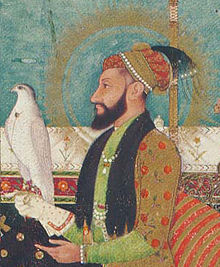
    The fortunes of India had irrevocably changed on May 29, 1658, when two Indian armies clashed on the dusty fields of Samugarh, near Agra. India’s history changed forever. Aurangzeb’s victory over his brother Dara Shikoh marked the beginning of Islamic bigotry in India that not only alienated the Hindus but also the much more moderate Sufis and Shias as well.

    Aurangzeb’s narrow Sunni beliefs were to make India the hotbed of Muslim fundamentalists, long before the Wahabis of Saudi Arabia sponsored the fanatics of the Taliban and the Islamic State. It was not only a battle for the Mughal throne but also a battle for the very soul of India

    Aurangzeb’s victory here and other successful campaigns resulted in the creation of the greatest and biggest imperial India till then. But the seeds of India’s collapse were sowed.

    In 1620 India had the world’s greatest national income, over a third of it, and was its greatest military power as well. It was the envy of Europe. The European traders came to seek Indian goods for their markets. But no sooner was the iron hand of Aurangzeb no more that his imperial India began to disintegrate. The iron hand that ruled by dividing rather than uniting and that sought to impose a hierarchy by theological preferences gave rise to much discordance. But for Aurangzeb, Shivaji Bhonsle might have remained a minor western Indian feudatory? There are important lessons to be learned from all this for those who rule and seek to rule India.

    The weakening central rule and profit-seeking peripheral kingdoms allowed European trading posts to be established. Weakening regimes led to the trading posts raising armed guards. Soon the overseas trading companies began warring each other and with so many minor states now free to make their destinies joining hands with one or the other it was the Europeans who got gradually got established. The Anglo-French wars of the Carnatic were fought by Indian armies beefed up by trading company levies. The East India Company of the British ultimately prevailed and the French, Dutch, Portuguese and Danish got reduced to pockets.

    A hundred years later, in 1757, the era of total foreign supremacy over India began when the East India Company’s troops drawn from South India and officered by English company executives defeated the army of Nawab Siraj-ud-Daulah at Plassey (Palashi) in Bengal, with the now usual mix of superior drilling, resolute leadership and a bit of treachery. At a crucial time, Mir Jaffar and his troops crossed over. India lay prostrate before Robert Clive.

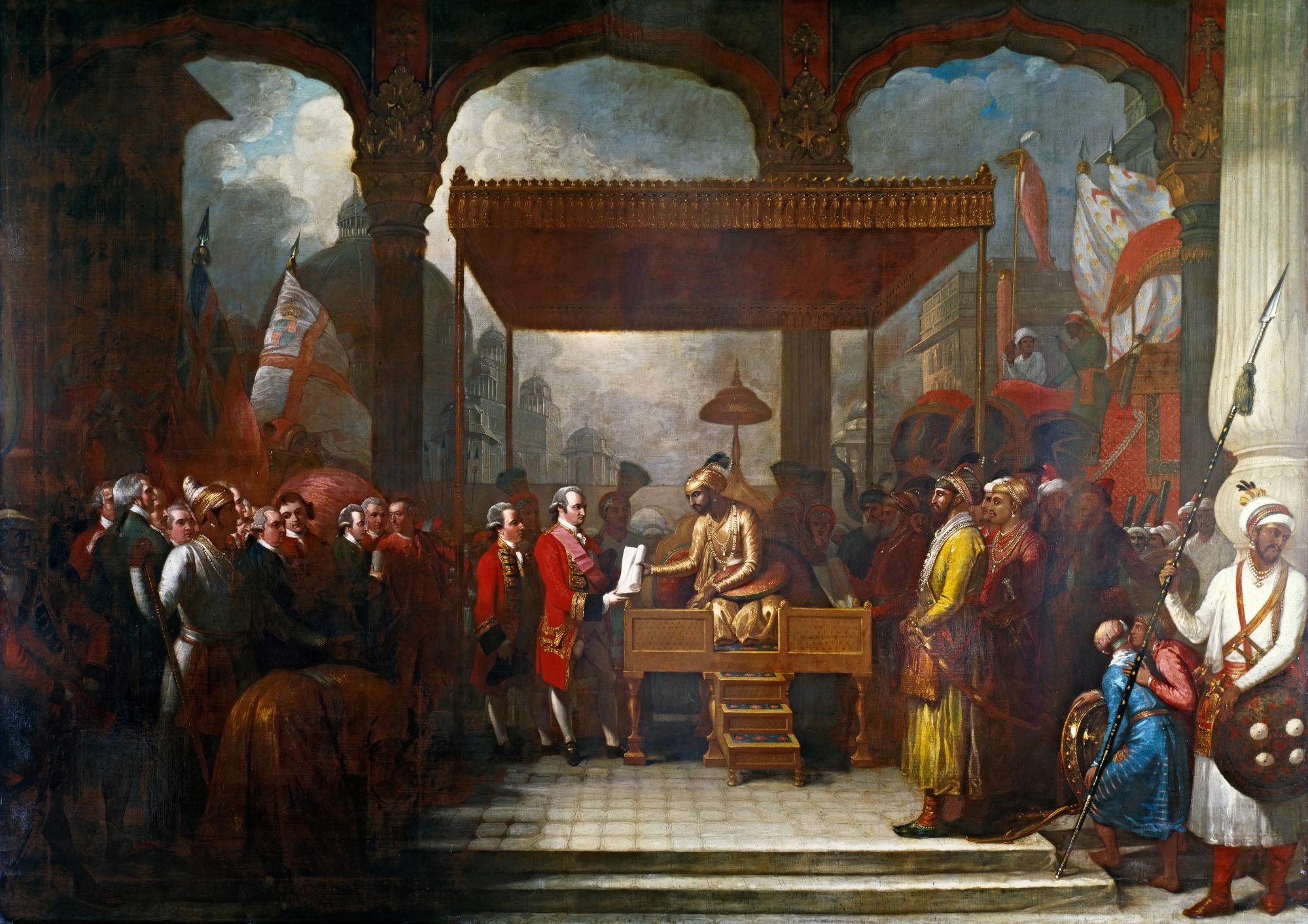
    Within a decade, on August 12, 1765, Clive obtained a firman from the then Mughal Emperor, Shah Alam, granting the Diwani of Bengal, Bihar, and Odisha to the Company. A Muslim contemporary indignantly exclaims that so great a “transaction was done and finished in less time than would have been taken up in the sale of a jackass”. By this deed the Company became the real sovereign ruler of 30 million people, yielding a revenue of four millions sterling. The John Company grew from strength to strength, and by 1857 the Grand Mughal was reduced to his fort conducting poetry soirees. It was the golden age of Urdu poetry.

    The events of 1857 led to the formal establishment of India as a directly ruled colony of the British empire. It was yet another epochal event. India changed, for the better and for the worse. Once again India absorbed from outsiders, as it absorbed from the Dravidians, Aryans, Greeks, Persians, Kushans, Afghans, Uzbeks, and all those who came to seek their fortunes here. The British were the only ones who came to take away its vast wealth in a systematic manner. The wealth taken from India to a great extent financed the Industrial Revolution in England.

    From then to another epochal year ending with seven took ninety years. In 1947, India became independent. Its GDP is now the world’s third-biggest. In a few decades, it could conceivably become its biggest. But have we learned any lessons from history?

    Given its abject failures on the economic front, the BJP/RSS regime in New Delhi is now pushing India towards a Hindutva nationhood, by seeking to victimise a minority for the perceived wrongs and slights of the past. An intolerant religion can never be the basis of nationhood and national unity in India. The legacy of Aurangzeb tells us that. Aurangzeb had created the greatest empire that India had seen since Ashoka the Great. But it didn’t take very long for it to dissipate. In the hundred years that followed, a foreign mercantile company gained control over all of India.

    The BJP under Narendra Modi might keep gaining electoral dominion over all or most of India. But has the BJP learned any lessons from history? Does the PM  want to become the Hindu Aurangzeb? What is worrisome is that we know well that history is not Narendra Modi’s forte.


    This article was published earlier in Deccan Chronicle. The opinions expressed in the article are the author’s personal views and do not reflect TPF’s institutional position or analysis.

    Featured Image: Shah Alam conveying the grant of the Diwani to Lord Clive. en.wikipedia.org

  • Viability of Universal Healthcare in India: Case Study of Sonipat

    Viability of Universal Healthcare in India: Case Study of Sonipat

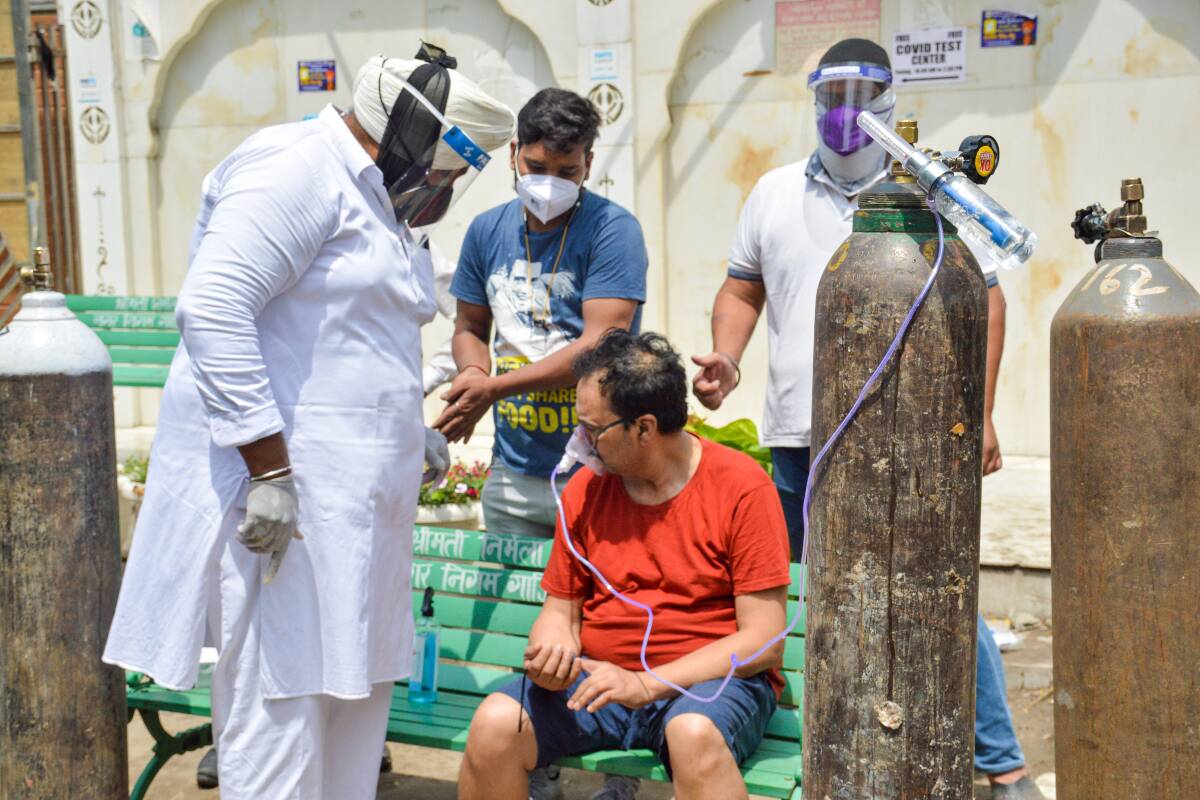
    The Covid-19 pandemic is a global catastrophe that has disrupted the economies and national health of countries and the livelihood millions across the world. In India, the impact in 2020 was presumably well controlled, and the beginning of 2021 saw the Indian government projecting prematurely the return of normalcy. This sense of normalcy led to a lowering of the precautions, and the month of April saw the rise of the second wave. The second wave was vicious, crippling the healthcare system and resulting in a huge number of deaths, primarily attributed to the shortage of oxygen supply in most states. This crisis exposed the shortcomings of the Indian healthcare system and the wide disparities that exist in access to healthcare between different sections of the society, a result of the shockingly low investment in healthcare and human resources. The catastrophe has led many to question the efficacy of the healthcare system and the level of expenditure incurred on it, and whether universal healthcare would have allowed the country to tackle these events. Analysis of the impact of universal healthcare requires insight into the structure and efficacy of healthcare in India, given our history and experiences.

    The principle behind universal healthcare states that every individual who is a citizen of the country must have access to essential health services, without the obstruction of financial hardship. Among the most efficient methods of ensuring that this principle is adhered to is bringing it under the constitutional mandate. Although the Supreme court has, in its various judgements, recognized health as a fundamental right, it is not yet recognized in the constitution. Article 21 of the constitution reiterates the right to life, with the landmark judgment of Maneka Gandhi v The Union of India specifying that the article also includes the right to live a dignified life and access to all basic amenities to ensure the same. This statement has been given a new context in light of the recent crisis, in which most of the fatalities caused were due to respiratory problems caused by the virus where providing oxygen availability became an essential requirement for the cure. In such a scenario, the oxygen availability constitutes part of basic amenities, which the government failed to supply in adequate quantity. The government fulfils its obligation towards healthcare in the form of government hospitals and healthcare centres, but their situation was synonymous with the private sector. The government claims that the hospitals under their control are sufficient, but the recent predicament has proven that the aforementioned claim is not true. The healthcare services provided by the government will be meaningful only if access to such hospitals is convenient for the common people and the hospitals are well-endowed with investment and human resources. An analysis of our constitution, especially Article 21, which guarantees protection of life and personal liberty, makes it evident that the principles on which our democracy is founded dictate that healthcare is one of the most important obligations of the government, and the most efficient method for fulfilling said obligation is the introduction of Universal healthcare in India.

    An attempt at examining the applicability of universal healthcare was made by the Planning Commission through the 12th Five-Year plan. The first-ever framework for universal health coverage was developed by a High-Level Expert Group, which planned to develop a system that was in accordance with the nation’s financial capabilities. The primary objective of these reforms was to reduce the out-of-pocket expenditures incurred by lower-income groups on healthcare services and increase the number of people covered under the Rashtriya Swasthya Bima Yojana. Around this time the Rashtriya Swasthya Bima Yojana was scrutinized by many due to its low enrolment rates, high transaction costs due to insurance intermediaries, and allegations that the government was using it as a pathway to hand over public funds to the private sector. The objective of reducing out-of-pocket expenditure even though expressly mentioned did not come to fruition because of the lack of extensively funded facilities, especially in rural areas which were covered by RSBY. These facilities were lacking not only in medical infrastructure but also the medicines required for treatment, which compelled the patient to bear the expenses of medicines on their own. The 12th Five-year Plan also proposed an increase in Budget allocation for health from 1.58% to 2.1% of the GDP, which was again criticized because it was very low in relation to the global median of 5%, despite the population size of the country. The healthcare reforms also failed to take note of the important role played by nutrition and the Public Distribution System in aiding the advancement of healthcare. The 12th five-year plan is not considered successful due to the poor implementation of the reforms introduced and provides valuable lessons for the implementation of universal healthcare coverage in the future.

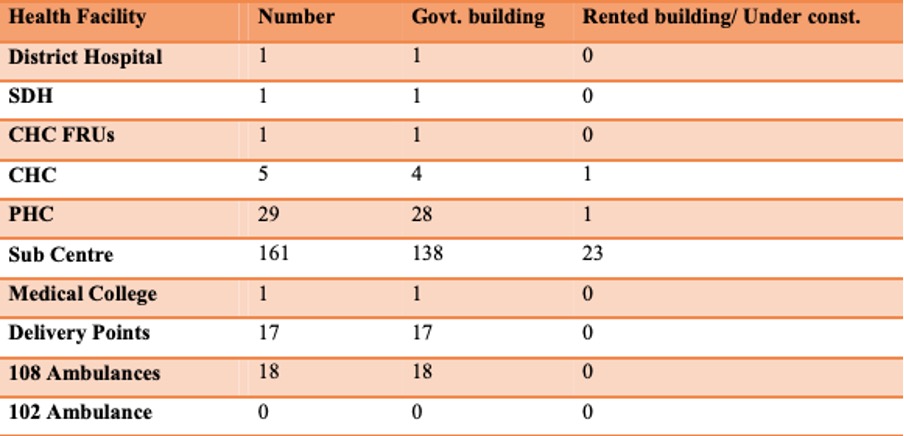
    The need for implementation of universal healthcare coverage can be made evident through a case study of the town of Sonipat, which is near Delhi and is a rural area. The case study is done through the observation of a survey conducted by the Institute of Economic Growth in 2017. The table below shows the data that became available as a result of the last survey conducted.

    CDMO Office, Sonipat District (2017)

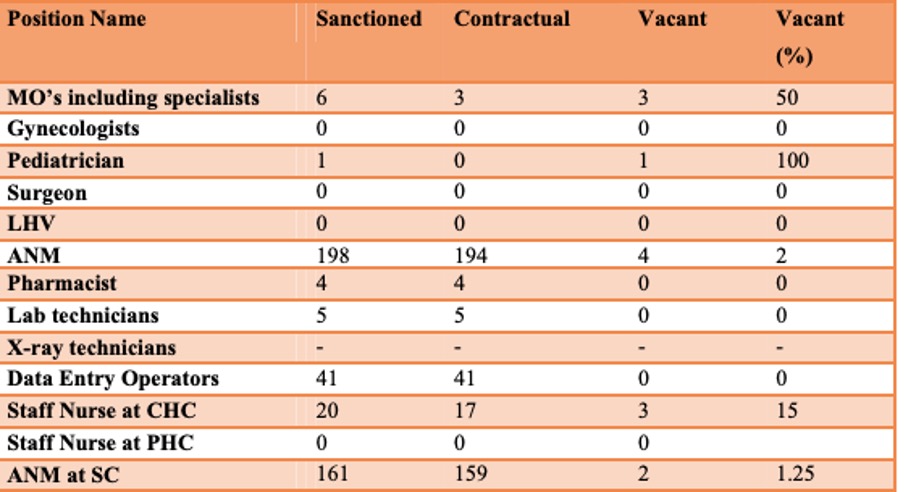
    CDMO Office, Sonipat District (2017)

    An analysis of the data portrays that even though the resources and infrastructure are adequate to the population of Sonipat, the facilities are lacking in human resources. The data shows that 6 posts for the Medical Officers (MO) were sanctioned, but only 3 were filled. Despite the high number of deliveries, there was no sanctioned post of a gynaecologist, which can probably be a reason behind the high number of maternal deaths in the area. It was also found that the Non-Communicable Disease (NCD) program was not functioning in the district for the past 2 years. O.P. Jindal University, which is in the heart of Sonipat, houses a total of 7482 individuals, and has an adequate number of facilities, with 5 in-house doctors and 10 nurses. It has an isolation facility ward for cases of communicable diseases. It has an ambulance and referral service to hospitals in the NCR. These facts show that there is an acute shortage of human resources for healthcare in the area. Even though an adequate number of posts were sanctioned, there was no qualified personnel to fill them, and there were no sanctions for important positions. The case of O.P. Jindal university shows that good healthcare requires good investment and incentive for the staff, which the Sonipat administration has failed to provide to the staff of healthcare centres owned by the state.

    The arguments mentioned above portray the acute necessity of universal healthcare in India. The ideals of our constitution implore for the right to health to be established, which gives universal healthcare constitutional support. The failure of the 12th Five-year Plan showcases the failures that can happen if the framework for such a plan is not well-thought-out or well-invested. The example of Sonipat further portrays the need for increased investment in healthcare, which can be achieved by the utilization of universal healthcare. Although there is no concrete data available for the crisis which the nation recently endured, it can be concluded that the approach of universal healthcare could have allowed us to endure this crisis better, as there would have been lesser chances of shortage of supplies like oxygen because of the increased investment. The first step towards the policy of universal healthcare should be to strengthen existing institutions of insurance and learn from the mistakes in the implementation of the RSBY.


    References

    1.http://iegindia.org/upload/uploadfiles/Sonipat%20Haryana%202017.pdf

    2.http://ijariie.com/AdminUploadPdf/RIGHT_TO_HEALTH__A_CONSTITUTIONAL_MANDATE_IN_INDIA_ijariie5596.pdf

    3.http://jsslawcollege.in/wp-content/uploads/2013/12/RIGHT-TO-HEALTH-AS-A-CONSTITUTIONAL-MANDATE-IN-INDIA.pdf

    4.http://nhsrcindia.org/sites/default/files/Twelfth%20Five%20Year%20Plan%20Health%202012-17.pdf

    5.https://www.hindustantimes.com/health/why-india-s-national-health-insurance-scheme-has-failed-its-poor/story-6TIXYO0A8CyxTfGYPRdkYK.html


    Image Credit: www.financialexpress.com

  • US Policy in the South China Sea since 2016 PCA Ruling

    US Policy in the South China Sea since 2016 PCA Ruling

    In the foreseeable future, ASEAN will become more divided over South China Sea issues in the Biden era. The conflicts brought about by geopolitical competitions and maritime disputes in the South China Sea will become more challenging and uncertain


    The US does not lay any territorial claim in the South China Sea and had not taken any position on sovereignty over islands, reefs, and features in the South China Sea. Its 2010 policy was of not taking “sides on the competing territorial disputes over land features in the South China Sea, we believe claimants should pursue their territorial claims and accompanying rights to maritime space in accordance with the UN convention on the law of the sea”. Towards that end, the US had consistently urged the contesting parties to settle disputes based on international law and without intimidation-coercion. Even in 2016, the US had encouraged claimants to resolve their disputes “free from coercion or the use or threat of force” after endorsing the Permanent Court of Arbitration (PCA) award to the Philippines.

    However, in July 2020, the US revised its South China Sea policy through a Position Paper titled “U.S. Position on Maritime Claims in the South China Sea”. The Paper questioned China’s “claims to offshore resources across most of the South China Sea” and categorically stated that these are “completely unlawful, as is its campaign of bullying to control them,” This was in sharp contrast to the 2010 policy articulations.

    Since the publication of the Position Paper, South China Sea has appeared in Statements by respective US political leaders. For instance, at the G 7 summit on 11-13 June 2021, President Joe Biden was able to rally the leaders of the grouping and succeeded in a consensus over the critical necessity of a free and open Indo-Pacific and the G7 leaders also expressed concerns about the “situation in the East and South China Seas” and strongly opposed “any unilateral attempts to change the status quo and increase tensions”.

    There is continuity in US policy on the South China Sea since President Trump’s administration and the issue has figured prominently in US’ statements particularly in the context of coercion and intimidation of its smaller neighbours by China.  Secretary of State Mike Pompeo drew attention to the “trampling” of the “sovereign rights of its neighbours” and “destabilizing the region” as also causing “untold environmental devastation” of 3,000 acres of the sea space in the South China Sea; furthermore, “the United States will act until we see Beijing discontinue its coercive behaviour in the South China Sea, and we will continue to stand with allies and partners in resisting this destabilizing activity.” Also, he was uncompromising on US’ commitment to its ASEAN partners in safeguarding sovereign rights to “offshore resources, consistent with their rights and obligations under international law.”

    President Biden’s Administration has continued to pursue a similar policy as that of the predecessor. For instance, in his conversation with National Security Advisor Jake Sullivan on 1 July 2021 with Vietnamese Deputy Prime Minister Pham Binh Minh, they discussed the South China Sea, including the United States’ support for the 2016 arbitral tribunal award.

    It is not surprising that a Chinese commentator has observed that “Biden administration’s South China Sea policy has attached great importance to US allies within and outside the region, this precisely reflects its Cold War mentality” and is reflected in the US-Philippine Mutual Defence Treaty, which now applies to the South China Sea and freedom of navigation operations (FONOP)  in the South China Sea continues unabated. For instance, in 2017 there was one FONOP by the US, in 2018 there were three incidents, nine in 2019; 15 in 2020; and then this year four FONOPs have been reported. There is also a new emphasis on mini multilateralism in the form of Quadrilateral Security Dialogue (QUAD) to support its “traditional strategy of relying on allies and partners” to “establish a new regional order dominated by the US”.

    The Chinese commentator’s assertion that “in the foreseeable future, ASEAN will become more divided over South China Sea issues in the Biden era. The conflicts brought about by geopolitical competitions and maritime disputes in the South China Sea will become more challenging and uncertain” merits attention.

    Last week, while speaking in a forum on global security issues at Tsinghua University in Beijing, China’s Foreign Minister Wang Yi said that the US’ Indo-Pacific strategy is aimed at countering Beijing and the strategy “should be dumped at a trash heap.” Wang also observed that China would oppose any framework of cooperation to “fuel rivalry” and “an action to accelerate division” ostensibly referring to Taiwan.

    Finally, a continuous war of words between political leaders of the US and China over the South China Sea can be expected to continue. Notwithstanding that ASEAN Member States can be expected to continue to engage China for a legally binding Code of Conduct and at the 19th Senior Officials’ Meeting on the Implementation of the Declaration on the Conduct of Parties in the South China Sea (DOC) held on June 7, 2021, in Chongqing, all “parties agreed to resume as soon as possible the second reading of the Single Draft COC Negotiating Text and strive for the early conclusion of negotiations”.

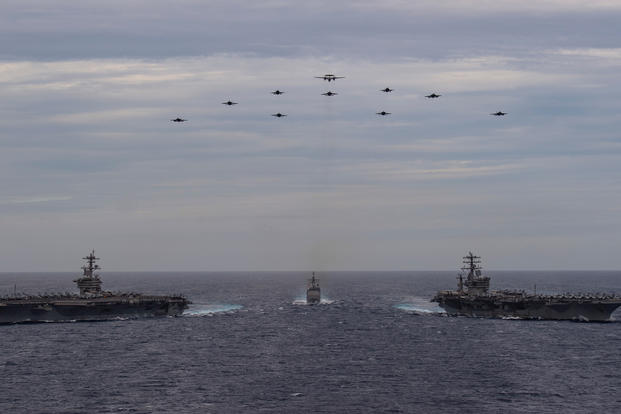
    Feature Image: USS Ronald Reagon in the South China Sea. Credit: asiatimes.com

  • New ‘Drone Rules’ is set to transform Drone business in India

    New ‘Drone Rules’ is set to transform Drone business in India

    Not many would know that Goldman Sachs has predicted that in the next five years the drone market will be worth over a hundred billion US dollars. India became an IT hub in the 1990s and Indian programmers were sought-after during the dot-com boom. This was not because of some great policy decisions that we took at that time but rather it was because of no policy on the subject. There were times when computers gathered dust in some ministries because the minister felt computers are sinister equipment that could take away people’s livelihood.

    ‘Drones’ are said to be the next big thing that the world has ever seen since IT and Dotcom in terms of technology disruption and touching the lives of people in all spheres. Traditional modes of transportation of goods, surveillance, survey, and foraying into newer areas like agriculture, marine et cetera are some areas where the drone is already making waves.

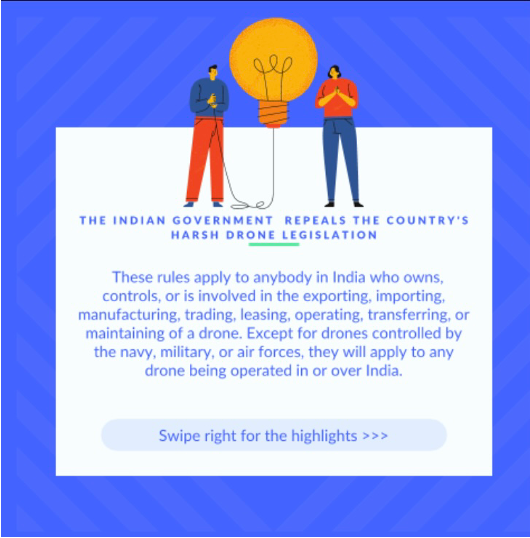
    The recent ‘Draft Drone Rules’, released for public comments by the civil aviation ministry, is a welcome change from the previous one which gave the impression that obtaining a license would be a herculean task. Some companies like AutomicroUAS Aerotech Pvt ltd and many others did obtain a license using provisions of the previous policy. The new draft policy is a more user and business-friendly drone policy. This is a very good and the first decision by the new civil aviation minister, Jyotiraditya Scindia, after assuming office.  Some of the highlights of the new drone policy are: –

    • Up to 500 kgs of drone Aircraft Rules, 1937 is no more applicable. This is a significant change because the Aircraft rules 1937 is specifically applicable for airplanes that carry humans and therefore, have been made with that purpose.
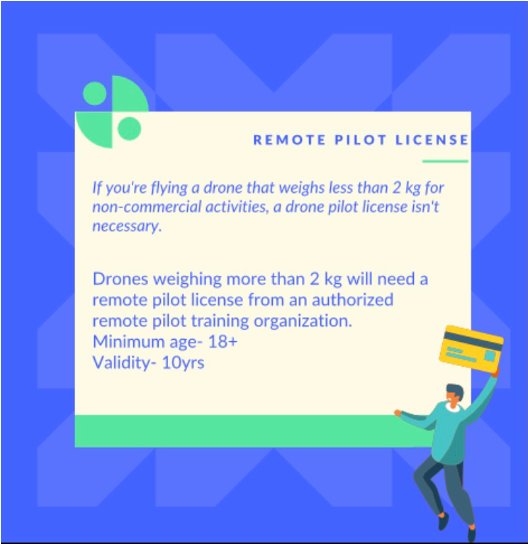
    • There are a significant number of people who fly nano and micro drones in India. Including operators of model aircraft. Ubiquitous drones include drones flying at marriage parties and increased use of drone shots in the entertainment field. These people now can fly these drones/model aircraft without having a drone pilot license. This singular step itself will bolster not only self-employment but also reduce unemployment in the country. Being a drone pilot is also looked at as one of the coolest things today.
    • Drone imports will still be controlled by DGFT (director-general foreign trade). This currently could be looked at as a bit of an impediment for those entrepreneurs who are dependent on imports of certain drone parts. However, in the long run, this provision could bolster making those parts in India and selling them abroad. Easing of import of drones/drone parts currently and bringing in stricter rules as time goes by would have been a better option. This aspect could be looked at by the government to promote innovators and children who are looking to learn, for who importing certain critical drone components is vital. It is highly recommended that drone imports controlled by DGFT be done away with for the time being.
    • The creation of a drone corridor is likely to change the face of the Indian Economy. Logistics Operation, last-mile connectivity, the short haul of goods between two towns, and the cost of connectivity between places are set to change dramatically. This change alone, in my opinion, is likely to bring a significant impact in times to come. Not many have realized the power of creating drone corridors and all that remains to be seen is how this rule is taken forward by the government in improving logistics connectivity and creation of drone highways in times to come.
    • The drone research and development Organisation as a provision in the rule is futuristic and is likely to change the face of the drone industry in India. Correctly harnessed and nurtured, this rule could enable the development of many centres of excellence of drones. The government needs to create an equivalence of ‘Silicon Valley’ for the drones so that organisations dealing with hardware, software, artificial intelligence et cetera can come together and take this endeavour forward.
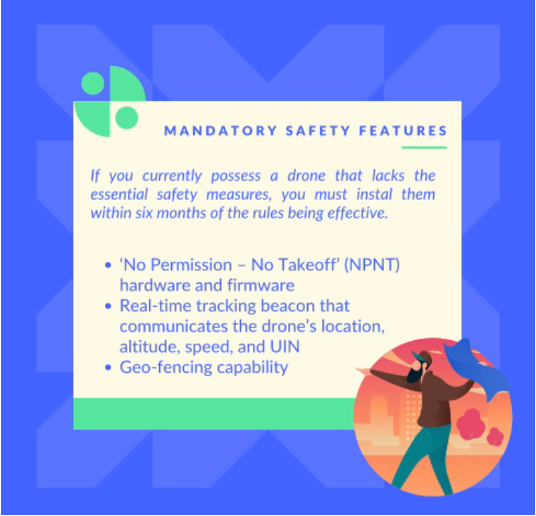
    • There are several companies across the world that are working on unmanned traffic management (UTM) including an Indian company called Avianco. These companies now could collaborate with the government of India in providing unmanned traffic information and could work as a service provider for tracking of drones as well as providing drone operators with simple NPNT permission, which is one of the provisions in the new drone policy.
    • Third-party drone insurance could be adequate as specified in the rules. However, drones are costly equipment. Readers would be surprised to know that most of these drones are costlier than small hatchback cars. Therefore, owners of these drones may want to go for comprehensive insurance. This is a huge opportunity for insurance and insurance facilitation companies like TropoGo, in the area of drone insurance. In times to come, the number of drone insurance policies may well overtake the number of vehicle insurance policies in the world. Since drones are set to replace many of the traditional workforce and industries.
    • ‘Drone promotion Council’ as specified in these rules should have come up as of yesterday, but it’s never too late. Those countries who missed this ‘Drone-Bus’ may get left behind in the overall economic progress in times to come. Therefore, setting up the ‘drone promotion council’ is the need of the hour.
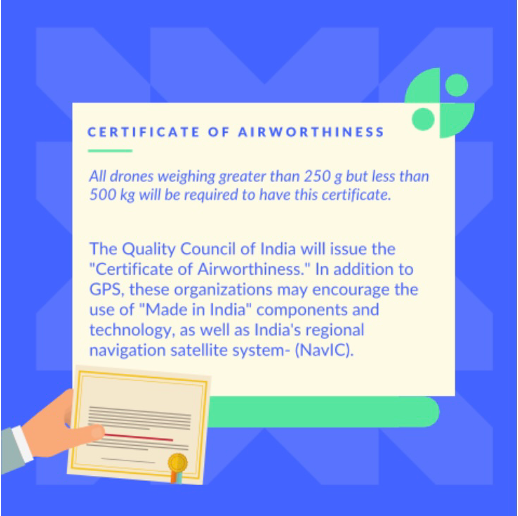
    • Highlights of the new ‘Draft Drones Rules’ are shown below:


    The new drone policy of India is a welcome change. It is a well-thought-out, simplified policy that India has seen in recent times. This policy aligns with Prime Minister Modi‘s vision for India in terms of reducing unemployment, improving ease of doing business, self-employment, making India go digital, and becoming a technology leader in the world. What the future holds will entirely depend on how these rules are interpreted and implemented efficiently without the usual horrors of the red-tapism of the past.


    Image Credit: www.geospatialworld.net


  • Drone Threats: Detecting and Countering Them

    Drone Threats: Detecting and Countering Them

    The drone attack at the Jammu airbase in the early hours of Sunday, June 27, was a first-of-its-kind in India. It has rattled the security forces, but more than that, it has shown how acts of terror can be perpetrated in the future. To get battle-ready, we need to understand the different kinds of drones, how they work and how lethal they can be.

    Size Matters

    Drones come in different sizes and shapes. Their major classification is fixed-wing and rotary-wing. They can be classified as per:

    1. Weight
    2. Function
    3. Area of application

    In India, the Ministry of Civil Aviation (MoCA) classifies them as per their weight. Drones weighing below 250 gms are called nano drones, above 250 gms but below 2 kgs are called micro drones, above 2 kgs but below 25 kgs are small drones. Anything above 25 kgs is a large drone, as per MoCA in India.

    Small toy drones can be classified as nano drones. Although these nano drones can be quite lethal in intelligence gathering, like armed drones without artificial intelligence and machine learning (AI/ML) (which would give it pinpoint accuracy), they aren’t lethal. Most countries have exempted these drones from the legal gamut because they largely fall in the toy category. However, swarms of these drones designed to explode and controlled by a mother ship can be quite lethal. And currently, no countermeasures to such drones exist. Recently, F/A-18 Hornet launched such a swarm to demonstrate the capability of such nano drones.

    Equation quickly changes in the micro drone category. As the weight of the drone increases, so does its lethality, and being a manageable size, these drones have found favour with many enthusiasts. These are the class of drones that were researched by the open source communities in the early 2000s. They indeed ushered in the age of drones. Designed well, they have an endurance limit of over 40 minutes and can travel in an autonomous mode for over 30 km one way. Mostly made of plastics, polymers, these drones can be difficult to detect and prosecute.

    Small drones are the ones that are increasingly being used by anti-national elements. Be it to drop contraband, weapons, or to carry out a Kamikaze-style attack. Even the low-end of small drones (up to 6 kgs) can carry an adequate amount of explosives to cause serious damage. These are also the drones that are used in helping humanity. These drones can be fixed-wing, rotary-wing, or hybrid.

    To own and fly a drone weighing more than 250 gms and less than or equal to 25 kgs, whether, for commercial or recreational purposes, one would need Operator Permit-I. To get this permit one needs to go through the due diligence process of the DGCA (Directorate General of Civil Aviation), MoCA.

    The same procedure applies if you want to become a drone pilot in India. The due diligence, examination, and certification process is similar to that of a manned aircraft pilot. The only difference, you just need to clear the 10th standard exams to become a drone pilot. The due diligence process includes paperwork like police verification, checking Aadhaar, and passport details, among other things. Therefore, only a bonafide citizen of India with no criminal record can become a drone pilot in India.

    How to Counter Drones

     Drones can be countered through three methods, namely:

    1. By jamming the drone controller frequency (2.4 GHz, 5.8 GHz, occasionally 433 MHz and 900 MHz).
    2. By jamming the GNSS or Global Navigation Satellite Systems, like GPS, GLONASS, GAGAN, the Indian Regional Navigation Satellite System, also known as NAVIC, etc.
    3. The hard kill option of shooting the drone down using guns, lasers, and electromagnetic guns always exists.

    To counter drones, you need to detect them first. It can be done in three ways, namely:

    1. Use drone radar: It works like a conventional radar, which sends out energy and looks for reflected energy to pick up these drones. Challenge however is that the reflected energy from the small drones is so low that it becomes impossible to pick nano and micro drones with drone radars.
    2. Pick up drone control signal: Picking up drone control signals is fairly easy because they operate in the ISM (industrial, scientific, and medical) band of frequencies. However, most WiFi and other equipment work on this frequency, and separating drone frequency signatures from these becomes a challenge.
    3. Pick up noise generated by the propeller tips: This is another method to pick up drones. In ideal conditions, it has proven effective in picking up drones at a very large range. However, the challenge is if the ambient noise is higher and ambient conditions are not suitable, drones don’t get picked up at all.

    Drones for Good

     Drones today are being used for a variety of services, beyond the military.

    1. Disaster relief and humanitarian assistance: Drones are proving to be indispensable in this area. Be it floods, forest fire, COVID assistance or locust control, drones are everywhere, doing what they do, silently.
    2. In scientific quest: Drones are doing a wonderful job in this area, be it marine applications, studying agriculture, soil/ water pollution, carrying out weather surveys, name an area and drones can be put to task.
    3. In the entertainment industry: Drones have replaced expensive helicopters, and today even the producer of a low-budget show can get a drone shot at minimum cost. As a result, drone shots are now seen in shows and movies more than ever.

    Tip of the Iceberg

    Drones for good far outweigh the application of drones for anti-national and terror activities. The drone industry needs to be nurtured if any country aspires to become an economic giant in the future. No wonder Goldman Sachs has said that the $100-billion drone industry is just the tip of the iceberg in terms of its business potential over the next five years.

  • Theatre Commands in India: Have We got it  Backwards?

    Theatre Commands in India: Have We got it Backwards?

    As per a recent report by Nitin Gokhale, published on the Bharatshakti website, higher defence reforms are on track in India with the likely formation of two integrated commands by August 2021. Nitin also reiterates the reforms mandate to the CDS, General Bipin Rawat, to bring about jointness in communications, training, logistics & maintenance and support services, apart from operations, within three years while rationalizing the existing infrastructure to augment combat capabilities of the armed forces and reducing wasteful expenditure.

    The very fact of air defence being thought of as bringing just the SAMs and AD guns under one commander indicates a lack of such study and of military history as in Bekaa Valley in 1982.

    From the questions raised in this report itself on the conceptual framework of the Air Defence Command still requiring resolution, it becomes apparent that we are putting the cart before the horse in our haste to meet the given deadline. Surely, the senior leadership must have considered this issue of integration in all previous appointments and studied the experience of other nations, particularly the US being the largest in this field as a democracy, and formulated a plan to adapt their structure and best practices to our institutional and cultural environment instead of reinventing the wheel. The very fact of air defence being thought of as bringing just the SAMs and AD guns under one commander indicates a lack of such study and of military history as in Bekaa Valley in 1982.

    Even a cursory study would indicate that the essential initial steps for joint operations are training backed by the requisite secure communications integrating literally every fighting unit in the command loop to execute joint plans with the requisite flexibility in the fog of war, or in other words integrating sensors with shooters to minimize the OODA cycle in this era of informatized warfare. With all three services reportedly still using their individual communication networks which do not easily talk to each other, much less to the systems of other friendly nations that we regularly exercise with, the desired integration would remain a mirage. Just one example from the US would illustrate the importance of this issue. It may be recalled that the Goldwater-Nichols Act of 1986 created seven regional (theatre) combatant commands bringing all five US military services under unified, geographically organized command structures. Today, there are 11 including the recent Space Command. Even after five years, in Desert Storm, the Joint Air Component Commander, General Horner, could not electronically pass the Air Tasking Orders (ATOs) to the Carrier Groups of the US Navy and these had to be flown in manually every day. It took the air wings of the US Navy and the USAF almost another decade of cross-training till Operations Enduring and Iraqi Freedom to come together on a common platform and largely operate as one team, with some issues still to be resolved. In the case of the USAF and US Army, such a model was still being considered till 2007.

    35 years after the Goldwater-Nichols Act mandating unified commands, the USAF still operates eight separate commands, namely Air Combat Command, Air Education and Training Command, Material Command, Global Strike Command, Air Mobility Command, Space Command, AF Reserve Command and even an AF Special Operations Command. In addition, it has separate command organizations for Pacific Air Forces and USAF in Europe. When required to support operational missions, the Secretary of Defense directs the Secretary of the Air Force (SECAF) to execute a Change in Operational Control (CHOP) of these units to a Regional Combatant Commander. With over 5300 aircraft currently, surely the USAF could have been parcelled out to various theatre commands if that was the most operationally effective integrated approach. However, it was not, based on the principles of unity of command and concentration of firepower. In the case of a much smaller IAF, with just about 30 combat squadrons, against a sanction of 45, and a handful of combat support elements, how is the reported division in the name of reforms even being thought of?

    Similarly, the US Navy operates nine major commands like Navy Expeditionary Combat, Military Sealift, Sea Systems, Air Systems, Naval Facilities Engineering Systems, Supply Systems, IW Systems, Strategic Systems Program and Naval Education & Training apart from Fleet Forces commands for each region. Despite operating more than 3700 operational aircraft, the US Navy also does not divide its aircraft or carrier groups but allocates these based on the situation while continuing to train for all contingencies. Even the US Army runs many major commands and five major surface component commands like Pacific, Europe and Africa, North, South and Central all headed by 3 or 4-Star Generals. As recently as 2018, necessity resulted in the formation of an additional Army Futures Command (AFC).

    Co-location has been cited by many in India as a pre-requisite for integration, jointness and economizing by shutting down some existing commands. Against this, even in the case of the US Army where it is possible to pre-position most forces in the area of envisaged operations due to their relative immobility and reaction time, three unified commands and their army components have headquarters outside their area of operations. CENTCOM’s is located at MacDill  AFB in Tampa, Florida with a forward headquarters at Al Udeid Air Base in Qatar while the army component, ARCENT, is headquartered at Shaw AFB in South Carolina. Functioning is through efficient communications with the span of control of the commanders still a major consideration. Have we carried out a study on the actual savings versus operational effectiveness after the proposed closure and relocation of some commands?

    The Army also seems to work on its limited field of view by seeing the air force more as flying artillery for close air support, apart from air mobility, without the broader strategic vision of the Air Force.

    Unfortunately, in our case, the approach appears to be driven more by the numbers and vacancies for each service with the fixation of having the forces under command. The Army also seems to work on its limited field of view by seeing the air force more as flying artillery for close air support, apart from air mobility, without the broader strategic vision of the Air Force. Undeniably, the Air Force is the most technology-intensive service and a single platform today is capable of role switching and reacting in near real-time to emergent situations. Due to the roles and rapid strategic reach, it is also likely to be the first responder in most contingencies in our current geopolitical environment under a nuclear overhang. Based on this, it could be argued that the Air Force should lead most theatre commands duly assisted by component commanders from each service. In Desert Storm, General Norman Shwarzkopf wisely handed over the operations to the air component commander, General Charles Horner, to run a 1000-hour air campaign before a 100-hour ground campaign. Such maturity is unlikely in India without jointly educated and trained commanders and staff.

    It is also easier for an airman to understand surface operations than it is for a soldier to understand air operations. An example of a Corps Commander in 1989-91 later criticizing the non-use of Mi-25/35 attack helicopters in Kargil despite having had these helicopters under him in his Corps shows how limited their understanding of airpower is. The same General also talked of a certain number of fighter squadrons being authorized for close air support, once again displaying his ignorance on the use of multi-role fighters in particular and air power in general. The example of the Pakistani Army sending out a brigade, which was decimated by air at Longewala in 1971, without first achieving air superiority in that area further illustrates the thinking of soldiers in the sub-continent and strengthens the case for the air force.

    Training and communications issues, therefore, should have been first addressed and resolved before haste makes waste of our efforts at integration.


    This article was published earlier in The Sunday Guardian.

    Image Credit: Hindustan Times


  • Vietnam’s Future Strategy to fight COVID-19

    Vietnam’s Future Strategy to fight COVID-19

    Vietnam’s experiences with fighting the COVID-19 pandemic has been highlighted not only as a success story but a good model. It pursued an aggressive containment policy, rigorous contact tracing procedures and effective quarantine regimes. It successfully contained the three waves of the Pandemic that infected 9,635 Vietnamese people including 55 deaths and 3636 have recovered since February 2020.  The majority of these have occurred from April to June 2021. Besides, effective public communications and awareness campaign, and availability of testing kits were instrumental in limiting the spread of the virus.

    However, Vietnam is now witnessing the Fourth Wave which has impacted at least three major cities and some provinces. Perhaps the most worrying part of this wave is that new variants of the Coronavirus are being detected among people. This variant is known to spread more quickly especially in areas where there is a high concentration of people such as industrial parks.

    Given the severity of the Fourth Wave of Covid-19, there is visible concern among the political leadership, and Prime Minister Pham Minh Chinh has called upon the entire political machinery and Vietnamese people to take extreme steps to “fighting the pandemic” similar to situations where they would be fighting an enemy.  Prime Minister Chinh did not shy away from warning the people that any deliberate attempts to disregard “national regulations on pandemic prevention and therefore, spread the virus to the communities, against the joint efforts of the whole nation and people, should be strictly punished.”

    It is now widely accepted that vaccine production is both technology-intensive and cannot be developed overnight. While the developing countries led by India and South Africa have been pushing for waving off Trade Related Intellectual Property Rights (TRIPS) protection for COVID-19 vaccines, and have been supported by the U.S. and EU at the World Trade Organization, yet countries must build national capacities to produce vaccines. In this context, the Vietnamese government hopes to not only buy COVID-19 vaccines but set up a production plant and supply to other needy countries.

    There are four vaccines under development in Vietnam at (a) Nanogen Pharmaceutical Biotechnology JSC; (b) Institute of Vaccines and Medical Biologicals; (c)  Vaccine and Biological Production Company No 1’ and (d) Polyvac. The Vietnam Military Medical University is actively participating in COVID-19 vaccine development at home.

    Vietnam is also has a forward-looking vaccine import strategy pivoting on “patent-based production and local research and production”. This, it is believed would help the country achieve “herd immunity in late 2021 or mid-2022”. This strategy is significant given that Vietnam has nearly 100 million people including children who would require COVID-19 vaccination.  Nearly 30 million doses were acquired from the British-Swedish AstraZeneca vaccine and the vaccination programme started in March 2021. There are plans to acquire 20 million Russian Sputnik V vaccines; may buy 5 million doses from Moderna and 31 million from Pfizer. Meanwhile, Vietnam has also approved China’s Sinopharm for emergency use. Also, homegrown vaccines are expected to fill in the gap of 30 million doses.

    Similarly, vaccine production infrastructure is a financially demanding activity. The Vietnamese government plans to apportion VND 16 trillion for the vaccination program. It plans to procure 150 million doses of vaccines in 2021 to cover 70 per cent of its population and this is estimated to cost VND25.2 trillion ($1 billion). In June 2021, the government launched the Fund for Vaccination and Prevention of Coronavirus Disease 2019.

    As per the Finance Ministry’s state budget department,  in “addition to the [public] budget, it is necessary to mobilize more resources from the voluntary contributions of domestic and foreign organizations and individuals, to join with the state,”  During a live broadcast to launch the campaign for public participation in raising funds to acquire/locally produce Covid-19 vaccine, Prime Minister Pham Minh Chinh called on the Vietnamese people to financially support a mass vaccination roll-out. This call has attracted a positive response and several companies, organizations and individuals have come forward. According to the Ministry of Finance, as of 05 June 2021, i.e., ten days since the announcement of the fund, as many as 950 organizations and more than 124,600 individuals had contributed VND 928 billion ($40.2 million). Besides domestic contributors, several foreign companies such as Hanwha Life Insurance and Daewoo of South Korea, Japan’s Tokio Marine and Taiwanese insurer Cathay Life have announced contributions. Minister of Finance Ho Duc Phoc has underscored transparency in the management of the fund and stated that his ministry is “committed to using this fund publicly and transparently,”

    Vietnam’s preference to import as also set up domestic infrastructure to set up production are indeed noteworthy; however, the challenge would be to run an accelerated mass vaccination program and achieve a high degree of herd immunity.

    Image Credit: www.dw.com