Category: Opinion/Commentary

  • Drought or Floods? : Tamil Nadu Needs An Integrated Water Management Policy

    Drought or Floods? : Tamil Nadu Needs An Integrated Water Management Policy

    Tamil Nadu not only requires a more sustainable and scientific approach to water management but an integrated development model that no longer separates the human environment, basic needs, ecological justice and public accountability   

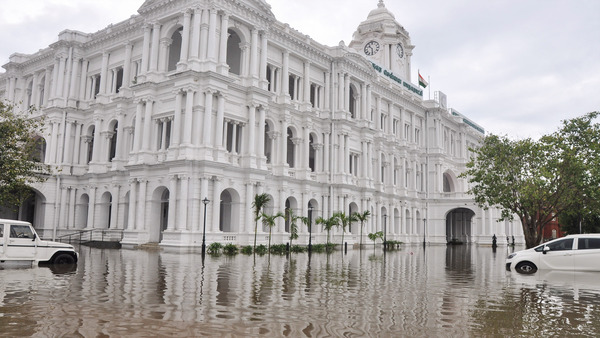
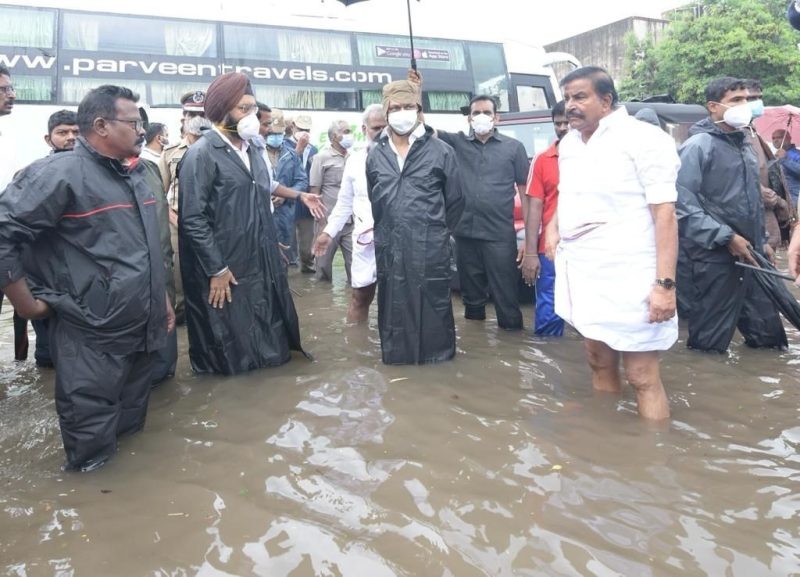
    Every time we are faced with drought or floods, we all complain about the absence of a more sustainable water management policy in the state.  Politicians and the political parties blame each other and present competing narratives of their achievements when people are caught in deep crises of survival either due to bad drought or worse floods.  The bureaucrats, police, public charity and the brave hearts work round the clock while the government monitors the rescue, relief and resettlement of the victims though patterns and intensity of engagements differ between the floods and drought situation.

    We then return to our normal selves when the floods recede and the victims of extreme drought disappear from our sight.  What happened to the excessive water during the floods and the thirsty/hungry people in drought situations who seemed to have gone out of sight? It is important to argue for a more sustainable water management policy and at the same time explore the challenges in developing and executing such a policy. We do not have an open and democratic media/socio-political environment to discuss and debate between the ministers, bureaucrats, experts, non-state actors and creative members of the civil society beyond the blame game. A curious gap is that there are no solutions emerging while causes are either understated or overemphasized by different experts and groups depending on their professional background and personal worldview.


    The government appears to be in a catch-22 situation over urbanization, industrialization, population growth, migrations, and the urban slums.  The impact of rural poverty, state of agriculture, unemployment, migrations as well as the level of the rural-urban divide has not been studied adequately even in a developed state like Tamil Nadu.  But there is no escape from the truth that the government is the major violator and path setter for more violations of environmental principles and laws of nature by the greedy builders and corporate interests.

    It may be relevant to recall here the Chennai floods in 2015 and the worse water shortage in less than four years time in 2019.  Besides rapid industrialization and massive urbanization issues, Chennai is also faced with the challenges of climate change which is altering the weather patterns resulting in deadly floods and prolonged droughts.  Given the nature of challenges, there is a need to move beyond developing an appropriate water management policy and strengthening climate change resilience towards addressing core concerns of our democracy such as the absence of public accountability and rights without responsibilities.


    Chennai’s water bodies have shrunk at an alarming rate without much public attention. Every lake that has disappeared in Chennai had been part of our ecological system. Pallikaranai marshland has unfortunately been forced to yield land to hospitals, government buildings and educational institutions including (paradoxically) the Indian Institute of Technology – Madras (IIT-M) and National Institute of Ocean Technology.

    Chennai’s water bodies have shrunk at an alarming rate without much public attention. Every lake that has disappeared in Chennai had been part of our ecological system. Pallikaranai marshland has unfortunately been forced to yield land to hospitals, government buildings and educational institutions including (paradoxically) the Indian Institute of Technology – Madras (IIT-M) and National Institute of Ocean Technology. Today, Ennore creek faces a much bigger threat than ever before.  It is time we discuss more openly about our public policy, political culture, and abuse of social power, corruption in public life and the lack of environmental ethics. In intrinsic terms, this reveals about a political society without a conscience for environmental justice which forms the basis of social justice, distributional justice and good governance.

    The percentage culture and corruption prevalent among the politicians cutting across the party and political loyalties and the nexus between the politicians, bureaucrats and the business interests are one of the most unfortunate but successful stories of decentralization of public administration in Tamil Nadu.  If these arguments appear unreasonable, then how do we explain the rise and role of sand mafias, stone quarry contractors, timber lobbies, water industry and corporate bodies engaged in mineral extraction and exploitation?  These are not unspecified and general observations because of the fact that these individuals and the corporates control the lakes, rivers, forests, seashores, land access and ultimately the policy process within the government. Although slum dwellers, settlers along the river banks and seashores as well as forest people appear as main violators of the laws of State, yet the truth is vastly different.  The Palar River in the north, Cauvery River flowing through the west to east and the Tamiraparani River in the south of Tamil Nadu bear testimonies to this brutal reality of sand quarrying and criminal nexus between politicians, bureaucrats, industrialists and the sand mafia in Tamil Nadu.

    We need to question our materialistic approach to progress in the name of growth and development.  It is not adequate to boast about our progress in social justice and the inclusive model of development without environmental justice and responsibility to our future generations.  Tamil Nadu not only requires a more sustainable and scientific approach to water management but an integrated development model that no longer separates the human environment, basic needs, ecological justice and public accountability.

  • Urdu, Hindu Attire, Abrahamisation | It’s much ado about nothing

    Urdu, Hindu Attire, Abrahamisation | It’s much ado about nothing

    Urdu in India seems to have suffered because of a mistaken identity, and has had a decline from the time Pakistan declared Urdu as her national language

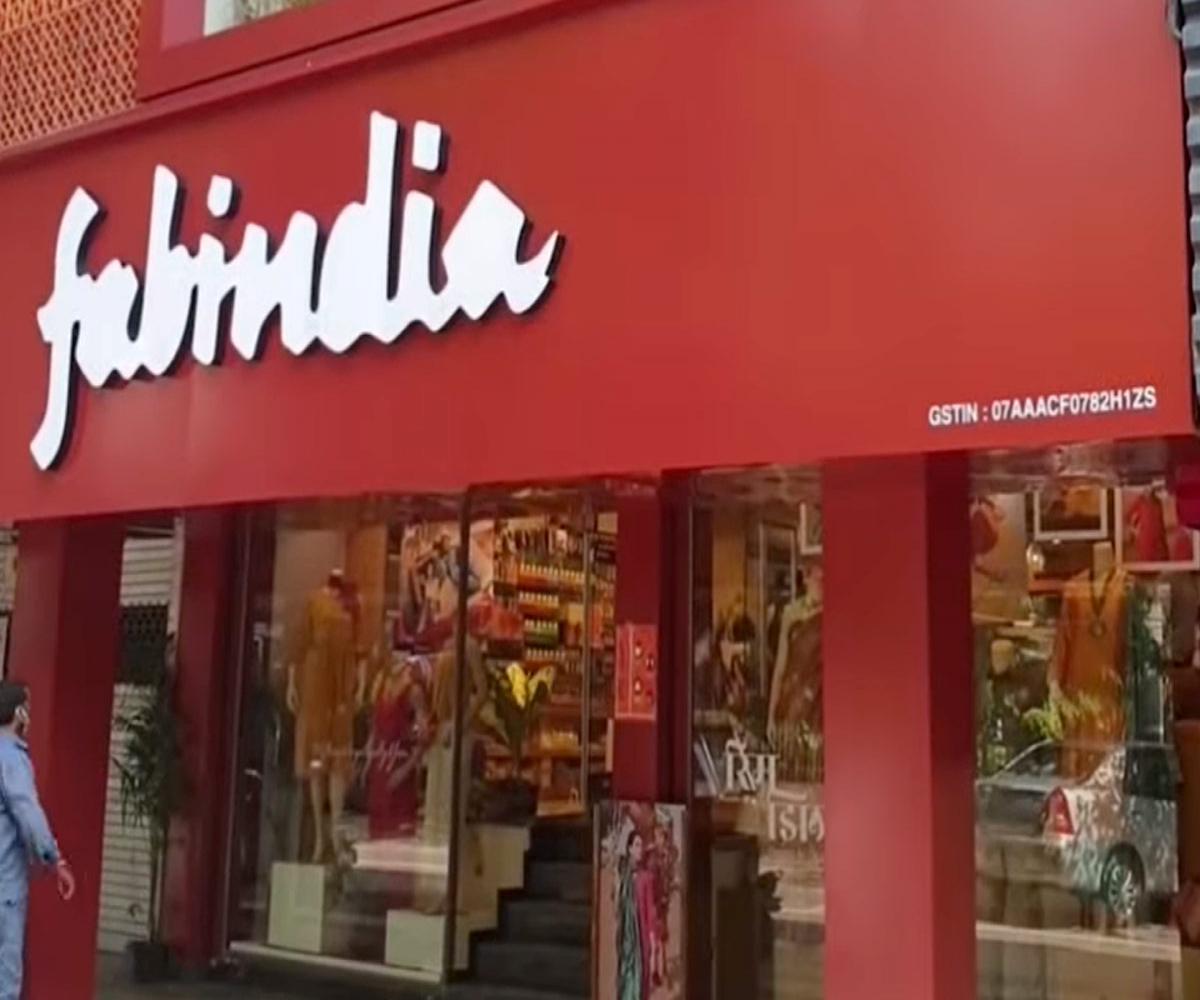
    Reacting to the Fabindia’s ‘Jashn-e-Riwaaz’ advertisement, on October 18 Bharatiya Janata Party (BJP) leader Tejasvi Surya, who is also president of the Bharatiya Janata Yuva Morcha, and a member of the Lok Sabha from Bengaluru, called it a ‘deliberate attempt of abrahamisation of Hindu festivals, depicting models without traditional Hindu attires….’. For those who are unfamiliar with the term ‘Abrahamisation’, a simple explanation, as conceived by some in the Right wing, is: ‘the process by which tenets of Hinduism are modified to have features of monotheistic religions (Judaism, Christianity and Islam)’.

    In what way does the advertisement amount to abrahamisation? Surya says the models are without traditional ‘Hindu attires’. This is not true by any stretch of imagination, as none — none — can have or provide a single monolithic picture of what constitutes ‘Hindu attire’. This argument in itself is both ambivalent, and supercilious. We shall get back to the attire squabble in a bit.

    What to Surya’s mind is more abhorrent, and prompts him to utilise the moniker ‘abrahamisation’ could be the phrase ‘Jashn-e-Riwaaz’, which undoubtedly is a Urdu phrase. Unfortunately, anything that is even remotely connected with Urdu raises the hackles of the Right wing in India. The entire rub as regards the advertisement has to do with this Urdu phrase, as by extension, anything that relates to Urdu gets identified with Muslims.

    It is that what appears to prompt Surya to mark out the advertisement as an attempt at ‘abrahamisation’. If this is the case, the attire has been used as a camouflage to attack the Urdu rendering in the advertisement. Let us dwell deeper on this association of Urdu with Muslims, and analyse to what extent, if any, is such an association (or nexus, depending on how one sees it) valid?

    Urdu Speakers

    The Muslim population of India is about 14 percent, and the proportion of those who speak Urdu as their mother tongue/first language is just about 4 percent. Interestingly, all of these 4 percent Urdu speakers are not necessarily Muslims. So, an overwhelmingly large proportion of Muslims do not have Urdu as their mother tongue/first language.

    Muslims are found all over India, from Kashmir to Kanyakumari and from Arunachal Pradesh in the extreme east to Gujarat in the west. Invariably, all of them speak the local/state languages. So where do Muslims speak Urdu? In a relatively small zone in the central-north areas. Also, small numbers of ‘migrants’ in other states, including the Deccani version, in some pockets in Andhra Pradesh, Karnataka and Telangana.

    Urdu Literature And Journalism

    The very first Urdu newspaper, Jam-i-Jahan-Numa, was published in Calcutta by Harihar Dutta as early as 1822. The weekly Kohinoor was started by Munshi Harsukh Rai in 1850. In 1858, Manbir Kabiruddin started the Urdu Guide. Munshi Nawal Kishore started the first Urdu newspaper, Oudh Akhbar, from Lucknow, also in 1858.

    In 1913 Ganesh Shankar founded Pratap, a famous revolutionary weekly in Kanpur which became a daily in 1920. Now it is published from Delhi. In 1923 Lala Kushal Chand, an Arya Samaji, started the Milap, an Urdu daily, from Lahore. After Independence it was shifted to Delhi, and is still in circulation as the largest Urdu newspaper in India.

    Urdu literature has been overwhelmingly patronised by non-Muslim writers and poets. Some of them are: Krishan Chander, Munshi Premchand, Rajinder Singh Bedi, Raghupati Sahay (Firaq Gorakhpuri), Gulzar (Sampooran Singh Kalra), Khushwant Singh, and so on.

    Clearly, some of the best patrons of Urdu have been non-Muslims. Given all these, where does the Urdu-equals-Muslim equation come from?

    Urdu literature has been overwhelmingly patronised by non-Muslim writers and poets. Some of them are: Krishan Chander, Munshi Premchand, Rajinder Singh Bedi, Raghupati Sahay (Firaq Gorakhpuri), Gulzar (Sampooran Singh Kalra), Khushwant Singh, and so on.


    The Pakistan Angle

    That equation came into prominence in 1947. After Pakistan came into being, surprisingly Urdu became her national language, though overall an overwhelming majority spoke Bangla. In the western wing the autochthones of Pakistan, namely the five main ethnic groups — Punjabis, Pathans, Sariakis, Balochis and Sindhis — all spoke a different language, and had very little to do with Urdu.

    It was just small sections in urban areas, and those who went over as Mohajirs (migrants) from India at Partition, who had Urdu as their mother tongue. It must not be forgotten that the 1971 secession of the eastern wing of Pakistan and the genesis of Bangladesh had a lot to do with the politico-linguistic neglect of Bangla.

    Urdu in India seems to have suffered, and has had a decline from the time Pakistan declared Urdu as her national language. No need to go into the political details of that here, except to point out that Punjabi which had till then adopted the Perseo-Arabic script that Urdu uses, gradually shifted to Gurmukhi script subsequent to Partition.

    The attribution of Urdu as an Islamic/Muslim language, and the generalisation to define a homogenous ‘Hindu attire’ are both problematic, as at its core both are built on false assumptions.

    The Attire Conundrum

    Now to the ‘Hindu attire’ ingredient of Surya’s assertion. The models featured in the advertisement do not by any sort of contention wear anything that could be thought of as non-Hindu, or anything offensive, or for that matter anything to suggest that these are ‘abrahamic’. Where do we look for those traditional ‘Hindu attires’?

    We do not have any comprehensive studies as to what women wore during ancient times in different parts of India, and if there was any unanimity or monolithic depiction as regards their attire. Besides, all over the country there have always been a range of dress patterns, and these did, and still do, cut across the various ethnic, religious and caste groups. To take up just a single example, the dress worn by Kathak dancers is common not just to dancers from various religious groups but also to the different genders. Among many other factors climatic conditions and local availability of fabric — and not religion — often determines attire.

    The attribution of Urdu as an Islamic/Muslim language, and the generalisation to define a homogenous ‘Hindu attire’ are both problematic, as at its core both are built on false assumptions. On a related note, the stigmatisation of Urdu by those who are unaware of its rich past can be seen when English is categorised as a ‘foreign language’.

    This article was earlier published in –  money control

    Image Credit: The News Minute

  • 2021-22 Q1 GDP Data Overestimates: Economic Shocks Question Methodology

    2021-22 Q1 GDP Data Overestimates: Economic Shocks Question Methodology

    2021-22 Q1 GDP Data Overestimates: Economic Shocks Question Methodology: The demonetisation shock impacted the unorganised sector far more adversely than it did the organised sector

    There are methodological errors in estimating annual and quarterly GDP data, especially when there is a shock to the economy, by using projections from the previous year, dividing the annual estimates into the four quarters and using production targets as if they have been achieved, explains Professor Arun Kumar


    The Reserve Bank of India (RBI) has maintained its growth projection for 2021-22 at 9.5% while the World Bank has retained it at 8.3%. These are based on the union government’s growth estimate of 20.1% for first quarter of 2021-22—an unprecedented growth rate based on the low base in the same quarter of 2020-21, which witnessed a massive decline of 24.1%.

    A sharp rise in growth after a steep fall in the preceding year is not a new phenomenon for the economy. Prior to 1999, only annual, not quarterly, data was available. Official data shows that the economy has risen sharply several times since independence: 1953-54 (6.2%), 1958-59 (7.3%), 1967-68 (7.7%), 1975-76 (9.2%) 1980-81 (6.8%), 1988-89 (9.4%) and 2010-11 (9.8%). The data after 2011-12 base revision was controversial. For instance, the new series shows a high growth rate of 8.3% for 2016-17 though it is well known that demonetisation devastated the economy

    Methodological Issues

    If the new series, using 2011-12 as the base year, shows a high growth rate for 2016-17, the methodology is not right. This has been extensively discussed since 2015, when the series was announced. A major change has been the use of the data provided by the union ministry of corporate affairs, called the MCA-21 database, since 2015. But it has been pointed out that many of the companies in this database are shell firms and the government shut down several of them in 2018. Further, many companies were found to be missing.

    Another problem pointed out, starting the year of demonetisation, is that the measurement of the contribution of the unorganised sector—which constitutes 45% of the GDP—is not based on independent data.

    The data for the non-agriculture sector is collected during surveys every five years. In between these years, the organised sector is largely used as a proxy and projections are made from the past. Both these features of estimation pose a problem when there is a shock to the economy.

    The demonetisation shock impacted the unorganised sector far more adversely than it did the organised sector. Hence, after demonetisation, the organised sector data should not have been used as a proxy to measure the contribution of the unorganised sector. Further, due to the shock, projections from the past will not be a valid procedure. This problem was accentuated by the implementation of the Goods and Services Tax (GST), which again impacted the unorganised sector more adversely

    Demand started to shift from the unorganised sector to the organized, making the situation even more adverse. For instance, e-commerce has severely impacted the neighbourhood stores and taxi aggregators have displaced the local taxi stands.

    Due to the shocks, the earlier procedure of calculating GDP becomes invalid and should have been changed. Since this has not been done, in effect, the GDP data is measuring the organised sector and agriculture.

    Thus, 31% of the economy is not being measured, and by all accounts, this part is declining, not growing. Therefore, GDP growth is far lower than what has been officially projected since 2016-17.

    The pandemic and the lockdown have administered the biggest shock to the economy. But the organised sector was hit far less than the unorganised sector. The split between the two sectors has been far greater than due to demonetisation or GST. Therefore, there is an urgent need to revise the method of calculating GDP—also, projections from the past do not make sense.

    Quarterly Data Issues

     The problem is even greater when projecting quarterly GDP growth. The data used is sketchier than the annual data. Not only most of the data for the unorganised sector is unavailable (except for agriculture), even the organised sector data is partial. For instance, the data for businesses is based on companies that declare their results in that quarter. Only a few hundred companies out of the thousands might be declaring such data.

    Worse, the estimation is based on a) projections for the same quarter in the preceding year same quarter, b) in many cases, the projection is not just for the quarter but for the year as a whole and then it is divided into four to get the data for one quarter and c) cases where targets, not actual production data. are used to estimate the contribution to GDP.

    Worse, the estimation is based on a) projections for the same quarter in the preceding year same quarter, b) in many cases, the projection is not just for the quarter but for the year as a whole and then it is divided into four to get the data for one quarter and c) cases where targets, not actual production data. are used to estimate the contribution to GDP.

    Fishing and aquaculture, mining and quarrying, and quasi-corporate and the unorganised sector are a few sectors which belong to the first group. Some sectors belonging to the second category are other crops, major livestock products, other livestock products and forestry and logging. Livestock belongs to the third category, where annual targets/projections are used.

    This procedure is clearly inadequate but maybe acceptable in a normal year. But when there is a shock to the economy, does it make sense? If there is a projection from the previous year, it is likely to give an upward bias since the economy was performing better in the preceding year. Further, projections have to be based on some indicators and the data on these indicators were only partially available due to the lockdown.

    Finally, how can the annual projection be made and then divided into four to obtain the quarterly estimate when the economy is highly variable from quarter to quarter. In 2020, each quarter was very different from the previous one.

    Next, if the data for 2020-21 is erroneous, when there was a massive slump in the economy, the shock continues into 2021-22. How can projections be made from the 2020-21 to 2021-22? Thus, there would be large errors in the quarterly data for the current year. This will then be fed into the data for 2022-23. Therefore, the shock to the economy will play itself out for several years.

    Impact on other Macro Variables

    Quarterly data are also published for other macro variables like consumption, and investment by public and private sectors. The government-related data is available in the Budget documents, but the private sector data poses a huge challenge. These estimates are, again, based on projections from the previous year, and in some cases, annual estimates are divided between quarters. Production data is also used to project consumption and investment by the private sector. So, if the former is incorrect, as pointed out above, then the estimates for the latter will also be erroneous.

    The RBI’s survey of the organised sector showed that capacity utilisation was down to 63% in January 2021, but the official quarterly data was showing a growth of 1.3% rather than a decline of 10%. Thus, the quarterly data was not representative of even the organised sector.

    Similarly, consumer sentiment was down to 55.5 compared to 105 a year back, implying that even the organised sector consumption had not recovered to the pre-pandemic levels. Both these variables were further dented in the second wave of COVID-19 in Q1 of 2021-22. The implication is that the data on these variables is also not reliable.

    If the production data is an overestimate due to the use of projections from the last year, the consumption and investment data would also be over projections. The further implication is that if the data for 2020-21 is not right, the quarterly data for 2021-22, projected from the previous year, will also be erroneous and overestimate.

    Analysis of Macro Variables for Q1 of 2021-22

    For the moment, let us analyse the Q1 data leaving aside the errors pointed out above. When the economy was in decline in the preceding year, comparing rates of growth makes less sense than comparing the level of GDP.

    On a low base of 2020-21 (-24.4%), the rate of growth for 2021-22 looks impressive (+20.1%). But it is 9.2% less than the pre-pandemic Q1 of 2019-20—i.e., the economy has not recovered to the pre-pandemic level.

    Further, if the economy was growing at the pre-pandemic rate, the economy would have expanded another 7.5% in two years. Thus, compared to the possible level of GDP in 2021-22, it is down by about 16%.

    Except for agriculture and the utilities sectors, data shows that none of the other sectors have recovered to the levels in 2019-20. Private final consumption expenditure is down by 11.9% and gross fixed capital formation by 17.1%. Government consumption expenditure and exports have increased compared to their levels in 2019-20. The former does give a boost to the economy by increasing demand but the latter does not since imports remain much higher than exports.

    Therefore, out of the four sources of demand, only government expenditure has increased—but this is not enough to compensate for the decline in the other three and that is why the economy is still down compared to 2019-20.

    It may be argued that over time, data undergoes revision as more data becomes available. But the situation now is unusual due to the pandemic. This necessitated a major revision in the methodology itself due to lack of data and consequent non-comparability across quarters and years.

     The views expressed are those of the author.

    This article was published earlier in NEWSCLICK.

    Image Credit: The Federal


  • India’s Education: Sacrificing Scientific Temper and Academic Rigour for right wing Ideology

    India’s Education: Sacrificing Scientific Temper and Academic Rigour for right wing Ideology

    The Indian governmental apparatus has been making international headlines, but unfortunately not for the most positive of reasons.

    Most recently, the V-Dem institute based in Sweden has raised alarm about the rapidly deteriorating state of Indian democracy. Since 2017, this non-profit research organization has churned out data-heavy global democracy reports. In its 2021 report, it categorized India as an “electoral autocracy” rather than an electoral democracy.

    Considering such harsh international condemnation and national tumult, it is perhaps the need of the hour to analyse the present regime and its mechanisms that pose a threat to the constitutional values and democratic foundation of India. The developments in Education and Academia are a fitting avenue to carry out this analysis.

    Since the Bhartiya Janata Party came to power in 2014, India’s public policy formulation has changed dramatically. Most changes in educational policies can be divided into two categories: the first pertains to changes in educational institutes’ curriculum, and the second pertains to the violation of scientific integrity by advancing exclusively ideology-based interests.

    Changes in Course Content and Curriculum

    In a bid to lessen the pressure on students who had to adapt to an online mode of learning, the Central Board of Secondary Education announced a 30 percent reduction in the curriculum. Although at first glance, this exercise appears to be a rational and ingenious move catered towards the best interest of students, deeper scrutiny of this initiative presents many glaring issues and unveils a covert saffronisation agenda.

    Under this provision, chapters on federalism, secularism, democratic rights need not be taught, Class 10 political science syllabus also saw the removal of chapters such as “popular struggles and movements” and “democracy and diversity”. The content that these themes deal with has raised rightful concerns from critics that these cuts could have a political motivation.

    These omissions have invited considerable disapproval from scholars and experts across fields. Former director of the National Council of Education Research and Training, Krishna Kumar himself commented that the cuts have rendered some remaining topics “incomprehensible.” The removal of topics that many educators argue promote criticality and self-reflection, must compel one to question the motivations of the bureaucratic apparatus’s policies.

    The effort to rewrite textbooks has seen a parallel launch at both national and state levels. In BJP ruled states the administration is openly pursuing to propagate a counter idea of history, elevating the role of ideologically conservative Hindu organizations and subsequently minimizing the educational attention accorded to efforts made to nurture secularism in Free India.

    The state board in Rajasthan, for example, removed all references to Jawaharlal Nehru, India’s first prime minister and champion of a diverse and secular India, while adding numerous references to V.D. Savarkar, a staunch believer of Hindutva ideology. Dr B.R. Ambedkar, a leader of the Dalit community who converted to Buddhism has been referred to as a “Hindu social reformer and his work towards Dalit activism has been grossly minimized. In Gujrat too, as far back as 2000, there was a move that made it compulsory for teachers to attend Sanskrit training camps in preparation for when the subject would be made mandatory.

    The Indian political climate has taken a shape wherein the Bhartiya Janata Party’s government has created a perception of an Idea of India that is exclusionary, theocratic, and intolerant. The analysis of public policies and governmental initiatives thus must proceed in this context and be astutely informed by the idea that the policies of the state are not divorced from the charged Indian political climate. To that end, the association between BJP and the Rashtriya Swayamsevak Sangh can explain much of the government’s political orientation.

    The Rashtriya Swayamsevak Sangh is an ultranationalist organization that has long nurtured the idea of a Hindu Rashtra. The Bhartiya Janata Party, having had its roots in the political wing of RSS shares much of the same core values which invariably determine the shape and implications of the official government policies. The looming perils of such an association have made themselves visible at a variety of junctures in Indian political history from 2014 onwards- a manifestation of the same is abundantly visible in the violation of academic integrity and rigour under the current political regime.

    Violation of Academic Integrity and Scientific Rigour

    The appointment of ideological and political loyalists for important roles in academia is a pattern that the current regime has religiously followed. Without scholarly pedigree to their name, their appointment as heads of such prestigious institutions is a nod to the government’s priorities of installing right-wing stalwarts in arenas requiring objective intellectual leadership.

    This regime’s impact on academia has been one warranting pointed criticism.  The government’s policies have the effect of harbouring anti-intellectualism and in analysing the various policies during this tenure, one can identify a systematic erosion of academic integrity- new heads of acclaimed public institutions to HRD ministers all align with the core ideology of BJP rather than having any significant reputation and merit in education or academia. Simply put, those in important positions within the educational sector have come to occupy these positions only because of their socio-political location and ideological stance.

    Smriti Irani, the HRD minister from 2014-2016 was accused of heavy-handed approach and interference in dealing with the universities and higher education institutions. The controversy over the minister’s academic credentials claim made it worse, and ultimately, she was shifted from the ministry.  Similarly, the appointment of Gajendra Chauhan as the FTII chairman in 2015 was met with scorn and dissatisfaction from students and critics alike who alleged that he clamped down on artistic liberty of the institution and that his political affiliation with BJP landed him the role he was unfit for. In counter to these criticisms, the government has argued, not without some merit, that the past dispensations have neglected various nuances of Indian culture and civilisation under the rubric of liberalism, pseudo-secularism, and Marxist influence.

    The appointment of ideological and political loyalists for important roles in academia is a pattern that the current regime has religiously followed. Sudershan Rao’s appointment as the head of the Indian Council of Historical Researchand Braj Bihari Kumar’s appointment as the head of the Indian Council of Social Sciences were some other governmental decisions that raised grave concerns. Without scholarly pedigree to their name, their appointment as heads of such prestigious institutions is a nod to the government’s priorities of installing right-wing stalwarts in arenas requiring objective intellectual leadership.

    In the present scenario then, the inroads being made into the educational sphere by ultranationalist ethos are a cause of serious concern – be it changes to curriculum or violation of academic integrity through subverting requirements to become institutional heads. Open and overt- these trends all point to the one larger agenda: systematic saffronisation of education.


    Views expressed are those of the author.


  • Indian Foreign Secretary visits Colombo: Attempt to reset India-Sri Lanka ties

    Indian Foreign Secretary visits Colombo: Attempt to reset India-Sri Lanka ties

    India and Sri Lanka are immediate neighbours that share cultural, historical and religious ties spanning over thousands of years. Indian tourists to Sri Lanka are a major source of tourism revenue for the island nation. Despite all these ties, the bilateral relations continue to be impacted by considerable mistrust. Recent increase in tensions between the two South Asian neighbours is a result of the island nation allowing China to enhance its strategic footprints in Sri Lanka and increase its influence in the region. Despite certain inconsistencies in the Indo-Sri Lankan bilateral relationship, it will still be in the best interests of both countries to enhance their relationship amid the uncertain shifts in the geopolitical landscape.

    Indian Foreign Secretary’s visit to Colombo

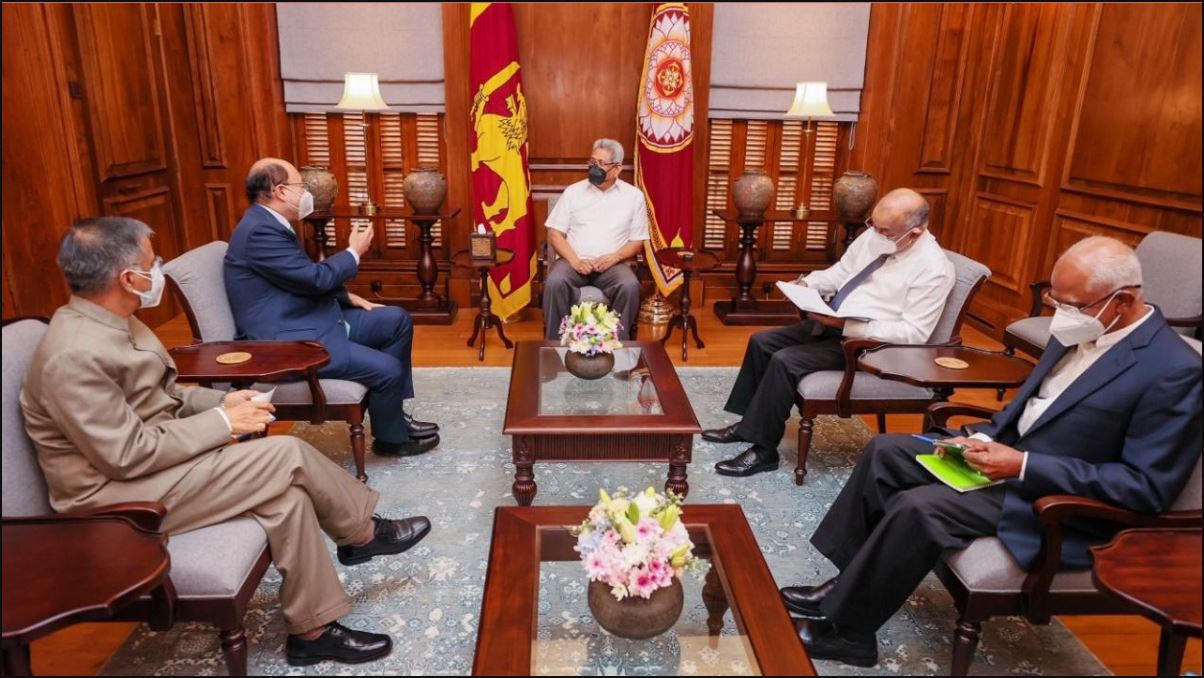
    India’s foreign secretary Harsh Vardhan Shringla concluded a four-day state visit to the Island nation on October 5. His sojourn commenced at a time when Colombo expressed her eagerness to ink a few defence pacts with New Delhi.

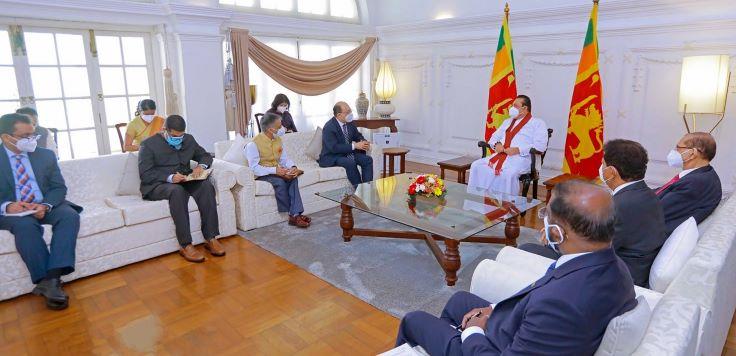
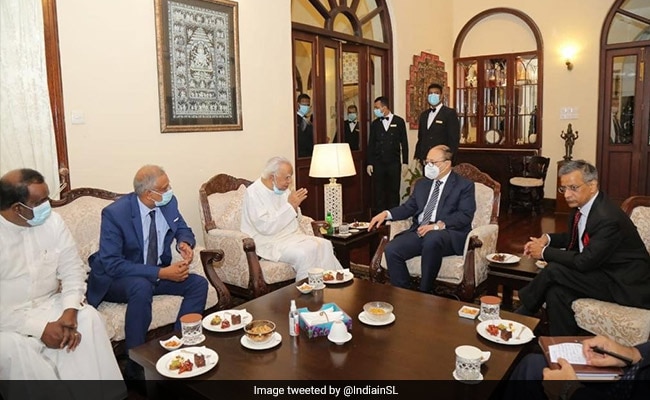
    The visit was eventful as well as broad-based. The Foreign Secretary  held a meeting with the Sri Lankan President Gotabaya Rajapaksa on tourism, power generation, and cooperation in economic recovery. To reset the strained relations with Colombo, Shringla’s schedule was kept tight and focused on closed-door discussions. He called on Sri Lankan Prime Minister Mahinda Rajapaksa, Finance Minister Basil Rajapaksa, Foreign Minister G.L. Peiris and Foreign Secretary Admiral Jayanath Colombage (Rerd). From the capital, Shringla hopped from one town to another. He visited and held meetings in Kandy, Trincomalee and Jaffna to enhance bilateral ties.


    While in Trincomalee, he explored the possibilities for materializing the India-Sri Lanka energy partnership. In separate meetings with  Tamil National Alliance (TNA), Tamil Progressive Alliance (TPA), and Ceylon Workers’ Congress (CWC), Shringla voiced India’s firm support to the implementation of the 13th Amendment, a constitutional amendment that would empower the Tamil minorities but continues to be held in abeyance by the Sri Lankan government. During his visit, Shringla launched a few Indian initiatives like Model Housing Village’ in the northern district of Vavuniya, a school building at Vadamarachchi in Jaffna, and the Saraswathy Central College building in Pussellawa in Kandy. India had earlier constructed over 46,000 houses for the war-affected families in north.

    New Delhi has supplied to Colombo 100 tons of liquid medical oxygen, 26 tons of medicines and ambulances as part of its support to the Island’s efforts to overcome the pandemic. The state has also received about half a million Covid vaccines from India. Sri Lanka’s Suwa Seriya programme was supported by India. Sri Lanka and India together have implemented a USD 400 million currency swap agreement and one more is expected to happen.

    Colombo Crisis

     India’s External Affairs minister S. Jaishankar and Sri Lankan Foreign minister GL Peiris had a tête-à-tête on the side lines of UNGA in September. Weeks after Dr S. Jaishankar’s visit to Sri Lanka in the first week of January this year, Indian fishermen were killed by the Sri Lankan Navy, which resulted in renewed tensions between the two countries.  Moreover, the cancellation of the tripartite Memorandum of Understanding (MoU) between Sri Lanka, India, and Japan for the development of the strategically located East Container Terminal (ECT) at the Colombo Port in February, added more salt to the already strained relations between the two neighbours.

    What became an even more controversial issue was when Sri Lanka cleared a Chinese energy project in three islands off the Jaffna peninsula that is barely 50 km from Tamil Nadu coast. Recently, Sri Lankan parliament passed the Colombo Port City Economic Commission Act to oversee a huge Chinese luxury oceanside development project. This gives China a significant foothold in the country and will allow it to enhance its strategic presence throughout the region. Accordingly, India emphasised that it expected Sri Lanka to be “mindful” of ties with New Delhi, particularly in the security realm.

    Interestingly, the series of events that have taken place this year came after the statement given by Sri Lankan Foreign Secretary Jayanath Colombage last year regarding Sri Lanka’s adoption of an “India first approach”, which reflects Colombo’s supposed willingness to protect New Delhi’s strategic interests in the region. However, despite these guarantees, the geopolitical shifts occurring in South Asia make it arduous for Sri Lanka to maintain consistently positive relations with its neighbour.

    Ties that continue to stand

     China has become a critical factor in the Indo-Sri Lankan bilateral equation. The East Asian giant’s deep pockets have become a more attractive economic option for Sri Lanka vis-à-vis India. While India took five months to approve a loan moratorium requested by Sri Lanka last year, China approved an additional USD 500 million loan expeditiously. Moreover, the issue involving the Tamil cause continues to sustain the long-standing trust deficit between the two South Asian neighbours.

    However, this is not to say that Sri Lanka will disregard India for its partnership with China. Colombo is aware of the risks involved in engaging deeply with China. Sri Lanka is no stranger to Beijing’s debt trap that compromises its sovereignty. Despite Rajapaksa’s cordial ties with China, Sri Lanka will have to inevitably reconsider its priorities if this continues to persist.

    While China may have the upper hand in mega-infrastructure projects, India’s role in cementing its people-to-people ties with Sri Lanka and taking the lead in the education, health, and tourism sectors, continue to give it considerable edge in the overall inter-state dynamics. Apart from being its major trading partner, India has also demonstrated its proactive partnership by being the first responder in humanitarian assistance.  Most importantly, India has no interest in compromising Sri Lanka’s territorial integrity and sovereignty. Additionally, India continues to reiterate that it gives priority to Sri Lanka under key regional frameworks such as its Neighbourhood First Policy and Security and Growth for All in the Region (SAGAR).

    Sri Lanka is also aware of this and has tried to make up for its decisions that have compromised India’s interests. Despite cancelling the ECT tri-partite MoU, Sri Lanka has taken the prerogative to permit Indian companies to develop its West Container Terminal (WCT). Moreover, the scheduled address by Pakistani Prime Imran Khan, to the Sri Lankan Parliament during his visit to Sri Lanka in February, was also cancelled. Recently, much attention has been placed on Sri Lanka’s “roadmap” to restore ties with India and address several important issues such as the fishermen’s issues, building connectivity, trade and investment, and promoting religious links.

    A way forward

     At a time when India’s Indo-Pacific concerns are on the rise, New Delhi is perturbed by Beijing’s diplomatic successes in Sri Lanka and throughout South Asia. China’s quick responses and its its large funding are attractions that has swayed the Island nation towards a pro-China policy. Given the endemic corruption and the Chinese-engineered Sinhala chauvinism with anti-India stance has forced Indian companies to become very cautious about investing in Sri Lanka. But India is ahead of China when it comes to tourism, and health care. Sri Lankan students are now eligible to compete in India’s National Eligibility cum Entrance Test (NEET) and Joint Entrance Examination for the IITs. Last year India’s allocation of $50million for counter-terrorism and $15 million for promoting the Buddhist links drew tremendous positive attention of Lankan policymakers. The first pilgrims’ flight from Sri Lanka to Kushinagar in Uttar Pradesh is expected to take off soon. From the days of Julius Jeyawardane Sri Lanka has evolve a very crafty and nuanced diplomatic strategy, a truly Chanakyan approach. India will need to be equally crafty to checkmate the Chinese inroads into Sri Lanka. [TPF].


    Feature Image Credit: Lankaxpress


  • The US retreat from Afghanistan: Looking back on an ill-conceived peace deal and a hasty withdrawal

    The US retreat from Afghanistan: Looking back on an ill-conceived peace deal and a hasty withdrawal

    Under an agreement signed on February 29, 2020, between Qatar, The US and the Taliban, the US agreed to withdraw all its troops within 14 months of signing the accord. In return, the Taliban pledged to prevent any terrorist group from operating in Afghanistan against the US and its allies. The pact also envisaged a prisoner swap, the start of intra-Afghan dialogue and sanction removals against the Taliban. But, as we have seen, the peace deal accelerated the collapse of the Afghan state on which the US spent trillions of dollars.

    Trump also permitted the US chief negotiator Zalmay Khalilzad to place the withdrawal of US forces on the negotiating table with the Taliban, throwing away their biggest bargaining chip. The Taliban themselves seemed surprised that the US put the withdrawal of US troops on the negotiating table.

    The US started the peace talks with four specific goals. An end to violence by declaring a ceasefire, an Intra-Afghan political settlement, Taliban renunciation of Al-Qaeda and long-term presence of intelligence assets and special operation forces in Afghanistan for counterterrorism operations, and a timeline for US troops withdrawal[1]. However, with the presidential elections approaching in 2020, Trump was being increasingly restless and wanted a quicker exit. So, to accelerate talks, the long-standing demand for the presence of special operation forces in a counterterrorism mission along with inter-Afghan led peace talks were jettisoned. Trump also permitted the US chief negotiator Zalmay Khalilzad to place the withdrawal of US forces on the negotiating table with the Taliban, throwing away their biggest bargaining chip. The Taliban themselves seemed surprised that the US put the withdrawal of US troops on the negotiating table.

    The US committed itself to a set of measurable commitments, while the Taliban did not. The idea was to create an environment of good faith. However, the Taliban never reciprocated the ‘good faith’ shown by the US, except to ensure safe passage for the retreating US troops. Once the deal was struck, violence increased in the country.

    The Taliban never agreed to a ceasefire or a political settlement. While the intra-afghan dialogue was a part of the deal struck between the Taliban and the US, there was a lack of progress, with the Afghan government and the Taliban blaming each other for the impasse. Violence escalated by almost 50% after the start of the intra-afghan dialogue.

    The peace deal also included a prisoner swap agreement where the Taliban would release up to 1000 prisoners and the Afghan government release up to 5000 prisoners. The Afghan government asked the Taliban prisoners for a written guarantee that they would not return to the battlefield. However, thousands immediately rejoined the insurgency. The Taliban commander, Maulawi Talib, who led a Taliban assault on the capital of Helmand, Lashkargah, was one among the 5000 prisoners released. There was an uptick in violence after the prisoner swap was completed. Afghan officials said the agreement went through only because of pressure from Washington.

    The Taliban proved reluctant to break ties with Al-Qaeda, too, according to a UNSC report. Under the peace deal, the Taliban agreed not to allow al-Qaeda or any other extremist group to operate in areas under their control. However, the Taliban needs allies and Al-Qaeda is one reliable ally. Further, the Haqqani network, an integral part of the Taliban, is known to harbour close links with Al-Qaeda. While stopping a future terrorist attack emanating from Afghanistan will be in the Taliban’s interests, it is unlikely they will break relations with Al-Qaeda after years of close collaboration.

    It was clear from the beginning that the viability of the agreement depended on the US willingness to call off the withdrawal in the future if the Taliban renegade on their promises. But that decision fell to president Biden, who has always made it clear that Afghanistan is a lost cause.

    When Biden came to power, the situation in Afghanistan was deteriorating. The choice he had, according to Biden himself, was to either expand US presence or follow through with the agreement. The dilemma was a result of poor policies pursued during the trump era. The US has been bogged down in Afghanistan for 20 years, and the resolve of president Biden to not escalate meant that the US followed through with the agreement. The peace talks became a cover for complete US disengagement.

    The US withdrawal accelerated the collapse of the Afghan state. The uncertainty of the Doha talks demoralized the Afghan military, who saw it as a deal between the Taliban and the US that guaranteed Taliban victory.

    With the collapse of morale, everything that was rotting started collapsing as well.  Around 30000 troops existed on paper, but the numbers were inflated due to a phenomenon called ‘ghost’ soldiers – soldiers on the official payroll but who never showed up for fighting. There were reports that the soldier was not paid and there were not enough supplies.

    Jack Watling, a research fellow for land warfare and military sciences at the Royal United Services Institute in London, said that the Afghan military collapse was not a reflection of military capability, but a reflection of a collapse in the will to fight.

    In truth, ever since the surge in troops authorized by the Obama administration right after coming to power, what every successive US President wanted was an orderly withdrawal from Afghanistan. The most baffling thing is that the US resorted to negotiation when its leverage was the weakest. Perhaps, in hindsight, greater efforts could have been made during the time of President Obama to find a peaceful solution to the conflict.

    In the end, it was more of a retreat than a withdrawal. The US made concrete measurable commitments while the Taliban made promises, which they can now afford to renegade on.

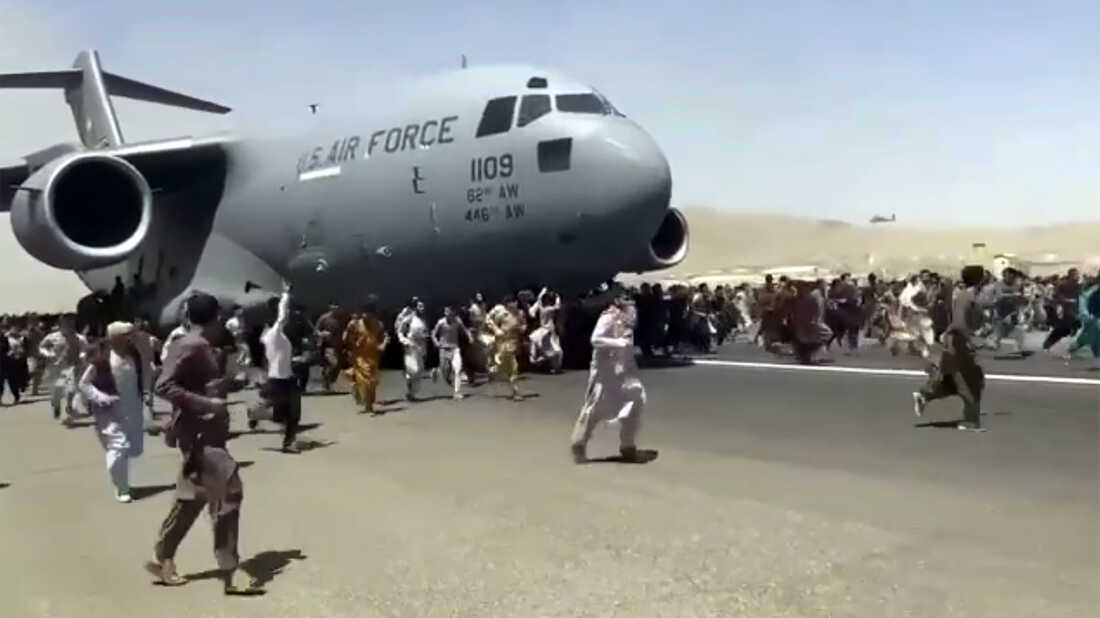
    The scenes in Kabul airport was anything but orderly. More than 2000 marines had to be brought in to secure the Kabul airport as the Taliban rolled into Kabul for the first time since 2001. “The past 17 days have seen our troops execute the largest airlift in U.S. history, evacuating over 120,000 U.S. citizens, citizens of our allies, and Afghan allies of the United States,” the US president said in the statement. An attack by the Islamic State in Khorasan Province (ISKP) on Kabul airport killed 13 U.S. service members and 170 Afghans.

    In the end, it was more of a retreat than a withdrawal. The US made concrete measurable commitments while the Taliban made promises, which they can now afford to renegade on.


    [1] Pg. 667, carter


    Feature Image Credit: www.npr.org

  • The Game of Thrones in Kabul: Taliban’s 2nd Innings

    The Game of Thrones in Kabul: Taliban’s 2nd Innings

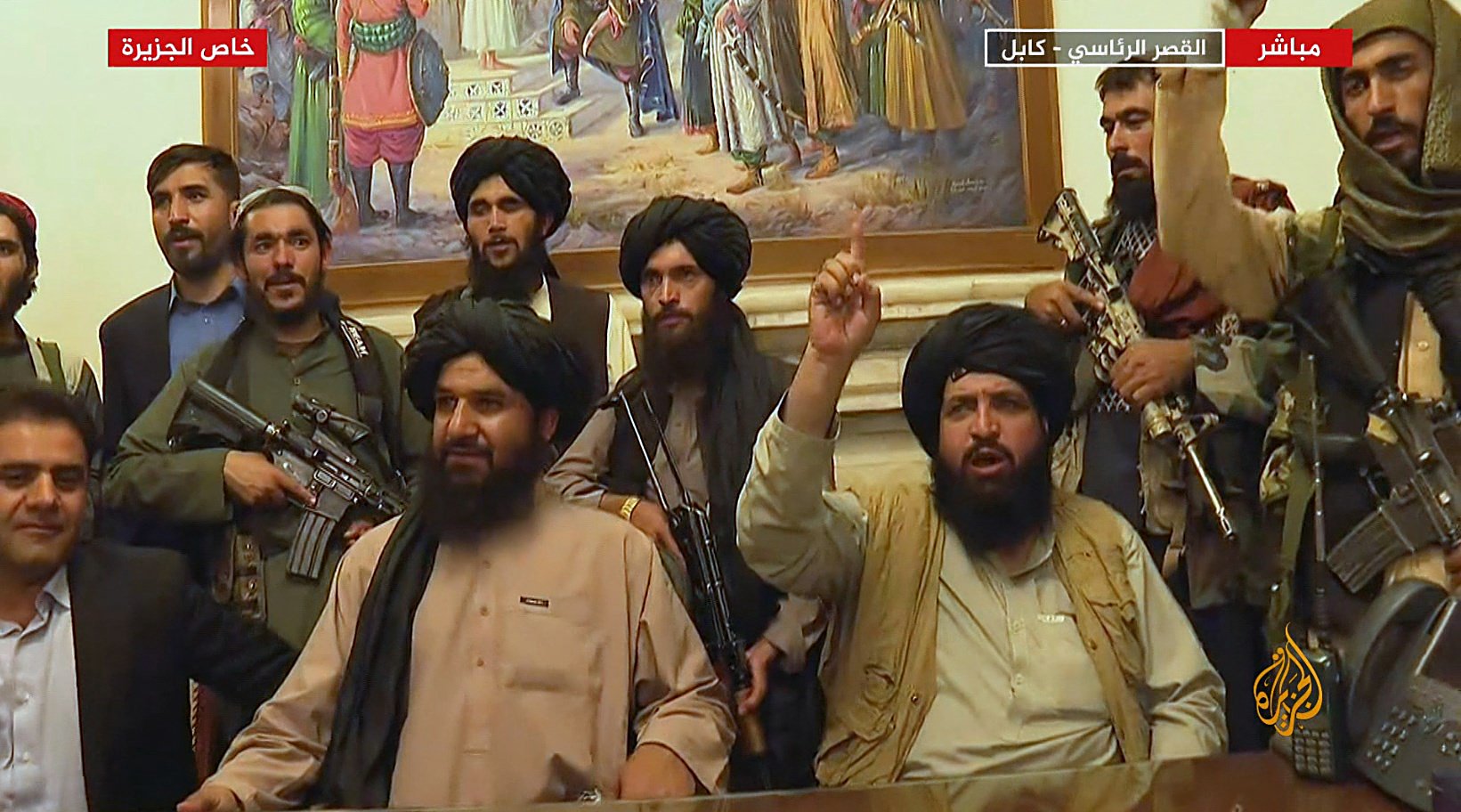
    The trajectory of politics in the volatile region of Afghanistan and its neighbourhood is in flux. A month has gone by since the Taliban rebels swept into the capital and occupied the Presidential Palace in Kabul on August 15. Many faces in the interim government announced by the Taliban are globally designated, terrorists. Till now there are only scanty details about the Taliban’s plans for governance. As the Taliban is an integrated group of multiple tribal power centres, there are conflicting views given by different factions. The hard-line zealots are looking to reimpose their harshly interpreted version of the Sharia laws. The graffiti on the walls are being erased across Afghan towns. Music is muted. Schools and cultural institutions are currently shut. The Taliban has changed the name of the democratic state to the name during Taliban 1.0, an  Islamic Emirate of Afghanistan, a theological state where democracy has no place.

    Surprising everyone, the Taliban announced their ministerial portfolios and postponed the swearing-in ceremony that was planned for September 9, the 20th anniversary of the 9/11 terror attacks. Mullah Hassan Akhund has been named the prime minister. Whether he is acceptable to all the factions is still in doubt. The Haqqani group, a virulent anti-Indian faction, has garnered powerful ministries. The Interior Ministry will be headed by Alhaj Mullah Sirajuddin Haqqani of the Haqqani Network, while Taliban co-founder Mullah Abdul Ghani Baradar has been accredited with the portfolio of the deputy prime minister.

    Sirajuddin Haqqani is long designated as a global terrorist by the US.  The cabinet is likely to expand later. The leaders are yet to come up with some heavyweight names including the judiciary chief. The Islamic Emirate of Afghanistan will be under the supreme leadership of Sheikh Haibatullah Akhundzada. He was head of Sharia courts under the Taliban 1.0 regime from 1996 to 2001 and was responsible for the harsh and brutal interpretation and implementation of Sharia law.  Molvi Muhammad Yaqoob is in charge of the Ministry of Defence, while Molvi Ameer Khan Muttaqi is announced as the Foreign Minister.

     Four Haqqani leaders are allocated portfolios in the cabinet. The tussle between the Haqqani and Yaqoob factions is already public. The Haqqani network intends to retain complete control of Kabul and thus dominate Afghanistan while the Yaqoob faction led by Mullah Baradar, with their power centre in Kandahar, favours an inclusive government featuring the minorities as well. The Haqqani faction functions with the full support of Pakistan and is masterminded by the ISI. This factional feud could spill out to weaken the Taliban ultimately.

    The Taliban’s cabinet doesn’t reflect the ethnic diversity of Afghanistan, and nearly half the strength consists of members from the previous government in 1996-2001. A slew of challenges has already emerged for the new regime. The first is the problem of recognition and legitimacy by the general population and non-voter citizens across the state. The second challenge will be ensuring inclusive governance, claiming undisputed leadership across the territory, as well as dealing with Al Qaida and the Islamic State Khorasan. Economic reconstruction of the devastated economy, coupled with achieving diplomatic recognition by the global community is the major challenge.

    Afghanistan is known for its mosaic culture. In Article 4 of the Afghan Constitution, 14 major ethnic groups are recognized. Apart from the major populace belonging to Pashtun, Tajik, Hazara and Uzbek, there are ethnic minorities like Turkmen, Baluch, Pashai, Nuristani, Aymaq, Arab, Qirghiz, Qizilbash, Gujur,  Brahui. There are also micro-ethnic settlements across the state.

    Taliban has neither showed empathy towards the minorities nor respected the constitution. Out of the thirty-three ministers and high-level names in the Taliban’s cabinet, two appointees are Tajik (Qari Din Mohammad Hanif, Minister of Economic Affairs and Qari Faseehuddin, Army Chief), and only one name is Uzbek (Molvi Abdul Salam Hanafi, Second deputy to PM). Despite a considerable Hazara demography, no ministry is allocated to anyone belonging to Hazaras or even Shia Islam. .

    Women make up almost half of the 40 million Afghan population. Significantly, no female candidate is projected as a minister in the newly formed ministry. Even though Abdul Baqi Haqqani, the Higher Education Minister clarified that females will be permitted to pursue higher education, there are serious concerns over girls’ education. During the Taliban’s incumbency between 1996-2001, girls and women were barred from attending classes and working outside. The Taliban has renamed the Women’s Affairs Ministry the Ministry of Vice and Virtue.

    After the collapse of Amrullah Saleh led interim government in Panjshir, Afghanistan is being ruled by only one incumbent – The Taliban. But Amrullah Saleh and Ahmed Massoud have formed the Government in Exile in Dushanbe, Tajikistan. With this announcement, the global community is likely to recognize only one among the two- the government of the Islamic Republic of Afghanistan in Exile and the Taliban-led Islamic Emirate of Afghanistan.


    In order to alter the negative global perception towards them, the Taliban will have to ensure civic rights, human rights and women’s right to work and study. Establishing political stability and non-violence should be clearly demonstrated. To continue ruling poverty-stricken, strife-torn and war-ravaged Afghanistan, the Taliban will have to work on better external engagements within their ideological frameworks. The United Nations and European Union will continue to engage the Taliban on humanitarian grounds, provided the Taliban works to ensure hope and optimism. Through an official communique to Secretary-General on September 15, the Taliban nominated Mohammad Suhail Shaheen and appealed for the UN representation of the Taliban.

    Aid and trade – these two remain the most significant challenges for the Taliban. Apart from the Islamic states like Pakistan, Iran, Qatar and Turkey, the Taliban has been engaging Russia and China for their support. Under these circumstances, Pakistan is expected to negotiate with the Taliban on Haqqani’s power and control in the provinces along the Durand line. Bringing Tehrik-e-Taliban (Pakistan) under control will be a challenge for Islamabad. Pakistan’s military establishment will seek to cut commercial channels between Afghanistan and India and gains in favour of Pakistan.  India continues its wait and watch policy towards considering diplomatic or political links with the Taliban.

    The tussle for power and dominance between the main factions may spawn severe political instability and civil war. The perennial inter-tribe rivalries across the provinces of Afghanistan will complicate the issues further. [TPF]

    Image Credit: inews.co.uk

  • Narcotic Jihad | Can science and reason defeat religious polarisation in Kerala?

    Narcotic Jihad | Can science and reason defeat religious polarisation in Kerala?

    It is surprising that in today’s Kerala the well-educated religious lot, who are expected to have had a smattering of science, and who are expected to be the ones who see reason, are the ones who are raising the bogeys of ‘love jihad’ and ‘narcotic jihad’.

    Bertrand Russell, the great mathematician-philosopher and polymath had famously held that “Religion is something left over from the infancy of our intelligence; it will fade away as we adopt reason and science as our guidelines”. When we reflect on Russell’s quotation and introspect the religious realm in India per se, not to talk about contemporary events in Kerala, it is quite disconcerting and distressing; and a few crucial issues ensue from there.

    First and foremost, either Russell was wrong in his assertion as regards the fading away of religion in the wake of the adoption of reason and science by humans, or his understanding and definition of ‘religion’, ‘intelligence’, ‘reason’, and ‘science’ were at variance with the general, and usually acceptable, notions/definitions that are prevalent in civic society at large.

    It is rather surprising that in today’s Kerala the well-educated religious lot, the clergy, who are expected to have had a smattering of science, and who are expected to be the ones who see reason, are the ones who are raising the bogeys of ‘love jihad’ and ‘narcotic jihad’, notwithstanding the fact that probes by different agencies, including the National Investigation Agency, have debunked such allegations.

    The clergy concerned, particularly the bishop of Pala and other priest(s) who have indulged in such rhetoric, may not necessarily have played on into the hands of the Sangh Parivar, but have certainly touched the hearts and endeared themselves to the latter to the extent that the latter are ecstatic. Also, they have, along with other Right-wing groups, extolled the bishop of Pala, and have extended their support to him.

    However, something that has been very heartening and positive in this dark and murky scenario has been the bold and defiant stand of a group of nuns who not only spoke out against the bishop but also walked out of the mass of the priest who preached hate by going to the extent of beseeching his flock to boycott Muslims traders as also Muslim autorickshaw drivers.

    One would not have been surprised if insinuations and allegations of ‘love jihad’ and ‘narcotic jihad’ were made by Right-wing extremist groups because it is, inevitably, their wont to do so. But coming from the clergy in a state which has historically seen relatively amicable and amiable relations between Muslims and Christians wherein they have prospered together, belies logic.

    Pre-Islamic Arab contact with Kerala and the rest of the west coast of India dates back to the ‘Before Christ’ era, which gradually transformed into the Islamic one from the seventh century AD onwards.

    The oldest mosque to be built in the Indian subcontinent was the Cheramaan Juma Mosque in Methala, Thrissur district, in 629 CE. It is significant to point out that the north-centric way of looking at and referring to Islam in India by certain historians is quite misplaced. By the time Islam made any impact in the northwest and north of India, full-fledged Islamic societies had been formed in Kerala that extended beyond and along the Coromandel Coast in Tamil Nadu and spread towards South East Asia.

    Similarly, the Christian connection and the advent of Christianity in Kerala go back to 52 CE. For centuries, these religious groups, namely, Christians and Muslims, have coexisted and inhabited common spaces all over Kerala, along with the pre-existing indigenous communities. Also, there has been a high degree of acculturation between the various religious groups in terms of language, food, clothing, and other cultural practices including in the religious realm.

    There were, no doubt, skirmishes between the Christians and Muslims with the arrival of the Portuguese during the late fifteenth and early sixteenth century, but these have to be treated more as aberrations for economic gains than something that disturbed the overall ambiance of peace and communal harmony. The erstwhile situation as regards peaceful coexistence between the different religious communities prevailed in Kerala in spite of quite a few communal riots in other parts of India, both before and after the Independence.

    It is felt in some circles in Kerala that due to the COVID-19 pandemic and the restrictions as regards congregations, the footfalls have declined to result in drastically reduced revenues in the churches, and that has made some clergy feel insecure; and one way of getting back the faithful could be to polarise the communities in the expectation that would help in consolidating their own followers.

    Of late, the anti-Muslim rant that has emanated in Kerala is not confined to the borders of the state. The overt and manifest support in social media and through videos, for Israel’s bombing of Gaza during the recent conflict vis-à-vis the Palestinians, too, is, at one level quite disturbing, and at another level, points to the mindset that such perpetrators are embedded in.

    The proclivity to reduce the Palestinian identity to just a Muslim/Islamic one is one of the most irrational ways of looking at a people and explicating their ethnicity. Christian Palestinians too are at the forefront in their resistance to Israeli imperialism, and the occupation of Palestine. The well-known academic and crusader for peace, late Professor Edward Said, was one such.

    This article was published earlier in moneycontrol.com

    Featured Image: keralakaumudi.com

  • Does ASEAN Need a New Approach to Code of Conduct for the South China Sea?

    Does ASEAN Need a New Approach to Code of Conduct for the South China Sea?

    Reference to Declaration on the Conduct of Parties in the South China Sea (DOC), Guidelines for the Implementation of the DOC, and formulations such as early adoption of a Code of Conduct in the South China Sea (COC) have featured in the ASEAN Chairman’s Statement of East Asia Summit Foreign Ministers’ Meeting since 2013 when Brunei Darussalam had held the Chairmanship of the ASEAN. These references were reiterated, and the section relating to the South China Sea in the ASEAN Chairman’s Statement for the 11th East Asia Summit Foreign Ministers’ Meeting in August 2021 under the leadership of Brunei Darussalam, is no different.

    While the Chinese intent is a welcome development, its new “Maritime Traffic Safety Law of the People’s Republic of China” (MTSL) that came into effect on 01 September 2021, has caused turbulence among the claimant States.

    Meanwhile, China’s Ministry of Foreign Affairs Statement of 5 August 2021 notes that a new goal has been set by China under which Beijing and ASEAN would “refrain from unilateral actions that aggravate tensions and widen differences, or using force or threat of force in particular”. While the Chinese intent is a welcome development, its new “Maritime Traffic Safety Law of the People’s Republic of China” (MTSL) that came into effect on 01 September 2021, has caused turbulence among the claimant States. As per the MTSL guidelines and procedures, vessels must “report the name, call sign, current position, next port of call and even estimated time of arrival to Chinese authorities”.

    The Philippines has decided to “ignore” the new Chinese Regulations and Philippine Defence Secretary Delfin Lorenzana has clarified his country’s stand on the issue that “we do not honour those laws by the Chinese within the West Philippine Sea because we consider that we have the sovereign right within this waters. So we will not recognise this law of the Chinese,” The Vietnamese Foreign Ministry too has reiterated strict compliance with the 1982 UNCLOS “when promulgating documents of domestic law related to the sea”.

    The Pentagon has accused China of “Unlawful and sweeping maritime claims, including in the South China Sea, pose a serious threat to the freedom of the seas, including the freedoms of navigation and overflight, free trade and unimpeded lawful commerce, and the rights and interests of the South China Sea and other littoral nations,” and the Defense Department spokesman has stated that the country will “ continue to fly, sail and operate wherever international law allows,”

    By all counts, an early conclusion of CoC in the South China Sea is only wishful given that the idea has been on the table for over two and a half decades since 1996. At that time there was euphoria among ASEAN foreign ministers that a CoC in the South China Sea could be the “foundation for long term stability in the area and foster understanding among claimant countries.”

    There is now a view that it is time to change the “objective from coming up with a comprehensive CoC”; instead, ASEAN and China must work towards “incremental development of a series of agreements” that could “eventually become the CoC in the future”

    The ASEAN has made earnest efforts and continues to negotiate a legally binding CoC but its finalization has eluded it. There is now a view that it is time to change the “objective from coming up with a comprehensive CoC”; instead, ASEAN and China must work towards “incremental development of a series of agreements” that could “eventually become the CoC in the future”. This can be achieved by developing “more realistic” and “smaller accords” that can help “de-escalate potential contentious situations”.

    The above argument merits attention for at least two important reasons. First, the South China Sea is simmering due to US-China military contestations. The US Navy continues to engage in exercises and the current deployment in the South China Sea by USS Carl Vinson Carrier Strike Group and Air Wing of the Future is a reflection of the US’ commitment to field “combat-ready force to protect and defend the collective maritime interests of the U.S. and its regional allies and partners”. Also, the US Navy has conducted FONOPs relentlessly and is now joined by the US Coast Guard. The Quad Member States have also dispatched their warships to the South China Sea for Malabar Naval exercises and the European navies led by France and Britain are operating in the region. These multi-nation naval manoeuvers have prompted China to respond through similar actions and the PLA Navy and the Air Force are persistently deployed in the region. This ‘state of affairs’ will continue.

    Second, there is a view that while the CoC should necessarily be consistent with the 1982 UNCLOS and should not “prejudice legitimate rights and interests of nations not a party to discussions,” this assessment can potentially trigger clamour among other stakeholders who have politico-diplomatic, economic and strategic interests in the region and have vehemently argued for a rules-based system and have challenged China’s expansive claims in the South China Sea as also its non-adherence to the 2016 PCA ruling.

    Under such circumstances, there are no incentives for China and it is deliberately delaying the finalization of the COC; it prefers to pursue a “business as usual” approach causing immense insecurity in the minds of the claimant States. Meanwhile, there is now a sense of urgency among the ASEAN Member States to finalize the CoC and their “patience” is wearing thin.


    Feature Image Credit: Nikkei Asia

  • The United States Must Airdrop Aid to the Blockaded Regions of Afghanistan

    The United States Must Airdrop Aid to the Blockaded Regions of Afghanistan

    With the Afghan economy is on the verge of collapse, the United Nations has warned that half of the population in Afghanistan needs humanitarian aid. While the U.S. military’s combat operations in Afghanistan have come to an end, Washington has pledged to remain engaged with the country through diplomacy, development, and humanitarian aid. After the sudden collapse of the U.S.-backed government on August 15, 2021, the Taliban swiftly seized 33 of Afghanistan’s 34 provinces –  the last standing is Panjshir. As Panjshir leads the resistance, it has also become a safe refuge for many Afghans escaping the wrath of the Taliban.

    The Panjshir Valley is surrounded by magnificent mountains and a roaring river at its heart. It has historically been an unconquered territory, be it against the Soviet Union in the 1970s or the Taliban in the 1990s. The current resistance force is led by Mr. Ahmad Massoud, the son of the legendary anti-Soviet freedom fighter Ahmad Shah Massoud, who was tragically assassinated by al-Qaeda in collaboration with the Taliban two days before the horrific attacks of 9/11. Mr. Ahmad Massoud is now leading the National Resistance Front (NRF) of Afghanistan, alongside Vice President Mr. Amrullah Saleh, who has proclaimed himself as care-taker President in the absence of President Ashraf Ghani, who has fled the country.

    While people across the country suffer from the shortage of food and basic needs, the situation in Panjshir is dire as the NRF and Taliban are fighting tooth and nail. Notably, several of Massoud’s closest aides have been killed, allegedly by Pakistan’s drones, and there is an active blockade imposed on the valley by the Taliban. The NRF’s attempts to negotiate a peace deal with the Taliban, which included some level of autonomy for Panjshir under a decentralized Islamic democratic system were rebuffed. The Taliban insists on a centralized and puritanical theocracy with the group as the dominant power at the center.  While both sides have sustained casualties, reports indicate a devastating toll on the civilian population.

    The Panjshir valley has been surrounded by the Taliban from all entry points, and they have callously enforced an active blockade, inhibiting humanitarian relief from reaching the afflicted. Internet and telephone communication lines have been cut off for several days. Mr. Saleh has appealed to the international community for humanitarian assistance, but his pleas for help have fallen on deaf ears. The Taliban has confirmed the blockade, by saying that due to fighting goods and food items have not entered the province for some four days but promised to reopen the supply lines. The Taliban also claimed to have captured the entire province, including the capital Bazarak. However, the NRF reports resumption of fierce fighting across the province. This is at a time when Ahmad Massoud has called for a national uprising which has inspired some movements in other provinces. Additionally, several women have also participated in protesting for their rights in cities like Kabul, Herat, and Mazar e Sharif.

    Many amongst the ranks of the NRF are former members of the Afghanistan National Defense and Security Forces (ANDSF). They have risked their lives fighting alongside American troops against al-Qaeda, the Taliban, and the Islamic State Khorasan, and many feel abandoned while they continue to resist. While we do not know a lot about the intensity of the issue due to complete media blackout, some with access on the ground report of the catastrophic humanitarian crisis is unfolding in places like Panjshir and Andarab, a district in neighboring Baghlan province. Upwards of a quarter of a million civilians are trapped in these areas,  and desperately need “food supplies, including baby formula, rice, wheat, and other perishables” and medicine.

    While the U.S. military’s combat mission has ended in Afghanistan,  America and its allies can provide critical assistance through humanitarian aid as originally planned. Some small amount of aid from the United Arab Emirates and Bahrain have reached Kabul, but a lot more needs to be done to prevent the catastrophe that the United Nations has warned about. One of the quickest ways to get aid across the country would be through airdropping. The US has conducted several airdrop missions in the past including one in 2014 in Iraq. The US should start with airdropping the much-needed supplies in areas such as Panjshir and other regions where the Taliban has imposed blockades. This can bring great relief to the people in need. Delays in delivering humanitarian aid could risk the lives of many people from starvation and medical attention.

    Image Credit: www.foreignpolicy.com