Category: Opinion/Commentary

  • The Pakistan Paradox: Courted by Rivals, Valued Only Against India

    The Pakistan Paradox: Courted by Rivals, Valued Only Against India

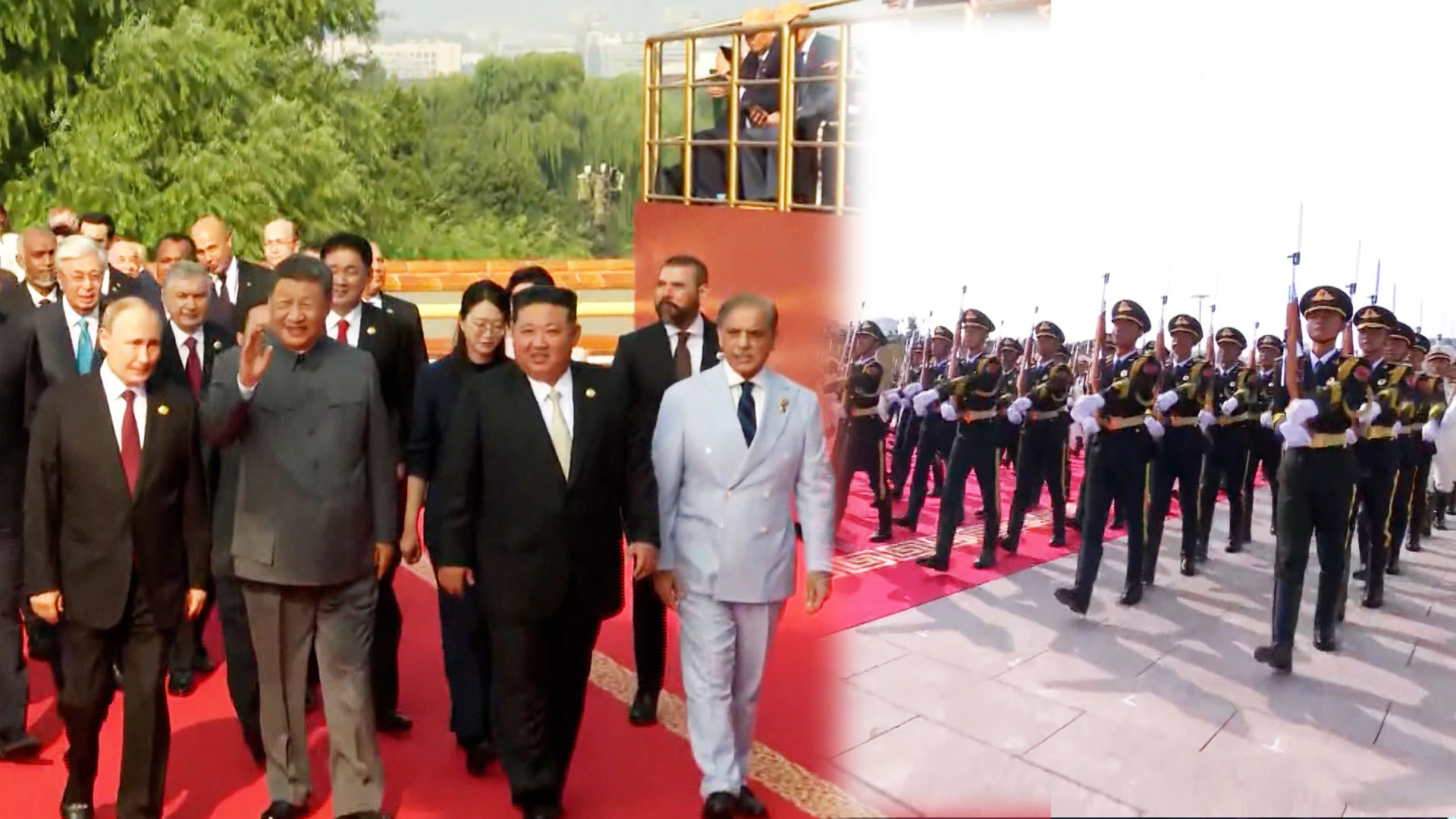
    Pakistan’s presence at China’s Victory Day parade exposed a more profound truth: its value lies not in strategic brilliance but in being a pawn for both Washington and Beijing. Far from balancing, Islamabad survives as a tool in the great power game against India.

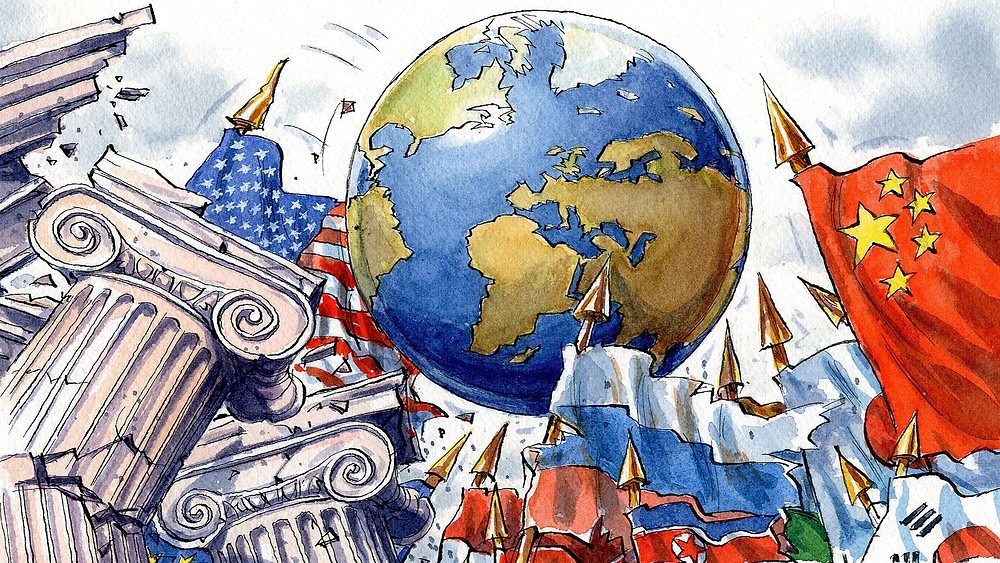
    China’s recent Victory Day parade on September 3, 2025, was more than a ceremonial display; it was a calculated act of strategic signalling to the West. By showcasing its formidable military hardware and hosting close allies such as Russia’s Vladimir Putin and North Korea’s Kim Jong-un, Beijing sought to project its emergence as a great power, much as it did during the 2008 Olympics. By bringing these leaders together, China signalled not only unity but also the contours of an emerging alternative world order that challenges Western dominance.

    The parade sent “chill waves” across Western capitals, with even Donald Trump admitting that he closely followed the event. On social media, he sardonically addressed China: “Please give my warmest regards to Vladimir Putin and Kim Jong Un, as you conspire against the United States of America.” On September 5, 2025, he further voiced his frustration, declaring that the U.S. had “lost India and Russia to deepest, darkest China,” a remark that reflected Washington’s growing unease over Beijing’s expanding influence.

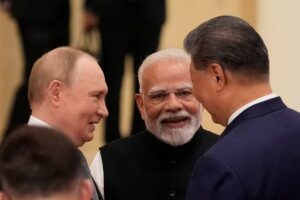
    India, notably absent from China’s Victory Day parade on September 3, 2025, made its own strategic moves. Prime Minister Narendra Modi visited Japan on August 29–30, ahead of the Shanghai Cooperation Organisation (SCO) summit in Tianjin on August 31–September 1. By going to Tokyo first and then to Tianjin, Modi signalled to the West that India continues to prioritise its commitments in the Indo-Pacific, while also reminding Beijing that New Delhi remains open to engagement. During the SCO summit, Modi’s remark that India’s engagement with China “should not be seen through third-country lenses” was intended to reassure the West of India’s balancing strategy.

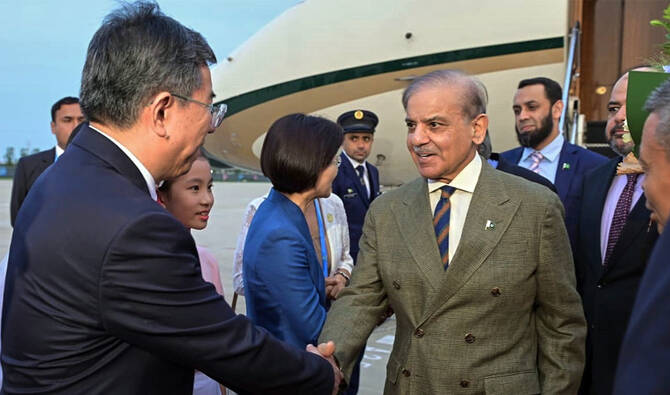
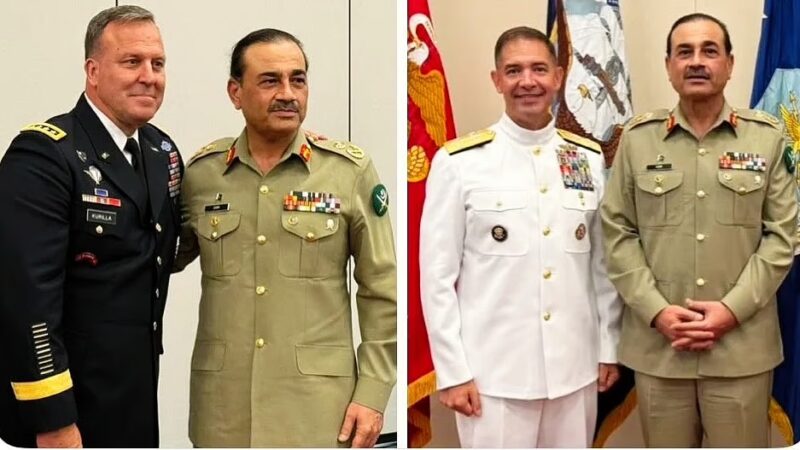
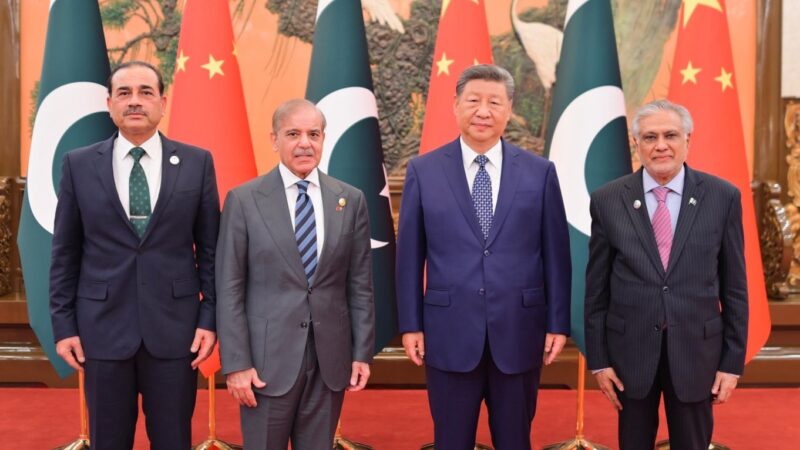
    Yet, amid this choreography of great powers, one country’s presence at the Victory Day parade raised eyebrows: Pakistan. Prime Minister Shehbaz Sharif stood alongside leaders who openly challenge the Western-led order—figures the West often labels as part of an “axis of evil”—despite Pakistan being nominally allied with the United States. What was even more surprising was the silence of Washington and its partners. Had it been India’s leader at the parade, the Western outcry would have been deafening. But when Pakistan did it, no questions were asked. Why this extraordinary tolerance?

    The explanation lies not in Pakistan’s own strategic brilliance. Unlike India, Pakistan lacks genuine strategic agency or independent decision-making capacity. It has long been dependent on external patrons and remains heavily constrained by domestic crises. The narrative advanced by some strategic experts that Islamabad is engaged in a masterful balancing act between Washington and Beijing is misleading. Instead, both the U.S. and China tolerate Pakistan’s duplicity because of its enduring strategic utility against India.

    Washington knows Pakistan’s record all too well. During the War on Terror, Islamabad received over $33 billion in U.S. aid while simultaneously providing sanctuary to Taliban leaders. U.S. officials, including President Trump, repeatedly acknowledged this duplicity. In a tweet on January 1, 2018, Trump stated: ‘The United States has foolishly given Pakistan more than 33 billion dollars in aid over the last 15 years, and they have given us nothing but lies & deceit, thinking of our leaders as fools. They give safe haven to the terrorists we hunt in Afghanistan, with little help. No more!”

    Similarly, Congressman Ted Poe, Chairman of the House Subcommittee on Terrorism, introduced a bill in 2016 calling for Pakistan to be declared a “state sponsor of terrorism,” stating that Pakistan was “not only an untrustworthy ally but has also aided and abetted the enemies of the United States”. Counterterrorism cooperation is, therefore, not the real reason Washington continues to indulge Pakistan. Nor are West Asia’s dynamics or connectivity goals the central factor, though they play a role.

    The real reason is India. Pakistan serves as a pressure valve for Washington to use whenever New Delhi strays from American strategic priorities. Similarly, for Beijing, Pakistan is an indispensable grey-zone tool against India — a reliable proxy that complicates India’s security calculus without requiring direct Chinese involvement. This explains why China continues to describe its relationship with Pakistan as ‘higher than the Himalayas, deeper than the oceans, sweeter than honey, and stronger than steel,’ even though Beijing is fully aware that the “honey” and other lofty adjectives in this partnership are largely rhetorical, given Pakistan’s military establishment has historically maintained close ties with the Pentagon and U.S. defense agencies.

    Recent developments illustrate this pattern. Despite Islamabad striking a minerals deal in Balochistan with the U.S.—an area where China has invested heavily through the China-Pakistan Economic Corridor (CPEC) and even frequently loses its workers to terrorist attacks—Beijing has not retaliated.

    China has invested nearly $60 billion in CPEC projects, including Gwadar Port and associated infrastructure, yet continues to tolerate Pakistan’s parallel engagement with the U.S. Even though just days ago, China exited funding for certain sections of CPEC, such as the Karachi–Rohri stretch of the Main Line-1 railway, the broader corridor remains intact and firmly under Beijing’s control.

    Similarly, Washington has been remarkably quiet about the expansion of CPEC and its recent announcement to extend it into Afghanistan, despite this development directly strengthening Chinese influence in South and Central Asia, which contradicts U.S. national security strategies, including the Indo-Pacific strategy designed to counterbalance China. Imagine if India were to engage China in a similar manner; the Western backlash would be immediate and fierce.

    The silence over Pakistan reveals the underlying logic: both Washington and Beijing find it useful to maintain Islamabad as a strategic lever against India. For China, Pakistan provides military intelligence, operational support, and a constant security distraction for New Delhi, keeping India tied down on its western front. For the U.S., Pakistan is less a partner in counterterrorism than a tool to remind India of the costs of drifting too far from American preferences.

    Thus, Pakistan’s position is not the result of deft balancing or sophisticated statecraft. It is tolerated, even courted, by two rival great powers because of its instrumental value in their respective strategies against India. Far from being an Independent balancer, Pakistan remains a dependent actor whose importance derives almost entirely from the leverage it provides to others.

    For India, the lesson is clear. The tolerance extended to Pakistan by both Washington and Beijing is not about Islamabad’s capabilities or credibility — both powers know well its history of duplicity. Instead, it reflects the centrality of India in global strategy and the willingness of other powers to use Pakistan as a pawn in their broader geopolitical contest. Recognising this reality is essential for shaping New Delhi’s responses, ensuring that India continues to strengthen its autonomy and strategic weight in the Indo-Pacific and beyond.

    Feature Image Credit: India Today

    Pictures in Text: www.arabnews.com, www.nationalheraldindia.com, www.deccanherald.com

  • 80 Years of Lies: The US Finally Admits it knew it didn’t Need to Bomb Hiroshima and Nagasaki

    80 Years of Lies: The US Finally Admits it knew it didn’t Need to Bomb Hiroshima and Nagasaki

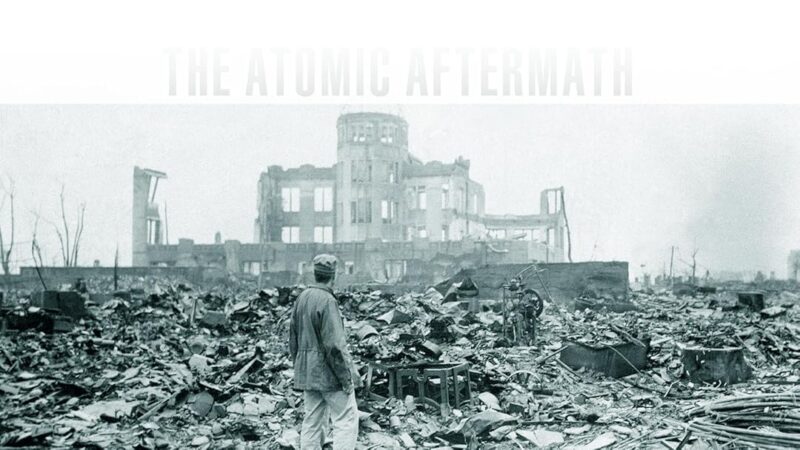
    As we commemorate the 80th anniversary of the Hiroshima and Nagasaki atomic bombings, the world is drifting as close to another nuclear confrontation as it has been in decades.

    With Israeli and American attacks on Iranian nuclear energy sites, India and Pakistan going to war in May, and escalating violence between Russia and NATO-backed forces in Ukraine, the shadow of another nuclear war looms large over daily life.

    EIGHTY YEARS OF LIES

    The dropping of the atomic bomb on Japan was a power play, intended to strike fear into the hearts of world leaders, especially in the Soviet Union and China.

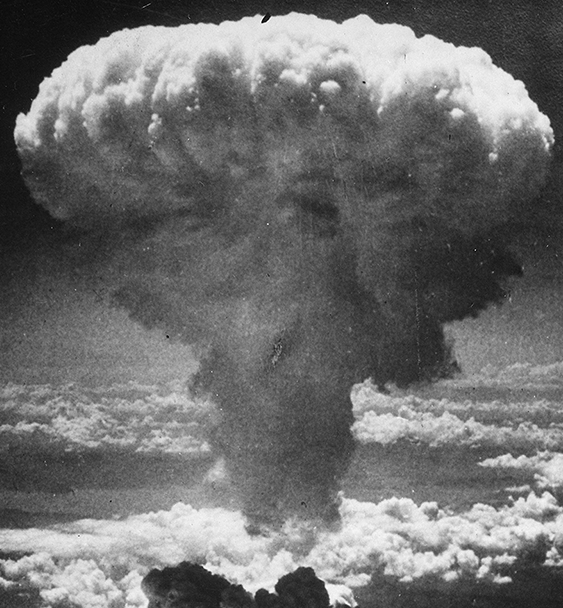
    The United States remains the only nation to have dropped an atomic bomb in anger. While the dates of August 6 and August 9, 1945, are seared into the popular conscience of all Japanese people, those days hold far less salience in American society.

    When discussed at all in the U.S., this dark chapter in human history is usually presented as a necessary evil, or even a day of liberation—an event that saved hundreds of thousands of lives, prevented the need for an invasion of Japan, and ended the Second World War early. This, however, could not be further from the truth.

    American generals and war planners agreed that Japan was on the point of collapse, and had, for weeks, been attempting to negotiate a surrender. The decision, then, to incinerate hundreds of thousands of Japanese civilians was one taken to project American power across the world, and to stymie the rise of the Soviet Union.

    “It always appeared to us that, atomic bomb or no atomic bomb, the Japanese were already on the verge of collapse,” General Henry Arnold, Commanding General of the U.S. Army Air Forces in 1945, wrote in his 1949 memoirs.

    “It is my opinion that the use of this barbarous weapon at Hiroshima and Nagasaki was of no material assistance in our war against Japan. The Japanese were already defeated and ready to surrender. My own feeling was that in being the first to use it, we had adopted an ethical standard common to the barbarians of the Dark Ages” – Gen Hap Arnold

    Arnold was far from alone in this assessment. Indeed, Fleet Admiral William Leahy, the Navy’s highest-ranking officer during World War II, bitterly condemned the United States for its decision and compared his own country to the most savage regimes in world history.

    As he wrote in 1950:

    “It is my opinion that the use of this barbarous weapon at Hiroshima and Nagasaki was of no material assistance in our war against Japan. The Japanese were already defeated and ready to surrender. My own feeling was that in being the first to use it, we had adopted an ethical standard common to the barbarians of the Dark Ages.”

    By 1945, Japan had been militarily and economically exhausted. Losing key allies Italy in 1943 and Germany by May 1945, and facing the immediate prospect of an all-out Soviet invasion of Japan, the country’s leaders were frantically pursuing peace negotiations. Their only real condition appeared to be that they wished to keep as a figurehead the emperor—a position that, by some accounts, dates back more than 2,600 years.

    “I am convinced,” former President Herbert Hoover wrote to his successor, Harry S. Truman, “if you, as President, will make a shortwave broadcast to the people of Japan—tell them they can have their emperor if they surrender, that it will not mean unconditional surrender except for the militarists—you’ll get a peace in Japan—you’ll have both wars over.”

    Many of Truman’s closest advisors told him the same thing. “I am absolutely convinced that had we said they could keep the emperor, together with the threat of an atomic bomb, they would have accepted, and we would never have had to drop the bomb,” said John McCloy, Truman’s Assistant Secretary of War.

    “The war might have ended weeks earlier,” he said, “If the United States had agreed, as it later did anyway, to the retention of the institution of the emperor.” – Gen Douglas MacArthur

    Nevertheless, Truman initially took an absolutist position, refusing to hear any Japanese negotiating caveats. This stance, according to General Douglas MacArthur, Commander of Allied Forces in the Pacific, actually lengthened the war. “The war might have ended weeks earlier,” he said, “If the United States had agreed, as it later did anyway, to the retention of the institution of the emperor.” Truman, however, dropped two bombs, then reversed his position on the emperor, in order to stop Japanese society from falling apart.

    At that point in the war, however, the United States was emerging as the sole global superpower and enjoyed an unprecedented position of influence. The dropping of the atomic bomb on Japan underscored this; it was a power play, intended to strike fear into the hearts of world leaders, especially in the Soviet Union and China.

    FIRST JAPAN, THEN THE WORLD

    “Japan was already defeated, and dropping the bomb was completely unnecessary…[it was] no longer mandatory as a measure to save American lives. It was my belief that Japan was, at this very moment, seeking a way to surrender with a minimum loss of face.” – President Ike Eisenhower

    Hiroshima and Nagasaki drastically curbed the U.S.S.R.’s ambitions in Japan. Joseph Stalin’s forces had invaded and permanently annexed Sakhalin Island in 1945 and planned to occupy Hokkaido, Japan’s second-largest island. The move likely prevented the island nation from coming under the Soviet sphere of influence.

    To this day, Japan remains deeply tied to the U.S., economically, politically, and militarily. There are around 60,000 U.S. troops in Japan, spread across 120 military bases.

    Many in Truman’s administration wished to use the atom bomb against the Soviet Union as well. President Truman, however, worried that the destruction of Moscow would lead the Red Army to invade and destroy Western Europe as a response. As such, he decided to wait until the U.S. had enough warheads to completely destroy the U.S.S.R. and its military in one fell swoop.

    War planners estimated this figure to be around 400. To that end, Truman ordered the immediate ramping up of production. Such a strike, we now know, would have caused a nuclear winter that would have permanently ended all organised life on Earth.

    The decision to destroy Russia was met with stiff opposition among the American scientific community. It is now widely believed that Manhattan Project scientists, including Robert J. Oppenheimer himself, passed nuclear secrets to Moscow in an effort to speed up their nuclear project and develop a deterrent to halt this doomsday scenario. This part of history, however, was left out of the 2023 biopic movie.

    By 1949, the U.S.S.R. was able to produce a credible nuclear deterrent before the U.S. had produced sufficient quantities for an all-out attack, thus ending the threat and bringing the world into the era of mutually assured destruction.

    “Certainly prior to 31 December 1945, and in all probability prior to 1 November 1945, Japan would have surrendered even if the atomic bombs had not been dropped, even if Russia had not entered the war, and even if no invasion had been planned or contemplated,” concluded a 1946 report from the U.S. Strategic Bombing Survey.

    Dwight D. Eisenhower, Supreme Allied Commander in Europe and future president, was of the same opinion, stating that:

    “Japan was already defeated, and dropping the bomb was completely unnecessary…[it was] no longer mandatory as a measure to save American lives. It was my belief that Japan was, at this very moment, seeking a way to surrender with a minimum loss of face.”

    Nevertheless, both Truman and Eisenhower publicly toyed with the idea of using nuclear weapons against China to stop the rise of Communism and to defend their client regime in Taiwan. It was only the development of a Chinese warhead in 1964 that led to the end of the danger, and, ultimately, the détente era of good relations between the two powers that lasted until President Obama’s Pivot to Asia.

    Ultimately, then, the people of Japan were the collateral damage in a giant U.S. attempt to project its power worldwide. As Brigadier General Carer Clarke, head of U.S. intelligence on Japan wrote, “When we didn’t need to do it, and we knew we didn’t need to do it, and they knew that we knew we didn’t need to do it, we used them [Japanese citizens] as an experiment for two atomic bombs.”

    TIPTOEING CLOSER TO ARMAGEDDON

    The danger of nuclear weapons is far from over. Today, Israel and the United States – two nations with atomic weaponry – attack Iranian nuclear facilities. Yet their continued, hyper-aggressive actions against their foes only suggest to other countries that, unless they too possess weapons of mass destruction, they will not be safe from attack. North Korea, a country with a conventional and nuclear deterrent, faces no such air strikes from the U.S. or its allies. These actions, therefore, will likely result in more nations pursuing nuclear ambitions.

    Earlier this year, India and Pakistan (two more nuclear-armed states) came into open conflict thanks to disputes over terrorism and Jammu and Kashmir. Many influential individuals on both sides of the border were demanding their respective sides launch their nukes – a decision that could also spell the end of organised human life. Thankfully, cooler heads prevailed.

    Meanwhile, the war in Ukraine continues, with NATO forces urging President Zelensky to up the ante. Earlier this month, President Trump himself reportedly encouraged the Ukrainian leader to use his Western-made weapons to strike Moscow.

    It is precisely actions such as these that led the Bulletin of the Atomic Scientists to move its famous Doomsday Clock to 89 seconds to midnight, the closest the world has ever been to catastrophe.

    “The war in Ukraine, now in its third year, looms over the world; the conflict could become nuclear at any moment because of a rash decision or through accident or miscalculation,” they wrote in their explanation, adding that conflicts in Asia could spiral out of control into a wider war at any point, and that nuclear powers are updating and expanding their arsenals.

    The Pentagon, too, is recruiting Elon Musk to help it build what it calls an American Iron Dome. While this move is couched in defensive language, such a system – if successful – would grant the U.S. the ability to launch nuclear attacks anywhere in the world without having to worry about the consequences of a similar response.

    Thus, as we look back at the horrors of Hiroshima and Nagasaki 80 years ago, we must understand that not only were they entirely avoidable, but that we are now closer to a catastrophic nuclear confrontation than many people realise.


    This article was published earlier in MintPress News and is republished under a Creative Commons Attribution-NonCommercial-ShareAlike 3.0 International License.

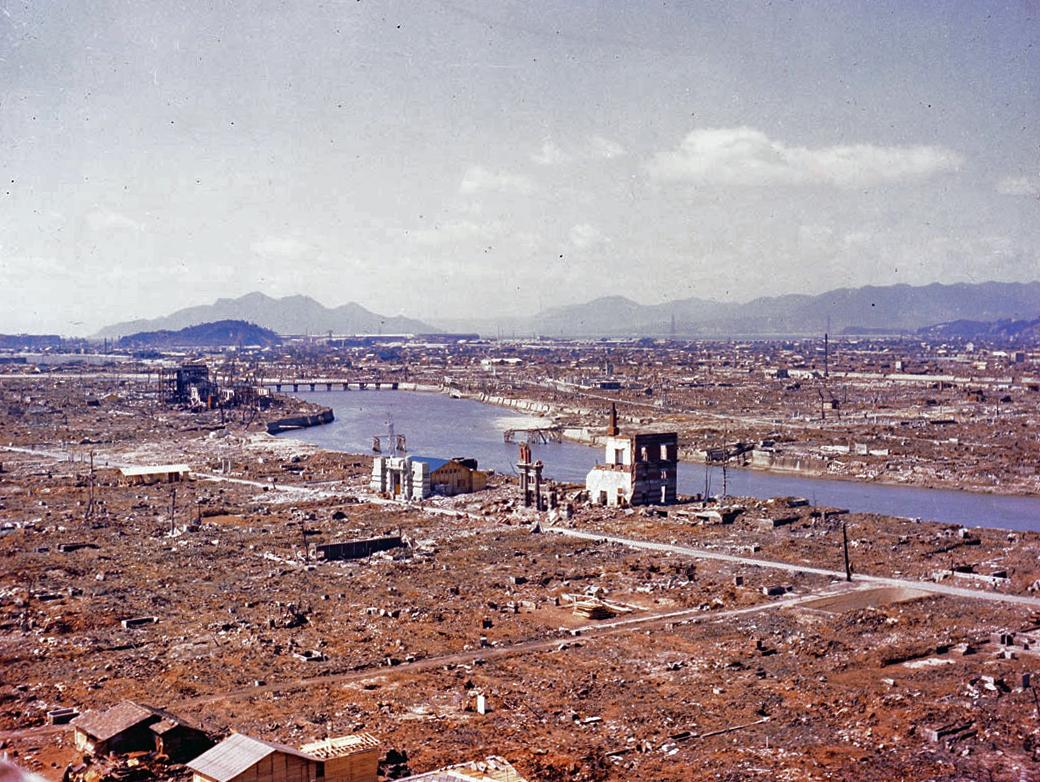
    Feature Image: Hiroshima, several months after the atomic bombing. Air Force photo from national archives nsarchive.gwu.edu


  • A P J Abdul Kalam – People’s President

    A P J Abdul Kalam – People’s President

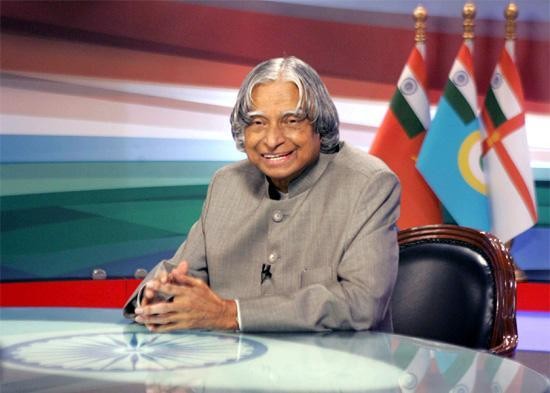
    The country remembers President A P J Abdul Kalam, the people’s president on his 10th death anniversary. APJ Abdul Kalam captured the imagination of young people like no other president had before. He made us believe in ourselves and think the sky was never too high. He dreamed of things that never were and wondered why not? As a nation, we constantly come up short, but that did not deter Kalam. He made it his life mission to exhort the young to greatness. India’s young will miss him.
    July 27th is the death anniversary of former President APJ ABDUL KALAM. He died this day seven years ago. He died on his feet while delivering a lecture at the Indian Institute of Management, Shillong, exhorting young people to a new vision of India to the end.
    Avul Pakir Jainulabdeen Abdul Kalam had little in common with his predecessors. He did not have the educational attainments of Radhakrishnan, Zakir Hussain and Sharma, who were genuine PhDs from top-notch institutions. Kalam just had a science degree and an aeronautical engineering diploma from Madras University. He did not have the political training of Presidents like Rajendra Prasad, VV Giri and Pranab Mukherjee, whose political and constitutional understanding was tested in politically uncertain times. His entire professional lifetime was spent in the Defence Research and Development Organisation (DRDO).
    The DRDO has not exactly distinguished itself in any great way. The sum of its failures is far greater than its achievements. Some its failures are most notable. The Arjun main battle tank is still bumbling along. The nuclear submarine project, delivered decades too late, still faces uncertainty. The Light Combat Aircraft is just the late combat aircraft; so late that it will be obsolete when it enters service in the next decade. Even the 5.56 mm basic infantry combat weapon is a bit of a dud, requiring the frequent import of AK-47 rifles, much to the delight of Delhi’s arms agents.
    Kalam had earned a reputation as the father of India’s missile program. That might be so, but the offspring are nothing worth writing home about. Our missile program is so far behind times that even the North Koreans, a woebegone and desolate country where people still die of starvation, are ahead of us. Like the Pakistanis, even we would have been better off buying North Korean missiles like the Nodong (Pak name Ghauri), like the Pakistanis have. Many also credit Kalam as being the father of India’s nuclear weapons program. That program has, mercifully, had little to do with the DRDO and is almost entirely an Atomic Energy Commission (AEC) show.
    There is much that is admirable about Kalam. He was honest to the core. He was erudite. He knew Sanskrit. He translated the Thirukural from Tamil into English. He was a nationalist with few peers. He only lived for India.
    What then was Kalam’s kamaal? Clearly, Kalam was no Werner von Braun, who designed the Nazi V-1 and V-2 rockets and then led America’s manned flight foray into space with Alan Shepard’s sub-orbital flight. He most certainly is no Kurchatkov, who pioneered the Soviet Union’s nuclear weapons program. But he inspired by his sense of hope and ambition.
    Yet he is clearly among the best of the Presidents we have had, particularly in recent times. I had the pleasure of being invited by him a few times for one-on-one discussions on Bihar, a state with which he was particularly concerned. He publicly asked several times: “How can India move forward, leaving behind Bihar?” There is much that is admirable about Kalam. He was honest to the core. He was erudite. He knew Sanskrit. He translated the Thirukural from Tamil into English. He was a nationalist with few peers. He only lived for India.
    He was also a bachelor and so with no offspring like Zail Singh’s grandson, who shot pigeons in the Rashtrapati Bhavan, or R.Venkatraman’s NRI daughter, who plonked herself there to collect money for her NGO, or like Shankar Dayal Sharma’s grandson, Manu Sharma, who stands convicted of murdering Jessica Lal. The less said for Pratibha Patil, the better. Ramnath Kovind and Draupadi Murmu carry the burden of millennia of oppression and ostracism with quiet dignity, but little more.
    But for a modest man with mostly modest achievements, APJ Abdul Kalam captured the imagination of young people like no other president had before. He made us believe in ourselves and think the sky was never too high. He dreamed of things that never were and wondered why not? As a nation, we constantly come up short, but that did not deter Kalam. He made it his life mission to exhort the young to greatness. India’s young will miss him.
    Opinions expressed are the author’s own.
  • If This Is What Israel Does, Then Israel Shouldn’t Exist

    If This Is What Israel Does, Then Israel Shouldn’t Exist

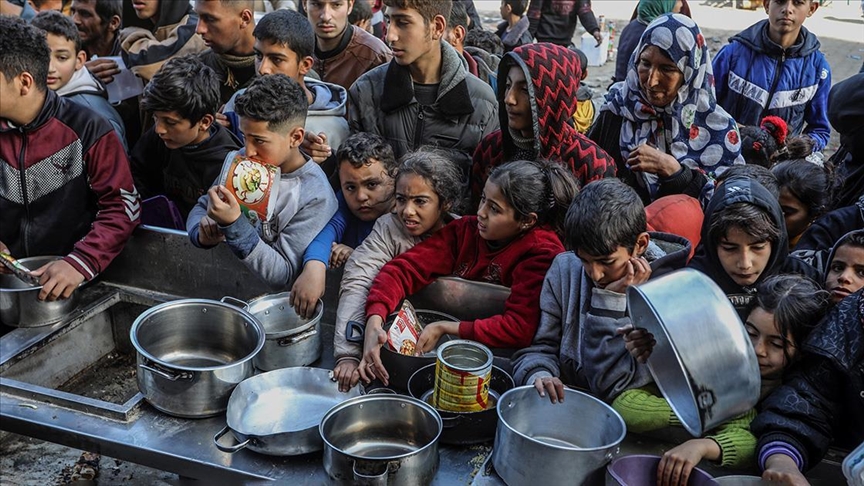
    The world and the UN watch helplessly as Israel executes the worst human rights crimes and genocide through killing, enforced famine, and wanton slaughter of innocent civilians, women, and children of Gaza. This is not war but an explicit slaughter no less than what the Nazis carried out in World War 2. Gaza has seen the largest number of journalists and aid workers killed in history, the largest number of children killed n history, and more bombs dropped in a small piece of land than in all of World War 2. Caitlin Johnstone raises a very pertinent question — How can a genocidal and apartheid  state be allowed to exist?


    Gaza’s youngest social media influencer has been killed by Israeli forces after touching tens of thousands of lives with her stories of survival in the besieged Palestinian territory. Her name was Yaqeen Hammad. She was 11 years old.

    Israeli forces fired upon starving civilians in Gaza on Tuesday when they rushed inside a facility holding aid, reportedly killing three and wounding dozens more. The facility was operated by the Gaza Humanitarian Foundation, the latest US-Israeli scheme to bypass normal UN aid distribution and lure Gaza’s population into specific concentrated locations.

    A new report from the Associated Press confirms that Israeli forces have been using Palestinians as human shields in Gaza as a matter of policy. This is actually using human shields in the very real sense of deliberately forcing civilians between yourself and potential enemy fire, not in the fake sense of being somewhere near civilians as per the made-up “human shields” narrative that Israel uses to blame its daily massacres on Hamas.

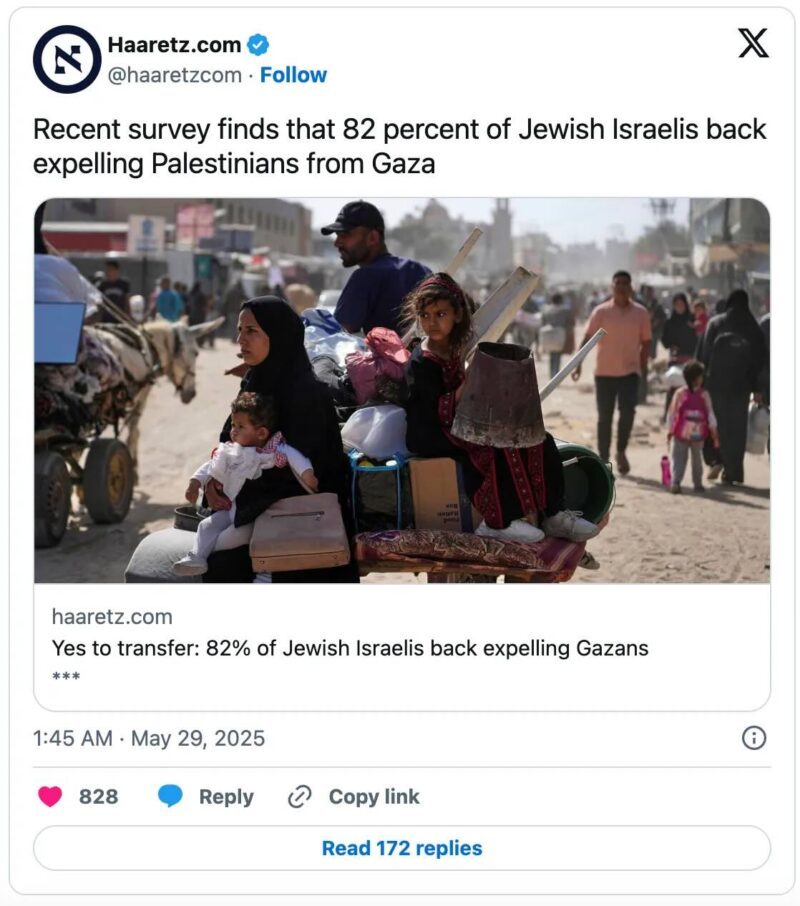
    A survey of Jewish Israelis conducted by an Israeli polling firm has found that 82 percent of respondents support the total ethnic cleansing of Gaza, and 47 percent believe Israeli forces should kill every man, woman and child in every city they capture there.

    Haaretz reports on the poll’s findings:

    “Sixty-five percent said they believed in the existence of a modern-day incarnation of Amalek, the Israelite biblical enemy whom God commanded to wipe out in Deuteronomy 25:19. Among those believers, 93 percent said the commandment to erase Amalek’s memory remains relevant today’.

    Haaretz.com

    These are just a few reports from the past few days, on top of all the other staggeringly evil things that Israel has been doing this whole time.

    If this is Israel, then Israel should not exist. If what we are seeing in Gaza is what it means for Israel to exist, then it shouldn’t.

    People scream bloody murder when you say this, but it shouldn’t be a controversial position. I’m not saying Jews shouldn’t exist, I’m saying a genocidal apartheid state should not exist. A state is an artificial construct of the human mind, held together by human actions. If the actions we are witnessing in Gaza are the product of the artificial construct of the Israeli state, then that artificial construct should be dismantled, and those actions should cease.

    I would say this about any other man-made construct that is doing the things Israel is doing. If some scientists built a robot that spends all day every day massacring children, then I would say the robot should be unmade. If you drew a Star of David on the robot’s head, it wouldn’t suddenly make me an evil antisemite to say that the child-murdering robot should be dismantled.

    Dismantling the apartheid state of Israel would mean granting everyone citizenship and equal rights, allowing right of return, denazifying apartheid culture, paying extensive reparations, and righting the wrongs of the past. You could still call what remains “Israel” if you wanted to, but it would be nothing like the state that presently exists under that name.

    Would this upset the feelings of some Jewish people? Yes. Would it inconvenience the lives of some Jewish people? Certainly. But that would be infinitely preferable to the daily massacres, genocidal atrocities and reckless regional warmongering we are witnessing from the state of Israel. Advocating the end of this genocidal state doesn’t make someone a monster, advocating its continuation does. The only way to believe otherwise is to take it as a given that Palestinian lives are worth less than Jewish feelings.

    Israel is currently presenting nonstop arguments for its own cessation. Every video that comes out showing Israelis acting in monstrous ways and innocent Palestinians being murdered, tortured and abused in the most horrific ways imaginable is an argument for which there is no verbal counter-argument. Every day that goes by, the genocidal apartheid state of Israel is proving to the world that it should not exist.

    Feature Image Credit:Israel using starvation as means of war to drive people out of Gaza: Head of Rights monitor  aa.com.tr

    Image in article: 11-year old Yaqeen Hammad – independent.co.uk

  • Study Abroad Surge: Why More Indian Students are Choosing Foreign Universities over Domestic Education

    Study Abroad Surge: Why More Indian Students are Choosing Foreign Universities over Domestic Education

    For decades, our education sector has been underfunded and has had restrictions; millions of brilliant minds have left the country to pursue quality education.

    Introduction

     The number of Indian students moving abroad for higher education has increased significantly in the past decade, and the number of students studying overseas reached over 1.3 million by 2024. The most popular countries are the USA, Canada, the UK, Australia, and Germany, and each has different study options, worldwide recognition, and post-study work authorisations.

    This holds true despite the plethora of premier Indian institutions such as the IITs, IIMs, and AIIMS, as it mirrors the increased demand for international qualifications, load-bearing or multidisciplinary education, and better career opportunities. This migration has several implications. Economically, we export the skills and capacities of our family units by sending many overseas for education. Meanwhile, the information and remittances of returnees from the diaspora can have a beneficial impact on India’s economy.

    However, the ongoing “brain drain” could cripple India’s knowledge pool, particularly in sensitive areas like healthcare, research, and technology. This drain also pushes Indian institutions to upgrade infrastructure, curricula, and global competition. There is only so much national gain in overseas exposure; the actual long-term national problem is how to value, sell, and buy global aspirations and hold on to skilled talent at home.

    Quality, Opportunities and Global Exposure

    Indian students are now opting to study in foreign universities because of the quality of education, the global accreditation they provide, and the fact that they will be exposed to different cultures and lifestyles. Universities in countries like the US, UK, Canada, Australia, and Germany offer top-class education, have state-of-the-art research facilities, and provide students with experience and learning that is more in line with what is required in the industries of today.

    Many Indian students go for niche fields such as artificial intelligence, space policy, and international law where Indian colleges and universities do not have much infrastructure or faculties to provide proper guidance. For example, in the case of medical students, many students opt for foreign countries such as Russia, Ukraine, and the Philippines to do MBBS as the cost is relatively less, there is less competition like the NEET exam in India, and the chances of getting a medical seat are much easier.

    Career Prospects and Immigration Incentives

    The global labour market, especially the STEM and healthcare sectors, attracts Indian students who further look to get a post-study visa, and many may eventually immigrate to a foreign country. Moreover, countries such as Canada and Australia are actively seeking skilled immigrants from other countries; thus, there is a high demand for foreign students. Students are attracted by the opportunities to earn high salaries, develop their careers, and gain international exposure, which are typically difficult to find in India due to a lack of research funds, local political classes, and a disconnect between studies and market requirements.

    In addition, many of the best Indian students may not even want to work in India because they have suffered through the Indian education system and do not wish to experience the same issues when working. Consequently, they prefer to work in foreign countries. Despite having world-class institutions such as the Indian Institutes of Technology (IITs), Indian Institute of Management (IIM), and the All-India Institute of Medical Sciences (AIIMS), Indian students prefer going abroad for higher education.

    National Education Policy (NEP)

    The National Education Policy 2020 is important for India, as it aims to make our education system global and imbibe an indigenous knowledge system that can benefit the local economy. India has taken different approaches by globalising through international collaborations, dual degree programs, and student exchanges, whereby Indian students can study abroad for a semester, and vice versa.

    The policy also discusses increasing research and innovation by increasing funding, providing more autonomy to educational institutions, and becoming more interdisciplinary. India is considered to be underdeveloped in these areas. However, it is unclear whether this is the right time to introduce these initiatives and whether it is sufficient. For decades, our education sector has been underfunded and has had restrictions; millions of brilliant minds have left the country to pursue quality education.

    The NEP aims to reverse this situation. But, unless the policy is implemented with a difference; unless the policy is implemented in all regions, taking into account all socio-economic groups, the reforms will be too late. Education should have been the fundamental building block of our nation post-independence, but we left it as a lesser priority. NEP 2020 may bring hope, but the change will depend on our political will and weeding out vested interests to provide quality education to every Indian, while also being global at the same time, which is important.

    Characteristics Traditional NEP 2020
    Structure Traditional Academic learning and Teaching New updated academic structure that differentiates curricular and extracurricular activities
    Phases 2 Phases 4 Phases
    Age Group Between 6 and 18 years Between 3 and 18 years
    Duration Complete 12 years of schooling 15 years (3 years for pre-schooling and 12 years for complete schooling)
    Focus To pass the knowledge from the previous generation to the next. Universal access to school education for all at all levels

    Comparison of traditional education policy and NEP 2020.

    Bringing back talent home

    India has provided many prestigious scholarships in academic education. They include the Inlaks Scholarship, Commonwealth Scholarship, Chevening Awards, Fulbright-Nehru Fellowships, and Rhodes Scholarship. This enables beneficiaries to study at the world’s best institutions, as well as imbibe leadership and global values.

    To encourage their return and contribution to nation-building, India can introduce a policy where recipients of such scholarships who come back and work in academia, research, or public service may get benefits such as fast-track jobs, grants for research, tax incentives, and the like. This helps not only in cutting down the brain drain but also in ensuring that the knowledge and expertise gained from the world’s best institutions are applied in the country.

    Conclusion

    The retention of talent and India’s education deficit can only be addressed by a strategy that aligns education with foreign policy. While the new education policy opens its door to internationalisation, India lacks a comprehensive agreement on the mobility of students between it and other countries like the EU. Furthermore, the Ministry of Education and the MEA are not in complete alignment.

    For instance, the UK and Australia use educational diplomacy to attract Indian students. Private universities overseas are preparing for the new wave of Indian students by attracting them with extensive marketing, making agreements with Indian agencies, and in the case of a couple of universities, setting up shops in Gujarat and Hyderabad to allow Indian students to acquire foreign degrees without leaving the country.

    Nonetheless, the Indian government’s reaction to the exodus has been more reactive than proactive. The administration has taken measures, including expanding scholarships, making international collaborations easier, and starting the Study in India program, but they are typically small scale. The rise in the outflow is an indication of the government’s failure to provide sufficient quality seats, research opportunities, and a curriculum that emphasises employment. If India does not make a significant investment and collaborates with other ministries, it risks becoming a feeder nation rather than a scientific hub. A proactive education-foreign policy interface is required to retain talent and deepen India’s global academic influence.


  • Kashmir at a Crossroads: Pahalgam Terror Attack Amid Democratic Gains

    Kashmir at a Crossroads: Pahalgam Terror Attack Amid Democratic Gains

    The recent deadly terror attack on April 22 in Phalgham, near the Baisaran Valley, in which 26 innocent people were killed and more than a dozen others injured, has served as a stark reminder that external threats—particularly Pakistan-backed terrorism—remain a grave challenge to the region’s hard-won stability.

    Jammu and Kashmir is witnessing a remarkable and unprecedented political shift. In a development that would have seemed unimaginable a few years ago, many separatist groups, historically associated with anti-India activities, have abandoned their secessionist stance and re-entered the democratic mainstream. This transformation is not sudden—it reflects years of sustained government outreach, targeted policy reforms, and a persistent invitation to dialogue. Together, these efforts have fostered an environment of relative peace, reshaping public sentiment and political engagement across the valley. However, the recent deadly terror attack on April 22 in Phalgham, near the Baisaran Valley, in which 26 innocent people were killed and more than a dozen others injured, has served as a stark reminder that external threats—particularly Pakistan-backed terrorism—remain a grave challenge to the region’s hard-won stability.

    In a significant turn of events in April 2024, key factions of the Hurriyat Conference, such as the J&K Tahreeqi Isteqlal and J&K Tahreek-l-Istiqamat, publicly renounced separatism and embraced the democratic process. Their decision marks a critical shift in the political discourse of the region, challenging long-standing narratives of alienation and conflict. Union Home Minister Amit Shah hailed this move, declaring, “Under the Modi government, separatism is breathing its last, and the triumph of unity is echoing across Kashmir.” The reintegration of these groups into the democratic fold indicates the success of New Delhi’s long-term outreach and governance initiatives, as well as the strengthening of its position on the global stage regarding Jammu & Kashmir.

    the candidacy of individuals such as Sayar Ahmad Reshi (Kulgam), Aijaz Ahmad Mir (Zainapora), Talat Majeed (Pulwama), Mohammad Sikandar Malik (Bandipora), and Farooq Ahmad Genie (Beerwah) sent a powerful message—both domestically and internationally—of a growing trust in democratic processes and a shift away from violence.

    The 2024 Assembly elections further illustrated this transformation. Over 25 former militants, separatists, and members of the banned Jamaat-e-Islami contested as independent candidates. Although none of them secured a win, the candidacy of individuals such as Sayar Ahmad Reshi (Kulgam), Aijaz Ahmad Mir (Zainapora), Talat Majeed (Pulwama), Mohammad Sikandar Malik (Bandipora), and Farooq Ahmad Genie (Beerwah) sent a powerful message—both domestically and internationally—of a growing trust in democratic processes and a shift away from violence.

    Central to this transformation is the 2019 abrogation of Article 370. While Article 370 did not cause terrorism, it fostered a psychological and political sense of separateness. Its existence reinforced a feeling of isolation, suggesting that Jammu and Kashmir was distinct from the rest of India and that its political destiny remained unsettled, thereby encouraging subnational identity and sentiments of exclusion. Local political elites often exploited this narrative of exclusivity and exceptionalism for their political objectives, constantly telling people that Jammu and Kashmir had a “special relationship” with the Union of India, having its own constitution, flag, and national anthem. This exacerbated the sense of alienation and fueled anti-India sentiment.

    Article 370 served as a protective shield for corrupt politicians and bureaucrats from central investigation agencies, as it limited the powers of these agencies, allowing corruption to flourish unabatedly. On the global stage, Article 370 was utilised as a geostrategic tool against India.

    Moreover, domestically, the real benefits of Article 370 never reached the common people. Instead, it supported the interests of a few influential political families, such as the likes of the Muftis and the Abdullahs, etc., while the ordinary citizen continued to face hardship and underdevelopment. Additionally, Article 370 served as a protective shield for corrupt politicians and bureaucrats from central investigation agencies, as it limited the powers of these agencies, allowing corruption to flourish unabatedly. On the global stage, Article 370 was utilised as a geostrategic tool against India. References to Jammu & Kashmir’s semi-autonomous status and its separate flag and constitution created a misleading impression internationally—that it was some foreign territory under Indian occupation. Many significant powers often utilised this narrative to exert pressure on India and further their geopolitical objectives.

    Since its removal, the region has witnessed measurable progress. Terrorist incidents have plummeted by 81%—from 228 in 2018 to just 43 in 2023. Civilian and security force casualties have similarly declined. Stone pelting, once a near-daily occurrence, has disappeared entirely, with 2,654 such incidents in 2010 dropping to zero by 2023. Hartals and forced shutdowns have become a thing of the past. Educational outcomes have also improved. The number of colleges has risen from 94 to 147. Prestigious institutions such as IIT, IIM, and AIIMS have been established. Medical colleges increased from four to eleven, and the region now boasts 15 nursing colleges. Medical seat availability has grown from 500 to over 1,300.

    The region’s Gross State Domestic Product (GSDP) has more than doubled—from ₹1 lakh crore in 2014–15 to ₹2.27 lakh crore in 2022–23. In tourism, a record 2.36 crore visitors arrived in 2024, including over 65,000 foreign tourists.

    Economically, Jammu and Kashmir is undergoing a boom. Investments surged from ₹297 crore in 2019–20 to ₹2,153 crore in 2022–23, with another ₹6,000 crore in the pipeline. The region’s Gross State Domestic Product (GSDP) has more than doubled—from ₹1 lakh crore in 2014–15 to ₹2.27 lakh crore in 2022–23. In tourism, a record 2.36 crore visitors arrived in 2024, including over 65,000 foreign tourists. Global events like the G20 Tourism Working Group meeting and the Legends League Cricket (LLC) have put Jammu and Kashmir on the international map. Infrastructure development is progressing rapidly. Mega projects such as the USBRL Tunnel 50, Z-Morh Tunnel, and the iconic Chenab Rail Bridge—the highest in the world—are transforming connectivity. The Vande Bharat train now connects Katra with Srinagar. Symbolising civic normalcy, the Muharram procession returned to Srinagar in 2024 after a 34-year ban.

    However, the recent Pahalgam terror attack is a stark reminder that Pakistan continues to act as the primary external disruptor of peace and progress in Jammu & Kashmir. Despite the undeniable local yearning for peace and development, Pakistan’s strategic objective to “bleed India with a thousand cuts” remains unchanged. Its support for terrorism and infiltration undermines the region’s stability.

    Pakistan’s proxy war not only attempts to destabilise India but also hampers the development trajectory of Jammu & Kashmir, which had been flourishing in education, infrastructure, and economic growth.

    The attack, which targeted civilians and spread fear among tourists, has had immediate consequences: many tourists have cancelled bookings, impacting the Valley’s booming tourism sector. It reflects how Pakistan’s proxy war not only attempts to destabilise India but also hampers the development trajectory of Jammu & Kashmir, which had been flourishing in education, infrastructure, and economic growth.

    While local recruitment into militancy has declined and radicalisation has significantly reduced, Pakistan’s designs persist. Security agencies have reported the presence of 35–40 foreign terrorists operating in small groups in the Jammu division, with recent attacks in Reasi, Kathua, and Kishtwar proving that infiltration is now affecting eight out of ten districts. New Delhi must now recalibrate its approach. While the ecosystem-based strategy addressing governance, development, and security has yielded positive outcomes, the Pakistan problem requires a distinct strategic lens. Counterterrorism efforts must be intensified, international diplomacy must expose Pakistan’s continued support for terror, and internal resilience must be strengthened to protect gains made post-Article 370.

    In conclusion, nearly six years after the abrogation of Article 370, Jammu & Kashmir has indeed embarked on a transformative journey. But the road ahead must account for persistent external threats. The people of the region overwhelmingly desire peace, progress, and integration—but Pakistan’s continued interference demands a more robust, strategic, and multidimensional response.

  • Trump and Musk, Canada, Panama and Greenland, an old Story

    Trump and Musk, Canada, Panama and Greenland, an old Story

    Re-elected President Donald Trump has mentioned a possible annexation of the Panama Canal, Canada and Greenland. A crazy project that already appeared on a map, imagined in 1941 by a follower of the technocratic movement. However, it was the French branch of this movement that invented the transhumanism dear to Elon Musk, whose grandfather was responsible for the Canadian branch of the technocratic movement.

    When the technocratic movement considered annexing Greenland, it recalled that it is located on the North American continental shelf and based its decision on the importance of its natural resources. It holds precious rare earth minerals [4], as well as uranium, billions of barrels of oil and vast reserves of natural gas, previously inaccessible but increasingly less so.

    The post-World War II world map, drawn by Maurice Gomberg in 1941. The United States extends from Canada to the Panama Canal and includes Greenland.

    The statements of the re-elected US President Donald Trump, before his inauguration, announcing that he intended to buy Greenland (which he had already compared in 2019 to a “big real estate deal”) and to annex both Canada and the Panama Canal have stunned us. No Western leader had made such statements since the Second World War. The US ruling class instead saw it as a “new frontier”, that is to say, new territories where their country could continue its advance.

    The Danish government, on which Greenland depends, has indicated that it is not for sale, that it is an “autonomous territory” owned only by the Greenlanders. German Chancellor Olaf Scholz called for “the principle of the inviolability of borders to apply to all countries… whether it is a very small one, or a very powerful one.” French Foreign Minister Jean-Noël Barrot commented: “There is no doubt that the European Union would not allow other nations of the world to attack its sovereign borders.” British Foreign Secretary David Lamy said Donald Trump “raises concerns about Russia and China in the Arctic, which concern the national economic security” of the United States. These are “legitimate issues.” Finally, for Italian Prime Minister Giorgia Meloni, these statements are “more of a message intended” to “other great powers rather than hostile claims against these countries. These are two territories where in recent years we have seen increasing activism by China. »

    Canadian Prime Minister Justin Trudeau, who was elected as Pierre Trudeau’s son and therefore as a defender of national independence, turned out to be nothing more than a follower of Washington. He therefore had nothing to say about what seems obvious: by joining the United States, his country would have nothing to lose that it has not already lost and everything else to gain. So he resigned.

    Concerning the Panama Canal, Donald Trump had insinuated that it was operated by the Chinese army. Panamanian President José Raúl Mulino responded: “The canal is not controlled, directly or indirectly, by China, the European Community, the United States or any other power. As a Panamanian, I firmly reject any expression that distorts this reality.”

    We will explain here that these ideas of annexation are not new, but date back to the 1929 crisis, and that they correspond to a coherent ideological corpus defended, until last week, by the only multi-billionaire Elon Musk whom we knew rather as an admirer of the Serbian engineer Nicolas Tesla and as a follower of transhumanism.

    During the “Great Depression”, that is to say the Wall Street crisis and the economic storm that followed, all the American and European elites considered that capitalism, in its then form, was definitively dead. Joseph Stalin proposed the Soviet model as the only answer to the crisis, while Benito Mussolini (former representative of Lenin in Italy) proposed, on the contrary, fascism. But in the United States, a third solution was proposed: technocracy.

    Criticizing the traditional reading of supply and demand, the economist Thorstein Veblen was interested in the motivations of buyers. He showed that the man who can afford leisure actually does so to reinforce his social superiority, and must therefore show it. Leisure is therefore not a form of laziness, but “expresses the unproductive consumption of time”. Consequently, in many situations, contrary to popular belief, “The more the price of a good increases, the more its consumption also increases” (Veblen’s paradox). It is therefore not prices, but group behavior and individual motivations that dictate the economy.

    Thorstein Veblen’s iconoclastic thinking gave birth, among others, to Howard Scott’s technocratic movement. He imagined that power should be given neither to capitalists nor to proletarians, but to technicians.

    This movement was exported to France around polytechnicians, notably the esoteric novelist Raymond Abellio (who founded the sect of which François Mitterrand was a member until his death) and Jean Coutrot, the inventor of transhumanism. Little by little, this movement would have engendered in the occult circles of Philippe Pétain’s regime a secret society, the Synarchy.

    Coutrot’s transhumanism foreshadows Elon Musk’s transhumanism. For Coutrot, it was about using technology to go beyond humanism. For Elon Musk, it is more about using technology to change man.

    This movement of ‘technocracy’ is based on a dominant challenge to the functioning of democracies. It professes not to engage in politics and to find technical solutions to all problems.

    Given this lineage, we understand that any reference to technocracy in France is discredited from the start. However, this movement is based on a dominant challenge to the functioning of democracies. It professes not to engage in politics and to find technical solutions to all problems. Whether we like it or not, it is present in the United States in the belief that it is technical progress that will solve everything.

    The fact remains that the technocratic movement, relying on statistical knowledge from the interwar period, was convinced that the North American continent constituted a unit in terms of mineral resources and industries.

    Joshua Haldeman

    The head of the Canadian branch of the movement, chiropractor Joshua Haldeman, was arrested during the Second World War because he defended neutrality towards Nazi Germany. He was indeed pro-Hitler and anti-Semitic [1]. After the war, he settled in South Africa, seduced by its apartheid regime. His grandson is none other than Elon Musk.

    It should be noted that the multi-billionaire’s position within the Trump administration is increasingly contested from within. Thus Steve Bannon was able to declare to Corriere della Sera: “Elon Musk will not have full access to the White House, he will be like any other person. He is really an evil guy, a very bad guy. I made it a personal thing to fire this guy. Before, because he put money in, I was ready to tolerate it, I am no longer ready to tolerate it.” [2].

    Elon Musk

    Maurice Goldberg envisaged a division of the world by civilizations. The United States would have been expanded to include all of North America, from Canada to the Panama Canal, and to many Pacific and Atlantic islands, including the Antilles, Greenland and Ireland.

    Some members of the technocratic movement gave great importance to the post-World War II world map drawn up in 1941 by an anonymous author signing under the pseudonym Maurice Gomberg. However, he envisaged a division of the world by civilizations. The United States would have been expanded to include all of North America, from Canada to the Panama Canal, and to many Pacific and Atlantic islands, including the Antilles, Greenland and Ireland. Like the French Synarchy, this map has been widely discussed in conspiracy circles. However, according to historian Thomas Morarti, quoted by the Irish press [3], this map resonated with President Franklin D. Roosevelt during his “Four Freedoms speech” (freedom of speech, freedom of religion, freedom from want, and freedom from fear) on January 6, 1941. Along the same lines, in 1946, President Harry Truman proposed that US troops not evacuate Greenland, which they had liberated from the Nazis, but buy it for $100 million.

    In 1951, Denmark authorized the establishment of two large US and NATO military bases in Greenland, at Sondreström and Thule. Elements of the US anti-ballistic system have since been installed there. The treaty authorizing these bases was co-signed by Greenland in 2004, that is, after it had acquired its autonomous status.

    In 1968, a US strategic bomber, which was taking part in a routine operation in the context of the Cold War, accidentally crashed near Thule, contaminating the region with a cloud of enriched uranium. It was learned in 1995 that the Danish government had tacitly authorized the United States, in violation of Danish law, to store nuclear weapons on its soil.

    The purchase of Greenland could, therefore, easily take place without money. All that would be required would be for the Pentagon to ensure the protection of Denmark, thus freeing it from a financial burden.

    Donald Trump Jr. and his team “on vacation” in Greenland.

    Giving reality to what seemed to be just empty talk, Donald Trump Jr., the son of the re-elected president, went on vacation to Greenland. Of course, on board a family plane and surrounded by a group of advisors. He did not meet, officially at least, with any political leader. During this trip, the NGO Patriot Polling conducted a survey. The majority of respondents (57.3%) approved of the idea of joining the United States, while 37.4% were against it. Of those surveyed, 5.3% remained undecided. Following the publication of these results, Múte B. Egede gave a press conference in Copenhagen that even if he had not spoken with the Trumps, he was open to “discussions on what unites us. We are ready to discuss. Cooperation is a question of dialogue. Cooperation means that you will work to find solutions.”

    When the technocratic movement considered annexing Greenland, it recalled that it is located on the North American continental shelf and based its decision on the importance of its natural resources. It holds precious rare earth minerals [4], as well as uranium, billions of barrels of oil and vast reserves of natural gas, previously inaccessible but increasingly less so. Rare earths are now almost exclusively available to China. However, they have become essential for high technology, particularly for Tesla cars. These natural reserves are not exploited due to the traditional opposition of the indigenous populations, the Inuit (88% of the population).

    Today, Greenland is above all a strategic issue. It would allow the United States to control the Northern Sea Route, which is now navigable. Since this is currently controlled by Russia and China, a change in the island’s ownership would transform the geopolitical equation. That is why Dmitry Peskov, the Kremlin spokesman, commented: “The Arctic is a zone of our national interests, our strategic interests. We want to preserve the climate of peace and stability in the Arctic zone. We are watching the rather spectacular development of the situation very closely, but so far, thank God, only at the level of statements.”

    References to the technocratic movement may have nothing to do with Musk and Trump, but they should be kept in mind as events unfold.


    Translated from French by Roger Lagasse’


    References:

    [1The International Conspiracy to Establish a World Dictatorship & The Menace to South Africa, Joshua Haldeman. Cité dans «The World According to Elon Musk’s Grandfather», Jill Lepore, The New Yorker, September 19, 2023.

    [3«United mates of America», Tom Prendeville, Irish Mirror.

    [4Greenland is only mentioned once in the Technocracy Study Course. Rare earths were ignored at the time.


    This article was published earlier in Voltairenet.org
    and is republished under Creative Commons (license CC-BY-NC-ND)

    Feature Image Credit: nypost.com

  • The End of Pluralism in the Middle East

    The End of Pluralism in the Middle East

    A  truly seismic change in the Middle East has occurred.  At its heart is a devil’s bargain – Turkey and the Gulf States accept the annihilation of the Palestinian nation and the creation of a Greater Israel, in return for the annihilation of the Shia minorities of Syria and Lebanon and the imposition of Salafism across the Eastern Arab world.

    This also spells the end for Lebanon and Syria’s Christian communities. Witness the tearing down of all Christmas decorations, the smashing of all alcohol and the forced imposition of the veil on women when the jihadists — who overthrew the government of Bashar al-Assad on Sunday — first took Aleppo a mere two weeks ago.

    The speed of the collapse of Syria took everybody by surprise. Next, a renewed Israeli attack on Southern Lebanon to coincide with a Salafist invasion of the Bekaa Valley seems inevitable, as the Israelis would obviously wish their border with their new Taliban-style Greater Syrian neighbour to be as far North as possible.

    It could be a race for Beirut, unless the Americans have already organised who gets it.

    It is no coincidence that the attack on Syria started the day of the Lebanon/Israel ceasefire. The jihadist forces do not want to be seen to be fighting alongside Israel, even though they are fighting forces which have been relentlessly bombed by Israel, and in the case of Hezbollah are exhausted from fighting Israel.

    The Times of Israel has no compunction about saying the quiet part out loud, unlike the British media:

    In fact, Israeli media is giving a lot more truth about the Syrian rebel forces than British and American media. This is another article from The Times of Israel:

    “While HTS officially seceded from Al Qaeda in 2016, it remains a Salafi jihadi organization designated as a terror organization in the US, the EU and other countries, with tens of thousands of fighters.

    Its sudden surge raises concerns that a potential takeover of Syria could transform it into an Islamist, Taliban-like regime – with repercussions for Israel at its south-western border. Others, however, see the offensive as a positive development for Israel and a further blow to the Iranian axis in the region.”

    Contrast this to the U.K. media, which from the Telegraph and Express to The Guardian has promoted the official narrative that not just the same organisations, but the same people responsible for mass torture and executions of non-Sunnis, including Western journalists, are now cuddly liberals.

    Nowhere is this more obvious than the case of Abu Mohammad Al-Jolani, sometimes spelt Al-Julani or Al-Golani, who, now nominally in charge in Damascus, is being boosted throughout Western media as a moderate leader. He was the deputy leader of ISIS, and the CIA actually has a $10 million bounty on his head! Yes, that is the same CIA. which is funding and equipping him and giving him air support.

    Supporters of the Syrian rebels still attempt to deny that they have Israeli and U.S. support – despite the fact that almost a decade ago there was open Congressional testimony in the U.S.A. that, to that point, over half a billion dollars had been spent on assistance to Syrian rebel forces, and the Israelis have openly been providing medical and other services to the jihadists and effective air support.

    Violates UK Terrorism Act

    One interesting consequence of this joint NATO/Israel support for the jihadist groups in Syria is a further perversion of domestic rule of law. To take the U.K. as an example, under Section 12 of the Terrorism Act it is illegal to state an opinion that supports, or may lead somebody else to support, a proscribed organisation.

    The abuse of this provision by British police to persecute Palestinian supporters for allegedly encouraging support for proscribed organisations Hamas and Hezbollah is notorious, with even tangential alleged references leading to arrest. Sarah Wilkinson, Richard Medhurst, Asa Winstanley, Richard Barnard and myself are all notable victims, and the persecution has been greatly intensified by Keir Starmer.

    Yet Hay’at Tahrir Al-Sham (HTS) is also a proscribed group in the U.K. But both British mainstream media and British Muslim outlets have been openly promoting and praising HTS – frankly much more openly than I have ever witnessed anyone in the U.K. support Hamas and Hezbollah – and not a single person has been arrested or even warned by U.K. police.


    That in itself is the strongest of indications that Western security services are fully behind the overthrow of the government in Syria.

    For the record, I think it is an appalling law, and nobody should be prosecuted for expressing an opinion either way. But the politically biased application of the law is undeniable.

    When the entire corporate and state media in the West puts out a unified narrative that Syrians are overjoyed to be released by HTS from the tyranny of the Assad regime – and says nothing whatsoever of the accompanying torture and execution of Shias, and destruction of Christmas decorations and icons – it ought to be obvious to everybody where this is coming from.

    Yet – and this is another U.K. domestic repercussion – a very substantial number of Muslims in the U.K. support HTS and the Syrian rebels, because of the funding pumped into U.K. mosques from Saudi and Emirate Salafist sources.

    This is allied to the U.K. security service influence also wielded through the mosques, both by sponsorship programmes and “think tanks” benefiting approved religious leaders, and by the execrable coercive Prevent programme.

    U.K. Muslim outlets that have been ostensibly pro-Palestinian – like Middle East Eye and 5 Pillars – enthusiastically back Israel’s Syrian allies in ensuring the destruction of resistance to the genocide of the Palestinians. Al Jazeera alternates between items detailing dreadful massacre in Palestine, and items extolling the Syrian rebels bringing Israel-allied rule to Syria.

    Among the mechanisms they employ to reconcile this is a refusal to acknowledge the vital role of Syria in enabling the supply of weapons from Iran to Hezbollah. Which supply the jihadists have now cut off, to the absolute delight of Israel, and in conjunction with both Israeli and U.S. air strikes.

    In the final analysis, for many Sunni Muslims both in the Middle East and in the West, the pull seems to be a stronger sectarian hatred of the Shia and the imposition of Salafism, than preventing the ultimate destruction of the Palestinian nation.

    I am not a Muslim. My Muslim friends happen to be almost entirely Sunni. I personally regard the continuing division over the leadership of the religion over a millennium ago as deeply unhelpful and a source of unnecessary continued hate.

    Classic Divide and Rule

    But as a historian, I do know that the Western colonial powers have consciously and explicitly used the Sunni/Shia split for centuries to divide and rule. In the 1830s, Alexander Burnes was writing reports on how to use the division in Sind between Shia rulers and Sunni populations to aid British colonial expansion.

    On May 12, 1838, in his letter from Simla setting out his decision to launch the first British invasion of Afghanistan, British Governor General Lord Auckland included plans to exploit the Shia/Sunni division in both Sind and Afghanistan to aid the British military attack.

    The colonial powers have been doing it for centuries, Muslim communities keep falling for it, and the British and Americans are doing it right now to further their remodelling of the Middle East.

    Simply put, many Sunni Muslims have been brainwashed into hating Shia Muslims more than they hate those currently committing genocide of an overwhelmingly Sunni population in Gaza.

    I refer to the U.K. because I witnessed this first-hand during the election campaign this year in Blackburn [where Murray ran for Parliament.] But the same is true all over the Muslim world. Not one Sunni Muslim-led state has lifted a single finger to prevent the genocide of the Palestinians.

    Their leadership is using anti-Shia sectarianism to maintain popular support for a de facto alliance with Israel against the only groups – Iran, Houthi and Hezbollah – which actually did attempt to give the Palestinians practical support in resistance. And against the Syrian government which facilitated supply.

    The unspoken but very real bargain is this: The Sunni powers will accept the wiping out of the entire Palestinian nation and formation of Greater Israel, in return for the annihilation of the Shia communities in Syria and Lebanon by Israel and forces backed by NATO (including Turkey).

    There are, of course, contradictions in this grand alliance. The United States’ Kurdish allies in Iraq are unlikely to be happy with Turkey’s destruction of Kurdish groups in Syria, which is what Turkish President Recep Tayyip Erdogan gains from Turkey’s very active military role in toppling Syria – in addition to extending Turkish control of oilfields.

    The Iran-friendly Iraqi government will have further difficulty with reconciling the U.S. continuing occupation of swathes of its country, as they realise they are the next target.

    The Lebanese army is under the control of the U.S.A., and Hezbollah must have been greatly weakened to have agreed to the disastrous ceasefire with Israel. Christian fascist militias traditionally allied to Israel are increasingly visible in parts of Beirut, though whether they would be stupid enough to make common cause with jihadists from the North may be open to question.

    But now that Syria has fallen to jihadist rule, I do not rule out Lebanon following very quickly indeed, and being integrated into a Salafist Greater Syria.

    How the Palestinians of Jordan would react to this disastrous turn of events, it is hard to be sure. The British puppet Hashemite Kingdom is the designated destination for ethnically cleansed West Bank Palestinians under the Greater Israel plan.

    What this all potentially amounts to is the end of pluralism in the Levant and its replacement by supremacism. An ethno-supremacist Greater Israel and a religio-supremacist Salafist Greater Syria.

    Unlike many readers, I have never been a fan of the Assad regime or blind to its human rights violations. But what it did undeniably do was maintain a pluralist state where the most amazing historical religious and community traditions – including Sunni (and many Sunni do support Assad), Shia, Alaouites, descendants of the first Christians, and speakers of Aramaic, the language of Jesus – were all able to co-exist.

    The same is true of Lebanon.

    An End of Tolerance

    What we are witnessing is the destruction of that and the imposition of a Saudi-style rule. All the little cultural things that indicate pluralism – from Christmas trees to language classes to winemaking to women going unveiled – have been destroyed in Aleppo and soon perhaps in Damascus and Beirut.

    I do not pretend that there are not genuine liberal democrats among the opposition to Assad. But they have negligible military significance, and the idea that they would be influential in a new government is delusion.

    In Israel, which pretended to be a pluralist state, the mask is off. The Muslim call to prayer has just been banned. Arab minority members of the Knesset have been suspended for criticising Netanyahu and genocide. More walls and gates are built every day, not just in unlawfully occupied territories but in the “state of Israel” itself, to enforce apartheid.

    I confess I once had the impression that Hezbollah was itself a religio-supremacist organisation; the dress and style of its leadership look theocratic.

    Then I came here and visited places like Tyre, which has been under Hezbollah-elected local government for decades, and found that swimwear and alcohol are allowed on the beach and the veil is optional, while there are completely unmolested Christian communities there.

    I will never now see Gaza, but wonder if I might have been similarly surprised by Hamas’s rule.

    It is the United States which is promoting the cause of religious extremism and of the end, all over the Middle East, of a societal pluralism similar to Western norms.

    That is of course a direct consequence of the United States being allied to both the two religio-supremacist centres of Israel and Saudi Arabia.

    It is the U.S.A. which is destroying pluralism, and it is Iran and its allies which defend pluralism. I would not have seen this clearly had I not come here. But once seen, it is blindingly obvious.

    Feature Image: nypost.com

    This article was published earlier in scheerpost.com

    It is republished under the Creative Commons Attribution-NonCommercial-NoDerivatives 4.0 International license.

  • An Outside View of the US 2024 Presidential Election

    An Outside View of the US 2024 Presidential Election

    What was the voter turnout?

    The big change is that Harris, so far, has lost 9 million voters since 2020, while Trump has gained only 1.2 million. Harris’s count of lost votes will decline as the final votes come in, but the bigger story remains that Harris lost more votes than Trump gained.

    Voter turnout is NOT final, but it is likely between 153 and 156 million, down from 2020 but still the second-highest percentage turnout in 100 years. At a minimum, 107 million adults did not vote (88 million of whom are “eligible” to vote). Thus, 41% or more of the adult population and 36% of the eligible voters did not vote.

    Using the percentage of voter groups who voted for Trump is misleading.  The news remains that the significant change is the loss of Harris voters.

    What were the economic issues?

    Daily survival has become a serious problem for the bottom 65% due, specifically, to the inflation of grocery items and increasing mortgage payments and rent. Aggregate figures don’t reflect this reality.

    Workers’ actual standard of living was worse under Biden than under Trump.

    Real wages in the US remain lower than they were a half-century ago.

    Are there differences between Democrats and Republicans?

    US electoral parties are NOT like those in Europe – they have always been a different version of bourgeois electoral systems. Both major US parties are corporations, not parties with memberships, ideologies, and programs. They are designed like a marketplace of individuals preening for the Presidency, much like the Westminster Kennel Club Dog Show, but only held every four years.

    The Democrats turned over their foreign policy to the CNAS group of neo-con warmongers who will now be displaced.

    The Republicans are also not an actual party; Trump proved this, and what is next for Republicans post-Trump is also uncertain.

    What are the class shifts in the US?

    There is a new stratification of the bourgeoisie, with billionaires as a new factor. The increasingly dominant discourse amongst the capitalist class has the wherewithal to exert its influence.

    Fifty Billionaires put 2.5 billion US dollars, 45% of the 5.5 billion total, into the Presidential election. Of this, 1.6 billion went to the Republicans, 750 million to the Democrats, and the rest to both. The total spent on the election, in all races, was 16 billion, a sign of a kleptocracy, not a thriving democracy.

    washingtonpost.com/elections/interactive/2024/biggest-campaign-donors-election-2024

    There is a concerted effort by a section of libertarian tech billionaires, including Thiel and Musk, to have their hands directly on the levers of the state to control the race for global domination of AI. They believe that they alone should control the advances in the AI space for the world and that the initial next step is what is called Artificial General Intelligence (AGI). These megalomaniacs believe this will begin the control of humans by machine intelligence and, perhaps, in their perverse dreams, the end of humanity.

    A growing number of lesser capitalists, such as multimillionaires, are now being lumped into the upper middle class and the wealthiest one-third of voters. One very important trend to note is that in the last fifteen years, the richest one-third have switched allegiance from Republicans to Democrats.

    Why did Harris lose 6 to 9 million votes?

    Workers were worse off, wages did not keep up, and inflation left a long, lingering impact.  Some of the youth vote left for economic reasons. Others were disillusioned and demoralised by the full-throated support of the genocidal war in Gaza by the Democratic Party. Muslims, while a small group, voted for a third party or Trump.

    Despite the fabrications of the Democratic Party corporate handlers, Harris was, in fact, inauthentic, unlikeable, shallow, and could not mask her history as a prosecutor who spent her life attacking the rights of the poor.

    Dissatisfaction with many Western elected parties is growing – Conservative in the UK, Centre Right in France, right-wing in Germany – all thrown out. Biden left a demoralised Democratic Party and left too late.

    Fear-mongering about fascism was core to the rhetoric of the Democrats, even though no one knows what the term means.  Some voters became annoyed at the harassment by the liberals to vote for them since they were the last rail of defence against fascism. Many people did not believe Trump was, in fact, a fascist, nor did they believe that every one of their family members who listened to Trump was a fascist.

    Apathy is growing and remains a real issue.

    Probably over a million stayed at home as they could not stomach the Democratic Party’s gleeful support for Genocide. Trump’s victory in Michigan was certainly due to this issue.

    Harris played to and fawned over the war criminal Dick Cheney, the architect of the invasion of Iraq and a historic right-wing enemy of the Democrats.  We don’t know how many voters left in disgust. 

    Why did Trump gain votes?

    Trump took advantage of working-class dissatisfaction. Even so, he only gained less than 2 million total new votes. There is no evidence of a widescale shift of working-class votes to the Republicans in this election.

    Working-class women voted for local candidates supporting abortion but voted for Trump for economic and other reasons. Others voted on local issues important to them and then voted for Trump as they felt that despite his unsavoury behaviours, he was more committed to “shaking things up”.

    The billionaire class made sure that Trump had ample funds. Elon Musk’s America Pac spent $118 million handling field operations for the Trump campaign, an unusual role for a super PAC.

    From 2008 to 2020, there was a decline in the percentage of voters supporting the Democrats amongst the bottom 1/3 of income earners in the US.

    ft.com/content/6de668c7-64e9-4196-b2c5-9ceca966fe3f


    Too little data is available now to provide a detailed answer about the relatively insignificant number of voters who voted Democrat in 2020 and Republican in 2024.

    What is the assessment of the new cabinet positions announced?

    Trump’s sixteen appointments to date are all vocal supporters of genocide in Palestine. In the United States, there are both Jewish and Christian Zionists. Trump has appointed several Christian Zionists. The majority are China hawks.

    When analysed from a US statecraft point of view, many are extremely underwhelming candidates. These include:

    • Secretary of State: Senator Marco Rubio: He is a rigid, fierce anti-communist.
    • Secretary of Defense: Pete Hegseth, an Army National Guard veteran and Fox News host: He is divisive and has no high-level military experience.
    • Attorney General: Representative Matt Gaetz of Florida: He has no experience in the Department of Justice and has had past legal controversies.
    • Director of National Intelligence: Former Representative Tulsi Gabbard of Hawaii. She has no intelligence background but is perhaps less rigid on international issues, a non-interventionist, and has a friendship with Indian Prime Minister Modi.
    • Ambassador to the United Nations: Representative Elise Stefanik of New York. She is an extreme Zionist, has near zero diplomatic experience, and has focused only on domestic issues, but is loyal to Trump.
    • Secretary of Homeland Security: South Dakota Governor Kristi Noem. She lacks national government experience, and her actions have veered toward radical anti-federalism.

    Due to some of these appointments, US stature in international affairs will likely diminish.

    Trump has brilliantly dismissed the extremely dangerous Pompeo. He has made it clear that few from the first inner group of his cabinet and advisors will return. The world will not miss them. Yet there is little evidence to suggest that Trump has the capacity to lead any group successfully for even an intermediate period. He is known for turning on people and turning them against each other.

    How do we interpret the vote?

    A significant section of the working class understandably abandoned the Democrats in this election.

    There is not a major right-wing shift in US attitudes, but there is a real base for the right.

    The Democratic Party elite is completely divorced from the masses. Parading the loyal royal cultural elite like Taylor Swift, Beyonce, and Bruce Springsteen reeked of wealth, opulence, and tone-deafness.

    Apathy should not be understated. At least 88 million didn’t vote, with a further 19 million disenfranchised.

    Third parties are structurally prevented from winning even a single state in a presidential election. They are structurally locked out of Congress. The United States has locked in a two-party system. Most voters have been captured by this belief.

    Small exceptions to this are wealthy candidates like Ross Perot in 1992 and Robert Kennedy Junior.

    There was huge intimidation at the end against supporters of third-party candidates, which depressed their vote even more than usual. In this just-held election, the Party for Liberation and Socialism Candidate Claudia Cruz received 134,348 votes so far.  Claudia Cruz’s 134 thousand votes is the highest number of votes for an explicit communist in American history. It exceeds the CPUSA’s William Z. Foster’s previous record of 120,000 votes in 1932. The 1932 vote was a higher percentage of the population as the US was smaller in 1932. These facts are a reminder of the long-term campaign of anti-communism within the US.

    Capital is clearly happy with Trump’s win, as evidenced by the November 6th celebration rally on Wall Street. They disagree with the liberal hype that he will bring an end to American society.

    Despite the lies of the liberals, the facts are that Trump formally initiated the New Cold War on China. His inner team are more fiercely anti-China than the Democrats, who are more bound to the Ukraine War.

    Trump has fewer restraints, controlling the Senate, House, Supreme Court, and Presidency.

    He could well launch a Third World War.  It would be a mistake to underestimate this danger.

    Other things people outside the US should know

    There is a tendency in some parts of the Global South to have a simplistic and false analysis that any enemy of the liberals is a friend of the Global South. This is a severely flawed argument. The imperialist far-right is not a good guy, a cultural conservative who wants to protect families and cultural life. Inside the US, conservative culture is tightly tied to slavery and genocide. It is misogynistic, racist, militaristic, and reactionary. We should not confuse the histories of Iran, Turkey, India, Ghana, and China with those of the US.

    Welcoming divisions in the enemy camp is often entirely correct. But Communists, socialists, and true democrats do not support reactionary views and always side with the people, not the far-right ideologues.

    There is also great confusion about MAGA and MAGA-Communism. First, Make America Great Again (MAGA) means returning (the second “A” in MAGA) to the full glory of the US industrial past. But what was that past? It was, in fact, the total economic, political, military, and racial subordination of the peoples of the Global South states to the US. It was the century of humiliation in China. This is not a return to be welcomed by history. MAGA is a profoundly reactionary, unacceptable outcome and concept.

    One of the greatest poets in the United States is Langston Hughes. One of his poems was called “Let America Be America Again.” But this was a parody as the actual statement was made in the refrain, “America Never Was America to Me”. The meaning of this poem was the false portrayal of the United States as ever having a glorious past, which was never true for the slaves or the working class.

    Second, there are a handful of personalities in the US who have taken the great word communism and sullied it with the idea of returning to this falsely idealised America. The old “strong” American industry was built on the backs of low-paid workers in the mines in Africa and elsewhere.

    Desiring a real communist path is a good thing. But tying it to an imperialist past, a past of violence, with reactionary views is the opposite path taken by Lenin, Mao, and Fidel.

    There is also a dangerous tendency to simply reject the liberal concepts of identity politics and embrace the values of far-right conservatism while lacking scientific thinking about the plight of women and other vulnerable groups.

    The CPC led the country in the first national Soviets in Ruijin in the struggle to abolish the prejudices of feudalism and emancipate women and national minorities in China. However, these rights have not yet been achieved in many countries, as there has been no communist revolution.

    True Communism is the path to advancing the overall interests of the working class in all countries, including women, national minorities, and other vulnerable groups.

    The Republican voter base in class-terms is the lower-middle class, which is overwhelmingly white, suburban, rural. It is amplified by fundamentalist Christians and the Republican regional strongholds.

    There are six “ideological” trends, all extreme right, in the Republican camp:

    1. Populist demagogues
    2. Extreme Libertarians
    3. Fanatical Christian-Zionists
    4. Virulent anti-communists
    5. Dangerous AI-obsessed Tech billionaires
    6. Complex conservatives

    The US economy will continue to perform poorly but better than the rest of the West. It will continue to use its dollar hegemony, reinforced with sanctions, to remove hundreds of billions from the Global South and to force Europe, Australia, and Japan to subordinate their economic interests to those of the US.

    The actual US budget for the military was $1.8 trillion last year. Significant cuts seem improbable.

    There is now a permanent Black upper middle class that produces a Black mis-leadership. This mis-leadership group has created two decades of Black war criminals and apologists for empire. The rise of this mis-leadership gang, however, should not overshadow the fact that most blacks remain oppressed and exploited.

    The anti-immigrant politics in the U.S. is directed primarily at undocumented immigrants from Mexico, Central America and the Caribbean.

    But there is a false belief that all immigrants in the US are working class and progressive – it is just not true. An important stratum of non-working-class immigrants in the US are amongst the most virulent defenders of US atrocities in the world.

    There is a belief that there is a conspiracy of some secret group of members of the military and government that decide most things, which they call the Deep State. This is a lazy concept. It denies that all states have a class character and permanent army. In the US, it has been estimated that over 5 million people have security clearance, and many have near-lifetime employment. There is no need for conspiracy theories. The US does have an advanced state that functions on behalf of capital. This state manages the affairs of the often-competing large capitalists and is now increasingly primarily favouring the billionaires amongst the capitalist class. Thus, a better way to see the US State is through the lens of Mao, Lenin, and Marx and not as some inexplicable conspiracy.

    There is a special relationship between the US and Israel, both extreme white-settler states. In the US alone, over 30 House, Senate, and cabinet members are dual citizens of the US and Israel. Israel does not control the US, BUT they are socially a duopoly.

    They are the CORE of Ring 1 of the Global North, the core of the imperialist bloc, along with the UK, Canada, and Australia.

    The long-term trend is clear – bourgeois liberal democracy is failing globally.

    What is the domestic consequence of the vote?

    Since 2016, the very top of the capitalist class has led and mobilised a neo-fascist movement. Increasing levels of force and lawfare will now be used internally inside the US.

    Trump himself is not a fascist per se. He is super-egoistic and believes he can act with near absolute impunity.

    But he is riding on, and a beneficiary of changing class phenomena.

    Fascism is not so much an ideology as a structural class relationship in which the lower-middle class, which has a revanchist ideology, is mobilized by big capital during a period of internal and external disequilibrium.

    The New York Times and Financial Times use the word fascism as a scare tactic to maintain their role and influence in the state. Neo-fascism is a more precise word than fascism at this moment to describe the changes in the US.

    Historically, there are a few things that are necessary to define a fully fascist state in imperialist countries. One is that the state uses methods of control it would typically use only for its colonies and neo-colonies, i.e., extreme widespread violence and force.  The other is that they resort to the overthrow of the constitution.

    The Constitution is unlikely to be changed directly. However, the original Constitution, an eighteenth-century document, has many gaps that can be exploited.

    Radical and extreme legal changes are thus probable. There will be a reversal of 70 years of civil rights.

    Overall, it remains to be seen how far the capitalist class is willing to go.

    State capacity in many areas other than defence and border police will be diminished. Trump 1 saw big cuts in the State Department.  Even with Rubio present, it is unlikely to be refunded to its old level.

    The Billionaires will play a direct role in key tasks, from meeting Zelensky to chain-sawing government departments. Some departments, like Agriculture, Education, and Health and Human Services, are, in fact, decrepit, corrupt and dysfunctional. But a billionaire-led revamp will result in an unsavoury privatized equally dysfunctional capitalist state bureaucracy.

    Trump is committed to a long-term isolationist strategy.  But the US has over 900 military bases abroad. It has fully supported the expansion of Israel’s War in the Middle East, building up its military in the process.

    Trump will not block the infrastructure projects that were voted in during Biden. The US recognises that its lost manufacturing capacity is a strategic deficit in military supply.

    The brunt of the cutbacks will still increase the suffering of the 150 million working-class poor in the US.

    The Left will be even more subjected to severe repression. Rubio is salivating.

    What are the possible international consequences?

    Despite the recent Zelensky meeting, the US will probably push a cease-fire and curtail the Ukraine war. Crimea is off the table. The current military lines will be the starting point. Doing this could reduce the immediate danger of a nuclear war. In April of this year, both Vance and Rubio voted against the 95-billion-dollar US military aid bill for Ukraine.

    With Israel, there are three main possibilities:

    1. Trump curtails Netanyahu and calls for an end to Lebanon, no regime change in Iran, and an unjust peace agreement.
    2. He falls prey to the Christian Zionists and continues Genocide against Palestine.
    3. He goes against his no-war statements and approves an escalation with Iran.

    We don’t know, but option one is not impossible. Trump wants a deal with Saudi Arabia.

    A few days ago, MBS was forced to call it a Genocide, a rare statement from a long-term US ally.

    With China, there are also three possibilities:

    1. Trump says tariffs are his favourite word in the English language and wants to increase them and eliminate domestic taxes.
    2. Rubio and other super China-hating cabinet members push him to escalate.
    3. US national security elements and US tech moguls like Peter Thiel push US military preparations.

    On the question of Taiwan, some in the Global South fall for the liberal messaging soundbite in the West that Trump, the dealmaker, will sell Taiwan for a fee. This would bring strong resistance from the US military and large sections of the anti-communist members of his core group. This is a very unlikely case.

    The world should not be confused if Trump does initiate a ceasefire in Ukraine and pressures Netanyahu to curtail the Genocide. Neither of these actions reverses the long-term trend of the US towards militarization against China. Nothing Trump does will turn around anaemic long-term US economic growth.

    China is still on target to surpass the US in current exchange rate GDP within 10 years.

    The US state is still on a long-term course to use its self-perceived military supremacy to destroy what it perceives as the Eurasian threat. It remains committed to dismembering the Russian Federation and overthrowing the CPC. The imperialists believe this is the path to a thousand-year reign of unilateral power.

    The US will continue, unabated, its strategy of seeking nuclear primacy and what is called the “counterforce” strategy, which plans on the use of a first strike or launch of nuclear weapons. Evidence of these dangerous changes in US military strategy can be seen by their unilateral withdrawal from the following treaties:

    • 2002 (Bush): the Anti-Ballistic Missile (ABM) treaty.
    • 2019 (Trump): the Intermediate Nuclear Forces (INF) treaty
    • 2020 (Trump): the Open Skies treaty

    Tucker Carlson has Trump’s ear for now and is not a proponent of military conflict.

    In 2023, a four-star general, Minihan, claimed that the US would be in a hot war with China in 2025. These are not accidental statements.

    It is unknown if Rubio, some of the far-right libertarians, and CNAS-influenced military forces can overcome Trump’s dislike of military conflict.

    The US is likely to increase its attention on Latin America and increase support for the far right like Bolsonaro and Milei.

    Large-scale aid to Africa is not likely to happen. The Angola railway project is now improbable.

    Final comments

    The US state is still on a long-term course to use its self-perceived military supremacy to destroy the Eurasian threat.

    The US has adopted counterforce and nuclear supremacy as its prime military strategy.

    The threat of war has not changed due to a new administration. Only, perhaps, the speed at which it will be accomplished.

    The economic and political assaults against the US working class will escalate, especially against progressives.

    The state will continue to tighten its grip on the so-called bourgeois democratic freedoms by further restricting voting rights, civil rights, and freedom of speech.


    This article was published earlier on MRonline 
    The article is republished underCreative Commons  Attribution-NonCommercial-NoDerivatives 4.0 International License.

    Creative Commons License


  • China and the Sunset of the International Liberal Order

    China and the Sunset of the International Liberal Order


    Rise of Multipolar World Order – www.newsvoyagernet.com

           The irrational amounts that the Soviet Union allocated to its defense budget not only represented a huge burden on its economy, but imposed a tremendous sacrifice on the standard of living of its citizens. Subsidies to the rest of the members of the Soviet bloc had to be added to this bill.

             Such amounts were barely sustainable for a country that, as from the first half of the 1960s, was subjected to a continuous economic stagnation. This situation became aggravated by the strong decline of oil prices, USSR’s main export, since the mid 1980s. The reescalation of the Cold War undertaken by Jimmy Carter and Ronald Reagan, particularly the latter, put in motion an American military buildup, that could not be matched by Moscow.

             With the intention of avoiding the implosion of its system, Moscow triggered a reform process that attained none other than accelerating such outcome. Indeed, Mikhail Gorbachev opened the pressure cooker hoping to liberate, in a controlled manner, the force contained in its interior. Once liberated, however, this force swept away with everything on its path. Initially came its European satellites, subsequently Gorbachev’s power base, and, finally, the Soviet Union itself. The Soviet system had reached the point where it could not survive without changes, but neither could assimilate them. In other words, it had exhausted its survival capacity.

              Without a shot being fired, Washington had won the Cold War. The exuberant sentiment of triumph therein derived translated into the “end of history” thesis. Having defeated its ideological rival, liberalism had become the final point in the ideological evolution of humanity. If anything, tough, the years that followed to the Soviet implosion were marred by trauma and conflict. In the essential, however, the idea that the world was homogenizing under the liberal credo was correct.

             On the one hand, indeed, the multilateral institutions, systems of alliances and rules of the game created by the United States shortly after World War II, or in subsequent years, allowed for a global governance architecture. A rules based liberal international order imposed itself over the world. On the other hand, the so-called Washington Consensus became a market economy’s recipe of universal application. This homogenization process was helped by two additional factors. First, the seven largest economies that followed the U.S., were industrialized democracies firmly supportive of its leadership. Second, globalization in its initial stage acted as a sort of planetary transmission belt that spread the symbols, uses, and values of the leading power.

             The new millennium thus arrived with an all-powerful America, whose liberal imprint was homogenizing the planet. The United States had indeed attained global hegemony, and Fukuyama’s end of history thesis seemed to reflect the emerging reality.

    But things turned out to be more complex than this, and the history of the end of history proved out to be a brief one. In a few years’ time, global “Pax Americana” began to be challenged by the presence of a powerful rival that seemed to have emerged out of the blue: China. How had this happened?

             Beginning the 1970s, Beijing and Washington had reached a simple but transformative agreement. Henceforward, the United States would recognize the Chinese Communist regime as China’s legitimate government. Meanwhile, China would no longer seek to constrain America’s leadership in Asia. By extension, this provided China with an economic opening to the West. Although it would be only after Deng Xiaoping’s arrival to power, that the real meaning of the latter became evident.

             In spite of the multiple challenges encountered along the way, both the United States and China made a deliberate effort to remain within the road opened in 1972. Their agreement showed to be not only highly resilient, but able to evolve amid changing circumstances. The year 2008, however, became an inflexion point within their relationship. From then onwards, everything began to unravel. Why was it so?

             The answer may be found in a notion familiar to the Chinese mentality, but alien to the Western one – the shi. This concept can be synthesized as an alignment of forces able to shape a new situation. More generally, it encompasses ideas such as momentum, strategic advantage, or propensity for things to happen. Which were, hence, the alignment of forces that materialized in that particular year? There were straightforward answers to that question: The U.S.’ financial excesses that produced the world’s worst financial crisis since 1929; Beijing’s sweeping efficiency in overcoming the risk of contagion from this crisis; China’s capability to maintain its economic growth, which helped preventing a major global economic downturn; and concomitantly, the highly successful Beijing Olympic games of that year, which provided the country with a tremendous self-esteem boost.

             The United States, indeed, had proven not to be the colossus that the Chinese had presumed, while China itself turned out to be much stronger than assumed. This implied that the U.S. was passing its peak as a superpower, and that the curves of the Chinese ascension and the American decline, were about to cross each other. Deng Xiaoping’s advice for future leadership generations, had emphasized the need of preserving a low profile, while waiting for the attainment of a position of strength. In Chinese eyes, 2008 seemed to show that China was muscular enough to act more boldly. Moreover, with the shi in motion, momentum had to be exploited.

             Beijing’s post-2008 assertiveness became much bolder after Xi Jinping’s arrival to power in 2012-2013. China, in his mind, was ready to contend for global leadership. More to the point within its own region, China’s centrality and the perception of the U.S. as an alien power, had to translate into pushing out America’s presence.

    Challenged by China, Washington reacted forcefully. Chinese perceptions run counter to the fact that the U.S.’ had been a major power in East Asia since 1854, which translated into countless loss of American lives in four wars. Moreover, safeguarding the freedom of navigation in the South China Sea, a key principle within the rules based liberal international order, provided a strong sense of staying power. This was reinforced by the fact that America’s global leadership was also at stake, thus requiring not to yield presence in that area for reputational reasons. The containment of Beijing’s ascendancy, became thus a priority for Washington.

             However, accommodating two behemoths that feel entitled to pre-eminence is a daunting task. Specially so, when one of them feels under threat of exclusion from the region, and the other feels that its emergence is being constrained. On top, both remain prisoners of their history and of their national myths. This makes them incapable of looking at the facts, without distorting them with the subjective lenses of their perceived sense of mission and superiority.

             War ensuing, under those circumstances, is an ongoing risk. But if war is a possibility, Cold War is already a fact. This implies a multifaceted wrestle in which geopolitics, technology, trade, finances, alliances, and warfare capabilities are all involved. And even if important convergent interest between them still remains in place, ties are being cut by the day. As a matter of fact, if in the past economic interdependence helped to shield from geopolitical dissonances, the opposite is the case today. Indeed, a whole array of zero-sum geopolitical controversies are rapidly curtailing economic links.

             The U.S., particularly during the Biden administration, chose to contain China through a regional architecture of alliances and by way of linking NATO with Indo-Pacific problems and selective regional allies. The common denominator that gathers them together is the preservation of the rules based liberal international order. An order, threatened by China’s geostrategic regional expansionism.


    However, China itself is not short of allies. A revisionist axis, that aims at ending the rules based liberal international order, has taken shape. The same tries to throw back American power and to create its own spheres of influence. This axis represents a competing center of gravity, where countries dissatisfied with the prevailing international order can turn to. Together with China two additional Asia-Pacific powers, Russia and North Korea, are part of this bloc.

    Trump’s return to the White House might change the prevailing regional configuration of factors. Although becoming more challenging to Beijing from a trade perspective, he could substantially weaken not only the rules based liberal international order, but the architecture of alliances that contains China. The former, because the illiberal populism that he represents is at odds with the liberal order. The latter, not only because he could take the U.S. out of NATO, but because his transactional approach to foreign policy, which favors trade and money over geopolitics, could turn alliances upside down.

    The rules based liberal international order, which became universal over the ashes of the Soviet Union, could now be facing its sunset. This, not only because its main challenger, China, may strengthen its geopolitical position in the face of its rival alliances’ disruption, but, more significantly, because the U.S. itself may cease to champion it.

    Feature Image Credit: www.brookings.edu