Category: Nuclear Deterrence & Security

  • China and the US: Conventional and Nuclear Military Strategies

    China and the US: Conventional and Nuclear Military Strategies

    Occasional Paper: 9/2024

    China and the US: Conventional and Nuclear Military Strategies

    Abstract

    China’s military strategy focuses on developing asymmetric capabilities to counter the United States’ technological advantages and superior military budget by investing in precision missiles, advanced targeting systems, and system destruction warfare. The US initiated the Defence Innovation Initiative to prioritise autonomous learning systems and high-speed projectiles; however, it diminished under the Trump administration, leaving the US reliant on legacy weapons systems vulnerable to new-generation autonomous and hypersonic weapons. Despite China’s advancements, the US maintains a significant advantage in nuclear warheads, with 5,800 compared to China’s 320 in 2020, consistent with Mao’s “minimum deterrent” strategy. While China’s nuclear arsenal primarily comprises strategic weapons, the US possesses both tactical and strategic types. The US complacency regarding China’s military challenge may stem from its nuclear superiority; however, as China progresses technologically, the US risks falling behind by relying on outdated weapons systems, often maintained due to their economic significance in key congressional districts.

    Key Words: #nuclear warheads, #hypersonic weapons, #precision weapons, #asymmetric capabilities, #system destruction warfare, #autonomous learning systems 


    Introduction

    Since the beginning of the millennium, China has decided to outsmart the United States’ military strength through a very particular strategy. It aimed at overcoming America’s technological advantages and much superior military budget by investing significant resources in asymmetrical capabilities. As Mark Leonard wrote, China was attempting to become an “asymmetric superpower” outside the realm of conventional military power (Leonard, 2008, p. 106).

    Asymmetric superpower

    Conscious that the Soviet Union had driven itself into bankruptcy by accepting a ruinous competition for military primacy with the US, China looked for cheaper ways to compete. As a result, it invested billions in an attempt to make a generational leap in military capabilities, able to neutralize and trump America’s superior conventional forces. In other words, instead of rivalling the United States on its own game, it searched to engage it in a different game altogether. It was the equivalent of what companies like Uber, Netflix, Airbnb or Spotify did in relation to the conventional economic sectors with which they competed. A novel by P.W. Singer and August Cole depicts how, through surprise and a whole array of asymmetric weapons, China defeats the superior forces of the United States (Singer and Cole, 2016).

    In essence, these weapons are dual-focused. On the one hand, they emphasize long and intermediate-range precision missiles and advanced targeting systems, able to penetrate battle network defences during the opening stages of a conflict. On the other hand, they aim at systems destruction warfare, able to cripple the US’ command, control, communication and intelligence battle network systems. The objective in both cases is to target the US’ soft spots with weapons priced at a fraction of the armaments or systems that they strive to destroy or render useless. The whole notion of asymmetric weapons, indeed, is based on exploiting America’s military weaknesses (like its dependence on information highways or space satellites) while neutralizing its strengths (like its fleet of aircraft carriers). Michael Pillsbury describes this situation in graphic terms: “For two decades, the Chinese have been building arrows designed to find a singular target – the Achilles’ heel of the United States” (Pillsbury, 2015, p. 196).

    America’s military legacy systems

    To counter China’s emerging military threat, the Obama administration put in motion what it called the Defence Innovation Initiative. This was also known as the Third Offset Strategy, as it recalled two previous occasions in the 1950s and the 1970s when, thanks to its technological leaps, the US could overcome the challenges posed by the Soviet military. Recognizing that the technological superiority, which had been the foundation of US military dominance for years, was not only eroding but was being challenged by China, the Pentagon defined a series of areas to be prioritized. Among them were the following: Autonomous learning systems, human-machine collaborative decision-making, network-enabled autonomous weapons, and high-speed projectiles (Ellman, Samp and Coll, 2017).

    However, as with many other initiatives representing the Obama legacy, this one began fading into oblivion with Trump’s arrival to power. As a result, the vision of significantly modernizing America’s military forces also faded (McLeary, 2017). This implied reverting to the previous state of affairs, which still lingers nowadays. In Raj M. Shah and Christopher M. Kirchhoff’s words: “We stand at the precipice of an even more consequential revolution in military affairs today. A new way of war is bearing down on us. Artificial-intelligence-powered autonomous weapons are going global. And the US military is not ready for them (…). Yet, as this is happening, the Pentagon still overwhelmingly spends its dollars on legacy weapons systems. It continues to rely on an outmoded and costly technical production system to buy tanks, ships and aircraft carriers that a new generation of weapons – autonomous and hypersonic – can demonstrably kill” (Shah and Kirchhoff, 2024).

    Legacy systems -aircraft carriers, fighter jets, tanks – are deliberately manufactured in key congressional districts around the country so that the argument over whether a weapons system is needed gets subsumed by the question of whether it produces jobs

    Indeed, as Fareed Zakaria put it: “The United States defence budget is (…) wasteful and yet eternally expanding (…). And the real threats of the future -cyberwar, space attacks- require different strategies and spending. Yet, Washington continues to spend billions on aircraft carriers and tanks” (Zakaria, 2019). A further quote explains the reason for this dependence on an ageing weapons inventory: “Legacy systems -aircraft carriers, fighter jets, tanks – are deliberately manufactured in key congressional districts around the country so that the argument over whether a weapons system is needed gets subsumed by the question of whether it produces jobs” (Sanger, 2024, p. 193). Hence, while China’s military advances towards a technological edge, America’s seems to be losing both focus and fitness.

    Minimum deterrence nuclear strategy
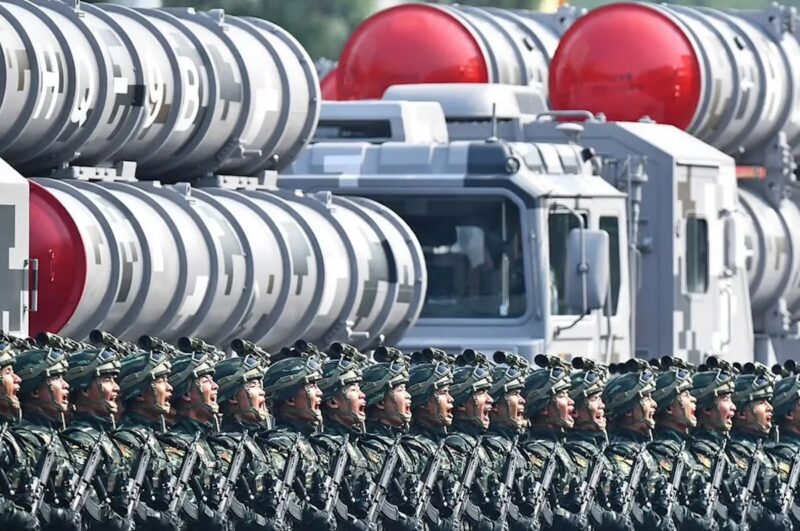
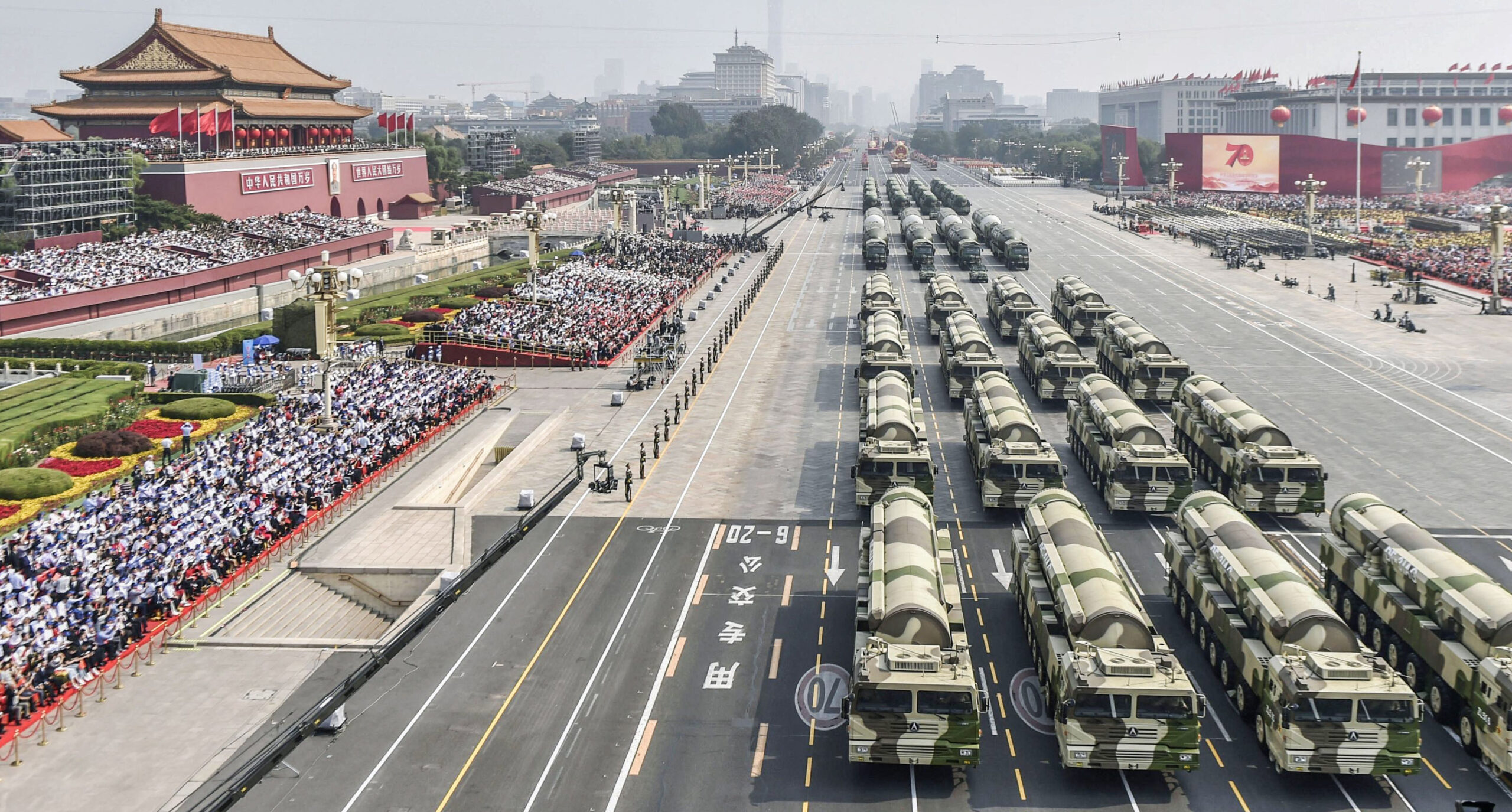
    Perhaps this American complacency concerning China’s disruptive weapons and overall military challenge could be explained by an overreliance on its nuclear superiority. Indeed, in 2020, in the comparison of nuclear warheads, the United States possessed overwhelming superiority with 5,800 against China’s 320 (Arms Control Association, 2020). This was consistent with the legacy of Mao’s “minimum deterrent” strategy. Within the above count, two kinds of nuclear weapons are involved – tactical and strategic. The former, with smaller explosive capacity, are designed for use in battlefields. With a much larger capacity, the latter aims at vital targets within the enemy’s home front. In relation to tactical nuclear weapons, America’s superiority is total, as China doesn’t have any. Nonetheless, in terms of long-range, accuracy, and extensive numbers, China’s conventional ballistic missiles (like the DF-26, also known as the Guam killer) can become an excellent match to the US’ tactical nuclear weapons (Roblin, 2018). The big difference between both countries, thus, is centred on America’s overwhelming superiority in strategic nuclear warheads.

    China’s minimum deterrent nuclear strategy was based on the assumption that, within cost-benefit decision-making, a limited nuclear force, able to target an adversary’s strategic objectives, could deter a superior nuclear force. This required retaliatory strike capacities that can survive a first enemy attack. In China’s case, this is attainable through road-mobile missiles that are difficult to find and destroy, and by way of missiles based on undetectable submarines. Moreover, Beijing’s hypersonic glide vehicle -whose prototype was successfully tested in July 2021- follows a trajectory that American systems cannot track. All of these impose restraint in the use of America’s more extensive arsenal and undermine its ability to carry out nuclear blackmail.

    there is no US defence that “could block” China’s hypersonic glide vehicle “not just because of its speed but also due to its ability to operate within Earth’s atmosphere and to change its altitude and direction in an unpredictable manner while flying much closer to the Earth’s surface”

    For the above aim, Beijing has developed new nuclear ballistic missiles, cruise missiles, and a sea-based delivery system. These include the DF-41 solid-fuel road-mobile intercontinental ballistic missile (with a range of 15,000 kilometres) or the submarine-launched JL-3 solid-fuel ballistic missile (whose range is likely to exceed 9,000 kilometres). To launch the JL-3 missiles, China counts with four Jin-class nuclear submarines, with an upgraded fifth under construction, each armed with twelve nuclear ballistic missiles (Huang, 2019; Panda, 2018). On top of that, there is no US defence that “could block” China’s hypersonic glide vehicle “not just because of its speed but also due to its ability to operate within Earth’s atmosphere and to change its altitude and direction in an unpredictable manner while flying much closer to the Earth’s surface” (Sanger, 2024, p. 190). All of this shows that America’s overwhelming superiority in terms of strategic nuclear warheads results in more theoretical than practical. What might justify a first American strategic nuclear strike on the knowledge that a Chinese retaliatory one could destroy New York, Chicago, Los Angeles, or all of the three together?

    Matching the US’ overkill nuclear capacity

    Being an asymmetric superpower while sustaining a minimum but highly credible deterrent nuclear strategy implied much subtility in terms of military thinking. One, in tune with the best Chinese traditions exemplified by Sun Tsu’s The Art of War and Chan-Kuo T’se’s Stratagems of the Warring States. However, in this regard, as in many others, Xi Jinping is sowing rigidity where subtility and flexibility prevailed. A perfect example of this is provided by its intent to match the US in terms of strategic nuclear warheads. In David E. Sanger’s words: “But now, it seemed apparent, Chinese leaders had changed their minds. Xi declared that China must ‘establish a strong strategic deterrence system’. And satellite images from near the cities of Yumen and Hami showed that Xi was now ready to throw Mao’s ‘minimum deterrent’ strategy out of the window” (Sanger, 2024, p. 200).

    Three elements attest to the former. Firstly, 230 launching silos are under construction in China. Secondly, these silos are part of a larger plan to match the US’ “triad” of land-launched, air-launched, and sea-launched nuclear weapons. Thirdly, it is estimated that by 2030, China will have an arsenal of 1,000 strategic nuclear weapons, which should reach 1,500 by 2035. The latter would imply equalling the Russian and the American nuclear strategic warheads (Sanger, 2024, p. 197; Cooper, 2021; The Economist, 2021; Hadley, 2023). 

    Xi Jinping is thus throwing overboard the Chinese capability to neutralize America’s strategic nuclear superiority at a fraction of its cost, searching to match its overkill capacity. In essence, nuclear arms seek to fulfil two main objectives. In the first place, intimidating or dissuading into compliance a given counterpart. In the second place, deterring by way of its retaliatory capacity, any first use of nuclear weapons by a counterpart.

    As seen, the second of those considerations was already guaranteed through its minimum deterrence strategy. In relation to the first, China already enjoys a tremendous dissuading power and the capacity to neutralize intimidation in its part of the world. Indeed, it holds firm control over the South China Sea. This is for three reasons. First, through its possession and positioning there, of the largest Navy in the world. Second, by way of the impressive firepower of its missiles, which includes the DF21/CSS-5, capable of sinking aircraft carriers more than 1,500 miles away. Third, via the construction and militarization of 27 artificial islands in the Paracel and Spratly archipelagos. All of this generates an anti-access and denial of space synergy, capable of being activated at any given time against hostile maritime forces. In other words, China cannot be intimidated into compliance by the United States in the South China Sea scenario (Fabey, 2018, pp. 228-231). Nor, in relation to Taiwan, could America’s superior nuclear forces dissuade Beijing to invade if it so decides. The US, indeed, would not be willing to trade the obliteration of Los Angeles or any other of its major cities by going nuclear in the defence of Taiwan.

    Simultaneously confronting two gunfighters

    It was complicated enough during the Cold War to defend against one major nuclear power. The message of the new [Chinese] silos was that now the United States would, for the first time in its history, must think about defending in the future against two major nuclear powers with arsenals roughly the size of Washington’s – and be prepared for the possibility that they might decide to work together

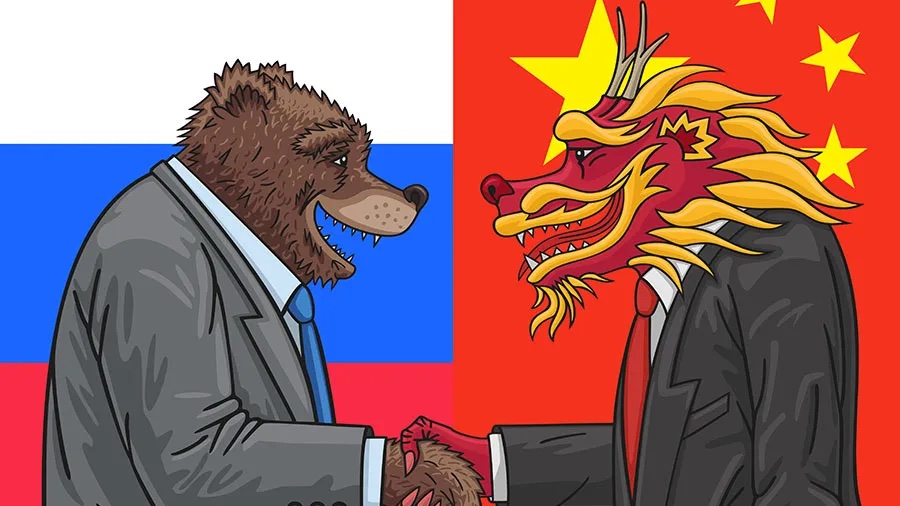
    Matching the US’ nuclear overkill capacity will not significantly alter the strategic equation between both countries. If anything, it would only immobilize in easy-to-target silos, the bulk of its strategic nuclear force. However, Xi’s difficult-to-understand decision makes more sense if, instead of thinking of two nuclear powers, we were to think of a game of three. This would entail a more profound strategic problem for the United States that David E. Sanger synthesizes: “It was complicated enough during the Cold War to defend against one major nuclear power. The message of the new [Chinese] silos was that now the United States would, for the first time in its history, must think about defending in the future against two major nuclear powers with arsenals roughly the size of Washington’s – and be prepared for the possibility that they might decide to work together” (Sanger, 2024, p. 201). This working together factor should be seen as the new normal, as a revisionist block led by China and Russia confronts America’s system of alliances and its post-WWII rules-based world order.

    Although the United States could try to increase the number of its nukes, nothing precludes its two competitors from augmenting theirs as well, with the intention of maintaining an overwhelming superiority. According to Thomas Schelling, leading Game Theory scholar and Economics Nobel Prize winner, the confrontation between two nuclear superpowers, in parity conditions, was tantamount to that of two far-west gunfighters: Whoever shot first had the upper hand. This is because it can destroy a significant proportion of its counterpart’s nuclear arsenal (Fontaine, 2024). In the case in point, Uncle Sam would have to simultaneously confront two gunfighters, each matching his skills and firepower. Although beyond a certain threshold, there wouldn’t seem to exist a significant difference in the capacity of destruction involved, nuclear blackmail could be imposed upon the weakest competitor. In this case, the United States.

    Conclusion

    From an American perspective, overreliance on its challenged nuclear power makes no sense. Especially if it translates into a laid-back attitude in relation to the current technological revolution in conventional warfare. If Washington doesn’t go forward with a third offset military strategy, it could find itself in an extremely vulnerable position. Just two cases can exemplify this. Aircraft carriers are becoming obsolete as a result of the Chinese DF21-CSS5 missile, able to sink them 1,500 miles away, in the same manner in which war in Ukraine is showing the obsolescence of modern tanks when faced with portable Javelins and drones. If the US is not able to undertake a leap forward in conventional military weapons and systems, it will be overcome by its rivals in both conventional and nuclear forces. For Washington, no doubt about it, this is an inflexion moment.


    References:

    Arms Control Association (2020). “Nuclear weapons: Who has what at a glance”, August.

    Cooper, Helene (2021). “China could have 1,000 nuclear warheads by 2030, Pentagon says”. The New York Times, November 3.

    Ellman, Jesse, Samp, Lisa, Coll, Gabriel (2017). “Assessing the Third Offset Strategy”. Center for Strategic & International Studies, CSIS, March.

    Fabey, Michael (2018) Crashback: The Power Clash Between US and China in the Pacific. New York: Scribner.

    Fontaine, Phillipe (2024). “Commitment, Cold War, and the battles of self: Thomas Schelling on Behavior Control”. Journal of the Behavioral Sciences, April.

    Hadley, Greg (2023). “China Now Has More ICBM Launchers than the US”. Air & Space Forces Magazine. February 7.

    Huang, Cary (2019). “China’s show of military might risk backfiring”. Inkstone, October 19.

    Leonard, Mark (2008). What Does China Think? New York: HarperCollins.

    McLeary, Paul (2017). “The Pentagon’s Third Offset May be Dead, But No One Knows What Comes Next”. Foreign Policy, December 18.

    Panda, Ankit (2018). “China conducts first test of new JL-3 submarine-launched ballistic missile”. The Diplomat, December 20.

    Pillsbury, Michael (2015). The Hundred-Year Marathon. New York: Henry Holt and Company.

    Roblin, Sebastien (2018). “Why China’s DF-26 Missile is a Guam Killer”. The National Interest, November 9.

    Sanger, David E. (2024). New York: Crown Publishing Books.

    Shah, Raj M. and Kirchhoff, Christopher M. (2024). “The US Military is not Ready for the New Era of Warfare”. The New York Times, September 13.

    Singer, P.W. and Cole, August (2016). Ghost Fleet: A Novel of the Next World War. Boston: Eamon Dolan Book.

    The Economist (2021). “China’s nuclear arsenal has been extremely modest, but that is changing”, November 20.

    Zakaria, Fareed (2019). “Defense spending is America’s cancerous bipartisan consensus”. The Washington Post, July 18.


    Feature Image Credit: NikkeiAsia

    Text Image: AsiaTimes.com
  • The NATO Declaration and the Deadly Strategy of Neoconservatism

    The NATO Declaration and the Deadly Strategy of Neoconservatism

    For the sake of America’s security and world peace, the U.S. should immediately abandon the neocon quest for hegemony in favour of diplomacy and peaceful co-existence.

    In 1992, U.S. foreign policy exceptionalism went into overdrive. The U.S. has always viewed itself as an exceptional nation destined for leadership, and the demise of the Soviet Union in December 1991 convinced a group of committed ideologues—who came to be known as neoconservatives—that the U.S. should now rule the world as the unchallenged sole superpower.

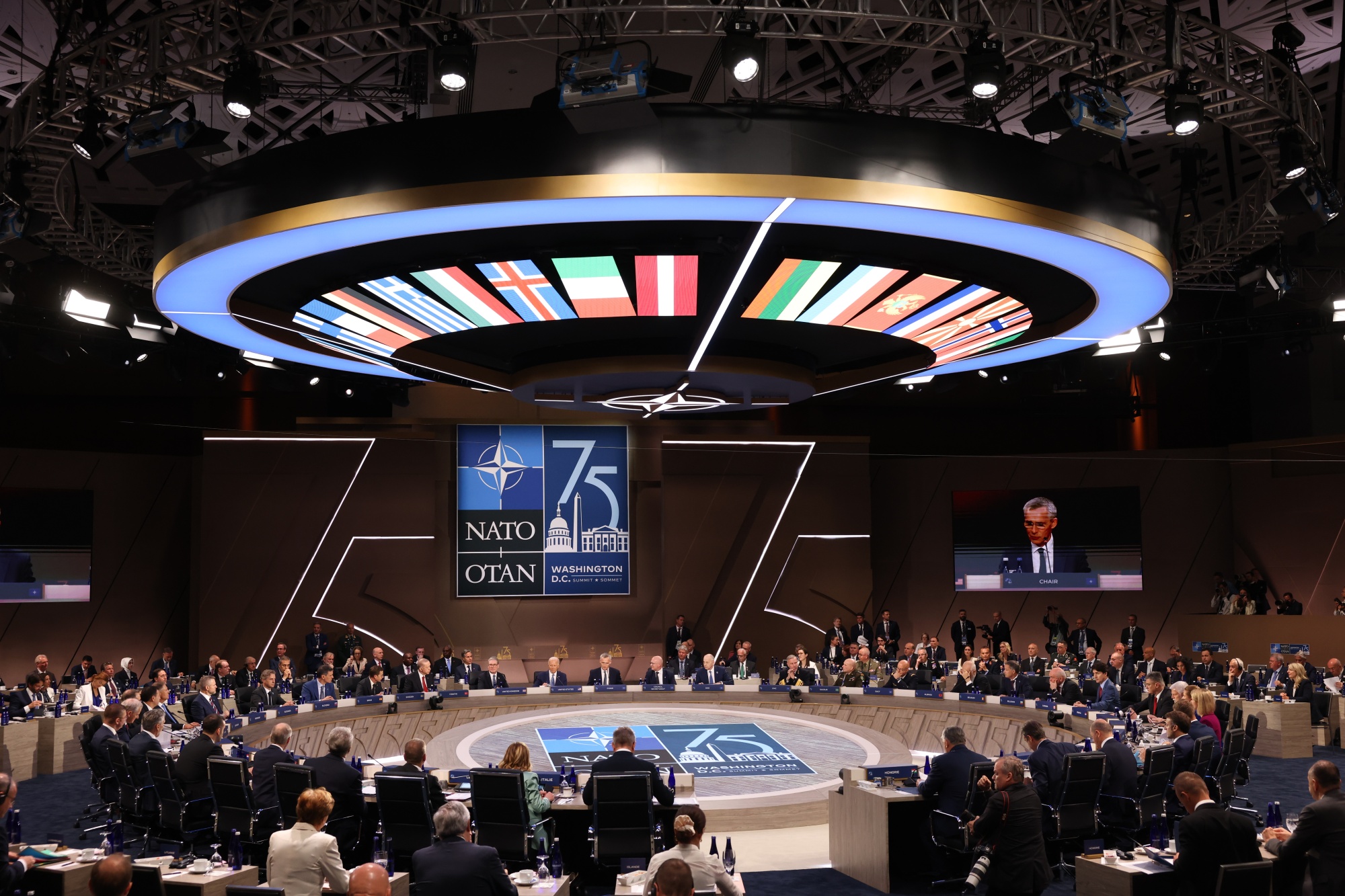
    Despite countless foreign policy disasters at neocon hands, the 2024 NATO Declaration continues to push the neocon agenda, driving the world closer to nuclear war.
    The neoconservatives were originally led by Richard Cheney, the Defense Secretary in 1992. Every President since then—Clinton, Bush, Obama, Trump, and Biden—has pursued the neocon agenda of U.S. hegemony, leading theU.S. into perpetual wars of choice, including Serbia, Afghanistan, Iraq, Syria, Libya, and Ukraine, as well as relentless eastward expansion of NATO, despite a clear U.S. and German promise in 1990 to Soviet President Mikhail Gorbachev that NATO would not move one inch eastward.
    The core neocon idea is that the U.S. should have military, financial, economic, and political dominance over any potential rival in any part of the world. It is targeted especially at rival powers such as China and Russia and, therefore, brings the U.S. into direct confrontation with them. The American hubris is stunning: most of the world does not want to be led by the U.S., much less led by a U.S. state clearly driven by militarism, elitism and greed.
    The neocon plan for U.S. military dominance was spelt out in the Project for a New American Century. The plan includes relentless NATO expansion eastward and the transformation of NATO from a defensive alliance against a now-defunct Soviet Union to an offensive alliance used to promote U.S. hegemony. The U.S. arms industry is the major financial and political backer of the neocons. The arms industry spearheaded the lobbying for NATO’s eastward enlargement starting in the 1990s. Joe Biden has been a staunch neocon from the start, first as Senator, then as Vice President, and now as President.
    To achieve hegemony, the neocon plans rely on CIA regime-change operations; U.S.-led wars of choice; U.S. overseas military bases (now numbering around 750 overseas bases in at least 80 countries); the militarization of advanced technologies (biowarfare, artificial intelligence, quantum computing, etc.); and relentless use of information warfare.
    The quest for U.S. hegemony has pushed the world to open warfare in Ukraine between the world’s two leading nuclear powers, Russia and the United States. The war in Ukraine was provoked by the relentless determination of the U.S. to expand NATO to Ukraine despite Russia’s fervent opposition, as well as the U.S. participation in the violent Maidan coup (February 2014) that overthrew a neutral government and the U.S. undermining of the Minsk II agreement that called for autonomy for the ethnically Russian regions of eastern Ukraine.
    The NATO Declaration calls NATO a defensive alliance, but the facts say otherwise. NATO repeatedly engages in offensive operations, including regime-change operations. NATO led the bombing of Serbia in order to break that nation into two parts, with NATO placing a major military base in the breakaway region of Kosovo. NATO has played a major role in many U.S. wars of choice. NATO bombing of Libya was used to overthrow the government of Moammar Qaddafi.
    The U.S. quest for hegemony, which was arrogant and unwise in 1992, is absolutely delusional today since the U.S. clearly faces formidable rivals that can compete with the U.S. on the battlefield, in nuclear arms deployments and in the production and deployment of advanced technologies. China’s GDP is now around 30% larger than the U.S. when measured at international prices, and China is the world’s low-cost producer and supplier of many critical green technologies, including EVs, 5G, photovoltaics, wind power, modular nuclear power, and others. China’s productivity is now so great that the U.S. complains of China’s “over-capacity.”

    Sadly and alarmingly, the NATO declaration repeats the neoconservative delusions.
    The Declaration falsely declares that “Russia bears sole responsibility for its war of aggression against Ukraine,” despite the U.S. provocations that led to the outbreak of the war in 2014.
    The NATO Declaration reaffirms Article 10 of the NATO Washington Treaty, according to which NATO’s eastward expansion is none of Russia’s business. Yet the U.S. would never accept Russia or China establishing a military base on the US border (say in Mexico), as the U.S. first declared in the Monroe Doctrine in 1823 and has reaffirmed ever since.
    The NATO Declaration reaffirms NATO’s commitment to biodefense technologies, despite growing evidence that U.S. biodefense spending by NIH financed the laboratory creation of the virus that may have caused the Covid-19 pandemic.
    The NATO Declaration proclaims NATO’s intention to continue to deploy anti-ballistic Aegis missiles (as it has already done in Poland, Romania, and Turkey) despite the fact that the U.S. withdrawal from the ABM Treaty and placement of Aegis missiles in Poland and Romania has profoundly destabilized the nuclear arms control architecture.
    The NATO Declaration expresses no interest whatsoever in a negotiated peace for Ukraine.
    The NATO Declaration doubles down on Ukraine’s “irreversible path to full Euro-Atlantic integration, including NATO membership.” Yet Russia will never accept Ukraine’s NATO membership, so the “irreversible” commitment is an irreversible commitment to war.
    The Washington Post reports that in the lead-up to the NATO summit, Biden had serious qualms about pledging an “irreversible path” to Ukraine’s NATO membership, yet Biden’s advisors brushed aside these concerns.

    The neoconservatives have created countless disasters for the U.S. and the world, including several failed wars, a massive buildup of U.S. public debt driven by trillions of dollars of wasteful war-driven military outlays, and the increasingly dangerous confrontation of the U.S. with China, Russia, Iran, and others. The neocons have brought the Doomsday Clock to just 90 seconds to midnight (nuclear war), compared with 17 minutes in 1992.

    For the sake of America’s security and world peace, the U.S. should immediately abandon the neocon quest for hegemony in favour of diplomacy and peaceful co-existence.
    Alas, NATO has just done the opposite.


    Feature Image Credit: Bloomberg

  • The Atomic Executioner’s Lament

    The Atomic Executioner’s Lament

    While the world focuses on the trials and travails of the scientists who invented the atomic bomb, little attention is paid to the hard positions taken by the nuclear executioners, the men called upon to drop these bombs in time of war.


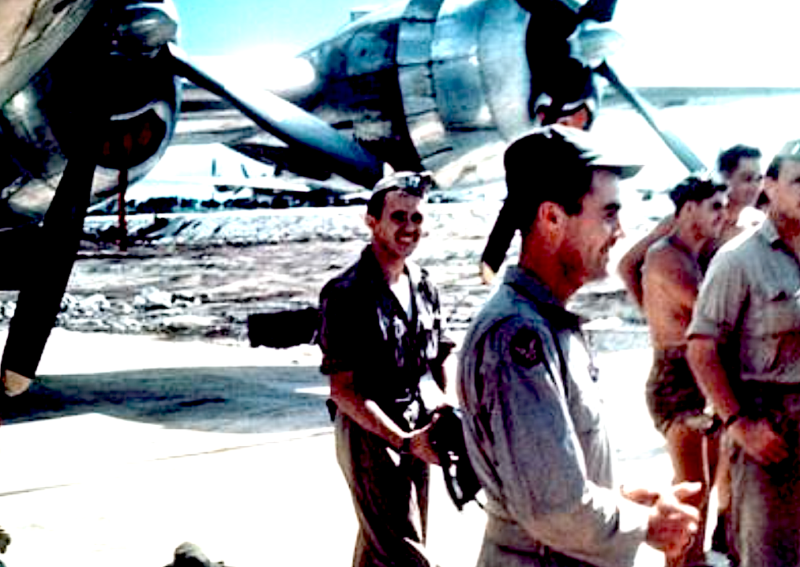
    Crew of the Enola Gay, returning from their atomic bombing mission over Hiroshima, Japan. At center is navigator Capt. Theodore Van Kirk; to the right, in foreground, is flight commander Col. Paul Tibbetts. (Wikimedia Commons, Public domain)


    There is an interesting scene in Chris Nolan’s film Oppenheimer, one which could easily get lost in the complexity of telling the story of the man considered to be the father of the American atomic bomb, J. Robert Oppenheimer.

    The Trinity test of the first nuclear device has been successfully completed, and Oppenheimer is watching as two men in military uniform are packing up one of Oppenheimer’s “gadgets” for shipment out of Los Alamos to an undisclosed destination.

    Oppenheimer talks to them about the optimum height for the detonation of the weapon above ground, but is cut off by one of the soldiers, who, smiling, declares “We’ve got it from here.”

    Such men existed, although the scene in the movie — and the dialogue — was almost certainly the product of a scriptwriter’s imagination. The U.S. military went to great lengths to keep the method of delivery of the atomic bomb a secret, not to be shared with either Oppenheimer or his scientists.

    Formed on March 6, 1945, the 1st Ordnance Squadron, Special (Aviation) was part of the 509th Composite Group, commanded by then-Lieutenant Colonel Paul Tibbets. Prior to being organized into the 1st Ordnance Squadron, the men of the unit were assigned to a U.S. Army ordnance squadron stationed a Wendover, Utah, where Tibbets and the rest of the 509th Composite Group were based.

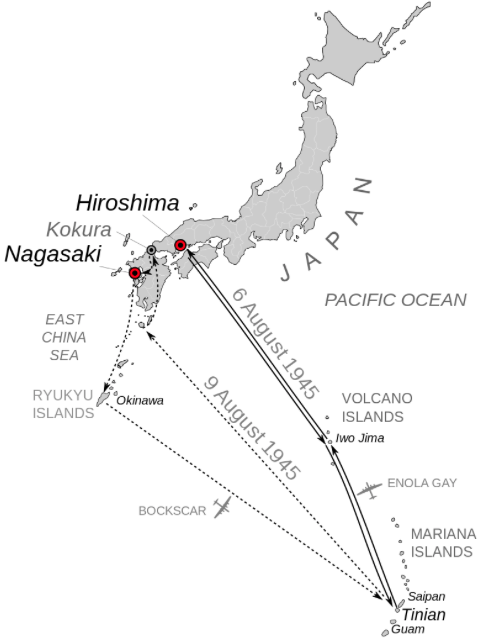
    Mission map for the bombings of Hiroshima and Nagasaki, Aug. 6 and Aug. 9, 1945. Scale is not consistent due to the curvature of the Earth. Angles and locations are approximate. Kokura was included as the original target for Aug. 9 but weather obscured visibility; Nagasaki was chosen instead. (Mr.98, Wikimedia Commons, Public domain)

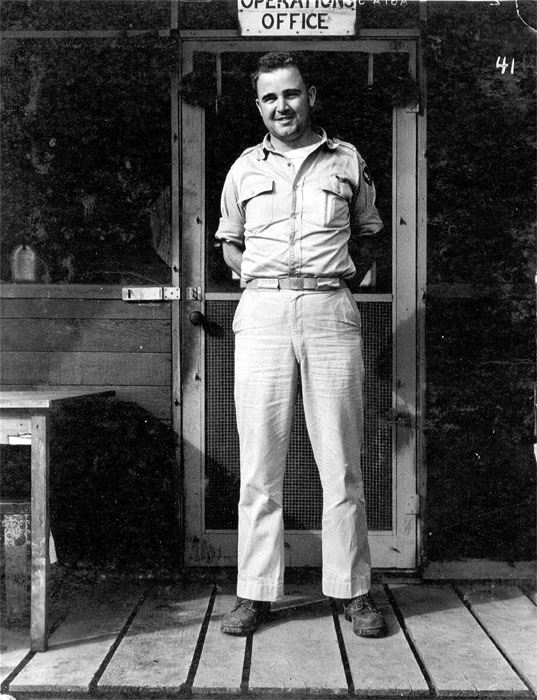
    While Oppenheimer and his scientists designed the nuclear device, the mechanism of delivery — the bomb itself — was designed by specialists assigned to the 509th. It was the job of the men of the 1st Ordnance Squadron to build these bombs from scratch.

    The bomb dropped on Hiroshima by Paul Tibbets, flying a B-29 named the Enola Gay, was assembled on the Pacific Island of Tinian by the 1st Ordnance Squadron.

    Concerned about the possibility of the B-29 crashing on takeoff, thereby triggering the explosive charge that would send the uranium slug into the uranium core (the so-called gun device), the decision was made that the final assembly of the bomb would be done only after the Enola Gay took off.

    One of the 1st Ordnance Squadron technicians placed the uranium slug into the bomb at 7,000 feet over the Pacific Ocean.

    The bomb worked as designed, killing more than 80,000 Japanese in an instant; hundreds of thousands more died afterwards from the radiation released by the weapon.

    For the pilot and crew of the Enola Gay, there was no remorse over killing so many people. “I knew we did the right thing because when I knew we’d be doing that I thought, yes, we’re going to kill a lot of people, but by God we’re going to save a lot of lives,’ Tibbets recounted to Studs Terkel in 2002. He added:

    “We won’t have to invade [Japan]. You’re gonna kill innocent people at the same time, but we’ve never fought a damn war anywhere in the world where they didn’t kill innocent people,” Tibbets told Terkel. “If the newspapers would just cut out the shit: ‘You’ve killed so many civilians.’ That’s their tough luck for being there.

    An atomic bomb victim with burns, Ninoshima Quarantine Office, Aug. 7, 1945. (Onuka Masami, Wikimedia Commons, Public domain)

    Major Charles Sweeney, the pilot of Bockscar, the B-29 that dropped the second American atomic bomb on the city of Nagasaki on Aug. 9, 1945, held similar convictions about his role in killing 35,000 Japanese instantly.

    “I saw these beautiful young men who were being slaughtered by an evil, evil military force,” Sweeney recounted in 1995. “There’s no question in my mind that President Truman made the right decision.” However, Sweeney noted, “As the man who commanded the last atomic mission, I pray that I retain that singular distinction.”

    History records the remorse felt by Oppenheimer and his Soviet counterpart, Andrei Sakharov, and the punishment they both suffered at the hands of their respective governments. They suffered from designer’s remorse, a regret — stated after the fact — that what they had built should not be used, but somehow locked away from the world, as if the Pandora’s Box of nuclear weaponization had never been opened.

    Having designed their respective weapons, however, both Oppenheimer and Sakharov lost control of their creations, turning them over to military establishments which did not participate in the intellectual and moral machinations of bringing such a weapon into existence, but rather the cold, hard reality of using these weapons to achieve a purpose and goal which, as had been the case for Tibbets and Sweeney, seemed justified.

    Ignoring the Executioner

    Brigadier General Charles W. Sweeney, pilot of the aircraft that dropped the atomic bomb on Nagasaki. (Public domain, Wikimedia Commons)

    This is the executioners’ lament, a contradiction of emotions where the perceived need for justice outweighs the costs associated.

    While the world focuses on the trials and travails of Oppenheimer and Sakharov, they remain silent about the hard positions taken by the nuclear executioners, the men called upon to drop these bombs in time of war.  There have only been two such men, and they remained resolute in their judgement that it was the right thing to do.

    The executioner’s lament is overlooked by most people involved in supporting nuclear disarmament. This is a mistake, because the executioner, as was pointed out to Oppenheimer by the men of the 1stOrdnance Squadron, is in control.

    They possess the weapons, and they are the ones who will be called upon to deliver the weapons. Their loyalty and dedication to the task are constantly tested in order to ensure that, when the time comes to execute orders, they will do so without question.

    Image of a younger Petrov from a family album.
    (Stanislav Petrov’s Personal Library, Wikimedia Commons, CC0)


    Those opposed to nuclear weapons often point to the example of Stanislav Petrov, a former lieutenant colonel of the Soviet Air Defense Forces who, in 1983, twice made a decision to delay reporting the suspected launch of U.S. missiles towards the Soviet Union, believing (rightly) that the launch detection was a result of malfunctioning equipment.

    But the fact is that Petrov was an outlier who himself admitted that had another officer been on duty that fateful day, they would have reported the American missile launches per protocol.

    Those who will execute the orders to use nuclear weapons in any future nuclear conflict will, in fact, execute those orders. They are trained, like Tibbets and Sweeney, to believe in the righteousness of their cause.

    Dmitry Medvedev, the former Russian prime minister and president who currently serves as the deputy chairman of the Russian National Security Council, has publicly warned the Western supporters of Ukraine that Russia would “have to” use nuclear weapons if Ukrainian forces were to succeed in their goal of recapturing the former territories of Ukraine that have been claimed by Russia in the aftermath of referenda held in September 2022.

    “Imagine,” Medvedev said, “if the offensive, which is backed by NATO, was a success and they tore off a part of our land, then we would be forced to use a nuclear weapon according to the rules of a decree from the president of Russia. There would simply be no other option.”

    Some in the West view Medvedev’s statement to be an empty threat; U.S. President Joe Biden said last month that there is no real prospect of Russian President Vladimir Putin ordering the use of nuclear weapons against either Ukraine or the West.

    “Not only the West, but China and the rest of the world have said: ‘don’t go there,’ ” Biden said following the NATO Summit in Vilnius.

    Ignoring Russian Doctrine

    But Biden, like other doubters, emphasizes substance over process, denying the role played by the executioner in implementing justice defined on their terms, not that of those being subjected to execution.

    Russia has a nuclear doctrine that mandates that nuclear weapons are to be used “when the very existence of the state is put under threat.” According to Medvedev, “there would simply be no other option,” ironically noting that “our enemies should pray” for a Russian victory, as the only way to make sure “that a global nuclear fire is not ignited.”

    The Russians who would execute the orders to launch nuclear weapons against the West would be operating with the same moral clarity as had Paul Tibbets and Charles Sweeney some 88 years ago. The executioner’s lament holds that they will be saddened by their decision but convinced that they had no other choice.

    Proving them wrong will be impossible because, unlike the war with Japan, where the survivors were given the luxury of reflection and accountability, there will be no survivors in any future nuclear conflict.

    The onus, therefore, is on the average citizen to get involved in processes that separate the tools of our collective demise — nuclear weapons — from those who will be called upon to use them.

    Meaningful nuclear disarmament is the only hope humankind has for its continued survival.

    The time to begin pushing for this is now, and there is no better place to start than on Aug. 6, 2023 — the 78th anniversary of the bombing of Hiroshima, when like-minded persons will gather outside the United Nations to begin a dialogue about disarmament that will hopefully resonate enough to have an impact of the 2024 elections.


    This article was published earlier in consortiumnews.com

    The views expressed are the author’s own.

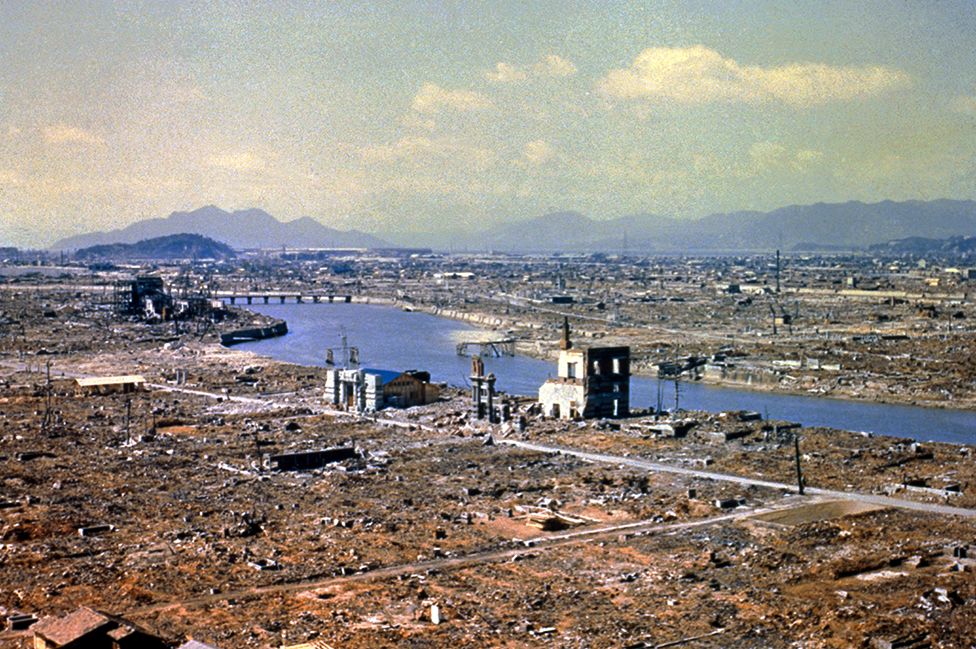
    Feature Image: The devastated city of Hiroshima after the atomic bomb blast – bbc.com

  • The South Asia Nuclear Zero

    The South Asia Nuclear Zero

    The nuclear tests, of May 1998, by India and Pakistan, marked an epochal juncture for South Asia. The Doomsday Clock maintained by the Bulletin of the Atomic Scientists, jumped from 11:43 to 11:51, or just “9 minutes to midnight.”

    While, in India, the “Shakti” tests, do find celebratory mention, Pakistan observes the Chagai series of nuclear tests, as a national day, termed “Yom-e-Taqbir.” On the 25th anniversary of this event, Lt Gen Khalid Kidwai (Retd), currently, advisor, to Pakistan’s National Command Authority (NCA), delivered an address at the Arms Control and Disarmament Centre of the Institute of Strategic Studies, Islamabad.

    Kidwai, who served, for 14 years, as the Director-General of Pakistan’s Strategic Plans Division (SPD), was at the heart of Pakistan’s NCA, and oversaw the operationalisation of its nuclear deterrent. Although his talk was for public consumption, given the historic absence of an Indo-Pak nuclear dialogue, some of Kidwai’s statements – if taken at face value – contain worrisome undertones, which need analysis.

    After mentioning the rationale for Pakistan embarking on nuclear weaponization (“humiliation of the 1971 War followed by India’s nuclear test of May 1974”) Kidwai proceeded to enlighten the audience about the implications of Pakistan’s new policy of Full Spectrum Deterrence (FSD) and how it kept, “India’s aggressive designs, including the Indian military’s Cold Start Doctrine, in check.”

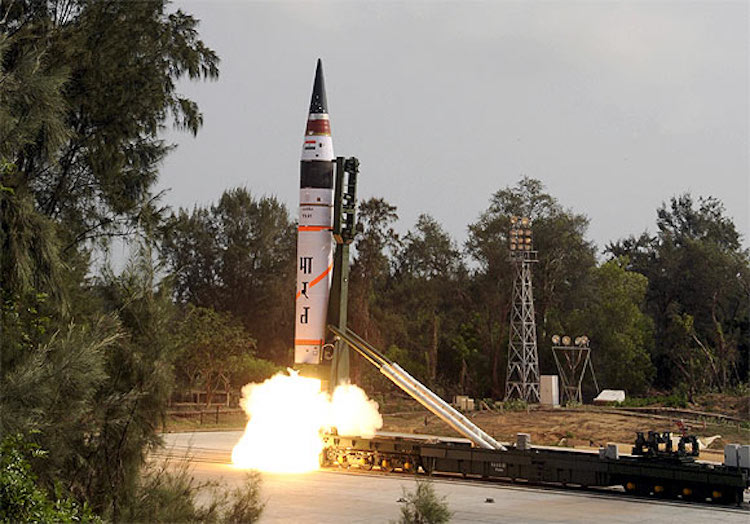
    While retaining the fig leaf of Credible Minimum Deterrence (CMD), Kidwai went on to mention the “horizontal dimension” of Pakistan’s nuclear inventory, held by the individual Strategic Force Commands of the Army, Navy and Air Force. The “vertical dimension,” of the Pak deterrent, he said, encapsulated “adequate range coverage from zero meters to 2750 km, as well as nuclear weapons of destructive yields at three tiers: strategic, operational and tactical.”

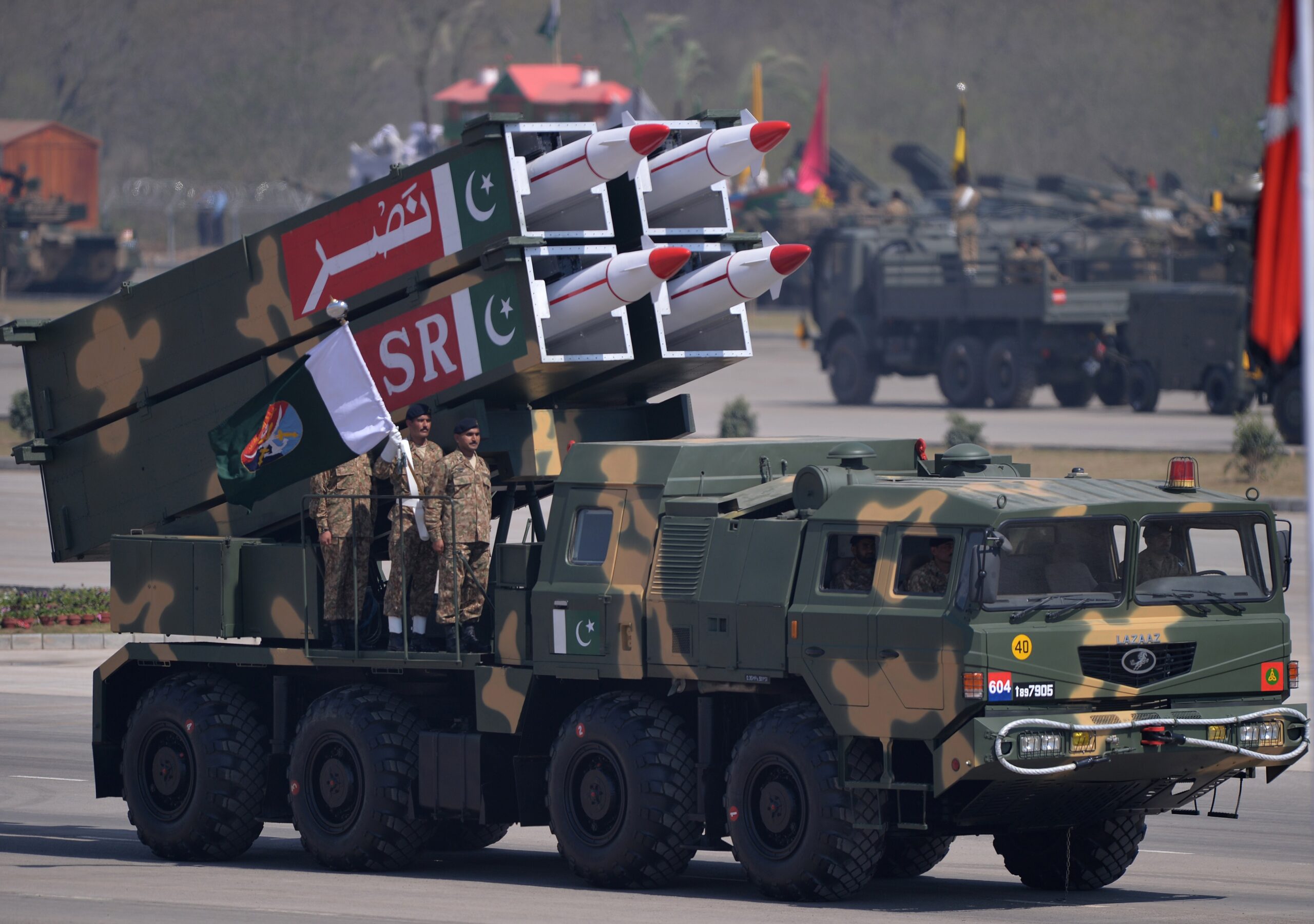
    While the missile range of 2750 km, corresponds, roughly, to the distance from a launch-point in south-east Sindh, to the Andaman Islands, and indicates the “India-specificity” of the Shaheen III missile, it is the mention of “zero metres” that is intriguing. Pakistan already has the 60 km range, “Nasr” missile, projected as a response to India’s Cold Start doctrine. Therefore, unless used as a colloquialism, Kidwai’s mention of “zero metres” range could only imply a pursuit of ultra short-range, tactical nuclear weapons (TNW), like artillery shells, land mines, and short-range missiles, armed with small warheads, of yields between 0.1 to 1 kiloton (equivalent of 100 to 1000 tons of TNT).

    By shifting from CMD to FSD, with the threat of nuclear first use, to defend against an Indian conventional military thrust, Pakistan is aping the, discredited, US-NATO Cold War concept of Flexible Response. Fearing their inability to withstand a massive Warsaw Pact armoured offensive, this 1967 doctrine saw the US and NATO allies deploy a large number of TNW to units in the field.

    However, the dangers of escalation arising from the use of TNW were soon highlighted, by US Secretary Defence, Robert McNamara’s, public confession: “It is not clear how theater nuclear war could actually be exe­cuted without incurring a very serious risk of escalating to general nuclear war.” This marked a turning point in US-NATO nuclear strategy.

    Kidwai’s speech contains three statements of note. Firstly, he attempts to dilute India’s declared policy of “massive retaliation” (MR), in response to a nuclear strike, by claiming that Pakistan possesses an entire range of survivable nuclear warheads of desired yield, in adequate numbers, to respond to India’s MR. He adds, “Pakistan’s counter-massive retaliation can therefore be as severe (as India’s) if not more.”

    Far more significant is Kidwai’s declaration that, since Pakistan’s missiles can threaten the full extent of the Indian landmass and island territories, “…there is no place for India’s strategic weapons to hide” (emphasis added).

    Secondly, in an attempt to downplay India’s (inchoate) ballistic missile defence (BMD), he declares that in a “target-rich India”, Pakistan is at liberty to expand the envelope and choose from counter-value, counterforce and battlefield targets, “notwithstanding the indigenous Indian BMD or the Russian S-400” (air-defence systems).

    Far more significant is Kidwai’s declaration that, since Pakistan’s missiles can threaten the full extent of the Indian landmass and island territories, “…there is no place for India’s strategic weapons to hide” (emphasis added). The assumption, so far, was that, given its limitations in terms of missile accuracy, real-time surveillance and targeting information, Pakistan would follow a “counter-value” or “counter-city” targeting strategy. The specific targeting of India’s nuclear arsenal, especially, if undertaken by conventional (non-nuclear) missiles, would add a new dimension to the India-Pakistan nuclear conundrum.

    Delivered in the midst of Pakistan’s acute financial crisis, as well as the ongoing political turmoil and civil-military tensions, one may be tempted to dismiss Lt Gen Kidwai’s recent discourse. However, as the longest-serving, former head of the SPD and architect of Pakistan’s nuclear deterrent, his views are widely heard and deserve our attention.

    Having voluntarily pledged “no first use” (NFU), India’s 2003 Nuclear Doctrine, espoused a “credible minimum deterrent” and promised “massive retaliation,” in response to a nuclear first strike. Since then, our two adversaries, China and Pakistan, have expanded and upgraded their nuclear arsenals, presumably, with corresponding updating of doctrines. India’s strategic enclave has, however, not only maintained a stoic silence and doctrinal status quo but also defended the latter.

    BJP’s 2014 Election Manifesto, had undertaken to “revise and update” India’s nuclear doctrine and to “make it relevant to current times,” but this promise has not been kept. Thus, India, currently, faces a moral dilemma as well as a question of “proportionality”: will the loss of a few tanks or soldiers to a Pakistani nuclear artillery salvo, on its own soil, prompt India to destroy a Pakistani city of a few million souls? Since India, too, has developed a family of tactical missiles, capable of counterforce strikes, does it indicate a shift away from CMD and NFU, calling for a response from our adversaries?

    These are just some of the manifold reasons why there is a most urgent need for the initiation of a sustained nuclear dialogue between India and Pakistan, insulated from the vagaries of politics. Such an interaction, by reducing mutual suspicion and enhancing transparency, might slow down the nuclear arms race and mindless build-up of arsenals.

    This article was published earlier in Indian Express.

  • The West’s False Narrative about Russia and China

    The West’s False Narrative about Russia and China

    The relentless Western narrative that the West is noble while Russia and China are evil is simple-minded and extraordinarily dangerous.

    The world is on the edge of nuclear catastrophe in no small part because of the failure of Western political leaders to be forthright about the causes of the escalating global conflicts.  The relentless Western narrative that the West is noble while Russia and China are evil is simple-minded and extraordinarily dangerous.  It is an attempt to manipulate public opinion, not to deal with very real and pressing diplomacy.

    The essential narrative of the West is built into US national security strategy.  The core US idea is that China and Russia are implacable foes that are “attempting to erode American security and prosperity.”  These countries are, according to the US, “determined to make economies less free and less fair, to grow their militaries, and to control information and data to repress their societies and expand their influence.”

    The irony is that since 1980 the US has been in at least 15 overseas wars of choice (Afghanistan, Iraq, Libya, Panama, Serbia, Syria, and Yemen just to name a few), while China has been in none, and Russia only in one (Syria) beyond the former Soviet Union.  The US has military bases in 85 countries, China in 3, and Russia in 1 (Syria) beyond the former Soviet Union.

    US security strategy is not the work of any single US president but of the US security establishment, which is largely autonomous, and operates behind a wall of secrecy.  

    President Joe Biden has promoted this narrative, declaring that the greatest challenge of our time is the competition with the autocracies, which “seek to advance their own power, export and expand their influence around the world, and justify their repressive policies and practices as a more efficient way to address today’s challenges.”  US security strategy is not the work of any single US president but of the US security establishment, which is largely autonomous, and operates behind a wall of secrecy.

    The overwrought fear of China and Russia is sold to a Western public through manipulation of the facts.  A generation earlier George W. Bush, Jr. sold the public on the idea that America’s greatest threat was Islamic fundamentalism, without mentioning that it was the CIA, with Saudi Arabia and other countries, that had created, funded, and deployed the jihadists in Afghanistan, Syria, and elsewhere to fight America’s wars.

    Or consider the Soviet Union’s invasion of Afghanistan in 1980, which was painted in the Western media as an act of unprovoked perfidy.  Years later, we learned that the Soviet invasion was actually preceded by a CIA operation designed to provoke the Soviet invasion! The same misinformation occurred vis-à-vis Syria.  The Western press is filled with recriminations against Putin’s military assistance to Syria’s Bashar al-Assad beginning in 2015, without mentioning that the US supported the overthrow of al-Assad beginning in 2011, with the CIA funding a major operation (Timber Sycamore) to overthrow Assad years before Russia arrived.

    Or more recently, when US House Speaker Nancy Pelosi recklessly flew to Taiwan despite China’s warnings, no G7 foreign minister criticized Pelosi’s provocation, yet the G7 ministers together harshly criticized China’s “overreaction” to Pelosi’s trip.

    The Western narrative about the Ukraine war is that it is an unprovoked attack by Putin in the quest to recreate the Russian empire.  Yet the real history starts with the Western promise to Soviet President Mikhail Gorbachev that NATO would not enlarge to the East, followed by four waves of NATO aggrandizement: in 1999, incorporating three Central European countries; in 2004, incorporating 7 more, including in the Black Sea and the Baltic States; in 2008, committing to enlarge to Ukraine and Georgia; and in 2022, inviting four Asia-Pacific leaders to NATO to take aim at China.

    Nor do the Western media mention the US role in the 2014 overthrow of Ukraine’s pro-Russian president Viktor Yanukovych; the failure of the Governments of France and Germany, guarantors of the Minsk II agreement, to press Ukraine to carry out its commitments; the vast US armaments sent to Ukraine during the Trump and Biden Administrations in the lead-up to war; nor the refusal of the US to negotiate with Putin over NATO enlargement to Ukraine.

    Of course, NATO says that is purely defensive so that Putin should have nothing to fear.  In other words, Putin should take no notice of the CIA operations in Afghanistan and Syria; the NATO bombing of Serbia in 1999; the NATO overthrow of Moammar Qaddafi in 2011; the NATO occupation of Afghanistan for 15 years; nor Biden’s “gaffe” calling for Putin’s ouster (which of course was no gaffe at all); nor US Defense Secretary Lloyd Austin stating that the US war aim in Ukraine is the weakening of Russia.

    The US has a mere 4.2% of the world population, and now a mere 16% of world GDP (measured at international prices).  In fact, the combined GDP of the G7 is now less than that of the BRICS (Brazil, Russia, India, China, and South Africa), while the G7 population is just 6 per cent of the world compared with 41 per cent in the BRICS. 

    At the core of all of this is the US’s attempt to remain the world’s hegemonic power, by augmenting military alliances around the world to contain or defeat China and Russia.  It’s a dangerous, delusional, and outmoded idea.  The US has a mere 4.2% of the world population, and now a mere 16% of world GDP (measured at international prices).  In fact, the combined GDP of the G7 is now less than that of the BRICS (Brazil, Russia, India, China, and South Africa), while the G7 population is just 6 per cent of the world compared with 41 per cent in the BRICS.

    There is only one country whose self-declared fantasy is to be the world’s dominant power: the US.  It’s past time that the US recognized the true sources of security: internal social cohesion and responsible cooperation with the rest of the world, rather than the illusion of hegemony.  With such a revised foreign policy, the US and its allies would avoid war with China and Russia, and enable the world to face its myriad environment, energy, food and social crises.

    European leaders should pursue the true source of European security: not US hegemony, but European security arrangements that respect the legitimate security interests of all European nations

    Above all, at this time of extreme danger, European leaders should pursue the true source of European security: not US hegemony, but European security arrangements that respect the legitimate security interests of all European nations, certainly including Ukraine, but also including Russia, which continues to resist NATO enlargements into the Black Sea.  Europe should reflect on the fact that the non-enlargement of NATO and the implementation of the Minsk II agreements would have averted this awful war in Ukraine.  At this stage, diplomacy, not military escalation, is the true path to European and global security.

    Feature Image Credit: Big Stock

    This article was published earlier in Pearls and Irritations.