Category: National Security & Foreign Policy

  • Civil-Military Relations: Differing Perspectives

    Civil-Military Relations: Differing Perspectives

    There are a number of theoretical constructs that have been propounded to explain Civil-Military Relations. However, these concepts, be it Huntington’s “Objective Civilian Control”, or Morris Janowitz views on “Subjective Control”, and there are others as well, basically interpret and differentiate the interplay between the degree of civilian dominance and military autonomy.

    Introduction

    At the present time, there is an ongoing controversy in the public domain with regard to our Higher Defence Management as the Services are unable to agree on how to proceed forward with the Government’s stated aim of establishing Theatre Commands. We are told that Raksha Mantri has asked the CDS to convene a meeting of the three services to thrash out the matter so that a consensus can be reached on how to proceed forward. This direction by the RM is a clear pointer to the distressing state of civil-military relations prevailing within our country.

    In any democracy civilian control over the military, which implies the control exercised by our elected representatives through the government, is the very foundation on which civil-military relations are based. Therefore, one would expect when the Services have divergent views, the politicians would step in and give concise directions on how the Services are to proceed. In roughly similar circumstances in the United States, for example, the US Congress broke the logjam through the Goldwater-Nichols Act in 1986. This brought about sweeping changes to the  Department of Defense by reworking the command structure of the United States Military. More recently, in China, on President Xi Jinping’s directions, transformational changes to the PLA’s organizational structure were undertaken. So, to clearly understand why our Ministry of Defence (MOD) is unable to push through such reforms, we perforce must examine its functioning and set up.

    In essence, however, Civil-Military Relations are a messy affair, not just here, but worldwide. The Goldwater Nichols Act, for example, took a year to be passed and nearly another four to five years to be implemented. There are a number of theoretical constructs that have been propounded to explain Civil-Military Relations. However, these concepts, be it Huntington’s “Objective Civilian Control”, or Morris Janowitz views on “Subjective Control”, and there are others as well, basically interpret and differentiate the interplay between the degree of civilian dominance and military autonomy.

    Leaving aside the theoretical aspects, the one thing on which there can be no disagreement is the fact that success or otherwise at tackling vital national security issues depends on, what Raj Shukla in his paper “Civil-Military Relations in India” (CLAWS, 2012), calls “the pattern of institutional interaction between the civil and military components of a nation’s polity.” Most importantly, in our context, this is essential not just because the military is responsible for protecting our national sovereignty and territorial integrity, and must, therefore, deliver the maximum bang for the buck, but more so, because defence spending, while at its’ lowest in the past seven years,  is still  13.73% of all government expenditure at Rs 4.78 Lakh Crores. Not an insubstantial amount in any way.

    In the opinion of Steven Wilkinson, author of  Army and Nation: The Military and Indian Democracy Since Independence, our military has been defanged and “coup proofed” by a series of measures put in place by the bureaucracy and its political masters.

    Historical Precedent

    It is important to remember the Spanish philosopher, George Santayana’s, words of wisdom that “those who cannot remember the past are condemned to repeat it”, we would also do well to recall the maxim that “there’s a reason why your windshield is bigger than your rear-view mirror. Where you’re headed is much more important than what you left behind”. Therefore, seventy plus years on, historical precedent means little, because we have had enough time to have absorbed lessons from the wars we have fought since and adapted our HDO accordingly. Suffice it to say that Prime Minister Nehru had an inherent dislike for the military and was apprehensive of what it could do, especially after seeing what was happening in our neighbourhood.

    In the opinion of Steven Wilkinson, author of  Army and Nation: The Military and Indian Democracy Since Independence, our military has been defanged and “coup proofed” by a series of measures put in place by the bureaucracy and its political masters. These include a steep decline in its precedence and perks, diversifying its ethnic composition and giving overriding powers to the civilian bureaucracy within the Ministry of Defence in every aspect of military functioning, including the selection of senior ranks.

    In addition, large paramilitary forces under the Union Home Ministry have also been formed to “ring-fence” the military and for use as countervailing forces against it, if required. Finally, the lure of post-retirement crumbs, such as an ambassadorship, governorship or membership of the Armed Forces Tribunal has ensured that the senior hierarchy remains quiet and continues to toe the Government line. All of this has weakened the military to a large extent making it a less attractive career, which is why it has been attempting to cope with large deficiencies over an extended period of time.

    The Kargil Conflict of 1999 caught us by surprise, and in its aftermath, there were calls for drastic changes to the existing system. It was obvious that the existing defence paradigm of the Indian state was obsolete while we were in the 21st century, our command and control structures were still in the 20th century. The Government established the Kargil Review Committee headed by K Subrahmanyam to go into the issue of reforms and its subsequent recommendations were handed over to a group of ministers for examination and implementation.

    Amongst the recommendations made, the three that were of most importance pertained to the necessity for integration of the services both with each other and with the MOD; the creation of a chief of defence staff (CDS); and joint operational commands. Like nothing else, the Kargil Conflict showed up the serious lack of synergy amongst the three Services of Armed Forces as well as a lack of coordination between the Armed Forces and Civil authorities. It must be pointed out that while some of the lesser recommendations were implemented, including facetiously attempting to fool the political establishment by renaming the Service Headquarters, it has only been after nearly two decades that any serious movement towards reforms has been undertaken with the appointment of the CDS and the Department of Military Affairs (DMA). It is still too early to comment on their efficacy.

    Characteristics of Civil-Military Relations in India

    It may come as a surprise to some that the Raksha Mantri and the civilian bureaucrats in the MOD, apart from handling the three Services and the Coast Guard, also deal with a number of civilian manned and run agencies such as DRDO, OFB and Veterans Welfare etc. The total number of civilians paid from defence estimates exceeds 500,000. To put it in perspective it is larger than the active strength of the Pakistan Armed Forces.

    Anit Mukherjee in a paper titled The Absent Dialogue (Seminar 599-2009)  suggests that there are three main characteristics that our Civil-Military Relations present, which explains to a large extent the ongoing interaction between the two. These are:

    • Strong administrative, procedural and bureaucratic controls over the armed forces. Where this differs from other democracies in this respect is the complete lack of expertise on defence matters among the civilian bureaucrats. As a result dialogue between both sides is constrained and, as is to be expected, they are more focused on the process than the outcome. This lack of knowledge also ensures that they are unable to “arbitrate between competing parochial interests”, and are also unwilling to take responsibility or be held accountable for controversial decisions.
    • While consulted, the military is excluded from the crucial decision-making forums, thereby denying them a role in the policy-making process. The CDS has only been granted the position of a member of the Defence Planning Committee (DPC) as well as in the Strategic Policy Group (SPG), both headed by the NSA, which is the “principal mechanism for inter-ministerial coordination and integration of relevant inputs in the formulation of national security policies.” Thus, the NSA de facto performs the duties of the CDS—a peculiar situation since the former completely lacks the requisite experience.
    • The military has been granted a great deal of autonomy concerning its own affairs. is allowed to do much of what it wants in what it considers its own sphere of activity: training and education, threat assessments, force structure, doctrine, innovations, appointments (up to a certain rank) and miscellaneous welfare activities. This makes for personality-driven interactions.
    • In addition to the above three characteristics as propounded by Anit Mukherjee, there is also the issue of disjointed and uncoordinated interaction between the MOD with the Ministry of Finance (MoF). For example, Amit Cowshish in his paper, Distortions in the Discourse on Modernization of Armed Forces, in the Journal of Defence Studies (Vol 8, No3, Jul-Sept 2014) writes that “in the run-up to the formulation of the 12th Defence Five-Year Plan (FYP) (2012–17), all the Services Headquarters confirmed to the MoD that the Op Directives were a good enough basis for formulating the plan. However, “the difference of opinion between the MoD and the Ministry of Finance (MoF) over the size of the 11th Defence FYP (2007–12) was one of the reasons why it could not be brought before the Cabinet Committee on Security (CCS)”.

    Impact on Functioning

    The impact on the functioning of our Higher Defence Management of all of this is that we live in a divided house in which the atmosphere reeks of distrust and hostility, the currency for interaction is power, and the aim of all stakeholders is to protect one’s own turf at all costs, at the very least. It is indeed unfortunate that the most important lesson we seemed to have picked up from the British and perfected, is the fine art of divide and rule.

    The second issue of import is the fact that over all these years we have not been able to formulate a comprehensive National Security Strategy document. This goes far beyond just the functioning of the MOD or Civil-Military interactions and can be blamed on our inability to adopt a ‘whole of government approach. Nonetheless, its absence has not only caused ambiguity in our strategic aims but also has had a debilitating effect on our military. As I have written elsewhere in my paper Rebooting the India Army: A Doctrinal Approach to Force Restructuring (ORF Issue Brief No439, Feb 2021) that “The NSS is also the foundation for a comprehensive military doctrine by the Armed Forces. This military doctrine acts as a formalised guideline that broadly visualises the nature of potential conflicts, the preparations required for them, and the methods to be adopted. In its formulation, it flows from the military-strategic goals enumerated, which dictate how the military must be organised, trained and equipped to carry out its assigned missions”.

    It implies, that instead of transforming our organizational architecture or processes to deal with future conflict scenarios we adopt the lowest common denominator that allows for compromise. 

    If perceptions, within the Services and at the MOD, vary about what our strategic aims are and how we plan to accomplish them, then substantive dialogue on the issue of integration and joint manship are extremely difficult. It implies, that instead of transforming our organizational architecture or processes to deal with future conflict scenarios we adopt the lowest common denominator that allows for compromise.  Basically, that allows us to adopt a bureaucratic bean-counting mode, to ensure harmony among all stakeholders, which translates to proportional representation in all aspects of functioning, entailing only superficial changes in the status quo. The Armed Forces Special Operations Division (AFSOD) is the perfect example of such an approach. Instead of consolidating all of our Special Operations Forces (SOF) resources, we have adopted a flawed approach, not unlike what the United States adopted.  after the disaster of Operation Eagle Claw in 1980, the abortive bid to free US diplomats held hostage by the Iranians. They formed the Joint Special Operations Agency which was flawed as it had neither operational nor command authority over any SOF. By providing minimal resources that have little operational impact, we have managed to pay lip service to jointness while each Service continues to control and employ its SOF assets as it chooses.

    Conclusion

    The only way forward for us is a change in mindsets and attitudes. We can no longer afford a system wherein, according to K. Subrahmanyam, “politicians enjoy power without any responsibility, bureaucrats wield power without any accountability, and the military assumes responsibility without any direction”. We need a more informed and enlightened polity that is aware of our security environment and is willing to demand answers from our political and security establishment as to how our tax Rupees are being spent on defence. There is no doubt that accountability is the key to a more secure future.

    It is time our political establishment got real, set aside bureaucratic infighting and apathy and took control as the Constitution requires them to do. This requires a better understanding of security issues along with political will, determination and a more assertive leadership that is focused on strengthening our institutions. Otherwise, as Anit Mukherjee so aptly asserts, “It might not make a pretty picture to say that we are weak because we choose to be weak, but sometimes it is necessary to look in the mirror”.

    Feature Image Credit: www.ipdutexas.org

    Article Image Credit: patimes.org


  • Theatre Commands in India: Have We got it  Backwards?

    Theatre Commands in India: Have We got it Backwards?

    As per a recent report by Nitin Gokhale, published on the Bharatshakti website, higher defence reforms are on track in India with the likely formation of two integrated commands by August 2021. Nitin also reiterates the reforms mandate to the CDS, General Bipin Rawat, to bring about jointness in communications, training, logistics & maintenance and support services, apart from operations, within three years while rationalizing the existing infrastructure to augment combat capabilities of the armed forces and reducing wasteful expenditure.

    The very fact of air defence being thought of as bringing just the SAMs and AD guns under one commander indicates a lack of such study and of military history as in Bekaa Valley in 1982.

    From the questions raised in this report itself on the conceptual framework of the Air Defence Command still requiring resolution, it becomes apparent that we are putting the cart before the horse in our haste to meet the given deadline. Surely, the senior leadership must have considered this issue of integration in all previous appointments and studied the experience of other nations, particularly the US being the largest in this field as a democracy, and formulated a plan to adapt their structure and best practices to our institutional and cultural environment instead of reinventing the wheel. The very fact of air defence being thought of as bringing just the SAMs and AD guns under one commander indicates a lack of such study and of military history as in Bekaa Valley in 1982.

    Even a cursory study would indicate that the essential initial steps for joint operations are training backed by the requisite secure communications integrating literally every fighting unit in the command loop to execute joint plans with the requisite flexibility in the fog of war, or in other words integrating sensors with shooters to minimize the OODA cycle in this era of informatized warfare. With all three services reportedly still using their individual communication networks which do not easily talk to each other, much less to the systems of other friendly nations that we regularly exercise with, the desired integration would remain a mirage. Just one example from the US would illustrate the importance of this issue. It may be recalled that the Goldwater-Nichols Act of 1986 created seven regional (theatre) combatant commands bringing all five US military services under unified, geographically organized command structures. Today, there are 11 including the recent Space Command. Even after five years, in Desert Storm, the Joint Air Component Commander, General Horner, could not electronically pass the Air Tasking Orders (ATOs) to the Carrier Groups of the US Navy and these had to be flown in manually every day. It took the air wings of the US Navy and the USAF almost another decade of cross-training till Operations Enduring and Iraqi Freedom to come together on a common platform and largely operate as one team, with some issues still to be resolved. In the case of the USAF and US Army, such a model was still being considered till 2007.

    35 years after the Goldwater-Nichols Act mandating unified commands, the USAF still operates eight separate commands, namely Air Combat Command, Air Education and Training Command, Material Command, Global Strike Command, Air Mobility Command, Space Command, AF Reserve Command and even an AF Special Operations Command. In addition, it has separate command organizations for Pacific Air Forces and USAF in Europe. When required to support operational missions, the Secretary of Defense directs the Secretary of the Air Force (SECAF) to execute a Change in Operational Control (CHOP) of these units to a Regional Combatant Commander. With over 5300 aircraft currently, surely the USAF could have been parcelled out to various theatre commands if that was the most operationally effective integrated approach. However, it was not, based on the principles of unity of command and concentration of firepower. In the case of a much smaller IAF, with just about 30 combat squadrons, against a sanction of 45, and a handful of combat support elements, how is the reported division in the name of reforms even being thought of?

    Similarly, the US Navy operates nine major commands like Navy Expeditionary Combat, Military Sealift, Sea Systems, Air Systems, Naval Facilities Engineering Systems, Supply Systems, IW Systems, Strategic Systems Program and Naval Education & Training apart from Fleet Forces commands for each region. Despite operating more than 3700 operational aircraft, the US Navy also does not divide its aircraft or carrier groups but allocates these based on the situation while continuing to train for all contingencies. Even the US Army runs many major commands and five major surface component commands like Pacific, Europe and Africa, North, South and Central all headed by 3 or 4-Star Generals. As recently as 2018, necessity resulted in the formation of an additional Army Futures Command (AFC).

    Co-location has been cited by many in India as a pre-requisite for integration, jointness and economizing by shutting down some existing commands. Against this, even in the case of the US Army where it is possible to pre-position most forces in the area of envisaged operations due to their relative immobility and reaction time, three unified commands and their army components have headquarters outside their area of operations. CENTCOM’s is located at MacDill  AFB in Tampa, Florida with a forward headquarters at Al Udeid Air Base in Qatar while the army component, ARCENT, is headquartered at Shaw AFB in South Carolina. Functioning is through efficient communications with the span of control of the commanders still a major consideration. Have we carried out a study on the actual savings versus operational effectiveness after the proposed closure and relocation of some commands?

    The Army also seems to work on its limited field of view by seeing the air force more as flying artillery for close air support, apart from air mobility, without the broader strategic vision of the Air Force.

    Unfortunately, in our case, the approach appears to be driven more by the numbers and vacancies for each service with the fixation of having the forces under command. The Army also seems to work on its limited field of view by seeing the air force more as flying artillery for close air support, apart from air mobility, without the broader strategic vision of the Air Force. Undeniably, the Air Force is the most technology-intensive service and a single platform today is capable of role switching and reacting in near real-time to emergent situations. Due to the roles and rapid strategic reach, it is also likely to be the first responder in most contingencies in our current geopolitical environment under a nuclear overhang. Based on this, it could be argued that the Air Force should lead most theatre commands duly assisted by component commanders from each service. In Desert Storm, General Norman Shwarzkopf wisely handed over the operations to the air component commander, General Charles Horner, to run a 1000-hour air campaign before a 100-hour ground campaign. Such maturity is unlikely in India without jointly educated and trained commanders and staff.

    It is also easier for an airman to understand surface operations than it is for a soldier to understand air operations. An example of a Corps Commander in 1989-91 later criticizing the non-use of Mi-25/35 attack helicopters in Kargil despite having had these helicopters under him in his Corps shows how limited their understanding of airpower is. The same General also talked of a certain number of fighter squadrons being authorized for close air support, once again displaying his ignorance on the use of multi-role fighters in particular and air power in general. The example of the Pakistani Army sending out a brigade, which was decimated by air at Longewala in 1971, without first achieving air superiority in that area further illustrates the thinking of soldiers in the sub-continent and strengthens the case for the air force.

    Training and communications issues, therefore, should have been first addressed and resolved before haste makes waste of our efforts at integration.


    This article was published earlier in The Sunday Guardian.

    Image Credit: Hindustan Times


  • Dealing with China in 2021 and Beyond

    Dealing with China in 2021 and Beyond

                                                                                                                         TPF Occasional Paper
                                                                                                                                                                            February 2021

    The Current Situation

    As Eastern Ladakh grapples with a severe winter in the aftermath of a violent and tension-filled 2020, much analysis concerning happenings on the India-Tibet border during the previous year has become available internationally and within India. Despite variance in individual perspectives and prognoses, the one issue starkly highlighted is that 2020 marks a turning point in the India-China relationship, which, shorn of diplomatese, has taken a clear adversarial turn.

    Enough debate has taken place over the rationale and timing behind the Chinese action. It suffices to say that given the expansionist mindset of the Xi regime and its aspiration for primacy in Asia and across the world, it was a matter of time before China again employed leverages against India. In 2020 it was calibrated military pressure in an area largely uncontested after 1962, combined with other elements of hard power – heightened activity amongst India’s neighbours and in the Indian Ocean plus visibly enhanced collusivity with Pakistan This, despite platitudes to the contrary aired by certain China watchers inside India, who continued to articulate that existing confidence-building mechanisms (CBMs) would ensure peace on the border and good relations overall. Multiple incidents on the border over the last few years culminating in the loss of 20 Indian lives at Galwan have dispelled such notions.

    Currently, in terms of militarization, the LAC in Eastern Ladakh can vie with the Line of Control (LOC) on the Western border.

    As an immediate consequence, the Line of Actual Control (LAC) in the arena of conflict in East Ladakh is seeing the heaviest concentration of troops in history, supplemented by fighter jets, utility and attack helicopters, the latest artillery acquisitions, armoured formations, road building teams and an inventory of drones, backed by matching logistics. Currently, in terms of militarization, the LAC in Eastern Ladakh can vie with the Line of Control (LOC) on the Western border.

    Within the country, the perception of China as the principal foe has crystallised. At no other time since 1962 has China come in for such intense scrutiny. Indian public discourse is focused on China, towards interpreting its policies and implications for India and the world – all against the backdrop of international geopolitics churned further by the Covid pandemic.

    China and the World in 2021

    In 2017, President Xi Jinping had given a foretaste of things to come when spelling out his vision during the 19th Party Congress – that China has entered a “new era” where it should take the “centre stage in the world’[1]. In an insightful essay, Jake Sullivan (now National Security Adviser in the Biden administration) and Hal Brands have observed that ‘China has two distinct paths towards achieving this aim’ [2]. The first focuses on building regional primacy as a springboard to global power’ while the second ‘focuses less on building a position of unassailable strength in the Western Pacific than on outflanking the U.S. alliance system and force presence in that region by developing China’s economic, diplomatic, and political influence on a global scale’. In the same piece, the authors sombrely conclude that the US ‘could still lose the competition with China even if it manages to preserve a strong military position in the Western Pacific….softer tools of competition—from providing alternative sources of 5G technology and infrastructure investment to showing competent leadership in tackling global problems—will be just as important as harder tools in dealing with the Chinese challenge…’ [3] These observations are prescient.

    China and the Pandemic. A look at China’s conduct in this context and those of other nations over the last 12 months is instructive. The first aspect is its reaction to worldwide opprobrium for initially mishandling the Corona crisis – reprehensible wolf warrior diplomacy, crude attempts to divert the narrative about the origin of the Virus, unsuccessful mask diplomacy[4] and successfully delaying a WHO sponsored independent investigation into the matter for a full year without any guarantee of transparency. Secondly, it has exploited the covid crisis to strengthen its hold on the South China Sea commencing from March 2020 itself. Some examples are the renaming of 80 islands and geographical features in the Paracel and Spratly islands, commissioning research stations on Fiery Cross Reef and continued encroachment on fishing rights of Indonesia and Vietnam[5], in addition to a host of aggressive actions too numerous to mention, including ramming of vessels. Retaliatory actions from the US have continued, with the Trump administration in its final days sanctioning Chinese firms, officials, and even families for violation of international standards regarding freedom of navigation in January 2021[6]. The outgoing administration delivered the last blow on 19 January, by announcing that the US has determined that China has committed “genocide and crimes against humanity” in its repression of Uighur Muslims in its Xinjiang region[7]. As regards Taiwan, the Australian Strategic Policy Institute had recently forecast that China Taiwan relations will be heading for a crisis in a few weeks’ time,[8] (as borne out by serious muscle-flexing currently underway). If so, it would put the American system of alliances in the region since 1945 squarely to the test.

    Pushback in the Indo Pacific. With China constantly pushing the envelope in its adjoining seas, the Quadrilateral Dialogue, whose existence over the last decade was marked only by a meeting of mid-level officials in Manila in November 2017, has acquired impetus. Initially dismissed as ‘sea foam’ by China, the individual interpretations of roles by each constituent have moved towards congruence, with Australia openly voicing disenchantment with China. Though an alliance is not on the cards, it can be concluded that increased interoperability between militaries of India, Australia, Japan and the US is both as an outcome and driver of this Dialogue, deriving from respective Indo Pacific strategies of member nations. Further expansion of its membership and tie-ups with other regional groupings is the practical route towards an egalitarian, long-lasting and open partnership for providing stability in this contested region. Japan’s expression of interest in joining the Five Eyes intelligence-sharing network of the US, UK, Canada, Australia and New Zealand[9], is a step in this direction. European nations like Germany, the Netherlands and France have recently declared their Indo Pacific strategies. France has provided the clearest articulation, with the French Ambassador in Delhi spelling out the prevailing sentiment in Europe about China, as ‘ a partner, a competitor and a systemic rival’[10], while further stating that  “when China breaks rules, we have to be very robust and very clear”[11] . A blunt message befitting an Indo Pacific power, reflecting the sentiments of many who are yet to take a position.

    BRI will see major reprioritisation – though its flagship program, the China Pakistan Economic Corridor (CPEC) is unlikely to suffer despite disagreements on certain issues between the two countries.

    Slowing of a Behemoth. China’s other driver the Belt and Road Initiative (BRI), has considerably slowed in 2020. Lee YingHui, a researcher with Nanyang Technological Institute Singapore wrote last September  ‘..in June this year, the Chinese Foreign Ministry announced that about 20 per cent of the projects under its ambitious Belt and Road Initiative (BRI) had been affected by the COVID-19 pandemic. At the same press briefing, Wang Xiaolong, director-general at the Foreign Ministry’s International Economic Affairs Department, also revealed that a survey by the ministry estimated that some 30 to 40 per cent of projects had been somewhat affected, while approximately 40 per cent of projects were deemed to have seen little adverse impact[12]. Given the parlous condition of economies of client states post Covid-19 with many including Pakistan requesting a renegotiation of loans[13], BRI will see major reprioritisation – though its flagship program, the China Pakistan Economic Corridor (CPEC) is unlikely to suffer despite disagreements on certain issues between the two countries.

    Resilient Economy. China’s economy has rebounded fastest in the world, growing at 6.5 % in the final three months of 2020[14]. Despite the rate of annual growth being lowest in 40 years[15], its prominence in global supply chains has ensured some successes, such as the Comprehensive Agreement on Investment with the EU in December 2020. The deal, which awaits ratification by the European Parliament is more a diplomatic than an economic win for China, being perceived as detrimental to President Biden’s efforts to rejuvenate the Trans-Atlantic Alliance. China has notched up another win with the signing of the Regional Comprehensive Economic Partnership (RCEP), where it along with 14 Asian countries from ASEAN and others (including Quad members like Australia and Japan)  have agreed on an ‘ integrated market’. Given India’s position on the RCEP, how this agreement pans out and implications for its members will be watched with interest.

    America in the New Year. The Biden Administration’s initial actions reaffirm the bipartisan consensus achieved last year on dealing with China. Comments of  Secretary of State Anthony Blinken that  ‘China presents the “most significant challenge” to the US while India has been a “bipartisan success story” and the new US government may further deepen ties with New Delhi,’[16] were indicative, as were those of Gen Lloyd Austin the Secretary of Defence during his confirmatory hearing[17].  President Biden’s first foreign policy speech on 04 February that ‘America is Back’ have provided further clarity. Earlier, Blinken and Austin had dialled Indian counterparts NSA Doval and Defence minister Rajnath Singh to discuss terrorism, maritime security, cybersecurity and peace and stability in the Indo Pacific.[18]Economically, American interest in joining or providing alternatives to the Comprehensive and Progressive Agreement for Trans-Pacific Partnership (CPTPP, with an 11 nation membership, born out of President Trump’s withdrawal from its previous format, the TPP), will be another determinant in matters of trade with China. Harsh national security challenges will test the new administration’s resolve, as has already happened in the South China Sea over Taiwan where at the time of writing, the USS Theodore Roosevelt is conducting Freedom of Navigation operations[19]. Similar tests will occur over North Korea and Tibet, where the Senate’s passage of the Tibet Policy and Support Act 2020 mandates that decisions regarding the Dalai Lama’s succession be taken exclusively by the Tibetan people and the incumbent. Overall, a sense of how the world including the US will deal with China in 2021 is well captured by Commodore Lalit Kapur of the Delhi Policy Group when he states that ‘ …China has become too unreliable to trust, too powerful and aggressive to ignore and too prosperous, influential and connected to easily decouple from………[20] Going back to the views essayed by Sullivan and Brands, it appears that China is following both paths to achieve its objective, ie Great Power status.

    India and China

    The Early Years  India’s attempt, soon after independence to develop a relationship with China, its ‘civilisational neighbour’ was overshadowed by the new threat to its security as the PLA invaded Tibet in 1950 – effectively removing the buffer between the two large neighbours. Dalai Lama’s flight to India in March 1959, the border clash at Hot Springs in Ladakh six months later and the subsequent 1962 war shattered our illusions of fraternity.  Documents published recently pertaining to the period from 1947 to the War and beyond[21], reveal differences in perception within the Indian government in the run-up to 1962 despite the availability of sufficient facts. This combined with Chinese duplicity and disinformation, Indian domestic and international compulsions resulted in disjointed decision making, leading to the disastrous decision to implement the ‘Forward Policy’ with an unprepared military. A brief period of security cooperation with the US ensued including the signing of a Mutual Defence Agreement.[22] However, the US-China rapprochement of the early 70s and India’s professed non-alignment ensured its diminished status in the great power calculus.

    Reaching Out to China. India’s outreach to China commenced with Prime Minister Rajiv Gandhi’s visit to Beijing in 1988 in the aftermath of the Chinese intrusion at Somdorung Chu in 1986 in Arunachal Pradesh, resulting in a full-fledged standoff which lasted till mid-1987. The consequent push towards normalisation of relations resulted in the September 1993 Agreement on the Maintenance of Peace and Tranquillity along the Line of Actual Control in the India-China Border Areas,  the November 1996 Agreement on Confidence Building Measures in the Military Field along the Line of Actual Control in the India-China Border Areas, followed thereafter by the Declaration on Principles for Relations and Comprehensive Cooperation between India and China, of June 2003 and finally the Agreement between the Government of the Republic of India and the Government of the People’s Republic of China on the Political Parameters and Guiding Principles for the Settlement of the India-China Boundary Question of April 2005, signed during the visit of Chinese premier Wen Jiabao, which also saw the India China relationship elevated to a ‘Strategic and Cooperative Partnership for Peace and Prosperity’.

    Despite partially successful attempts to broad base the engagement, territorial sovereignty continued to dominate the India China agenda, as can be observed by the number of agreements signed on border management – with minimal outcomes. It appears now that what can only be construed as diffidence in dealing with China on the border (and other issues) arose not because of misplaced optimism over such agreements, but for several other reasons. Some were structural weaknesses, such as lack of development of the border areas and poor logistics. Others arose because of want of a full-throated consensus on how strong a line to take with a  visibly stronger neighbour  – aggravated by growing economic disparity and the limitations imposed by self-professed non-alignment, especially so in the absence of a powerful ally like the Soviet Union, which had disintegrated by 1991. Also, American support could not be taken for granted, as was the case in the 60s.  Overall, the approach was one of caution. This, coupled with lack of long term border management specialists induced wishful myopia on the matter, which was dispelled periodically by border skirmishes or other impasses, before returning to ‘business as usual’.  

    The extent of Engagement Today. To objectively analyse the relationship, it is important to comprehend the extent of the India China engagement on matters other than security. In the context of trade and industry, a perusal of the website of the Indian embassy in Beijing provides some answers. There is a list of 24 agreements/ MoUs /protocols between the two countries on Science and Technology alone, covering fields as diverse as aeronautics, space technology, health and medicine, meteorology, agricultural sciences, renewable energy, ocean development, water resources, genomics, geology, and others. The Embassy brings out India’s concerns regarding trade including impediments to market access, noting that trade imbalances have been steadily rising, to reach $58.4 billion in 2018, reducing marginally to $56.95 in 2019, a first since 2005. The poor penetration of Indian banks in China, India’s second-largest shareholding (8%) in the Asian Infrastructure Investment Bank (AIIB), and being the largest borrower from the New Investment Bank or NIB, a BRICS bank of which all members have equal shareholding provide an understanding of linkages between the countries in the banking sector[23]. Other areas of cooperation are in petroleum and railways.
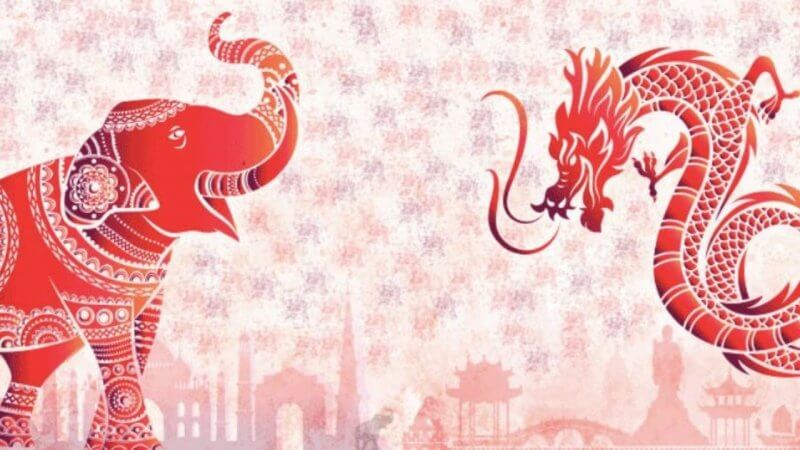
    Economic Fallout Post April 2020. After the Galwan incident, India has taken strong measures on the economic front against China, from banning over 250 software applications to a partial ban on various categories of white goods,and the imposition of anti-dumping duties on many others. The Consolidated FDI Policy of the Department for Promotion of Industry and Internal Trade dated 15 October 2020, mandates Government scrutiny of every Chinese investment proposal before approval. However, the paradox in the India China relationship is well illustrated by trade figures for the first half of the Financial Year 20-21, where China surpassed the USA to become India’s largest trading partner. India reduced imports from China but exports to China grew by a robust 26.2 per cent at $10.16 billion[24]. Also, conditionalities for borrowing from the AIIB and NIB have resulted in India having to permit Chinese firms to bid for works connected with projects funded by these institutions. Consequently in January this year, the contract for construction of a 5.6 km long underground stretch of the Rapid Rail Transit System in the National Capital Region has been awarded to a Chinese company, Shanghai Tunnel Engineering Company Limited.[25] As noted earlier, decoupling is not easy. Incentives for companies to relocate to India have been announced, with some investment flowing in from Google and Facebook, and plans for Samsung to relocate a factory to NOIDA[26]. Finally, India’s exclusion from the RCEP will also have to be factored in when negotiating a long term trade policy with China.

    However, the paradox in the India China relationship is well illustrated by trade figures for the first half of the Financial Year 20-21, where China surpassed the USA to become India’s largest trading partner.

    Soft Power and Academia. Indian soft power in China remains subservient to harsh security concerns despite oft-quoted historical antecedents. Some elements like Indian cinema continue to be extremely popular. Student exchange programs have taken shape, especially under the aegis of Confucius Institutes which have secured a toehold in some Indian campuses. Following the trend worldwide, their programs are also under scrutiny[27].  The few Indian students in China (less than 25000)[28] have been hit hard by the coronavirus. Overall, given the current state of engagement, employing soft power as an effective tool has limited potential. Exchange of scholars from policy and security think tanks has been a good way of imbibing a sense of the other, resulting in greater awareness. While the trust deficit and reasons for the same have always been highlighted by the Indian side, it has been the general experience that China has been less forthcoming in its responses.

    Building Blocks for a China Policy

    In the middle term, unless there is a concerted and verifiable effort by China, trade with that country will be overshadowed by security issues  (the huge trade imbalance also becoming one of these !). The Indian economy has commenced its post-Covid recovery in the new year. The budget for FY 21-22, trade policies of others like the EU and the US, will impact economic policy, as will national security concerns.

    Immediate security priorities vis a vis China are a mix of the geopolitical and purely military. These can broadly be outlined – safeguarding Indian interests in the Indian Ocean region and the littorals, holding the line in the high Himalayas and ensuring sanctity over Indian skies. The first being both a geopolitical and security matter would leverage all elements of statecraft including the military. The balance two are a direct outcome of India’s military power. These, intertwined with India’s multilateral approach towards cooperation in world fora would form the basis of dealing with China.

    Countries in the neighbourhood other than Pakistan when in distress, look first towards India for relief – natural calamities, food shortages[29], and now the corona vaccine, where Indian generosity remains unsurpassed worldwide. India does not indulge in cheque book diplomacy, nor entice weaker neighbours into debt traps.

    Managing the Neighbourhood. In South Asia, India is primus inter pares due to size, geographical location, resources, capability and potential. Its soft power, economic reach ( while not comparable to China’s) and associated linkages with other countries are huge, at times even considered overwhelming. Countries in the neighbourhood other than Pakistan when in distress, look first towards India for relief – natural calamities, food shortages[29], and now the corona vaccine, where Indian generosity remains unsurpassed worldwide. India does not indulge in cheque book diplomacy, nor entice weaker neighbours into debt traps. Despite ethnic linkages and security concerns resulting sometimes in what is perceived by others as ‘interventionist politics’, India’s respect for its neighbours’ sovereignty is absolute. This is in contrast to China, whose recent interventions in Nepal have led to rallies in front of the Chinese embassy[30]. Its pressure on the NLD government in Myanmar over BRI projects had again not been viewed favourably in that country,[31] though the trajectory that the China-Myanmar relationship now follows remains to be seen, with China attempting to support Myanmar’s military in international fora after the coup[32]. Within South Asia, strengthening delivery mechanisms, sticking to timelines in infrastructure projects, improving connectivity and resolving the myriad issues between neighbours without attempting a zero-sum game with China is the way forward for India, which should play by its considerable strengths. Simultaneously, it must look at growing challenges such as management of Brahmaputra waters and climate change, and leverage these concerns with affected neighbours.

    Strengthening Military Capability. A more direct challenge lies more in the military field,  and in measures necessary to overcome these.  The justifiable rise in military expenditure during the current year would continue or even accelerate. The armed forces are inching towards a mutually agreed road map before implementing large scale organisational reforms. Conceptual clarity on integrated warfighting across the spectrum in multiple domains (including the informational ) is a sine qua non, more so when cyberspace and space domains are concerned. This mandates breaking up silos between the military and other specialist government agencies for optimisation and seamless cooperation. Also, while classical notions of victory have mutated, swift savage border wars as witnessed in Nagorno Karabakh remain live possibilities for India, with open collusion now established between China and Pakistan. As always, the study of the inventory, military capability of the adversary and his likely pattern of operations will yield valuable lessons. The armed forces have to prepare multiple options, to deal with a range of threats from full scale two front wars down to the hybrid, including responses to terrorist acts while ensuring sovereignty across the seas. Network-centric warfare will take centre stage, with information operations being vital for overall success, possibly even defining what constitutes victory.

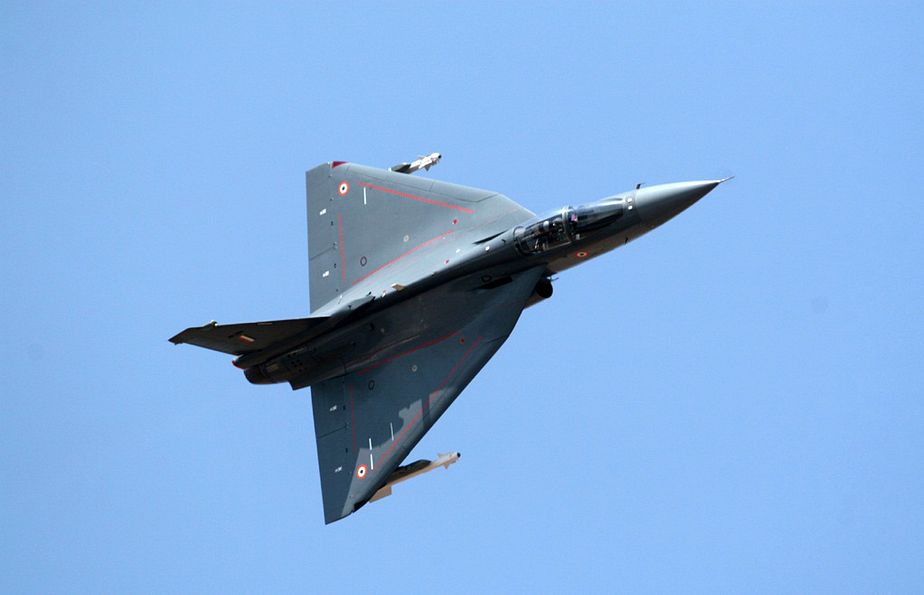
    Progress has been achieved in these directions. As an example, the first Indian weaponised drone swarm made its debut on Army Day 2021, and visuals of a ‘wingman drone’ underdevelopment have been shown during the Aero India 2021 at Bangalore. The military would be planning for operationalisation, induction, deployment, staffing and human resource aspects of this weapon platform with the nominated service. An estimate of the time required to resolve these issues as also for full-scale production of such systems and larger variants will dictate procurement decisions with respect to other land and air platforms providing similar standoff kinetic effects, and surveillance capability. A concurrent requirement to develop sufficient capability to counter such systems would doubtless be under scrutiny. In this regard, the outcome of the PLA merging its cyber and electronic warfare functions for multiple reasons merits attention.[33] While the Navy’s requirements to dominate the Indian Ocean are well appreciated, a consensus on its future role and the need (or otherwise) for a third aircraft carrier would decide the nature, type and numbers of future naval platforms – unmanned underwater vehicles, submarines, shore/ carrier-based aircraft and others.  With decisions over the Tejas LCA induction finalised, induction of a state of the art platforms from the USA and France over the last few years and hope for the acquisition of new generation indigenous air defence systems[34] on the anvil, the IAF is set to gradually regain its edge. Overall, India’s military has to leverage the latest technology and develop the capability to fight in multiple domains, which its hard-earned experience in third-generation warfighting would complement. With restructuring planned concurrently, each decision will have to be fully informed and thought through – more so when mini faceoffs as has happened at Naku La in Sikkim this month continue to occur.

    A Way Forward

    Traditional Chinese thinking has simultaneously been dismissive and wary of India. In his seminal publication at the turn of the century, Stephen Cohen noted that ‘…from Beijing’s perspective India is a second rank but sometimes threatening state. It poses little threat to China by itself and it can be easily countered but Beijing must be wary of any dramatic increase in Indian power or an alliance between New Delhi and some hostile major state..’[35]  As brought out in this paper, outlines of a grounded long term China policy based on previous experiences and new realities are visible. Rooted primarily in the security dimension followed thereafter by the economic, its success will be predicated on peace and tranquillity on the border, without entering into the trap of competition in either of the two domains. As pointed out by the Minister for External Affairs in his talk to the 13th All India Conference for China Studies this month [36] the India-China relationship has to be based on ‘mutuality…  mutual respect, mutual sensitivity and mutual interests ..’. The EAM further noted that ‘expectations…. that life can carry on undisturbed despite the situation at the border, that is simply not realistic. There are discussions underway through various mechanisms on disengagement at the border areas. But if ties are to steady and progress, policies must take into account the learnings of the last three decades’[37].

    Rooted primarily in the security dimension followed thereafter by the economic, its success will be predicated on peace and tranquillity on the border, without entering into the trap of competition in either of the two domains.

    In the same talk, the EAM has laid down eight broad and eminently practical propositions as guidelines for future India-China relations. Most prominent of these is that peace and tranquillity on the border are a must if relations in other spheres are to develop. Also, the need to accept that a multipolar world can have a multipolar Asia as its subset. He stressed that reciprocity is the bedrock of a relationship, and sensitivities to each other’s aspirations, interests and priorities must be respected. Concurrently, management of divergences and differences between two civilizational states should be considered over the long term.

    A China policy crafted on these principles would ensure that India’s concerns vis a vis its neighbour is addressed, within the larger National goal of all-round growth and development of India and its citizens in the 21st Century.


    Notes:

    [1] ‘Xi JinPing Heralds New Era of Chinese Power’ Dipanjan Ray Chaudhury, Economic Times 18 October 2017

    [2] ‘China Has Two Paths To Global Domination’ Jake Sullivan,  Hal Brands, Foreign Policy, 22 May 2020

    [3] ibid

    [4] ‘China’s Mask Diplomacy is Faltering.But the US isn’t Doing any better’ Charlie Campbell Time Magazine 03 April 2020

    [5] ‘China’s Renewed Aggression in the South China Sea’ Gateway House Infographic 22 April 2020

    [6] ‘US imposes new sanction on Beijing over South China Sea’  Mint 15 January 2021

    [7] In parting shot, Trump administration declares China’s repression of Uighurs ‘genocide’ Humeyra Pamuk, Reuters 19 January 2021

    [8] ‘Pacific Panic: China-Taiwan relations to reach breaking point in ‘next few weeks’ skynews.com.au 18 January 2021

    [9] ‘Japan wants de facto ‘Six Eyes’ intelligence status: defence chief’ Daishi Abe and Rieko Miki Nikkei Asia 14 August 2020

    [10] ‘Emmanuel Bonne’s interview to the Times of India’ 10 January 2021  Website of the French Embassy in New Delhi

    [11] ‘When China breaks rules, we have to be very robust and clear: French diplomat’ Dinakar Peri, The Hindu 08 January 2021

    [12] ‘COVID-19: The Nail in the Coffin of China’s Belt and Road Initiative?’ Lee YingHui, The Diplomat 28 September 2020

    [13] ibid

    [14] ‘Covid-19: China’s economy picks up, bucking global trend’ BBC.com  18 January 2021

    [15] ibid

    [16] ‘New US govt may look to further deepen ties with India: Blinken’ Elizabeth Roche, The Mint 21 Jan 2021

    [17] ‘What Biden’s Defence Secretary Said About Future Relations With India, Pakistan’ Lalit K Jha, The Wire 20 January 2021

    [18] ‘US NSA speaks to Doval, Def Secretary dials Rajnath’ Krishn Kaushik and Shubhajit Roy Indian Express 27 January 2021

    [19] ‘As China Taiwan tension rises, US warships sail into region’ The Indian Express 25 January 2021

    [20] ‘India and Australia: Partners for Indo Pacific Security and Stability’  Lalit Kapur, Delhi Policy Group Policy Brief Vol. V, Issue 42 December 15, 2020

    [21] ‘India China Relations 1947-2000 A Documentary Study’ (Vol 1 to 5)  Avtar Singh Bhasin   Geetika Publishers New Delhi 2018

    [22] ‘The Tibet Factor in India China Relations’  Rajiv Sikri  Journal of International Affairs , SPRING/SUMMER 2011, Vol. 64, No. 2, pp 60

    [23] Website of the Embassy of India at Beijing   www.eoibeijing.gov.in

    [24] ‘What an irony! Mainland China beats US to be India’s biggest trade partner in H1FY21’  Sumanth Banerji        Business Today 04 December 2020

    [25] ‘Chinese company bags vital contract for first rapid rail project’  Sandeep Dikshit   The Tribune   03 January 2021

    [26] ‘Samsung to invest Rs 4,825 cr to shift China mobile display factory to India’ Danish Khan  Economic Times 11 December 2020

    [27]  ‘The Hindu Explains | What are Confucius Institutes, and why are they under the scanner in India?’

    Ananth Krishnan The Hindu August 09 2020

    [28] ‘23,000 Indian students stare at long wait to return to Chinese campuses’  Sutirtho Patranobis  Hindustan Times  08  September 2020

    [29] ‘Offering non-commercial, humanitarian food assistance to its neighbours: India at WTO’ Press Trust of India 19 December 2020

    [30] ‘Torch rally held in Kathmandu to protest against Chinese interference’ ANI News  30 December 2020

    [31] ‘Chinese Foreign Minister Wang Yi visits Myanmar with aim to speed up BRI projects’  Dipanjan Roy Chaudhury  Economic Times  09 January 2021

    [32] ‘China blocks UNSC condemnation of Myanmar coup’ India Today Web Desk 03 February 2021

    [33] ‘Electronic and Cyber Warfare: A Comparative Analysis of the PLA and the Indian Army’ Kartik Bommankanti ORF Occasional Paper July 2019

    [34] ‘India successfully test fires new generation Akash NG missile’ Ch Sushil Rao  Times of India  25 January 2021

    [35] ‘ India  Emerging Power’  Stephen Philip Cohen   Brookings Institution Press 2001   pp 259

    [36] Keynote Address by External Affairs Minister at the 13th All India Conference of China Studies January 28, 2021

    [37] ibid


    Image Credit: Wion  and Trak.in
  • India, China, and Arunachal Pradesh

    India, China, and Arunachal Pradesh

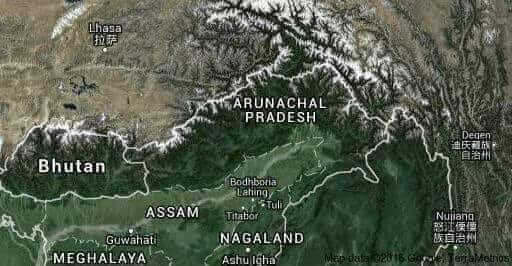
    The satellite picture below brilliantly depicts the geographical separation of Arunachal Pradesh (called Lower Tibet by the Chinese) and Tibet. The McMahon Line more or less runs along the crest line of the Himalayas.

    The Chinese have never been quite explicit on how much of Arunachal they seek.  I once saw an official map displayed in a travel agents office in Lhasa that showed only the Tawang tract as Chinese territory. In other maps they have their border running along the foothills, which means all of Arunachal.

    The Chinese have based their specific claim on the territory on the premise that Tawang was administered from Lhasa, and the contiguous areas owed allegiance to the Dalai Lama, the spiritual and temporal ruler of Tibet. Then the Chinese must also consider this. Sikkim till into the 19th century a vassal of Tibet and Darjeeling was forcibly taken from it by the British! By extending this logic could they realistically stake a claim for Sikkim and Darjeeling? Of course not. It would be preposterous. History has moved on. The times have changed. For the 21st century to be stable 20th century borders must be stable, whatever be our yearnings.

    At the crux of this issue is the larger question of the national identities of the two nations and when and how they evolved. The Imperial India of the Mughals spanned from Afghanistan to Bengal but did not go very much below the Godavari in the South. The Imperial India of the British incorporated all of today’s India, Pakistan and Bangladesh, but had no Afghanistan, not for want of trying. It was the British who for the first time brought Assam into India in 1826 when they defeated Burma and formalized the annexation with the treaty of Yandabo.

    It was only in 1886 that the British first forayed out of the Brahmaputra valley when they sent out a punitive expedition into the Lohit valley in pursuit of marauding tribesmen who began raiding the new tea gardens. Apparently the area was neither under Chinese or Tibetan control for there were no protests either from the Dalai Lama or the Chinese Amban in Lhasa. Soon the British stayed put.

    Tibet remained in self imposed isolation and the race to be first into Lhasa became the greatest challenge for explorers and adventurers in the second half of the 19th century. Not the least among these were the spies of the Survey of India, the legendary pundits. The most renowned of these was the Sarat Chandra Das whose books on Tibet are still avidly read today. As the adventurers, often military officers masquerading as explorers began visiting Tibet the British in India began worrying. Reports that the most well-known of Czarist Russia’s military explorers, Col. Grombchevsky was sighted in Tibet had Lord Curzon, the Governor General of India most worried.

    In 1903 Curzon decided to send a military expedition into Tibet led by Grombchevsky’s old antagonist, Col. Francis Younghusband. A brigade strong mixed force of Gurkhas and Tommies went over the Nathu La into the Chumbi valley and advanced unhindered till Shigatse. A Tibetan military force met them there but offered what can only be described as passive resistance. Not a shot was fired back as the British Indian troops rained bullets on them. It was a forerunner to Jallianwalla Bagh. From Shigatse Younghusband made a leisurely march into Lhasa. The British got the Tibetans to agree to end their isolation and having extracted trade concessions withdrew in 1904, the way they came.

    In 1907 Britain and Russia formally agreed that it was in their interests to leave Tibet “in that state of isolation from which, till recently, she has shown no intention to depart.” It may be of interest to the reader to know that the Great Game nevertheless continued. In 1907 Col. Mannerheim then of the Russian Army, later Field Marshal Mannerheim and first President of Finland, led a horseback expedition from Kyrgyzstan to Harbin on China’s northeast to identify a route for the cavalry.

    The next important year was 1913 when the Tibetans declared independence after the collapse of the Qing dynasty and the establishment of a Republic in China under Sun Yat Sen. They attacked and drove the Chinese garrisons in Tibet into India over the Nathu La. Also in 1913 the British convened the Simla Conference to demarcate the India-Tibet border. The British proposed the 1914 McMahon Line, as we know it. The Tibetans accepted it. The Chinese Amban however initialed the agreement under protest. But his protest seemed mostly about the British negotiating directly with Tibet as a sovereign state and not over the McMahon Line as such.

    Things moved on then. In 1935 at the insistence of Sir Olaf Caroe ICS, then Deputy Secretary in the Foreign Department, the McMahon Line was notified. In 1944 JP Mills ICS established British Indian administration in NEFA, but excluding Tawang which continued to be administered by the Lhasa appointed head lama at Tawang despite the fact that it lay well below the McMahon Line. This was largely because Henry Twynam, the Governor of Assam lost his nerve and did not want to provoke the Tibetans. In 1947 the Dalai Lama (the same gentleman who is now in Dharamshala) sent the newly independent India a note laying claim to some districts in NEFA/Arunachal.

    On October 7, 1950 the Chinese attacked the Tibetans at seven places on their frontier and made known their intention of reasserting control over all of Tibet. As if in response on February 16, 1951 Major Relangnao ‘Bob’ Khating IFAS raised the India tricolor in Tawang and took over the administration of the tract. The point of this narration is to bring home the fact that India’s claim over Arunachal Pradesh doesn’t rest on any great historical tradition or cultural affinity. We are there because the British went there. But then the Chinese have no basis whatsoever to stake a claim, besides a few dreamy cartographic enlargements of the notion of China among some of the hangers-on in the Qing emperor’s court. The important thing now is that we have been there for over a hundred years and that settles the issue.

    Arunachal Pradesh has a very interesting population mix. Only less than 10% of its population is Tibetan. Indo-Mongoloid tribes account for 68% of the population. The rest are migrants from Nagaland and Assam. As far as religious affinities go Hindus are the biggest group with 37%, followed by 36% animists, 13% Buddhists. Recent census figures suggest a spurt in Christianity, possibly induced by pocketbook proselytizing. In all there are 21 major tribal groups and over 100 ethnically distinct sub-groupings, speaking over 50 distinct languages and dialects. The population of about a million is spread out over 17 towns and 3649 villages. With the exception of a few villages of Monpas who live north of the McMahon Line, it is an ethnically compact and contiguous area.

    In fact in future boundary negotiations India could make a case for inclusion of the few Monpa villages left behind north of the McMahon Line? Many knowledgeable observers suggest that the area south of the Huangpo/Brahmaputra from the Pemako gorge till it enters the Subansiri division of Arunachal would be a logical boundary as the raging and hence un-fordable and unbridgeable river ensures hardly any Chinese administrative presence in the area.

    It is true that historically India never had a direct border with Tibet till the British took Kumaon and Garhwal from Nepal in 1846 and extended its domain over Arunachal in 1886. On the other hand the formidable Himalayas were always culturally a part of India and formed a natural barrier against ingress from the north, whether Tibetan or Chinese. But times have moved and technology and mankind’s great engineering powers now make it possible for even the most hostile terrain to be subjugated. The Himalayas are no longer the barrier they once were. As China and India emerge as the world’s great economies and powers can India possibly allow China a strategic trans-Himalayan space just a few miles from the plains?

    The view from the Chinese side about what exactly constitutes China is no less confused. Apparently like the British, the Manchu’s who ruled China from the 17th to the early 20th century had a policy of staking claim to the lands that lay ahead of their frontiers in order to provide themselves with military buffers. In a recent article in the China Review magazine, Professor Ge Jianxiong, Director of the Institute of Chinese Historical Geography at Fudan University in Shanghai writes: “to claim that Tibet has always been a part of China since the Tang dynasty; the fact that the Qinghai-Tibetan plateau subsequently became a part of the Chinese dynasties does not substantiate such a claim.” Ge also notes that prior to 1912 when the Republic of China was established the idea of China was not clearly conceptualized. Even during the late Qing period (Manchu) the term China would on occasion refer to the Qing state including all the territory that fell within the boundaries of the Qing Empire. At other times it would be taken to refer to only the eighteen interior provinces excluding Manchuria, Inner Mongolia, Tibet and Sinkiang.

    Professor Ge further adds that the notions of “Greater China” were based entirely on the “one-sided views of Qing court records that were written for the courts self-aggrandizement.” Ge criticizes those who feel that the more they exaggerate the territory of historical China the more “patriotic” they are. In this context I would like to recall a recent conversation I had with the then Chinese Ambassador to India, Sun Yuxi. Ambassador Sun said that while he was soundly castigated in India for his unintended comment, he gained a major constituency in China. The mandarins in the Beijing would do well to take heed to Ge Jianxiong’s advice: “If China really wishes to rise peacefully and be on solid footing in the future, we must understand the sum of our history and learn from our experiences.” The same holds true for the babus in South Block and ‘the having writ move on’ media pundits. If we don’t then we know who will be laughing!


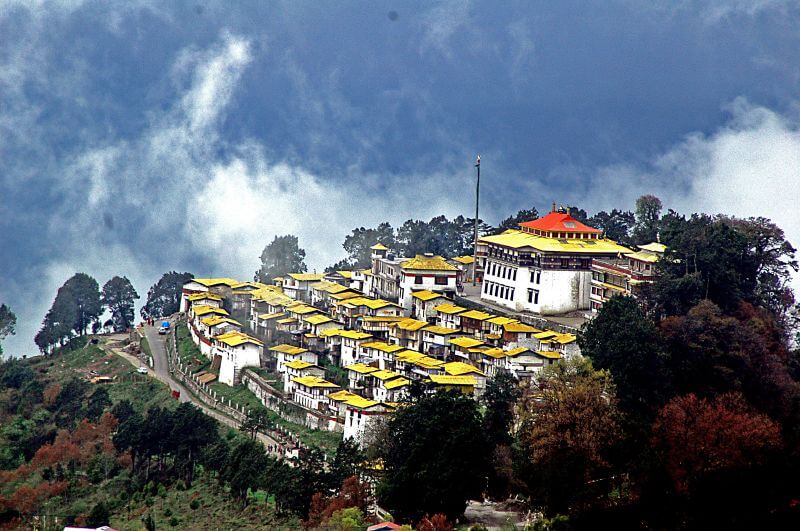
    Image Credit: Tawang Monastery

  • Chief of Defence Staff, a year later: Lack of Clarity and an ambiguous Mandate

    Chief of Defence Staff, a year later: Lack of Clarity and an ambiguous Mandate

    On 31st of Dec 2020 India’s first Chief of Defence Staff (CDS), Gen Bipin Rawat, completed one-year in office.  With China recently unveiling its 14th Five Year Plan aiming to bring its military on par with the USA by 2027, it would be interesting to observe if the appointment of CDS has helped the Indian Military spruce up its structure and operational philosophy in any manner.

    Appointment of CDS was put on hold for almost two decades after the Kargil Review Committee made its recommendations.  Opinion among the strategic community has always been divided on the appointment of CDS. Those who argued in favour espoused that CDS would be the panacea for all ills while those who opposed, opined that the time-tested Higher Defence Organisation proposed by Lord Ismay has worked well over the years and hence, the western concept of CDS is unnecessary. Now that the CDS is in place, it is futile to revisit the debate but the functioning of CDS would be a subject of scrutiny for the next few years.

    In the last few months, the Department of Military Affairs (DMA) headed by the CDS came for intense criticism for making proposals about the increase in retirement age and reduction in pensions. Previous proposals such as the closure of CSD canteens at peace stations, opening up of cantonment, doing away with Army Day parade etc, which are believed to have emanated from the DMA have been subjected to ridicule and disdain in the social media. It wasn’t exactly clear as to why the office of CDS was being used for such purely administrative issues, which are counterproductive in enhancing the morale and pride of the forces.

    Men in uniform yearned that CDS would play a vital role in bringing about the true integration of Services HQ with the MoD and expedite the process of defence modernisation. However, after one year, it is indeed of great concern that the office of CDS (read DMA) appears to be focussed on administrative and ceremonial issues with absolutely no strategic significance.

    When CDS assumed charge on 1st Jan 20, it was reported that the CDS would be the Principal Military Advisor to the Government (read Def Minister) and he would head the newly created DMA.  Additionally, he would assume charge of the Integrated Defence Staff (IDS), serve as the permanent Chairman of the Chiefs of Staff Committee (COSC), Head the Tri-Service Commands, and be a member of the Defence Acquisition Council besides the Nuclear Command Authority. Quite a tall order indeed but doesn’t seem to be adequately equipped with a statutory mandate to perform effectively. Men in uniform yearned that CDS would play a vital role in bringing about the true integration of Services HQ with the MoD and expedite the process of defence modernisation. However, after one year, it is indeed of great concern that the office of CDS (read DMA) appears to be focussed on administrative and ceremonial issues with absolutely no strategic significance. One of the first initiatives announced by Gen Rawat was to create an Air Defence Command which is yet to materialise and creation of Theatre Commands seems to be a long haul.

    it is beyond comprehension to fathom what prompted the Government to create a Department of Military Affairs within the MoD when the Integrated Defence Staff (IDS) was already functioning since 2001 awaiting the appointment of a CDS.  As Service Chiefs continue to exercise Command over their respective Service, the CDS as the head of IDS would be rightly placed to promote joint training initiatives, validate joint operational plans and act as a catalyst in defence modernisation.  However, for all this to be achieved, the role and functioning of the CDS should be spelt out; particularly the role of CDS as the “Principal Military Advisor” to the Raksha Mantri, vis-à-vis the Defence Secretary who continues to be the “Principal Advisor” to the Defence Minister. Such vital aspects are never left to chance based on an individual’s equations with political leadership but need to be appropriately institutionalised, mandated and published.

    Currently, Defence Secretary functions as head of the Department of Defence and is additionally responsible for coordinating the activities of the five Departments in the Ministry, including the newly created DMA. The Defence Secretary draws his functional powers from the Cabinet Secretariat –Manual of Office Procedures (CS-MoP) which clearly states that the Secretary of the Department “is the principal adviser of the Minister on all matters of policy and administration within his Ministry/Department, and his responsibility is complete and undivided”. If Defence Secretary is coordinating the affairs of all the five departments including DMA as the Principal Advisor, what is the status of the four-star-CDS?

    The Government of India (Allocation of Business) Rules, 1961 are made by the President of India under Article 77 of the Constitution for the allocation of business of the Government of India. The business of the Government is transacted in the Ministries/Departments, Secretariats and offices (referred to as ‘Department’) as per the distribution of subjects specified in these Rules. Allocation of Business Rules has not been revised since 2017 though DMA has been created one year ago.  As a result, the DMA is not listed in the First Schedule of the Allocation of Business.

    Transaction of Business (Rules) 1961 are made by the President of India for the convenient transaction of the Business of the Government of India. The disposal of business by various ministries, inter-departmental transactions and mandates of various committees are published in these rules. The significance of these rules can be gauged from the fact that the rules have been recently amended to deal with unprecedented challenges posed by Covid 19 pandemic. Cabinet Secretariat has amended Government of India Transaction of Business Rules, 1961 to widen powers of two committees to meet the economic crisis caused by Covid 19, using the powers under the Act. However, Transaction of Business Rules has not been revised clearly defining the role of CDS as the Principal Military Advisor to the Government.

    The organisation chart in the MoD has been removed possibly because it would only be too embarrassing to place the CDS under the Defence Secretary. There is an urgent need for the GoI to create a meaningful role for the CDS and empower him with a statutory mandate.

    A cursory glance at the website of the Ministry of Defence would reveal a lack of any sincerity in assigning specific responsibilities for DMA. It has been casually mentioned that DMA “deals with the armed forces of the Union….. and promotes jointness among the three services”. Were these objectives not met by the MoD in the past? So what value addition has the DMA provided? The organisation chart in the MoD has been removed possibly because it would only be too embarrassing to place the CDS under the Defence Secretary. There is an urgent need for the GoI to create a meaningful role for the CDS and empower him with a statutory mandate.

    Indian Military is not expeditionary. However, if there is a convincing need to create Theatre Commands in pursuit of joint operations and interoperability, replacing the existing 17 Service-specific Commands by fewer Theatre Commands would be the most challenging task for the CDS. If the experience of USA, UK and other major militaries is anything go by, such major military reforms could be pushed through only with steadfast backing from the government, taking all three services into confidence and aligning the entire military leadership with the desired outcomes of this humungous exercise which may eventually need constitutional validity through an Act of the parliament.

    For the appointment of CDS to make a meaningful purpose the following measures are imperative:

    • Abolish the DMA and facilitate the CDS to take complete control of the IDS, keeping its functioning outside the purview of Def Secretary
    • Revise the CS-MOP, Allocation of Business Rules, Transaction of Business rules and the Warrant of Precedence, clearly bringing out the role and responsibilities of CDS as the Principal Military Advisor to the Defence Minister, in contrast to the roles and responsibilities of the Defence Secretary which may also now need to be re-drafted.
    • Make CDS a permanent member of the Cabinet Committee on Security facilitating the single-point military advice to the National Security Council.
    • The cabinet should spell out a Defence Policy Guidance (DPG) with a 12 year to the 15-year horizon in the light of prevailing and forecasted geo-political scenario and assist the CDS in preparing a clear roadmap for Indian Military Modernisation

    To abrogate the stigma of “Attached Offices”, and to integrate the Services HQ with MoD, a beginning needs to be made by augmenting the IDS with officials from the MoD.

    • Currently, the budgeting and procurement plans are made in isolation and subject to scrutiny by the Ministry of Fin (Def) thereby losing time and effort. IDS needs to be adequately empowered by augmenting it with an integral wing of the Ministry of Fin (Def) headed by a Joint Secretary ranked officer.
    • A Defence Production Wing under the charge of an Additional Secretary ranked officer reporting directly to the CDS should be created with the long term objective of achieving complete integration of the department of defence production with IDS. This suggestion would certainly be the most unpopular with the bureaucracy but could turn out to be a game-changer if achieved.

    Kargil Review Committee had recommended the appointment of CDS to integrate the armed forces in their planning, procurement and functioning to transform the Indian Military as a unitary force to reckon with.  In the absence of a clear mandate and constitutional validity for the functioning of the CDS, the entire effort of instituting one, seems to be of little consequence, much less, competent of driving any significant reforms. The current arrangement needs a complete overhaul if that is to be achieved.

  • India-China Border Stand-Off

    India-China Border Stand-Off

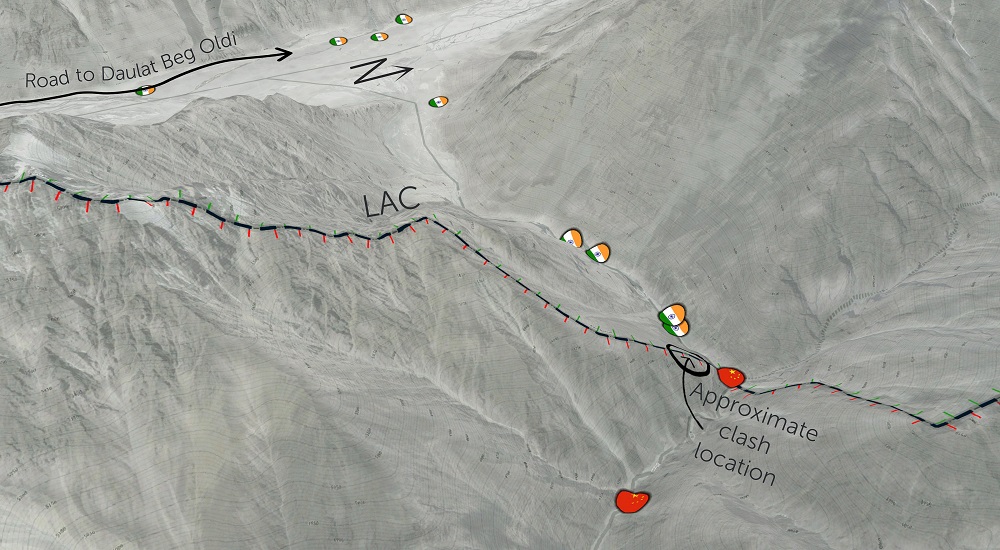
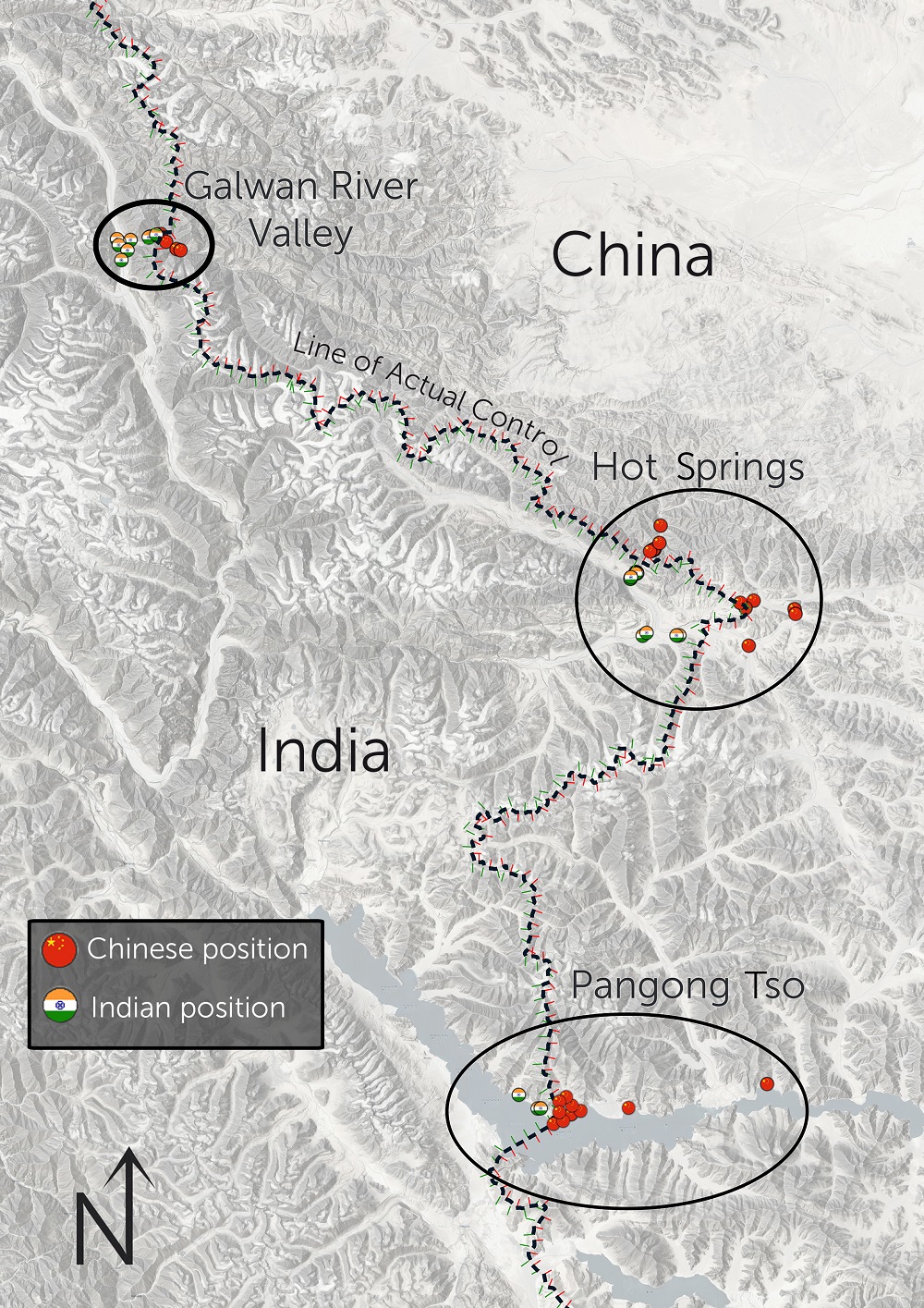
    On the 5th and 6th May 2020, Chinese incursions were reported at a very large frontage along the Line of Actual Control (LAC); starting from Naku La in north Sikkim, in Finger area of Pangong Tso, in Galwan Valley, Hot springs and Gogra heights located north-east of Galwan Valley. These incursions were a little different from all previous border standoffs. This time the Chinese incursion has been at multiple places and also, they had come prepared with weapons, vehicles and tents. They had come in large numbers with an intent to dig in.
    The issue came to light when scuffles were reported by the media on 10 May that some Chinese had intruded into the Muguthang Valley at Naku La and asked Indians to vacate the area as they claimed that it was their land. A scuffle ensued . According to PTI, the incident involved 150 soldiers. During the incident, the two sides threw stones at each other.

    Download Full Paper

  • What After The Galwan Incident?

    What After The Galwan Incident?

    As one writes, a phase of the events in the Galwan valley near the Line of Actual Control (LAC) has come to an end. Inputs from government, media and private commentators, have provided a perspective of the events preceding the incidents of 15/16 June and thereafter till the current day. For the world, the occasion has provided the opportunity yet again to witness the fighting spirit and junior leadership of all ranks of the Indian Army, who despite being outnumbered, were able to inflict far greater casualties on their adversaries, in inhospitable terrain under fading light conditions. The sacrifices of the men of 16 BIHAR, 3 PUNJAB, 3 Medium Regiment, and individual personnel from 81 Field Regiment, Corps of Signals and the Army Medical Corps have added lustre to the reputation of the Indian military. Their deeds shall remain enshrined in the memory of a grateful nation. At this watershed moment, we salute them.
    China is contesting control over settled areas (Galwan), exploiting laid down rules and norms of border management by resorting to use of primitive weapons instead of firearms, and pushing the envelope on the ground in attempting to increase areas under control such as at Hot Springs and Pangong Tso – all actions just short of war.
    One theory gaining currency in attempting to understand China’s recent behaviour, pertains to its unhappiness over what it perceives as alteration of the status quo on the LAC by designating Ladakh as a Union Territory – resulting in active collusion with Pakistan which shares Beijing’s sentiments on this issue, amongst others. However, there is no doubt that the strategy applied by China in East Ladakh comes straight out of its manual on Grey Zone Warfare. It is contesting control over settled areas (Galwan), exploiting laid down rules and norms of border management by resorting to use of primitive weapons instead of firearms, and pushing the envelope on the ground in attempting to increase areas under control such as at Hot Springs and Pangong Tso – all actions just short of war.

    While the situation on the Pangong Tso awaits resolution, what is amply clear is that the era of explaining away patrol clashes on the LAC to the Indian public, in terms of ‘varying perceptions held by both sides’, is past. By its perfidious actions in East Ladakh this year, China has shredded in letter and spirit the border agreements built up over the last three decades. The recent incidents have brought greater clarity to the public mind, with a consensus that China’s salami slicing tactics cannot be tolerated any further. Indian soldiers see the LAC as a line marked on the map. Commanders are clear that the areas up to that line are to be either physically occupied or patrolled at will from bases in the vicinity, supplemented by other forms of surveillance. As per media reports, the Government has over the weekend ‘revised the Rules of Engagement’, giving ‘a free hand to the Army’ to deal with occurrences of this nature. By implication, in future if patrols cannot resolve their face offs peacefully, there will be no resorting to hand to hand scuffles with primitive weapons – unsuccessful efforts at border management will give way to border defence, through resort to tactical military operations.
    As per media reports, the Government has over the weekend ‘revised the Rules of Engagement’, giving ‘a free hand to the Army’ to deal with occurrences of this nature. By implication, in future if patrols cannot resolve their face offs peacefully, there will be no resorting to hand to hand scuffles with primitive weapons – unsuccessful efforts at border management will give way to border defence, through resort to tactical military operations.
    Response to this new paradigm places another set of challenges before the Indian Army. Prior to May 2020, Galwan was not in the category of disputed areas, as understood in LAC parlance. Neither had any Chinese activity been sensed in the preceding years. While construction of the DSDBO road could be the trigger, the fact that an area where the LAC had lain undisturbed since 1962 could become the scene of such a violent action, warrants scrutiny of PLA intent across the board. Previous assumptions with respect to the PLAs likely areas of interest across the entire Northern border, therefore, certainly warrants a relook. Conclusions drawn would mandate contingency planning and consequent tasking at strategic, operational and tactical levels. Such plans doubtless exist. However, it is obvious that their scope, timelines, and imperatives for successful implementation will need review in conjunction with the other services.
    Outcomes of such reviews would inevitably renew the focus on capability building and in the middle term, might even alter priorities for the same. Substantial enhancements in the areas of surveillance, tactical and strategic air mobility and real time communication links continue to retain their importance. Induction of greater varieties of kinetic non-contact weapon systems, complemented by force multipliers such as cyber warriors and special forces too remain on top of the list. Also, the continued ceasefire violations on the Line of Control to the West, and the relentless tempo of counter terrorist operations in the Valley during this period smack of collusion and tell a tale which defence planners must take note of. Developing the desired capability will be predicated on guaranteed funding and fast track procedures. It is heartening to peruse reports in the Economic Times of 22 June that the Government has granted emergency financial powers up to Rs 500 crore per procurement project to each service for buying weapons and ammunition. Even if new projects cannot be initiated immediately because of fund constraints imposed by the Covid-19 pandemic and otherwise, it is time for stalled ones like the Mountain Strike Corps to be quickly completed. The example of the PLA which has almost completed its reorganisation for fighting wars of the future and tested the response of its field force during the Covid-19 pandemic, must be taken note of.
    Thanks to the Galwan episode, the vital aspect of border infrastructure has gained nationwide attention. There is perceptive increase in the pace of development over the last few years. The sequence and methodology however are dictated essentially by two factors – availability of resources (funds and specialist equipment) and the need for calibrating messages implicit in such actions to China. Despite Covid-19 constraints, the current crisis mandates that funds currently earmarked for infrastructure development continue to flow so that development progresses, albeit at a slower pace. As regards messaging to China, we have reached a watershed moment. As high level military talks continue and spell out the Indian position on the ground to the Chinese, creating an ‘all of nation approach’ for tackling China becomes necessary.
    Galwan incident has ensured that the negative perception of China worldwide is now shared by almost all sections of Indian society. This bitterness is fuelled by the sheer brutality of the Chinese military and duplicity of the Chinese government, bringing back memories of 1962 for many who have only heard of that era. It is driven further by a realisation of the scale of India’s dependence on China, be it in the import of manufactured goods of all hues, or technology, and the consequent harm to Indian interests and livelihoods. Awareness has spread amongst Indians that China’s constant working against India’s interests in world fora, be it in vetoing expansion of the permanent membership of the Security Council for ‘technical reasons’, blocking its membership in the Nuclear Suppliers Group or introducing discussions on Kashmir are all part of its plan to obstruct India’s progress to its rightful place in the comity of nations. In attempting to correct an unequal economic relationship, ensuring that India retains its position in the region and preventing erosion of its influence in South Asia and beyond, all elements of the Indian state have their tasks cut out. It becomes imperative now to prepare a different toolkit with a wider range of options (including those not envisaged earlier) to manage India-China relations. Such options now require to be coordinated at all levels of the government and intimated to stakeholders including industry and other influencers for implementation. This coordination is long overdue. Resetting the economic relationship will not be easy. However, announcement of a practical time bound and holistic road map which has been thought through with all stakeholders would be a beginning.
    Galwan incident has ensured that the negative perception of China worldwide is now shared by almost all sections of Indian society.
    To supplement the proposed policy outlined above, articulation of a holistic Strategic Narrative vis-a-vis China becomes necessary. Such a narrative would pertain to as many aspects as possible – bilateral issues (including border management), local and regional matters, so that consistent, coherent and long term views are voiced, keeping in mind the national interest. information operations would be a subset of such a narrative, and briefings organised as frequently as possible would be useful force multipliers. It might be necessary for the concerned sections in the newly formed Department of Military Affairs and the Department of Defence to coordinate these aspects. India must also actively consider the possibilities that other forms of conflict, including hybrid warfare, are necessary to exploit and invest in the same. Here too, employment of such methodologies by China is an example. China has been refining its doctrine of ‘Unrestricted Warfare’ since the early 90s. The effects are there to see in South China Sea and elsewhere. It is executing certain aspects of this strategy against India on the Northern borders.
    Managing relations with China is destined to remain the major preoccupation for Indian strategic thinkers in coming years. Tensions along the LAC are but one manifestation of this problem. Both nations are hostage to geography. China’s behaviour over the last decade has influenced Indian foreign and military policies like no other, causing India to take decisions that were not in the realms of possibility earlier. Articulating a holistic China strategy through an all of government approach within the overall ambit of a National Security Strategy to ensure that India achieves its rightful place, has never been so important.
    Image Credit: ASPI:The Strategist – Nathan Ruser

  • India’s impending Fighter Aircraft Choices: Finding the Elusive Solution?

    India’s impending Fighter Aircraft Choices: Finding the Elusive Solution?

    Category : Defence & Aerospace/India

    Title : India’s impending Fighter Aircraft Choices: Finding the Elusive Solution?

    Author : M Matheswaran 02.02.2020

    The Indian Air Force has been afflicted with decreasing force strength due to phasing out of old aircraft and increasing obsolescence of its fleets. Despite the induction of Rafale and Tejas, the IAF will continue to face challenges of reducing numbers and a large chunk of old platforms in its inventory. The IAF is facing serious shortages in its fighter aircraft strength. Air Marshal M Matheswaran examines the possible strategy that can best address IAF’s choice of fighter aircraft for its future.

    Read More