Category: National Security & Foreign Policy

  • The Great Chips War

    The Great Chips War

    The supply chain disruptions for semiconductor chips and the increasing sanctions imposed by the US on high-tech chips access to China and Russia has signalled the critical relevance of control over this technology and process for national security. Chip design and manufacture involve heavy capital investments and access to special machinery that is monopolised by very few American-controlled/influenced companies in Europe and East Asia. India, having missed the boat earlier due to poor investment decisions, has recognised chip manufacturing as a critical strategic industry and is investing efforts to establish significant capabilities. This could take years as challenges still remain.  – TPF Editorial Team

    Following the US Commerce Department’s announcement of severe new restrictions on sales of advanced semiconductors and other US high-tech goods to China, the Sino-American rivalry has entered an important new phase. Even under the best circumstances, China will have a difficult time adapting to its new reality.

    In addition to dealing with the fallout from open warfare in eastern Europe, the world is witnessing the start of a full-scale economic war between the United States and China over technology. This conflict will be highly consequential, and it is escalating rapidly. Earlier this month, the US Commerce Department introduced severe new restrictions on the sale of advanced semiconductors and other US high-tech goods to China. While Russia has used missiles to try to cripple Ukraine’s energy and heating infrastructure, the US is now using export restrictions to curtail China’s military, intelligence, and security services.

    The new chip war is a war for control of the future.

    Moreover, in late August, US President Joe Biden signed the CHIPS Act, which includes subsidies and other measures to bolster America’s domestic semiconductor industry. Semiconductors are and will remain, at the heart of the twenty-first-century economy. Without microchips, our smartphones would be dumb phones, our cars wouldn’t move, our communications networks wouldn’t function, any form of automation would be unthinkable, and the new era of artificial intelligence that we are entering would remain the stuff of sci-fi novels. Controlling the design, fabrication, and value chains that produce these increasingly important components of our lives is thus of the utmost importance. The new chip war is a war for control of the future.

    The semiconductor value chain is hyper-globalized, but the US and its closest allies control all the key nodes. Chip design is heavily concentrated in America, and production would not be possible without advanced equipment from Europe, and fabrication of the most advanced chips – including those that are critical for AI – is located exclusively in East Asia. The most important player by far is Taiwan, but South Korea is also in the picture.

    In its own pursuit of technological supremacy, China has become increasingly reliant on these chips, and its government has been at pains to boost domestic production and achieve “self-sufficiency.” In recent years, China has invested massively to build up its own semiconductor design and manufacturing capabilities. But while there has been some progress, it remains years behind the US; and, crucially, the most advanced chips are still beyond China’s reach.

    It has now been two years since the US banned all sales of advanced chips to the Chinese telecom giant Huawei, which was China’s global technology flagship at the time. The results have been dramatic. After losing 80% of its global market share for smartphones, Huawei was left with no choice but to sell off its smartphone unit, Honor, and reorient its corporate mission. With its latest move, the US is now aiming to do to all of China what it did to Huawei.

    This dramatic escalation of the technology war is bound to have equally dramatic economic and political consequences, some of which will be evident immediately, and some of which will take some time to materialize. China most likely has stocked up on chips and is already working to create sophisticated new networks to circumvent the sanctions. (After Huawei spun it off in late 2020, Honor quickly staged a comeback, selling phones that use chips from the US multinational Qualcomm.)

    Still, the new sanctions are so broad that, over time, they will almost certainly strike a heavy blow not only to China’s high-tech sector but also to many other parts of its economy. A European company that exports to China now must be doubly sure that its products contain no US-connected chips. And, owing to the global nature of the value chain, many chips from Taiwan or South Korea also will be off-limits.

    The official aim of the US policy is to keep advanced chips out of the Chinese military’s hands. But the real effect will be to curtail China’s development in the sectors that will be critical to national power in the decades ahead.

    The official aim of the US policy is to keep advanced chips out of the Chinese military’s hands. But the real effect will be to curtail China’s development in the sectors that will be critical to national power in the decades ahead. China will certainly respond with even stronger efforts to develop its own capabilities. But even under the best circumstances, and despite all the resources it will throw at the problem, any additional efforts will take time to bear fruit, especially now that US restrictions are depriving China of the inputs that it needs to achieve self-sufficiency.

    The new chips war eliminates any remaining doubt that we are witnessing a broader Sino-American decoupling. That development will have far-reaching implications – only some of them foreseeable – for the rest of the global economy.

    Ukraine is already repairing and restarting the power stations that have been hit by Russian missile barrages since the invasion began in February. But it will be much more difficult for China to overcome the loss of key technologies. As frightening as Russia’s twentieth-century-style war is, the real sources of power in the twenty-first century do not lie in territorial conquest. The most powerful countries will be those that master the economic, technological, and diplomatic domains.

    This article was published earlier in Project Syndicate.

    Images Credit: Globaltimes.cn

  • The Bridge on River Chenab

    The Bridge on River Chenab

    “The only way to discover the limits of the possible is to go beyond them into the impossible”

    -Arthur C. Clarke

    Introduction

    On 13 Aug 2022, the bridge on the River Chenab in the Reasi District of J&K was finally completed. It was a case of the impossible becoming possible. It all happened because of a very high degree of self-belief of those who planned it and the sincerity of thousands of those who worked hard for the last 18 years.   Indeed, it was the best gift the Indian Railway in general and Indian Engineers, in particular, could give to India on the 76th Independence Day of India. It is also highly symbolic that it is located in the State of J&K and in a way appeared to be a giant step towards the integration of J&K with the rest of the country.

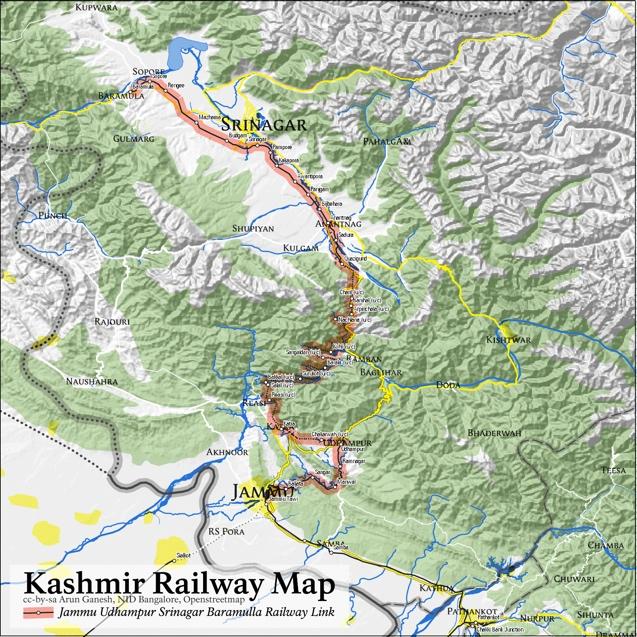
    The Bridge over the River Chenab is part of the Jammu-Udhampur-Baramulla Railway line, which is being constructed. While Sections of Jammu-Udhampur, Udhampur-Katra and Banihal-Baramulla are already completed and opened for traffic, section Katra- Banihal is still not complete. The degree of difficulty in this section is enormous. Besides this Bridge on Chenab (more about it a little later), the Bridge on Anji Khad (which is under construction) and a total of 35 tunnels and 37 bridges make this section of 111 km in the mountainous terrain extremely challenging and an engineering marvel in the making.

    Progress of the Project –  It is a 356 km railway project, starting at Jammu and going up to Baramulla. It was started in 1983 with the objective of connecting Jammu Tawi to Udhampur.  Construction of the route faced natural challenges including major earthquake zones, extreme temperatures and inhospitable terrain.  Finally, in 2005  The 53 km long Jammu–Udhampur section opened after 21 years with 20 tunnels and 158 bridges. The cost of the project had escalated to ₹515 crores from the original estimated cost of ₹50 crores.  In 1994 The railway accepted the necessity to extend the track to Baramulla. However, at that point it was thought that the project will have two disconnected arms; one from Jammu to Udhampur and the second from Qazigund to Baramulla. In 2002 the GoI declared this project to be a national project. This means hereafter, the entire funding will be from the Central Budget. At that time the necessity was also accepted to connect the two disconnected arms. The estimated cost of the project assessed then was   ₹6,000 crore.  In 2008 the 66 km section between Anantnag and Manzhama (outside Srinagar) was opened for traffic. In 2009 this Service was extended to Baramulla. During the same year, the line from Anantnag was extended to Qazigund.

    Also  Around the same time, an extension of the track from Baramulla to Kupwara was proposed, and its survey got completed in 2009. In 2009 itself, work on the section between Katra and Qazigund resumed after a review based on geotechnical studies. In 2011, an 11.215 Km long Banihal Qazigund tunnel across the Pir Panjal Range was completed.  This paved the way for a trial run in Dec 2012 from Banihal to Qazigund. In 2014 the train route from Udhampur to Katra was also operationalised. Now the only missing link in this nationally vital rail line was Katra-Banihal. Finally, in 2018 the GoI approved the extension of the railway line to Kupwara.

    Degree of Difficulty in Katra- Banihal Section – This is a 111 km long stretch. 97.34 km of this stretch will be through tunnels. There are 20 Major (including the bridge across the Chenab river and a bridge on Anji Khad) and 10 minor bridges on this stretch. 

    Bridge Across Chenab

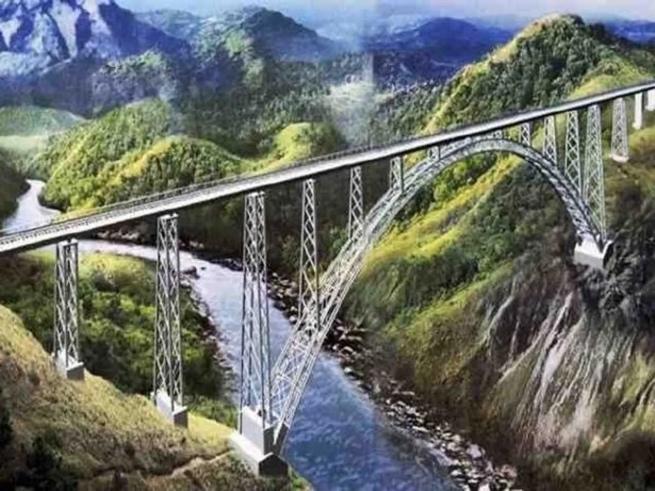
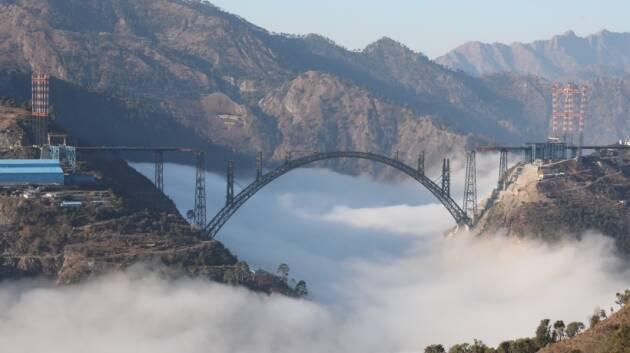
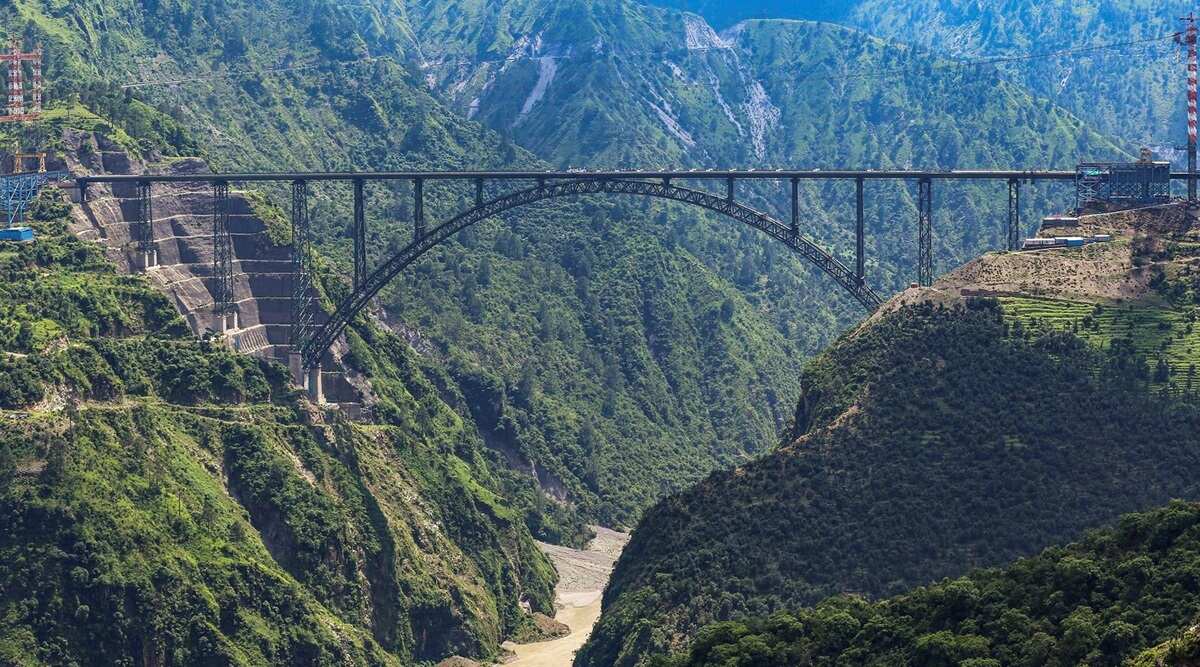
    Location: The Chenab Rail Bridge is a steel and concrete arch bridge between Bakkal and Kauri in the Reasi district of J&K, India.  It needs to be noted that it is the highest railway bridge in the world. After many hick-ups, finally in 2012 excavation of the foundation of the bridge commenced. The tender was with Afcons Infrastructure Limited. The alignment crosses a deep gorge of the Chenab River, which necessitates the construction of a long-span railway bridge with a viaduct for approaches on either side. 

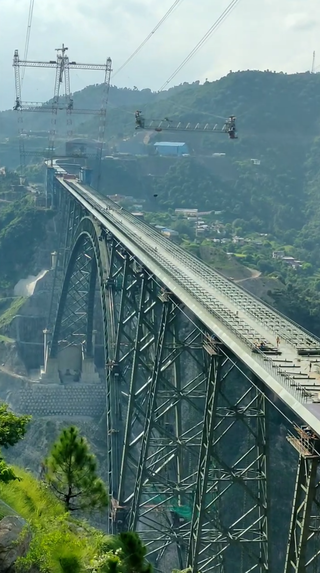
    Details: It is a 785 meters long single arch bridge where the main arch is 467 meters. The total span of the bridge is 1315 meters including a viaduct of 650 meters on the Northern side, Deck height is 359 meters above the river bed and 322 meters above the water surface which is 35 meters more than the height of the Eiffel Tower. The project also entails the construction of 203 km of access roads.  The deck is 13.5 meters wide, where two rail tracks will be available. The total cost of the Bridge is Rs 1486 Crores.


    Design: The steel arch has been planned because the construction of the pillar was difficult and the load had to be distributed. Chords have been provided to cater for the swaying load. The steel structures of the bridge were manufactured in workshops built in the mountains. The workshops had been moved to the building site because there is no proper road network in the challenging terrain. The longest building parts that could be delivered to the site were 12 meters in length. Therefore, four workshops were established in the mountains. Workshops and paint shops were built on both sides of the valley. All steel materials, except for the smallest rolled profiles, were delivered to the mountains as steel boards. The insufficient infrastructure of the area caused additional problems. There was no electricity and the water of the river was not suitable for manufacturing concrete. All electricity had to be produced at the site and the water was delivered from further away in the mountains. The job was also challenging because the track had a curvature in the approach bridge. In this section, the construction stage bearings had been designed in such a way that it was possible to launch the steel deck in the curvature portion as well. The bridge consists of about 25000 tonnes of steel structures, the main portion of which was used for the arch bridge section. It is a unique design and as such none of the Indian codes fully catered for the design validation. Therefore it was decided to follow the BS Code. The design also caters for wind load effects as per wind tunnel tests. It can cater for wind pressure of 1500 Pa. It is a blast resistance design. The design of the decking has been checked for fatigue as per the BS Code. The most important aspect is that it caters for redundancy within the structure, for a lower level of operation during mishaps and against collapse in extreme cases of one-pier failure. The area has high seismicity and the design was planned to withstand earthquakes of the severity of 8 on the Richter Scale. The bridge design is for a rail speed of 100 kmph. This means it can withstand very high-intensity of vibrations. The designed life of the bridge is 120 years and to take care of assessed steel fatigue the fatigue design selected is BS:5400 Part-10. The bridge will be able to withstand a temperature of minus 200C and a wind speed of 266 kmph.

    Team: The viaduct and foundation have been designed by M/s WSP(Finland) and the Arch design has been made by M/s Leonhart, Andra and Partners (Germany), the foundation protection has been designed by IISc Bangalore. The executing agency has been M/s Konkan Railway Corporation Limited.

    Status of Katra-Banihal project

    Although, the construction of Chenab Bridge is a major milestone in the progress of the project, however, still many more landmarks are required to be crossed before the completion of the project. Foremost of them is the Anji Khad bridge which is expected to be ready only by Dec 2022. It is expected that this rail Section will finally be operational by the middle of 2023.

    Conclusion

    The Jammu-Udhampur-Katra-Banihal-Srinagar-Baramulla Rail project is a vital national project which has a major bearing on national security and nation building. It is a matter of pride that Indian Engineers have achieved what at one point had appeared impossible. It will help in the integration of J&K with the rest of the country and will help strategically in many ways. The completion of the project will also give confidence to expeditiously complete other projects of national importance like; the railway line to Leh and the Railway line to Tenga in the North-East.

    End Note:

    1. Conceptual Design of the Chenab Bridge in India by Pekka Pulkkine WSP Finland, S Hopf and A Jutila. Available on Research Gate: https://www.researchgate.net/publication/257725212_Conceptual_Design_of_the_Chenab_Bridge_in_India.

    2. An internet upload: https://byjus.com/current-affairs/chenab-bridge/

    3. A Report by OT Staff, “Once the bridge is completed, it will provide all-weather connectivity between Kashmir and the rest of India” reported on 07 Apr 2021 and uploaded on https://www.outlookindia.com/outlooktraveller/travelnews/story/71397/all-about-the-chenab-bridge

    4. An internet upload: https://en.wikipedia.org/wiki/Jammu–Baramulla_line

    5. An internet upload: https://en.wikipedia.org/wiki/Chenab_Rail_Bridge

    6. An internet upload: https://www.pib.gov.in/PressReleasePage.aspx?PRID=1709652

    7. Zee Media Bureau, “Indian Railways: Delhi-Kashmir, Katra-Banihal train route to open soon, project nears completion” dated 08 Aug 2022 and uploaded on https://zeenews.india.com/railways/indian-railways-delhi-kashmir-katra-banihal-train-route-to-open-soon-project-nears-completion-2494827.html

    Image 1 Credits: Arun Ganesh

    Image 2 Credits: Indian Railways

    Image 3 Credits: Indian Express

    Image 4 Credits: Indian Railways

    Feature Image Credits: The Indian Express

  • Hegemonic Regionalism (Indo-Pacific concept): As opposed to locally based Regional Cooperation (ASEAN and Bay of Bengal)

    Hegemonic Regionalism (Indo-Pacific concept): As opposed to locally based Regional Cooperation (ASEAN and Bay of Bengal)

    The late embracing of the Indo-Pacific concept by the United States further supports the position that it is being employed as a strategic instrument to counter a rising power and a potential challenger to its global quasi-hegemonic power position.

    Based on a consideration of capabilities, the United States is currently the only country that can be described as a potential global hegemon. Certainly, there are a number of other countries that have the potential, based on their capabilities, of being candidates to become regional hegemons. Notably, China is among them, but Japan, India, and Brazil are also potential candidates, though their individual capacities vary widely and one could argue, based on capacities, that China takes the lead among them. With the implication that China becomes the main target of the de facto global hegemon, the other potential contenders must be kept in sight, as well. While most recent academic and non-academic discussions about global power transfer are focusing on rising countries, on potential challengers to the existing global hegemon, China in particular, a focus on how the existing quasi-global hegemon, the United States, is reacting to challenges to its dominance, to preserve its leading position and influence, seems almost completely missing. This lack of emphasis constitutes a rather critical issue, because when we focus on global or regional power competition, what should be of interest to analysts is not only the behaviour and strategy of a rising county, i.e., a potential challenger to an existing hegemon, but also to analyse the response of the existing hegemon, as well. After all, when it comes to issues of global and regional stability, the actions of both the existing hegemon and the potential challenger must be taken into account.

    There is no doubt that an existing hegemon does not just ‘sit back’ and watch when its influence is challenged by a new contender for power. Even a declining hegemon will try to challenge a rising power contender, consequently, the potential for instability within the international system arises not only from a rising power but also from the actions of the country which possesses a quasi-hegemonic position, trying to defend its power position. In one of his earlier and most influential works, Mearsheimer (2001) points out that great powers always aim to maximise their share of power and are in constant competition with other power contenders, with the aim of maximising their own power. Therefore, the rise of a new competitor occurs in a dynamic context between the established and the rising hegemon. Ikenberry (2014) points out that, as the overwhelmingly global power once concentrated within the United States dispersed with the arrival of new power challengers in different parts of the world, new struggles over global rules and institutions are emerging. At the very least, as emphasised by Mearsheimer (2013), great powers do not trust one another, as they worry about other countries’ capabilities and intentions.

    Not without reason, Mearsheimer (2013) argues that the United States did not and does not tolerate peer competitors, adding that the United States has demonstrated this clearly during the twentieth century.

    For these reasons, we cannot expect that a hegemon will stay inactive when watching the rise of potential challengers. An established great power, holding an almost global hegemonic position as the United States does, has the capacity to respond to the challenges arising from power contenders, and there are clear indications, past and present, that it will act to preserve its dominant power position, even within an international system that has become more multilateral in comparison with the Cold War period. Not without reason, Mearsheimer (2013) argues that the United States did not and does not tolerate peer competitors, adding that the United States has demonstrated this clearly during the twentieth century. One just has to remember that in the late 1980s, when Japan was close to economically overtaking the United States. at the global level, various United States administrations actively worked against it, refusing Japan more decision-making rights within international organisations like the World Bank and the International Monetary Fund, even though Japan had become a major donor to both organisations. Obviously, the previous Japanese challenge to the United States’ dominance was only economic. Neither will the United States allow other challengers to succeed in undermining its dominant position, even in distant regional settings. Mearsheimer (2001) reminds us that the dominant power will act at the regional level to ensure that no challenge to its own global position will take place, since the crucial task is to block potential peer competitors, even within distant regional settings.

    When evaluating the influence of a hegemon it is worth remembering that this goes beyond a focus on military capabilities, even though such capabilities are essential, and include the hegemon’s ability to disguise its ambitions and interests by pretending that it provides global public goods, which in reality satisfy primarily its own interests. More importantly, as pointed out by Griffiths, O’Callaghan and Roach (2002), all hegemonic states enjoy ‘structural power’, which permits the hegemon to occupy a central position within its own system, as well as shape other states’ preferences. As emphasised by Kupchan (2014), a hegemon also strives to generate a normative and ideological dominance, in support of its power dominance. Indeed, Gilpin, in his seminal influential work on war and change, emphasises that a major power aims to create social structures to serve its hegemonic interests, consequently supporting its domineering position with rules, institutions, and organisational principles, supporting, indeed screening and protecting, its power position with normative dominance (Gilpin 1981).

    one can also reasonably assume that when a hegemonic country introduces a new geopolitical or regional concept of space, such as the Indo-Pacific framework, will be of foremost importance to its own strategy of dominance. Indeed, the Indo-Pacific framework signals the re-mapping of geopolitical space, with little, if any, historical relevance.

    By considering these arguments describing the behaviour of a typical hegemonic power, it is rather consistent to assume that a country, such as the United States, which holds a nearly global like hegemonic position, will use its position and capabilities to support its own power position in different regional settings so as to ward off any potential competitor. For this reason, one can also reasonably assume that when a hegemonic country introduces a new geopolitical or regional concept of space, such as the Indo-Pacific framework, will be of foremost importance to its own strategy of dominance. Indeed, the Indo-Pacific framework signals the re-mapping of geopolitical space, with little, if any, historical relevance. From a historical perspective, the Indian and Pacific Oceans have been perceived as separate maritime spaces. What marries them into one geopolitical space is an invented geopolitical strategy facilitating the strategic power interests of the existing hegemon. What is more, a hegemon or hegemon-like state will not introduce or favour a new geopolitical concept if it goes against its own strategic interests.

    Indeed, from a United States perspective, the Indo-Pacific strategy not only re-strengthens, at least from a hegemonic perspective, its role within the older geopolitical concept of Asia-Pacific, but now extends this influence, from a conceptual perspective, to include the Indian Ocean, as well. One can further argue that the adoption of the Indo-Pacific approach by the United States comes at a time when we can observe considerable changes in the power configuration within East Asia (which encompasses Northeast and Southeast Asia) and to a lesser extent within South Asia. Certain changes in the regional power configuration, namely the rise of China – not only as an economic but increasingly as a military and especially as a maritime power – generate considerable challenges from the perspective of hegemonic power competition. While the strategic challenge that China, as a rising power, generates to the United States quasi hegemonic position is so far limited to a regional challenge, instead of a global challenge, still, based on hegemony theory, the existing hegemon cannot allow such a challenge to take place.

    The late embracing of the Indo-Pacific concept by the United States further supports the position that it is being employed as a strategic instrument to counter a rising power and a potential challenger to its global quasi-hegemonic power position. We may remember that the origin of the Indo-Pacific concept is associated with the previous Japanese Prime Minister Shinzo Abe and his ‘Free and Open Indo-Pacific’ concept. Shinzo Abe mentioned it as early as 2007 when addressing the Indian parliament and began frequently restating it from 2016 onwards. This was part of his intention that Japan should take a more active role in East Asia and beyond. As such, the Indo-Pacific concept was born out of the political-strategic considerations of a regional actor within East Asia. Only later, around 2018, did the United States become considerably interested in the concept, at a time when the potential challenges from rising countries increased – not only from China; one may also consider India’s rise in this context. In 2018, the United States administration even changed the name of its Pacific Command to United States Indo-Pacific Command to highlight its changing geopolitical perspective and to address the increasing regional challenges it faced from a rising China. Not without reason was the replacement of the previous Asia-Pacific concept with the Indo-Pacific concept aimed at integrating India, another rising power in Asia, more firmly with the hegemonic interests of the United States. In academic terms, one could argue that this may represent a strategy of accommodation, in which an existing hegemon accommodates a rising power by offering political and strategic space for that country. It is a strategy the United States followed previously with China until China started to become a too fundamental strategic challenge to the United States hierarchic position. One may wonder if this may also happen to India, once India becomes too powerful to be contained within a United States hegemonic project. However, for the time being, India seems to feel quite comfortable within the geopolitical space it has been offered by the existing quasi-global hegemon. As revealed by Paul T.V (2016) the strategy of accommodation is not only quite a challenging undertaking – as the hegemon has to offer political status, leadership responsibilities, and even a sphere of influence to a rising country – but in the long run the implications are that this will weaken, if not undermine, the hegemon’s own position, thus indicating the limitation of such a strategy. After all, a hegemon is rather unwilling to give up its dominant position voluntarily, though a strategy of accommodation may buy some time and allow it to employ a strategy of divide-and-rule by offering support to a potential weaker power contender when addressing the challenges of a more powerful contender. There can be no less doubt that the ongoing border conflicts between India and China and the emerging regional power competition between them facilitate India’s readiness to become increasingly enveloped in a stronger relationship with the United States which, by the way, contradicts India’s previous entrenched national strategy of non-alignment in global power politics. Consequently, drafting India into its power orbit enhances the United States’ strategic influence in regions where it is not even a resident power, like East, Southeast, or South Asia.

    There can be no less doubt that the ongoing border conflicts between India and China and the emerging regional power competition between them facilitate India’s readiness to become increasingly enveloped in a stronger relationship with the United States which, by the way, contradicts India’s previous entrenched national strategy of non-alignment in global power politics.

    Therefore, a hegemonic state will try to manipulate even distant regional settings in its favour, to arrest the rise of potential challengers to its dominant position, even by facilitating the introduction of a new geopolitical concept, like the Indo-Pacific, which ignores local perceptions of regional cooperation dynamics, the Bay of Bengal approach or ASEAN. While there are some claims that the Indo-Pacific approach does not represent a challenge to ASEAN, a position that is widely disputed, the more specific issue is that the Indo-Pacific approach does not contribute or offer support to those local-based regional cooperation processes from a conceptual perspective. Therefore, while one has to recognise that more recent regional cooperation processes within the Bay of Bengal are less dynamic for the time being, it does not mean that such a regional cooperation process is altogether missing. As stated by Amrith (2013), Asian economic connections led to renewed interest in the Bay of Bengal as a focus for regional cooperation. Indeed, BIMSTEC[1] which was established in 1997, does provide focus on regional cooperation.

    BIMSTEC creates political space for economic cooperation by addressing common challenges like underdevelopment. Consequently, offering a strategic vision for national development to its member countries, a focus fundamentally different from the geopolitical outlook of the Indo-Pacific regional hegemonic project, with its focus on military and especially maritime power distribution. Another crucial difference is that, while the Indo-Pacific strategy is a rather recent invention, regional recognition of the Bay of Bengal as a particular and unique geographic location for regional cooperation, particularly as a centre for trade and cultural migration, goes back centuries, if not millennia. As such, the Bay of Bengal commands a rich history as a historically recognised cultural and trade-inspired region. Yet, with geopolitical concepts based on hegemonic interests, such home-grown sources of regional cooperation are not recognised or supported only if they would fit the interests of the hegemon. It is evident that the Indo-Pacific concept, from a conceptual perspective, also ignores the ASEAN regional cooperation process. As such, the Indo-Pacific approach represents an artificial strategic overlay, not linked with local beads regional cooperation dynamics, even when a regional cooperation process is very well established, as is the case with ASEAN. With regard to the Indo-Pacific concept, ASEAN’s statement on the Indo-Pacific (ASEAN Outlook on the Indo-Pacific 2019) clearly indicates that the perception of the Indo-Pacific area is a contiguous geographic space is misleading and not appropriate, even though the two geopolitical spaces are geographically connected. Indeed, while the Bay of Bengal and the ASEAN regional cooperation favour regional cooperation characterised by horizontal relationships, facilitating the cooperation of countries within the region to address common challenges, the Indo-Pacific approach represent a vertical power arrangement, where a dominant power is projecting its influence onto the regional level.

    However, it should not come as too much of a surprise that a hegemon’s regional strategy, which primarily focuses on supporting its own power interests, has little to say about regional cooperation processes initiated by the people living in that region. Indeed, a global acting hegemon has only a limited interest in the empowerment of independent regional cooperation projects, since they could signal the creation of a more independent political sphere. As Mearsheimer (2013) asserts, based on its superior standing and its need to defend this position, a hegemon has always an inclination to interfere in and re-order the political outlook of even distant regions. We may take into consideration what Mearsheimer (2013) made earlier, that the United States will ensure that it will dominate the commanding heights in Asia. For all these reasons, the Indo-Pacific approach should be recognised as the newest geopolitical strategy supporting the United States’ hegemonic position in Asia.

    Bibliography

    Mearsheimer, John J (2001) The Tragedy of Great Power Politics (2001), W.W Norton & Company: New York

    Mearsheimer, John J (2013) Structural Realism. In: Dunne T, Kurki M., Smith S (eds) International Relations Theories Discipline and Diversity, 3rd ed., Oxford University Press: Oxford. pp. 77-93

    Ikenberry, G. J. (2014) Introduction: power, order, and change in world politics. In: Ikenberry, G. J. (ed.) Power, order, and change in world politics. Cambridge, Cambridge University Press, pp.1-16.

    Griffiths, M, O’Callaghan T, Roach S T (2002) International Relations: The Key Concepts 2nd; Martin Griffiths, Routledge

    Kupchan, C. A. (2014) Unpacking hegemony: the social foundations of hierarchical order. In: Ikenberry, G. J. (ed.) Power, order, and change in world politics. Cambridge, University Press Cambridge, pp. 19-60.

    Gilpin, R. (2010) War and Change in World Politics, Cambridge University Press: Cambridge.

    Paul T.V. (2016) The accommodation of rising powers in world politics. In: Paul, T. V. (ed.) Accommodating rising powers past, present, and future. Cambridge, Cambridge University Press, pp. 3 32.

    Amrith, S. S. (2013) Crossing the Bay of Bengal: The furies of nature and the fortunes of migrants By Sunil S. Amrith Cambridge, MA: Harvard University Press.

    ASEAN Outlook on the Indo-Pacific 2019, available at: https://asean.org/asean-outlook-on-the-indo-pacific/

    Notes

    [1] BIMSTEC has seven members: Thailand, Myanmar, Bangladesh, India, Bhutan, Nepal, and Sri Lanka.

    Feature Image credit: War on the Rocks

  • Ukraine Crisis and India’s Rejection of Western Binary Construct

    Ukraine Crisis and India’s Rejection of Western Binary Construct

    “India has already chosen a side, its own, where it is happy, willing and most importantly capable of staying put”

    The current crisis in Ukraine has, or at least threatened to, shift the focus away from two equally urgent geopolitical conundrums – the Taliban usurping power in Afghanistan and China increasing its assertiveness in the Indo-Pacific and beyond. One almost gets the feeling that the timings of these events couldn’t have been better scripted. Needless to say, all three of them are intertwined in a complex web of events where the major world players are looking to outmanoeuvre each other. These events hold serious ramifications for India, a country which under Prime Minister Narendra Modi has looked to continuously raise its international profile as a major and responsible power in the region. Out of the three, India is a serious stakeholder in the Afghan equation and the Indo-Pacific construct, with even the Ukraine crisis putting the world’s focus on India.

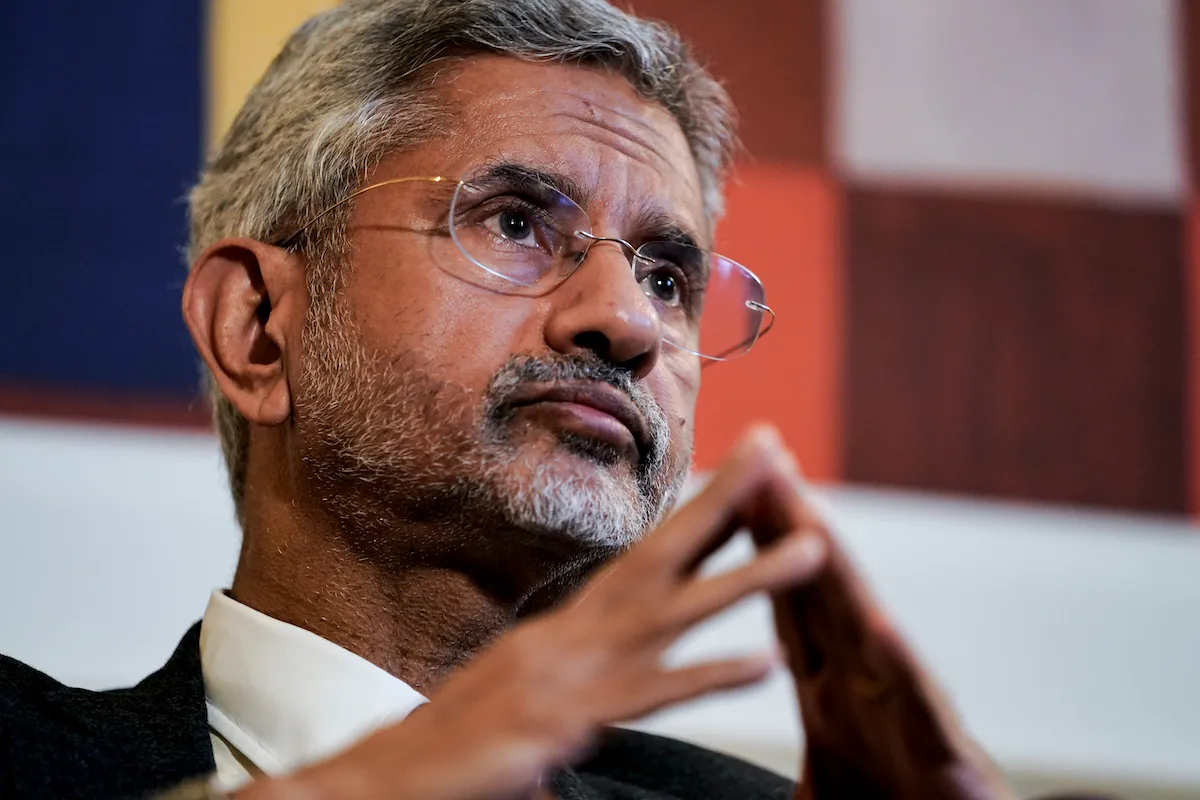
    Derek Grossman, writing for the Foreign Policy magazine, observes that due to the Russian invasion of Ukraine and the ensuing crisis, “Modi’s multipolar Moment Has Arrived”. He even sees India as ‘the clear beneficiary of Russia’s war’. Grossman says that by not condemning Russia’s aggression in Ukraine and refusing to toe the Western line in sanctioning Moscow, India has in fact elevated its global stature. He suggests each of the major powers from the US to China to Russia has been vying to have India on its ‘side’. This assumption is not limited to just Grossman alone but many Western analysts assume that India is vying for a side. But this is exactly where Grossman fails to understand the basic objective of India’s foreign policy. India’s External Affairs Minister Dr. S. Jaishankar’s remarks at the recent GLOBESEC 2022 Bratislava Forum throw light on this ‘misunderstanding’ on the part of Grossman and analysts of his ilk. Jaishankar, to a question regarding the ongoing Russia-Ukraine conflict that in case India must pick a side, who India will side with – the US or China, quipped “I don’t accept that India has to join either the US axis or the China axis. We are one-fifth of the world’s population, the fifth or sixth-largest economy in the world, and India is entitled to have its own side and make her own choices devoid of cynical transactions but based on India’s values and interests.” In the same forum, he also remarked that India is not “sitting on the fence” on the Ukraine issue (a reference to Biden’s remark of India being ‘shaky’) and is in fact merely “sitting on its ground”. Jaishankar’s remarks emphasize India’s policy of strategic autonomy and of India not being a lackey of any power or axis. Meaning India has already chosen a side, its own, where it is happy, willing and most importantly capable of staying put.

    “Somewhere Europe has to grow out of the mindset that Europe’s problems are the world’s problems, but the world’s problems are not Europe’s problems.”

    But what Grossman does get right is in his usage of the term ‘Multipolar’. India indeed views the world as multipolar today. Instead of clinging to either pole of the binary world order, India desires to be one of the poles itself. So, then what explains the West’s adamancy or incapability to understand India? Even this has been partly answered by Jaishankar himself as he says, “Somewhere Europe has to grow out of the mindset that Europe’s problems are the world’s problems, but the world’s problems are not Europe’s problems.” And this is exactly why I mentioned Afghanistan and the Indo-Pacific at the very outset. It is not to say that an India desiring to be a globally recognised power shouldn’t be concerned about Ukraine, but to understand the fact that, for India, a “messy” US withdrawal from Afghanistan and an ever-aggressive China lurking large on its borders are far greater challenges that cannot be met by choosing sides, rather India has to meet those challenges on its own strength. India simply doesn’t have the luxury of joining Axis A against Axis B or vice versa. Among many other things, India needs Russia to balance out China and for its strategic interests in Afghanistan and Central Asia; India needs the US to cement its role in the Indo-Pacific and create a strong deterrence against China; while India also needs to partner with China and Russia in climate change politics as well as limit Western dominance over the global financial system.

    But it is also true that today, India’s strategic interests find greater convergence with that of the US, ranging from countering extremism in the Af-Pak region to checking China’s rise and securing a free and open Indo-Pacific with the help of “like-minded” nations in the region like Japan and Australia in the QUAD grouping. With regards to Russia, relations between the two traditional partners have cooled down a little especially because of Russia’s hobnobbing with Pakistan to secure its interests in Afghanistan and India’s growing ties to the US. Given the fact that Russia is speculated to become increasingly dependent on China as the war in Ukraine wages on, India’s manoeuvrability stands even more limited. Ever since the start of the war, India has tirelessly tried to explain to its Western counterparts the need to re-focus on the Indo-Pacific. Perhaps the bigger challenge for the democratic world is China’s unilateral attempts to change the status quo in the region. Russia’s threat is largely military in nature and is a headache majorly for its European neighbours. But the Chinese threat is global and all-encompassing ranging from economic to military to security to cultural. Additionally, for India, the Taliban in power next door doesn’t evoke any pleasant memories as anti-India forces might be on the loose given the Taliban’s proximity to Pakistan and its ties with anti-India forces.

    India must solidly guard against being labelled in any camp and should steadfastly pursue its own path. India’s recent actions of abstentions in the UN against Russian aggression at the same time as Prime Minister Modi making a whirlwind tour of Europe to calm Western nerves augur well for its strategic objectives. The signing of the US-led Indo-Pacific Economic Framework (IPEF) in the recently held QUAD summit in Tokyo also serves India well vis-à-vis China. A recent visit of an Indian delegation to Afghanistan, ostensibly to oversee aid distribution, suggests that New Delhi may be willing to work with the Taliban regime, thus providing the latter with some legitimacy and the former some flexibility. To be recognised as a major global power, India should de-link from all geopolitical binaries and work towards becoming the Third Pole, maybe taking a cue from the Himalayas.

    Feature Image Credits: Economic Times

  • India’s Indian Ocean and the Imperative for a Strong Indian Navy

    India’s Indian Ocean and the Imperative for a Strong Indian Navy

    “A good navy is not a provocation to war. It is the surest guarantee of peace!”
    The Indian Ocean has been at the centre of world history ever since we know it. Man originated in Africa, probably somewhere in the Olduvai Gorge in present-day Tanzania – where Homo Erectus lived 1.2 million years ago and where the first traces of Homo Sapiens, our more recent ancestors having evolved only about 200,000 years ago. First phonetic languages evolved around 100, 000 years ago. The migration of mankind out of Africa began almost 60000 years ago. But we don’t call the Indian Ocean the African Ocean because the first recorded activity over it began only about 3000 years ago.
    Three great early recorded activities of this period come to mind. The first is the Indus Valley Civilization. It was a Bronze Age civilization (3300–1300 BCE; mature period 2600–1900 BCE) in the northwestern region of the Indian subcontinent. Along with Ancient Egypt and Mesopotamia, it was one of three early civilizations of the Old World, and of the three the most widespread.
    The Indus civilization’s economy appears to have depended significantly on trade, which was facilitated by major advances in transport technology. It may have been the first civilization to use wheeled transport. These advances may have included bullock carts that are identical to those seen throughout South Asia today, as well as boats. Most of these boats were probably small, flat-bottomed craft, perhaps driven by sail, similar to those one can see on the Indus River today; however, there is secondary evidence of sea-going craft.
    Archaeologists have discovered a massive, dredged canal and what they regard as a docking facility at the coastal city of Lothal now in Gujarat. Judging from the dispersal of Indus civilization artifacts, the trade networks, economically, integrated a huge area, including portions of Afghanistan, the coastal regions of Persia, northern and western India, and Mesopotamia. There is some evidence that trade contacts extended to Crete and possibly to Egypt.
    There was an extensive maritime trade network operating between the Harappan and Mesopotamian civilizations as early as the middle Harappan Phase, with much commerce being handled by “middlemen merchants from Dilmun” (modern Bahrain and Failaka located in the Persian Gulf). Such long-distance sea trade became feasible with the innovative development of plank-built watercraft, equipped with a single central mast supporting a sail of woven rushes or cloth.
    The second great economic activity was Slavery. Slavery can be traced back to the earliest records, such as the Code of Hammurabi (c. 1760 BC), which refers to it as an established institution. Slavery is rare among hunter-gatherer populations, as it is developed as a system of social stratification. Slavery typically also requires a shortage of labour and a surplus of land to be viable. Bits and pieces from history indicate that Arabs enslaved over 150 million African people and at least 50 million from other parts of the world.  Later they also converted Africans into Islam, causing a complete social and financial collapse of the entire African continent apart from wealth attributed to a few regional African kings who became wealthy in the trade and encouraged it.
    The third great economic activity was seafaring evidenced by migration. The island of Madagascar, the largest in the Indian Ocean, lies some 250 miles (400 km) from Africa and 4000 miles (6400 km) from Indonesia. New findings, published in the American Journal of Human Genetics, show that the human inhabitants of Madagascar are unique – amazingly, half of their genetic lineages derive from settlers from the region of Borneo, with the other half from East Africa. It is believed that the migration from the Sunda Islands began around 200 BC.
    Linguists have established that the origins of the language spoken in Madagascar, Malagasy, suggested Indonesian connections, because its closest relative is the Maanyan language, spoken in southern Borneo. The Gods were also kind and gave the IOR the weather conditions that helped in evolving seaborne trade and intercourse. The sea surface current and prevailing wind structure in and over the Indian Ocean favoured seafarers in their endeavour and sailings in the Indian Ocean from the southern tip of Africa (Cape of Good Hope) during the month of May. After the entry into the Indian Ocean, the seafarers continued to sail in the northerly direction along the coastline of Africa (aided by the strong Somali Current and the East Arabian Current) towards the Arabian Sea.
    The physical environmental conditions over the sea and the external prevailing weather helped the seafarers reach places up to the west coast of India. As this sea surface current extend towards the east coast of India, the sailors were greatly assisted by the surface current as they sailed along. During November, when the East Indian Winter wind reverses in its direction and begins to blow from the northeast, the sailors prepare for their return journey. The winds that generate the waves contribute to the reduction in the otherwise required travel time for the sailings between any given two points of departure and arrival. The natural and external forces help the sailors make their journey/expedition more economical and energy-efficient.
    Clearly, the region was a hub of all kinds of economic activity. Then came the Petroleum Age. And things changed as never before. The Spice trade, the Silk trade, and the China trade all paled into insignificance. The use of Coal as a ship fuel enlarged distances and volumes of cargo. Oil made even longer journeys and greater volumes possible.
    Petroleum is the lifeblood of modern society. It’s a relatively new activity, but its advent has transformed our world as few things have. Petroleum, in one form or another, has been used since ancient times. According to Herodotus more than 4000 years ago, asphalt was used in the construction of the walls and towers of Babylon; there were oil pits near Babylon, and a pitch spring on Zacynthus.
    Great quantities of it were found on the banks of the river Issus, one of the tributaries of the Euphrates. Ancient Persian tablets indicate the medicinal and lighting uses of petroleum in the upper levels of their society. By 347 AD, oil was produced from bamboo-drilled wells in China. Early British explorers to Myanmar documented a flourishing oil extraction industry based in Yenangyaung, that in 1795 had hundreds of hand-dug wells under production.
    Oil is now the single most important driver of world economics, politics and technology.  The rise in importance was due to the invention of the internal combustion engine, the rise in commercial aviation, and the importance of petroleum to industrial organic chemistry, particularly the synthesis of plastics, fertilizers, solvents, adhesives and pesticides. Today, oil contributes 3% of the global GDP.
    In 1847, the process to distill kerosene from petroleum was invented by James Young. He noticed natural petroleum seepage in the Riddings colliery at Alfreton, Derbyshire from which he distilled a light thin oil suitable for use as lamp oil, at the same time obtaining a thicker oil suitable for lubricating machinery. In 1848 Young set up a small business refining the crude oil.
    Today the world’s biggest stand-alone refinery is the Reliance refinery at Jamnagar with a refining capacity of about 1.5 million barrels a day. The Essar refinery at Jamnagar refines a further 0.5 million barrels a day. Together they make Jamnagar one of the world’s great refining centers. India’s number one export item is Petroleum products, mostly Petrol and Diesel. India now exports the equivalent of about 615,000 barrels a day. In 2020, petroleum exports accounted for $25.3 billion of our total exports of $291.8 billion in the same year.
    India imported $77 billion worth of oil in the year 2020-21 and more than half of this comes from countries in the IOR. Iraq’s share is 22.4%, Saudi Arabia’s share is 18.8%, UAE’s share is 10.8%, and Kuwait’s 5%. The IOR is India’s lifeline and lifeblood. If the line is blocked we will suffer hugely, if the blood gets anaemic we will suffer hugely. India just cannot afford anything to go wrong here.
    The sea lanes in the Indian Ocean are considered among the most strategically important in the world—according to the Journal of the Indian Ocean Region, more than 80 percent of the world’s seaborne trade in oil transits through the Indian Ocean choke points, with 40 percent passing through the Strait of Hormuz, 35 percent through the Strait of Malacca and 8 percent through the Bab el-Mandab Strait.
    But it’s not just about sea-lanes and trade. More than half the world’s armed conflicts are presently located in the Indian Ocean region, while the waters are also home to continually evolving strategic developments including the competing rises of China and India, the potential nuclear confrontation between India and Pakistan, the US interventions in Iraq and Afghanistan, Islamist terrorism, incidents of piracy in and around the Horn of Africa, and management of diminishing fishery resources.
    As a result of all this, almost all the world’s major powers have deployed substantial military forces in the Indian Ocean region. For example, in addition to maintaining expeditionary forces in Iraq, the US 5th Fleet is headquartered in Bahrain, and uses the island of Diego Garcia as a major air-naval base and logistics hub for its Indian Ocean operations. In addition, the United States has deployed several major naval task forces there, including Combined Task Force 152 (currently operated by the Kuwait Navy), which is focusing on illicit non-state actors in the Arabian Gulf, and Combined Task Force 150 (currently commanded by the Pakistan Navy), which is tasked with Maritime Security Operations (MSO) outside the Arabian Gulf with an Area of Responsibility (AOR) covering the Red Sea, Gulf of Aden, Indian Ocean and the Gulf of Oman. France, meanwhile, is perhaps the last of the major European powers to maintain a significant presence in the north and southwest Indian Ocean quadrants, with naval bases in Djibouti, Reunion, and Abu Dhabi.
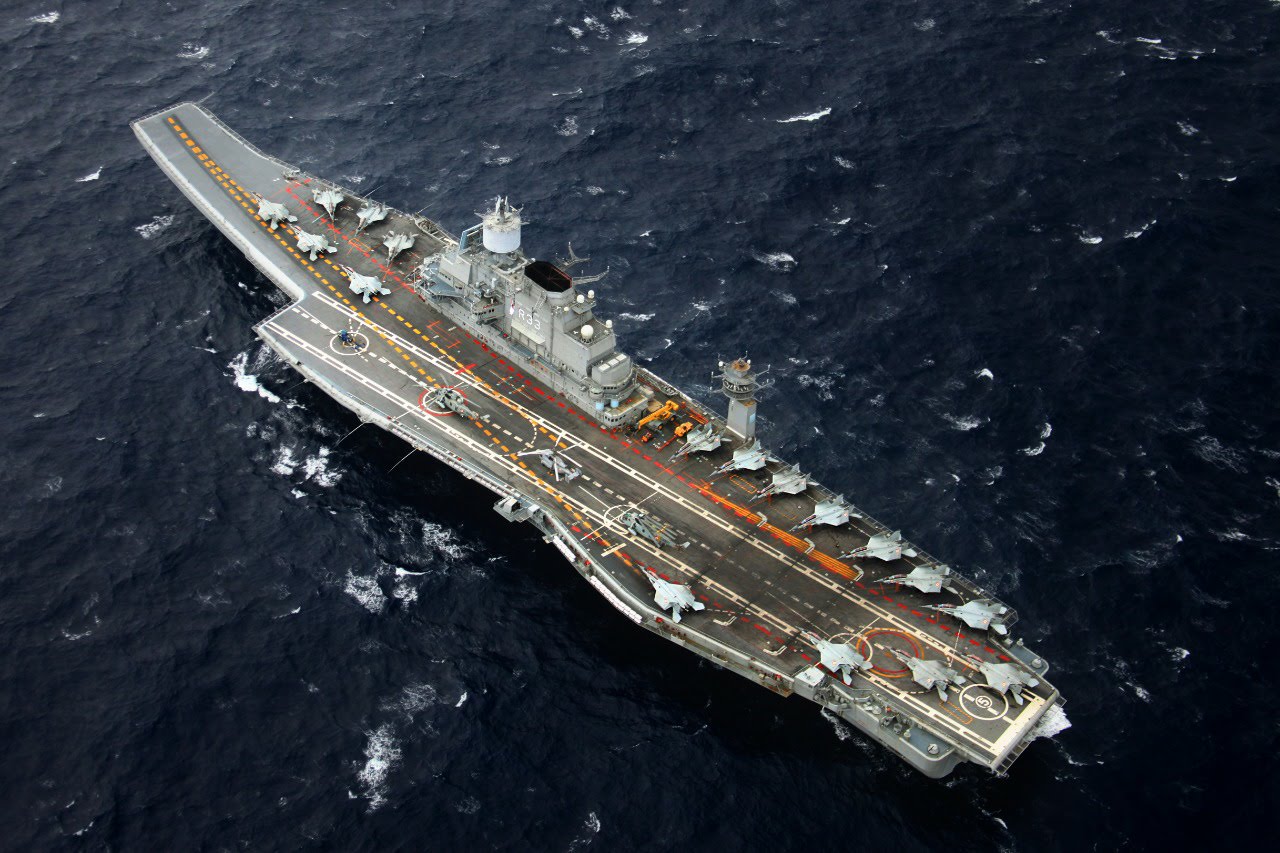
    And, of course, China and India both also have genuine aspirations of developing blue water naval capabilities through the development and acquisition of aircraft carriers and an aggressive modernization and expansion programme.
    China’s aggressive soft power diplomacy has widely been seen as arguably the most important element in shaping the Indian Ocean strategic environment, transforming the entire region’s dynamics. By providing large loans on generous repayment terms, investing in major infrastructure projects such as the building of roads, dams, ports, power plants, and railways, and offering military assistance and political support in the UN Security Council through its veto powers, China has secured considerable goodwill and influence among countries in the Indian Ocean region.
    And the list of countries that are coming within China’s strategic orbit appears to be growing. Sri Lanka, which has seen China replace Japan as its largest donor, is a case in point—China was no doubt instrumental in ensuring that Sri Lanka was granted dialogue partner status in the Shanghai Cooperation Organization (SCO).
    To the west, Kenya offers another example of how China has been bolstering its influence in the Indian Ocean. The shift was underscored in a leaked US diplomatic cable from February 2010 that was recently published by WikiLeaks. In it, US Ambassador to Kenya Michael Ranneberger highlighted the decline of US influence in East Africa’s economic hub, saying: ‘We expect China’s engagement in Kenya to continue growing given Kenya’s strategic location…If oil or gas is found in Kenya, this engagement will likely grow even faster. Kenya’s leadership may be tempted to move close to China in an effort to shield itself from Western, and principally US pressure to reform.’
    The rise of China as the world’s greatest exporter, its largest manufacturing nation and its great economic appetite poses a new set of challenges. At a meeting of South-East Asian nations in 2010, China’s foreign minister Yang Jiechi, facing a barrage of complaints about his country’s behaviour in the region, blurted out the sort of thing polite leaders usually prefer to leave unsaid. “China is a big country,” he pointed out, “and other countries are small countries and that is just a fact.”
    Indeed it is, and China is big not merely in terms of territory and population, but also in military might. Its Communist Party is presiding over the world’s largest military build-up. And that is just a fact, too—one that the rest of the world has to come to terms with.
    China’s defence budget has almost certainly experienced double-digit growth for two decades. According to SIPRI, a research institute, annual defence spending rose from over $30 billion in 2000, $120 billion in 2010 to almost $229.4 billion in 2021. SIPRI usually adds about 50% to the official figure that China gives for its defence spending, because even basic military items such as research and development are kept off budget. Including those items would imply total military spending in 2021, based on the latest announcement from Beijing, would be around $287.8 billion.
    This is not a sum India can match and the last thing we need to get caught in is a numbers game. A one-party dictatorship will always be able to outspend us, even if our GDPs get closer.
    But history tells us again and again that victory is not assured by superiority in numbers and even technology. If that were to be so, Alexander should have been defeated at Gaugamela, Babur at Panipat, Wellington at Waterloo, Russia at Leningrad, Britain in the Falklands, and above all Vietnam who defeated three of the world’s leading powers – France, the USA and China – in succession. I don’t have to tell you that victory is more a result of strategy and tactics. Numbers do matter, but numbers are not all. Technology does matter, but technology alone cannot assure you of victory. It’s always mind over matter. You know these things better than most of us. You also know what to do. As the old saying goes: “When the going gets tough, the tough get going!”
    That said, the threat from China should not be exaggerated. There are three limiting factors. First, unlike the former Soviet Union, China has a vital national interest in the stability of the global economic system. Its military leaders constantly stress that the development of what is still only a middle-income country with a lot of very poor people takes precedence over military ambition. The increase in its military spending reflects the growth of the economy, rather than an expanding share of national income. For many years China has steadily spent the same proportion of GDP on defence (a bit over 1.7%, whereas America spend about 3.7% in the year 2020-21).
    The real test of China’s willingness to keep military spending constant will come when China’s headlong economic growth starts to slow further. But in the past form, China’s leaders will continue to worry more about internal threats to their control than external ones. In 2020, the Chinese spending on internal security was $212 billion. With a rapidly ageing population, it is also a good bet that meeting the demand for better health care will become a higher priority than maintaining military spending.
    Like all the other great powers, China faces a choice of guns and butter or more appropriately walking sticks. But till then it is: Nervi belli pecunia infinita or unlimited money is the muscle of war.
    India on the other hand will keep growing long after China has stopped growing. Its youthful population and present growth trends indicate the accumulation of the world’s largest middle class in India. India’s growth is projected to continue well past 2050. In fact so big will this become, that India during this period will increasingly power world economic growth, and not China. In 2050, India is projected to have a population of 1.64 billion and of these 1.3 billion will belong to the middle and upper classes. The lower classes will be constant at around 300 million, as it is now.
    India already has the world’s third-largest GDP. Many economists prophesize that in 2050 it will be India that will be the world’s biggest economy, not China. In per capita terms, we might still be poorer, but in over GDP terms, we will be bigger.
    According to a study by IHS Markit, a subsidiary of S&P Global, India will be the world’s third-largest economy by 2030. Indian GDP in 2030 is projected to be $8.4 trillion. China, in second place, will have a GDP of $ 33.7 trillion and the US $ 30.4 trillion. As we say in India, aap key muh mein ghee aur shakhar.  Both incidentally now deemed bad for health.
    Now comes the dilemma for India. Robert Kaplan writes: “As the United States and China become great power rivals, the direction in which India tilts could determine the course of geo-politics in Eurasia in the 21st century. India, in other words, looms at the ultimate pivot state.” At another time Mahan noted that India, located in the centre of the Indian Ocean littoral, is critical for the seaward penetration of both the Middle-east and China.
    Now if one were an Indian planner, he or she would be looking at the China Pakistan axis with askance. India has had conflicts and still perceives threats from both, jointly and severally. The Tibetan desert, once intended to be India’s buffer against the north now has become China’s buffer against India. The planner will not be looking at all if he or she were not looking at the Indian Ocean as a theatre. After all, it is also China’s lifeline and its lifeblood flows here.
    Now if one were a Chinese planner, he or she would be looking with concern over India’s growth and increasing ability to project power in the IOR. The planner will also note what experts are saying about India’s growth trajectory. That it will be growing long after China gets walking sticks. That it is the ultimate pivot state in the grand struggle for primacy between the West led by the USA and Japan, and China.
    What will this planner be thinking particularly given the huge economic and military asymmetry between China and India now? Tacitus tells it most pithily. That peace can come through strength or Si vis pacem para bellum. While China has ratcheted up its show of assertiveness in recent years, India has been quietly preparing for a parity to prevent war. Often parity does not have to be equality in numbers. The fear of pain disproportionate to the possible gains, and the ability of the smaller in numbers side to do so in itself confer parity.
    There is a certain equilibrium in Sino-Indian affairs that make recourse to force extremely improbable. Both modern states are inheritors of age-old traditions and the wisdom of the ages. Both now read their semaphores well and know how much of the sword must be unsheathed to send a message. This ability will ensure the swords remain recessed and for the plowshares to be out at work.
    Finally, I would be remiss if I did not say something about the centrality of the Indian Navy to our future. Nothing says it better than what Theodore Roosevelt said a century ago: “A good Navy is not a provocation to war. It is the surest guarantee of peace!”
    Featured Image Credit: Indian Navy
  • America defeats Germany for the third time in a century

    America defeats Germany for the third time in a century

    This is a very profound article by Michael Hudson, wherein he exposes the real drivers of the conflict in Ukraine – the American Military Industrial Complex; Oil, Gas and Mining Industry; and the FIRE (Finance, Insurance and Real Estate) – the three oligarchs who form the deep state or the national security state that conducts the American foreign policy. To this we can add the fourth – the Big Tech. Clearly, as Paul Kennedy identified more than three decades ago, like all empires of the past, the American Empire has entered an irretrievable imperial overstretch and the consequent decline that would accelerate post the war in Ukraine.

    TPF is happy to republish this excellently analysed article by Michael Hudson under the Creative Commons Attribution-Non Commercial-No Derivatives 4.0 International License. It was published earlier in MRonline.

    The MIC, OGAM and FIRE Sectors Conquer NATO

    My old boss Herman Kahn, with whom I worked at the Hudson Institute in the 1970s, had a set speech that he would give at public meetings. He said that back in high school in Los Angeles, his teachers would say what most liberals were saying in the 1940s and 50s: “Wars never solved anything.” It was as if they never changed anything—and therefore shouldn’t be fought.

    Herman disagreed, and made lists of all sorts of things that wars had solved in world history, or at least changed. He was right, and of course that is the aim of both sides in today’s New Cold War confrontation in Ukraine.

    The question to ask is what today’s New Cold War is trying to change or “solve.” To answer this question, it helps to ask who initiates the war. There always are two sides—the attacker and the attacked. The attacker intends certain consequences, and the attacked looks for unintended consequences of which they can take advantage. In this case, both sides have their dueling sets of intended consequences and special interests.

    the U.S. policy executed by the Clinton and subsequent administrations to wage a new military expansion via NATO has paid a 30-year dividend in the form of shifting the foreign policy of Western Europe and other American allies out of their domestic political sphere into their own U.S.-oriented “national security” blob. NATO has become Europe’s foreign policy-making body, even to the point of dominating domestic economic interests.

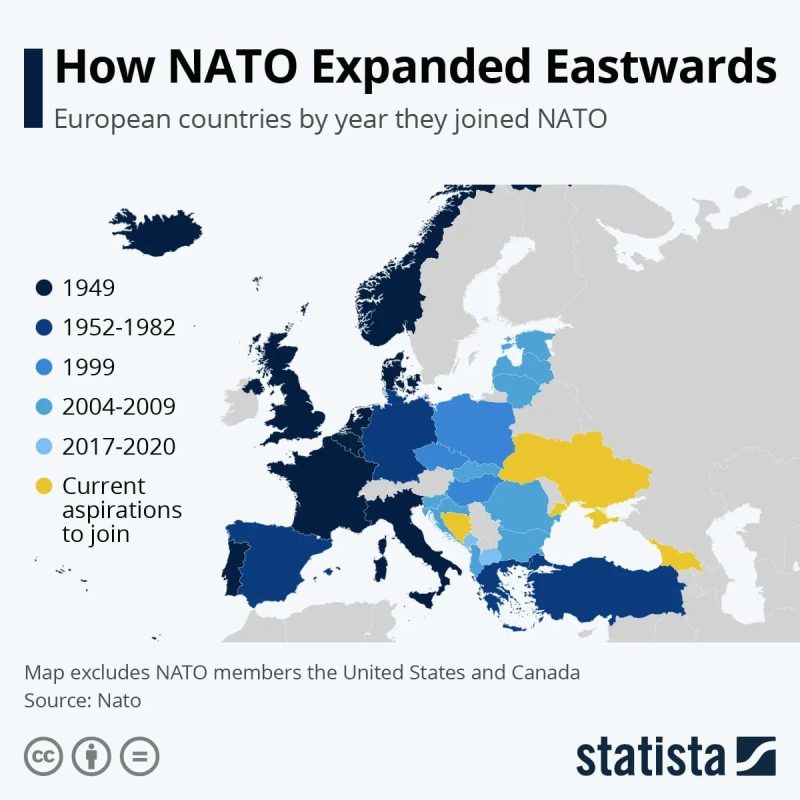
    The active military force and aggression since 1991 has been the United States. Rejecting mutual disarmament of the Warsaw Pact countries and NATO, there was no “peace dividend.” Instead, the U.S. policy executed by the Clinton and subsequent administrations to wage a new military expansion via NATO has paid a 30-year dividend in the form of shifting the foreign policy of Western Europe and other American allies out of their domestic political sphere into their own U.S.-oriented “national security” blob (the word for special interests that must not be named). NATO has become Europe’s foreign policy-making body, even to the point of dominating domestic economic interests.

    The recent prodding of Russia by expanding Ukrainian anti-Russian ethnic violence by Ukraine’s neo-Nazi post-2014 Maidan regime was aimed at (and has succeeded in) forcing a showdown in response the fear by U.S. interests that they are losing their economic and political hold on their NATO allies and other Dollar Area satellites as these countries have seen their major opportunities for gain to lie in increasing trade and investment with China and Russia.

    To understand just what U.S. aims and interests are threatened, it is necessary to understand U.S. politics and “the blob,” that is, the government central planning that cannot be explained by looking at ostensibly democratic politics. This is not the politics of U.S. senators and representatives representing their congressional voting districts or states.

    America’s three oligarchies in control of U.S. foreign policy

    It is more realistic to view U.S. economic and foreign policy in terms of the military-industrial complex, the oil and gas (and mining) complex, and the banking and real estate complex than in terms of the political policy of Republicans and Democrats. The key senators and congressional representatives do not represent their states and districts as much as the economic and financial interests of their major political campaign contributors.

    It is more realistic to view U.S. economic and foreign policy in terms of the military-industrial complex, the oil and gas (and mining) complex, and the banking and real estate complex than in terms of the political policy of Republicans and Democrats. The key senators and congressional representatives do not represent their states and districts as much as the economic and financial interests of their major political campaign contributors. A Venn diagram would show that in today’s post-Citizens United world, U.S. politicians represent their campaign contributors, not voters. And these contributors fall basically into three main blocs.
    Three main oligarchic groups that have bought control of the Senate and Congress to put their own policy makers in the State Department and Defense Department.

    First is the Military-Industrial Complex (MIC)—arms manufacturers such as Raytheon, Boeing and Lockheed-Martin, have broadly diversified their factories and employment in nearly every state, and especially in the Congressional districts where key Congressional committee heads are elected. Their economic base is monopoly rent, obtained above all from their arms sales to NATO, to Near Eastern oil exporters and to other countries with a balance of payments surplus. Stocks for these companies soared immediately upon news of the Russian attack, leading a two-day stock market surge as investors recognized that war in a world of cost-plus “Pentagon capitalism” (as Seymour Melman described it) will provide a guaranteed national security umbrella for monopoly profits for war industries. Senators and Congressional representatives from California and Washington traditionally have represented the MIC, along with the solid pro-military South. The past week’s military escalation promises soaring arms sales to NATO and other U.S. allies, enriching the actual constituents of these politicians. Germany quickly agreed to raise its arms spending to over 2% of GDP.

    Monopolizing the Dollar Area’s oil market and isolating it from Russian oil and gas has been a major U.S. priority for over a year now, as the Nord Stream 2 pipeline threatened to link the Western European and Russian economies more tightly together.

    The second major oligarchic bloc is the rent-extracting oil and gas sector, joined by mining (OGAM), riding America’s special tax favoritism granted to companies emptying natural resources out of the ground and putting them mostly into the atmosphere, oceans and water supply. Like the banking and real estate sector seeking to maximize economic rent and maximizing capital gains for housing and other assets, the aim of this OGAM sector is to maximize the price of its energy and raw materials so as to maximize its natural resource rent. Monopolizing the Dollar Area’s oil market and isolating it from Russian oil and gas has been a major U.S. priority for over a year now, as the Nord Stream 2 pipeline threatened to link the Western European and Russian economies more tightly together.

    If oil, gas and mining operations are not situated in every U.S. voting district, at least their investors are. Senators from Texas and other Western oil-producing and mining states are the leading OGAM lobbyists, and the State Department has a heavy oil sector influence providing a national security umbrella for the sector’s special tax breaks. The ancillary political aim is to ignore and reject environmental drives to replace oil, gas and coal with alternative sources of energy. The Biden administration accordingly has backed the expansion of offshore drilling, supported the Canadian pipeline to the world’s dirtiest petroleum source in the Athabasca tar sands, and celebrated the revival of U.S. fracking.

    The foreign policy extension is to prevent foreign countries not leaving control of their oil, gas and mining to U.S. OGAM companies from competing in world markets with U.S. suppliers. Isolating Russia (and Iran) from Western markets will reduce the supply of oil and gas, pushing up prices and corporate profits accordingly.

    The third major oligarchic group is the symbiotic Finance, Insurance and Real Estate (FIRE) sector, which is the modern finance-capitalist successor to Europe’s old post-feudal landed aristocracy living by land rents. With most housing in today’s world having become owner-occupied (although with sharply rising rates of absentee landlordship since the post-2008 wave of Obama Evictions), land rent is paid largely to the banking sector in the form of mortgage interest and debt amortization (on rising debt/equity ratios as bank lending inflates housing prices). About 80 percent of U.S. and British bank loans are to the real estate sector, inflating land prices to create capital gains—which are effectively tax exempt for absentee owners.

    Internationally, the FIRE sector’s aim is to privatize foreign economies (above all to secure the privilege of credit creation in U.S. hands), so as to turn government infrastructure and public utilities into rent seeking monopolies to provide basic services (such as health care, education, transportation, communications and information technology) at maximum prices instead of at subsidized prices to reduce the cost of living and doing business.

    This Wall Street-centered banking and real estate bloc is even more broadly based on a district-by-district basis than the MIC. Its New York senator from Wall Street, Chuck Schumer, heads the Senate, long supported by Delaware’s former Senator from the credit card industry Joe Biden, and Connecticut’s senators from the insurance sector centered in that state. Domestically, the aim of this sector is to maximize land rent and the “capital’ gains resulting from rising land rent. Internationally, the FIRE sector’s aim is to privatize foreign economies (above all to secure the privilege of credit creation in U.S. hands), so as to turn government infrastructure and public utilities into rent seeking monopolies to provide basic services (such as health care, education, transportation, communications and information technology) at maximum prices instead of at subsidized prices to reduce the cost of living and doing business. And Wall Street always has been closely merged with the oil and gas industry (viz. the Rockefeller-dominated Citigroup and Chase Manhattan banking conglomerates).

    The FIRE, MIC and OGAM sectors are the three rentier sectors that dominate today’s post-industrial finance capitalism. Their mutual fortunes have soared as MIC and OGAM stocks have increased. And moves to exclude Russia from the Western financial system (and partially now from SWIFT), coupled with the adverse effects of isolating European economies from Russian energy, promise to spur an inflow into dollarized financial securities

    As mentioned at the outset, it is more helpful to view U.S. economic and foreign policy in terms of the complexes based on these three rentier sectors than in terms of the political policy of Republicans and Democrats. The key senators and congressional representatives are not representing their states and districts as much as the economic and financial interests of their major donors. That is why neither manufacturing nor agriculture play the dominant role in U.S. foreign policy today. The convergence of the policy aims of America’s three dominant rentier groups overwhelms the interests of labor and even of industrial capital beyond the MIC. That convergence is the defining characteristic of today’s post-industrial finance capitalism. It is basically a reversion to economic rent-seeking, which is independent of the politics of labor and industrial capital.

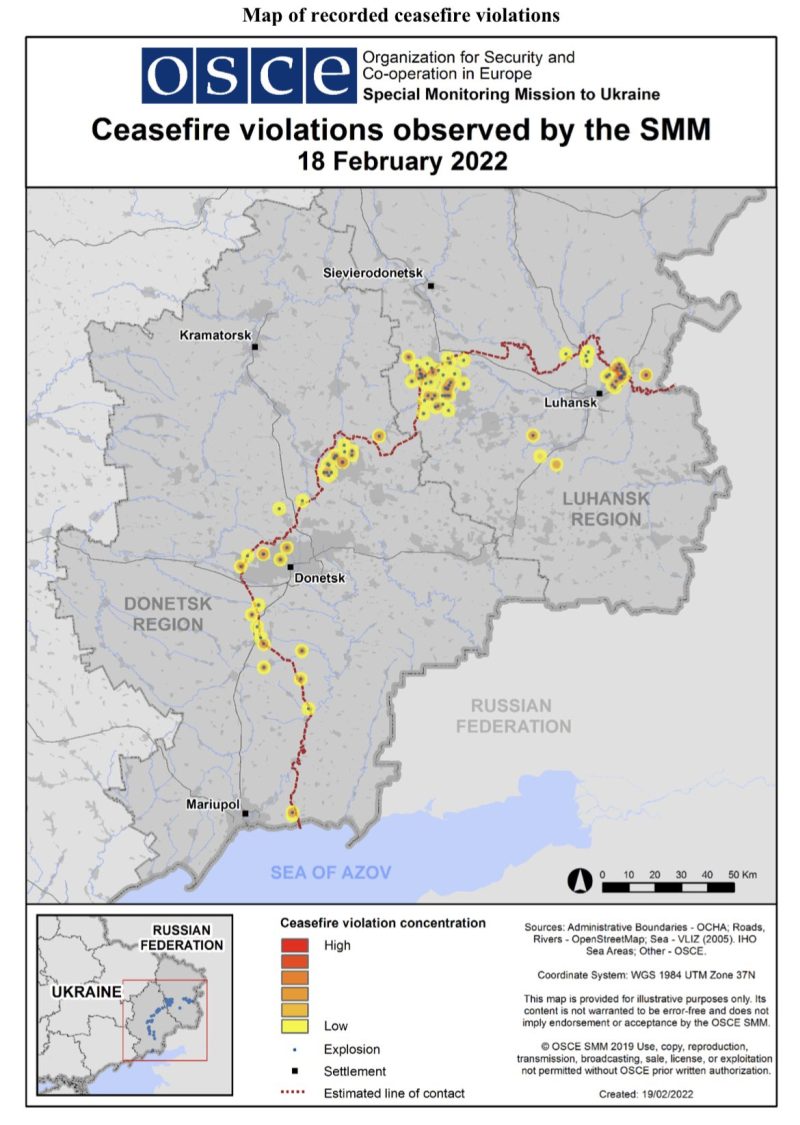
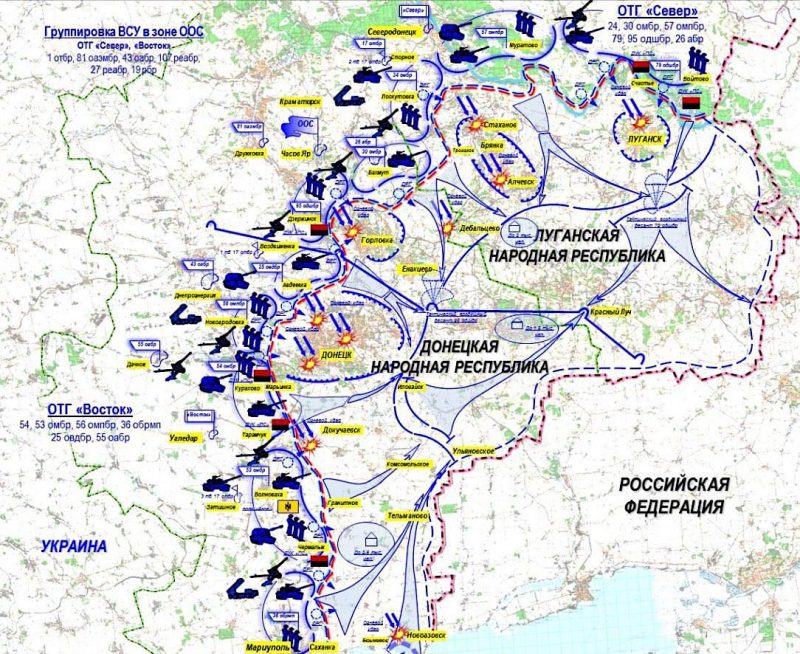
    The dynamic that needs to be traced today is why this oligarchic blob has found its interest in prodding Russia into what Russia evidently viewed as a do-or-die stance to resist the increasingly violent attacks on Ukraine’s eastern Russian-speaking provinces of Luhansk and Donetsk, along with the broader Western threats against Russia.

    The rentier “blob’s” expected consequences of the New Cold War

    As President Biden explained, the current U.S.-orchestrated military escalation (“Prodding the Bear”) is not really about Ukraine. Biden promised at the outset that no U.S. troops would be involved. But he has been demanding for over a year that Germany prevent the Nord Stream 2 pipeline from supplying its industry and housing with low-priced gas and turn to the much higher-priced U.S. suppliers.

    U.S. officials first tried to stop construction of the pipeline from being completed. Firms aiding in its construction were sanctioned, but finally Russia itself completed the pipeline. U.S. pressure then turned on the traditionally pliant German politicians, claiming that Germany and the rest of Europe faced a National Security threat from Russia turning off the gas, presumably to extract some political or economic concessions. No specific Russian demands could be thought up, and so their nature was left obscure and blob-like. Germany refused to authorize Nord Stream 2 from officially going into operation.

    A major aim of today’s New Cold War is to monopolize the market for U.S. shipments of liquified natural gas (LNG)

    A major aim of today’s New Cold War is to monopolize the market for U.S. shipments of liquified natural gas (LNG). Already under Donald Trump’s administration, Angela Merkel was bullied into promising to spend $1 billion building new port facilities for U.S. tanker ships to unload natural gas for German use. The Democratic election victory in November 2020, followed by Ms. Merkel’s retirement from Germany’s political scene, led to cancellation of this port investment, leaving Germany really without much alternative to importing Russian gas to heat its homes, power its electric utilities, and to provide raw material for its fertilizer industry and hence the maintenance of its farm productivity.

    So the most pressing U.S. strategic aim of NATO confrontation with Russia is soaring oil and gas prices, above all to the detriment of Germany. In addition to creating profits and stock market gains for U.S. oil companies, higher energy prices will take much of the steam out of the German economy. That looms as the third time in a century that the United States has defeated Germany—each time increasing its control over a German economy increasingly dependent on the United States for imports and policy leadership, with NATO being the effective check against any domestic nationalist resistance.

    Higher gasoline, heating and other energy prices also will hurt U.S. consumers and those of other nations (especially Global South energy-deficit economies) and leave less of the U.S. family budget for spending on domestic goods and services. This could squeeze marginalized homeowners and investors, leading to further concentration of absentee ownership of housing and commercial property in the United States, along with buyouts of distressed real estate owners in other countries faced with soaring heating and energy costs. But that is deemed collateral damage by the post-industrial blob.

    Food prices also will rise, headed by wheat. (Russia and Ukraine account for 25 percent of world wheat exports.) This will squeeze many Near Eastern and Global South food-deficit countries, worsening their balance of payments and threatening foreign debt defaults.

    Russian raw materials exports may be blocked by Russia in response to the currency and SWIFT sanctions. This threatens to cause breaks in supply chains for key materials, including cobalt, palladium, nickel and aluminum (the production of which consumes much electricity as its major cost—which will make that metal more expensive). If China decides to see itself as the next nation being threatened and joins Russia in a common protest against the U.S. trade and financial warfare, the Western economies are in for a serious shock.

    The long-term dream of U.S. New Cold Warriors is to break up Russia, or at least to restore its Yeltsin/Harvard Boys managerial kleptocracy, with oligarchs seeking to cash in their privatizations in Western stock markets

    The long-term dream of U.S. New Cold Warriors is to break up Russia, or at least to restore its Yeltsin/Harvard Boys managerial kleptocracy, with oligarchs seeking to cash in their privatizations in Western stock markets. OGAM still dreams of buying majority control of Yukos and Gazprom. Wall Street would love to recreate a Russian stock market boom. And MIC investors at happily anticipating the prospect of selling more weapons to help bring all this about.

    Russia’s intentions to benefit from America’s unintended consequences

    What does Russia want? Most immediately, to remove the neo-Nazi anti-Russian core that the Maidan massacre and coup put in place in 2014. Ukraine is to be neutralized, which to Russia means basically pro-Russian, dominated by Donetsk, Luhansk and Crimea. The aim is to prevent Ukraine from becoming a staging ground of U.S.-orchestrated anti-Russian moves a la Chechnya and Georgia.

    Russia’s aim is to dissolve NATO altogether, and then to promote the broad disarmament and denuclearization policies that Russia has been pushing for. Not only will this cut back foreign purchases of U.S. arms, but it may end up leading to sanctions against future U.S. military adventurism

    Russia’s longer term aim is to pry Europe away from NATO and U.S. dominance—and in the process, create with China a new multipolar world order centered on an economically integrated Eurasia. The aim is to dissolve NATO altogether, and then to promote the broad disarmament and denuclearization policies that Russia has been pushing for. Not only will this cut back foreign purchases of U.S. arms, but it may end up leading to sanctions against future U.S. military adventurism. That would leave America with less ability to fund its military operations as de-dollarization accelerates.

    Now that it should be obvious to any informed observer that (1) NATO’s purpose is aggression, not defense, and (2) there is no further territory for it to conquer from the remains of the old Soviet Union, what does Europe get out of continued membership? It is obvious that Russia never again will invade Europe. It has nothing to gain—and had nothing to gain by fighting Ukraine, except to roll back NATO’s proxy expansion into that country and the NATO-backed attacks on Novorossiya.

    Will European nationalist leaders (the left is largely pro-US) ask why their countries should pay for U.S. arms that only put them in danger, pay higher prices for U.S. LNG and energy, pay more for grain and Russian-produced raw materials, all while losing the option of making export sales and profits on peaceful investment in Russia—and perhaps losing China as well?

    The U.S. confiscation of Russian monetary reserves, following the recent theft of Afghanistan’s reserves (and England’s seizure of Venezuela’s gold stocks held there) threatens every country’s adherence to the Dollar Standard, and hence the dollar’s role as the vehicle for foreign exchange savings by the world’s central banks. This will accelerate the international de-dollarization process already started by Russia and China relying on mutual holdings of each other’s currencies.

    Over the longer term, Russia is likely to join China in forming an alternative to the U.S.-dominated IMF and World Bank. Russia’s announcement that it wants to arrest the Ukrainian Nazis and hold a war crimes trial seems to imply an alternative to the Hague court will be established following Russia’s military victory in Ukraine. Only a new international court could try war criminals extending from Ukraine’s neo-Nazi leadership all the way up to U.S. officials responsible for crimes against humanity as defined by the Nuremberg laws.

    Did the American blob actually think through the consequences of NATO’s war?

    It is almost black humor to look at U.S. attempts to convince China that it should join the United States in denouncing Russia’s moves into Ukraine. The most enormous unintended consequence of U.S. foreign policy has been to drive Russia and China together, along with Iran, Central Asia and other countries along the Belt and Road initiative.

    Russia dreamed of creating a new world order, but it was U.S. adventurism that has driven the world into an entirely new order—one that looks to be dominated by China as the default winner

    Russia dreamed of creating a new world order, but it was U.S. adventurism that has driven the world into an entirely new order—one that looks to be dominated by China as the default winner now that the European economy is essentially torn apart and America is left with what it has grabbed from Russia and Afghanistan, but without the ability to gain future support.

    And everything that I have written above may already be obsolete as Russia and the U.S. have gone on atomic alert. My only hope is that Putin and Biden can agree that if Russia hydrogen bombs Britain and Brussels, that there will be a devil’s (not gentleman’s) agreement not to bomb each other.

    With such talk I’m brought back to my discussions with Herman Kahn 50 years ago. He became quite unpopular for writing Thinking about the Unthinkable, meaning atomic war. As he was parodied in Dr. Strangelove, he did indeed say that there would indeed be survivors. But he added that for himself, he hoped to be right under the atom bomb, because it was not a world in which he wanted to survive.

  • CIA Director William F. Burns’ misinformation strategy: spreading the big lie that Russia’s invasion of Ukraine was “unprovoked”

    CIA Director William F. Burns’ misinformation strategy: spreading the big lie that Russia’s invasion of Ukraine was “unprovoked”

    CIA Director Bill Burns testified before the Senate Intelligence committee in early March that Russia and Vladimir Putin were “losing the information war over its war in Ukraine.

    “In all my years I spent as a career diplomat, I saw too many instances where we lost information wars with the Russians,” Burns said, but “this is one information war that I think Putin is losing…. In this case, I think we have had a great deal of effect in disrupting their tactics and calculations and demonstrating to the entire world that this is premeditated and unprovoked aggression built on a body of lies and false narratives”.

    George Orwell must be rolling over in his grave with Burns’ performance. While hypocritically excoriating Russia for promoting a “body of lies” and “false narratives,” Burns admitted to using the very same tactics in an information war in which both sides were twisting the truth.

    The U.S. Big Lie centers on the claim of unprovoked Russian aggression.

    As CAM has previously reported, the war was actually started by Ukraine eight years agowhen it sent troops into Eastern Ukraine in an attempt to subdue pro-Russian secessionists who resisted a February 2014 U.S. backed coup d’état.

    Prior to the Russian invasion of Ukraine on February 24, Organization For Security and Cooperation in Europe (OSCE) maps showed that shelings that violated ceasefire arrangements under the Minsk accords were carried out mostly by the Ukrainian government, which had forced the people of Luhansk and Donetsk to live in underground bunkers for years.

    According to the Russian Deputy Foreign Minister, Ukraine had massed 122,000 troops on the border with Donbass on the eve of the war. The Duma claimed to have intelligence indicating that these troops were planning an offensive into Donbass, which the Russian invasion preempted.

    Russia reported on February 21 that it had captured a Ukrainian soldier and killed five others after they crossed into Russian territory in Rostov, just over the border with Ukraine.

    Map showing Ukrainian troops concentrations on the eve of the Russian invasion on February 24, 2022.
    Source: covertactionmagazine.com

    The U.S. further provoked the war by refusing to abide by Putin’s legitimate demand that the North Atlantic Treaty Organization (NATO) not be expanded to Ukraine or anywhere further to Russia’s border—going against a promise made in 1990 by U.S. Secretary of State James A. Baker that NATO would not expand “one inch eastward.”

    The U.S. also armed and equipped the Ukrainian military with lethal weaponry for years, including Javelin anti-tank missiles, which have shot down at least 50 tanks in the war so far, and CIA trained Ukrainian paramilitary units in sniper techniques and irregular warfare.

    Biolabs, False Flags, Chemical Weapons and Atrocity Stories

    At the heart of the current information war lies allegations about wide scale atrocities, false flag attacks and chemical warfare.

    Russia has also accused the U.S. of possessing biowarfare labs within Ukraine. Press Secretary Jen Psaki claimed that the latter allegation was part of a Russian disinformation operation. However, undersecretary of state Victoria Nuland admitted that bioweapons labs existed in Ukraine and that she was afraid that Russian troops would seek to gain control of them, with leaked documents showing that Pentagon contractors had access to the labs.

    Atrocities

    On March 13th, Russia was accused of bombing a maternity ward in Mariupol, killing a pregnant woman and her baby. Russian officials claimed the maternity hospital had been taken over by Ukrainian extremists to use as a base, and that no patients or medics were left inside. Russia’s ambassador to the U.N. and the Russian Embassy in London called the images “fake news,” which appears in this case to be untrue.However, the Western media made the Russians look like the only bad guys in the war by failing to report on Ukrainian atrocities such as Ukraine’s deployment of a cluster bomb in the Donetsk city center, killing dozens of civilians (including six people riding a city bus) and forcing many more to evacuate.

    The U.S. media also failed to report on how Azov battalion men dragged civilians who were trying to leave Mariupol from their cars and then shot them dead, as was captured on video. Russia was further blamed for bombing a movie theater in Mariupol where residents had taken shelter, when eyewitness reports said it was the work again of Azov militants associated with the Ukrainian army.


    CNN and other U.S. media blamed Russia for destroying the movie theater in Mariupol when eyewitness said it was Azov militants within the Ukrainian army. Source: thedailybeast.com.
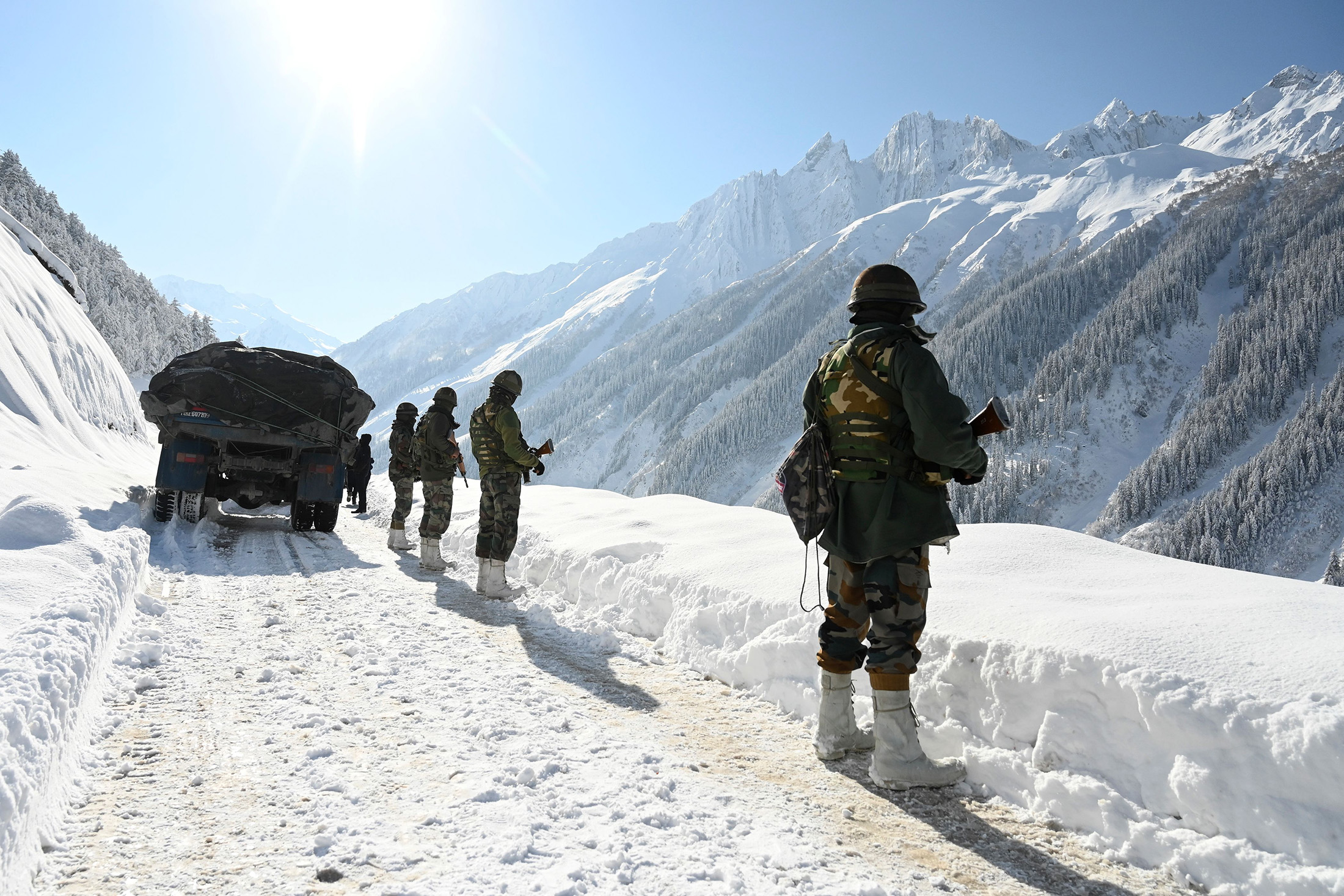
     

    The extent to which the CIA is behind the media’s one-sided coverage of the Ukraine war is uncertain. In the past, the CIA has planted journalists and funded intellectual journals and continued to do so under the guise of the National Endowment for Democracy (NED).

    Burns’ statements indicate, however, that the nation’s media have been enlisted in the information war unequivocally. RT News has been shut down and mainstream publications like the New York Times parrot the State Departments’ views about the war, attributing any criticisms of U.S. policy to Russian disinformation.

    Last week, the White House went so far as to invite and brief some 30 top social media “influencers,” especially those on TikTok, a short video platform which has become very popular among the youth. Using similar material provided to mainstream news reporters, this clearly represents an extra effort by Washington to more widely propagate disinformation on Ukraine.

    In his 1928 book, Falsehoods in a Time War, Sir Arthur Ponsonby provided a blueprint of war propaganda that could be summarized as follows:

    1. We do not want war.
    2. The opposite party alone is guilty of war.
    3. The enemy is inherently evil and resembles the devil.
    4. We defend a noble cause, not our own interests.
    5. The enemy commits atrocities on purpose; our mishaps are involuntary.
    6. The enemy uses forbidden weapons.
    7. We suffer small losses, those of the enemy are enormous.
    8. Recognized artists and intellectuals back our cause.
    9. Our cause is sacred.
    10. All who doubt our propaganda are traitors.

    Right out of the CIA’s playbook circa 2022.


    This article was published earlier in MRonline

    TPF is happy to republish it with the permission of the author and under Creative Commons Licence.

  • The Strategic Imperative of Developing Ladakh

    The Strategic Imperative of Developing Ladakh

    Abstract
    Following the Galwan valley clash in 2020, Ladakh has become the most important place of strategic and operational importance since it adjoins two adversarial neighbours who are strategically aligned with each other. China’s belligerence is taking many forms such as information warfare, land transgression, allegations of hacking, etc. The recent claim of unfurling of the Chinese flag supposedly in Galwan, which was later clarified to have been done in another location is a spoke of its information warfare against India. China’s construction activities enabling quick buildup of its troops and armaments are also a major cause of concern for India. While there are some initiatives launched by the Indian army and the Central government to strengthen the infrastructure in the Northern borders, special attention needs to be paid towards the holistic development of human resources and infrastructure in Ladakh.


    2022 began with a fresh show of Chinese belligerence in Ladakh, with a well-known Chinese media outlet putting out a tweet saying, “China’s national flag rises over Galwan Valley on the New Year Day of 2022“, following up with a short video of the event. The tweet further claimed that the flag was special, having flown earlier over Tiananmen Square in Beijing[i]. As Indian government sources confirmed that the ceremony did not occur in any disputed area, the Indian Army released photographs of soldiers hoisting the flag in the Galwan Valley on the occasion of the New Year[ii]. In other incidents across the rest of the Line of Actual Control (LAC), China suddenly ‘renamed’ 15 locations in Arunachal Pradesh, continuing efforts to undermine Indian sovereignty in that state. The Chinese embassy in Delhi wrote to counsel Indian MPs who had attended a reception hosted by the Tibetan government in exile in late December 2021[iii]. The frigid relationship between the two nations was underscored once again by the inconclusive outcome of the 14th round of Corps Commander’s talks held on the LAC on 12 Jan 2022[iv]

    Chinese activities have not been restricted to the information domain alone. Construction of a bridge across the Pangong Tso, starting 20 km east of Finger 8 to connect its North and South banks, has come to light, providing an additional approach for a quick build-up of troops and logistics. While the above actions by China, both in the realm of information warfare and otherwise, have been effectively countered by the Indian government[v], the overall situation across the entire LAC continues to be of significant concern. This is despite the much-publicized sharing of sweets between Indian and Chinese troops at ten border crossings across the LAC[vi] in January.

    Strategic Importance of Ladakh

    As compared to the rest of the LAC, the situation in Ladakh is serious. The killing of 20 Indian soldiers, including a Commanding Officer, in June 2020 has thrust the region into the nation’s collective consciousness. Galwan, Gogra, Daulet Beg Oldi, Pangong Tso, and Chushul are household names across the country and the public today is better educated about the sheer complexity of the border issue and our history of dealing with China on the matter. The importance of safeguarding national sovereignty has taken centre stage with issues such as the institution of ‘no patrolling zones’ and perceptions about the LAC being subjected to frequent debate in the media and elsewhere.

    In the aftermath of the Galwan events, the strategic importance of Ladakh, seen more through the lens of tourism in tranquil times, has acquired renewed relevance. It is the only borderland of India adjoining two hostile states, both of which have gone to war with India at different times for their own reasons. Ladakh abuts Gilgit Baltistan, which is under illegal occupation of Pakistan, and Tibet, which is under China’s forced occupation. As the likelihood of collusive action between these countries increasingly grows, Ladakh will remain primus inter pares amongst all the regions on our Northern borders for strategic and operational reasons. Accordingly, plans to bring about a qualitative change in capacity and capability in all aspects of the region’s development to meet security challenges and human aspirations acquire greater importance vis-a-vis other locations.

    The above aspect is well appreciated by the Central Government, which has taken many initiatives towards strengthening infrastructure development along the Northern borders in recent years. With regards to Ladakh, development has accelerated dramatically post creation of the Union Territory (UT) of Ladakh in 2019. A review of the UT Administrations’ activities after two years of its creation by the Lt Governor during a media interaction reveals the scale and scope of its achievements[vii]. Future plans are contained in a comprehensive ‘Vision Document,’ prepared on its behalf by a reputed consultancy, available on the internet[viii]. The Document is a comprehensive data-backed effort, listing the status of various developmental markers today and the desired end state. Achieving the vision would require effort, time, and planning for its translation into practical and prioritized implementables, after further considering risks, costs, benefits, and overall viability while adhering to timelines. Despite the progress made on many fronts and considering the constraints remaining, continued and focused long-term efforts by the administration are required here: equally important, the current and future security perspective has to be a key pillar of such plans.

    Development Issues and Imperatives

    A key priority that requires greater impetus is to accelerate the movement of locals for populating areas that, for reasons of geography and proven Chinese intent, have acquired strategic or operational significance. Page 9 of the Vision Document[ix] mentions that 65% of the total population is in and around Leh and Kargil cities. Though the paper has recommended setting up other population centres, enhanced hostile activity by China in and around places like Demchok on the LAC warrants that such areas also be included for consideration. In recent years, the Border Roads Organisation (BRO) has dramatically enhanced connectivity. Greater resources and manpower have constructed important roads and opened up East Ladakh and other parts of the UT[x]. The next step is to actualize a long-term plan with short and intermediate goals, which could see the setting up of small townships – after creating suitable infrastructure in housing, health, education, connectivity, and other civic amenities to support small-sized populations. Here the focus has to be on providing livelihood options other than the purely pastoral, with options explored for setting up Small Manufacturing Enterprises (SMEs), which might take time to prove financially viable. In this respect, China has succeeded with the construction of border villages and resettlement of Tibetans in areas opposite the LAC in Arunachal Pradesh and its disputed border with Bhutan[xi]. Though the Indian experiment in that region, which commenced post-1962, has not been as successful, it has to be pushed through in Ladakh. Here, reconciling developmental cum security needs with genuine environmental concerns would be necessary, considering that the Army’s premier firing range in Ladakh in the Tangtse Chushul area was closed some years ago for such reasons.

    There is scope too for the military, as an essential stakeholder to assist in development in other spheres, such as preparation of dual-use facilities; helipads and Advanced Landing Grounds wherever feasible, are one example. Another option is to create infrastructure for specialized training in the Ladakh region – archives of the Press Trust of India mention an international training event, ‘Exercise Himalayan Warrior’ held in 2007 where Indian and British troops trained together in mountain warfare techniques in an area North of Leh[xii]. Training facilities of this nature would naturally benefit the local economy, though the fallout of such strategic signalling would have to be carefully weighed.

    A fourth option to enhance the military’s participation, albeit indirectly, is to increase local recruitment. While recruit balancing would be carried out at Army Headquarters, there is a need to examine the feasibility of expanding the number of Ladakh Scout battalions (either regular units or on the Territorial Army model), which are eminently suited for fighting in such terrain. Being a permanent measure, this would offset, to an extent, the expense on induction of at least a few units from outside Ladakh. Benefits accruing from deploying local sons of the soil can be easily appreciated.

    Harnessing through Civil-Military Engagement

    At the turn of the century, it was in Ladakh that the Indian Army launched Operation SADHBHAVNA. Displaying strategic foresight, then GOC 14 Corps, Lt Gen Arjun Ray, set a one-point aim – ‘To Forestall Militancy in Ladakh.’ The program, a runaway success, was adopted subsequently by other field formations of the Indian Army. A process of continued oversight, course correction, innovation, and streamlining at various levels has made it an effective tool for helping assimilate our border populations into the national fold by winning hearts and minds. Here, it must be emphasized that SADBHAVNA has not been conceptualized as a developmental program per se. Neither is such an approach being followed on the ground – the projects being small, community-based, and including aspects of human resource development. It has had very positive spinoffs, with Ladakh being a significant beneficiary. With major development programs like the Ministry of Home Affairs’ flagship Border Areas Development Program (BADP) and others at the state level already in place, it is worth examining if an interaction between the local administration (at the panchayat level, say) and local military garrisons, both working from the ground upwards can help further synergize efforts to achieve optimum results.

    Strategic contestation between India and China is a reality. The border issue will continue to influence many aspects of bilateral relations. Continued information warfare, a huge trade deficit, allegations of hacking, and now evidence of massive tax evasion by smartphone companies[xiii] are indicators of the need for a realistic appraisal of that country’s intentions and strengthening own capabilities. The development of Ladakh is an important factor in this regard.

    Notes

    [i] Free Press Journal, January 03, 2022.

    [ii] ‘LAC Standoff: India exposes China’s lies in Ladakh as Indian Army hoists tricolour in Galwan Valley’. Ajeyo Basu, News24, January 04, 2022.

    [iii] ‘China protests Indian MPs’ attending Tibetan reception, Tibet govt-in-exile fires back’. Geeta Mohan, India Today, January 01, 2022.

    [iv] ‘Joint Press Release of the 14th round of India-China Corps Commander Level Meeting’. Ministry of External Affairs, Government of India, January 13, 2022.

    [v] ‘Government breaks silence, hits back at China on letter to MPs, Pangong bridge’. Shubhajit Roy, Indian Express, January 07, 2022.

    [vi] ‘New Year: Indian, Chinese troops exchange sweets at Demchok and other border points’. Press Trust of India, January 01, 2022.

    [vii] ‘Major transformation in developmental profile of Ladakh UT in nearly 2 years: Lt Governor’. Mohinder Verma, Daily Excelsior, September 18, 2021.

    [viii] ‘Vision 2050 for UT of Ladakh’. Government of India.

    [ix] ibid

    [x] ‘Five Mega Road Infrastructure Projects Launched in Ladakh Amid Border Row With China’. PTI, October 01, 2021.

    [xi] ‘More evidence of China building villages in disputed areas along borders with India, Bhutan’. Hindustan Times, November 18, 2021.

    [xii] Press Information Bureau, Government of India. Ministry of Defence note, Exercise “Himalayan Warrior”. September 16, 2007.

    [xiii] ‘Xiaomi India under lens: DRI says evasion of customs duty of Rs 653 cr by Chinese smartphone maker’. Economic Times, January 05, 2021.

    Feature Image Credit: Bloomberquint

    Map Credit: Newschrome

    Images: www.deccanherald.com  and www.business-standard.com

  • Are we on the path to World War III? The rise of Asia and lessons from World War I

    Are we on the path to World War III? The rise of Asia and lessons from World War I

    Robert McNamara, the US Secretary of State during the Cuban Missile Crisis, famously noted that it was sheer luck, not rationality, that prevented the escalation of this crisis into a world war.

    The rise of East Asia and South-East Asia is inevitable – unless there would be World War III in this region. Whereas World War I was fought by the powers located at the shore of the North-Atlantic, World War II by those of the North-Atlantic and North-Pacific, World War III would be fought by those powers solely at the North-Pacific and the Indian Ocean. Are there lessons to be learned from the devastating conduct and outcome of World War I for our times? Is there only one lesson to be learned – that you can learn nothing from history? Or are we doomed to repeat history if we don’t learn anything from it? History will not repeat itself precisely, but wars repeatedly occur throughout history, even great wars. We are living in an age in which a war between the great powers is viewed as unlikely because it seems to be in no one’s interest, as the outcome of such a war would be so devastating that each party would do the utmost to avoid it. Rationality seems to dominate the assumptions and way of thinking in our times. But no war would have been waged if the losing side, or even both sides, would have known the outcome in advance.
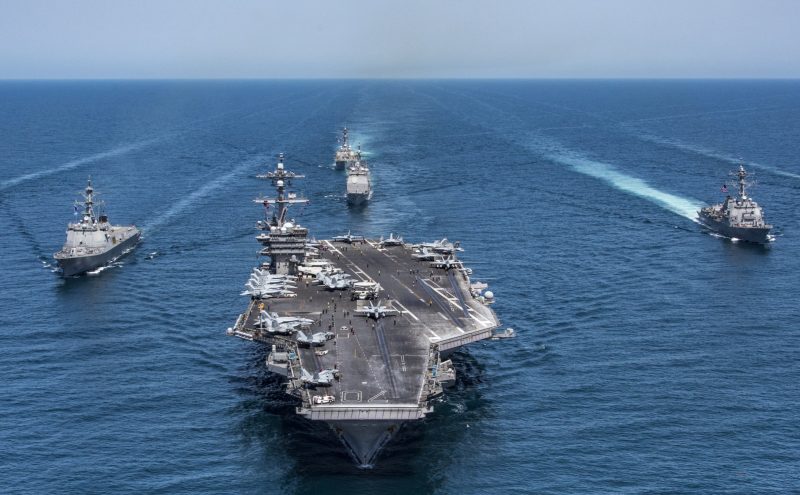
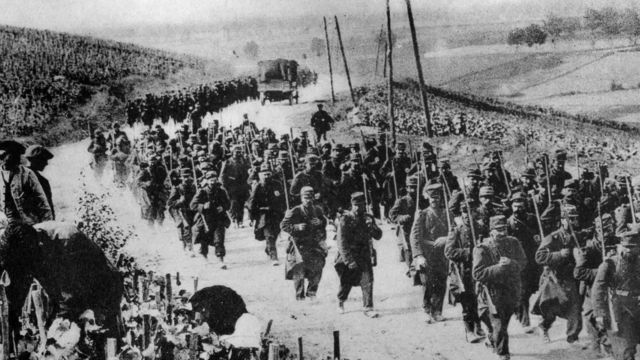
     

    But what if conflicts in Asia would not be fought to pursue national interests so much as recognition? What would this mean: to be accepted as equal again after the humiliation in the course of European colonization and subsequent American hegemony? Indeed, acknowledgement of past suffering seems to be a trauma in the conscience of many Asian nations. Are those desires only irrational or a different kind of rationality, which we have to take into account?


    There are striking similarities between the Pre-World War I era and the current developments in Asia: World War I signifies the danger, not the inevitability, of a new world war in the decades to come. World War I is a symbolic representation of the risk that war amongst the great powers could erupt although nobody would benefit from it. It is a writing on the wall, that rationality is not a guarantee for avoiding self-destruction. All reckonings regarding the repetition of World War I in Asia are based on the assumption that it would be in no one’s interest to fight a large-scale war, even with WMD, which could lead to the destruction of great parts of Asia. But what if conflicts in Asia would not be fought to pursue national interests so much as recognition? What would this mean: to be accepted as equal again after the humiliation in the course of European colonization and subsequent American hegemony? Indeed, acknowledgement of past suffering seems to be a trauma in the conscience of many Asian nations. Are those desires only irrational or a different kind of rationality, which we have to take into account? At present, we have apparently a conflict between democracies in the Pacific and the Indian Ocean on one side and authoritarian China on the other. But during my few visits I got the impression that the trauma of colonization and the non-recognition of the Asian civilizations is more counting in the cultural memory of the Asian nations. And especially India should be wary to be instrumentalised by the US in their conflict with China.


    During her last visit to Beijing in September 2012, then US secretary of state Hillary Clinton held a press conference in which she stated that the world would soon see, but for the first time in history, that a rising power and an established power would not engage in a war. Of course, her statement was related to China and the US. Additionally, she even compared the competition between China and the US with that of the Peloponnesian War between Sparta and Athens – authoritarian Sparta against democratic Athens. Athens, the strongest city-state in Greece before the war, was reduced to a state of near-complete subjection, while Sparta became established as the leading power. Thucydides, the chronicler of the Peloponnesian War and one of the ancient world’s most important historians, saw the initial cause of this war in the growth of Athenian power: “What made war inevitable was the growth of Athenian power and the fear which this caused in Sparta.”

    Unlike Plato, though, Thucydides argues that it was not the striving for power in itself but rather fear of loss of power and, in the long term, fear of being oppressed, robbed of one’s freedom, and enslaved that caused the escalation leading to war. In Thucydides’ account, fear was the cause of war on both sides. Sparta was afraid of the growth of Athenian power, and Athens was afraid of what might happen if it gave in to an escalating series of demands and threats, the result of which could not be foreseen.

    The Europeans who went to war assumed they would be home by Christmas 1914. We know now, of course, that World War I not only happened but that it also resulted in the self-destruction of the European powers in two world wars. World War I is foremost a lesson that a limited conflict could escalate into a nightmare of millions of deaths and unspeakable suffering, for which no rational explanation could be found.


    No one wanted World War I to happen. Or, at least, no one wanted the kind of war that actually took place. The general assumption was that the conflict would be very limited. The Europeans who went to war assumed they would be home by Christmas 1914. We know now, of course, that World War I not only happened but that it also resulted in the self-destruction of the European powers in two world wars. World War I is foremost a lesson that a limited conflict could escalate into a nightmare of millions of deaths and unspeakable suffering, for which no rational explanation could be found. Military aims and strategies gained priority above meaningful political purposes. Although the generals of the German empire believed that they were relying on Clausewitz’s theory, in fact, they perverted him. Tactics replaced strategy, strategy substituted politics, politics gained momentum above policy, and policy was militarized. It was as if everybody was saying: being at war would mean a stop to thinking.


    This does not mean a simple equation of rising China with the then rising German Empire. Although the actors then and today seem to be quite different, the dynamics generated by the conflict between emerging, rising and declining powers are strikingly comparable.


    Perhaps the deepest and hidden reason for this escalation was that no war party could admit neither defeat nor failure. Striking evidence for this assumption is that the proclaimed war aims of the German Empire got momentum the more they got unrealistic and irrational. The pride, honour and identity of the German Reich prohibited the acknowledgement of defeat and failure. This was the same with Russia, France, England and the Habsburg Empire – and the Turk Empire too. Perhaps especially these Empires knew that their rule wouldn’t survive if they would have had to acknowledge military defeat or failure. Military defeat or failure would have humiliated their identity and their “face”: their social recognition within their society and community. A military defeat would signal their “symbolic death” – and so, the empires fought a war for life and death. This does not mean a simple equation of rising China with the then rising German Empire. Although the actors then and today seem to be quite different, the dynamics generated by the conflict between emerging, rising and declining powers are strikingly comparable.

    Robert McNamara, the US Secretary of State during the Cuban Missile Crisis, famously noted that it was sheer luck, not rationality, that prevented the escalation of this crisis into a world war. In 1983 the world did even need twice more than a great fortune to avoid a nuclear disaster. In current times all great powers are using military means to pursue their political and economic interests. But we just should not allow ourselves to bet in a casino-like style that military conflicts and strategies could not lead to the escalation of limited conflicts into great power wars. The path to World War III would not be similar to that leading to World War II, but comparable to the pre-World War I era.

    This article is an amended version of the Introduction in his book “Lessons from World War I for the Rise of Asia” by Stuttgart:Ibidem Publishers.

    Feature Image Credit: www.express.co.uk 

    Article Images: www.fr21news.com , www.bloomberg.com , L’EXPRESS

  • Indian Foreign Secretary visits Colombo: Attempt to reset India-Sri Lanka ties

    Indian Foreign Secretary visits Colombo: Attempt to reset India-Sri Lanka ties

    India and Sri Lanka are immediate neighbours that share cultural, historical and religious ties spanning over thousands of years. Indian tourists to Sri Lanka are a major source of tourism revenue for the island nation. Despite all these ties, the bilateral relations continue to be impacted by considerable mistrust. Recent increase in tensions between the two South Asian neighbours is a result of the island nation allowing China to enhance its strategic footprints in Sri Lanka and increase its influence in the region. Despite certain inconsistencies in the Indo-Sri Lankan bilateral relationship, it will still be in the best interests of both countries to enhance their relationship amid the uncertain shifts in the geopolitical landscape.

    Indian Foreign Secretary’s visit to Colombo

    India’s foreign secretary Harsh Vardhan Shringla concluded a four-day state visit to the Island nation on October 5. His sojourn commenced at a time when Colombo expressed her eagerness to ink a few defence pacts with New Delhi.

    The visit was eventful as well as broad-based. The Foreign Secretary  held a meeting with the Sri Lankan President Gotabaya Rajapaksa on tourism, power generation, and cooperation in economic recovery. To reset the strained relations with Colombo, Shringla’s schedule was kept tight and focused on closed-door discussions. He called on Sri Lankan Prime Minister Mahinda Rajapaksa, Finance Minister Basil Rajapaksa, Foreign Minister G.L. Peiris and Foreign Secretary Admiral Jayanath Colombage (Rerd). From the capital, Shringla hopped from one town to another. He visited and held meetings in Kandy, Trincomalee and Jaffna to enhance bilateral ties.


    While in Trincomalee, he explored the possibilities for materializing the India-Sri Lanka energy partnership. In separate meetings with  Tamil National Alliance (TNA), Tamil Progressive Alliance (TPA), and Ceylon Workers’ Congress (CWC), Shringla voiced India’s firm support to the implementation of the 13th Amendment, a constitutional amendment that would empower the Tamil minorities but continues to be held in abeyance by the Sri Lankan government. During his visit, Shringla launched a few Indian initiatives like Model Housing Village’ in the northern district of Vavuniya, a school building at Vadamarachchi in Jaffna, and the Saraswathy Central College building in Pussellawa in Kandy. India had earlier constructed over 46,000 houses for the war-affected families in north.

    New Delhi has supplied to Colombo 100 tons of liquid medical oxygen, 26 tons of medicines and ambulances as part of its support to the Island’s efforts to overcome the pandemic. The state has also received about half a million Covid vaccines from India. Sri Lanka’s Suwa Seriya programme was supported by India. Sri Lanka and India together have implemented a USD 400 million currency swap agreement and one more is expected to happen.

    Colombo Crisis

     India’s External Affairs minister S. Jaishankar and Sri Lankan Foreign minister GL Peiris had a tête-à-tête on the side lines of UNGA in September. Weeks after Dr S. Jaishankar’s visit to Sri Lanka in the first week of January this year, Indian fishermen were killed by the Sri Lankan Navy, which resulted in renewed tensions between the two countries.  Moreover, the cancellation of the tripartite Memorandum of Understanding (MoU) between Sri Lanka, India, and Japan for the development of the strategically located East Container Terminal (ECT) at the Colombo Port in February, added more salt to the already strained relations between the two neighbours.

    What became an even more controversial issue was when Sri Lanka cleared a Chinese energy project in three islands off the Jaffna peninsula that is barely 50 km from Tamil Nadu coast. Recently, Sri Lankan parliament passed the Colombo Port City Economic Commission Act to oversee a huge Chinese luxury oceanside development project. This gives China a significant foothold in the country and will allow it to enhance its strategic presence throughout the region. Accordingly, India emphasised that it expected Sri Lanka to be “mindful” of ties with New Delhi, particularly in the security realm.

    Interestingly, the series of events that have taken place this year came after the statement given by Sri Lankan Foreign Secretary Jayanath Colombage last year regarding Sri Lanka’s adoption of an “India first approach”, which reflects Colombo’s supposed willingness to protect New Delhi’s strategic interests in the region. However, despite these guarantees, the geopolitical shifts occurring in South Asia make it arduous for Sri Lanka to maintain consistently positive relations with its neighbour.

    Ties that continue to stand

     China has become a critical factor in the Indo-Sri Lankan bilateral equation. The East Asian giant’s deep pockets have become a more attractive economic option for Sri Lanka vis-à-vis India. While India took five months to approve a loan moratorium requested by Sri Lanka last year, China approved an additional USD 500 million loan expeditiously. Moreover, the issue involving the Tamil cause continues to sustain the long-standing trust deficit between the two South Asian neighbours.

    However, this is not to say that Sri Lanka will disregard India for its partnership with China. Colombo is aware of the risks involved in engaging deeply with China. Sri Lanka is no stranger to Beijing’s debt trap that compromises its sovereignty. Despite Rajapaksa’s cordial ties with China, Sri Lanka will have to inevitably reconsider its priorities if this continues to persist.

    While China may have the upper hand in mega-infrastructure projects, India’s role in cementing its people-to-people ties with Sri Lanka and taking the lead in the education, health, and tourism sectors, continue to give it considerable edge in the overall inter-state dynamics. Apart from being its major trading partner, India has also demonstrated its proactive partnership by being the first responder in humanitarian assistance.  Most importantly, India has no interest in compromising Sri Lanka’s territorial integrity and sovereignty. Additionally, India continues to reiterate that it gives priority to Sri Lanka under key regional frameworks such as its Neighbourhood First Policy and Security and Growth for All in the Region (SAGAR).

    Sri Lanka is also aware of this and has tried to make up for its decisions that have compromised India’s interests. Despite cancelling the ECT tri-partite MoU, Sri Lanka has taken the prerogative to permit Indian companies to develop its West Container Terminal (WCT). Moreover, the scheduled address by Pakistani Prime Imran Khan, to the Sri Lankan Parliament during his visit to Sri Lanka in February, was also cancelled. Recently, much attention has been placed on Sri Lanka’s “roadmap” to restore ties with India and address several important issues such as the fishermen’s issues, building connectivity, trade and investment, and promoting religious links.

    A way forward

     At a time when India’s Indo-Pacific concerns are on the rise, New Delhi is perturbed by Beijing’s diplomatic successes in Sri Lanka and throughout South Asia. China’s quick responses and its its large funding are attractions that has swayed the Island nation towards a pro-China policy. Given the endemic corruption and the Chinese-engineered Sinhala chauvinism with anti-India stance has forced Indian companies to become very cautious about investing in Sri Lanka. But India is ahead of China when it comes to tourism, and health care. Sri Lankan students are now eligible to compete in India’s National Eligibility cum Entrance Test (NEET) and Joint Entrance Examination for the IITs. Last year India’s allocation of $50million for counter-terrorism and $15 million for promoting the Buddhist links drew tremendous positive attention of Lankan policymakers. The first pilgrims’ flight from Sri Lanka to Kushinagar in Uttar Pradesh is expected to take off soon. From the days of Julius Jeyawardane Sri Lanka has evolve a very crafty and nuanced diplomatic strategy, a truly Chanakyan approach. India will need to be equally crafty to checkmate the Chinese inroads into Sri Lanka. [TPF].


    Feature Image Credit: Lankaxpress