Category: Military Power & Modernisation

  • India’s impending Fighter Aircraft Choices: Finding the Elusive Solution?

    India’s impending Fighter Aircraft Choices: Finding the Elusive Solution?

    Category : Defence & Aerospace/India

    Title : India’s impending Fighter Aircraft Choices: Finding the Elusive Solution?

    Author : M Matheswaran 02.02.2020

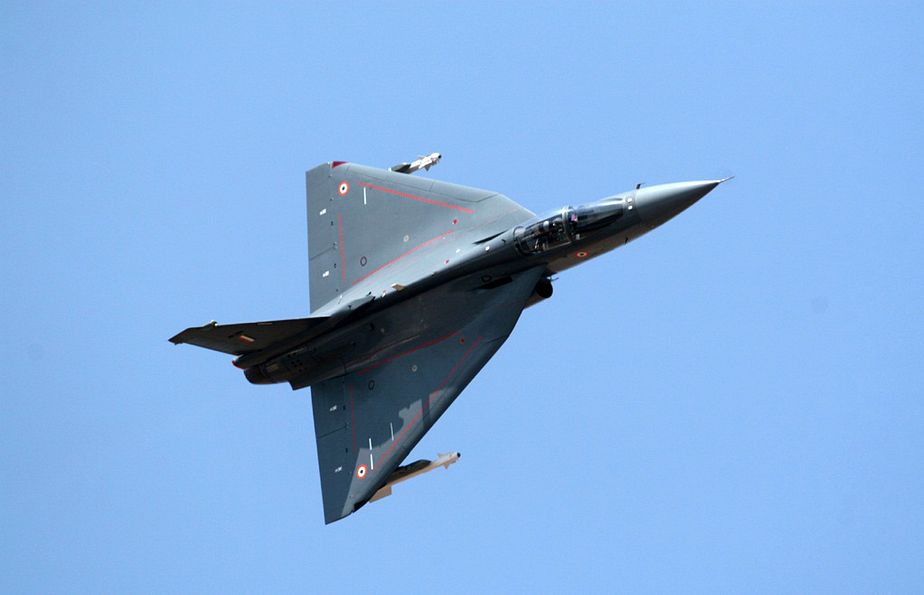
    The Indian Air Force has been afflicted with decreasing force strength due to phasing out of old aircraft and increasing obsolescence of its fleets. Despite the induction of Rafale and Tejas, the IAF will continue to face challenges of reducing numbers and a large chunk of old platforms in its inventory. The IAF is facing serious shortages in its fighter aircraft strength. Air Marshal M Matheswaran examines the possible strategy that can best address IAF’s choice of fighter aircraft for its future.

    Read More

  • Time for Structural Reforms, Modernisation

    Time for Structural Reforms, Modernisation

    The Prime Minister’s announcement on independence day of his decision to appoint Chief of Defence Staff (CDS) as the single-point military advisor to the CCS and the PM was received with great enthusiasm. The appointment of CDS, recommended in 2001 by the Kargil Review Committee and endorsed strongly by the Group of Ministers’ headed by the then Deputy Prime Minister Shri L K Advani has been long overdue. Like with every other decision with respect to military reforms, the CDS decision became a victim of bureaucratic manoeuvring, vindictiveness, engineered turf battles, and political indecisiveness. The process of setting up a tri-service integrated headquarters was, however, incorporated with a Vice Chief equivalent, CISC heading it. Major reforms such as integration of service headquarters, appointment of the CDS, and establishment of Indian Defence University – all remained in limbo or with just cosmetic changes. There is no doubt that the Indian military is in crying need of major structural reforms in tune with 21stcentury environment, technologies, strategies, and the primacy of joint operations in the conduct of war. The CDS is more than a single person’s appointment, it is an entire system.  Therefore, it needs to be accompanied by other major structural reforms.

     Integrated Defence Staff (IDS), the joint headquarters structure to assist the CDS is already in place. The current head, CISC, would become the VCDS. It has taken more than a decade for the IDS to establish a mature and optimised acquisition system and processes, develop Long-Term Integrated Perspective Plans, optimise the defence intelligence agency, and address joint operational and training systems. While significant expertise has evolved including coordination with multiple MOD agencies, the CISC has had to depend on the Chairman, COSC for major decisions. This was invariably subordinated to the Chairman’s priority for his role as the Chief of his Service. An integrated approach, driven by the CDS, should ensure speedy and optimal modernisation of individual services towards enhancing our joint warfare capability.

     Currently, Chiefs of respective services are responsible for operational capability, training, and the requisite modernisation plans. Acquisitions and modernisation plans were largely driven by individual service specific interests, and very often these ended up getting delayed or blocked by turf wars and prioritisation battles for share of the defence budget pie. This would change under the CDS, with operational decisions being driven by the CDS system while the Chiefs would be responsible for their service capability development, training, and maintenance in tune with joint strategies. This should speed up the modernisation process.

    This year’s defence budget is barely above the subsistence level. A decade of stalled modernisation has brought all three services to their lowest levels of force structures and capabilities. The Indian Air Force is down to 32 squadrons, and is likely to go down 28 squadrons over the next five years as the older, overdue for phase out aircraft are finally laid off. It would take more than a decade for the IAF to get back to its authorised force strength of 42 squadrons provided its modernisation process is undertaken on a war-footing. If not it would be at least two decades for full recovery. The Army is no better, as a former VCOAS stated – 60% of its weapon systems are vintage. Army’s two major modernisation programs – TCS and BMS, intended to be through ‘make’ route, has been shelved after more than a decade of work with two consortiums of Indian majors. This is bound to have huge adverse impact on its modernisation efforts. One can’t blame the Army though. Repeated delays in routine procurements, and lack of accountability on development programs have cost the Army dearly. Notwithstanding some of the recent decisions such as the joint venture between Kalashnikov and the OFB for small arms manufacture, light-weight howitzer and the fast-track procurement of assault rifles and weaponry for special forces, Army’s overall capability for a two-front war is  of concern. The FICV project continues to be in a limbo. Army Chief’s restructuring efforts towards ‘Integrated Battle Groups’ is a welcome step and would help the cause of jointness.

    Navy modernisation efforts are no better either. The progress of the Indian Aircraft Carrier continues in its slow pace. Very well laid out plans such as 30-year ship building and submarine-building programs have been approved years ago, if not decades ago. These have floundered for lack of timely budget allocation. Effectively the Navy continues to grapple with ageing ships, submarines and weapon systems.

    Much of the modernisation that has accrued over the last 15 years has been largely due to procurements from the US, almost exclusively through the FMS route, that is government-to-government contracts. It does not speak well for all our sloganeering on ‘make in India’, and reflects the lack of a coherent national strategy. This is a domain the CDS will need to address.

    In a recent announcement, the government indicated that it would allocate USD 130 billions over the next five to seven years for modernisation of the three services. The CDS will need to move beyond the current system of work in the IDS, as far as modernisation goes. Currently, the LTIPP is seen as a ‘Desired Capability’ document, which the government is happy to concur. There is no assurance of financial commitment, and so the plans remain wishful thinking. Big headlines are made whenever the DAC approves ‘Acceptance of Necessity’ for thousands of crores worth acquisitions. These turn out to be meaningless as the subsequent processes takes years, more than 50% AONs elapse, and less than 25% of approved AONs fructify into desired inductions. On an average the time taken from AON to contract signing has been about 9-10 years. The flaw lies in the mismatch between various aspects of indigenous development, ‘make in India’ manufacturing and huge import dependency versus the combat capability of the forces.

    It is quite clear that various organs of the government, over the last 70 years, have failed to address effectively the need of a vibrant indigenous defence industry that is export oriented and reduces our forces’ import dependency. The CDS system, if evolved correctly, should integrate different aspects of  integrated operational philosophy, requisite force structures and combat capability with indigenous manufacturing, technology development, and a balanced, accountable, and efficient  acquisition process. The CDS must also be given enough power to take operational and financial decisions to ensure appropriate force structures for India’s defence. The bottom line, however, is to see the wisdom that an allocation of 1.35% of GDP is abysmally low to meet India’s defence needs in the 21stcentury.

    This article was published earlier in Deccan Herald on 22 Sep 2019.

    The author is the Founder-Chairman and President of The Peninsula Foundation. He is a former Deputy Chief of Integrated Defence Staff. The views expressed are author’s own.

  • Qatar Rafale Issue: Getting a Realist Perspective

    Qatar Rafale Issue: Getting a Realist Perspective

    M Matheswaran                                                                                                       May 23, 2019/Commentary

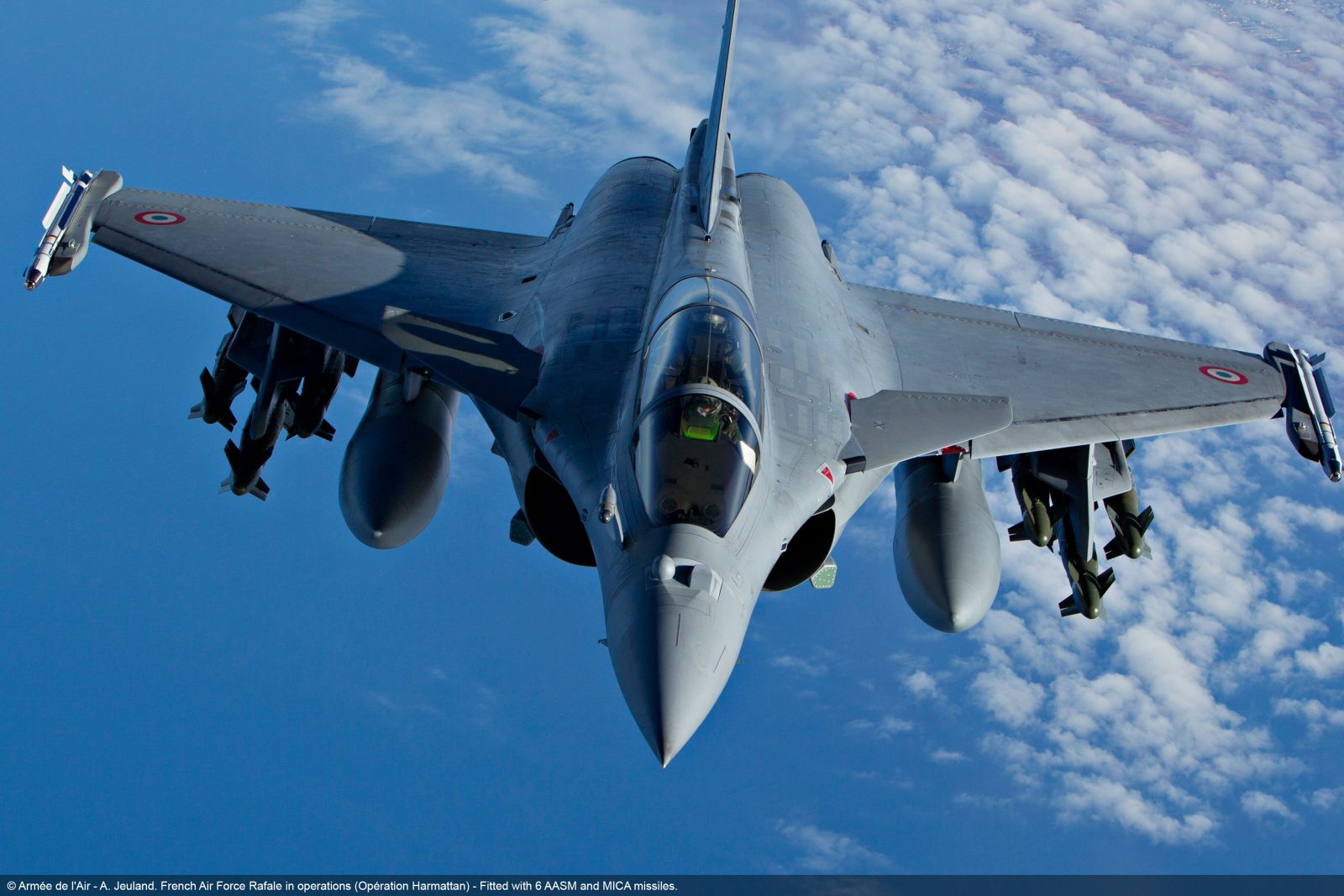
    Over the last two weeks, much has been written about the controversy emanating from the possibility of Pakistan Air Force pilotshaving trained and flown the Rafale aircraft in France. A lot of concern has been expressed about the operational capabilities of the Rafale being compromised. One needs to examine this carefully. A better understanding of technology would make it easy even for the layman to appreciate and deduce from available open source knowledge what  modern aircraft are capable of. Given this, one can imagine what a trained and experienced fighter pilot would be capable of deducing, and hence evolve his tactics, by visually observing and studying various parameters of the aircraft, leave alone flying it. Hence, to get a realist perspective of this situation, we need to examine various factors, particularly Qatar-Pakistan relations.

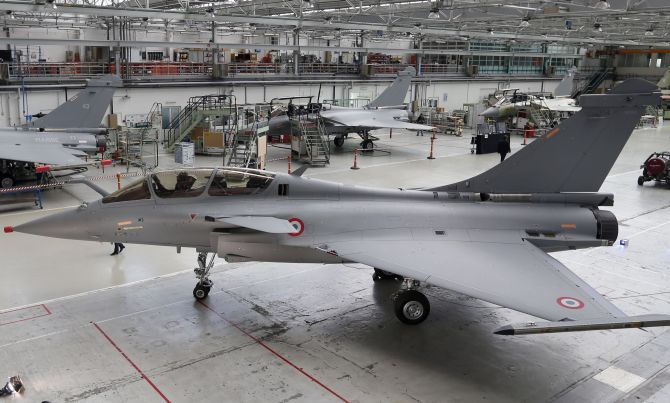
                But first take a look at the technical issues. The Rafale is a 4.5 generation aircraft. Its design, in terms of its clean aerodynamics and an optimal design to create minimal radar signature, would make it clear to any professional that this is an aircraft capable of exceptional manoeuvring. It is also an established fact that amongst all 4.5 generation aircraft, there would be very little difference in terms of combat performance. Quite obviously, the most critical elements of the aircraft consist of its sensors, avionics systems, radar, and weapons. Both India and Qatar have contracted for similar version of aircraft, F3R.The systems and weapons have some similarities but also major differences. Modern fighter aircraft are systems intensive and function as system of systems.

                Features that are common to both Qatar Air Force and Indian Air Force Rafales are primarily the RBE 2-AA AESA radar, SPECTRA self-protection suite, IFF with full Mode-5/Mode-S compatibility, Elbit’s TARGO-II Helmet Mounted Display System, and some of the most critical weapons such as Meteor BVRAAM, Mica air-to-air missile, and SCALP air-to-ground long-range cruise missile. Anyone who flies the aircraft will, obviously, get to know the full functioning, performance, and envelope of the systems and the weapons. Most critical would be the intimate knowledge of the AESA radar and the important weapons. However, one must understand that deeper technical knowledge of systems like the radar would not be available to Qatar. Given the long-standing relationship between France and Qatar, any high level systems programming and integration would be retained by the French. This has been the practice in the past, and it is so with most Arab countries. Additionally, AESA radar configurations and source codes are highly secure and it would be virtually impossible for anyone to break into it, even if we assume that Pakistani pilots and technicians would make an attempt to do so, which is very unlikely. Weapon envelopes would certainly be known in the course of training on them. Training on systems like SPECTRA, while providing its functional knowledge, does not compromise any security. The crux of SPECTRA lies in its threat library programming, which is exclusive to the host nation, and on response algorithms that will not be open to anyone other than the designer.

                Indian Rafales, however, will have significant security measures. These lie in completely different secure communication systems that would be incorporated, and India’s own secure datalink capability that would be incorporated. Qatar Rafales would have the Link-16 compliant datalink systems, which India will never incorporate. As the French Rafales upgrade to F4 status, much of those upgrades may become available to India, and IAF aircraft will become uniquely different and highly secure with its own NCW architecture. In terms of EO designation and Recce pods, Qatar Rafale will have the Lockheed Martin’s Sniper pod while IAF have the well-proven and advanced Litening-4 EO pod integrated. EW capabilities and hence, EW tactics and strategies will be completely different for IAF’s aircraft. Unlike in the past, this contract envisages French cooperation and full access to integrating additional weapons and systems of India’s choice, which will make the aircraft considerably different.

                So what should we make of the news about Pakistani pilots flying the Rafale in Qatar and subsequent denial by the French ambassador in India? As for Pakistani pilots sizing up the Rafale against the F-16, it is a non-issue as the two are just not comparable. The upgraded F-16s of PAF is of Block-50 standard at best, and that is clearly one generation behind Rafale. The concern, therefore, is irrelevant.

    One must take into account various regional geopolitical issues to get a realist perspective. Qatar is a small country of 2.8 million inhabitants, with nearly 80% of the population located in the capital city of Doha. With highest per capita GDP in the world, Qatar focuses on rapid development towards first world status, and displays its ambitions in playing a geopolitical role, punching well above its weight much like Singapore. Doha has been host to major international events, and will be hosting the FIFA 2022.

                Considering that Qatar is a tiny kingdom on the Arabian peninsula, Saudi Arabia has always tried to dominate and control the state as a subordinate. Qatar has successfully dismissed these attempts by breaking out and engaging countries at the global level. It has made itself a major diplomatic player, a generous donor of foreign aid, and a leader in modernising education in the region. It has maintained strong relations with Iran and Turkey as much as with other Islamic states. It has sought to balance different groups and organisations with a moderating influence and has sought to push for peace in the region. These efforts, and the overwhelming popularity of ‘Al Jazeera’ has riled countries like Saudi Arabia, Egypt, Bahrain, and UAE into sanctioning Qatar and curtailing diplomatic relations.

                Pakistan, which has very strong relationship with all Arab countries, has maintained a neutral stance in the Qatar-Saudi Arabian dispute, despite strong pressures from Saudi Arabia. Pakistan’s military presence in these countries, in terms of training local forces as well as providing fully deployed troops to augment local defences has been a long-standing practice. Pakistan Air Force pilots have regularly flown for the Air Forces of these states. Hence, access to military resources in terms of operational flying experience on these aircraft has been a huge advantage for PAF. Since the Iraq war in 1991, Qatar has sought to build a significant military capability, its Air Force in particular.

                While India and Qatar have excellent relations (Qatar meets nearly 60% of India’s LPG needs), to meet its military training and force requirements Qatar has engaged Pakistan’s services in addition to European and British professionals. All these pilots, essentially mercenary in nature, have become Qatar citizens as well. Qatar has provided air base for US air forces  at al-Udeid, 20 miles from Doha. The base services US Central Command, including US forces in Afghanistan and Syria. Qatar addresses Pakistan’s energy security significantly, and both nations have cultivated their relationship carefully. Qatar has allowed Taliban to set up office in its territory and has worked to encourage dialogue with all parties involved in the Afghan conflict. In return, Pakistan has been careful to balance its relations with all gulf countries, and values its engagement with Qatar highly, as the recent visit of Pakistan’s Prime Minister shows.

                For a very small state, Qatar is on track to building significant air power capability. After signing initial contract for 24 Rafales with French Dassault in 2015, Qatar placed additional orders for 12 more aircraft, making it a total of 36 Rafales. This was preceded by an earlier order for Boeing’s 36 Qatar advanced-variant Eagles from the USA for $ 12 billion, with an option to increase the order later to 72. In another major deal with BAe, Qatar concluded a contract for supply of 24 Eurofighter Typhoons and 9 Hawk advanced jet trainers, worth over $ 6.6 billion, with first payment made in Sep 2018. For an air force whose strength was just 2100 personnel in 2010 and just 13 Mirage 2000-5 fighters in early 2000s, this build up with three fleets of 4.5 generation aircraft and substantial increase in numbers is unprecedented. Qatar’s decision to go in for a seven-fold increase in its air power capability is curious and there are questions as to how this tiny air force will absorb the massive capabilities in which it is investing. More importantly, it is inevitable that it would need pilots on hire to fly these aircraft. This where the Pakistani relationship comes into focus. In addition work is already underway to increase the infrastructure  in terms of building an additional base and expanding existing bases at al-Udeid and Doha.

                Pakistani pilots who fly for Qatar air force may do so after being given Qatar citizenship. Unlike India, Pakistan allows dual citizenship passports. It is therefore, quite obvious that Pakistani pilots will fly all these aircraft being procured by Qatar. It is irrelevant whether they have been trained in France on Rafales contracted for Qatar, in all likelihood they would have. India, therefore, would do well to factor this reality in its calculations.

    The author is the founder Chairman of TPF, IAF veteran and former Deputy Chief of Integrated Defence Staff. Opinions expressed are the author’s own.

    A shorter version of this article was published in Deccan Herald.

    Image Credit – rafale.co.in

  • How the newly inducted IAF Chinook heavy-lift helicopters provide huge versatility in operations

    How the newly inducted IAF Chinook heavy-lift helicopters provide huge versatility in operations

    M Matheswaran                                                                                                 May 22, 2019/Opinion

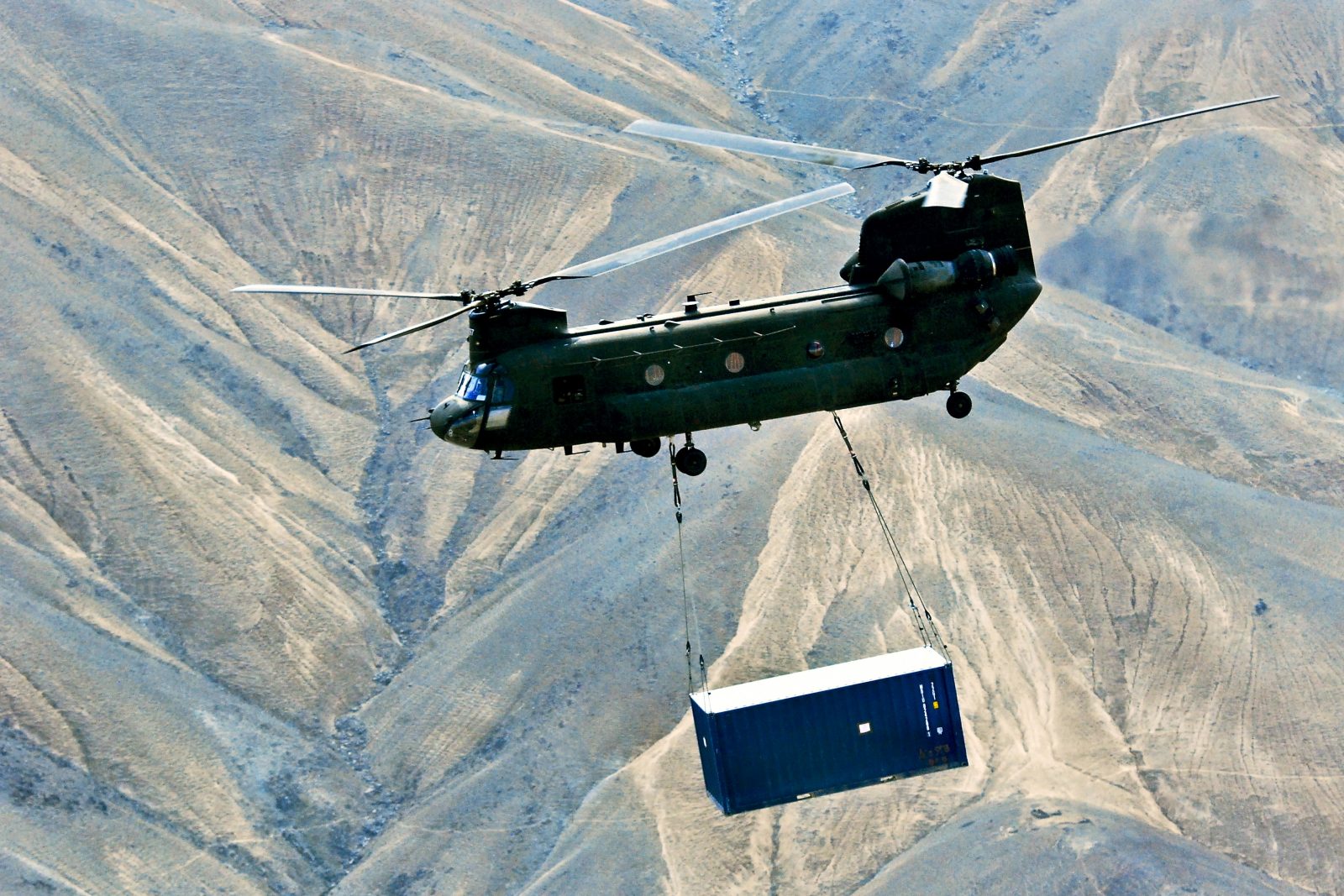
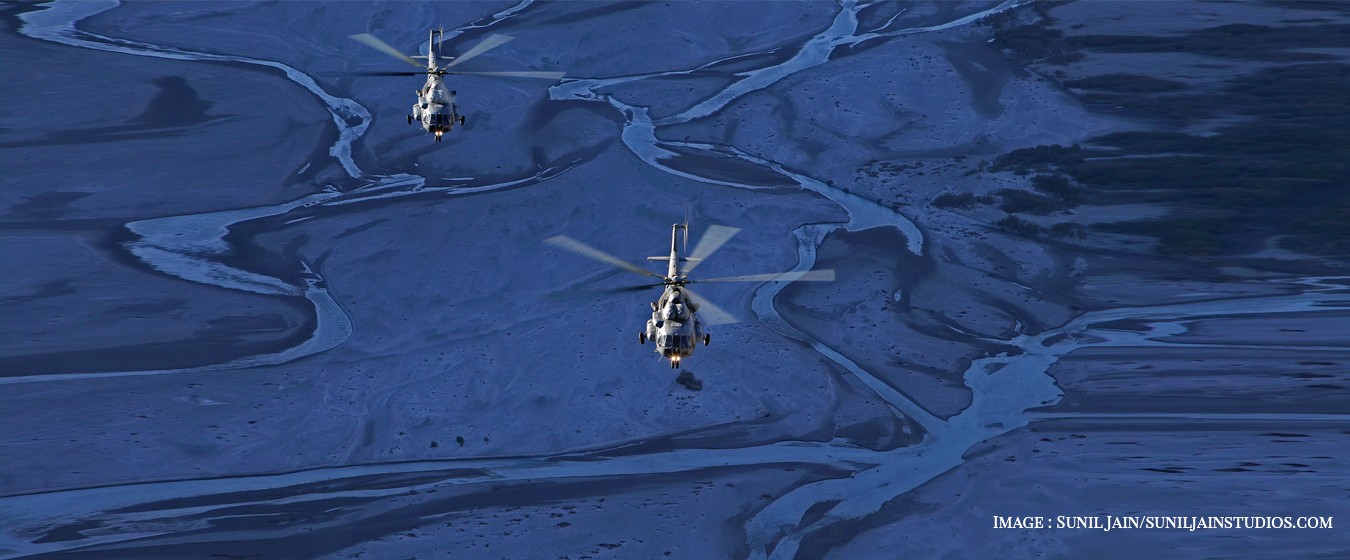
    The Indian Air Force inducted the first batch of four Boeing C-47 F(I) Chinook helicopters last month into its inventory. These are part of the order for fifteen heavy lift helicopters. With a payload capability of 10 tonnes and a significantly good high altitude performance, the Chinooks fill a long-felt gap in IAF’s heavy lift helicopter capability. For long the IAF had depended solely on its small fleet of Russian built Mi-26 helicopter, which is still the world’s largest and heaviest payload helicopter. The Mi-26, with an enormous payload capability of 20 tonnes, had provided yeoman service for more than two decades.

    Starting with a fleet of four aircraft, the Mi-26 has played extensive role in meeting major airlift requirements of material, machinery, and men, for the military and civil administration in the Himalayan border regions.With one aircraft having crashed few years ago, the surviving fleet had been hampered by maintenance and technical support problems, virtually bringing to halt the heavy heli-lift capability of the IAF. Besides, increasing emphasis on infrastructure build-up in the border regions has highlighted the importance of heli-lift capabilities for both the IAF and the Indian Army. This is what prompted the IAF to look out for building and enhancing its heli-lift capabilities in the heavy-segment.

    India’s borderlands, dominated by the mighty Himalayan ranges, are unique, treacherous, and the most demanding in the world. The need to operate at altitudes higher than 20000 ft on regular basis is unique to India, and is a challenge to most helicopters designed in the West and Russia. Operations in Indian environment puts gruelling demands on these helicopters. High altitude performance in other parts of the world is at less than 20000ft, in fact, it would average between 5000 and 10000 ft, with exceptions at 15000 ft. In India, 20000 ft operations would be routine in the Himalayan stretches and valleys all across our nearly 4000 km long border in the north and north-west. High altitude operations put severe demands on the engine, has a drastic reduction in effective payload, and has adverse impact on total technical life. These will need to be addressed by appropriate technical enhancements that are fairly expensive as well.

    Indian MOD signed the contract with M/s Boeing in Sep 2015 for supply of 15 CH-47F(I) Chinook Helicopters. The contract is for USD 1.1 billion, with an option clause for further seven aircraft. All 15 aircraft are planned to be supplied before March, 2020. It is almost certain that the option clause would be exercised. The first aircraft was handed over in a ceremony at the manufacturer’s production facility in Philadelphia on Feb 1 st , and the first batch of four were shipped out to Mundra Port in Gujarat. The four were then assembled and integrated into fully operational helicopters at the IAF base in Chandigarh and inducted on the 25 th March. Some of the specialist systems, self-protection systems and EW equipment are contracted through the FMS (Foreign Military Sales) procedure.

    While the payload capability is only half that of the Mi-26 helicopter, the Chinook provides huge versatility in operations. The IAF version is the CH-47 F(I), which is the latest and advanced version of the Chinook, designed more than 50 years ago in 1962. The IAF aircraft is upgraded with new generation avionics and flight control systems that make the aircraft capable of very precise and versatile operations during day and night. The Chinook’s twin-rotor design gives it good agility and stability in high altitude operations. Its advanced mission computer and the DAFCS (Digital Automatic Flight Control System) allows the pilot to feed in the complete mission profile and fly automatically and with hover precision in one foot increments vertically and laterally. The CH-47 F(I) is an advanced multi mission helicopter with the true multi-role, vertical-lift capability. It contains a fully integrated, digital cockpit management system, Common Aviation Architecture Cockpit and advanced cargo-handling capabilities that complement the aircraft’s mission performance and handling characteristics. Its primary role will be for transportation of troops, artillery, equipment, and fuel. The army is particularly keen on the Chinook heavy heli-lift capability for transportation and deployment of its recently procured M-777 Ultra-Light howitzer artillery guns in the Himalayan border regions with China.

    As opposed to the small fleet of three Mi-26 helicopters, the larger fleet size of the CH- 47 F(I) would provide the IAF immense flexibility and availability of aircraft for a variety of tasks. It will provide a boost to the construction of infrastructure and border road projects, long overdue. Border Roads Organisation would get a fillip to its long-delayed road construction projects in the north-east. Our continued requirements of aerial maintenance in remote regions will be better served with this new capability, as also for critical needs of HADR operations, in missions for transportation of relief supplies, and evacuation of refugees. The IAF plans to deploy the two squadrons, one in the Western sector in Himachal Pradesh and adjoining Himalayan regions, and the other in the East sector in Assam/Arunachal Pradesh.

    The Chinook acquisition was also accompanied by acquisition of the Apache attack helicopter, also from Boeing. Both contracts, worth together over USD 3.5 billion, were signed on the same day on 28 Sep 2015. Both are also a combination of DCS (Direct Commercial Sales) and FMS (Foreign Military Sales) processes. The two inductions have followed a series of procurements from the USA, mostly through the FMS route. Having started with the first major defence deal in 2008, the Indo-USA defence business is likely to touch a whopping USD 18 billion by the end of 2019. Most of these acquisitions are through FMS and are virtually replacing the earlier Russian fleets: Apache replacing the Mi-35, Chinook replacing Mi-26, Sikorsky MH-60 Romeo replacing the Kamov in the Navy, with the likelihood of 110 NMRH to follow; this is a sort of indirect CAATSA in play.
    It is important for India to realise that while many of these acquisitions have given significant teeth to Indian operational capability, in terms of business it has been huge business to the US companies with very little to show for India in 3 terms of Technology transfer or industrial gain in terms of manufacture or co-design and co- development.

    The CAG report number 3 of 2019 comes down heavily on these acquisitions. It castigates the MOD and the IAF for procedural lapses, long drawn out acquisition processes, and more importantly of having skewed the QRs in such a way that only Chinook and Apache would have been successful. That’s a serious indictment. However, India will do well to remember that major procurements like the Apache and the Chinook at huge costs, while meeting the IAF’s operational requirements, should also be leveraged to benefit India’s larger strategic interests of technology acquisition, industrial capability, global partnerships, and of course, strengthening US-India strategic partnership. It needs to be a win-win for both.

    The author is retired Air Marshal and former Deputy Chief of Integrated Defence Staff. He is the founding Chairman and President of The Peninsula Foundation, Chennai. Views expressed are personal. 

    This article was published earlier in Financial Express.

    Image Credit.

  • Looking Beyond the Rafale Imbroglio

    Looking Beyond the Rafale Imbroglio

    The tenor of the debate, especially in the election year, can hardly be expected to be moderate or mature. While wild assertions made by the politicians in hope of swaying the electorate is to be expected and accepted, there is also a vital need for politicians to ensure that matters pertaining to National Security are kept out of the ambit of politics. Just as Georges Clemenceau, French Prime Minister during the Great War, commented that “War is too serious a matter to entrust to military men”, so too is the case with entrusting national security to just politicians. But politicians being politicians care little for such niceties, which explains why allegations of wrongdoing are flying so thick and fast in the ongoing Rafale procurement imbroglio, who, unfortunately, have been joined by respected academics and researchers, who should know better.

    Attempts to garner the limelight and the few minutes of fame that goes with it is understandable in the case of politicians, but for academics to do so by drawing conclusions based on speculation that passes for facts and little else, seems to be rather hasty, if not downright fallacious and unprofessional.  A respected academic, for example, has concluded that the decision to procure just 36 jets instead of the original 126 with the attendant increase in unit cost shows “extraordinary ineptitude can only be explained by the circumvention of laid down procedures.” He further  goes on to equate the manner in which this decision was made to that of demonetization, berates the Government for being “parsimonious and incompetent” and suggests that their action was “worse than a crime—it was a blunder.”

    He may well be proved right in his conclusions subsequently, but the truth is that it is one thing to question the Governments’ motivation or influence in the selection of the aircraft or the offset partners, but quite another to question the decisions it takes, however much we may disagree with them. For one, Mr. Modi was elected by a substantial majority to do just that, since that is what is expected of a leader. Moreover, we are wholly unaware as to circumstances that led to the Government to take the decision that it did, and therefore to question his decisions clearly smacks of arrogance, if not an ulterior motive. It is all very well to rant about the ineptitude and incompetence of this Government and its adverse impact on defence modernization, but what then are we to conclude at the previous Governments’ inability to push through the earlier deal in the seven years that it had to do so? Surely ineptitude or Incompetence may be too mild a term in their case.

    There is no gainsaying the fact that defence procurement and corruption have had a symbiotic relationship ever since Independence and our first procurement scandal, the infamous “Jeep Scandal” of 1948. Politicians have always seen defence procurement as a lucrative source of funds and as long as our political funding regulations remain opaque, nothing is going to change. Therefore, if this Government has actually resorted to underhand means as alleged, despite it being a government to government deal, then they have only trod on the well-beaten path of their illustrious predecessors. Thus, if precedent is to be our guide, then all the brouhaha on the issue will only result in a setback for the Air Force while politicians and their minions involved getting away, as we saw in the Bofors case.

    If it is accountability that we are interested in, then we need to look beyond this specific issue of procurement and ask ourselves as to why the Air Force finds itself in such desperate straits today, with regard to its combat strength. The fact that its combat strength has fallen from its authorized forty-two squadrons to the present thirty plus, over the past two decades, was neither unanticipated nor unexpected.  Like all machines, aircraft have a quantifiable life span, which while possible to extend with mid-life upgrades, will at a point in time require replacement by the next generation, if the Air Force is to be able to match and overcome the adversary’s capabilities. This does not call for either vision or foresight, just common sense and a practical understanding of the facts, which somehow the Government of India with its vast resources was unable to do. Surely someone must be held accountable for this negligence because not only does it put our national security at risk but endangers pilots who are expected to make do with shoddy outdated aircraft.

    While the Air Force hierarchy must carry some of the blame, not least for lack of moral fibre for its inability to stand up for its rights, governments over the years, especially the Ministry of Defence and Hindustan Aeronautics Limited (HAL) that it controls, have much to answer for. For the most part, much of our current problems can be traced to the utter failure of HAL to produce the hugely over-budget, inordinately delayed and ostensibly indigenous Light Combat Aircraft, the Tejas. In this context, the existing perceptions within the Air Force that quality control in HAL is all but non- existent have been borne out by the recent crash of the Mirage 2000 aircraft undergoing upgradation. Initial reports doing the rounds suggest that the nose wheel broke while it was taking off resulting in the tragic death of two test pilots, the best of the best.  It also brings to mind a similar case when three paratroopers slithering down from a HAL manufactured Advanced Light Helicopter at the Army Day Parade in January 2018 fell and were grievously injured because the “strong point” to which their rope was tied broke and separated from the aircraft’s body. The question that needs answering is not just how many such cases have happened in the past, but also how many in HAL have been held accountable for such shoddy work?

    This also explains to a large extent the previous governments’ inability to successfully close the deal for the 126 aircraft. It was reportedly blocked by the unwillingness of the Air Force hierarchy to accept aircraft manufactured by HAL without certification by Dassault Aviation, the manufacturers of the Rafale, something they refused to do.  That they would prefer to work with an untried and untested offset partner, allegedly thrust on them, rather than with HAL speaks volumes about what they think of the capabilities of this Defence PSU!

    Therefore, politicians and academics critical of this governments’ decision to keep HAL out of the loop in this case, especially their accusation that by doing so we have lost out on technology transfer, are either being deliberately obtuse or completely out of touch with reality. In this context, Mr. Rahul Gandhi has been particularly vocal, even to the extent of meeting workers of HAL. It would be wonderful if he took the initiative to volunteer to fly in one of these aircraft or take time off to interact with the pilots who do. Maybe, just maybe, he would have a change of heart and leave national security issues out of the realm of politics.  Finally, our leaders would do well to remember that even after these aircraft are inducted into service, they will continue to be confronted by that gargantuan problem, where will the other hundred-odd aircraft desperately need come from? After all what is sauce for the goose is also sauce for the gander!


    Brigadier Deepak Sinha (retd), an Army veteran, is a Visiting Senior Fellow at the TPF and is also a Consultant at ORF, New Delhi.

    This article was published earlier in the Times of India. The views expressed are the author’s own. 

  • A step closer to N-triad deterrent

    A step closer to N-triad deterrent

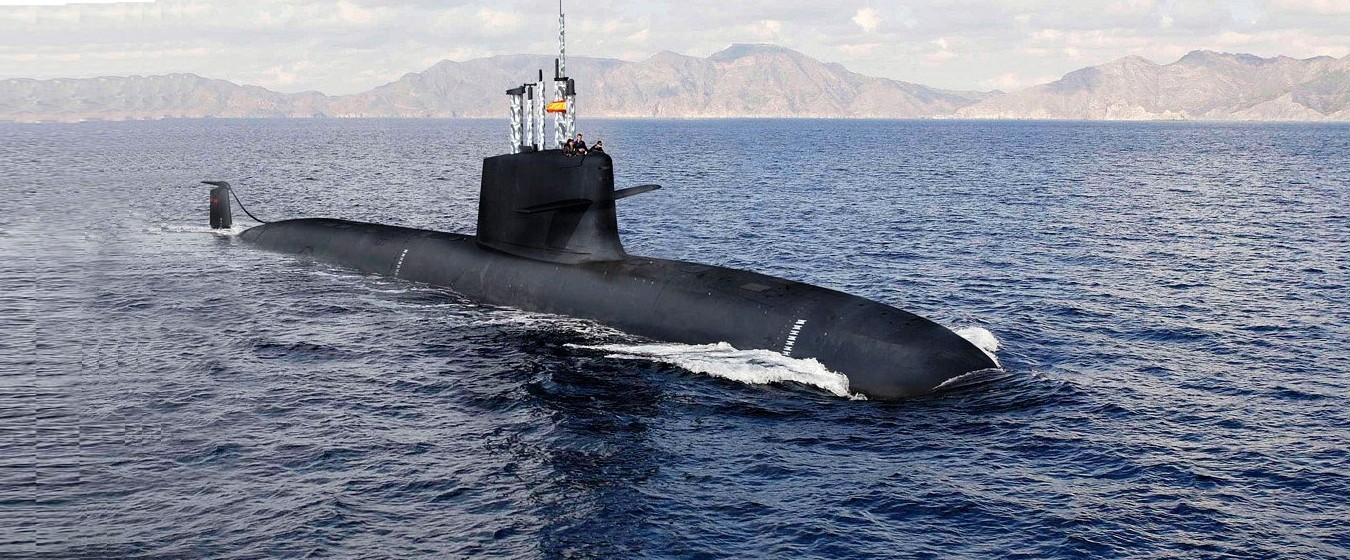
    PM Modi announced with justifiable national pride on November 6 that India’s first nuclear-propelled submarine, INS Arihant, commissioned in 2016, was now operational as an integral part of its nuclear deterrent. India earlier had the capabilities to launch nuclear weapons from the air, mounted largely on its Mirage 2000 and Jaguar, and by land-based missiles, ranging from Agni 1 (700-900 km) to Agni 5 missiles (5,500 km). Its aim has been to develop a ‘credible nuclear deterrent’, with capabilities to deliver nuclear weapons from multiple locations to strategic areas in its nuclear-armed neighbours, China and Pakistan.

    Arihant provides India with a capability to hit either neighbour from 300 m under the sea. The sea-based missiles envisaged for this purpose are Sagarika (750 km range) and K-4 (3,500 km). While land-based missile sites can be destroyed, a submarine-based deterrent is virtually impregnable against a missile attack. India is the only country with a sea-based N-deterrent, which is not a Permanent Member of the UNSC. India will soon operationalise a second nuclear submarine (Arighat), and is expected to have a fleet of four by 2022.

    According to US Federation of Nuclear Scientists, India currently possesses 130-140 nuclear weapons, while Pakistan has 140-150 and China 280. While India tested its first nuclear weapons in 1998, Pakistan’s first test was in 1990, on Chinese soil.

    In a recent book, Thomas Reed, a US nuclear weapons designer and former Secretary of the US air force, stated that China’s ‘Pakistan nuclear connection’ can be explained in the following words: ‘India was China’s enemy and Pakistan was India’s enemy. The Chinese did a massive training of Pakistani scientists, brought them to China for lectures, even gave them the design of the CHIC-4 device, which was a weapon that was easy to build — a model for export.’ Gary Milhollin, another expert, remarked: ‘Without China’s help, Pakistan’s bomb would not exist.’ China has also provided Pakistan the designs of its nuclear weapons, upgraded its ‘inverters’ for producing enriched uranium in Kahuta and provided it with plutonium reactors to build tactical nuclear weapons in Khushab and Fatehjang. Pakistan’s ballistic and cruise missiles are replicas of Chinese missiles.

    India’s N-doctrine stated that its weapons would only be used in retaliation against a major attack on Indian territory, or on its forces anywhere, in which nuclear, chemical or biological weapons are used. But Pakistan does not have a formal doctrine. The long time head of its Nuclear Command Authority, Lt Gen Khalid Kidwai, however, said over a decade ago that Pakistan’s nuclear weapons were ‘aimed solely at India’ and Pakistan would use nuclear weapons if India conquered a large part of Pakistan’s territory, or destroyed a large part of its land and air forces. He also held out the possibility of the use of weapons if India tried to ‘economically strangle’ it, or pushed it to political destabilisation. Pakistan’s statements in recent years have, however, indicated that it would not be averse to using tactical nuclear weapons in a conventional conflict with India.

    China, like India, also had proclaimed that it would not be the first to use nuclear weapons. But it has been ambiguous if this applied to India. China has maintained a measure of ambiguity on its ‘no-first-use’ pledge. This became evident when China’s foreign ministry spokesman (in 2004) rejected a suggestion from External Affairs Minister Natwar Singh that both countries should adopt a ‘common’ nuclear doctrine. Subsequent discussions between Indian and Chinese experts have suggested that China maintains deliberate ambiguity on its doctrine when it comes to dealing with India. Many ask if this is meant to signal to Pakistan that China will come to its aid in any nuclear exchange Pakistan may have with India, even if initiated by Pakistan. This ambiguity adds to India’s determination to strengthen its ‘triad’ of land, air and sea-based nuclear weapons. Agni 5 missiles can target China’s populous east coast. Within the next four years, we would have an adequate sea-based deterrent to deter China from holding out credible nuclear assurances to Pakistan that it would intervene should India choose to respond to use, or threats of use, of tactical weapons by Pakistan.

    While India has a streamlined nuclear command structure headed by the PM and Cabinet Committee on Security, it needs to revamp the archaic structure of its Ministry of Defence (MoD). The key military figure in the command structure is the Chairman of the Joint Chiefs of Staff Committee, who generally holds office for less than a year; hardly enough time for him to become familiar with the complexities of the command. Repeated proposals, including from defence committees and task forces, recommending the appointment of a full-time Chief or Defence Staff, or Chairman Chiefs of Staff Committee, who will hold charge of the command and report to the political authority, have gathered dust in the offices of the MoD bureaucracy.

    The MoD needs to be reorganised. Recommendations for such change, even from the Parliament Standing Committee of Defence, lie unimplemented. We recently acquired our desperately needed first batch of artillery guns after the ’80s’ Bofors controversy. This happened even as detailed designs for 155 mm Howitzers provided by Sweden were gathering dust for two decades. There is also surely something wrong if it takes over a decade to acquire fighter aircraft, even as the IAF is facing a shortage of around 30 per cent in the sanctioned strength.

    Ambassador G Parthasarathy  IFS (Retd) is the former High Commissioner to Pakistan and is a trustee of TPF. 

    This Op-Ed was published earlier in ‘The Tribune’ on November 15th.

  • Indian Air Force at 86: Challenges of Sustaining Credible Force Structure

    Indian Air Force at 86: Challenges of Sustaining Credible Force Structure

    The Indian Air Force celebrates its 86th anniversary on this October 8th, making it one of the oldest and large air forces of the world. Despite many challenges, most of which relate to inefficiencies of political decision making and inadequate financial support to modernisation, the IAF has come out with flying colours to continue to demonstrate its operational capabilities and strategic reach. The recent ‘Gaganshakti’ high intensity exercise  is an outstanding example. While the IAF continues to grapple with its huge problems of obsolescence, the last decade and a half has also been testimony to some major transformations underway in the IAF. As the 21st century dawned, the IAF began a rapid transformation from being largely a tactical air force to a strategic force, with significant expeditionary capability.

    Isolation to Outward Engagement

                 For more than half a century, outward engagement of the three services was limited to participation in UN peace-keeping missions. As India began its transformation with economic liberalisation in 1991, it began to dismantle its inward looking licence raj, and with it a global outlook started to emerge. As Indian economy accelerated into an overdrive by the late 1990s, and as India’s strategic image strengthened with  the overt declaration of its nuclear weapon status, the government encouraged military to military interactions and defence diplomacy. IAF’s international engagement expanded significantly from the 2000s. Major bilateral exercises were carried out on regular basis with major air forces – USA, UK, France, Singapore, South Africa, Oman, and Malaysia. Also, the IAF became a regular participant in USAF’s multinational exercises such as Cope Thunder and Red Flag. Recently the IAF has expanded its international exercises to involve Israel, Russia, Australia, Indonesia, and Malaysia. For over a decade, the Singapore Air Force carries out its two month long annual training from one of IAF bases on the eastern coast. Joint exercises for humanitarian assistance, involving multinational forces, is now a regular feature. These interactions and engagements have highlighted IAF’s high quality operational expertise, its global standing, and in turn, has contributed immensely to IAF’s growth in its international understanding. Today, the world sees the IAF as the sharp edge of India’s military power as well as the primary instrument of its humanitarian assistance capability worldwide.

    Enhancing its Reach

                 Although the IAF inducted the Jaguar from 1979, its air-to-air refuelling capability was kept inactive. Induction of Mirage 2000 in 1985 met the same fate. The importance of aerial refuelling in extended range operations by the USA in its Libyan strike, Osirak nuclear reactor strike by Israel, and Falklands operations by the UK was not lost on the IAF, and it decided in favour of this force multiplier in the late 1990s. Although the IAF was one of the last major air forces to induct the aerial refueler, its pace of operationalisation was probably the fastest. In less than a decade IAF fighters were flying across Atlantic Ocean to participate in international exercises like the ‘Red Flag’ and ‘Cope Thunder’. Within the last decade the IAF has demonstrated its extended operational reach through all its major exercises. Aerial refuelers form critical component of IAF’s operational capability in terms of reach and penetration. An expansion of this fleet is now long overdue.

    Technological and Operational Transformation

                 Airpower, by its very nature is technology intensive. The IAF embarked on major operational reorientation through induction of major technologies from the early 2000s. This began with induction of precision weapons, UAVs, electro-optical systems, and sensors. The IAF initiated its first upgrade program in the mid 1990s, for 125 MiG-21 Bis aircraft, by stitching together a complex avionics upgrade involving three nations – Russia, France, and Israel. The success of this program has established an irreversible upgrade culture as a cost-effective strategy for sustaining its force structure. This upgrade strategy has also contributed immensely to  indigenisation capability of Indian industry. The Jaguar fleet went through a series of comprehensive upgrades, giving rise to significant expansion of its capabilities. The Su-30 MKI is an excellent result of IAF’s conceptualisation and implementation of avionics suites and mission optimisation. Between 2004 and now, the IAF’s upgrade strategies have given fresh lease of life to various aircraft fleet and weapon systems: AN-32, MiG-27, MiG-29, Jaguar, Mirage-2000, and air defence missile systems. More programs involving upgrades of Su-30 MKI fighters and IL-76 transport aircraft are likely to be taken up soon.

    The IAF moved to transform its air defence operations through the induction of AWACS platforms. Selecting the proven IL-78 platform, the IAF again masterminded a complex three nation development program to evolve a modern, state-of-the art AWACS platform by 2009. The three AWACS platforms inducted in phase I have been utilised extensively to bring in major operational transformation of its air defence operations in a very short time-frame. The AWACS has certainly given the IAF a significant operational edge vis-à-vis the PLAAF challenge across the Himalayas. Simultaneously, the IAF has supported the indigenous program of AEW aircraft development based on Embraer-145 platform.

    Indo-US strategic partnership manifested itself in significant transformation in IAF’s airlift capability. By 2012, the IAF inducted and operationalised C-130J Hercules aircraft for special operations, which is also the IAF’s first 20 tonne airlift aircraft; and C-17 Globemaster heavy lift aircraft. These are going to be joined by Chinook heavy lift helicopters and Apache attack helicopters. By 2012 large numbers of Russian Mi-17 1V helicopters entered service. With these inductions, the IAF’s airlift capability has truly attained transcontinental proportions.

    The air defence missile segment, afflicted by long delays and overruns in terms of cost and time, has finally started showing results. The IAF, inducted its first squadrons of LLQRM (short range air defence missiles) based on Israeli systems, while simultaneously inducting indigenous Akash missile systems. This still indicated huge gaps, which is sought to be filled by the long-delayed MRSAM, jointly developed by India and Israel. With the projected signing of the contract for the Russian S-400 long-range SAMs the air defence will be on stronger operational capability.

    The most significant operational and technological capability of the IAF is its net-work centric warfare capability, which is underway for more than a decade. The IAF is the most significantly networked military force amongst the three services. It first established its primary communication grid, AFNET (Air Force Network), and  simultaneously established its air defence network inclusive of vital command and control network, IACCS (Integrated Air Command and Control System). The IACCS integrated all its ground based radar sensors and other inputs to create a common operational picture for real-time command and control to become effective. This was a pioneering transformation. The culminating transformation is its ‘airborne network’, which involved evolving NCW concepts based on  futuristic ‘self-organising, master-less, node-less, architecture’. The concepts were validated through a three-year long pilot project in 2013. Centred on the SDR (Software Defined Radio) the IAF is focused on indigenous solution. However, interim acquisition of limited numbers of SDR to kickstart operationalisation has stalled for nearly four years due to our infamous acquisition procedural delays. NCW operationalisation is a huge challenge that involves significantly large number of legacy aircraft and systems.

    The transformation of the IAF as an aerospace force began in the aftermath of Kargil war. IAF has been at the forefront of transforming the ISR domain through its operational strategies involving various ISR assets – UAVs, tactical and strategic reconnaissance systems, and satellites. It has played a stellar  role in defining the roadmap for developing and deploying space assets. It is matter of time before the IAF leads the tri-service aerospace command in true measure to formalise and operationalise India’s Space security strategy.

    IAF as the instrument of India’s Global Power

                 The rise of India and China is the major transformative process of the 21st century international system. That India aspires to be a global power is well known and well founded. India’s march to global power status in the 21st century will be a challenging and arduous task. Rise to great power status is not one of just prestige and power but comes with huge responsibilities. These responsibilities come with significant costs. A great power should be willing to share and shoulder the costs of providing public goods to the global community. This is precisely what the USA is now complaining about, as it finds the costs of sustaining itself as a hegemon is becoming prohibitively expensive. The USA is clearly signalling that aspiring great powers should share the costs of global public goods albeit without upsetting an international order crafted to its advantage. This is where India must rise to the challenge by rising as a benign power with the right balance of hard and soft power to influence the course of emerging power politics.

    The IAF, on its 86th anniversary, is at the cross roads of evolving as the instrument of India’s global power. As the 21st century progresses, the centrality of aerospace power in the national power of major countries has become unquestionable. Joint or integrated warfare has been necessitated by the critical role of aerospace power in all domains, be it precision, reach, rapidity of application, and intelligence through ISR. The viability of conventional deterrence comes from aerospace power’s ability to deter through the fear of precise punishment. It becomes obvious that the IAF has to be the cutting edge instrument of India’s hard military power. This obviously calls for the right combination of force structure with cutting edge technologies and weapon systems with significantly long reach. A serious introspection would reveal that the IAF, as it enters its 87th year, faces daunting challenges of building and sustaining the requisite force structure.

    IAF’s Force Structure Challenges

     IAF has been grappling with problems of obsolescence and dwindling force structure for more than two decades. Long drawn out and unending MMRCA acquisition process is an example of leaving operational capability gaps unactioned as well as loss of opportunities to enhance industrial and technological capabilities. Time and cost overruns in the indigenous Tejas-LCA program is again an operational shortfall for the IAF. The IAF today is at an all-time low of 32 fighter squadrons. An analysis of the history of IAF’s force structure would reveal a story of crisis management to sustain minimum force levels. Much of the blame must go to the political leadership for failure to grasp the importance of sustaining credible conventional force structures, while part of the blame must certainly fall on services themselves.

    JRD Tata committee, set up in the aftermath of 1962 humiliation against China, recommended an IAF force structure of 65 combat squadrons. This was accepted by the government but was pruned down to 39.5 squadrons as an interim measure on account of resource constraints. This figure has remained more or less permanent, till the government approved a figure of 42 squadrons in 2005. Even though the IAF has enhanced its combat capability with the induction of force multipliers, and networked air defence capability, its approved force structure may fall short of meeting India’s requirements of functioning effectively as a global player. In the modern, net-centric aerospace environment, the IAF will be India’s main instrument of conventional deterrence. Tata committee recommendations look more apt for India, given India’s emerging stature and global responsibilities expected of it. However, the immediate requirement is to get IAF’s force structure back to the approved 42 combat squadron strength. Given the large number of aircraft that need to be replaced, this would take at least 15 years if only done on war-footing.

    Modernisation and Indigenisation Imperatives

    As it celebrates its 86th anniversary the IAF would do well to do some serious introspection. Modernisation processes for all militaries in all countries face the challenges of timely resource availability, particularly for capital-intensive service like the Air Force. In India the problem is compounded by inadequate aerospace industrial and technology base. Indian military power, and IAF in particular, is heavily import dependent. Despite more than 70 years of indigenisation efforts, not much has changed in critical areas. A major cause for this state of affairs is the lack of adequate involvement of the user service in project management and technology development. The IAF will have to take a leaf out of the USAF model to make a major impact on indigenisation. This will need the following to be done on a time bound basis:

    • IAF needs to create a cadre of research personal. It also needs to operate aerospace research laboratories. These will focus on research and development of aerospace technologies. Ideally the IAF needs to exercise command and control over laboratories such as ADE, DARE, CABS, etc.
    • Programs like the Tejas-LCA should have been managed by the user service, the IAF, after the technology demonstration phase. Program management by the user service is an absolute must as it will be driven by operational needs balancing technology, cost, and time factors. As a corollary, it becomes obvious that the IAF must create the necessary expertise to manage its programs.
    • IAF’s involvement in DRDO driven programs must clearly define them as those that are technology development oriented and those that are user driven weapon system development. The latter programs must clearly be managed by the IAF while the former must be enabled by IAF support.
    • The IAF must clearly lay down a 20 year strategic roadmap for the government wherein all aircraft and major weapon systems are made completely free of foreign OEM dependence.


    Conclusion

                India’s security environment cannot be viewed simply as just border and territorial disputes with Pakistan and China. Its strategic challenges in a fast changing 21st century world are increasing by the day. China’s aerospace capability has leapfrogged significantly over the last two decades, and it poses a major challenge to India. The IAF will need to spearhead India’s aerospace capability to balance China’s dominance.

    IAF’s long-term force structure strategy could revert to its earlier ‘auxiliary air force’ format, albeit in a new form. Indian government wound up the auxiliary air forces post 1962, while it retained the ‘Territorial Army’ model. The benefits of this scheme is well established. It provides huge opportunities to a large segment of qualified young people to do military service, provides a ready reserve, and forms an important component of second rung security structure. With slight modification this could be created as Air National Guards, much like the US system. The objective should be to achieve one squadron of Air National Guards for each state in a defined time period based on financial and technical resources. These squadrons should be equipped with Tejas aircraft. Over a period of time this could become a win-win situation for the IAF, civil society, and the country as a whole. A comprehensive approach to force structure could see the IAF as the foremost air force in Asia and a major powerful force in the world by 2032, that will be IAF’s centenary year.

    =====xxx=====

     The author, Air Marshal M Matheswaran AVSM VM PhD (Retd) is a former Deputy Chief of Integrated Defence Staff (Policy, Plans & Force Development).
  • US and China Compete over AI-enabled Military Hardware

    US and China Compete over AI-enabled Military Hardware

    Vijay Sakhuja September 02, 2018

    There is a sense of urgency among the militaries of United States and China to gain ascendency in the field of artificial intelligence and machine learning. The United States Department of Defence has set upJoint Artificial Intelligence Center (JAIC) that will help the US military to “preserve and expand military advantage” as also pursue “AI applications with boldness and alacrity while ensuring strong commitment to military ethics and AI safety.” The JAIC will costan estimated $1.7 billion over the next six years. It will work on nearly 600 AI projects in partnershipwith the industry, academia and allies, and will have oversight over almost all service and defense agency AI efforts.

    Defense Secretary Jim Mattis has urgedPresident Donald Trumpto consider formulating a national strategy for artificial intelligence. Meanwhile, the US Army has establishedan AI Task Force and given itself three months to identify “specific skill sets that we’re going to need to be relevant and to thrive in this environment that will include AI and machine learning.”

    Likewise, the Chinese government is pursuing an aggressive policy for the development of artificial intelligence at the national level. In December 2017, the Chinese Ministry of Industry and Information Technology through Circular No. 315called on all agencies under the Central Government to implement ‘Made in China 2025’ and ‘New Generation Artificial Intelligence Development Plan’ and ‘ accelerate the development of artificial intelligence industry, promote the deep integration of artificial intelligence and real economy” It also laid out a ‘Three-Year Action Plan for Promoting the Development of a New Generation of Artificial Intelligence Industry ( 2018 – 2020).

    According to a reporttitled “China’s AI Development Report 2018” released by Tsinghua University, the China’s artificial intelligence (AI) market touched 23.7 billion yuan ($3.5 billion) in 2017, with the growth rate expected to reach 75 percent in 2018. Further, China emerged as the ‘most attractive country for AI investment and financing’ and in the last five years since 2013 the Chinese AI industry accounted for 60 percent of the world’s total including 18,232 AI technology research experts  accounting ‘for 8.9 percent of the world’s total and was second only to the United States, which accounted for 13.9 percent’.

    In China, AI is used in a number of sectors like robotics, drones, autonomous vehicles such as cars and trucks, in manufacturing white goods including marketing services. Perhaps what merits attention is that China is investingin AI-related devices and systems that range from the anodyne to the dystopian wherein the military is looking to the technology to work in concert with its military strategy? Further, experts believethat the Chinese are “making their machines more creative” and “A little bit of automation gives the machines a tremendous boost” which can be characterized as “remote warfare”.

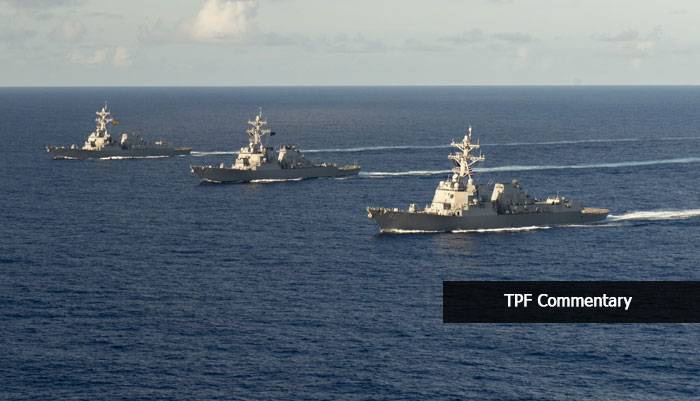
    The US is visibly concerned about losing military edge to China in the field of artificial intelligence. The PLA Navy presents different challenges with significant investments made in weapons such as the Electromagnetic Railgun (EMRG), Solid State Lasers (SSLs) and other systems and sensors.As noted earlier, AI technologies are also being incorporated into a new generation of anti-ship missiles through autonomous targeting capabilities. Similarly, autonomous air and underwater drones and miniaturized assault boats would soon be part of its force structure It is quite plausible that the PLA Navy may have begun to conduct exercises based on AI and ML and assimilated commonly used and commercially available communication devices such as smart phones, tablets and hybrid devices into its naval strategy.

    AI is surely adding to the war fighting tool kit of both the US Navy and the PLA Navy through stealthy ‘robotic trimaran’(Sea hunter and D3000 respectively)thatcould result in a dangerous escalations of a new kind of competition between the two navies. Similarly, China is developing autonomous robotic submarines which are likely to be ready for operations by the early 2020s and supplement regular human-operated submarines. This is sure to pose another set of challenge to the US Navy.

    Dr Vijay Sakhuja is a Trustee of TPF.

  • Disruptive Technologies and Future Naval Warfare

    Disruptive Technologies and Future Naval Warfare

    Vijay Sakhuja  December 16, 2017

    Google’s decision to cancel Project Maven may be a disappointment for the US military who were hoping to use the company’s artificial intelligence (AI) and machine-learning (ML) techniques to analyse huge amounts of video footage captured by drones operating in Syria, Yemen and Afghanistan. The project had come under severe criticism from Google employees who had urged the leadership to stop pursuing and developing technologies that would augment a user’s war-making potential. Further, they wanted Google to “draft, publicise and enforce a clear policy stating that neither Google nor its contractors will ever build warfare technology.” Under pressure, Google CEO Sundar Pichai has stated in a blog post that the company will withdraw from Project Maven and not develop in future “technologies that cause or are likely to cause overall harm,” those which “violate internationally accepted norms” and “widely accepted principles of international law and human rights.” The announcement indeed emphasises human ethics and international norms, and merits appreciation.

    While that may be true, disruptive technologies such as AI and ML are fast making inroads into the military and many have already acquired these technologies to augment their surveillance and combat capability as also employ them for safety purposes. The use of disruptive technologies for counter terrorism is a burgeoning industry and algorithms are used by the US military’s Middle East and Africa commands to fight against the Islamic State (IS). The US Department of Defense (DoD) has said that the technology is “literally a work of magic.”

    The use of AI in the maritime domain is well documented and has found reference in addressing criminal activities at sea such as piracy, illegal unreported and unregulated (IUU) fishing, and unlawful transfer of humans and materials. Its use for weather and sea condition monitoring and predictions, oil spill detection and tracking, etc are also well-known. In the naval domain, AI-enabled systems for data and logistics management, machinery operations, repair and maintenance, shipboard autonomous firefighting robots, etc are in operation. The use of AI and ML in warfare, particularly in the context of missiles, UAVs, UUVs, drones and submarines,merits attention.

    The navies of US, Russia, China, Japan, and a few from the EU are in competition to develop AI weapons and sensors. In South Korea, Hanwha Systems, a South Korean defence business company in partnership with Korea Advanced Institute of Science and Technology (KAIST) plans to develop “an AI-based missile that can control its speed and altitude on its own and detect an enemy radar fence in real time while in flight. AI-equipped unmanned submarines and armed quadcopters would also be among autonomous arms.” The company also plans to develop AI-equipped submarines.

    Perhaps the biggest naval challenge is likely to emerge from shipborne/ship-controlled and AI-enabled swarm drones that have caught the fancy of some navies. It is useful to recall that during World War II,between 1940 and 1943, German U-boats attacks against Allied convoys sailing across the Atlantic had potentially challenged the naval balance of power and had almost brought Britain closer to defeat. These Rudeltaktik, or wolfpack tactics and coordinated attacks are now being replicated by swarm platforms which can be launched in the air as also at sea.

    There are several limitations to operating small boats in a swarm, such as limited range, stability on the high seas, and jamming through electronic warfare, they may not match and offer similar capability as the U-boats. However, AI enabled boats in swarm mode with autonomy can potentially cause significant challenges for the enemy and it may not be possible to shoot down each one of them. Likewise, drones offer an attractive option and have higher levels of automation and do not require advanced computers and sensors. These can be launched in large numbers and can conjure a lethal force at sea.

    A recent video released online by China’s Yunzhou Tech Corporation showcases a 56-robot boat swarm conduct complex and coordinated maneouvre around a larger boat from where these are controlled. China is also developing swarm drones that can be deployed at sea for surveillance, and if strapped with explosives can carry out a ‘saturation attack’ on an enemy ship or even adopt kamikaze tactic to simultaneously dive in to attack from different directions and defeat ship based anti-aircraft and anti-missile defences.

    Warfare at sea has witnessed several transformations in the past but the ongoing transformation led by AI, ML, big data, cloud commuting, and quantum communications will cause major disruptions in naval warfighting. In fact, the autonomous nature of UAVs, UUVs and drones and their ability to ‘self-organise in sub-swarms’ could be a game-changer in naval operations and could well be the new asymmetric approach in warfare. Further, it is fair to argue that smaller navies can be expected to equip themselves with advanced AI and ML-enabled platforms and sensors which can be acquired from the open market, and rely less on military hardware imports which always attract a number of restrictions imposed by the supplier.
    Dr Vijay Sakhuja is a co-founder and trustee of  TPF.