Category: International & Transnational Affairs

  • Winds of Climate Change Blow across South Asia

    Winds of Climate Change Blow across South Asia

    The India-Pakistan enmity is possibly the world’s most intractable and obdurate, with a mutual misreading of history made extremely volatile with the brandishing of nuclear weapons. Despite having two giant militaries at each others’ throats, the more immediate existential challenges that India and Pakistan face are related to how climate change and misuse of common natural resources have combined to confront both together. It is not the militaries which will determine our fates, but the degree of cooperation the two nations can summon. Our problems are common and perhaps India and Pakistan will find the good sense to act together?

    Looking at the climate change challenges Pakistan and India face together, collective action — as unlikely as it seems — may just be what is needed to secure the lives and livelihoods of future generations.

    According to climate researchers at Germanwatch, Pakistan ranks eighth on the Global Climate Risk Index, with over 145 catastrophic events — heat waves, droughts and floods — reported in the past 20 years. On the other hand, India ranks among the top 20 vulnerable countries in terms of climate risk. Pakistan is home to around 47 per cent of the Indus Basin, and India to around 39 per cent. The Indus Waters Treaty has been in effect since 1960. The recent political bickering aside, the Indus Waters Treaty has managed to survive the test of time, yet fails to comprehensively address climate change. Then again, at the time it was enacted, many of the stark realities we know today were not understood.

    According to the Pakistan Council of Research in Water Resources, Pakistan officially crossed the water scarcity line in 2005. The United Nations Development Programme and the Pakistan Council of Research in Water Resources have issued warnings about the upcoming scarcity of groundwater in just six years.

    According to some estimates, Pakistan is the fourth-largest user of its groundwater and over 70 per cent of drinking requirements and 50 per cent of irrigation needs are met through groundwater extraction. Due to excessive pumping, it is estimated that water tables could fall by as much as 20 per cent by 2025.

    South Asia is drained by the Indus, Ganga and Brahmaputra river basins, which collectively form the Indo-Gangetic Basin (IGB) and include some of the highest-yielding aquifers of the world. The aquifers associated with these river basins cross the international borders of the contiguous South Asian countries, forming numerous trans-boundary aquifers, including the Indus basin aquifers (between India and Pakistan), Ganga and Brahmaputra basin aquifers (between Bangladesh and India), the aquifers of the tributaries to the Ganga (between Nepal and India), the aquifers of the tributaries to the Brahmaputra (between Bhutan and India, and between India and Bangladesh).

    At the beginning of every hydrologic year, 4,000 billion cubic meters (bcm) water enters the South Asian hydrological systems, of which almost half is lost by poorly understood and un-quantified processes (such as overland flow, surface discharge through rivers to the oceans, submarine groundwater discharge and evaporation). The annual groundwater withdrawals in the region are estimated to exceed 340 bcm, and represent the most voluminous use of groundwater in the world. South Asia faces an acute shortage of drinking water and other usable waters in many areas, as it is seeing a rapid rise in water demand and change in societal water use pattern because of accelerated urbanisation and changes in lifestyle. In many urban and rural areas of the region, surface waters have been historically used as receptacles of sewage and industrial waste, rendering them unfit for domestic use, prompting a switch to groundwater and rainwater sources to meet drinking and agricultural water needs. At present, about 60–80 per cen
    t of the domestic water supplies across South Asia are met by groundwater.

    Irrigation accounts for 85 per cent of groundwater withdrawals and is considered to be the main contributor to groundwater depletion with the maximum possible groundwater footprint seen in the Gangetic aquifers.

    Among the main contributors to water stress in India and Pakistan are poor water resource management and poor water service delivery, including irrigation and drainage services. Moreover, the lack of reliable water data, subsequent analysis and consequent poor planning and allocation is leading to environmentally unviable methods of water withdrawal, causing an alarming reduction in groundwater.

    In both countries, water stress is attributed first and foremost to the massive population growth. Another cause is the lack of sufficient urban water treatment facilities, which prevent the usability of river water for drinking and irrigation.

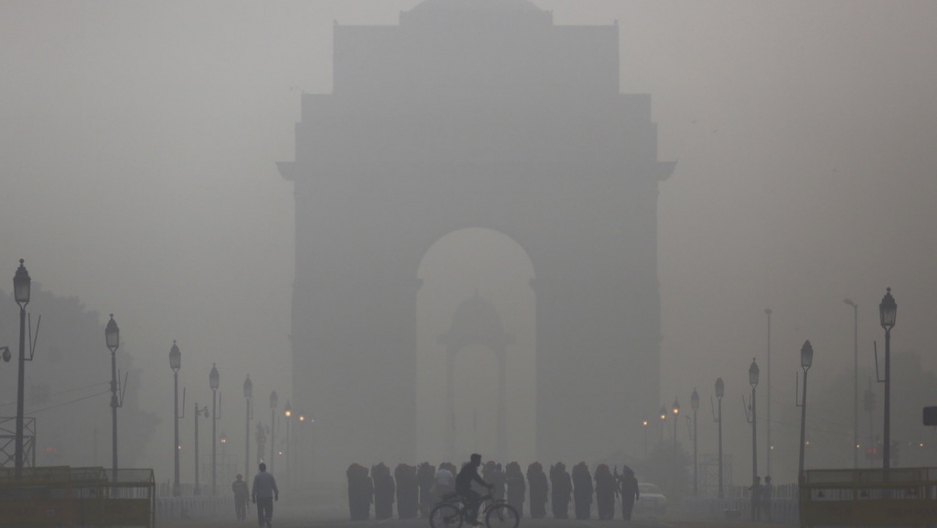
    Air pollution contributes substantially to premature mortality and disease burden globally, with a greater impact in low-income and middle-income countries than in high-income countries. The northern plains of South Asia has one of the highest exposure levels to air pollution globally.

    The major components of air pollution are ambient particulate matter pollution, household air pollution, and to a smaller extent ozone in the troposphere, the lowest layer of atmosphere. The major sources of ambient particulate matter pollution are coal burning for thermal power production, industry emissions, construction activity and brick kilns, transport vehicles, road dust, residential and commercial biomass burning, waste burning, agricultural stubble burning, and diesel generators.

    In India and Pakistan, farm residues are burnt after harvesting in October to November, which affects the air quality of the region. In Pakistan, most of the rice cultivation takes place in Punjab, and the same is true for India’s Punjab due to suitable climatic conditions for the crop. In both countries, stubble burning is the key cause of smog. According to India’s new and renewable energy sources ministry, India’s Punjab contributes 44-51 million tonnes of residue annually. According to the estimates, paddy areas burnt every year in Indian Punjab and Haryana are 12.68 million hectares and 2.08 million hectares respectively. According to a study, farmers burn 30-90 per cent of residue, which contributes to the smog formation, not just in the immediate region, but the entire Indo-Gangetic plain. With air pollution levels lurking in the “extremely poor” band for almost half the year, the northern regions of South Asia may not be able to host healthy populations for very long.

    The number of deaths attributable to ambient particulate matter pollution in India in 2017 was 0·67 million and the number attributable to household air pollution was 0·48 million. The number of deaths due to ambient particulate matter pollution in Pakistan in 2017 was 60,000.

    Climate change over 3,000 years ago destroyed the Indus Valley Civilisation and it went into oblivion, leaving behind traces of what befell the people here before. The next few decades are extremely critical. Can we summon some good sense to survive or go the way of the Meluhans? The verses of Allama Iqbal, albeit in another context, still hold true: Watan ki fiqr kar nadaan museebat aane wali hai/ Teri barbadiyon ke mashware hain aasmanon mein…/ Na samjhoge tou mit jaoge Hindustan walon/ Tumari daastan tak bhi na hoge daastanon mein. (Think of the homeland, O ignorant one! Hard times are coming./Conspiracies for your destruction are afoot in the heavens./You will be finished if you do not care to understand, O ye people of India!/Even the mention of your being will disappear from the world’s chronicles).

    The author is a prolific commentator on economic, security, and China issues. He is a Trustee/Governing Council member of TPF.

    This article was published earlier in Deccan Chronicle.

    Image source: www.pri.org

  • India and Nepal: Energy Cooperation

    India and Nepal: Energy Cooperation

    Introduction

    Sustained availability of energy at affordable cost is an essential prerequisite for the growth of a country. Currently the energy consumption per capita in case of Nepal is134 KWH per capita per year, as against world average of 2674 KWH per capita per year.

    GDP Per Capita in $ (PPP)

    Country Energy Consumption in kWh per capita per year GDP Per Capita in $ (PPP) GDP Per Capita in $ (Nominal)
    World Average 2674 11673 11673
    Bhutan 2779 3392 3392
    India 1122 1980 1980
    Maldives 1122 9802 9802
    Pakistan 471 539 539
    Sri Lanka 414 4135 4135
    Bangladesh 351 1564 1564
    Myanmar 193 1256 1256
    Afghanistan 141 538 538
    Nepal 134 900 900

    Table-1: Energy Consumption Vs Gross Domestic Product
    Source:  1.GDP figures for 2017 vide https://www.worldometers.info/gdp/gdp-per-capita
         2.World Fact Book: Power consumption for various countries of the World.

    Although correlation between energy consumption and the prosperity depends on a number of factors like population but a fact which clearly overshadows others is that as energy consumption increases the prosperity increases. This relationship is equally valid for reverse relationship, i.e. as prosperity increases the necessity for additional energy becomes obligatory. Another interesting observation can be made based on the content of this table. Bhutan is a land locked country which has hardly any major industry in that country, yet their GDP per capita is more than India’s. An examination suggests that Bhutan has adequate hydro resources and hydroelectricity generated exploiting her indigenous resources is far more than her requirement. This surplus generation is sold by Bhutan to India. Revenue thus earned has transformed the country from a poor developing country to a prosperous country quite distinct from other South Asian countries. For the record Bhutan’s revenue from hydro power is 27% of the entire govt revenue and is 14% of Bhutan’s GDP. This also flags an approach which can also help other South Asian countries to improve their economic strength by exploiting their indigenous resources. Another country of South Asia; Nepal can benefit from the model which Bhutan is currently following for sharing its energy resources with India in a ‘win-win’ situation.

    Topography of Nepal

    topography-of-nepal

    Map1: Nepal and its Rivers and Physical features
    Source: https://en.wikipedia.org/wiki/Geography_of_Nepal 

    A report of International Hydropower Association, “Bhutan” uploaded on https://www.hydropower.org/country-profile/bhutanography_of_Nepal 

    • Lie of the country is such that all the rivers flow from Nepal to India.
    • High Himalayas separate Nepal from Tibet, whereas southern side of the country is having  a terrain which is plain and that separates Nepal from India therefore while Northern Areas of Nepal act as a barrier between Nepal and Tibet, plains in southern side of the country lends itself for cooperation between India and Nepal. Recent operationalization of an oil pipeline from Motihari in Bihar to Amlekhganj in Nepal is a manifestation of such a cooperation (Little more about it a little later.)
    • Nepal has a huge hydropower potential. In fact, the perennial nature of Nepali rivers and the steep gradient of the country’s topography provide ideal conditions for the development of some of the world’s largest hydroelectric projects in Nepal. Current estimates are that Nepal has approximately 43,000 MW of economically feasible hydropower potential. However, the present situation is that Nepal has developed only approximately 753 MW of hydropower. Therefore, bulk of the economically feasible generation has not been realized yet. Besides, the multi-purpose secondary and tertiary benefits have not been realised from the development of its rivers. Nepal is utilising only 2% of it (i.e., 98% remains unutilised). It may be noted that an optimum exploitation of the hydro resources will contribute substantially to the financial well-being of Nepal. However, it is also a fact that Nepal neither has the financial muscle nor technical knowhow to harness its hydro resources. Therefore, support from friendly foreign countries becomes essential. China has been trying to make inroads into Nepal but whether it can be cost-effective or not is something that needs to be examined in carefully. India, on the contrary, has everything in her favour to support hydro power exploitation by Nepal. In fact power generated in Nepal can also be shared with Bangladesh using Indian grid system, which will be an excellent example of Nepal-India-Bangladesh cooperation, and still better as a BBIN (Bhutan-Bangladesh- India-Nepal) initiative and will be a ‘Win Win’ situation for all three countries.  India will have to use all its traditional heft with Nepal, its diplomatic skills, financial support to beat China who is trying hard to gain a foothold in Nepal’s Hydro energy exploitation domain as they are desperately wanting power.

    Map-3: River Systems of Nepal
    Source: Firoz Alam et al, “A review of hydropower projects in Nepal1st International Conference on Energy and Power”, presented during ICEP2016 at RMIT University, Melbourne, Australia, 14-16 December 2016 and Available online at www.sciencedirect.com ScienceDirect Energy Procedia 110 (2017) 581 – 585

    • While planning hydro power plants in Nepal, some extra care would be required to be undertaken. Nepal’s topography is unstable due to seismic activities. Hence, all hydropower plants with dam must be well planned and designed to mitigate the environmental impact. Also most Himalayan Rivers contain huge quantities of sediment with hard abrasive particles. The region’s climate and tectonic conditions as well as human activities are highly conducive for erosion and sedimentation. Therefore, sediment management is paramount for the safety, reliability and longer life of infrastructures (hydropower dam, equipment, roads, bridges, irrigation systems and drinking water).

    As close neighbours, India and Nepal share unique ties of friendship and cooperation characterised by an open border and deep-rooted people-to-people contacts of kinship and culture. There has been a long tradition of free movement of people across the border. Nepal shares a border of over 1850 km with five Indian states – Sikkim, West Bengal, Bihar, Uttar Pradesh and Uttarakhand. The India-Nepal Treaty of Peace and Friendship of 1950 forms the bedrock of the special relations that exist between India and Nepal. Nepalese citizens avail facilities and opportunities at par with Indian citizens in accordance with the provisions of the Treaty. Nearly 6 million Nepalese citizens live and work in India. However Nepal is still not well developed and as has been explained earlier suffer from lack adequate energy to fuel its development. India has been a major partner in exploiting its indigenous energy resources and also making up the shortfall on this account.

    Potential and Scope of Hydro Power Cooperation

    Certain studies have been done to ascertain scope for the Indo-Nepal Cooperation in the domain of energy. It has been concluded that in the high build scenario, Nepal’s hydropower capacity is estimated to be 4551 MW. The generation cost in an arrangement of Indo-Nepal combined system would fall by approximately US $106 billion per year. This enhanced capacity will help Nepal to increase her power export to India by 60%. However Nepal’s high build out hydro resources would be fully utilised if operations between Nepal and India are further coordinated and an economic union strategy adopted by the two countries. Effectively, this would mean that trade with Nepal is institutionally is same as trade is between Indian States. Such enhanced power generation will help Nepal to become net exporter of power during dry as well as wet season, with reduced generation cost. On the contrary India ranks 81st in overall energy self-sufficiency at 66% in 2014 . Primary energy consumption in India grew by 7.9% in 2018 and it happens to be the third biggest consumer after China and USA, with 5.8% global share.

    Details of Completed Projects for Energy Cooperation between India and Nepal

    Motihari-Amlekhgunj Oil Pipeline: On 10th September 2019, the Prime Ministers of Nepal and India jointly inaugurated a cross-border oil pipeline through video conferencing. This line will transport fuel to the landlocked country. The aim of this pipe line is to cement India-Nepal ties in the face of major inroads made by China into the Himalayan nation, and seeks to repair the trust deficit between the two countries due to an economic blockade allegedly imposed by India in 2015 to persuade Nepal to change some provisions in its new constitution. Basically the protests at that time were done by people of Madhesh (region bordering India) as they felt that there were certain provisions of the constitution of Nepal which were discriminatory against them. India said at that time that the trucks laden with fuel and medicines, besides other essentials, were stopped by sections of Nepalese population (Madheshis) unhappy with some provisions of their constitution, which they felt were practically disenfranchising them. Nepal, however, viewed it as if India was blocking the supplies to compel Kathmandu to amend the provisions of the constitution that was seen as disenfranchising almost half of the Nepalese population. Therefore, the current initiative seeks to rebuild the confidence between the two countries and will help to bind Nepal closer to New Delhi, economically and strategically. The development comes against the backdrop of recent plans for a rail link between Nepal and China cutting through the Himalayas. There were also plans to link Nepal and China through an energy pipeline running through the Himalayas. Both were seen as means by Nepal to find an alternative to its dependency on India. The 69 km pipeline will transport fuel from the Barauni refinery in Bihar to Amlekhgunj in south-east Nepal and is the first cross-border petroleum products pipeline in South Asia. The Motihari-Amlekhgunj oil pipeline project was first proposed in 1996. The project was put back on the agenda during Prime Minister Narendra Modi’s visit to Kathmandu in 2014. The two governments had signed an agreement to execute the project in August 2015. Construction had begun in April 2018. Construction of the pipeline was undertaken by the Indian Oil Corp. Ltd (IOCL), India’s largest refiner, with an investment of over ₹324 crore, in collaboration with Nepal Oil Corp. Ltd (NOCL). The two sides are also working on building additional storage facility at the Amlekhgunj Depot, wherein NOCL has committed an estimated ₹75 crore. The pipeline can carry up to 2 million metric tonnes of petroleum products each year. Currently, petroleum products are carried from India to Nepal using oil tankers as part of an arrangement which has been in place since 1973. The NOCL not only hopes to save ₹200 crore annually with the new pipeline but will also ensure the transportation is no longer vulnerable to any kind of blockade.

    Power Supply from India to Nepal: India and Nepal have a Power Exchange Agreement since 1971 for meeting the power requirements in the border areas of the two countries, taking advantage of each other’s transmission infrastructure. There are more than twenty 132 kV, 33 kV and 11 kV transmission interconnections which are used both for power exchange in the border areas and for power trade. For enhanced transmission of electricity, the first high-capacity Muzaffarpur (India) – Dhalkebar (Nepal) cross-border power transmission line (initially charged at 132 kV), with GoI Letter of credit (LoC) funding of US$ 13.2 million, was completed in 2016. Two additional 132 kV cross-border transmission lines between Kataiya (India) – Kusaha (Nepal) and Raxaul (India) – Parwanipur (Nepal), built with GoI grant assistance, were completed in 2017. India is currently supplying a total of about 450 MW of power to Nepal. An Agreement on ‘Electric Power Trade, Cross-border Transmission Interconnection and Grid Connectivity’ between India and Nepal was signed on 21 October 2014. The Agreement is aimed at facilitating and further strengthening cross-border electricity transmission, grid connectivity and power trade between Nepal and India. The Agreement provides a framework for power trade between the two countries, import by Nepal from India until it becomes power surplus and subsequent import by Indian entities from Nepal, on mutually acceptable terms and conditions. Two mechanisms, Joint Working Group (JWG) and Joint Steering Committee (JSC) envisaged under the Agreement have been established. Joint Technical Team (JTT) was formed for preparation of a long-term integrated transmission plan covering projects up to 2035.

    Cooperation in the Domain of Hydro Energy: Cooperation in water resources primarily concerning the common rivers is one of the most important areas of bilateral relations. A large number of small and large rivers flow from Nepal into India and constitute an important part of the Ganges River basins (Refer Map-3 above). These rivers have the potential to become major sources of irrigation and power for Nepal and India. A three-tier bilateral mechanism was established in 2008, to discuss issues relating to cooperation in water resources, flood management, inundation and hydropower between the two countries. A Development Authority was set up in September 2014 to carry out the Pancheshwar Multipurpose project. A Power Development Agreement (PDA) for the 900 MW Arun-III hydroelectric project between India’s Satluj Jal Vidyut Nigam Limited and the Investment Board of Nepal (IBN) was concluded in November 2014. Also, a PDA for the 900 MW Upper Karnali hydroelectric project was concluded between IBN and M/s GMR in September 2014.

    Projects under Planning/Execution

    Pancheshwar Multipurpose Project: India and Nepal had signed a Treaty known as Mahakali Treaty in February’1996. Implementation of Pancheshwar Multipurpose Project is the centerpiece of the Mahakali Treaty. Required field investigations for the Pancheshwar Multipurpose Project have been completed by a Joint Project Office (JPO-PI) in 2002 (except for some confirmatory tests). But mutually acceptable DPR of Pancheshwar Project is yet to be finalised. The constitution of Pancheswar Development Authority has already been notified. Pancheshwar Multipurpose Project (PMP) is a bilateral project, primarily aimed at energy production and augmenting irrigation in India and Nepal. A Treaty known as “Mahakali Treaty” concerning the integrated development of the Mahakali River, which included Sarada barrage, Tanakpur barrage and Pancheshwar Dam Project, was signed between the Government of Nepal and the Government of India on February 12, 1996. During the year 2009, pursuant to the Article-10 of the Mahakali Treaty, the Government of India and the Government of Nepal agreed and framed draft ToR for setting up the Pancheshwar Development Authority, as an independent autonomous body, for development, execution and operation of the Pancheshwar Multipurpose Project. To accomplish this shared goal, the Terms of Reference (ToR) of the PDA as agreed upon by the two Governments and as may be amended from time to time, were created. As per the Statute of PDA the administrative organs of the authority are the Governing Body (GB) and the Executive Committee (EC). In order to execute the specific tasks assigned to the Governing Body, five meetings of GB have taken place so far. Pancheshwar Main Dam is proposed on River Mahakali (known as River Sarada in India), where the river forms the international boundary between the Far Western Development Region of Nepal and State of Uttarakhand in India. The dam site is around 2.5 km downstream of the confluence of River Sarju with River Mahakali. The project would comprise of a rock-fill dam with central clay core of 311m height from the deepest foundation level. Two underground power houses at Pancheshwar dam, one on each bank of Mahakali River, each with a capacity of (6×400 MW) with the total installed capacity of nearly 4800 MW are proposed to be constructed. The power plant at main dam will be operated as the peaking station to meet energy demand in India and Nepal. A re-regulating dam at Rupaligad is proposed around 27 km downstream of the main dam to even out peaking flows released from Pancheshwar power houses for meeting downstream irrigation water requirement. Here, two underground powerhouses on both sides of river with total installed capacity of 240 MW (2 x 60 MW on either bank) are envisaged. The main dam (when impounded with water up to Flood Regulating Level (FRL)) will form a reservoir of around 11,600 hectare area with a gross storage volume of about 11,355 million cubic metres. The submergence area on Indian side is 7,600 hectare, covering districts namely Pithoragarh, Almora and Champawat in the state of Uttarakhand whereas remaining 4000 hectares of submergence will be in Nepal. The project aims at producing hydro power and enhance the food grains production in both the countries by providing additional irrigation resulting from the augmentation of dry season flows. Year round irrigation will be possible in agricultural land in Kanchanpur district in Nepal due to enhancement in flows during non-monsoon months. The project will generate Two underground power houses at Pancheshwar dam, one on each bank of Mahakali River, each with a capacity of (6×400 MW) with the total installed capacity of nearly 4800 MW are proposed to be constructed. The power plant at main dam will be operated as the peaking station to meet energy demand in India and Nepal. Power generated will be shared equally between both the nations as per Treaty. Irrigation benefits in form of annual irrigation will be about 0.43 Mha, out of this, annual irrigation in Nepal would be 0.17 Mha and remaining 0.26 Mha in India. In addition, due to moderation of flood peak at reservoir(s), incidental flood control benefits for both the countries are also envisaged from the project. Pancheshwar Multipurpose Project is one of the top priority projects to be implemented in phased manner to reap the benefits of the project as early as possible. The work of preparation of Detailed Project Report (DPR) was entrusted to Water and Power Consultancy Services Limited (WAPCOS) by PDA and WAPCOS have in turn submitted the draft final DPR of the project to PDA in November, 2016. At present the finalization of Detailed Project Report (DPR) of the project is underway. A Team of Experts/Officials has been formed by both the countries for discussing and resolving all issues towards finalization of the DPR. After finalization of DPR, the Pancheshwar Development Authority shall undertake the execution, operation and maintenance of the project, including the work of re-regulating dam at Rupaligad site in an integrated manner.

    Sapta-Kosi High Dam Project and SUN Kosi storage cum diversion scheme: After exchange of letter of Understanding between the two Governments in June’ 2004, a Joint Project Office (JPO) was set up in August’ 2004 to undertake detailed field investigations for preparation of DPR of SaptaKosi High Dam Project at Barakshetra in Nepal.  DPR is under progress.

    Kamla and Bagmati Multipurpose Projects The JPO-SKSKI has also been entrusted to undertake the feasibility study of Kamla Dam and preliminary study of Bagmati Dam Projects. These studies are in progress.

    Project Completion Prospects

    Hydro power projects have a long gestation period and therefore, it can safely be assumed that the export from Nepal of power will not be able to commence before 2025. Nepal will be able to export 18 billion kWh in 2025 which will go up to 93 billion kWh by 2035 and then will start flattening and by 2040 it would be 115 trillion Watt hour because by that time it is anticipated that because of the growing prosperity domestic consumption will also pick up. In rainy season when the reservoirs will be at their peak capacity, it is estimated that by 2030 13 GW would be available for export.

    Conclusion

    Notwithstanding the political division within South Asia, it is important to appreciate that the energy resources are monolithic in nature. Due to topography of the country most of the hydropower resources are concentrated in the Himalayas; spanning Nepal, Bhutan and Indian states of Arunachal Pradesh, Sikkim, Uttarakhand and Himachal Pradesh. Hydro power is a form of green energy and it would be ideal in case a mechanism can be evolved to exploit it for common good. It is essential that India, in conjunction with Nepal, Bhutan and Bangladesh, needs to make attempts to make use of energy resources available in all these countries; hydro power is one such resource. In this connection the platform of BBIN (Bhutan-Bangladesh-India-Bhutan-IndiaNepal) needs to be exploited. In fact recent pipeline laid by India between Motihari in Bihar and Amlekhgunj in Nepal is great example of cooperation that benefits the region and the parties involved.

  • American Sanctions on Iran and the Underlying Oil War

    American Sanctions on Iran and the Underlying Oil War

    Adithya Subramoni                                                                                      June 24, 2019/Analysis

    In a shocking turn of events, America in 2018 announced its withdrawal from the Joint Comprehensive Plan of Action 2015. This came as a surprise to the international community for good reason, because subjecting Iran under harsh sanctions when they kept up their end of the bargain seemed like a punishment from the US for keeping up this good behaviour. President Donald Trump, calling towards the international community and specifically ‘like-minded countries’ for a team effort, said it was time to curb Iran’s state-sponsored terrorism. But his idea to get Iran to re-engage on this field was through the ‘maximum pressure campaign’. This strategy is unlikely to find takers owing to the fact that the nuclear issue and state sponsored terrorism are two completely different issues, and hence need to be dealt with separately. To charge Iran with state sponsored terrorism is completely misplaced. Iran has not caused any damage to US or its citizens in the last twenty five years. On the other hand terrorist acts affecting the US and its allies have almost always had a link to Sunni Islamic fundamentalism with its links to Saudi Arabian Wahabi organisations. The real motive is USA’s geopolitical targeting of Iran. Trump’s recent designation of the Iranian Islamic Revolutionary guard corps (IIRGC), a unit of the Iranian army, as a terrorist outfit defies all logic and may become counterproductive to the US interests, the very issue that Trump wants to safeguard.

    Iran’s support to Hamas is fundamentally a regional and geopolitical struggle with Israel, while the Sunni vs Shia conflict is a manifestation of the regional power struggle between Saudi Arabia and Iran. If the USA wanted to pressurise Iran on its support to militant outfits like Hamas, it should have ensured it has support of its allies and multilateral institutions. USA’s unilateral action on Iran does not have the support of other members of the P5 +1(Germany) as well as other oil-dependent countries. With the latest round of sanctions, countries with economies having exposure to Iranian trade industry are gearing up to take a major hit. This brings us back to the subject of concern, why take such hasty decisions impacting the global economy without consultations from other members of the P5 + 1?

    The exit strategy

    In 2018 shale oil catapulted America to the leading position amongst the oil producers. As companies in Texas adopted fracking technology to good use in optimising their oil production, America climbed up to the first position in the oil producers list, surpassing major oil producers such as Saudi Arabia,Russia, Iran and the UAE. Climbing up the oil ladder came at a cheaper price for America considering the OPEC countries, excluding Iran, and Russia had agreed to reduce their oil production to protect the free-falling price of oil. This gave America a free hand at capturing the oil market especially where the demand from emerging economies was increasing rapidly. The only barrier to becoming the largest oil exporter was qualms from the emerging economies and other countries who found the American alternative to be an extremely expensive replacement for their oil needs. With emerging economies deeply dependent on Middle Eastern oil sources, one of the options for America to increase the demand for its oil was by blocking Iran’s oil exports through sanctions. This could give multiple advantages to the US: one is to create economic pressure on Iran; second is to boost American oil exports by eliminating Iran’s oil supply from the market; and third is to strengthen its ally Saudi Arabia’s pursuit of regional domination by squeezing Iranian oil-based economy.

    America’s play on executing its exit and sanctions in such a speedy manner may be rooted in the fact that the major countries dependent on the Iranian oil are in the Asian continent. European countries such as France, Greece, Italy and Spain all combined import close to 500,000 barrels a day as opposed to China and India who import close to 600,000 barrels per day and 500,000 barrels per day respectively. With America limiting its oil imports primarily from Canada and Saudi Arabia, and the European Union sourcing two-thirds of its oil requirements from Russia and Saudi Arabia, American sanctions on Iran do not impact the energy requirements of the western power bloc significantly. Hence, it may have been an American expectation that other members in the JCPOA (P5+1) would support Trump administration’s move to scrap the JCPOA and resume the earlier hard line approach of sanctions on Iran. This, however, has not happened.

    Unfortunately for America, other members of the JCPOA did not see any justification in the logic and accusation given by the Trump administration and hence, there was no support forthcoming from them. Trump’s disdain for allies and his unilateral approach, virtually demanding complete acceptance from European allies bordered on disrespect and insult to the member countries’ sovereignty and pride. Reaction to Trumps position was one of disbelief and contempt, as his actions displayed, in their opinion, disregard and contempt for international norms and credibility. Quite clearly USA has sought to bulldoze its way through with utter disregard for international institutions and multilateralism, exploiting its domination of the global financial institutions, banking system, and the fact that the US dollar is still the world’s reserve currency.

    UK, France and Germany together set up Instex – Instrument in Support for Trade Exchanges, to facilitate the trade of medicines, medical devices and food supplies, which trades in Euro through a financial channel having zero exposure to the American financial intermediaries. This marked a milestone in the chapter of American supremacy, where its European allies took a stance against its imposing regime. Though the volume of trade is negligible, the all important European message is that it will not support the American unilateralism. In the absence of any European support, Trump administration should have recognised its folly of trying to impose its decision on its allies, but on the other hand it made it even worse by virtually threatening diplomatic ties with those countries. Others in the P5, such as China and Russia have agreed with the European counterparts to re-examine and review if necessary the terms of the 2015 JCPOA deal and look for ways to deflect and overcome the US sanctions. Iran too, has welcomed the idea and agreed to keep its end of the 2015 deal. Time however, is running out as Iran has demonstrated its loss of patience over the lack of progress on the issue, and has stated on more than one occasion, in the last six months, that it will recommence its nuclear fuel reprocessing and enrichment activities.

    Asian approach to the Iranian issue

    Asia is the largest customer of crude oil, importing 53% of the global total oil imports, translating to an approximate amount worth $628.2 billion. One major reason for this huge oil influx is the fact that Asia is home to the fastest developing economies such as China and India. Though China and India have maintained that they will continue to import oil from Iran, one issue that concerns all the countries importing Iranian oil is the availability of insurers willing to take up the risk for oil supply from Iran. Most insurers will be cautious to take up projects for fear of losing business and financial access in the West.

    With the ongoing trade war with America, China is fighting a dual war. For America, the opponent has been weighed down with two hurdles co-incidentally and conveniently. With the trade war impacting the export industry and sanctions on its oil supplier indirectly hitting the Chinese economy, China may chose well to hit back on America by disregarding the sanctions on Iran. Iran might just have earned itself a powerful ally because of American hegemony. Chinese imports of crude oil from Iran have surged to record levels in April and May. Iran is set to become China’s 2ndlargest supplier of crude oil.

    Steering the wheel of attention towards India, Iran is its third largest oil source. Particularly being an oil dependent emerging economy, the sanctions on Iran will force India to look at more expensive oil options. The six month credit line and insurance included price for Iranian oil made it the most lucrative oil supplier in the business. Another issue that has come to India’s doorstep is the longevity of the rupee account based trading system with Iran using the UCO Bank. UCO Bank being the only bank with no exposure to American financial channels is the only means for continued Iran-India trade relations. In light of the US sanctions, India reduced its oil imports to turn eligible for a sanction waiver. This sanction waiver came to an end on 02May 2019, and oil imports stopped owing to the election period as well. Now the primary concern for the new Indian government is to prioritise the Iran issue. Iran is accountable for thirty percent of India’s exports, and given that the rupee account is fuelled by the INR deposited in favour of oil imports from Iran, the systematic reduction of oil import also creates a proportional fall in demand for Indian exports, owing to the curb of Iran’s purchasing power. Since the end of the sanctions waiver, India has stopped import of Iranian oil, hopefully only as a temporary measure.

    At the same time, a diplomatic concern that arises for India is its interest over the Chabahar port. Chabahar Port is a major investment arena for India to create a transportation corridor connecting Asia as well as the land-locked Afghanistan with the rest of the world. Though India plans on disregarding the US Sanctions and continuing business through the UCO Bank and Iran’s Pasargad Bank, attention needs to be paid to resolve the reducing Iranian imports, not only to secure India’s exports but also to show Iran the commitment India has towards its diplomatic ties with them and its vested interest in operating the Chabahar Port. Going ahead with the possibility that China would disregard the sanctions on Iran, a reduction in Iranian imports could weaken Iran’s ties to India and pave the path to strengthen Iran-China ties. This would particularly be drastic for India, if Iran were to give China operational rights to the Chabahar port. Needless to say, this would bring in interference from Russia, who wouldn’t be thrilled with the loss of regional trade autonomy to China.

    Approaching the dénouement

    From a bird’s eye view, the rising conflicts in the West Asian region, with Saudi Arabia and the UAE being the main champions who support the efforts for a change in Iran’s regime, Iran finds itself in a cornered situation amongst its neighbours. If cornered, both strategically and economically, Iran could resort to using its strategic location to choke the Strait of Hormuz by planting sea mines or through any other obstruction mechanism. Though unlikely, as it would put Iran in a very hostile situation with rest of the world, it cannot be ruled out as an extreme last resort measure. This could create major international crisis. It would, as a start contribute to the run up in oil prices and owing to supply security – it is possible that USA stands to benefit immensely in such a crisis.

    On the other hand, by imposing sanctions on Iran, America has pushed India to an uneasy corner. Owing to regional ties, it plays to India’s strength to take care of her interests by dealing with Iran and securing operation of Chabahar port. On the other hand it is essential to keep India’s ties with America on an even keel. If it refuses to acknowledge India’s ground interests and resorts to the muscle power of sanctions, China may end up as the beneficiary with a fortuitous win with Chabahar port, leading to an ultimate strategic loss to India and the US.

    The situation calls for global introspection into imposing sanctions by a country due to its phenomenal control over the world’s financial channels and the domination of the USD international trade. But this round of sanctions just might be the one where countries figure out alternate solutions together; considering the European initiative of Instex, Asian methods such as the trade using rupee account, Russian and Chinese support towards Iran; to finding a more cooperative and equitable solution that enables the world to trade outside the control of America. The sanctions may have just provided the edge to catalyze the changing world order, but the question is who’ll sit on the throne of the high table when the rubble settles? Or will it be, as it seems more likely, a more cooperative and less competitive, multi-polar world order?

    Adithya Subramoni is interning at ‘The Peninsula Foundation’. She has a Bachelors degree in Commmerce  from Christ College, Bangalore.

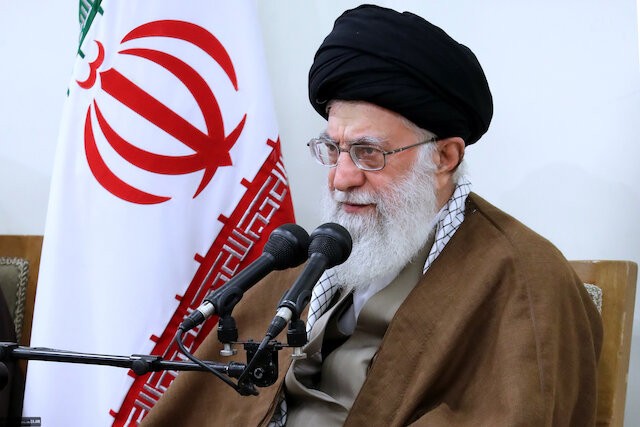
    Photo Credit under a Creative Commons Attribution 4.0 International License.: english.khamenei.ir

  • Strategic Autonomy and the Looming Oil Crisis

    Strategic Autonomy and the Looming Oil Crisis

    Kamal Davar                                                                                             May 31, 2019/Commentary

    The new Modi government will have to speedily contend with a serious foreign policy challenge on its hands.

    That this ordeal comes in the wake of some underplayed serious economy problems currently facing the nation will compound the problems for India which imports over 80 per cent of its burgeoning oil needs.

    Thus, if the looming crisis in the Persian Gulf between an arrogant US and an equally defiant Iran does not get resolved peacefully, ominous ramifications await the region, the world and all those nations which import crude oil from Iran.

    The genesis of the current crisis between the US and Iran has its roots in the Joint Comprehensive Plan Of Action (JCPOA) which was agreed upon by Iran and six western nations in 2015, led by the US, to curb Iran’s nuclear programme, which boils down to deterring Iran from developing nuclear weapons. But in May 2018, the US, under its mercurial President Donald Trump, chose to renege on this treaty as Trump felt that this was the “worst deal ever negotiated.”

    It is also a fact that Iran did not violate any norms of the law as regards this agreement.

    Meanwhile, the US allowed some nations, including India, which import oil from Iran a six-month waiver, which ended on May 2, 2019. As a consequence of the US action, oil prices the world over have jacked and soon its adverse effects will be felt in India as inflation will hit the already strained Indian economy. Over a 10 per cent hike in global oil prices has already taken place in the last one month and a crippling escalation in oil prices ahead is well on the cards.

    Notwithstanding any US pressure on India, the unalterable fact of Iran’s strategic significance to India in the region remains beyond question. India imported 24 million metric tonnes of crude from Iran in the 2018-19. India was Iran’s second largest buyer of crude last year, while Tehran was the third largest supplier to India after Iraq and Saudi Arabia (11 per cent of a total of India’s oil imports).

    Additionally, Iranian crude comes with a longer credit period and cheaper freight owing to Iran’s geographical proximity to India and, thus, Iranian oil remains the best option for India in more ways than one.

    Higher oil prices also make the Indian rupee weaker, making imports to India costlier. Importantly, that Iran-India collaboration in the development in the vital Chabahar Port in Iran will give India vital ingress to Afghanistan and the Central Asian Republics cannot be understated.

    Meanwhile, the US has rushed the formidable USS Abraham Lincoln carrier-borne Task Force to the Persian Gulf region and undertaken certain prophylactic steps in case war breaks out.

    The Iranians, too, have mounted some small-range anti-ship missiles on their warships. Iranian President Hassan Rouhani recently said that his nation is facing acute pressure from international sanctions, dubbing it a “war unprecedented in the history of the Islamic revolution.”

    The US has also branded Iran’s elite Revolutionary Guards as a foreign terrorist organisation. A war of words has broken out, with President Trump declaring that if “Iran wants to fight, that will be the official end of Iran. Never threaten the United States again.”

    Replying back sternly, Iranian Foreign Minister Javad Zarif retorted that Iranians have stood tall for millennia against aggression and that “economic terrorism and genocidal taunts won’t end Iran.” He added that “never threaten an Iranian. Try respect it works.”

    Importantly, even US allies have steered away from of taking any partisan positions with either the US or Iran. Meanwhile, oil-producing nations like Saudi Arabia, Kuwait, Mexico and the US itself have been requested to step up their oil production to cater for Iranian oil shortfalls.

    How this oil crisis will shape up to meet global demands is anyone’s guess.

    It is a strategist’s nightmare in conjuring up a scenario concerning the ramifications of a war between Iran and the US. The Persian Gulf is easily one of the world’s critically significant strategic waterways through which one-third of the world’s oil is transported.

    In the event of a war, Iran will definitely close the vital Straits of Hormuz for commercial shipping purposes, throwing the region’s economy out of shape — an eventuality which, hopefully, should not ever take place.

    Preoccupied with its General Election, India, as a major regional player, has so far not reached out to its strategic partner, the US, to impress upon it to defuse the crisis.

    Recently, the Iranian Foreign Minister made a trip to India to explain their position to India on the current standoff.

    India, however, need not succumb to any US pressures or take sides. India has an adequate financial standing and moral stature to play a peacemaker’s role. India must conscientiously follow the time-honoured policy of zealously guarding its strategic autonomy. Respect for India from nations even adversarial to each other — as in earlier decades — will follow automatically and some of India’s economic tribulations will also get simultaneously addressed.

    Let the new government in New Delhi bear in mind Iran’s more than significant strategic value for India in the region.

    The author, Lt Gen Kamal davar is a former DGDIA and is visiting Distinguished fellow at TPF. 

    This article was earlier published in The Tribune.

  • The Chinese diaspora in Europe: Serving the motherland from abroad

    The Chinese diaspora in Europe: Serving the motherland from abroad

    Andrei V Korobkov, Nikolaj A Sluka, and Pavel N Ivanov                          May 31, 2019/Analysis

    Europe, one of the largest immigration systems of the world, is experiencing currently a test of strength under pressure coming from a powerful new wave of migrants from the Muslim countries of the Middle East and North Africa (MENA) caused to a large extent by the Arab Spring.

    According to Eurostat, arrivals from the Middle East to the EU were estimated at 1.5 million in 2015 and 1.8 million, in 2016. With the accumulation of economic problems and the escalating ethnic tensions in many countries of the region, demands are intensifying for a strict limitation of immigration and the reorientation of migration policy towards the primary acceptance of highly qualified migrants while limiting simultaneously the admission of practically all other categories of immigrants, including refugees. During his term in office, Nicolas Sarcozi, the former President of France, spoke, in particular, of the need to switch from «suffered» to «chosen» immigration.

    Regardless of the growing realization of the problem’s acuteness by political elites, no effective measures have been introduced yet to deal with it. As a result, criticisms of European migration policies are intensifying. The problem cannot be limited to migration and minorities issues. These are not synonymous with poverty, unemployment, social frustration, and aggression that the Brits, for example, view as the root causes of pogroms in their cities, while considering white youngsters (chavs) as their main perpetrators. The crises also hurt representatives of the middle class, deepening the gap between them and the rich. This does not resolve the problems related to the integration and adaptation strategies, multiculturalism, cluster and dispersed settlement, and the links of those with the issue of social mobility or the lack of the latter.

    The challenge of multiculturalism still remains a headache for many Western European governments as well as for the supporters of tolerance and multiculturalism concepts in general.

    The challenge of multiculturalism still remains a headache for many Western European governments as well as for the supporters of tolerance and multiculturalism concepts in general. Prior to the start of the June 2018 EU leaders’ emergency summit, dedicated to the issues of migration, the French President Emmanuel Macron stated that the EU migration crisis has been transformed into a political one.

    With this background, immigration to Europe from China remains to a large degree an invisible one. This is explained partially by the different scale of the incoming migration flows as well as by their origins. In 2016, the Chinese comprised just 3% of 76 million international immigrants residing in Europe. While the huge potential scale of the Middle Kingdom’s population mobility is well understood, that country traditionally prefers to act «in the shadow zone.»

    In contrast to Muslim immigration, caused to a large extent by the Arab Spring and thus having a forced, push character in the countries of emigration, the Chinese immigration could be characterized as a product of a merger of the ideologies of the receiving states, relying on the concept of multiculturalism, and the sending country, pursuing the «going out» policy.

    With a relatively long history of Chinese immigration to Europe, experts concentrate their attention on its most recent wave, the so-called New Immigration that started at the inception of China’s economic reforms and the policies of Openness. This migration wave is marked by a balanced gender structure and high shares of younger age cohorts, well educated and highly qualified people, aiming at the assimilation within the European societies, allowing them to find a job within the prestigious segments of labor market. This migration wave has significantly boosted and qualititatively transformed the process of the ethnic diaspora formation in the region. Exactly this New Migration is defining the main quantitative parameters of the diasporaand is responsible for the formation of the «model ethnic minority» stereotype that has become deeply ingrained in American public consciousness.

    There also exists another “shadow” component of this migration flow represented by the industrial workers and service personnel who as a group have quite different demographic parameters and are marked by the relatively low levels of educational achievement, well being, and language proficiency. This latter group also includes undocumented migrants. This is a different and quite poorly explored up to this point area of research.

    The emergence of deep fracture lines separating the host countries’ native populations and the politically and socially deprived immigrants who differ in language and religion – the concept defined in classical Political Science as mutually reinforcing cleavages – is less likely in this situation, marked by quite heterogeneous structure of the immigration flow.

    The fact that the main immigration flow is centered on a relatively narrow group of receiving states reinforces contrasts in the territorial distribution of the Chinese diaspora in Europe.

    The fact that the main immigration flow is centered on a relatively narrow group of receiving states reinforces contrasts in the territorial distribution of the Chinese diaspora in Europe. Its overall numerical strength has an expressed meridian gradient, declining in the West-East direction, and nearly directly correlates to the geography of the economically developed and populous countries. More than 98% of the diaspora is located in just 10 countries, while 50% lives in the UK and France. Large Chinese communities have been formed in Germany and the Netherlands as well as in Italy and Spain — the latter being the countries that have relatively recently offered amnesties for illegal immigrants. On this background, less visible are the countries of Northern and, especially, Eastern Europe, that for the first time opened their borders for Chinese immigration just in the 1990s. The exception represent just Hungary and Romania, having a relatively higher share of the Chinese in their modern immigration flow structure.

    The «Chinaization of Europe» issue is acquiring a partially local character in the context of escalating leadership struggle among the world’s major powers in the framework of transition to the third global integration cycle. It is important that China is viewing emigration in the context of its «going out» strategy and in combination with other «soft power» mechanisms, involving the cooperation with European states in various fields — economic, investment projects, research and development, educational, socio-cultural etc. More than that: official Beijing is incrementally cutting on the projects that were designed to promote migrants’ repatriation or aimed at the replenishment of the human capital reserves, and is transiting to a large scale «Serve the Motherland from Abroad» stategy. The main task is to form the China-centered interlayer as a factor of state influence in host countries with high levels of ethnic communities’ concentrations. In the future, the representatives of such influence groups are expected to become deeply ingraned into the social, political, and economic life of the receiving countries in order to be able to lobby China’s interests in case of necessity. Thus the main emphasis will be made on preserving and strengthening the diaspora’s national consciousness, promoting China’s future global political and economic superiority.

    Andrei Korobkov is Professor of Political Science and International Relations at Middle Tennesse State University, USA. He is a non-resident, visiting Distinguished Fellow at TPF.

    Nikolaj A Sluka is Professor of Geography at Moscow State University, Russia.

    Pavel N Ivanov is pursuing his MS (Geography) at Fudan University, Shanghai, China.

    This article is published earlier in BRE Review of University of TURKU.

    Photo by Vladislav Vasnetsov from Pexels

  • Qatar Rafale Issue: Getting a Realist Perspective

    Qatar Rafale Issue: Getting a Realist Perspective

    M Matheswaran                                                                                                       May 23, 2019/Commentary

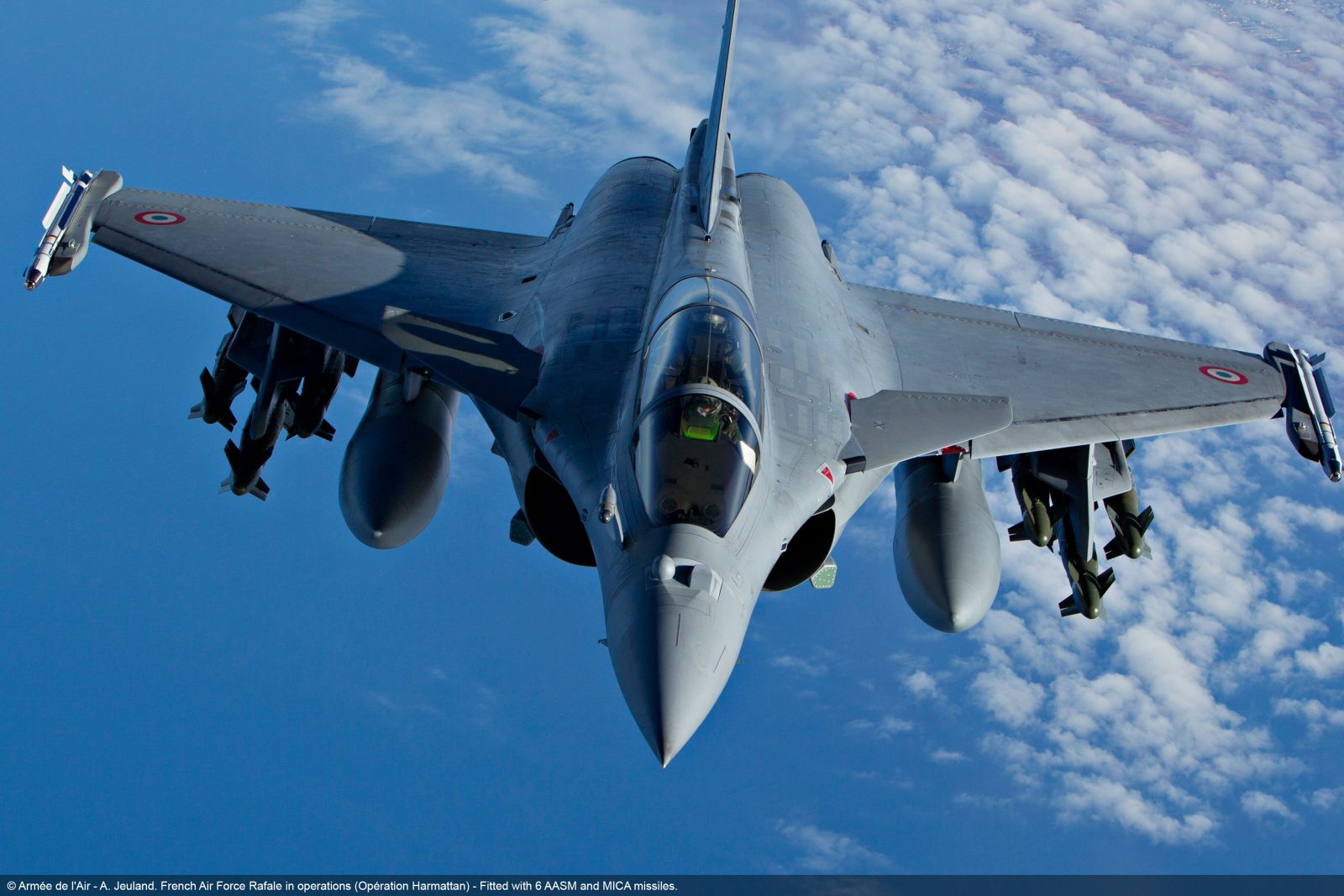
    Over the last two weeks, much has been written about the controversy emanating from the possibility of Pakistan Air Force pilotshaving trained and flown the Rafale aircraft in France. A lot of concern has been expressed about the operational capabilities of the Rafale being compromised. One needs to examine this carefully. A better understanding of technology would make it easy even for the layman to appreciate and deduce from available open source knowledge what  modern aircraft are capable of. Given this, one can imagine what a trained and experienced fighter pilot would be capable of deducing, and hence evolve his tactics, by visually observing and studying various parameters of the aircraft, leave alone flying it. Hence, to get a realist perspective of this situation, we need to examine various factors, particularly Qatar-Pakistan relations.

                But first take a look at the technical issues. The Rafale is a 4.5 generation aircraft. Its design, in terms of its clean aerodynamics and an optimal design to create minimal radar signature, would make it clear to any professional that this is an aircraft capable of exceptional manoeuvring. It is also an established fact that amongst all 4.5 generation aircraft, there would be very little difference in terms of combat performance. Quite obviously, the most critical elements of the aircraft consist of its sensors, avionics systems, radar, and weapons. Both India and Qatar have contracted for similar version of aircraft, F3R.The systems and weapons have some similarities but also major differences. Modern fighter aircraft are systems intensive and function as system of systems.

                Features that are common to both Qatar Air Force and Indian Air Force Rafales are primarily the RBE 2-AA AESA radar, SPECTRA self-protection suite, IFF with full Mode-5/Mode-S compatibility, Elbit’s TARGO-II Helmet Mounted Display System, and some of the most critical weapons such as Meteor BVRAAM, Mica air-to-air missile, and SCALP air-to-ground long-range cruise missile. Anyone who flies the aircraft will, obviously, get to know the full functioning, performance, and envelope of the systems and the weapons. Most critical would be the intimate knowledge of the AESA radar and the important weapons. However, one must understand that deeper technical knowledge of systems like the radar would not be available to Qatar. Given the long-standing relationship between France and Qatar, any high level systems programming and integration would be retained by the French. This has been the practice in the past, and it is so with most Arab countries. Additionally, AESA radar configurations and source codes are highly secure and it would be virtually impossible for anyone to break into it, even if we assume that Pakistani pilots and technicians would make an attempt to do so, which is very unlikely. Weapon envelopes would certainly be known in the course of training on them. Training on systems like SPECTRA, while providing its functional knowledge, does not compromise any security. The crux of SPECTRA lies in its threat library programming, which is exclusive to the host nation, and on response algorithms that will not be open to anyone other than the designer.

                Indian Rafales, however, will have significant security measures. These lie in completely different secure communication systems that would be incorporated, and India’s own secure datalink capability that would be incorporated. Qatar Rafales would have the Link-16 compliant datalink systems, which India will never incorporate. As the French Rafales upgrade to F4 status, much of those upgrades may become available to India, and IAF aircraft will become uniquely different and highly secure with its own NCW architecture. In terms of EO designation and Recce pods, Qatar Rafale will have the Lockheed Martin’s Sniper pod while IAF have the well-proven and advanced Litening-4 EO pod integrated. EW capabilities and hence, EW tactics and strategies will be completely different for IAF’s aircraft. Unlike in the past, this contract envisages French cooperation and full access to integrating additional weapons and systems of India’s choice, which will make the aircraft considerably different.

                So what should we make of the news about Pakistani pilots flying the Rafale in Qatar and subsequent denial by the French ambassador in India? As for Pakistani pilots sizing up the Rafale against the F-16, it is a non-issue as the two are just not comparable. The upgraded F-16s of PAF is of Block-50 standard at best, and that is clearly one generation behind Rafale. The concern, therefore, is irrelevant.

    One must take into account various regional geopolitical issues to get a realist perspective. Qatar is a small country of 2.8 million inhabitants, with nearly 80% of the population located in the capital city of Doha. With highest per capita GDP in the world, Qatar focuses on rapid development towards first world status, and displays its ambitions in playing a geopolitical role, punching well above its weight much like Singapore. Doha has been host to major international events, and will be hosting the FIFA 2022.

                Considering that Qatar is a tiny kingdom on the Arabian peninsula, Saudi Arabia has always tried to dominate and control the state as a subordinate. Qatar has successfully dismissed these attempts by breaking out and engaging countries at the global level. It has made itself a major diplomatic player, a generous donor of foreign aid, and a leader in modernising education in the region. It has maintained strong relations with Iran and Turkey as much as with other Islamic states. It has sought to balance different groups and organisations with a moderating influence and has sought to push for peace in the region. These efforts, and the overwhelming popularity of ‘Al Jazeera’ has riled countries like Saudi Arabia, Egypt, Bahrain, and UAE into sanctioning Qatar and curtailing diplomatic relations.

                Pakistan, which has very strong relationship with all Arab countries, has maintained a neutral stance in the Qatar-Saudi Arabian dispute, despite strong pressures from Saudi Arabia. Pakistan’s military presence in these countries, in terms of training local forces as well as providing fully deployed troops to augment local defences has been a long-standing practice. Pakistan Air Force pilots have regularly flown for the Air Forces of these states. Hence, access to military resources in terms of operational flying experience on these aircraft has been a huge advantage for PAF. Since the Iraq war in 1991, Qatar has sought to build a significant military capability, its Air Force in particular.

                While India and Qatar have excellent relations (Qatar meets nearly 60% of India’s LPG needs), to meet its military training and force requirements Qatar has engaged Pakistan’s services in addition to European and British professionals. All these pilots, essentially mercenary in nature, have become Qatar citizens as well. Qatar has provided air base for US air forces  at al-Udeid, 20 miles from Doha. The base services US Central Command, including US forces in Afghanistan and Syria. Qatar addresses Pakistan’s energy security significantly, and both nations have cultivated their relationship carefully. Qatar has allowed Taliban to set up office in its territory and has worked to encourage dialogue with all parties involved in the Afghan conflict. In return, Pakistan has been careful to balance its relations with all gulf countries, and values its engagement with Qatar highly, as the recent visit of Pakistan’s Prime Minister shows.

                For a very small state, Qatar is on track to building significant air power capability. After signing initial contract for 24 Rafales with French Dassault in 2015, Qatar placed additional orders for 12 more aircraft, making it a total of 36 Rafales. This was preceded by an earlier order for Boeing’s 36 Qatar advanced-variant Eagles from the USA for $ 12 billion, with an option to increase the order later to 72. In another major deal with BAe, Qatar concluded a contract for supply of 24 Eurofighter Typhoons and 9 Hawk advanced jet trainers, worth over $ 6.6 billion, with first payment made in Sep 2018. For an air force whose strength was just 2100 personnel in 2010 and just 13 Mirage 2000-5 fighters in early 2000s, this build up with three fleets of 4.5 generation aircraft and substantial increase in numbers is unprecedented. Qatar’s decision to go in for a seven-fold increase in its air power capability is curious and there are questions as to how this tiny air force will absorb the massive capabilities in which it is investing. More importantly, it is inevitable that it would need pilots on hire to fly these aircraft. This where the Pakistani relationship comes into focus. In addition work is already underway to increase the infrastructure  in terms of building an additional base and expanding existing bases at al-Udeid and Doha.

                Pakistani pilots who fly for Qatar air force may do so after being given Qatar citizenship. Unlike India, Pakistan allows dual citizenship passports. It is therefore, quite obvious that Pakistani pilots will fly all these aircraft being procured by Qatar. It is irrelevant whether they have been trained in France on Rafales contracted for Qatar, in all likelihood they would have. India, therefore, would do well to factor this reality in its calculations.

    The author is the founder Chairman of TPF, IAF veteran and former Deputy Chief of Integrated Defence Staff. Opinions expressed are the author’s own.

    A shorter version of this article was published in Deccan Herald.

    Image Credit – rafale.co.in

  • Belt & Road: What are China’s Real Intentions?

    Belt & Road: What are China’s Real Intentions?

    Mohan Guruswamy                                                                                         May 22, 2019/Analysis

    Almost two years after China hosted a well-attended and hugely-touted conference to promote its One Belt, One Road (OBOR) initiative, it held the second summit last month. It is apparent the grand design outlined at the first summit hasn’t quite shaped up as intended. Questions were asked about its real intentions, economic benefits and usurious tendencies.

    The Chinese have begun backtracking a bit. Already, Malaysia has renegotiated the terms of the rail project with a much-reduced outlay, lower interest rates and increased local participation. It may be mentioned that the original deal was signed by paying the disgraced former Malaysian PM Najib Razak a sizeable bribe. Even Pakistan, Beijing’s so-called “all-weather” friend and ally, has begun questioning the terms of the China-Pakistan Economic Corridor (CPEC) after deriving lessons from what happened to Sri Lanka when the birds came home to roost at Hambantota.

    The second edition of the Belt and Road Initiative Summit got under way in Beijing on Thursday last week. It seems that India’s opposition to it might have also been addressed somewhat when the BRI map showing routes rather curiously shows the whole of Jammu and Kashmir and Arunachal Pradesh as part of India. Is this a signal, or just artistic licence? The map even portrayed India as a part of BRI, despite India having boycotted the summit for the second time.

    Typically, many Indian commentators have started seeing meaning in it. Maps be damned, we can see meaning in BRI only when the norms and terms conform to accepted international norms, such as those of lending agencies like the World Bank.

    The BRI is seen as China’s big play to seek world domination. Both the fears and the optimism are unfounded. The BRI is a project meant to very simply get out the Chinese reserves invested in Western banks into investments where these will fetch a much higher rate of return; and to take up the slack from the huge overcapacity problem that plagues the Chinese economy.

    Speaking at the first BRI (then OBOR) conference, President Xi Jinping had announced that Beijing would advance 380 billion yuan ($55 billion) to support it. This was a far cry from the huge figures, sometimes as high as $750 billion to $1 trillion, that were bandied about. Exaggerating the size of the lollipop is an integral aspect of China’s economic diplomacy.

    While economists are generally sceptical about China’s goals and intentions, strategists — mostly the garden-variety Indian military types — have endowed this project with sinister overtones. I was on a television show when a prominent “security analyst” and the anchor raised the issue of the so-called “string of pearls”. To them it seemed that every port or airport where a Chinese company is the contractor had a military purpose. Most of these folks have not progressed beyond Mahan and Mackinder, whose theories were fashioned in a much earlier era when coaling and oil refuelling points were very critical.

    The “string of pearls” is a bogus idea. It was cooked up by consultants working for a company called Booz Allen Hamilton, which was linked to the US department of defence and the Central Intelligence Agency, and was given a lot of traction by some well-known Indian “strategic thinkers”. I was once at a conference where Adm. Dennis Blair, a former US Navy chief and later President Barack Obama’s Director of National Intelligence, was asked about it. He called it a “stupid notion”, and said no one who has run a large navy or held a responsible position in a navy will ever say an oceanside blockade is possible. He explicitly and loudly said to Indian strategists who harped on the “string of pearls” that no navy could encircle a country with just a few ports.

    The question that we need to ponder over a bit is how long will these “ports” survive after any outbreak of hostilities? The Indian Air Force and the Indian Navy have enough airpower at hand to sort them out, and our Navy can effectively blockade hostile ports in the neighbourhood. It may be noted that the IAF has operationalised an airbase in Thanjavur and will fly SU30 MKIs from there. The Navy deploys MiG-29K fighters as well as P-8i Poseidon maritime surveillance and attack aircraft, and has a formidable fleet of combat vessels. We have not been exactly sleeping or need to be overly worried. The same Sri Lanka that once hosted a Chinese Jinn class nuclear submarine ostensibly on a goodwill mission last year turned away a conventional submarine of the PLA Nany wanting to pick up supplies.

    Now to the economics of BRI. There is a reality most of our commentators do not see or understand. By 2013, China had accumulated foreign exchange reserves of about $3.5 trillion. The capital it claims it is prepared to subscribe for the NDB, AIIB and Silk Road Fund would amount to only around seven per cent of its total foreign exchange reserves invested in Western banks. As these China-promoted institutions will provide infrastructure lending rather than grants, the return on capital from these investments could be significantly higher than the returns China gets from its foreign exchange reserves now invested in low-yielding US government bonds. It’s very simple. China needs to get value for its money and also help its demand-starved industries. They have found a typically Chinese solution to it, and are making a virtue out of a necessity.

    Look at it from another angle. The US dollar is also steadily depreciating in the long term against other major currencies. With no interest and with depreciation factored in China’s huge reserves, accumulated by extracting surpluses in its sweatshops, are steadily shrinking in value. The question which Beijing seeks to grapple is this. One way is to put these funds to work in investment-starved countries in Africa and Asia and assures themselves of returns for a long time to come. In some, the birds have come home to roost quite early. The grandiose Hambantota port project in Sri Lanka, which once had the same bunch of Indian “strategic thinkers” in a tizzy, hosts no ships and doesn’t earn very much. China is now pressuring Sri Lanka to service the debt and is seeking to extract some more in lieu of that. Much of the Hambantota investment has been recouped by China via material and labour supplied to complete the project. That’s why one prominent European commentator then called OBOR “One Belt, One Road and One Trap”.

    Like Sri Lanka, some other intended beneficiaries have now begun to ask questions about the utility and intentions of OBOR. Pakistan’s Dawn newspaper has said: “But the main thrust of the plan actually lies in agriculture, contrary to the image of CPEC as a massive industrial and transport undertaking, involving power plants and highways. The plan acquires its greatest specificity, and lays out the largest number of projects and plans for their facilitation, in agriculture.” It then questions the benefits that will arise from linking mostly dry and barren Xinjiang, and in particular the predominantly Turkestani Muslim Kashgar prefecture with its restive four million people, to an increasingly water-starved and already much troubled Pakistan. Once when a Pakistani interlocutor at a Track-2 session asked me what then would be the economic gains to Pakistan, I replied they could sell tea and samosas to the traffic!

    Much is being made about the overland link between China and Europe by rail and road links. Most commentators seem to miss that the Trans-Siberian Railway line from Vladivostok to Moscow is almost a hundred years old. Its capacity can be beefed up. Yet overland freight costs will always be much more expensive than sea freight costs. Business is about cutting costs and taking the least expensive option. No one with common sense will prefer to shift by land what can be shipped. Others make much of the so-called Malacca dilemma. The Arctic route is now opening up, and the real Malacca dilemma soon will be the rapid decrease in freighters through it. There is always the option of a canal for freighters across the Kra Isthmus, a project that will bring China and Japan much closer to India.

    Mohan Guruswamy is a Trustee and a Distinguished Fellow of TPF. He is a prolific commentator on economic and security issues, and specialises on China.

    This article was published earlier in Deccan Chronicle.

  • New challenges of global terrorism

    New challenges of global terrorism

    G Parthasarathy                                                                                                  May 23, 2019/Opinion

    The people of Sri Lanka have shown courage, wisdom and resilience in recovering from the traumatic effects of the country’s brutal ethnic conflict between 1983 and 2010. An estimated 47,000 Tamil civilians, 27,000 LTTE members, 50,000 Sinhala civilians, 23,790 Sri Lankan soldiers and 1,500 members of the Indian Peace Keeping Force laid down their lives, during the conflict.

    he Sri Lankan ethnic conflict, however, did not affect the lives of “Indian Tamils” in Southern Sri Lanka, whose ancestors had migrated, as plantation workers, during British rule. There have, however, been recent incidents of religious tensions between the Sinhala Buddhist clergy and radicalised elements in the Muslim minority. Sri Lanka’s relatively small Christian minority, which is peaceful and relatively affluent, had steered clear of getting drawn into any ethnic conflict.

    In these circumstances, the world was shocked to learn that in the midst of holy Easter Sunday church services on April 21, churches in Colombo, Negombo and even the eastern port of Tamil dominated Batticaloa, were hit by bomb explosions.

    Three hotels housing a large number of western tourists in Colombo were also targeted. As many as 253 innocent people perished in the carnage.

    The “Islamic State of Iraq and Syria” (ISIS) soon claimed responsibility for the attack, contradicting President Trump’s claims that the terrorist outfit had been “100 per cent” crushed in Syria. It soon emerged that the mastermind behind the blasts was a rabidly fundamentalist Sri Lankan Tamil, Maulvi Mohammad Zahran Hashim, who was from the town of Kathankudy, in Sri Lanka’s Tamil dominated eastern province.

    Indian intelligence agencies had provided timely warnings to the Sri Lankan Government about an impending terrorist strike by the ISIS. These warnings were not seriously taken note of by the Sri Lanka Government. It is, however, imperative that India keeps in touch discreetly with the Sri Lankan Government. We are evidently seeing the beginnings of long-term internal and regional problems and challenges, as ISIS members disperse and regroup, after being ousted from Iraq and Syria, like Al Qaeda and the Taliban did, after American militarily intervention in Afghanistan.

    As the ISIS targets in Sri Lanka were the country’s peaceful Christian community and western (Christian) tourists, the bomb attacks sent ripples across the West, as the attacks came soon after the massacre of Muslims in New Zealand, during their Sunday prayers.

    Radicalisation drive

    Sri Lanka’s Muslim community, which has done well economically in the Island, has lived in peace with both Buddhist Sinhalas and Hindu Tamils. Recent studies, however, indicate that some years before the bombings, sections of Tamil Muslims from the eastern province were getting radicalised in Saudi Arabia and other Gulf Arab countries.

    Zahran Hashim was one of those so influenced by radical Islamist practices and beliefs. Cutting across ethnic differences, Hashim made common cause with Sinhala Muslims, including two sons of a Muslim business tycoon in Colombo, who had been deeply influenced by the ISIS. Both the sons died in suicide bomb blasts, even as the wife of another bomber detonated explosives in a suicide bombing the same day, resulting in the deaths of three police personnel.

    The Sri Lanka bomb blasts were thus executed by young radicalised Sri Lankan Muslims, cutting across the ethnic divide. Moreover, there are now signs that an estimated 75-100 Indian Muslims, who were with the ISIS in Syria, have dispersed and chosen escape routes, including through Afghanistan and Pakistan. Hashim has also reportedly established close institutional links with a counterpart group in Coimbatore and with people in other parts of Tamil Nadu and Kerala.

    There are now indications that after being forced out of Iraq and Syria, ISIS fighters have now dispersed across Asia, Africa and even to parts of Europe. While the Osama bin Laden-led Al Qaeda made it clear that its struggle was against “Jews and Crusaders,” the ISIS targets all non-Muslims, as was evident from its brutal killings of Indians in Iraq. Moreover, the Al Qaeda operated primarily out of Afghanistan and Pakistan, apart from select Arab countries. Al Qaeda’s leadership was predominantly Arab. It had very few members from other parts of the world.

    The ISIS poses a much more serious challenge to India than the Al Qaeda ever did, primarily because it has recruited its fighters from countries across Europe, Asia and Africa. President George Bush praised India because not a single Indian joined or backed Al Qaeda. But, things are different with ISIS, which regards India as a part of the “Islamic State of Khorasan”. Over 100 Indians are estimated to have joined the ISIS.

    Extending its reach

    The reach of ISIS across India is evident from its links with extremists in Kashmir, apart from those established in the recent past, in Tamil Nadu and Kerala. Radicalisation in our southern States poses new and serious security challenges. ISIS also acknowledges its links with associates, across India’s maritime frontiers in Malaysia, Thailand, the Philippines, Myanmar, Indonesia, Maldives, Saudi Arabia and the UAE. It also has a growing presence in Afghanistan and Pakistan.

    India will also have to take note of the distinct possibility of ISIS attempting to take advantage of tensions arising out of the Rohingya refugee crisis. A senior Myanmar official recently revealed that even as ISIS was losing influence in Iraq and Syria, its supporters were moving into Myanmar’s Rakhine State, where Rohingyas reside. Many Rohingya refugees, now in Bangladesh, could well make common cause with ISIS and with members of Pakistani backed militant outfits like the Jamat-ul-Mujahideen, to destabilise the situation along the common borders of India, Bangladesh and Myanmar. Pakistan has had an abiding interest in destabilising the Sheikh Hasina-led Government in Bangladesh.

    Apart from having to deal with continuing Pakistan sponsored terrorism, India will now also have to keep a watch on challenges that would likely arise from the ISIS, with its emerging presence in the southern States. Like in Sri Lanka, ISIS activities could target selected sections of the population in India, while seeking to radicalise them. They will pose a challenge to internal security in India. Finally, Pakistan could be expected to use the challenges posed by ISIS, to absolve itself of responsibility on actions of its trained jihadis, on Indian soil and in Bangladesh. These issues will hopefully receive careful attention after the general elections.

    The writer is a former High Commissioner to Pakistan. He is a Trustee and Visiting Distinguished fellow of TPF.

    This article was published earlier in The Hindu: BusinessLine.

    Image Credit-Getty through Vox.

  • Undertones of a Potential India-Pakistan Water War

    Undertones of a Potential India-Pakistan Water War

    Renuka Paul and M Matheswaran                                                           (March 9, 2019/Analysis)

    Last week saw India-Pakistan tensions touch a crescendo as India, for the first time, executed a punitive strike into Pakistan. While Pakistan’s retaliatory strike was thwarted by IAF’s air defence mechanism it also resulted in a MiG 21 aircraft being shot down and the Indian pilot taken as prisoner. While international pressure forced Pakistan to release him within 48 hours, it also led to quick de-escalation. In the bargain, India’s pressure on Pakistan became diluted significantly. The genesis of this spike in tensions between the two nuclear powered neighbours, relates to the event of February 14th, 2019 when Pakistan based Jaish-e-Mohammad launched a terror attack in Pulwama, Jammu and Kashmir that killed over 40 Indian paramilitary personnel.

    Blaming Pakistan for the incident, New Delhi has revoked the ‘Most Favoured Nation’ status granted to Islamabad, imposed 200 percent duty on imports from Pakistan and vowed to end the flow of unutilized water from India’s shareflowing to Pakistan. On February 26th, India carried out “non-military, pre-emptive” airstrikes to destroy terrorist camps in Balakot, Pakistan. The tough and unprecedented (since 1971) retaliatory measure of crossing Pakistan’s airspace makes sense given the political pressure due to the upcoming elections and the media fuelled public sentiments. This changed discourse proves that Pakistan’s approach of employing Islamic proxies to cause destructions and using nuclear weapons as a safeguard to deter Indian response does not hold true any longer. Moreover, the international community including China and Saudi Arabia, usual Pakistan allies, has condemned the terror activities.

    Some argue that the strongest threat India has made since the Pulwama incident is the decision to alter the course of water flowing into Pakistan towards Punjab and Kashmir instead. The recent claim, however, seems irrelevant as it is in fact a two-year-old announcement that the excess of Indian waters that flow into Pakistan will be used for hydroelectric projects. But what this has sparked is a boost to those advocating abrogation of the Indus Water Treaty (IWT) and has highlighted a potential water conflict in the subcontinent.

    Post partition, in 1948, Pakistan argued that it needs Kashmir partly for its water security as it is nearly 65-percent dependent on the Indus river system. Following escalated issues, India partially cut off water supply to Pakistan by shutting off water from Ferozepur Headworks to Dipalpur Canal, portions of Lahore and main branches of the Upper Bari Doab Canal. To de-escalate the situation and to prevent further water crisis, the World Bank, after years of negotiations, brokered the IWT in 1960. According to this deal, India is allocated the eastern rivers- Ravi, Beas and Sutlej- while Pakistan has the western rivers- Indus, Chenab and Jhelum- and it mandates a bilateral meet twice a year to share data regarding flow, flooding etc. However, over the years the undertones of looming water dispute is evident. Being the upper riparian state, India has a clear advantage that sustains Pakistan’s insecurities. For instance, it has built multiple dams and barrages over river Jhelum. While 1.50 MAF water is allowed to India from Jhelum under IWT, constant disputes exist regarding the amount of water diverted (stop the flow or flood).

    In 2008, Lashkar-e-Taiba chief Hafiz Saeed accused India of water terrorism, followed by Pakistan government in 2010 claiming that India chokes water supply consistently. In the aftermath of Uri attacks in 2016, Modi proclaimed that “blood and water cannot flow simultaneously” and dismissed the bilateral meet of IWT committees. In addition, New Delhi set up dozens of small and medium hydroelectric and irrigation projects like Wular barrage, Baglihar Dam, etc that obstruct Pakistan’s water share. Though India cannot unilaterally end the treaty, it can reduce the water flow to Pakistan utilizing the provisions of IWT that allows India to use water from Western rivers for non-consumptive needs like irrigation, hydroelectricity production, etc. Islamabad responded that revocation of IWT “can be taken as an act of war” and garnered international support to stop India’s project efforts.

    Given that Pakistan is allotted 80 percent of the water from the Indus river system, many in India call for ending IWT. However, the potential consequences of retraction from IWT are manifold. As signatory to the international agreement, backing out from IWT will invite international condemnation affecting India’s global image and its bid for UNSC seat. Moreover, the trust relation with neighbours (Nepal and Bangladesh) with whom India shares water treaties will be affected. Additionally, India does not have the infrastructure to use the extra water and this could result in the flooding of Kashmir. Even the underutilized water that belongs to India (from eastern rivers) is free flowing to Pakistan. Despite continued claims of diverting the water that flows to Pakistan to other parts in India, New Delhi is yet to materialize these claims.

    Experts argue that this is to avoid water crisis within the country. Water disputes within states in India are common. For instance, it was only after 40 years of interventions that Jammu and Kashmir, Punjab and Haryana signed an agreement in 2018 on the Shahpur Jandi dam project for access to and use of the water from these rivers. There is also the risk of China following India’s steps and reducing water flow to the Brahmaputra river. They have already done so by building the Lalho project on the Xiabuqu river, a tributary of Yarlung Tsangpo (Brahmaputra as known in India). Realizing the disadvantages of withdrawing from IWT, India has looked at other alternatives.

    New Delhi is engaging in water power play by further limiting Pakistan’s water supply through Afghanistan – India investing on the $236 million Shahtoot Dam on Kabul river in Afghanistan is an example. Using water as a political weapon is not new. Turkey completely stopped water flow from Euphrates to Syria, Israel cut fresh water supply to Gaza, and so on. In the absence of a water sharing agreement between Afghanistan and Pakistan, India is investing in river and dam projects on Afghanistan’s eastern rivers- Kabul and Kunar- that eventually flow into Pakistan. However, this seems to set a dangerous precedent and will further worsen the distributional conflicts in the region. In parallel, India has also taken up multiple projects utilizing the provisions under the treaty that can potentially reduce the water flow to Pakistan. Though it takes time, given the costs and objections involved, this seems to be a move in the right direction.

    With political tensions and water stress rising in both nations, water diplomacy needs to be an important factor to be considered in Indo-Pak negotiations. Moreover, issues like climate change and global warming were irrelevant when IWT was brokered and left out of its gambit. Intermittent floods and droughts could be controlled through mutual coordination. Therefore, water should be seen as a factor for cooperation and not conflict.

    Renuka Paul is a Research Analyst with The Peninsula Foundation. She holds a Masters in Public Policy from Mumbai University. Views expressed are the author’s own.
    Air Marshal M Matheswaran AVSM VM PhD (Retd) is the Founder President and Trustee of TPF.