Category: Human Rights

  • The Cultural Revolution from the Right: From the Democratic Concept of the People to its Ethnic-religious Understanding

    The Cultural Revolution from the Right: From the Democratic Concept of the People to its Ethnic-religious Understanding

    Despite all the real political problems we face, it is essential for the twenty-first century to defend the equality of all people, regardless of biological differences such as gender or ethnicity. It is not our biology that defines us as human beings, but our morality.
    According to Dominique Moisi, the Western states are consumed with fear of decline, the Islamic-Arab world is full of despair at unfulfilled promises, and East and Southeast Asia are full of hope for a better life. These global political sentiments are largely responsible for the escalation of conflicts, the disintegration of social cohesion and the spread of violence. 
    More than 50 years ago, a cultural revolution from the left shook the whole world. In the USA, there were demonstrations against the Vietnam War, and the hippie movement gathered hundreds of thousands in search of a new lifestyle and attitude to life. Flower, power, love was the motto of the legendary Woodstock. In Germany, young people turned against old traditions and the concealment of their parents’ and grandparents’ guilt under fascism. But here, too, the double face of the youth movement became apparent: when they celebrated the North Vietnamese leader Ho Chi Minh in their demonstrations, they were in no way aware of the political practice in North Vietnam. This process was even more dramatic during the Chinese Cultural Revolution when the youth were mobilised to ultimately legitimise the claim to power of the “Great Leader” Mao-TseTong. The lesson of that period was that a cultural revolution must precede political change. For some time now, a cultural revolution from the right has been following this pattern. It is characterised on the one hand by social developments in polarised societies, and on the other by a targeted and strategic discourse on the part of the new right. Without underestimating the importance of personalities such as former and newly elected President Trump, as well as Erdogan in Turkey and Putin in Russia (and many others) for this development, they have only been able to achieve such success because they have tapped into the “zeitgeist”. According to Dominique Moisi, the Western states are consumed with fear of decline, the Islamic-Arab world is full of despair at unfulfilled promises, and East and Southeast Asia are full of hope for a better life. These global political sentiments are largely responsible for the escalation of conflicts, the disintegration of social cohesion and the spread of violence.
    In the Western world, instead of recognising the equality of other civilisations, nations and states, the “others” were blamed for the loss of the “white man’s” superiority. The ideology of the white man’s burden to educate the uneducated and indigenous peoples of the world, developed at the beginning of the last century, was revived after the fall of the Soviet Union, but could no longer be sustained with the rise of the others and the newly industrialised nations. However, a dilemma arose – if the success of the others was attributed to them, they would be strengthened and the whites would be even less able to maintain their own sense of superiority. So people looked for internal others to blame for their own decline. This is at the heart of the cultural revolution from the right. It is explained by the fear of no longer being able to maintain the supposed superiority of the “white man” if, for example, a country like Indonesia (i.e. no longer just Japan and China) overtakes Germany’s gross domestic product around 2030. Meanwhile, the US, Germany and many other European countries are not only no longer relatively superior, but parts of the US, for example, are at levels that used to be ascribed only to developing countries. And scapegoats are easy to find and, above all, interchangeable – sometimes it can be emancipated women, migrants, the “elites”, the Chinese, Africans, African-Americans, or anyone who is different. Trump’s statement that migrants are taking “black jobs” from US Americans reveals the core of this ideology: the MAGA movement is the best illustration of this development. Despite Trump’s irrationality and narrow-mindedness, “Make America Great Again” can only take hold if many people fear decline or have already experienced it. Like the masterminds of the cultural revolution on the right, they are trying to conquer the more rural regions first.
    The reference to ethnic pluralism is also one of the defining characteristics of the New Right. The right of all cultures and ethnic groups to exist is unconditionally recognised, but only as long as people remain among themselves or on the territory intended for them. Trump’s idea of expelling millions of Latinos after winning the election corresponds perfectly with the German right’s idea of enforcing re-migration. In Germany, Carl Schmitt and Martin Heidegger, Ernst Jünger and Oswald Spengler, and even Nietzsche, are relativised in order to legitimise the cultural revolution of the right. Antonio Gramsci, actually a progressive Marxist, whose concept of achieving cultural hegemony in the “pre-political space” is pursued by the Right as “metapolitics”, gains central importance.
    At its core, however, the new right is about undermining human equality – in its view, we are only equal to our own nation or religion and gender. This exclusionary equality only with one’s own kind is at the heart of the right’s cultural revolution, whose ideal model is itself based on hierarchical notions, a graded dignity. Such attempts to undo the gains of the struggle for equality in a counter-revolution can be found all over the world – whether in nationalism, ethnocentrism, misogyny, cultural relativism (“they just have a different culture”) or thinly veiled racism.
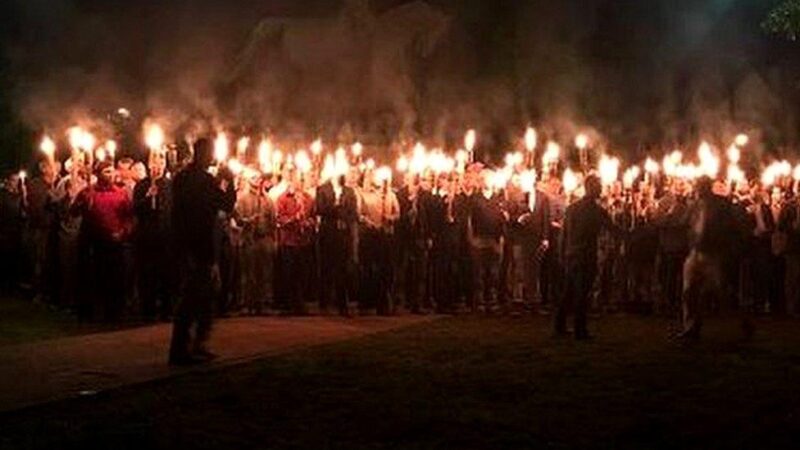
    The only thing “new” about this right-wing movement is that it uses different terms. The New Right concentrates on the “battle for the heads”, leaving the battles for the streets and, in some cases, the parliaments to other groups of the extreme right. The storming of the Capitol and the German Bundestag were such actions of the extreme right. It must be admitted that the whole world is in turmoil. At its core, however, the new right is about undermining human equality – in its view, we are only equal to our own nation or religion and gender. This exclusionary equality only with one’s own kind is at the heart of the right’s cultural revolution, whose ideal model is itself based on hierarchical notions, a graded dignity. Such attempts to undo the gains of the struggle for equality in a counter-revolution can be found all over the world – whether in nationalism, ethnocentrism, misogyny, cultural relativism (“they just have a different culture”) or thinly veiled racism. It is also marked by the revival of toxic masculinity (Raewen Connel) through the MAGA movement and in particular Trump’s enthusiasm for the wrestling mentality and martial arts. Opinions can be divided on these as sports, but they have no place in politics and point to an absolutely exaggerated and violent masculinity that Trump embodies. These political discourses are used to win elections in the West. In one sentence, the New Right shifts the concept of the democratic people to the ethno-religious people.
    When the few people of Pegida (Patriotic Europeans to defend the Abendland) in Germany shout into the camera: “We are the people”, they are turning the slogan of the democratic revolution of 1989 into an ethno-nationalist revolution. From the mid-nineteenth century to the mid-twentieth century, we have witnessed this transformation from the democratic to the ethnic concept of the people. Despite all the real political problems we face, it is essential for the twenty-first century to defend the equality of all people, regardless of biological differences such as gender or ethnicity. It is not our biology that defines us as human beings, but our morality.
    Feature Image Credit: Equality Trust
    from ‘The Link Between Inequality and the Far-Right’ – https://equalitytrust.org.uk
    The far-right has always been part of politics. The current global wave of far-right populist political movements began in the late 1970s, grew in the 1990s, and accelerated dramatically in the late 2000s. It has mirrored a sharp increase in inequality across developed economies, the globalisation of neoliberal economics, and the creation of an international super-rich. 
  • Crimson Cows and Indian Sensibilities

    Crimson Cows and Indian Sensibilities

    That Israel, in addition to being an apartheid state, has gone completely rogue is no longer in doubt. As Israel digs itself into a deeper hole, in the belief that it can kill its way to success, it finds that this year its GDP has collapsed from 4.8% in 2022 to 1.5%, with over 46000 small businesses having shut down. By some estimates, between 500,000 to 1 million Israelis have permanently emigrated.


    Approximately 7 million Jewish Israelis and an equal number of Palestinians live cheek-by-jowl between the Mediterranean Sea and the Jordan River. The area encompasses Israel, the occupied territories of the West Bank, including East Jerusalem, and the Gaza Strip.  Nominally, the Palestinians in the West Bank do have limited self-rule, but defacto have no control over the movement of people and goods, or taxes. Agreements signed in the 1990’s, permit the Israeli Government to collect taxes on behalf of the Palestinian Authority (PA), which it then disburses to the PA for its use. These taxes make up over 65-70% of the PA’s public budget and have a critical impact on the quality of life of ordinary Palestinians.

    As has been the norm with Israel, it has used every means, including financial control, to inflict collective punishment on the Palestinians at any attempt by them to free themselves from Israeli occupation. In May this year, for example, it withheld disbursal of all taxes collected over the past three months on grounds that Spain, Ireland and Norway had announced they would recognise the Palestinian State. This resulted in the breakdown of municipal services and widespread loss of jobs. Subsequently, in June it indulged in blatant blackmail when it agreed to disburse withheld funds, provided the PA retroactively approved five settlements in the West Bank that had been illegally established earlier, despite condemnation by Palestinians and the international community.

    While the Hamas attack of 7 October 2023, especially their despicable actions against women, children and civilians, has been widely condemned, the fact that over half of the 1200 Israelis killed, were by their own military in pursuant of the reprehensible “Hannibal Directive”, continues to be glossed over. Oddly enough, over the course of that year, prior to the attack, the fact that over 200 Palestinians had been killed by the Israeli military and settlers for a variety of reasons has simply been ignored by the international media and not been seen as the immediate provocation for the attack, especially its ferocity.

    It now emerges, that the numbers of Palestinians killed by the Israeli response has been grossly underestimated. As per a study dated 10 July 2024 in the Lancet, a respectable and authoritative medical journal, an estimated 186000-200,000 Palestinians have been killed in Gaza, directly or indirectly. This is approximately 9% of the total population, the overwhelming majority of them being women and children.

    The Israeli response to this attack was disproportionate, to put it mildly, but it still continues to receive full support from Western Governments. It now emerges, that the numbers of Palestinians killed by the Israeli response has been grossly underestimated. As per a study dated 10 July 2024 in the Lancet, a respectable and authoritative medical journal, an estimated 186000-200,000 Palestinians have been killed in Gaza, directly or indirectly. This is approximately 9% of the total population, the overwhelming majority of them being women and children.

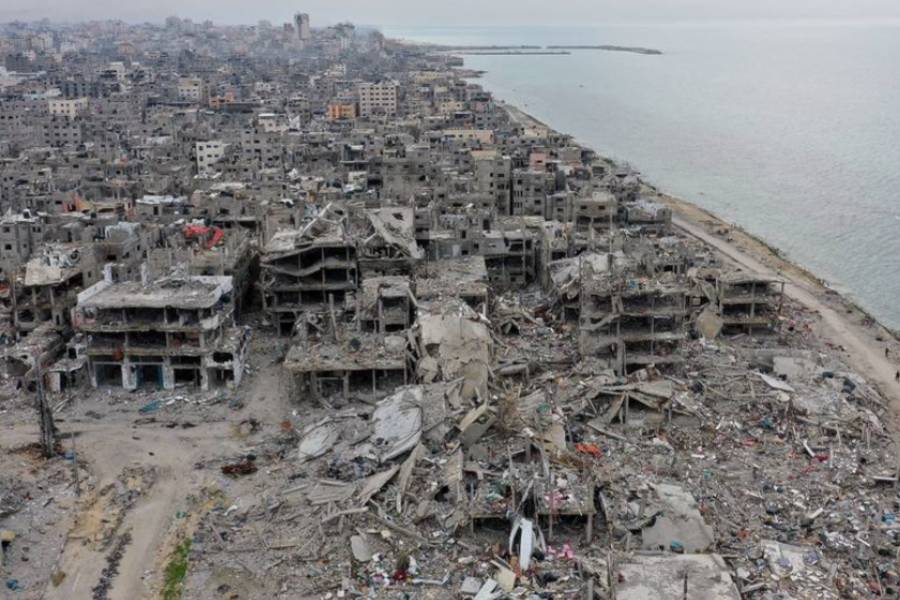
    The difference between these estimates and the official figures released by the Gaza Health Ministry, which presently stands at approximately 43000, is explained by the fact that the Ministry only accounts for bodies that have been found and not for those remaining under the rubble, that the cities have been reduced to. Nor does it account for the indirect deaths due to hunger, non-availability of medical help etc. Studies suggest that these tend to be between 5-10 times higher than the official figures.

    Israel’s inhuman and deliberate response has been decried by experts, governments, United Nations Agencies and NGOs. They have gone on to accuse Israel of carrying out a genocide against the Palestinian population in Gaza, and more recently, in the West Bank. What is even more horrific, if that is even possible, are the accusations made by Dr. Feroze Sidhwa, an American trauma surgeon, on his return from Gaza. In his devastating op-ed in The New York Times, titled “65 Doctors, Nurses and Paramedics: What We Saw in Gaza”, he recounts harrowing stories from dozens of healthcare workers and CT scans of children shot in the head or the left side of the chest. The Times called the corresponding images of the patients too graphic to publish. In his words, “44 doctors, nurses and paramedics saw multiple cases of preteen children who had been shot in the head or chest in Gaza… He personally identified 13 such cases in his two weeks there”.

    That Israel, in addition to being an apartheid state, has gone completely rogue is no longer in doubt. In July this year, for example,  a video was leaked of the gangrape of a male Palestinian prisoner by guards of the IDF at the Sde Teiman detention facility in Southern Israel. Commentators in Israel referred to this video as just the tip of the iceberg, but what followed is instructive. Ten soldiers were arrested and faced trial for this act, but not before a mob, led by government ministers, attempted to free them forcibly from detention. Another minister demanded an investigation to identify the individual who had leaked the video so that he could be tried for treason. An MP from the governing Likud Party defended the actions of the guards in Parliament, responding to a question by an Arab-Israeli MP with “If he is a Nukhba (Hamas militant), everything is legitimate to do! Everything!”  Even the Minister responsible for  Prison Services, Ben-Gvir, told Israeli media on the day of the reservists’ arrest that it was “shameful for Israel to arrest our best heroes”.

    This race to the bottom doesn’t end there of course, and as the saying goes, the best is yet to come. As is well known, the Holy City of Old Jerusalem is home to the “Temple”, or as it is now known the Temple Mount. It refers to the two existing Islamic religious structures, the Dome of the Rock and the Al Aqsa Mosque, collectively known as Haram al-Sharif, and considered the third holiest site in Islam. However, according to the Tanakh or the Hebrew Bible, prior to these structures, the ‘First Temple’ was supposedly built on that very site in the 10th century BCE by King Solomon, and stood for five hundred years before being destroyed by the Babylonians. Almost a century later, it was replaced by the ‘Second Temple’ built by Cyrus the Great, only for it to be destroyed by the Romans in 70 CE. The New Testament holds that important events in Jesus’ life took place in the Temple, and the Crusaders attributed the name “Templum Domini” to the Dome of the Rock.

    However, many Jews see the building of a “Third Temple” in Jerusalem as an object of longing and a symbol of future redemption, as it would announce the arrival of a new Messiah who would unite the flock and lead them to salvation. Incidentally, the promised land would incorporate the whole of Palestine, along with parts of Turkey, Syria, Iraq, Saudi Arabia and Kuwait.

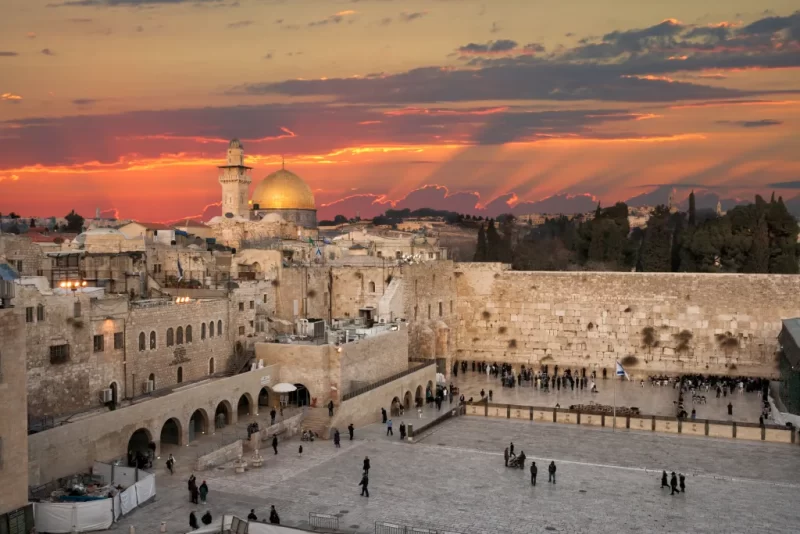
    Thus the religious significance and sensitivity of Temple Mount cannot be underestimated. Fortunately, as things stand Non-Muslims are not permitted to enter the two structures, while Jews are only allowed to pray at the Western Wall that runs along the side of the hill and is thought to be a remnant of the Second Temple. However, many Jews see the building of a “Third Temple” in Jerusalem as an object of longing and a symbol of future redemption, as it would announce the arrival of a new Messiah who would unite the flock and lead them to salvation. Incidentally, the promised land would incorporate the whole of Palestine, along with parts of Turkey, Syria, Iraq, Saudi Arabia and Kuwait.

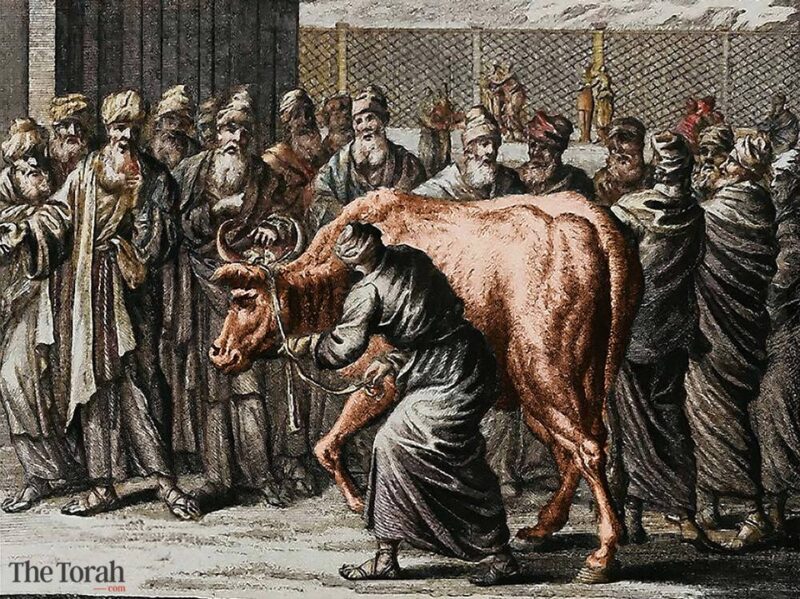
    But before its construction can be undertaken, it would require purification of the site and of the construction crew. That would, however, only be feasible, by sacrificing a red heifer, specifically bred to meet stringent biblical requirements. It would be required to be burnt alive at the Mount of Olives, adjacent to the Al Aqsa Mosque, and its ashes used to consecrate the holy ground and the people. The stuff of hopes and dreams for a tiny minority, with little hope of fulfilment in the modern world, or so one thought.

    These cows represent a tangible step towards the construction of the Temple and fulfilment of the prophecy.  The next obvious step in this tragedy will be the demolition of the Haram al-Sharif, for which dry rehearsals have already been undertaken. The consequences of such a step in the region are not difficult to visualise, but will it stop the extremists? Very unlikely.

    However, in September 2022, an unprincipled collaboration between extreme Zionist religious leaders, Right-Wing Christian Evangelicals and the present Israeli Government allowed for five red heifers to be flown from Texas to Israel. Ironically enough, despite the Evangelicals being well-known for their antisemitic beliefs. Brought in as pets, to avoid existing restrictions on livestock, they are now kept in an archaeological park in Shiloh, an illegal Israeli settlement, near the Palestinian city of Nablus. These cows represent a tangible step towards the construction of the Temple and fulfilment of the prophecy.  The next obvious step in this tragedy will be the demolition of the Haram al-Sharif, for which dry rehearsals have already been undertaken. The consequences of such a step in the region are not difficult to visualise, but will it stop the extremists? Very unlikely.

    As Israel digs itself into a deeper hole, in the belief that it can kill its way to success, it finds that this year its GDP has collapsed from 4.8% in 2022 to 1.5%, with over 46000 small businesses having shut down. By some estimates, between 500,000 to 1 million Israelis have permanently emigrated. In addition, it finds itself short of weapons, ammunition, tanks and manpower as heavy casualties in the ongoing conflict have taken their toll. Yet, its arrogant leadership refuses to pay heed to that one cardinal rule about tackling insurgencies; they are a political problem and can only be resolved politically.

    The question that it raises for us is do we really need such friends, and more importantly, are our commercial interests so important that we are willing to forego all that we hold sacred?

    Clearly, if Israel refuses to change direction its days are numbered. After all its most steadfast ally, the United States, can only support so many losing causes. With Ukraine on the brink, an ascending Russo-China coalition to deal with and Taiwan increasingly under threat, an intransigent Benjamin Netanyahu is a liability, who may well find himself the target of a drone, be it American or Iranian. This is very likely despite Trump’s victory to become the 47th President of the United States. The question that it raises for us is do we really need such friends, and more importantly, are our commercial interests so important that we are willing to forego all that we hold sacred?

    Feature Image Credit: Middle East Eye
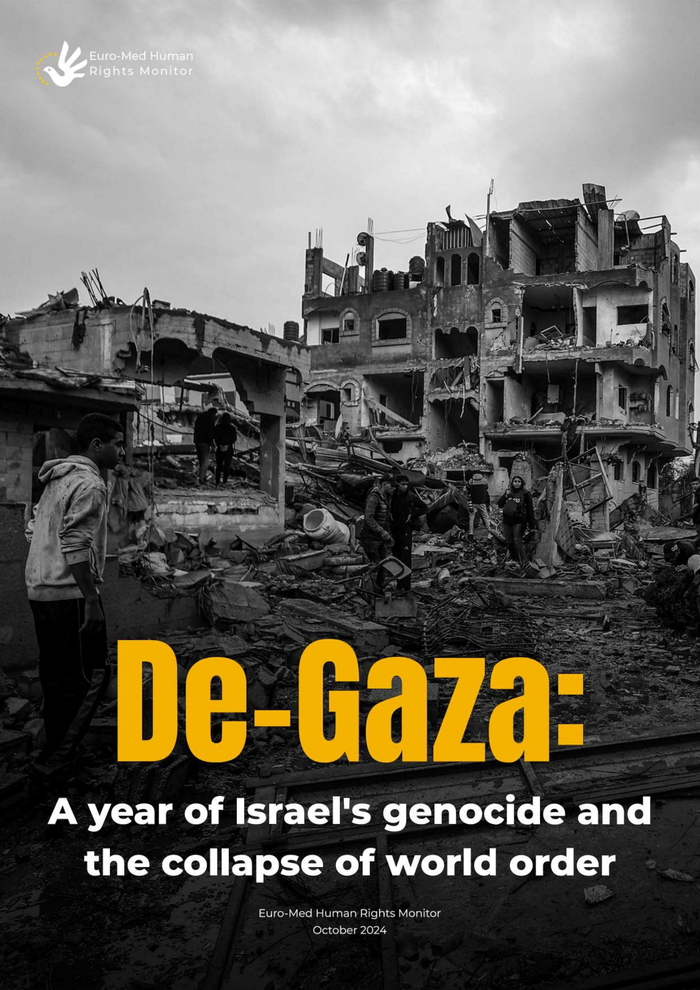
    Image – De Gaza: reliefweb.int
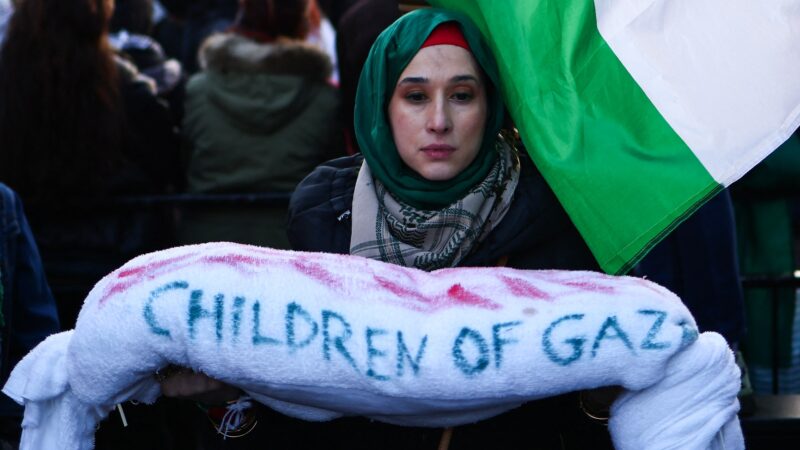
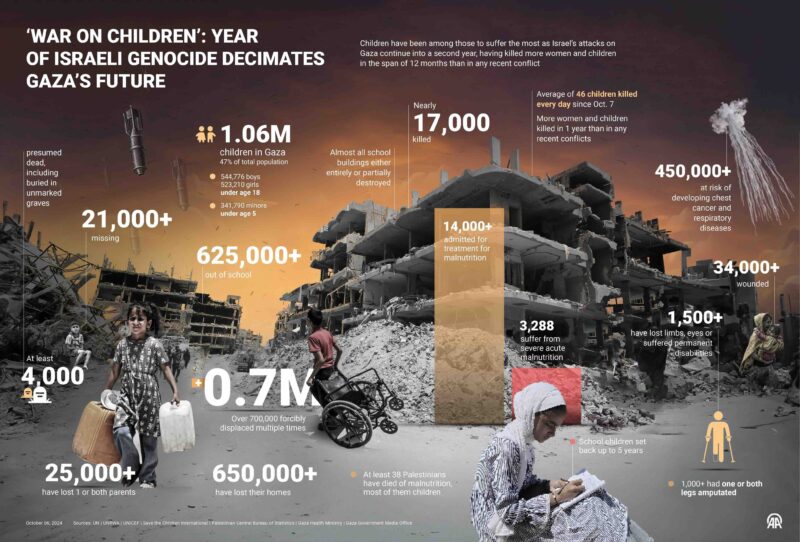
    Children of Gaza Image Credit: Middle East Eye – How Israel’s Genocide in Gaza sparked a protest movement in the UK.
    Wailing Wall and Al Aqsa Mosque: Tourist Israel
    Red Heifer Sacrifice Ritual Image: thetorah.com

  • The beginning of the end of Israel

    The beginning of the end of Israel

    One year later, the flames of genocide still burn, but after decades of persecution and bloodshed, we may well be seeing the beginning of the end of the settler-colonial project in Palestine.

    We have reached a grim milestone. A full year of gruesome Israeli mass murder. A year of epic Palestinian suffering.

    A year of direct Western complicity. A year of continuous media incitement. A year of shameful inaction by international institutions.

    For twelve months, we have seen relentless persecution of human rights defenders across the West, solely for peacefully opposing genocide and apartheid.

    And fifty-two weeks of a horrified global public helplessly witnessing on their screens the first live-streamed genocide in history.

    The carnage of this past year is unprecedented. The destruction is almost unimaginable.

    Still, this genocide will end. The Palestinian people and their besieged nation will undoubtedly emerge from the ashes of genocide, recover, and reassert their inalienable rights in their ancient homeland.

    But international institutions and the global human rights system will be left bruised and battered.

    The political capital expended by the US empire and the broader West in defence of the slaughter, as well as their global standing and reputation, will never be recouped.

    And, almost certainly, this year of cruelty and lawlessness will mark the beginning of the end for the Zionist project in Palestine and, therefore, of the state of Israel as we know it.

    A formula for disaster

    Of course, neither the genocide nor the current wave of slaughter of Palestinians started in October of 2023. The systematic massacre, purging, and erasure of the indigenous Palestinian people began in earnest with the Nakba of 1947-48, and it has not ceased since that bloody beginning.

    And the genocidal threat was always obvious. Any thinking person could see, even prior to the establishment of the state of Israel, that the Zionist project of the West was a formula for disaster.

    First, at the very historic moment when colonialism was being dismantled around the world, and global human rights rules were being adopted at the United Nations, the West carved out an exception for Palestine.

    It was at this moment that Zionist forces chose to attack Palestine, murder and terrorize its population, chase many survivors away in terror, and begin the erasure of the indigenous people, and their replacement with a European settler colony founded by foreign invaders and radicalized by a deeply racist and fundamentally violent political ideology.

    The colony was to be sustained at the barrel of a gun by waging constant war both against the Indigenous people and against the neighbouring states.

    A colonial education system and a media ecosystem were built to dehumanize the Indigenous and neighbouring peoples and to instil a supremacist ideology into the settler population.

    The settler state, its economy, and its society were thoroughly militarized, enlisting all adults in the project of state violence, arming it to the teeth, including with nuclear, chemical, and biological weapons, and even integrating the field-testing of new weapons on captive civilian populations as part of the business model of the colony’s arms industry.

    They ring-fenced the entire project with western-guaranteed impunity, carving out an exception to the application of all rules of international law.

    And they built an all-encompassing machinery of repression, including laws, policies, practices, and technologies to ensure the constant subjugation, dehumanization, and persecution of the indigenous Palestinian people.

    The toxic cocktail was complete.

    Maintaining Western support

    Of course, an artificially imposed European colony in the heart of the Middle East, which is necessarily maintained by force, could never become self-sufficient. Rather, it has always, and will always, rely on massive support from Western states, especially the US. Maintaining that vital support was to become a key goal of the Israeli state and its transnational network of proxy groups.

    As such, in the intervening years, the Israeli regime adopted a strategy of incremental genocide, with simmering persecution and dispossession, punctuated by periodic full-blown massacres and marked by a continuous march of expansion.

    It was a pace, tried and true over 75 years, with which the regime’s Western sponsors were comfortable, allowing them to continue unbroken the flow of military, economic, and diplomatic support without significant domestic pressure at home.

    And it allowed like-minded media corporations, decade after decade, to continuously disseminate pro-Israel propaganda as a smokescreen to obscure the horrific realities being perpetrated against the indigenous people on the ground.

    Expedited genocide

    But when Israel’s current ultra-Zionist government took power last year, it immediately abandoned the strategy of incremental genocide.

    In its place, it moved to expedited genocide (beginning with waves of ethnic cleansing in occupied Jerusalem and the West Bank), betting that its Western sponsors (and their captured politicians and complicit media) would not dare (or care) to take the steps necessary to stop it, even when it launched wholesale civilian slaughter in Gaza.

    They were right.

    So much so that Western countries like the U.S., UK, Germany, and others quickly moved beyond mere acquiescence for the genocide and into direct complicity and participation in it.

    As a result, one year later, we are witnessing unprecedented bloodshed in the region, and the broader world is in deep trouble.

    Axis of Genocide

    Thus, Israel is not alone in its march of terror. It is accompanied, in lockstep, by what has been called the Axis of Genocide.

    Four members of that Axis, Israel, the U.S., the UK, and France, are nuclear-armed states. A fifth, Germany, is a serial genocide perpetrator and a major European economic power. Three (the U.S., UK, and France) have veto power in the UN Security Council.

    Adding to the danger, all of its members share a common ideological grounding in militarism, colonialism, white supremacy, and political Zionism. Most have the stain of genocide on their historical records.

    All have political systems that are deeply compromised and corrupted by the influence of the weapons industry, the billionaire class, and the Israeli lobby. And all are marked by profound societal levels of Islamophobia, anti-Arab racism, and anti-Palestinian bigotry.

    And, in defence of a single, small, oppressive, and violent settler colony in the Middle East, all have quickly abandoned the entire edifice of international law and international institutions built up since the end of the Second World War, and which they once claimed as part of their brand.

    As recent history has shown, these biases, linkages, and incentives have become a formula not only for genocide in Palestine but for catastrophe on a global scale.

    Breaking bones and records

    And, indeed, the cost of Western-secured Israeli impunity has been shockingly high.

    Image Credit: @anadoluagency

    In one year, Israel has set new records for the pace of civilian killing, the rate of destruction of civilian infrastructure, the killing of children, the killing of medical personnel, the killing of journalists, the killing of humanitarian workers, and the killing of UN staff.

    The depravity of Israel’s actions has shocked the world. Collective punishment, a chain of massacres, summary executions, torture camps, systematic sexual violence, starvation tactics, imposed disease, the direct targeting of small children with sniper rifles, and the blocking of humanitarian aid to facilitate starvation.

    We have all seen the images. The methodic eradication of whole neighbourhoods, schools, hospitals, universities, food stores, shelters, refugee camps, agricultural fields, and even cemeteries.

    The mangled bodies of Palestinians, the fear-filled eyes of the children, the terror as bombs fall on bread lines. The cold-blooded murder of innocents, of defenceless children like Hind Rajab, trapped in the family car, terrified for hours and then slaughtered by Israeli soldiers, and of thousands of others like her.

    And we have seen the cold, cruel laughter of the Israeli soldiers, the deranged chants of violent Israeli settlers, the genocidal pledges of Israeli political and military leaders.

    The promise of the Prime Minister to wipe out the Palestinians “like Amalek”, a biblical verse that calls for Israel to “utterly destroy all that they have and spare them not; but slay both man and woman, infant and suckling, ox and sheep, camel and ass.”

    The calls of Israeli leaders to perpetrate another Nakba, to raze Gaza to the ground, to make no distinction between civilians and fighters. To “bury them.”

    And, by now, we have all memorized the familiar barbarous pattern of Israel’s crimes: target civilians and civilian infrastructure, then target the rescue workers who come to help, then celebrate in Hebrew but switch to English to claim that they were all terrorists, human shields, or collateral damage, then reload and do it again.

    The accumulated criminal guilt of the Israeli perpetrators and their complicit Western partners is staggering. But so too is the historic moral lapse of the wider world, both those who have defended the genocide and those who have remained silent as it has been carried out with their tax dollars, with their government’s political support, or in their name.

    Today, everyone knows. No one can say they were not warned before the catastrophe. And no one can say they did not know of the horrors that followed, broadcast in real-time to all of us.

    Seventy-six blood-soaked years into this colonial enterprise, it is clear to all who will see that what the West has constructed in the heart of the Middle East is not an enlightened project, but rather a rampaging Frankenstein monster that threatens to drag the indigenous Palestinian people, the region, and the world into a conflagration from which it may not recover for generations.

    The darkness spreads

    How long the rampage can be sustained is an open question. But there will undoubtedly be much more darkness before the dawn.

    Israel, drunk with Western-backed impunity, even as it continues its genocide in Palestine, is now spreading its attacks across the region and leaving mountains of bodies and rivers of blood in its wake.

    In a matter of weeks, it has waged terror attacks with booby-trapped communication devices in Lebanon, assassinated leaders across the region, launched military attacks on Gaza, the West Bank, Lebanon, Syria, Iraq, Iran, and Yemen, has invaded Lebanese territory, and is now seeking to draw its U.S. sponsor into an all-out regional war of conquest and domination.

    For their part, collaborationist governments in the West show little appetite for reining in the rampaging monster that they themselves created in the Middle East, and to which they continue to provide endless flows of arms, money, intelligence, diplomatic cover, legal exceptionalism, and a heretofore impenetrable cocoon of impunity.

    When the reckoning comes, as it must, the accountability of both Israel and its Western accomplices must be secured, lest these horrors be repeated in an endless cycle of atrocity, impunity, and recidivism.

    Israeli impunity is coming to an end

    But there are flickering lights in the darkness, and they are growing.

    The just cause of Palestine and the steadfastness of her people have inspired millions around the world to stand up and fight back. The civilized world is now more mobilized than it has been in generations to oppose the horrific evil unleashed on the world by Israel and its Western sponsors.

    More and more people are escaping from the distorting matrix of Western corporate media and turning to independent media and first-hand sources on social media, delivering a powerful blow to the controlled, pro-Israel narrative of official Western institutions.

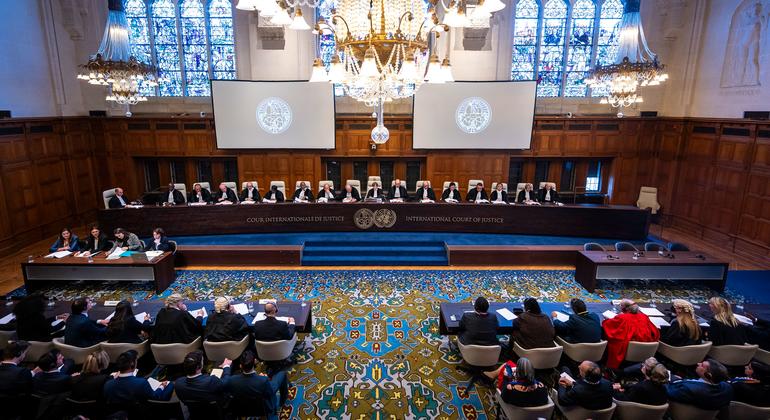
    Today, Israel is on trial for genocide at the World Court, and its leaders are the subject of arrest warrant requests at the International Criminal Court for crimes against humanity, including extermination.

    The ICJ has already issued a series of provisional anti-genocide measures against Israel, and a growing list of countries is lining up behind Palestine and South Africa in the genocide case against Israel.

    A dedicated international tribunal is under discussion at the UN. Cases have already been brought in national courts around the world, and more are certain to follow. Plans are also underway to mandate an international anti-apartheid body to focus on Israel.

    In the meantime, the United Nations, its independent human rights mechanisms, and the leading international, Palestinian, and Israeli human rights organizations have all collected massive quantities of evidence, have strongly condemned Israel for its shocking criminality, and are working to ensure accountability.

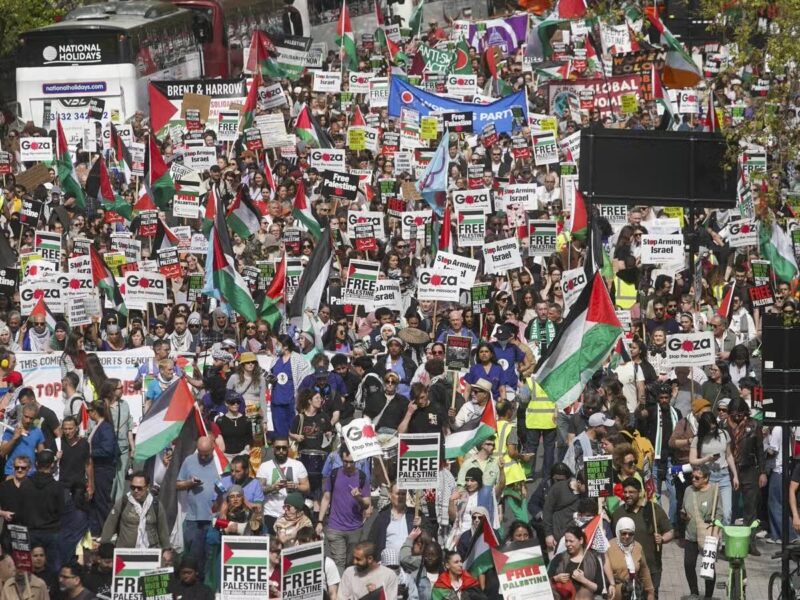
    Mass demonstrations against Israel are not only daily occurrences in capitals around the globe, but they are actually growing, undeterred by the often-brutal efforts (especially of Western governments) to suppress them.

    The ICJ has declared the obligation of all states to cut off all recognition, aid, investment, trade, weapons, and support of any kind with Israel’s colonial project in the occupied Palestinian territory.

    Israel is increasingly isolated on the global stage. And the global movement for boycott, divestment and sanctions is growing with every passing day.

    In other words, the age of Israeli impunity is coming to an end, despite the best efforts of the U.S., the UK, Germany, and other complicit Western states.

    And we may well be seeing, after decades of endless persecution and bloodshed, the beginning of the end of the European settler-colonial project in Palestine.

    One year later, the flames of genocide still burn. At this tragic moment, it is hard to see through the smoke that obscures the path forward. But white supremacist settler colonialism was defeated in South Africa, Rhodesia, Namibia, and Algeria. It will be defeated in Israel too. Through struggle and solidarity, with law and politics, in resistance and resilience, this will end.


    Feature Image Credit: Palestinian Return Center

    This article was published earlier in mondoweiss.net

  • Between the Devil & the Deep Blue Sea: Tackling India’s Internal Security Challenges

    Between the Devil & the Deep Blue Sea: Tackling India’s Internal Security Challenges

    Our ability to develop and prosper, both as a society and a nation, are wholly dependent on the smooth functioning of our democratic institutions and their ability to faithfully uphold the tenets laid down in our Constitution.

    Our progress since Independence has not been without bumps along the road. Not only has the detritus of Partition haunted us, but we have also had to confront antagonistic neighbours intent on grabbing territory, creating divisions and curtailing our economic development and influence around the world. They have tried to do this by resorting to conventional operations, grey zone warfare, including using terrorist groups. In addition, we’ve had to overcome our internal troubles as well, what V.S. Naipaul referred to as a “million mutinies”, rebellions and insurgencies, for the most part, along our border regions. Undertaken by our disaffected citizens, in most cases with external support, aspiring to establish their own independent homelands because of ideological or religious motivations or out of a sense of frustration at being treated as second-class citizens within their own country.

    The response of the State and Central Governments to these internal challenges has invariably been to initially attempt some sort of half-hearted political accommodation or initiative aimed at preserving the status quo and giving themselves political advantage. Once this fails, as it is bound to, the Central Armed Police Forces or the Army are brought in, depending on the levels of violence, to neutralise the insurgency and regain political and administrative control. This can take anywhere from a decade to three or more. The Mizoram Insurgency, for example, commenced in 1966 and was successfully terminated with the agreement being signed between opposing sides in 1986, while the Punjab Insurgency lasted from the mid-80s to the mid-90s, though there are efforts to restart it.

    Unfettered exploitation of natural resources and minerals from those resource-rich regions by large corporations and their political acolytes has led to the displacement of tribals from their homelands and added to their economic woes. Given that the political, security and administrative establishments are wholly compromised and corrupt, the tribals have alleged that they have had little choice but to take up arms in an effort to break the nexus and get their rightful dues.

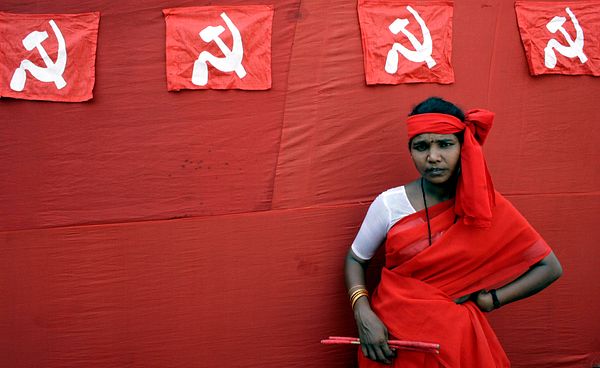
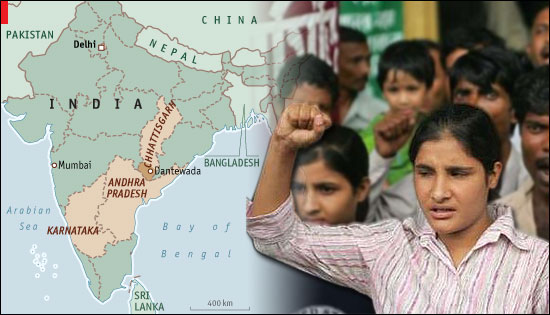
    We’ve had similar problems in our North-eastern States of Assam, Nagaland, Manipur and Tripura, which continue to persist in fits and starts, aided, and abetted by China. We have also faced a long-running Maoist rebellion in our hinterland, organised and conducted by tribals from those regions. Unfettered exploitation of natural resources and minerals from those resource-rich regions by large corporations and their political acolytes has led to the displacement of tribals from their homelands and added to their economic woes. Given that the political, security and administrative establishments are wholly compromised and corrupt, the tribals have alleged that they have had little choice but to take up arms in an effort to break the nexus and get their rightful dues.

    The issue we seem to have failed to comprehend is the transformation that has taken place in understanding what constitutes the basic elements of national security.

    Fortunately, good sense prevailed within the political and security establishment, and the military, other than limited support in casualty evacuation and surveillance by the Air Force was completely kept out of ant-Maoist operations. The military’s job is not to protect marauding corporates but our sovereignty from the depredations of inimical elements, both internal and external. The dynamics of the Military’s involvement in countering the Maoist insurgency would have undoubtedly had serious repercussions within the military’s functioning, and over a period of time, would have adversely impacted our existing governance structures, much in the manner that some of our neighbours have been so affected. The issue we seem to have failed to comprehend is the transformation that has taken place in understanding what constitutes the basic elements of national security. Until the end of the Cold War and before the advent of globalisation, national security had purely military and economic connotations with the stress on territorial control. This was achieved by controlling the flow of information, goods and services and the movement of people through various means, including physical barriers. The advent of the Info-Tech revolution and the consequent move towards globalisation made it increasingly difficult for governments to control access to and the free flow of information, ideas, digital services, and finances.

    As Professors, Wilson and Donan, note in their book, ‘Border Identities: Nation and State at the International Frontiers’ (UK, Cambridge: University Press, 1998), “International borders are becoming so porous that they no longer fulfil their historical role as barriers to the movement of goods, ideas and people and as markers of the extent of the power of the state.”

    Perforce, governments the world over have been forced into the realisation, for many at great cost, that it has become impossible to lock up people or ideas and isolate them from the global discourse. Thus, in the context of the security of the state, more than just ensuring territorial integrity, it is the security of the people through sustainable human development that is non-negotiable. We are today at a stage where, while traditional physical threats continue to pose serious challenges, especially from China and Pakistan, it is the non-military threats that are more dominant. These arise, on one side, from the host of cross-border insurgencies that afflict us because of ethnic, ideological, economic or religious conflicts, and on the other side, because of policies that emanate from politics of exclusion and economic exploitation. In both cases endemic corruption due to the nexus between the political-bureaucracy-security establishment and criminal elements involved in the smuggling of drugs and weapons and human trafficking remains the common thread. As a result, we not only face the threat of violence but also have to confront the increasing spread of religious radicalization.

    For example, in the Northeast, as my colleagues, Lt Gen J S Bajwa (Retd), Maj Gen N G George (Retd) and I, have pointed out in our paper, ‘Makeover of Rainbow Country: Border Security and connecting the Northeast’ (Manekshaw Paper No 62, Centre for Land Warfare Studies, 2016), “we are faced with a trans-border insurgency affecting our states that has metamorphosed into a serious law and order issue due to trans-national criminal syndicates having established linkages with armed gangs that are opposed to the existing political status-quo. This has also been accentuated with these groups being used by China and Pakistan for meeting their own nefarious designs…. Criminal syndicates have extended their reach to include complete control and dominance over all smuggling activities, be it of small arms, psychotropic drugs, livestock, or human trafficking. This economic clout has enabled them to subvert elements within the political parties, the bureaucracy, and the security establishment….”. Thus, it appears that the defining characteristic of on-going insurgencies is that they are nothing more than “businesses”, using all means at their disposal to make a profit. Thus, we see that has been that they have never crossed the threshold of violence or mass mobilisation that would lead to the next logical phase; from insurgency to civil war, where insurgent forces take on the military in conventional operations. These regions are further adversely impacted by poor governance, ineffective policing, agonisingly slow judicial processes, and unchecked criminal activity. The ability of the local populace to oppose the injustices heaped on them has been very subtly neutralised using the Security Forces and Police with wide ranging powers, including in some regions the use of AFSPA, to maintain the status quo. Our ability to develop and prosper, both as a society and a nation, are wholly dependent on the smooth functioning of our democratic institutions and their ability to faithfully uphold the tenets laid down in our Constitution. This is not feasible without sustained focus on providing high quality of universal education, emphasis on social justice and inclusion and an unvarying commitment to ensuring accountability and the rule of law. Focus on infrastructure development in border areas as well as ensuring free and fair elections, greater accountability and breaking the existing nexus between criminal groups and the local political and administrative establishment and unethical corporate houses. Clearly, all stakeholders have to accept that resorting to the use of force in order to ensure a stable security environment is an unviable option with very limited positives.

    The ability of the local populace to oppose the injustices heaped on them has been very subtly neutralised using the Security Forces and Police with wide ranging powers, including in some regions the use of AFSPA, to maintain the status quo.

    Finally, a word with regard to countering terrorist actions such as the one that targeted Mumbai on 26 November 2008. Much has changed since then with our major cites becoming far less vulnerable thanks to a quantum enhancement of the coastal surveillance infrastructure as well as better coordination, integration and demarcation of responsibilities amongst the stakeholders such as the Indian Navy, Coast Guard, local police and the intelligence agencies. In addition, the establishment of integrated National Security Guards (NSG) hubs in Mumbai and other metropolises ensures much speedier response as well as better coordination with local police and their Special Weapons and Tactics (SWAT) Teams. Efforts have also been directed to enhancing training of personnel and upgrading technical capabilities.

    Unfortunately, politics has played a major spoilsport and two important initiatives planned in the aftermath of the Mumbai attack, the establishment of the National Counter Terrorism Centre (NCTC) and its intelligence data exchange architecture (NATGRID) have not fully fructified. There can be little doubt that these initiatives, if pushed through as visualised, would have been of immense utility in ensuring our ability to prevent and respond to terror threats in a timely and effective manner. To conclude, it would be fair to suggest that we face an extremely difficult and challenging internal security environment that is deeply entwined in, and impacted by, our external threat perceptions. Of necessity, we must adopt robust policies, with the requisite capabilities, to be able to respond appropriately so as to be perceived as a ‘hard state’ by our neighbours. This would give us the necessary space andenvironment to push through policies focussing on sustainable human development, which is the only feasible option to ameliorate our internal security challenges.


    Feature Image Credit: the diplomat

  • The Impact of Domestic Politics on Foreign Policy: The Colombian Case Study

    The Impact of Domestic Politics on Foreign Policy: The Colombian Case Study

    Introduction

    Colombia is amongst the world’s highly polarised states and has endured conflict for decades. The country witnessed around 50 years of armed struggle between militant groups, the government, and the drug cartels and has seen various forms of human rights violations in these years. The country saw more than 220,000 people killed in the conflict, roughly 25000 kidnapped or disappeared and more than 5 million displaced citizens (García-Perdomo, Harlow & Brown, 2022). However, after much pressure from the people and the government, the guerrilla factions and the ruling party convened to sign a peace agreement that essentially brought the active warring factions to a pause. On November 24, 2016, the Revolutionary Armed Forces of Colombia – People’s Army, or FARC, signed a landmark peace agreement, which also saw the militants present a public apology to the people of Colombia for their violent actions (Georgi, 2022).

    Since the end of the Second World War, Colombia has seen various governments adopt different stances and approaches to their foreign policies. Multiple domestic actors – state and non-state- have strongly influenced the country’s diplomacy. For example, between 1998 – 2002, Colombia moved from the narrative of remaining a failed state and developed ties with the US (Monroy & Sanchez, 2017). The Republic of Colombia has had 17 presidents since 1946, most of whom belong to Right-Wing conservative parties. The current President, Gustavo Francisco Petro Urrego, is the first President from a liberal and leftist political party (Tickner, 2022, 8:10) in decades. The country has never had a progressive-left leader in its political history, and his government has been making waves on all fronts concerning ties with neighbouring countries, attempting to resolve the internal conflict, and dealing with economic disparities within the population.

    A state’s foreign policy primarily focuses on interactions with other states and international actors and is essential to its political agenda. Given the interdependence of these two domains, domestic politics play a vital role in determining a state’s foreign policy. Foreign policy refers to a state’s approach and actions internationally. In contrast, domestic politics refers to the political processes, institutions, and actors within a state that affect the country’s policies. This essay uses Colombia as a case study to investigate how the country’s domestic politics and conflicts have affected its foreign policy. The timeline under revision is from the end of the Second World War to the present.

    This paper will look at the following factors as critical points of discussion. Determining the success of a policy is done by evaluating its efficiency and the evident improvement of situations. The paper will examine 1. How has the evolution of state leadership impacted Colombia’s foreign policy? 2. What role did the insurgents and drug lords play in this scenario? The state leadership (Hey, 1997), the insurgents, and the drug lords are critical players in Colombia’s political landscape and the evolution of its foreign policy. King, Keohane and Verba (1994, p.76) define causality as “a theoretical concept independent of the data used to learn about it”. It is difficult to draw causal inferences in a limited paper. Still, by examining the players mentioned earlier, this paper hopes to attract inferences between domestic politics and the direction of the country’s foreign policy.

    State Leadership and Foreign Policy

    There is a crisp scent of dependency theory when exploring literature about the foreign policies of Latin American countries (Hey, 1997). Similarly, Colombia – a state that witnessed long years of violent conflicts, deaths, kidnappings and illegal drug production continued on the same path as the rest of the countries in the continent. Significant economic disparities and multiple right-wing presidencies saw the inequality between people grow larger and larger (Hey, 1997). These were all critical factors in shaping how the country’s foreign policy presented itself to the world. After the end of the Second World War, Colombia maintained a low profile with respect to its foreign policy (Drekonja-Kornat, 1983). However, Colombia did have a traditional foreign policy – as in a Ministry to oversee relations and maintain ties with neighbouring countries, especially since border disagreements were high. Colombia had closer ties with the US than its immediate neighbouring states. At the same time, there appeared to be a consensus on the state leadership directing policies to suit principles of capitalistic democracy, free trade and markets; Colombia’s external affairs seemed to feed off of international support, especially from the United States of America. The US, in its quest to spread its capitalist democracy, assisted the various presidencies with aid and other means to combat guerrilla movements and insurgent activities. In turn, Colombia helped the US in the Korean War and stood by the US during the Cold War years, too. Drekonja-Kornat (1983) says Colombia was the only Latin American Country involved in the Korean conflict. During Turbay’s presidency, the US-Colombia ties grew closer, and US assistance helped establish his regime further (Hey, 1997). He held office from 1978 – 1982.

    The state’s leadership, in return, adopted and often tailored policies to suit strategic and international partners, particularly the US. Examples of presidencies adopting such policies include supporting the US stance on drugs (Hey, 1997), committing to recognise threats and terrorist activities as adjudged by the US and the EU, etc. (United States Department of State, 2021). Colombia’s constant internal security dilemma accentuates the existence of a dependency theory of Foreign Policy.

    Impact of the Internal Conflict on Colombia’s Foreign Policy

    The insurgents, guerrilla groups, and drug cartels played a role in shaping the foreign policy of Colombia. The entry of drugs into neighbouring countries, particularly the US, brought an international player into Colombia’s domestic issues (Gomez-Suarez & Newman, 2013). The United States desperately tried to solve the drug menace, which led to fighting the drug cartels and networks. America aided and supported the governments in curbing the cartel’s activities and eliminating insurgents who pushed for a more communist ideology, primarily in the Cold War period. Colombia’s alignment with the US on account of the Cold War influenced its domestic politics, which had a more significant say in shaping the country’s foreign policy. The United States of America is Colombia’s largest aid donor; listed below are some of the aid packages received by Colombia:

    1. The US has provided more than $1 billion in direct and indirect support for implementing peace in Colombia since 2016. (United States Department of State, 2021).
    2. The US provided roughly $700 million to assist Colombia with the Venezuelan migrant crisis and host approximately 1.8 million refugees in Colombia. (United States Department of State, 2021).

    Viewing the case from a realist perspective, much of Colombia’s foreign affairs has been dictated by the ebbs and flow of the insurgency. With Colombia’s development and domestic affairs requiring external support, it lacked the necessary flexibility to implement social development schemes as dependency on external aid was high (Monroy & Sanchez, 2017). Colombia became an instrument of the American War on Drugs, almost a pawn to the American foreign policy in Latin America (Tickner, 2011).

    While examining the history of how the state’s leadership handled its foreign policy directives and its domestic issues, there is space for some leniency. Many attempts to broker a peace agreement between the insurgents and the state were met with strong reluctance from the general public and a lack of participation from insurgent groups. Furthermore, corruption in various levels of government offices withheld any progress that could have been made. One could interpret the constant repetition of right-wing presidencies as people’s reluctance to move away from conservative rules, much to the dismay of insurgents, ultimately rendered the public most affected in the struggle for domestic power in the country.

    The Way Forward

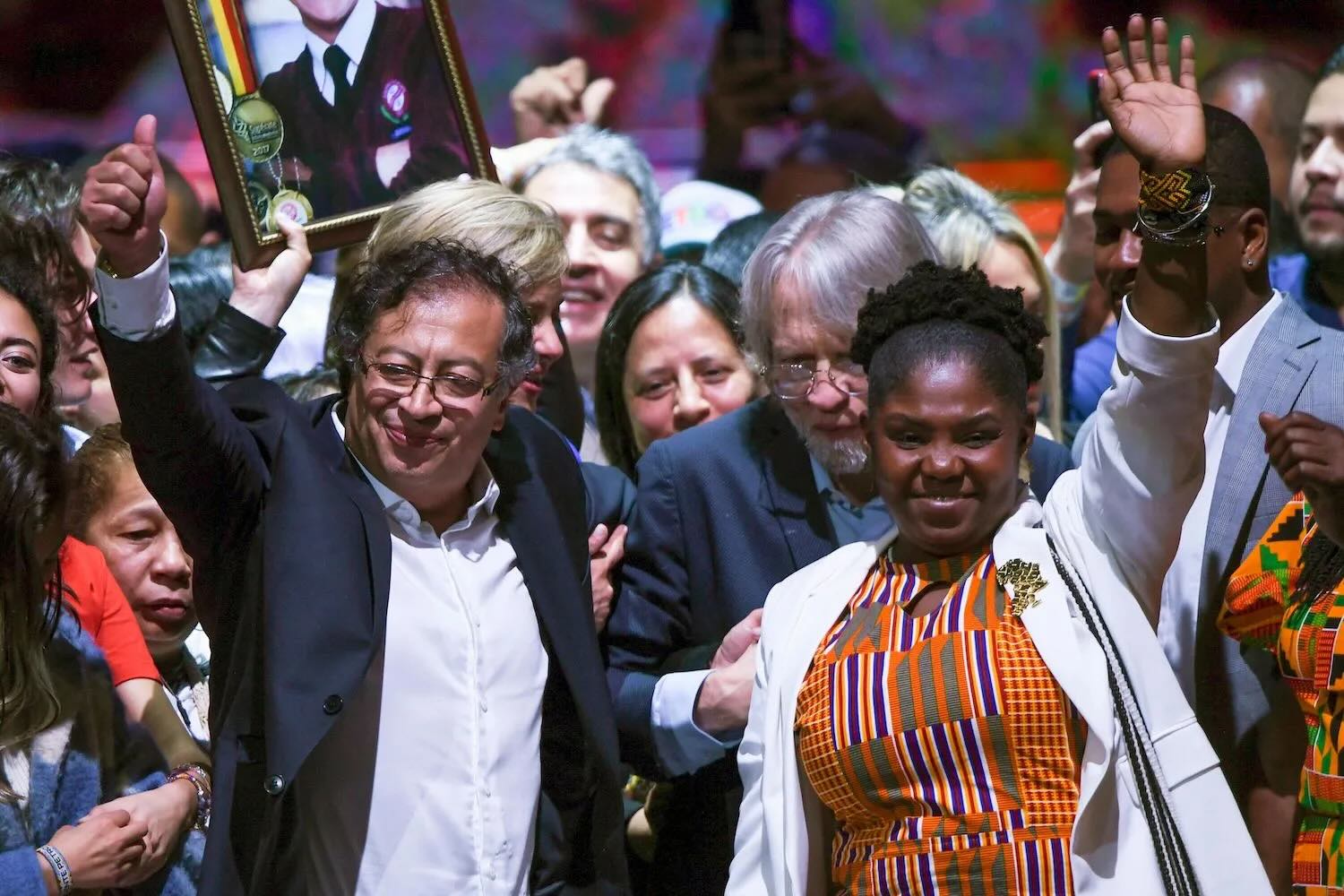
    Gustavo Petro became the first leftist President of Colombia on June 19, 2022, in decades (Freeman, 2023). His Presidential victory also marked the first-ever Afro-Colombian, Francia Marquez, to take office as Vice President. Unlike his liberal predecessors, the change in power was smooth from his rightist counterparts. As a leftist, there were questions about his merit and reputation as the country’s leftists were primarily likened to insurgents and militants. While the 2016 Peace Accords dismantled and disarmed most militants from the Fuerzas Armadas Revolucionarias de Colombia or FARC, the associations took longer to change.

    President Petro, however, is having quite the start to office. He is leading a policy of ‘Total Peace’, an effort to include all factions and players in the internal conflict and arrive at an end to the insurgency; his presidency plans to shift Colombia’s economic dependency on trade from the US, fossil fuels and the illicit drug trade to a more sustainable approach (Freeman, 2023), that would be similar to the Green Theory. One can interpret his actions as playing on both sides of the solid and historical US-Colombia ties (Santa Eulalia, 2022). Owing to the associations with his left-leaning tendencies, his moves are somewhat open to more scrutiny by the public. After all, no incumbent President has been re-elected to office in the last 15 elections (Freeman, 2023).

    A significant part behind his election to office has been the general public’s displeasure at rising economic inequalities between people, the inability of the previous government to provide and implement social welfare schemes and the financial toll caused by inactivity during the Covid-19 pandemic. While Drekonja-Konrat (1986) argues that most Latin-American countries can shape their foreign policies to the extent that it doesn’t hurt US interests, Petro is challenging the very notion of keeping his voters happy (Santa Eulalia, 2022). The truth in the details is that they are pretty co-dependent; Colombia needs the support of the US in tackling drug issues and the matter of the guerrilla militant groups, while the US views Colombia as a key strategic partner in the region. Accordingly, Petro has to carefully cater to his vote-bank’s anti-Americanism and yet maintain cordial ties with the US. It is a fragile line to tread, but the room to navigate and keep the US and the public happy is also quite small. Political revisionism is prevalent, given Petro is trying to appease both sides of support, constantly showing evident links as to how a country’s domestic politics can affect its foreign policy.

    References

    Drekonja-Kornat., G. (1983). Colombia: Learning the Foreign Policy Process, Journal of Inter-American Studies and World Affairs, 25(2). Pp- 229-250.

    Drekonja-Kornat., G. (1986). The rise of Latin America’s foreign policy: Between hegemony and autonomy. Latin American Research Review, 21(1), 239-259.

    Freeman, W. (February 2023). Colombia tries a transformative Left Turn, Council on Foreign Relations. Retrieved from: https://www.cfr.org/article/colombia-tries-transformative-left-turn

    García-Perdomo, V.,  Harlow, S. & Brown, D. K., (2022). Framing the Colombian Peace Process: Between Peace and War Journalism, Journalism Practice.

    Georgie, R. (2022). Peace that antagonises: Reading Colombia’s peace process as a hegemonic crisis, Security Dialogue, pp – 1-19.

    Gomez-Suarez, A. & Newman, J., (2013). Safeguarding Political Guarantees in the Colombian Peace Process: have Santos and FARC learnt the lessons from the past?, Third World Quarterly, 34(5), pp – 819-837.

    Hey, J. A. K. (1997). Three Building Blocks of a Theory of Latin American Foreign Policy, Third World Quarterly, 18(4), pp -631-658.

    King, G., Keohane, R.O, & Verba, S. (1994). Designing Social Inquiry: Scientific Inference in Qualitative Research.Princeton, NJ, Princeton University Press.

    Monroy, M. C. & Sánchez, F. (2017) Foreign Policy Analysis and the Making of Plan Colombia, Global Society, 31(2), pp – 245-271.

    Santaeulilah, I. (October 2022). Petro Playing Both Sides in Colombia-US Relations, El Pais. Retrieved from: https://english.elpais.com/international/2022-10-26/petro-playing-both-sides-in-colombia-us-relations.html

    Feature Image Credit: Foreign Policy


  • Migrant or native, we are all out of Africa

    Migrant or native, we are all out of Africa

    No human group can make a concerted claim as regards nativism and try to make an ‘other’ an immigrant, foreigner or outsider

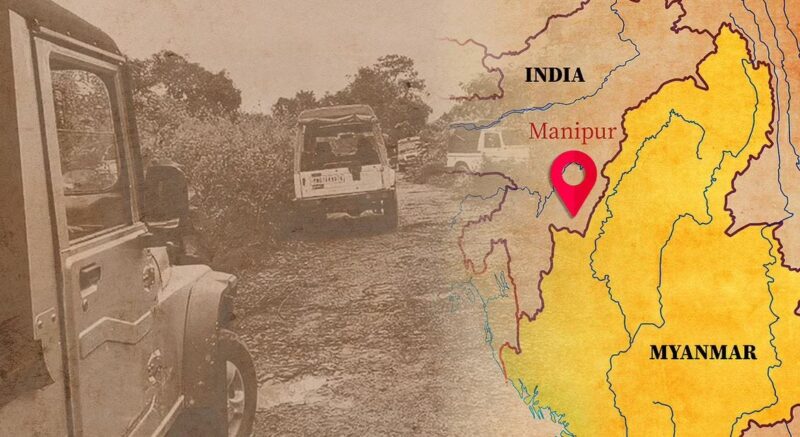
    Why, and how, does Mizoram get involved in the ongoing ethnic (and religious) strife that has been on for over three months in Manipur? The Kukis and Zomis in Manipur are ethnically related to the Mizos, the dominant community in Mizoram. The Mizos, in turn, are ethnically related to the Chins in Myanmar and the Kuki-Chins in Bangladesh.

    Together they all belong to the greater Zo community, speak a similar language, have common ancestry and parallels as regards their cultures and traditions. These latter groups are predominantly Christian and hence have a strong bond with the Mizos in Mizoram, a ‘Christian state’, like Nagaland. The Chief Minister of Mizoram, Zoramthanga, is a Mizo.

    In Manipur, the Meiteis, a Hindu community, are the majority and overwhelmingly numerically dominant. But it is interesting that the Meiteis are found in small numbers in Mizoram too, and many have started fleeing from the state. A similar fleeing of the Kukis from Manipur to Mizoram has happened. Also, there are the Naga groups in different pockets of Manipur. The neighbouring state of Nagaland has 17 officially recognised Naga groups.

    It is exasperating, and quite disquieting, to note the presence of ethnic groups that are dominant in one state, being minorities in a neighbouring state. Such existence has given rise to very foreboding situations and added to the already prevailing ethnic conflicts in India’s North-East.

    It is not just that the Indian states in the region share common borders. There are international borders too in the area, as Bangladesh and Myanmar adjoin the Indian states. Different communities/tribes/groups of people have lived in the regions that are the focus of our discussion for aeons. Such inter-state and international habitations of ethnic groups across states/countries are come across elsewhere in the world too.

    One of the most interesting and classic instances of a single ethnic group, who regard themselves as a single nation, and inhabit more than one country, is that of the Bedouin (found in Syria, Algeria, Morocco, Libya, Egypt, Israel, and so on). Such situations come about because free-ranging groups of people, or partially or fully settled groups of people, got divided into different states or countries because of the coming in of boundaries and division of territories.

    What would have been the scenario if these borders between states and countries had not come up? We would undoubtedly have diverse groups living in enclaves, either quite separated or adjoining each other either as small groups or larger ones, but sans the borders dividing them; the question of majority/minority or dominance/subservience would not, probably, have had the same kind of meaning or effect as has happened due to the drawing of borders between states and countries.

    Borders that formed between enclaves of diverse inhabitants and made groups of people dominant and/or majority groups have resulted in hegemony, where the traditions, customs, practices, and mores of that group have gained significance. These traditions and customs prevail extensively when compared to the practices of the smaller groups in that same area. Invariably, the dominant group makes claims to being the ‘original inhabitants’ and the ‘natives’ of the state/country concerned.

    Quite often co-habitants develop similar institutions and social and cultural practices despite the differences and diversity between them, and this is quite apparent in multicultural societies. Amitav Ghosh argues that “it is … the vitality of the place itself that creates commonalities between the people who dwell in it, no matter what their origin” (The Nutmeg’s Curse, page 221). But sadly, it is the differences that often come to the fore, and similarities remain latent.

    Here, it is pertinent for us to dwell on the facets of claims that groups make as regards being the autochthons and natives of a given state/country. By extension, the non-dominant groups are labelled ‘immigrants’, ‘foreigners’, and ‘outsiders’. Prior to ‘Out of Africa’, and the spread of Homo sapiens to the different parts of the world, somewhere between 80,000 and 50,000 years ago, there were no fully evolved human beings in any part of the world. Subsequent to a group of them leaving Africa, different parts of the Earth got populated gradually.

    All the physiognomic and phenotypical differences that we find among humans today, including skin colour, hair texture, and colour of the eyes came about as a result of where people settled.

    To put it tersely, no human group can make a concerted claim as regards nativism and try to make an ‘other’ an immigrant, foreigner or outsider. Ghosh endorses this when he says “Except for one small part of Africa, nowhere on Earth can people be said to be truly native, in the sense of having come into being on that soil” (The Nutmeg’s Curse, page 221).


    This article was published earlier in Deccan Herald.

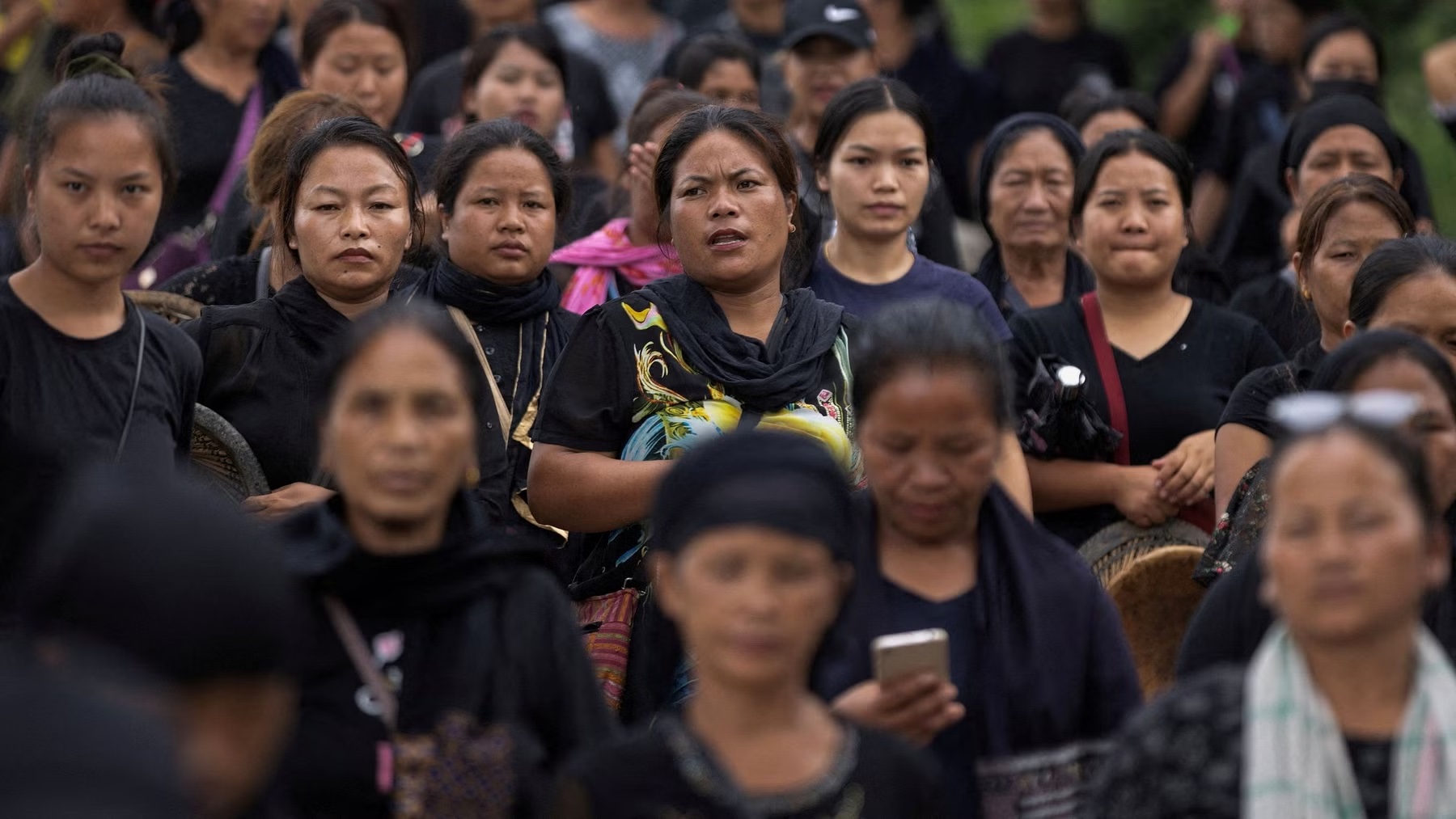
    Feature Image:Kuki women leave after attending a protest against the alleged sexual assault of two tribal women, in Churachandpur district in Manipur. Credit: Retuers Photo


  • Five Years without an Elected Administration: Human Rights in Jammu and Kashmir

    Five Years without an Elected Administration: Human Rights in Jammu and Kashmir

    [powerkit_button size=”lg” style=”info” block=”true” url=”https://admin.thepeninsula.org.in/wp-content/uploads/2023/08/FHRJK-2023-Report-August-2-2023-Final-Edit-1.pdf” target=”_blank” nofollow=”false”]
    Download
    [/powerkit_button]

    The Forum for Human Rights in Jammu and Kashmir comprises an informal group of concerned citizens who believe that, in the prevailing situation in the former state, an independent initiative is required so that continuing human rights violations do not go unnoticed.

    This is the fourth annual report issued by the Forum, which has also issued two midterm and/or thematic reports). It has largely been compiled from government sources, media accounts (carried in well-established and reputed newspapers or television), NGO fact-finding reports, interviews, and information garnered through legal petitions. The various sources listed have been fact-checked against each other to ensure the information is as accurate as possible, and only that information has been carried that appears to be well-founded. Where there is any doubt regarding a piece of information, queries have been footnoted.

    Executive Summary

    In an additional counter-affidavit filed before the Supreme Court in July 2023 against petitions challenging the constitutionality of the Presidential Orders of August 5, 2019 (reading down Article 370 of the Indian Constitution), as well as the Jammu and Kashmir Reorganisation Act of August 9, 2019, the union Ministry of Home Affairs claimed that that the changes wrought by the two actions had ‘brought unprecedented development, progress, security and stability to the region.’

    The facts, however, suggest otherwise. In its three annual and two thematic reports, the Forum has documented over three dozen economic, political and social rights that have been violated between August 2019 and July 2022, including economic losses of over Rs. 50,000 crores at a conservative estimate, vitiation of land and domicile rights, marginalisation and even purges of local personnel in the civil and police services, questionable arrests under draconian legislation, communication bans, media intimidation, and routinised curbs on the freedom of expression and movement. Equally glaring, the right to representation has been denied for five years, as of June 2023.

    This report on the state of human rights in Jammu and Kashmir between August 2022- July 2023 finds that while there has been improvement on some parameters, human rights violations continue on most. Its findings are as follows:

    1. Civilian insecurity persists. Targeted attacks on Pandits and migrant workers – both Hindu and Muslim – continue. While the number of lives lost due to armed attacks and counter-insurgency operations was lower than in the previous year, the number of police personnel who died, including Central Reserve Police Forces (CRPF), continues to be unacceptably high. 71 CRPF troops were killed in the four years between 2019-2022, twice as many as in the previous four years, 2014-2018, when 35 died. By comparison, in the four years between 2012-2015, which can be categorised as an uneasy interregnum between the post-peace process years and the rise of conflict in the BJP-PDP coalition, 27 CRPF troops were killed.

    2. A high volume of small arms. In 2023, it was found that Jammu and Kashmir had the largest number of licensed gun holders amongst union territories and the highest per capita amongst states as well as union territories, at 500,105 in June 2023, or four per hundred people.

    3. Resurgence of militancy in Jammu. After decades of peace, the bordering areas of Poonch and Rajouri districts in Jammu division are re-emerging as a locus for militancy with cross-border support from Pakistani-held territories of the former state. The 2022 delimitation of fresh legislative constituencies, adding Poonch and Rajouri to Kashmir’s Anantnag, may have added to the alienation that these Muslim-majority areas face with the sharpening of communal divides in Jammu. Increasing weaponisation through Jammu’s village defence guards, a problematic policy that the Forum highlighted in its 2022 report, has added further insecurity in the region. As has the 2023 Jammu and Kashmir Scheduled Tribes (Amendment) bill, which has pitted Paharis against Gujjars and other listed scheduled tribes of the region.

    4. Continuing civil rights abuses. There has been no improvement in gross violations of the freedom of expression and movement, especially the rights of the media to a safe working environment. Arrests under draconian legislation such as the Unlawful Activities (Prevention) Act (UAPA) and the Public Safety Act (PSA) continue, despite judicial attempts to limit their application. Along with Delhi, Jammu and Kashmir has the highest rate of undertrials as a proportion of its prisons population, at 91 percent, considerably higher than the national average of 76 percent.

    5. Custodial deaths and overcrowded prisons. The Jammu and Kashmir courts have flagged overcrowding and negligence as causes of custodial deaths. The region’s prisons can house a total of 3,629 inmates, but they lodged 5,300 as of June 2023.

    6. Denial of political rights. Two issues of political rights dominate this year’s report. The demand for an assembly election in Jammu and Kashmir; and the demand for a legislative assembly in Ladakh, along with rights under the sixth schedule of the constitution of India.

    Elections. It has been nine years since the last legislative election in Jammu and Kashmir. The union administration accepted the delimitation commission’s report a year ago and it is eight months since fresh electoral rolls were prepared. All the preparations for an election have thus been completed, but the election commission has yet to announce dates for it. Despite their valid criticisms of the delimitation commission’s report, Jammu and Kashmir’s political parties have demanded that the election be held this year (2023). Fresh reservations to woo new constituencies through four bills scheduled to be introduced in the monsoon session of parliament will, if enacted, entrench caste-based voter mobilisation. One of them was debated on July 26.

    Ladakh Kargil and Leh, the two districts of Ladakh, have united around the demand for an elected administration with substantive powers over economic and social development such as those provided under the Sixth Schedule of the Indian constitution, or, alternatively and it seems preferably, the grant of statehood. The union administration has repeatedly promised to discuss the inclusion of Ladakhis in the sixth schedule, but little has resulted. Given Ladakh’s geo-strategic location, bordering both Pakistan and China, the union administration might prefer to govern the union territory directly. However, direct administration has resulted in alienating Ladakh’s elected councillors as well as its people, both of which impact negatively on Indian democracy as well as national security.

    7. A record year of tourism in 2022 boosted the economy, but it still lagged behind the national average on per capita income and rates of growth. The multidimensional poverty index for 2023 showed an impressive reduction in the proportion of its population living in poverty from an estimated figure of 12.56 percent in 2015-2016 to 4.8 percent between 2019-2021, but it ranked sixth out of eight union territories on the sustainable development goals (SDG), with Ladakh at seventh. Its forest cover decreased from 39.66 percent to 39.15 between 2020- 2021.

    8. Unemployment and drug abuse. At 23.1 percent in March 2023, unemployment was almost three times the national average of 7.8 percent. According to the union ministry of health, Jammu and Kashmir are among the top two states and union territories for drug abuse, with an estimated 900,000 habitual drug users, roughly 1 in 130.

    9. Data scarcity. There is a paucity of readily available figures for the former state. Though the 2023 budget presentation for parliament forecast a NSDP growth rate of 14.9 percent for Jammu and Kashmir in 2022-2023, the economic survey of 2023 said that figures for its per capita NSDP were not available from 2019 to date, as did the 2022 Reserve Bank of India statistics on states.

    Air Vice Marshal Kapil Kak (Retd) is a Distinguished Fellow and a member of the Governing Council of The Peninsula Foundation (TPF). He is a member of the Forum for Human Rights in Jammu and Kashmir.

    Disclaimer: The views represented herein are those of the Forum and do not necessarily reflect the views of The Peninsula Foundation, its staff, or its trustees.

    [powerkit_button size=”lg” style=”info” block=”true” url=”https://admin.thepeninsula.org.in/wp-content/uploads/2023/08/FHRJK-2023-Report-August-2-2023-Final-Edit-1.pdf” target=”_blank” nofollow=”false”]
    Download
    [/powerkit_button]

  • Women in Afghanistan: The Fight Back

    Women in Afghanistan: The Fight Back

    [powerkit_button size=”lg” style=”info” block=”true” url=”https://admin.thepeninsula.org.in/wp-content/uploads/2022/12/Womens-Right-In-Afghanistan_Hemantika-1.pdf” target=”_blank” nofollow=”false”]
    Download
    [/powerkit_button]

    Introduction:

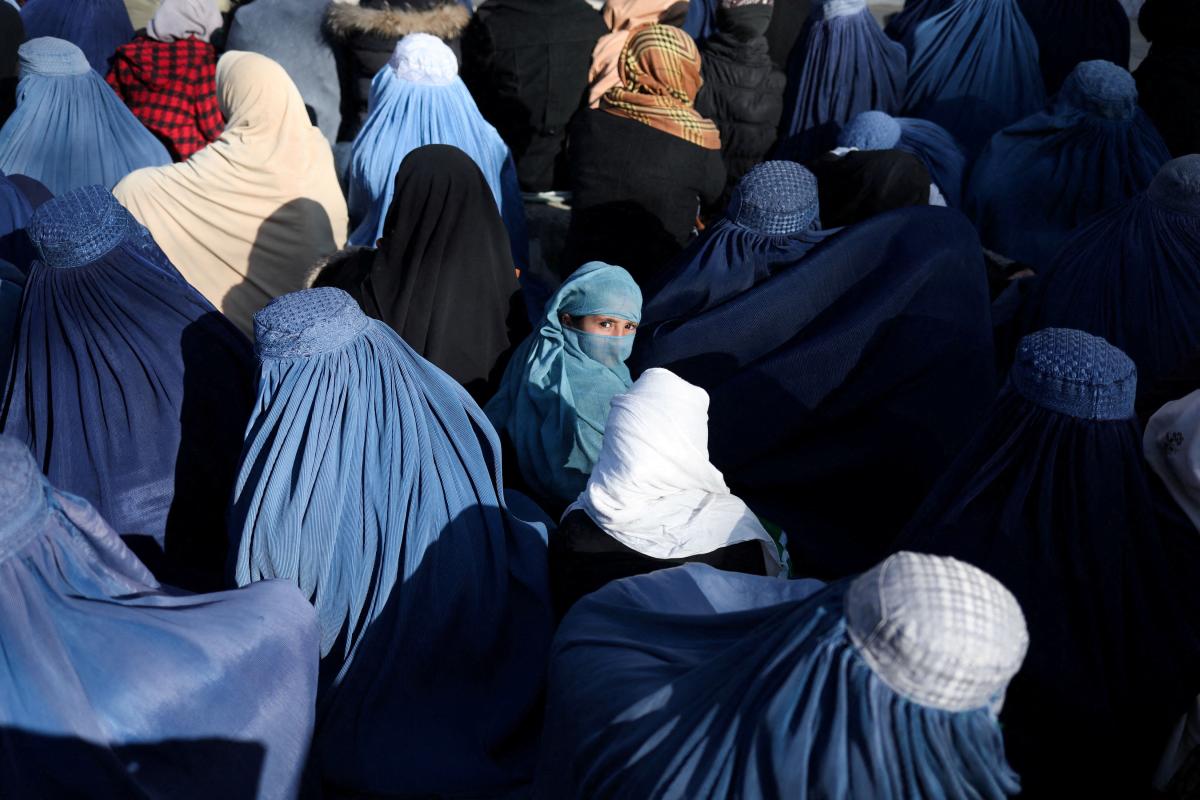
    Women and men undergo varied experiences in the event of an absolute collapse of the socio-political order. When combined with a catastrophic political transformation, their exposure to systemic abuse and violence dramatically increases. The vulnerability of women and their exposure to such violence is much more pronounced compared to what men face. This paper attempts to map the violence and abuse of rights women in Afghanistan are facing under the new Taliban rule after the American withdrawal. It also focusses on their response to the same. 

    Women under Taliban 1.0

    Afghanistan is a multi-ethnic country with a diverse population. Women’s issues have always had a central role in the governance system. From the beginning of the birth of modern-day Afghanistan, different monarchs have played a key role in determining the status of women in society, in line with their Islamic worldview. However, though women were considered inferior to men, they had their share of rights that were in no way meant to keep them confined to their houses. Instead, their free movement was hardly restricted. Covering their heads or wearing a burqa was not mandatory. There were organizations like the Anjuman-I-Himayat-I-Niswan(Organization for Women Protection), which worked to encourage women into reporting any kind of injustice meted to them. 

    After the Soviet invasion of Afghanistan in 1979, women’s rights were further amplified with universities in most cities, especially Kabul admitting them. After the departure of the Soviets in May 1988, the Mujahedeen overturned all that the Soviet Union had stood for, which included women’s rights regarding employment and education. Women were pushed away from public life and forced to wear a burqa. Fewer women were visible on television.

    [powerkit_button size=”lg” style=”info” block=”true” url=”https://admin.thepeninsula.org.in/wp-content/uploads/2022/12/Womens-Right-In-Afghanistan_Hemantika-1.pdf” target=”_blank” nofollow=”false”]
    Download
    [/powerkit_button]

  • Russia: The Migration Dimension of the War in Ukraine

    Russia: The Migration Dimension of the War in Ukraine

    Abstract

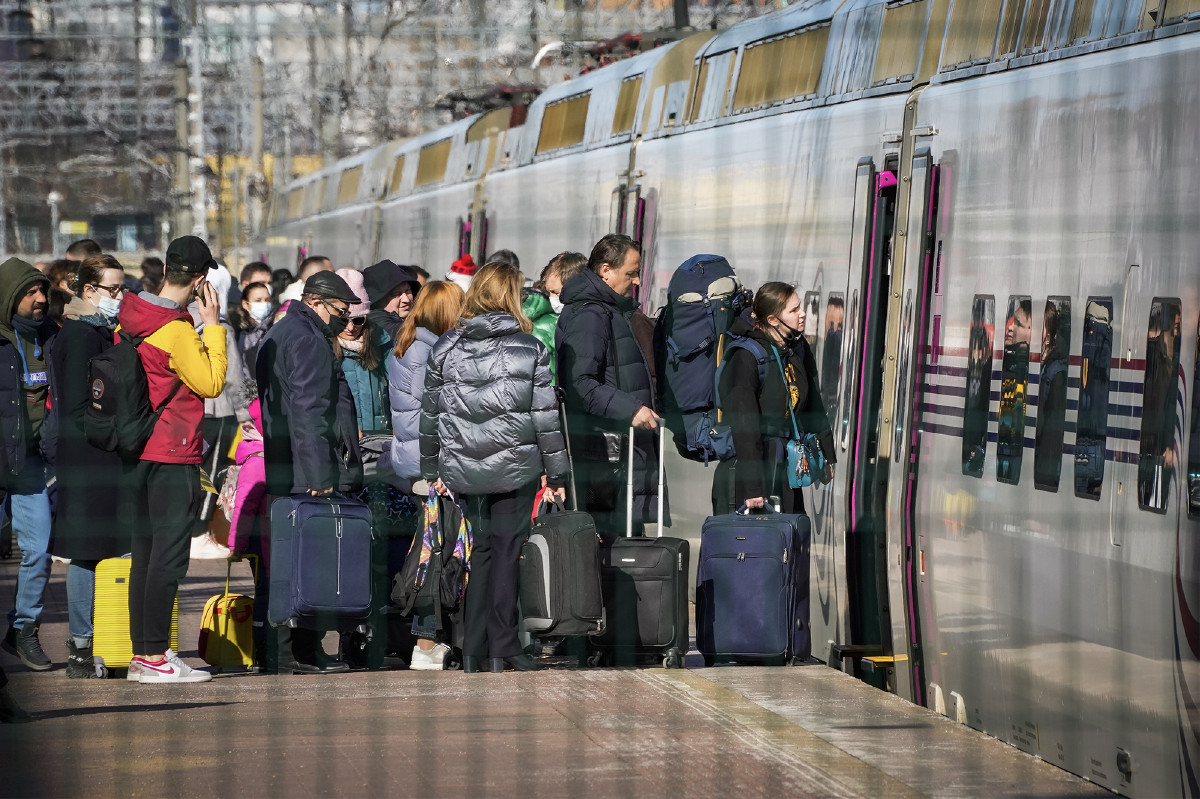
    The Russian invasion of Ukraine on February 24, 2022 has drastically changed both the internal situation in the Russian Federation (RF) and the country’s relationship with the international community. The impact of these developments is multidimensional and has a significant human dimension, including the formation of new migration flows marked by high shares of young people, males, and members of various elite groups. The elite migrant flow generally includes four major categories of migrants: academic personnel, highly skilled workers (including representatives of professional, business, creative, and athletic elites), students, and so-called investment migrants.

    Economic Impact

    Shrinking economic output1 and the withdrawal of numerous transnational companies from the RF have threatened the jobs and livelihoods of a large segment of the Russian population, hurting first and foremost its elite segments. Indeed, the introduction of new sanctions cut the long-term international ties established in the economic, political, academic, artistic, and athletic spheres, to name just a few, impacting the lives of millions of people, chief among them the representatives of various professional, business, academic, cultural, and athletic elites.

    This negative impact has been aggravated by both the transborder transfers of transnational corporations’ offices and the flight of numerous Russian businesses, as well as individual enterpreneurs, to locations outside the RF. These movements, mostly economically and professionally motivated, have been supplemented by the emigration of people opposing the war as a matter of principle.

    Second Wave Exceeds First

    The second wave of emigration, significantly larger than the first, formed as a direct consequence of the declaration by Russian President Vladimir Putin on September 21 of a 300,000-strong “partial” mobilization and the subsequent announcement by RF Defense Minister Sergei Shoigu that up to 25 million Russian citizens might be eligible for mobilization orders—an announcement that de facto involved in the war the majority of the RF’s population (between the potential reservists and their family members). These developments and the subsequent mishandling of the mobilization process, marked by disorganization and numerous widely reported instances of corruption and abuse, acted as additional push factors of migration, which took on an increasingly politicized character.

    Thus, the migration flow in 2022 has essentially consisted of two—separate and consecutive—subflows. These are far from the only large-scale population movements in post-Soviet Russian history: they follow the “brain drain” of the 1990s and the smaller in scale but consistent population movements of the first two decades of the current century. Yet there are huge differences between the current developments and previous trends.

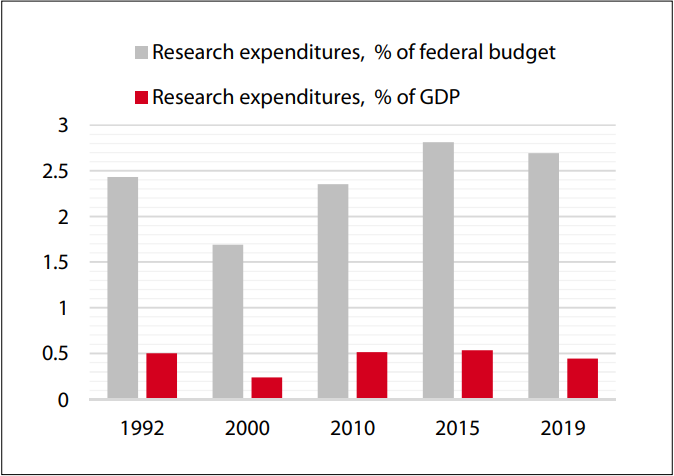
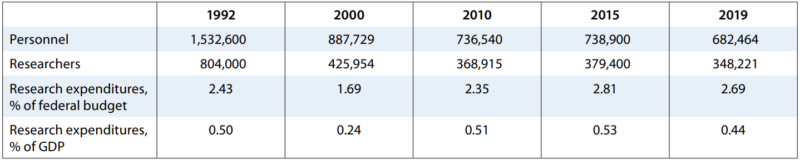
    Historical Perspective

    Russia saw its position in the global migration chain change drastically after the dissolution of the USSR in 1991. In its aftermath, the RF quickly became an active participant in the globalization process, following the general trend among those states that were previously the centers of multinational empires: the United Kingdom, France, Spain, Portugal, the Netherlands, Belgium, and especially the territorially contiguous empires (Germany, Austria, and Turkey) have received, since their empires’ collapse, considerable migrant flows of two major types. The first wave was the permanent—and mostly politically motivated—return migration of the representatives of the former “imperial” nation to their ethnic homelands (the Britons, French, Spaniards, Turks, etc.). They were soon followed by migrants from developing countries—primarily the former colonies of the metropole. These were people who spoke its language, knew its culture, and could rely on the support there of their long-established ethnic diasporas.

    As a result, Russia—previously one of the most isolated countries in the world—quickly became, after 1991, the center of a vast Eurasian migration system that was one of the four largest in the world (alongside those in North America; Western Europe; and the Middle East, centered on the Persian Gulf). By 2010, more than 12 million RF residents (about 8.5% of its population) had been born outside the country. In 2015, Russia ranked third in the world—after India and Mexico—in terms of its number of emigrants: 10.5 million.2 While most of these migrants moved within the post-Soviet space, in 1991–2005 alone, more than 1.3 million Russian citizens obtained permits for permanent emigration to the West.3 Overall, the number of those who were born in Russia but currently live in countries outside the former USSR is estimated at approximately 3,000,000.4

    This flow was generated by both the “pull” and “push” factors of migration. In the case of emigration outside the post-Soviet region, an important role was played by the liberalization of the migration regime and the emergence of opportunities to work and study abroad; higher living standards; prospects for professional growth; and the genearally welcoming atmosphere for Russian scholars, students, and professionals at that time. “Push” factors included the economic and political instability in Russia, specifically the rapid degradation of Russian state-run industry and of the academic sphere. Research expenditure as a share of Russian GDP was 0.50% in 1992 and 0.24% in 2000 (representing 2.43% and 1.69% of the federal budget, respectively). During this period (1992–2000), the number of those employed by the academic institutions fell from 1,532,000 to 887,729 (a 42% drop), while the number of researchers declined from 804,000 to 425,954 (a 47% drop).5

    With the economic and political stabilization of the early Putin years, budgetary expenditures increased, peaking in 2015 at 2.81% of the federal budget (0.53% of GDP).

    These processes led to the formation of significant elite Russian diasporas in the major receiving countries. Already by 2010–11, more than 660,000 university educated Russians were living abroad, putting the RF into the category of states with large elite diasporas (300,000 to 1,000,000 migrants with a university degree)—along with such countries as Mexico, South Korea, Vietnam, Iran, Taiwan, Morocco, and Colombia.6 Of particular importance was the massive emigration of Russian scholars and educators: I previously estimated the size of this elite diaspora at about 300,000–350,000 in 2012, including, as of 2015, approximately 56,000 students studying abroad. The academic flow was heavily dominated by basic and technical sciences experts, while specialists in social sciences and the humanities accounted for just 6.1% of the total in 2002–03.7 The flow was also skewed geographically toward the two highly developed Global North regions of North America and Western Europe, which respectively accounted for 30.4% and 42.4% of the intellectual migration flow. The largest receiving countries were the United States (28.7%) and Germany (19%); these two states also held first and second place, respectively, among receiving countries in practically all academic subfields.8

    With the economic and political stabilization of the early Putin years, budgetary expenditures increased, peaking in 2015 at 2.81% of the federal budget (0.53% of GDP). This served to slow down the academic personnel decline and the elite outflow: between 2000 and 2019, the number of those employed in the academic sphere declined from 887,729 to 682,464 (or by 23.1%), while the number of researchers fell from 425,954 to 348,221 (or by 18.2%9 —see Figures 1a and 1b below and Table 1 on p. 11). While the number of Russian students studying abroad remained relatively stable at 50,000–60,000, the RF during that period rebuilt its position as one of the leading hubs for international students—ranking sixth in the world behind the US, the UK, Australia, France, and Germany.10 Their numbers grew steadily, from 153,800 in 2010/2011 to 298,000 in the 2019/2020 academic year.11

    Figure 1a: Russian R&D Dynamics, 1992–2019: Personnel (mln.)

    Figure 1b: Russian R&D Dynamics, 1992–2019: Expenditures

    Source: Federal’naia sluzhba gosudarstvennoi statistiki, “Rossiia v Tsifrakh—2020,” 2021, https://gks.ru/bgd/regl/b20_11/Main.htm; Federal’naia sluzhba gosudarstvennoi statistiki, Rossiiskii Statisticheskii ezhegodnik 2009 (Moscow, 2009), 543, 553; Federal’naia sluzhba gosudarstvennoi statistiki, Rossiiskii Statisticheskii ezhegodnik 2020 (Moscow, 2020), 495–6, https://rosstat.gov.ru/storage/mediabank/Ejegodnik_2020.pdf; Gosudarstvennyi komitet Rossiiskoi Federatsii po statistike, Rossiiskii Statisticheskii ezhegodnik 2003 (Moscow, 2003), 531.

    Russia, while losing its elite migrants to the more developed countries of the Global North, was at least partially substituting for their loss with immigration from less developed states, primarily those in the post-Soviet space.

    Overall, it could be concluded that Russia transformed in the early 2000s from the country in deep economic and social crisis—and source of massive elite outflows— that it had been in the 1990s into a state with a moderate level of development that played multiple roles in the world migration chain: both sending and receiving migrants as well as acting as a migrant transit country. Russia, while losing its elite migrants to the more developed countries of the Global North, was at least partially substituting for their loss with immigration from less developed states, primarily those in the post-Soviet space. The impact of the “pull” factors of migration increased, while that of the “push” factors decreased, at least in relative terms.

    After the Invasion

    This multiplicity of roles was for the most part retained by the RF after the first invasion of Ukraine in 2014 (even under the conditions of the expanding sanctions
    regime) and during the general decline of migration activity worldwide as a result of COVID-19 restrictions. Yet the events of 2022 have drastically changed the migration environment, returning it to a crisis level, with the “push” factors of migration (such as the deteriorating political situation, sharp disagreements with governmental policies among certain segments of society, the unwillingness of many to serve in the RF military, the fear of losing jobs and sources of income, etc.) coming to the forefront.

    When it comes to the contrast between current migration flows and previous post-Soviet flows, the following points should be noted:

    • The 2022 migration waves are defined primarily by “push” factors, which have frequently forced people to leave even in the absence of adequate preparation
      (previous experience of work or study abroad, personal or professional networks) or clear prospects in destination countries.
    • Migration in 2022 is frequently directed toward smaller and economically weaker countries than in the 1990s, including those in Eastern Europe, the post-Soviet space (Central Asia, the Caucasus), and the Persian Gulf, as well as Turkey and Mongolia. This may lead to the reversal of the trends that have dominated (especially elite) migration patterns in Central Eurasia for the last three decades. This reversal, which has important symbolic value, may create significant long-term labor-market and demographic problems for the RF.
    • In contrast to previous migration waves, the current ones are marked by their hectic, spontaneous character and the heavy presence in the flow of young people working in the IT and business sectors, who are relatively flexible and could either seek jobs or create private-sector businesses. At the same time, there is also a significant share of people, especially within the academic bloc, who hold Humanities and Social Sciences degrees and have very limited prospects of finding jobs that correspond to their qualifications. Thus, even under the current crisis conditions, substantial return migration can be expected.
    • In 2022, movement is further complicated by the heritage of the COVID-19 pandemic and the new limitations resulting from the 2022 sanctions— these are related to the blocking of RF-issued credit cards, the break-up of direct transportation links with most European countries, complications with getting visas, and frequently prohibitive airfare rates. An additional complication is presented by the recent proposals, in a number of Western countries, to arrest RF citizens or confiscate their property.
    • A particular feature of the 2022 flows has been their “explosive,” emergency character, marked by very high intensity in the initial weeks and a relatively
      quick decline thereafter.

    There also exist visible differences between the flow that followed the developments of February 2022 and the flow that followed the events of September 2022. In particular,

    • A noticeable discrepancy exists in terms of their scale and gender structure. The first flow was on the order of 100,000–150,000 people and was relatively balanced in gender terms, frequently including whole families with children. The second, which followed Putin’s mobilization announcement, has been heavily dominated by young males. This in itself poses significant problems for Russia’s demographic and economic future.
    • The first flow was directed, first and foremost, toward all the countries neighboring Russia. The current one, meanwhile, is taking place under the conditions of
      changing public attitudes and governmental policies toward RF citizens, even those who oppose Putin’s actions. This dynamic could lead to general change in the direction of migration flows.
    • The flow of the first half of 2022 was marked by heavy presence of foreign citizens and people with dual citizenship or other legal status, who moved to the countries where they held such status. The participants in the current flow, who are primarily RF citizens, face additional legal problems in receiving countries by comparison.
    • The original flow included large numbers of people who worked in the RF offices of transnational companies that relocated, along with their personnel, to other countries. These people had some social guarantees, had experience of work for a TNC, and could rely on their companies’ support. People emigrating in the newest waves lack these opportunities.
    • The large-scale arrival of migrants in countries with relatively weak infrastructure and limited economic capacity (the states of the Baltic, the Transcaucasus, and Central Asia) has put significant pressure on these states’ economies and labor markets. Successive waves of migrants will therefore increasingly  encounter competition, economic hardship, and negative public attitudes.

    While there exist huge discrepancies in the estimates of migration flows made by various entities—both governmental agencies and non-governmental organization —in Russia as well as the receiving states, it is clear that the most recent flow has been much larger than the one in the first half of 2022. The most frequently cited figure is on the order of 700,000 people.12 How-ever, a major problem is that most estimates rely on the statistical data of the national border guard services, which report the number of border crossings in a particular period of time without accounting for repeat crossings, return migration, movement to the third countries, “shuttle” activities, irregular migration, etc.13 Because of these limitations, it is likely that the overall number of migrants in the “second wave” is currently in the range of 350,000–450,000. Thus, the overall number of migrants who have left the RF in the two urgent and chaotic waves of 2022 can be estimated at about 500,000. Even this figure represents a substantial potential loss for a country—particularly one like Russia that was already experiencing population decline.14 It is a special concern considering the skewed gender, age, and qualification structure of those currently leaving the RF.

    Table 1: Russian R&D Dynamics, 1992–2019

    Source: Federal’naia sluzhba gosudarstvennoi statistiki, “Rossiia v Tsifrakh—2020,” 2021, https://gks.ru/bgd/regl/b20_11/Main.htm; Federal’naia sluzhba gosudarstvennoi statistiki, Rossiiskii Statisticheskii ezhegodnik 2009 (Moscow, 2009), 543, 553; Federal’naia sluzhba gosudarstvennoi statistiki, Rossiiskii Statisticheskii ezhegodnik 2020 (Moscow, 2020), 495–6, https://rosstat.gov.ru/storage/mediabank/Ejegodnik_2020.pdf; Gosudarstvennyi komitet Rossiiskoi Federatsii po statistike, Rossiiskii Statisticheskii ezhegodnik 2003 (Moscow, 2003), 531.

    While these factors represent some very important arguments for putting an immediate end to the military action, it is clear that demographic, labor market, and socio-economic considerations are of minor significance for Vladimir Putin. More than that, following Alexander Lukashenka’s example in Belarus following the protests there in 2020, the RF leadership could perceive the current migration outflows as politically useful, ridding it of opponents to the war and regime and further weakening the country’s civil society. Thus, the disastrous 2022 policies might continue, aggravating both the domestic socio-economic situation and the RF’s position in the world.

    References:

    1. In particular, Russia’s industrial output in September 2022 was 9% of that in September 2021 (Federal’naia Sluzhba Gosudarstvennoi Statistiki, “Operativnye Pokazateli,” 2022, https://rosstat.gov.ru/).
    2. United Nations Department of Economic and Social Affairs, Population Division, Trends in International Migration Stock: The 2015 Revi- sion (New York: United Nations, 2015).
    3. Anatolii Vishnevskii, , Naseleniie Rossii 2003-2004: Odinnadtsatyi-dvenadtsatyi ezhegodnyi demograficheskii doklad (Moscow: Nauka, 2006), 325.
    4. “‘Meduza’ ob emigratsii iz Rossii,” Demoscope 945–6 (17–30 May 2022), http://www.demoscope.ru/weekly/2022/0945/gazeta01.php.
    5. Federal’naia sluzhba gosudarstvennoi statistiki, “Rossiia v Tsifrakh—2020,” 2021, https://gks.ru/bgd/regl/b20_11/Main.htm; Gosudarst- vennyi komitet Rossiiskoi Federatsii po statistike, Rossiiskii Statisticheskii ezhegodnik 2003 (Moscow, 2003),
    6. This group is second to that of countries with extra-large diasporas (more than 1,000,000 people). As of 2015, that group included India (2,080,000), China (1,655,000), the Philippines, the UK, and See Irina Dezhina, Evgeny Kuznetsov, and Andrei Korobkov, Raz- vitie Sotrudnichestva s Russkoiazychnoi Diasporoi: Opyt, Problemy, Perspektivy (Moscow, 2015), http://russiancouncil.ru/upload/Report- Scidiaspora-23-Rus.pdf, 18.
    7. V. Korobkov and Zh. A. Zaionchkovskaya, “Russian Brain Drain: Myths and Reality,” Communist and Post-Communist Studies 45, no. 3-4 (September-December 2012): 332.
    8. , 335–6. See also Andrei Korobkov, “Russian Academic Diaspora: Its Scale, Dynamics, Structural Characteristics, and Ties to the RF,” in Migration from the Newly Independent States: 25 Years After the Collapse of the USSR, ed. Mikhail Denisenko, Salvatore Strozza, and Matthew Light (New York: Springer, 2020), 299–322.
    9. Federal’naia sluzhba gosudarstvennoi statistiki, “Rossiia v Tsifrakh—2020;” Federal’naia sluzhba gosudarstvennoi statistiki, Rossiiskii Stat- isticheskii ezhegodnik 2020 (Moscow, 2020), 495–6, https://rosstat.gov.ru/storage/mediabank/Ejegodnik_2020.pdf.
    10. “Mezhdunarodnye studenty,” Unipage, 2019, https://unipage.net/ru/student_statistics.
    11. Federal’naia sluzhba gosudarstvennoi statistiki, “Rossiia v Tsifrakh—2020;” Federal’naia sluzhba gosudarstvennoi statistiki, Rossiiskii Stat- isticheskii ezhegodnik 2020, 206, https://rosstat.gov.ru/storage/mediabank/Ejegodnik_2020.pdf.
    12. See, for instance, “Forbes: posle ob”iavleniia mobilizatsii Rossiiu pokinuli primerno 700 chelovek,” Kommersant, October 4, 2022, https://www.kommersant.ru/doc/5594533.
    13. For example, the Interior Ministry of Kazakhstan reported at the beginning of October that in the wake of the mobilization announcement by Vladimir Putin on September 21, 2022, more than 200,000 people had crossed the country’s border with Russia, of whom just seven had been deported back to the At the same time, this report noted that 147,000 of them had already left Kazakhstan within a period of less than two weeks. See Mikhail Rodionov, “V Kazakhstan s 21 sentiabria v”ekhali bolee 200 tysiach rossiian. Deportirovali semerykh,” Gazeta. ru, October 4 2022, https://www.gazeta.ru/politics/2022/10/04/15571807.shtml.
    14. In 2019, the fertility rate in Russia was 1.504. See Federal’naia sluzhba gosudarstvennoi statistiki, “Rossiia v Tsifrakh—2020;” Federal’naia sluzhba gosudarstvennoi statistiki, Rossiiskii Statisticheskii ezhegodnik 2020, 103.

    This article was originally published at the Center for Security Studies (CSS)

    Featured Image Credits: Politico

  • Roe overturned: What you need to know about the American Supreme Court abortion decision

    Roe overturned: What you need to know about the American Supreme Court abortion decision

    Despite the terminal decline of the American Empire or the Deep State, the American Republic still remains an inspiration for people across the world, for reasons of its vibrant democracy and peoples’ liberty ensured through robust institutions, law and order, and the strong constitutional process. To paraphrase Johan Galtung – ‘the US is a fabulous Republic but a terrible empire’. But even that seems to be changing as society’s democratic values, ethics, and morals are in serious decline.  The rise of right wing politics has led to a decline in the standards and values, and in the independence of institutions most notably the Judiciary. Separation of the Church and the State is a core tenet of the American Constitution and governance. That seems to be compromised as many judges bring their personal and religious beliefs in to their work. This was in demonstration in the American Supreme Court’s judgement that ends one of the most critical fundamental rights of women to their bodies and their choices for abortion. 

    After half a century, Americans’ constitutional right to get an abortion has been overturned by the Supreme Court.The ruling in Dobbs v. Jackson Women’s Health Organization – handed down on June 24, 2022 – has far-reaching consequences. There is a strong religious influence to this judgement. This could influence many other countries, particularly in an environment where right wing politics, influenced by narrow religious overtones,  is on the upswing in many countries across the world, including the world’s largest Democracy, India. Fortunately, India’s abortion laws are governed by medical advice and womens’ safety (and so it is termed MTP – Medical termination of Pregnancy). The MTP Act of 1971 was further liberalised through an Amendment Act of 2021 wherein the gestation limit for abortions is raised from 20 to 24 weeks. While India’s laws are considerate by supporting abortion decision to rape and incest survivors, the American judgement will deny this freedom or choice to the victim women.

     Nicole Huberfeld and Linda C. McClain, health law and constitutional law experts at Boston University, explain what just happened, and what happens next. This article was published earlier in The Conversation. TPF is happy to republish this article under the Creative Commons Attribution-No Derivatives 4.0-International (CC BY-ND 4.0).

    – TPF Editorial Team

    What did the Supreme Court rule?

    The Supreme Court decided by a 6-3 majority to uphold Mississippi’s ban on abortion after 15 weeks of pregnancy. In doing so, the justices overturned two key decisions protecting access to abortion: 1973’s Roe v. Wade and Planned Parenthood v. Casey, decided in 1992.

    The court’s opinion, written by Justice Samuel Alito, said that the Constitution does not mention abortion. Nor does the Constitution guarantee abortion rights via another right, the right to liberty.

    The opinion rejected Roe’s and Casey’s argument that the constitutional right to liberty included an individual’s right to privacy in choosing to have an abortion, in the same way that it protects other decisions concerning intimate sexual conduct, such as contraception and marriage. According to the opinion, abortion is “fundamentally different” because it destroys fetal life.

    The court’s narrow approach to the concept of constitutional liberty is at odds with the broader position it took in the earlier Casey ruling, as well as in a landmark marriage equality case, 2015’s Obergefell v. Hodges. But the majority said that nothing in their opinion should affect the right of same-sex couples to marry.

    Alito’s opinion also rejected the legal principle of “stare decisis,” or adhering to precedent. Supporters of the right to abortion argue that the Casey and Roe rulings should have been left in place as, in the words of the Casey ruling, reproductive rights allow women to “participate equally in the economic and social life of the Nation.”

    The ruling does not mean that abortion is banned throughout the U.S. Rather, arguments about the legality of abortion will now play out in state legislatures, where, Alito noted, women “are not without electoral or political power.”

    States will be allowed to regulate or prohibit abortion subject only to what is known as “rational basis” review – this is a weaker standard than Casey’s “undue burden” test. Under Casey’s undue burden test, states were prevented from enacting restrictions that placed substantial obstacles in the path of those seeking abortion. Now, abortion bans will be presumed to be legal as long as there is a “rational basis” for the legislature to believe the law serves legitimate state interests.

    In a strenuous dissent, Justices Stephen Breyer, Elena Kagan and Sonia Sotomayor faulted the court’s narrow approach to liberty and challenged its disregard both for stare decisis and for the impact of overruling Roe and Casey on the lives of women in the United States. The dissenters said the impact of the decision would be “the curtailment of women’s rights, and of their status as free and equal citizens.” They also expressed deep concern over the ruling’s effect on poor women’s ability to access abortion services in the U.S.

    Where does this decision fit into the history of reproductive rights in the U.S.?

    This is a huge moment. The court’s ruling has done what reproductive rights advocates feared for decades: It has taken away the constitutional right to privacy that protected access to abortion.

    This decision was decades in the making. Thirty years ago when Casey was being argued, many legal experts thought the court was poised to overrule Roe. Then, the court had eight justices appointed by Republican presidents, several of whom indicated readiness to overrule in dissenting opinions.

    Instead, Republican appointees Anthony Kennedy, Sandra Day O’Connor and David Souter upheld Roe. They revised its framework to allow more state regulation throughout pregnancy and weakened the test for evaluating those laws. Under Roe’s “strict scrutiny” test, any restriction on the right to privacy to access an abortion had to be “narrowly tailored” to further a “compelling” state interest. But Casey’s “undue burden” test gave states wider latitude to regulate abortion.

    Even before the Casey decision, abortion opponents in Congress had restricted access for poor women and members of the military greatly by limiting the use of federal funds to pay for abortion services.

    In recent years, states have adopted numerous restrictions on abortion that would not have survived Roe’s tougher “strict scrutiny” test. Even so, many state restrictions have been struck down in federal courts under the undue burden test, including bans on abortions prior to fetal viability and so-called “TRAP” – targeted regulation of abortion provider – laws that made it harder to keep clinics open.

    President Donald Trump’s pledge to appoint “pro-life” justices to federal courts – and his appointment of three conservative Supreme Court justices – finally made possible the goal of opponents of legal abortion: overruling Roe and Casey.

    What happens next?

    Even before Dobbs, the ability to access abortion was limited by a patchwork of laws across the United States. Republican states have more restrictive laws than Democratic ones, with people living in the Midwest and South subject to the strongest limits.

    Thirteen states have so-called “trigger laws,” which greatly restrict access to abortion. These will soon go into effect now that the Supreme Court has overturned Roe and Casey, requiring only state attorney general certification or other action by a state official.

    Nine states have pre-Roe laws never taken off the books that significantly restrict or ban access to abortion. Altogether, nearly half of states will restrict access to abortion through a variety of measures like banning abortion from six weeks of pregnancy – before many women know they are pregnant – and limiting the reasons abortions may be obtained, such as forbidding abortion in the case of fetal anomalies.

    Meanwhile, 16 states and the District of Columbia protect access to abortion in a variety of ways, such as state statutes, constitutional amendments or state Supreme Court decisions.

    None of the states that limit abortion access currently criminalize the pregnant person’s action. Rather, they threaten health care providers with civil or criminal actions, including loss of their license to practice medicine.

    Some states are creating “safe havens” where people can travel to access an abortion legally. People have already been traveling to states like Massachusetts from highly restrictive states.

    The court’s decision may drive federal action, too.

    The House of Representatives passed the Women’s Health Protection Act, which protects health care providers and pregnant people seeking abortion, but Senate Republicans have blocked the bill from coming up for a vote. Congress could also reconsider providing limited Medicaid payment for abortion, but such federal legislation also seems unlikely to succeed.

    President Joe Biden could use executive power to instruct federal agencies to review existing regulations to ensure that access to abortion continues to occur in as many places as possible. Congressional Republicans could test the water on nationwide abortion bans. While such efforts are likely to fail, these efforts could cause confusion for people who are already vulnerable.

    The Supreme Court’s rolling back a right that has been recognized for 50 years puts the U.S. in the minority of nations, most of which are moving toward liberalization.

    What does this mean for people in America seeking an abortion?

    Unintended pregnancies and abortions are more common among poor women and women of color, both in the U.S. and around the world.

    Research shows that people have abortions whether lawful or not, but in nations where access to abortion is limited or outlawed, women are more likely to suffer negative health outcomes, such as infection, excessive bleeding and uterine perforation. Those who must carry a pregnancy to full term are more likely to suffer pregnancy-related deaths.

    The state-by-state access to abortion resulting from this decision means many people will have to travel farther to obtain an abortion. And distance will mean fewer people will get abortions, especially lower-income women – a fact the Supreme Court itself recognized in 2016.

    But since 2020, medication abortion – a two-pill regimen of mifepristone and misoprostol – has been the most common method of ending pregnancy in the U.S. The coronavirus pandemic accelerated this shift, as it drove the Food and Drug Administration to make medication abortions more available by allowing doctors to prescribe the pills through telemedicine and permitting medication to be mailed without in-person consultation.

    Many states that restrict access to abortion also are trying to prevent medication abortion. But stopping telehealth providers from mailing pills will be a challenge. Further, because the FDA approved this regimen, states will be contradicting federal law, setting up conflict that may lead to more litigation.

    The Supreme Court’s rolling back a right that has been recognized for 50 years puts the U.S. in the minority of nations, most of which are moving toward liberalization. Nevertheless, even though abortion is seen by many as essential health care, the cultural fight will surely continue.

    Featured Image Credit: Evening Standard