Category: Human Rights

  • Russia: The Migration Dimension of the War in Ukraine

    Russia: The Migration Dimension of the War in Ukraine

    Abstract

    The Russian invasion of Ukraine on February 24, 2022 has drastically changed both the internal situation in the Russian Federation (RF) and the country’s relationship with the international community. The impact of these developments is multidimensional and has a significant human dimension, including the formation of new migration flows marked by high shares of young people, males, and members of various elite groups. The elite migrant flow generally includes four major categories of migrants: academic personnel, highly skilled workers (including representatives of professional, business, creative, and athletic elites), students, and so-called investment migrants.

    Economic Impact

    Shrinking economic output1 and the withdrawal of numerous transnational companies from the RF have threatened the jobs and livelihoods of a large segment of the Russian population, hurting first and foremost its elite segments. Indeed, the introduction of new sanctions cut the long-term international ties established in the economic, political, academic, artistic, and athletic spheres, to name just a few, impacting the lives of millions of people, chief among them the representatives of various professional, business, academic, cultural, and athletic elites.

    This negative impact has been aggravated by both the transborder transfers of transnational corporations’ offices and the flight of numerous Russian businesses, as well as individual enterpreneurs, to locations outside the RF. These movements, mostly economically and professionally motivated, have been supplemented by the emigration of people opposing the war as a matter of principle.

    Second Wave Exceeds First

    The second wave of emigration, significantly larger than the first, formed as a direct consequence of the declaration by Russian President Vladimir Putin on September 21 of a 300,000-strong “partial” mobilization and the subsequent announcement by RF Defense Minister Sergei Shoigu that up to 25 million Russian citizens might be eligible for mobilization orders—an announcement that de facto involved in the war the majority of the RF’s population (between the potential reservists and their family members). These developments and the subsequent mishandling of the mobilization process, marked by disorganization and numerous widely reported instances of corruption and abuse, acted as additional push factors of migration, which took on an increasingly politicized character.

    Thus, the migration flow in 2022 has essentially consisted of two—separate and consecutive—subflows. These are far from the only large-scale population movements in post-Soviet Russian history: they follow the “brain drain” of the 1990s and the smaller in scale but consistent population movements of the first two decades of the current century. Yet there are huge differences between the current developments and previous trends.

    Historical Perspective

    Russia saw its position in the global migration chain change drastically after the dissolution of the USSR in 1991. In its aftermath, the RF quickly became an active participant in the globalization process, following the general trend among those states that were previously the centers of multinational empires: the United Kingdom, France, Spain, Portugal, the Netherlands, Belgium, and especially the territorially contiguous empires (Germany, Austria, and Turkey) have received, since their empires’ collapse, considerable migrant flows of two major types. The first wave was the permanent—and mostly politically motivated—return migration of the representatives of the former “imperial” nation to their ethnic homelands (the Britons, French, Spaniards, Turks, etc.). They were soon followed by migrants from developing countries—primarily the former colonies of the metropole. These were people who spoke its language, knew its culture, and could rely on the support there of their long-established ethnic diasporas.

    As a result, Russia—previously one of the most isolated countries in the world—quickly became, after 1991, the center of a vast Eurasian migration system that was one of the four largest in the world (alongside those in North America; Western Europe; and the Middle East, centered on the Persian Gulf). By 2010, more than 12 million RF residents (about 8.5% of its population) had been born outside the country. In 2015, Russia ranked third in the world—after India and Mexico—in terms of its number of emigrants: 10.5 million.2 While most of these migrants moved within the post-Soviet space, in 1991–2005 alone, more than 1.3 million Russian citizens obtained permits for permanent emigration to the West.3 Overall, the number of those who were born in Russia but currently live in countries outside the former USSR is estimated at approximately 3,000,000.4

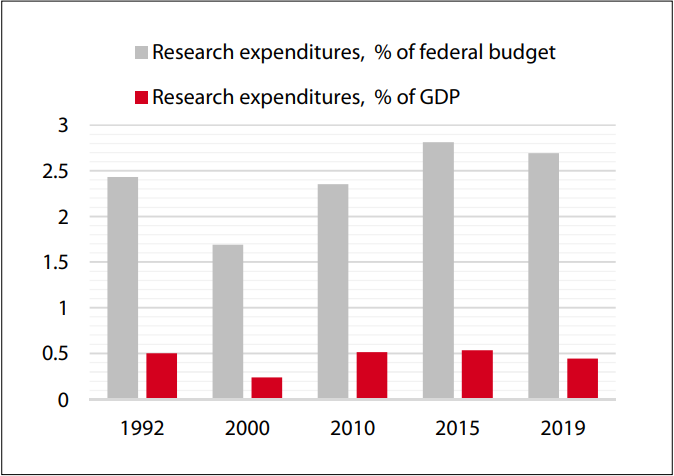
    This flow was generated by both the “pull” and “push” factors of migration. In the case of emigration outside the post-Soviet region, an important role was played by the liberalization of the migration regime and the emergence of opportunities to work and study abroad; higher living standards; prospects for professional growth; and the genearally welcoming atmosphere for Russian scholars, students, and professionals at that time. “Push” factors included the economic and political instability in Russia, specifically the rapid degradation of Russian state-run industry and of the academic sphere. Research expenditure as a share of Russian GDP was 0.50% in 1992 and 0.24% in 2000 (representing 2.43% and 1.69% of the federal budget, respectively). During this period (1992–2000), the number of those employed by the academic institutions fell from 1,532,000 to 887,729 (a 42% drop), while the number of researchers declined from 804,000 to 425,954 (a 47% drop).5

    With the economic and political stabilization of the early Putin years, budgetary expenditures increased, peaking in 2015 at 2.81% of the federal budget (0.53% of GDP).

    These processes led to the formation of significant elite Russian diasporas in the major receiving countries. Already by 2010–11, more than 660,000 university educated Russians were living abroad, putting the RF into the category of states with large elite diasporas (300,000 to 1,000,000 migrants with a university degree)—along with such countries as Mexico, South Korea, Vietnam, Iran, Taiwan, Morocco, and Colombia.6 Of particular importance was the massive emigration of Russian scholars and educators: I previously estimated the size of this elite diaspora at about 300,000–350,000 in 2012, including, as of 2015, approximately 56,000 students studying abroad. The academic flow was heavily dominated by basic and technical sciences experts, while specialists in social sciences and the humanities accounted for just 6.1% of the total in 2002–03.7 The flow was also skewed geographically toward the two highly developed Global North regions of North America and Western Europe, which respectively accounted for 30.4% and 42.4% of the intellectual migration flow. The largest receiving countries were the United States (28.7%) and Germany (19%); these two states also held first and second place, respectively, among receiving countries in practically all academic subfields.8

    With the economic and political stabilization of the early Putin years, budgetary expenditures increased, peaking in 2015 at 2.81% of the federal budget (0.53% of GDP). This served to slow down the academic personnel decline and the elite outflow: between 2000 and 2019, the number of those employed in the academic sphere declined from 887,729 to 682,464 (or by 23.1%), while the number of researchers fell from 425,954 to 348,221 (or by 18.2%9 —see Figures 1a and 1b below and Table 1 on p. 11). While the number of Russian students studying abroad remained relatively stable at 50,000–60,000, the RF during that period rebuilt its position as one of the leading hubs for international students—ranking sixth in the world behind the US, the UK, Australia, France, and Germany.10 Their numbers grew steadily, from 153,800 in 2010/2011 to 298,000 in the 2019/2020 academic year.11

    Figure 1a: Russian R&D Dynamics, 1992–2019: Personnel (mln.)
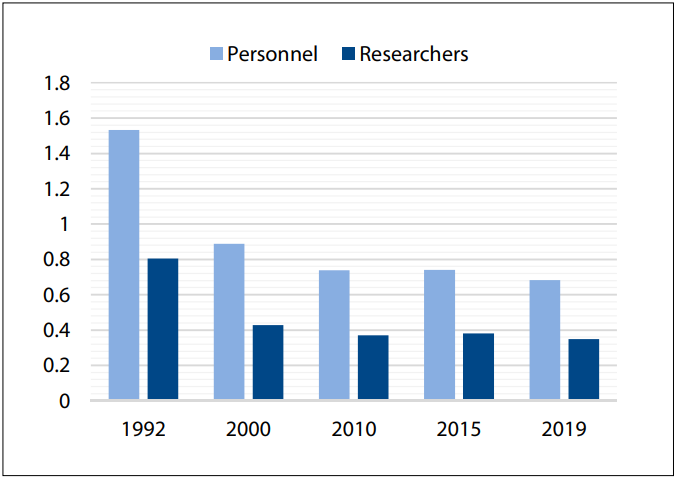
    Figure 1b: Russian R&D Dynamics, 1992–2019: Expenditures
    Source: Federal’naia sluzhba gosudarstvennoi statistiki, “Rossiia v Tsifrakh—2020,” 2021, https://gks.ru/bgd/regl/b20_11/Main.htm; Federal’naia sluzhba gosudarstvennoi statistiki, Rossiiskii Statisticheskii ezhegodnik 2009 (Moscow, 2009), 543, 553; Federal’naia sluzhba gosudarstvennoi statistiki, Rossiiskii Statisticheskii ezhegodnik 2020 (Moscow, 2020), 495–6, https://rosstat.gov.ru/storage/mediabank/Ejegodnik_2020.pdf; Gosudarstvennyi komitet Rossiiskoi Federatsii po statistike, Rossiiskii Statisticheskii ezhegodnik 2003 (Moscow, 2003), 531.

    Russia, while losing its elite migrants to the more developed countries of the Global North, was at least partially substituting for their loss with immigration from less developed states, primarily those in the post-Soviet space.

    Overall, it could be concluded that Russia transformed in the early 2000s from the country in deep economic and social crisis—and source of massive elite outflows— that it had been in the 1990s into a state with a moderate level of development that played multiple roles in the world migration chain: both sending and receiving migrants as well as acting as a migrant transit country. Russia, while losing its elite migrants to the more developed countries of the Global North, was at least partially substituting for their loss with immigration from less developed states, primarily those in the post-Soviet space. The impact of the “pull” factors of migration increased, while that of the “push” factors decreased, at least in relative terms.

    After the Invasion

    This multiplicity of roles was for the most part retained by the RF after the first invasion of Ukraine in 2014 (even under the conditions of the expanding sanctions
    regime) and during the general decline of migration activity worldwide as a result of COVID-19 restrictions. Yet the events of 2022 have drastically changed the migration environment, returning it to a crisis level, with the “push” factors of migration (such as the deteriorating political situation, sharp disagreements with governmental policies among certain segments of society, the unwillingness of many to serve in the RF military, the fear of losing jobs and sources of income, etc.) coming to the forefront.

    When it comes to the contrast between current migration flows and previous post-Soviet flows, the following points should be noted:

    • The 2022 migration waves are defined primarily by “push” factors, which have frequently forced people to leave even in the absence of adequate preparation
      (previous experience of work or study abroad, personal or professional networks) or clear prospects in destination countries.
    • Migration in 2022 is frequently directed toward smaller and economically weaker countries than in the 1990s, including those in Eastern Europe, the post-Soviet space (Central Asia, the Caucasus), and the Persian Gulf, as well as Turkey and Mongolia. This may lead to the reversal of the trends that have dominated (especially elite) migration patterns in Central Eurasia for the last three decades. This reversal, which has important symbolic value, may create significant long-term labor-market and demographic problems for the RF.
    • In contrast to previous migration waves, the current ones are marked by their hectic, spontaneous character and the heavy presence in the flow of young people working in the IT and business sectors, who are relatively flexible and could either seek jobs or create private-sector businesses. At the same time, there is also a significant share of people, especially within the academic bloc, who hold Humanities and Social Sciences degrees and have very limited prospects of finding jobs that correspond to their qualifications. Thus, even under the current crisis conditions, substantial return migration can be expected.
    • In 2022, movement is further complicated by the heritage of the COVID-19 pandemic and the new limitations resulting from the 2022 sanctions— these are related to the blocking of RF-issued credit cards, the break-up of direct transportation links with most European countries, complications with getting visas, and frequently prohibitive airfare rates. An additional complication is presented by the recent proposals, in a number of Western countries, to arrest RF citizens or confiscate their property.
    • A particular feature of the 2022 flows has been their “explosive,” emergency character, marked by very high intensity in the initial weeks and a relatively
      quick decline thereafter.

    There also exist visible differences between the flow that followed the developments of February 2022 and the flow that followed the events of September 2022. In particular,

    • A noticeable discrepancy exists in terms of their scale and gender structure. The first flow was on the order of 100,000–150,000 people and was relatively balanced in gender terms, frequently including whole families with children. The second, which followed Putin’s mobilization announcement, has been heavily dominated by young males. This in itself poses significant problems for Russia’s demographic and economic future.
    • The first flow was directed, first and foremost, toward all the countries neighboring Russia. The current one, meanwhile, is taking place under the conditions of
      changing public attitudes and governmental policies toward RF citizens, even those who oppose Putin’s actions. This dynamic could lead to general change in the direction of migration flows.
    • The flow of the first half of 2022 was marked by heavy presence of foreign citizens and people with dual citizenship or other legal status, who moved to the countries where they held such status. The participants in the current flow, who are primarily RF citizens, face additional legal problems in receiving countries by comparison.
    • The original flow included large numbers of people who worked in the RF offices of transnational companies that relocated, along with their personnel, to other countries. These people had some social guarantees, had experience of work for a TNC, and could rely on their companies’ support. People emigrating in the newest waves lack these opportunities.
    • The large-scale arrival of migrants in countries with relatively weak infrastructure and limited economic capacity (the states of the Baltic, the Transcaucasus, and Central Asia) has put significant pressure on these states’ economies and labor markets. Successive waves of migrants will therefore increasingly  encounter competition, economic hardship, and negative public attitudes.

    While there exist huge discrepancies in the estimates of migration flows made by various entities—both governmental agencies and non-governmental organization —in Russia as well as the receiving states, it is clear that the most recent flow has been much larger than the one in the first half of 2022. The most frequently cited figure is on the order of 700,000 people.12 How-ever, a major problem is that most estimates rely on the statistical data of the national border guard services, which report the number of border crossings in a particular period of time without accounting for repeat crossings, return migration, movement to the third countries, “shuttle” activities, irregular migration, etc.13 Because of these limitations, it is likely that the overall number of migrants in the “second wave” is currently in the range of 350,000–450,000. Thus, the overall number of migrants who have left the RF in the two urgent and chaotic waves of 2022 can be estimated at about 500,000. Even this figure represents a substantial potential loss for a country—particularly one like Russia that was already experiencing population decline.14 It is a special concern considering the skewed gender, age, and qualification structure of those currently leaving the RF.

    Table 1: Russian R&D Dynamics, 1992–2019
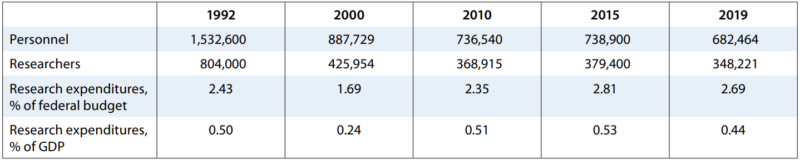
    Source: Federal’naia sluzhba gosudarstvennoi statistiki, “Rossiia v Tsifrakh—2020,” 2021, https://gks.ru/bgd/regl/b20_11/Main.htm; Federal’naia sluzhba gosudarstvennoi statistiki, Rossiiskii Statisticheskii ezhegodnik 2009 (Moscow, 2009), 543, 553; Federal’naia sluzhba gosudarstvennoi statistiki, Rossiiskii Statisticheskii ezhegodnik 2020 (Moscow, 2020), 495–6, https://rosstat.gov.ru/storage/mediabank/Ejegodnik_2020.pdf; Gosudarstvennyi komitet Rossiiskoi Federatsii po statistike, Rossiiskii Statisticheskii ezhegodnik 2003 (Moscow, 2003), 531.

    While these factors represent some very important arguments for putting an immediate end to the military action, it is clear that demographic, labor market, and socio-economic considerations are of minor significance for Vladimir Putin. More than that, following Alexander Lukashenka’s example in Belarus following the protests there in 2020, the RF leadership could perceive the current migration outflows as politically useful, ridding it of opponents to the war and regime and further weakening the country’s civil society. Thus, the disastrous 2022 policies might continue, aggravating both the domestic socio-economic situation and the RF’s position in the world.

    References:

    1. In particular, Russia’s industrial output in September 2022 was 9% of that in September 2021 (Federal’naia Sluzhba Gosudarstvennoi Statistiki, “Operativnye Pokazateli,” 2022, https://rosstat.gov.ru/).
    2. United Nations Department of Economic and Social Affairs, Population Division, Trends in International Migration Stock: The 2015 Revi- sion (New York: United Nations, 2015).
    3. Anatolii Vishnevskii, , Naseleniie Rossii 2003-2004: Odinnadtsatyi-dvenadtsatyi ezhegodnyi demograficheskii doklad (Moscow: Nauka, 2006), 325.
    4. “‘Meduza’ ob emigratsii iz Rossii,” Demoscope 945–6 (17–30 May 2022), http://www.demoscope.ru/weekly/2022/0945/gazeta01.php.
    5. Federal’naia sluzhba gosudarstvennoi statistiki, “Rossiia v Tsifrakh—2020,” 2021, https://gks.ru/bgd/regl/b20_11/Main.htm; Gosudarst- vennyi komitet Rossiiskoi Federatsii po statistike, Rossiiskii Statisticheskii ezhegodnik 2003 (Moscow, 2003),
    6. This group is second to that of countries with extra-large diasporas (more than 1,000,000 people). As of 2015, that group included India (2,080,000), China (1,655,000), the Philippines, the UK, and See Irina Dezhina, Evgeny Kuznetsov, and Andrei Korobkov, Raz- vitie Sotrudnichestva s Russkoiazychnoi Diasporoi: Opyt, Problemy, Perspektivy (Moscow, 2015), http://russiancouncil.ru/upload/Report- Scidiaspora-23-Rus.pdf, 18.
    7. V. Korobkov and Zh. A. Zaionchkovskaya, “Russian Brain Drain: Myths and Reality,” Communist and Post-Communist Studies 45, no. 3-4 (September-December 2012): 332.
    8. , 335–6. See also Andrei Korobkov, “Russian Academic Diaspora: Its Scale, Dynamics, Structural Characteristics, and Ties to the RF,” in Migration from the Newly Independent States: 25 Years After the Collapse of the USSR, ed. Mikhail Denisenko, Salvatore Strozza, and Matthew Light (New York: Springer, 2020), 299–322.
    9. Federal’naia sluzhba gosudarstvennoi statistiki, “Rossiia v Tsifrakh—2020;” Federal’naia sluzhba gosudarstvennoi statistiki, Rossiiskii Stat- isticheskii ezhegodnik 2020 (Moscow, 2020), 495–6, https://rosstat.gov.ru/storage/mediabank/Ejegodnik_2020.pdf.
    10. “Mezhdunarodnye studenty,” Unipage, 2019, https://unipage.net/ru/student_statistics.
    11. Federal’naia sluzhba gosudarstvennoi statistiki, “Rossiia v Tsifrakh—2020;” Federal’naia sluzhba gosudarstvennoi statistiki, Rossiiskii Stat- isticheskii ezhegodnik 2020, 206, https://rosstat.gov.ru/storage/mediabank/Ejegodnik_2020.pdf.
    12. See, for instance, “Forbes: posle ob”iavleniia mobilizatsii Rossiiu pokinuli primerno 700 chelovek,” Kommersant, October 4, 2022, https://www.kommersant.ru/doc/5594533.
    13. For example, the Interior Ministry of Kazakhstan reported at the beginning of October that in the wake of the mobilization announcement by Vladimir Putin on September 21, 2022, more than 200,000 people had crossed the country’s border with Russia, of whom just seven had been deported back to the At the same time, this report noted that 147,000 of them had already left Kazakhstan within a period of less than two weeks. See Mikhail Rodionov, “V Kazakhstan s 21 sentiabria v”ekhali bolee 200 tysiach rossiian. Deportirovali semerykh,” Gazeta. ru, October 4 2022, https://www.gazeta.ru/politics/2022/10/04/15571807.shtml.
    14. In 2019, the fertility rate in Russia was 1.504. See Federal’naia sluzhba gosudarstvennoi statistiki, “Rossiia v Tsifrakh—2020;” Federal’naia sluzhba gosudarstvennoi statistiki, Rossiiskii Statisticheskii ezhegodnik 2020, 103.

    This article was originally published at the Center for Security Studies (CSS)

    Featured Image Credits: Politico
  • Roe overturned: What you need to know about the American Supreme Court abortion decision

    Roe overturned: What you need to know about the American Supreme Court abortion decision

    Despite the terminal decline of the American Empire or the Deep State, the American Republic still remains an inspiration for people across the world, for reasons of its vibrant democracy and peoples’ liberty ensured through robust institutions, law and order, and the strong constitutional process. To paraphrase Johan Galtung – ‘the US is a fabulous Republic but a terrible empire’. But even that seems to be changing as society’s democratic values, ethics, and morals are in serious decline.  The rise of right wing politics has led to a decline in the standards and values, and in the independence of institutions most notably the Judiciary. Separation of the Church and the State is a core tenet of the American Constitution and governance. That seems to be compromised as many judges bring their personal and religious beliefs in to their work. This was in demonstration in the American Supreme Court’s judgement that ends one of the most critical fundamental rights of women to their bodies and their choices for abortion. 

    After half a century, Americans’ constitutional right to get an abortion has been overturned by the Supreme Court.The ruling in Dobbs v. Jackson Women’s Health Organization – handed down on June 24, 2022 – has far-reaching consequences. There is a strong religious influence to this judgement. This could influence many other countries, particularly in an environment where right wing politics, influenced by narrow religious overtones,  is on the upswing in many countries across the world, including the world’s largest Democracy, India. Fortunately, India’s abortion laws are governed by medical advice and womens’ safety (and so it is termed MTP – Medical termination of Pregnancy). The MTP Act of 1971 was further liberalised through an Amendment Act of 2021 wherein the gestation limit for abortions is raised from 20 to 24 weeks. While India’s laws are considerate by supporting abortion decision to rape and incest survivors, the American judgement will deny this freedom or choice to the victim women.

     Nicole Huberfeld and Linda C. McClain, health law and constitutional law experts at Boston University, explain what just happened, and what happens next. This article was published earlier in The Conversation. TPF is happy to republish this article under the Creative Commons Attribution-No Derivatives 4.0-International (CC BY-ND 4.0).

    – TPF Editorial Team

    What did the Supreme Court rule?

    The Supreme Court decided by a 6-3 majority to uphold Mississippi’s ban on abortion after 15 weeks of pregnancy. In doing so, the justices overturned two key decisions protecting access to abortion: 1973’s Roe v. Wade and Planned Parenthood v. Casey, decided in 1992.

    The court’s opinion, written by Justice Samuel Alito, said that the Constitution does not mention abortion. Nor does the Constitution guarantee abortion rights via another right, the right to liberty.

    The opinion rejected Roe’s and Casey’s argument that the constitutional right to liberty included an individual’s right to privacy in choosing to have an abortion, in the same way that it protects other decisions concerning intimate sexual conduct, such as contraception and marriage. According to the opinion, abortion is “fundamentally different” because it destroys fetal life.

    The court’s narrow approach to the concept of constitutional liberty is at odds with the broader position it took in the earlier Casey ruling, as well as in a landmark marriage equality case, 2015’s Obergefell v. Hodges. But the majority said that nothing in their opinion should affect the right of same-sex couples to marry.

    Alito’s opinion also rejected the legal principle of “stare decisis,” or adhering to precedent. Supporters of the right to abortion argue that the Casey and Roe rulings should have been left in place as, in the words of the Casey ruling, reproductive rights allow women to “participate equally in the economic and social life of the Nation.”

    The ruling does not mean that abortion is banned throughout the U.S. Rather, arguments about the legality of abortion will now play out in state legislatures, where, Alito noted, women “are not without electoral or political power.”

    States will be allowed to regulate or prohibit abortion subject only to what is known as “rational basis” review – this is a weaker standard than Casey’s “undue burden” test. Under Casey’s undue burden test, states were prevented from enacting restrictions that placed substantial obstacles in the path of those seeking abortion. Now, abortion bans will be presumed to be legal as long as there is a “rational basis” for the legislature to believe the law serves legitimate state interests.

    In a strenuous dissent, Justices Stephen Breyer, Elena Kagan and Sonia Sotomayor faulted the court’s narrow approach to liberty and challenged its disregard both for stare decisis and for the impact of overruling Roe and Casey on the lives of women in the United States. The dissenters said the impact of the decision would be “the curtailment of women’s rights, and of their status as free and equal citizens.” They also expressed deep concern over the ruling’s effect on poor women’s ability to access abortion services in the U.S.

    Where does this decision fit into the history of reproductive rights in the U.S.?

    This is a huge moment. The court’s ruling has done what reproductive rights advocates feared for decades: It has taken away the constitutional right to privacy that protected access to abortion.

    This decision was decades in the making. Thirty years ago when Casey was being argued, many legal experts thought the court was poised to overrule Roe. Then, the court had eight justices appointed by Republican presidents, several of whom indicated readiness to overrule in dissenting opinions.

    Instead, Republican appointees Anthony Kennedy, Sandra Day O’Connor and David Souter upheld Roe. They revised its framework to allow more state regulation throughout pregnancy and weakened the test for evaluating those laws. Under Roe’s “strict scrutiny” test, any restriction on the right to privacy to access an abortion had to be “narrowly tailored” to further a “compelling” state interest. But Casey’s “undue burden” test gave states wider latitude to regulate abortion.

    Even before the Casey decision, abortion opponents in Congress had restricted access for poor women and members of the military greatly by limiting the use of federal funds to pay for abortion services.

    In recent years, states have adopted numerous restrictions on abortion that would not have survived Roe’s tougher “strict scrutiny” test. Even so, many state restrictions have been struck down in federal courts under the undue burden test, including bans on abortions prior to fetal viability and so-called “TRAP” – targeted regulation of abortion provider – laws that made it harder to keep clinics open.

    President Donald Trump’s pledge to appoint “pro-life” justices to federal courts – and his appointment of three conservative Supreme Court justices – finally made possible the goal of opponents of legal abortion: overruling Roe and Casey.

    What happens next?

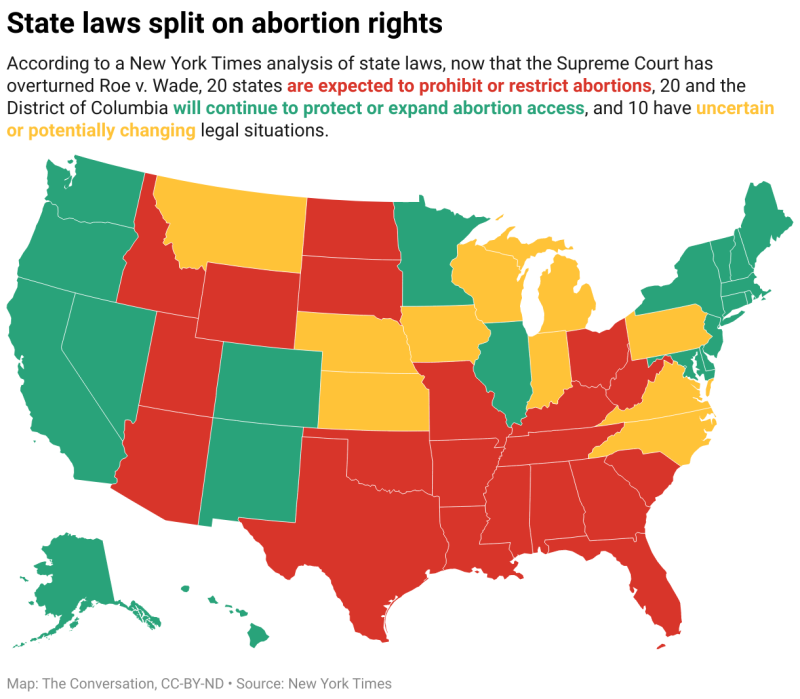
    Even before Dobbs, the ability to access abortion was limited by a patchwork of laws across the United States. Republican states have more restrictive laws than Democratic ones, with people living in the Midwest and South subject to the strongest limits.

    Thirteen states have so-called “trigger laws,” which greatly restrict access to abortion. These will soon go into effect now that the Supreme Court has overturned Roe and Casey, requiring only state attorney general certification or other action by a state official.

    Nine states have pre-Roe laws never taken off the books that significantly restrict or ban access to abortion. Altogether, nearly half of states will restrict access to abortion through a variety of measures like banning abortion from six weeks of pregnancy – before many women know they are pregnant – and limiting the reasons abortions may be obtained, such as forbidding abortion in the case of fetal anomalies.

    Meanwhile, 16 states and the District of Columbia protect access to abortion in a variety of ways, such as state statutes, constitutional amendments or state Supreme Court decisions.

    None of the states that limit abortion access currently criminalize the pregnant person’s action. Rather, they threaten health care providers with civil or criminal actions, including loss of their license to practice medicine.

    Some states are creating “safe havens” where people can travel to access an abortion legally. People have already been traveling to states like Massachusetts from highly restrictive states.

    The court’s decision may drive federal action, too.

    The House of Representatives passed the Women’s Health Protection Act, which protects health care providers and pregnant people seeking abortion, but Senate Republicans have blocked the bill from coming up for a vote. Congress could also reconsider providing limited Medicaid payment for abortion, but such federal legislation also seems unlikely to succeed.

    President Joe Biden could use executive power to instruct federal agencies to review existing regulations to ensure that access to abortion continues to occur in as many places as possible. Congressional Republicans could test the water on nationwide abortion bans. While such efforts are likely to fail, these efforts could cause confusion for people who are already vulnerable.

    The Supreme Court’s rolling back a right that has been recognized for 50 years puts the U.S. in the minority of nations, most of which are moving toward liberalization.

    What does this mean for people in America seeking an abortion?

    Unintended pregnancies and abortions are more common among poor women and women of color, both in the U.S. and around the world.

    Research shows that people have abortions whether lawful or not, but in nations where access to abortion is limited or outlawed, women are more likely to suffer negative health outcomes, such as infection, excessive bleeding and uterine perforation. Those who must carry a pregnancy to full term are more likely to suffer pregnancy-related deaths.

    The state-by-state access to abortion resulting from this decision means many people will have to travel farther to obtain an abortion. And distance will mean fewer people will get abortions, especially lower-income women – a fact the Supreme Court itself recognized in 2016.

    But since 2020, medication abortion – a two-pill regimen of mifepristone and misoprostol – has been the most common method of ending pregnancy in the U.S. The coronavirus pandemic accelerated this shift, as it drove the Food and Drug Administration to make medication abortions more available by allowing doctors to prescribe the pills through telemedicine and permitting medication to be mailed without in-person consultation.

    Many states that restrict access to abortion also are trying to prevent medication abortion. But stopping telehealth providers from mailing pills will be a challenge. Further, because the FDA approved this regimen, states will be contradicting federal law, setting up conflict that may lead to more litigation.

    The Supreme Court’s rolling back a right that has been recognized for 50 years puts the U.S. in the minority of nations, most of which are moving toward liberalization. Nevertheless, even though abortion is seen by many as essential health care, the cultural fight will surely continue.

    Featured Image Credit: Evening Standard

  • Washington Accuses Russia of Committing War Crimes in Ukraine: Terrible and True, But What About US War Crimes?

    Washington Accuses Russia of Committing War Crimes in Ukraine: Terrible and True, But What About US War Crimes?

    This article is republished from Antiwar.com with permission.

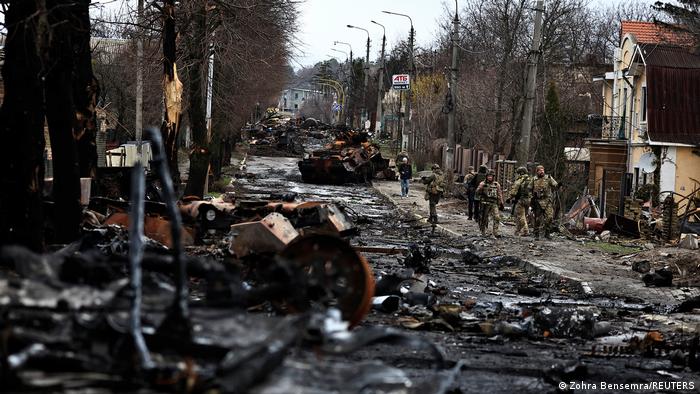
    Nothing can justify this terrible toll and Moscow’s attack. However, those who judge the moral conduct of others should be measured by the same standard. Which raises the question of war crimes committed by the US in its many conflicts.

    Washington appears intent on making Russia’s war on Ukraine into a moral crusade. Pentagon spokesman John Kirby last week declared that “we’re certainly seeing clear evidence that the Russian military is conducting war crimes.”

    Any large-scale conflict is going to kill civilians, some directly in combat, others from the impact of war’s destructive impact on a modern society. Thus, Russian attacks on Ukrainian cities such as Mariupol cannot help but kill civilians. Last week the UN Office of the High Commissioner for Human Rights estimated 953 dead and 1557 injured Ukrainian civilians. But that is merely the number of victims whose death can be confirmed.

    OHCHR reported that it “believes that the actual figures are considerably higher, especially in Government-controlled territory and especially in recent days, as the receipt of information from some locations where intense hostilities have been going on has been delayed and many reports are still pending corroboration. This concerns, for example, Mariupol and Volnovakha (Donetsk region), Izium (Kharkiv region), Sievierodonetsk and Rubizhne (Luhansk region), and Trostianets (Sumy region), where there are allegations of numerous civilian casualties. These figures are being further corroborated and are not included in the above statistics.”

    And if war criminals were routinely prosecuted, Americans would be in the dock as well as Russians.

    Nothing can justify this terrible toll and Moscow’s attack. However, those who judge the moral conduct of others should be measured by the same standard. Which raises the question of war crimes committed by the US in its many conflicts. American forces may attempt to fight “cleaner” wars than does Russia, but even so no one should have any illusion about the high civilian cost of Washington’s interventions. Innocent people die, some directly, many indirectly. And if war criminals were routinely prosecuted, Americans would be in the dock as well as Russians.

    Consider Washington’s widespread drone war. One terrible strike made last August when Americans were withdrawing from Afghanistan wiped out a family, including seven kids. It was a terrible mistake, but the US was culpable. Reported the New York Times: “Military officials said they did not know the identity of the car’s driver when the drone fired, but deemed him suspicious because of how they interpreted his activities that day, saying that he possibly visited an ISIS safe house and, at one point, loaded what they thought could be explosives into the car.” [Italics added] Upon this litany of unproved suppositions, which turned out to be wild speculation, Washington acted like a terrorist and wiped him out along with all those around him.

    Such mistakes are common because America relies on such “signature” strikes, based on interpretating the actions of people typically hundreds or thousands of miles away. Noted the New York Times: “Every independent investigation of the strikes has found far more civilian casualties than administration officials admit. Gradually, it has become clear that when operators in Nevada fire missiles into remote tribal territories on the other side of the world, they often do not know who they are killing, but are making an imperfect best guess.”

    Afghanistan has been a major focus of America’s drone war. A detailed investigation in 2015 by two media organizations and a foundation concluded that drone strikes had killed 3852 people, 476 of whom were civilians. That’s a civilian kill rate of 12.4 percent, better than untargeted air or artillery strikes, but still much higher than claimed by Washington.

    According to journalist Emran Feroz: “Afghanistan is the most drone-bombed country in the world. The United States dropped more bombs on Afghanistan in 2019 than in any other years since the Defense Department began keeping track in 2006. According to new figures released by the U.S. military, at least 7,423 bombs and other munitions were dropped on the country in 2019, a nearly eight-fold increase from 2015 and an average of 20 bombs a day.”

    He described another drone attack that apparently went awry: “Ordinary Afghans say it has happened to them many times and never – not once – has it made news anywhere outside Afghanistan. Last November, an American Reaper drone targeted a group of villagers in the mountainous area of Afghanistan’s southeastern province of Paktia and killed seven of them. Paktia has long been home to Taliban militants, but local residents say all the victims were civilians, including three women and one child. They had gone to the remote area to graze their cattle and collect wood. Suddenly, they were dead.”

    Another cost of the drone war: creating new terrorists who target Americans. Waging war on Muslims around the world makes a lot of enemies, some of whom strike back.

    For instance, Pakistani-American Faisal Shahzad attempted to set off a bomb in Times Square in response to Washington’s drone campaign. He explainedto the court in 2010: “I want to plead guilty 100 times because unless the United States pulls out of Afghanistan and Iraq, until they stop drone strikes in Somalia, Pakistan and Yemen and stop attacking Muslim lands, we will attack the United States and be out to get them.” The judge asked him why he was willing to kill kids. He explained: “When the drones hit, they don’t see children.” Hence, Shahzad concluded that “I am part of the answer to the US killing the Muslim people.”

    America’s anti-ISIS bombing campaign also killed civilians in prodigious numbers. NPR reported on the work of New York Times correspondent David Philipps, who said “the United States’ air war against ISIS seems to have been particularly brutal on innocent civilians in Syria. In recent stories, Philipps reports that a top-secret unit of the US military was allowed to pick targets for drone attacks and bombing runs with little oversight, and that as the conflict wore on, it increasingly sidestepped rules to protect noncombatants, ordering airstrikes that killed farmers in their fields, children in the street and families fleeing combat.”

    According to Philipps, the military counted 1400 dead civilians “during the four years of the war. And they were very confident that those numbers were real and that outside organizations like Human Rights Watch that were reporting numbers that were many times higher were being unreasonable. But once we looked under the hood at how it worked, we found that, you know, time and time again, their accounts were just seriously flawed.”

    The Times explained that it “worked with journalist Azmat Khan, who went to dozens and dozens of these sites on the ground and talked to people who were there and compared what they said to what the military’s own records said and found repeatedly that there was a gulf between them.” For instance, Human Rights Watch estimated some 7000 dead civilians. A toll that dwarfs the number of civilian dead in Ukraine, where the US is blaming Russia for committing war crimes.

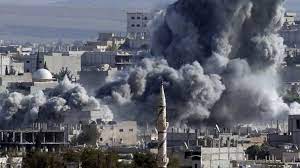
    The US also has armed Saudi Arabia and United Arab Emirates, helping them wreak death and destruction against Yemen, the poorest nation in the Mideast. No participant in this civil war, which was internationalized by the Saudis and Emiratis, looks good. However, most casualties and damage are a result of the royal regimes’ air attacks and effective blockade, which has resulted in mass malnutrition, immiseration, and disease.

    President Joe Biden once criticized the Kingdom of Saudi Arabia and its pernicious role in the Yemen war. Like so many of his predecessors, however, he has since effectively turned US policy over to Riyadh and Abu Dhabi, continuing to sell them weapons and deploying US forces to help protect them from retaliation for their continuing attacks on Yemeni civilians. A year after the president took office the war is heating back up in Yemen.

    Reported the Yemen Data Project: “January 2022 was the most violent month in the Saudi-led air war in Yemen in more than five years. Yemen Data Project recorded 139 civilian deaths and 287 civilians injured in Saudi coalition airstrikes in January, taking the casualty toll to over 19,000 civilians killed and injured since Saudi Arabia launched its bombing campaign in Yemen in March 2015. Not since October 2016 have more civilian casualties been recorded in a single month in the air war. Saudi-led coalition airstrikes caused more civilian harm in the first month of 2022 than in the two previous years combined.”

    The UN Group of Eminent International and Regional Experts on Yemenrevealed that civilians were routinely targeted by the Saudi and Emirati royals. Victims included “civilians shopping at markets, receiving care in hospitals, or attending weddings and funerals; children on buses; fishers in boats; migrants seeking a better life; individuals strolling through their neighborhoods; and people who were at home.”

    Widespread air attacks also wrecked basic infrastructure, with catastrophic consequences for health, nutrition, commerce, and safety. The United Nations Development Program reported:

    “By comparing the current reality in Yemen to a scenario where no conflict ever occurred, we can provide an estimate of the total death count – the number of deaths caused both directly and indirectly from the conflict. By doing so, we found that by the end of 2021, Yemen’s conflict will lead to 377,000 deaths – nearly 60 per cent of which are indirect and caused by issues associated with conflict like lack of access to food, water, and healthcare. These deaths are overwhelmingly made up of young children who are especially vulnerable to under and malnutrition. In 2021, a Yemeni child under the age of five dies every nine minutes because of the conflict. This is a significant increase since our 2019 report, Assessing the Impact of War on Development in Yemen, that – through the same assessment – found this to be approximately every 12 minutes.”

    In 2021, a Yemeni child under the age of five dies every nine minutes because of the conflict.

    The experts’ group also found devastating impact: “Protracted conflict, disease outbreaks, the COVID-19 pandemic, flooding, import restrictions, an economic and fuel crisis, and limited humanitarian aid have made everyday life in Yemen unbearable for many. According to the Office for the Coordination of Humanitarian Affairs, around 20.7 million people in Yemen currently require some form of humanitarian and protection assistance. More than 16.2 million of them will face significant food insecurity this year. Additionally, international funding has fallen far short of the required levels to address the humanitarian crisis.”

    Harm from this kind of warfare goes even further. Last fall the experts’ group observed that “Living in a country subjected to an average of 10 airstrikes per day has left millions feeling far from safe. Although the frequency and intensity of airstrikes have fluctuated over the last four years, the Group of Eminent Experts has continued to observe their devastating impact on civilians.”

    “The civilian death toll from Saudi Arabia’s disastrous air war over Yemen was steadily rising in 2016 when the State Department’s legal office in the Obama administration reached a startling conclusion: Top American officials could be charged with war crimes for approving bomb sales to the Saudis and their partners. Four years later, more than a dozen current and former US officials say the legal risks have only grown as President Trump has made selling weapons to Saudi Arabia, the United Arab Emirates and other Middle East nations a cornerstone of his foreign policy.”

    Assessing Washington’s moral blame in aiding the royal aggressors is easy. The legal case is more difficult, but the State Department already made the connection. It warned previous administrations that US officials were committing war crimes. The New York Times reported: “The civilian death toll from Saudi Arabia’s disastrous air war over Yemen was steadily rising in 2016 when the State Department’s legal office in the Obama administration reached a startling conclusion: Top American officials could be charged with war crimes for approving bomb sales to the Saudis and their partners. Four years later, more than a dozen current and former US officials say the legal risks have only grown as President Trump has made selling weapons to Saudi Arabia, the United Arab Emirates and other Middle East nations a cornerstone of his foreign policy.”

    Washington intervened in Libya’s civil war more than a decade ago to promote regime change under cover of helping to protect civilians from the Khadafy government. The country that was the most developed and wealthiest in Africa was bombed to stone age by the US and NATO.

    There is much more to criticize in US policy. Rural Afghanistan suffered desperately for years as a battleground between the US and Taliban, causing many residents to turn toward the insurgents. Washington intervened in Libya’s civil war more than a decade ago to promote regime change under cover of helping to protect civilians from the Khadafy government. Hopes for a better future remained unfulfilled as contending factions subsequently fought for control and now squabble over plans to hold elections.

    Russia deserves to be criticized and held accountable for its increasingly brutal military campaign in Ukraine. However, Washington would have more credibility to judge if its message wasn’t do as I say, not as a I do. US officials should come clean internationally and admit when they have failed in their obligation to protect human rights, including in wartime. Next time they shouldn’t just promise to do better. They should do so.


  • Distress Migration: A case study of KBK districts in Odisha

    Distress Migration: A case study of KBK districts in Odisha

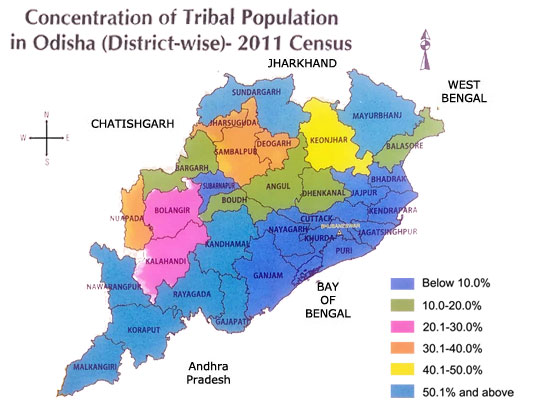
    The former districts of Koraput, Balangir and Kalahandi, also known as KBK districts, were reorganised into 8 districts of Koraput, Malkangiri, Nabarangpur, Rayagada, Balangir, Subarnapur, Kalahandi and Nuapada in 1992. These districts form the South-West part of Odisha comprising the great Deccan Plateau and the Eastern Ghats. These highland districts highly rich in mineral resources, flora and fauna remain as one of the most backward regions in Odisha

    Among the different forms of migration, distressed migrants remain the most impoverished and unrecognised. These migrants form the lowest strata of the society; disadvantaged by caste, poverty and structural inequalities. In Odisha, the underdeveloped region of KBK is one among the main sources of distressed migrants. They move to cities in search of employment and better wages, while in cities they are even more disadvantaged due to social, economic and linguistic barriers. Administrative and political apathy over their issues has only enhanced their distress.

    This paper attempts to address three questions:

    1. What are the characteristics of distressed migrants in KBK district, Odisha?
    2. What are the existing policies of the state to curb this form of migration?
    3. What form of government intervention is required to address this distress?

    The analysis is carried out through a review of published articles, government reports, e-books and newspaper reports.

    Defining distress migration

    Migration is a multifaceted concept driven by diverse factors. Migration can be internal or international, voluntary or involuntary, temporary or permanent. Depending on the pattern and choice of migration, each migratory trend could be characterised into different forms. Distress migration is one such form of migration.

    Involuntary migration is often associated with displacement out of conflict, environmental distress, climatic change etc. That is any sudden threat or event forces people to migrate. However, involuntary migration may also arise out of socio-economic factors such as poverty, food insecurity, lack of employment opportunities, unequal distribution of resources etc. This component of involuntary migration is addressed by the concept of distress migration (Avis, 2017).

    To understand distressed rural-urban migration in India, the broad definition used by Mander and Sahgal (2010) in their analysis of rural-urban migration in Delhi can be employed. They have discussed distress migration as:

    “Such movement from one’s usual place of residence which is undertaken in conditions where the individual and/or the family perceive that there are no options open to them to survive with dignity, except to migrate. Such distress is usually associated with extreme paucity of alternate economic options, and natural calamities such as floods and drought. But there may also be acute forms of social distress which also spur migration, such as fear of violence and discrimination which is embedded in patriarchy, caste discrimination, and ethnic and religious communal violence” ( Mander and Sahgal, 2010)

    In brief, the definition states that distress migration is caused by an array of issues. Environmental disasters, economic deprivation, gender or social oppression, lack of alternate employment opportunities and inability to survive with dignity are mentioned as the main drivers of distress migration (Avis, 2017).

    Thus, distress migration is a form of temporary migration driven by environmental and socio-economic factors and not based on an informed or voluntary choice.

    Profile of KBK districts

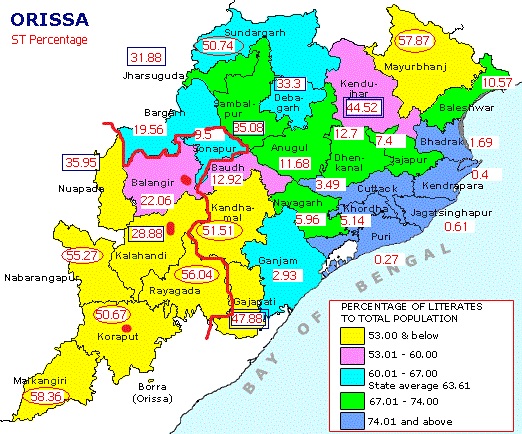
    The former districts of Koraput, Balangir and Kalahandi, also known as the KBK districts, were reorganised into 8 districts of Koraput, Malkangiri, Nabarangpur, Rayagada, Balangir, Subarnapur, Kalahandi and Nuapada in 1992. These districts form the South-West part of Odisha comprising the great Deccan Plateau and the Eastern Ghats. These highland districts highly rich in mineral resources, flora and fauna remain as one of the most backward regions in Odisha. The region is termed backward on account of rural backwardness, high poverty rates, low literacy rates, underdeveloped agriculture and poor development of infrastructure and transportation (Directorate of Economics and Statistics, 2021).

    The districts are home to primitive tribal communities such as Gonds, Koyas, Kotias etc. dependent on forest produce and subsistence agriculture for a living. KBK region registered a workforce participation rate of 48.06 % in the 2011 census. There was a significant occupation change noticed from the 2011 census.  The region witnessed a fall in cultivators from 33% in 2001 to 26.7% in 2011. However, the fall in cultivators was compensated with an increase in agricultural labourers from 44.24 % in 2001 to 48.87% in 2011. Employment in household industries also witnessed a downfall between the period of 2001 to 2011 (Sethy, 2020).

    The rise in agricultural labourers has a negative impact on the communities. As agriculture is underdeveloped owing to the arid nature of the region, crop failure, extreme calamities, low net irrigated area and falling government expenditure, these workers are pushed into abject poverty. In search of alternate employment options, these workers migrate to other areas of employment in rural or urban pockets. Such a form of seasonal migration during the lean period in agriculture is a predominant phenomenon in these districts. Their dependence on non-timber forest produce is hindered by the rapid deterioration and deforestation of forests for development projects and mining.

    Characteristics of distressed migrants in KBK region

    1. Who Are These Distressed Migrants?

    In the KBK region, distress migration has been a popular coping strategy during lean periods of agriculture. And this strategy is majorly adapted by disadvantaged and marginalised sections of the region. They are disadvantaged by caste, chronic poverty, landlessness, low levels of literacy and skills, increased dependence on forest and agriculture and debt-ridden (Meher, 2017; Mishra D.K., 2011; Tripathy, 2015, 2021).

    1. Why Do They Migrate

    Distressed migration in the region is induced by many interlinked factors. One such factor is that the region is highly under-developed in terms of social and economic infrastructure. Such under-development puts the communities at a disadvantage with low levels of literacy and skills. Their dependence on agriculture and forest produce for livelihood rises. However, agriculture is under-developed and forests are subjected to high levels of deforestation. With low levels of income, crop failure and non-availability of alternate employment opportunities, the communities are subjected to absolute levels of poverty, food and employment insecurities (Kujur, 2019).

    Landlessness is also identified as one significant push factor. As the region is highly dominated by tribal communities, they are more attached to and dependent on the forest cover. Globalisation and industrialisation resulted in deforestation and encroachment of farmlands for industrial and mining purposes. Eventually, a major proportion of land remains with a smaller group of wealthy people (Mishra D.K., 2011).   Relocation and involuntary displacement also result in the loss of their livelihood that is dependent on the local environment (Jaysawal & Saha, 2016).

    With falling income, people approach local moneylenders to meet their basic sustenance needs. With low incomes from agriculture and forest produce, families approach these informal creditors to meet emergency needs like marriage, birth and death rituals or medical treatment as well as to meet basic consumption needs with the expectation of cash flow from labour contractors during the lean season. Moneylenders exploit them by charging higher interest rates. Thus, the non-availability of formal credit facilities pushes them into a debt trap and further to adopt migration (KARMI, 2014; Mishra D.K., 2016).

    The region is also subject to extreme calamities and drought. Small and marginal farmers, poor in income and land, choose to migrate as they are unable to cope with the regular droughts and climate change. A study on historical analysis of the effect of climate on migration in Western Odisha mentions that the migratory trend saw a rise after the mega drought in 1965. Up until then, large-scale migration from the region was not a phenomenon (Panda, 2017).


    1. Channel of Migration

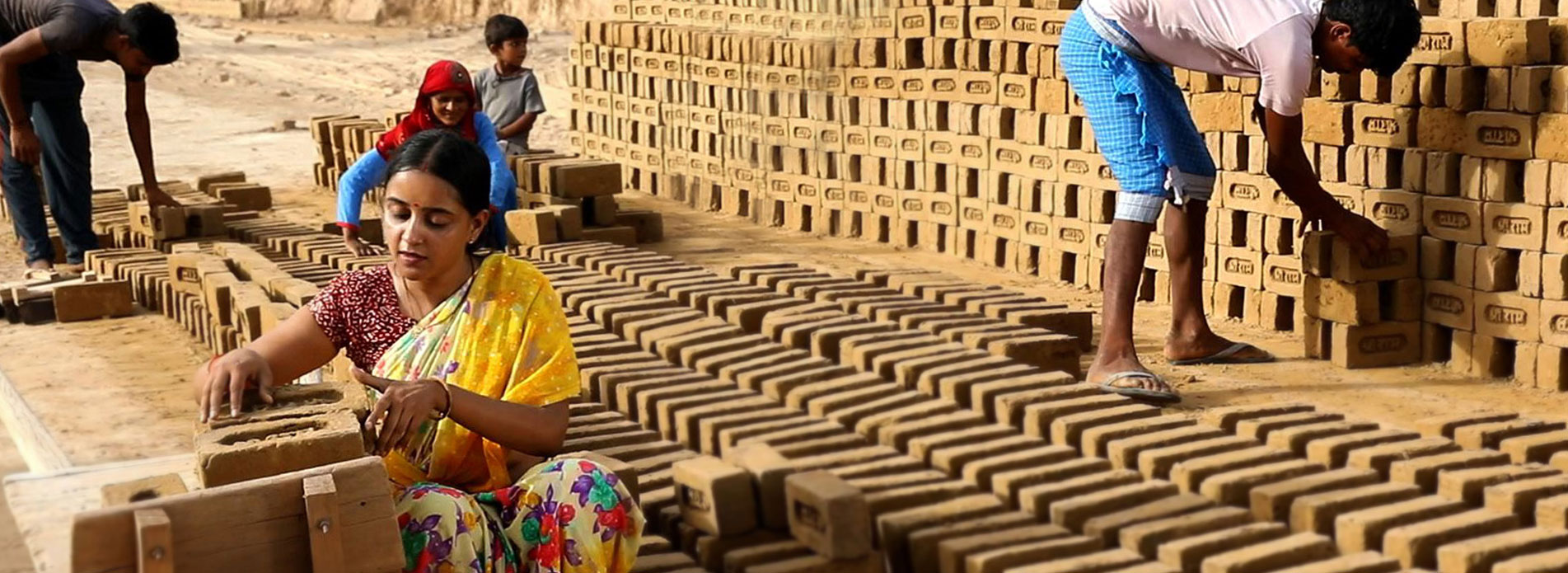
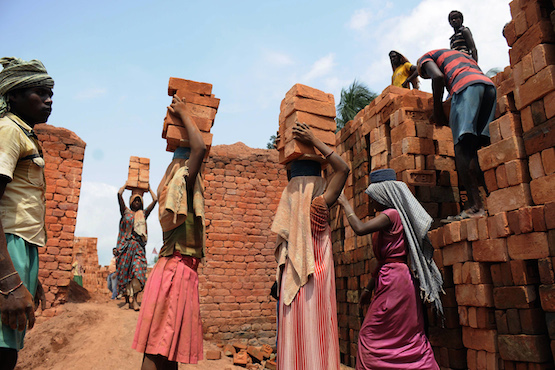
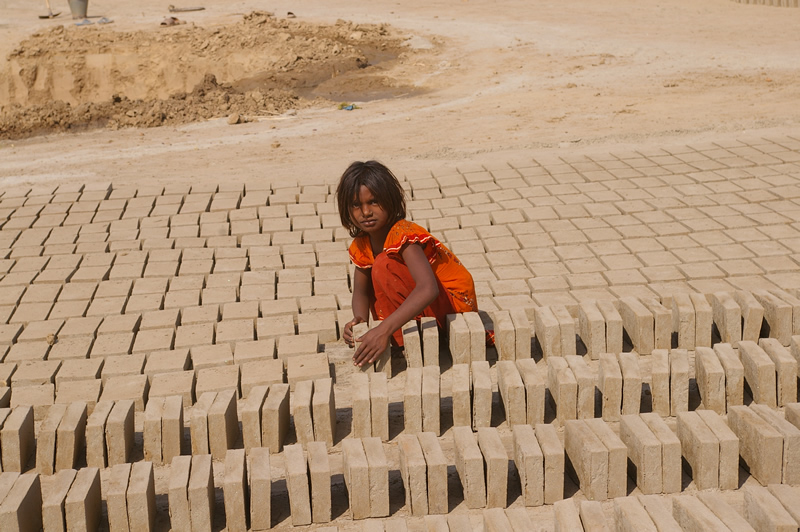
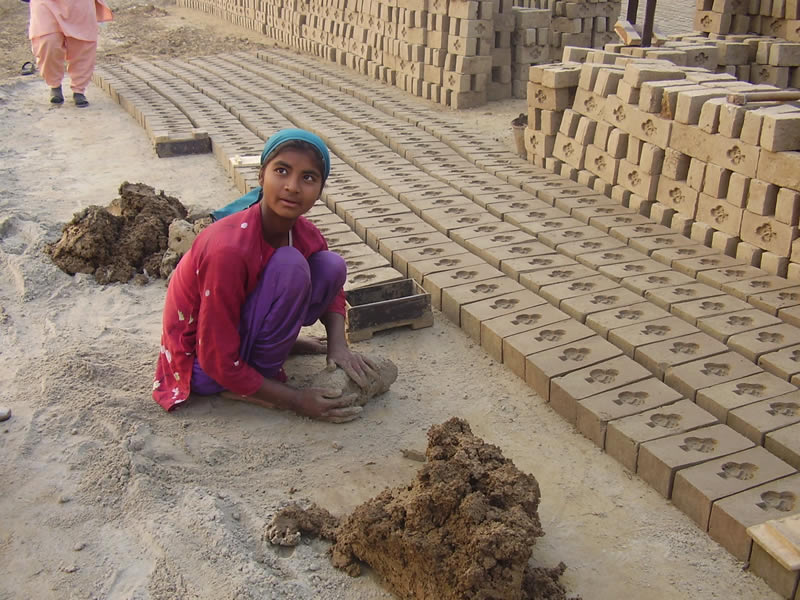
    Sardars provide an advance amount and in exchange, the debtor or any family member agrees to work for them for a stipulated period, usually six months. Hence, there exists a form of debt bondage. Large-scale family migration through this system is seen in the KBK region. The major stream of such bonded labour migration is witnessed towards brick kilns in Andhra Pradesh

    In the region, seasonal migration occurs through the channels of agents, locally known as Sardars, on a contractual basis. This form of migration is known as Dadan labour migration. The poor migrant labourers are known as Dadan and they are recruited by Sardars, who are usually local people who are familiar with residents in the region (KARMI, 2014). During the period of Nukhai, they go around the villages and contact prospective labourers. These Sardars are the intermediary between the employer and the migrant labourer. Sardars provide an advance amount and in exchange, the debtor or any family member agrees to work for them for a stipulated period, usually six months. Hence, there exists a form of debt bondage. Large-scale family migration through this system is seen in the KBK region. The major stream of such bonded labour migration is witnessed towards brick kilns in Andhra Pradesh. They are also a major source of labour in the areas of construction, handlooms and other forms of informal sector work across South India (Daniels, 2014). The problems they face in the destination are manifold. They are subjected to poor working conditions, poor housing and sanitation facilities and limited access to education and health facilities. They are recognised as cheap labour with limited bargaining power owing to their social, cultural and linguistic exclusion in the destination state. Upon entering the contract their freedom to move and freedom to express is denied (Acharya, 2020).

    1. Pull Factors to Migrate

    The hope of availability of better job opportunities and wages is the main pull factor. However, upon the analysis of the nature of migration, push factors have a higher weightage in inducing such distress migration. Migration to brick kilns and other informal sectors from the KBK region can be termed as distress migration as in this case, distress is caused mainly by socioeconomic factors. It is not an informed or voluntary choice. Debt migration remains the only coping strategy that they could adopt.

    Government intervention to curb such distress

    1. Policies Addressing Debt-Bondage Migration:

    The first attempt of the state government to address Dadan migration or debt migration is the enactment of the Dadan Labour (Control and Regulation) Act (ORLA) in 1975. The act had provisions for the registration of labourers and agents, ensuring compliance of minimum wages and favourable working conditions and appointing inspection officers and dispute redressal committees (Daniels, 2014).  However, the act remained on paper and no evidence of enactment was published until it was repealed in 1979 upon the enactment of the Interstate Migrant Workmen (Regulation of Employment and Conditions of Service) Act, 1979 (Nanda, 2017).

    The ISMW act has been criticised to be inadequate and failing to regulate and facilitate safe migration. According to the act, only those interstate migrant workmen who are recruited by licensed agents come under the ambit of the act. However, most agents involved in Dadan migration are not licensed and hence, these workers cannot avail of any of the provisions of the act (Singh, 2020). Though registration of labour contractors is mandatory in the origin state, there is no information about the names of these contractors and hence, further monitoring of the migration process is avoided (NCABL, 2016). Lack of adequate enforcement, under-staffing and poor infrastructure are identified as the reasons for poor implementation of the act in the state (Daniels, 2014).

    A positive attempt against distress migration was the Memorandum of Undertaking (MoU) initiated between the labour department of Odisha and Andhra Pradesh to ensure labour welfare measures of migrant workers in Brick Kilns. After the MoU, the state of undivided Andhra Pradesh took up various progressive measures in education, health, housing and PDS for migrant workers in Brick Kilns. ILO necessitated the need for states to enter into inter-state MoUs to effectively address the bonded labour migration. However, no further MoU was signed with other states like Tamil Nadu, Chhattisgarh etc. which are also among the major host states for migrants from the region (NCABL, 2016).

    The Bonded Labour System (Abolition) Act enacted in 1976 governs the provisions for identification, rescue and rehabilitation of bonded labourers across the country. The act has its loopholes in implementation. There is no information on whether vigilance committees have been set up in every district or whether the surveys have been periodically conducted or to what extent the act has been functioning in the state (Post News Network, 2019). The centrally sponsored scheme for Rehabilitation of Bonded Labour also has its setbacks. There have been reported cases of delay and denial of financial aid by district officials ( Mishra .S., 2016). In 2016, with restructuring and revamping of the Rehabilitation scheme, rescued workers could only avail the full amount of financial aid with the prosecution of the accused employers. With no database on the employer, the rates of prosecution have been low and the rescued bonded labour do not receive their funds (NACBL, 2016)

    1.  Ensuring Accessibility of Health Facilities in Destination

    The Rashtriya Swasthya Bima Yojana or RSBY launched by the central government in 2008 provides health insurance to BPL families. The scheme incorporates provisions to split smart cards so those migrant workers could avail health insurance in destination states. After signing of the MoU between Andhra Pradesh and Odisha, the two states took steps to spreading awareness among the migrant workers about how to use the smart cards (Inter-State Migrant Workman Act (ISMW), Labour Directorate, n.d.)

    1. Ensuring Education of Migrant Workers Children

    The state of Odisha has established seasonal hostels to ensure the education of children of migrant workers.  The children are enrolled in seasonal hostels during October-June, that is until their parents return home (Odisha Primary Education Programme Authority, n.d.).  The state has ensured the education of migrant children at their destination state by sending Odiya textbooks and Odiya teachers to residential schools in Andhra Pradesh (Inter-State Migrant Workman Act (ISMW), Labour Directorate, n.d.).

    1. Alternate Employment Opportunities: MGNREGA

    Mahatma Gandhi National Rural Employment Guarantee Act (MGNREGA) was introduced in 2006 to provide guaranteed employment to rural poor with the objective of uplifting them from poverty and restricting distress migration.  A study analysing the performance of MGNREGA through secondary sources of data suggests that based on physical criteria of 100 Days of Wage Employment, Person-days generated, ST and Women person-days and financial performance in terms of total expenditure, total wages, average cost and average wage rate per day person, the performance of MGNREGA in KBK districts is better compared to Non- KBK districts.  But the region is lagging in rural employability criteria based on average days of employment provided per household and job cards issued (Sahoo et al., 2018).  Labour in the region is not interested to work under MGNREGA due to its dismal implementation in the state. Workers complain about the delay in receiving payments and instances of the creation of non-existent workers’ names among MGNREGA’s beneficiaries (KARMI, 2014).  Uncertain and low wages make these labourers favour migration to Brick Kilns in hope of better wages (Deep, 2018).

    1. Development Policies in KBK Region

    The KBK region has a high incidence of poverty owing to regional disparities in development and social exclusion based on caste. The main initiatives implemented by the state government for the upliftment of the KBK region are the Special Area Development Programme, Revised Long Term Action Plan (RLTAP), Biju KBK Plan, Backward Regions Grants Fund, Gopabandhu Gramin Yojana (GGY), Special Central Assistance (SCA) for tribal sub-plan (TSP) areas, Western Odisha Development Council (WODC) and Grants under Article 275(1) of the Constitution. Development projects to reduce poverty and regional disparities are obstructed by economic, social and institutional factors (Mishra, 2020).


    The state of Odisha has done positive interventions in the education of migrant children and health facilities of the migrant population. However, the distress migration is still prevalent owing to the social and economic exclusion and debt bondage situations in the region. Land grabbing in the name of development left the tribal communities poor and in distress. Structural inequalities induced by caste discrimination are enhanced with such landlessness.


    Policy Recommendations

    The state of Odisha has done positive interventions in the education of migrant children and health facilities of the migrant population. However, the distress migration is still prevalent owing to the social and economic exclusion and debt bondage situations in the region. Several initiatives and schemes have been enacted to address distress migration; however, their failure in reducing distress can be linked to dismal governance, poor implementation and misappropriation of schemes.

    The state must ensure migration to be safe and a viable coping strategy. From this study it is suggested the state of Odisha follow a multipronged approach to address the distress.

    Origin state (Odisha) interventions

    •         Short Term Interventions:
    1. The system of debt bondage should be completely abolished by the proper implementation of legislation. Different loopholes in implementation such as the delay in the release of funds, prosecution of accused and identification and registration of middlemen should be addressed. Apart from the financial aid, the state should intervene in providing a comprehensive livelihood plan for the rescued labourers. Abolishing the bonded labour system is essential to reduce distress and make migration safe.
    2. Informal sources of credit should be eliminated and formal credit and microfinance facilities should be made available. Such facilities would reduce the exploitation and prevent the creation of absurd debt. Formal credit provides opportunities for small and marginal farmers to indulge in productive investments. This enables them to cope with extreme climatic changes.
    3. Land grabbing in the name of development left the tribal communities poor and in distress. Structural inequalities induced by caste discrimination are enhanced with such landlessness. The provision of land ownership enables the communities to enjoy land-based benefits which further supports them to sustain their livelihood. Ownership of land also provides the indigenous community with a sense of social and economic significance.
    •         Long term interventions
    1. The state should engage in enhancing the skills of the people in the region. Vocational skill training and development schemes can be introduced. This could expand the opportunities available for employment and distribute labour across all the economic sectors.
    2. Rural development should be given higher priority. The state of Odisha has already initiated many schemes for the development of the KBK region. However, the state should study the economic and social factors that stagnate the process of development in the region. Chronic poverty, poor infrastructural and rural connectivity and dismal education and health facilities are some of the important areas that require attention.

    Host state intervention

    1.   The host state needs to create a database of migrants entering their state. A statistically significant database on migrants solves a huge array of issues faced by the migrant in the destination state. A comprehensive database helps in identifying and recognising migrants. It also allows for understanding the different characteristics of migrants and the sectors in which they are employed. This would be beneficial for monitoring and ensuring safe and favourable working conditions. A database also helps in ensuring the availability and accessibility of social security and entitlements in host states.


    1.   Migrant labour is as important to the destination state as it is to the origin state. Both origin and host state should cooperate towards making migration a viable livelihood strategy.

    Another important area where both the origin and host state should intervene together is creating awareness among workers about the existing provisions and rights available to them. Access to the same should be made easy.

    Conclusion

    The highly backward districts of the KBK region remain a major source of distressed migrants. Years of state initiative in reducing distress have had negligible impact. The area remains underdeveloped and migration is the only viable choice of employment. Migration can only be a viable coping strategy for seasonal migrants when the channel of migration is made legal and safe. The major drawback in any initiative attempted to resolve distress is the poor implementation. Administrative apathy, corruption and misappropriation of schemes have stagnated the progress of every initiative.


    References

    1. Acharya, A. K. (2020). Caste-based migration and exposure to abuse and exploitation: Dadan labour migration in India. Contemporary Social Science, 1-13.
    2. Avis, W. R. (2017). Scoping study on defining and measuring distress migration.
    3. Bhatta Mishra, R. (2020). Distress migration and employment in indigenous Odisha, India: Evidence from migrant-sending households. World Development136, 105047.
    4. Daniels, U. (2014). Analytical review of the market, state and civil society response to seasonal migration from Odisha. Studies, stories and a canvas seasonal labour migration and migrant workers from Odisha, 106-115.
    5. Deep, S. S. Seasonal Migration and Exclusion: Educational Experiences of children in Brick Kilns. Ideas, Peoples and Inclusive Education in India. National Coalition for Education, India. 2018.
    6. Directorate of Economics and Statistics (2021). Odisha Economic Survey 2020-21. Planning and Convergence Department. Government of Odisha. http://www.desOdisha.nic.in/pdf/Odisha%20Economic%20Survey%202020-21-1.pdf
    7. Giri, J. (2009). Migration in Koraput: “In Search of a Less Grim Set of Possibilities” A Study in Four Blocks of tribal-dominated Koraput District, Odisha. Society for Promoting Rural Education and Development, Odisha, 1.
    8. Inter-State Migrant Workman Act (ISMW) | Labour Directorate. (n.d.). Labour Directorate, Government of Odisha. Retrieved August 10, 2021, from https://labdirodisha.gov.in/?q=node/63%27%3B.
    9. Jaysawal, N., & Saha, S. (2018). Impact of displacement on livelihood: a case study of Odisha. Community Development Journal53(1), 136-154.j
    10. Jena, M. (2018, July 21). Distress migration: land ownership can put a break. The Pioneer. https://www.dailypioneer.com/2018/state-editions/distress-migration-land-ownership-can-put-a-break.html
    11. KARMI. (2014). Migration Study Report of Golamunda Block of Kalahandi District of Odisha. Pp.13. Kalahandi Organisation of AgKriculture and Rural Marketing Initiative (KARMI), Kalahandi Odisha.
    12. Kujur, R. (2019). Underdevelopment and patterns of labour migration: a reflection from Bolangir district, Odisha. research journal of social sciences10(1).
    13. Mahapatra, S. K., & Patra, C. (2020). Effect of migration on agricultural growth & development of KBK District of Odisha: A statistical assessment. Journal of Pharmacognosy and Phytochemistry, Sp9(2), 162-167.
    14. Mander, H., & Sahgal, G. (2010). Internal migration in India: distress and opportunities, a study of internal migrants to vulnerable occupations in Delhi.
    15. Meher, S. K. (2017). Distress seasonal migration in rural Odisha A case study of Nuapada District.
    16. Mishra, D. K. (2011, April). Behind dispossession: State, land grabbing and agrarian change in rural Odisha. In International conference on global land grabbing(Vol. 6, No. 8).
    17. Mishra, D. K. (2016). Seasonal migration from Odisha: a view from the field. Internal migration in contemporary India, 263-290.
    18. Mishra, S. (2016, January 13). Rescued migrant workers get raw deal from Govt. The Pioneer. https://www.dailypioneer.com/2016/state-editions/rescued-migrant-workers-get-raw-deal-from-govt.html
    19. Mishra, S. (2020). Regional Disparities in Odisha–A Study of the Undivided “Kbk” Districts. Research Journal of Humanities and Social Sciences11(4), 261-266.
    20. Nanda, S. K. (2017). Labour scenario in Odisha. Odisha Review73(10), 20-25.
    21. NCABL. (2016). Joint Stakeholders’ Report on Situation of Bonded Labour in India for Submission to United Nations Universal Periodic Review III. NATIONAL COALITION FOR ABOLITION OF BONDED LABOUR (NCABL), Bhubaneswar Odisha.
    22. Panda, A. (2017). Climate change, drought and vulnerability: A historical narrative approach to migration from Western Odisha, India. In Climate Change, Vulnerability and Migration(pp. 193-211). Routledge India.
    23. Post News Network. (2019, April 30). Elimination of bonded labour calls for cohesive action plan. Odisha News, Odisha Latest News, Odisha Daily – OdishaPOST. https://www.Odishapost.com/elimination-of-bonded-labour-calls-for-cohesive-action-plan/
    24. Sahoo, M., Pradhan, L., & Mishra, S. (2018). MGNREGA and Labour Employability-A Comparative Analysis of KBK and Non-KBK Regions of Odisha, India. Indian Journal of Economics and Development6(9), 1-8.
    25. Sethy, P. (2020). Changing Occupational Structure of Workers in KBK Districts of Odisha. Center for Development Economic6(06), 17-28.
    26. Singh, V. K. (2020, April 22). Opinion | The ‘nowhere people’ of COVID-19 need better legal safeguards. The Hindu. https://www.thehindu.com/news/national/other-states/the-nowhere-people-of-covid-19-need-better-legal-safeguards/article31400344.ece
    27. Tripathy, S. N. (2015). Evaluating the role of micro-finance in mitigating the problems of distress out-migrants: A study in KBK districts of Odisha. The Micro Finance Review, Journal of the Centre for Micro Finance Research.
    28. Tripathy, S. N. (2021). Distress Migration Among Ultra-poor Households in Western Odisha. Journal of Land and Rural Studies, 23210249211001975.


    Feature Image: Tata Trusts

  • Urdu, Hindu Attire, Abrahamisation | It’s much ado about nothing

    Urdu, Hindu Attire, Abrahamisation | It’s much ado about nothing

    Urdu in India seems to have suffered because of a mistaken identity, and has had a decline from the time Pakistan declared Urdu as her national language

    Reacting to the Fabindia’s ‘Jashn-e-Riwaaz’ advertisement, on October 18 Bharatiya Janata Party (BJP) leader Tejasvi Surya, who is also president of the Bharatiya Janata Yuva Morcha, and a member of the Lok Sabha from Bengaluru, called it a ‘deliberate attempt of abrahamisation of Hindu festivals, depicting models without traditional Hindu attires….’. For those who are unfamiliar with the term ‘Abrahamisation’, a simple explanation, as conceived by some in the Right wing, is: ‘the process by which tenets of Hinduism are modified to have features of monotheistic religions (Judaism, Christianity and Islam)’.

    In what way does the advertisement amount to abrahamisation? Surya says the models are without traditional ‘Hindu attires’. This is not true by any stretch of imagination, as none — none — can have or provide a single monolithic picture of what constitutes ‘Hindu attire’. This argument in itself is both ambivalent, and supercilious. We shall get back to the attire squabble in a bit.

    What to Surya’s mind is more abhorrent, and prompts him to utilise the moniker ‘abrahamisation’ could be the phrase ‘Jashn-e-Riwaaz’, which undoubtedly is a Urdu phrase. Unfortunately, anything that is even remotely connected with Urdu raises the hackles of the Right wing in India. The entire rub as regards the advertisement has to do with this Urdu phrase, as by extension, anything that relates to Urdu gets identified with Muslims.

    It is that what appears to prompt Surya to mark out the advertisement as an attempt at ‘abrahamisation’. If this is the case, the attire has been used as a camouflage to attack the Urdu rendering in the advertisement. Let us dwell deeper on this association of Urdu with Muslims, and analyse to what extent, if any, is such an association (or nexus, depending on how one sees it) valid?

    Urdu Speakers

    The Muslim population of India is about 14 percent, and the proportion of those who speak Urdu as their mother tongue/first language is just about 4 percent. Interestingly, all of these 4 percent Urdu speakers are not necessarily Muslims. So, an overwhelmingly large proportion of Muslims do not have Urdu as their mother tongue/first language.

    Muslims are found all over India, from Kashmir to Kanyakumari and from Arunachal Pradesh in the extreme east to Gujarat in the west. Invariably, all of them speak the local/state languages. So where do Muslims speak Urdu? In a relatively small zone in the central-north areas. Also, small numbers of ‘migrants’ in other states, including the Deccani version, in some pockets in Andhra Pradesh, Karnataka and Telangana.

    Urdu Literature And Journalism

    The very first Urdu newspaper, Jam-i-Jahan-Numa, was published in Calcutta by Harihar Dutta as early as 1822. The weekly Kohinoor was started by Munshi Harsukh Rai in 1850. In 1858, Manbir Kabiruddin started the Urdu Guide. Munshi Nawal Kishore started the first Urdu newspaper, Oudh Akhbar, from Lucknow, also in 1858.

    In 1913 Ganesh Shankar founded Pratap, a famous revolutionary weekly in Kanpur which became a daily in 1920. Now it is published from Delhi. In 1923 Lala Kushal Chand, an Arya Samaji, started the Milap, an Urdu daily, from Lahore. After Independence it was shifted to Delhi, and is still in circulation as the largest Urdu newspaper in India.

    Urdu literature has been overwhelmingly patronised by non-Muslim writers and poets. Some of them are: Krishan Chander, Munshi Premchand, Rajinder Singh Bedi, Raghupati Sahay (Firaq Gorakhpuri), Gulzar (Sampooran Singh Kalra), Khushwant Singh, and so on.

    Clearly, some of the best patrons of Urdu have been non-Muslims. Given all these, where does the Urdu-equals-Muslim equation come from?

    Urdu literature has been overwhelmingly patronised by non-Muslim writers and poets. Some of them are: Krishan Chander, Munshi Premchand, Rajinder Singh Bedi, Raghupati Sahay (Firaq Gorakhpuri), Gulzar (Sampooran Singh Kalra), Khushwant Singh, and so on.


    The Pakistan Angle

    That equation came into prominence in 1947. After Pakistan came into being, surprisingly Urdu became her national language, though overall an overwhelming majority spoke Bangla. In the western wing the autochthones of Pakistan, namely the five main ethnic groups — Punjabis, Pathans, Sariakis, Balochis and Sindhis — all spoke a different language, and had very little to do with Urdu.

    It was just small sections in urban areas, and those who went over as Mohajirs (migrants) from India at Partition, who had Urdu as their mother tongue. It must not be forgotten that the 1971 secession of the eastern wing of Pakistan and the genesis of Bangladesh had a lot to do with the politico-linguistic neglect of Bangla.

    Urdu in India seems to have suffered, and has had a decline from the time Pakistan declared Urdu as her national language. No need to go into the political details of that here, except to point out that Punjabi which had till then adopted the Perseo-Arabic script that Urdu uses, gradually shifted to Gurmukhi script subsequent to Partition.

    The attribution of Urdu as an Islamic/Muslim language, and the generalisation to define a homogenous ‘Hindu attire’ are both problematic, as at its core both are built on false assumptions.

    The Attire Conundrum

    Now to the ‘Hindu attire’ ingredient of Surya’s assertion. The models featured in the advertisement do not by any sort of contention wear anything that could be thought of as non-Hindu, or anything offensive, or for that matter anything to suggest that these are ‘abrahamic’. Where do we look for those traditional ‘Hindu attires’?

    We do not have any comprehensive studies as to what women wore during ancient times in different parts of India, and if there was any unanimity or monolithic depiction as regards their attire. Besides, all over the country there have always been a range of dress patterns, and these did, and still do, cut across the various ethnic, religious and caste groups. To take up just a single example, the dress worn by Kathak dancers is common not just to dancers from various religious groups but also to the different genders. Among many other factors climatic conditions and local availability of fabric — and not religion — often determines attire.

    The attribution of Urdu as an Islamic/Muslim language, and the generalisation to define a homogenous ‘Hindu attire’ are both problematic, as at its core both are built on false assumptions. On a related note, the stigmatisation of Urdu by those who are unaware of its rich past can be seen when English is categorised as a ‘foreign language’.

    This article was earlier published in –  money control

    Image Credit: The News Minute

  • Narcotic Jihad | Can science and reason defeat religious polarisation in Kerala?

    Narcotic Jihad | Can science and reason defeat religious polarisation in Kerala?

    It is surprising that in today’s Kerala the well-educated religious lot, who are expected to have had a smattering of science, and who are expected to be the ones who see reason, are the ones who are raising the bogeys of ‘love jihad’ and ‘narcotic jihad’.

    Bertrand Russell, the great mathematician-philosopher and polymath had famously held that “Religion is something left over from the infancy of our intelligence; it will fade away as we adopt reason and science as our guidelines”. When we reflect on Russell’s quotation and introspect the religious realm in India per se, not to talk about contemporary events in Kerala, it is quite disconcerting and distressing; and a few crucial issues ensue from there.

    First and foremost, either Russell was wrong in his assertion as regards the fading away of religion in the wake of the adoption of reason and science by humans, or his understanding and definition of ‘religion’, ‘intelligence’, ‘reason’, and ‘science’ were at variance with the general, and usually acceptable, notions/definitions that are prevalent in civic society at large.

    It is rather surprising that in today’s Kerala the well-educated religious lot, the clergy, who are expected to have had a smattering of science, and who are expected to be the ones who see reason, are the ones who are raising the bogeys of ‘love jihad’ and ‘narcotic jihad’, notwithstanding the fact that probes by different agencies, including the National Investigation Agency, have debunked such allegations.

    The clergy concerned, particularly the bishop of Pala and other priest(s) who have indulged in such rhetoric, may not necessarily have played on into the hands of the Sangh Parivar, but have certainly touched the hearts and endeared themselves to the latter to the extent that the latter are ecstatic. Also, they have, along with other Right-wing groups, extolled the bishop of Pala, and have extended their support to him.

    However, something that has been very heartening and positive in this dark and murky scenario has been the bold and defiant stand of a group of nuns who not only spoke out against the bishop but also walked out of the mass of the priest who preached hate by going to the extent of beseeching his flock to boycott Muslims traders as also Muslim autorickshaw drivers.

    One would not have been surprised if insinuations and allegations of ‘love jihad’ and ‘narcotic jihad’ were made by Right-wing extremist groups because it is, inevitably, their wont to do so. But coming from the clergy in a state which has historically seen relatively amicable and amiable relations between Muslims and Christians wherein they have prospered together, belies logic.

    Pre-Islamic Arab contact with Kerala and the rest of the west coast of India dates back to the ‘Before Christ’ era, which gradually transformed into the Islamic one from the seventh century AD onwards.

    The oldest mosque to be built in the Indian subcontinent was the Cheramaan Juma Mosque in Methala, Thrissur district, in 629 CE. It is significant to point out that the north-centric way of looking at and referring to Islam in India by certain historians is quite misplaced. By the time Islam made any impact in the northwest and north of India, full-fledged Islamic societies had been formed in Kerala that extended beyond and along the Coromandel Coast in Tamil Nadu and spread towards South East Asia.

    Similarly, the Christian connection and the advent of Christianity in Kerala go back to 52 CE. For centuries, these religious groups, namely, Christians and Muslims, have coexisted and inhabited common spaces all over Kerala, along with the pre-existing indigenous communities. Also, there has been a high degree of acculturation between the various religious groups in terms of language, food, clothing, and other cultural practices including in the religious realm.

    There were, no doubt, skirmishes between the Christians and Muslims with the arrival of the Portuguese during the late fifteenth and early sixteenth century, but these have to be treated more as aberrations for economic gains than something that disturbed the overall ambiance of peace and communal harmony. The erstwhile situation as regards peaceful coexistence between the different religious communities prevailed in Kerala in spite of quite a few communal riots in other parts of India, both before and after the Independence.

    It is felt in some circles in Kerala that due to the COVID-19 pandemic and the restrictions as regards congregations, the footfalls have declined to result in drastically reduced revenues in the churches, and that has made some clergy feel insecure; and one way of getting back the faithful could be to polarise the communities in the expectation that would help in consolidating their own followers.

    Of late, the anti-Muslim rant that has emanated in Kerala is not confined to the borders of the state. The overt and manifest support in social media and through videos, for Israel’s bombing of Gaza during the recent conflict vis-à-vis the Palestinians, too, is, at one level quite disturbing, and at another level, points to the mindset that such perpetrators are embedded in.

    The proclivity to reduce the Palestinian identity to just a Muslim/Islamic one is one of the most irrational ways of looking at a people and explicating their ethnicity. Christian Palestinians too are at the forefront in their resistance to Israeli imperialism, and the occupation of Palestine. The well-known academic and crusader for peace, late Professor Edward Said, was one such.

    This article was published earlier in moneycontrol.com

    Featured Image: keralakaumudi.com

  • Bonded Labour in India: Prevalent, Yet Overlooked

    Bonded Labour in India: Prevalent, Yet Overlooked

    In 1976, India stood out as the first country in South Asia to enact legislation prohibiting bonded labour. However, the system has not been uprooted owing to the different barriers posed by socio-cultural norms and administrative and legislative incompetency. The country’s most vulnerable and disadvantaged sections of society are at risk of being trapped into such a form of modern slavery. The prevalence of this system over the decades necessitates the need to understand the root causes of the emergence of such bonded labour situations and why it is still prevalent in the country.

    Bonded labour in India

    The Bonded Labour System Abolition Act (1976) defines a bonded labour system as a relationship evolved out of a debtor-creditor agreement. It is identified as a form of forced labour where the debtor comes into an agreement, oral or written, with the creditor and receives a loan amount in exchange for his labour or that of his family members. The obligation need not just be an economic consideration such as a loan or an advance amount received from the creditor. People also become bonded with social, customary, hereditary or caste obligations and often agree to enter service with no wages or for nominal wages. The labourer finds it difficult to settle the debt amount as the provided wages are too low even to meet their basic sustenance needs. Eventually, they end up in the same form of labour again and again. Thus their choice to join such a system is out of distress or coercion to some extent. They may also be restricted from switching to another job or to ask for the provision of minimum wages given the conditions of the contract and the lack of awareness of their rights.

    Indebtedness is identified as a major trigger for people to join as bonded labour, especially migrants from poor rural households. However, the need for money arises out of the existing disadvantages in society that these communities are subjected to. Caste, unequal distribution of resources, increased dependence on agriculture, low levels of education and food insecurity pushes them into such unfree labour choices.

    We can identify that this system was prevalent in the country from the pre-colonial era characterised by class hierarchies. Such class hierarchies and high caste exploitations are continuing to function even in this democratic era and consequently, has pushed certain groups of the society to be economically weaker; weak in terms of assets, income and bargaining power. Globalisation and industrialisation have only resulted in the further exclusion of such groups of labour from mainstream jobs.  Indebtedness is identified as a major trigger for people to join as bonded labour, especially migrants from poor rural households. However, the need for money arises out of the existing disadvantages in society that these communities are subjected to. Caste, unequal distribution of resources, increased dependence on agriculture, low levels of education and food insecurity pushes them into such unfree labour choices. Owing to these social and economic factors, marginalised communities in the lower strata of the society, especially the women and children, are trapped in such a system.

    Over the years, the system of bonded labour has existed and evolved under different names and forms across India. Bonded labour arising out of traditionally accustomed social relations is one of the oldest forms and is still prevalent in the country. For example, the system of “jajamani” wherein the workers receive food grains in exchange for working as barbers and washermen for the upper caste. Labourers in agriculture, seasonal inter and intrastate migrants and child labour in informal sectors of brick kiln, rice mills, quarries, domestic work etc. are the other areas where debt bondage is currently more persistent. There has been a considerable shift from traditional debt bondage relation to aneo-bondage labour system among migrant workers. The former was characterised by an element of patronage amongst the considerable amount of exploitation. However the latter is at a higher tone of exploitation and eliminates patronage relations. This has made employers deny the responsibility of employee’s welfare and the labourers have lost the minimum livelihood security which they had secured under the patronage system. The neo-bondage system is further manipulated by the role of intermediaries.

    Thus, with structural transformation in the economy, the system of bonded labour has evolved into a much worse form of exploitation in the country and specifically marginal and backward communities are the main victims of this system.

    Interventions to abolish bonded labour

    Upon identifying the prevalence and exploitation of bonded labour in the pre-independence era, constitutional provisions prohibiting forced labour were assigned under Article 23. Under the Directive Principle of State Policy, Article 42 and 43 ensured fair and humane working conditions and living wages to workers.

    Post-independence, legislation against bonded labour was enacted at a regional level.  Orissa, Rajasthan and Kerala were the first states to enact state legislation against bonded labour.  In 1954, India ratified the International labour organization (ILO) Convention on forced labour (C029). Despite the constitutional provisions, regional and international interventions in bonded labour, construction and implementation of a uniform law took time.

    In 1976, the Bonded Labour System (Abolition) Act was enacted to abolish any form of bonded labour system arising out of debt, customary or hierarchical obligations. In brief, the act has identified and defined bonded labour, provided for extinguishment of past or existing debt, established duties of district magistrate in implementing the provisions of the act, sanctioned the state governments to form a vigilance committee in each district to guide and ensure competent implementation of the act by the magistrate and stated the penal actions against those compelling people into bonded labour. The act was amended in 1985 to bring contract and migrant workers under its ambit.

    In 1978, a new centrally sponsored scheme for Rehabilitation of Bonded Labour was enacted to provide financial assistance to the state government for rehabilitating rescued bonded labourers, to conduct surveys, evaluation studies and awareness campaigns across districts. In 2016, the government restructured the scheme. The restructuring involved an increase in the provision of funds to bonded labour for rehabilitation and to states for conducting surveys. Under the restructured scheme, rescued bonded labour is only provided with the full amount of financial assistance after the conviction of the accused and a Bonded Labour Rehabilitation Fund corpus was to be created at every district.

    The interplay of caste-based exploitation and subsequent impoverishment in terms of resources and assets combined with underdeveloped rural areas devoid of standard education, health and employment opportunities push marginalised people into bonded labour.

    Why and how does the system still sustain?

    Many factors contributing to the prevalence of bonded labour continue to prevail despite after years of legislative action to abolish the same. The interplay of caste-based exploitation and subsequent impoverishment in terms of resources and assets combined with underdeveloped rural areas devoid of standard education, health and employment opportunities push marginalised people into bonded labour. Such an environment accompanied by the inept implementation of legislations and schemes further aids in sustaining bonded labour systems.

    BLS(A) act 1976 failed to be effectively implemented owing to apathy, corruption, lack of administrative and political will. The vigilance committees were often defunct and working for the employer. The act was criticised on the grounds that it stated only mediocre and minor punitive actions and the rates of prosecution were also low. Moreover, some states remain in denial of accepting the existence of bonded labour. This indifference results in the loss of comprehensive data on bonded labour hindering the further implementation of provisions of the act.

    The Central Sector Scheme for Rehabilitation of Bonded Labour also has its loopholes. After the restructuring of the scheme, financial aid is provided only after the accused is convicted and convictions are rare owing to poor implementation of the BLS(A) Act and the absence of a review of cases. Thus, in most cases the rescued labourers do not receive the full financial aid they are entitled to immediately after the rescue. Often, it takes years to receive the full amount or may not even receive any.

    The situation is even grave as the rescued labourers have asymmetric knowledge of the rights and entitlements they can avail themselves of. Even when they are fully aware, most of them lack the will to attain these entitlements due to the dismal behaviour of officials and delayed processes.

    Moving towards Abolishment

    First and foremost, recognition and acceptance of the prevalence of bonded labour should be ensured. Only then the bonded labourers could be identified, rescued and rehabilitated effectively. The collection of comprehensive data is essential for further implementation of the provisions of the legislation. Also apart from the vigilance committee, a new committee composed of the magistrate, members of the marginalised communities, NGO’s and other civil bodies working in the field would enable to get a more comprehensive view of the issues in the sector.

    From a long term perspective, there is a need to address the caste induced structural inequalities. One way through which this could be attained is through land redistribution.

    Mere financial aid is not sufficient for the rescued labourers to foster a livelihood plan. The Human rights law network suggests the same and recommends a comprehensive rehabilitation package providing for education and job security.

    From a long term perspective, there is a need to address the caste induced structural inequalities. One way through which this could be attained is through land redistribution. Apart from this, the government should also focus on skill development and training of rural poor, especially migrants caught up in bonded labour. Varied skills can enhance their employment opportunities and provide more freedom to move towards other areas of work.


    References

    1. B.L.S., A. (2020, June 30). Telangana: Two Years After Rescue From Bonded Labour, 12 Tribals Receive Compensation. The Wire. https://thewire.in/rights/telangana-bonded-labour-rescue-tribals-compensation
    2. Breman, J. (2010). Neo-bondage: A fieldwork-based account. International Labor and Working-Class History78(1), 48-62. https://www.jstor.org/stable/40931303
    3. Gabra, L. (2021, March 21). Will Bonded Labor in India Ever Come To An End? BORGEN. https://www.borgenmagazine.com/bonded-labor-in-india/
    4. Human Rights Law Network. (n.d.). Release and Rehabilitation of Bonded Labour — HRLN. Human Rights Law Network (HRLN). Retrieved August 15, 2021, from https://hrln.org/initiative/release-and-rehabilitation-of-bonded-labour
    5. Human Rights Watch. (n.d.). Small Change. Human Rights Watch (HRW). Retrieved August 6, 2021, from https://www.hrw.org/reports/2003/india/India0103-05.htm
    6. J, S. (2019, September 15). Rescue of bonded labourers up, convictions rare. Times of India Blog. https://timesofindia.indiatimes.com/blogs/tracking-indian-communities/rescue-of-bonded-labourers-up-convictions-rare/
    7. Khan, J. A. (2019, April 30). How effective are the Policies for Rehabilitations of Bonded Labour in India? CBGA India. https://www.cbgaindia.org/blog/effective-policies-rehabilitations-bonded-labour-india/
    8. Mantri, G., & Suresh, H. (2020, January 31). The News Minute | Delve. The News Minute. https://www.thenewsminute.com/article/it-s-2020-bonded-labour-still-reality-india-here-s-why-116977.
    9. Molfenter, C. (2013). Overcoming bonded labour and slavery in South Asia: the implementation of anti-slavery laws in India since its abolition until today. Südasien-Chronik-South Asia Chronicle3, 358-82. https://edoc.hu-berlin.de/bitstream/handle/18452/9122/358.pdf?sequence=1&isAllowed=y
    10. Murugesan, D (2018). HANDBOOK ON BONDED LABOUR. NATIONAL HUMAN RIGHTS COMMISSION (NHRC), New Delhi. https://nhrc.nic.in/sites/default/files/Hand_Book_Bonded_Labour_08022019.pdf
    11. NCABL. (2016). Joint Stakeholders’ Report on Situation of Bonded Labour in India for Submission to United Nations Universal Periodic Review III. NATIONAL COALITION FOR ABOLITION OF BONDED LABOUR (NCABL), Bhubaneswar Odisha. https://www.upr-info.org/sites/default/files/document/india/session_27_-_may_2017/js34_upr27_ind_e_main.pdf
    12. Prasad, K. K. (2015). Use of the Term’Bonded Labour’ is a Must in the Context of India. Anti-Trafficking Review, (5), 162.
    13. Sabhapathi, V. (2020, June 11). An Analysis of Bonded Labour System in India. Legal Bites – Law And Beyond. https://www.legalbites.in/bonded-labour-system-in-india/
    14. S, B. (2016, April 2). Caught in a vicious cycle of bonded labour. The Hindu. https://www.thehindu.com/news/national/karnataka/caught-in-a-vicious-cycle-of-bonded-labour/article7720754.ece
    15. Sethia, S. The Changing Nature of Bonded Labour in India.
    16. Srivastava, R. S. (2005). Bonded labour in India: Its incidence and pattern.https://www.ilo.org/wcmsp5/groups/public/—ed_norm/—declaration/documents/publication/wcms_081967.pdf 

    17. THE BONDED LABOUR SYSTEM (ABOLITION) ACT, 1976. (ACT NO. 19 OF 1976). (India). https://labour.gov.in/sites/default/files/TheBondedLabourSystem(Abolition)Act1976.pdf


    Image Credits: starfishasia.com

  • Exploitation Across Borders Indian migrant workers fight for their right to get paid in Serbia

    Exploitation Across Borders Indian migrant workers fight for their right to get paid in Serbia

    Indian migrant workers have been targeted to work at mega construction projects in EU-candidate state Serbia. A group of workers is not willing to give up fighting for their salary, despite the legal loopholes that a company registered in America has used to contract them for work in Serbia

    When Boobalan Dhanapal, 41, arrived in Serbia in July 2019, he was eager to work and send money back home. He was joined by fellow construction workers from Chennai, a coastal city in the southern Indian state of Tamil Nadu. Boobalan, who has a degree in civil engineering, was recruited to work as a construction foreman for a monthly salary of Є 440 (approx. 38,500 Indian rupees), inclusive of food and housing. At the time, it sounded like a good deal.

    In 2019, over 150 men from various Indian states began working for GP Nikolić, a Serbian construction company, on a number of infrastructure projects across the Balkan country.


    Read More

  • Marginalised among the invisible: The case of female migrant domestic workers

    Marginalised among the invisible: The case of female migrant domestic workers

    The Pandemic, lockdown, and the chain of events that followed made the country wake up to the state of the most unfortunate group of the labour force; the migrant workers. They have always remained invisible to the development agenda of the government and only the catastrophe of a pandemic could shed light on their woes. Among this invisible workforce, there remains yet another marginalised group of female migrants.

    In India, female migration was initially considered insignificant by equating their movement merely as associational or followers of men.  However, this has certainly changed in the last decade. Marriage was seen as the central motive behind female migration, though lately more women are seen to enter the labour market post-migration as their labour demand rose in sectors of so-called “female occupations” of domestic work, care-work and certain informal labour requirements in sectors such as in construction, garment work, food services and as coolies and vendors.  As family migration from rural to urban abodes saw a rise in the country, both male and female migrants were required to join the labour force to meet their mere subsistence needs. Lack of employment, low income and other economic reasons pushed females, especially from rural areas, to migrate to urban zones of the country (Singh et al., 2015). While in urban areas, the migrants especially females and children are exposed to extreme vulnerabilities with regard to their dismal conditions of work in the informal sector, urban policies are deeply flawed in omitting migrant welfare and the sheer denial of their civil rights and entitlements.

    Precarious domestic work and female migrants

    Domestic work is often regarded as an invisible and insignificant addition to the social and economic values of a country. The work is increasingly feminised with over 80% of the world’s domestic work occupied by women (International Labour Organisation [ILO], 2013a). And this mirrors the traditional notions of domestic work being a woman’s task. These tasks include traditional housework such as cleaning, cooking, washing clothes or utensils etc. or care-work such as a child or elderly care. Female migrants with low skills, low levels of education and migrating from rural abodes in search of employment form a predominant part of the labour pool. With no recognition and regulation of work, the female domestic workers are subject to unequal power dynamics at the workplace, making their lives precarious in terms of wages, security and wellbeing.

    In India, domestic work employment among females saw an upsurge, especially in urban areas. This surge is mainly accounted for by the increasing need for care work given the changing demography, lack of work opportunities in other sectors and the gender constructions moulded by the society (Chandrashekar & Ghosh, 2012). According to the National Sample Survey (NSSO-2011-2012, 68th round), 39 lakh (3.9 million) people are occupied in domestic work, among which 26 lakh (2.6 million) are females. Micro-level surveys suggest a predominant concentration of female migrants in domestic work, especially in urban areas (Mazumdar et al., 2013).  There are two forms of workers: live-in workers, who are accommodated in the household and live-out workers, who return to their respective houses after work and may be involved in work with multiple households. As there is no relevant national data on migrant workers involved in the sector, micro-level surveys or sector-based studies are the only sources in understanding the conditions of these migrants in domestic work. Studies have stated that migrants with low vocational qualifications and often seen as unregulated and undocumented cheap labour, work under low wages for long hours and in dismal working conditions affecting their health and safety. Live-in domestic workers are more prone to the dangers of sexual and physical abuse. Live-out domestic workers migrating to a new city, struggle with the inaccessibility of social security schemes and entitlements. Exploitation by private placement agencies in terms of wages and work conditions is another area among their hassles.

    The domestic work arena, already an unregulated and unorganised sector, puts female migrants with low bargaining power on a higher vulnerability scale. The task of identifying domestic work hinders the formulation of a sound regulatory mechanism to confront such vulnerabilities.

    Barriers to effective Regulation

    Regulating domestic work is impeded by cultural and structural barriers. The traditional notion and disregard of domestic work by women in households is extended to the understanding of paid domestic work as unproductive and hence, making it undervalued. The structural barriers relate to the unusual workplace in private spheres, which makes it difficult in enforcing labour laws and any form of scrutiny against the privacy norms of a household. The informality of work and its complexities aggravates the barriers in regulation. The employment relationship is uncertain as it is without any legal titles of employee and employer, making the relation very personalised and often not under any form of contract or agreement. Even if labour laws are made inclusive of domestic work, implementation and assurance of compliance of these laws in households are challenged until the household is recognised as a ‘workplace’ and the person hiring as an ‘employer’ in the legal framework (Chen, 2011).

    Even though these barriers existed, the International Labour Organisation (ILO) convention 2011 attempted in ensuring decent work to domestic workers and this is recognised as the most important landmark in identifying domestic work under a legal framework. ILO defines domestic work as “work performed in or for a household or households” and domestic worker as “any person engaged in a domestic work within an employment relationship”. The convention specified a comprehensive labour standard for domestic workers in areas of their wages, hours of work, occupational safety and health and social security. The convention addressed and standardized the various concerns in the sector regarding child labour, migrant workers, trafficking, live-in domestic labourers and private recruitment agencies (C189 – Domestic Workers Convention, 2011). Even after the completion of 10 years of the convention and 32 ILO member countries enforcing the landmark treaty, India is yet to ratify the convention.

    As domestic work remains undefined in the country, no significant statistical standard in estimating domestic workers exist. In the ILO policy brief on “Global and regional estimates of domestic workers” (ILO, 2013b), ambiguous nature of data on domestic workers were noticeable from the widely distributed figures, ranging from 2.5 million estimates from a household survey, 4.5 million workers estimated from official statistics (NSSO 2004-05) to an exaggerated figure of 90 million in news media. This difference in estimation is related to the difference in the identification of domestic work among different establishments (Mahanta & Gupta, 2015). With no clarity in identifying domestic workers inclusive of its peculiarities, these figures could be heavily underestimated too. Being a female migrant in the sector aggravates the problem of estimation as National statistics narrows down female migration patterns merely as associational. And thus failing to understand the true motives behind female migration and the subsequent scale of occupations they reside in (Indu et al, 2012).  Macro data narrows down domestic female labour into regular workers based on their duration in employment and disregarding the conditions of low wages and other insecurities, while the temporary and casual nature of work goes unrecognised (Neetha & Indrani, 2020). The informality of work is another area that India has failed to regulate. Labour laws for industrial labour often disregard informal workers. This is evident in the isolation of migrant workers, especially female migrants in domestic work (Poddar & Koshy, 2019).

     Lacunae in the legal framework

    Domestic work and most feminised occupations, in general, in unorganised sectors, are isolated from the legal framework given their unique characterisation of workplace and employment relationships and not to mention the challenges in recognising their work given the cultural and structural barriers. For female migrants in domestic work or any other informal activity, the situation is similar.

    There were certain positive steps in attempting to recognise the domestic workforce in the country. First of such attempts were their inclusion in the Unorganised Workers Social Security Act 2008 which gave hope, but failed to be implemented across different states (Agrawal & Agarwal,2018). Subsequently, the government also set up a task force to recommend a framework for policymaking and after 10 years, in 2019, we see a draft on National policy on domestic work formulated by the government covering their recognition, access to civil rights and social security schemes, skill development, regulating private placement agencies and a grievance redressal system (“National Policy for Domestic Workers”, 2019). Upon the recommendations of the task force, the domestic workers were to be included under the National Health insurance scheme – Rashtriya Bhima Yojana (RSBY). But the limited awareness of the scheme, its functioning and benefits, coupled with corruption reduced the domestic worker’s accessibility of the same (Mahanta & Gupta, 2015). The suggestion of the task force to include domestic worker rights in existing legislations, pertaining to industrial or organised labourers, was widely criticised because it does not adapt to the peculiarities of the feminised domestic work (Poddar & Koshy, 2019). Ensuring minimum wages to the domestic worker through the Minimum Wages Act 1948 with a task-based approach, while ignoring the aspect of personalised nature of employment completely, puts the live-in workers whose tasks are not quantifiable, out of the ambit of the act’s provisions. Similarly, the inclusion of domestic workers in the Sexual Harassment of Women at Workplace Act (2013), Employees’ State Insurance Act (1948) and Unorganized Workers’ Social Security Act 2008 is considered inadequate. Even though such inclusion is appreciated, these legislations fail to cater to the rights of a domestic worker if they are based on organised sector labour standards and without understanding the complexities of the domestic work (Poddar & Koshy, 2019).

    Private placement agencies, one of the main recruitment channels of domestic work, remain unregulated. This has led to the rise in exploitation in terms of payment and working conditions. The Delhi government drafted a Delhi Private Placement Agencies (Regulation) Bill in 2012 which was widely rejected by the domestic workers’ unions and groups. The proposed bill was criticised to be ineffective as it does not include the registration of the employers and lacks clarity in the process of inspection of these agencies (Chigateri et al., 2016). A study on one of the frequently travelled migrant routes, which is from Jharkhand to Delhi, reveals that migrants were subjected to conditions of exploitation and forced labour under such placement agencies. Conditions of forced labour are witnessed mainly among live-in domestic workers, who have to work under the agent for the stipulated period. The Inter-State Migrant Workmen’s (Regulation of Employment and Conditions of Service) Act 1978 fails to address this issue as placement agencies relating to domestic work do not come under the ambit of the act. The act considers only those labour contractors who are registered at the origin state. Placement agencies involved in domestic work function through several sub-agents and mostly are unregistered (ILO, 2015)

    There were some positive responses from state governments. The state of Tamil Nadu set up the Tamil Nadu domestic workers welfare board.  Similarly, Maharashtra set up a domestic worker welfare board under Maharashtra Act (Agrawal & Agarwal, 2018) in 2008 while Kerala adopted a domestic worker bill in 2009. States like Kerala, Karnataka, Andhra Pradesh, Maharashtra, Tamil Nadu, Bihar and Rajasthan have set the minimum wage rate (Madhav, 2010). Neetha and Palriwala (2011) analysed the state legal framework on domestic workers and pointed out the same inadequacies noted over and over again, that is of not recognising the intricacies of domestic work, workplace, its several sub-categories, unregulated placement agencies and its unique employment relation. With no data on domestic workers and at the same time their numbers continuing to increase, these loose legislations and provisions go unnoticed by the workers.

    In 2019, with the view to improving compliance and bringing about uniformity of laws, 29 labour laws were consolidated into 4 labour codes: a) code on wages, b) code on industrial relation c) code on social security and d) code on occupational health and working conditions (“Overview of Labour Law Reforms”, n.d.). While the notion was to make the labour laws more transparent and such consolidation was expected to increase the coverage of different workers under the law, these codes remain ambiguous when it comes to certain sectors of informal work. Neetha and Indrani (2020) analyse these codes through a gender lens focusing on domestic and migrant workers. Code on wages does not incorporate private households as an entity hiring employees and thus domestic workers who struggled to attain minimum wages under the previous Minimum wages act (1948) have no mention, leaving them ambiguous. Code on industrial relations dealing with collective bargaining and industrial disputes, do not mention freedom of association in unorganised sectors and curbs the right to strike which has serious implications of registration of domestic workers under trade unions and their right to collective bargaining. Code on social security (CSS) has consolidated the unorganised workers’ social security act 2008, which was the first attempt towards the recognition of domestic workers and the new code puts the functioning of such acts and provisions for the unorganised sector under the discretion of the government, leaving out legislative scrutiny. Hence, there is uncertainty of the efficient functioning of these acts under CSS. Under the code, maternity benefits were applied only to the registered establishment of work. And domestic workers with no recognition of the workplace become ineligible for the same. Code on occupational health and working conditions is also seen to have not recognised the need for laws based on different sectors of work. It has again failed to include private households as a workplace, leaving the conditions of domestic work unregulated. Another failure relates to ignoring the Sexual Harassment of Women at Workplace Act (Prevention, Prohibition and Redressal) 2013, which further leaves out the scrutiny of abuse or exploitation of domestic workers. The fact of being migrants among domestic workers isolates them even further from these labour codes.

    The lacunae in existing legislation in recognising domestic work and migrant labour continues to be beset in ambiguities with the new labour reforms.

    Present scenario: Covid-19 adding to the vulnerabilities

    The onset of the Covid-19 and the resultant lockdowns have led to massive disruptions of normal life resulting in the shocks of sudden unemployment, financial strain and increased burden for workers in the unorganised sector. The migrant workers bore the highest brunt. In such a scenario, female migrants in an unregulated and isolated sphere of work such as domestic workers have been subject to severe distress. The lockdown and reduced mobility left the workers unemployed and without income. Live-in migrants faced increased workload but no change in wages. Even with the slow revival of the economy, they are under threat of being infected or being carriers, given their precarious work and living conditions. Sudden dismissals and financial strain have forced many to the situation of borrowing money for subsistence and eventually ending up in debt. Workers struggle to meet the basic needs of health, food, education of the family with lower income and savings (Sumalatha et al., 2021). With dismal employment relations and working conditions, coupled with the exclusion from the legal framework and social protection, Covid-19 has expanded the existing inequalities.

    Government intervention:  The need of the hour

    Government intervention both in ensuring basic rights and providing for the welfare of the domestic workers have been negligible. The cultural and structural barriers are not the only challenges in regulating domestic work. There is a lack of political will in acknowledging domestic workers and their woes. As they remain scattered and invisible, the domestic workers are not seen as potential vote banks and hence remain without any political influence. The sector which is comprised largely of female migrants is devoid of any political voice and agency in their origin or host states since there are barriers in pursuing their voting rights given the nature of their migration. Their interactions with civic authorities and politicians in the host state are marginal and hence, their issues do not come to the fore (Bureau, 2018). There is a lack of awareness among the migrant workers on their voting rights. They are largely unaware as to who should be approached in the host state to resolve their problems. Even a migrant worker, well aware of his/her political rights and agencies, refrain from pursuing any form of interaction as they have either lost faith in the system or are disillusioned by the long time and effort spent pursuing the cases with no results to show. This highlights the need for effective political inclusion of migrant workers and the generation of political and electoral awareness among them (Bureau, 2018).

    Further, identification and protection are the two essentials in creating an inclusive environment for female migrants in domestic work. The feminized nature of domestic work in the country, concentrated predominantly among poor and marginalised migrant workers, need to be recognised as dignified “work” and households they work in as “workplace”. Only separate comprehensive legislation on domestic work can incorporate the varied complexities of the sector, rather than a mere extension of organised sector legislations. Such separate legislation would provide the domestic worker with an identity that can ensure them their rights and entitlements (Sharma & Kunduri, 2015). The legislation should address the working conditions, violations and exploitations, provisions for mobilisation, illegal channels of private placement agencies and establishing basic civil rights from a gender perspective to incorporate the differential experience of females in the sector. Efficient implementation and scrutiny of the same require statistically significant data, the absence of which is another flaw in the system.

    Domestic worker’s inaccessibility of social protection is the result of the lack of recognition. Migrant workers in the sector without any identity proof or formal registration are excluded from social protection schemes. Agrawal and Agarwal (2018) suggest setting up an independent welfare board in every district responsible for registering, ensuring availability of social security benefits, conducting dispute resolution, dissemination of information and providing skill development and training for domestic workers. The provision of financial incentives can help in coping with sudden unemployment situations during any form of crisis such as the pandemic. Allowing for the organisation of domestic workers into unions and cooperatives can also be beneficial in attaining social and legal protection. Domestic worker groups such as SEWA and National Domestic Workers Movement (NDWM) in the country have been attending to the woes of the domestic workers by providing a platform for collective bargaining and assertion of rights.

    The introduction of the draft on National Policy on Domestic workers can be seen as a positive development, however, the policy still remains in consideration. Vulnerabilities of the domestic workers, exacerbated by the pandemic, highlight the urgent necessity for the ratification of the ILO convention on domestic workers. There is an urgent requirement in increasing the government’s sensitivity towards domestic workers and their precarious existence.

    References

    1. Agrawal, U., & Agarwal, S. (2018). Social Security for Domestic Workers in India. Socio-Legal Rev.14, 30
    2. Bureau, A. (2018). Political Inclusion of Seasonal Migrant Workers in India: Perceptions, Realities and Challenges.
    3. C189 – Domestic Workers Convention, 2011 (No. 189). (n.d.). Retrieved July 15, 2021, from https://www.ilo.org/dyn/normlex/en/f?p=NORMLEXPUB:12100:0::NO::P12100_ILO_CODE:C189
    4. Chandrasekhar, C. P., & Ghosh, J. (2012, November 12). Changing patterns of domestic work. @businessline. https://www.thehindubusinessline.com/opinion/columns/c-p chandrasekhar/changing-patterns-of-domestic-work/article22985402.ece
    5. Chen, M. A. (2011). Recognizing domestic workers, regulating domestic work: Conceptual, measurement, and regulatory challenges. Canadian Journal of Women and the Law23(1), 167-184.
    6. Chigateri, S., Zaidi, M., & Ghosh, A. (2016). Work Like Any Other, Work Like No Other103. Retrieved July 18, 2021, from http://www.unrisd.org/indiareport-chapter4
    7. Chigateri, S. (2021). Labour Law Reforms and Women’s Work in India: Assessing the New Labour Codes From a Gender Lens. Institute of Social Studies Trust.
    8. Indu, A., Indrani, M., & Neetha, N. (2012). Gender and migration: Negotiating rights, a women’s movement perspective. Delhi: Centre for Women’s Development Studies.
    9. International Labour Organisation (ILO). (2013a). Who are domestic workers? Ilo.Org. https://www.ilo.org/global/docs/WCMS_209773/lang–en/index.htm
    10. International Labour Organisation (ILO). (2013b). Global and Regional Estimates on Domestic Workers.
    11. International Labour Organisation (ILO), (2015). Indispensable yet unprotected: Working conditions of Indian domestic workers at home and abroad. Retrieved July 19, 2021, from https://www.ilo.org/wcmsp5/groups/public/—ed_norm/—declaration/documents/publication/wcms_378058.pdf
    12. Klemm, B., Däubler, W., Beimin, W., Lai, A., Min, H., & Sinha, S. (2011). Protection for Domestic Workers: Challenges and Prospects. Briefing Paper Special Issue, May, Friedrich Ebert Stiftung.
    13. Madhav, R. (2010). Legal Recognition of Domestic Work. Labour File, 8, 41.
    14. Mahanta, U., & Gupta, I. (2015). Road ahead for domestic workers in India: legal and policy challenges.
    15. Mazumdar, I., Neetha, N., & Agnihotri, I. (2013). Migration and gender in India. Economic and Political Weekly, 54-64.
    16. National policy for domestic workers. (2019, February 13). Retrieved July 18, 2021, from https://pib.gov.in/Pressreleaseshare.aspx?PRID=1564261
    17. Neetha, N. (2004). Making of female breadwinners: Migration and social networking of women domestics in Delhi. Economic and Political Weekly, 1681-1688.
    18. Neetha, N., & Palriwala, R. (2011). The absence of state law: Domestic workers in India. Canadian Journal of Women and the Law23(1), 97-120.
    19. Neetha N., & Indrani, M. (2020, June 01). Crossroads and Boundaries : Labour Migration, Trafficking and Gender. Retrieved July 19, 2021, from https://www.epw.in/journal/2020/20/review-womens-studies/crossroads-and-boundaries.html
    20. Overview of Labour Law Reforms (n.d.) Retrieved from https://prsindia.org/billtrack/overview-of-labour-law-reforms#_edn2
    21. Poddar, M., & Koshy, A. (2019). Legislating for Domestic’Care’Workers in India-An Alternative Understanding. NUJS L. Rev.12, 67
    22. Shanthi, K. (2006). Female labour migration in India: Insights from NSSO data(Vol. 4, p. 2006). Chennai: Madras School of Economics.
    23. Sharma, S., & Kunduri, E. (2015). Of Law, Language, and Labour: Situating the Need for Legislation in Domestic Work. Economic and Political Weekly50(28).
    24. Singh, N., Keshri, K., & Bhagat, R. B. (2015). Gender dimensions of migration in urban India. In India Migration Report 2015(pp. 200-214). Routledge India.
    25. Srivastava, P., & Shukla, P. (2021). Crisis behind closed doors domestic workers’ struggles during the pandemic and beyond. Economic and Political Weekly, 17-21.
    26. Sumalatha, B. S., Bhat, L. D., & Chitra, K. P. (2021). Impact of Covid-19 on Informal Sector: A Study of Women Domestic Workers in India. The Indian Economic Journal, 00194662211023845.


    Image Credit: ucanews.com 

  • Wage theft plagues India’s  migrant workers

    Wage theft plagues India’s migrant workers

    Though the South Asian country has relied heavily on remittances from its international migrant workers, the government has been remiss in ensuring their protection and welfare. As labor violations spike amid the COVID-19 pandemic, these workers are left to fend for themselves.

    In August 2020, a group of around forty Indian construction workers staged a hunger strike in Kraljevo, Serbia, demanding to be paid. In addition to not receiving months’ worth of wages from their employer, they had been working 10-12 hours a day without proper food or access to healthcare and were living in cramped, unhygienic quarters during the COVID-19 pandemic.

    The migrant workers from across India first arrived in Serbia in mid-2019. According to the Building and Wood Workers’ International (BWI), a global union federation, around 150 Indians were employed across the Balkan country for the construction of the Corridor 11 project. In a Zoom interview, two of the workers recounted how their troubles with getting paid had begun soon after arrival. When their situation didn’t improve, the first group was repatriated to India in January and February 2020. The rest, including those protesting in Kraljevo, were repatriated by September 2020.

    Much of the Indian government’s efforts have been focused on Gulf countries, where, based on data from the International Labour Organization (ILO), around 9 million Indians live and work. However, the BWI warns that Europe is fast becoming a hub for the exploitation and trafficking of third-country nationals. In Serbia, other reports of exploitation of migrant groups from China and Turkey have recently come to light.

    When he heard about the stranded Indian workers, Ramachandra Khuntia, chair of the BWI Indian Affiliates Council and a former Member of Parliament (MP) contacted the Indian Ministry of External Affairs (MEA) and the Indian embassy in Belgrade multiple times.

    the BWI warns that Europe is fast becoming a hub for the exploitation and trafficking of third-country nationals.

    What followed was a cross-border initiative involving labor unions, the Indian government, and Serbian anti-trafficking organization ASTRA. “We were finally able to bring the workers back home. But ‘til today, they have yet to receive their wages from the employer,” says Khuntia.

    “The payment of arrear wages is usually dealt with by the labor department in the host country, but the matter can be pursued through the Indian embassy,” explains Khuntia, adding that despite assurances from the Indian government and the Indian embassy in Serbia, the payments seem nowhere in sight.

    Indian construction workers stage a hunger strike in Kraljevo, Serbia, in August 2020. Amid the COVID-19 pandemic, wage theft has soared across the world, and often, the victims are migrant workers from India, who receive patchy support from their own government and have to rely on unions or non-profits for help. (Photo credit: BWI/Boobalan D) 

    Job loss and other ordeals

    Wage theft — the illegal practice of denying workers the money that they are rightfully owed — has dramatically increased during the COVID-19 pandemic. In addition to the non- or incomplete payment of wages, employees have to deal with job loss, non-payment of termination benefits, poor working conditions, and hurried repatriation without the chance to register their grievances.

    Migrant workers’ troubles begin in their country of origin, not abroad. “It is a new form of slavery that begins before they even leave the country in the form of recruiting fees. Recruiting agents and others involved are selling dreams to migrant workers.”

    Ponkumar Ponnuswamy, president of TKTMS, a construction workers’ union in Tamil Nadu that was directly involved in the process of repatriating the stranded workers, says that each of the workers is owed anywhere between the equivalent of US$1,300 and US$2,600 by the aforementioned company, depending on how long they were in Serbia. For the workers who were put through this trying ordeal, their unpaid wages represent a substantial amount of money that would have otherwise gone towards debt repayments, medical treatments, and basic subsistence.

    “I think it is a huge loss not only at the individual level but also at the country level,” says S. Irudaya Rajan, an expert on Indian migration and member of the Kerala government’s COVID-19 expert committee. Migrant workers constitute an integral part of the global economy, with their remittances adding up to over three times the amount of international aid and foreign direct investment combined. India, the world’s largest source of international migrants, received US$82 billion in remittances in 2019 according to World Bank data, a sum that has helped keep millions out of poverty.

    “COVID-19 has become a great opportunity for exploitation,” says Rajan, who is currently heading a study on counter-migration from the Gulf to assess wage theft.

    But according to him, migrant workers’ troubles begin in their country of origin, not abroad. “It is a new form of slavery that begins before they even leave the country in the form of recruiting fees,” he says. “Recruiting agents and others involved are selling dreams to migrant workers.”

    The Indian government requires recruiting agents to register themselves with the Protector General of Emigrants. Despite this, many illegal agents continue operating across the country. (Photo credit: Yamuna Matheswaran)

    Is the Indian government doing enough?

    In theory, the Indian government offers various resources for those who emigrate for work: registration portals, insurance schemes, awareness programs, and helplines. They also provide a list of registered recruiting agents (RAs) across the country.

    But the reality of emigration is far more complex, even confusing. For instance, it would be safe to assume that only a fraction of the RAs operating in India is registered with the MEA. A 2018 investigation by the Migrant Forum in Asia (MFA), with the support of ILO, found that in the state of Punjab alone the number of unregistered agents ran into several thousands, despite the 2014 Punjab Travel Professionals Regulation Act requiring mandatory registration of all consultants, agents, and advisors involved in sending people abroad.

    These unscrupulous agents make emigrants more vulnerable to exploitation by charging illegal fees and pushing unfair contracts. Some workers arrive in a foreign country only to learn that the job they were recruited for doesn’t exist, says Rajan. Others end up without appropriate visas or permits and are never registered in the system.

    The MEA limits the service fees RAs can charge their clients, which caps at INR 20,000 (around US$270). But Rajeev Sharma, Regional Policy Officer at BWI’s South Asia office, says that many of the workers have paid far more depending on the state they hailed from.

    “Workers from Punjab, for instance, paid up to INR 100,000 (US$1,365) to 150,000 (US$2,048) to the agent,” he says. “We don’t know how they managed to fund their journey, they may have run into debt – so it’s not just the salary, so many other issues are involved.” When asked about this practice, one of the agencies involved – an unregistered ‘Shakti Tread Test Centre’ run by Muktinath Yadav in Deoria, Uttar Pradesh – gave no response.

    “Covid-19 has become a great opportunity for exploitation” – Dr. S Irudaya Rajan, an expert on Indian Migration

    Indian missions abroad are tasked with ensuring the welfare of overseas Indian nationals. The migrant workers and union members state, however, that the Indian embassy in Serbia failed to even register their grievances properly. The Embassy of India in Belgrade did not respond to requests for comment. In response to an inquiry about grievance redressal mechanisms for repatriated migrant workers, the MEA’s Protector General of Emigrants instead pointed to the Pravasi Bharatiya Sahayata Kendra, a general helpline.

    Amnesty International raised concerns about the state of migrant workers under Covid-19 in the Gulf.
    Image Credit: amnesty.org

    “Grievance portals address a lot of topics, including pre-departure issues. However, there needs to be a specific focus on wage theft, particularly during COVID-19,” says Rajan. He stresses the importance of collective bargaining by various governments at the South Asia level, as well as proper grievance registration by Indian embassies in order to pursue the necessary legal steps.

    Recognizing the lack of global mechanisms to address wage theft, Congress MP Shashi Tharoor stated during a panel discussion last year that an escrow fund could be set up, with employers depositing six months’ worth of wages in order to protect workers against non-payment.

    Need for awareness building

    In the case of the Indian migrant workers in Serbia, it was labor unions that initially came to their rescue, following through until they had arrived safely back to their respective homes. When asked if there is enough awareness among migrants themselves about their rights and the resources available to them, Rajan says: “Absolutely not, and I think that is where we are failing.”

    “Migration has three cycles,” he explains. “The first — pre-migration cycle — happens in our country,” and steps to protect migrant workers need to start here. Rajan believes that the government should make pre-departure orientation programs, including skills training, mandatory. “Most workers don’t even know the currency of the host country. They know, in rupees, how much they expect to make and in how much time.”

    Khuntia, of the BWI Indian Affiliates Council, highlights the utter importance of signing bilateral agreements with host countries regarding wages, healthcare, and social security so that those emigrating can feel secure. “And if anything were to happen, by virtue of this bilateral agreement, the Indian government can negotiate with the host country and provide relief to the workers,” he concludes.

    “If everybody were cheated, there would be no migration,” says Rajan. But it’s important to share not only success stories but also those of struggles, he continues, to raise awareness among prospective migrants. It’s not about “how many people we send” but about how well-informed our migrant workers are when they are deployed abroad, he says.

    This article was first published on Asia Democracy Chronicles.

    Feature Image: dw.com