Category: Geopolitics, War, & Hegemony

  • The Mask of Western Liberalism Has Slipped

    The Mask of Western Liberalism Has Slipped

    This is an interesting analysis published by ‘Global Geopolitics’ that highlights the aggressive, ruthlessly ‘might is right’ strategy the US employs to restore or sustain its fast-declining hegemony by disrupting global energy security. India’s petroleum minister announces that India’s LPG procurement from the US has climbed to 67%, from less than 10% last year. Nothing could be economically more unwise and disastrous for India. But the petroleum minister is proud of it!                          – Team TPF

    Western Industrial Policy and the Abandonment of Market Orthodoxy Expose the Class War in the Face of Chinese Competition.

    The ideological edifice upon which Western global dominance was constructed has collapsed with remarkable speed. For decades, the United States and its allies justified their hegemony through a simple formula that presented liberal democracy and free markets as the natural endpoint of human development, with China condemned for its authoritarian state capitalism, its violation of free market principles, and its excessive government intervention in the economy. The entire apparatus of liberal ideology rested upon the claim that decentralised markets, guided by the invisible hand, would always outperform the clumsy, coercive hand of the state, and that any deviation from this path represented a regression toward tyranny and economic stagnation. This narrative proved remarkably durable for as long as the West maintained its productive superiority, but the emergence of China as the world’s second-largest economy and the principal strategic competitor to the United States has exposed the lie at the heart of the liberal project (13).

    The West is now adopting China’s methods to defeat China, and in doing so, it is proving through its own actions that the Marxist analysis of the state was correct all along. The state is not a neutral arbiter of national interest, but an instrument of class rule, and the free market was never a universal principle but a weapon wielded against rivals and a self-serving narrative advertised to the masses. The same ruling class that preached fiscal discipline and limited government is now centralising power on an unprecedented scale, coordinating industrial policy, and weaponising the state not for the benefit of the working class but for the preservation of oligarchic hegemony. The mask has slipped, the class war is explicit, and the consequences will determine the trajectory of the twenty-first century.

    Now, the United States is practising the most ambitious state-directed energy strategy in modern history, constructing a global energy monopoly through deliberate acts of sabotage, sanctions, and military aggression. The Nord Stream pipeline, which supplied cheap Russian gas to Germany for decades, was destroyed in an act of industrial sabotage bearing all the hallmarks of a state-sponsored attack, and the Strait of Hormuz, through which passes one-fifth of the world’s oil, is now effectively blockaded through a US-led military encirclement that has deliberately escalated regional conflict to disrupt global energy flows.

    The energy front provides the most dramatic demonstration of this ideological volte-face. The West spent decades lecturing the world on the sanctity of free markets in energy, demanding that governments privatise state oil companies, open resources to foreign investment, and refrain from any interference that might distort the efficient allocation of supply and demand. Now, the United States is practising the most ambitious state-directed energy strategy in modern history, constructing a global energy monopoly through deliberate acts of sabotage, sanctions, and military aggression. The Nord Stream pipeline, which supplied cheap Russian gas to Germany for decades, was destroyed in an act of industrial sabotage bearing all the hallmarks of a state-sponsored attack, and the Strait of Hormuz, through which passes one-fifth of the world’s oil, is now effectively blockaded through a US-led military encirclement that has deliberately escalated regional conflict to disrupt global energy flows. Qatari liquefied natural gas exports, once a major source of energy for Asia, are statistically at zero after Iranian strikes on the Ras Laffan refinery, an attack made possible by the regional conflagration that Washington ignited (1).

    Asian countries that once bought from Qatar are now forced to purchase American LNG at extortionate spot prices that have spiked from ten dollars to twenty-five dollars per million British thermal units, and Japan’s imports of US LNG have increased fifteenfold since February.

    The consequence of this centrally planned energy blockade is the systematic transformation of Asian energy dependency from West Asian producers to American suppliers. Asian countries that once bought from Qatar are now forced to purchase American LNG at extortionate spot prices that have spiked from ten dollars to twenty-five dollars per million British thermal units, and Japan’s imports of US LNG have increased fifteenfold since February. Europe’s gas reserves are so depleted that the entire continent would run out of stored energy in less than six weeks of a cold winter, while American LNG tankers divert to Asia to chase higher profits. This is not a market; it is a centrally planned energy blockade designed to control global energy flows and weaponise them against China, the world’s largest oil importer, whose industrial base depends upon affordable energy imports. The empire’s strategy is to deny China access to affordable energy, fracture its supply chains, and force its vassals into permanent dependency, while the profits for Exxon, Chevron, and the LNG cartel represent a welcome side effect of uncontested global hegemony.

    The financial front reveals an equally stark contradiction between liberal ideology and imperial practice. The West built its ideological dominance on the myth of fiscal responsibility, imposing austerity on the Global South through the structural adjustment programmes of the International Monetary Fund and the World Bank, while governments that printed money to fund development were condemned as irresponsible populists. Now, the empire is debasing its own currency on a scale that would make the populists blush, borrowing trillions to fund the artificial intelligence arms race, the military buildup, and the energy war, while weaponising the dollar through sanctions, reserve freezes, and exclusion from the SWIFT payment system. The recent intervention to support the Japanese yen reveals the true nature of this financial architecture, as the United States Treasury sold euros to purchase yen in a rare market operation, marking the first American intervention to strengthen the currency since 1998 (1-13).

    The mechanism of dependency is the Federal Reserve’s Foreign and International Monetary Authorities Repo Facility, which allows Japan to swap its US debt holdings for dollars without selling them on the open market, but the price of this facility is permanent financial vassalage. Japan is structurally prevented from diversifying away from the dollar, and the US Treasury now holds effective veto power over Japanese monetary policy, ensuring that Tokyo cannot chart an independent course, trade freely with China, join alternative financial architectures, or refuse to participate in the empire’s economic war. A Japan locked into the FIMA Facility must hold US debt, defend the dollar, and follow Washington’s lead, and this dynamic is being replicated across the empire’s network of vassals. The empire is tightening the leash not merely to enrich Wall Street but to ensure that when the order comes to isolate, embargo, or wage proxy war against China, its vassals have no choice but to obey (13).

    The military front demonstrates the empire’s willingness to abandon its stated values in pursuit of strategic advantage. The United States presented itself as the indispensable nation defending freedom and democracy against tyranny, with NATO portrayed as a defensive alliance and wars justified as humanitarian interventions to liberate the oppressed and spread universal values. Now, the mask has slipped entirely, as Washington constructs the institutional architecture for a global war against multipolarity. NATO is expanding not to defend against a non-existent Russian invasion but to encircle China, and AUKUS, the Quad, and the deepening US-Japan-South Korea trilateral military alliance are not defensive arrangements but the scaffolding of a centrally planned military encirclement designed to control the South China Sea, the Taiwan Strait, and the sea lanes on which China’s trade depends (1).

    The US-Israel military merger, which passed the House in late July by a narrow vote, directs the Secretary of Defense to designate a permanent executive agent to accelerate the integration of American and Israeli defence technology, research, and production, authorising seven hundred and fifty million dollars for joint projects and making the relationship institutionally permanent. Once a supply chain is integrated and a production line is established, it becomes nearly impossible to dismantle, and this represents class interest institutionalised through a permanent military alliance that will be used to project power in the Middle East against China’s Belt and Road Initiative. The USS George Washington Carrier Strike Group sails through the South China Sea, challenging Beijing’s territorial claims, while Washington coordinates the defence industries of its vassals, directs their military spending, and integrates their command structures. This is not about selling weapons, though the defence contractors profit handsomely; it is about strategic encirclement, preparing for a confrontation that the empire knows it cannot win through economic competition alone (1).

    The technology front represents the most complete abandonment of liberal ideology, as the West practises the most aggressive state-directed industrial policy since the Soviet Five-Year Plans. The CHIPS Act pours tens of billions of dollars into domestic semiconductor manufacturing, explicitly framed as a response to China’s dominance, and tariffs on Chinese electric vehicles, solar panels, and batteries are not temporary adjustments but permanent walls designed to strangle China’s green technology advantage. Export controls on advanced semiconductors, artificial intelligence chips, and chip-making equipment are not about national security but about denying China access to the technological base of the twenty-first century. Japan’s $2.3 trillion industrial revival plan is explicitly dependent on American technology, including 27,500 Nvidia Rubin chips to build artificial intelligence-powered robotics systems to challenge China in manufacturing, ensuring that any challenge to US hegemony would mean economic collapse for the vassal (13).

    The same policies that the West condemned when China practised them, including state subsidies, industrial policy, and protectionism, are now the official doctrine of the empire, and the goal is not to enrich Silicon Valley but to strangle China’s technological independence. A China that controls its own semiconductor supply chain, its own artificial intelligence infrastructure, and its own green energy technology is a China that cannot be stopped, and the empire’s technology strategy is designed to prevent that outcome. The West’s embrace of state-directed industrial policy is the most explicit admission that the “free market” was always a weapon to be wielded against rivals and abandoned when it ceased to serve the interests of the ruling class (5-13).

    The contradictions documented across these four fronts are not accidents, policy mistakes, or temporary deviations from liberal principles; they are the exposure of a lie that was always at the core of the liberal project. The Western ruling class never believed in free markets; it believed in markets when it was winning and abandoned them when it started losing. The rules-based order was a weapon to discipline rivals while the empire did whatever it wanted, and now that the rivals are too strong to discipline, the empire is tearing up the rulebook and revealing its true nature: a centralised capitalist dictatorship organised for class war. The liberals are no longer liberal, because the material conditions no longer permit the luxury of ideological consistency. When the empire was ascendant, it could afford to preach free trade, open markets, and limited government; now that China is overtaking it, the empire must do exactly what it condemned China for doing: plan, direct, and control (5-13).

    This is the class war revealed, with the Western oligarchy consolidating a centralised capitalist dictatorship to defend its global hegemony against China’s socialist-oriented state, while the liberals who once defended freedom and democracy now cheer the empire’s authoritarian turn.

    The difference between these two systems is the class that each serves. China’s planning serves the working class, lifting eight hundred million people from poverty, building the world’s largest high-speed rail network, and leading the green energy transition, while the empire’s planning serves the oligarchy, enriching the few, immiserating the many, and preparing for war. This is the class war revealed, with the Western oligarchy consolidating a centralised capitalist dictatorship to defend its global hegemony against China’s socialist-oriented state, while the liberals who once defended freedom and democracy now cheer the empire’s authoritarian turn. They were never defenders of liberty; they were defenders of a system that benefited their class, and now that the system requires centralised, authoritarian methods to survive, they embrace those methods without hesitation (5-8).

    The mask has slipped, and what remains visible is the reality that Marxism has always insisted upon: the state is an instrument of class rule, and the free market was always a lie sold to the masses while the ruling class did whatever it wanted. The Western ruling class is adopting China’s methods to defeat China, proving that China’s methods were always superior and revealing that the ideological contest was never about freedom versus tyranny but about which class would control the fruits of production. The empire is preparing for a confrontation that will determine the future of humanity, centralising power on every front, sacrificing short-term profits for long-term domination, and willing to immiserate billions to achieve its goal. The struggle continues, and the outcome will be determined not by the sophistication of liberal ideology but by the capacity of the working class to recognise the class war and unite in opposition to the oligarchy that wages it.


    References

    China Daily. 2026. “Deepening Geopolitical Differences Highlighted Before Munich Meeting.” China Daily, 11 February.

    China Daily. 2026. “Negotiating the ‘Gracchi Trap’.” China Daily Global, 6 August.

    Dawn. 2026. “Dawn of Highly Volatile Multipolar Order.” Dawn, 23 March.

    Munich Security Conference. 2026. Munich Security Report 2026. Munich: Munich Security Conference Foundation.

    Xinhua Español. 2026. “Latinoamérica y el Caribe Posee Activos para Sortear Nueva Era Geopolítica.” Xinhua, 5 August.


    This article was authored and published earlier by Global Geopolitics

    Feature Image Credit: ussc.edu.au


  • The World Order we Inherited — and Why it must Change

    The World Order we Inherited — and Why it must Change

    This is the first in a series on India’s strategic choices, civilisational responsibilities, and the contest for the emerging world order.

    The Material Foundations of Western Power


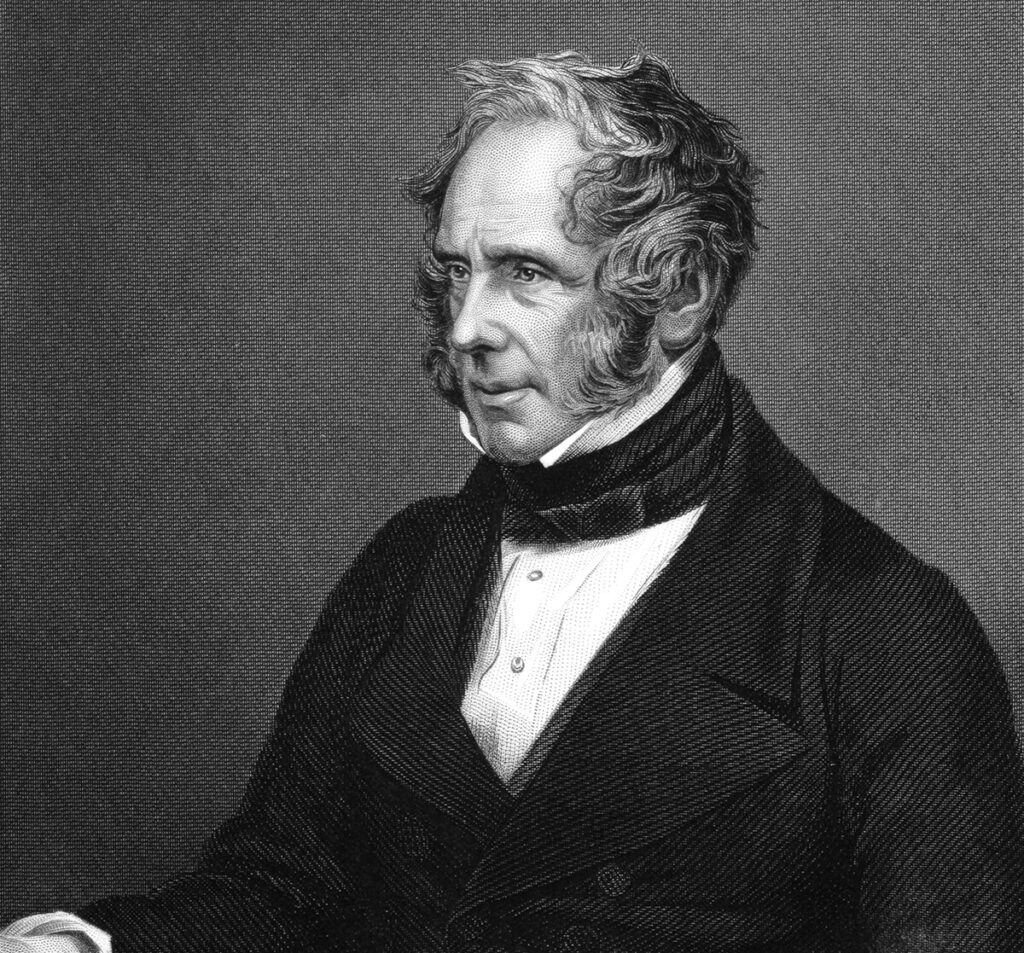
    The world of strategists is familiar with the quote of Lord Palmerston, Britain’s nineteenth-century Prime Minister. He famously declared: “There are no permanent friends or enemies, only permanent interests.”

    Lord Palmerston

    As a description of statecraft, this is not wrong. Every civilisation that has endured has pursued its interests — including the ones this series will spend considerable space defending. Kautilya’s Rajamandala is, at its core, a theory of interest-based alignment. The Cholas sailed across the Bay of Bengal to protect Tamil trading interests. No serious tradition of statecraft has ever pretended that interest does not matter, and none should.

    The question worth asking is not whether interests are permanent. It is whether anything else is.

    Palmerston’s formulation, taken as a complete theory of how a state should conduct itself — not as one true observation among several, but as the only thing that needs ever to be consulted — becomes something different. It becomes a licence. If interest is permanent and nothing else is, then ethical limits on how interest is pursued are, by definition, temporary: honoured when convenient, discarded when not. That is not realism. That is realism with the safety catch removed.

    This is the civilisational fork in the road, and four hundred years of history show which branch the dominant powers took — and still take.

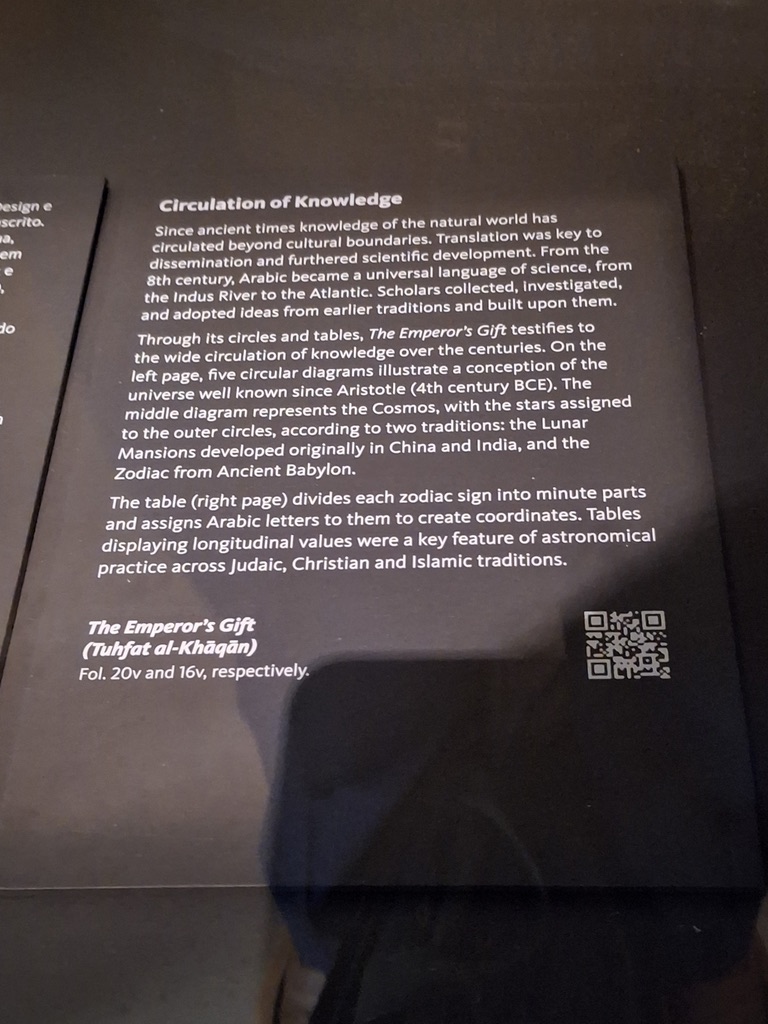
    The Islamic Golden Age — spanning roughly the 8th to the 14th century — was one of the greatest intellectual achievements in human history. Scholars at Baghdad’s House of Wisdom undertook a systematic, state-sponsored project of translation and synthesis: gathering the accumulated knowledge of Greece, Persia, India, and China, translating it into Arabic, and building upon it with original contributions in mathematics, astronomy, medicine, philosophy, optics, and chemistry. Avicenna’s Canon of Medicine became a foundational text in European universities. Averroes’ commentaries on Aristotle shaped medieval European philosophy.

    Exhibit in Gulbenkian Museum, Lisbon – Photo by Author

    Europe in the early medieval period was not the centre of the world. It was its periphery — impoverished, fragmented, and in the grip of what its own historians call the Dark Ages. While Europe’s literacy rates collapsed and theological conformity suppressed inquiry, something extraordinary was unfolding in Baghdad, Cordoba, and Cairo. The Islamic Golden Age — spanning roughly the 8th to the 14th century — was one of the greatest intellectual achievements in human history. Scholars at Baghdad’s House of Wisdom undertook a systematic, state-sponsored project of translation and synthesis: gathering the accumulated knowledge of Greece, Persia, India, and China, translating it into Arabic, and building upon it with original contributions in mathematics, astronomy, medicine, philosophy, optics, and chemistry. Avicenna’s Canon of Medicine became a foundational text in European universities. Averroes’ commentaries on Aristotle shaped medieval European philosophy. The numeral system through which all modern mathematics operates — including the zero — came to Europe through the Arabic transmission of Indian mathematics. This was not borrowing. It was the rescue and synthesis of civilisational knowledge — and without it, the European Renaissance would have had no foundation on which to build.

    The numeral system through which all modern mathematics operates — including the zero — came to Europe through the Arabic transmission of Indian mathematics. This was not borrowing. It was the rescue and synthesis of civilisational knowledge — and without it, the European Renaissance would have had no foundation on which to build.

    Europe’s intellectual reawakening in the 14th and 15th centuries drew directly on this Islamic transmission. The Renaissance, together with the gunpowder revolution and the state system formalised at the Peace of Westphalia in 1648, gave European civilisation (viewing it as a single civilisation may not be truly appropriate – disparate kingdoms, fused by the race for maritime trade dominance and military conquest – Italian, Spanish, Portuguese, Dutch, French, British, Russian, etc.) something it had never possessed before: military-technological superiority, organised state power, and the bureaucratic capacity to project both across the world.

    This wealth — extracted through conquest, forced indigenous labour, and the systematic destruction of existing civilisations — capitalised the European empires that would go on to colonise two-thirds of the world

    Columbus – Truth vs Myth

    The rise of the West that followed the maritime route discoveries of Columbus and Vasco da Gama needs to be understood correctly, devoid of the myths built around them. The West celebrates them, but the truth is they were plunderers who unleashed the genocidal expansion of the West. This truth is now being brought out by brilliant and unbiased historians such as Howard Zinn and Utsa Patnaik. Howard Zinn writes – ” what Columbus did to the Arawaks of the Bahamas, Cortés did to the Aztecs of Mexico, Pizarro to the Incas of Peru, and the English settlers of Virginia and Massachusetts to the Powhatans and the Pequots. They used the same tactics, and for the same reasons – the frenzy in the early capitalist states of Europe for gold, for slaves, for products of the soil, to pay for the bondholders and stockholders of the expeditions, to finance the monarchical bureaucracies rising in Western Europe, to spur the growth of the new money economy rising out of feudalism…These were the violent beginnings of an intricate system of technology, business, politics, and culture that would dominate the world for the next five centuries.”

    What followed was not a story of civilisational achievement. It was a story of extraction on a scale without precedent in human history — extraction conducted on the understanding that, once interest was engaged, nothing else needed to be weighed. From the Americas alone, Spanish colonial mining operations extracted approximately 150,000 metric tonnes of silver between 1500 and 1800 — representing 80 to 90 per cent of global silver production over three centuries. By 1600, 25,000 tonnes of silver had crossed the Atlantic. This wealth — extracted through conquest, forced indigenous labour, and the systematic destruction of existing civilisations — capitalised the European empires that would go on to colonise two-thirds of the world. The Atlantic slave trade transported an estimated twelve to fifteen million Africans into forced labour over three centuries.

    The British were ruthless in pursuing their interests at the expense of the people and the geography of their colonial empire, particularly in India. The economy under the British Raj was not a system of governance or development – it was a system of systematic wealth extraction unprecedented in scale and duration. From 1765 (when Robert Clive obtained the Diwani Rights, that is, the right to collect taxes and revenue, from the Mughal emperor as a result of the Battle of Buxar) to 1947 – 182 years – Britain drained India’s wealth through every possible mechanism. The scale of this drain was staggering. Britain extracted the equivalent of about $45 trillion (in current dollar terms) from India during its colonial rule. This wasn’t accidental impoverishment or the natural result of economic evolution. This was deliberate policy, implemented systematically through revenue extraction, deindustrialisation, trade manipulation, and infrastructural control.


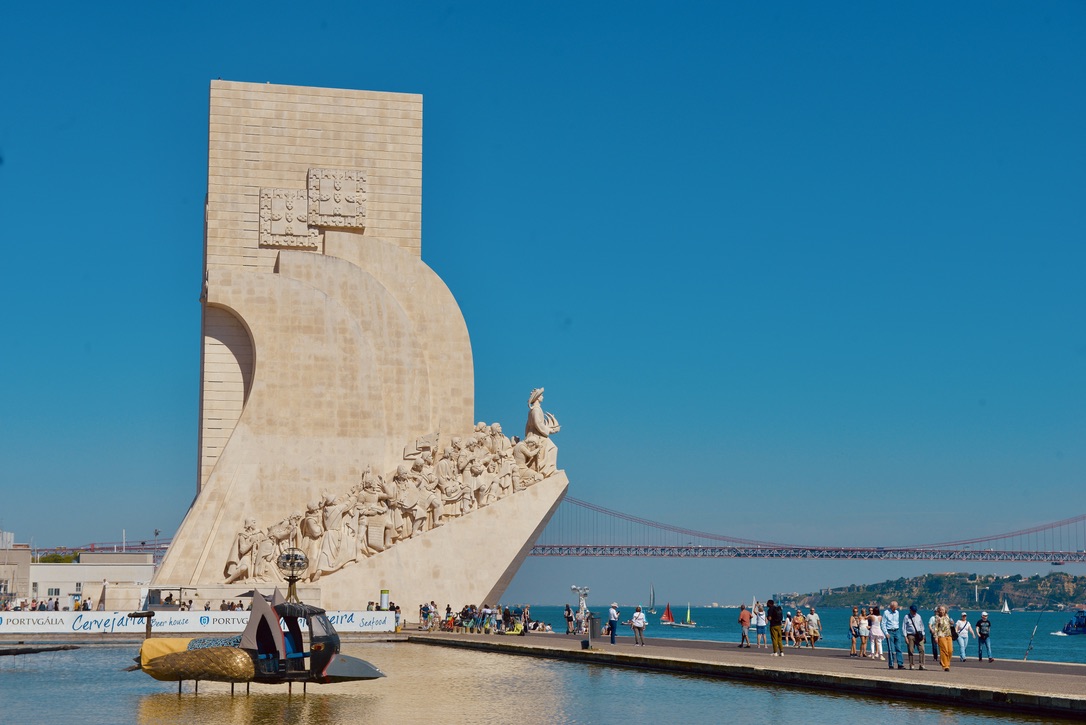
    500-year Commemoration of Vasco-da-Gama’s voyage to India -Lisbon – defining moments of colonialism. Photo by Author
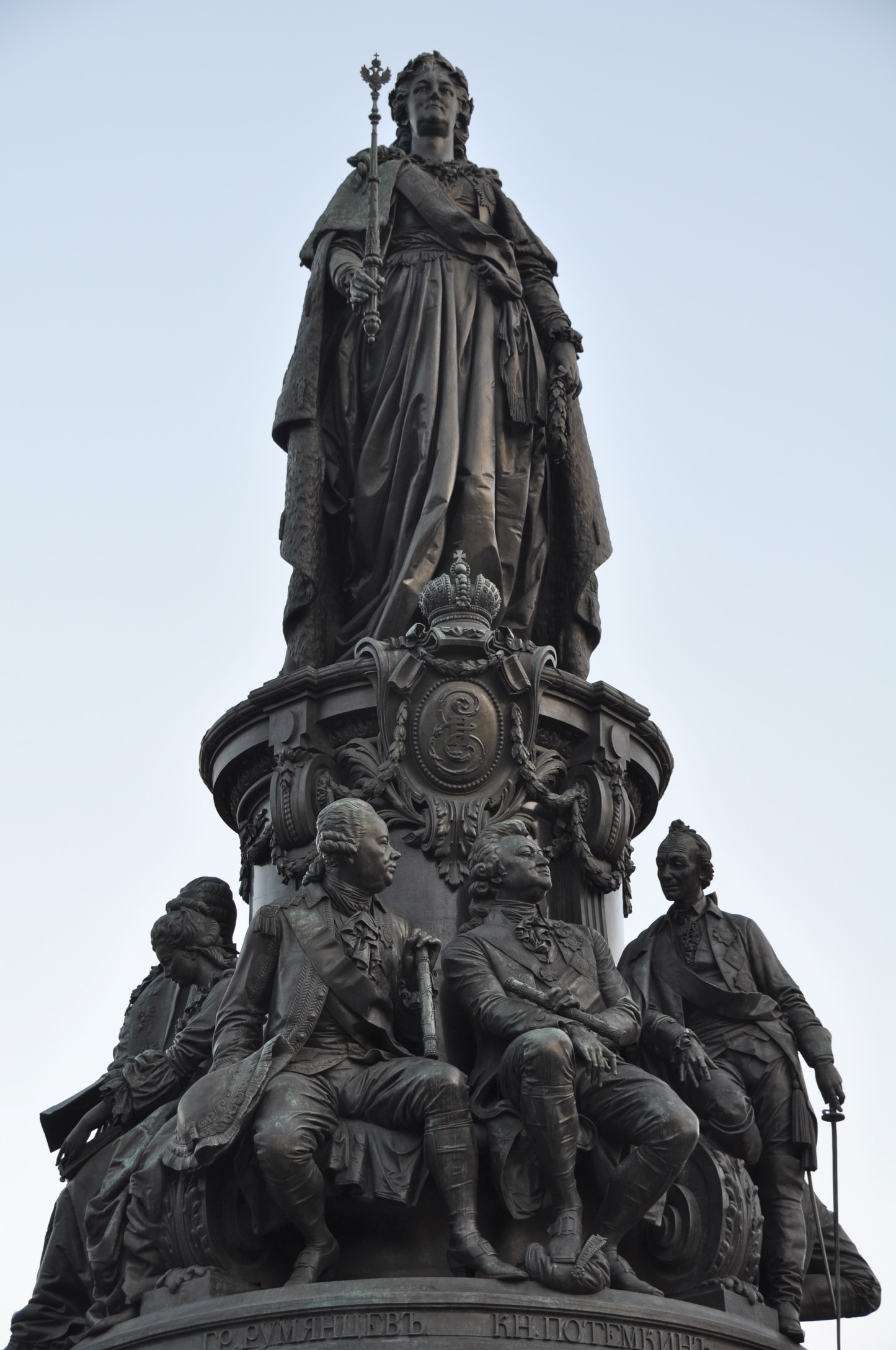
    The Russian empire was equally consumed by Western Europe’s passion for colonies. Catherine the Great, Russian Empress and originally a German princess, was a ruthless expansionist of the Russian Empire. However, Russia differed significantly from Western colonialism. Catherine the Great’s Statue in St. Petersburg. Photo by Author.

    None of this was an aberration from Western values. It was the expression of them. Palmerston’s formulation was not a description of how all states behave. It was a justification for a specific civilisational approach: that power exists to be exercised without ethical constraint, that the strong may do what they will, and that the legitimating language of civilisation, Christianity, and later human rights, are instruments of justification rather than a genuine limits on conduct.

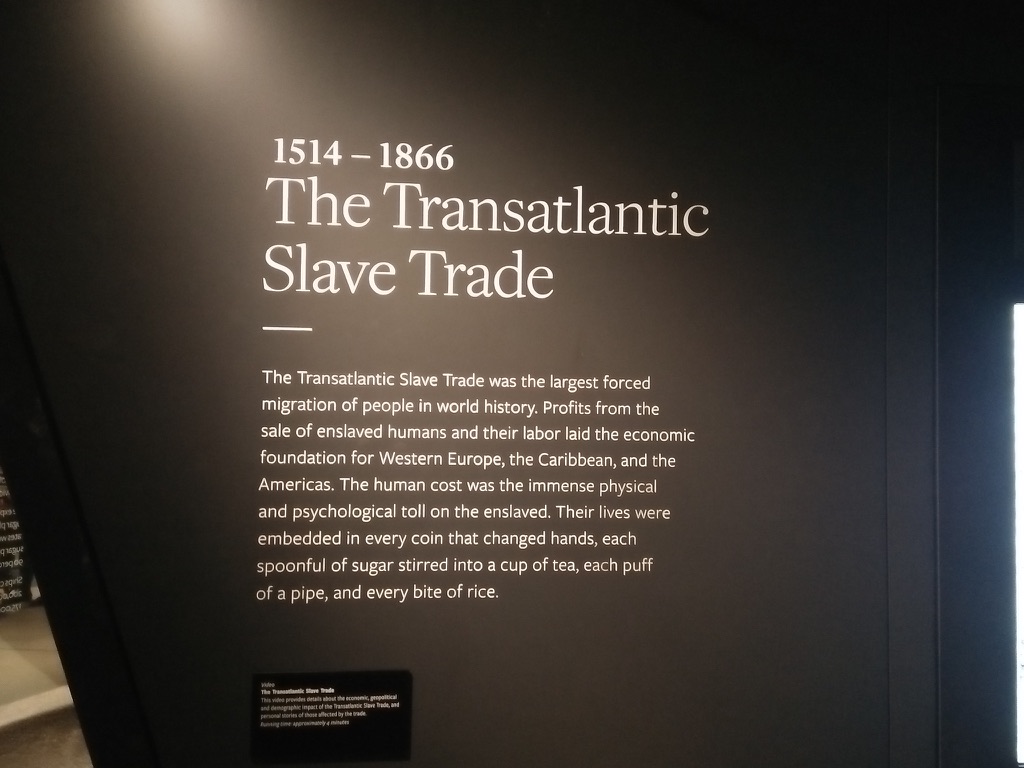
    Slavery was the most crucial contributor to the West’s development. This was a critical element of the transatlantic world. exhibit in the African American Museum, Washington, D.C. Photo by Author.

    The Berlin Conference of 1884–85 is its most clinical illustration. Otto von Bismarck convened the European powers to divide Africa between them. Not a single African leader was present. A request by the Sultan of Zanzibar to attend was dismissed. The Congo basin — a territory larger than Western Europe, home to millions of people with ancient civilisations, cultures, and governance systems — was assigned as the personal property of Belgian King Leopold II, one of the vilest European monarchs in human history. In the years that followed, hundreds of thousands of Congolese were worked to death on rubber plantations. Those who failed their quotas had their hands amputated. Leopold accumulated one of the largest personal fortunes in history from the proceeds.

    This was not an exceptional act of cruelty. It was Palmerston’s formulation taken to its logical and undiluted conclusion.

    Whatever the merits claimed for each individually, taken together they represent the same formula: interest declared permanent, leading to the ruthless pursuit of national interests; ethical limits declared situational, that is, practically irrelevant.

    The pattern did not end with empire. It changed vocabulary. The wars launched and led by the United States since 2001 — in Afghanistan, Iraq, Libya, Syria and beyond — were conducted in the language of security, liberation, and the defence of human rights. By the most careful independent estimates, their costs have run into the hundreds of thousands of civilian lives, and their stated justifications have repeatedly diverged from their actual outcomes. Whatever the merits claimed for each individually, taken together they represent the same formula: interest declared permanent, leading to the ruthless pursuit of national interests; ethical limits declared situational, that is, practically irrelevant. The vocabulary had changed since 1884. The structure of the choice had not.

    The economic register tells the same story. The formal end of colonialism did not end the system. It adapted it. The International Monetary Fund and World Bank, established at Bretton Woods in 1944, became the institutional mechanisms through which the global south’s economic policies were directed from Washington. Structural adjustment programmes imposed fiscal austerity, market liberalisation, and debt dependency on nations that had barely emerged from colonial rule.

    Francophone West Africa became perhaps the most striking contemporary illustration of this persistence. Fourteen countries continued to use the CFA franc — a currency whose reserves were held in the French Treasury, whose exchange rate was set in Paris, and whose monetary sovereignty had never been genuinely transferred since formal independence. Long-term analysis tells the structural story: The Ivory Coast reached its peak in income per capita in 1978, in less than two decades after independence. It then stagnated over the next fifty years. Niger reached its highest level in 1965 — the year of independence. Seven decades of formal sovereignty. Not a single decade of genuine economic progress. France’s control was not only monetary. It was political and military. French intelligence maintained deep ties with governing elites. French military bases ensured that no elected government that moved too far from French interests would survive. The system corrupted the democratic process itself.

    When Thomas Sankara became President of Burkina Faso in 1983 and attempted to secure genuine sovereignty — nationalising land, refusing IMF debt, building schools and healthcare, and articulating a vision of African self-reliance — he was assassinated in 1987. French agents were present in the capital the following day. Blaise Compaoré, who replaced him, immediately reversed every policy of sovereignty and ruled for 27 years. When a popular uprising removed him in 2014, French troops exfiltrated him to the Ivory Coast. He was later convicted in absentia by a Burkinabe court and sentenced to life imprisonment for Sankara’s murder. The system did not merely extract wealth. It murdered the leaders who sought to end the extraction.

    “Anything that maintains us in slavery, we will break those bonds” – Captain Ibrahim Traore

    Then, between 2021 and 2023, something changed. A new generation of young, educated, patriotic military officers — shaped by Sankara’s tradition — moved. Mali, Burkina Faso, and Niger formed the Alliance of Sahel States, expelled French and American military forces, and announced their intention to abandon the CFA franc entirely. Burkina Faso’s Captain Ibrahim Traore declared: “Anything that maintains us in slavery, we will break those bonds.” These are not coups in the traditional sense. They are the consequence of a system that used democratic institutions as a mechanism of foreign control for seven decades. As I write this essay, Burkina Faso officially severed all diplomatic relations with France on June 26, 2026. The African nation’s Communications Minister announced the decision on national television, stating that the essential conditions for mutual respect, trust, and non-interference were absent. President Ibrahim Traore accused Paris of harbouring “neo-colonial ambitions,” backing terrorist groups, and acting against Burkinabe interests. African countries are rising against the strangulating control of the West and its neo-colonialism of the last seven decades.

    This is the order that India inhabits. This is the order India is being asked to join as a rising power. The contest for a new world order is not simply a geopolitical competition between states. It is a civilisational question —not the one Palmerston’s critics often imagine. The question is not whether a rising power will have permanent interests. Of course it will, and should. The question is whether it will articulate, with equal permanence and equal seriousness, the ethical limits within which those interests are pursued — limits that hold even when honouring them is costly.

    India has the history, the philosophy, and the standing to make that commitment. The question is whether it has the will.

    Further Reading:

    On Palmerston’s statement and interest-based statecraft

    Lord Palmerston, Speech to the House of Commons, 1 March 1848. Hansard, House of Commons Debates, vol. 97, cols. 66–123.

    Kautilya, Arthashastra, Books VI–VII (Mandala theory of interstate relations). Trans. R.P. Kangle, The Kautiliya Arthashastra, 3 vols. (University of Bombay, 1960–65).

    On the Islamic Golden Age and knowledge transmission to Europe

    George Saliba, Islamic Science and the Making of the European Renaissance (MIT Press, 2007).

    Jonathan Lyons, The House of Wisdom: How the Arabs Transformed Western Civilisation (Bloomsbury, 2009).

    Dimitri Gutas, Greek Thought, Arabic Culture: The Graeco-Arabic Translation Movement in Baghdad and Early ‘Abbasid Society (Routledge, 1998).

    Georges Ifrah, The Universal History of Numbers (Wiley, 2000). On the transmission of Hindu-Arabic numerals, including the zero.

    On colonial extraction — the Americas

    Dennis O. Flynn and Arturo Giráldez, ‘Cycles of Silver: Global Economic Unity through the Mid-18th Century,’ Journal of World History, 13(2), 2002.

    Source for the 150,000-tonne / 80–90% global silver production estimates, 1500–1800.

    Earl J. Hamilton, American Treasure and the Price Revolution in Spain, 1501–1650 (Harvard University Press, 1934).

    Foundational source for the c. 25,000-tonne figure by 1600.

    On the Atlantic slave trade

    David Eltis and David Richardson, Atlas of the Transatlantic Slave Trade (Yale University Press, 2010).

    The Slave Voyages Database, Emory University. slavevoyages.org.

    Basis for the 12–15 million estimate.

    On the Berlin Conference and the Congo Free State

    Adam Hochschild, King Leopold’s Ghost: A Story of Greed, Terror, and Heroism in Colonial Africa (Houghton Mifflin, 1998).

    S.E. Crowe, The Berlin West African Conference, 1884–1885 (Longmans, 1942).

    Matthew Craven, ‘Between Law and History: The Berlin Conference of 1884–1885 and the Logic of Free Trade,’ London Review of International Law, 3(1), 2015.

    On the Sultan of Zanzibar’s exclusion.

    On post-2001 conflicts and civilian costs

    Costs of War Project, Watson Institute for International and Public Affairs, Brown University. costsofwar.org.

    Cumulative estimates of direct and indirect deaths in post-9/11 wars (Afghanistan, Iraq, Pakistan, Syria, Yemen).

    Iraq Body Count project. iraqbodycount.org.

    Independent database of documented civilian deaths in Iraq since 2003.

    Gilbert Burnham et al., ‘Mortality after the 2003 invasion of Iraq: a cross-sectional cluster sample survey,’ The Lancet, 368(9545), 2006.

    One of several widely-cited epidemiological estimates; cited to indicate the range of credible estimates rather than to adjudicate between methodologies.

    On Bretton Woods, the IMF/World Bank, and structural adjustment

    Eric Helleiner, Forgotten Foundations of Bretton Woods: International Development and the Making of the Postwar Order (Cornell University Press, 2014).

    Ngaire Woods, The Globalizers: The IMF, the World Bank, and Their Borrowers (Cornell University Press, 2006).

    On the CFA franc and Francophone West Africa

    Fanny Pigeaud and Ndongo Samba Sylla, Africa’s Last Colonial Currency: The CFA Franc Story (Pluto Press, 2021).

    World Bank, World Development Indicators (databank.worldbank.org).

    Basis for the Ivory Coast (1978 peak) and Niger (1965 peak) GDP per capita figures.

    On Thomas Sankara and Blaise Compaoré

    Ernest Harsch, Thomas Sankara: An African Revolutionary (Ohio University Press, 2014).

    On the French intelligence presence following the 1987 coup: reporting by Jeune Afrique and Radio France Internationale (RFI), 1987.

    On Compaoré’s 2014 exfiltration: Reuters and Agence France-Presse, October 2014.

    On Compaoré’s conviction: ‘Burkina Faso: Blaise Compaoré sentenced to life in prison over Thomas Sankara’s assassination.’ Reuters, 6 April 2022.

    On the Alliance of Sahel States (2021–2024)

    Formation of the Alliance of Sahel States, September 2023, and withdrawal from ECOWAS, January 2024: Reuters, Al Jazeera, and AfricaNews coverage, 2023–2024.

    Captain Ibrahim Traoré, ‘Anything that maintains us in slavery, we will break those bonds.’ Public addresses, widely reported across pan-African and international media, 2023–2024.

    On the closure of the US drone facility at Agadez, Niger: ‘Niger orders US military to leave the country.’ BBC News, 17 March 2024.

    Air Marshal M Matheswaran (Retd) is the Founder-President of The Peninsula Foundation (@TPF_Chennai), an independent policy research think tank in Chennai, rooted in the conviction that governance must serve conscience and that the world order India helps shape must be grounded in ethics, not merely in interests.

  • Flattery’s Limits: How Pandering to Trump Undermines Pakistan’s Mediation

    Flattery’s Limits: How Pandering to Trump Undermines Pakistan’s Mediation

    Flattery may open doors, but it cannot sustain trust in high-stakes diplomacy. Pakistan’s Trump-centric approach reveals the limits of personality-driven foreign policy.

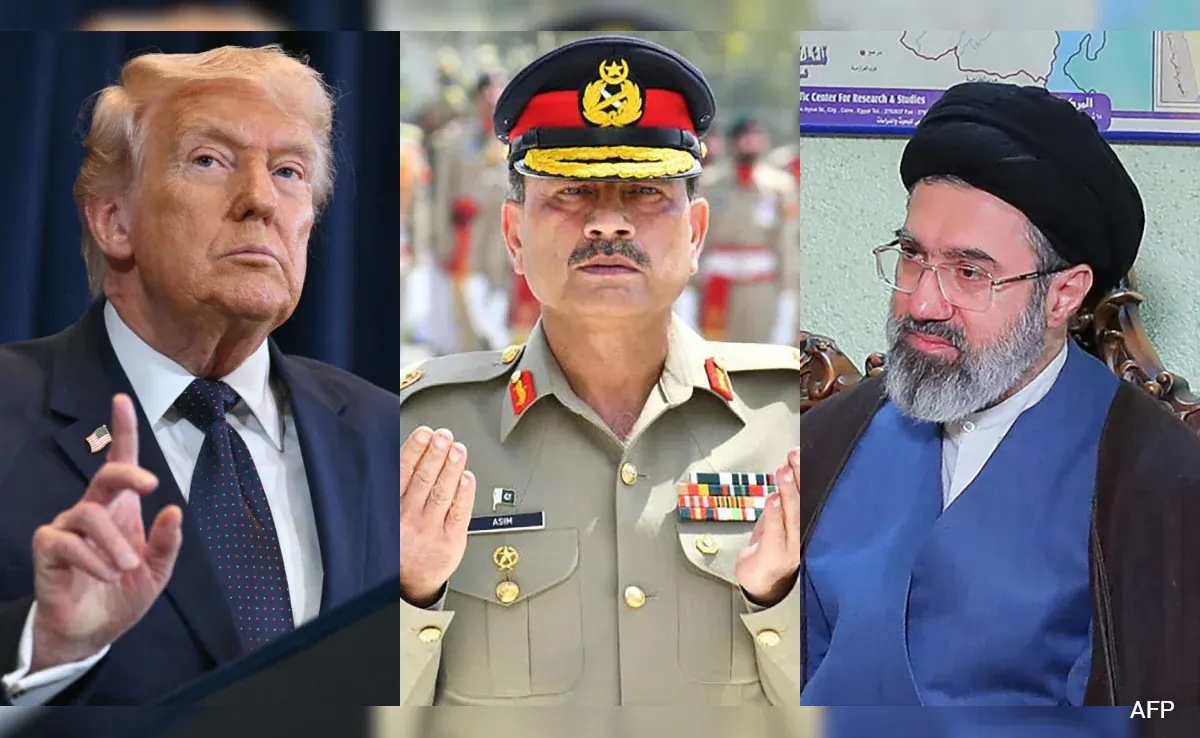
    Pakistan’s recent foreign policy under a hybrid regime led by its Field Marshal Asif Munir and Prime Minister Shehbaz Sharif is heavily influenced by a personality-driven dynamic, particularly in its engagement with Donald Trump. As pointed out by Mehdi Hasan, a British-American journalist and political commentator, in an interview with NDTV, Pakistanis have “done a good job of sucking up to Trump,” underscoring a growing reliance on flattery and ego-boosting tactics to remain in Trump’s good books.

    When Flattery Becomes a Diplomatic Constraint

    From the early phase of Donald Trump’s second term, especially after developments like Operation Sindoor, Pakistan openly credited Trump for ceasefire efforts—something India refrained from doing. Islamabad went further by nominating Trump multiple times for the Nobel Peace Prize. At many international platforms, particularly during the Gaza Board of Peace meeting in Washington and earlier at the Gaza peace summit at Sharm el-Sheikh, Pakistan’s leadership left no stone unturned in praising Trump, with Prime Minister Shehbaz Sharif describing him as a “man of peace” and even a “saviour of South Asia.” Even during recent ceasefire extensions by Trump, Pakistan continued this pattern of excessive praise.

    This reflected a calculated strategy: to appeal to Trump’s personality, which is widely perceived as ego-driven and narcissistic. By consistently affirming his self-image and constantly putting messages into his psychological zone of acceptance. Pakistan managed to secure his attention and, to some extent, his favour. Of course, the United States has its own strategic calculations—particularly regarding Iran—but the personal dimension of Trump’s leadership style makes such flattery tactically useful in the short term.

    However, this approach is now showing clear limitations, especially in the context of reaching any peace deal with Iran. The very strategy that helped Pakistan gain proximity is now constraining its ability to act as a credible intermediary. Because Islamabad has focused primarily on sending positive, non-confrontational messages to Trump, it appears reluctant—or unable—to convey messages that might irritate or challenge him.

    This concern has been explicitly raised by Iranian voices. Iranian analysts and officials have questioned whether Pakistan is genuinely transmitting Tehran’s positions to Washington. One such voice, Iranian lawmaker Ebrahim Rezaei, pointed out that Pakistan is no longer seen as a neutral mediator. According to him, Islamabad selectively communicates, prioritising Trump’s preferences over balanced diplomacy. He stated that Pakistan “lacks the necessary credibility” and “always takes Trump’s ego into account and does not say a word against his wishes,” underscoring a growing perception that its role as an intermediary is increasingly compromised.

    Importantly, the United States now appears to be echoing similar concerns. A CNN report published on May 12, 2026, titled “Trump increasingly considers resuming large-scale military action against Iran,” stated that many Trump administration officials believed Pakistan had been sharing “a more positive version of the Iranian position with the US than what reflects reality,” while also questioning whether Islamabad was “aggressively conveying Trump’s displeasure” to Tehran. Significantly, an earlier CNN report published on May 6, 2026, titled “US and Iran closing in on memorandum aimed at ending war, source says,” had already hinted at scepticism inside the White House, noting that Pakistani mediators were presenting an optimistic assessment of Iranian flexibility that some US officials did not fully share.

    This is the core psychological flaw in a personality-centric foreign policy. When diplomacy is personalised to accommodate one man’s ego, it is bound to hinder strategic flexibility. Mediators must be in a position to deliver awkward truths and dissenting opinions. But when a state is afraid to upset a leader like Trump, it starts filtering messages, putting them into what can be called the ‘zone of psychological acceptance.’ Anything outside that zone is open to suppression.

    Erosion of Trust and Mediation Credibility

    As a result, trust erodes. Iran’s scepticism about Pakistan’s neutrality is not incidental—it is a direct consequence of this ego-management strategy. Even technical issues, such as disagreements over the scope of ceasefire agreements—for example, whether regions like Lebanon were included when the initial ceasefire between the United States and Iran was reached—became points of contention because communication was filtered, biased, and incomplete. This then became a major point of contention, with Iran maintaining that Lebanon formed part of the ceasefire framework, while the United States rejected this interpretation, deepening mistrust and reinforcing perceptions of inconsistency in how the agreement was conveyed. As Ebrahim Rezaei further said, “They are unwilling to tell the world that America first accepted Pakistan’s proposal but then went back on its word. They do not say that the Americans had commitments regarding Lebanon or the blocked assets, but that they failed to fulfil them. A mediator must be impartial, not always leaning to one side.”

    In the long run, such a policy is unsustainable. Personality-driven diplomacy may yield short-term visibility and tactical gains, but it weakens institutional credibility. Relationships built around individuals rather than enduring interests and institutions tend to fade with political transitions. When leadership changes in Washington, Pakistan may once again find itself marginalised, having invested too heavily in a single personality rather than in a broader strategic framework.

    As Pakistani security analyst and president of the Pakistan Institute for Peace Studies, Muhammad Amir Rana, warned in his February 1, 2026, article “Pakistan’s Trump Test” published in Dawn, “The post-Trump phase will test Pakistan’s diplomacy and political leadership,” while also questioning “how far the country can maintain its relevance” once Trump exits the political stage. Rana further argued that Pakistan’s current diplomatic positioning is too closely tied to a “Trump-endorsed defence equation” and cautioned that, without developing “alternative strategic options,” Islamabad could face increasing diplomatic marginalisation in the future. These concerns reinforce the broader perception that Pakistan’s recent diplomatic gains are heavily dependent on Trump-era political dynamics rather than on durable institutional and bipartisan foundations in Washington.

    Playing to a leader’s ego can open doors, but it also shrinks the space for honest diplomacy. Pakistan’s experience suggests that an over-reliance on psychological appeasement in foreign policy can compromise both credibility and effectiveness in complex negotiations. As also noted by American psychologist Michael Maccoby in his book, “The Productive Narcissist: The Promise and Peril of Visionary Leadership,” leaders with strong narcissistic traits may initially respond positively to admiration and validation. However, their effectiveness tends to decline over time as underlying behavioural patterns become more visible. In such contexts, strategies based on flattery and ego management may generate short-term gains but ultimately constrain credibility and weaken long-term influence.

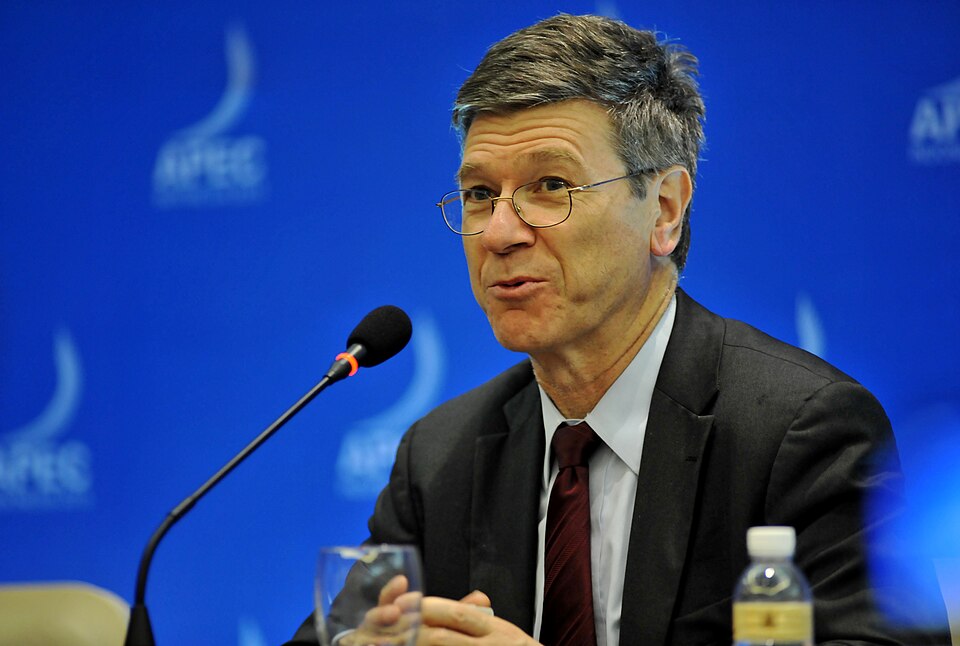
  • Jeffrey D. Sachs: Briefing of the UN Security Council on Venezuela

    Jeffrey D. Sachs: Briefing of the UN Security Council on Venezuela

    Jeffrey D. Sachs: Briefing of the UN Security Council on Venezuela
    January 5, 2026


    Mr. President,
    Distinguished Members of the Security Council,

    The issue before the Council today is not the character of the government of Venezuela.

    The issue is whether any Member State—by force, coercion, or economic strangulation—has the right to determine Venezuela’s political future or to exercise control over its affairs.

    This question goes directly to Article 2(4) of the United Nations Charter, which prohibits the threat or use of force against the territorial integrity or political independence of any state.

    The Council must decide whether that prohibition is to be upheld or abandoned.

    Abandoning it would carry consequences of the gravest kind.

    Background and context

    Since 1947,United States foreign policy has repeatedly employed force, covert action, and political manipulation to bring about regime change in other countries. This is a matter of carefully documented historical record. In her book Covert Regime Change (2018), political scientist Lindsey O’Rourke documents 70 attempted US regime-change operations between 1947 and 1989 alone.

    These practices did not end with the Cold War. Since 1989, major United States regime-change operations undertaken without authorization by the Security Council have included, among the most consequential: Iraq (2003), Libya (2011), Syria (from 2011), Honduras (2009), Ukraine (2014), and Venezuela (from 2002 onward).

    The methods employed are well established and well documented. They include open warfare; covert intelligence operations; instigation of unrest; support for armed groups; manipulation of mass and social media; bribery of military and civilian officials; targeted assassinations; false-flag operations; and economic warfare aimed at collapsing civilian life.

    These measures are illegal under the UN Charter, and they typically result is ongoing violence, lethal conflict, political instability, and deep suffering of the civilian population.

    The case of Venezuela

    The recent United States record with respect to Venezuela is clear.

    In April 2002, the United States knew of and approved an attempted coup against the Venezuelan government.

    In the 2010s, the United States funded civil society groups actively engaged in anti-government protests, notably in 2014. When the government cracked down on the protests, the US followed with a series of sanctions. In 2015, President Barrack Obama declared Venezuela to be “an unusual and extraordinary threat to the national security and foreign policy of the United States.”

    In 2017, at a dinner with Latin American leaders on the margins of the UN General Assembly, President Trump openly discussed the option of the US invading Venezuela to overthrow the government.

    During 2017 to 2020, the US imposed sweeping sanctions on the state oil company. Oil production fell by 75 percent from 2016 to 2020, and real GDP per capita (PPP) declined by 62 percent.

    The UN General Assembly has repeatedly voted overwhelmingly against such unilateral coercive measures. Under international law, only the Security Council has the authority to impose such sanctions.

    On 23 January 2019, the United States unilaterally recognized Juan Guaidó as “interim president” of Venezuela and on 28 January 2019 froze approximately $7 billion of Venezuelan sovereign assets held abroad and gave Guaidó authority over certain assets.

    These actions form part of a continuous United States regime-change effort spanning more than two decades.

    Recent United States global escalation

    In the past year, the United States has carried out bombing operations in seven countries, none of which were authorized by the Security Council and none of which were undertaken in lawful self-defense under the Charter. The targeted countries include Iran, Iraq, Nigeria, Somalia, Syria, Yemen, and now Venezuela.

    In the past month, President Trump has issued direct threats against at least six UN member states, including Colombia, Denmark, Iran, Mexico, Nigeria and of course Venezuela. These threats are summarized in Annex I to this statement.

    What is at stake today

    Members of the Council are not called upon to judge Nicolás Maduro.

    They are not called upon to assess whether the recent United States attack and ongoing naval quarantine of Venezuela result in freedom or in subjugation.

    Members of the Council are called upon to defend international law, and specifically the United Nations Charter.

    The realist school of international relations, articulated most brilliantly by John Mearsheimer, accurately describes the condition of international anarchy as “the tragedy of great power politics.” Realism is therefore a description of geopolitics, not a solution for peace. Its own conclusion is that international anarchy leads to tragedy.

    In the aftermath of World War I, the League of Nations was created to end the tragedy through the application of international law. Yet the world’s leading nations failed to defend international law in the 1930s, leading to renewed global war.

    The United Nations emerged from that catastrophe as humanity’s second great effort to place international law above anarchy. In the words of the Charter, the UN was created “to save succeeding generations from the scourge of war, which twice in our lifetime has brought untold sorrow to mankind.”

    Given that we are in the nuclear age, failure cannot be repeated. Humanity would perish. There would be no third chance.

    Measures required of the Security Council

    To fulfill its responsibilities under the Charter, the Security Council should immediately affirm the following actions:

    1. The United States shall immediately cease and desist from all explicit and implicit threats or use of force against Venezuela.
    2. The United States shall terminate its naval quarantine and all related coercive military measures undertaken in the absence of authorization by the Security Council.
    3. The United States shall immediately withdraw its military forces from within and along the perimeter of Venezuela, including intelligence, naval, air, and other forward-deployed assets positioned for coercive purposes.
    4. Venezuela shall adhere to the UN Charter and to the human rights protected in the Universal Declaration of Human Rights.
    5. The Secretary-General shall immediately appoint a Special Envoy, mandated to engage relevant Venezuelan and international stakeholders and to report back to the Security Council within fourteen days with recommendations consistent with the Charter of the United Nations, and the Security Council shall remain urgently seized of this matter.
    6. All Member States shall refrain from unilateral threats, coercive measures, or armed actions undertaken outside the authority of the Security Council, in strict conformity with the Charter.

    In Closing

    Mr. President, Distinguished Members,

    Peace and the survival of humanity depend on whether the United Nations Charter remains a living instrument of international law or is allowed to wither into irrelevance.

    That is the choice before this Council today.

    Thank you.


    Courtesy: commondreams.org

  • Actions Speak Louder than Words

    Actions Speak Louder than Words

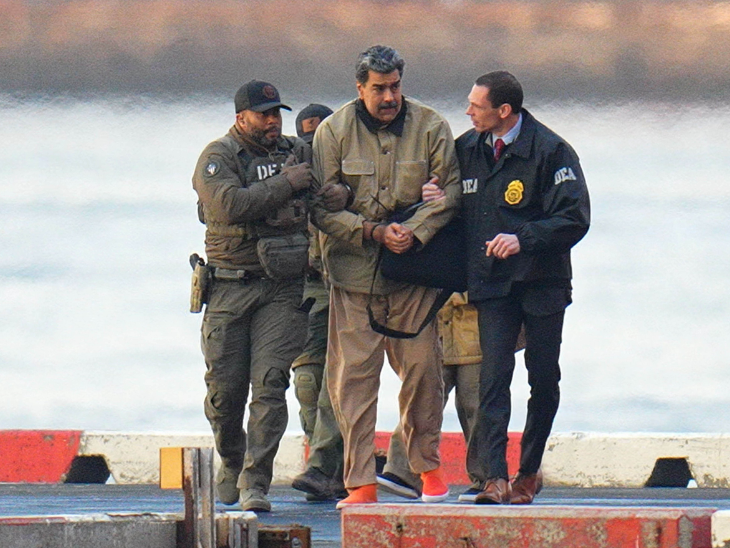
    The recent kidnapping of President Maduro and his wife, with Venezuela being held to ransom at gunpoint, has made clear that it is not high-minded principles, but an imperialistic mindset and the grubbiness of colonial greed, the hankering for resources belonging to others, that has always been their sole motive.


    For years, American academics and mainstream media successfully portrayed American foreign policy as benign and dedicated to promoting freedom, democracy and human rights worldwide. Unfortunately, those involved in dealing with them intimately in the rest of the world, especially the Global South, knew better.

    Their benevolence was nothing more than a mirage. In practice, their malevolent and vindictive security and intelligence establishment used bribery and strong-arm tactics like coups, assassinations and kidnapping as their primary modus operandi to get their way. If none of those worked, then there was always the option of military intervention.

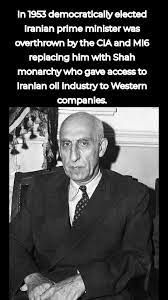
    If anything, we should be grateful to President Trump for two things. Firstly, for having swept aside the sludge of hypocrisy that the United States practised to justify its assertive foreign policy actions. For example, Operation Ajax, the overthrow of Iranian Prime Minister Mossadegh’s democratically elected government in August 1953, was justified as a containment of communism, though he was not a communist. Similarly, Operation Iraqi Freedom, which resulted in the overthrow and execution of Saddam Hussein, was justified on the grounds that Iraq had WMDs and was supportive of Al-Qaeda. That simply turned out to be lies, known only after previous damage had been done.

    The recent kidnapping of President Maduro and his wife, with Venezuela being held to ransom at gunpoint, has made clear that it is not high-minded principles, but an imperialistic mindset and the grubbiness of colonial greed, the hankering for resources belonging to others, that has always been their sole motive. American exceptionalism, it turns out, was no different from how the strong have always behaved toward the weak, throughout history. As the Greek historian, Thucydides, put it, “the strong do what they can, and the weak suffer what they must”.

    Even Trump’s desire to occupy Greenland can be seen in this context. We seem to have forgotten that over 86% of Greenland’s 56000 population are Innuits, who were colonised by Denmark only in the 1700s. There has always been a strong movement for independence there, and polls as recently as 2023 have suggested over 85% of the population supports independence from Denmark. At the end of the day, this confrontation between the United States and Denmark is just about two imperialistic powers contesting territory that neither owns, to extract resources. Some may recall that we, too, have been victims of similar contestations between the English and other imperial powers as well.

    The second has been the treatment that he has meted out to his fellow Americans. They are at the receiving end of how America normally treats the world- with arrogance, a sense of entitlement, and the belief that it is above the law and can do as it pleases. Whether we openly admit it or not, there are many who believe that America has finally got its just desserts- “they who sow the wind, will reap the whirlwind” as Bible-thumping Americans would say. Whether they ever be able to get over Trumpism, even after he is gone, is debatable.

    Notwithstanding this singular truth, we continue to be confused by Trump’s actions. While many see them as incoherent and a symptom of American decline, others, including some here, believe his actions in America will degrade Chinese and Russian capabilities, dampening their geopolitical ambitions. Nothing could be further from the truth.

    America, for all its wealth and overwhelming military might, suffers from a human problem. An overwhelming unwillingness on the part of the average American to be treated as sacrificial lambs in support of imperialistic ambitions. After Iraq and Afghanistan, they do not see such actions as being in the national interest, but as just another initiative to fill the coffers of corporations and those who run them. If Trump, or any other American President for that matter, were to again actually put boots on the ground to implement ongoing plans, be it in Venezuela, Iran or Cuba, it would result in massive protests against the Government, especially once the body bags start rolling in, as they are bound to.

    Bullies only get their way as long as they are not challenged. The very reason for America’s hesitation, even unwillingness, to act as the World’s policeman, especially as hybrid warfare gains currency and conventional forces lose their ability to achieve total domination or success. Trump and his cronies have probably concluded that the security and prosperity of the continental United States lie in ensuring its effectiveness as a regional satrap rather than spreading itself too thin. Threats against Iran are just mere cosplay.

    This applies equally to the Chinese and the Russians, especially the latter, having been seriously debilitated by the million-plus losses that they have suffered in their seemingly unending conflict with Ukraine. The last thing President Xi would want is to find himself in Putin’s shoes, if a military assault on Taiwan were to go awry, as it very well might, given the complexities of amphibious assaults.

    For him to be able to carve out his place in history, action against India is a far more promising prospect. It would be at a much lesser cost and manageable risk, as the political establishment here, whatever be their ideologies, has little, if any, inclination or spine to confront the Chinese. This is borne out by the fact that the BJP and RSS hosted a Chinese Communist Party delegation at the very time that the Chinese Government has renewed its thrust on infrastructure development in the illegally occupied Shaksgam Valley.

    Actions always speak louder than words, and our diplomatic protests mean little when we act in the manner that we have. Incidentally, Chinese actions seriously undermine our positions in the Siachen Glacier and further complicate our already complex security environment. It is indeed time our political establishment and their oligarch friends faced reality, developed resilience and learnt to withstand some pain. Everything cannot be about profit or the chair; sometimes, national interest must take precedence.

    Feature Image Credit: bhaskarenglish.in ‘I’m Venezuela’s President, a prisoner of war’:Maduro denies all charges in US court as heavy gunfire erupts in Caracas
  • The Shame and The Pain

    The Shame and The Pain

    A prominent historian is working on a book about AIPAC and interviewed me. Although they’re fairly mainstream, it was clear from their questions that this will be an exposé focused heavily on AIPAC’s interference in U.S. elections, beginning in the late 1990s.

    I told them everything I knew. My memories from that era come not from working at AIPAC—which I did from 1982 to 1986—but from my time on Capitol Hill, where I dealt with them regularly as a staffer.

    Although even during my time there, I witnessed them arranging the shipment of cash deliveries to favoured candidates, that was nothing compared to the $1.6 million they give to House Democratic Leader Hakeem Jeffries alone now! (In case you are wondering why the #1 Democrat in Congress refuses to endorse Zohran Mamdani, the Democratic nominee for mayor of his own city).

    I won’t go into what I said.

    Anyone who reads my Substack already knows what I think: that AIPAC’s existence has inflicted incalculable harm on the United States, on American Jews, on Israel’s long-term survival as a Jewish homeland, and on Judaism. I didn’t even need to mention the damage—”harm” is too soft a word—done to the Palestinian people.

    AIPAC is not merely complicit in genocide; if AIPAC did not exist, Joe Biden would have stopped it before it started, not because he isn’t a true-blue Israel lover but because (I think) even for him, genocide is a bridge too far. He could have ended it with a single phone call, the way President Reagan ended the bombing of Beirut. (PLEASE read Reagan’s diary entry here.)

    I also made clear that I didn’t always feel this way. I left AIPAC amicably in 1986. I was the most dovish person on staff, but I didn’t leave in protest.

    I left simply for another job. It was 10 years before I realised what AIPAC was, but it was another four years before I came to understand what Israel is. 

    That was in 2000 when Prime Minister Ehud Barak sabotaged the Oslo peace process that Yitzhak Rabin had launched. Instead of following through with a withdrawal from the West Bank, Gaza, and East Jerusalem in exchange for peace and normalisation, Barak offered noncontiguous slices of land that could never constitute anything remotely like a Palestinian state.

    Cheering him on was the U.S. “peace team,” led by Dennis Ross, a fervent Zionist, who worked hand in glove with their Israeli counterparts. The Palestinians—who naively thought they were negotiating with the Israelis, with the US serving as mediators—sensed, and then saw the evidence, that they were negotiating with a combined US-Israel team. One team: all Zionists.

    In fact, President Clinton had privately assured Barak that if the summit failed, he’d pin the blame on the Palestinians no matter who was responsible. He kept that promise—and later came to regret it.

    That’s when I began to reexamine everything I thought I knew about Israel. That process hasn’t stopped. Today, I support a single democratic state for all the people of Israel and Palestine—equal rights, no state religion but freedom of religion or no religion for all, security guaranteed by an international force like NATO.

    None of this will surprise anyone who reads me.

    But during the interview, the historian asked a question that caught me off guard. He said he found my career interesting—he was impressed I’d discussed the Middle East and AIPAC with every Democratic president since Carter—and wanted to know which part of my career I was most proud of.

    I gave a modest but truthful answer because the truth is, I never held any power. I was never important but had some influence at the margins—nothing more. But I told him honestly: this is the part of my career I’m proudest of. I’m retired. No one pays me a salary. I don’t “do meetings” on the Hill or the White House.

    I’m just proud that I was smart enough to recognise that what I’d believed for most of my life was propaganda, grounded in ethnic identity, not facts.

    The Six-Day War made me a Zionist. I stayed one for 33 years. Then it ended. I’ve been to Israel dozens of times. I loved Tel Aviv. But I doubt I’ll ever go back—unless, by some miracle, Israel becomes a real democracy for both peoples. At 77, I don’t expect to see that. Nor, I expect, will anyone else.

    These are terrible times. My own country has been captured by a racist, fascist clique—a nonmilitary junta. And Israel, a country I once loved, has become an international pariah, deservedly so, for its genocidal war in Gaza and 58 years of occupation in the West Bank.

    Judaism—for thousands of years a light in a dark world—has been stained by the crimes committed in its name, and in the name of the Jewish people. And yet, it will survive and flourish. As most Jews outside the (10%) Orthodox minority turn away from Israel, many—especially the young—are rediscovering the richness of Jewish culture and faith on their own terms.

    I myself have one source of peace, besides family and friends: I woke up in time. I saw through the lies. And I’ve raised my small voice against one of the great crimes of any century—the destruction of Palestine. Feeling good about oneself at this age is no small thing.

    The truth does set you free.

    But it does nothing to ease the shame and the pain.

    This article was published earlier in Scheerpost.

    Feature Image: Amnestyusa

  • 80 Years of Lies: The US Finally Admits it knew it didn’t Need to Bomb Hiroshima and Nagasaki

    80 Years of Lies: The US Finally Admits it knew it didn’t Need to Bomb Hiroshima and Nagasaki

    As we commemorate the 80th anniversary of the Hiroshima and Nagasaki atomic bombings, the world is drifting as close to another nuclear confrontation as it has been in decades.

    With Israeli and American attacks on Iranian nuclear energy sites, India and Pakistan going to war in May, and escalating violence between Russia and NATO-backed forces in Ukraine, the shadow of another nuclear war looms large over daily life.

    EIGHTY YEARS OF LIES

    The dropping of the atomic bomb on Japan was a power play, intended to strike fear into the hearts of world leaders, especially in the Soviet Union and China.

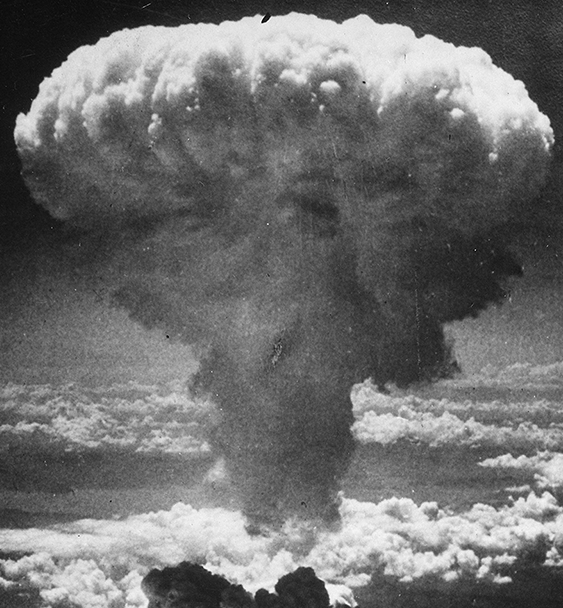
    The United States remains the only nation to have dropped an atomic bomb in anger. While the dates of August 6 and August 9, 1945, are seared into the popular conscience of all Japanese people, those days hold far less salience in American society.

    When discussed at all in the U.S., this dark chapter in human history is usually presented as a necessary evil, or even a day of liberation—an event that saved hundreds of thousands of lives, prevented the need for an invasion of Japan, and ended the Second World War early. This, however, could not be further from the truth.

    American generals and war planners agreed that Japan was on the point of collapse, and had, for weeks, been attempting to negotiate a surrender. The decision, then, to incinerate hundreds of thousands of Japanese civilians was one taken to project American power across the world, and to stymie the rise of the Soviet Union.

    “It always appeared to us that, atomic bomb or no atomic bomb, the Japanese were already on the verge of collapse,” General Henry Arnold, Commanding General of the U.S. Army Air Forces in 1945, wrote in his 1949 memoirs.

    “It is my opinion that the use of this barbarous weapon at Hiroshima and Nagasaki was of no material assistance in our war against Japan. The Japanese were already defeated and ready to surrender. My own feeling was that in being the first to use it, we had adopted an ethical standard common to the barbarians of the Dark Ages” – Gen Hap Arnold

    Arnold was far from alone in this assessment. Indeed, Fleet Admiral William Leahy, the Navy’s highest-ranking officer during World War II, bitterly condemned the United States for its decision and compared his own country to the most savage regimes in world history.

    As he wrote in 1950:

    “It is my opinion that the use of this barbarous weapon at Hiroshima and Nagasaki was of no material assistance in our war against Japan. The Japanese were already defeated and ready to surrender. My own feeling was that in being the first to use it, we had adopted an ethical standard common to the barbarians of the Dark Ages.”

    By 1945, Japan had been militarily and economically exhausted. Losing key allies Italy in 1943 and Germany by May 1945, and facing the immediate prospect of an all-out Soviet invasion of Japan, the country’s leaders were frantically pursuing peace negotiations. Their only real condition appeared to be that they wished to keep as a figurehead the emperor—a position that, by some accounts, dates back more than 2,600 years.

    “I am convinced,” former President Herbert Hoover wrote to his successor, Harry S. Truman, “if you, as President, will make a shortwave broadcast to the people of Japan—tell them they can have their emperor if they surrender, that it will not mean unconditional surrender except for the militarists—you’ll get a peace in Japan—you’ll have both wars over.”

    Many of Truman’s closest advisors told him the same thing. “I am absolutely convinced that had we said they could keep the emperor, together with the threat of an atomic bomb, they would have accepted, and we would never have had to drop the bomb,” said John McCloy, Truman’s Assistant Secretary of War.

    “The war might have ended weeks earlier,” he said, “If the United States had agreed, as it later did anyway, to the retention of the institution of the emperor.” – Gen Douglas MacArthur

    Nevertheless, Truman initially took an absolutist position, refusing to hear any Japanese negotiating caveats. This stance, according to General Douglas MacArthur, Commander of Allied Forces in the Pacific, actually lengthened the war. “The war might have ended weeks earlier,” he said, “If the United States had agreed, as it later did anyway, to the retention of the institution of the emperor.” Truman, however, dropped two bombs, then reversed his position on the emperor, in order to stop Japanese society from falling apart.

    At that point in the war, however, the United States was emerging as the sole global superpower and enjoyed an unprecedented position of influence. The dropping of the atomic bomb on Japan underscored this; it was a power play, intended to strike fear into the hearts of world leaders, especially in the Soviet Union and China.

    FIRST JAPAN, THEN THE WORLD

    “Japan was already defeated, and dropping the bomb was completely unnecessary…[it was] no longer mandatory as a measure to save American lives. It was my belief that Japan was, at this very moment, seeking a way to surrender with a minimum loss of face.” – President Ike Eisenhower

    Hiroshima and Nagasaki drastically curbed the U.S.S.R.’s ambitions in Japan. Joseph Stalin’s forces had invaded and permanently annexed Sakhalin Island in 1945 and planned to occupy Hokkaido, Japan’s second-largest island. The move likely prevented the island nation from coming under the Soviet sphere of influence.

    To this day, Japan remains deeply tied to the U.S., economically, politically, and militarily. There are around 60,000 U.S. troops in Japan, spread across 120 military bases.

    Many in Truman’s administration wished to use the atom bomb against the Soviet Union as well. President Truman, however, worried that the destruction of Moscow would lead the Red Army to invade and destroy Western Europe as a response. As such, he decided to wait until the U.S. had enough warheads to completely destroy the U.S.S.R. and its military in one fell swoop.

    War planners estimated this figure to be around 400. To that end, Truman ordered the immediate ramping up of production. Such a strike, we now know, would have caused a nuclear winter that would have permanently ended all organised life on Earth.

    The decision to destroy Russia was met with stiff opposition among the American scientific community. It is now widely believed that Manhattan Project scientists, including Robert J. Oppenheimer himself, passed nuclear secrets to Moscow in an effort to speed up their nuclear project and develop a deterrent to halt this doomsday scenario. This part of history, however, was left out of the 2023 biopic movie.

    By 1949, the U.S.S.R. was able to produce a credible nuclear deterrent before the U.S. had produced sufficient quantities for an all-out attack, thus ending the threat and bringing the world into the era of mutually assured destruction.

    “Certainly prior to 31 December 1945, and in all probability prior to 1 November 1945, Japan would have surrendered even if the atomic bombs had not been dropped, even if Russia had not entered the war, and even if no invasion had been planned or contemplated,” concluded a 1946 report from the U.S. Strategic Bombing Survey.

    Dwight D. Eisenhower, Supreme Allied Commander in Europe and future president, was of the same opinion, stating that:

    “Japan was already defeated, and dropping the bomb was completely unnecessary…[it was] no longer mandatory as a measure to save American lives. It was my belief that Japan was, at this very moment, seeking a way to surrender with a minimum loss of face.”

    Nevertheless, both Truman and Eisenhower publicly toyed with the idea of using nuclear weapons against China to stop the rise of Communism and to defend their client regime in Taiwan. It was only the development of a Chinese warhead in 1964 that led to the end of the danger, and, ultimately, the détente era of good relations between the two powers that lasted until President Obama’s Pivot to Asia.

    Ultimately, then, the people of Japan were the collateral damage in a giant U.S. attempt to project its power worldwide. As Brigadier General Carer Clarke, head of U.S. intelligence on Japan wrote, “When we didn’t need to do it, and we knew we didn’t need to do it, and they knew that we knew we didn’t need to do it, we used them [Japanese citizens] as an experiment for two atomic bombs.”

    TIPTOEING CLOSER TO ARMAGEDDON

    The danger of nuclear weapons is far from over. Today, Israel and the United States – two nations with atomic weaponry – attack Iranian nuclear facilities. Yet their continued, hyper-aggressive actions against their foes only suggest to other countries that, unless they too possess weapons of mass destruction, they will not be safe from attack. North Korea, a country with a conventional and nuclear deterrent, faces no such air strikes from the U.S. or its allies. These actions, therefore, will likely result in more nations pursuing nuclear ambitions.

    Earlier this year, India and Pakistan (two more nuclear-armed states) came into open conflict thanks to disputes over terrorism and Jammu and Kashmir. Many influential individuals on both sides of the border were demanding their respective sides launch their nukes – a decision that could also spell the end of organised human life. Thankfully, cooler heads prevailed.

    Meanwhile, the war in Ukraine continues, with NATO forces urging President Zelensky to up the ante. Earlier this month, President Trump himself reportedly encouraged the Ukrainian leader to use his Western-made weapons to strike Moscow.

    It is precisely actions such as these that led the Bulletin of the Atomic Scientists to move its famous Doomsday Clock to 89 seconds to midnight, the closest the world has ever been to catastrophe.

    “The war in Ukraine, now in its third year, looms over the world; the conflict could become nuclear at any moment because of a rash decision or through accident or miscalculation,” they wrote in their explanation, adding that conflicts in Asia could spiral out of control into a wider war at any point, and that nuclear powers are updating and expanding their arsenals.

    The Pentagon, too, is recruiting Elon Musk to help it build what it calls an American Iron Dome. While this move is couched in defensive language, such a system – if successful – would grant the U.S. the ability to launch nuclear attacks anywhere in the world without having to worry about the consequences of a similar response.

    Thus, as we look back at the horrors of Hiroshima and Nagasaki 80 years ago, we must understand that not only were they entirely avoidable, but that we are now closer to a catastrophic nuclear confrontation than many people realise.


    This article was published earlier in MintPress News and is republished under a Creative Commons Attribution-NonCommercial-ShareAlike 3.0 International License.
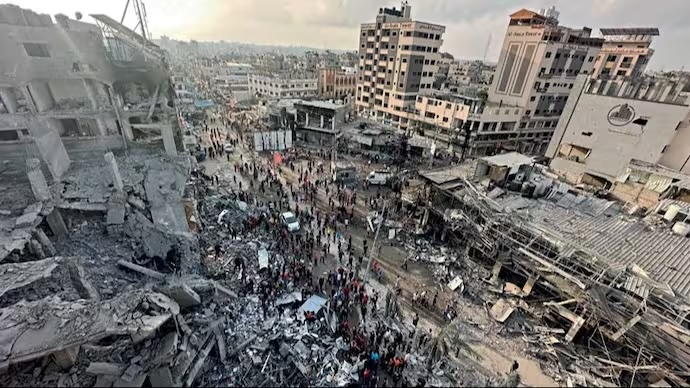
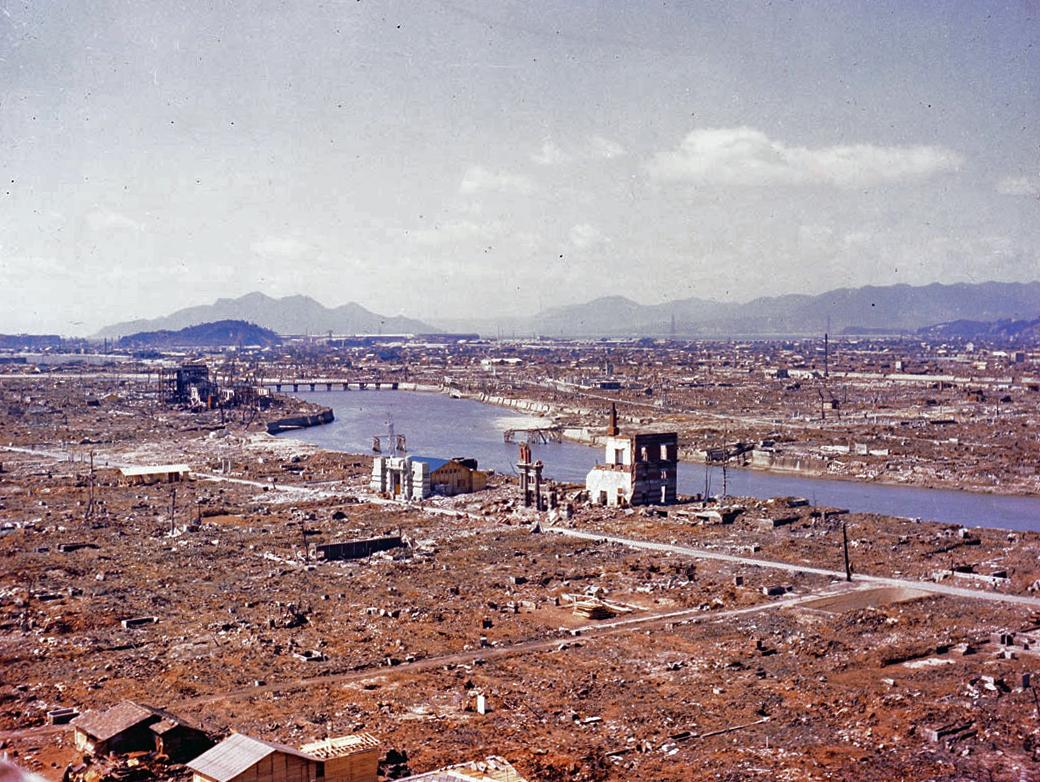
    Feature Image: Hiroshima, several months after the atomic bombing. Air Force photo from national archives nsarchive.gwu.edu


  • The NATO Declaration and the Deadly Strategy of Neoconservatism

    The NATO Declaration and the Deadly Strategy of Neoconservatism

    For the sake of America’s security and world peace, the U.S. should immediately abandon the neocon quest for hegemony in favour of diplomacy and peaceful co-existence.

    In 1992, U.S. foreign policy exceptionalism went into overdrive. The U.S. has always viewed itself as an exceptional nation destined for leadership, and the demise of the Soviet Union in December 1991 convinced a group of committed ideologues—who came to be known as neoconservatives—that the U.S. should now rule the world as the unchallenged sole superpower.

    Despite countless foreign policy disasters at neocon hands, the 2024 NATO Declaration continues to push the neocon agenda, driving the world closer to nuclear war.
    The neoconservatives were originally led by Richard Cheney, the Defense Secretary in 1992. Every President since then—Clinton, Bush, Obama, Trump, and Biden—has pursued the neocon agenda of U.S. hegemony, leading theU.S. into perpetual wars of choice, including Serbia, Afghanistan, Iraq, Syria, Libya, and Ukraine, as well as relentless eastward expansion of NATO, despite a clear U.S. and German promise in 1990 to Soviet President Mikhail Gorbachev that NATO would not move one inch eastward.
    The core neocon idea is that the U.S. should have military, financial, economic, and political dominance over any potential rival in any part of the world. It is targeted especially at rival powers such as China and Russia and, therefore, brings the U.S. into direct confrontation with them. The American hubris is stunning: most of the world does not want to be led by the U.S., much less led by a U.S. state clearly driven by militarism, elitism and greed.
    The neocon plan for U.S. military dominance was spelt out in the Project for a New American Century. The plan includes relentless NATO expansion eastward and the transformation of NATO from a defensive alliance against a now-defunct Soviet Union to an offensive alliance used to promote U.S. hegemony. The U.S. arms industry is the major financial and political backer of the neocons. The arms industry spearheaded the lobbying for NATO’s eastward enlargement starting in the 1990s. Joe Biden has been a staunch neocon from the start, first as Senator, then as Vice President, and now as President.
    To achieve hegemony, the neocon plans rely on CIA regime-change operations; U.S.-led wars of choice; U.S. overseas military bases (now numbering around 750 overseas bases in at least 80 countries); the militarization of advanced technologies (biowarfare, artificial intelligence, quantum computing, etc.); and relentless use of information warfare.
    The quest for U.S. hegemony has pushed the world to open warfare in Ukraine between the world’s two leading nuclear powers, Russia and the United States. The war in Ukraine was provoked by the relentless determination of the U.S. to expand NATO to Ukraine despite Russia’s fervent opposition, as well as the U.S. participation in the violent Maidan coup (February 2014) that overthrew a neutral government and the U.S. undermining of the Minsk II agreement that called for autonomy for the ethnically Russian regions of eastern Ukraine.
    The NATO Declaration calls NATO a defensive alliance, but the facts say otherwise. NATO repeatedly engages in offensive operations, including regime-change operations. NATO led the bombing of Serbia in order to break that nation into two parts, with NATO placing a major military base in the breakaway region of Kosovo. NATO has played a major role in many U.S. wars of choice. NATO bombing of Libya was used to overthrow the government of Moammar Qaddafi.
    The U.S. quest for hegemony, which was arrogant and unwise in 1992, is absolutely delusional today since the U.S. clearly faces formidable rivals that can compete with the U.S. on the battlefield, in nuclear arms deployments and in the production and deployment of advanced technologies. China’s GDP is now around 30% larger than the U.S. when measured at international prices, and China is the world’s low-cost producer and supplier of many critical green technologies, including EVs, 5G, photovoltaics, wind power, modular nuclear power, and others. China’s productivity is now so great that the U.S. complains of China’s “over-capacity.”

    Sadly and alarmingly, the NATO declaration repeats the neoconservative delusions.
    The Declaration falsely declares that “Russia bears sole responsibility for its war of aggression against Ukraine,” despite the U.S. provocations that led to the outbreak of the war in 2014.
    The NATO Declaration reaffirms Article 10 of the NATO Washington Treaty, according to which NATO’s eastward expansion is none of Russia’s business. Yet the U.S. would never accept Russia or China establishing a military base on the US border (say in Mexico), as the U.S. first declared in the Monroe Doctrine in 1823 and has reaffirmed ever since.
    The NATO Declaration reaffirms NATO’s commitment to biodefense technologies, despite growing evidence that U.S. biodefense spending by NIH financed the laboratory creation of the virus that may have caused the Covid-19 pandemic.
    The NATO Declaration proclaims NATO’s intention to continue to deploy anti-ballistic Aegis missiles (as it has already done in Poland, Romania, and Turkey) despite the fact that the U.S. withdrawal from the ABM Treaty and placement of Aegis missiles in Poland and Romania has profoundly destabilized the nuclear arms control architecture.
    The NATO Declaration expresses no interest whatsoever in a negotiated peace for Ukraine.
    The NATO Declaration doubles down on Ukraine’s “irreversible path to full Euro-Atlantic integration, including NATO membership.” Yet Russia will never accept Ukraine’s NATO membership, so the “irreversible” commitment is an irreversible commitment to war.
    The Washington Post reports that in the lead-up to the NATO summit, Biden had serious qualms about pledging an “irreversible path” to Ukraine’s NATO membership, yet Biden’s advisors brushed aside these concerns.

    The neoconservatives have created countless disasters for the U.S. and the world, including several failed wars, a massive buildup of U.S. public debt driven by trillions of dollars of wasteful war-driven military outlays, and the increasingly dangerous confrontation of the U.S. with China, Russia, Iran, and others. The neocons have brought the Doomsday Clock to just 90 seconds to midnight (nuclear war), compared with 17 minutes in 1992.

    For the sake of America’s security and world peace, the U.S. should immediately abandon the neocon quest for hegemony in favour of diplomacy and peaceful co-existence.
    Alas, NATO has just done the opposite.


    Feature Image Credit: Bloomberg

  • What the Global Economy and Security Require

    What the Global Economy and Security Require

    With the new year 2024 well underway, the world is afflicted with wars, economic challenges, and the larger issues of climate change impact that threaten the very survival of the planet. It is paradoxical to see that great powers are still focused on competition and conflict. The year ahead portends continued conflicts, wars, and the weaponisation of economic infrastructures, demonstrated by Israel’s genocidal war against the Palestinians. Carla Norrlof highlights the increase in geopolitical conflicts and the complex relationship between economics and security. The article, like most Western academics, looks from the American perspective. and may miss the larger worldview.

    – Team TPF

    This article was published earlier in Project Syndicate.


    If America and its allies are to maximize both security and prosperity in the coming years, policymakers and strategists will have to understand the complex interplay of forces that is making the world more adversarial and fraught with risk. The global environment demands a comprehensive new economic-security agenda. The global order is undergoing significant changes that demand a new economic-security agenda.

    From hot wars and localized insurgencies to great-power standoffs, geopolitical conflict has made the complex relationship between economics and security a daily concern for ordinary people everywhere. Complicating matters even more is the fact that emerging markets are gaining economic clout and directly challenging traditional powers’ longstanding dominance through new networks and strategic alliances.

    These developments alone would have made this a tumultuous period marked by economic instability, inflation, and supply-chain disruptions. But one also must account for rapid technological advances – which have introduced new security risks (such as arms races and cyber threats) – as well as natural risks such as pandemics and climate change.

    To navigate this dangerous new world, we must reckon with three interrelated dimensions: the effects of geopolitics on the global economy; the influence of global economic relations on national security; and the relationship between global economic competition and overall prosperity.

    Each pathway sheds light on the multifaceted interplay between economics and security. We will need to understand all of them if we are to tackle the varied and complex challenges presented by our highly interconnected global system.

    As recent years have shown, geopolitics can profoundly affect the global economy, reshaping trade, investment flows, and policies sometimes almost overnight. Aside from their devastating human toll, wars like the Russian invasion of Ukraine and Israel’s campaign in Gaza often reverberate far beyond the immediate theater of conflict.

    For example, Western-led sanctions on Russia, and the disruption of Ukrainian grain exports through the Black Sea, caused energy and food prices to soar, resulting in supply insecurity and inflation on a global scale. Moreover, China has deepened its economic relationship with Russia following the mass exodus of Western firms in 2022 and 2023.

    Similarly, Israel’s bombing of Gaza has destabilized the entire Middle East, especially tourism-dependent neighbouring countries such as Egypt, Jordan, and Lebanon. Meanwhile, Yemeni Houthi rebels, long supplied by Iran, have been attacking cargo ships in the Red Sea, leading international shipping firms to suspend or adjust their routes and directly impeding trade through the Suez Canal – a major artery of global commerce.

    We are witnessing the destabilizing effects of natural threats as well. The COVID-19 pandemic drove a massive shift away from cost-effective “just-in-time” supply chains to a “just-in-case” model aimed at strengthening resilience during disruptions. And, more recently, an El Niño-induced drought has diminished the capacity of the Panama Canal – another major artery of global commerce. Whether for geopolitical or ecological reasons, rerouting around these new bottlenecks inevitably increases shipping costs, causes delivery delays, disrupts global supply chains, and creates inflationary pressure.

    Turning to the second dimension – the implications of global economic relations for national security – it is clear that countries will be more likely to adopt bold or aggressive security policies if they already have a web of economic ties that can either attract support or dampen opposition. China, for example, is counting on economically dependent countries within its Belt and Road Initiative to accept its political influence and longer-term bid for hegemony. Many countries also now rely on China for critical defence-related supply-chain components, which leaves them vulnerable diplomatically and militarily.

    More broadly, global connectivity, in the form of economic networks and infrastructure, is increasingly being weaponized for geopolitical ends. As Russia’s war on Ukraine shows, economic ties can create dependencies that raise the cost of opposing assertive security policies (or even outright aggression). The implicit threat of supply disruptions has a coercive – sometimes quite subtle and insidious – effect on a country’s national security objectives. Owing to the network effects of the dollar system, the United States retains significant leverage to enforce international order through coercive sanctions against states that violate international norms.

    Trading with the enemy can be lucrative, or simply practical, but it also alters the distribution of power. As Western governments learned over the past two decades, the advantages conferred by technological superiority can be substantially offset by forced technology transfers, intellectual property theft, and reverse engineering.

    The third dimension – the relationship between global economic competition and prosperity – has been complicated by these first two dynamics, because the pursuit of material well-being now must be weighed against security considerations. Discussions in this area thus centre around the concept of economic security, meaning stable incomes and a reliable supply of the resources needed to support a given standard of living. Both Donald Trump’s “Make America Great Again” slogan and President Joe Biden’s “Build Back Better” plan reflect concerns that economic relations with China harm US prosperity.

    The challenge for the US and its allies is to manage the tensions between these varying economic and security objectives. There is a potential conflict between adapting to market- and geopolitically-driven shifts in economic power and sustaining the economic strength to finance a military force capable of protecting the global economy. The US, as the dominant power, must remain both willing and capable of preserving an open, rules-based global economy and a peaceful international order. That will require additional investments in military capabilities and alliances to counteract territorial aggression and safeguard sea lanes, as well as stronger environmental policies and frameworks to distribute global economic gains according to market principles.

    By attempting to mitigate security risks through deglobalization (reshoring, onshoring, and “friend-shoring”), we risk adding to the economic and security threats presented by a more fragmented world. Though economic ties with rivals can create dangerous dependencies, they also can act as a safeguard against hostility.

    All governments will need to grapple with these tensions as they develop a new economic-security agenda. The world is quickly becoming more adversarial and fraught with risk. To maximize both security and prosperity, we will have to understand the complex interplay of forces that are creating it.

    Feature Image Credit: India Today

  • Strategies: hierarchy or balancing Purpose, Aims and Means?

    Strategies: hierarchy or balancing Purpose, Aims and Means?

    At the beginning of his famous first chapter, Clausewitz defines war as mentioned above within a hierarchy of purpose, aims, and means. His renowned formula is related to this definition. At the end of the same chapter, nevertheless, he introduces the consequences for the theory of war from this initial reasoning about the nature of war and states: “Our task, therefore, is to develop a theory that maintains a balance between these three tendencies, like an object suspended between three magnets”


    Strategy Bridge
    “The Strategy Bridge concept leads to battle-centric warfare and the primacy of tactics over strategy.”


    At the outset, I would like to emphasise that in war and in violent action, justifiable ends do not legitimate all means. But I won’t solely treat the means applied by Hamas on October 7th, nor that of the Israel defence forces afterwards. Nevertheless, if someone argued that the ends justify all means, this would have to be applied to both sides. I want to highlight more principal arguments concerning the ‘end-aims-means’ relationship by contrasting a mere hierarchical approach, which is, in my view, leading to a reversal of ends and means, and a floating balance of them. The task of coming to a proper appreciation of Clausewitz’s thoughts on strategy is actually to combine a hierarchical structure with that of a floating balance. This article examines the relation of purpose, aims and means in Clausewitz’s theory and highlights that this relation is methodologically comparable to the floating balance of Clausewitz’s trinity. Modern strategic thinking is characterised by the end, way (aim), means relationship and the concept of the ‘way’ as the shortest possible connection between ends and means  (consider, for instance, Colin Gray’s concept of a strategy bridge[1]). This notion stems from a very early text of Clausewitz: ‘As a result each war is raised as an independent whole, whose entity lies in the last purpose whose diversity lies in the available means, and whose art therein exists, to connect both through a range of secondary and associated actions in the shortest way.’

    Nevertheless, here we can detect the fundamental difference in many of Clausewitz’s interpretations, which understand strategy as the shortest way of connecting purpose and means (battle and combat). Within this quote, Clausewitz speaks of war as an independent whole, a notion which he later rejects fervently.   A central distinction is the concept to which the means attaches: the Taoist tradition and Sun Tzu hold that the means connects directly to the political purpose of the war; in contrast, for Clausewitz, the means attaches to an intermediary aim within a war, which must be sequentially achieved prior to the fulfilment of the war’s political purpose. The distinctive feature of the Taoist tradition is that strategy as a “way” effectively becomes tactics, in the sense that there exists no “strategic” aim, in the meaning of an intermediate military “strategic” war aim inserted between the political purpose of the war and tactical combat.

    Battle-centric Warfare: Winning battles and losing the War

    If strategy is nothing else than the direct way of linking the political purpose with the means, understood as combat, this understanding results in a ‘battle-centric’ concept of warfare that privileges tactical outcomes. One might attribute the loss of the Vietnam War, as well as the defeat of the US in Afghanistan and Iraq, to this misunderstanding about battle. In the early 1980s, Colonel Harry G. Summers Jr wrote a most influential work about the faults made in the Vietnam War. He observed that the US Army won every battle in Vietnam but finally lost the war. Summers recounts an exchange between himself and a former North Vietnamese Army officer some years after the war. It went something like this: Summers: ‘You never defeated us in the field.’ NVA Officer: ‘That is true. It is also irrelevant.’ [2]Winning battles does not necessarily lead to winning the war, and not only in this case. The same point can be made about Napoleon’s campaign in Russia. Napoleon won all the battles against the Russian army but lost the campaign. It was precisely this observation that led Clausewitz to denounce battle-centric warfare.

    ‘War is thus an act of force to compel our enemy to do our will,’ Clausewitz wrote at the beginning of his famous first chapter of On War (75).[3] ‘Force … is thus the means of war; to impose our will on the enemy is its purpose’, he continued. ‘To secure that purpose, we must make the enemy defenceless, which, in theory, is the true aim of warfare. That aim takes the place of the purpose, discarding it as something not actually part of war’ (75). This seemingly simple sentence reveals the core problem: what does it mean that the aim ‘takes the place’ (in German: vertritt) of the purpose? Are they identical or different? To put it bluntly, At the beginning of his famous first chapter, Clausewitz defines war as mentioned above within a hierarchy of purpose, aims, and means. His renowned formula is related to this definition. At the end of the same chapter, nevertheless, he introduces the consequences for the theory of war from this initial reasoning about the nature of war and states: “Our task, therefore, is to develop a theory that maintains a balance between these three tendencies, like an object suspended between three magnets” (89).[4] In relation to the concept of strategy, we must combine a hierarchical understanding of the purpose-aims-means-rationality with that of a floating balance of all three.

    Presenting any of these elements as an absolute would be artificially to delimit the analysis of war, as the components are interdependent. Clausewitz’s solution is the ‘trinity’, in which he defined war by different, even opposing, tendencies, each with its own rules. Nevertheless, since war is ‘put together’ in this concept of three tendencies, it is necessary to consider how these tendencies interact and conflict simultaneously rather than one being absolute. Clearly, if we go to war, there is a purpose for that war, and different purposes for war are possible. Each of these possible purposes is connected with different achievable military aims, and finally, each aim can be achieved by various means. The question, therefore, is whether all three are incorporated into a hierarchy or whether their relationship must be understood as a floating balance among them.

    Purpose, Aims, and Means in War

    Clausewitz explains this dynamic relationship of purpose, aims and means in war in Chapter Two of Book One. At the beginning of Book One, Chapter Two, Clausewitz writes that ‘if for a start we inquire into the [aim] of any particular war, which must guide military action if the political purpose is to be properly served, we find that the [aim] of any war can vary just as much as its political purpose and its actual circumstances’ (90). The consequence of this proposition is that not every aim and means serves a given purpose. The problem of the relationship between purpose and aims is that each element of the purpose-aims-means construct has a rationality of its own, which Clausewitz emphasises in his proposition that war has its own grammar, although not its own logic. He writes, for example, ‘we can now see that in war many roads lead to success, and that they do not all involve the opponent’s outright defeat.’ Clausewitz then summarises that there exists a wide range of possible ways (94) to reach the aim of war and that it would be a mistake to think of these shortcuts as rare exceptions (94). For example, Clausewitz wrote: ‘It is possible to increase the likelihood of success without defeating the enemy’s forces. I refer to operations that have direct political repercussions, that are designed in the first place to disrupt the opposing alliance’ (emphasis in the original) (92).[5]Another prominent example, Clausewitz emphasised, was the warfare of Frederick the Great. He would never have been able to defeat Austria in the Seven Years’ War if his aim had been the outright defeat of Austria. Clausewitz concludes if he had tried to fight in this manner, ‘he would unfailingly have been destroyed himself.’ (94). After explaining other strategies besides the destruction of the enemy armed forces, he concludes that all we need to do for the moment is to admit the general possibility of their existence, the likelihood of deviating from the basic concept of war under the pressure of particular circumstances (99). But the main conclusion is that in war, many roads may lead to success – but the reverse is true, too, not all means are neither guaranteeing success nor are legitimate.[6]

    But the main conclusion is that in war, many roads may lead to success – but the reverse is true, too, not all means are neither guaranteeing success nor are legitimate.

    Why is that so?   Although Clausewitz finishes Chapter 2 of Book I with the notion that the ‘wish to annihilate the enemy’s forces is the first-born son of war’ (99), he emphasises that at a later stage and by degrees’ we shall see what other kinds of strategies can achieve in war’ (99). Nevertheless, he gives us two clues in this chapter. First, that war is not an independent whole but – an extension of the political sphere: that war has its own grammar but not its own logic.[7] Second, in my interpretation of Clausewitz, the difference between attack and defence represents a distinction between self-preservation and gaining advantages in warfare. Already in Chapter Two, he articulates the ‘distinction that dominates the whole of war: the difference between attack and defence. We shall not pursue the matter now, but let us just say this: that from the negative purpose [comes?] all the advantages, all the more effective forms, of fighting, and that in it is expressed the dynamic relationship between the magnitude and the likelihood of success’ (94).

    My thesis is that Clausewitz is trying to combine the Aristotelian difference between poieses and praxis in his writings – an instrumental view of war for political purposes with the performance of the conduct of war, not just with the execution of the political will. Whereas for the early Clausewitz, the ‘purpose’ is a moment within the war, he later opposes this position, emphasising that this purpose is located outside of the actual warfare. With this differentiation of purposes in war and the purpose of war, Clausewitz covers a fundamental difference between various forms of action, which was initially developed by Aristotle and remains even today. The practical philosophy of Aristotle is based on the basic distinction of techne, as based on poiesis and phronesis, and praxis, based on performance and practical knowledge. Techne is technical, instrumental knowledge.

    In contrast, phronesis or praxis of action can be characterised as performance in warfare. If we compare different purposes for going to war with each other, we are close to what Max Weber called the “value rationality” of purposes. Although Max Weber sometimes seems to overemphasise the difference between the rationality of purposes and military aims, his differentiation is useful to shed light on Clausewitz’s theory. Value rationality is primarily about the relationship of different purposes to one another, which can be classified into a hierarchy of purposes. The subordination of warfare to the shaping of international order, as Clausewitz puts it, is ‘value-rational’ as defined by Max Weber. By contrast, “action rationality” is a principle of action exclusively oriented to achieving a particular military aim through the most effective means and rational consideration of possible consequences and side effects.

                Clausewitz initially makes a two-fold distinction between the purpose-aims-means relationship: first, as a value rationality, in which we find a hierarchical relationship starting from the purpose at the top, with aims and means subordinated respectively; second, as a process rationality, in which the military aim as the object of practical action is the output of the purpose-aim-means relationship.

    He made this distinction at times only implicitly based on the different connotations of the concept of purpose. In part, Clausewitz differentiates between the purpose of war and the purpose in war. He used the same terms throughout, providing various contents from which this distinction could be deduced. Henceforth we need to have a further look at his use of terms and concepts.

    Beginning with his earliest writings, Clausewitz asserted that war has a purpose. In his Strategie (Strategy), written in 1804, he wrote that the ‘purpose of the war’ can be: ‘Either to destroy the enemy completely, to remove their sovereignty, or to prescribe the conditions for peace.’ The destruction of the enemy forces is the ‘more present purpose’ of war. If the purpose of war, however, is the destruction of the enemy forces, is it a purpose that is realised within warfare?[8]  The problem is that the destruction of the enemy moves from being a means to an aim in and of itself. In contrast to such an understanding of the purpose-aims-means rationality, for Clausewitz, the military aim within the war is an intermediary dimension between purpose and means. In his later writings, Clausewitz replaces the term’ purpose in war’ through the terms’ aims’ and ‘goals in warfare’ [(he uses the same German term Ziel for both aim and goal).

    The late Clausewitz emphasises that the purpose of war lies outside the boundaries of the art of warfare. He argues that one must always consider peace as the achievement of the purpose and the end of the business of war. (215) ‘Even more generally, the consideration of the use of force, which was necessary for warfare, affects the resolution for peace. As the war is not an act of blind passion but is required for the political purpose to prevail, this value must determine the size of our own sacrifices. Once the amount of force and thus the extent of the applied force is being so large that the value of the political purpose was no longer held in balance, the violence must be abandoned, and peace be the result.’ (217)

    Additionally, one has to take into account the counter-actions of the opponent. Clausewitz emphasises this difference in his chapter about the theory of war, Book Two: ‘The essential difference is that war is not an exercise of the will directed at inanimate matter, as in the case with the mechanical arts, or at matter which is animate but yielding, as in the case with the human mind and emotions in the fine art. In war, the will is directed at an animate object that reacts’. (149). Hence, Clausewitz’s final achievement is not a strategy that could be applied to all kinds of war but a reflection on the art of warfare, the performance of warfare within a political purpose.

    If, as it seems to Clausewitz, the purpose of war lies outside of warfare and war is determined only as means for this purpose, then a technical, instrumental understanding of the war is thereby intended. But this is not the whole of Clausewitz. He also emphasises praxis, performance and practical knowledge. If the purpose lies within warfare, this does not contain a complete identity of the goal of martial action with its execution. In this case too, the purpose is not war for war’s sake. My conclusion is that Clausewitz is really trying to combine the Aristotelian difference between poieses and praxis in his writings – an instrumental view of war for political purposes with the performance of the conduct of war, not just with the execution of the political will.

    Further dimensions of the concept of Purpose in Clausewitz

    According to Herfried Münkler, Clausewitz makes a distinction between an existential and instrumental view of war. If purpose exists at the top of a hierarchy in the purpose-aims-means relationship, there is an assumption that war is instrumental, in the sense that there is a choice between different purposes, thus identifying the purpose in terms of Max Weber’s value rationality. However, if war is “existential”, in that the only purpose is the survival of the state, the hierarchy of the relationship is reversed, as the means by which the enemy is defeated gains primacy, which accords with a process of rationality. Clausewitz summarised the difference between both concepts of purpose: ‘Where there is a choice of purpose, one may consider and note the means, and where only one purpose may be, the available means are the right ones.’[9]

    A pure process of rationality can lead to the fact that the military aim and means of warfare become the purpose in themselves. It is for characterising war in this manner, as an instrument facing inwards on itself, rather than outwards to a wider political purpose, that the early Clausewitz can be criticised. He adopted the Napoleonic model from Jena, trying to seize its successes systematically and, without considering the social background of France, to generalise it as an abstraction. In his critique of Clausewitz, Keegan wrote that the military develops war cultures, which correspond with their social environment. If, however, war is seen as purely instrumental and the connection to this environment is cut, then the danger of blurring the military boundaries threatens potentially endless violence. In this view, the roots of Clausewitz’s image of war refer back to the origins of the modern age, which was characterised by the full possession of civil rights, the general right to vote and compulsory military service, all of which completed the portrait of the citizen soldier and the ‘battle scenes’ of the people’s army.

    The question for today is whether the revolution in military affairs as well as fourth and fifth-generation warfare (5th generation warfare is partisan warfare applied by states or state-like entities like Hamas) are tempting to a primacy of the means and aims over meaningful purposes, a primacy of tactics over strategy and the ‘art of war’, which is in Clausewitz’s view even surpassing strategy.

    The French model was, in fact, adapted for the Prussian circumstances: a revolutionary people’s army in the service of the raison d’ état – but without ‘republic’ (meaning a democratically constituted system of government). In this form, Clausewitz’s theory was proved and began to be used later for multiple purposes. It started its triumphant advance through the general staff throughout the war ministries of the world. In Keegan’s view, the result of this process was the general armament of Europe in the 19th century and its excessive increase in the 20th century.[10] Keegan left unmentioned that Clausewitz’s theory of war had yet to be bisected to fulfil this function, especially by the German general staff in the First World War. Nevertheless, his criticism revealed a fundamental problem of modern war: the separation of potential options for warfare from socially meaningful purposes. In World War I, tactics replaced strategy.

    Although the understanding of the strategy of the early Clausewitz was, in fact, one of an aim or goal independent from the political realm within warfare, the definition of purpose of the later Clausewitz is based on the political purpose outside of warfare. There are still passages in the final version of On War in which Clausewitz does not differentiate clearly between purpose and aims. The question for today is whether the revolution in military affairs as well as fourth and fifth-generation warfare (5th generation warfare is partisan warfare applied by states or state-like entities like Hamas) are tempting to a primacy of the means and aims over meaningful purposes, a primacy of tactics over strategy and the ‘art of war’, which is in Clausewitz’s view even surpassing strategy.


    Notes:

    [1]   The relevant discussions may be found in the following books: Echevarria, A. 2007. Clausewitz and Contemporary War. Oxford: Oxford University Press; Gray, C. 1999. Modern Strategy. Oxford: Oxford University Press; Herberg-Rothe, A. 2007. Clausewitz’s Puzzle: The Political Theory of War. Oxford: Oxford University Press; Keegan, J. 1994. A History of Warfare. London and New York: Vintage; Simpson, E. 2012. War from the Ground Up: Twenty-First Century Combat as Politics. London: Hurst; Strachan, H. 2007. Clausewitz’s OnWar. Atlantic Monthly Press, New York; von Ghyczy, T., Bassford, C. and von Oetinger, B. Clausewitz on strategy. Inspiration and insight from a master strategist. Hoboken: Wiley; Heuser, B., 2010, The Evolution of Strategy: Thinking War from Antiquity to the Present. Cambridge: Cambridge University Press; Heuser, Beatrice 2010, The Strategy Makers: Thoughts on War and Society from Machiavelli to Clausewitz. Praeger Security International:

    [2]   For details, see Herberg-Rothe, Andreas, Clausewitz’s puzzle. Oxford University Press: Oxford 2007. Clausewitz, Carl von; 1990.  Schriften, Aufsätze, Studien, Briefe, vol. 2, ed. W. Hahlweg. Göttingen: Vandenhoeck&Ruprecht.; Clausewitz, Carl von, 1992. Historical and Political Writings, ed. P. Paret and D. Moran, 1992. Princeton, NJ: Princeton University Press; Clausewitz, Carl von,  Politische Schriften [Political Literature], ed. H. Rothfels. Munich: Drei Masken Verlag.  1922.

    [3]   The numbers in brackets are references to Clausewitz, Carl von, On War. Translated and edited by Peter Paret and Michael Howard. Princeton: Princeton University Press 1984. As translation is a highly tricky process, I have tried to make some translations of my own only in some cases, especially in trying to distinguish the German terms „Zweck“ and „Ziel“. These terms have been translated as purpose, object, objective, ends, and as aims, goals and sometimes even ways by Howard and Paret. My main intention in this article is to distinguish between purpose and aims. It might be that the great variety of the translations has contributed to the underestimation of the difference between the purpose of the war and the goal within the war. Although they are closely connected with each other, I follow Clausewitz’s assertion that the same purpose could be reached by pursuing different goals.

    [4]   With this notion, we can explain the difference between Clausewitz’s real concept of the trinity and trinitarian warfare, which is not directly a concept of Clausewitz, but an argument made by Harry Summers, Martin van Creveld and Mary Kaldor. In trinitarian warfare, the three tendencies of war are understood as a hierarchy, whereas  Clausewitz describes his understanding of their relationship as a floating balance In my view, each war is differently composed of the three aspects of applying force, the struggle or fight of the armed forces and the fighting community the fighting forces belong to; based on this interpretation I define war as the violent struggle of communities; see Herberg-Rothe, Clausewitz’s puzzle.

    [5]   This reference seems to strengthen the difference made by Emile Simpson between the use of armed force within a military domain that seeks to establish military conditions for a political solution on one side and the use of armed force that directly seeks political as opposed to specifically military outcomes; Simpson, War from the ground up, p. 1.

    [6]   The confusion about the difference between Zweck (purpose) of and Ziel (aims) in warfare concerning Clausewitz might be additionally caused by his own insufficient differentiation in this chapter.

    [7]   For Clausewitz’s concept of Policy and politics, see Herberg-Rothe, Clausewitz’s puzzle, chapter 6.

    [8]           Clausewitz, Carl von, Strategie aus dem Jahre 1804 mit Zusätzen von 1808 und 1809 (Strategy from the Year 1804 with Additions from 1808 and 1809). In EB, Verstreute Kleine Schriften (Small Scattered Writings), pp. 3-61, here pp. 20-21.

    [9]   Clausewitz, Carl von, Historisch-politische Aufzeichnungen von 1809 (Historical-Political Records of 1809). In: Clausewitz, Carl von, Politische Schriften (Political Literature), p. 76.

    [10]         . Keegan, Kultur des Krieges (The Culture of War), in particular, p. 543; Naumann, Friedrich, An den Ufern des Oxos (On the banks of the Oxos). John Keegan corrects Carl von Clausewitz. In: Frankfurter Rundschau from 17.6.98, p. ZB 4.


    Feature Photo Credit: Dennis Jarvis – War on the Rocks