Category: Geopolitics & Geo-economics

  • “Aapada mein Avasar”: Examining India’s Engagement with the International Community Amidst the Pandemic

    “Aapada mein Avasar”: Examining India’s Engagement with the International Community Amidst the Pandemic

    [powerkit_button size=”lg” style=”info” block=”true” url=”https://admin.thepeninsula.org.in/wp-content/uploads/2022/05/TPF-Issue-Brief-Aapada-mein-Avasar-1_compressed-2.pdf” target=”_blank” nofollow=”false”]
    Download PDF
    [/powerkit_button]

    Abstract

    Health security has often been considered an issue of “low politics”. However, in the past two years, the global economy has suffered the most since the Great Depression and global supply chains have been hampered. The developed countries were caught off-guard at par with the rest of the world with global resource inequities at display. As the developed world resorted to “medicine nationalism” and “vaccine nationalism,” their credibility as “global leaders” was sharply questioned. Amidst this, the allegations of the pandemic’s origins generated reactions from an emergent China which stopped concealing its geopolitical ambitions and adopted an unapologetically aggressive posture. Moreover, the credibility of a prominent international organization, the World Health Organization, in terms of its inability in notifying and managing the pandemic was heavily criticised. Each of these occurrences having emerged from a global health crisis has unexpectedly altered the prioritization of matters in the international order, and thereby international diplomacy.

    With the developing and least developed countries deprived of critical medical supplies due to hoarding by developed countries – India’s active engagement in medical diplomacy in the initial phase garnered international appreciation. While it cannot be looked at in a transactional sense, it visibly helped India push for its geopolitical interests in the middle of a global crisis – finding the adequate avasar (possibilities) in the ongoing aapada (crisis). Although flaws on the domestic front existed during the first wave, their impact on India’s medical diplomacy was limited. However, a domestic crisis during the second wave turned out to be an eye-opener and prominently impacted foreign policy initiatives. Considering the lessons so learnt and applied in managing the third wave, this paper examines the tremendous domestic potential of India, while also looking at its historical legacy. In doing so, it emphasises the relevance of domestic affairs as a determinant of successful medical diplomacy outreach – thereby impacting the larger foreign policy objectives.

    Introduction

    While health security has often been relegated as a low-priority issue in the geopolitical landscape, the last two years have unprecedentedly changed everything. A majority of developed nations have appeared helpless in managing the human catastrophe thereby resorting to vaccine and medicine protectionism. To put this on record, over six million people worldwide have lost their lives (COVID Live – Coronavirus Statistics, 2022) during these two years – with the maximum number of lives lost in the United States of America. The global economy has suffered the most since the Great Depression as a fallout of extended total lockdowns that hampered global supply chains. Moreover, an unexpected, unrealised over-dependency of global supply chains on a single country’s economy – China – caught the international community unprepared. Gradually, newer possibilities and threats have emerged through a changing character of the global economy, society, as well as politics and warfare – each of these shifting to the virtual domain.

    [powerkit_button size=”lg” style=”info” block=”true” url=”https://admin.thepeninsula.org.in/wp-content/uploads/2022/05/TPF-Issue-Brief-Aapada-mein-Avasar-1_compressed-2.pdf” target=”_blank” nofollow=”false”]
    Read More
    [/powerkit_button]

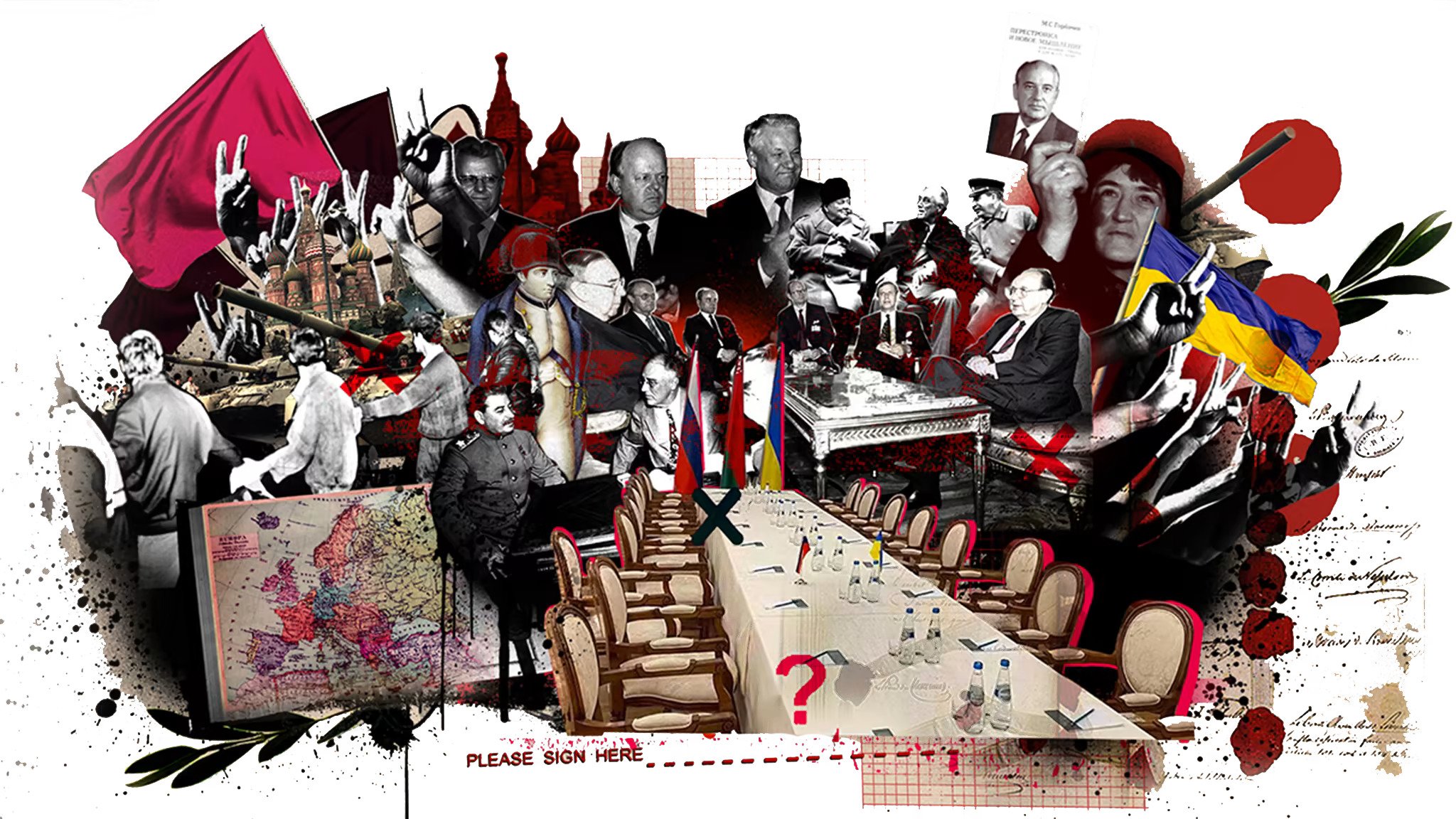
    Feature Image Credits: ABC

  • TPF Analysis Series on Russia – Ukraine Conflict #2

    TPF Analysis Series on Russia – Ukraine Conflict #2

    [powerkit_button size="lg" style="info" block="true" url="https://admin.thepeninsula.org.in/2022/03/29/tpf-analysis-series-on-russia-ukraine-conflict/" target="_blank" nofollow="false"]
    The First Paper of the Series – TPF Analysis Series on Russia – Ukraine Conflict #1
    [/powerkit_button]

    What’s in Ukraine for Russia? 

    In a press conference marking his first year in office, President Biden, on the question of Russia invading Ukraine, remarked that such an event would, “be the most consequential thing that’s happened in the world, in terms of war and peace, since World War Two”. [1] It has now been two months since Russia officially launched its “special military operation” in Ukraine, which the US and its allies consider an unjustified invasion of a sovereign state. The conflict in the Eurasian continent has drawn global attention to Europe and US-Russia tensions have ratcheted to levels that were prevalent during the Cold War. The conflict has also raised pertinent questions on understanding what exactly are Russian stakes in Ukraine and the latter’s role in the evolving security architecture of Europe. The second paper in this series will delve into these questions.

    The current Russian position stems from the experience that Russia, and Putin, gained while dealing with the West on a host of issues, not least of which was NATO expansion.

    The Ties that Bind

    An examination of post-Soviet history reveals that Russian preoccupation with security threats from NATO is not embedded in Russian geopolitics; instead, it has been reported that, early on, Russia was even agreeable to joining the military alliance. The current Russian position stems from the experience that Russia, and Putin, gained while dealing with the West on a host of issues, not least of which was NATO expansion. A line of argument sympathetic to Russia is President Putin’s contention that terms dictated to Russia during the post-Cold War settlements were unfair. The claim is a reference to Secretary of State James Baker’s statement on the expansion of NATO, “not an inch of NATO’s present military jurisdiction will spread in an eastern direction”, in 1990 in a candid conversation with Mikhael Gorbachev on the matter of reunification of Germany. [2] It could be argued that it is this commitment and subsequent violation through expansions of NATO is one of the main causes of the current conflict. 

    At the root of the problem was Russia’s security concerns – regarding both traditional and hybrid security – that ultimately led to the centralisation of power after a democratic stint under Yeltsin. Accordingly, Putin had put it in late 1999, “A strong state for Russia is not an anomaly, or something that should be combated, but, on the contrary, the source and guarantor of order, the initiator and the main driving force of any changes”. [3]

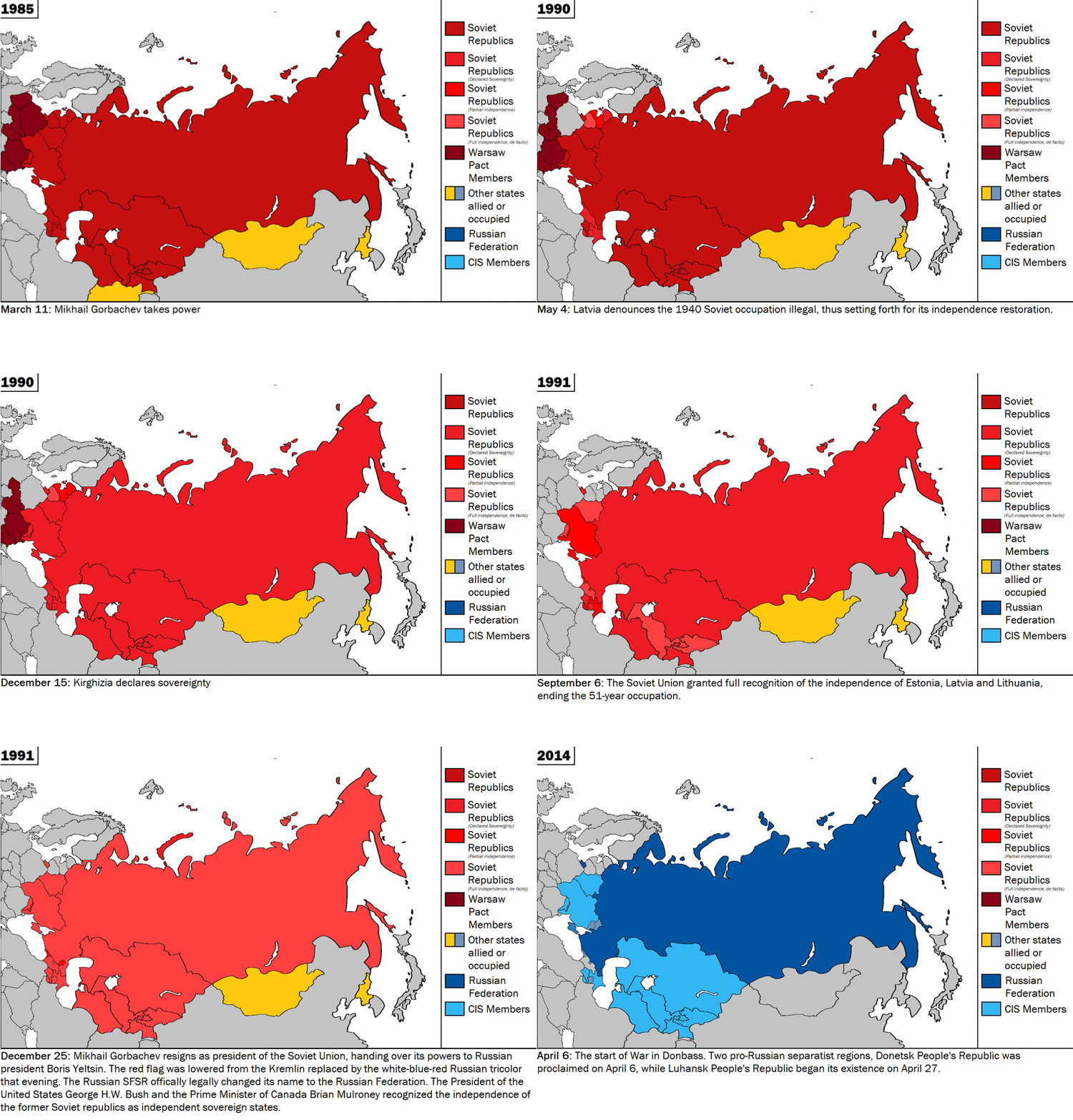
    Historically being a land power, Russia has viewed Ukraine as a strategically critical region in its security matrix. However, as the central control of Moscow weakened in the former USSR, the nationalist aspirations of the Ukrainian people began to materialise and Ukraine played a crucial role, along with the Russian Federation and Belarus, in dissolving the former Soviet Union. The two countries found themselves on opposite sides on extremely fundamental issues, such as security, economic partnership, post-Soviet order, and, not least, sovereignty. In Belovezh, in early December of 1991, when Russian President Boris Yeltsin, Ukrainian President Leonid Kravchuk and Belarusian leader Stanislav Shushkevich met to dissolve the USSR, major disagreements regarding the transitional phase and future of the republics erupted. Yeltsin expressed his desire for some sort of central control of the republics, whereas Kravchuk was vehemently opposed to any arrangement that might compromise his country’s sovereignty. Later, at the foundational ceremony of the Commonwealth of Independent States (CIS), he stressed a common military, the most potent rejection of which came from Kravchuk. [4]
    Source: Wikimedia Commons

    The elephant in the room, however, was the status of Sevastopol, which housed the headquarters of the Black Sea Fleet. Yeltsin was quoted saying that “The Black Sea Fleet was, is and will be Russia’s. No one, not even Kravchuk will take it away from Russia”. [5] Though the issue was soon temporarily resolved –with the two countries dividing the fleet equally amongst themselves, it continued to dominate and sour their relationship. Russia, as the successor state of the USSR, wanted the base and the entire fleet in its navy. Yeltsin even offered gas at concessional rates to Ukraine if it handed over the city and nuclear weapons to Russia. The issue remained unresolved until the 1997 Friendship Treaty under which Ukraine granted Moscow the entire fleet and leased Sevastopol to Russia until 2017 (later extended).

    Ukraine, under Kravchuk and, later, Leonid Kuchma, struggled to tread a tightrope between Russia and the European Union. On one hand, it was economically knit with former Soviet Republics, and on the other, it was actively looking to get economic benefits from the EU. However, soon a slide towards the west was conspicuous. In 1994, it preferred a Partnership and Cooperation Agreement with the EU over CIS Customs Union, which was a Russian initiative. Later, in 1996, it declined to join a new group consisting of former Soviet Republics ‘On Deepening Integration’, scuttling the initiative, since its purpose was to bring Ukraine back into the Russian fold. [6] By 1998, the Kuchma government had formulated a ‘Strategy of Integration into the European Union’. [7]

    Nuclear weapons were another point of contention between the two. Ukraine was extremely reluctant to give up its arsenal, citing security threats from Russia. Kravchuk received a verbal ‘security guarantee’ from the US which forced Russia to “respect the independence, sovereignty, and territorial integrity of each nation” [8] in exchange for surrendering Ukraine’s nuclear weapons. 

    Notwithstanding the disputes, there was a great deal of cooperation between the two, especially after Kuchma’s re-election in 1999. Kuchma’s hook-up with authoritarianism distanced Kyiv from Brussels and brought it closer to Moscow. Ukraine agreed to join Russian initiatives of the Eurasian Economic Community as an observer and Common Economic Space as a full member. At home as well, his support in the eastern parts of the country, where ethnic Russians dwelled, increased dramatically, as evident in the 2002 Parliamentary Elections. [9] However, the bonhomie was soon disrupted by a single event.

    The Orange Revolution was Russia’s 9/11. [10] It dramatically altered Russian thinking on democracy and its ties with the West. It raised the prospect in Russia that Ukraine might be lost completely. It further made them believe the colour revolutions in former Soviet republics were CIA toolkits for regime change. More importantly, it made the Russians apprehensive of a similar revolution within their borders. As a result, the distrust between Russia and the West, and Russia and Ukraine grew considerably. As a nationalist, Victor Yushchenko formulated policies that directly hurt Russian interests. The two countries fought ‘Gas Wars’ in 2006 and 2009, which made both the EU and Russia uncomfortable with Ukraine as a gas transit country. Furthermore, Yushchenko bestowed the title of ‘Hero of Ukraine’ upon Stepan Bandera, a Nazi collaborator and perpetrator of the Holocaust, a decision that surely did not go well with Moscow.

    Geoeconomics: Ukraine as a Gas Transit Country

    The current war is the worst in Europe since the Second World War. Still, Ukraine continues to transit Russian gas through its land, Russia continues to pay for it, and Western Europe continues to receive the crucial resource. The war has shattered all the big bets on Russian dependence on Ukraine for delivering gas to Western Europe and has renewed the discourse on reducing European energy dependence on Russia. Since the EU imports 40% of its gas from Russia, almost a quarter of which flows through Ukraine, Kyiv has had leverage in dealing with Russians in the past. It has been able to extract favourable terms by either stopping or diverting gas for its own domestic use at a time of heightened tensions between Ukraine and Russia. As a result, the EU was directly drawn into the conflict between them, infructuating Moscow’s pressure tactics for a long.

    Moscow has made numerous attempts in the past to bypass Ukraine by constructing alternate pipelines. Nord Stream, the most popular of them, was conceived in 1997, as an attempt to decrease the leverage of the transit states. The pipeline was described as the “Molotov-Ribbentrop Pipeline” by Polish Defence Minister Radoslaw Sirkosi for the geoeconomic influence it gave to Russia. [11] Another project – the South Stream – was aimed at providing gas to the Balkans, and through it to Austria and Italy. The pipeline was conceived in the aftermath of the Orange Revolution and its construction was motivated by geoeconomics, rather than economic viability. It would have led to Russia bypassing Ukraine in delivering gas to the Balkans and Central Europe, thus seizing its significant leverage, and relegating it to vulnerable positions in which Moscow could have eliminated the gas subsidies Ukraine was being provided. [12]As a result of economic unviability, the project was abandoned in 2014.

    To a certain extent, the European Union has been complicit in making matters worse for Russia. For instance, during the 2009 ‘Gas War’ – that began due to Ukraine’s non-payment of gas debt to Russia – instead of holding Ukraine accountable, the EU countries blamed Russia for the gas crisis in Europe and asked Russia to resume gas supply to Ukraine. Later, realising the importance of Ukraine as a transit country, it reached an agreement with Kyiv that “recognized the importance of the further expansion and modernization of Ukraine’s gas transit system as an indispensable pillar of the common European energy infrastructure, and the fact that Ukraine is a strategic partner for the EU gas sector”. The agreement excluded Russia as a party, which saw it as undermining the collaboration between itself and Ukraine, and injuring its influence on the country. [13] The Russian grievance becomes even more palpable when we view the significant gas subsidies it has provided to Ukraine for more than two decades. 

    Similarly, the EU countries viewed Nord Stream 2 from a geostrategic and geo-economic perspective. In December last year, German Economic Affairs Minister Robert Habeck warned Russia of halting Nord Stream 2 if it attacks Ukraine. German Chancellor Olaf Scholz was quoted saying that he would do ‘anything’ to ensure that Ukraine remains a transit country for Russian gas. [14] In fact, the pipeline – that is set to double the capacity of gas delivered to the EU – has faced opposition from almost all Western European countries, the US, the EU as well as Ukraine, which has described it as ‘A dangerous Geopolitical Weapon’. [15] The pipeline had raised concerns amongst Ukrainians of losing a restraining factor on Moscow’s behaviour. [16] However, with the pipeline still inoperable, the Kremlin has already made the restraining factor ineffective.

    The Security Objective

    The Russian Federation is a country which spreads from the European Continent to Asia. In this giant nation, the hospitable region where people live is mainly on the European side, which also comprises main cities like St. Petersburg, Volgograd and the Capital City Moscow. Throughout history, Russia has seen invasions by Napoleon as well as Hitler, and the main area through which these invasions and wars happened was through Ukrainian land which gave them direct access to Russia – due to the lack of any geographical barriers. It was certainly a contributing factor towards the initial success of these invasions. Today, we might understand these events as Russia’s sense of vulnerability and insecurity if history is any indicator. 

    The Russian Federation also follows a similar approach to ensuring its security, survival and territorial integrity. Russia’s interest in Ukraine is as much geopolitical as cultural. Since Russians and Ukrainians were intrinsically linked through their culture and language, Ukraine quickly came to be seen as Russian land, with Ukrainians being recognized as ‘Little Russians’ (Kubicek, 2008), as compared to the “Great Russians”. They were consequently denied the formation of a distinct Ukrainian identity. Putin gave substance to this sentiment as, according to a US diplomatic cable leak, he had “implicitly challenged the territorial integrity of Ukraine, suggesting that Ukraine was an artificial creation sewn together from the territory of Poland, the Czech Republic, Romania, and especially Russia in the aftermath of the Second World War” during a Russia-NATO Council meeting. [17]

    Crimea and much of eastern Ukraine are ethnically Russian and desire closer ties with Russia. But moving further west, the people become increasingly cosmopolitan and it is mostly this population that seeks greater linkage with the Western European countries and membership into the EU and NATO. This in addition to the Euro Maidan protests is what Putin has used to justify the annexation of Crimea in 2014. The other security consideration was the threat it faced from the likelihood of NATO establishing a base in Crimea given its own presence in Sevastopol in the Black Sea. 

    In the current scenario, the second phase of Russian Military operation in the East and South has shown us the larger vulnerabilities Moscow has which are being countered through control of certain points in the region. By liberating the Donbass region in the east, Russia plans to create a buffer zone between itself and the west to stop future aggression and keep enemies at bay. But the extension of this buffer zone all the way to Odessa is indicative of other strategic considerations. Mariupol in the south of Ukraine is one of the many extended strategic points Russia now controls leading us to ask just why Mariupol is a game-changer in this conflict?

    The port city of Mariupol is a small area geographically, but it provides the land bridge for the Russian forces in the Crimean Peninsula to join the Military operation in the Donbas region. Moreover, it gives Russia a land bridge to Crimea from the Russian Mainland. According to General Sir Richard Barrons, former Commander of UK Joint Forces Command, Mariupol is crucial to Russia’s offensive movement, – “When the Russians feel they have successfully concluded that battle, they will have completed a land bridge from Russia to Crimea and they will see this a major strategic success.” [18]
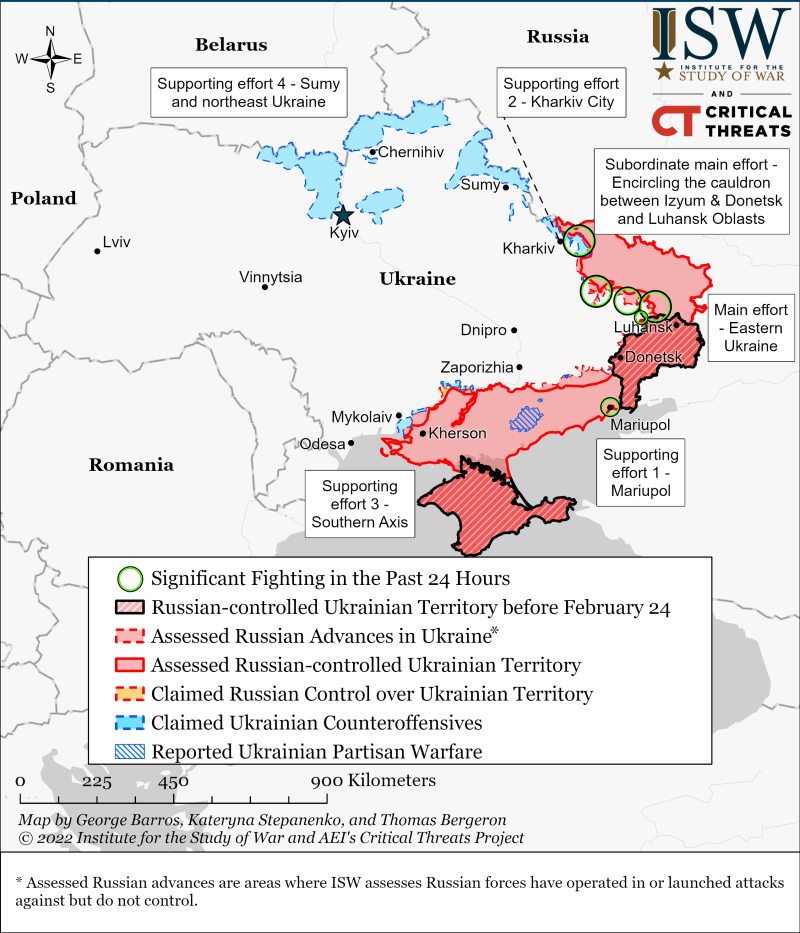
    Source: ISW (Assessment on 09 May, 2022)

    If the port city of Mariupol is important for the creation of a land corridor, then the Sea of Azov which is adjacent to it is even more important due to its strategic position. [19] The three geopolitical reasons why this sea is important are as follows:

    1. The Sea of Azov is a major point for the economic and military well-being of Ukraine. Proximity to the frontlines of the Donbass region where the fighting between Ukrainian forces and Pro-Russian separatists is taking place makes the control of this sea vital to the Russian military as it helps weaken Ukrainian defence in the region via control of the Kerch Strait.
    2. Controlling the Sea of Azov is strategically important for Russia, to maintain its control in the Crimean Peninsula, which allows Moscow to resupply its forces through the Strait of Kerch.
    3. Finally, it also involves Eurasian politics into why Russia needs to control this region and here the discussion of the Volga-Don canal which links the Caspian Sea with the Sea of Azov comes to the fore. Russia has always used this canal to move warships between the Caspian Sea to the Black Sea and project its power in both regions. Moreover, Russia sees this connection as a significant strategic advantage in any future crisis.

    If Mariupol and the Sea of Azov are considered the most important strategically valuable features by Russia, there also exists the crucial points of Kherson and Odessa which will give Russia complete dominance of the Ukrainian coast line, thus giving larger access and control in the Black Sea region that has the potential to be militarised in the future in conflicts with the West. Moreover, it gives Russia a land corridor to Transnistria which is a Pro-Russian separatist area in Moldova and an opening into the Romanian border through Odessa, thus balancing the build-up of NATO forces in the region. 

    Conclusion

    The Ukrainian crisis is as much the West’s doing as Russia’s and an ear sympathetic to the Russian narrative might even say that the West took advantage of Russia when it was vulnerable immediately following the collapse of the Soviet Union in negotiations regarding the German state reunification and NATO enlargement.

    The bottom line is that, presently, Putin views NATO as an existential security threat to the Russian state and sees the US and its allies’ support of Ukraine as a challenge. Ukraine’s membership in the EU and NATO is a non-starter for Russia and pitting a Ukraine, that has a symbiotic relationship with Russia at all levels, against a slightly diminished but still formidable great power will have consequences for the security architecture and geopolitics of the region.  The Ukrainian crisis is as much the West’s doing as Russia’s and an ear sympathetic to the Russian narrative might even say that the West took advantage of Russia when it was vulnerable immediately following the collapse of the Soviet Union in negotiations regarding the German state reunification and NATO enlargement. On some level, NATO countries recognize the fact that Ukraine and Georgia can never be allowed membership into the North Atlantic alliance because the alternative of wilfully ignoring Russia’s security and national interests is just a recipe for disaster and might just launch the region into the single biggest armed conflict since World War 2. 

    References:

    [1] The White House. (2022, January 20). Remarks by president Biden in the press conference. https://www.whitehouse.gov/briefing-room/speeches-remarks/2022/01/19/remarks-by-president-biden-in-press-conference-6/

    [2] Savranskaya, S., Blanton, T. S., & Zubok, V. (2010). Masterpieces of history: The peaceful end of the Cold War in Europe, 1989. Central European University Press.

    [3] Putin, Vladimir. “Rossiya na Rubezhe Tysyacheletii,” Nesavisimaya Gazeta, December 30, 1999, quoted in D’Anieri, Paul (2019). Ukraine and Russia: From Civilized Divorce to Uncivil War. Cambridge University Press.

    [4] Ibid

    [5] Rettie, J. and James Meek, “Battle for Soviet Navy,” The Guardian, January 10, 1992

    [6] Ibid, no. iii

    [7] Solchanyk, R., Ukraine and Russia: The Post-Soviet Transition. Rowman and Littlefield Publishers. 2000.

    [8] Goldgeier, J. and Michael McFaul. “Power and Purpose: U.S. Policy Toward Russia after the Cold War”, Brookings Institution Press, 2003

    [9] Ibid, no. iii

    [10]  The comment was made by Gleb Pavlovskii, a Russian Political Scientist. quoted in Ben Judah (2013), Fragile Empire: How Russia Fell In and Out of Love with Vladimir Putin. New Haven, CT: Yale University Press, p. 85.

    [11] Ibid, no. iii

    [12] Wigell, M. and  A. Vihma, Geopolitics versus geoeconomics: the case of Russia’s geostrategy and its effects on the EU. International Affairs, 92: 605-627. May 6, 2016

    [13] Ibid, no. iii

    [14] Harper, J. (2021, December 23). Nord stream 2: Who wins, who loses? Deutsche Welle. https://www.dw.com/en/nord-stream-2-who-wins-who-loses/a-60223801

    [15] Ukraine: Nord stream 2 a ‘dangerous geopolitical weapon’. (2021, August 22). DW.COM. https://www.dw.com/en/ukraine-nord-stream-2-a-dangerous-geopolitical-weapon/a-58950076

    [16] Pifer, S. “Nord Stream 2: Background, Objectives and Possible Outcomes”, Brookings, April 2021 https://www.brookings.edu/research/nord-stream-2-background-objections-and-possible-outcomes/

    [17] WikiLeaks. (2008, August 14). UKRAINE, MAP, AND THE GEORGIA-RUSSIA CONFLICT, Canonical ID:08USNATO290_ahttps://wikileaks.org/plusd/cables/08USNATO290_a.html

    [18] Gardner, F. (2022, March 21). Mariupol: Why Mariupol is so important to Russia’s plan. BBC News. https://www.bbc.com/news/world-europe-60825226

    [19] Blank, S. (2018, November 6). Why is the Sea of Azov so important? Atlantic Council. https://www.atlanticcouncil.org/blogs/ukrainealert/why-is-the-sea-of-azov-so-important/

    Featured Image Credits: Financial Times

    [powerkit_button size="lg" style="info" block="true" url="https://admin.thepeninsula.org.in/2022/03/29/tpf-analysis-series-on-russia-ukraine-conflict/" target="_blank" nofollow="false"]
    TPF Analysis Series on Russia – Ukraine Conflict #1
    [/powerkit_button]
  • Technology, Politics and China’s Quest for Energy Dominance

    Technology, Politics and China’s Quest for Energy Dominance

    [powerkit_button size=”lg” style=”info” block=”false” url=”https://admin.thepeninsula.org.in/wp-content/uploads/2022/05/Technology-Politics-and-Chinas-Quest-for-Renewable-Energy-Dominance-3.pdf” target=”_blank” nofollow=”false”]
    Download
    [/powerkit_button]

    Abstract:

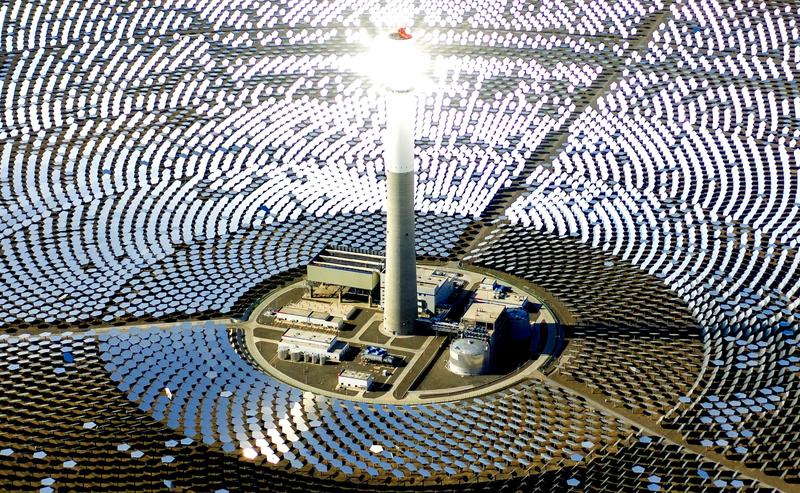
    This paper will empirically investigate the role of technology in international politics through a case study of China’s development of renewable energy infrastructure (solar PV and wind energy) and its impact on international politics. This paper looks at how technology helps shape a state’s identity using renewable energy technology as an explanatory variable. The paper employs Grygiel’s Model of Geopolitics to analyse the case study; geopolitics because much of China’s development in the renewable sector has been a function of its geography and abundance of natural resources.

    Introduction:

    China has experienced decades of near double-digit economic growth and since the 2000s, has witnessed a growing population and rapid industrialization that has correspondingly driven demand for energy. Its expeditious implementation of economic reforms has elevated it to the status of a global power capable of challenging the US-established status quo. Stability is increasingly being viewed as a function of China’s behaviour vis-à-vis its strategic rivals, primarily the US, and to a lesser extent Japan, India, Russia and the littoral states of Southeast Asia. But more importantly, it has been China’s near fanatic fervour to rise as a technologically superior state, as the US emerged post the World Wars, that has generated interest. The modernization of its military, near the meteoric rise of installed capacities for renewable sources of energy and technological revolution, underscores the importance and role technological advancement plays in a state’s development. Technology and international politics have a near symbiotic relationship and the former has the potential to fundamentally alter the way states exercise their sovereignty in pursuit of their national interests.

    [powerkit_button size=”lg” style=”info” block=”true” url=”https://admin.thepeninsula.org.in/wp-content/uploads/2022/05/Technology-Politics-and-Chinas-Quest-for-Renewable-Energy-Dominance-3.pdf” target=”_blank” nofollow=”false”]
    Read the Full Paper
    [/powerkit_button]

  • America defeats Germany for the third time in a century

    America defeats Germany for the third time in a century

    This is a very profound article by Michael Hudson, wherein he exposes the real drivers of the conflict in Ukraine – the American Military Industrial Complex; Oil, Gas and Mining Industry; and the FIRE (Finance, Insurance and Real Estate) – the three oligarchs who form the deep state or the national security state that conducts the American foreign policy. To this we can add the fourth – the Big Tech. Clearly, as Paul Kennedy identified more than three decades ago, like all empires of the past, the American Empire has entered an irretrievable imperial overstretch and the consequent decline that would accelerate post the war in Ukraine.

    TPF is happy to republish this excellently analysed article by Michael Hudson under the Creative Commons Attribution-Non Commercial-No Derivatives 4.0 International License. It was published earlier in MRonline.

    The MIC, OGAM and FIRE Sectors Conquer NATO

    My old boss Herman Kahn, with whom I worked at the Hudson Institute in the 1970s, had a set speech that he would give at public meetings. He said that back in high school in Los Angeles, his teachers would say what most liberals were saying in the 1940s and 50s: “Wars never solved anything.” It was as if they never changed anything—and therefore shouldn’t be fought.

    Herman disagreed, and made lists of all sorts of things that wars had solved in world history, or at least changed. He was right, and of course that is the aim of both sides in today’s New Cold War confrontation in Ukraine.

    The question to ask is what today’s New Cold War is trying to change or “solve.” To answer this question, it helps to ask who initiates the war. There always are two sides—the attacker and the attacked. The attacker intends certain consequences, and the attacked looks for unintended consequences of which they can take advantage. In this case, both sides have their dueling sets of intended consequences and special interests.

    the U.S. policy executed by the Clinton and subsequent administrations to wage a new military expansion via NATO has paid a 30-year dividend in the form of shifting the foreign policy of Western Europe and other American allies out of their domestic political sphere into their own U.S.-oriented “national security” blob. NATO has become Europe’s foreign policy-making body, even to the point of dominating domestic economic interests.

    The active military force and aggression since 1991 has been the United States. Rejecting mutual disarmament of the Warsaw Pact countries and NATO, there was no “peace dividend.” Instead, the U.S. policy executed by the Clinton and subsequent administrations to wage a new military expansion via NATO has paid a 30-year dividend in the form of shifting the foreign policy of Western Europe and other American allies out of their domestic political sphere into their own U.S.-oriented “national security” blob (the word for special interests that must not be named). NATO has become Europe’s foreign policy-making body, even to the point of dominating domestic economic interests.

    The recent prodding of Russia by expanding Ukrainian anti-Russian ethnic violence by Ukraine’s neo-Nazi post-2014 Maidan regime was aimed at (and has succeeded in) forcing a showdown in response the fear by U.S. interests that they are losing their economic and political hold on their NATO allies and other Dollar Area satellites as these countries have seen their major opportunities for gain to lie in increasing trade and investment with China and Russia.

    To understand just what U.S. aims and interests are threatened, it is necessary to understand U.S. politics and “the blob,” that is, the government central planning that cannot be explained by looking at ostensibly democratic politics. This is not the politics of U.S. senators and representatives representing their congressional voting districts or states.

    America’s three oligarchies in control of U.S. foreign policy

    It is more realistic to view U.S. economic and foreign policy in terms of the military-industrial complex, the oil and gas (and mining) complex, and the banking and real estate complex than in terms of the political policy of Republicans and Democrats. The key senators and congressional representatives do not represent their states and districts as much as the economic and financial interests of their major political campaign contributors.

    It is more realistic to view U.S. economic and foreign policy in terms of the military-industrial complex, the oil and gas (and mining) complex, and the banking and real estate complex than in terms of the political policy of Republicans and Democrats. The key senators and congressional representatives do not represent their states and districts as much as the economic and financial interests of their major political campaign contributors. A Venn diagram would show that in today’s post-Citizens United world, U.S. politicians represent their campaign contributors, not voters. And these contributors fall basically into three main blocs.
    Three main oligarchic groups that have bought control of the Senate and Congress to put their own policy makers in the State Department and Defense Department.

    First is the Military-Industrial Complex (MIC)—arms manufacturers such as Raytheon, Boeing and Lockheed-Martin, have broadly diversified their factories and employment in nearly every state, and especially in the Congressional districts where key Congressional committee heads are elected. Their economic base is monopoly rent, obtained above all from their arms sales to NATO, to Near Eastern oil exporters and to other countries with a balance of payments surplus. Stocks for these companies soared immediately upon news of the Russian attack, leading a two-day stock market surge as investors recognized that war in a world of cost-plus “Pentagon capitalism” (as Seymour Melman described it) will provide a guaranteed national security umbrella for monopoly profits for war industries. Senators and Congressional representatives from California and Washington traditionally have represented the MIC, along with the solid pro-military South. The past week’s military escalation promises soaring arms sales to NATO and other U.S. allies, enriching the actual constituents of these politicians. Germany quickly agreed to raise its arms spending to over 2% of GDP.

    Monopolizing the Dollar Area’s oil market and isolating it from Russian oil and gas has been a major U.S. priority for over a year now, as the Nord Stream 2 pipeline threatened to link the Western European and Russian economies more tightly together.

    The second major oligarchic bloc is the rent-extracting oil and gas sector, joined by mining (OGAM), riding America’s special tax favoritism granted to companies emptying natural resources out of the ground and putting them mostly into the atmosphere, oceans and water supply. Like the banking and real estate sector seeking to maximize economic rent and maximizing capital gains for housing and other assets, the aim of this OGAM sector is to maximize the price of its energy and raw materials so as to maximize its natural resource rent. Monopolizing the Dollar Area’s oil market and isolating it from Russian oil and gas has been a major U.S. priority for over a year now, as the Nord Stream 2 pipeline threatened to link the Western European and Russian economies more tightly together.

    If oil, gas and mining operations are not situated in every U.S. voting district, at least their investors are. Senators from Texas and other Western oil-producing and mining states are the leading OGAM lobbyists, and the State Department has a heavy oil sector influence providing a national security umbrella for the sector’s special tax breaks. The ancillary political aim is to ignore and reject environmental drives to replace oil, gas and coal with alternative sources of energy. The Biden administration accordingly has backed the expansion of offshore drilling, supported the Canadian pipeline to the world’s dirtiest petroleum source in the Athabasca tar sands, and celebrated the revival of U.S. fracking.

    The foreign policy extension is to prevent foreign countries not leaving control of their oil, gas and mining to U.S. OGAM companies from competing in world markets with U.S. suppliers. Isolating Russia (and Iran) from Western markets will reduce the supply of oil and gas, pushing up prices and corporate profits accordingly.

    The third major oligarchic group is the symbiotic Finance, Insurance and Real Estate (FIRE) sector, which is the modern finance-capitalist successor to Europe’s old post-feudal landed aristocracy living by land rents. With most housing in today’s world having become owner-occupied (although with sharply rising rates of absentee landlordship since the post-2008 wave of Obama Evictions), land rent is paid largely to the banking sector in the form of mortgage interest and debt amortization (on rising debt/equity ratios as bank lending inflates housing prices). About 80 percent of U.S. and British bank loans are to the real estate sector, inflating land prices to create capital gains—which are effectively tax exempt for absentee owners.

    Internationally, the FIRE sector’s aim is to privatize foreign economies (above all to secure the privilege of credit creation in U.S. hands), so as to turn government infrastructure and public utilities into rent seeking monopolies to provide basic services (such as health care, education, transportation, communications and information technology) at maximum prices instead of at subsidized prices to reduce the cost of living and doing business.

    This Wall Street-centered banking and real estate bloc is even more broadly based on a district-by-district basis than the MIC. Its New York senator from Wall Street, Chuck Schumer, heads the Senate, long supported by Delaware’s former Senator from the credit card industry Joe Biden, and Connecticut’s senators from the insurance sector centered in that state. Domestically, the aim of this sector is to maximize land rent and the “capital’ gains resulting from rising land rent. Internationally, the FIRE sector’s aim is to privatize foreign economies (above all to secure the privilege of credit creation in U.S. hands), so as to turn government infrastructure and public utilities into rent seeking monopolies to provide basic services (such as health care, education, transportation, communications and information technology) at maximum prices instead of at subsidized prices to reduce the cost of living and doing business. And Wall Street always has been closely merged with the oil and gas industry (viz. the Rockefeller-dominated Citigroup and Chase Manhattan banking conglomerates).

    The FIRE, MIC and OGAM sectors are the three rentier sectors that dominate today’s post-industrial finance capitalism. Their mutual fortunes have soared as MIC and OGAM stocks have increased. And moves to exclude Russia from the Western financial system (and partially now from SWIFT), coupled with the adverse effects of isolating European economies from Russian energy, promise to spur an inflow into dollarized financial securities

    As mentioned at the outset, it is more helpful to view U.S. economic and foreign policy in terms of the complexes based on these three rentier sectors than in terms of the political policy of Republicans and Democrats. The key senators and congressional representatives are not representing their states and districts as much as the economic and financial interests of their major donors. That is why neither manufacturing nor agriculture play the dominant role in U.S. foreign policy today. The convergence of the policy aims of America’s three dominant rentier groups overwhelms the interests of labor and even of industrial capital beyond the MIC. That convergence is the defining characteristic of today’s post-industrial finance capitalism. It is basically a reversion to economic rent-seeking, which is independent of the politics of labor and industrial capital.

    The dynamic that needs to be traced today is why this oligarchic blob has found its interest in prodding Russia into what Russia evidently viewed as a do-or-die stance to resist the increasingly violent attacks on Ukraine’s eastern Russian-speaking provinces of Luhansk and Donetsk, along with the broader Western threats against Russia.

    The rentier “blob’s” expected consequences of the New Cold War

    As President Biden explained, the current U.S.-orchestrated military escalation (“Prodding the Bear”) is not really about Ukraine. Biden promised at the outset that no U.S. troops would be involved. But he has been demanding for over a year that Germany prevent the Nord Stream 2 pipeline from supplying its industry and housing with low-priced gas and turn to the much higher-priced U.S. suppliers.

    U.S. officials first tried to stop construction of the pipeline from being completed. Firms aiding in its construction were sanctioned, but finally Russia itself completed the pipeline. U.S. pressure then turned on the traditionally pliant German politicians, claiming that Germany and the rest of Europe faced a National Security threat from Russia turning off the gas, presumably to extract some political or economic concessions. No specific Russian demands could be thought up, and so their nature was left obscure and blob-like. Germany refused to authorize Nord Stream 2 from officially going into operation.

    A major aim of today’s New Cold War is to monopolize the market for U.S. shipments of liquified natural gas (LNG)

    A major aim of today’s New Cold War is to monopolize the market for U.S. shipments of liquified natural gas (LNG). Already under Donald Trump’s administration, Angela Merkel was bullied into promising to spend $1 billion building new port facilities for U.S. tanker ships to unload natural gas for German use. The Democratic election victory in November 2020, followed by Ms. Merkel’s retirement from Germany’s political scene, led to cancellation of this port investment, leaving Germany really without much alternative to importing Russian gas to heat its homes, power its electric utilities, and to provide raw material for its fertilizer industry and hence the maintenance of its farm productivity.

    So the most pressing U.S. strategic aim of NATO confrontation with Russia is soaring oil and gas prices, above all to the detriment of Germany. In addition to creating profits and stock market gains for U.S. oil companies, higher energy prices will take much of the steam out of the German economy. That looms as the third time in a century that the United States has defeated Germany—each time increasing its control over a German economy increasingly dependent on the United States for imports and policy leadership, with NATO being the effective check against any domestic nationalist resistance.

    Higher gasoline, heating and other energy prices also will hurt U.S. consumers and those of other nations (especially Global South energy-deficit economies) and leave less of the U.S. family budget for spending on domestic goods and services. This could squeeze marginalized homeowners and investors, leading to further concentration of absentee ownership of housing and commercial property in the United States, along with buyouts of distressed real estate owners in other countries faced with soaring heating and energy costs. But that is deemed collateral damage by the post-industrial blob.

    Food prices also will rise, headed by wheat. (Russia and Ukraine account for 25 percent of world wheat exports.) This will squeeze many Near Eastern and Global South food-deficit countries, worsening their balance of payments and threatening foreign debt defaults.

    Russian raw materials exports may be blocked by Russia in response to the currency and SWIFT sanctions. This threatens to cause breaks in supply chains for key materials, including cobalt, palladium, nickel and aluminum (the production of which consumes much electricity as its major cost—which will make that metal more expensive). If China decides to see itself as the next nation being threatened and joins Russia in a common protest against the U.S. trade and financial warfare, the Western economies are in for a serious shock.

    The long-term dream of U.S. New Cold Warriors is to break up Russia, or at least to restore its Yeltsin/Harvard Boys managerial kleptocracy, with oligarchs seeking to cash in their privatizations in Western stock markets

    The long-term dream of U.S. New Cold Warriors is to break up Russia, or at least to restore its Yeltsin/Harvard Boys managerial kleptocracy, with oligarchs seeking to cash in their privatizations in Western stock markets. OGAM still dreams of buying majority control of Yukos and Gazprom. Wall Street would love to recreate a Russian stock market boom. And MIC investors at happily anticipating the prospect of selling more weapons to help bring all this about.

    Russia’s intentions to benefit from America’s unintended consequences

    What does Russia want? Most immediately, to remove the neo-Nazi anti-Russian core that the Maidan massacre and coup put in place in 2014. Ukraine is to be neutralized, which to Russia means basically pro-Russian, dominated by Donetsk, Luhansk and Crimea. The aim is to prevent Ukraine from becoming a staging ground of U.S.-orchestrated anti-Russian moves a la Chechnya and Georgia.

    Russia’s aim is to dissolve NATO altogether, and then to promote the broad disarmament and denuclearization policies that Russia has been pushing for. Not only will this cut back foreign purchases of U.S. arms, but it may end up leading to sanctions against future U.S. military adventurism

    Russia’s longer term aim is to pry Europe away from NATO and U.S. dominance—and in the process, create with China a new multipolar world order centered on an economically integrated Eurasia. The aim is to dissolve NATO altogether, and then to promote the broad disarmament and denuclearization policies that Russia has been pushing for. Not only will this cut back foreign purchases of U.S. arms, but it may end up leading to sanctions against future U.S. military adventurism. That would leave America with less ability to fund its military operations as de-dollarization accelerates.

    Now that it should be obvious to any informed observer that (1) NATO’s purpose is aggression, not defense, and (2) there is no further territory for it to conquer from the remains of the old Soviet Union, what does Europe get out of continued membership? It is obvious that Russia never again will invade Europe. It has nothing to gain—and had nothing to gain by fighting Ukraine, except to roll back NATO’s proxy expansion into that country and the NATO-backed attacks on Novorossiya.

    Will European nationalist leaders (the left is largely pro-US) ask why their countries should pay for U.S. arms that only put them in danger, pay higher prices for U.S. LNG and energy, pay more for grain and Russian-produced raw materials, all while losing the option of making export sales and profits on peaceful investment in Russia—and perhaps losing China as well?

    The U.S. confiscation of Russian monetary reserves, following the recent theft of Afghanistan’s reserves (and England’s seizure of Venezuela’s gold stocks held there) threatens every country’s adherence to the Dollar Standard, and hence the dollar’s role as the vehicle for foreign exchange savings by the world’s central banks. This will accelerate the international de-dollarization process already started by Russia and China relying on mutual holdings of each other’s currencies.

    Over the longer term, Russia is likely to join China in forming an alternative to the U.S.-dominated IMF and World Bank. Russia’s announcement that it wants to arrest the Ukrainian Nazis and hold a war crimes trial seems to imply an alternative to the Hague court will be established following Russia’s military victory in Ukraine. Only a new international court could try war criminals extending from Ukraine’s neo-Nazi leadership all the way up to U.S. officials responsible for crimes against humanity as defined by the Nuremberg laws.

    Did the American blob actually think through the consequences of NATO’s war?

    It is almost black humor to look at U.S. attempts to convince China that it should join the United States in denouncing Russia’s moves into Ukraine. The most enormous unintended consequence of U.S. foreign policy has been to drive Russia and China together, along with Iran, Central Asia and other countries along the Belt and Road initiative.

    Russia dreamed of creating a new world order, but it was U.S. adventurism that has driven the world into an entirely new order—one that looks to be dominated by China as the default winner

    Russia dreamed of creating a new world order, but it was U.S. adventurism that has driven the world into an entirely new order—one that looks to be dominated by China as the default winner now that the European economy is essentially torn apart and America is left with what it has grabbed from Russia and Afghanistan, but without the ability to gain future support.

    And everything that I have written above may already be obsolete as Russia and the U.S. have gone on atomic alert. My only hope is that Putin and Biden can agree that if Russia hydrogen bombs Britain and Brussels, that there will be a devil’s (not gentleman’s) agreement not to bomb each other.

    With such talk I’m brought back to my discussions with Herman Kahn 50 years ago. He became quite unpopular for writing Thinking about the Unthinkable, meaning atomic war. As he was parodied in Dr. Strangelove, he did indeed say that there would indeed be survivors. But he added that for himself, he hoped to be right under the atom bomb, because it was not a world in which he wanted to survive.

  • Small States, Sovereign Wealth Funds and Subtle Power: A study of Qatar  and the United Arab Emirates

    Small States, Sovereign Wealth Funds and Subtle Power: A study of Qatar and the United Arab Emirates

    [powerkit_button size=”lg” style=”info” block=”false” url=”https://admin.thepeninsula.org.in/wp-content/uploads/2022/03/Adithya-Swf-Research-Paper_compressed.pdf” target=”_blank” nofollow=”false”]
    Download
    [/powerkit_button]

    Abstract

    This paper argues that Sovereign Wealth Funds can be an important foreign policy tool for small states. The author analyzes select investments of the Sovereign Wealth Funds of Qatar, Abu Dhabi and Dubai in the theoretical framework of subtle power. Subtle power is a means of exerting influence behind the scenes. This paper categorically analyzes sovereign wealth fund investments to understand how they contribute to the three sources of subtle power; physical and military protection, branding efforts, and diplomacy. The author does not dispute that these Sovereign Wealth Funds have financial motives, but adds nuance to the literature by arguing that they also hold political motivations. The paper finds that the structural difference in the governance model of Qatar and the UAE has resulted in a variation in the foreign policy roles of their Sovereign Wealth Funds. In the UAE’s case, Abu Dhabi’s Sovereign Wealth Fund takes the lead in matters related to physical security and diplomacy, whereas Dubai’s Sovereign Wealth Fund focuses on national branding efforts. Meanwhile, for Qatar, QIA acts as the primary instrument exuding subtle power across all three categories.

    [powerkit_button size=”lg” style=”info” block=”true” url=”https://admin.thepeninsula.org.in/wp-content/uploads/2022/03/Adithya-Swf-Research-Paper_compressed.pdf” target=”_blank” nofollow=”false”]
    Read the Full Paper
    [/powerkit_button]

  • Vietnam-China Relations in 2022: Continuity and No Change

    Vietnam-China Relations in 2022: Continuity and No Change

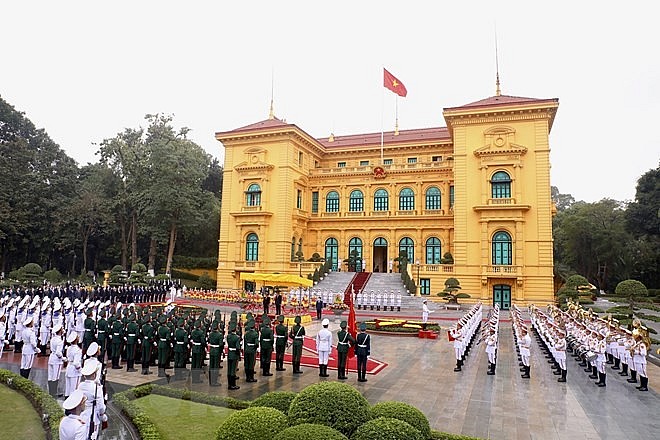
    The year 2022 has begun on a positive note for Vietnam and China, and the General Secretary of the Communist Party of Vietnam (CPV) Central Committee Nguyen Phu Trong and General Secretary of the Communist Party of China (CPC) Central Committee and President Xi Jinping exchanged Spring Festival congratulatory messages.

     President Xi Jinping impressed on upholding the “spirits of good neighbours, good friends, good comrades and good partners, consolidate traditional friendship ….push for new achievements in China-Vietnam relations, elevate regional cooperation to new heights, and build a community with a shared future for mankind”.….”, and  General Secretary of CPV Nguyen Phu Trong emphasised on “promoting the sustainable, sound and stable development of relations both between the two parties and between the two countries… inject new impetus into the efforts to push Vietnam-China good-neighbourly friendship and comprehensive strategic partnership of cooperation to a higher level.”

    Both leaders expressed satisfaction with the state of relations between the CPV and CPC, and, looking ahead to 2022, hoped to maintain close communication. Also, Vietnamese Prime Minister Pham Minh Chinh and Premier Li Keqiang agreed to “properly manage differences, to push forward the China-Vietnam comprehensive strategic cooperative partnership”.  While that may be so, the bilateral relationship between the two countries presents a mixed bag of economic opportunities as well as strategic challenges. 

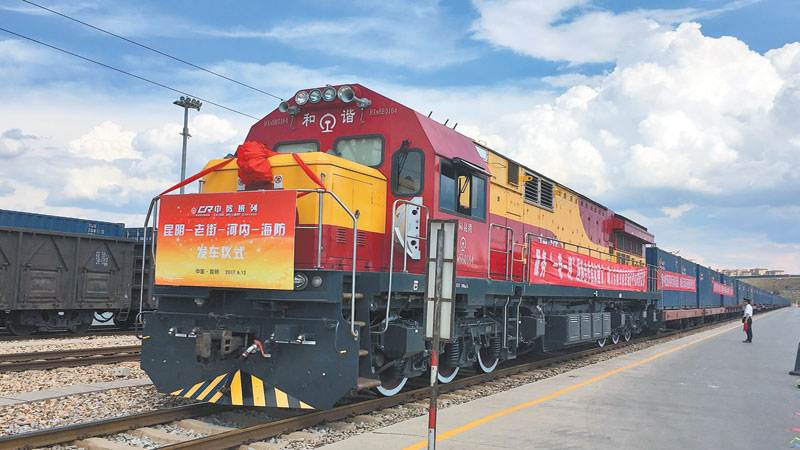
    the China-Vietnam freight train (launched in August 2017) run by the China Railway Nanning Group Co Ltd is a success story. It connects South China’s Guangxi Zhuang autonomous region with the Vietnam border and carries a variety of goods between China and ASEAN countries. In 2021, as many as 346 train trips were made, representing an increase of over 108 per cent from the previous year

     As far as bilateral economic relations are concerned, bilateral trade has grown.  In this regard, the China-Vietnam freight train (launched in August 2017) run by the China Railway Nanning Group Co Ltd is a success story. It connects South China’s Guangxi Zhuang autonomous region with the Vietnam border and carries a variety of goods between China and ASEAN countries. In 2021, as many as 346 train trips were made, representing an increase of over 108 per cent from the previous year. A total of 400 China-Vietnam freight train trips are expected to be made in 2022. China is also willing to provide more “customs clearance convenience for Vietnam’s high-quality agricultural products”, particularly durians, mangosteens, and longans.


    Prime Minister Pham Minh Chinh and Premier Li Keqiang have agreed to give a boost to their bilateral ties through the Regional Comprehensive Economic Partnership (RCEP) that came into force earlier this year. China has assured Vietnam that it is ready to “push for the effective implementation of the agreement, promote the regional economic integration to a higher level and bring more benefits to the people in the region”.

    at the strategic level, Vietnam continues to confront contentious initiatives by China, particularly on the issue of the South China Sea

     However, at the strategic level, Vietnam continues to confront contentious initiatives by China, particularly on the issue of the South China Sea. On March 7, pursuant to Hainan Maritime Safety Administration’s announcement on China’s military drills in the East Sea, Vietnam requested China to “respect and not to violate the nation’s exclusive economic zone and continental shelf, and not to take actions that complicate the situation, thereby contributing to maintaining peace, security and stability in the East Sea area. Vietnam has exchanged views with China on this issue”.

     Vietnamese Foreign Ministry spokesperson Le Thi Thu Hang observed that part of the area where Chinese military drills are planned is under the jurisdiction of Vietnam (exclusive economic zone and continental shelf of Vietnam) and reiterated that Vietnam always adheres to international law, especially the 1982 United Nations Convention on the Law of the Sea (UNCLOS). This has been refuted by China and it’s Foreign Ministry spokesman Zhao Lijian defended the military exercises by stating that the drill is lawful…“China’s military exercise on its own doorstep is reasonable and lawful. It is beyond reproach.” It is now learnt that China may have cordoned a part of the sea area close to Vietnam ostensibly to salvage a crashed military aircraft “while its forces searched for it, and also to conduct drills”.


    Notwithstanding the above challenges, it is fair to argue that the trajectory of Vietnam-China bilateral relations will not change in 2022 and can be expected to follow trends of the last year.  Vietnam is steadfast in its adherence to the one-China principle and supports China to play a greater role in regional and international affairs. This should go as a signal to the US which can be expected to send many political-diplomatic-military delegations to Vietnam in 2022 to influence the leadership, but Hanoi can be expected to pursue an independent foreign policy. 

    Feature Image: The Independent

    Map: www.isanrealestate.com

  • RCEP, Indo-Pacific Economic Framework and Vietnam

    RCEP, Indo-Pacific Economic Framework and Vietnam

    The World Bank projection for the RCEP is indeed very impressive and the Member States will see GDP increase by 1.5 per cent. Furthermore, by some estimates, the RCEP could add almost US$ 200 billion to the global economy by 2030.

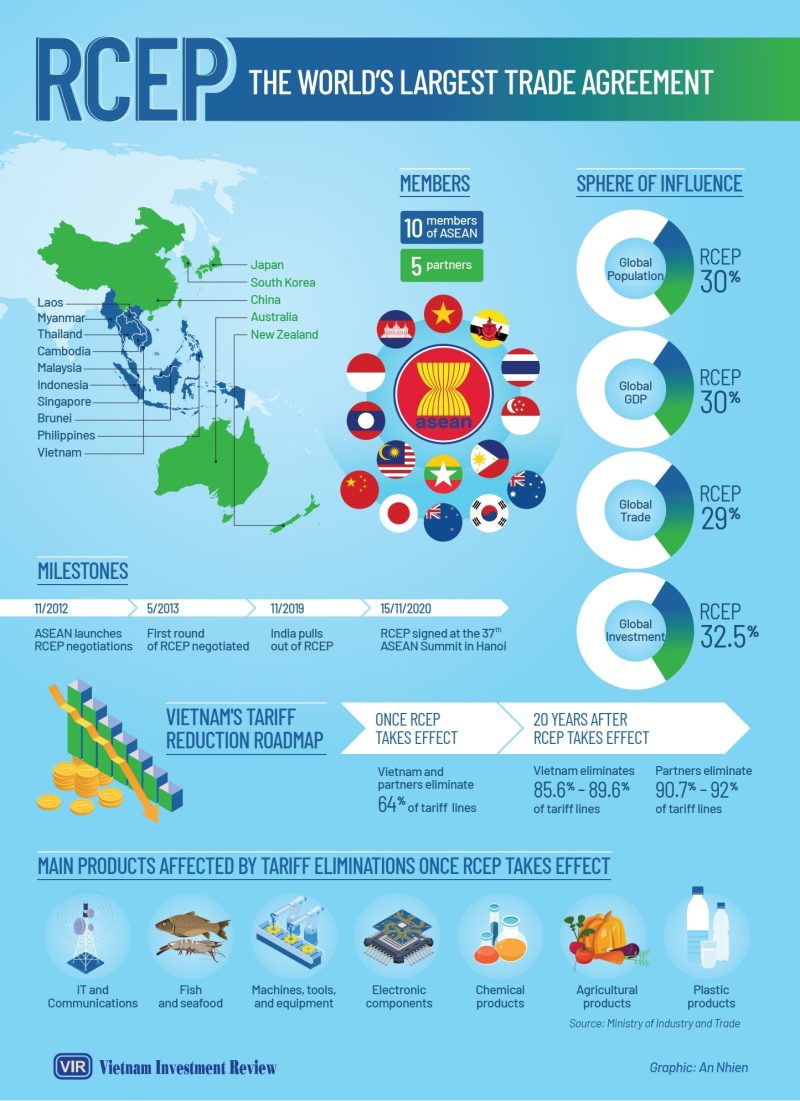
    ASEAN Member States, Australia, China, Japan, South Korea, and New Zealand have heralded the Regional Comprehensive Economic Partnership (RCEP) on 01 January 2022. This 15 Member consortium is the largest economic grouping and constitutes nearly 30 per cent of the global population which relates to a market of 2.3 billion people with an output value of about US$26.2 trillion with over a quarter in world exports. The World Bank projectionfor the RCEP is indeed very impressive and the Member States will see GDP increase by 1.5 per cent. Furthermore, by some estimates, the RCEP could add almost US$ 200 billion to the global economy by 2030.

    Infographics Credit: Vietnam Investment Review

    As far as Vietnam is concerned, the leaders in Hanoi must be happy to see the RCEP take concrete shape given that it was signed in November 2020 during the ASEAN Summit under Vietnam’s chairship. Vietnam, according to Fitch Solutions, is expected to benefit enormously from the RCEP particularly the IT, footwear, agriculture, automobiles, and telecommunications sectors being the major export categories. The RCEP will also provide Vietnam access to huge consumer markets which could be double the size of those included in the CPTPP. Vietnam can potentially move to become a high-tech manufacturer, and the RCEP can facilitate “local firms increase exports and attract high-quality goods for its consumers. Likewise, agriculture and fisheries product exports will benefit”.

    Vietnam, according to Fitch Solutions, is expected to benefit enormously from the RCEP particularly the IT, footwear, agriculture, automobiles, and telecommunications sectors being the major export categories

    Vietnam’s economic outlook for 2022 is positive with numerous growth opportunities. The National Assembly has identified (2021-2025 period) focus areas in sectors such as “digital economy, hi-tech industries, developing the urban economy, strengthening regional connectivity, strengthening the role of key economic zones, and restructuring to achieve a green and sustainable economy among others”. These sectors can be expected to grow given that the country has strong economic indicators notwithstanding the downturn in economic growth due to COVID-19. This is premisedon “investor-friendly policies, relative economic and political stability, cost efficiency, and consumer demand prospects, supply chains restructuring in Asia” which will attract both old and new investors.

    However, Vietnam should also be prepared for the ongoing and impending geo-economic and geopolitical triggers emerging from contestation between the US and China. During the East Asia Summit in October 2021, President Biden announced that the US was considering a major trade and economic initiative in the form of an “Indo-Pacific economic framework”. Soon thereafter Commerce Secretary Gina Raimondo visited Japan, Malaysia, Singapore, and South Korea to “begin discussions on potential negotiations that could start in early 2022”. Besides some Members of Congress, the new framework is also inspired by Australia and Japan, who had called for a “more active U.S. trade policy, including U.S. leadership in regional trade initiatives”. Above all, the initiative should be seen as a move by the Biden Administration to put to rest any doubts in the minds of regional leaders that the US “lacks an economic and trade strategy sufficient to counter China’s increasing economic influence” in the aftermath of President Trump decision to withdraw from the proposed 12-nation Trans-Pacific Partnership (TPP) in 2017.

    The new US economic framework, it is hoped, will also lessen fears in the minds of regional countries arising from the geopolitical-geostrategic issues between the US and China. The US’ “free and open Indo-Pacific” strategy which pivots on ‘rule of law’ is essentially diplomatic and military and is symbolized by the Quadrilateral Security Dialogue among the US, Japan, India, and Australia (the Quad) and the Australia-United Kingdom-United States (AUKUS) security partnership.

    The Quad has made significant progress and the first-ever in-person Leaders’ Summit was held in September 2021. It was agreed to advance practical cooperation on 21st-century challenges such as “ ending the COVID-19 pandemic, including by increasing production and access to safe and effective vaccines; promoting high-standards infrastructure; combatting the climate crisis; partnering on emerging technologies, space, and cyber security; and cultivating next-generation talent”. The leaders also called for building quality infrastructure in the Indo-Pacific region which was targeted against China’s Belt and Road Initiative (BRI).  As far as the AUKUS is concerned, the rationale is quite clear and is driven by the growing Chinese assertiveness amid fears of extreme coercion against regional countries particularly Taiwan and the claimants of the South China Sea.

    The RCEP and the “Indo-Pacific economic framework” are significant developments but can potentially pose a dilemma for Vietnam

    The RCEP and the “Indo-Pacific economic framework” are significant developments but can potentially pose a dilemma for Vietnam. There are numerous economic benefits to be accrued from the RCEP, but at the same time there are both economic and strategic rewards from the “Indo-Pacific economic framework”.  The US Indo-Pacific strategy has not found much favour in Hanoi; instead, Vietnam has chosen to support and pursue the ASEAN Outlook for Indo Pacific (AOIP) which envisages ASEAN Centrality and the East Asia Summit (EAS), as the underlying principle for promoting cooperation in the Indo-Pacific region.


    Feature Image Credit: worldakkam.com

  • Infrastructure development is high priority for Vietnam-Lao PDR relations

    Infrastructure development is high priority for Vietnam-Lao PDR relations

    The year 2022 is singularly important for Vietnam-Lao PDR relations. It marks the 60th anniversary of the bilateral diplomatic relations, and 45 years of the Vietnam-Laos Treaty of Amity and Cooperation. Both sides have accorded high priority to the current year, and Prime Minister Pham Minh Chinh extended the invitation to Lao Prime Minister Phankham Viphavanh to visit to commemorate the above events.  Accordingly, Prime Minister Viphavanh is in Vietnam and is leading a high-level delegation.

    Prime Minister Pham Minh Chinh, according to reports, will also co-chair the 44th meeting of the Vietnam-Laos Inter-Governmental Committee and launch the Vietnam-Laos Solidarity and Friendship Year 2022. This would help to “get a better understanding of each other’s socio-economic situation, development orientations and external policies” particularly during the ongoing COVID-19 pandemic.

    The visit is also intended to boost Vietnam-Laos cooperation strategy for the 2021-2030 period and the five-year cooperation plan for the 2021-2025 period that are now into the second year and involve bilateral engagements in multiple domains such as politics, diplomacy, security-defence, economy, science-technology, culture, and education-training.

    COVID-19 would be high on the agenda of both leaders given that the pandemic is impacting their countries. They are in the midst of the fourth wave with 8,236 and 354,075 active cases (as of 05 Jan 2022) respectively.

    In December 2021, the Lao government announced opening up of the country for trade and tourism in three phases: First phase – January 1, 2022; Second phase – April 1, 2022; and the Third phase July 1, 2022. In the first phase, 17 countries, including Vietnam and many neighbouring ASEAN countries, besides some European countries, China, the US, Australia and Canada would be welcomed. The Lao economy is impacted by COVID-19 and was projected to grow at 3 per cent, a figure lower than 4 per cent as approved by the Laotian National Assembly. This attributed to the pandemic and prolonged lockdowns that disrupted economic activities and companies, retail and wholesale shops had to shut down.

    Leaders in Vientiane recognize the importance of regional development particularly in the Cambodia-Laos-Vietnam Development Triangle Area (CLV-DTA)

    Vietnam and Lao PDR are also engaged in major connectivity projects. Lao is a landlocked country and ports in Vietnam provide the country access to the sea to engage in international seaborne commerce.

    Last year, during President Nguyen Xuan Phuc visit to Laos, 14 agreements spanning a wide range of issues were signed. The leaders agreed to fast-track joint projects including Vung Ang No.1, 2, 3 port projects, the Hanoi-Vientiane Expressway, Vientiane-Vung Ang Railway, Lao-Vietnam Friendship Park in Vientiane, Nongkhang Airport and hospitals in Lao Houaphan and Xiangkhouang Provinces.

    One of their flagship joint projects is the 1,450 kilometres long East-West Economic Corridor (EWEC). It is a road-building project and is supported by the Asia Development Bank (ADB). Its western leg includes Thailand, and in the east, it terminates at the Vietnamese port of Da Nang which is a major gateway to the Pacific.

    Similarly, the 555 kilometres railway link (452 kilometres in Laos and 103 kilometres in Ha Tinh central province in Vietnam) between Vientiane and the Vietnamese deep-water port of Vung Ang is important. It gives Laos yet another access to the sea. Importantly, it is being jointly developed and Laos would hold a 60% stake in the project, and Vietnam with 40%.

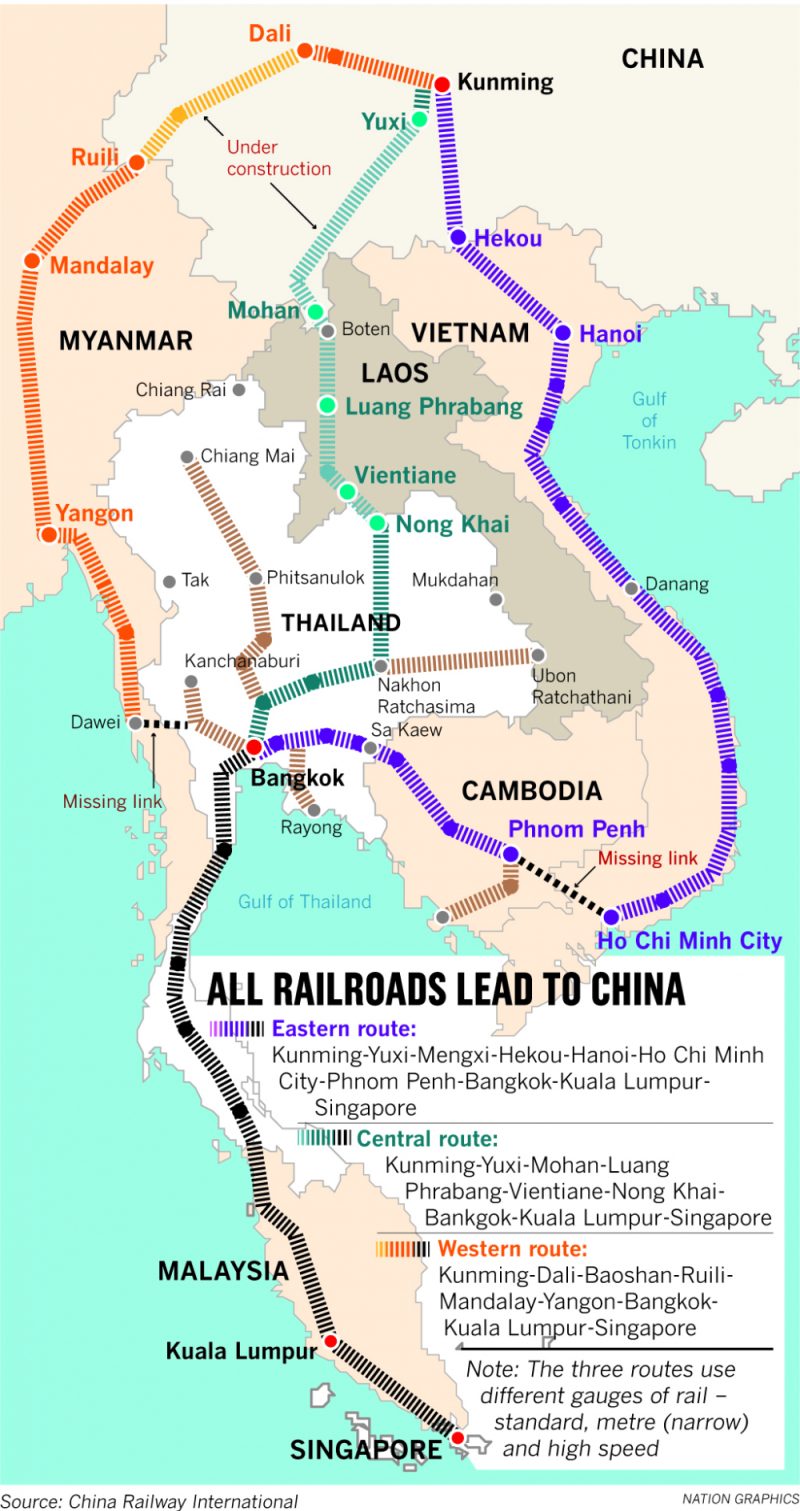
    China is also engaged in connectivity projects in Laos. In December 2021, after six years of construction, the Laos-China Railway project was finally operationalized. It is a complex project and includes 61 kilometres of bridges and 198 kilometres of tunnels and reduce travel time between Vientiane to the Chinese border from 15 hours by road to four hours. It will be operated by the Laos-China Railway Co., a joint venture between China Railway group and two other Chinese government-owned companies with a 70% stake and a Laotian state company with 30%.

    Vietnam offers Laos an alternative to Chinese infrastructure investments and it ranks third among investors in Lao with total investments of US$ 5.16 billion in 209 projects. There are fears that the Chinese funded projects do not generate economic benefits for Laos, instead these only benefit China.

    There are geopolitical dynamics at play in the CLV-DTA that are targeted against China, and Cambodia and Laos acknowledge Vietnam’s leadership

    Vietnam cannot match up with the Chinese investments in Laos, but leaders in Vientiane recognize the importance of regional development particularly in the Cambodia-Laos-Vietnam Development Triangle Area (CLV-DTA). Vietnam for example has invested nearly US$ 4 billion in Cambodia and as noted above over US$ 5 billion in Laos. It is fair to assume that there are geopolitical dynamics at play in the CLV-DTA that are targeted against China, and Cambodia and Laos acknowledge Vietnam’s leadership.

    Images Credit: Vietnam times

  • India, the Sino-US Rivalry, and the post-pandemic World Order

    India, the Sino-US Rivalry, and the post-pandemic World Order

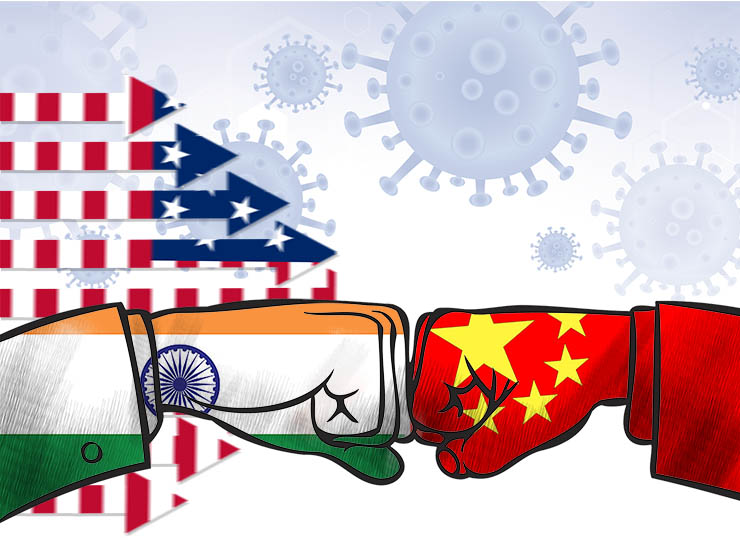
    India has a vital stake in the geopolitical contest between the US and China, particularly in the context of the rising Sino-Indian rivalry. India’s strategies, therefore, must focus on ensuring its security and its freedom of action in global affairs. It will also need to play an active role in reforming the world to more equitable and multipolar governance.

    The global disruption caused by the Covid-19 pandemic that engulfed the world at the end of 2019 and continues to this day is the biggest economic, political, and technological disruption since the Second World War. The pandemic has exposed the serious deficiencies in national healthcare systems in all countries, developed and developing. More importantly, the pandemic has raised questions on the relevance and effectiveness of the current world order, about the future of international organisations and multilateral frameworks, and poses challenges to international political and economic relations.


    Read more

  • Economic prospect of Vietnam under new leadership

    Economic prospect of Vietnam under new leadership

    The International Monetary Fund (IMF) has projected a positive outlook for the post-pandemic global economic recovery for 2021. This is notwithstanding the uncertainty associated with numerous mutations of the Coronavirus emerging in different parts of the world and successes with the vaccine which is now into full-fledged production to meet global demands. Furthermore, according to the IMF, the world economy could grow by 6% in 2021, up from the 5.5% forecast in January 2021. Another significant development in the post-pandemic economic recovery would be a “generational shift towards higher government spending” with projections of over US$ 10 trillion being allocated by the governments across the world to absorb the “shock of the COVID pandemic”. In this context, the Vietnamese government can be expected to make significant post-Pandemic investments.

    Prime Minister Chinh who was an earlier member of the national steering committee for anti-corruption also announced that the government would “drastically and persistently push for anti-corruption.”

    Earlier this month, the Vietnamese National Assembly elected Pham Minh Chinh as the new Prime Minister of the country. In his inaugural speech, Prime Minister Pham Minh Chinh said that his administration’s economic policies would continue as hitherto i.e. “socialism with a market orientation” and will centre on “economic reforms, developing digital economy and focusing on solving difficulties for industries and businesses.” Prime Minister Chinh who was an earlier member of the national steering committee for anti-corruption also announced that the government would “drastically and persistently push for anti-corruption.”

    There is a strong element of continuity in the Vietnamese government policies concerning economic reforms, investments, and addressing the bottlenecks in economic growth since the last five-year plan. The projections for economic growth during 2021-2025 are high and pegged at 6.5%-7%. This compares well with the last five-year plan which witnessed 5.9% growth. The per capita GDP is also projected to improve from US$ 2,750 at the end of 2020 to $4,700-$5,000 by 2025.

    While these are indeed very promising economic indicators, according to risk consultancy Eurasia Group, Prime Minister Chinh will also have to deal with additional challenges such as reforms required for “new trade deals” necessitating additional infrastructure, respond to existing bottlenecks impacting on the manufacturing sector as also sustained and reliable energy requirements.

    Prime Minister Chinh would have to skillfully manoeuvre Vietnam’s relations with the US and China who are among its top trading partners.

    At another level, Prime Minister Chinh would have to skillfully manoeuvre Vietnam’s relations with the US and China who are among its top trading partners. As far as the US is concerned, US imports from Vietnam increased to $64.8 billion in the first 10 months of 2020, and the trade deficit increased to $56.6 billion in 2020. Hanoi has now won over the US in the context of being labelled as a “currency manipulator”. The Biden Administration’s first foreign-exchange policy report has removed Vietnam from the list of countries that are known to prevent “effective balance of payments adjustments or gaining unfair competitive advantage in international trade”. This suggests that the US is not taking a confrontationist approach.

    Similarly, Vietnam’s trade with China is an inescapable part of its economic growth. China is its top trading partner and the bilateral trade in 2020 was US$ 133 billion. The future projections for Vietnam –China bilateral trade are quite promising given that China would continue to be the strongest economy in the coming years which will have numerous spinoffs for Vietnam. Perhaps it merits attention that China is the seventh-largest foreign investor in Vietnam.

    By all counts, Prime Minister Chinh would continue to pursue the national mantra of “socialism with a market orientation” and engage and promote pragmatic economic policies, open the national economy to global markets and importantly balancing relations with China and the US. The US-China trade war has been a trigger for a large number of countries particularly Japan shifting businesses into Vietnam. This has led to Vietnam being labelled as a “mini-China” and is best represented by the fact that Vietnam’s “factory-heavy growth model, sizable population, low labour and land costs, rapid gross domestic product and geographical placement” make it the preferred destination for setting up a business and attracting investments.

    While that may be so, Vietnam would have to diversify from manufacturing cheap goods for exports to investing in its service industry as also in innovation and tech startups. Vietnam is likely to witness a surge in the digital economy and this segment could expand to US$52 billion by 2025. In particular, e-commerce and digital banking are significant growth sub-sectors.

    it is not unthinkable to anticipate Chinese companies too making a beeline and moving production to Vietnam to lessen the risks of the US-China trade war which has now taken a very strong geopolitical and geostrategic turn.

    Today, Vietnam can boast of three comprehensive strategic partnerships, fourteen strategic partnerships, and 13 comprehensive partnerships with different countries. Besides, the conditions are ripe for Vietnam to attract investors beyond Asia and the EU-Vietnam FTA is an important trigger for encouraging European firms to explore investment opportunities in Vietnam. Also, it is not unthinkable to anticipate Chinese companies too making a beeline and moving production to Vietnam to lessen the risks of the US-China trade war which has now taken a very strong geopolitical and geostrategic turn. Under the circumstances, Vietnam would have to diversify its strategic relations and not be left hostage to one partner.

    Featured Image: Hanoi to Ho Chi Minh