Category: Economic Policy

  • Budget 2020: Rhetoric vs Reality

    Budget 2020: Rhetoric vs Reality

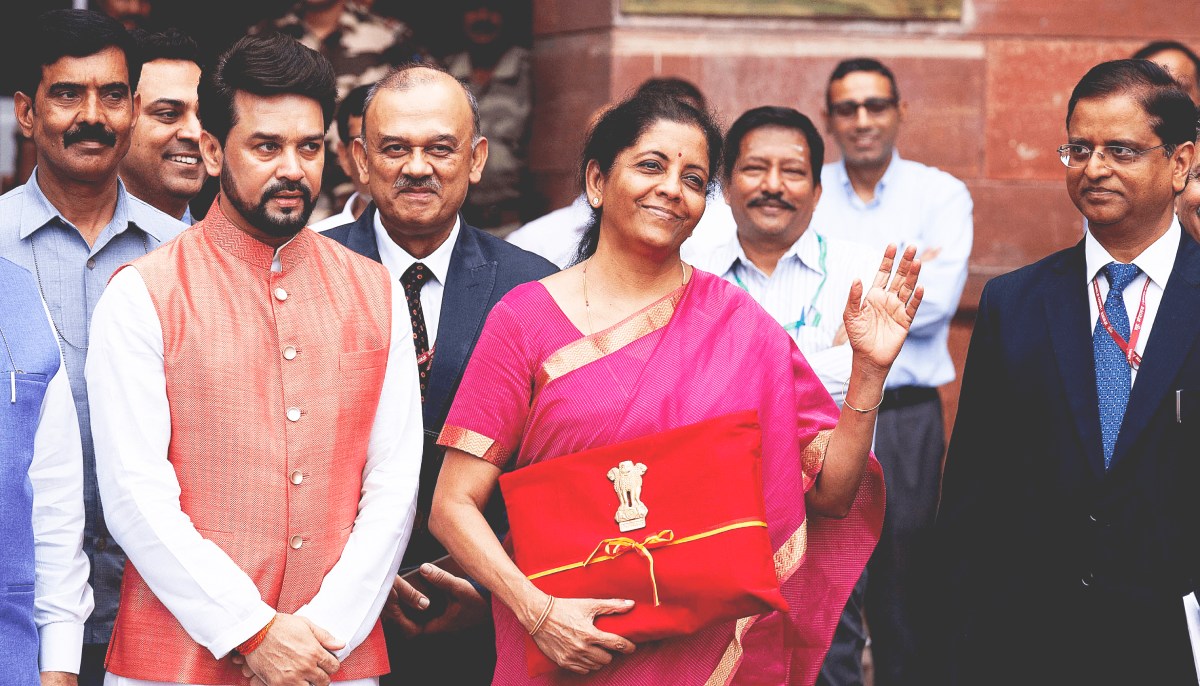
    Sharing structural similarities with the 1991 economic conditions, , the current decline in Indian economy is in desperate need  for radical reforms to energize the growth. Faced with severe fiscal constraints, the optimistic projection of revenue by the government   seems more of a challenge than realistic prospects for economic growth. Tax revenue is expected to fall short by INR 2.5 lakh crores in FY20 as the GDP records an 11- year low of 4.5 %.  As against the target of INR 24.6 lakh crores, there is likely to be a shortfall of INR 2 lakh crores for the current fiscal year. Expenditure cannot only depend on the expected revenue and fall in revenue collection will become a grave concern to achieve the fiscal deficit target set at 3.5 percent .  The budget is expected to balance deficit and growth by laying down a plan for fiscal consolidation and pushing the growth fundamentals. The Finance Minister in her speech mentioned three pillars under which the budgetary allocation has been rationalized. There is a need for deeper examination of budget proposals  beyond the slogans of the budget speech in order to comprehend the government’s long-term economic strategy.

    Aspirational India

    The agriculture sector with poor growth rate yet employing 50 percent of the workforce required significant capital infusion. 2.6 lakh crore has been allocated to agriculture & allied activities out of which 75,000 crores are dedicated to double farmers’ income. In reality, implementing a cash transfer scheme with a huge quantum of finance is a strenuous task facing  challenges on the ground. Schemes such as setting up solar panels and village storage run by Self Help Groups will act as a non monetary support measure. However, infusion of cash in rural credit structure and ease in acquiring credit facilities is largely ignored. The absence of  adequate investment for R & D in agriculture is a major shortfall in the budget. A target to increase the milk production capacity to 108 million tonnes is ambitious, yet no road map has been laid down to enhance the capacity in the current structure.  Weak consumption and high unemployment has contracted rural economic growth but the budget has failed to directly inject finance to increase effective demand. Sharp cuts in MGNREGA budget is giving rise to concerns as the total money in circulation in the economy continues to be low.

    Income insecurity will weaken the consumption demand for a few more quarters, arresting the medium-term growth. Healthcare Sector has been allocated  a total of 67,000 crores which is a significant increase of 10 percent compared to the last budget. The government’s flagship healthcare program, Pradhan Mantri Jan Arogya Yojana or  Ayushman Bharat, is allocated 6,400 crores which is the same as the previous year along with the National Rural Health Mission being allotted 28,000 crores. The Finance Minister has approved a Private-Public Partnership (PPP) between private medical colleges and hospitals in the country. The initiative is aimed to improve the skill levels of enrolled students to export their services abroad. Effectiveness of the PPP model in healthcare will depend on the amount of scrutiny and quality checks placed at the execution stage. Highest decline in funds was for Rashtriya Swasthya Bima Yojana from Rs 156 crores to Rs 29 crores, and Food Safety & Standards Authority of India was reduced to Rs 283.71.

    The draft of National Education Policy in 2019 invited multiple debates but achieving quality education has been the common goal across all levels of education. Human capital investment and skill development has been crucial to the 2020 budget with an allocation of almost 1 lakh crore for education and training. Breakup of funds for education under primary, secondary and higher education was not spelt out.  Finance minister citing the increase in gross enrolment ratio of girls in education has clearly missed the data on falling rates of women in labour force. The narrow lens of viewing enrolment number as a measure  women empowerment has to be revisited to achieve gender equality status. Encouraging apprenticeship and internships in rural areas for engineering and technical graduates is an important mention as the students lack experiential learning. Higher education population stands at around 36.6 million, surging the demand for  institutions offering graduate courses. The Government due to its limited fiscal capacity has allowed private institutions to address the demand for higher education. Despite this opening up tertiary education remains at only 25.8 percent of Gross Enrolment Rate. Quality in higher education is still a distant dream in India and it is important to dedicate funds to improve the quality of higher education in particular.

    Economic Development 

    Under Economic Development, promoting MSME sector and developing infrastructure have been the focus areas. Setting up NIRVIK scheme for higher export credit disbursement and facilitating investment clearance cells is a favourable move for medium and small scale business. Primarily, encouraging potential start-ups to equip their operations  with technology and managerial skills for creating export market demand must take precedence.

    National Logistic Policy is underway to revamp the transport infrastructure and new trains are to be operated under PPP. 100 new airports to be developed under UDAAN scheme is expected to create substantial employment in infrastructure sector. Linking basic Bharatnet services to 1 lakh gram panchayats is a notable initiative to improve the internet connection at local unit level. An exclusive direct investment in disruptive technology and artificial intelligence continues to be absent indicating India’s lag in becoming more competitive. Failure of the ‘Make in India’ initiative to materialize as expected is a relevant evaluation to reframe the fund allocation to accelerate indeginious production. Foreign trade of India presents a grim picture with exports slipping by 1.8 % in the last few months.  Although the political aspect of ditching Regional Comprehensive Economic Cooperation (RCEP) played well, quitting a multilateral trade deal has reduced the scope to upgrade domestic technologies. Frailty of the economy has clearly reduced the incentive for small businesses to invest in production and service despite schemes dedicated for this domain. Entrepreneurship culture in a favourable environment to undertake small businesses with insurance cover should aim at utilizing the existing human and capital resources through upgraded technology. A National Pipeline project has been proposed to ensure public spending on road, irrigation, power (conventional and renewable), railways and housing. Under this project, substantial funds are allocated for roads and least is for rural infrastructure. A prepaid  ‘smart metering’ system is to be substituted for conventional energy meters. On the financial front, tax concessions for corporate companies and foreign investment have been proposed. Reducing income tax slabs cheered the middle class but it has been a necessary and not sufficient condition to push the economy in a growth trajectory. Extension of tax holiday for real estate corporations would not qualify as fiscal stimulus with poor housing demand. As Dr Rathin Roy, economist suggests, either productivity should improve for pushing the demand at existing wage or minimum wage should increase. Decoding his post-Keynesian idea, structural crisis present in India offers much more complexity in practice. Land, labour and capital market reforms are inevitable to catch the growth momentum in the long run. Revising tax structure under Goods & Service Tax (GST) does not count for a structural reform to revive growth and scant attention has been paid for resolving systemic issues using budget as a tool. 

    Caring India

    The last pillar of the budget, emphasizing the importance of national and social security,  allocated funds for marginal groups, senior citizens and women, adopting a populist measure.  Over 6 lakh anganwadi workers are to be given smartphones and the budget estimate for nutritional related programs stands at 35,600 crores. Proposals were made to establish Indian Institute of Heritage and Conservation along with the development of 5 archaeological sites.  Major schemes like PM KISAN, Direct Benefit Transfer, Pradhan Mantri Awas Yojna and ICDS (Integrated Child Development Service) witnessed a jump from revised budget estimates of 2019-20. The Finance Minister in her budget had mentioned a number of schemes aimed at the Environment, Pollution and Climate Change. It includes 4,400 crores for the Clean Air Policy, 460 crores for Pollution Control and 3,100 crores for the Ministry of Environment, Forest and Climate Change. The last budget witnessed reduction in GST rates on Electric Vehicles (EV) and an annual tax reduction of up to 1.5 lakhs on interest paid to purchase EVs. However, the current budget has increased the custom duties to curb the import of cheap materials from China making the vehicles more expensive. National Adaptation Fund for Climate Change (NAFCC) is a central sector scheme set up to support concrete adaptation activities that mitigate the adverse effects of climate change. The Budget missed out on the replenishment of the much-needed NAFCC and has ignored it for two consecutive years. The overall fund allocation for Climate Change and Environment has increased by 5 per cent in the budget. Promoting sustainable business practices at micro levels is a key in tackling climate change. Accommodating the green budget would demand more involvement beyond mere budget allocation, effective plans need to be developed that can constantly track the progress of India’s climate change dialogue and advocacy.

    The defence budget for 2020-21 stands at 3.37 lakh crores, constituting 1.5% of the GDP, excluding pensions. Capital and revenue expenditure is valued at 1.18 and 2.18  lakh crores and pension at 1.33 lakh crores. This will affect several big projects taken up by the armed forces to build capabilities against Pakistan and China as there has been only a marginal increase in capital expenditure compared to previous year (1.08 lakh crores). Armed forces will be forced to cut down on arms and equipment purchases, thereby diluting the state’s priority on national security. However, with adequate government support there is scope for the private sector to bridge  the gap in areas of maintenance and logistics of the armed forces. Corporate tax cuts in the manufacturing sector, strategic disinvestment in Central Public Sector Enterprises (CPSE) and abolition of ‘angel tax’ for start-ups is appreciable. However, more involvement and sincere efforts should be undertaken by the Government to enhance private sector involvement in creating additional funding for developing a robust defence industry and meeting the needs of the armed forces at the same time.

     A recent study by Oxfam reported that 73% of the total wealth is owned by 1% of India’s population, as a result the number of billionaires has increased to 120 in 2019 from nine in 2000. A funding strategy that does not  attend to the growth of income among masses would lead to furthering the inequality and handicap the long term growth of an economy. Budget continues to be a powerful instrument to reallocate resources through fiscal policies and reduce economic inequality in a country. Facing a high risk of missing the demographic dividend, the budget was expected to make radical and structural reforms. Immediate measures to revitalise economic wealth among middle-class and rural residents is the need of the hour. The ostensible budget might garner popularity but the foundation to achieve India’s growth potential remains insufficient. Choice between managing fiscal deficit at the cost of reduced demand and initiating growth at the cost of huge fiscal deficit summarizes budget decisions. Biting the fiscal bullet, the finance ministry has assumed more accountability in explaining every component of expenditure but has failed to provide confidence for a resurgent Indian economy. Micro level assessment reveals a rosy picture but the exercise has undoubtedly choked the Indian economy in the short run.

    Contributions by

    Manjari Balu and Swaminathan S are Research Analysts with TPF.

    Aditya Balakrishna is an Intern with TPF.

    Views expressed are their own.

    Image Courtesy: Sanjay Rawat // www.fortuneindia.com
  • Falling Consumption Expenditure: Need for Labour Market Reforms

    Falling Consumption Expenditure: Need for Labour Market Reforms

    Government withholding consumption expenditure data on the grounds of data quality has stirred many criticisms from economists and other interest groups. Growing concern over falling rural consumption especially amidst economic slowdown has crystallized a categorical debate on the nature of slowdown. Irrespective of the validity of methodology employed, low consumption expenditure can sequel falling growth rates. Slowdown of the automobile industry as a case, sluggish growth and rising unemployment corroborate the unofficial claims on falling consumption expenditure. According to Business Standard report, the average amount spent per month by an individual declined from INR 1501 in 2011-12 to INR 1,446 2017-18. Although falling rural consumption expenditure evinces an economic malaise, issue of inefficient labour market has received less attention. Consumption is considered an important way to assess the health of an economy according to neoclassical economists. Multiple theories on income and consumption relationship are advanced in the field of economics. According to permanent income hypothesis, consumption expenditure varies in relation to the expected future income. In simple terms, an individual’s consumption will be distributed across their lifetime based on the permanent income they are expected to receive. Every theory has reiterated the central role of income in determining the consumption levels of the individuals. 

    Income insecurity in Informal sector

    A study conducted  on consumption spending in Ghana concluded that income and inflation had a long-run relationship on consumption expenditure. The Monthly Per capita Consumption Expenditure (MPCE) in 2011-12 revealed that urban MPCE was higher by 84 percent than rural MPCE. India, operating as a dual economy, considers casual wages and regular salaries as a proxies to study informal and formal sector. The wage differential among salary earning individuals operating in informal and formal sector was higher than casual labourers’ wages. Increasing number of regular employees working in informal sector shifted the concern to penetration of ‘informality’ across the labour market.  Post globalization labour market has theoretically encouraged organized sector but the wage employment in the organized sector has employed more casual labourers with no social security. A new layer of casual labours was created post reforms to cushion the weight from competitive prices. Fragmentation within the organized sector with growing contractual labourers has weakened the expected income levels which could directly affect consumption behaviour. Working-poor in India are highly concentrated in the organized sector as casual labourers and self-employed with a combined share of 51 percent of the total workforce as of 2012.

     A recent report on consumption expenditure points out that rural monthly consumption has fallen by 10 per cent from INR 643 to INR 580 indicating a need to accumulate more income in rural India. The main industries functioning under informal structure were construction, manufacturing and wholesale-trade employing majority of unskilled and semi-skilled labourers. In 2011-12, rural employment contributed 76 percent of total informal sector labourers in the three main sectors. Almost 80 per cent of rural workers are engaged in casual employment and despite a moderate growth in casual wages over the years; it amounted to only 36 percent of a regular worker’s earnings. Increasing share of informal employment within the organized sector coupled with poor social security has reduced expected financial flow of labourers. State induced social spending would propel consumption levels to a limited extent but the underlying crisis in the rural labour market would continue to contract long term consumption expenditure. Total social sector spending as a percentage of GDP has reduced from 2.7 per cent in 2000 to 2 percent in 2014. Reduced government spending and lack of labour market reforms are responsible for poor disposable income in the rural economy. 

    Rural labour market instability

    Casual labourers have constituted consistently 28 percent in Indian rural labour force since 1983. The periodic labour force survey report (2017-18) observed a decline in the share of self-employment in both rural and urban sectors. The unemployment rate in urban sector is 7.3 percent, comparatively higher than rural unemployment rates of 5.8 percent. A major portion of rural labourers are associated with the casual sector in rural areas with unstable income and weak social security. For instance, average earning per day in public workfare programme such as MGNREGA has fluctuating wage rates in rural areas, recording as low as INR 136 in 2018. Such a precarious structure in the labour market has diluted the spending capacity of rural residents in the recent times. According to the usual status in employment, there is a moderate increase in casual labourers and salary earners but the self-employment rates have been on the downtrend. In 1983, 60 percent were self-employed, which has gone down to 57 percent in 2018 despite the attractive loan schemes introduced by the government. 

    Female workers’ earnings play a vital role in determining the consumption health of an economy, a drastic fall in female work participation deserves an in-depth investigation. Falling participation rate could mean either women drop out due to social conditions or due to unavailability of jobs matching their skills. While sufficient literature studying these two areas are available, the first issue can be viewed with scepticism as earnings of men have increased significantly while women’s wages have stagnated. Although overall women in the workforce have reduced, 73 percent of women are engaged in agriculture as primary activity compared to 50 percent of men. A deceleration in agriculture and low investment on public infrastructure in the past few quarters have  decimated the consumption capacity of rural India. Women being the bigger component of agricultural labour force, and with factors of social discrimination, tend to have lower wage rates, thereby contributing significantly to reduced capacity for consumption and expenditure.

    Labour market reforms needed to revive long term consumption

    It would be erroneous to isolate the core economic problem to be categorical- the structural issue or cyclical slowdown can be both demand-side and supply-side driven. The whole economic apparatus is strongly integrated and a supply-side constraint can indirectly choke the demand which would, in turn, weaken the growth. Many economists have recommended the need for structural reforms; labour and capital relations have to be redefined as a measure to redistribute the resources. Further, the labour code on wages, 2019 has invited criticisms on grounds of poor protection for informal labourers and favouring corporate profit. Financial ecosystem requires corporates to make profits but a stagnant reinvestment convulses the cycle. Deepening crisis in the economy is conspicuous and falling consumption reiterates the need for better land and labour reforms. 

    Closer examination of the rural labour structure provides a bleak picture of low-income concomitant with minimum social and economic security, thus seriously impacting rural economic consumption. According to the PLFS report, the percentage of rural regular salaried employees with no job contracts increased from 58 percent in 2004 to 69 percent in 2018. Around 88 percent of rural female casual labourers against 84 percent of rural male casual labourers had no union or association. Absence of union is a proxy for weak bargaining power which eventually distorts the real market wages for the labour. Systematic labour market reform is critical especially for fixing the minimum wages and restructuring the labour market. Failure of manufacturing and service sectors to absorb the excess unskilled labourers from the agricultural sector has posed a major challenge. A short term cash transfer or providing welfare schemes should not be mistaken for structural reform. Enhancing the skill levels of rural labourers so as to enable their displacement to the manufacturing sector would augment employment and income. 

    Effect of demonetisation on the informal rural economy cannot be underestimated; removing 80 percent of currency from the economy damaged small and medium scale businesses operating on cash. ‘Make in India’ has not succeeded in accelerating business entrepreneurship in the country. Only 5 % of the adult population manages to establish a business that survives for longer than 42 months according to Global Entrepreneurship Monitor, a rate that is the lowest in the world. Financial investment in medium scale and small scale industries has been poor due to bureaucratic hurdles and unfavourable business environment leading to world’s highest business discontinuation rate of 26.4 %.

    From the supply side, low reinvestment despite a reduction in interest rate has exacerbated the falling consumption situation. Slowing automobile industry and consistent downtrend in manufacturing have contracted the capacity for employment generation in the industrial sector. CMIE has observed corporate profits to be more volatile than wages in the last two decades. The standard deviation of increased profit was recorded to be 32 percent as compared to 6.3 percent in the wage share. The erratic change in profit component implies entrepreneurs are more likely to be discouraged to invest in a business and play it safe. This invariably allows only the big corporate companies to survive. Low share of labour income in the economy is undoubtedly a structural phenomenon; the state’s apathy to induce private capital investment is detrimental to the labour market as well. 

    Reforms should have distinct rural and urban labour market strategies

    Departing from viewing economy in a political lens, a state must prioritize market reforms especially labour reforms. It is the state’s responsibility to ensure efficient allocation of resources and guarantee economic development and welfare of people. The slogan of ‘minimum government and maximum governance’ can be realised only through radical reforms and policy changes.

    The problem of shrinking consumption in rural areas is an outcome of constraints in the supply-side and unorganized labour market. Mere infusion of money as a solution is neither practical nor sustainable; a long term strategy to improve the structure of the rural economy is necessary to address the current economic crisis. Policies should be directed towards energising the informal sector, provide social security and economic dynamism that accelerates capital formation and induces private investment to support business growth. Consumption levels can be revived by making demand side and supply side changes simultaneously; increasing public gross capital formation and encouraging private investment by improving the investment climate would revive private consumption. A clear distinction has to be drawn between rural and urban labour markets, reforms to monitor the movement and prices will emerge as a structural reform to support both growth and development. 

    Manjari Balu is a Research Analyst with TPF. Views expressed are her own. 

    Image credit: www.newskarnataka.com

  • Local Protests: A New Status-Quo in Political Lifestyle?

    Local Protests: A New Status-Quo in Political Lifestyle?

    Hong Kong and Chile convulse, Lebanon possibly spiralling into a civil strife, and sanctions induced discontent paralysing Iran, a pattern of global protests is increasingly evident. The global political landscape is currently marked by frequent mass protests, and this wave is geographically much broader and unfolding in countries at different stages of development. Unlike earlier protest movements that aimed at radical political change and revolutionising the existing order, the modern demands abandon this narrative of overthrowing the system instead aiming for democratisation of the established institutions. In other words, the anti-government protests cropping up in various parts are not trying to dismantle the democratic structures but to redefine its scope and depth.

    New Wave of Protests – questioning inept governance

    In contrast to the previous waves of uprising like the Pink Tide in Latin America or the Arab Spring, that was spreading in a particular region with similar agenda, the recent protests are occurring in different zones and is marked by the uniqueness of initial triggers and demands put forth by the protestors. In Lebanon, the discontent was sparked by regressive taxes proposed (mainly Whatsapp tax) but turned into massive demonstrations, transcending sects and classes, calling for a technocratic government in the backdrop of sectarian political regime, widespread corruption and mishandling of the economy. The Yellow Vest movement in France originally against the fuel tax snowballed into nationwide protests to address the socio economic inequalities, stemming from high unemployment and stagnating economy. Protests in Chile against hiked transport fares escalated to countrywide riots revealing the dissatisfaction with the pro rich growth, heavily privatised welfare system and pro market regime. On observation, these isolated protests by themselves can be a defining feature of the current wave of protests, different from the previous waves that were characterised by common contestations.

    Despite being unrelated events with independent agendas, the countries undergoing mass protests share similar trends of inequality and economic downturns. Further scrutiny beyond the seemingly small initial triggers reveal an evident pattern of economic anger and insecurity in these nations. Experts have suggested that Hong Kong’s pro democracy movement is also fuelled by wide income inequality (highest among developed nations), especially in the last 45 years since its handover to the Chinese. The Latin American region, witnessing the most number of countries breaking into sustained protests, is the world’s most unequal zone. In addition to inequality, sustained unrest in states like Colombia, Catalonia to Iraq and Egypt, the protests are driven by slowing economic growth, mounting public debt and austerity measures. Even in populist and authoritarian regimes, citizens are demanding an end to corruption and restoration of democratic rule of law. For instance, long serving, extremely popular, leftist leader Evo Morales was forced to resign in Bolivia after protests erupted accusing him of undermining democracy to extent his rule. There are increasing clashes against repressive democracy in Russia, and revolts against autocrats in Slovenia and Czech Republic.

    Leaderless or smart mobilization?

    Interestingly, a majority of the modern protests are leaderless, led by students and youth. In Hong Kong, the protests are gaining momentum through the active involvement of the students while in Chile the unrest for systematic change was ignited after school students launched a campaign to end the 4 percent subway fare increase. Niall Ferguson noted that this demographic trend of the young leading the demonstrations is a repeat of the 1960s, which like the present had an excess of educated youth over the number of available jobs. Another similarity amongst the protests is the urban-centric mass unrest. According to migration theorists, uncontrolled urbanisation resulting in rural to urban movements is a major cause for the ongoing demonstrations. Pushed into informal settlements in cities, often ignored by authorities and without basic social coverage, the urban area becomes a ground for discontent. For instance, in Haiti the protests began due to gasoline and food scarcity. Therefore, the socio-economic marginalisation of the urban poor is a significant yet overlooked factor that drives people to the streets. This is also compounded by a lack of faith in the government. More than the poor state policies adopted and prevalent corruption, in some protesting nations, there is deep distrust among the citizens. Hong Kongers believe that their government does not have legitimate powers over Beijing, and in countries like Lebanon, Chile or Ecuador, reversal of the initial triggers did not stop the dissenters from demanding a new government.

    The youth bulge and the shrinking economic opportunities only partly explains the global protests. The reach and accessibility of social media and free messaging apps have exploded in the past decade. In addition to acting as a medium to organise and sustain mass protests, these channels are also used to express political frustrations. Unlike before when media had a monopoly over mass reach, individuals and groups have the capacity to mobilise and garner support over specific issues. While the protests seem unconnected, it is possible to see a copycat element in the way protests are carried out. The coverage of news and faster reach makes it possible for protestors to adopt methods of action that were successful elsewhere. It is also harder for states to contain and repress dissenting voices. Thus, the spread of communicative technology and social platforms offer a conducive environment for protests. 

    Social Media enables activism

    The ability of electronic media to break down physical barriers and bring more events to global audiences might be increasing the visibility of protests, which would have otherwise remained local. Data from GEDLT Project, which has been tracking protests around the world from the past 40 years, reveals that the frequency of protests has not significantly increased. However, the intensity and the length of protests have improved. Despite a spike in these political activities wherein citizens are actively mobilising to pursue their demands, there has been a decline in the success rate of protests. A recent study highlights the staggering decline in success rate of protests from 70 percent in 1990s to 30 percent in 2010. Some highlight the “smart” methods adopted by regimes to prevent and suppress clashes like reinforcing loyalty of the elite, infiltrating and dividing the opposition, etc. For instance, in Lebanon, the initially united protests has created anti protest groups that supports the Hezbollah. Governments are also adopting a strategy of blaming foreigners and outsiders to reinforce support from the public. For instance, China is building a narrative of US backed forces disrupting Hong Kong to get an advantage in the ongoing trade war, which has strengthened after US signed a Hong Kong Human Rights and Democracy law. Iran’s authorities are also blaming outsiders, especially the US, for the violence that ensued after state raising gasoline prices by 50 percent.

    Overall, there is an influx in political activism. Global unrests are now spreading and have significant implications for countries everywhere. With electronic media and its potential for mobilisation, it is now easier to bring issues to national discourse. However, while the willingness and ability of mass political activism to recur and cause disruptions have increased manyfold, its success rates have decreased. It may be said that the political frustrations and the current protests will not bring a major transformation in the political structures but rather it is a new status quo in the nature of political lifestyles.  

    Renuka Paul is a Research Analyst with TPF. She holds a masters in Public Policy.

    Image: Aerial night shot of Beirut Downtown, Lebanon during protest against Government, Lebanese revolution – Phot by Ramzi – Licensed from www.stock.adobe.com

  • Evaluating the Impact of Demonetisation: Between Fact and Fiction

    Evaluating the Impact of Demonetisation: Between Fact and Fiction

    Manjari Balu                                                                                        Apr 10, 2019/Analysis

    In democratic societies, economic policy often becomes hostage to electoral politics, devolving into quixotic pledges that are optimised for securing votes rather than social welfare.  Qualifying as a polemical issue that has been most widely discussed, the 2016 shock therapy through demonetisation of 86 per cent of all Indian currency in circulation, is arguably a case in point. In a democratic polity, the political manifestos transcend to the policies to impress the masses paying minimal attention to market efficiency, rather, gain is considered a windfall. Intuitively, there are few factors that determine the eligibility of a policy to qualify in mass politics.  The magnitude of the people affected by the policy, the organized structure of the people, and the kind of effect it has on the masses. It could be direct or indirect and short or long run depending on the execution of the policy.

    The narratives have been changed from the original proclamation of extirpating black money and choking the funding for terrorism to tout for a cashless economy and digital payments as promoted by the relentless advertisements and social media campaigns.

    Theoretically, proscribing a country’s currency for a short period by ceasing the value of the same is considered to be one of the strategies to deal with black money. History has, however, proven that demonetisation must be accompanied with a structured treatment to the economy as fall in inflation becomes intractable and aggregate demand tends to attenuate.

    As per the Global corruption perception index, India is ranked 81stposition by Transparency International, an agency that adopts a specific methodology to evaluate the level of corruption in different countries. India has shown an improvement in score and for the first time, China has been assessed to have more corruption than India.

    Though the score seems to be encouraging, a comparative analysis shows that developing countries have been taking up legislative measures bolstered with government initiatives and transfer of knowledge about corruption. Vanuatu, The Solomon Island and South Korea have improved their score by encouraging citizen partnership, passed various anti-corruption laws and pushed for social reforms to combat corruption.

    The intent to strike the shadow economy through demonetisation had a substantial effect on the informal economy too. The loss suffered due to a cashless economy especially by the informal sector eclipsed the expected result of a reduction in the shadow economy. Further, the fundamental proposition to withdraw currency for a short period is premised on the assumption that there is a definite relationship between the currency in circulation and the so-called “shadow economy”. A simple glance at the data of different countries’ currency to GDP (Gross Domestic Product) ratios and shadow economy figures illustrates the misconception. There are countries with higher currency to GDP ratios than India but records smaller shadow economy – likewise, some countries have larger shadow economy despite lower currency to GDP figures. This is because black money is seldom held in cash. It is often converted to high-value items like real estate, diamonds, gold, films, etc. Also, the high-value stakeholders, politicians being the ironical suspect, have evolved to absorb the black money and have been scot free even post-demonetization.

    Countering terrorism by making the fake currency illegal was the second claim that has been appreciated by the public. Terror incidents are a menace to people especially in conflicted areas, zones with extremisms and other local terror groups. While contemplating the effects of demonetization to counter the terror incidence, the Terrorism Index suggests that the index has increased to 7.57 in 2017 from 7.53 in 2016. There is no conspicuous result relating to terrorism if such a radical decision was intended to control terrorist incidence.

    A thorough study entitled ‘Cash and the Economy: Evidence from India’s Demonetisation’ conducted at Harvard University used economic modelling techniques and satellite data to find that India’s demonetisation led to a contraction in ATM withdrawals and had an effect on both the formal and informal sector. The cross-sectional analysis of the districts recorded the reaction to the shock was uncertain and the withdrawal quantum changed with the proportion of the informal economy.  The informal economy is estimated to account for 81 per cent of total employment and 44 per cent of total output which pertains to cash-intensive transaction. While the GDP rate has not fluctuated, the estimates for employment has caused a reduction in the national economic activity of roughly 3 percentage points in November and December 2016. There is a widespread opinion from various technocrats about the excess cost of executing demonetisation over the actually proposed benefit. In political terms, however, the policy has borne significant payoffs for the current establishment.

    One point of evidence for this claim is the manner in which the decision was made. Reports reveal that the government made the decision to demonetise despite stiff opposition from the RBI board, meaning that leaders were alerted to the potential economic pitfalls prior to introducing the shock. It is likely that the prospect of political gains prevailed over economic ones, especially given that the current establishment exhibits a penchant for such conduct – similar tensions between economic and electoral considerations have been observed with respect to the calculation of GDP and the proposed methodology by Central Statistical Organization.

    A slump in growth rate was expected on the account of demonetisation but India seems to be consistently growing. However, this does not harbinger a steady state of development. Agriculture sector accounts for almost 50 per cent of the total workforce experienced a severe deprivation due to their dependence on cash. Further, growth in real investment also plunged in the fourth quarter of 2016-17 which collapsed the rate of industrial credit in the last two quarters following demonetisation. An analysis from the Economic Survey 2016-17 volume 2 suggests no economy has experienced a 7 per cent growth rate with low investment and high levels of unemployment. This validates the contention posted by the economists regarding the methodology of GDP metric calculation.

    Literature states that there is an internal paradox that is associated with the response of people in the informal sector. An unequivocal inference is hard to be drawn about the response due to the power hierarchies within the informal economy. Analysing informal labour and informal capital, factors of informal economy would help us identify the nuances of the effect. The informal capital faces the hardship of a cash crunch and exploits the informal labour during the crisis. Further, absence of a system to control the squeezing of labour corroborates the inefficiency of the state to mollify the situation.

    There is an undeniable defilement of economy in the short run post-demonetisation, however, comment on the long run effects have to be reserved to the time when there is maximum accessibility of data. The ruling establishment has, indeed, managed to spin the policy as relying on the patriotic duty of its citizens in aiding their Prime Minister’s efforts to flush out black money from the economy. If one were to assume policymakers to be rational actors, it would stand to reason that demonetisation was done to avail electoral payoffs, even as broader society incurs a reduction, willingly, in social welfare. Unfortunately, India’s demonetisation bears testimony to a glaring ailment of all democracies – that bad economics can be good politics.

    Manjari Balu is a Research Analyst at TPF. She holds a degree in economics.

  • The Economics Nobel: From the Esoteric to the Practical

    The Economics Nobel: From the Esoteric to the Practical

    Mohan Guruswamy                                                                                   October 15, 2018 : Commentary

    The Sveriges Riksbank Prize in Economic Sciences in Memory of Alfred Nobel was instituted in 1968 by the Swedish central bank, and laureates are selected by the Royal Swedish Academy of Sciences. It is commonly called the Nobel Prize in Economics, though the Nobel Endowment has nothing to do with it. It has mostly tended to go to scholars doing esoteric research in economics. Much of economic research has tended to be quite remote from influencing public policy. My professor at the Kennedy School of Government, Harvard University, Professor Thomas Schelling who taught me “game theory” used in nuclear strategy, and only sometimes in economics, got an Economics Nobel for just that in 2005. Now the trend from the esoteric and philosophical is moving towards the practical.

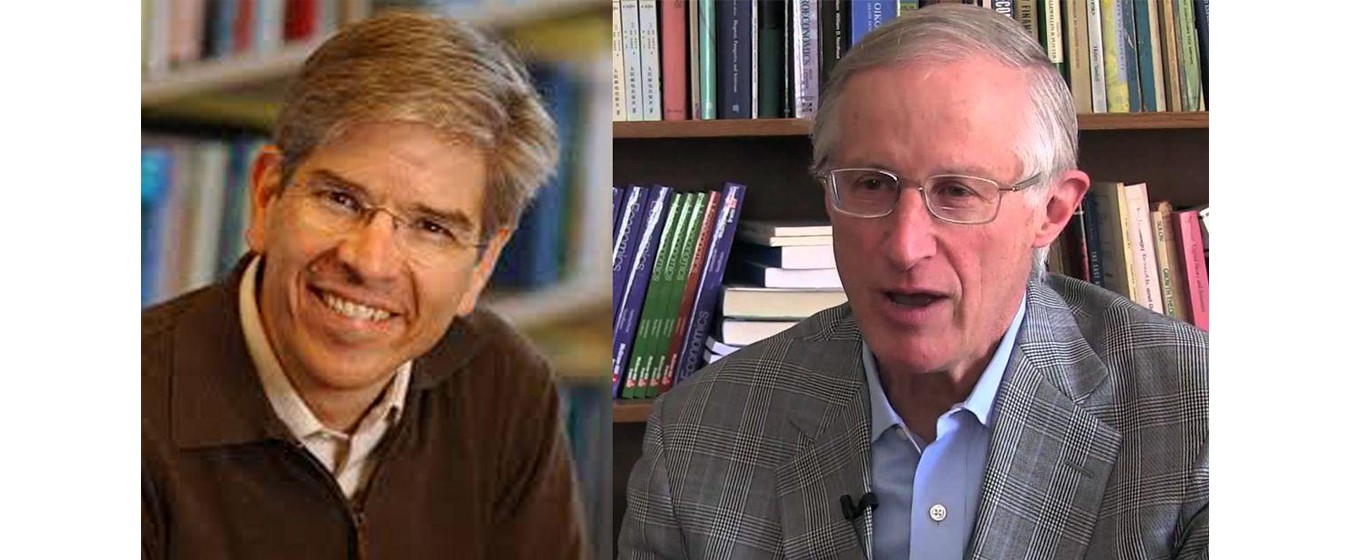
    This year two American economists, William Nordhaus and Paul Romer, were awarded the Nobel Prize in Economics for their work in two diverse areas, but current concerns. Nordhaus won it for his warning policymakers during the first stirrings of concern about climate change in the 1970s that their economic models were not properly taking account of the impact of global warming and he is seen as one of the pioneers of environmental economics.

    The co-winner – Romer – is seen as the prime mover behind the endogenous growth theory, “the notion that countries can improve their underlying performance if they concentrate on supply-side measures such as research and development, innovation and skills”. This simply means developing nations that want to get out of their rut, like India, must invest in quality education and R&D. Instead our bureaucratic centralism has created a huge system whose outcomes are so low grade, that mediocrity passes off as brilliance. The fact that Indian students and scholars have to go abroad to fully harness their brilliance and gain recognition tells us what has gone wrong with our system.

    Paul Romer has argued, “Technological change can be accelerated by the targeted use of state interventions in areas such as R&D tax credits and patent regulation”. He called it “post colonial endogenous growth theory”. This famously inspired the an Oxford don, the economist Derek Morris, to write an odd to it. Its the history of economic theory in verse and is very witty and clever. The relevant verse for us is:

    “Only inventions seemed to have any effect
    And from where these arose everyone was quite bereft
    So people then began to get rather weary
    Of the once almighty neoclassical growth theory

    A new explanation arrived,
    over which there was quite a fuss
    Technical progress – innovation, ideas – were “endogenous”

    Invention was crucial but needed embodiment
    In people – in skills – and in capital investment
    So these were important to make growth shine
    Although others had known this for a very long time.”

    But how does one nurture invention without a national mood? For it is now well understood that how we do as a nation depends a great deal on how we perceive ourselves? This psychological factor is now understood to be critical to sustained economic growth.

    Classical economics was linked closely with psychology. Adam Smith’s other great work was “The Theory of Moral Sentiments” and dealt with the psychological principles of individual behavior. Smith emphasized the concept of empathy, the capacity to recognize feelings that are being experienced by another being. Jeremy Bentham described “utilitarianism as the greatest happiness of the greatest number that is the measure of right and wrong” and is considered by many as the father of the welfare state. Classical economic theory, also known as laissez faire, claims that leaving individuals to make free choices in a free market results in the best allocation of resources. Since individuals made choices the emphasis was on understanding human beings and their behavior as individual and as groups.

    Neo-classical economists based their thinking on the assumptions that people have rational preferences; individuals maximize utility and firm’s profits; and people act independently. Consequently neo-classical economists distanced themselves from psychology and sought explanations for economic analysis heavily based on the concept of rational expectations. For most of the last century economics became increasingly mathematical. Much of economic theory came to be presented as mathematical models, mostly calculus, to clarify assumptions and implications.

    It is not as if the switch was complete. Many great economists like Vilfredo Pareto, John Maynard Keynes and Joseph Schumpeter continued to base their analysis on psychological explanations.

    In more recent times this school of economics has been given greater importance and is reflected in the award of Nobel Prizes to behavioral economists like Daniel Kahneman of Princeton University and last year to Richard Thaler. Making the announcement Nobel Committee said: “His empirical findings and theoretical insights have been instrumental in creating the new and rapidly expanding field of behavioral economics, which has had a profound impact on many areas of economic research and policy.”

    There is a delicious irony in the award of the Nobel to Richard H. Thaler. He works in the University of Chicago, the nursery of classical economics, where he is the Ralph and Dorothy Keller Distinguished Service Professor of Behavioral Science and Economics at the Booth School of Business. Incidentally Raghuram Rajan who is also an economics professor is a colleague, was reported to also being considered for the Nobel for his “contributions illuminating the dimensions of decisions in corporate finance”.

    The dominance of the classical school on the world of economics can be gauged by the fact that since the relatively recent inception of the Nobel Prize in Economics in 1968, the Chicago economics department faculty have won the Nobel as many as twelve times, twice as many as MIT, which has six Nobel laureates. Seen from Harvard University’s ivory tower even MIT is considered as leaning more towards classical economic theory. Recent Harvard winners for economics such as Oliver Hart (2016), Alvin Roth (2012) and Eric Maskin (2007) were rewarded for their work based on mathematical empiricism than behavioral speculation. Amartya Sen (1998) was one of the few who broke this mold and won it in recognition of his work and abiding interest in welfare economics.

    Every politician worth his salt knows that national mood and perceptions are decisive in determining national outcomes. And often people do not always make rational choices, something that marketers of diverse products such as automobiles and soap, and political dreams know. But economists took their time recognizing this, and the Nobel Committee even longer. Better late than never.


    Mohan Guruswamy is a well known political and economics commentator. He is a Trustee of TPF.

  • GDP Growth by increasing the Cost of Government!

    GDP Growth by increasing the Cost of Government!

    Mohan Guruswamy  11 July 2018

    The truth is now staring us in the face. The latest breakdown of sectoral contribution to growth is out. Get ready for this. Public Administration, which somewhat perversely is classified as part of services, has now grown by 7% over the previous quarter making it the biggest driver of growth in India. Very simply this means as you keep paying government employees more the GDP will keep growing ever faster till one day you run out of breath and cash. In the Q3 of 2018, Public Administration added contributed 17.3% towards growth. In Q4 of 2018 it has grown to 22.4% making is a fraction smaller than the contribution of manufacturing at 22.7%.

    But hold your breath. Not satisfied with the 7th Pay Commission’s across the board hike of 23%, government employees are hopeful that the Prime Minister on August 15 will make an announcement fulfilling the promise made by the Finance Minister to give central government employees a pay hike beyond the recommendations of the pay commission. They are also hopeful that the retirement age will be raised to 62 years, allowing them to serve this poor and hapless country longer.

    There had been a spate of commentaries about how beneficial the 7th Pay Commission mandated pay hikes, and now approved by the Union Government with retrospective effect will benefit the economy. Despite this munificence, some government employees have called the 23.5% across the board hike peanuts! Others have made comments like “you pay peanuts you get monkeys!” as if you will now have earnest and honest public servants because the same fellows get more pay? The metaphor is unfortunate as well as illogical as the “monkeys” are already in place, only now the diet has become much more richer. Fat monkeys are what you will get.

    The high cost of wages has also slowed down intake into government and most departments are hugely understaffed. For instance the Revenue collecting departments are under strength by as much as 45.45%, Health by 27.59%, Railways by 15.15% and that the MHA is under strength by only 7.2% speaks volumes about how much has gone wrong in our system. We have a saying that the main business of government is to collect taxes so that they may be spent for the benefit of all the people. Thus we see the main business of government is now its least concern.

    The sheer absurdity of the logic that higher government salaries are beneficial to the economy speaks volumes of the kind of stupidity that permeates our policy thinking at high places. By this logic if the pay hike was higher GDP growth would be even higher. But think of this in terms of money denied for critically needed infrastructure and social development such as rods, power plants, schools and hospitals. As if these don’t generate GDP growth? Higher salaries mostly benefit those who get them. Period.

    The last pay hike hike benefitted 23 million government employees in the central and state governments and their PSU’s. No doubt this will make the CII and FICCI members will hear the music louder and dance all the way to the bank.  No wonder the top industry and banking analysts have given a big thumbs up to the Union Cabinet decision stating the move will “boost consumption in the economy” and lead to higher GDP growth. Its their fond hope that the pay hike combined with continued public push to the capital expenditure will help steer the economy to higher growth levels of 8% and above.

    “The pay hike of nearly Rs. 1 lakh crores for government employees will give a strong boost to the consumer demand and help uplift the growth of the economy,” said Didar Singh. the then secretary general, FICCI.  He will approve being a former IAS officer rehired by the industry trade union. But has FICCI noticed the IIM, Ahmedabad study that has found the “pay in the government sector is distinctly greater than that in the private sector?” The 23.5% average hike in central government employees’ salaries pushed up the government’s wage bill, including arrears, by an estimated R. 1.14 lakh crores.

    While you worry about the high cost of government, I will give you another reason to worry? If you wonder why our public administration is so ineffective, consider this. An analysis by a leading media organization suggests that roughly 14% officers get transferred within one year of service and another 54% within 18 months. In other words, 68%, or over two-thirds of India’s top bureaucrats, last on an average less than 18 months at a posting. Only 8% of the officers analyzed had average tenures of more than two years and there are only 14 officers who have managed to complete an average stay of more than three years between transfers. So what is the government you are getting for all the money we spend?

    This when 648 million Indians are living below the UNDP stipulated poverty line. The question we all must ask is growth at whose cost? Arun Jaitley crowing about it is akin to the head of a family who prefers to increase his spending on smoking and drinking by cutting down on the milk for the growing children.

    The three levels of government together employ about 185 lakh persons. The central government employs 34 lakhs, all the state governments together employ another 72.18 lakhs, quasi-government agencies account for a further 58.14 lakhs, and at the local government level, a tier with the most interface with the common citizens, we have only 20.53 lakhs employees. In other words it simply means we have five persons telling us to do this or do that, for every one supposedly serving us. And whom even these one out of six persons are answerable to is still a big question?

    Do we then have a big government bearing down on us? Not really.

    Consider this: India has 1,622.8 government servants for every 100,000 citizens. In stark contrast, the U.S. has 7,681. The central government, with 3.1 million employees, thus has 257 serving every 100,000 population, against the U.S. federal government’s 840. Now look at the next tier at the state level. Bihar has just 457.60 per 100,000, Madhya Pradesh 826.47, Uttar Pradesh has 801.67, Orissa 1,191.97 and Chhattisgarh 1,174.62.

    This is not to suggest there is a causal link between poverty and low levels of public servants: Gujarat has just 826.47 per 100,000 and Punjab 1,263.34. The troubled states or really speaking the troublesome states actually fare far better on this score. Thus, Mizoram has 3,950.27 public servants per the 100,000 populations, Nagaland 3,920.62 and Jammu and Kashmir 3,585.96. Bar Sikkim, with 6,394.89 public servants per 100,000, no state comes close to international levels.

    Very clearly for the most part, India’s relatively backward states have low numbers of public servants. This means staff is not available for the provision of education, health and social services needed to address poverty. It would seem that instead of getting better government and more public servants, we are getting more expensive government.

    We are now riding the tiger of a high wage enclave of government employees, who also drive consumption and hence GDP growth. It may now be difficult to get off this tiger

    Shri Mohan Guruswamy is a former Rajya Sabha MP and a political commentator. He is a Trustee of TPF.
    This article was earlier published in National Herald.

  • Foreign Reserves beyond a point are Pointless

    Foreign Reserves beyond a point are Pointless

    Mohan Guruswamy  October 07, 2017

    Clearly the Indian economy is not at a place where it wants to be. The Modi government is finds itself in a chakravyuh that it is unable to fight its way out. The government is just unable to make or attract the investment needed to make the economy buoyant again. India enjoyed a decade of unprecedented growth from 2004-14 that seemed to have lost steam in the last year. It was largely caused by a huge decline in the proportion of capital investment expenditure. Despite the growth of the private and foreign investment, the Indian economy is still largely dependent on government investment to lead the investment and growth cycle.

    The promise of Modi was that he was expected to set right this trend and once again begin a new cycle with government led investment. He promised us a hundred new cities, a nationwide grid of high-speed rail networks, a national river-linking program and so many other major transformational projects. A hundred new cities have now become a hundred smart cities, which means little more than free wi-fi networks. The nationwide grid of fast trains has now become an exorbitant and apparently uneconomical single bullet train joining Ahmedabad and Bombay. Similarly all other feasible and exciting promises made are now mere caricatures of what were promised. It is simply that the Modi government has been unable to free the economy from its high subsidy burden and PSU black hole, where only the oil and power companies earn a profit due to administered pricing.

    Consequently the picture continues to be bleak. Output of capital goods contracted 1% in July against growth of 8.8% a year ago. Production of consumer durable goods shrank 1.3% against a nominal increase of 0.2% a year earlier.

    Then came the twin black swan events. Demonetization came as a body blow to the cash-dependent unorganized sector that makes up 40% of India’s GDP. The unorganized sector also accounts for 90% of the total employment of around 450 million. The loss of jobs due to the two events – demonetization and hasty implementation of GST- is still not empirically confirmed. Estimates vary. The construction and vegetable and fruit retail sectors seem to have taken a massive hit and the ballpark estimation of loss of jobs is at about 25-30 million. These sectors mostly employ rural landless labour with few skills and hence forced into taking up daily wage and earnings sustenance. They don’t shout much and few notice their pain. Unlike the loss of even a few thousand jobs in the IT sector.

    The implementation of GST forced companies to reduce production in the run-up to its 1 July implementation as dealers reduced inventory. The inadequate training and preparation was abundantly evident. The announcement of rates was hasty and the many mismatches between input and output rates compounded the confusion. Of the Rs.95000 crores collected in the first month, as much as Rs.65000 is due to be refunded. The problem is that the government doesn’t seem to have the cash to do so.

    In a belated effort to reverse these trends the government is planning to loosen its fiscal deficit target of 3.2% of GDP to enable it to spend up to Rs. 50,000 crore. This is piddly sum for an economy whose GDP is over Rs.150 lakh crores now. Right now we have a net outflow of foreign investment. What we need is a huge dollop of cash infusion to boost investment. Loosening fiscal deficit norms will help. But meaningfully slashing subsidies when Modi’s term is on the slope to elections is not politically feasible.

    There is that old saying that when the going gets tough, the tough get going.  Modi should now show toughness and imagination that is tempered with realism.  He needs to revive the national mood and generate optimism over the economy. He now needs a plan to drive investment. He doesn’t have to go far to find the money to fund this plan.

    The government is sitting with reserves of nearly $400 billion with about $135 billion alone sitting in US banks earning next to nothing. These reserves are equal to about 80% of our foreign debt. Even after providing a quarter of the reserves to cover short-term hot money of NRI investors each taking a pound of flesh for mostly foreign bank financed investment in their mother country, we will still have $300 billion in hand.  How much money can be freed from the other $300 billion for investment is the big question now? Kaushik Basu has said that India’s foreign reserves need not be more than the current account deficit (CAD) or about $80 billion. Others are more cautious.

    This will certainly raise many eyebrows. One is surprised over the number of people who think holding huge reserves abroad in ridiculously low yield securities is a sign of our wealth. No. It is a sign of our stupidity.

    Just holding enough reserves to cover the CAD or exports for a few months would be about enough. This nonsense of holding reserves to at least cover six months imports is just plain arbitrary and concocted by the people who made the Washington Consensus. This “consensus” assures New York banks plenty of cheap money to finance American domestic consumption and extravagances. The Chinese have now realized the stupidity of financing the US cheaply with their reserves which not long ago almost touched $4trillion. They have run it down by about $1trillion since.

    Now how much do you think the US foreign reserves amount to? Hold your seat. It is now $65 billion or about a fifth of India’s. What a travesty.

    Clearly running them down by $100-120 billion or Rs.6.5L- 8L crores can be contemplated. The government could establish an India Infrastructure Investment Fund and start shifting meaningful fractions from the foreign reserves into this fund. A board of well-regarded experts, who can allocate investments on merits to prevent the usual leakages and political misuse, could administer the fund. The fund must also mandate the minimum level of local procurement and investment to boost Make in India.

    Slow growth and no new jobs are Narendra Modi’s twin Achilles heels. He is vulnerable on both counts. He must seize the moment with both hands and start running with both legs.

    Shri Mohan Guruswamy is a former Rajya Sabha MP and a political commentator. He is a Trustee of TPF.
    This article was earlier published in ‘The Economic Times’.