Category: China

  • India and China Talks: No Give, No Take

    India and China Talks: No Give, No Take

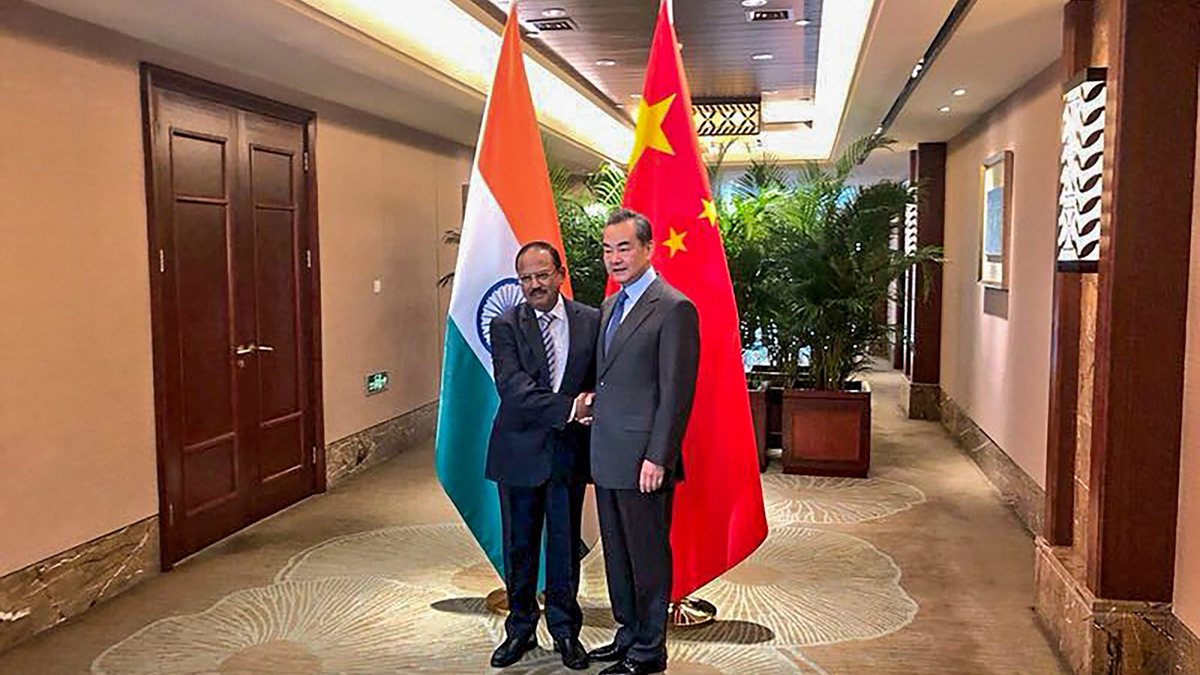
    The Indian and Chinese Special Representatives, National Security Advisor Ajit Doval and State Councillor and Foreign Minister Wang Yi, had the 21st round of talks ostensibly to discuss the “Border Issue” on November 24 at the picturesque town of Dujiangyan in Sichuan province. Though this was the first appearance of Wang Yi at these talks, there is now a monotonous regularity in this and no resolution of the vexatious border issue seems to be in sight, let alone be discussed.  Since the border issue now seems very intractable, the two representatives have broadened the scope of the talks to discuss other bilateral issues. Nevertheless, while it is clearly understood that the resolution of the border territories dispute may never be on the horizon, but at least agreeing on where the interim lines of control lie the military vigil on the borders will ease off into a less tense standstill. Sadly for us, there was a time when with a little bit of give and take this contentious and now protracted problem seemed solvable.

    In 1960 Chinese Premier Zhou Enlai suggested something akin to a status quo as a permanent solution. This was repeated in 1982 by Chairman Deng Xiaoping to India’s Ambassador in Beijing, G Parthasarathy. Once again it was offered during Rajiv Gandhi’s tenure as Prime Minister to the then Indian Ambassador AP Venkateshwaran and senior advisor to then Chinese PM Zhao Ziyang. But when Rajiv Gandhi visited Beijing in 1988, both countries decided to keep a permanent solution aside and focus on immediate “doable’s”. All along India felt that the internal political situation will not allow the government of the day the room to go with it. It hasn’t changed much, with the historical issues even less understood and inflamed public opinions prevailing on both sides.

    What is commonly referred to as the “Border Dispute” between India and China has now manifested itself into two distinct disputes. The first is the dispute over two large and separated tracts of territories. One is Aksai Chin, a virtually uninhabited high altitude desert expanse of about 37000 square kilometers. The other is what is now the Indian state of Arunachal Pradesh, a diversely populated hill region with a population of around 1.4 million people spread out over 84,000 square kilometers, which China claims as Lower Tibet.

    Aksai Chin lies between the state of Jammu and Kashmir, and China’s Xinjiang province, both regions that are also riven by separatist conflicts. Arunachal Pradesh borders Tibet, which also has a separation conflict with China. India claims that these borders were agreed upon by British India, and independent or semi-independent authorities, in Xinjiang and Tibet in the early days of the last century. China doesn’t agree with these. Both countries agree that these are legacies of history and cannot be solved in the immediate or near term and best be left to the future to resolve.

    But what causes the frequent frictions between the two is that they do not have agreed Lines of Actual Control (LAC) to separate the jurisdictions under the control of the armies of the two countries. The perceptions of the LAC differ at many places. At some places it might be by just a few meters, and elsewhere by tens of kilometers.

    To minimize the inflammability due to actively patrolling of security personnel of both sides, the two countries have a Border Defence Cooperation Agreement that sets out norms of behavior for both sides. The important things being that nothing of a permanent nature will be built on these disputed areas, and that the patrols take all precautions not to confront each other. Which simply means, if they come face to face they will both withdraw. The corollary to this is that the patrols will not tail each other. The agreement also requires local commanders to frequently meet and exchange views and sort out local differences across the table.

    Despite the adverse geographical and climatic conditions, and the overarching tensions between Asia’s biggest economies, the troops on the ground are able to show surprising bonhomie and friendliness. But periodically, either due to misunderstanding or local level posturing by either side, there are frictions that threaten to erupt into a conflict with use of arms. But it has not happened since 1967 when the two armies fought a fierce localized battle in the Sikkim sector, quite close to where the recent Dokolam dispute took place.

    The two countries have been engaged in frequent talks at various levels since 1981. After Prime Minister Rajiv Gandhi’s visit to Beijing in 1988, both countries had agreed to set up a task force to find a solution to the “border issue”. Chairman Deng welcoming his “ young friend” suggested they “forget the past” as they stood in the centre of the cavernous Great Hall of the People and the handshake lasted three long minutes.

    For three long decades since then the two countries have been meeting to discuss the border issue, but so far we have seen unwillingness by both sides to forget the past. Since 2003 these talks were elevated to a high level political dialogue between Special Representatives, in India’s case the National Security Advisor and in China’s case an official at the level of State Councilor. The first meeting at this level took place between Indian NSA Brajesh Mishra and Chinese State Councilor Dai Bing Guo. We are now having the 20thround of this dialog between India’s National Security Advisor, Ajit Doval, and China’s State Councilor, Yang Jeichi.

    A former Indian NSA once told me that the talks are high in style and hospitality, with the Indian side trying hard to match the Chinese, but there has been little traction. This is because of the versions of the claims that have been internalized and now form public opinion in both countries. Both countries are gripped by strong nationalism bordering on jingoism, which makes give and take, so vital in the resolution of such vexatious disputes, extremely difficult.

    But the Border Management and Cooperation Agreement is a major outcome of these talks and that has by and large worked. The next logical step of these talks should be to agree on an LAC. But unfortunately even that is now being weighed down by aggressive nationalism driven by social media that equates “giving up” with national loss of face. This is something increasingly very important to both countries. We will not be seen giving up anything, even our obduracy and historical short sightedness.

    Both countries are now very different then what they were in the last century. Both, India and China, are relatively prosperous and militarily powerful, but not so powerful to take by force what they desire.  The new geopolitics and the new interdependent economics also will not permit a major dislocation in the world order.  But the rise of new nationalisms has also led to a hardening of hearts. Neither now seems capable of giving or taking. So once again when Ajit Doval and Wang Yi met, both sides did not give away anything and we will have to wait for another time for that.


    Mohan Guruswamy is a Distinguished Fellow and Trustee of TPF. This article was earlier published in ‘The Citizen’.
     

  • China: A Colossus in Asia?

    China: A Colossus in Asia?

    Vidya Nadkarni December 10, 2017
    China today is moving out of the shadows.  After decades of following Deng Xiaoping’s advice to “hide our capacities” and “bide our time,” Xi Jinping in his long address to the CCP’s 19th Party Congress in October announced that his country “has stood up, grown rich, and is becoming strong” and would move “closer to center stage.”  Xi celebrated the “steady progress” in China’s construction on the islands and reefs in the South China Sea—a self-back-patting that has disregarded the concerns of Southeast Asian claimants to the Paracel and Spratly island chains and troubled the United States. China, in Xi’s words is a “great nation,” and he implied a prominent global role for the country when he noted that history looked “kindly on those with resolve, with drive and ambition, and with plenty of guts.”  He could not have offered a clearer message to the world that China was claiming its proper due on the global stage.

    China’s assertiveness is coming at a time when American allies and partners are increasingly questioning U.S. resolve and interest in global leadership.  President Trump’s “America First” strategy appears to many as a clarion call for a foreign policy strategy of retrenchment.  While the rhetoric of Trump administration officials continues to support US global engagement, the President’s position has been far less clear.  For instance, early in his administration Trump unceremoniously withdrew from the Trans-Pacific Partnership and the Paris Climate accord.  He decertified the Iran nuclear deal but stopped short of suspending the multilaterally negotiated agreement. Predicting the depth and steadfastness of US commitment to a global presence is therefore difficult.

    Specifically with respect to the Asian theater, while Secretary of State Rex Tillerson and Admiral Harry B. Harris of the US Navy’s Pacific Command (PACOM) have underscored US interest in a strong presence in the Indo-Pacific region, President Trump, in a speech at a November 2017 gathering of Asia-Pacific CEOs in Danang, Vietnam that White House officials had billed as highlighting the US commitment to a “free and open Indo-Pacific region,” inveighed instead against the unfair trade practices of other countries and insisted that he would put America first and not let the United States be taken advantage of anymore.  Trump’s fiery defense of nationalism and sovereignty was followed immediately by President Xi’s vigorous defense of open trade and globalization.  Upon his return to Washington, however, President Trump in debriefing remarks on his trip to Asia touted his accomplishment of three goals: uniting the world against the North Korean menace; strengthening America’s alliances and economic partnerships in a free and open Indo-Pacific; and insisting on fair and reciprocal trade deals. His interlocutors in Asia, however, heard him emphasize the third objective.

    Trump’s November trip to five Asian countries—Japan, South Korea, China, Vietnam, and the Philippines—thus did little to reassure US allies who are caught between the Scylla of economic reliance on China and the Charybdis of an uncertain protection from the US security umbrella. China dominates the economic scene in Asia.  To get a picture of what this means, consider the degree of dependence on China in Australasia.  China has superseded the United States as the largest trading partner of Australia, Japan, India, and the ASEAN countries.  International Monetary Fund (IMF) trade statistics for 2016 show that Australia and the countries of ASEAN collectively ran trade surpluses with China, making access to the large Chinese market enormously important, particularly to Australia and the smaller countries in Southeast Asia.  India and Japan ran trade deficits, although Japan’s deficit is small.  India is the exception here with a trade imbalance ratio of 1:5 in China’s favor fueling fear of Chinese goods flooding the Indian market.  Beijing is investing in much-needed infrastructure projects in countries from Asia and Europe to Africa.  Xi Jinping’s signature Belt/Road Initiative (BRI), which was unveiled to much pomp in May’s Belt and Road Forum in Beijing, has behind it the promise of $124 billion in funding.  China’s economic aid is attractive despite market rate loans because Beijing is unhampered by transparency issues as well as environmental and human rights concerns that are part and parcel of projects funded by the World Bank or the Asian Development Bank. In the long term, however, many of these investments saddle politically volatile countries with massive debt burdens making them vulnerable to strategic manipulation.

    Recognizing that BRI is as much a geostrategic as an economic initiative, Australia, Japan, and India have been cautious about participation.  Australia has nominally agreed to set up a working group to discuss possible cooperation, but Prime Minister Malcolm Turnbull has so far refused to link BRI with the Northern Australian Infrastructure scheme.  Perhaps reacting to Trump’s protectionist instincts, Japanese Prime Minister Shinzo Abe in a June speech offered a paean to free trade and spoke favorably about BRI in the context of the economic virtues of linking the Pacific to Eurasia.  But, in an indirect message to the Chinese leadership, Abe noted the international community’s expectations that it was critical for any infrastructure projects to be “open to use by all” and “be developed through procurement that is fair and transparent.”  India’s concerns arise from the BRI’s lack of transparency and from New Delhi’s objection to the China Pakistan Economic Corridor (CPEC) project, which links the Chinese province of Xinjiang with Pakistan through contested territory in Kashmir.  Recognizing the importance of having India on board, the Chinese leadership has sought to placate New Delhi.

    China’s rise is unlikely to be smooth unless Beijing can neutralize the worries of India, long-standing US allies in Australasia, and smaller countries in Southeast Asia.  Many of these countries are hedging their bets by engaging with China economically but also by investing in military hardware to shore up their security.  Australia, India, Japan, and South Korea regularly hold military exercises with their favored security partner—the United States.  India and Japan have cemented a strong partnership.  Australia has expressed interest in joining the annual Malabar naval exercises that bring together the United States, India, and Japan.  The first time that a quadrilateral naval exercise among these four democracies occurred was in 2007.  While New Delhi has not responded favorably to Australia’s recent request, either to avoid upsetting China or due to doubts over the extent of China’s influence in Australia, an overweening China is likely to propel security countermeasures in all these countries.

    Beijing’s challenge is how best to balance its economic lure with what are seen by many of its Asian neighbors as provocative military moves in the East and South China Seas and the Indian Ocean Region. If China looms large in Asia militarily, the formation of an anti-China alliance may quickly follow.  The problem for great powers is that economic influence is seldom sufficient to override measures that countries are likely to take in the face of security threats.

    Dr Vidya Nadkarni is a Professor and Head of Political Science at the University of San Diego, California. She is a Trustee of TPF.

  • PLA Navy and Robotics

    PLA Navy and Robotics

    Vijay Sakhuja December 03, 2017

    Early this year, the UK Royal United Services Institute announced that by 2020 China’s naval order of battle would be 500 ships comprising aircraft carriers, nuclear and conventional submarines, frigates and destroyers, amphibious ships and logistic vessels. Further, the Chinese defence spending would increase from US $ 123 billion in 2012 to US $ 233 billion by 2020. Surely, China is on its way to build a large and powerful navy and in the last eight years Chinese naval shipyards built 83 ships. The speed of production has been characterized as ‘making dumplings’.

    One of the significant features of this naval build-up is investments in science and innovation led by digital technologies. Among these, the ‘robotic revolution’ merits attention. Till about 2013, China was the top importer accounting for 20 per cent of industrial robots produced globally (36,560 units as compared to Japan’s 26,015 units, and US in third place with 23,679 units). Since then Chinese demand for robots has increased, and in 2016, it installed 90,000 imported units nearly a third of the global total, which is expected to increase to 160,000 units by 2019.

    While import substitution has proved useful, the Chinese government has invested in the development of indigenous robots to support the country’s US $11 billion robot market. The plans aim to ensure that China-branded robots constitute over 50 per cent of total sales by 2020 from 31 per cent in 2016. The country plans to produce 100,000 robots annually by 2020, compared with 33,000 in 2015. This is in line with the country’s “Made in China 2025” strategy led by industrialization and informatization focused on innovation, smart technology, the mobile Internet, cloud computing,  big data and the Internet of Things.

    No doubt the robot led industrialization has boosted China’s production and export competitiveness in a number of sectors such as car manufacturing, electronics, appliances, logistics, and food industry, but its use in the military has not lagged behind. In June 2017, the state-owned China Electronic Technology Group demonstrated 119 tiny propeller aircraft (X-6 Skywalker, a commercial model) loaded with software and sensors capable of communicating with the other drones in the swarm.

    There are nearly 1,300 drones currently in operation with the PLA and the PLA Air Force, but use of robots in the naval domain is more recent. Perhaps it was the discovery in 2015 of a torpedo-like spy device off Hainan province provided the requisite impetus to invest in unmanned platforms. The spy device of US origin was confirmed as an intelligence gathering system to obtain information on the Chinese naval operations in the South China Sea.

    China’s advancements in underwater platform technology has been demonstrated by the indigenously built Haiyi-7000 (Chinese for “sea wings”) unmanned platform which dived to a depth of 5,751 meters in the Mariana Trench, western Pacific. Apparently, the technology for the platform was obtained from the US.

    The PLA Navy’s has been quite enthusiastic about using unmanned platforms. In 2016, a naval exhibit showcased Chinese plans to build an Underwater Great Wall comprising of sensors moored to the ocean bed 3,000 meters deep, to work in tandem with autonomous unmanned underwater vehicles (AUV’s) launched from torpedo tubes, surface ships, missiles and aircraft, to monitor underwater vessel movements including tracking enemy submarines particularly those of the US and Japan. Although China is yet to develop a mature technology for underwater drones, Chinese scientists are working to build swarms of 3D-printed and cheap autonomous underwater robots connected through underwater communication and datalink technologies, as well as precise navigation systems and multiple sensor payloads.

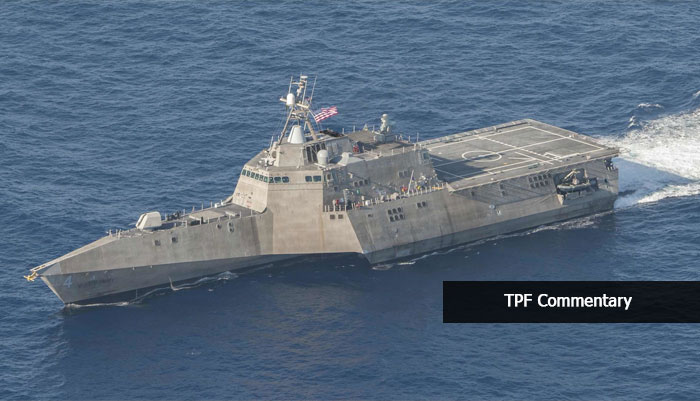
    Another noteworthy Chinese demonstration of its interest in robot ships is validated by the development of a stealthy robotic trimaran warship D3000. According to China Aerospace and Science Technology Corporation, a Chinese defense contractor, this vessel is designed to operate autonomously for months, or as part of a larger task force with manned ships. The D3000 can serve as a mothership for other unmanned systems and pass the data of targets or unfriendly objects to ships and aircraft to work out firing solutions.

    China is offering to foreign customers new unmanned systems that are still undergoing testing or have just entered service in the Chinese military. For instance, China showcased a 42-foot trimaran High Speed Intercept Boat in 2016 in Malaysia. The vessel can be armed, achieve speeds of 80 knots, and can ‘potentially operate in unmanned swarms.

    The concept of operations for the USVs involve undertaking various missions and tasks “including escort, interdiction of civilian freighters, patrolling offshore assets and working in a system of systems with other unmanned systems, including drones and submersibles”.

    In 2014 President Xi Jinping during a speech to the Chinese Academy of Sciences called for a “robot revolution”’ to raise industrial productivity and it is fair to argue that Chinese shipyards, naval research centers and the PLA Navy  are ‘certainly not going to sit the robotic revolution out”.  The Chinese government has characterized the robotic industry as the “jewel in the crown of manufacturing”. This is best demonstrated by the importance of robotics in the 13th Five-Year Plan (2016-2020), the Made in China 2025 program, Robotics Industry Development Plan and Three-Year Guidance for Internet Plus Artificial Intelligence Plan (2016-2018). In essence, China is exhibiting a high degree of confidence in its ability to develop modern unmanned naval technologies.

    Dr Vijay Sakhuja is a co-founder and trustee of TPF.