Author: Vijay Sakhuja

  • ASEAN Unity Critical for South China Sea:  But Time to Address Newer Issues

    ASEAN Unity Critical for South China Sea: But Time to Address Newer Issues

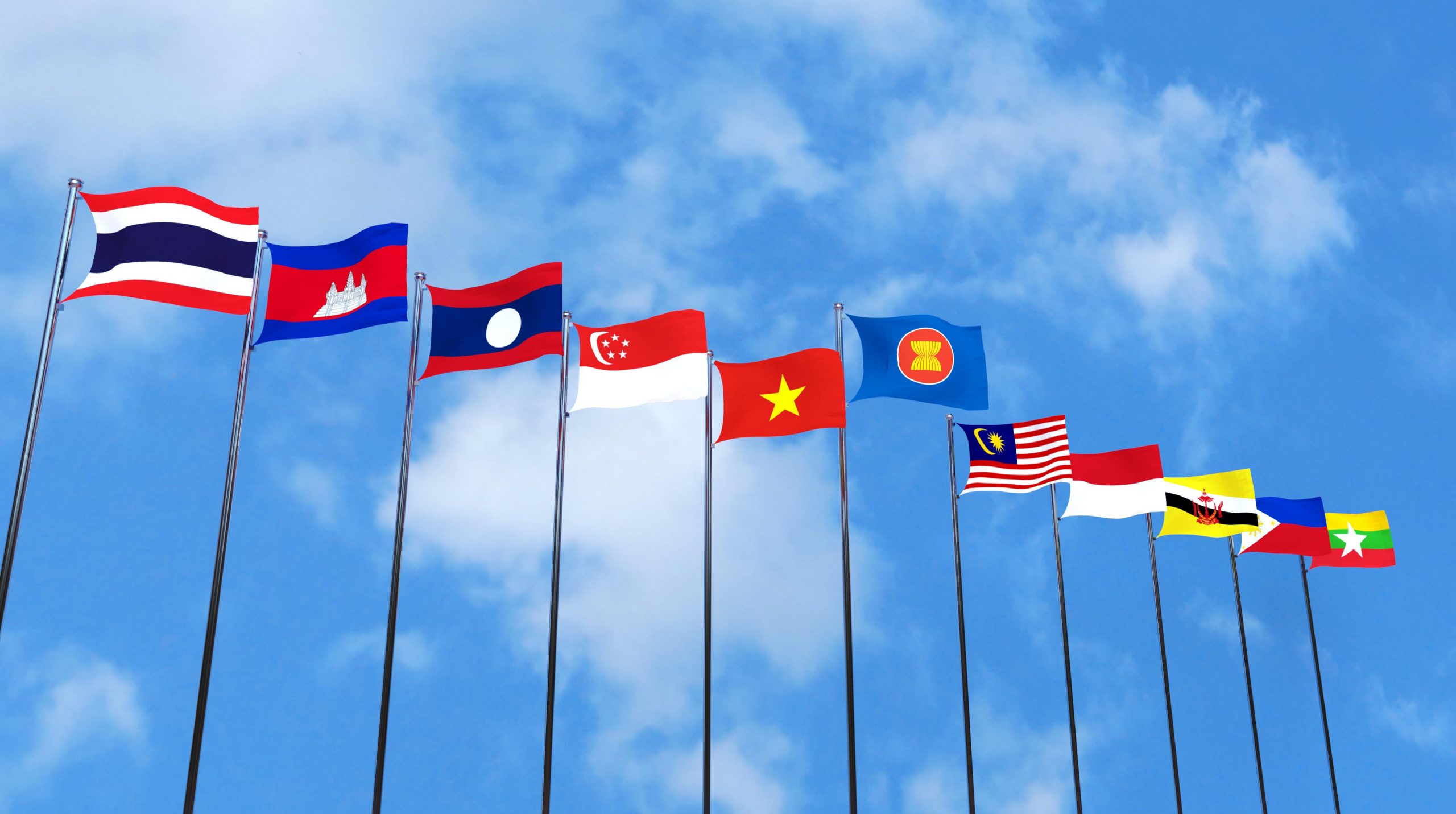
    Perhaps the most defining character of the ASEAN in the last six decades of its existence has been ‘Unity’ among its Member States who have scrupulously adhered to the fundamental principles contained in the various treaties signed by the Member States. The ‘ASEAN Way’ is unique and helps them to remain ‘united’ despite diversity in their political systems, national economic indicators, development levels, and military capabilities. ASEAN has also done well to be labelled as the ‘driver of regional integration’ and promoted a variety of regional political, security and economic initiatives to ensure peace and stability. It has managed with sophistication and alacrity relations with its partner countries bilaterally as also through multilateral structure.

    The ‘ASEAN Way’ is unique and helps them to remain ‘united’ despite diversity in their political systems, national economic indicators, development levels, and military capabilities.

    ASEAN’s engagements with China are through various political and diplomatic exchanges such as Summits and several ASEAN led mechanisms also provide opportunities to its Member States to engage China. The free trade agreement (FTA) is particularly important and catalytic for trade and both sides have taken upon themselves to accelerate negotiations of the Regional Comprehensive Economic Partnership (RCEP).

    At the strategic level, ASEAN Member States have been quite disillusioned with China over its intention to resolve disputes in South China Sea; but the ASEAN leadership has assiduously pursued the Code of Conduct in the South China Sea and succeeded in completing the first reading of the Single Draft COC Negotiating Text. It is now putting pressure on China to quickly conclude the CoC in the stipulated timeframe to ensure region remains peaceful and stable to enable member countries to invest in national and regional development.

    Ironically some ASEAN Member States have not been keen to openly making reference to Chinese reclamation in South China Sea and near continuous buildup of military infrastructure on islands and features in the Parcels and the Spratly group of islands.

    The report card of ASEAN Unity vis a vis China, so far, has been just about quite decent with at least two exceptions when China was suspected of interfering in ASEAN matters; first in 2012, Cambodia resisted reference to South China Sea in the Chairman’s statement, and again in 2016 soon after the South China Sea Arbitration award.[i]

    Ironically some ASEAN Member States have not been keen to openly making reference to Chinese reclamation in South China Sea and near continuous buildup of military infrastructure on islands and features in the Parcels and the Spratly group of islands. While Vietnam and the Philippines have openly confronted China over their claims in South China Sea, Malaysia chose to pursue “quiet diplomacy” but has stubbornly displayed “lawfare in the South China Sea”;[ii] Brunei has remained quiet because its policy makers “see little choice but to remain quiescent about its dispute with China,” Notwithstanding that, the Chairman’s Statement of the 36th ASEAN Summit 26 June 2020 is a clear display of their ‘unity’ and they have collectively expressed concerns on the Chinese activities and recognised the seriousness of a series of incident at sea which have eroded trust and confidence.

    To some extent ASEAN has succeeded in internationalising the Chinese non-compliance of international treaties such as the 1982 UNCLOS to which Beijing is a signatory.

    Today, South China Sea issue has made global headlines. The US has unabashedly rejected Chinese claims over South China Sea and China is accused of not adhering to internal law. To some extent ASEAN has succeeded in internationalizing the Chinese non-compliance of international treaties such as the 1982 UNCLOS to which Beijing is a signatory as also retained a “minimal formal consensus on the South China Sea, rejecting the pernicious idea that the waterway is only the concern of littoral states, and resisting Chinese pressures to avoid discussion of the issue in ASEAN -led forums, certainly contributed to this outcome.”[iii]

    Perhaps it is time for the ASEAN to bring to the forefront the Lachang-Mekong river issue. Several trans-boundary river management issues and concerns between China (the upper riparian and Thailand, Laos, Cambodia and Vietnam (the lower riparian) have emerged over the years. China has been building dams on the river and its tributaries; has avoided sharing full hydrological data particularly during dry seasons; and released river water untimely. The lower riparian states have called for a ‘code of conduct’ and a ‘rule based trans-boundary resource management’ mechanism for the Mekong River between the upper and the lower riparian states.[iv]

    It is tempting to believe that China has successfully stifled lower riparian member states concerns through sops and infrastructure development projects under the Belt and Road Initiative. Interestingly, Lancang-Mekong Cooperation (LMC), the most active forum is dominated by China.

    Non-riparian ASEAN members are accused of “minimal interest” in the Lancang-Mekong issues and they “generally do not participate”. Even attempts to interest the rest of ASEAN on Mekong issues “are met with only the pretense of polite interest”. [v]

      If ASEAN is to preserve ‘unity’ it must see maritime and continental Southeast Asia as one strategic space and take into account challenges faced by ASEAN Member States who border China on land particularly Myanmar who has accused China of interfering in its internal politics and arming the ethnic armed groups operating near the Chinese border,[vi]  and Laos[vii] that is economically and militarily weak to fend off Chinese pressures unlike Vietnam which has withstood Chinese pressures on land and at sea. Otherwise, China will open yet another contentious front for the ASEAN.  Finally, under the circumstances, prudence necessitates that ASEAN should prepare to incorporate newer issues other than the South China Sea in its agenda!

    Notes:
    [i] “ASEAN deadlocked on South China Sea, Cambodia blocks statement, https://www.reuters.com/article/us-southchinasea-ruling-asean/asean-deadlocked-on-south-china-sea-cambodia-blocks-statement-idUSKCN1050F6 (accessed 18 July 2020).
    [ii] “US-China tensions: why is Malaysia so quiet about the South China Sea?”, https://www.scmp.com/week-asia/politics/article/3093715/us-china-tensions-why-malaysia-so-quiet-about-south-china-sea (accessed 18 July 2020).
    [iii] “Why Asean should treat the Mekong like the South China Sea”, https://www.scmp.com/week-asia/opinion/article/3093546/why-asean-should-treat-mekong-south-china-sea (accessed 18 July 2020).
    [iv] Chheang Vannarith, “Code of conduct for the Mekong”, https://www.khmertimeskh.com/298648/code-of-conduct-for-the-mekong/ (accessed 19 July 2020).
    [v]“Why Asean should treat the Mekong like the South China Sea”, https://www.scmp.com/week-asia/opinion/article/3093546/why-asean-should-treat-mekong-south-china-sea (accessed 18 July 2020).
    [vi] “After ASEAN & India, Now Myanmar Accuses China of Creating trouble on the Border”, https://eurasiantimes.com/now-myanmar-accuses-china-for-creating-trouble-in-the-country/ (accessed 19 July 2020).
    [vii] China also claims its right over a large part of Laos on historical precedents (China’s Yuan Dynasty, 1271-1368). “China faces territorial issues with 18 nations; check details”, https://zeenews.india.com/world/china-faces-territorial-issues-with-18-nations-check-details-2292826.html (accessed 19 July 2020).

    Image: Adobe Stock
  • High expectations during Vietnam’s Chairmanship of the ASEAN

    High expectations during Vietnam’s Chairmanship of the ASEAN

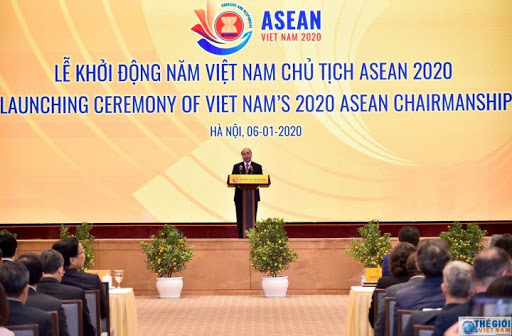
    Vietnam assumed ‘2020 Chairmanship of the ASEAN’ in November 2019 from Thailand in accordance with Article 31 of the ASEAN Charter under which the Chairmanship rotates annually. Hanoi announced the theme for its Chairmanship as ‘Cohesive and Responsive’, in which ‘Cohesive reflects the need to enhance ASEAN unity and solidarity, economic integration, ASEAN awareness and identity, and work toward a “people-centered” community’ and                                 ‘Responsive underlines the importance of promoting ASEAN pro-activeness, creativity and capacity in response to opportunities and challenges brought about by rapid changes in regional and global landscape’.

    Soon after taking over the 2020 Chairmanship, Vietnam was confronted with a ‘black swan’ event i.e. COVID-19. It  delivered admirably by taking bold measures to control the spread of the virus in the country and announced that the ASEAN Coordinating Council (ACC) will compile a report on the COVID-19 to be submitted to ASEAN leaders at the 36th ASEAN Summit scheduled in Vietnam in April.

    Vietnam’s Deputy Foreign Minister Nguyen Quoc Dung, who is the Secretary-General of the 2020 ASEAN National Committee, has identified five key priorities for his country’s Chairmanship Year and it is not surprising to see reference to Hanoi’s commitment to ‘regional peace and stability amid strategic complexities’. Boundary and associated disputes including illegal occupation, reclamation and weaponization of islands and features in South China Sea are central to ASEAN, and as a corollary a major issue for Vietnam’s 2020 Chairmanship. There is now evidence of a push back against Beijing’s intimidation. This is evident from the forceful statements and credible operational initiatives in South China Sea by the claimant states against China which has deployed law enforcement and paramilitary vessels.

    In this context there are expectations from Vietnam to vigorously pursue and make substantive contributions towards keeping the South China Sea less turbulent and more peaceful, and address issues that threaten regional peace and security. It would also be Hanoi’s endeavor to prevent any confrontation and further escalation in disputes in the South China Sea. However, this may not be the case as a number of incidents in the South China Sea over resources i.e. fishing and offshore energy exploration have begun rather very early in Vietnam’s ‘2020 Chairmanship of the ASEAN’.

    First is about Indonesia and China. The former does not claim any island or features in the Spratly Islands and therefore does not have any dispute in South China Sea; but presence of Chinese coast guard vessel escorting Chinese fishermen to fish in Natuna, part of  Indonesian waters, which China claims to be the traditional fishing ground, prompted political and military response from Jakarta. There was also a standoff between China and Vietnam in the Vanguard Bank involving 50 Vietnamese and 40 Chinese vessels over the operations of the drilling rig Hakuryu 5 operated by Russia’s Rosneft in Vietnam’s oil and gas Block 06-01.

    Another three-way standoff over oil and gas operations is playing out between China and Malaysia in which the state-owned Petronas is exploring on the extended continental shelf of a ‘Malaysian oil and gas block in the area for which Hanoi and Kuala Lumpur had submitted a joint claim’. China has resorted to intimidation similar to the Vanguard Bank between China and Vietnam.

    At another level, United States military response in support of Taiwan after Chinese military airplanes flew across the Taiwan Straits and the Bashi Channel is noteworthy. Likewise, US’ support has been forthcoming for Vietnam against China and could trigger enhanced defence and security cooperation between the two sides as also create new opportunities for Hanoi to inform Beijing about its confidence to deal with China on the South China Sea issue at its own terms.

    However, the Philippines would be a different challenge for Vietnam after President Rodrigo Duterte announced annulment of the Visiting Forces Agreement (VFA) notwithstanding the fact that the US has been the most important ally of the Philippines in countering China’s expansive claims in the disputed Philippines Sea. It is useful to mention that Philippines is critical  for US’ Indo-Pacific  strategy of a free and open oceans.

    Second is the about the Code of Conduct (CoC), an upgraded document of the earlier Declaration on the Conduct of Parties in the SCS (DOC), which is under negotiation between China and ASEAN member states and is expected to be adopted in 2021.Vietnam must concentrate on the CoC. The onus will be on Vietnam to not only build consensus among the  ASEAN , Hanoi will have to work hard  to put in place a workable COC which can then be taken forward by Brunei Darussalam who would assume the ‘2021 Chairmanship of the ASEAN’.

    Third is about the contestation between the US and China over freedom of navigation operation (FONOP). During the last three years, the US forces have routinely conducted FONOP which Washington claims to be in accordance with international law and that its military will fly, sail, and operate wherever international law permits. Chinese reaction and response to the FONOP has been at the political, diplomatic and strategic levels. It has exercised coercion at sea through dangerous maneuvers and more recently a PLA Navy destroyer fired a military grade laser at a US P-8 surveillance aircraft.

    ASEAN Chairmanship is a challenging position and attracts high expectations from the member countries. The position entails building upon the work done by the previous Chair as also pursue new regional issues that are always as challenging as the earlier ones. Besides, there are anticipations by regional and other global players to not only follow up the ongoing challenges but address new questions that confront the ASEAN. More often than not, the ASEAN countries have delivered and received appreciation from the international community.

    By all counts Vietnam’s chairmanship of the ASEAN can be expected to be both challenging and rewarding. Hanoi is expected to live up to the expectations on the responsibilities enshrined in the ASEAN charter and deliver to the peoples of the ASEAN as also build upon the themes and priorities set by previous Chairmanship. Vietnam will also be under pressure to adopt a tougher line against China on the South China Sea issue in view of the recent spats between China and other claimant states. But Vietnamese leaders are known for their maturity and diplomatic skills and would play a pragmatic role to manage tensions in the region.

    Image Credit: Vietnam Economic Times

  • Greenhouse Gases and Dietary Changes

    Greenhouse Gases and Dietary Changes

    Vijay Sakhuja                                                                                       July 22, 2019/Commentary

    The 21st century has been rightly labelled the ‘Climate Century’ and there is visible urgency to contain global temperature rise to 2˚C or below. Among the many initiatives currently underway to achieve that, deep cuts in global emissions in greenhouse gases (GHG) have been suggested.

    One of the major contributors of GHG is the livestock sector; in particular, beef and cattle milk production result in anthropogenic GHG and represent 65 percent of the sector’s emissions i.e. 41 and 20 per cent respectively totalling about 4.6 giga tonnes carbon dioxide (CO2) equivalent. Meanwhile, pork, poultry and eggs contribute less than ten percent each. Besides, there are other closely associated producers of GHG in this sector such as cattle feed production and processing, enteric fermentation from ruminants, manure storage and processing, and the balance is attributable to the processing and sector supply chains.

    According to the Food and Agriculture Organization (FAO) of the United Nations, nearly half of the global agriculture production is consumed by live stock and just 37 per cent is for humans. Another study by the American Oil Chemists’ Society (AOCS) provides some very alarming outcomes and notes that it takes about 7 kilogram of grain in dry weight to produce 1 kilogram of live weight for bovine, around 4 kilograms for 1 kilogram of live weight for pigs, and for poultry it is just over 2 kilograms. Furthermore, the United States Department of Agriculture notes that agriculture takes up 80 to 90 per cent U.S. water consumption, and the Environmental Working Group observes that one pound of eggs require 477 gallons of water and almost 900 gallons for one pound of cheese. If that be so, it is fair to argue that there is otherwise surplus plant-based food available for humans.

    Livestock as a source of food is expected to grow in the coming years. This is driven by the projected increase in global population from 7.6 billion is expected to reach 8.6 billion in 2030, 9.8 billion in 2050 and 11.2 billion in 2100. Consequently, any strong growth in the livestock sector to support the protein requirements of the growing population would result in higher GHG emissions. This necessitates urgent interventions to reduce emissions and can be achieved through sizeable reductions in the production and consumption of beef and cattle milk and balancing it with higher production of pork and poultry. However, that may not be sufficient.

    In recent times interesting and promising initiatives by both the public and private sectors to promote agro-vegetable based diet among the people has been noticed. For instance, in the US, the sale of dairy and related products witnessed eight per cent drop from $14.7 billion in 2017 to $13.6 billion in 2018. One of the reasons for this drop has been the consumer shift toward plant-based alternatives for milk from oats, cashew, almond and soy. The US market trends suggest that the plant based dairy alternatives are currently valued at $17.3 billion and could double by 2023. The current meat value chain is about $1,900 billion and the livestock economy is a promising domain. Nearly 1 billion people are involved in the rearing, processing, distribution and sale of livestock, with half of those reliant on livestock for their livelihood. Significantly, livestock sector constitutes only 40 per cent of the agriculture as a whole that makes up approximately 3 per cent of global GDP.

    While vegetarianism has been in vogue for a long time, it is veganism which is fast gaining popularity particularly among the Western countries such as the U.S., Canada, the UK and some countries in Europe. The vegan diet is being prompted on at least three counts; first is the issue of human health and a number of scientific studies have confirmed the benefits of plant-based diet that reduces the risk of chronic illnesses and diseases; second is the issue of sustainability and the international community has come to realize the critical need to reduce GHG emissions; and third is the growing understanding among the humans of the sustainability of veganism. In fact the vegan food industry is investing in vegan fashion, vegan leather to replace animal hide footwear and numerous other such products are making debut in the international market and gaining popularity among people at large.

    This has led to a war between meat industry and vegan lobbyists who are promising options such as vegan meats, cheeses, milks, and other products. For instance, global plant milk market is expected to grow from over $8 billion in 2016 to $21 billion by 2024 and would be led by soy and coconut milk.

    Finally, consumers are increasingly concerned about the impacts that animal-based foods have on land and water use, human health and above all on the environment, particularly in the context of GHG.

    Dr Vijay Sakhuja is Trustee, The Peninsula Foundation, Chennai. 

    Photo by Helena Lopes from Pexels