Author: Mr Mohan Guruswamy MA MBA

  • 91st Amendment: Impediment to Good Governance?

    91st Amendment: Impediment to Good Governance?

    Mohan Guruswamy                                                                                         May 23, 2019/Analysis

    Soon it will be loaves and fishes’ time when ministries will have to be distributed to accommodate personal aspirations. How many can partake in the feast is limited by the 91st Amendment. But does even this contribute to better governance? Perhaps this period of transition is just the time to consider the limitations of the 91st Amendment?

    On July 7, 2004, the 91st Amendment to the Constitution took effect. This meant that from that day on, the size of the councils of ministers at the Centre and in the states could not exceed 15 per cent of the numbers in the Lok Sabha or state legislatures. The logic underlying this amendment was quite obvious. The cost factor was not the issue, for in relation to the overall cost of government, expenditure on ministers is miniscule. The real problem is that with unlimited ministerships on offer, the destabilisation of governments was made easier. Unfortunately, there seems to be little realisation that too many cooks spoil the broth. Who can deny that our governments have so far only served up a vile and poisonous broth that has enfeebled the majority and kept the nation misgoverned?

    Even the National Committee to Review the Working of the Constitution (NCRWC), set up by the Atal Behari Vajpayee government, which recommended that the number of ministers “be fixed at the maximum of 10 per cent of the total strength of the popular House of the Legislature”, does not seem to have thought this matter through. But even its recommendation was tweaked a bit to fix the ceiling at 15 per cent, as we seem to have too many overly keen to be of greater service to the public by becoming ministers.

    It would seem that the only reason why the amendment was whisked through, and whisked through is the only description for it for it was hardly discussed in Parliament or in the media, was to afford political managers some protection against the clamor for berths in government. Like good politicians, they naturally expect to come out smelling of roses at the same time! But there could be an unstated reason as well, that might have to do with distribution of wealth. Too many thieves could reduce the individual take? That, and making ministerships too commonplace, only devalued the worth of the jobs.

    Whatever be the reason for the ceiling, good governance or management principles seem to have little to do with it. We have 543 MPs in the Lok Sabha, which means that we can have up to 81 ministers in New Delhi. With 787 MPs in both Houses, that means almost one in nine MPs can expect to be a minister. The states have in all 4,020 MLAs; opening up possibilities for around 600 ministerial berths for 4,487 MLAs and MLCs. Uttar Pradesh has the biggest Legislative Assembly, with 403 MLAs, while Sikkim at the other end of the spectrum has to make do with just 32 MLAs or just five ministers.

    Quite clearly, the persons who applied their minds to this amendment have not seen government as a responsibility that has to be sensibly shared and not as a basket of fruits to be distributed. No organisation that is meant to function can be designed on such a basis. Analogies are seldom entirely appropriate, but you will see what one has in mind when you consider the absurdity of limiting the number of functional responsibilities in a company to a function of the number of workers on the payroll. Management structures and hierarchies are based on assignment of responsibilities based on a division of work according to the technical and managerial specialisation of tasks. Thus a company might have heads for the production, marketing, finance, HRD, legal and secretarial, and research functions. In small companies, just one or two persons may perform all these functions, while in a large professionally-managed corporation there would be separate or even more heads of functional areas. But you just can’t link th
    is to the number of workers. The important thing is that management structures apportion tasks and responsibilities according to specialisation.

    Obviously, the management of government is a much more complex, with an infinitely larger set of tasks than the biggest corporation, however professionally managed it may be. But to divide the management of the state into 39 functional responsibilities, as is the case now, is to exaggerate that magnitude and complexity. It is as if in an automobile company making and selling cars, the person responsible for making gearboxes is at the same level as the persons looking after the paint shop or procuring accessories. As if this was not bad enough, all these would then be at the same level as the head of production or marketing or finance. Yet this is how the Cabinet is organised. There is a minister for rural development and a minister for panchayati raj as there are ministers for irrigation and fertilisers, sitting on the same table as the minister for agriculture.

    We know that all agriculture is rural and everything in the rural world revolves around agriculture, and so the case for separating the two goes straightaway. Besides, agriculture is about water, fertiliser, food distribution, food processing, agro and rural industries. And who has heard of forests in the urban areas? Thus, instead of having one person responsible for improving the lot of our farmers and rural folk, we have nine departments headed by nine ministers. They often work at cross purposes. Even if the ministers are willing, it will be almost impossible to make the bureaucratic structures march to the same beat. And so if the rural sector continues to languish, no one is responsible.

    This was not the case 50 years ago. In Jawaharlal Nehru’s first Cabinet there was only one minister for food and agriculture. The only agriculture-related function not with this minister was irrigation. Gulzarilal Nanda held the portfolio of planning, irrigation and power. But in those days additional power was intended primarily from hydel projects and it thus possibly made sense to have irrigation outside the food and agriculture ministry.

    Likewise, transport and railways was one ministry, while it has been broken up into five areas now. Some of them are ridiculously small. Take the ministry for civil aviation. Apart from Air India, Indian Airlines, Airports Authority of India and the DGCA, there is little to it. The first three are companies with full-time managers supposedly managing them. Since the ministry has little policy to make, it busies itself micromanaging the companies. And don’t the ministers for civil aviation just love that? The need for new aircraft and infrastructure have attendant benefits. And what is the need for a ministry of information and broadcasting when that means little more than Akashvani and Doordarshan? Mercifully, there is little by way purchases in I&B.

    By now it should be quite apparent that the 91st Amendment is not good enough as it just does not address the problem. We now need a 92nd Amendment that will marginally change Article 74(1) of the Constitution to read “there will be a council of ministers consisting of the ministers for home affairs, defence, foreign relations, agriculture ….” Article 75(1), that makes it incumbent for the President to appoint ministers on the advice of the Prime Minister, remaining as it is then makes the choice of the ministers entirely his or hers. While we are at it, we might want to look at Article 75(5) afresh and consider the merit of eliminating the stipulation of getting elected to either House of Parliament or legislatures. In this manner we could encourage Prime Ministers and chief ministers to induct professional and competent persons rather than be limited to professional politicians.

    But will the subject of a smaller and more functional government ever merit the politicians’ attention?

    The author is a Trustee and Distinguished Fellow at ‘The Peninsula Foundation’. He is a policy analyst and prolific commentator on politics, economics, industry, and security. He specialises on Chinese economy.

    This article was published earlier in Deccan Chronicle.
  • Belt & Road: What are China’s Real Intentions?

    Belt & Road: What are China’s Real Intentions?

    Mohan Guruswamy                                                                                         May 22, 2019/Analysis

    Almost two years after China hosted a well-attended and hugely-touted conference to promote its One Belt, One Road (OBOR) initiative, it held the second summit last month. It is apparent the grand design outlined at the first summit hasn’t quite shaped up as intended. Questions were asked about its real intentions, economic benefits and usurious tendencies.

    The Chinese have begun backtracking a bit. Already, Malaysia has renegotiated the terms of the rail project with a much-reduced outlay, lower interest rates and increased local participation. It may be mentioned that the original deal was signed by paying the disgraced former Malaysian PM Najib Razak a sizeable bribe. Even Pakistan, Beijing’s so-called “all-weather” friend and ally, has begun questioning the terms of the China-Pakistan Economic Corridor (CPEC) after deriving lessons from what happened to Sri Lanka when the birds came home to roost at Hambantota.

    The second edition of the Belt and Road Initiative Summit got under way in Beijing on Thursday last week. It seems that India’s opposition to it might have also been addressed somewhat when the BRI map showing routes rather curiously shows the whole of Jammu and Kashmir and Arunachal Pradesh as part of India. Is this a signal, or just artistic licence? The map even portrayed India as a part of BRI, despite India having boycotted the summit for the second time.

    Typically, many Indian commentators have started seeing meaning in it. Maps be damned, we can see meaning in BRI only when the norms and terms conform to accepted international norms, such as those of lending agencies like the World Bank.

    The BRI is seen as China’s big play to seek world domination. Both the fears and the optimism are unfounded. The BRI is a project meant to very simply get out the Chinese reserves invested in Western banks into investments where these will fetch a much higher rate of return; and to take up the slack from the huge overcapacity problem that plagues the Chinese economy.

    Speaking at the first BRI (then OBOR) conference, President Xi Jinping had announced that Beijing would advance 380 billion yuan ($55 billion) to support it. This was a far cry from the huge figures, sometimes as high as $750 billion to $1 trillion, that were bandied about. Exaggerating the size of the lollipop is an integral aspect of China’s economic diplomacy.

    While economists are generally sceptical about China’s goals and intentions, strategists — mostly the garden-variety Indian military types — have endowed this project with sinister overtones. I was on a television show when a prominent “security analyst” and the anchor raised the issue of the so-called “string of pearls”. To them it seemed that every port or airport where a Chinese company is the contractor had a military purpose. Most of these folks have not progressed beyond Mahan and Mackinder, whose theories were fashioned in a much earlier era when coaling and oil refuelling points were very critical.

    The “string of pearls” is a bogus idea. It was cooked up by consultants working for a company called Booz Allen Hamilton, which was linked to the US department of defence and the Central Intelligence Agency, and was given a lot of traction by some well-known Indian “strategic thinkers”. I was once at a conference where Adm. Dennis Blair, a former US Navy chief and later President Barack Obama’s Director of National Intelligence, was asked about it. He called it a “stupid notion”, and said no one who has run a large navy or held a responsible position in a navy will ever say an oceanside blockade is possible. He explicitly and loudly said to Indian strategists who harped on the “string of pearls” that no navy could encircle a country with just a few ports.

    The question that we need to ponder over a bit is how long will these “ports” survive after any outbreak of hostilities? The Indian Air Force and the Indian Navy have enough airpower at hand to sort them out, and our Navy can effectively blockade hostile ports in the neighbourhood. It may be noted that the IAF has operationalised an airbase in Thanjavur and will fly SU30 MKIs from there. The Navy deploys MiG-29K fighters as well as P-8i Poseidon maritime surveillance and attack aircraft, and has a formidable fleet of combat vessels. We have not been exactly sleeping or need to be overly worried. The same Sri Lanka that once hosted a Chinese Jinn class nuclear submarine ostensibly on a goodwill mission last year turned away a conventional submarine of the PLA Nany wanting to pick up supplies.

    Now to the economics of BRI. There is a reality most of our commentators do not see or understand. By 2013, China had accumulated foreign exchange reserves of about $3.5 trillion. The capital it claims it is prepared to subscribe for the NDB, AIIB and Silk Road Fund would amount to only around seven per cent of its total foreign exchange reserves invested in Western banks. As these China-promoted institutions will provide infrastructure lending rather than grants, the return on capital from these investments could be significantly higher than the returns China gets from its foreign exchange reserves now invested in low-yielding US government bonds. It’s very simple. China needs to get value for its money and also help its demand-starved industries. They have found a typically Chinese solution to it, and are making a virtue out of a necessity.

    Look at it from another angle. The US dollar is also steadily depreciating in the long term against other major currencies. With no interest and with depreciation factored in China’s huge reserves, accumulated by extracting surpluses in its sweatshops, are steadily shrinking in value. The question which Beijing seeks to grapple is this. One way is to put these funds to work in investment-starved countries in Africa and Asia and assures themselves of returns for a long time to come. In some, the birds have come home to roost quite early. The grandiose Hambantota port project in Sri Lanka, which once had the same bunch of Indian “strategic thinkers” in a tizzy, hosts no ships and doesn’t earn very much. China is now pressuring Sri Lanka to service the debt and is seeking to extract some more in lieu of that. Much of the Hambantota investment has been recouped by China via material and labour supplied to complete the project. That’s why one prominent European commentator then called OBOR “One Belt, One Road and One Trap”.

    Like Sri Lanka, some other intended beneficiaries have now begun to ask questions about the utility and intentions of OBOR. Pakistan’s Dawn newspaper has said: “But the main thrust of the plan actually lies in agriculture, contrary to the image of CPEC as a massive industrial and transport undertaking, involving power plants and highways. The plan acquires its greatest specificity, and lays out the largest number of projects and plans for their facilitation, in agriculture.” It then questions the benefits that will arise from linking mostly dry and barren Xinjiang, and in particular the predominantly Turkestani Muslim Kashgar prefecture with its restive four million people, to an increasingly water-starved and already much troubled Pakistan. Once when a Pakistani interlocutor at a Track-2 session asked me what then would be the economic gains to Pakistan, I replied they could sell tea and samosas to the traffic!

    Much is being made about the overland link between China and Europe by rail and road links. Most commentators seem to miss that the Trans-Siberian Railway line from Vladivostok to Moscow is almost a hundred years old. Its capacity can be beefed up. Yet overland freight costs will always be much more expensive than sea freight costs. Business is about cutting costs and taking the least expensive option. No one with common sense will prefer to shift by land what can be shipped. Others make much of the so-called Malacca dilemma. The Arctic route is now opening up, and the real Malacca dilemma soon will be the rapid decrease in freighters through it. There is always the option of a canal for freighters across the Kra Isthmus, a project that will bring China and Japan much closer to India.

    Mohan Guruswamy is a Trustee and a Distinguished Fellow of TPF. He is a prolific commentator on economic and security issues, and specialises on China.

    This article was published earlier in Deccan Chronicle.
  • Chinese Lesson: Paying the Price for Uprightness

    Chinese Lesson: Paying the Price for Uprightness

    Mohan Guruswamy                                                                                        May 22, 2019/Op-Ed

    World’s largest electoral exercise, in the largest democracy – India, concluded on May 19th. The counting and results are awaited in a few hours from now. This elction has been the most acrimonious so far in Independent India’s history. Given the endemic corruption and the corrosive hyper-nationalism around the world today, the importance of honesty, integrity, and uprightness in public life is in stark focus. The French Revolution produced Maximilien Robespierre, ‘the Incorruptible’ whose intolerance for corruption brought in the infamous guillotine. Mohan Guruswamy goes down Chinese history to highlight the importance of uprightness, whatever the price maybe.

    Recently I had a visitor from Hainan, China, Jiang Zhongqiang. Jiang is from the South China Maritime Research Centre, and has been commissioned to write a book about the Congress Party. I told him that to understand the inner workings of the party he would be better off first studying the inner workings of the Ming court. When asked to elaborate I told him about Hai Rui (1514-1587), the honest bureaucrat from Hainan who is buried in the provincial capital Haikou in a nondescript grave. We also spoke about the writer Lu Xun (1881-1936), who like Hai Rui paid a heavy price for his uprightness.

    Hai Rui was a scholar-official of the Ming dynasty. He is remembered as a model of honesty and integrity in office. A play based on his career, Hai Rui Dismissed from Office, by Wu Han gained political significance in 1961 after the Peking Opera staged it. Initially Mao applauded the play, but when people started seeing in it as an allegory of him and Marshal Peng Dehuai, the Great Helmsman changed his mind. Peng himself agreed with this interpretation, and stated: “I want to be a Hai Rui!” in a 1962 letter to Mao requesting his return to politics. Wu Han himself was purged for his troubles and died in prison in 1969.

    Hai Rui was a scholar-bureaucrat. Like many educated Chinese he joined the bureaucracy and soon gained a reputation for his morality, scrupulous honesty and fairness. This won him widespread popular support, evinced among other things by his being enshrined while alive; but he also made many enemies in the bureaucracy. Nevertheless, he was called to the capital Peking and promoted to the position of secretary of the ministry of revenue. In 1565, he submitted a memorial strongly criticising Emperor Jialing for the neglect of his duties and bringing disaster to the country, for which he was sentenced to death in 1566. He was released after the emperor died in early 1567. Hai Rui was reappointed under the Emperor Longqing, but soon forced to resign in 1570 after complaints were made over his overzealous handling of land-tenure issues.

    He is not particularly celebrated in China any more, which is not surprising given the open corruption that flourishes there. Like in India now, wealth is more celebrated than character in China. When I visited Haikou, Hainan, in 2013, I asked my hosts to be taken to Hai Rui’s grave. My hosts were surprised. Perhaps he makes the Communist mandarins feel uncomfortable?

    Interestingly enough, Hai Rui had an Indian connection. He was descended from a native of Guangzhou named Hai Da-er (Haidar), and his mother was also from a Muslim (Hui) family that originated from India. Hai Rui himself was however known primarily as a Neo-Confucian and never discussed Islam in his Confucian works.

    In April 2015, I drove out from Shanghai to Shaoxing in Zhejiang province and crossed over the 36-km long bridge across the Hangzhou Bay from Jiaxing to Cixi. Cixi incidentally is the birthplace of KMT Generalissimo Chiang Kai Shek. The next town Shaoxing is the birthplace of Zhou Enlai, Mao Zedong’s devoted acolyte. But Shaoxing is a much-visited tourist destination these days because it is the hometown of the venerated writer Lu Xun, commonly considered the greatest Chinese writer of the 20th century. Lu Xun was also an important critic known for his sharp and unique essays on the historical traditions and modern conditions of China. Lu Xun was the pen name of Zhou Zorn, born in a wealthy Shaoxing family. This home of the family Zhou is a much-visited tourist site, not only for its simple elegance and for the unique peep it offers into late 19th century upper class family life in China, but also because it is the locale for several of Lu Xun’s stories.

    His official biography in the brochure reads: “Lu Xun left his hometown in 1899 and attended a mining school in Nanjing; there he developed an interest in Darwin’s theory of evolution, which became an important influence in his work. Chinese intellectuals of the time understood Darwin’s theory to encourage the struggle for social reform, to privilege the new and fresh over the old and traditional. In 1902 he traveled to Japan to study Japanese and medical science, and while there he became a supporter of the Chinese revolutionaries who gathered there. In 1903, he began to write articles for radical magazines edited by Chinese students in Japan. In 1909 he published, with his younger brother Zhou Zuoren, a two-volume translation of 19th-century European stories, in the hope that it would inspire readers to revolution, but the project failed to attract interest. Disillusioned, Lu Xun returned to China later that year.”

    Lu Xun was a contemporary of Munshi Premchand (1880-1936) and like him excelled in short story writing. He began writing full time in 1918 and his first published fiction was the now-famous short story Kuangren riji (“Diary of a Madman”). Like the Russian realist Nikolay Gogol’s tale of the same title, the story is a condemnation of traditional Confucian culture, which the madman narrator sees as a “man-eating” society. It was considered a tour de force that attracted immediate attention and helped gain acceptance for the short-story form as an effective literary vehicle.

    Like Premchand, Lu Xun’s stories were telling commentaries of the times usually told with a sardonic sense of humor. In 1930 Lu Xun stopped writing fiction and devoted himself to writing satiric critical essays, which he used as a form of political protest. The same year he became the nominal leader of the League of Left-Wing Writers. Although he himself refused to join the Chinese Communist Party, he considered himself a tongluren (fellow traveler), recruiting many writers and countrymen to the Communist cause through his Chinese translations of Marxist literary theories, as well as through his own political writing.

    During the last several years of Lu Xun’s life, the KMT government prohibited the publication of most of his work, so he published the majority of his new articles under various pseudonyms. He criticised the Shanghai Communist literary circles for their embrace of propaganda, and he was politically attacked by many of their members. In 1934 he described his political position as hengzhan or “horizontal stand”, meaning he was struggling simultaneously against both the right and the left, against both cultural conservatism and mechanical evolution. Hengzhan, the most important idea in Lu Xun’s later thought, indicates the complex and tragic predicament of an intellectual in modern society.

    The celebration of the life and works of Lu Xun leaves its imprint all over the lovely town of Shaoxing. Lu Xun rather than Zhou Enlai is the popular and loved son of Shaoxing. All over Shaoxing you will see not only statues of Lu Xun but also statues of characters from some of his more celebrated works. Even Lu Xun’s favourite restaurant is a popular eatery and it is very difficult to get a place. Our party of four got a courtyard table after our local hosts told the owner that two Indians (Ambassador T.C.A. Rangachari and myself) had come across the globe just to pay homage to Lu Xun. The food was worth every word of praise Lu Xun may have had for it. I had a dish of braised mushrooms with pork and rice, which was a favorite of Lu Xun’s.

    I was at Ghalib’s haveli at Ballimaran some months ago. Ghalib, like Premchand many decades later, was the greatest commentator of the period. The haveli where he lived the last nine years of his life is a sorry mess. It reflects nothing of his immense popularity and greatness. As a chronicler commented: “Ghalib’s last home lost its original flourishes of frescoes, alcoves and archways, following several sub-divisions and additions over the years. Reduced to a dimly lit gallery, a small verandah and a claustrophobic courtyard, it was a coal store at some time in the past. Ghalib would have chuckled.” Poor Premchand had to wait till 2016 to get a research centre named after him in Varanasi. I am sure both would have said something pithy about how we celebrate our scholars.

    The writer, a policy analyst studying economic and security issues, held senior positions in government and industry. He also specialises in the Chinese economy. He is a Trustee and Distinguished Fellow of TPF.

    This article was published earlier in Deccan Chronicle.
    Image Credit – PublicDomainPioctures from Pixabay.

  • After Balakot: India-Pak ties and nuclear bombast

    After Balakot: India-Pak ties and nuclear bombast

    Mohan Guruswamy                                                                      Apr 19, 2019/Commentary

    We know that in the aftermath of the Balakot airstrikes, India and Pakistan went into some form of nuclear readiness. The Indian Navy quietly announced last week that all its crucial assets, including the nuclear missile-launching INS Arihant, were deployed in the Arabian Sea. Unlike the United States and the erstwhile Soviet Union (now Russia), which had several stages of nuclear readiness to signal intent and gravity, India and Pakistan have no such signalling language. So, when it comes, it comes.

    Politicians on both sides of the border are prone to loose talk and nuclear sabre-rattling is part of their lexicon. But this is not without some reason and purpose. Even though there is little risk of a nuclear world war any longer, because of their awesome power and potential to inflict sudden and massive violence on large populations, nuclear weapons inspire tremendous and often irrational fear, however infinitesimal the probabilities of their use. When both adversaries have nuclear weapons, you have a balance of terror.

    As a matter of fact, in the prevailing international situation, any war involving even conventional forces cannot remain a local affair for long, to be sorted out by just the two adversaries. Where there is even the smallest risk of an escalation to nuclear conflict, that intervention could be quite quick. This is what the Pakistanis are counting on.

    But since nuclear weapons cannot be used, their only utility lies in the mere threat of their use. In nuclear theology, this has come to be known as “the utility in non-use”. From time to time declared and undeclared nuclear powers have tried to use nuclear weapons in this manner. The Pakistanis are only travelling down a well-trod path. Each time the Pakistanis threaten us with nuclear war, what they are in fact doing is semaphoring to the rest of the world, particularly those of the West, that have taken it upon themselves to supervise the international regime, to intervene.

    In the early days of the Yom Kippur war of 1973, an incident occurred which tells a great deal about how the game of nuclear diplomacy is played. The sudden and successful attack by Egyptian troops under the command of Gen. Saaduddin Shazli not only put the Egyptians back on the Sinai Peninsula but also unveiled a new generation of Soviet weapons and tactics to match. At the northern end of Israel, a Syrian armored attack under Gen. Mustafa Tlas was threatening to push the surprised Israelis down the slopes of the Golan Heights. In just the first three days of the conflict, the highly regarded Israeli Air Force lost over 40 fighter aircraft and a huge number of tanks to the new generation of Soviet anti-aircraft and anti-tank missiles. The panicked Israelis turned to the United States for assistance but found Washington quite reluctant. Both President Richard Nixon and his national security adviser Henry Kissinger till then were of the opinion that a degree of battlefield reverses was needed to get an increasingly intransigent Israel to the conference table. Caught, in a manner of speaking, between the devil and the deep sea, the Israelis then played their nuclear card.

    American surveillance satellites and high-flying reconnaissance aircraft suddenly began to pick up unusually heightened activity around the Israeli nuclear facility at Dimona near the Negev desert. Israeli defence minister Moshe Dayan, while imploring Dr Kissinger to start the airlift of urgently-needed weapons and military technical assistance, told him about how desperate their situation actually was and had already hinted that Israel might have to resort to nuclear weapons to halt the Arab armies. The alarmed Americans sent a SR-71 Blackbird reconnaissance aircraft fitted with special sensors to detect nuclear material over Dimona. The SR-71’s sensors picked up the signature of nuclear material on a bomb conveyor apparently loading an Israeli fighter-bomber. Whether the nuclear flare registered was from an actual nuclear weapon or radioactive material in a container to simulate a weapon will never be known.

    To the advantage of Israel, the Americans read this as preparations for an imminent nuclear attack. Would the Soviets sit quietly when their allies were subjected to a nuclear attack — would have been their immediate thought? Was this going to be the beginning of World War III? Within minutes, President Nixon was on the line to Prime Minister Golda Meir, telling her that a massive US airlift bearing much-needed weapons and military advisers was ordered and that the supply would begin within hours.

    In early 1952, as the Chinese poured in troops into Korea to grind to a halt the advance of the American-led UN forces, a highly placed US diplomat in Geneva conveyed through Indian diplomat K.M. Pannikar a warning to China that the United States will use nuclear weapons on it unless it agreed to talks immediately. China soon afterwards agreed to hold talks, which soon resulted in the armistice that holds till today.

    Others have done this somewhat differently. During the 1982 Falklands War, the British quietly deployed the nuclear submarine HMS Conqueror, armed with nuclear missiles, off the Argentine coast. As the fighting raged and the Argentines scored some naval victories by sinking the destroyer HMS Sheffield and the converted Harrier jet carrier Atlantic Conveyor, the Royal Navy revealed the presence of its nuclear submarine. The presence of the Conqueror with nuclear weapons was to tell its somewhat lukewarm ally, the United States, that if the war went badly for it Britain would be forced to use even nuclear weapons. It was therefore in America’s interest to not only using its enormous clout with the Argentines to end its occupation of the Falkland Islands but to also assist Britain. Soon after this the US tilted fully in favour of the British by giving it critical intelligence and political support.

    In 1992, then US President George H.W. Bush conveyed to Saddam Hussein that a poison gas attack on Israel using its Scud missiles would invite a nuclear strike upon it. The Iraqis fired several Scuds on Israel, but none with poison gas. After the war, UN inspectors scouring Iraq for weapons capable of mass destruction detected huge quantities of poison gas in ready to use explosive triggered canisters. Obviously, the threat had worked.

    Clearly, the threat of the first use of nuclear weapons, if provoked beyond a point, could be often as effective as nuclear deterrence. In recent times, to give credence to its irrationality, Pakistan has deployed or claims to have deployed tactical nuclear weapons to some of its formations. Since a tactical nuclear weapon has a much smaller destructive power, its use is considered somewhat more likely and hence more credible than a strategic nuclear weapon. A strategic weapon is a city or area-buster, whereas a tactical weapon is said to have only a battlefield application. But India’s response to this is that whatever the weapon, and wherever it is used, if it is used it will invite a full-scale retaliation. Many analysts think this is not credible, and India needs a flexible policy that will allow it to also match escalation up the ladder.

    But the frequent Pakistani outbursts that nuclear war can happen here if the Kashmir situation boils over is an addition to the known nuclear semaphoring practices. Here the Pakistanis are using the Western abhorrence of nuclear war to influence Indian policy. They are not threatening India, because that is not credible, more so since India has a far bigger nuclear arsenal. They are in fact threatening the world that the balance of terror might be breached, and inviting it to intervene. Whatever the nature of this intervention, it is deemed to be in its favour. We saw this happen in 2008 when within minutes of the 26/11 Mumbai attacks Presidents and Prime Ministers from all over began calling our Prime Minister calling for restraint. We have a somewhat ironical situation here. A cruel and ruthless military presiding over a notoriously lawless and corrupt nation is pleading for Kashmir’s supposed right to self-determination and is blackmailing the world to come to its assistance.

    The author is a Trustee and Distinguished Fellow of ‘The Peninsula Foundation’. He is a prolific commentator on economic, political, and security issues. The views expressed are his own.

    This article was published earlier in Deccan Chronicle.
    Photo Credit: PTI

  • India Elections 2019: On Democracy, Secularism and  Nature of Religion

    India Elections 2019: On Democracy, Secularism and Nature of Religion

    Mohan Guruswamy                                                                                     Apr 11, 2019/Op-Ed

    As India goes into elections today, the largest democratic exercise in the world, it is time to reflect on the nature of religion, their promoters and what it means to be secular.

    When the late J. Jayalalithaa opened up the debate on conversions by passing an ordinance during her second tenure as chief minister of Tamil Nadu that made the choice of faith subject to the state’s approval, not surprisingly, the VHP, RSS and the BJP hailed it as a great achievement. Not surprisingly, their Muslim and Christian counterparts severely castigated it. To all these organisations, religion is not just a matter about heaven and hell and who gets to go where, but about power and profit. Modern religions are akin to great commercial enterprises like Coke and Pepsi constantly seeking greater marketshare while retaining the faith of existing customers.

    It is the consequent faith, mostly induced and sustained by these exertions, which sustain the huge uniformed bureaucracies and extravagantly titled organisations that are the edifices of our major religions. Witness the recent no-holds-barred struggle for the control of the Shiromani Gurdwara Prabandhak Committee in Delhi, which was nothing if not about getting one’s hands on the huge assets and cash flow of the gurdwaras. At least the Sikhs go about it democratically, in a manner of speaking. But all those of the great Hindu, Muslim and Christian institutions are beyond the grasp of even their most faithful. It is indeed unfortunate that debates on religion and faith are no longer about goodness and decency or even present day social concerns. But that is not for discussion now. At stake is something much more important.

    The acceptance of democracy as a way of life implies that we have accepted that we hold certain rights to be inalienable. The Indian Constitution therefore guarantees justice, liberty and equality. The rights emanating from these are considered fundamental to our being a free and democratic society. These fundamental rights, therefore, are inviolable in the sense that no law, ordinance, custom, usage or administrative order can ever abridge or take away any of them. The preamble elaborates liberty to be that of “thought, expression, belief, faith and worship”, leaving little room for ambiguity. Like Hinduism’s eternal truths these are eternal rights. Without these rights we will be no different than a Saudi Arabia or North Korea!

    Consequently, Article 19 guarantees the people of India seven fundamental freedoms. These are (a) freedom of speech and expression; (b) freedom of assembly; (c) freedom of association; (d) freedom of movement; (e) freedom of residence and settlement; (f) freedom of property; and (g) freedom of profession, occupation, trade or business.

    Article 25 guarantees “freedom of conscience and free profession, practice and propagation of religion”.

    This very simply means that people are free to believe whatever they may want to, convert others to this belief and perform whatever rituals or ceremonies that are required by one’s faith. In even more simple words, people are free to be Christians or Muslims or Hindus or whatever, free to preach and convert. Or that matter even Marxism, which now is no different than any faith with its own depleted philosophy and impossible mythology. So what is there to debate about conversion? This right is inviolable and is guaranteed by the Constitution, and so there is nothing to debate.

    It is another matter that religions as we know them to be practiced are usually premised on irrational and primitive ideas. The psychologist James E. Alcock writes: “We are magical beings in a scientific age. Notwithstanding all the remarkable achievements of our species in terms of understanding and harnessing nature, we are born to magical thoughts and not to reason.” Now this relative absence of reason in religion very clearly gives us cause for a debate. Very clearly the liberty of thought and conscience and the right to profess and practice one’s religion is not the issue.

    What can be the issue is our reticence to criticise religions, and subject their basic premises to scrutiny? Perhaps our bloodied history and particularly the conflicts of the recent past have made us want to seek accommodation by mutual tolerance. This is understandable and perhaps even commendable. Nonetheless, given the propensity of militant religionists like the VHP and the Jamaats to apply their doctrines to the political process and their constant endeavour to impose their views on others, not to challenge orthodox religiosity and fundamentalism would be a gross dereliction of our responsibilities.

    What we are in need of is not a debate on conversion but a debate on the stuff our beliefs are made of. But this is not on our agenda and will not appear on it as long as we have the present dubious consensus on what has come to be called secularism. To be truly secular is to be a sceptic, and therefore rational and reasonable. Merely to be silent on the unreason wrapped in ritual and ceremony that passes off as religion, or even to be fearful of criticising these lest we provoke irrational rage and violence, is not secularism. It is the silence of the truly secular and rational that has allowed the religious fanatics of all hues to seize the high ground from which the battle for our minds is being directed.

    This distorted notion on what is secularism makes even the maddest mullah cry stridently for it. To start with, to be a mullah or even a shankaracharya or a bishop is proof of one’s lack of secularism. To be secular is to consider organised religion little more than humbug. But now is not the time to discuss humbug, but the hullabaloo about conversion.

    It still leaves us with the rights and wrongs of converting by false inducements. Is the promise of life after life not a false inducement? Since all of us are inevitably sinners and since no religion promises a more comfortable hell, the inducements have to necessarily relate to the immediate, and more often than not, for material gain. For some reason hell in all religions is always a hot, dank and dark place and heaven with a surfeit of all the good things of life. Nobody seems to give a thought that it is just these good things that get us into trouble in the first place. Not just in terms of clogging our arteries, wrecking our livers and exposing us to HIV, but in terms of getting us into trouble with the authorities above!

    The criticism against Christian missionaries is that they dupe poor people into becoming Christians by giving them money. And ditto for Muslims preachers. If Hindus want to keep their flock the answer is staring them in the face. Put some money where your mouth is and the flock will not deplete? To be true, there is more than cash that goes with this. More often it is housing, clothes, education and the care and respect that comes with acceptance that are the inducements. The exchange of one set of primitive ideas with another set of not very different yet similarly primitive ideas is no big deal. Ordinary people can be very practical when it comes to matters pertaining to their well-being.

    Both the State and our predominantly Hindu society have failed to provide to the majority of this country the elementary essentials of living and quite often even the elementary decencies due to all human beings. Added to this, our society has systematically discriminated against the weak and the oppressed. Our former President, the late K.R. Narayanan, had a point when he wanted to know, from the then Atal Behari Vajpayee government, if no dalits or adivasis can be elevated to the Supreme Court? Why do they exist mostly below the poverty line? Why do more of them die younger? Now here are subjects worthy of a debate. The call for a debate on conversion lends itself to expansion to include these. Just as it lends itself to a discussion as to why people are so easily willing to give up their traditional faith. Clearly, the systematic exclusion of a majority from their rightful role in the community and the continuing discrimination against them is a great subject for a debate. If the Hindu upper castes were to be civilised in their treatment of the lower castes, would they now seek to escape from the social tyranny of the so-called Hindu society?

    Such an expanded debate could possibly shed light on why for most of the last millennium we were a conquered nation. It is over a thousand years since Mohammed bin Kasim conquered the Sind. Thus paving the way for a succession of Arabs, Persians, Turks, Uzbeks, Mongols, Portuguese, French and the English to invade and rule parts, if not all, of this country. In the process, we even became the only nation to be conquered by a private commercial enterprise — the East India Company. How much lower than that can you get? Our thousand years of shame quite clearly calls for a debate we have never had.

    Such a debate will almost certainly focus on the failures of the Hindu elites to defend the nation, to unite the country and harness its great resources. It is not very different even now. The lessons of history are yet to be learnt. And so we will want to debate what we shouldn’t be and not debate what we should be.

    The writer, a policy analyst studying economic and security issues, held senior positions in government and industry. He is a Distinguished Fellow and Trustee of TPF.

    Views expressed are the author’s own. A version of this article was published earlier in Asian Age.

    Photo by Darshak Pandya from Pexels.

  • The state of Bihar!?

    The state of Bihar!?

    The Prime Minister in the run up to the Bihar assembly elections announced a Rs.50,000 crores package for the state. Just as he announced a Rs.100,000 crores package for Jammu and Kashmir that July. Bihar has a population of over 103 million and J&K has a population of 12.5 million.

    This is not a new story. Bihar has been systematically exploited by denying it its rightful and deserved share of central funds from the First Plan.

    That Bihar is India’s poorest and most backward state is undeniable. The facts speak for themselves. But what makes its situation truly unique is that Bihar is the only state in India where the incidence of poverty is uniformly at the highest level (46-70%) in all the sub-regions. The annual real per capita income of Bihar of Rs. 3650 is about a third of the national average of Rs.11, 625. Bihar is also the only Indian state where the majority of the population – 52.47% – is illiterate.

    But Bihar has its bright spots also. Its infant mortality rate is 62 per 1000, which is below the national average of 66 per 1000. But what is interesting is that it is better than not just states like UP (83) and Orissa (91), but better than even states like Andhra Pradesh and Haryana (both 66).

    Even in terms of life expectancy, the average Bihari male lives a year longer (63.6 yrs.) than the average Indian male (62.4 yrs) and the state’s performance in increasing life spans has been better than most during the past three years.

    Bihar has 7.04 mn. hectares under agriculture and its yield of 1679 kgs. per hectare, while less than the national average of 1739 kgs. per hectare is better than that of six other states, which include some big agricultural states like Karnataka and Maharashtra.

    Despite this, in overall socio-economic terms, Bihar is quite clearly in a terrible shape.

    As opposed to an All-India per capita developmental expenditure during the last three years of Rs.7935.00, Bihar’s is less than half at Rs.3633.00. While development expenditure depends on a bunch of factors including a state’s contribution to the national exchequer, no logic can explain away the per capita Tenth Plan size, which at Rs. 2533.80 is less than a third of that of states like Gujarat (Rs.9289.10), Karnataka (Rs.8260.00) and Punjab (Rs.7681.20).

    Simple but sound economic logic tells us that when a region is falling behind, not just behind but well behind, it calls for a greater degree of investment in its progress and development. It is analogous to giving a weak or sick child in the family better nutrition and greater attention. Only in the animal kingdom do we see survival of the fittest with the weak and infirm neglected, deprived and even killed.

    But instead of this we see that Bihar is being systematically denied, let alone the additional assistance its economic and social condition deserves, but also what is its rightful due.

    From the pitiful per capita investment in Bihar, it is obvious that the Central Government has been systematically starving Bihar out of funds. Quite obviously Bihar has also paid the price for being politically out of sync with the central government for long periods. The last one was for a dozen years from 1992 to 2004. For the last one year Bihar had a government in New Delhi that was supposed to be favorably disposed to the regime in Patna.

    Quite clearly states that are in political sync do much better in terms of central assistance. Lets take a look at how Andhra Pradesh, a state that has stayed largely in political sync with New Delhi, has fared in the past few years. In terms of grants from the Central Government (2000 to 2005), Bihar fared poorly receiving only Rs. 10833.00 crores while AP got Rs. 15542.00 crores.

    Bihar has also been neglected as far as net loans from the center are concerned. It received just Rs.2849.60 as against Rs.6902.20 received by AP from 2000-02. It’s only in terms of per capita share of central taxes do we see Bihar getting its due. This gross neglect by the central government is reflected in the low per capita central assistance (additional assistance, grants and net loans from the center) received by Bihar in 2001. While AP received Rs.625.60 per capita, Bihar got a paltry Rs.276.70.

    The results of the economic strangulation of Bihar can be seen in the abysmally low investments possible in the state government’s four major development thrusts. Bihar’s per capita spending on Roads is Rs.44.60, which is just 38% of the national average, which is Rs.117.80. Similarly for Irrigation and Flood Control Bihar spends just Rs.104.40 on a per capita basis as opposed to the national average of Rs.199.20.

    Now the question of how much did Bihar “forego”? If Bihar got just the All-India per capita average, it would have got Rs. 48,216.66 crores for the 10th Five Year Plan instead of the Rs.21,000.00 crores it has been allocated.

    This trend was established in the very first five-year plan and the cumulative shortfall now would be in excess of Rs. 80,000.00 crores. That’s a huge handicap now to surmount. Then it would have got Rs. 44,830 crores as credit from banks instead of the Rs. 5635.76 crores it actually got, if it were to get the benefit of the prevalent national credit/deposit ratio.

    Similarly Bihar received a pittance from the financial institutions, a mere Rs.551.60 per capita, as opposed to the national average of Rs.4828.80 per capita. This could presumably be explained away by the fact that Bihar now witnesses hardly any industrial activity. But no excuses can be made for the low investment by NABARD. On a cumulative per capita basis (2000 to 2002) Bihar received just Rs.119.00 from NABARD as against Rs.164.80 by AP and Rs.306.30 by Punjab. It can be nobody’s argument that there is no farming in Bihar.

    If the financial institutions were to invest in Bihar at the national per capita average, the state would have got Rs.40, 020.51 crores as investment instead of just Rs.4571.59 crores that it actually received.

    Quite clearly Bihar is not only being denied its due share, but there is a flight of capital from Bihar, India’s poorest and most backward state. This is a cruel paradox indeed. The cycle then becomes vicious. This capital finances economic activity in other regions, leading to a higher cycle of taxation and consequent injection of greater central government assistance there. If one used harsher language one can even say that Bihar is being systematically exploited, and destroyed by denying it its rightful share of central funds.

    To even make a dent on the abysmal state that Bihar is now in, Bihar will need at least twice what it gets from the Centre, as of yesterday.


    Mohan Guruswamy is a prolific commentator on politics, economics, development and governance. He is a trustee of TPF. The views expressed are the author’s own.

  • India and China Talks: No Give, No Take

    India and China Talks: No Give, No Take

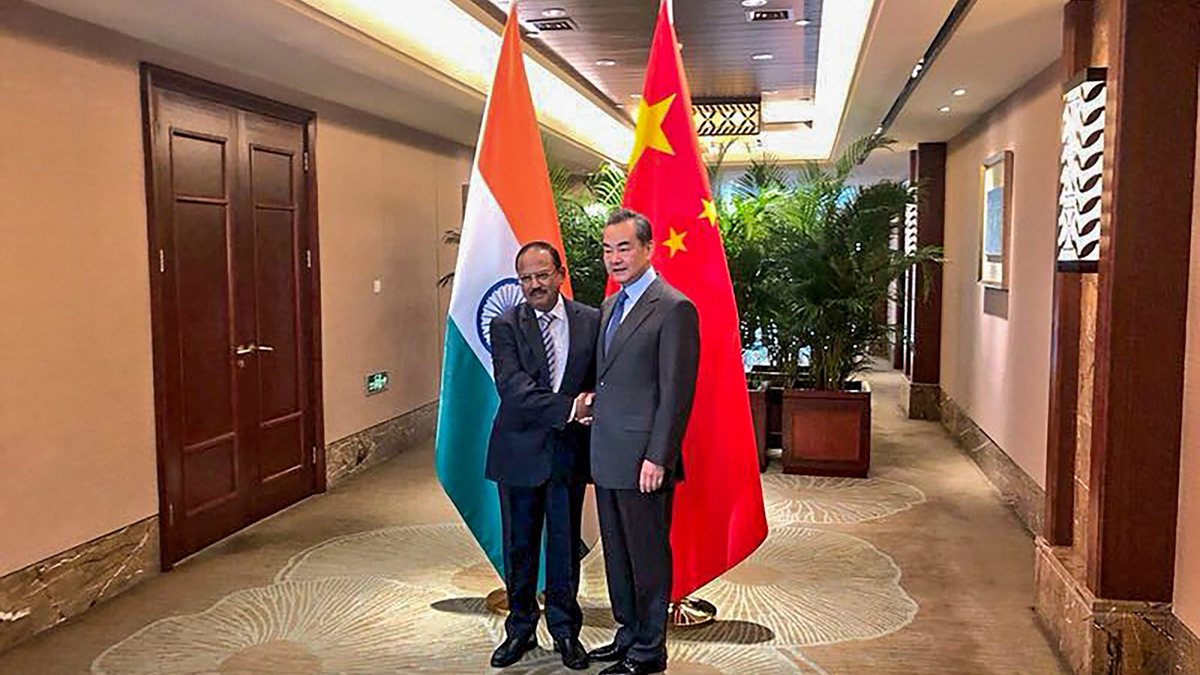
    The Indian and Chinese Special Representatives, National Security Advisor Ajit Doval and State Councillor and Foreign Minister Wang Yi, had the 21st round of talks ostensibly to discuss the “Border Issue” on November 24 at the picturesque town of Dujiangyan in Sichuan province. Though this was the first appearance of Wang Yi at these talks, there is now a monotonous regularity in this and no resolution of the vexatious border issue seems to be in sight, let alone be discussed.  Since the border issue now seems very intractable, the two representatives have broadened the scope of the talks to discuss other bilateral issues. Nevertheless, while it is clearly understood that the resolution of the border territories dispute may never be on the horizon, but at least agreeing on where the interim lines of control lie the military vigil on the borders will ease off into a less tense standstill. Sadly for us, there was a time when with a little bit of give and take this contentious and now protracted problem seemed solvable.

    In 1960 Chinese Premier Zhou Enlai suggested something akin to a status quo as a permanent solution. This was repeated in 1982 by Chairman Deng Xiaoping to India’s Ambassador in Beijing, G Parthasarathy. Once again it was offered during Rajiv Gandhi’s tenure as Prime Minister to the then Indian Ambassador AP Venkateshwaran and senior advisor to then Chinese PM Zhao Ziyang. But when Rajiv Gandhi visited Beijing in 1988, both countries decided to keep a permanent solution aside and focus on immediate “doable’s”. All along India felt that the internal political situation will not allow the government of the day the room to go with it. It hasn’t changed much, with the historical issues even less understood and inflamed public opinions prevailing on both sides.

    What is commonly referred to as the “Border Dispute” between India and China has now manifested itself into two distinct disputes. The first is the dispute over two large and separated tracts of territories. One is Aksai Chin, a virtually uninhabited high altitude desert expanse of about 37000 square kilometers. The other is what is now the Indian state of Arunachal Pradesh, a diversely populated hill region with a population of around 1.4 million people spread out over 84,000 square kilometers, which China claims as Lower Tibet.

    Aksai Chin lies between the state of Jammu and Kashmir, and China’s Xinjiang province, both regions that are also riven by separatist conflicts. Arunachal Pradesh borders Tibet, which also has a separation conflict with China. India claims that these borders were agreed upon by British India, and independent or semi-independent authorities, in Xinjiang and Tibet in the early days of the last century. China doesn’t agree with these. Both countries agree that these are legacies of history and cannot be solved in the immediate or near term and best be left to the future to resolve.

    But what causes the frequent frictions between the two is that they do not have agreed Lines of Actual Control (LAC) to separate the jurisdictions under the control of the armies of the two countries. The perceptions of the LAC differ at many places. At some places it might be by just a few meters, and elsewhere by tens of kilometers.

    To minimize the inflammability due to actively patrolling of security personnel of both sides, the two countries have a Border Defence Cooperation Agreement that sets out norms of behavior for both sides. The important things being that nothing of a permanent nature will be built on these disputed areas, and that the patrols take all precautions not to confront each other. Which simply means, if they come face to face they will both withdraw. The corollary to this is that the patrols will not tail each other. The agreement also requires local commanders to frequently meet and exchange views and sort out local differences across the table.

    Despite the adverse geographical and climatic conditions, and the overarching tensions between Asia’s biggest economies, the troops on the ground are able to show surprising bonhomie and friendliness. But periodically, either due to misunderstanding or local level posturing by either side, there are frictions that threaten to erupt into a conflict with use of arms. But it has not happened since 1967 when the two armies fought a fierce localized battle in the Sikkim sector, quite close to where the recent Dokolam dispute took place.

    The two countries have been engaged in frequent talks at various levels since 1981. After Prime Minister Rajiv Gandhi’s visit to Beijing in 1988, both countries had agreed to set up a task force to find a solution to the “border issue”. Chairman Deng welcoming his “ young friend” suggested they “forget the past” as they stood in the centre of the cavernous Great Hall of the People and the handshake lasted three long minutes.

    For three long decades since then the two countries have been meeting to discuss the border issue, but so far we have seen unwillingness by both sides to forget the past. Since 2003 these talks were elevated to a high level political dialogue between Special Representatives, in India’s case the National Security Advisor and in China’s case an official at the level of State Councilor. The first meeting at this level took place between Indian NSA Brajesh Mishra and Chinese State Councilor Dai Bing Guo. We are now having the 20thround of this dialog between India’s National Security Advisor, Ajit Doval, and China’s State Councilor, Yang Jeichi.

    A former Indian NSA once told me that the talks are high in style and hospitality, with the Indian side trying hard to match the Chinese, but there has been little traction. This is because of the versions of the claims that have been internalized and now form public opinion in both countries. Both countries are gripped by strong nationalism bordering on jingoism, which makes give and take, so vital in the resolution of such vexatious disputes, extremely difficult.

    But the Border Management and Cooperation Agreement is a major outcome of these talks and that has by and large worked. The next logical step of these talks should be to agree on an LAC. But unfortunately even that is now being weighed down by aggressive nationalism driven by social media that equates “giving up” with national loss of face. This is something increasingly very important to both countries. We will not be seen giving up anything, even our obduracy and historical short sightedness.

    Both countries are now very different then what they were in the last century. Both, India and China, are relatively prosperous and militarily powerful, but not so powerful to take by force what they desire.  The new geopolitics and the new interdependent economics also will not permit a major dislocation in the world order.  But the rise of new nationalisms has also led to a hardening of hearts. Neither now seems capable of giving or taking. So once again when Ajit Doval and Wang Yi met, both sides did not give away anything and we will have to wait for another time for that.


    Mohan Guruswamy is a Distinguished Fellow and Trustee of TPF. This article was earlier published in ‘The Citizen’.


  • The Economics Nobel: From the Esoteric to the Practical

    The Economics Nobel: From the Esoteric to the Practical

    Mohan Guruswamy                                                                                   October 15, 2018 : Commentary

    The Sveriges Riksbank Prize in Economic Sciences in Memory of Alfred Nobel was instituted in 1968 by the Swedish central bank, and laureates are selected by the Royal Swedish Academy of Sciences. It is commonly called the Nobel Prize in Economics, though the Nobel Endowment has nothing to do with it. It has mostly tended to go to scholars doing esoteric research in economics. Much of economic research has tended to be quite remote from influencing public policy. My professor at the Kennedy School of Government, Harvard University, Professor Thomas Schelling who taught me “game theory” used in nuclear strategy, and only sometimes in economics, got an Economics Nobel for just that in 2005. Now the trend from the esoteric and philosophical is moving towards the practical.

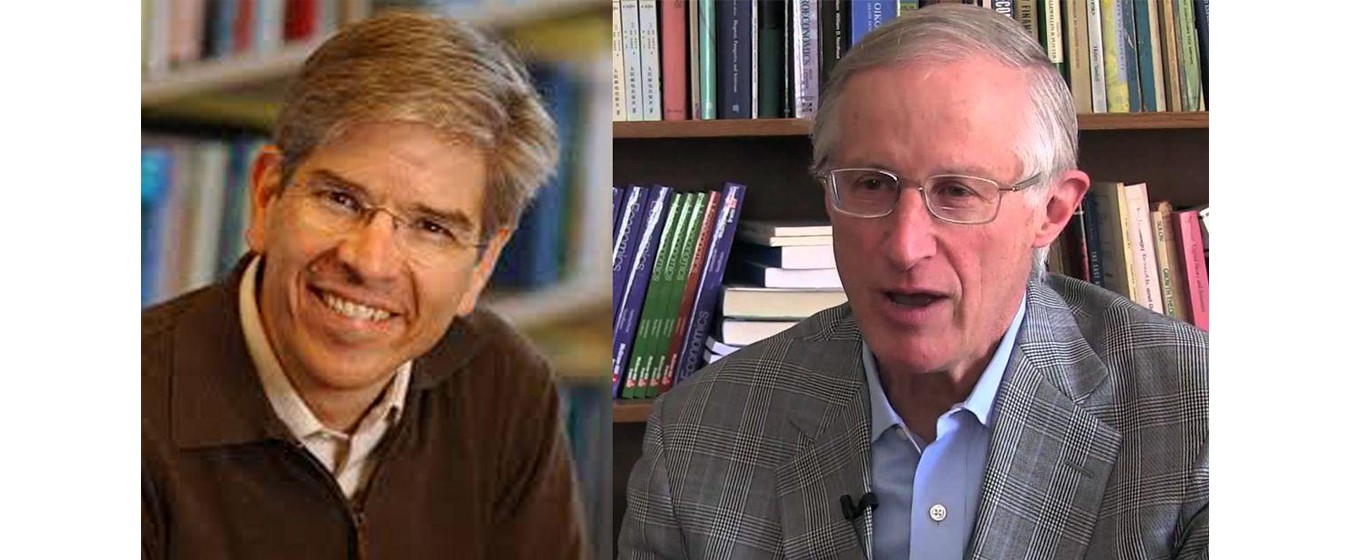
    This year two American economists, William Nordhaus and Paul Romer, were awarded the Nobel Prize in Economics for their work in two diverse areas, but current concerns. Nordhaus won it for his warning policymakers during the first stirrings of concern about climate change in the 1970s that their economic models were not properly taking account of the impact of global warming and he is seen as one of the pioneers of environmental economics.

    The co-winner – Romer – is seen as the prime mover behind the endogenous growth theory, “the notion that countries can improve their underlying performance if they concentrate on supply-side measures such as research and development, innovation and skills”. This simply means developing nations that want to get out of their rut, like India, must invest in quality education and R&D. Instead our bureaucratic centralism has created a huge system whose outcomes are so low grade, that mediocrity passes off as brilliance. The fact that Indian students and scholars have to go abroad to fully harness their brilliance and gain recognition tells us what has gone wrong with our system.

    Paul Romer has argued, “Technological change can be accelerated by the targeted use of state interventions in areas such as R&D tax credits and patent regulation”. He called it “post colonial endogenous growth theory”. This famously inspired the an Oxford don, the economist Derek Morris, to write an odd to it. Its the history of economic theory in verse and is very witty and clever. The relevant verse for us is:

    “Only inventions seemed to have any effect
    And from where these arose everyone was quite bereft
    So people then began to get rather weary
    Of the once almighty neoclassical growth theory

    A new explanation arrived,
    over which there was quite a fuss
    Technical progress – innovation, ideas – were “endogenous”

    Invention was crucial but needed embodiment
    In people – in skills – and in capital investment
    So these were important to make growth shine
    Although others had known this for a very long time.”

    But how does one nurture invention without a national mood? For it is now well understood that how we do as a nation depends a great deal on how we perceive ourselves? This psychological factor is now understood to be critical to sustained economic growth.

    Classical economics was linked closely with psychology. Adam Smith’s other great work was “The Theory of Moral Sentiments” and dealt with the psychological principles of individual behavior. Smith emphasized the concept of empathy, the capacity to recognize feelings that are being experienced by another being. Jeremy Bentham described “utilitarianism as the greatest happiness of the greatest number that is the measure of right and wrong” and is considered by many as the father of the welfare state. Classical economic theory, also known as laissez faire, claims that leaving individuals to make free choices in a free market results in the best allocation of resources. Since individuals made choices the emphasis was on understanding human beings and their behavior as individual and as groups.

    Neo-classical economists based their thinking on the assumptions that people have rational preferences; individuals maximize utility and firm’s profits; and people act independently. Consequently neo-classical economists distanced themselves from psychology and sought explanations for economic analysis heavily based on the concept of rational expectations. For most of the last century economics became increasingly mathematical. Much of economic theory came to be presented as mathematical models, mostly calculus, to clarify assumptions and implications.

    It is not as if the switch was complete. Many great economists like Vilfredo Pareto, John Maynard Keynes and Joseph Schumpeter continued to base their analysis on psychological explanations.

    In more recent times this school of economics has been given greater importance and is reflected in the award of Nobel Prizes to behavioral economists like Daniel Kahneman of Princeton University and last year to Richard Thaler. Making the announcement Nobel Committee said: “His empirical findings and theoretical insights have been instrumental in creating the new and rapidly expanding field of behavioral economics, which has had a profound impact on many areas of economic research and policy.”

    There is a delicious irony in the award of the Nobel to Richard H. Thaler. He works in the University of Chicago, the nursery of classical economics, where he is the Ralph and Dorothy Keller Distinguished Service Professor of Behavioral Science and Economics at the Booth School of Business. Incidentally Raghuram Rajan who is also an economics professor is a colleague, was reported to also being considered for the Nobel for his “contributions illuminating the dimensions of decisions in corporate finance”.

    The dominance of the classical school on the world of economics can be gauged by the fact that since the relatively recent inception of the Nobel Prize in Economics in 1968, the Chicago economics department faculty have won the Nobel as many as twelve times, twice as many as MIT, which has six Nobel laureates. Seen from Harvard University’s ivory tower even MIT is considered as leaning more towards classical economic theory. Recent Harvard winners for economics such as Oliver Hart (2016), Alvin Roth (2012) and Eric Maskin (2007) were rewarded for their work based on mathematical empiricism than behavioral speculation. Amartya Sen (1998) was one of the few who broke this mold and won it in recognition of his work and abiding interest in welfare economics.

    Every politician worth his salt knows that national mood and perceptions are decisive in determining national outcomes. And often people do not always make rational choices, something that marketers of diverse products such as automobiles and soap, and political dreams know. But economists took their time recognizing this, and the Nobel Committee even longer. Better late than never.


    Mohan Guruswamy is a well known political and economics commentator. He is a Trustee of TPF.

  • The Centrality of MADness in Nuclear Doctrine

    The Centrality of MADness in Nuclear Doctrine

    Mohan Guruswamy August 24, 2018

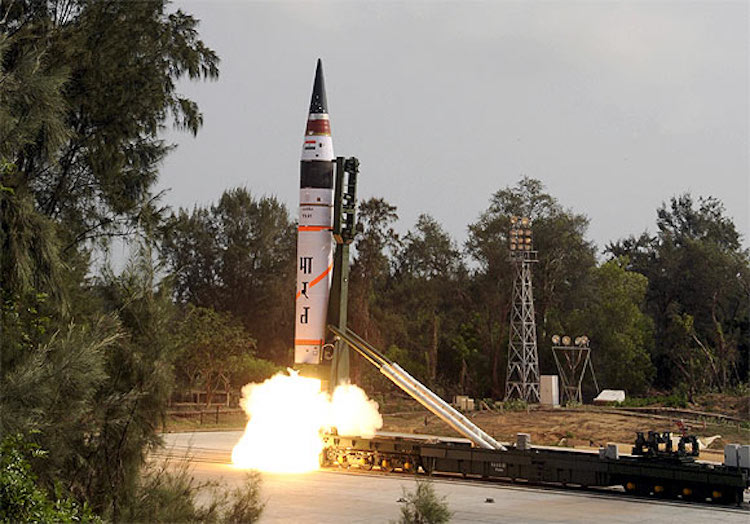
    It has been reported that the defence acquisitions council (DAC), chaired by defence minister, Nirmala Sitharaman, has approved the “acceptance of necessity (AoN) for the acquisition of the National Advanced Surface to Air Missile System-II (NASAMS-II) worth around $1 billion from the US. However, in 2002 the USA had vetoed India’s bid to acquire the Israeli Arrow-2 missile interceptor system. Consequently, DRDO began developing the Prithvi Air Defense (PAD), which will provide long-range high-altitude ballistic missile interception during an incoming missile’s midcourse phase as well as interception during the terminal phase. At various times these systems had different monikers like ballistic missile defence (BMD) or anti-ballistic missile system (ABM).

    The people who decide on such things reside in New Delhi and understandably their safety gets priority. So it is the NCR that will get the expensive and exaggerated sense of protection such systems tend to generate. But no air defence system can be deemed impenetrable. The Americans and Russians realized much before the Cold War ended that the costs involved will be prohibitive, even for them and made a virtue of necessity. But the idea was seductive. Even as the Cold War was waning, Ronald Reagan toyed with the idea of a strategic defence initiative (SDI), which envisaged an ABM systems stationed deep in space that will launch on picking up a launch. It seemed far-fetched and futuristic that commentators took to calling it Star Wars.

    This thought has been high on the minds of our security establishment ever since it learned that on May 26, 1990 China tested a Pakistani derivative of its CHIC-4 design at the Lop Nor test site, with a yield in the 10 to 12 kiloton (kt) range. That yield estimate accords with recorded yields of Pakistan’s 1998 nuclear tests, which are somewhere between 5 and 12 kt. Refinements in boosting and efficient plutonium use are the normal next steps in weapon improvement, along with miniaturization of the warheads to fit into smaller and lighter reentry vehicles. Pakistan has done all of these to arm its cruise and ballistic missiles with lighter payloads. Once India deploys the PAD system around its capital, we can be assured that Pakistan too will deploy an ABM around Islamabad. We can also rest assured that China will assist it in “developing” such a capability.

    The International Panel on Fissile Materials has estimated that Pakistan has an inventory of approximately 3,100 kilograms (kg) of highly enriched uranium (HEU) and roughly 170kg of weapon-grade plutonium This is enough to potentially produce 200 to 300 warheads. Pakistan has also frequently tested the ranges of about a dozen Chinese derived missiles from the Hatf (50 km) to Shaheen III (2750 km). There is little doubt that Pakistan has planned for all eventualities, from local battlefield use and to feed its desire to have a credible “Islamic” bomb capability, and for that its reach must include Tel Aviv.

    Long after the Cold War has ended, nuclear deterrence is still based on Mutually Assured Destruction (MAD). This simply means that any sneak decapitating or debilitating first strike will be responded with a massive retaliation, the fear of which should instill good sense. That after almost three quarters of a century when the nuclear genie was uncorked from the bottle, we have not had a nuclear war or weapon use is living proof of its robust common sense. So much so, that when developments in ABM or BMD capability reached fruition, the two Cold War protagonists, the USA and now defunct USSR, had a treaty restricting these systems. Ironically even well before they had a treaty on reducing the number of nuclear bombs.

    The MAD doctrine was made painfully credible, by the development of nuclear arsenal survivability by widespread deployment (at the peak of the Cold War America and Russia each had over 30,000 nuclear bombs.) This credibility got its biggest boost when submarines, initially diesel and then nuclear powered, capable of firing nuclear armed missiles (SSBN) from the impenetrable dark recesses of the oceans were introduced. The first of these submarines was the Russian Zulu Class submarine capable of firing from underwater an early Scud missile (1955). The Americans were the first to deploy a long endurance, deep diving and very silent nuclear powered submarine – George Washington – in 1959. Since then MAD was ensured by the highly accurate missiles in the bellies of such submarines operated by the US, Russian, British, French, Chinese and India navies. Pakistan too is now reportedly testing nuclear capable missiles fired from underwater on modified diesel submarines.

    We need to learn from how nuclear weapons strategies evolved during the Cold War, instead of mimicking USA and Soviet follies. The notion of deterrence between the USA and USSR was based on no escape from MAD. The march of the Cold War follies peaked with the two protagonists together deploying almost 70,000 warheads each aimed at a specific target. At the height of this madness almost every open ground was targeted as possible tank marshaling or military logistics areas. The last thing we hence want is getting into a numbers game with Pakistan or China. Credibility depends on reducing the uncertainty of use from the opposite perspective. The Indian PAD missile defence system only increases them. India and Pakistan have ensured a modicum of confidence by not mating the warheads and delivery systems, giving a vital period to rollback the unleashing of Armageddon. But now both countries will have to evolve a launch on warning doctrine.

    Clearly, the two South Asian nuclear powers too have a local version of MAD in place. The Pakistani doctrine “commits itself” to use battlefield nuclear weapons if an Indian conventional assault threatens its essential nationhood and hence it has steadfastly refused to accept the notion of “no first use” (NFU). The Indian doctrine emphasizes NFU but also makes it explicit that any Pakistani use of nuclear weapons on India or its forces will be responded with a massive retaliation. India may have less nuclear weapons, not because it cannot make more, but what it has is enough to ensure the complete annihilation of Pakistan, which is geographically too a much smaller country. China has moved on from NFU to a doctrine now called “credible minimum deterrence”. But how much is credible?

    Mercifully, nuclear doctrines these days are couched in such abstractions as MAD requires a degree of predictability, ironically ensured by opacity. The USA’s “single integrated operational plan” (SIOP) began with the ominous words that its objective, after the outbreak of a general war with the then Soviet Union to turn it into a “smoking radiating ruin.” It was written by its the certifiable USAF chief, Gen. Curtis Lemay Jr., based on whom the character played by George C. Scott in the Stanley Kubrick classic “Dr. Strangelove” was created. But people like Lemay who gave MAD credibility. Since no one of a sane frame of mind would even contemplate the enormity of the disaster of a nuclear war, uncertainty of use was a key element of MAD. It has been written that Soviet President Leonid Brezhnev used to have sleepless nights thinking of a man like Richard Nixon with his finger on the button.

    India’s nuclear strategy documents in detail as to who the nuclear command would devolve to in the unlikely event of a decapitating first strike on New Delhi with the aim of eliminating its national leadership. It is said that chain of nuclear command keeps descending downwards to a Major General, a modern day Raja Parikshit so to say who will perform the final obsequies. At last count India had over 600 military officers at that level. Decapitating all of them is a near statistical and physical impossibility. It will take tens of thousands to precision nuclear weapons to annihilate India’s military chain of command, and it can be speculated whether even America or Russia can achieve that, let alone Pakistan?

    Ironically, the evocative acronym MAD doctrine is eminently sensible. Good sense should tell us that enough of this madness and leave MAD alone.

    This Op-Ed was originally published in Asian Age.

    Mohan Guruswamy is a Trustee of TPF.

  • Governance

    Governance

    My dog Charlie is long gone. But Charlie, who was a brown “Great indian Mongrel”, was wise in the ways of the world. He taught me a lesson in public policy I will never forget.

    Corruption is India’s favorite conversation topic. We love discussing it and bemoaning its all pervasiveness. We are experts at it and have all experienced it at in some form or the other and at all levels. Yet with so much collective experience it is a difficult topic to write about. Like our gods it takes so many myriad forms. It defies a simple definition. But we all know what it is. What Justice Potter Stewart of the US| Supreme Court said in the context of obscenity – “I know it when I see it”- is equally applicable to corruption. It is the most obscene of obscenities but is a fairly common one.

    Economists prefer to bandy about a different term when referring to corruption. They call it “economic rent”. According to the IMF “it is the extra amount paid (over what would have been paid for the best alternative use) to somebody or for something useful whose supply is limited either by nature or through human ingenuity.” Quite clearly this definition excludes the moral dimension. But then our problems get even more compounded when we realize that the moral dimension is very elastic and varies.

    Take for instance the case of former Prime Minister Manmohan Singh. As far as the Rajya Sabha is concerned, he is a tenant of Mrs Hiteshwar Saikia and is a resident of Guwahati in Assam. But we know that is not true and that he has been ordinarily resident in New Delhi from ever since we came to know him. LK Advani, has been just as peripatetic. At one time he declared he was a resident of Ujjain in MP for the sake of a Rajya Sabha seat. Now he is a resident of Ahmedabad. Arun Jaitley has similarly been vagrant. He is a Delhiwala, but went to Amritsar where he announced he was buying a house to reloacte in 2014. The Amritsaris didnt want teh likes of him, so now he is a resident of Ahmedabad. But if you and I were as cavalier as this in declaring our place of residence, say for the purpose of a passport, we could end up in prison.

    Economic rent takes other forms, which tax the common good much more. High import duties, for instance, meant to restrain imports actually serve to increase prices and profits for domestic manufacturers. The Hindustan Ambassador, that immortal symbol of a mindless and rapacious bureaucracy, actually gave its manufacturer and employees as much joy as it gave sorrow to those who owned or drove these cars. Did you notice how all car tyres or batteries cost about the same? Or how all similar sized air-conditioners and refrigerators cost about the same? Or till recently how all air-tickets cost the same and an arm and a leg at the same time? Adam Smith explained it best by noting that “People of the same trade seldom meet together, even for merriment and diversion, but the conversation ends in a conspiracy against the public.”

    These conspiracies cannot succeed without the active connivance of the politicians and bureaucrats. We know what they mostly do, but thanks to the exertions of Aniruddha Bahal, purporting to represent an industry association, we have proof for the first time of this. Our MP’s have much to thank Dr. Manmohan Singh for conjuring up MPLADs (MP’s local area development scheme), but the then Finance Minister probably never contemplated the likes of the venerable Sakshi Maharaj who turned the scheme into one of personal development. But though both the two stings involve MP’s scams evidenced are of different natures. The money for questions business is a common place as a traffic cop collecting money from errant drivers. The payment itself is a punishment for the truancy and it does not seem to matter very much where the money paid ends up, We learn our lessons from it. But when the cops collect for registering an FIR or for no rhyme of reason then it belongs to a different class and we are truly outraged.

    Those of us in Delhi who built houses or made alterations without the sanction of the authorities paid for the deviations knowing it was contrary to the law. But it was commonplace and that seemed to make it okay. But when the High Court has ordered them demolished we were outraged. What if the same High Court ordered that MP’s making false statements about their place of residence must quit? Would we be outraged? We may be happy but not outraged. This is clearly a subject that requires far greater deliberation and discussion and there is much Parliament can do by way of introspection. There are many who are quite expert on the subject. Chandan Mitra, a former  BJP MP, whose concern for probity is as well known as his Chattarpur farmhouse, has even written a book on the subject of corruption.

    Opinion polls show that there are some professions we believe to be almost entirely corrupt. Politicians and policemen top this list with 99% of those polled believing them to be crooks. Much of the corruption we witness in everyday life is a result of their unnecessary exertions. In the past few months I have had opportunity every morning to contemplate a vacant plot of land in the neighborhood I live in. The plot is bounded by roads on all four sides and naturally people walking take a short cut across it. Some well meaning soul has taken upon himself to put an end to this practice. First a sign came up demanding that people not do the most rational thing, that is take a short cut. The sign was ignored and my dog Charlie has been using the signpost to leave his signature. Then a small length of barbed wire pegged between two poles appeared astride the path at both ends. The people who use the path still find it convenient to go around the poles and take the not so short shortcut. Good old Charlie just slips under the wire and seems quite happy that he has two more poles to leave his daily markers.

    The nature of most of our lawmaking is just like this. They are irrational and people will respond rationally to them, by circumventing them if not ignoring them. Just as Dr.Manmohan Singh has done to the requirement that MP’s to the upper house be ordinarily resident in the state. Now the only way that plot can be prevented from being used as a short cut is to either build on it. If the empty plot is just walled up, the walls will encourage another use, which will be odious to boot. Which brings me to another aspect. We have laws that prohibit pissing in public and on walls, private and public. Pissing is meant to be a private business. But where are people to pee when you just don’t have enough urinals? So a law against pissing in public makes sense only when you have enough public urinals.

    Thoughtless laws corrode a state thoroughly. This is why states built around tight regulation and appeals to a higher human idealism fail. The crime wave that engulfed the former USSR was really due to the old nomenklatura doing the only thing they were adept at. It is not that other social and political systems do not germinate corruption. Corruption is all-pervasive and a world wide phenomenon. It comes built in with nature. Animals steal food from each other just as humans extort from others. But human beings live in organised societies and societies are nothing but systems based on laws. For laws to work it must be clear that if caught, trial will be swift and if found guilty retribution will be commensurate.

    That’s where we have serious problems. Who makes the law? Politicians. Who enforces the laws? The police. Both are believed to be overwhelmingly corrupt.