Author: Deepak Sinha

  • Between Two Rocks and a Very Hard Place

    Between Two Rocks and a Very Hard Place

    Leave aside political affiliations and the flag-waving, slogan shouting, adrenaline pumped personas we adopt while watching cricket and ask ourselves a simple question. To what extent are we invested in our country, and what are we willing to sacrifice for its well-being and progress?

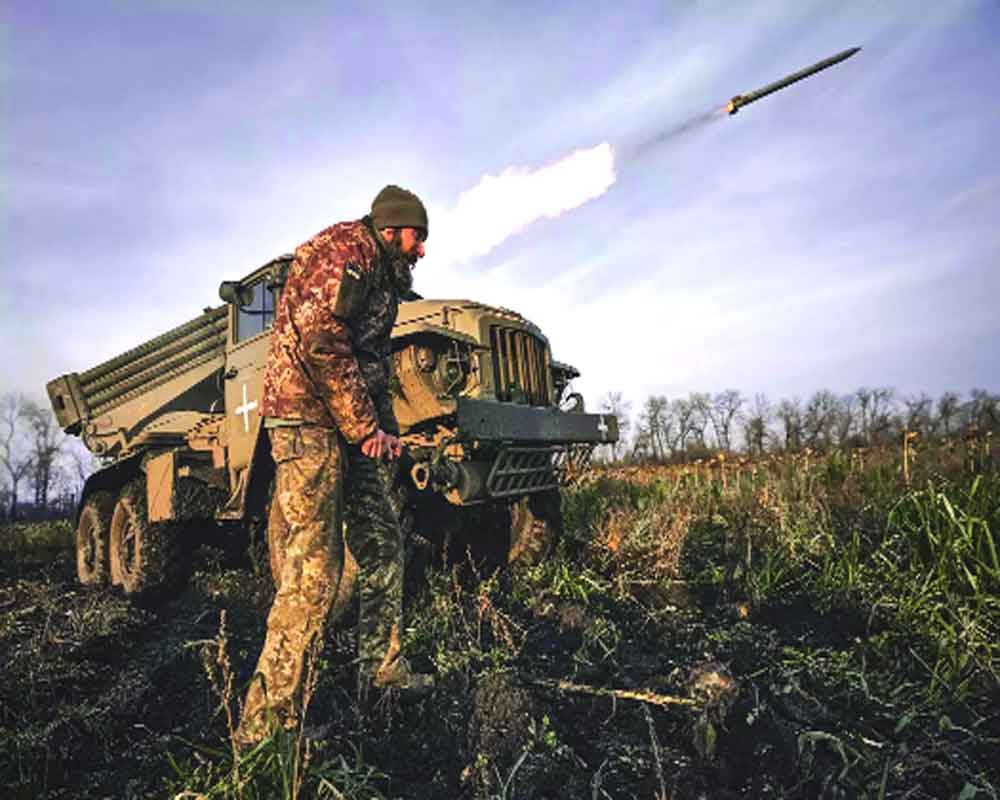
    Ukraine, for example, has a population of about 43 million. More than a fourth of this, mainly women, children and the aged, have been either internally or externally displaced by the ongoing war. By most estimates, over a hundred and fifty thousand are dead or wounded, which includes over 30,000 civilians, and counting. The country’s infrastructure is in ruins and despite this, their leadership, wholly supported by the people, fights on resolutely, with no quarter given or asked for. Determined to fight till they succeed in driving the Russians out of their territory, regardless of the time or toll it takes.

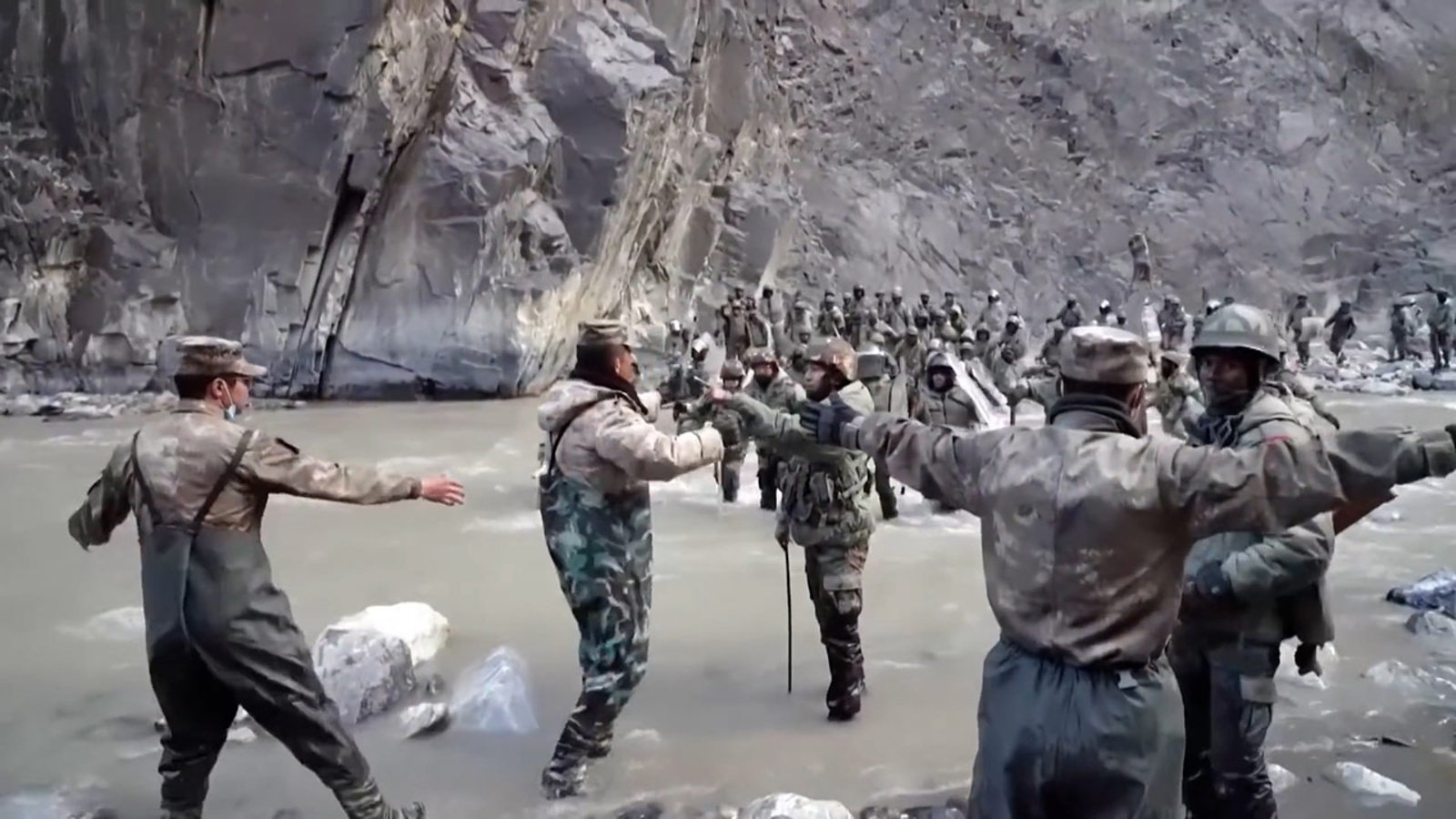
    In sharp contrast, we have lost over a 1000 square kilometres, of what we claim as our sovereign territory in Ladakh, without even putting up a semblance of a fight. What is even more shocking is that our government, for whatever reasons, has yet to publicly acknowledge this loss. Instead, we have had to face the ignominy of the External Affairs Minister, publicly stating that China is far too powerful for us to confront. What does that say about us?

    [powerkit_button size=”lg” style=”info” block=”true” url=”https://timesofindia.indiatimes.com/blogs/para-phrase/between-two-rocks-and-a-very-hard-place/” target=”_blank” nofollow=”false”]
    Read More
    [/powerkit_button]

    Featured Image: Council of Foreign Relations

  • The Fallacy of Handling China with Kid Gloves

    The Fallacy of Handling China with Kid Gloves

    It is apparent that the Modi Government has shown great reluctance to enhance defence expenditure, and instead has been looking for ways and means to curtail spending, as any government should. This is reflected in the manner it has gone about slashing manpower and rehashing recruitment and manpower policies.

    By introducing, what the vast majority consider, a flawed Agnipath Scheme, whose efficacy or otherwise only time will tell. In addition, it has also undertaken a concerted drive towards indigenization of defence procurement. The Russo-Ukrainian conflict has clearly demonstrated rightsizing, reorganisation and reorientation of our military is unavoidable.

    The proposed reduction in strength of the Rashtriya Rifles is indeed a welcome step that requires to be hastened. In fact, following abrogation of Article 370 and reorganisation of Jammu and Kashmir, while many may disagree, the logical follow-up should have been de-notification of AFSPA and withdrawal of the Army from the hinterland.

    [powerkit_button size=”lg” style=”info” block=”true” url=”http://www.indiandefencereview.com/news/the-fallacy-of-handling-china-with-kid-gloves/” target=”_blank” nofollow=”false”]
    Read More
    [/powerkit_button]

  • Don’t Put Troops in Harm’s Way

    Don’t Put Troops in Harm’s Way

    Every military campaign is fraught with dangers. The Russian army finds it in a mess it cannot jiggle out of. We should think twice before any adventurism in POK.

    Nine months on into the conflict in Ukraine, with its reputation and capabilities in tatters, the Russian Armed Forces are just hanging on by the skin of their teeth, hoping that the winter will allow them a badly needed reprieve to reorganise. One cannot help but wonder as to how they found themselves in such dire circumstances, despite a decade of reforms and modernisation.

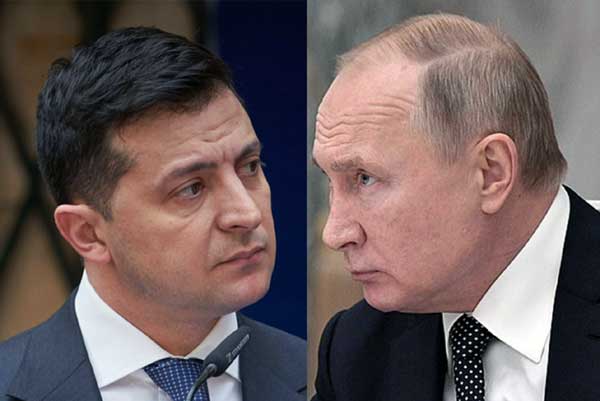
    Clearly, much of the responsibility for the utter disaster that has ensued and the difficult predicament Russia finds itself in, must rest with Putin. However, it is utterly inconceivable that he acted without the advice, support and acquiescence of the military hierarchy. Though many of the missteps may be attributable to faulty intelligence assessments, the responsibility for the military’s non-performance rests squarely on the senior hierarchy of the Russian Armed Forces. Their obvious incompetence, lack of leadership skills and professional acumen, and the corruption that has been laid bare are without parallel. Yet, they are the lucky ones, given that Stalin executed Generals for much less.

    It is standard practice in all countries that selection of the military’s top leadership is overseen and approved at the highest political level, as it should be. Where autocracies and totalitarian regimes differ from democracies is in the necessity for them to give primacy to ideology or loyalty to the Supreme Leader even at the cost of professionalism. This lack is bound to percolate to lower levels over time and while it ensures the leadership remains unchallenged in the normal course of events, its consequences in a conflict can be devastating as has been the case with the Russians.

    [powerkit_button size=”lg” style=”info” block=”true” url=”https://www.dailypioneer.com/2022/columnists/don—t-put-troops-in-harm—s-way.html” target=”_blank” nofollow=”false”]
    Read More
    [/powerkit_button]

  • Putin’s Folly: The Long Road to Self-Destruction

    Putin’s Folly: The Long Road to Self-Destruction

    Ever since President Putin ordered the occupation of Ukraine in a ‘Special Military Operation’ this February, he has been at the receiving end of a stream of bad news. Neither were the Russian Armed Forces welcomed with open arms, as they had expected, nor were they able to capture Kiev and force a regime change, as Putin had wanted. In the process, both their leadership and rank and file displayed spectacular incompetence and irretrievably destroyed the reputation of what was till then seen as one of the strongest militaries in the world.

    However, nothing could have truly prepared him for the nightmarish turn of events this September. In a brilliant display of operational art, the Ukrainian defence forces launched a counter offensive in the Kharkiv region, catching the Russian military leadership completely by surprise. Having earlier deceived them into reinforcing the Kherson sector by denuding forces deployed in the Kharkiv sector.

    The ensuing rout, it clearly was no organised retreat, resulted in prisoners being taken in their thousands, along with all manner of serviceable weapons, ammunition and equipment. This includes hundreds of tanks and armoured personnel carriers which the Ukrainians can use. Ironically, this may well make Russia the largest donor of military equipment to the Ukrainians! In addition, the Ukrainian military have been able to grab back approximately 9000sq kms of occupied territory in the Kharkiv

    [powerkit_button size=”lg” style=”success” block=”true” url=”http://www.indiandefencereview.com/news/putins-folly-the-long-road-to-self-destruction/” target=”_blank” nofollow=”false”]
    Read More
    [/powerkit_button]

  • We are All Style, No Substance!

    We are All Style, No Substance!

    India has become a jejune society which is happy cheering optics rather than being concerned with issues concerning the larger good of all.

    It seems that to the vast majority of us in this country, from every stratum of society, what matters most, is keeping up appearances rather than concentrating on the substantive aspect of the issue. A characteristic that we are willing to defend at any cost, in the courts, indulging in verbal jousting and even letting loose bulldozers.

    Take for instance the issue of developing patriotism within our citizenry. Undoubtedly a noble endeavour, but hardly likely to be fulfilled by launching a one-week concerted drive to convince citizens to fly the national flag on their balconies or in their cars, that is if it is to be anything more than just a marketing gimmick. Yet the Central Government did just that with the “Har Ghar Tiranga” initiative, launched by the Prime Minister, just prior to our Nation’s 75th Independence Day.

    [powerkit_button size=”lg” style=”info” block=”true” url=”https://www.dailypioneer.com/2022/columnists/we-are-all-style–no-substance-.html” target=”_blank” nofollow=”false”]
    Read More
    [/powerkit_button]

  • Implications of Nagaland Tragedy

    Implications of Nagaland Tragedy

    There are grave suspicions that either the information provided was false or that the Mon operation had been compromised at the highest levels

    This columnist’s piece yesterday drew attention to the farcical nature of the investigations conducted by the Nagaland Police into December’s tragic incident in which six coalminers were mistakenly killed by troops from a Special Forces unit in Mon district. Prior to the SIT even beginning its work, Nagaland DGP T John Longkumer and Divisional Commissioner (Kohima) Rovilatuo Mor made serious accusations against the Army unit involved, based purely on hearsay and speculation.

    By their own admission, the accusations were based on information conveyed by villagers who reached the scene four hours later. The same villagers attacked the detachment and killed a soldier and injured the rest while they were still awaiting the police’s arrival. Not only does it put serious doubts on the credibility of their statement, but also casts a deep shadow on the work of the SIT, composed wholly of personnel from the Nagaland Police, on its ability to carry out a free, fair and unbiased investigation.

    [powerkit_button size=”lg” style=”info” block=”true” url=”https://www.dailypioneer.com/2022/columnists/implications-of-nagaland-tragedy.html” target=”_blank” nofollow=”false”]
    Read More
    [/powerkit_button]

  • Nagaland Tragedy and the SIT Farce

    Nagaland Tragedy and the SIT Farce

    Nobody’s saying that there was no conspiracy, in fact, all evidence points to one, but in which the military was clearly the scapegoat.

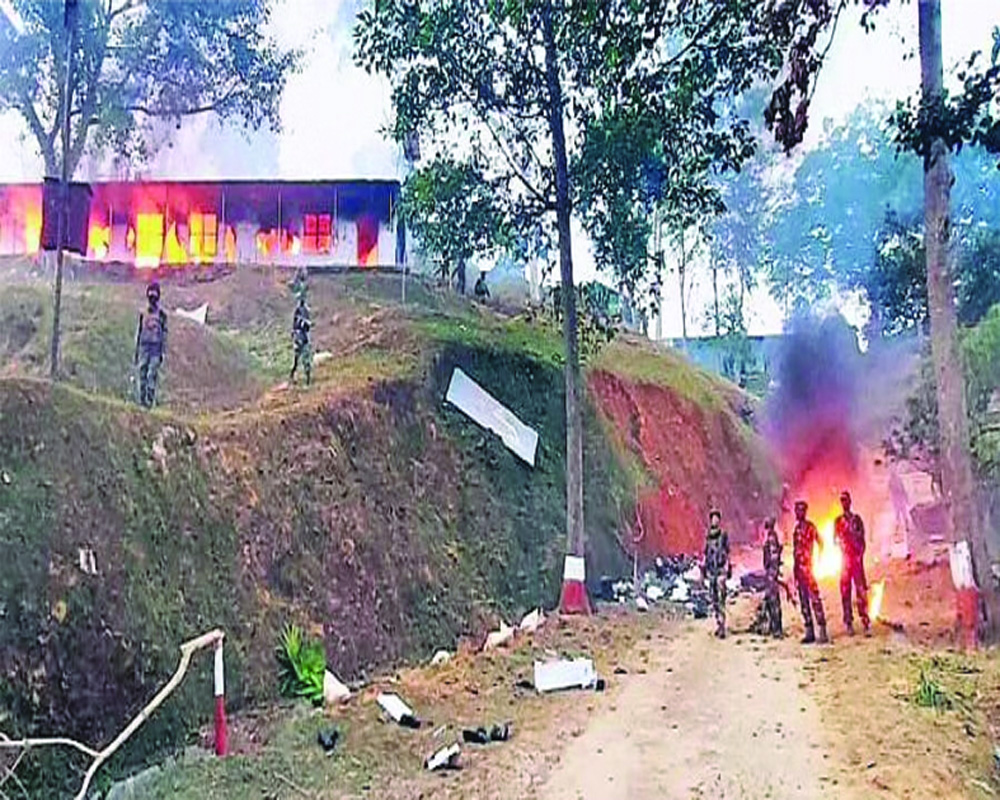
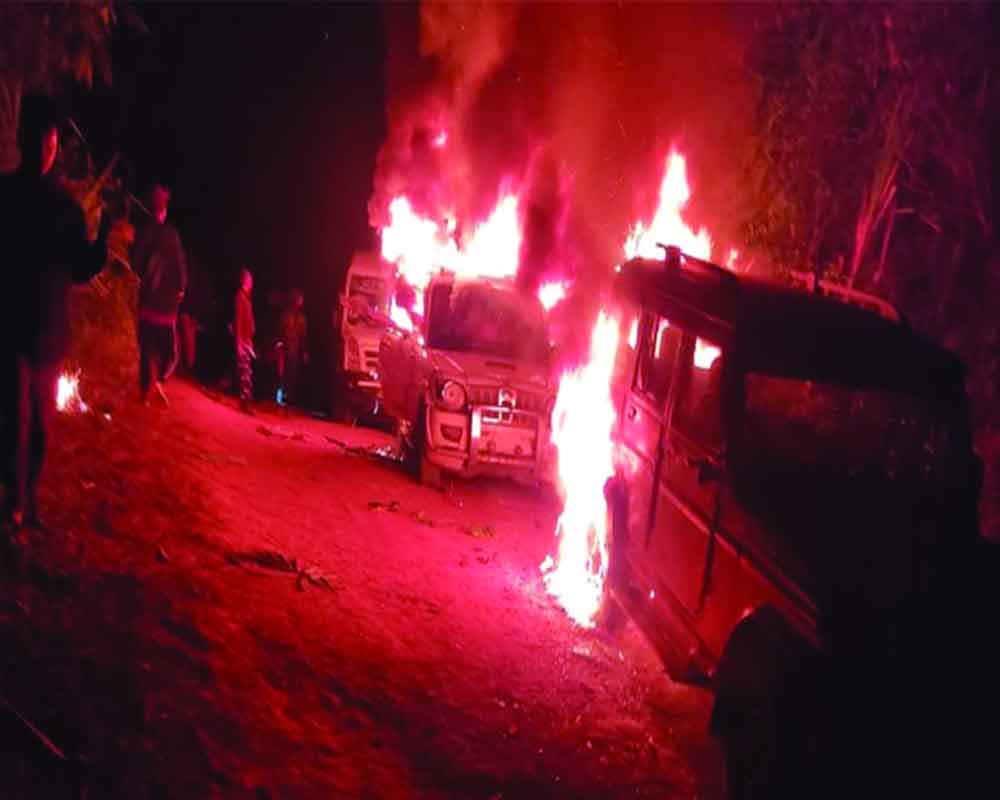
    Last December, this author had written about the tragic incident that occurred in Nagaland’s Mon district earlier that month (‘AFSPA in the Northeast: Is status quo the answer?’). In a tragic case of mistaken identity, six coal miners were killed by troops from a Special Forces unit. Subsequent escalation by local villagers who descended on the site four hours later, allegedly at the behest of the DSP, led to the murder of one soldier with the rest being injured, many of them seriously. They were finally able to disengage with difficulty, having to leave behind four vehicles loaded with gear and ammunition. The unruly mob subsequently set these trucks on fire, which resulted in the ammunition in the burning trucks “cooking off”, or exploding. This probably led to the death of seven others, which the police promptly pinned on the detachment that had left.

    This case is again making headlines as the Nagaland Police has charge-sheeted 30 soldiers under various sections of the IPC, including criminal conspiracy, murder, attempt to murder, voluntarily causing grievous hurt by dangerous weapons and disappearance of evidence. That an operational task assigned by higher headquarters, based on inputs reportedly provided by the Intelligence Bureau, constitutes a criminal conspiracy speaks volumes of the quality of the investigations. But that in no way suggests that there was no conspiracy, in fact, all evidence points to one, but in which the military was clearly the scapegoat.

    [powerkit_button size=”lg” style=”info” block=”true” url=”https://www.dailypioneer.com/2022/columnists/nagaland-tragedy-and-the-sit-farce.html” target=”_blank” nofollow=”false”]
    Read More
    [/powerkit_button]

  • Snatching Defeat from Victory’s Jaws

    Snatching Defeat from Victory’s Jaws

    “The Govt’s ad hoc approach towards Army recruitment has adversely impacted youngsters, and even the military’s operational preparedness”.

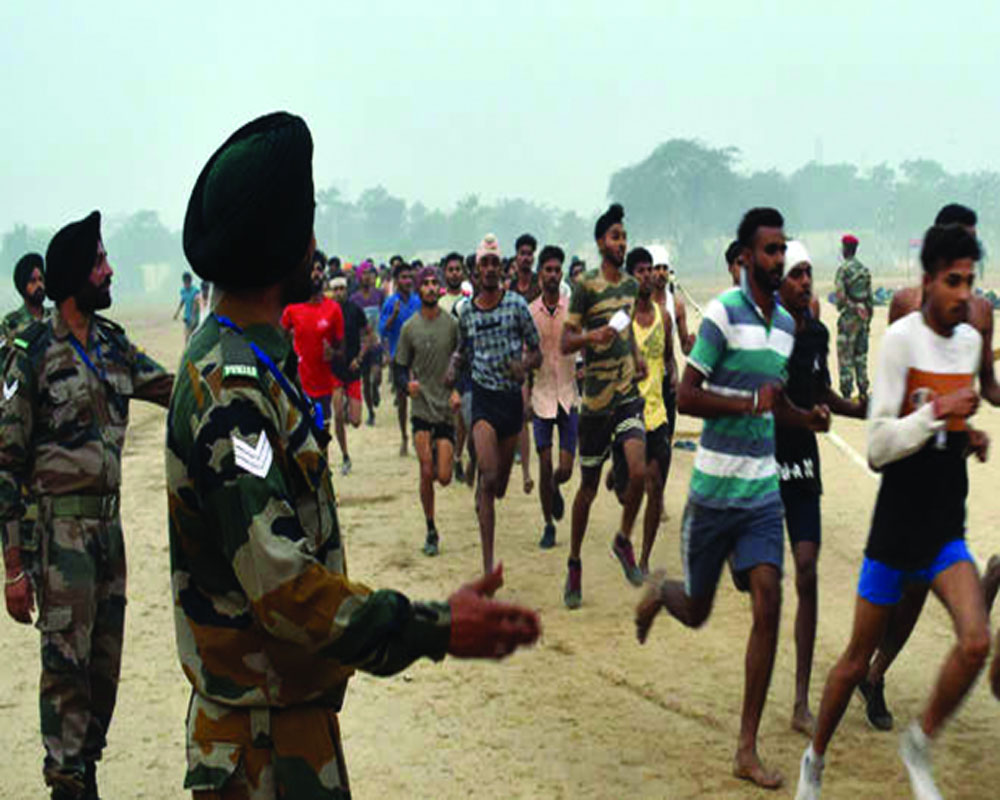
    Recruitment for the Army has been at a standstill over the past two years as the Government contemplates drastic changes in its recruitment pattern and consequently its manpower profile. As recruitment is age-driven, this halt on recruitment has adversely impacted youngsters, mostly from rural areas, who suddenly find themselves stuck in limbo. The tragic suicide by young Pawan of Bhiwani district on becoming overage in the interim says it all.

    But his case is just the tip of an iceberg as over 1 lakh candidates, having cleared the physical tests, are still awaiting conduct of the written exam as time ticks by.

    It has adversely impacted the Army as well. Approximately 50,000 personnel retire annually, which implies that the Army is currently deficient in nearly 10 per cent of its authorised strength. This has impacted operational readiness and will have a knock-on effect on training and manpower management in future. The fact is, it takes 18 months from the time an individual is selected and joins his unit as a trained soldier. Clearly, halting regular recruitment, for whatever reasons, has been an imprudent move that has negatively impacted our national security and should have been avoided at all costs, given the fragile security environment that we confront.

    [powerkit_button size=”lg” style=”info” block=”true” url=”https://www.dailypioneer.com/2022/columnists/snatching-defeat-from-victory—s-jaws.html” target=”_blank” nofollow=”false”]
    Read More
    [/powerkit_button]

  • Chinese Roulette: Which Way Will the Wind Blow?

    Chinese Roulette: Which Way Will the Wind Blow?

    The 2022 campaigning season along the Sino-Indian Line of Actual Control (LAC) opens up in just a matter of months. By all reckoning, the situation is likely to continue remaining extremely volatile, uncertain and tense. While some believe that it may have been this Government’s abrogation of Article 370 and the Home Minister’s statement in Parliament that invited a strong response from the Chinese, the truth is that we are yet to fully comprehend the Chinese leadership’s motivation for damaging, if not jettisoning, over three decades of Confidence Building Measures (CBMs) and growing economic ties, though the latter seems not to have been impacted in the short term, by resorting to unprovoked aggressive action in Eastern Ladakh and elsewhere.

    In addition, we continue to see a steady build-up of forces and infrastructure, as well as cartographic aggression in the form of renaming of villages in Arunachal Pradesh and the passage of the Land Border Law, effective from 1st January 2022. All of this strongly suggests that the situation will get much worse before it gets better, and we are more likely to see increased Chinese assertiveness and determination to settle territorial disputes on its own terms. Moreover, by its actions in Eastern Ladakh, it has already occupied territory up to its Claim Line of 1959. This begs the question, obviously difficult to answer with any degree of certainty, as to whether there is a likelihood of further Chinese escalation leading to a limited conflict?

    Clearly, the Government is also seized of the problem, as is obvious from the Defence Minister’s statement, while inaugurating border infrastructure, that “We faced our adversary in the northern Sector recently with grit and determination. It could not have been done without proper infrastructural development. In today’s uncertain environment, the possibility of any kind of conflict cannot be ruled out.”i It must be emphasised that conflict is not something that we either desire or is in our interest, especially given the Omicron tsunami that appears to be gathering momentum and the adverse impact that the pandemic has already had on our economy.

    It is therefore quite apparent from the Modi Government’s actions that it has been extremely circumspect and cautious in its response following China’s occupation of our territory, by some estimates extending over a 1600 Sq. Km. Clearly, it has no intention of either attempting to push back the PLA from the intrusion sites, or for that matter, occupying territory elsewhere, as a quid pro quo and bargaining chip for later. However, there is a view that occupying Indian claimed territory in Aksai Chin as a quid pro quo is not a bargain but an acknowledgement that Aksai Chin is alien territory. Therefore this Government has attempted to engage China in talks, both at the diplomatic and military level, though with little success to show for its efforts. Given the mismatch in force levels, this level of military and diplomatic engagement is understandable, though Mr. Modi’s unwillingness to personally call out the Chinese for their provocative behaviour may well give, them and the world at large, an impression of an eagerness to crawl, when just asked to bend.

    However, a deeper examination of events does suggest that the Government has not taken Chinese bullying lightly, and has, in fact, responded in an extremely measured manner, militarily. Following the Galwan incident, it has mirrored Chinese troop accretions by deploying additional forces in Eastern Ladakh, along with armour and other supporting elements. Its pro-active occupation of the Kailash Heights, though these troops were subsequently withdrawn as a part of reciprocal action by the PLA in the Pangong Tso Sector, hinted at the possibility of similar, but more offensive actions, being replicated elsewhere. The reorientation of the Army with the earmarking of a second Mountain Strike Corps for offensive operations has substantially added to the Army’s capabilities and would adversely impact the PLA’s force ratio dynamics. Most importantly, the upgrade of communication infrastructure, not just in Ladakh but elsewhere along the LAC as well, has been greatly speeded up and is coming to fruition, thereby significantly enhancing our defensive capabilities.

    To help us understand if China is likely to resort to force in the ongoing stand-off, an examination of historical precedent may give us some vital clues. As Prof M Taylor Pravel of MIT notes, two characteristics have defined China’s use of force. Firstly, “along its continental border, China has employed force in frontier disputes where it has faced militarily powerful opponents (i.e., states that could possibly challenge its otherwise strong claims). Although the local military balance is difficult to measure with precision, China has on average been vastly stronger in the overall military balance…. India in 1962, the Soviet Union in 1969, and Vietnam in the early 1980s. At the same time, China has refrained from employing force against its weaker continental neighbours. Second, China has used force in disputes where the strength of its claims have been weak, especially when it has occupied little or none of the contested territory. In these disputes, China has been sensitive to any further decline in its bargaining power.”ii

    This suggests that even with neighbours that de facto accept Chinese interpretations of its territorial claims, China is still extremely wary of actions that they may undertake to change the existing relative balance of power along with its disturbed periphery, and prefers to use force against them to delay/stop their progress. For example, there is evidence to suggest Nehru’s Forward Policy and the refuge given to the Dalai Lama were a serious cause of concern to the Chinese leadership. This is borne out by declassified United States documents pertaining to the capture of Longju in August 1959, which reveal that “the late August clashes point of a mode of thought which has remained an ingredient in the Chinese leaders’ calculations on the border dispute: ‘When the Indians show a temperament to advance on the ground, we must alter their frame of mind by letting military action take over political caution. Besides, military risk itself is negligible, because we are the stronger side’.”iii A perception within the Chinese leadership that appears to have remained unchanged in the intervening years, and is especially pertinent at the present time, given President Xi Jinping’s penchant for following in the footsteps of late Chairman Mao Zedong.

    In addition, there are some other factors that have a bearing on this issue of force escalation. For one, it is fairly common for autocratic governments to attempt to conjure up external threats to unify the people against a common enemy, and divert their attention from serious domestic challenges that may lead to unrest or hurt their own leadership position. In this context, as Kalpit Mankikar, a Fellow with the Observer Research Foundation who focuses on China points out, prior to the 1962 Conflict Chairman Mao faced serious internal dissension against his leadership and it had more to do with the intra-CCP power struggle. Mao’s Great Leap Forward (GLP) had been criticised, and for the first time, he had to demit office as State President, forced to hand over to his heir apparent Liu Shaoqi, which came as a huge jolt to him.

    President Xi now finds himself in rather similar circumstances as the economy stutters, in no small measure due to his government’s crackdown on multiple Chinese sectors and companies that have been mascots of growth over the years. His emphasis has been on the idea of “common prosperity” or “reasonable adjustment of excessive incomes and encouraging high-income groups and businesses to return more to society”iv, a blatantly populist measure, that was initially very well received by the average Chinese citizen. However, the enforcement of new regulations in this regard, the so-called “Three Red Lines”, has had a devastating impact on real estate companies such as Evergrande, which hold approximately 75% of all retail investments, bringing them to the verge of bankruptcy, and creating internal turmoil, uncertainty and dissent as the average citizen sees his savings completely wiped out. The likelihood of a domino effect on other facets of the economy cannot be wished away and is bound to adversely impact President Xi’s efforts to stay in power after the end 2022, when his term officially ends.

    In these circumstances creating and tackling an external threat along its borders, as the prevailing situation along the LAC is made out to be, will certainly divert attention and may very well pay great dividends. For example, while President Xi would have preferred to undertake actions to integrate Taiwan, he is hampered by the very real likelihood of The United States and its allies coming to the aid of Taiwan. Taking on India at the LAC is a relatively easier option, as interference by the United States and its allies is likely to be restricted to providing moral and material support at best. Furthermore, it could be viewed as a dress-rehearsal that would allow the PLA to gain vital operational experience, something it has been bereft of since the Sino- Vietnam Conflict of 1979, apart from ensuring a protected flank. Moreover, a successful termination of such a campaign would setback Indian aspirations by decades and severely dent Mr. Modi’s reputation and popularity, much as 1962 did in the case of Pandit Nehru. Not only would such action have a sobering impact on Taiwan’s dealings with the Chinese, but also in the manner other South East and Central Asian neighbours respond to Chinese hegemonistic designs as well.

    It is in this context that the new Land Border Law, now in effect, is likely to be extremely problematic for two reasons, and may well act as the trigger for any future conflict. Firstly, it attempts to give Chinese acts of cartographic aggression, such as differing perceptions on the exact alignment of the LAC, renaming of towns and villages in Arunachal Pradesh, and its acts of ‘salami- slicing’ over the years, a veneer of legality. Secondly, there is a clause in the Law that can be interpreted to suggest that it prohibits the construction of permanent facilities in the vicinity of the LAC without sanction from Chinese authorities, which would obviously be unacceptable to any sovereign state, especially given the manner in which it is rapidly developing communication infrastructure and settlements bordering the LAC.

    Increasing troop concentrations, especially in terms of armour and ballistic/air-defence missiles, in the Tibet Autonomous Region (TAR) along with the external and internal difficulties confronting President Xi suggests a high possibility of a conflict breaking out within the year. There are analysts, including some in this country, who believe that the PLA will be able to achieve a decisive victory given the over-all force disparity, especially in cyber, space and missile capabilities, as was the case in the 1962 Conflict. However, they have tended to disregard the adverse impact of climate and altitude, both on personnel and equipment, that gives a distinct advantage to a military fighting internal lines.

    The PLA can hardly afford to ignore its extended and extremely vulnerable lines of communication, however well developed, and the uncertain internal security environment within TAR and Xingjian. Most importantly, the PLAAF will be operating with greatly reduced capabilities from bases within TAR because of the altitudes involved, while being adversely impacted while operating from bases outside the Region given the extended ranges involved. Finally, the Indian Military does have a sizeable force, reasonably well-equipped with two Mountain Strike Corps and a Division plus of Special Operations Forces in place for offensive operations that will act as a deterrent to Chinese misadventure.

    It understands, however contrarian its public pronouncements may be, that the Indian Armed Forces are a very different force from what they encountered in 1962. Not only is the Indian Army far more experienced and battle-hardened in high altitude and mountain warfare than the PLA, but it will be the Indian Air Force, not utilised in 1962, that will be the battle-winning factor in any conflict. In addition, the employment of the Tibetan manned Special Frontier Force (SFF) in the Kailash Ranges, which received worldwide accolades, would have certainly caused immense disquiet within the Chinese leadership. The SFFs actions and rise of the Taliban have surely given an immense boost to the Independence Movements in both TAR and Xinjiang. Most importantly President Xi and his acolytes must be fully aware that anything other than a decisive victory, will for all intents and purposes, be perceived as a defeat and be the final nail in his coffin.

    Will all of this be sufficient to deter the Chinese from escalating the stand-off? The truth is that while we are inherently placed in an advantageous position, primarily due to location and circumstance, neither deterrence nor success is guaranteed. The fact of the matter is that over the past two decades the military has not just been neglected, but has also been deliberately discriminated against by the political and bureaucratic establishment. The damage that has been done, both to its organisational culture, morale and capabilities will need focus, effort and time to reverse. Most importantly, threats of this nature are best tackled by a nation that is united and willing to place its complete trust in its political leadership. Does our political establishment have the maturity, foresight, integrity and vision to provide the leadership we deserve and need? To quote the poet, philosopher and singer, Bob Dylan, “the answer, my friend, is blowing in the wind”…

    i The Times of India, New Delhi 29 December 2021, p 19.

    ii M Taylor Fravel, Power Shifts and Escalation: Explaining China’s Use of Force in Territorial Disputes, International Security, Winter 2007/2008, Vol 32 No 3, p 56

    https://www.jstor.org/stable/30130518?seq=1&cid=pdf-reference#references_tab_contents

    iii The Sino-Indian Dispute, Section 1:1950-59, DD/I Staff Study, CIA/RSS March 02, 1963, Approved for Release May 2007, p 33.

    iv Bloomberg News, China Eyes Wealth Redistribution in Push for ‘Common Prosperity’, 18 August 2021

    The article was originally published in Indian Defence Review, Jan – Mar 2022, Vol 37 (1) Pg 50.

    Featured Image Credits: CNBC
  • The Ukraine crisis: Its impact on India

    The Ukraine crisis: Its impact on India

    India has to tread a fine line in this imbroglio: Taking care of the welfare and evacuation of Indian students and the possibility of an oil price hike.

    The face-off over Ukraine between Russia and the United States and its Nato allies has been dominating the headlines for a while now with tensions ratcheting up as we receive dire public warnings every day of a Russian invasion any day now. Clearly, the possibility of Russian intervention there, and the consequent escalation of sanctions against them, is very real and concerning.

    While Ukraine may be a developing country and the poorest in Europe, by no means is it a pushover. It is the second-largest country there, behind Russia, by area, and in terms of population the eighth largest with its 42 million inhabitants. It has been independent since 1991, following the collapse of the Soviet Union, though it had been a part of the Russian Empire and the Soviet Union since the 18th century. If there is one lesson that Putin and the Russian military should have learnt from America’s disastrous interventions in Iraq and Afghanistan is that invasions are relatively easy to accomplish, but keeping restive and hostile populations under control is a wholly different proposition.

    [powerkit_button size=”lg” style=”info” block=”true” url=”https://www.dailypioneer.com/2022/columnists/the-ukraine-crisis–its-impact-on-india.html” target=”_self” nofollow=”false”]
    Read More
    [/powerkit_button]