Tag: Yemen

  • Houthi’s attacks in the Red Sea: What does this mean for the world?

    Houthi’s attacks in the Red Sea: What does this mean for the world?

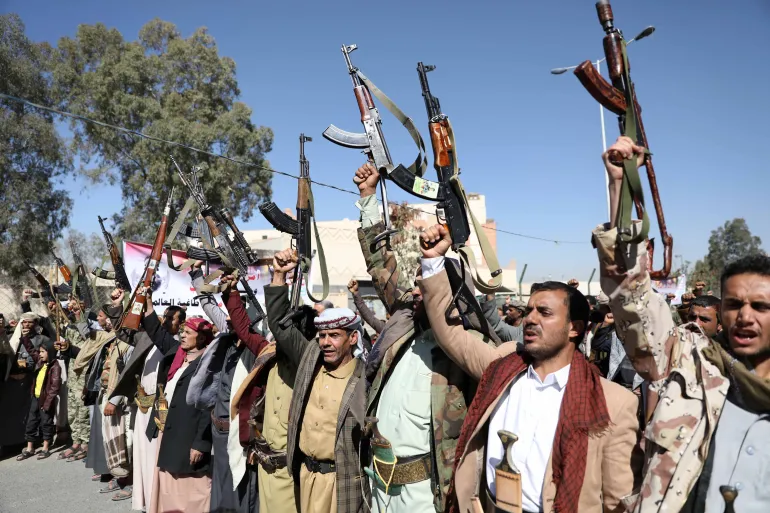
    The Houthis started in the 1990s as an armed group in Yemen, fighting against corruption. They belong to a community called Zaidis, who are a part of the Shia-Muslim minority. Along with Hamas and Hezbollah, the Houthis have declared themselves to be a part of the Iranian-led “axis of resistance” against Israel, the US, and the larger West.1 The Houthis have been attacking commercial ships passing through the lower Red Sea, and this has dramatically increased since mid-November in retaliation to Israel’s bombardment of Gaza. Due to these events, the Red Sea trade route is significantly affected, impacting the flow of global trade and having the potential to cause further damage. With ships attacked and stranded in one of the leading shipping routes of the world, countries seem to find themselves in yet another geopolitical fix. As the war continues between Israel and Gaza, the Red Sea has become a renewed hotspot for geopolitical and military tensions.
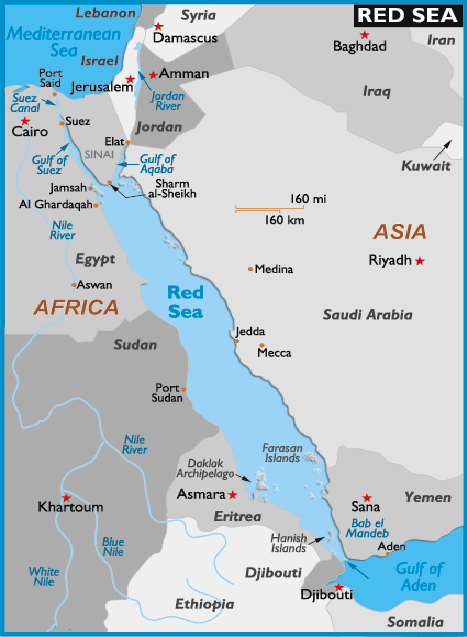
    Situated between Africa and West Asia, the Red Sea is a seawater entrance to the Indian Ocean in the south and goes through the Gulf of Aden and the Bab El Mandeb Strait, meeting the Gulf of Suez in the north. Countries like the US, France, Japan, and China have military bases in the region, including in Djibouti and many along the Horn of Africa, with considerable deployment of ships, weapons, and personnel. Establishing such bases conveys how critical it is to have control of the area as a measure of regional power and as a way of asserting their dominance internationally. Big players, including the Cold War rivals, have long struggled to gain presence and influence in West Asia. Having a military and economic presence in Africa with proximity to the Red Sea was necessary, for it provides access to almost 12% of the world’s trade, including nearly 40% of the trade between Europe and Asia.

    Until recently, the Houthis had been targeting ships heading towards Israel or ones that Israelis owned. However, recent developments showing attacks on ships bound for Israel with flags of various countries have raised grave concerns for global trade and security in the immediate future. The US, along with countries like the UK, France, and Bahrain, have tried to stop Houthi attacks on ships passing through the Red Sea under what Washington calls the “Operation Prosperity Guardian”. On the first day of the new year, The US military released a statement conveying that they killed at least 10 Houthi rebels and sabotaged three Houthi ships. Although the US was successful in deterring the Houthis from their attempt to attack, it did not do much to stop the group from being involved in disrupting peaceful navigation through the Red Sea.

    Private shipping companies such as Maersk, CMA CGM, Hapag-Lloyd, and MSC have begun to avoid using the Red Sea route due to the imminent threat from Houthis.3  The ongoing supply chain disruption caused by the COVID-19 pandemic and Russia’s invasion of Ukraine could further escalate due to the Red Sea crisis and cause severe concerns for world trade and consumer goods supply. With the suspension of trade via the Suez Canal, traffic through the Red Sea has dropped by 35%.4  The Houthis have raised the shipping cost internationally, imposing additional costs on commerce when trouble at the Panama Canal due to low water levels has already made shipping more complicated and central banks worry about a new inflationary spike. While trade hasn’t wholly stopped, most ships can choose the longer but safer route around Africa through the Cape of Good Hope to reach Europe and Asia from either side. This option imposes significant costs on shipping and, therefore, to consumers and affects local states in the region if the Houthi “blockade” persists. In the worst-case scenario, crude oil prices would rise in 2024 if oil shipments through the canal were stopped entirely, and this could cause a significant disturbance.
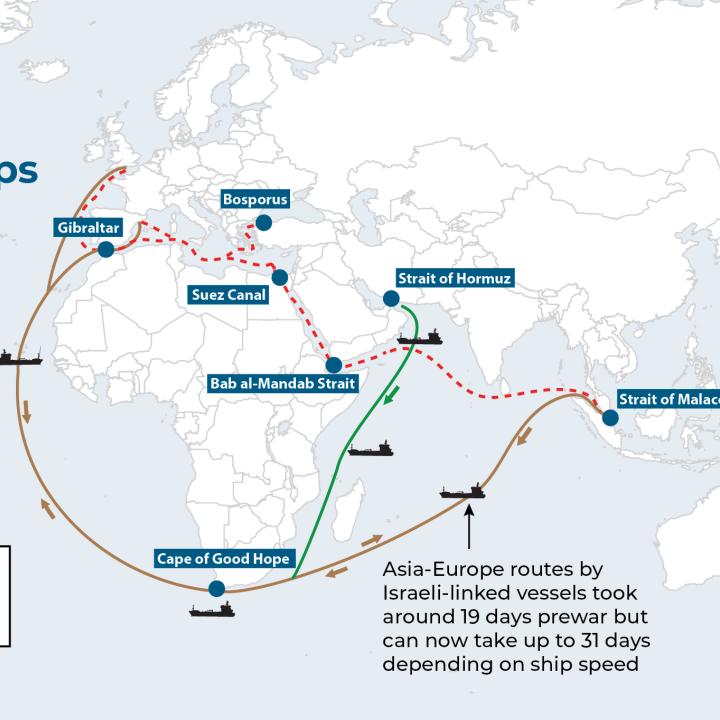
    Image Credit: washingtoninstitute.org

    Surprisingly, though, Russian ships have enjoyed free navigation through the Red Sea. Russian ships travel to Asia through the Black Sea, connecting to the Mediterranean Sea, passing through the Suez Canal and the Red Sea, and joining the Indian Ocean. With sanctions from Europe and the US amid the war in Ukraine, Russia cannot afford to lose its markets in Asia, particularly India and China, since these two countries buy almost 90% of Russia’s oil exports.5  The free navigation of Russian ships could possibly be due to its close relationship with Iran or due to the adoption of a similar stance with the Houthis on the war between Israel and Gaza. In the unlikely scenario that Russia does not have access to the Red Sea, it leaves them with the only other option of travelling through the Cape of Good Hope, adding 8,900 kilometres with an additional two weeks of travel. Such delays in oil shipments and a highly possible hike in price may prompt countries like India and China to start looking for other alternatives to their oil requirement, given the pre-existing energy crisis. Most probable alternatives include Saudi Arabia and other Gulf countries that do not need to pass the Red Sea to reach the Indian Ocean and thus Asian markets since they have ports in the Persian Gulf with access to the Arabian Sea.

    The disruption in trade has caused an impact on Indian imports and exports as well. Indian exports traverse the Indian Ocean and reach the Suez Canal through the Arabian Sea to reach European markets. Trade between India and Europe has been rising, at an all-time high in 2022, with goods traded worth $130 Billion.6   As of 2021, India engaged in trade worth $200 Billion through the Suez Canal, making the EU one of India’s main export destinations, with a Free trade agreement in the talks.7  India also procures its oil from Russia using the Suez Canal and the Red Sea. A slowdown or possible pause of oil imports may cause severe concerns amid the ongoing energy crisis. At such a juncture for the Indian economy, if the situation persists, trade will likely take a hit along with India’s domestic economy. If the condition fails to change decisively, the higher fees and the expense of prolonged travel duration will also put inflationary pressure on the global economy and India.

    The Houthis will most likely continue to put pressure on Israel to stop its onslaught in Gaza, and they are likely to keep attacking until they reach their goal. By taking control of the Red Sea and indirectly and directly hurting countries irrespective of their size and power, Houthis pressurize the international community to, in turn, put pressure on Israel. This also means that the group is unlikely to agree on any other way of settlement. Not only does this fall on Israel to stop their attacks but also on the US since the latter has always portrayed itself as a peace negotiator in the Middle East and, therefore, has the responsibility to restore order in the region. The Houthis possess a plethora of Iranian-supplied weaponry, ranging from precision drones to anti-ship cruise and ballistic missiles that can strike a moving vessel hundreds of kilometres away. What makes the Houthis more dangerous is the enormous stockpile that can help them continue their campaign indefinitely.

    The attacks have also prompted an unanticipated return of Somali piracy in international seas. As a result, increased expenses are now a worry for merchant shipping lines and seafarer safety for governments worldwide. The ship Lila Norfolk, under the Liberian flag and carrying six Filipinos and fifteen Indians, was taken over by Somali pirates on January 4th, 2024. The Indian navy had already deployed four warships patrolling the Indian Ocean, including INS Chennai, which was involved in the rescue operation during the recent highjack of ship Lila Norfolk. Even though the Indian Navy’s intervention allowed for the sailors’ rescue, it caused further concerns for India’s security and economy. The spill over of these attacks onto the Indian Ocean may threaten India’s security.

    Countries must monitor developments in the Red Sea and, for India, the Indian Ocean. Although India has not joined any Western-led operations on this matter, the country must push the international community to ensure freedom of navigation and the territorial integrity of countries over their sea is upheld under the UN Convention on the Law of the Seas.


    References

    [1] Who are the Houthi rebels and why are they attacking Red Sea ships? (2023, December 23). BBC News. https://www.bbc.com/news/world-middle-east-67614911

    [2] Yerushalmy, J. (2023, December 19). Red Sea crisis explained: what is happening and what does it mean for global trade? The Guardian.

    [3] A new Suez crisis threatens the world economy. (2023, December 16). The Economist. https://www.economist.com/international/2023/12/16/a-new-suez-crisis-threatens-the-world-economy

    [4] Graham, R., Murray, B., & Longley, A. (2023, December 19). Houthi Red Sea Attacks Start Shutting Down Merchant Shipping. Bloomberg.com. https://www.bloomberg.com/news/articles/2023-12-18/houthi-attacks-start-shutting-down-red-sea-merchant-shipping

    [5] Russia: crude oil shipments by destination 2023 | Statista. (2023, September 14). Statista. https://www.statista.com/statistics/1350506/russia-crude-oil-shipments-by-destination/

    [6] I. (n.d.). First India-EU Trade and Technology Council: Significant Milestone in India-EU Relations – Indian Council of World Affairs (Government of India). https://www.icwa.in/show_content.php?lang=1&level=3&ls_id=9416&lid=6112#:~:text=The%20EU%20is%20India’s%202nd,EU%20total%20trade%20in%20goods.

    [7] Ibid.


    Feature Image Credit: dailynewsegypt.com
  • Washington Accuses Russia of Committing War Crimes in Ukraine: Terrible and True, But What About US War Crimes?

    Washington Accuses Russia of Committing War Crimes in Ukraine: Terrible and True, But What About US War Crimes?

    This article is republished from Antiwar.com with permission.

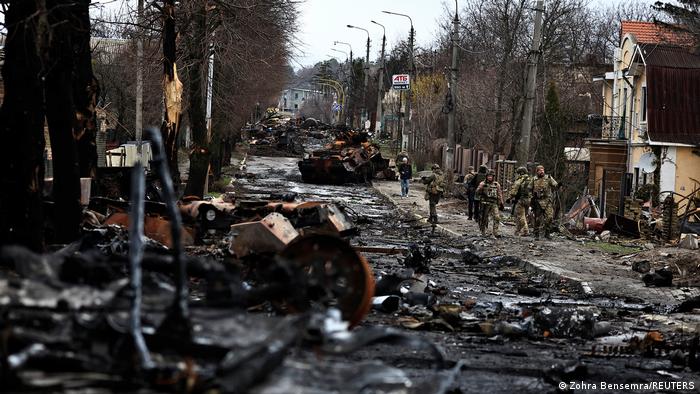
    Nothing can justify this terrible toll and Moscow’s attack. However, those who judge the moral conduct of others should be measured by the same standard. Which raises the question of war crimes committed by the US in its many conflicts.

    Washington appears intent on making Russia’s war on Ukraine into a moral crusade. Pentagon spokesman John Kirby last week declared that “we’re certainly seeing clear evidence that the Russian military is conducting war crimes.”

    Any large-scale conflict is going to kill civilians, some directly in combat, others from the impact of war’s destructive impact on a modern society. Thus, Russian attacks on Ukrainian cities such as Mariupol cannot help but kill civilians. Last week the UN Office of the High Commissioner for Human Rights estimated 953 dead and 1557 injured Ukrainian civilians. But that is merely the number of victims whose death can be confirmed.

    OHCHR reported that it “believes that the actual figures are considerably higher, especially in Government-controlled territory and especially in recent days, as the receipt of information from some locations where intense hostilities have been going on has been delayed and many reports are still pending corroboration. This concerns, for example, Mariupol and Volnovakha (Donetsk region), Izium (Kharkiv region), Sievierodonetsk and Rubizhne (Luhansk region), and Trostianets (Sumy region), where there are allegations of numerous civilian casualties. These figures are being further corroborated and are not included in the above statistics.”

    And if war criminals were routinely prosecuted, Americans would be in the dock as well as Russians.

    Nothing can justify this terrible toll and Moscow’s attack. However, those who judge the moral conduct of others should be measured by the same standard. Which raises the question of war crimes committed by the US in its many conflicts. American forces may attempt to fight “cleaner” wars than does Russia, but even so no one should have any illusion about the high civilian cost of Washington’s interventions. Innocent people die, some directly, many indirectly. And if war criminals were routinely prosecuted, Americans would be in the dock as well as Russians.

    Consider Washington’s widespread drone war. One terrible strike made last August when Americans were withdrawing from Afghanistan wiped out a family, including seven kids. It was a terrible mistake, but the US was culpable. Reported the New York Times: “Military officials said they did not know the identity of the car’s driver when the drone fired, but deemed him suspicious because of how they interpreted his activities that day, saying that he possibly visited an ISIS safe house and, at one point, loaded what they thought could be explosives into the car.” [Italics added] Upon this litany of unproved suppositions, which turned out to be wild speculation, Washington acted like a terrorist and wiped him out along with all those around him.

    Such mistakes are common because America relies on such “signature” strikes, based on interpretating the actions of people typically hundreds or thousands of miles away. Noted the New York Times: “Every independent investigation of the strikes has found far more civilian casualties than administration officials admit. Gradually, it has become clear that when operators in Nevada fire missiles into remote tribal territories on the other side of the world, they often do not know who they are killing, but are making an imperfect best guess.”

    Afghanistan has been a major focus of America’s drone war. A detailed investigation in 2015 by two media organizations and a foundation concluded that drone strikes had killed 3852 people, 476 of whom were civilians. That’s a civilian kill rate of 12.4 percent, better than untargeted air or artillery strikes, but still much higher than claimed by Washington.

    According to journalist Emran Feroz: “Afghanistan is the most drone-bombed country in the world. The United States dropped more bombs on Afghanistan in 2019 than in any other years since the Defense Department began keeping track in 2006. According to new figures released by the U.S. military, at least 7,423 bombs and other munitions were dropped on the country in 2019, a nearly eight-fold increase from 2015 and an average of 20 bombs a day.”

    He described another drone attack that apparently went awry: “Ordinary Afghans say it has happened to them many times and never – not once – has it made news anywhere outside Afghanistan. Last November, an American Reaper drone targeted a group of villagers in the mountainous area of Afghanistan’s southeastern province of Paktia and killed seven of them. Paktia has long been home to Taliban militants, but local residents say all the victims were civilians, including three women and one child. They had gone to the remote area to graze their cattle and collect wood. Suddenly, they were dead.”

    Another cost of the drone war: creating new terrorists who target Americans. Waging war on Muslims around the world makes a lot of enemies, some of whom strike back.

    For instance, Pakistani-American Faisal Shahzad attempted to set off a bomb in Times Square in response to Washington’s drone campaign. He explainedto the court in 2010: “I want to plead guilty 100 times because unless the United States pulls out of Afghanistan and Iraq, until they stop drone strikes in Somalia, Pakistan and Yemen and stop attacking Muslim lands, we will attack the United States and be out to get them.” The judge asked him why he was willing to kill kids. He explained: “When the drones hit, they don’t see children.” Hence, Shahzad concluded that “I am part of the answer to the US killing the Muslim people.”

    America’s anti-ISIS bombing campaign also killed civilians in prodigious numbers. NPR reported on the work of New York Times correspondent David Philipps, who said “the United States’ air war against ISIS seems to have been particularly brutal on innocent civilians in Syria. In recent stories, Philipps reports that a top-secret unit of the US military was allowed to pick targets for drone attacks and bombing runs with little oversight, and that as the conflict wore on, it increasingly sidestepped rules to protect noncombatants, ordering airstrikes that killed farmers in their fields, children in the street and families fleeing combat.”

    According to Philipps, the military counted 1400 dead civilians “during the four years of the war. And they were very confident that those numbers were real and that outside organizations like Human Rights Watch that were reporting numbers that were many times higher were being unreasonable. But once we looked under the hood at how it worked, we found that, you know, time and time again, their accounts were just seriously flawed.”

    The Times explained that it “worked with journalist Azmat Khan, who went to dozens and dozens of these sites on the ground and talked to people who were there and compared what they said to what the military’s own records said and found repeatedly that there was a gulf between them.” For instance, Human Rights Watch estimated some 7000 dead civilians. A toll that dwarfs the number of civilian dead in Ukraine, where the US is blaming Russia for committing war crimes.

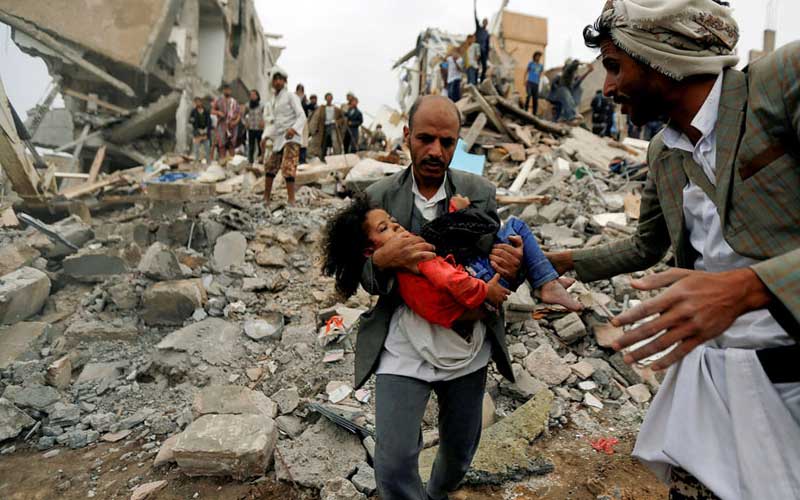
    The US also has armed Saudi Arabia and United Arab Emirates, helping them wreak death and destruction against Yemen, the poorest nation in the Mideast. No participant in this civil war, which was internationalized by the Saudis and Emiratis, looks good. However, most casualties and damage are a result of the royal regimes’ air attacks and effective blockade, which has resulted in mass malnutrition, immiseration, and disease.

    President Joe Biden once criticized the Kingdom of Saudi Arabia and its pernicious role in the Yemen war. Like so many of his predecessors, however, he has since effectively turned US policy over to Riyadh and Abu Dhabi, continuing to sell them weapons and deploying US forces to help protect them from retaliation for their continuing attacks on Yemeni civilians. A year after the president took office the war is heating back up in Yemen.

    Reported the Yemen Data Project: “January 2022 was the most violent month in the Saudi-led air war in Yemen in more than five years. Yemen Data Project recorded 139 civilian deaths and 287 civilians injured in Saudi coalition airstrikes in January, taking the casualty toll to over 19,000 civilians killed and injured since Saudi Arabia launched its bombing campaign in Yemen in March 2015. Not since October 2016 have more civilian casualties been recorded in a single month in the air war. Saudi-led coalition airstrikes caused more civilian harm in the first month of 2022 than in the two previous years combined.”

    The UN Group of Eminent International and Regional Experts on Yemenrevealed that civilians were routinely targeted by the Saudi and Emirati royals. Victims included “civilians shopping at markets, receiving care in hospitals, or attending weddings and funerals; children on buses; fishers in boats; migrants seeking a better life; individuals strolling through their neighborhoods; and people who were at home.”

    Widespread air attacks also wrecked basic infrastructure, with catastrophic consequences for health, nutrition, commerce, and safety. The United Nations Development Program reported:

    “By comparing the current reality in Yemen to a scenario where no conflict ever occurred, we can provide an estimate of the total death count – the number of deaths caused both directly and indirectly from the conflict. By doing so, we found that by the end of 2021, Yemen’s conflict will lead to 377,000 deaths – nearly 60 per cent of which are indirect and caused by issues associated with conflict like lack of access to food, water, and healthcare. These deaths are overwhelmingly made up of young children who are especially vulnerable to under and malnutrition. In 2021, a Yemeni child under the age of five dies every nine minutes because of the conflict. This is a significant increase since our 2019 report, Assessing the Impact of War on Development in Yemen, that – through the same assessment – found this to be approximately every 12 minutes.”

    In 2021, a Yemeni child under the age of five dies every nine minutes because of the conflict.

    The experts’ group also found devastating impact: “Protracted conflict, disease outbreaks, the COVID-19 pandemic, flooding, import restrictions, an economic and fuel crisis, and limited humanitarian aid have made everyday life in Yemen unbearable for many. According to the Office for the Coordination of Humanitarian Affairs, around 20.7 million people in Yemen currently require some form of humanitarian and protection assistance. More than 16.2 million of them will face significant food insecurity this year. Additionally, international funding has fallen far short of the required levels to address the humanitarian crisis.”

    Harm from this kind of warfare goes even further. Last fall the experts’ group observed that “Living in a country subjected to an average of 10 airstrikes per day has left millions feeling far from safe. Although the frequency and intensity of airstrikes have fluctuated over the last four years, the Group of Eminent Experts has continued to observe their devastating impact on civilians.”

    “The civilian death toll from Saudi Arabia’s disastrous air war over Yemen was steadily rising in 2016 when the State Department’s legal office in the Obama administration reached a startling conclusion: Top American officials could be charged with war crimes for approving bomb sales to the Saudis and their partners. Four years later, more than a dozen current and former US officials say the legal risks have only grown as President Trump has made selling weapons to Saudi Arabia, the United Arab Emirates and other Middle East nations a cornerstone of his foreign policy.”

    Assessing Washington’s moral blame in aiding the royal aggressors is easy. The legal case is more difficult, but the State Department already made the connection. It warned previous administrations that US officials were committing war crimes. The New York Times reported: “The civilian death toll from Saudi Arabia’s disastrous air war over Yemen was steadily rising in 2016 when the State Department’s legal office in the Obama administration reached a startling conclusion: Top American officials could be charged with war crimes for approving bomb sales to the Saudis and their partners. Four years later, more than a dozen current and former US officials say the legal risks have only grown as President Trump has made selling weapons to Saudi Arabia, the United Arab Emirates and other Middle East nations a cornerstone of his foreign policy.”

    Washington intervened in Libya’s civil war more than a decade ago to promote regime change under cover of helping to protect civilians from the Khadafy government. The country that was the most developed and wealthiest in Africa was bombed to stone age by the US and NATO.

    There is much more to criticize in US policy. Rural Afghanistan suffered desperately for years as a battleground between the US and Taliban, causing many residents to turn toward the insurgents. Washington intervened in Libya’s civil war more than a decade ago to promote regime change under cover of helping to protect civilians from the Khadafy government. Hopes for a better future remained unfulfilled as contending factions subsequently fought for control and now squabble over plans to hold elections.

    Russia deserves to be criticized and held accountable for its increasingly brutal military campaign in Ukraine. However, Washington would have more credibility to judge if its message wasn’t do as I say, not as a I do. US officials should come clean internationally and admit when they have failed in their obligation to protect human rights, including in wartime. Next time they shouldn’t just promise to do better. They should do so.


  • Houthi attack on Abu Dhabi: Yemen civil war and Regional Complexities

    Houthi attack on Abu Dhabi: Yemen civil war and Regional Complexities

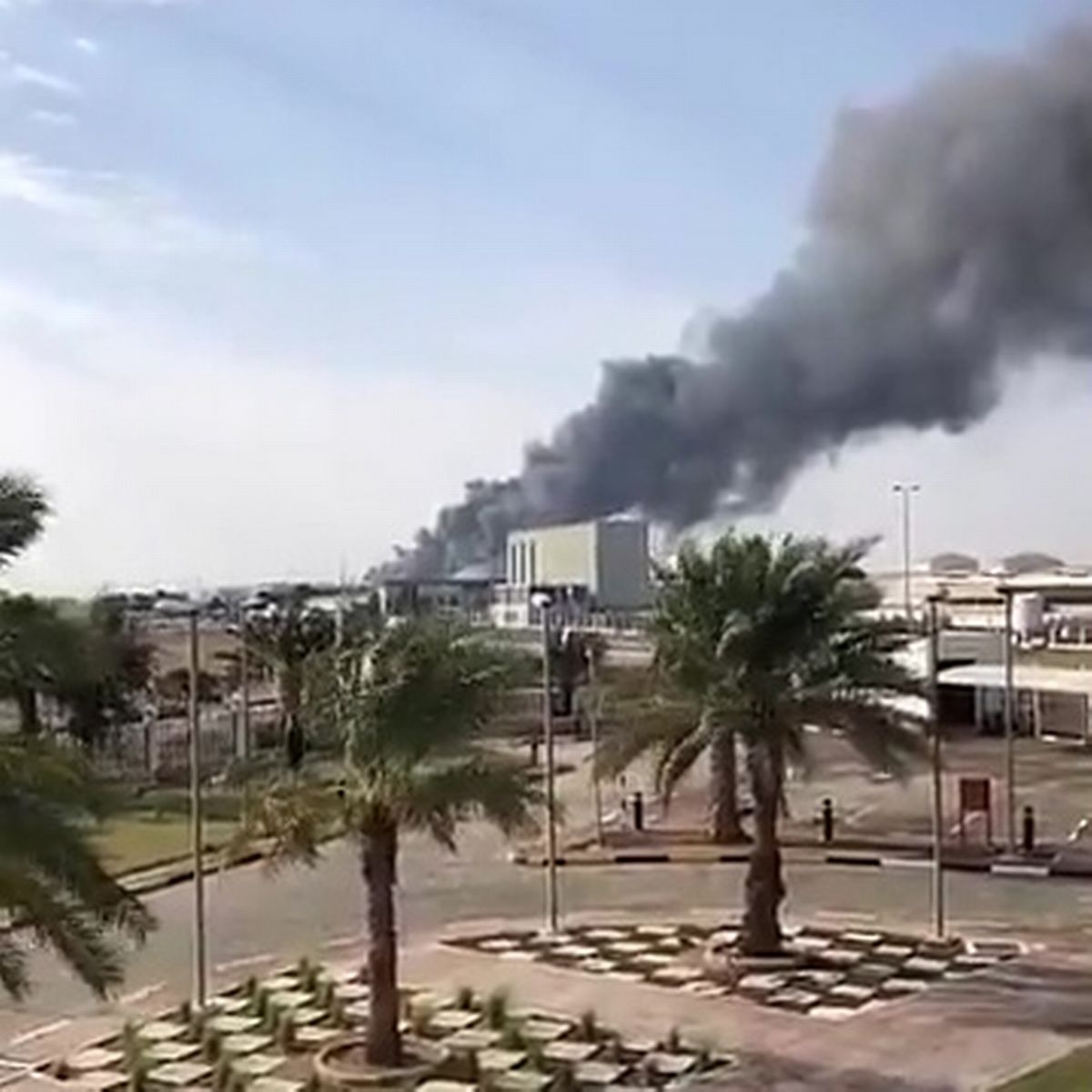
    On 17th January, the Houthis conducted their first attack on Emirati soil in years. Carried out in the heart of the country– Abu Dhabi –with the help of a UAV, the attack killed three foreign nationals working in the city– two Indians and one Pakistani. In the aftermath of the attack, the Arab Coalition intensified the air bombings of key strongholds of the Houthis, leading to an increase in civilian casualties in a proxy war that has already caused several thousand civilians their lives. The attack has also underlined the capabilities of the Islamist political outfit in striking a distant country, and not just its northern neighbour. The attack has also rendered the UAE as a country susceptible to attacks from hostile groups in the region.

    Costs of UAE’s intervention strategy

    Importantly, the attack has led to a scrutiny of UAE’s policy vis-à-vis the hapless South Arabian country. Not long ago, in February 2020, the Emirati leadership, in an official ceremony addressing the recent returnee personnel deployed in Yemen, added an achievement to its touted ‘Peace First’ strategy in the country[1]. The gulf country had begun its troop withdrawal from the war-torn country in July of 2019[2]. This move, though remarkable, was hardly surprising by a country that was stopped in its tracks after finding itself as a part of the Arab Coalition[3] back in 2015. But the withdrawal of troops from Yemeni soil didn’t mean a dilution of its involvement in the Civil War. The move by the Emirates was seen as merely a shift from direct involvement to an indirect one.[4] The leadership of the country had utilized its presence in Yemen to cultivate and build a network of belligerents of the Civil War, such as the Sothern Transitional Council (STC), Security Belt Forces and the Shabwani and Hadrami Elite forces to name a few.[5] A withdrawn and non-aggressive UAE depends heavily both upon and sponsors such groups to keep its influence in the country afloat. It had reportedly trained some 90,000 South Yemenis during its stint in the country.[6] These militias have fought, in the past, against the Houthis, Al-Qaeda in Arabian Peninsula (AQAP), Islah and the ISIS. In December last year, one such group, the Giants Brigades, attacked Houthis, eventually defeating them in the Shabwah province. The Houthi attack in January is seen as a retaliation for this precise attack.

    In December last year, one such group, the Giants Brigades, attacked Houthis, eventually defeating them in the Shabwah province. The Houthi attack in January is seen as a retaliation for this precise attack.

    Another key takeaway from the attack on 17th January is associated with the Saudi Arabia-UAE partnership. The Emirates, which contributed the second-largest troops to the Arab Coalition, had virtually abandoned Saudi Arabia in its effort to bring the Hadi government back to Sana’a. Since 2016 up to the troops’ pull-out, the country had focused mainly on counter-terrorism operations, primarily targeting Islah.[7] The two partners were pitted against each other when, in 2019, the Emirati-backed STC pushed itself into the provinces of Shabwa and Abyan held by the Saudi-backed government. Now, with the Houthis becoming a potent threat to the security of the UAE, the stress between the two governments is set to cool down. The attack has made UAE substantially, if not equally vulnerable, when compared with Saudis, to Houthis’ aggression. But it is not likely that the country will put an end to its troop withdrawal strategy. Its focus is likely to be on strengthening its security apparatus, something already visible in French, American and Israeli assistance.

    Attacks boost UAE-Israel Strategic Partnership

    The Houthis conducted another failed attack on Abu Dhabi in late January during Israeli President Herzog’s visit. The day was chosen to deliver a message to both Abu Dhabi and Jerusalem. This, and other numerous attempts by the Iran-backed Zaidi Shia militia to attack the Emirates, is set to further firm up the already burgeoning ties between the two. Immediately after the January 17th attack, Prime Minister Naftali Bennett offered Israeli ‘security and intelligence support’ to the victim state[8]. He committed to partner with the UAE to defeat ‘common enemies’. Right after the signing of the Abraham Accords, both the countries embarked upon strengthening security-related ties[9], leading to the signing of a strategic agreement to develop unmanned military and commercial vessels in November last year. Both the countries have been susceptible to attacks by Iran’s proxies. It is Israel’s North-eastern neighbour Syria that has posed a threat to its security. Now, Houthis’ reach to the Emirati soil renders Israel vulnerable to similar attacks, with speculations already in works in Israel.[10] Additionally, Houthis’ ties with Lebanese Hezbollah could aggravate the situation further. Israeli-Emirati partnership seems to be the greatest benefactor of the attack.

    the UAE has been applauded for pursuing a balanced approach between Saudi Arabia and the US on one hand and Iran and its allies on the other[13]. But with the continuous attack on Abu Dhabi by Iranian proxies, the relations between the UAE and Iran are set to face road blocks

    Just as Emirates was coping with the deadly attack from Yemen, another Iraq-based armed group conducted a drone strike on Abu Dhabi. Known by the name Awliyat al-Waad al-Haq, or the True Promise Brigades, the Shia Islamist group is widely believed to have close ties with both Tehran and Iraq’s Kataib Hezbollah. Though the Iranians have not publicly supported the attacks, they haven’t condemned them either. Moreover, the attacks on Abu Dhabi came just months after Emirati National Security Advisor Sheikh Tahnoun bin Zayed Al Nahyan visited Tehran where he touted his visit as a ‘turning point’ for the two countries[11] and visit of Iranian Deputy Foreign Minister Ali Bagheri Kani to Abu Dhabi, declaring that the two countries had agreed to open ‘a new chapter’ in their bilateral relations[12]. Also, the UAE has been applauded for pursuing a balanced approach between Saudi Arabia and the US on one hand and Iran and its allies on the other[13]. But with the continuous attack on Abu Dhabi by Iranian proxies, the relations between the UAE and Iran are set to face road blocks.

    Yemen’s Humanitarian Crisis

    Last year, in one of his first decisions regarding West Asia, President Biden revoked the Trump administration decision to recognize Houthis as a foreign terrorist group. After the recent attacks on Abu Dhabi and the al-Dhafra airbase, the Biden administration has been forced to reconsider its previous decision[14]. The US has, in response to the attacks, stepped up its naval deployment in the Gulf region, along with enhancing cooperation in intelligence and air defence with the Emirates. It also helped stave off other Houthi missile attacks on Abu Dhabi through US Patriot interceptors. The attacks also come at a crucial time when the talks between P5+1 and Iran regarding the Iran Nuclear Deal underway in Vienna. With eight rounds that have passed without any breakthrough, it remains to be seen how Houthi aggression impacts the JCPOA.

    The Civil War in Yemen is in its eighth year, with no signs of the end in near future. The casualties have reached as high as 377,000. It has resulted in a humanitarian crisis, pushing millions to the brink. According to a UNDP report, the war may cause more than 1.3 million casualties by 2030. Hence, we need to ask, has the international community failed to protect the Yemeni people?

    Notes

    [1] Jalal, I (2020, February 25), ‘The UAE may have withdrawn from Yemen, but it’s influence remains strong’ Middle East Institute https://www.mei.edu/publications/uae-may-have-withdrawn-yemen-its-influence-remains-strong

    [2] Ibid

    [3] Salisbury, P. (2020, July 1), ‘Risk perception and appetite in UAE Foreign and national security policy’ Chatham House https://www.chathamhouse.org/2020/07/risk-perception-and-appetite-uae-foreign-and-national-security-policy-0/8-case-study-uae

    [4] Jalal, I (2020, February 25), ‘The UAE may have withdrawn from even, but it’s influence remains strong’ Middle East Institute https://www.mei.edu/publications/uae-may-have-withdrawn-yemen-its-influence-remains-strong

    [5] Ibid

    [6] Ibid

    [7] Salisbury, P. (2020, July 1), ‘Risk perception and appetite in UAE Foreign and national security policy’ Chatham House https://www.chathamhouse.org/2020/07/risk-perception-and-appetite-uae-foreign-and-national-security-policy-0/8-case-study-uae

    [8] TOI staff, (2022, January 18),’Bennett offers UAE security and intelligence support after attack by Houthis’ Times of Israelhttps://www.timesofisrael.com/bennett-offers-uae-security-and-intelligence-support-after-attack-by-houthis/

    [9] Ulrichsen, K.C. (2021, August 6), ‘Restoring balance to UAE-Iran relations’ Doha Institute https://www.dohainstitute.org/en/PoliticalStudies/Pages/Restoring-Balance-to-UAE-Iran-Relations.aspx

    [10] Melman, Y. (2022, January 21),’After Abu Dhabi, is Israel’s Red Sea port of Eilat next target for Houthi drone strike’ Haaretz https://www.haaretz.com/israel-news/israel-red-sea-eilat-target-houthi-iran-drone-strike-abu-dhabi-1.10553018

    [11] Hafezi, H. (2021, December 6), ‘UAE security official pays rare visit to Iran to discuss ties, regional issues’ Reuters https://www.reuters.com/article/us-iran-emirates-idAFKBN2IL0ME

    [12] Ulrichsen, K.C. (2021, August 6), ‘Restoring balance to UAE-Iran relations’ Doha Institutehttps://www.dohainstitute.org/en/PoliticalStudies/Pages/Restoring-Balance-to-UAE-Iran-Relations.aspx

    [13] Ibid

    [14]  Landay, J (2022, January 20). ‘Biden says administration mulling re-designating Yemen’s Houthis a terrorist group’, Reuters https://www.reuters.com/world/middle-east/us-yemen-envoy-lenderking-visit-gulf-london-state-department-2022-01-19/

    Feature Image Credit: www.mirror.co.uk

    Image Credit: itv Times News