Tag: Women Reservation

  • Gendered Politics at the Local Level: An Analysis of Tamil Nadu

    Gendered Politics at the Local Level: An Analysis of Tamil Nadu

    The institution of panchayat raj, a milestone in the journey of administrative institutions at the grass-root level, is not an exception to proxy candidature, caste-based violation of rights or gendered politics

    The political domain continues to be considered a male bastion, with women in politics often seen as a paradox. The domain is conspicuous by the very low presence of women, with very few of them making it to positions of power. Elizabeth I, Margaret Thatcher, Indira Gandhi, and Golda Meir have often been regarded as minorities in politics despite being some of the most powerful women in domestic and international politics. In the minuscule group of women politicians, ‘self-made’ women are often considered an exception rather than a rule. The political transitions are short-term solutions to break the pattern of exclusion. From the suffragette of the 20th century up till now, feminists have fought a lengthy battle for women’s right to vote and hold office. With the development that is slow and choppy, women continue to be underrepresented in politics, and parliament. While we talk about women’s political participation, it is easy for us to imagine empty seats in the parliament. However, women in India have been involved in politics since pre-independent times even when they had no voting rights. The aspect of politics that has always held an uncertain position in our minds is the relationship between women and politics.

    Constitutional Provision

    The world of urban local politics associated with political decentralisation in India was constitutionalised in 1992 through the 74th Constitutional Amendment. It ensured a reservation of at least one-third of the total number of seats for women. Additionally, for the office of chairperson one-third of the seats are reserved for women in the Urban Local Body (ULB). However, the bill for the reservation of seats for women in parliament has remained pending for years. The Constitution allows 50% of seats to be reserved for women in the local body elections. In Tamil Nadu, the High Court has directed the State Election Commission to ensure that the reservation stays at 50% in ULB as mandated by law.

    Proxy Politics and Tamil Nadu

    Despite the reservation mandated by law, the participation of women in state and national politics has barely improved. Gender inequality, hierarchy, and stigma against women in politics along with structural, social, economic and cultural barriers continue to obstruct women’s effective participation in politics. Within the urban local body, it is witnessed that husbands or male relatives wield actual power and control even though women relatives or wives are the ones elected for the position and appointed officially. Men continue to control the wards while most elected women work as proxies. This is evident in the case of the Tambaram corporation where Nagarajan, husband of DMK councillor Geetha, took the chair on her behalf in official meetings, a clear violation of legislative procedures and law. In such cases, women are shadowed and they are not free to make their own decisions. Proxy politics is rampant at the grassroots level of panchayat and local body elections where women get posts filled with responsibilities but without effective power or control.

    The term ‘proxy women’ needs further elaboration. In the 2022 urban local body elections in Tamil Nadu, while women councillors were elected in accordance with the 50% reservation policy, the actual power and control were exercised by their husbands. Though the Greater Chennai Corporation has a majority of women in elected seats, it is effectively run by men. In a few wards, for instance, in wards number 24 and 34, it was the husbands who were attending to complaints, and deciding over issues, while operating the office. In some wards, husbands address themselves as councillors.  And while people in the ward complain of not having seen their councillor since her election to the post, it is to be noted here that this problem does not end with councillors. Even the top-most positions held by women in the municipal body continue to be dictated by her veteran politician family members or, they are in the hands of the political party itself. 

    Participation in PRI

    The institution of panchayat raj, a milestone in the journey of administrative institutions at the grass-root level, is not an exception to proxy candidature, caste-based violation of rights or gendered politics. Retired IAS officer Ashok Varadhan Shetty stated a case in Dindigul in 2008 where the husband of a woman member of block panchayat was caught participating in council meetings while she stayed at home. Even when the obstacles for women in politics and panchayats in specific are diverse, male dominance automatically tops the list of obstructing women’s participation in politics.

    Theories of Representation

    The gendered pattern of politics in most parts of India is deeply patriarchal with low sex ratio, patrilocal marriage, and patrilineal inheritance, with women being denied access to the public sphere. In Omvedt’s words, “Girls are socialised to be mothers, wives and domestic workers under other’s authority”. As literature explains, women in political bodies argue that mere representation is not sufficient. A formal seat is not the same as active participation. In India, most women are less educated, less exposed, and more dependent, and proxy women are more likely to be seen as token representatives in political organisations.

    Philip’s study of the political representation of women has set up a foundation to shift from ‘politics of ideas’ to ‘politics of presence’. The twin democratic principles of equality in politics and popular control, help in ensuring equal representation of men and women. He has presented four arguments for politics of presence: the importance of symbolic representation; the need to tackle exclusion inherent in ideas of the political party; the need for vigorous support to the disadvantaged groups; and the importance of politics of presence in arriving at policy options.

    Does the concept of proxy politics leave a mark on female politicians alone? Certainly not. Various male politicians act as mere mouthpieces of the political party. Hence, it is not just women who become prey to proxy politics, the practice is widespread at the lower level. But the difference that lies here is men are instructed while women are dominated. Gender equality is, thus, an essential element for the sustainable progress of any nation. The goal of all-round development can be achieved only through equal representation of all genders in various fields. In the Global Gender Gap Report, released by the World Economic Forum, based on the key dimensions of Economic Participation and Opportunity, Educational Attainment, Health, Survival and Political Empowerment, India has ranked 140 out of 156 countries slipping 28 ranks from the 2020 report. It is evident how deep and strong the roots of discrimination in the country are.

    References

    The Constitution 112th Amendment. (n.d.). Amendment to Article 243T of the Constitution to provide for 50 percent reservation for women in Urban Local Bodies. Retrieved August 9, 2022, from https://mohua.gov.in/upload/uploadfiles/files/243T_Constitution_15.pdf

    Mahanta, K. (n.d.). Home | Government of India. Retrieved August 9, 2022, from https://censusindia.gov.in/census.website/

    Menon, J. (2021, October 8). Tamil Nadu: Many women in panchayat race, but will they take the podium? | Chennai News. Times of India. Retrieved August 9, 2022, from https://timesofindia.indiatimes.com/city/chennai/tamil-nadu-many-women-in-panchayat-race-but-will-they-take-the-podium/articleshow/86858818.cms

    Omvedt, G. (n.d.). Women in governance in South Asia. Economic and Political Weekly.

    Phillips, A. (1998). The Politics of Presence. Clarendon Press.

    Sarpanch Pati Culture: DMK’S Women Councillors, Their Proxy Husbands, Relatives Abuse Power in TN. (2022, April 9). Times Now. Retrieved August 9, 2022, from https://www.timesnownews.com/videos/times-now/specials/sarpanch-pati-culture-dmks-women-councillors-their-proxy-husbands-relatives-abuse-power-in-tn-video-90747544

    Tamil Nadu Municipal Laws (Amendment) Act, 2016. (2016, February 27). TAMIL NADU GOVERNMENT GAZETTE. Retrieved August 9, 2022, from http://www.stationeryprinting.tn.gov.in/extraordinary/2016/56-Ex-IV-2.pdf

    Feature Image Credits: The Federal
  • India Elections 2019: Under-representation of Women Reflects Failure of Policy

    India Elections 2019: Under-representation of Women Reflects Failure of Policy

    Renuka Paul                                                                                           April 10, 2019/Analysis

    India, the world’s largest democracy, will witness the start of its general elections tomorrow, for constituting the 17th Lok Sabha. With 900 million eligible voters, it is expected to be the biggest electoral event and is scheduled to be held in 7 phases from April 11th to May 19th, 2019. The democratic exercise, however, does not appear to be fairly representative of women. For over two decades, the insufficient involvement of women in Indian politics has been largely debated, and measures to alter the status quo have been backed by nearly all major political parties. Despite the support, implementation of these proposals have stalled. Moreover, there has been no significant increase in women’s representation within party ranks nor in the number of female candidates being nominated for the upcoming election.

    India Fares Poorly in Comparison to its Neighbours

    Although women constitute nearly half of India’s population at present, female political representation remains at 11.8 percent in Lok Sabha and 11.2 percent in Rajya Sabha (global average, as of 2018, is 24.3 percent). In other words, nearly 9 out of 10 legislators in India are men. While women have held the roles of the President, Prime Minister and Chief Minister in India, these instances remain an anomaly rather than the norm, with most of the elected female leaders belonging to political families (43 percent). According to Inter Parliamentary Union (2019), India is ranked 149thout of 193 countries in terms of representation of women in Lower Houses. In comparison, Nepal (32.7 percent), Afghanistan (27.3 percent), Bangladesh (20.6 percent) and Pakistan (20.2 percent) perform far better and have political quotas in place. Furthermore, representation of women in state assemblies is even lower (8 percent), with the highest numbers in Bihar, Haryana and Rajasthan at 14 percent and lowest in Mizoram, Nagaland and Puducherry with no elected women representatives.

    The abysmal rate of women’s role in decision making and legislation was first acknowledged in 1976 after a report by the Committee on the Status of Women in India was published. Following this, 73rdand 74thconstitutional amendments were adopted in 1993 mandating 33 percent reservation for women in local governance. Later, in 1996, in order to correct the deeply skewed ratio of female electoral participation, the Women’s Reservation Bill was introduced in the parliament in order to extend reservation to Lok Sabha and state assemblies. As per the provisions of the bill, seats under the quota were to be allotted to different constituencies by rotation, as prescribed by the authority determined by the parliament. Importantly, the bill contained a clause stating that the reservation extended would be eliminated 15 years after its introduction. This clause was included upon determining that the estimated time period was sufficient to remove the political disadvantages faced by women. Further, some argued that following the 15 years, people would come to realise the capabilities of women leaders and, if the bill were to not be revoked, it would limit female candidates to contest elections from the reserved seats alone. Though the bill has been promoted by major parties, it has failed to get legislative approval.

    Patriarchal Mindset and the Absence of Political Will

    Both the NDA and UPA governments blamed failure of the bill’s passage on the coalition arrangement that made consensus impossible, despite the support of the leading party. Although the BJP were vocal about women’s marginalisation in politics while in opposition, upon coming to power in 2014 with a clear majority, the party has neither discussed nor passed the bill. Overall, a general lack of political will remains and the disinterest of parties in issues of inclusive representation is evident. This is highlighted by the fact that women representatives of all major parties in the general elections is less than 10 percent.

    Opponents of political quotas for women argue that it will further strengthen the gender imbalance at the top. According to them, “modern women” are capable of contesting elections on merit and do not require affirmative actions to win elections. Moreover, they argue that reserved seats restrict the choice of voters to only women candidates, thereby violating the rules of democratic elections. Others claim that rotation of reserved constituencies would reduce an MP’s incentive to work for their constituencies since they would not be eligible for contesting elections in the next term. Many have proposed alternatives such as reservations for women in political parties instead, dual member constituencies, etc. Interestingly, while these disagreements have stymied the bill for over two decades, they did not hinder the passage of the 73rdand 74thamendments (passed with a clear majority when introduced the first time). This may be because the latter does not pose any threats to the dominant position of male parliamentarians, as opposed to the former that challenges their own survival.

    Globally, it is established that men and women in leadership positions often have differing priorities and perspectives. An ideal mix of both the sexes in politics is necessary to ensure that the democratic process is truly representative and that demands of all categories are considered during decision making processes. Though open competition in constituencies may be preferred, reservation for women candidates is required until gender parity is achieved. This balance in elected bodies is crucial to establish a mechanism that allows women to actively engage and influence broader political and economic concerns, especially those that affect women.  In India, equal opportunities in terms of political participation and representation have been granted to women since independence. However, societal and historical biases against women have created rigid structures that have hindered women’s accessibility to positions of power. Equal political representation makes the democratic system more responsive to the needs of the people. In this sense, there is an urgent need to improve women’s involvement in politics for inclusive growth and development.

    Reservation for Women an Absolute Necessity

    The existence of reserved seats for women in elected bodies isn’t just a demand for fairness and equality. Various studies have highlighted the positive effects of bringing in female leaders. A report by the Ministry of Panchayati Raj has highlighted that reservation for women in PRIs has improved the self-esteem, confidence and decision-making skills of the candidates, which in turn has led to an increase in education for girls and consequently expanded the breadth of their future aspirations. Furthermore, it was found that the elected women also invested more in the handling public goods such as cleaner fuels, road connectivity and water accessibility- issues that often affect women at large. According to a study by UN University WIDER, constituencies with women leaders have 15 percent more luminosity growth in their regions than those headed by men, thereby improving productivity and employment rates. The study concluded that women leaders contributed 1.8 times more to economic growth than their male counterparts. Many studies have recorded considerable differences in policy priorities and solutions offered by both the sexes, with female leaders primarily emphasizing on issues aimed at improving the quality of life, conditions of women and children, health parameters and lives of minorities. Research indicates that this is possibly the result of traditional roles played by women as mothers or caregivers. A J-PAL research paper has also observed that the quota system in local governments have boosted child health and nutrition, female entrepreneurship and the responsiveness of police toward violence against women. Altogether, the inclusion of women in politics is not limited to changing gender relations in the nation but also greatly contributes to improving social welfare and economics.

    Many have noted that for women to substantially impact the policy scenario, they would need at least a 30 percent share in the parliament.  In fundamentally patriarchal Indian society, this highlights yet again the crucial need for the Women’s Reservation Bill. While many contend that this will limit and make women candidates dependent on the quota system, evidence shows otherwise. Despite quotas in local governments (33 percent), as of 2018, the national average of women in panchayats is around 44 percent and 14 states have more than 50 percent women leaders. In fact, Uttarakhand and Rajasthan have 56 percent female representation in PRIs. However, there are many other factors that require consideration. According to Economic Survey 2018, cultural attitudes towards women, domestic responsibilities, illiteracy, lack of confidence, inaccessibility to political funds, threat of violence, etc are some causes that limit women’s abilities to step forward in politics. Therefore, while women are offered opportunities through political quotas, inherent social structures and norms need to be altered in order to enhance balanced representation.

    Positive Impact on Society

    In recent years, the signs of increasing involvement of women in Indian politics are clearly visible. This is primarily manifested through voting and political activism (not figured into representation). According to leading election researchers, the upcoming general elections will see female voters surpassing the men. These trends show that there exists a demand to see more from political parties than hollow promises of female-oriented policy statements in election manifestos. For instance, Odisha has introduced a resolution in its state assembly for reserving one-third seats for women in parliament and legislative assembly, and the Biju Janata Dal (BJD), the ruling party, has proclaimed that 33 percent women candidates will contest elections. Trinamool Congress in West Bengal has announced that 41 percent of its candidates for Lok Sabha seats are women. While other parties have criticised these moves as opportunistic and an attempt to capture a larger share of the female electorate, these decisions certainly offer a better platform for women in the upcoming elections. Moreover, with the increase of women voters, other parties and states will be compelled to follow suit.

    For effectively including women in the elected leadership, in addition to affirmative action, there is a need for parties to prioritise women within their ranks, thereby cultivating a gender neutral political environment. These efforts should also be enhanced through comprehensive political education and gender sensitisation by the state and media. Since substantial female political empowerment necessitates a shift in people’s values and perceptions, it requires collaborative efforts from various players including leaders, political parties, civil society and the media alike.

    Renuka Paul is a Research Analyst with TPF.

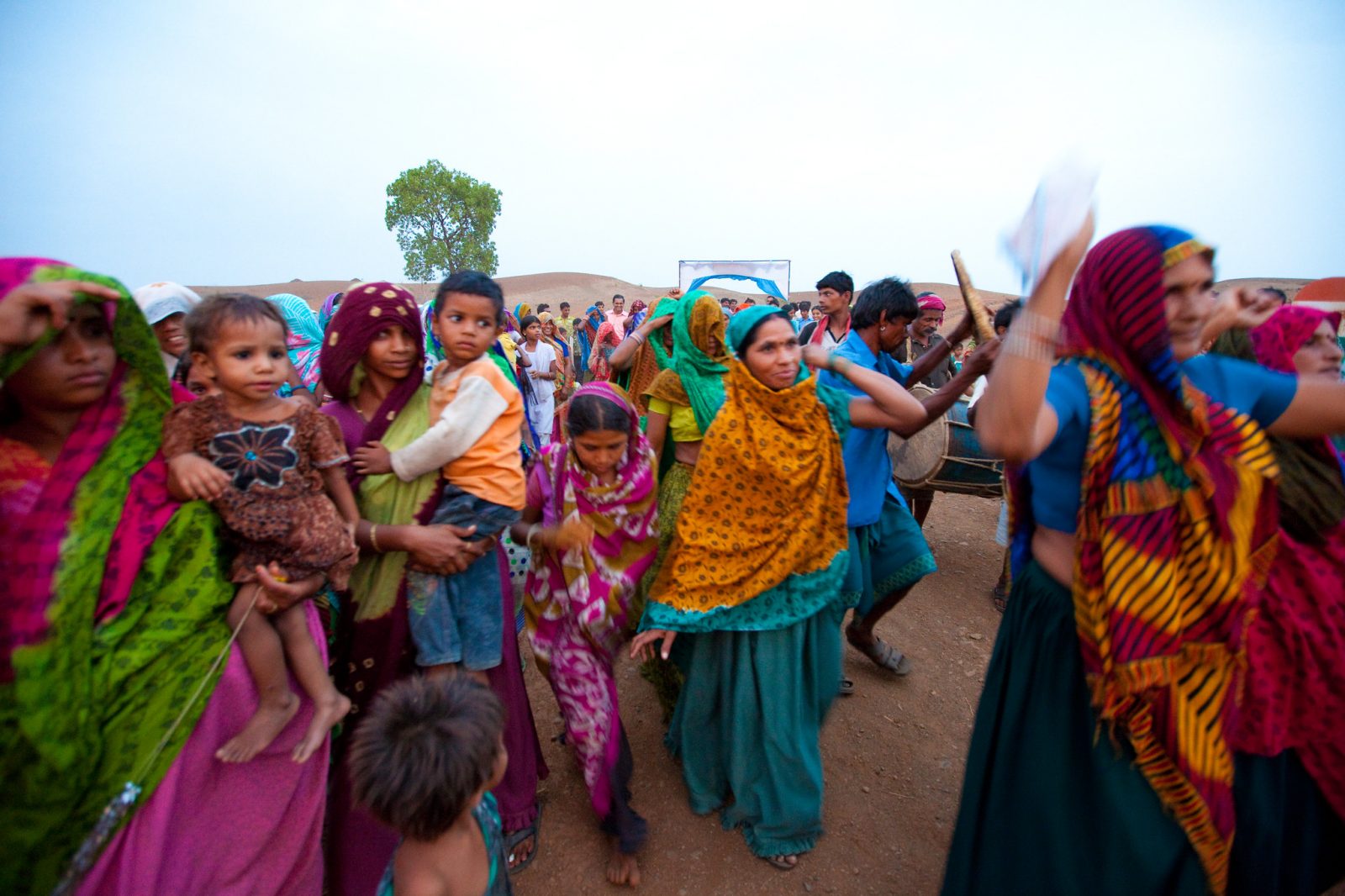
    Header Image: Welcome party at the Gram Sabha, Panchayat-Khaal Khandvi, District-Megh Nagar, Jhabua, MP (UN Women)