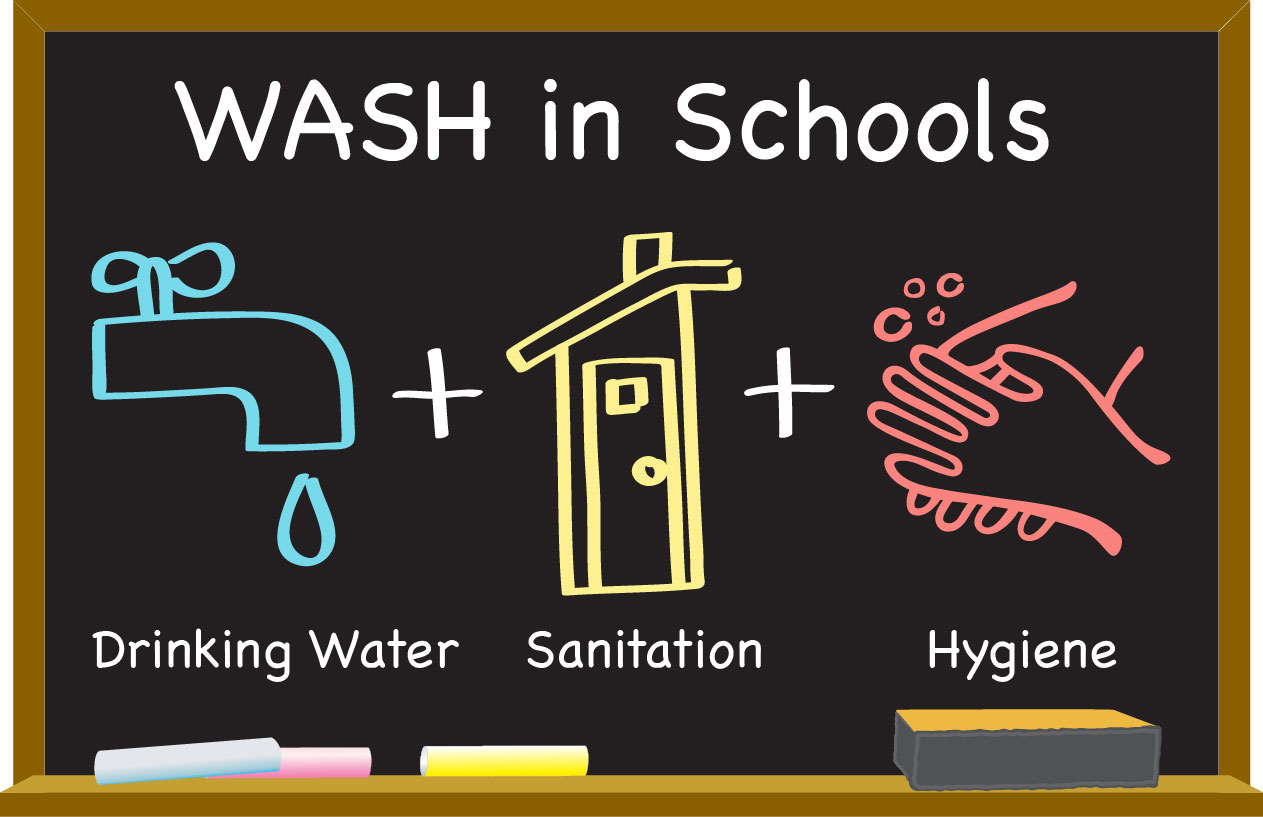
Ensuring that there are proper health and hygiene facilities and awareness for girls at the school level is an extremely important building block for quality education.
Introduction
Achieving quality education at school level is a dynamic process that needs to revise the elements according to the needs of the social setting. One such element is a policy that promises an education system to promote gender equality from the grassroots. The problem needs an intervention with an enhanced infrastructure for maintaining sanitation and hygiene for girl students and a holistic understanding of gender issues through awareness that leads to organic social change. The state, undoubtedly, is responsible to ensure quality education and resolve the gaps in education using innovative methods. Tamil Nadu is one of the best performing states as far as literacy rate is concerned. However, realistic social barriers still exist that need intervention and customized strategy. According to the 2011 census, Tamil Nadu stood third after Kerala and Maharashtra. The male literacy rate was around 87% and the female literacy rate was around 73%.
This article attempts to decode the most important factors,sanitation and hygiene, in ensuring ‘quality’ of education for girls. This particular aspect encompasses three main Sustainable Development Goals (SDG) of the UN; Quality Education, Gender Equality and Water & Sanitation. The last goal of providing access to clean water, sanitation and hygiene (WASH) particularly in rural areas is the means to achieve the former two goals of gender equality and quality education.
Need to prioritize WASH for quality education
Tamil Nadu employs more than 50% of its women in remunerative labour. Girls tend to drop out of schools either because of customary practices or because of the demand for labour. In some cases The lack of awareness and knowledge on menstruation and menstrual practices are also major factors contributing to this drop out. Despite several initiatives and attempts at establishing proper sanitation and hygiene practices particularly in schools, most of these initiatives fail to gain attention across social barriers, especially those initiatives surrounding menstruation and their importance. This exposes the limitation of community-based initiatives and their impact. Specifically Water, Sanitation and Hygiene practices, commonly known as WASH. Tamil Nadu is estimated to have 6.1 million adolescent girls and yet around 7837 schools have either dysfunctional toilets or no toilet facilities at all. The implication of such poor infrastructure is an adverse impact on learning and results in drop out from schools in most of the cases. Ensuring that there are proper health and hygiene facilities and awareness for girls at the school level is an extremely important building block for quality education.
The lack of awareness and knowledge on menstruation and menstrual practices are also major factors contributing to this drop out. Despite several initiatives and attempts at establishing proper sanitation and hygiene practices particularly in schools, most of these initiatives fail to gain attention across social barriers, especially those initiatives surrounding menstruation and their importance.
Access to toilets and sanitation facilities is a privilege that only a few have access to particularly in rural areas where people practice open defecation owing to the lack of toilets. Tamil Nadu has performed brilliantly in this respect since the implementation of Swachh Bharat Abhiyan Scheme in 2014. Over 48 lakh toilets were built in rural areas since 2014, with Tamil Nadu becoming an open-defecation free state.
The Government of India recognized the role played by sanitation and hygiene in ensuring that quality education is delivered. In 2014, the MHRD had launched the ‘Swachh Bharat Swachh Vidyalay’ initiative. The scheme was implemented to ensure that there were separate functional toilets for girls and boys. In addition to ensuring separate toilets, the scheme also focuses on maintaining a certain level of hygiene and sanitation. While it is not enough that this initiative has been implemented in schools across the country, it is also important that parents, teachers and children are aware of the same. Proper hygiene and sanitation does not end in school, it is imperative that this awareness is spread in local communities and villages as well. As a part of the scheme, government schools in rural and urban areas are eligible to nominate themselves for the ‘Swachh Vidyalay Puraskar’. This acts as an incentive for schools across the country to improve their WASH standards.
Capitalizing the Digital Wave
With Tamil Nadu’s rural internet penetration through mobile phones at 41.98%, there is a significant potential that can be tapped in the state’s ICT usage. While creating awareness is one side of the coin, spreading awareness is another. This is where the potential of ICT can be harnessed, in spreading awareness. The government of Tamil Nadu has made available textbooks, lessons and other educational material on their ‘DIKSHA’ portal which is essentially a YouTube channel. On this channel, students from different classes can access their study material. This could be one of the possible means through which awareness can be created across districts and villages on the importance of sanitation and hygiene.
Some of the government schools in Tamil Nadu have demonstrated an exceptional WASH record, thereby proving the fact that if the administration is focused the results can be excellent as shown by Thiruvallur and Vellore districts. Schools in these districts have maintained excellent sanitation and hygiene standards and have been recipients of the SVP. The initiatives taken by these schools to spread awareness on the importance of sanitation and hygiene have largely been behaviour oriented. By involving parents and the larger community, these initiatives have been successful and effective as well. Community-based initiatives are to create and spread awareness on various social welfare schemes. Apart from creating awareness, such initiatives also tend to bring communities together. The implementation of the SBSV scheme has facilitated the use of ICT as well. While the integration of ICT in the process is a welcome change, there is a lack of clarity on what exactly it is being used for.
Importance of awareness on Menstrual Hygiene
It has been established that several initiatives were taken in the past and are being taken to improve ‘WASH’ practices in the country, particularly in schools to improve enrollment rates as well as reduce dropout rates. Educational institutions in the country, particularly schools have an inherent responsibility to educate adolescent girls on menstruation, talk about the changes it brings about in a girl’s body. A 2014 report by Dasra foundation posits that close to 23 million girls drop out of school annually due to a lack of awareness. 79% of girls and women in Tamil Nadu were not aware of menstrual hygiene and practices that are followed at the time of menstruation. Lack of awareness of menstrual hygiene and the practices that are required to be followed at the time of menstruation makes a girl/woman extremely susceptible to infections. This is largely attributed to the stigma that is created around menstruation and the notion that it is an ‘impure’ phenomena. A study conducted in 2015, in Padappai, points out that only 43.33% of girls were aware of menstruation when they experienced it the first time. The source of information in most of these cases was the mother while the teachers and schools had a very small part to play in the process. Therefore, a layer of stigma surrounding the issue is apparent that is far from being institutionalized. Institutionalizing the issue would lead to it being discussed in schools, which in turn would normalize it and break the stigma around it. There are a plethora of possibilities that ICT brings about. Schools could tap into this potential and make use of it to communicate effectively to their students. In rural India particularly, simply creating awareness and breaking the stigma around menstruation will not suffice. Often, this stigma is reinforced by women in the family. In order to move beyond this, schools must ensure that lessons on menstruation are conducted for both girls and boys alike. Not only does this induce awareness among boys but it also makes them more sensitive to the issue.
A 2014 report by Dasra foundation posits that close to 23 million girls drop out of school annually due to a lack of awareness. 79% of girls and women in Tamil Nadu were not aware of menstrual hygiene and practices that are followed at the time of menstruation.
Awareness through Digital Platform
Tried and tested methods of spreading awareness in a community has generated results but is not enough. Improving sanitation and hygiene standards in learning institutions requires the participation of all the stakeholders involved in the process. While this may be an initial attempt at de-stigmatizing the issue, undoing centuries of discrimination and oppression requires a systemic approach. Tamil Nadu government’s ‘DIKSHA’ portal is a good place to start. In addition to developing online resources, there must also be some sort of portal that mandates uploading information related to the sanitation and hygiene measures that are being taken in schools. Additionally, it is important to use digital interventions to create awareness and reinforce the message in a timely manner. While infrastructure creation is a part of the goal, it is equally important to establish the need for it and educate people. This is where the digital intervention comes into the picture. One of the goals in Tamil Nadu’s Vision 2023 Project is to encourage PPP as a mechanism for infrastructure creation. This could be one of the potential means through which awareness is spread by introducing digital interventions in rural areas. It could either include installing a TV in Gram Panchayat offices which could display campaigns on the importance of sanitation and hygiene/menstrual hygiene, etc. With respect to creating awareness on menstrual hygiene which is a systemic issue because of the stigma attached to it – the solution needs to be systemic as well. For starters, creating conversation around menstruation is extremely important. Something called the ‘culture of silence’ exists in Kenya particularly in rural areas where girls refrain from speaking about menstruation and puberty. Identifying practices like this is a start when it comes to de-stigmatizing menstruation. While removing GST on sanitary napkins is one way to make the product more accessible, it is important to make people realize why there is a need for using one in the first place and the consequences of not using it. This brings us to the question of whether it is enough for the state to build infrastructure alone and if its responsibility ends there as opposed to also creating awareness on how to go about using the said infrastructure as well as educating people on its importance.
Ensuring Effective Policies
Some of the government schools in Tamil Nadu have demonstrated an exceptional WASH record, thereby proving the fact that if the administration is focused the results can be excellent as shown by Thiruvallur and Vellore districts. Schools in these districts have maintained excellent sanitation and hygiene standards and have been recipients of the SVP.
Initiatives like the SBA, SBSV and SVP are focussed around creating infrastructure and incentivizing schools to implement hygiene practices. Sanitation happens to be a state subject, and each state faces its own challenges with respect to addressing the problem. For instance in a state like Tamil Nadu where there is decent infrastructure, the drop-out rate for girls is still on the higher side. A lack of awareness on menstrual hygiene has also contributed to the drop-out rates in the state. Evidence suggests that not all government schools in Tamil Nadu have toilets and the ones that have toilets, do not maintain them well. Perhaps now the state must implement initiatives that focus on capacity building and behavioural change in order to ensure that the results are more impactful and also long-lasting. The initiatives that the state implements in the future must focus on intrinsically motivating people to implement sanitation and hygiene practices in their lives. Apart from that, the state must also conduct follow-up workshops that engage with people and communities and teach them how to use toilets, etc. In addition, whenever a new initiative/scheme is launched, state governments must also make sure that there are bodies/committees in place in every district that happens to be a beneficiary of the scheme. As communication becomes easier and more efficient in the digital age, initiatives that are implemented in the future must focus on knowledge creation.
References
https://www.orfonline.org/expert-speak/gender-dimensions-of-school-closures-in-india-during-covid19-lessons-from-ebola-66643/
https://poshan.outlookindia.com/story/poshan-news-strong-connect-between-sanitation-and-health/348492
https://swachhindia.ndtv.com/23-million-women-drop-out-of-school-every-year-when-they-start-menstruating-in-india-17838/
https://www.ncbi.nlm.nih.gov/pmc/articles/PMC6286883/
http://sujal-swachhsangraha.gov.in/sites/default/files/Five%20schools-%20WASH%20in%20School%20-%20practices%2C%20Tamil%20Nadu-%20Clean%20school%20.pdf
https://mhrd.gov.in/sites/upload_files/mhrd/files/upload_document/Swachh_Vidyalay_Puraskar_Guidelines.pdf
https://www.researchgate.net/publication/294638502_Awareness_about_menstrual_hygiene_among_adolescent_girls_in_rural_area_of_Kancheepuram_district_-_Tamilnadu
https://timesofindia.indiatimes.com/city/chennai/tn-second-in-rural-smartphone-use/articleshow/67291628.cms
https://www.researchgate.net/publication/333561228_Availability_and_Utilization_of_Sanitation_Facilities_A_Micro_Study_from_Rural_Tamil_Nadu
https://swachhindia.ndtv.com/swachh-bharat-abhiyan-tamil-nadu-to-go-open-defecation-free-on-october-2-25278/#:~:text=Tamil%20Nadu’s%20Swachh%20Bharat%20Abhiyan%20Journey&text=The%20state%20has%20a%20total,declared%20free%20from%20open%20defecation.&text=Tamil%20Nadu%20has%20improved%20its,per%20cent%20in%20four%20years.&text=Over%2048%20lakh%20toilets%20(48,since%202014%20in%20rural%20areas.
https://www.wsscc.org/2016/08/10/wsscc-menstrual-hygiene-management-training-kenya-breaks-silence-menstruation/

 Book Review