Tag: Violence

  • Perpetrators and Victims: Ways Out of Violence?

    Perpetrators and Victims: Ways Out of Violence?

    Franz Fanon had sharpened the problem in such a way that the colonised would only really liberate themselves through violence and the killing of the colonialists because only in this way could they free themselves from the humiliation they had suffered.

    the real evil is humiliation – and many civilisations and peoples of the world have not only been exploited in colonisation but, perhaps more importantly, humiliated.

    violent action changes one’s own soul.


    I would like to emphasise from the outset that many readers of these lines will, of course, think that this is the writing of a Western-influenced intellectual, especially a German, who is marked by the guilt of the Germans for Auschwitz. Indeed, I am. Nevertheless, I want to address several issues beyond the current conflicts.
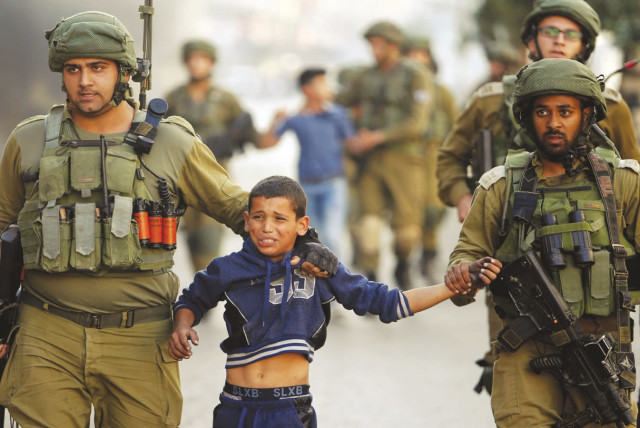
    An explanation of the causes of violence can very quickly turn into an understanding, and this into a legitimation of violent action. Although the boundary between these three concepts is fluid, it does not follow that identifying the causes of violent experiences legitimises all forms of one’s violent actions. Thus, while one can legitimise the violent resistance of the Palestinians and the establishment of their Palestinian state, one cannot legitimise all forms of one’s use of violence. The Queen of Jordan is indeed absolutely right when she accuses the West of double standards in the application of morality – but the need for moral recognition of the opponent as a human person is in no way invalidated by the Western double standard. In my view, there is no difference in principle whether Palestinian or Israeli children suffer. But the suffering of children on one side does not justify the suffering of children on the other side. At the moment, we are also in an information war in which precisely this is being conveyed – my own experience of violence as a victim legitimises the use of violence by myself. In his anticolonialism impulse, Franz Fanon had sharpened the problem in such a way that the colonised would only really liberate themselves through violence and the killing of the colonialists because only in this way could they free themselves from the humiliation they had suffered. This assumption, however, turned out to be highly counterproductive because violent action changes one’s own soul. While I fully agree with Jacques Vergés that the real evil is humiliation – and many civilisations and peoples of the world have not only been exploited in colonisation but, perhaps more importantly, humiliated. Here the distinction between a biological human being and a legal-moral person took on its nation-destroying dynamic and became a double standard – moral-legal qualities were granted only to Europeans, all others were degraded to half-monkeys, uneducated primitive peoples, or sub-humans (the Jews to the Nazis). This degradation did not kill the body, but like all rape, it killed the soul.

    Perhaps we need to get away from reducing every form of violence to its purpose – violent actions can also become independent. You can’t use violence the way you use cutlery and plates at dinner – after you wash up, everything looks the same, but people have gotten used to violence taking on a life of its own. The surviving fighters from the civil wars in the former Yugoslavia, Chechnya, Syria, and Iraq form a group of some 40,000 mercenaries who fight each other in ever-changing constellations. The 2012 “Tuareg” rebellion in Mali was also supported by such independent fighters, who returned from Palestine and helped themselves to the weapons stockpiles of the collapsed Ghaddafi regime. Chechen fighters, in turn, were a central part of the IS leadership; today, they are fighting on both sides in Ukraine. A tragic consequence of these developments is the inversion of the perpetrator-victim relationship. Many victims of violence have such fragmented souls that they use violence themselves to prevent themselves from ever being victims again, even at the cost of becoming perpetrators. Ideologies and political goals then become an indiscriminate source of legitimation for one’s violent actions, which ultimately only serve the purpose of no longer being a victim.

    Discourses of history: Throughout the Islamic sphere of influence, as in all colonised countries, there is a pronounced discourse of victimhood – the problem is that while the people concerned were indeed victims to the extent that the Western world still finds difficult or impossible to admit, a discourse of victimhood leads to legitimising even one’s own most horrific forms of violence by saying that one was a victim. Stalinism and Nazism, as well as the ideologies of al-Qaeda, Daesh/IS, the Taliban, and Hamas in Gaza, derive their legitimacy from this discourse of victimhood. At a training course in Yad Vashem, the Israeli Holocaust memorial, this victim discourse, the reversal of the victim-perpetrator relationship, was very vividly presented – not by me, but by the Israeli leaders of the training course. The symbol for this is the desert fortress Massada, where the last Jewish defenders committed suicide in order not to be humiliated as slaves by the Romans.

    But the consequence was the motto: Never again, Massada!

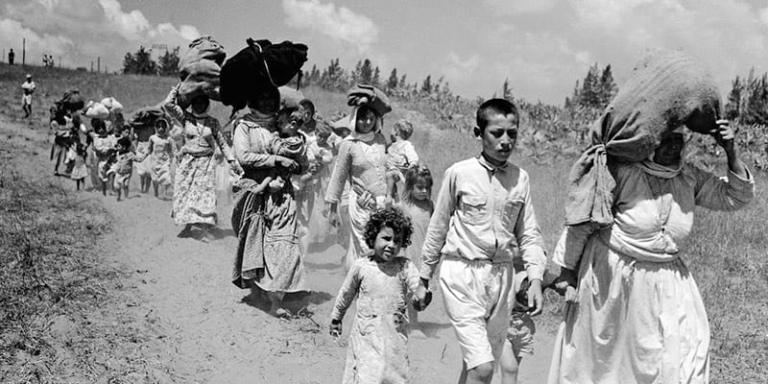
    And the Holocaust, anti-Semitism and Islamic Jew-hatred are not a distant past for Israelis but part of the present discourse – just as for many Palestinians, the Nakba is an ongoing part of the present. In Arabic, the Nakba refers to the flight and expulsion of some 700,000 Arab Palestinians from the former British Mandate of Palestine. It took place between the 1947 UN partition plan for Palestine and the 1949 armistice following the Palestine War, waged by six Arab states against the state of Israel, which was founded on May 14, 1948. In the historical narrative of Palestinians, other Arabs, and anti-Zionists, the Nakba is usually described as a pre-planned ethnic cleansing by the Israeli military; in the historical narrative of Israel, it is generally described as a voluntary flight in response to Arab calls. In my lecture at the World Peace Museum in Kyoto, Japan, I also wanted to talk about the crimes of the Japanese Empire in the 20th century. The colleague who invited me responded, at first incomprehensibly to me, that this could not be made a topic: He meant that you Germans were lucky, you had your Hitler. To my incomprehension, he explained that the Germans could blame the Holocaust entirely on Hitler and his few comrades, which, according to recent research, is not valid. But if he had to talk about the crimes of the Japanese army, he would speak of his father, but really about himself. He found himself unable to distance himself even minimally from his father. Although the greater sense of family in many non-Western societies can be a useful corrective to Western over-individualisation, the danger lies in the repetition of age-old conflicts. To my surprise, even the famous peace researcher Johann Galtung had postulated at a conference in Basel that 3 million deaths in the “Killing Fields” of the Red Khmer were compared to 3000 years of oppression. The undisputed experience of oppression led him to relativise a crime against humanity.

    The problem, however, is that for every terrorist killed, General Abi Zaid, the former commander of U.S. forces in Iraq, estimates that five new ones grow. After the violent excesses of Hamas members, it is “understandable” that the relatives of the victims want to kill them, but this will most likely only multiply the number of violent and militant supporters.

      Even with regard to the Holocaust, Hannah Arendt had distinguished between the unforgivable act and the perpetrator, whom one must be able to forgive. But “forgiveness” depends on the admission of guilt. And this admission is made virtually impossible by the victim discourse. In addition, it is difficult to come to terms with one’s own violent actions. Many of these people will never be able to return to civilian society – this could be observed, for example, in the case of US soldiers who, decades after the Vietnam War, still had to “play” the war over and over again in the Nevada desert, because the violence they had committed had filled their identity entirely. There is a drug that is more quickly and deeply addictive than even heroin – and that is violence. Violence eats the soul. And even if Arendt distinguishes between the perpetrator and the act, what to do with perpetrators who cannot distance themselves from the act is problematic. In a study of the recruitment of IS supporters in Iraq, it was found that the main recruitment base for IS was the prisons there. Even in Western prisons, petty criminals often turn out to be serious criminals. Sometimes, you have to admit that the only way to deal with people who are entirely violent is to kill them – like the IS supporters who abused Yazidi women as sex slaves. To this day, it is difficult to understand why the neighbouring states did not put an end to the violent excesses of IS earlier since it would have had no chance against a functioning modern army. The problem, however, is that for every terrorist killed, General Abi Zaid, the former commander of U.S. forces in Iraq, estimates that five new ones grow. After the violent excesses of Hamas members, it is “understandable” that the relatives of the victims want to kill them, but this will most likely only multiply the number of violent and militant supporters.

     Both Hamas and the religious extremists in Israel and the settlers in the West Bank are obviously trying to turn a political dispute into a religiously underpinned clash of civilisations, or, as Samuel P. Huntington better calls it, a clash of civilisations. Hamas is not only a liberation movement, as it is often ascribed in defence of its actions, but at least a religious movement oriented toward an eschatological struggle – just like the religious extremists in Israel. Both rely on the construction of identity that Huntington also advocates: we know who we are when we know who we are against. Although there is a renaissance of religion around the world, and it is often very violent, this does not mean that religions per se are violent. But religious belief necessarily excludes other beliefs. It is different from the civilisations associated with them. While religions exclude others, civilisations are much more likely to include others. This difference also explains why the followers of the great monotheistic religions, while claiming to be peace-loving, have been responsible for unparalleled excesses of violence throughout their history. The Islamic wars of conquest, the Crusades, the Ottoman conquests, the Thirty Years’ War, Islamic and Atlantic slavery, and, finally, worldwide colonisation leave a single trail of blood. And this, of all things, from two world religions that considered themselves peace-loving. The traditional explanation is no longer valid: these excesses of violence had nothing to do with religion but only with socio-historical conditions, which themselves were oriented towards eternal peace. This is certainly true for these civilisations (even if the concept of civilisation has been distorted by European colonisation), but not for the religions (which is why the Global Ethic project has failed so spectacularly, contrary to its own claims because it has not gone beyond a minimal consensus).

    Huntington’s liberal critics had argued not only that there should not be a clash of civilisations but also that there could not be one – because, in their eyes, there was only one civilisation, the Western one. The others are religions or cultures, but not civilisations. It is time to abandon this liberal and Western conceit, and the replacement of Eurocentrism with ethnocentrism or religious centrism is not an adequate response to the problems of exploding violence.

     At first glance, a dialogue of the world’s civilisations seems unrealistic in the face of worldwide explosions of violence. On the contrary, it is necessary to prevent political disputes from becoming a clash of civilisations. Huntington’s liberal critics had argued not only that there should not be a clash of civilisations but also that there could not be one – because, in their eyes, there was only one civilisation, the Western one. The others are religions or cultures, but not civilisations. It is time to abandon this liberal and Western conceit, and the replacement of Eurocentrism with ethnocentrism or religious centrism is not an adequate response to the problems of exploding violence. Instead, the appropriate response to the increasing number of wars and excesses of violence worldwide must be to separate the hardliners discursively, politically, and militarily from the population, not to drive the population into the hands of the hardliners. In the latter case, we would only be threatened with a new “bloody century” like the first half of the 20th century. A dialogue among the world’s civilisations is necessary, if perhaps only modest, step to avoid this. For in the mutual recognition of the world’s civilisations, both sides will be bound by their own civilisational principles.

    Feature Image: Nakba of 1948 – Palestinians being forced out by Israelis – arabcenterdc.org

  • Manipur: Into the Abyss

    Manipur: Into the Abyss

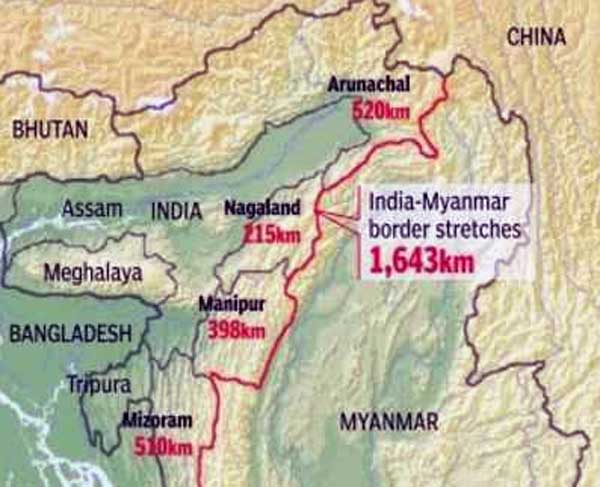
    Common sense tells us that all successful businesses are primarily driven by the profits they hope to earn. A possibility only in a peaceful and stable environment where law and order are not an issue. Therefore, the opening of the KFC restaurant at Churachandpur on 5th December last year, was a clear indicator that corporate honchos expected peace and prosperity to prevail in the State, as insurgency, which had lasted over five decades, seemed to have finally run its course.

    There were other indicators of this as well. Earlier, from 1st April 2022, the Central Government had removed the Armed Forces Special Powers Act (AFSPA) from 15 Police Station limits, in six districts. This was followed a year later, on 24th March 2023, with its removal from four more Police Station limits; a total of 19 Police Station limits in seven districts. This implied that neither the Army nor the Assam Rifles could operate in these areas without a formal request for their assistance from the State Administration, or without a magistrate being present.

    [powerkit_button size=”lg” style=”info” block=”true” url=”http://www.indiandefencereview.com/news/manipur-into-the-abyss/” target=”_blank” nofollow=”false”]
    Read More
    [/powerkit_button]
  • From Civil Wars to Gang Wars

    From Civil Wars to Gang Wars

    Depending on the context, these uprooted and redundant young people can become terrorists, child soldiers, members of youth gangs that dominate the suburbs from Paris to Rio, drug cartels, mafia gangs, or human traffickers.

    With the end of the Cold War in 1991, interstate war seemed to have said goodbye. But even then, there was no end of history, as Francis Fukuyama had assumed. Instead, interstate war was largely replaced by wars of intervention in weak states and civil wars. At the latest since the war in Ukraine, however, interstate war is back on the agenda and a new arms race has begun – the wars of the present have been nationalized. What is often overlooked, however, is that civil wars have not completely ceased to exist but have been replaced by gang wars. This will be analyzed here using the example of South American gangs, but it applies equally to large parts of Africa, Iraq, or Southeast Asia.

    A Brief Review

    In order to analyze this, a brief review is necessary. After the fall of the USSR, a return to the Middle Ages was diagnosed in security policy, and a return to pre-modern weapon carriers such as child soldiers, warlords, and private security companies. After the attacks of September 11, the fight against a new totalitarianism, this time Islamist, seemed imminent, and the “war on terror” was proclaimed. Meanwhile, China and Russia have re-emerged as serious rivals to the U.S., at least militarily, and a new arms race is on the horizon. The U.S. has been weakened by its lost wars in Afghanistan and Iraq, which even the much-vaunted and overestimated military-technological revolution could not stop.

    While in the 19th century the Western states conquered the whole world, in the 20th century the defeated empires and civilizations had to learn to live with the victorious West, and now the resurgent empires and the West have to learn to live with each other.

    Are there long-term trends in this rapid succession of different experiences and analyses of violent events? Two immediately come to mind: the “rise of the others,” as the influential US columnist Fareed Zakaria has called it, that is, the resurgence of the great empires and civilizations submerged by European colonization and US hegemony. These are primarily China and India, but also Russia and the littoral states of the North Pacific. In short, world affairs are shifting from the North Atlantic to the North Pacific. Whereas the entire 20th century was dominated by the North Atlantic littoral states (with the exception of Japan), in the 21st century there are at least two such centers: the North Atlantic littoral states and the North Pacific littoral states.  Here, the United States has the unbeatable geostrategic advantage of being located on both oceans. These former great empires and civilizations have almost one goal: to no longer be considered underdeveloped or backward by the states of the West, but as equals. While in the 19th century the Western states conquered the whole world, in the 20th century the defeated empires and civilizations had to learn to live with the victorious West, and now the resurgent empires and the West have to learn to live with each other.

    more and more people are becoming aware that Western modernity has a Janus face.   What is the hallmark of Western modernity: human rights, democracy and the emancipation of women, or colonialism, racism, two world wars?

    While until well into the 20th century many assumptions were that the values of Western modernity would spread throughout the world, more and more people are becoming aware that Western modernity has a Janus face.   What is the hallmark of Western modernity: human rights, democracy and the emancipation of women, or colonialism, racism, two world wars? And even Auschwitz was not carried out by “barbarians” but by the Germans, of all people, who are often associated abroad with Goethe, Schiller, Bach, Beethoven, and Mozart.  The opposing interpretations either argue that this is regrettable but has nothing to do with the nature of the West. And conversely, critics of the West argue just as one-sidedly that Western values are just empty words, and that the reality of Western politics is characterized by colonialism and racism. And Donald Trump’s current polemic against female Democratic Party politicians with immigrant backgrounds is racist, colonialist, and hostile to women. And the fact that there has been no outcry from the liberal West against this polemic may even indicate a concealed complicity because we Europeans also come to terms with racist and colonialist stereotypes. Donald Trump’s racism can be summed up in the simple formula: Make America white again. People of a different skin color or origin are only tolerated as long as they fit into the new hierarchy.

    Racist polemics like those of the new right in Europe, of White Power in the U.S., or even of Bolsonaro’s movement in Brazil can really only be understood against a backdrop of fundamental insecurity and grievance. The West feels deeply offended that the “others” who were always seen as less developed no longer want to copy it, and full of fear that they could even overtake the West. Fear rules the politics of the West, fear of the end of its feeling of superiority and of the fact that nothing could then be left if one no longer feels superior to the others.  Freely according to the motto: I am nothing, I can do nothing, but I am German – and this shows its ugly grimace in hate speech and violent outbursts. But we are not alone in this respect. For alongside the resurgence of the Others, which is significant in terms of world politics, civil wars around the world are turning into gang wars – the political community is disintegrating into ever new gangs. This has not been adequately perceived in the West until today because we have not been able to describe this process adequately with our conceptual system. In Western thought, the paradigm of Thomas Hobbes from the 17th century is still valid. It states that in a theoretically constructed state of nature, which always occurs when there is no longer a functioning state, the “state of nature” of the “war of all against all” occurs. In this conception, everyone is absolutely free and has a right to everything he can take, provided he has the power to do so. This life, however, according to Hobbes, is full of violence and fear eats the soul. To overcome this self-destructive “state of nature,” all individuals transfer all violence to a single sovereign, who in return provides them with protection and security. In this simple construction the modern state was born, secured by the state monopoly of violence. Here, only the state has a right to legitimately exercise violence, and non-state violence is criminalized.

    Gang Wars

    What is not included in this construction are gangs – groups of mostly young men left over from the civil wars since the end of the Cold War, uprooted in the refugee movements, or who have lost their identity in the dramatic transformation process we trivialize as globalization. Depending on the context, these uprooted and redundant young people can become terrorists, child soldiers, members of youth gangs that dominate the suburbs from Paris to Rio, drug cartels, mafia gangs, or human traffickers. The context varies, but the cause is the same everywhere: these young people feel marginalized, superfluous, and uprooted. Approaches that have analyzed related global violence have almost always emphasized individual violence or violent enrichment. Of course, there are civil war economies, markets of violence, and state collapse, including “new wars” (Kaldor and Münkler) characterized by the privatization and economization of violence and asymmetric warfare against the weakest in societies. In such markets of violence, people are traded first and foremost, and about 79% of them are women and children, but also weapons, drugs, rare earths, and the well-known blood diamonds as a synonym for precious stones. In many countries, however, violent gangs play at least as large a role.

    A characteristic feature of these gangs is that they are not exclusively concerned with private enrichment through violence, but paradoxically give their members a sense of identity and even home through their violence. This paradox is not provided for in our conceptual system for understanding violence.  Islamist terrorism can in no way be attributed to the pursuit of material interests. It is true that the Islamic State also used oil and that the Taliban dominate the opium trade in the Golden Crescent between Iran, Afghanistan and Pakistan. This only proves that there is a link between political and economic struggles, not that the struggles for recognition and identity in these organizations are economically determined. This means that there is still a link between violence and the market, perhaps it has just become more “invisible”, more visible at the micro level. Macro-violence, on the other hand, is increasingly characterized by struggles for identity and recognition.

    If we say there is a transition to a global war of all against all, I think there is a global transition to gang wars. These may or may not be youth gangs. Drug cartels and mafia organizations can also be based on gang structures. Of course, economic interests play an important role here, but I doubt that cohesion is guaranteed by economic interests alone. One example is the Japanese Yakuza. What are gangs?  A gang is a group that originally formed spontaneously and socializes and integrates its members through fighting and conflict. Typical behaviors include meeting in person, hanging out and occupying public space, traveling in a group, and having a high propensity for conflict – such as rocker groups.

    Many children, adolescents, and young adults in Central and South America are active members of youth gangs called “maras” or “pandillas”.

    The result of this behavior is the development of a distinct tradition, an unreflective internal structure, an esprit de corps, paradoxically solidarity and morality within the group, and a sense of belonging to a unified territory.  The leader must constantly maintain a threatening gesture against his own and also constantly rekindle the waning enthusiasm of his followers; in other words, respect for him must be constantly maintained. Many children, adolescents, and young adults in Central and South America are active members of youth gangs called “maras” or “pandillas”.

    After the end of the civil wars in Nicaragua in 1990, El Salvador in 1992, and Guatemala in 1996, there was a forced migration of illegal immigrants from the U.S. to their home countries, including the deportation of Central American-born members of street gangs formed in the U.S. to their parents’ home countries.  These young people had fled poverty and civil war, formed criminal gangs (maras) primarily on the West Coast of the U.S., and were now forced to return to their home countries, which they may never have seen. Back in Latin America, the mareros regrouped and received a large influx of both young people looking for direction and demobilized security forces and guerrillas (there were about 40,000 of them at the time).

    The most important aspects of a Latin American gang member’s life are honor, drugs, and violence. This is what a pandillero’s entire daily life revolves around, and in most cases, it also determines the when, how, and why of his death. In the gangs, there is a certain code of honor that states that gang solidarity and reputation are more important than anything else.  In a sense, the honor of the gang becomes the transcendence of the members, as the collective as such is religiously exalted and the individual counts for less and less. The individual is obligated to kill unconditionally for the honor of the group or die himself. There is also a paradoxical construction in another point: on the one hand, there is an absolute hierarchy, on the other hand, there is a feeling of being a gang: “We rule the barrio so that no one tells us what to do. If someone does, we silence them. You submit because we are many. We young people rule.  The response of the pandillero in a world where he is nothing is to attack, to dominate the barrio, to submit because he is submitted, to define a territory because he lives in uprootedness, to join an institution that gives identity because he lacks it. The pandillero strives to dominate in an environment that excludes him.

    Whoever belongs to a pandilla must not only master the exercise of violence, but must also be able to accept the suffering of violence. The initiation rituals for men and women are different: men must allow themselves to be beaten by existing members of the gang for a certain period of time, which varies from gang to gang, while women must allow themselves to be raped by any member of the gang. The unimaginable extent of violence in Central American youth gangs is an indication that gangs cannot be attributed to interests alone, for although these interests may be predominant in the exercise of violence, they are unlikely to play a role in voluntary submission to the group, self-sacrifice for it, and endurance of violence. Rather, the recognition by group members of having endured violence is the central aspect of one’s identity and loyalty to the gang. This is the too often overlooked connection between the wars of states and parastatal organizations (IS, Hamas, Hezbollah, Iran’s Revolutionary Guards) and the violence that takes place on a mass but individual level (Hobbes, war of all against all). They cannot be attributed to either level, but are the intermediate realm, the hybrid between the two.

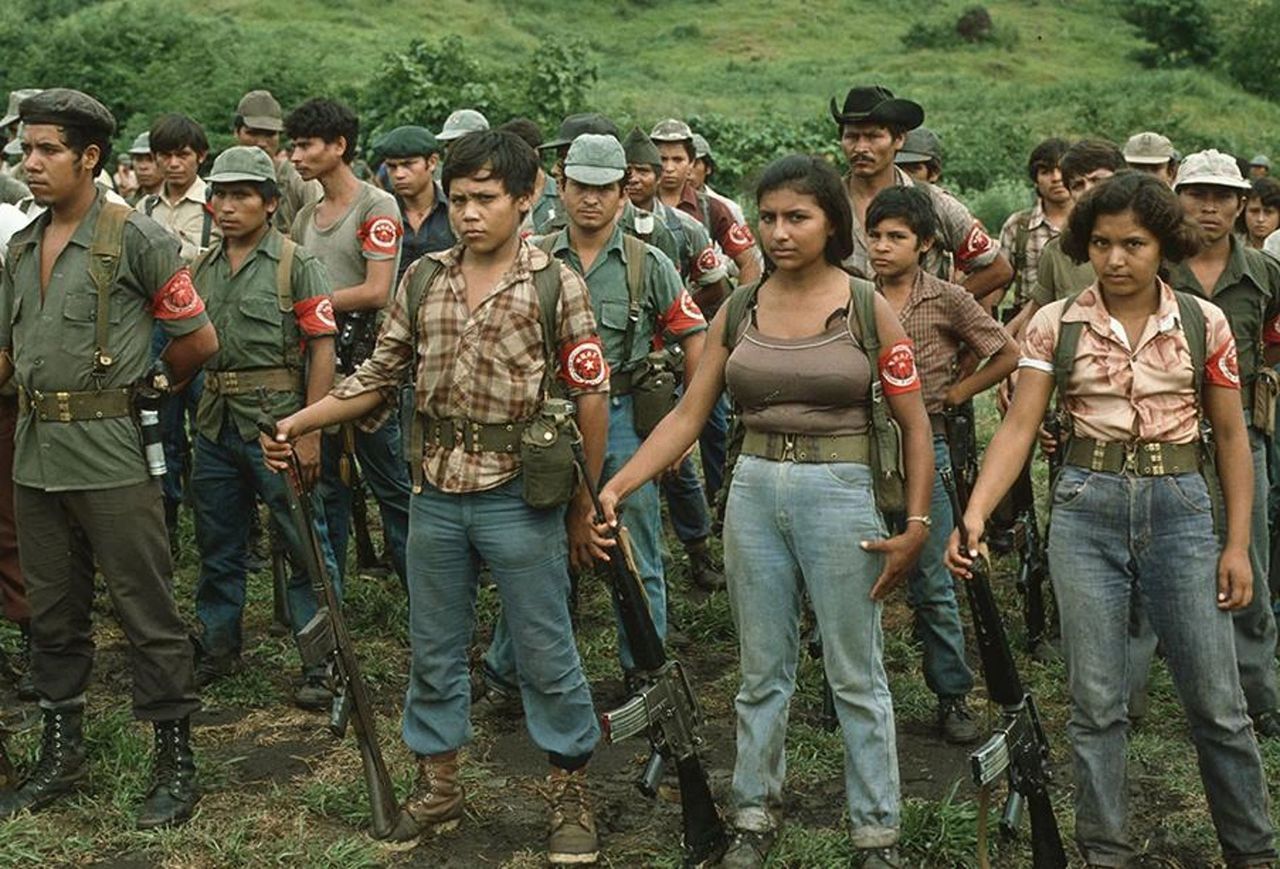
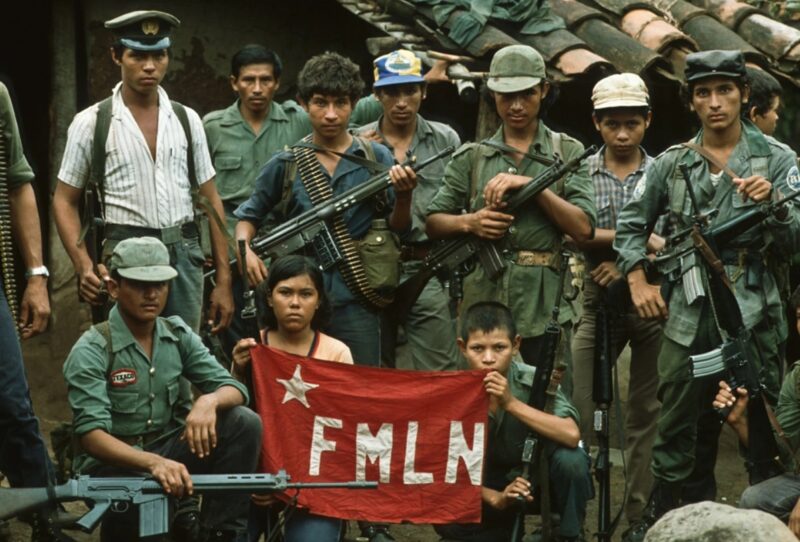
    Feature Image: Salvadoran left wing revolutionary group Farabundo Marti National Liberation Front

  • Consequences of the Manipur Conflagration

    Consequences of the Manipur Conflagration

    By any measure, the situation is bleak and what makes it even worse is the fact that thousands of weapons have been looted from police armouries…

    In the summer of 64 AD, nearly 2000 years ago, Rome, more or less, was completely razed to the ground in a fire that lasted six days. The hapless citizens, in utter frustration, turned on their much-despised Emperor, Nero. He was a patron of the arts, fond of music, with a talent for playing the Cithara or Kithára, an ancient Greek string instrument, not unlike our very own Sitar. Clearly that old and well-known adage “Nero played the fiddle while Rome burned”, was grossly unfair to him, not least, because the fiddle was only invented 1500 years later.

    In a manner of speaking, one cannot avoid but feel that our political establishment has, in many ways, ended up playing the proverbial fiddle as Manipur burns, as the only matters they seemingly have time for, are elections and inaugurations. And burning it is, though one would get a distinctly different impression, if our wonderful mainstream media is to be taken at face value. Fortunately, it seems that after nearly a month of unmitigated violence, they have finally been shamed into at least mentioning violence and Manipur together, though their coverage remains scanty and cursory, to say the least.

    [powerkit_button size=”lg” style=”info” block=”true” url=”http://www.indiandefencereview.com/news/consequences-of-the-manipur-conflagration/” target=”_blank” nofollow=”false”]
    Read More
    [/powerkit_button]

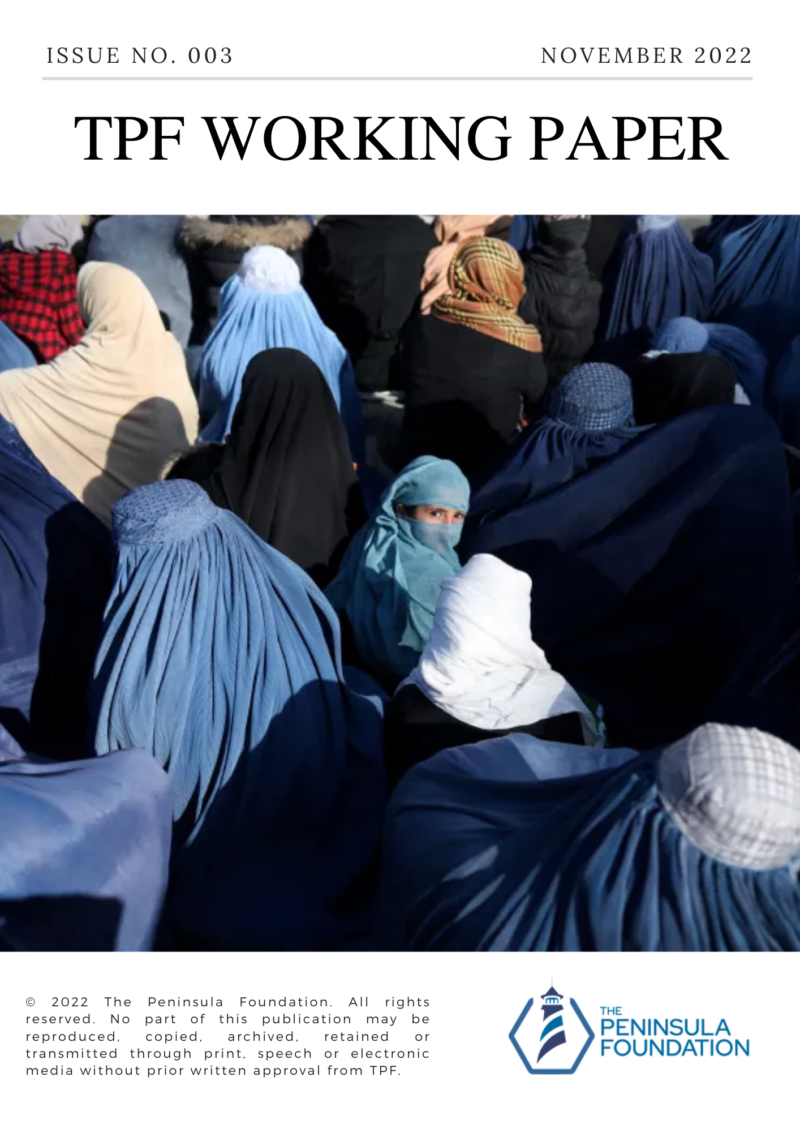
  • Women in Afghanistan: The Fight Back

    Women in Afghanistan: The Fight Back

    [powerkit_button size=”lg” style=”info” block=”true” url=”https://admin.thepeninsula.org.in/wp-content/uploads/2022/12/Womens-Right-In-Afghanistan_Hemantika-1.pdf” target=”_blank” nofollow=”false”]
    Download
    [/powerkit_button]

    Introduction:

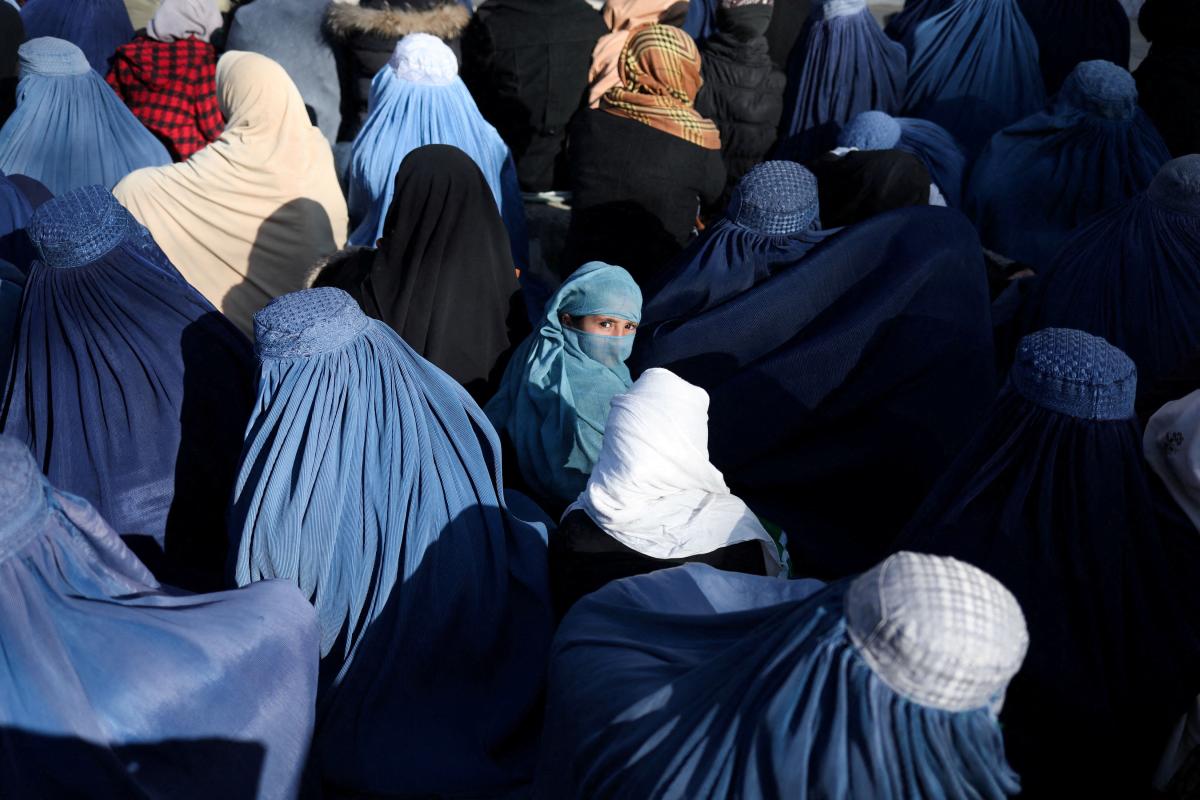
    Women and men undergo varied experiences in the event of an absolute collapse of the socio-political order. When combined with a catastrophic political transformation, their exposure to systemic abuse and violence dramatically increases. The vulnerability of women and their exposure to such violence is much more pronounced compared to what men face. This paper attempts to map the violence and abuse of rights women in Afghanistan are facing under the new Taliban rule after the American withdrawal. It also focusses on their response to the same. 

    Women under Taliban 1.0

    Afghanistan is a multi-ethnic country with a diverse population. Women’s issues have always had a central role in the governance system. From the beginning of the birth of modern-day Afghanistan, different monarchs have played a key role in determining the status of women in society, in line with their Islamic worldview. However, though women were considered inferior to men, they had their share of rights that were in no way meant to keep them confined to their houses. Instead, their free movement was hardly restricted. Covering their heads or wearing a burqa was not mandatory. There were organizations like the Anjuman-I-Himayat-I-Niswan(Organization for Women Protection), which worked to encourage women into reporting any kind of injustice meted to them. 

    After the Soviet invasion of Afghanistan in 1979, women’s rights were further amplified with universities in most cities, especially Kabul admitting them. After the departure of the Soviets in May 1988, the Mujahedeen overturned all that the Soviet Union had stood for, which included women’s rights regarding employment and education. Women were pushed away from public life and forced to wear a burqa. Fewer women were visible on television.

    [powerkit_button size=”lg” style=”info” block=”true” url=”https://admin.thepeninsula.org.in/wp-content/uploads/2022/12/Womens-Right-In-Afghanistan_Hemantika-1.pdf” target=”_blank” nofollow=”false”]
    Download
    [/powerkit_button]

  • Power Shift: Knowledge, Wealth, and Violence at the edge of the 21st Century

    Power Shift: Knowledge, Wealth, and Violence at the edge of the 21st Century

    Power Shift: Knowledge, Wealth, and Violence at the edge of the 21st Century” by Alvin Toffler, Bantam Books, 1990. New York

    Alvin Toffler

    Last book of the trilogy, ‘Powershift’ published in the 1990s still continues to be an impressive intellectual handbook to understand the transformation of power in a rapidly evolving technological, economic, and social environment. Toffler argues the nature of power in any epoch is determined by knowledge, wealth and violence. By acknowledging the inevitable emergence of new age knowledge economy, Toffler sets to describe the set of changes in the power dynamics at the turn of the 21st century. A gradual shift in power succeeds with knowledge through control of information in a super symbolic economy. Post third wave of industrialization, smoke stack industries would be replaced by decentralized industries with technology and information playing critical roles. China in the past few decades has designed its economy based on knowledge and gained technological sovereignty in Asia threatening the West’s global dominance. He asserts the pattern of powershift in politics, economics and business would be integrated and the hierarchy of power would get dissolved. A mosaic of power structure would emerge, ‘demassyifying’ production that determines the future of an economy. Recent developments in 3D printing, artificial intelligence etc have changed the paradigm of manufacturing – the country investing and comprehending the impact of innovation and disruptive technologies would gain economic superiority. By providing substantial case studies and thorough qualitative analysis, the futurist predicts millennials to redefine the defence for democracy with technology, information and knowledge. There exists a conspicuous relationship between power, wealth and knowledge since the beginning of the industrial revolution. While power has traditionally been symbolised by brute military power and economic power until the end of the world wars, the post 1945 transformation of power is contained in a triangle of military power, economic power, and knowledge (science and technology) power, Knowledge has now transformed the very notion and effectiveness of power. Power structure in the 21st century, according to the writer, will be redefined by knowledge.

    Power Shift: Knowledge, Wealth, and Violence at the edge of the 21st Century

    Violence and wealth function as important tools to consolidate power – politicians, bureaucrats and business people have always used violence & wealth to move up the hierarchy. Changing levels of technology and innovation has advanced knowledge to be a source of high quality power. Toffler firmly argued that power shift era will not be about competing nations or institutions for power, rather the dynamics between violence, wealth and knowledge would be the most intimidating transformation of power. Twenty odd years later it is clear that his analysis is spot on. An important note has been made on three key factors that bolster power accumulation – military, economic and technological power. Any country claiming superiority over these three could garner superpower status. Testing this hypothesis in the case of scandanavian countries proves that despite achieving superior economic and technological capabilities these countries could never realise great power status due to lack of strong military power. Toffler highlights, however, that the nature of military power now symbolises the critical influence of knowledge power. Tofflers’ concepts, also echoed by Joseph Nye as ‘smart power’ (combination of soft and hard power), justifies the end of the Cold-War era power struggle. Political values, culture and foreign policy were fundamental for soft power, traditional marxist and liberals considered economic might to be foundational to soft power. Global power centre of gravity shifting from west to east at the turn of the 21st century is a reflection of not just the rise of Asia but also the transformation of power and hence, the powershift. China’s ambitious Belt and Road initiative aims to consolidate its economic power within the western framework and then transform it. Undoubtedly, power transformation across the region and within a country is an outcome of increasing control of and access to advanced technology. A successful super symbolic economy would operate only in a country which manages to maintain monopoly of knowledge for a brief time frame until the knowledge can be commercialized to boost the economy further.Toffler has made assumptions by partially ignoring the role of domestic government structure in accumulating wealth by gaining access to control of knowledge. The inextricable link between local framework in materializing as an influential player in the global market cannot be ignored. Toffler’s following statement rings even more relevant today than ever before – “Knowledge itself … turns out to be not only the source of the highest-quality power, but also the most important ingredient of force and wealth. Put differently, knowledge has gone from being an adjunct of money power and muscle power, to being their very essence. It is, in fact, the ultimate amplifier. This is the key to the powershift that lies ahead, and it explains why the battle for control of knowledge and the means of communication is heating up all over the world.” By using the term knowledge liberally, author assumes a fluidity in defining knowledge as a tool in the era of powershift. Beyond logical thinking, knowledge is related to the ability of learning, unlearning and relearning. Any information and data can be reproduced with value as a product of passion and innovation. India at this juncture must position herself to strategically become a strong emerging power in a multi polar world. Counter balancing China’s growth in Asia, India has to permeate the knowledge economy by investing in technology and innovation. It might be fallacious to idealize China’s path, but it is critical to recognise the changing dynamics of knowledge in the current world order. An exhilarating text presenting an inspiring account of the future which we currently live in. The book remains germane as we experience knowledge of technology shaping the power structure and reiterates the dictum ‘knowledge is power’.