Tag: USA Sanctions

  • Analysing India’s Trade Bottlenecks

    Analysing India’s Trade Bottlenecks

    U.S. is raising vague arguments and challenges such as ‘forced labour’ and ‘surplus capacity’, while advanced countries do not help with technological development.

    On July 15, the India-U.K. trade deal came into force. That day, India banned the import of goods made using forced labour so as not to get unfavourable treatment from the U.S. under Section 301. A day later came the news that a bipartisan Bill has been proposed by U.S. Senators to levy up to 100% tariff on India and others for buying Russian crude. One way or the other, India’s trade with the U.S. is being buffeted by bottlenecks.

    China’s trade
    In contrast, without a trade deal, China has become India’s largest trading partner. Imports from China in the first half of 2026 have shot up by 21.8% while exports have risen by 37.2%, though on a small base. The already-high trade deficit with China of $116 billion last year is likely to rise since it has already topped $67 billion in the first half of the current year. The imports from China are high- and low-tech items, while exports are mostly low-value-added items.
    India’s dependence on China is overwhelming. Factories and exports increasingly depend on China for machinery and intermediates. For instance, pharmaceuticals depend on imports of API from China. The average wage rates in key sectors such as automobiles and apparel are half to one-third of China’s. Yet, India is unable to outcompete China in global markets because of the huge technological advantage the latter has gained in the past 35 years.
    While multinational companies (MNCs) have invested in China, as a share of total investment, it has been small. Further, to capture markets, China has been investing in other countries under the One Belt, One Road initiative. Thus, net foreign investment in China has been small. Finally, as Chinese companies have become big, they are outcompeting MNCs such as Tesla. And many U.S. companies have left China, including Amazon, Apple, Dell, IBM, and Uber.
    India is unable to finalise a trade deal with the U.S. since at least July 2025, though Commerce Minister Piyush Goyal keeps assuring the nation that it is almost done. Last August, India’s exports were hit by a 50% tariff, leading to a decline in labour-intensive exports of apparel, shrimps, leather goods, and so on. India’s overall trade deficit increased in 2025 to $120 billion from $94 billion in 2024. China faced high US tariffs, but by diversifying trade, it increased its trade surplus in 2025 to $1.19 trillion from $992 billion in 2024.
    Technology and investment
    The lesson is that technology is the key to trade in today’s globalised world. China is accused by the West of currency manipulation and massive government help to cheapen its exports. The implication is that China is draining its surplus to sell to the rest of the world. And, it is supposed to have been doing so for at least the past 35 years. Such trade over long periods of time should have drained resources and made China suffer. Instead, the Chinese economy has boomed and become five times larger than India’s economy.

    The reason is China’s high savings rate of above 35% of GDP since the 1980s and at times reaching close to 50%. This has been able to finance its huge investments of 40% and more, peaking at 47%. Its growth has not depended on foreign investment.
    This massive investment has enabled China to invest in technology development and expand its industry. This has fuelled rapid economic growth, and initial low consumption levels have risen rapidly, as is visible in any modern Chinese city. The U.S. has tried to thwart Chinese advances in technology by putting restrictions, but China has managed to circumvent that and continue upgrading technology. So much so that the U.S. has come to depend on Chinese imports.

    Since Trump has squeezed India, the latter has entered into trade agreements with important trade partners — the U.K., the European Union, the UAE, New Zealand, and so on. But caution is required since the earlier trade agreements with Japan, Korea and Australia led to a larger trade deficit with them. India could not increase its exports as much as others could because of their technological advantage.

    The advanced countries have not helped India with technological development. They want to export but not share technology. The United States Deputy Secretary of State said at the Raisina Dialogue in New Delhi that the U.S. made a major strategic and economic error roughly 20 years ago by giving China extensive access to American markets, technology, and capital. He said such a mistake would not be made vis-a-vis India. The implication is that India has to develop its own technology; otherwise, it will lag behind the advanced countries and China.

    Forced labour
    By investigating India on “forced labour” under Section 301, the U.S. is seeking to create a bottleneck to extract concessions. Forced labour implies coercion to work. Workers have no choice but to do the bidding of the employer because the option is hunger. Employers take advantage and pay low wages. This gives an exporter an advantage as its produce becomes cheaper. The U.S. says that is unfair to its producers.

    But wages in the developing world are much less than in the advanced nations. Does that mean that all production in the developing world is using forced labour? In India, unorganised labour receives low wages since it has little bargaining power to obtain decent wages. Thus, most of India’s production can be said to be based on forced labour. And its imports from developing nations can be said to be based on forced labour. This is a non-tariff barrier that the U.S. wants to apply to India.
    Another non-tariff barrier the U.S. is threatening to use is “surplus capacity” in steel, textiles, and so on. Any export by any country is over and above what it uses within its own territory. So, all export is based on surplus capacity. The U.S. has a massive agricultural surplus which it wants to dump on India. Its companies provide massive amounts of defence armament to the rest of the world. Which country does not produce for export so that it can import what is needed by its economy? Entire trade depends on these surpluses based on “comparative advantage”. So, what is India being penalised for? Are these bargaining chips to extract concessions?

    India’s trade with the U.S., till recently its largest trading partner, is being buffeted by vague arguments and challenges. Earlier it was the so-called “reciprocal tariffs” and now, Russian crude purchases, “forced labour” and “surplus capacity”. This huge uncertainty is buffeting Indian exporters. Indian officials negotiating a trade deal with the U.S. were hoping for favourable treatment, but that seems unlikely.

    Meanwhile, trade with China has boomed, though there is no trade agreement with it. India avoided joining the RCEP in 2019 to stall Chinese dominance. Given U.S. coercive steps on trade, both India and China have diversified their trade with the rest of the world. That is the way to go. And the lesson from China is that trade deals or not, India needs to upgrade its R&D to become globally competitive.

    This article was published earlier in ‘The Hindu.”

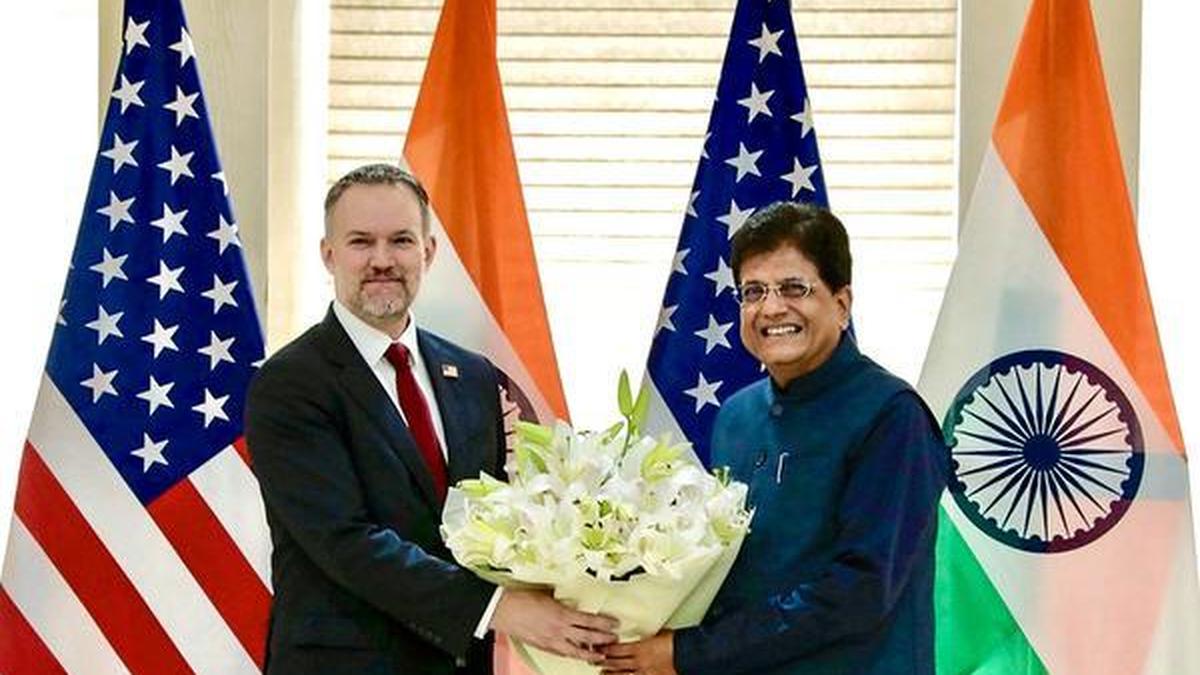
    Feature Image Credit: aninews.in      US Trade Representative Jamieson Greer meeting Union Minister of Commerce and Industry Piyush Goyal in New Delhi in June. | Photo Credit: ANI 

  • China’s support to Syria: In Conflict and Redevelopment

    China’s support to Syria: In Conflict and Redevelopment

    China is looking to ramp up relations with Syria both as part of its strategic Belt and Road Initiative (BRI) but also to take advantage of the multi-billion dollar reconstruction effort that is expected to materialise following the gradual winding down of the war.


    Syria is an ancient civilisation and also an important part of the ancient silk route, with cities such as Palmyra, Aleppo and Damascus playing an important role in trade and travel between the East and the West. While the discovery of a maritime route between Europe and Asia has to some extent diminished its importance in this regard, Syria is still strategically important. China is looking to ramp up relations with Syria both as part of its strategic Belt and Road Initiative (BRI) but also to take advantage of the multi-billion dollar reconstruction effort that is expected to materialise following the gradual winding down of the war.

    China’s non-interference policy is an integral aspect of its involvement and role in the Middle East. During the course of the Syrian war, China has consistently supported the Bashar Al Assad government on the diplomatic front – through the exercise of the veto power against the resolutions introduced in the United Nations Security Council either condemning the Syrian government, calling for ceasefire or for imposing sanctions on suspected war criminals. While negotiating the renewal of border crossings for aid, China agreed on the need for humanitarian assistance but emphasised on state sovereignty. China’s policy of non-interference has served it well in strengthening bilateral relations and advancing its interests.

    One of the reasons for the diplomatic support extended by China to the Syrian government is also the involvement of the Uighur fighters in the Syrian conflict which has greatly bothered China. While it has never got directly involved militarily in the Syrian conflict there are unconfirmed media reports which suggested that China was sharing military intelligence with the Syrian government and also sent its military advisors to Syria to help it in its fight against the rebels. In this sense, it saw Syria as a key player in its fight against religious extremism thereby preventing its export to its own volatile Xinjiang province.

    With the Syrian conflict slowly winding down and Bashar Al Assad’s hold on Syria greatly strengthened more than at any other time since the beginning of the civil war, China is ramping up its diplomatic efforts in Syria  using trade as an important policy tool to ramp up the relations between the two great civilisations.

    Based on Chinese government’s invitation Syria has participated in the second BRI summit held in Beijing in April 2019. Previously in 2018, China held a Trade Fair on Syrian reconstruction projects which was attended by nearly one thousand Chinese companies and which saw investment proposals of nearly USD two billion. The collapse of most of the industry in Syria due to the war has also resulted in a significant increase of cost-effective Chinese imports into Syria ranging from toys to car parts and industrial machinery and equipment.

    China is also leveraging its economic strength fully by using aid as a foreign policy tool. In 2019,  Xinhua reported on the  that an economic cooperation agreement was signed between Syria’s Planning and International Cooperation Commission (PICC) and the Chinese embassy in Damascus. As part of this agreement, a donation will be set aside to fund a series of humanitarian projects as agreed upon by both sides.

    The collapse of most of the industry in Syria due to the war has also resulted in a significant increase of cost-effective Chinese imports into Syria ranging from toys to car parts and industrial machinery and equipment.

    China is expected to be a key player in the international reconstruction and development effort that is expected to take place in Syria due to its strong bilateral ties with not only Syria but also its alignment with Russian and Iranian position on Syria , these two players being the major supporters of Bashar Al Assad’s government in the civil war. While Russia and Iran are surely expected to carve out a large part of the reconstruction contracts between themselves, their capacity to make the huge investments in these projects, estimated to be worth anywhere between USD 200 million to USD 1  trillion is doubtful. This creates the ripe opportunity for China to enter the reconstruction business effort either by themselves or, as is more likely, in partnership with Russian and Iranian governments or businesses.

    Beyond the business opportunities provided by the potential reconstruction of Syria, China is also strategically interested in Syria. China was always interested in securing access to the Ports of Tartus and Latakia on Syria’s Mediterranean coast. Such an access is expected to complement Beijing’s interests in the Greek port Piraeus (COSCO shipping, the Chinese state-owned shipping and logistics services supplier company in the Port authority) and the Israeli port of Haifa, in securing a trade route to Europe. In alignment with these strategic interests, Chinese companies’ area also exploring the possibility of upgrading the deep seaport of Tripoli, Lebanon to allow it to accommodate larger vessels and also the possibility of building a railroad that would connect Beirut and Tripoli in Lebanon to Homs and Aleppo in Syria.

    Beyond the business opportunities provided by the potential reconstruction of Syria, China is also strategically interested in Syria. China was always interested in securing access to the Ports of Tartus and Latakia on Syria’s Mediterranean coast.

    Chinese investments into and trade ties with Syria however, risk the attraction of US sanctions on Syria. The arrest of Meng Wanzhou, Chief Financial Officer of Huawei, , in Canada, based on a request by the United States highlights the extent of these risks. “The Caesar Syria Civilian Protection Act”, also known as “The Caesar Act”, a United States legislation that sanctions the Syrian government, including Syrian president Bashar al-Assad, for war crimes against the Syrian population, parts of which  are now incorporated  in the “National Defense Authorization Act for Fiscal Year 2020” greatly tightened the sanctions environment against the Syrian government and a number of its industries potentially impacting the Chinese investments and trade ties. While China has called for an end to sanctions stating they were “inhuman,” they have been wary of being targeted by sanctions and further straining their relations with the US. However, it is unlikely that the sanctions would have a significant effect on China given the size of China’s economy and its ability to circumvent sanctions while dealing with Iran and North Korea. China, as part of its ‘mask diplomacy,’ is increasingly providing aid to the Syrian government in their efforts against Covid-19. This serves the dual purpose of strengthening China-Syria relations and strengthening China’s narrative of Covid-19.

    To conclude, China has been a staunch supporter of the incumbent Syrian government of Bashar Al Assad during the almost decade long Syrian civil war and is set to reap the benefits from the post-war Syrian reconstruction effort in conjunction with the Russians and the Iranians to advance its interests.

    Image: Middle East Institute