Tag: Trade

  • Role of Merchant Marine in Indian Maritime Security

    Role of Merchant Marine in Indian Maritime Security

    [powerkit_button size=”lg” style=”info” block=”false” url=”https://admin.thepeninsula.org.in/wp-content/uploads/2022/05/Role-Of-Merchant-Marine-in-Indian-Maritime-Security-1.pdf” target=”_blank” nofollow=”false”]
    Download
    [/powerkit_button]

    Introduction:

    The Merchant Marine plays only a modest role in contributing towards securing India’s maritime neighbourhood or for that matter for any nation. On the other hand, its indirect contribution to security- largely through the economic dimension is significant.

    This paper seeks to explore the economic dimension of merchant ships and in doing so, endeavours to bring out the resultant contribution to maritime security.

    With my domain knowledge, I hope to cover global maritime, and its current scenario in India. I have spent 28 years at Sea of which 18 years in Command as Captain and an additional 25 years ashore in Senior Management positions. I have recently relocated back to India after 5 years in Sri Lanka and a year in Seychelles. So, I do consider it a privilege to share my experience.

    Global Maritime:

    Shipping is the life blood of global economy.  Without shipping, intercontinental trade, the bulk transport of raw materials, and the import/export of affordable food and manufactured goods would simply not be possible. The international shipping industry is responsible for the carriage of around 90% of world trade. Seaborne trade continues to expand, bringing benefits for consumers across the world through competitive freight costs. Thanks to the growing efficiency of shipping as a mode of transport and increased economic liberalisation, the prospects for the industry’s further growth continue to be strong.

    There are over 58,000 merchant ships trading internationally, transporting every kind of cargo. The world fleet is registered in over 150 nations, and manned by over 2 million seafarers of virtually every nationality. Ships are technically sophisticated, high value assets (larger hi-tech vessels can cost over US $200 million to build), and the operation of merchant ships generates an estimated annual income of over US $1.2 trillion in freight rates.

    [powerkit_button size=”lg” style=”info” block=”true” url=”https://admin.thepeninsula.org.in/wp-content/uploads/2022/05/Role-Of-Merchant-Marine-in-Indian-Maritime-Security-1.pdf” target=”_blank” nofollow=”false”]
    Read More
    [/powerkit_button]

    Feature Image Credits: Financial Times

  • The Geopolitical Significance of Chabahar Port to India 

    The Geopolitical Significance of Chabahar Port to India 

    The port of Chabahar is a seaport in south-eastern Iran, located on the Gulf of Oman, at the mouth of the Strait of Hormuz. It is situated in Sistan-va-Baluchestan, one of Iran’s least developed provinces. Contrary to Bandar Abbas, the busiest port in Iran, Chabahar is a deep-water port with direct access to the Indian Ocean that is outside the Hormuz Strait. It is Iran’s only seaport and consists of two separate ports called Shahid Beheshti and Shahid Kalantari. The last Shah of Iran proposed the port’s development in 1973. Work in Chabahar began when the Shah of Iran, Reza Pahlavi, was in power. The Iranian Revolution of 1979 hindered the development of this port. Following the 1979 Islamic revolution, US firms involved in various infrastructure investments fled the country. The new government took on these projects. The port of Chabahar grew in importance during the Iran-Iraq war of 1983 when ships were hesitant to enter the Strait of Hormuz. The port’s first phase opened during the Iran-Iraq war, when Iran began shifting maritime trade up the east coast toward the Pakistani border to reduce the reliance on Persian Gulf ports which were susceptible to attack by the Iraq Air Force. Chabahar is substantial for its fishing industry and will serve as a major trade hub designed to connect South Asia, Central Asia, and the Middle East. Chabahar can emerge as a potential global trading hub – and an arena for geopolitical competition. Chabahar is vital for both India and Iran to reduce their dependence on the Suez Canal for transporting cargo to Europe. Chabahar is a strategic port from an Indian perspective. Apart from being easily accessible from India’s western coasts, it serves several important functions. For starters, by having access to the port, India can reduce its commute time to Central Asia by one-third. Second, a link between Afghanistan and India could be built without going through Pakistan and this could help the already established diplomatic, security and economic relationship between New Delhi and Kabul. Third, India gains road access to four cities in Afghanistan via Chabahar: Herat, Kandahar, Kabul, and Mazar-e-Sharif. This will help India strengthen its trade with Afghanistan (“Chabahar and Beyond” 2016). However, the Taliban’s return to power in 2021 gives rise to a certain level of uncertainty. The current geopolitical environment, both regional and global, creates opportunities for India to overcome possible uncertainties.

    New Delhi views Chabahar port as a means of bypassing Pakistan’s land routes to gain access to the Afghan and Central Asian markets.

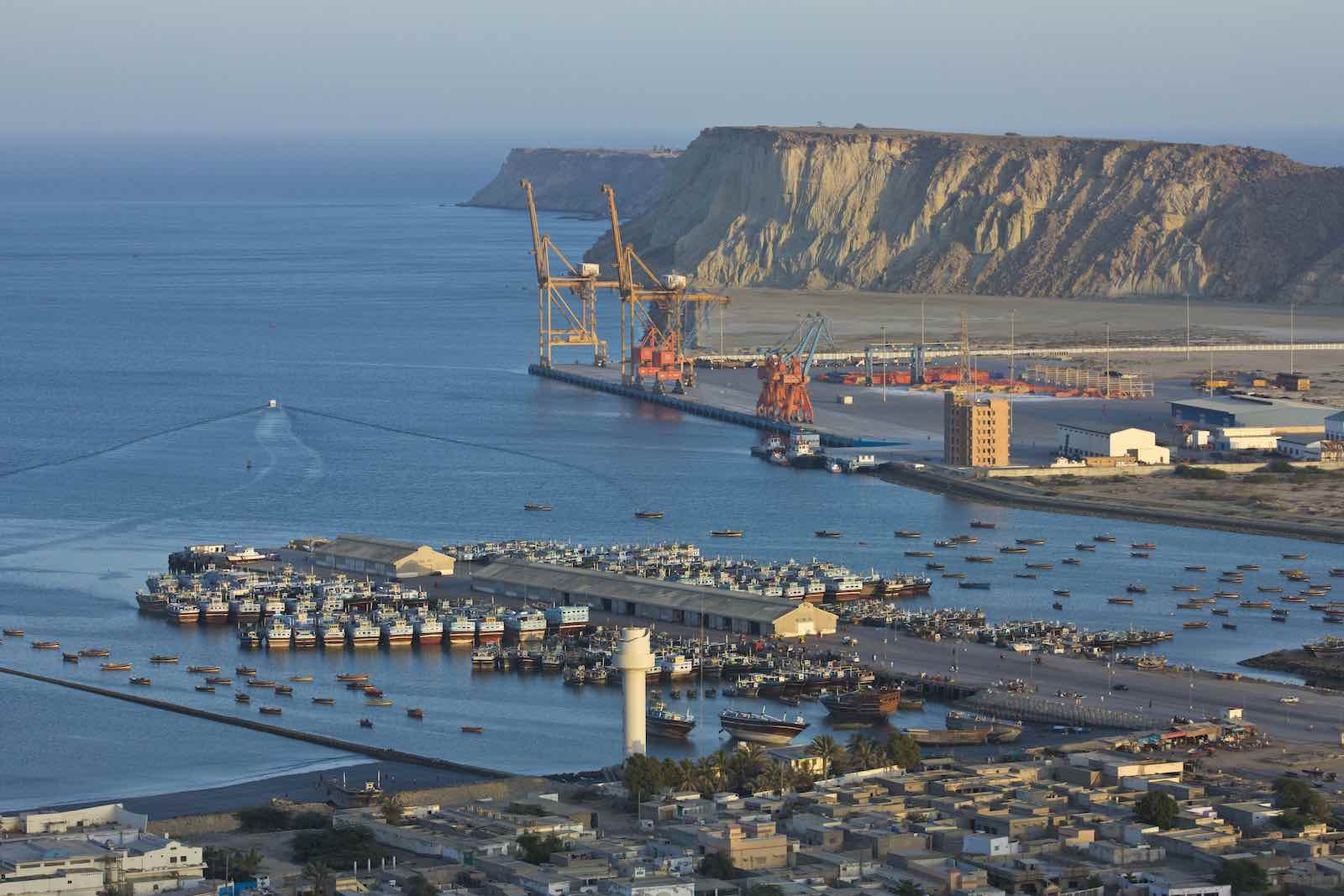
    Being one of the world’s fastest-growing economies, expansion of trade relations and access to new markets is a necessity for India. As an investor, New Delhi views Chabahar port as a means of bypassing Pakistan’s land routes to gain access to the Afghan and Central Asian markets. Pakistan’s Gwadar port is one possible route for India to access Central Asian markets, India has long aimed for alternative routes due to its adversarial relationship with Pakistan (“Chabahar Port: A Step toward Connectivity for India and Afghanistan,” n.d.). Additionally, the port will strengthen relations between India and Iran, which may help counterbalance strong Sino-Pakistani cooperation. According to the Minister of Foreign Affairs (MEA), India and Iran share close historical and civilizational ties, “Our bilateral relations are marked by strong linkages across institutions, cultures and people-to-people ties,” the MEA said in a statement. Afghanistan also seeks to explore new trade routes to reach international markets. It aims to reduce its dependence on Pakistan, which handles most of the Afghan trade due to the country’s landlocked status. 

    Afghanistan is crucial for India’s ‘neighbourhood first’ strategy. India assisted Afghanistan in becoming a full member state of SAARC in 2007. It signed a Preferential Trade Agreement with Kabul in 2003 following the establishment of the interim government post the US’s intervention in 2001. Under the North-South Transport Corridor framework, India, Afghanistan, and Iran signed the Chabahar port agreement in 2003, allowing all three countries to use the Chabahar port as a trade hub. India is working on constructing the Chabahar port primarily to compete with the Gwadar port project and to connect it to Russia’s International North-South Transport Corridor (INSTC). India has already built a 218-km-long road from Delaram to Zaranj (“India Completes Zaranj-Delaram Highway in Afghanistan” 2008) and now plans to connect this road to Chabahar port and deliver goods through this route. India is also keen on using the Chabahar port to connect the oil-rich Central Asian countries by road connectivity via the Milak (Iran) and Zaranj-Dilaram (Afghanistan) roads. For India, the port, which is only 940 kilometers from Mundra in Gujarat, is about more than just facilitating the flow of trade with Afghanistan. Rather, the development of Chabahar is a crucial component of the country’s grand strategy to connect with Central Asia. India’s justification for wanting to develop the Chabahar Port goes beyond its interest in Afghanistan. Enhancing regional trade and connectivity as well as thwarting China’s expanding influence in the Indian Ocean are other top priorities for Indian foreign policy (“What Are India, Iran, and Afghanistan’s Benefits from the Chabahar Port Agreement? Manohar Parrikar Institute for Defense Studies and Analyses,” n.d.).

    Geopolitical Challenges

    The port of Chabahar will be of little use if Afghanistan is not stable. Indian interest in the Chabahar Port, therefore, continues to be closely linked to the geopolitical changes the region is currently experiencing.

    The competition for regional dominance between India and China can be seen in the development of ports in the regions. Indian involvement in the Chabahar port is important in securing India’s interest in the region. A calculative China will seize any opportunity that India might present in the port facility. If China moves in, Indian investments in the Chabahar port may be unfavorably affected (Pant and Mehta, 2018). A significant barrier is the complex nature of India-Iran relations, in which the former does not hold a privileged position. Given India’s priorities in the Middle East, it is unlikely that the relationship with Iran could compete with the comprehensive partnership that China and Pakistan share, which includes a strong defence and security arrangement. Iran may find it challenging to ignore or exclude China, its largest foreign investor, from the Chabahar project. Additionally, China has successfully completed several infrastructure projects in Iran, including the Tehran Metro, and has allocated US$ 1.5 billion through its EXIM Bank for the electrification of the Tehran-Mashhad railway line (“$1.5b China Loan for Iranian Rail Project” 2017).

    Peace and stability in Afghanistan will also impact the performance of the Chabahar Port. The tumultuous security situation in Afghanistan could jeopardise trilateral efforts between India, Iran, and Afghanistan to operate the Chabahar Port facility. And finally, the port of Chabahar will be of little use if Afghanistan is not stable. Indian interest in the Chabahar Port, therefore, continues to be closely linked to the geopolitical changes the region is currently experiencing.

    References

    “$1.5b China Loan for Iranian Rail Project.” 2017. Financial Tribune. July 25, 2017. https://financialtribune.com/articles/economy-domestic-economy/68986/update-15b-china-loan-for-iranian-rail-project.

    Amirthan, Shawn. 2016. “What Are India, Iran, and Afghanistan’s Benefits from the Chabahar Port Agreement?” Strategic Analysis 41 (1): 87–93. https://doi.org/10.1080/09700161.2016.1249184.

    “Chabahar and Beyond.” 2016. Www.thehindubusinessline.com. May 25, 2016. https://www.thehindubusinessline.com/opinion/editorial/chabahar-and-beyond/article8646239.ece.

    “Chabahar Port: A Step toward Connectivity for India and Afghanistan.” n.d. Thediplomat.com. https://thediplomat.com/2019/07/chabahar-port-a-step-toward-connectivity-for-india-and-afghanistan/.

    “India Completes Zaranj-Delaram Highway in Afghanistan.” 2008. Development News from Afghanistan, August 24, 2008. https://afghandevnews.wordpress.com/2008/08/24/india-completes-zaranj-delaram-highway-in-afghanistan/.

    Pant, Harsh V., and Ketan Mehta. 2018. “India in Chabahar.” Asian Survey 58 (4): 660–78. https://doi.org/10.1525/as.2018.58.4.660.

    “What Are India, Iran, and Afghanistan’s Benefits from the Chabahar Port Agreement? Manohar Parrikar Institute for Defence Studies and Analyses.” n.d. Idsa.in. https://idsa.in/strategicanalysis/40_1/india-iran-and-afghanistans-benefits-from-the-chabahar-port-agreement.

    Featured Image Credit: Lowy Institute

  • India’s Indian Ocean and the Imperative for a Strong Indian Navy

    India’s Indian Ocean and the Imperative for a Strong Indian Navy

    “A good navy is not a provocation to war. It is the surest guarantee of peace!”
    The Indian Ocean has been at the centre of world history ever since we know it. Man originated in Africa, probably somewhere in the Olduvai Gorge in present-day Tanzania – where Homo Erectus lived 1.2 million years ago and where the first traces of Homo Sapiens, our more recent ancestors having evolved only about 200,000 years ago. First phonetic languages evolved around 100, 000 years ago. The migration of mankind out of Africa began almost 60000 years ago. But we don’t call the Indian Ocean the African Ocean because the first recorded activity over it began only about 3000 years ago.
    Three great early recorded activities of this period come to mind. The first is the Indus Valley Civilization. It was a Bronze Age civilization (3300–1300 BCE; mature period 2600–1900 BCE) in the northwestern region of the Indian subcontinent. Along with Ancient Egypt and Mesopotamia, it was one of three early civilizations of the Old World, and of the three the most widespread.
    The Indus civilization’s economy appears to have depended significantly on trade, which was facilitated by major advances in transport technology. It may have been the first civilization to use wheeled transport. These advances may have included bullock carts that are identical to those seen throughout South Asia today, as well as boats. Most of these boats were probably small, flat-bottomed craft, perhaps driven by sail, similar to those one can see on the Indus River today; however, there is secondary evidence of sea-going craft.
    Archaeologists have discovered a massive, dredged canal and what they regard as a docking facility at the coastal city of Lothal now in Gujarat. Judging from the dispersal of Indus civilization artifacts, the trade networks, economically, integrated a huge area, including portions of Afghanistan, the coastal regions of Persia, northern and western India, and Mesopotamia. There is some evidence that trade contacts extended to Crete and possibly to Egypt.
    There was an extensive maritime trade network operating between the Harappan and Mesopotamian civilizations as early as the middle Harappan Phase, with much commerce being handled by “middlemen merchants from Dilmun” (modern Bahrain and Failaka located in the Persian Gulf). Such long-distance sea trade became feasible with the innovative development of plank-built watercraft, equipped with a single central mast supporting a sail of woven rushes or cloth.
    The second great economic activity was Slavery. Slavery can be traced back to the earliest records, such as the Code of Hammurabi (c. 1760 BC), which refers to it as an established institution. Slavery is rare among hunter-gatherer populations, as it is developed as a system of social stratification. Slavery typically also requires a shortage of labour and a surplus of land to be viable. Bits and pieces from history indicate that Arabs enslaved over 150 million African people and at least 50 million from other parts of the world.  Later they also converted Africans into Islam, causing a complete social and financial collapse of the entire African continent apart from wealth attributed to a few regional African kings who became wealthy in the trade and encouraged it.
    The third great economic activity was seafaring evidenced by migration. The island of Madagascar, the largest in the Indian Ocean, lies some 250 miles (400 km) from Africa and 4000 miles (6400 km) from Indonesia. New findings, published in the American Journal of Human Genetics, show that the human inhabitants of Madagascar are unique – amazingly, half of their genetic lineages derive from settlers from the region of Borneo, with the other half from East Africa. It is believed that the migration from the Sunda Islands began around 200 BC.
    Linguists have established that the origins of the language spoken in Madagascar, Malagasy, suggested Indonesian connections, because its closest relative is the Maanyan language, spoken in southern Borneo. The Gods were also kind and gave the IOR the weather conditions that helped in evolving seaborne trade and intercourse. The sea surface current and prevailing wind structure in and over the Indian Ocean favoured seafarers in their endeavour and sailings in the Indian Ocean from the southern tip of Africa (Cape of Good Hope) during the month of May. After the entry into the Indian Ocean, the seafarers continued to sail in the northerly direction along the coastline of Africa (aided by the strong Somali Current and the East Arabian Current) towards the Arabian Sea.
    The physical environmental conditions over the sea and the external prevailing weather helped the seafarers reach places up to the west coast of India. As this sea surface current extend towards the east coast of India, the sailors were greatly assisted by the surface current as they sailed along. During November, when the East Indian Winter wind reverses in its direction and begins to blow from the northeast, the sailors prepare for their return journey. The winds that generate the waves contribute to the reduction in the otherwise required travel time for the sailings between any given two points of departure and arrival. The natural and external forces help the sailors make their journey/expedition more economical and energy-efficient.
    Clearly, the region was a hub of all kinds of economic activity. Then came the Petroleum Age. And things changed as never before. The Spice trade, the Silk trade, and the China trade all paled into insignificance. The use of Coal as a ship fuel enlarged distances and volumes of cargo. Oil made even longer journeys and greater volumes possible.
    Petroleum is the lifeblood of modern society. It’s a relatively new activity, but its advent has transformed our world as few things have. Petroleum, in one form or another, has been used since ancient times. According to Herodotus more than 4000 years ago, asphalt was used in the construction of the walls and towers of Babylon; there were oil pits near Babylon, and a pitch spring on Zacynthus.
    Great quantities of it were found on the banks of the river Issus, one of the tributaries of the Euphrates. Ancient Persian tablets indicate the medicinal and lighting uses of petroleum in the upper levels of their society. By 347 AD, oil was produced from bamboo-drilled wells in China. Early British explorers to Myanmar documented a flourishing oil extraction industry based in Yenangyaung, that in 1795 had hundreds of hand-dug wells under production.
    Oil is now the single most important driver of world economics, politics and technology.  The rise in importance was due to the invention of the internal combustion engine, the rise in commercial aviation, and the importance of petroleum to industrial organic chemistry, particularly the synthesis of plastics, fertilizers, solvents, adhesives and pesticides. Today, oil contributes 3% of the global GDP.
    In 1847, the process to distill kerosene from petroleum was invented by James Young. He noticed natural petroleum seepage in the Riddings colliery at Alfreton, Derbyshire from which he distilled a light thin oil suitable for use as lamp oil, at the same time obtaining a thicker oil suitable for lubricating machinery. In 1848 Young set up a small business refining the crude oil.
    Today the world’s biggest stand-alone refinery is the Reliance refinery at Jamnagar with a refining capacity of about 1.5 million barrels a day. The Essar refinery at Jamnagar refines a further 0.5 million barrels a day. Together they make Jamnagar one of the world’s great refining centers. India’s number one export item is Petroleum products, mostly Petrol and Diesel. India now exports the equivalent of about 615,000 barrels a day. In 2020, petroleum exports accounted for $25.3 billion of our total exports of $291.8 billion in the same year.
    India imported $77 billion worth of oil in the year 2020-21 and more than half of this comes from countries in the IOR. Iraq’s share is 22.4%, Saudi Arabia’s share is 18.8%, UAE’s share is 10.8%, and Kuwait’s 5%. The IOR is India’s lifeline and lifeblood. If the line is blocked we will suffer hugely, if the blood gets anaemic we will suffer hugely. India just cannot afford anything to go wrong here.
    The sea lanes in the Indian Ocean are considered among the most strategically important in the world—according to the Journal of the Indian Ocean Region, more than 80 percent of the world’s seaborne trade in oil transits through the Indian Ocean choke points, with 40 percent passing through the Strait of Hormuz, 35 percent through the Strait of Malacca and 8 percent through the Bab el-Mandab Strait.
    But it’s not just about sea-lanes and trade. More than half the world’s armed conflicts are presently located in the Indian Ocean region, while the waters are also home to continually evolving strategic developments including the competing rises of China and India, the potential nuclear confrontation between India and Pakistan, the US interventions in Iraq and Afghanistan, Islamist terrorism, incidents of piracy in and around the Horn of Africa, and management of diminishing fishery resources.
    As a result of all this, almost all the world’s major powers have deployed substantial military forces in the Indian Ocean region. For example, in addition to maintaining expeditionary forces in Iraq, the US 5th Fleet is headquartered in Bahrain, and uses the island of Diego Garcia as a major air-naval base and logistics hub for its Indian Ocean operations. In addition, the United States has deployed several major naval task forces there, including Combined Task Force 152 (currently operated by the Kuwait Navy), which is focusing on illicit non-state actors in the Arabian Gulf, and Combined Task Force 150 (currently commanded by the Pakistan Navy), which is tasked with Maritime Security Operations (MSO) outside the Arabian Gulf with an Area of Responsibility (AOR) covering the Red Sea, Gulf of Aden, Indian Ocean and the Gulf of Oman. France, meanwhile, is perhaps the last of the major European powers to maintain a significant presence in the north and southwest Indian Ocean quadrants, with naval bases in Djibouti, Reunion, and Abu Dhabi.
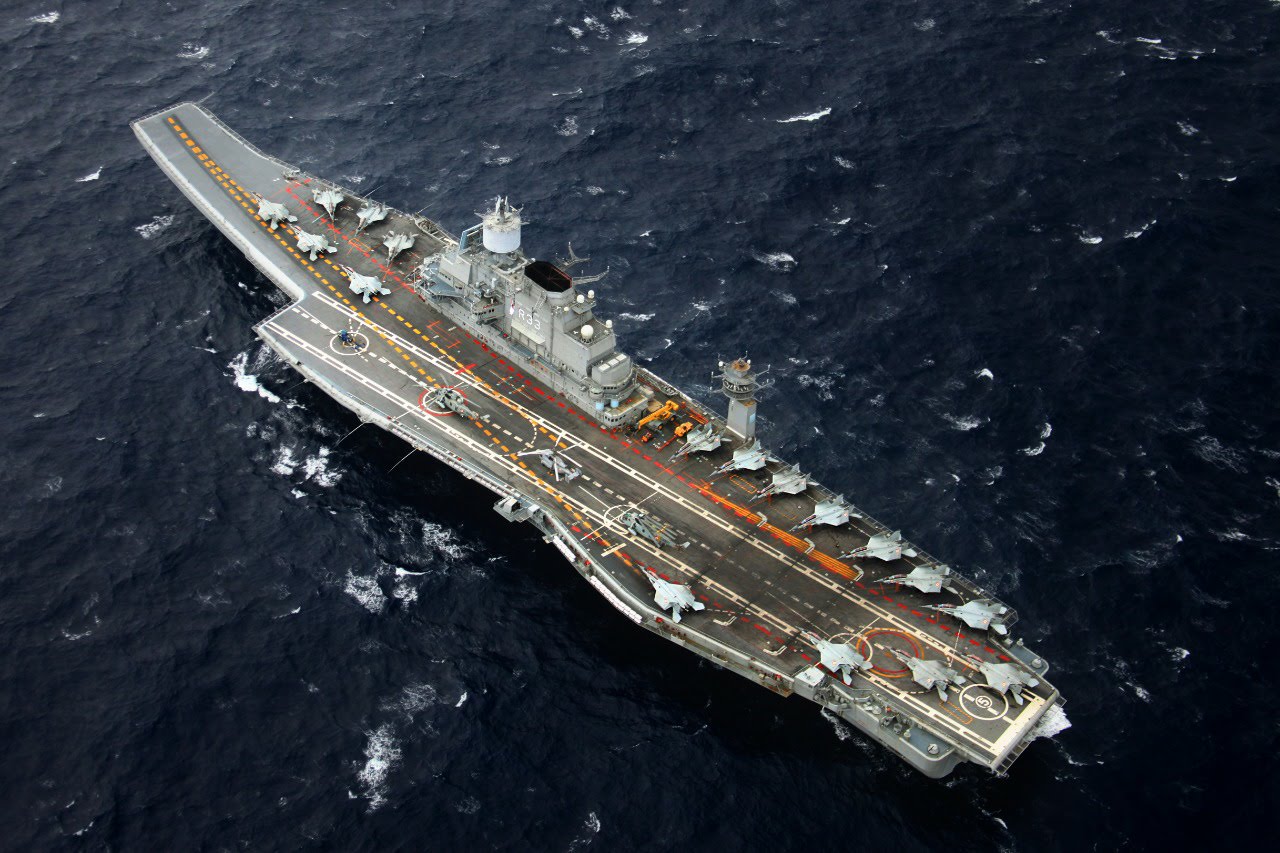
    And, of course, China and India both also have genuine aspirations of developing blue water naval capabilities through the development and acquisition of aircraft carriers and an aggressive modernization and expansion programme.
    China’s aggressive soft power diplomacy has widely been seen as arguably the most important element in shaping the Indian Ocean strategic environment, transforming the entire region’s dynamics. By providing large loans on generous repayment terms, investing in major infrastructure projects such as the building of roads, dams, ports, power plants, and railways, and offering military assistance and political support in the UN Security Council through its veto powers, China has secured considerable goodwill and influence among countries in the Indian Ocean region.
    And the list of countries that are coming within China’s strategic orbit appears to be growing. Sri Lanka, which has seen China replace Japan as its largest donor, is a case in point—China was no doubt instrumental in ensuring that Sri Lanka was granted dialogue partner status in the Shanghai Cooperation Organization (SCO).
    To the west, Kenya offers another example of how China has been bolstering its influence in the Indian Ocean. The shift was underscored in a leaked US diplomatic cable from February 2010 that was recently published by WikiLeaks. In it, US Ambassador to Kenya Michael Ranneberger highlighted the decline of US influence in East Africa’s economic hub, saying: ‘We expect China’s engagement in Kenya to continue growing given Kenya’s strategic location…If oil or gas is found in Kenya, this engagement will likely grow even faster. Kenya’s leadership may be tempted to move close to China in an effort to shield itself from Western, and principally US pressure to reform.’
    The rise of China as the world’s greatest exporter, its largest manufacturing nation and its great economic appetite poses a new set of challenges. At a meeting of South-East Asian nations in 2010, China’s foreign minister Yang Jiechi, facing a barrage of complaints about his country’s behaviour in the region, blurted out the sort of thing polite leaders usually prefer to leave unsaid. “China is a big country,” he pointed out, “and other countries are small countries and that is just a fact.”
    Indeed it is, and China is big not merely in terms of territory and population, but also in military might. Its Communist Party is presiding over the world’s largest military build-up. And that is just a fact, too—one that the rest of the world has to come to terms with.
    China’s defence budget has almost certainly experienced double-digit growth for two decades. According to SIPRI, a research institute, annual defence spending rose from over $30 billion in 2000, $120 billion in 2010 to almost $229.4 billion in 2021. SIPRI usually adds about 50% to the official figure that China gives for its defence spending, because even basic military items such as research and development are kept off budget. Including those items would imply total military spending in 2021, based on the latest announcement from Beijing, would be around $287.8 billion.
    This is not a sum India can match and the last thing we need to get caught in is a numbers game. A one-party dictatorship will always be able to outspend us, even if our GDPs get closer.
    But history tells us again and again that victory is not assured by superiority in numbers and even technology. If that were to be so, Alexander should have been defeated at Gaugamela, Babur at Panipat, Wellington at Waterloo, Russia at Leningrad, Britain in the Falklands, and above all Vietnam who defeated three of the world’s leading powers – France, the USA and China – in succession. I don’t have to tell you that victory is more a result of strategy and tactics. Numbers do matter, but numbers are not all. Technology does matter, but technology alone cannot assure you of victory. It’s always mind over matter. You know these things better than most of us. You also know what to do. As the old saying goes: “When the going gets tough, the tough get going!”
    That said, the threat from China should not be exaggerated. There are three limiting factors. First, unlike the former Soviet Union, China has a vital national interest in the stability of the global economic system. Its military leaders constantly stress that the development of what is still only a middle-income country with a lot of very poor people takes precedence over military ambition. The increase in its military spending reflects the growth of the economy, rather than an expanding share of national income. For many years China has steadily spent the same proportion of GDP on defence (a bit over 1.7%, whereas America spend about 3.7% in the year 2020-21).
    The real test of China’s willingness to keep military spending constant will come when China’s headlong economic growth starts to slow further. But in the past form, China’s leaders will continue to worry more about internal threats to their control than external ones. In 2020, the Chinese spending on internal security was $212 billion. With a rapidly ageing population, it is also a good bet that meeting the demand for better health care will become a higher priority than maintaining military spending.
    Like all the other great powers, China faces a choice of guns and butter or more appropriately walking sticks. But till then it is: Nervi belli pecunia infinita or unlimited money is the muscle of war.
    India on the other hand will keep growing long after China has stopped growing. Its youthful population and present growth trends indicate the accumulation of the world’s largest middle class in India. India’s growth is projected to continue well past 2050. In fact so big will this become, that India during this period will increasingly power world economic growth, and not China. In 2050, India is projected to have a population of 1.64 billion and of these 1.3 billion will belong to the middle and upper classes. The lower classes will be constant at around 300 million, as it is now.
    India already has the world’s third-largest GDP. Many economists prophesize that in 2050 it will be India that will be the world’s biggest economy, not China. In per capita terms, we might still be poorer, but in over GDP terms, we will be bigger.
    According to a study by IHS Markit, a subsidiary of S&P Global, India will be the world’s third-largest economy by 2030. Indian GDP in 2030 is projected to be $8.4 trillion. China, in second place, will have a GDP of $ 33.7 trillion and the US $ 30.4 trillion. As we say in India, aap key muh mein ghee aur shakhar.  Both incidentally now deemed bad for health.
    Now comes the dilemma for India. Robert Kaplan writes: “As the United States and China become great power rivals, the direction in which India tilts could determine the course of geo-politics in Eurasia in the 21st century. India, in other words, looms at the ultimate pivot state.” At another time Mahan noted that India, located in the centre of the Indian Ocean littoral, is critical for the seaward penetration of both the Middle-east and China.
    Now if one were an Indian planner, he or she would be looking at the China Pakistan axis with askance. India has had conflicts and still perceives threats from both, jointly and severally. The Tibetan desert, once intended to be India’s buffer against the north now has become China’s buffer against India. The planner will not be looking at all if he or she were not looking at the Indian Ocean as a theatre. After all, it is also China’s lifeline and its lifeblood flows here.
    Now if one were a Chinese planner, he or she would be looking with concern over India’s growth and increasing ability to project power in the IOR. The planner will also note what experts are saying about India’s growth trajectory. That it will be growing long after China gets walking sticks. That it is the ultimate pivot state in the grand struggle for primacy between the West led by the USA and Japan, and China.
    What will this planner be thinking particularly given the huge economic and military asymmetry between China and India now? Tacitus tells it most pithily. That peace can come through strength or Si vis pacem para bellum. While China has ratcheted up its show of assertiveness in recent years, India has been quietly preparing for a parity to prevent war. Often parity does not have to be equality in numbers. The fear of pain disproportionate to the possible gains, and the ability of the smaller in numbers side to do so in itself confer parity.
    There is a certain equilibrium in Sino-Indian affairs that make recourse to force extremely improbable. Both modern states are inheritors of age-old traditions and the wisdom of the ages. Both now read their semaphores well and know how much of the sword must be unsheathed to send a message. This ability will ensure the swords remain recessed and for the plowshares to be out at work.
    Finally, I would be remiss if I did not say something about the centrality of the Indian Navy to our future. Nothing says it better than what Theodore Roosevelt said a century ago: “A good Navy is not a provocation to war. It is the surest guarantee of peace!”
    Featured Image Credit: Indian Navy
  • India-China Trade In Ancient Times: Southern Silk Route

    India-China Trade In Ancient Times: Southern Silk Route

    To follow the Silk Road is to follow a ghost. It flows through the heart of Asia, but it has officially vanished leaving behind the pattern of its restlessness: counterfeit borders, unmapped peoples. The road forks and wanders wherever you are. It is not a single way, but many: a web of choices.

    Colin Thubron, Shadow of the Silk Road.

    Introduction

    India and China, two Asian giants, share a lot of similarities in terms of history and culture. Both countries represent age old civilizations and unique history. Cultural and economic ties between the two countries date back to about 2000 years ago. The Silk Route, which is an ancient network of trade routes, formally established by the Han Dynasty, served as a connection between the two countries. It was also through this route that Buddhism spread to China and East Asia from India. The routes were more than just trade routes; it was the carrier of ideas, innovations, inventions, discoveries, myths and many more.
    The earliest mention of China can be found in the Indian text “Arthashastra” which was written by Kautilya in the fourth century BC. Kautilya made a remark about Cinapattasca Cinabhumjia (Cinapatta is a product of China)[1]. Whereas, the earliest mention of India in Chinese records dates between 130 and 125 BC. Zhang Qian, a Chinese envoy to Central Asia, referred to India as Shendu, in his report about India to Emperor Wu of the Han dynasty.
    This article will look into the ancient trade route that existed between South Western China and India’s North East region via Myanmar and the future of the trade route.

    Ancient trade links between India and China

    Shiji, which is the first Chinese dynastic history, compiled between 104 and 87 BCE talks about the existence of a trading route between India and South West China. According to Chinese records, Emperor Wu of the Han dynasty, tried to establish a trade route from Changan, the Chinese capital to North East India through Yunnan and adjoining areas. However, the rulers of Yunnan were against the idea of establishing a direct trade between India and China and Emperor Wu failed to establish the trade route. Even though the trade route failed to take off, the trade in Cinapatta and Chinese square bamboo continued without any hindrance.

    Political Geography of the Southern Silk Route

    The Southern Silk route (SSR), one of the least studied overland route, is a trade route which is about 2000 km long and linked East and North East India with Yunnan Province of China via Myanmar. This is a relatively unknown, ancient trade route that is considered a part of the larger web of Silk Roads. This route existed before the Central Asian Silk route became popular. This trade route between Eastern India and China came to be known during the early 3rd century BCE, and it became popular by the 2nd century BCE. By 7th century AD various other branches of the SSR emerged to create web of trading routes.
    Traders carried silk from Yunnan through Myanmar, across India and joined the main silk route in Afghanistan. In addition, silk was also transported from South West China through the Shan states and North Myanmar into East India and then down to the Coromandel Coast.
    The Qing dynasty which ruled China from 1644-1912, recorded the cross cultural exchanges that took place across SSR. This route contributed to cultural exchanges between China and the West. It also promoted interactions among different nationalities.
    Indian sources have failed to provide abundant evidence about the SSR and the interaction that took place across this route but there is enough evidence that indicates that trade and migration did take place in the Eastern India-Upper Myanmar-Yunnan region. For example, modern scholars believed that the Tai Ahoms were originally from Yunnan but they migrated to North East India and founded a small kingdom around 13th century, which grew to become the powerful Ahom Kingdom of Assam.
    The areas through which the SSR passed were inhabited by various ethnic groups whose political, social and economic organizations were primitive and backward. As a result, the safety of the route was often questioned. Archeological evidences have been found along the Southern banks of Brahmaputra up to Myanmar border, which shows that trade did exist along this route.
    The main items that were exported from China via this route included Silk, Sichuan cloth, Bamboo walking sticks, ironware and other handicrafts items. Sichuan, a South Western province was the main source of silk. Glass beads, jewels, emeralds etc were some of the items that were imported to China.
    Another important trade route is the South West Silk route or the Sikkim Silk route, which connected Yunnan, and India through Tibet. A section of the route from Lhasa crossing Chumbi Valley, Nathu La Pass connected to the Tamralipta Port (present day Tamluk in West Bengal). From the Tamralipta port, this trade route took to the sea to traverse to Sri Lanka, Bali, Java and other parts of the Far East. Another section of the route crossed Myanmar and entered India through Kamrup (Assam) and connected the ports of Bengal and present day Bangladesh.
    Over time, the Southern Silk Route lost its prominence and it was in 1885 that it re- emerged as a strategic link as the British tried to control some parts of the route in order to access and gain control over Southern China.
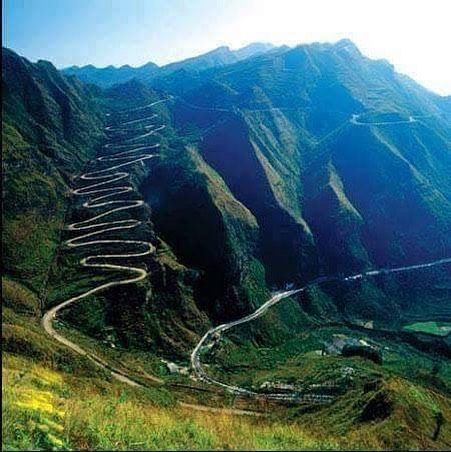
    The strategic importance of the route increased during World War II. In 1945, Ledo Road or Stilwell Road was constructed from Ledo, Assam to Kunming, Yunnan to supply aid and troops to China for the war with Japan. Ledo Road is the shortest land route between North East India and South West China. However, after the war the road was left unused and in 2010, BBC reported that much of the Ledo road has been swallowed up by jungle.
    The Assam-Myanmar-Yunnan road is very difficult to traverse not only in the present times but also during the ancient times. However, despite the hard conditions, it is through this route that a golden triangle of drug trafficking, movement of terrorist and smuggling functions today.

    Future Potential: Reviving the Southern Silk Route Economy

    North-East India and the Yunnan province share many similarities. Both are landlocked as well as under developed regions. Both are home to a large number of ethnic groups and have witnessed secessionist movement from time to time. Apart from this, Yunnan and North East India are geographically isolated from their political capitals.
    Yunnan and North East India, home to rich varieties of subtropical fruits with high nutritional values and medicinal plants, can cooperate and transform the hills of North East India and South West China into plantations, factories, laboratories to produce processed food products and lifesaving drugs that can find a huge market in developing and developed countries.
    In a bid to revive the Southern Silk route, Bangladesh, China, India and Myanmar, signed the Kunming Initiative, a sub-regional organization, in 1999. This initiative was replaced by the Bangladesh-China-India-Myanmar Economic Corridor (BCIM-EC) in 2015. The BCIM-EC was announced by China as a part of its Belt-Road Initiative, which has been boycotted by India since the beginning. In 2019, the BCIM-EC was dropped from the list of 35 projects that are to be undertaken under BRI, indicating that China has disreagrded the project. However, in the same year India has sought to keep the BCIM-EC project alive.
    If the BCIM-EC project does take place, it will reduce the travel time, cut transportation cost, open up markets, provide way for joint exploration and development of natural resources and create production bases along the way. Before the BCIM-EC takes off, it is important to develop the roadways infrastructure of India’s North East region.
    Even though the BCIM-EC promises to elevate the economic conditions of the backward North-East region of India, it has not gained sufficient steam as both China and India have different apprehensions. China sees India’s reluctance to support BRI as the barrier for any progress in the project. Given the current stand-off in Ladakh, India’s apprehensions about China seeking to exploit the insurgent groups operating in the region gains significance. Either way realizing the Southern Silk Road as a viable project in the form of BCIM-Economic Corridor looks distant now.
    [1]Haraprasad Ray, “Southern Silk Route: A Perspective,” in The Southern Silk Route : Historical Links and Contemporary Convergences (Routledge, 2019).

    References

    Ray, Haraprasad. “Southern Silk Route: A Perspective.” Essay. In The Southern Silk Route: Historical Links and Contemporary Convergences. Routledge, 2019.
    “Continental and Maritime Silk Routes: Prospects of India- China Co-operations.” In Proceedings of the 1st ORF-ROII Symposium. Kunming, 2015.
    Mukherjee, Rila. “Routes into the Present.” Essay. In Narratives, Routes and Intersections in Pre-Modern Asia, 37–40. Routledge, 2017.
    UNESCO. Accessed June 20, 2020. https://en.unesco.org/silkroad/content/did-you-know-great-silk-roads.
    “The Silk Route.” Accessed June 21, 2020. http://www.sikkimsilkroute.com/about-silk-route/.
    Ray, Haraprasad. Introduction. In North East India’s Place in India-China Relations and Its Future Role in India’s Economy, n.d.
    Chowdhury, Debasish Roy. “’Southern Silk Road’ Linking China and India Seen as Key to Boosting Ties.” South China Morning Post, October 23, 2013.
    “China Wants to Revive ‘Southern Silk Road’ with India.” The Times of India, June 9, 2013.

    Image: Stilwel Road from Ledo in Northeast India to Kunming in Yunnan province, China

  • India-China Trade in ancient times: Southern Silk Route

    India-China Trade in ancient times: Southern Silk Route

    To follow the Silk Road is to follow a ghost. It flows through the heart of Asia, but it has officially vanished leaving behind the pattern of its restlessness: counterfeit borders, unmapped peoples. The road forks and wanders wherever you are. It is not a single way, but many: a web of choices.

     Colin Thubron, Shadow of the Silk Road.


    Introduction

    India and China, two Asian giants, share a lot of similarities in terms of history and culture. Both countries represent age old civilizations and unique history. Cultural and economic ties between the two countries date back to about 2000 years ago. The Silk Route, which is an ancient network of trade routes, formally established by the Han Dynasty, served as a connection between the two countries. It was also through this route that Buddhism spread to China and East Asia from India. The routes were more than just trade routes; it was the carrier of ideas, innovations, inventions, discoveries, myths and many more.

    The earliest mention of China can be found in the Indian text “Arthashastra” which was written by Kautilya in the fourth century BC. Kautilya made a remark about Cinapattasca Cinabhumjia (Cinapatta is a product of China)[1]. Whereas, the earliest mention of India in Chinese records dates between 130 and 125 BC.  Zhang Qian, a Chinese envoy to Central Asia, referred to India as Shendu, in his report about India to Emperor Wu of the Han dynasty.

    This article will look into the ancient trade route that existed between South Western China and India’s North East region via Myanmar and the future of the trade route.

    Ancient trade links between India and China

    Shiji, which is the first Chinese dynastic history, compiled between 104 and 87 BCE talks about the existence of a trading route between India and South West China. According to Chinese records, Emperor Wu of the Han dynasty, tried to establish a trade route from Changan, the Chinese capital to North East India through Yunnan and adjoining areas. However, the rulers of Yunnan were against the idea of establishing a direct trade between India and China and Emperor Wu failed to establish the trade route. Even though the trade route failed to take off, the trade in Cinapatta and Chinese square bamboo continued without any hindrance.

    Political Geography of the Southern Silk Route

    The Southern Silk route (SSR), one of the least studied overland route, is a trade route which is about 2000 km long and linked East and North East India with Yunnan Province of China via Myanmar. This is a relatively unknown, ancient trade route that is considered a part of the larger web of Silk Roads. This route existed before the Central Asian Silk route became popular. This trade route between Eastern India and China came to be known during the early 3rd century BCE, and it became popular by the 2nd century BCE. By 7th century AD various other branches of the SSR emerged to create web of trading routes.

    Traders carried silk from Yunnan through Myanmar, across India and joined the main silk route in Afghanistan. In addition, silk was also transported from South West China through the Shan states and North Myanmar into East India and then down to the Coromandel Coast.

    The Qing dynasty which ruled China from 1644-1912, recorded the cross cultural exchanges that took place across SSR. This route contributed to cultural exchanges between China and the West. It also promoted interactions among different nationalities.

    Indian sources have failed to provide abundant evidence about the SSR and the interaction that took place across this route but there is enough evidence that indicates that trade and migration did take place in the Eastern India-Upper Myanmar-Yunnan region. For example, modern scholars believed that the Tai Ahoms were originally from Yunnan but they migrated to North East India and founded a small kingdom around 13th century, which grew to become the powerful Ahom Kingdom of Assam.

    The areas through which the SSR passed were inhabited by various ethnic groups whose political, social and economic organizations were primitive and backward. As a result, the safety of the route was often questioned. Archeological evidences have been found along the Southern banks of Brahmaputra up to Myanmar border, which shows that trade did exist along this route.

    The main items that were exported from China via this route included Silk, Sichuan cloth, Bamboo walking sticks, ironware and other handicrafts items.  Sichuan, a South Western province was the main source of silk. Glass beads, jewels, emeralds etc were some of the items that were imported to China.

    Another important trade route is the South West Silk route or the Sikkim Silk route, which connected Yunnan, and India through Tibet. A section of the route from Lhasa crossing Chumbi Valley, Nathu La Pass connected to the Tamralipta Port (present day Tamluk in West Bengal). From the Tamralipta port, this trade route took to the sea to traverse to Sri Lanka, Bali, Java and other parts of the Far East.  Another section of the route crossed Myanmar and entered India through Kamrup (Assam) and connected the ports of Bengal and present day Bangladesh.

    Over time, the Southern Silk Route lost its prominence and it was in 1885 that it re- emerged as a strategic link as the British tried to control some parts of the route in order to access and gain control over Southern China.

    The strategic importance of the route increased during World War II. In 1945, Ledo Road or Stilwell Road was constructed from Ledo, Assam to Kunming, Yunnan to supply aid and troops to China for the war with Japan. Ledo Road is the shortest land route between North East India and South West China. However, after the war the road was left unused and in 2010, BBC reported that much of the Ledo road has been swallowed up by jungle.

    The Assam-Myanmar-Yunnan road is very difficult to traverse not only in the present times but also during the ancient times. However, despite the hard conditions, it is through this route that a golden triangle of drug trafficking, movement of terrorist and smuggling functions today.

    Future Potential: Reviving the Southern Silk Route Economy

    North-East India and the Yunnan province share many similarities. Both are landlocked as well as under developed regions. Both are home to a large number of ethnic groups and have witnessed secessionist movement from time to time. Apart from this, Yunnan and North East India are geographically isolated from their political capitals.

    Yunnan and North East India, home to rich varieties of subtropical fruits with high nutritional values and medicinal plants, can cooperate and transform the hills of North East India and South West China into plantations, factories, laboratories to produce processed food products and lifesaving drugs that can find a huge market in developing and developed countries.

    In a bid to revive the Southern Silk route, Bangladesh, China, India and Myanmar, signed the Kunming Initiative, a sub-regional organization, in 1999. This initiative was replaced by the Bangladesh-China-India-Myanmar Economic Corridor (BCIM-EC) in 2015. The BCIM-EC was announced by China as a part of its Belt-Road Initiative, which has been boycotted by India since the beginning. In 2019, the BCIM-EC was dropped from the list of 35 projects that are to be undertaken under BRI, indicating that China has disreagrded the project. However, in the same year India has sought to keep the BCIM-EC project alive.

    If the BCIM-EC project does take place, it will reduce the travel time, cut transportation cost, open up markets, provide way for joint exploration and development of natural resources and create production bases along the way. Before the BCIM-EC takes off, it is important to develop the roadways infrastructure of India’s North East region.

    Even though the BCIM-EC promises to elevate the economic conditions of the backward North-East region of India, it has not gained sufficient steam as both China and India have different apprehensions. China sees India’s reluctance to support BRI as the barrier for any progress in the project. Given the current stand-off in Ladakh, India’s apprehensions about China seeking to exploit the insurgent groups operating in the region gains significance. Either way realizing the Southern Silk Road as a viable project in the form of BCIM-Economic Corridor looks distant now.


    [1]Haraprasad Ray, “Southern Silk Route: A Perspective,” in The Southern Silk Route : Historical Links and Contemporary Convergences (Routledge, 2019).

    References

    Ray, Haraprasad. “Southern Silk Route: A Perspective.” Essay. In The Southern Silk Route: Historical Links and Contemporary Convergences. Routledge, 2019.

    “Continental and Maritime Silk Routes: Prospects of India- China Co-operations.” In Proceedings of the 1st ORF-ROII Symposium. Kunming, 2015.

    Mukherjee, Rila. “Routes into the Present.” Essay. In Narratives, Routes and Intersections in Pre-Modern Asia, 37–40. Routledge, 2017.

    UNESCO. Accessed June 20, 2020. https://en.unesco.org/silkroad/content/did-you-know-great-silk-roads.

    “The Silk Route.” Accessed June 21, 2020. http://www.sikkimsilkroute.com/about-silk-route/.

    Ray, Haraprasad. Introduction. In North East India’s Place in India-China Relations and Its Future Role in India’s Economy, n.d.

    Chowdhury, Debasish Roy. “’Southern Silk Road’ Linking China and India Seen as Key to Boosting Ties.” South China Morning Post, October 23, 2013.

    “China Wants to Revive ‘Southern Silk Road’ with India.” The Times of India, June 9, 2013.


    Image: Stilwel Road from Ledo in Northeast India to Kunming in Yunnan province, China


  • President Trump’s India Visit : Balancing Optics with Substance

    President Trump’s India Visit : Balancing Optics with Substance

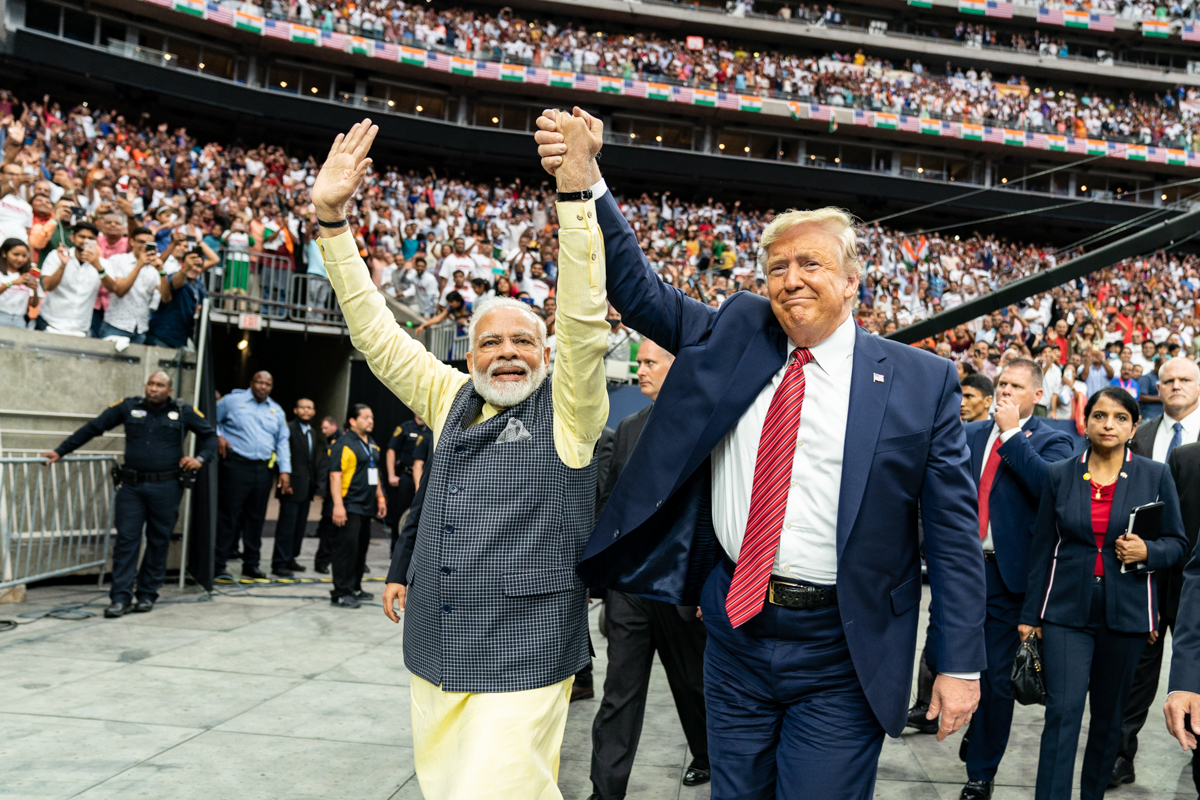
    As President Donald Trump arrives in India today, 24 February 2020,on his maiden official visit to India,  there is significant level of discussions amongst the academics, strategists, and foreign policy experts about whether this visit is more about optics than substantive discussions on strategies and agreements to strengthen the US-India strategic partnership. On arrival the president’s first public engagement is a super spectacle, ‘Namaste Trump’ at the new Motera Stadium in Ahmedabad that will have more than 100,000 people, which is Prime Minister Modi’s way of reciprocating for ‘Howdy, Modi’ at Houston last year. Most opine that while Mr Trump’s visit will be packed with pageantry, it will be light on policy and therefore, unlike previous presidential visits this one may not yield many break-through agreements. There are, however, some important developments that are very unique to the Trump-Modi era when compared to the previous visits of American presidents. Both leaders excel in showmanship and also in projecting strong nationalistic orientation to each one’s domestic constituency. Trump, with his transactional and disruptive approach comes off as more unpredictable when it comes to foreign policy and strategic issues.

    Politics and Showmanship

    It has taken Mr Trump, more than three years since he assumed office to visit India. This could mean that India was not a high priority for the Trump regime in the initial years, or as it turned out India was not the target of Trump’s disruptive strategy that he employed against USA’s traditional allies, China, Russia, and others. The final year of a POTUS term is generally termed as the ‘lame duck year’, where very few presidents have had a good last year and many were hampered by major controversies. It is important to note that India is the first country that President Trump is traveling to after his impeachment trial. There is more to Mr Trump’s India relationship than just this visit. One must remember that he is a shrewd businessman, and even before he became the president, India was already home to the most Trump ventures outside of North-America.  While India’s strategic importance is well recognised by all presidents since Bill Clinton, President Trump’s approach is considerably different than the others. His daughter Ivanka Trump made headlines when she visited Hyderabad, as White House Advisor, for the Global Entrepreneurship Summit in Nov 2017 and the prime minister broke protocol to host a dinner in her honour.

    That the Trump administration has followed a calibrated strategy of recognising and enhancing PM Modi’s image for significant gains to the American defence industry in particular is evident. The current visit, therefore, focuses primarily on strengthening strategic partnership issues in areas such as defence trade, intelligence sharing, counter terrorism, and visa issues. American side may make a token mention about Trump’s offer to facilitate improvement of India-Pakistan talks, China and issues of religious freedom.  However, these will get swamped by the more visible spectacle that will be on display at Ahmedabad and Agra.

    Defence Relationship – the most substantive progress

    India – US defence partnership has progressed significantly over the last decade and a half. The two militaries are exercising together more frequently than ever, and the strategic interactions are moving more towards equitable approach to various aspects. The Trump administration has covered significant ground in nudging India, despite its reluctance, towards partnerships such as the ‘Quad’ and moving towards interoperability by concluding various agreements including the foundational agreements through Defence-Trade-Technology relationship mechanisms.

    Defence trade between the two countries has grown exponentially since 2007. Two major procurements are likely to be signed by the Indian government during this visit: acquisition of 24 Sea-Hawk naval multi-role helicopters (NMRH) from Lockheed Martin worth $ 2.6 billion for the Indian Navy and six AH-64E Apache attack helicopters from Boeing worth $ 930 million for the Indian Army. Both procurements will be through the FMS (Foreign Military Sales) route. Trump administration cleared the decks for enhanced defence cooperation with India by approving India as a major Non-NATO defence partner in 2019, thus smoothening the process for exporting or selling hi-tech weapon systems to India. This is often confused with India becoming a major Non-NATO ally, which is clearly not the case.

    What is clear is that the US has secured major business deals with India to its great advantage, without India gaining much in terms of technology access or industrial production of hi-tech weaponry. The US objective is clearly to wean India away from its heavy dependence on Russian weaponry and secure much broader business relationship with American arms industry. The MIC (military industrial complex) of the USA is clearly focused on India now as its major avenue of business in the 21st century. The Americans were clearly unhappy that India went ahead with S-400 purchase from Russia despite the threat of CAATSA. That India has decided to buy an air defence missile system from the US, again through FMS route, worth $ 1.9 billion seems to be a compensation for such a decision.

    The US-India defence deal will scale $ 20 billion this year after the Trump visit. Many of these weapon system procurements, in terms of numbers, are not of a scale sufficient to create major industrial partnerships for manufacturing. India, however, will need to look at ways and means of acquiring significant technologies from the US through joint ventures, co-design and co-development. Otherwise, there lurks the danger of India being trapped in an all too familiar pattern of buyer-seller relationship rather than as strategic partners.

    Strategic gains?

    The visit’s focus is in areas of trade, defence, counter-terrorism, energy, and co-ordination on regional and global issues. These are areas in which considerable ground has been covered and is a continuing process. The agreement on trade deal, which was keenly expected, has been deferred. With President Trump accusing India of high tariffs and dashing all hopes of a deal before the visit, it is clear that the USA intends to push hard for favourable access to Indian markets for American companies. There are some positives that are emerging. The prospects for increased collaboration in space between ISRO and NASA looks bright.

    The focus of the American side is primarily on Defence trade.  Increase in investments in defence production may become a possibility with major projects in the pipeline. Both Boeing and Lockheed Martin are pushing hard for IAF’s 114 aircraft order, which will be processed under the strategic partnership model of ‘Make in India’ program. This could expand the production run to over 200 aircraft. Similarly, the naval  helicopter (NMRH) procurement has a possibility  of expanding into ‘Make in India’ project for over 100 helicopters. Boeing’s S-76D is a contender for Navy’s utility helicopter procurement under ‘make in India’ program.

    The spectacle of this visit will certainly contribute to both leaders’ constituencies, for President Trump’s re-election campaign and for PM Modi it may divert people’s attention from current issues of flagging economy, Delhi electoral reverses, the Kashmir issue and ongoing protests on CAA and NRC. India however, will need to negotiate hard and leverage the expanding defence business to address technology access and  strengthen Indian industry by enabling them into global supply chain. For this the Indian establishment will need to see well beyond the optics to assess real gains.

    Air Marshal M Matheswaran AVSM VM PhD (retd) is the President of TPF and a former Deputy Chief of the Integrated Defence Staff.