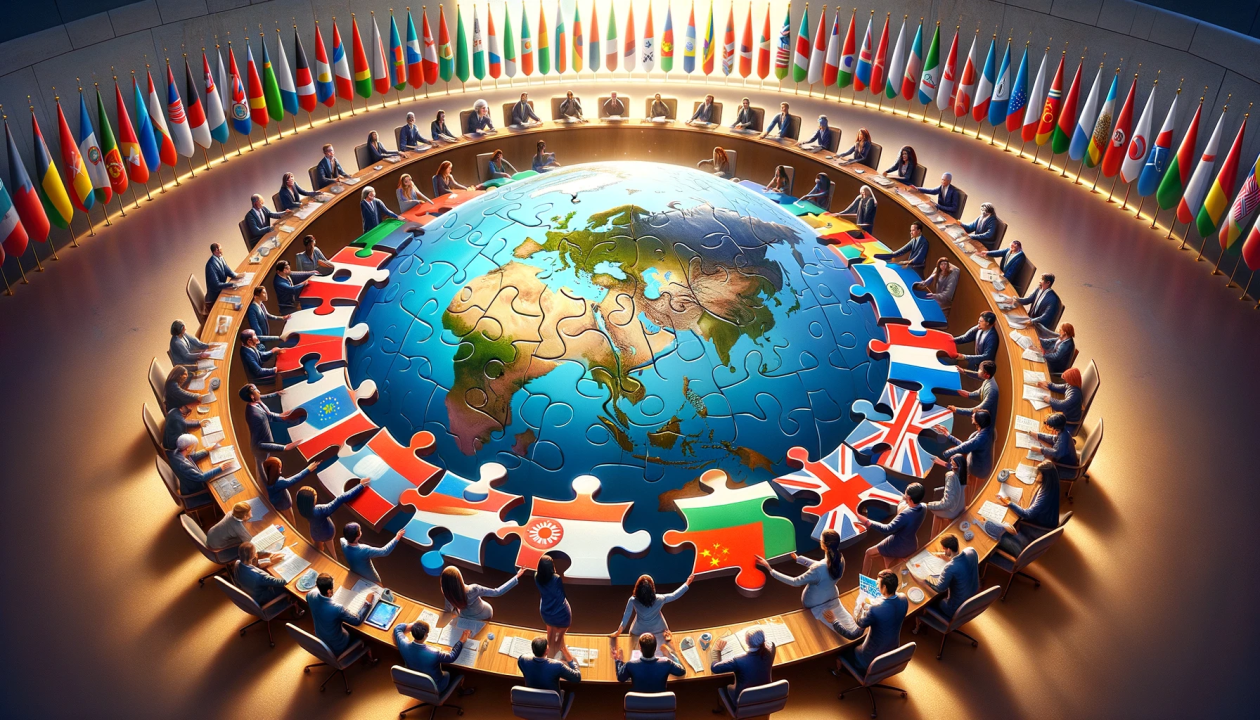
This is the first in a series on India’s strategic choices, civilisational responsibilities, and the contest for the emerging world order.
The Material Foundations of Western Power
The world of strategists is familiar with the quote of Lord Palmerston, Britain’s nineteenth-century Prime Minister. He famously declared: “There are no permanent friends or enemies, only permanent interests.”
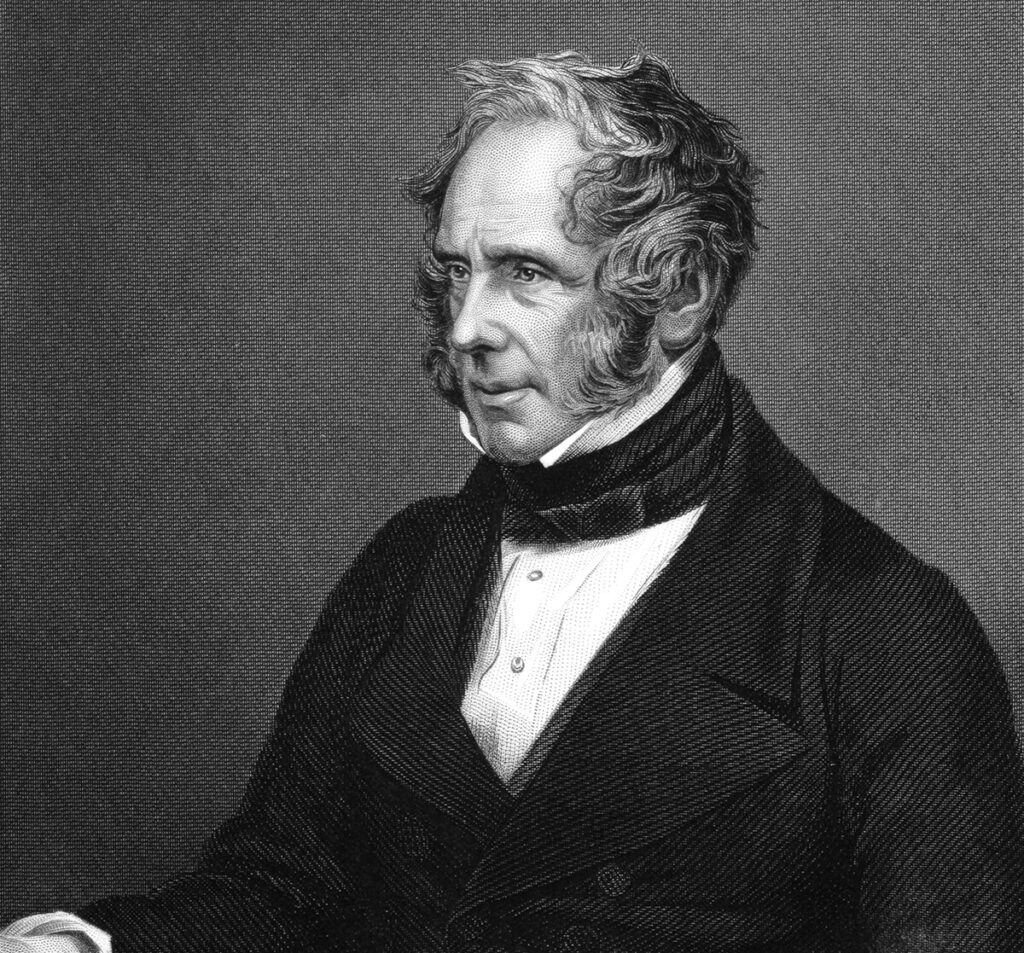
As a description of statecraft, this is not wrong. Every civilisation that has endured has pursued its interests — including the ones this series will spend considerable space defending. Kautilya’s Rajamandala is, at its core, a theory of interest-based alignment. The Cholas sailed across the Bay of Bengal to protect Tamil trading interests. No serious tradition of statecraft has ever pretended that interest does not matter, and none should.
The question worth asking is not whether interests are permanent. It is whether anything else is.
Palmerston’s formulation, taken as a complete theory of how a state should conduct itself — not as one true observation among several, but as the only thing that needs ever to be consulted — becomes something different. It becomes a licence. If interest is permanent and nothing else is, then ethical limits on how interest is pursued are, by definition, temporary: honoured when convenient, discarded when not. That is not realism. That is realism with the safety catch removed.
This is the civilisational fork in the road, and four hundred years of history show which branch the dominant powers took — and still take.
The Islamic Golden Age — spanning roughly the 8th to the 14th century — was one of the greatest intellectual achievements in human history. Scholars at Baghdad’s House of Wisdom undertook a systematic, state-sponsored project of translation and synthesis: gathering the accumulated knowledge of Greece, Persia, India, and China, translating it into Arabic, and building upon it with original contributions in mathematics, astronomy, medicine, philosophy, optics, and chemistry. Avicenna’s Canon of Medicine became a foundational text in European universities. Averroes’ commentaries on Aristotle shaped medieval European philosophy.
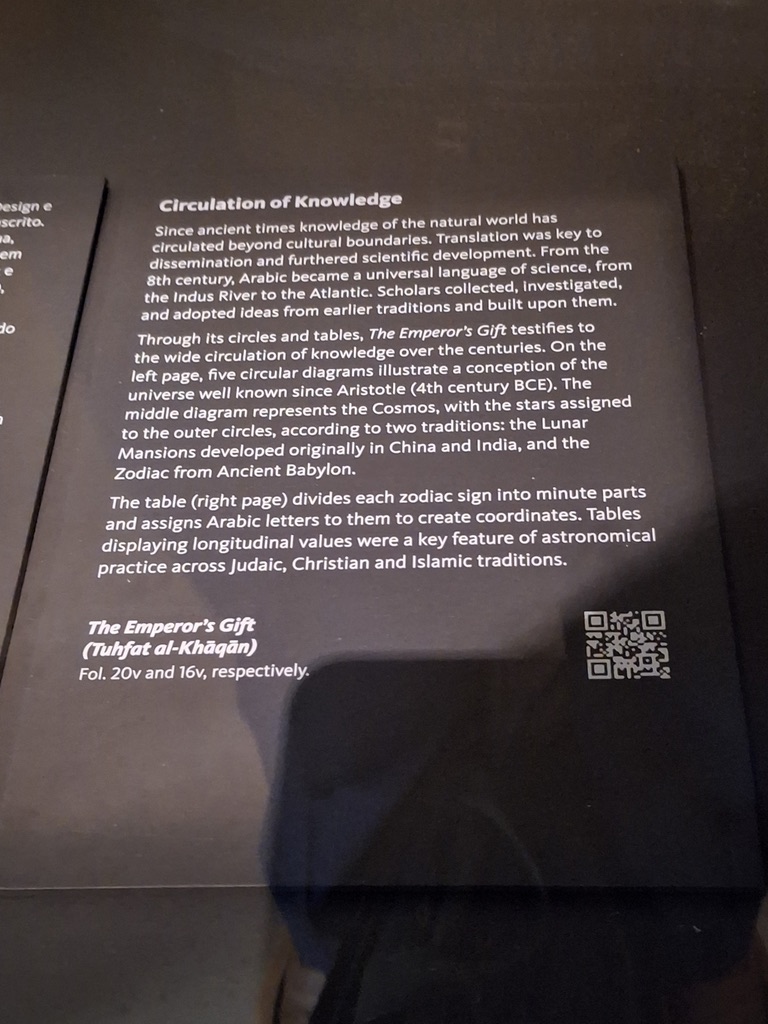
Europe in the early medieval period was not the centre of the world. It was its periphery — impoverished, fragmented, and in the grip of what its own historians call the Dark Ages. While Europe’s literacy rates collapsed and theological conformity suppressed inquiry, something extraordinary was unfolding in Baghdad, Cordoba, and Cairo. The Islamic Golden Age — spanning roughly the 8th to the 14th century — was one of the greatest intellectual achievements in human history. Scholars at Baghdad’s House of Wisdom undertook a systematic, state-sponsored project of translation and synthesis: gathering the accumulated knowledge of Greece, Persia, India, and China, translating it into Arabic, and building upon it with original contributions in mathematics, astronomy, medicine, philosophy, optics, and chemistry. Avicenna’s Canon of Medicine became a foundational text in European universities. Averroes’ commentaries on Aristotle shaped medieval European philosophy. The numeral system through which all modern mathematics operates — including the zero — came to Europe through the Arabic transmission of Indian mathematics. This was not borrowing. It was the rescue and synthesis of civilisational knowledge — and without it, the European Renaissance would have had no foundation on which to build.
The numeral system through which all modern mathematics operates — including the zero — came to Europe through the Arabic transmission of Indian mathematics. This was not borrowing. It was the rescue and synthesis of civilisational knowledge — and without it, the European Renaissance would have had no foundation on which to build.
Europe’s intellectual reawakening in the 14th and 15th centuries drew directly on this Islamic transmission. The Renaissance, together with the gunpowder revolution and the state system formalised at the Peace of Westphalia in 1648, gave European civilisation (viewing it as a single civilisation may not be truly appropriate – disparate kingdoms, fused by the race for maritime trade dominance and military conquest – Italian, Spanish, Portuguese, Dutch, French, British, Russian, etc.) something it had never possessed before: military-technological superiority, organised state power, and the bureaucratic capacity to project both across the world.
This wealth — extracted through conquest, forced indigenous labour, and the systematic destruction of existing civilisations — capitalised the European empires that would go on to colonise two-thirds of the world
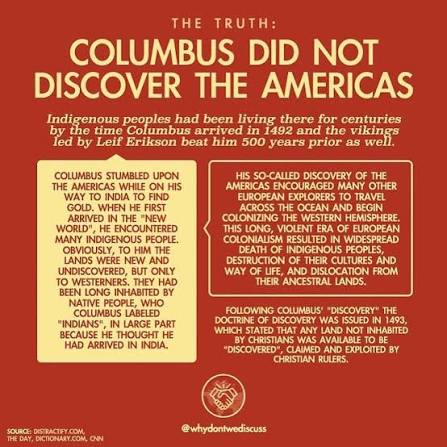
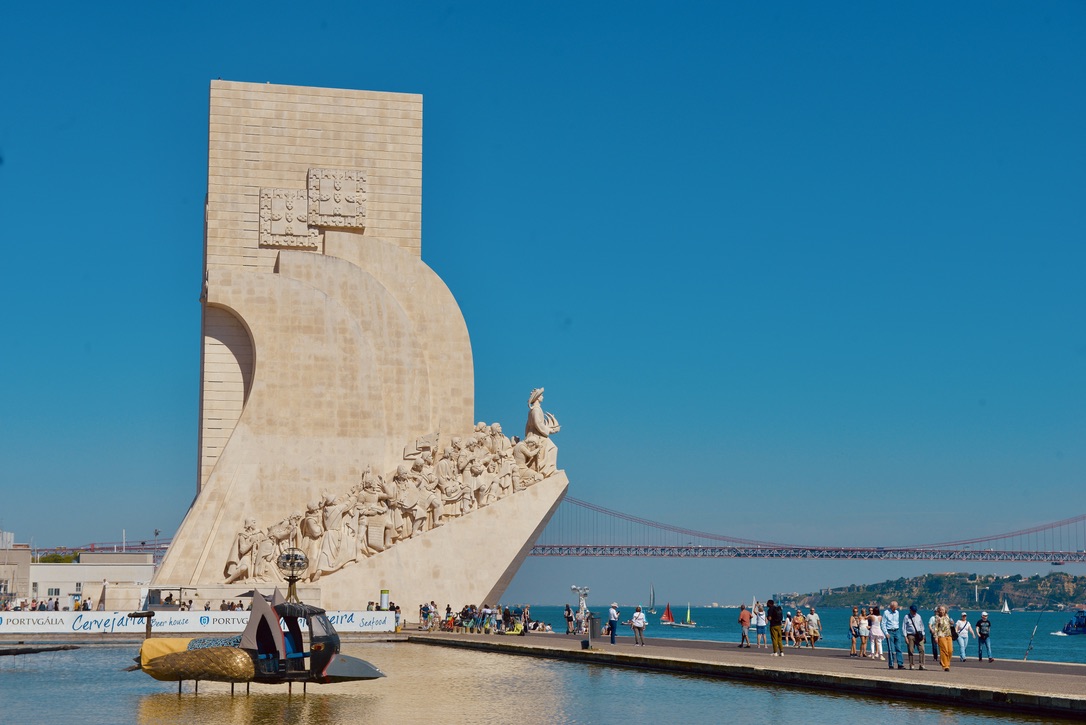
The rise of the West that followed the maritime route discoveries of Columbus and Vasco da Gama needs to be understood correctly, devoid of the myths built around them. The West celebrates them, but the truth is they were plunderers who unleashed the genocidal expansion of the West. This truth is now being brought out by brilliant and unbiased historians such as Howard Zinn and Utsa Patnaik. Howard Zinn writes – ” what Columbus did to the Arawaks of the Bahamas, Cortés did to the Aztecs of Mexico, Pizarro to the Incas of Peru, and the English settlers of Virginia and Massachusetts to the Powhatans and the Pequots. They used the same tactics, and for the same reasons – the frenzy in the early capitalist states of Europe for gold, for slaves, for products of the soil, to pay for the bondholders and stockholders of the expeditions, to finance the monarchical bureaucracies rising in Western Europe, to spur the growth of the new money economy rising out of feudalism…These were the violent beginnings of an intricate system of technology, business, politics, and culture that would dominate the world for the next five centuries.”
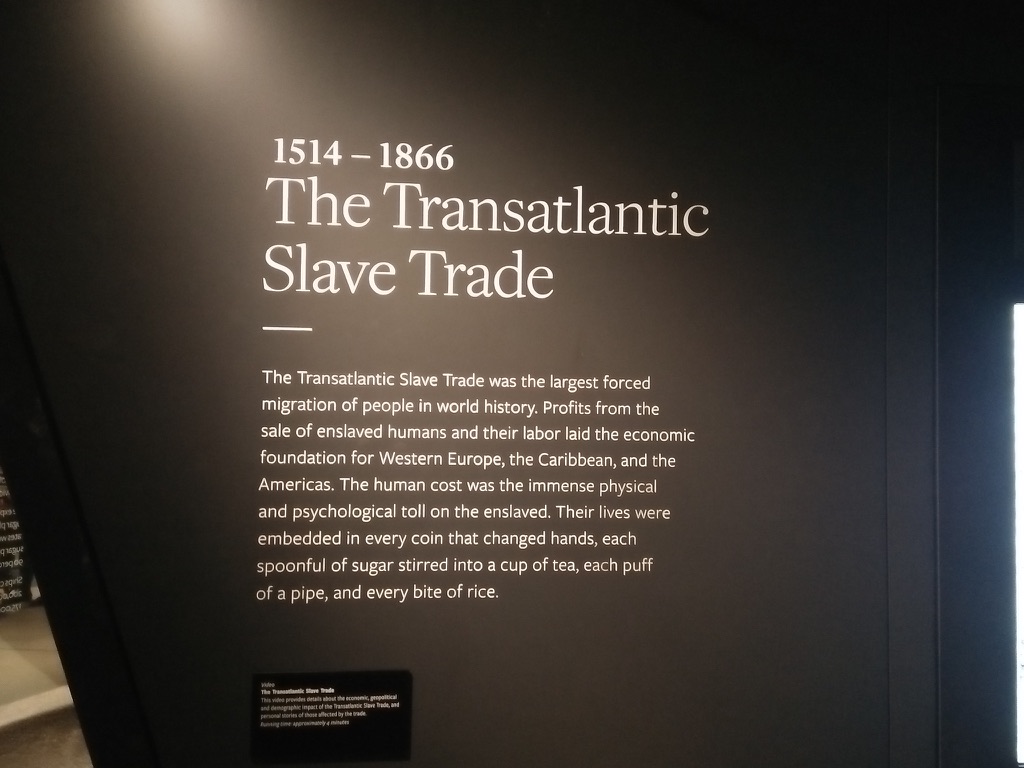
What followed was not a story of civilisational achievement. It was a story of extraction on a scale without precedent in human history — extraction conducted on the understanding that, once interest was engaged, nothing else needed to be weighed. From the Americas alone, Spanish colonial mining operations extracted approximately 150,000 metric tonnes of silver between 1500 and 1800 — representing 80 to 90 per cent of global silver production over three centuries. By 1600, 25,000 tonnes of silver had crossed the Atlantic. This wealth — extracted through conquest, forced indigenous labour, and the systematic destruction of existing civilisations — capitalised the European empires that would go on to colonise two-thirds of the world. The Atlantic slave trade transported an estimated twelve to fifteen million Africans into forced labour over three centuries.
The British were ruthless in pursuing their interests at the expense of the people and the geography of their colonial empire, particularly in India. The economy under the British Raj was not a system of governance or development – it was a system of systematic wealth extraction unprecedented in scale and duration. From 1765 (when Robert Clive obtained the Diwani Rights, that is, the right to collect taxes and revenue, from the Mughal emperor as a result of the Battle of Buxar) to 1947 – 182 years – Britain drained India’s wealth through every possible mechanism. The scale of this drain was staggering. Britain extracted the equivalent of about $45 trillion (in current dollar terms) from India during its colonial rule. This wasn’t accidental impoverishment or the natural result of economic evolution. This was deliberate policy, implemented systematically through revenue extraction, deindustrialisation, trade manipulation, and infrastructural control.
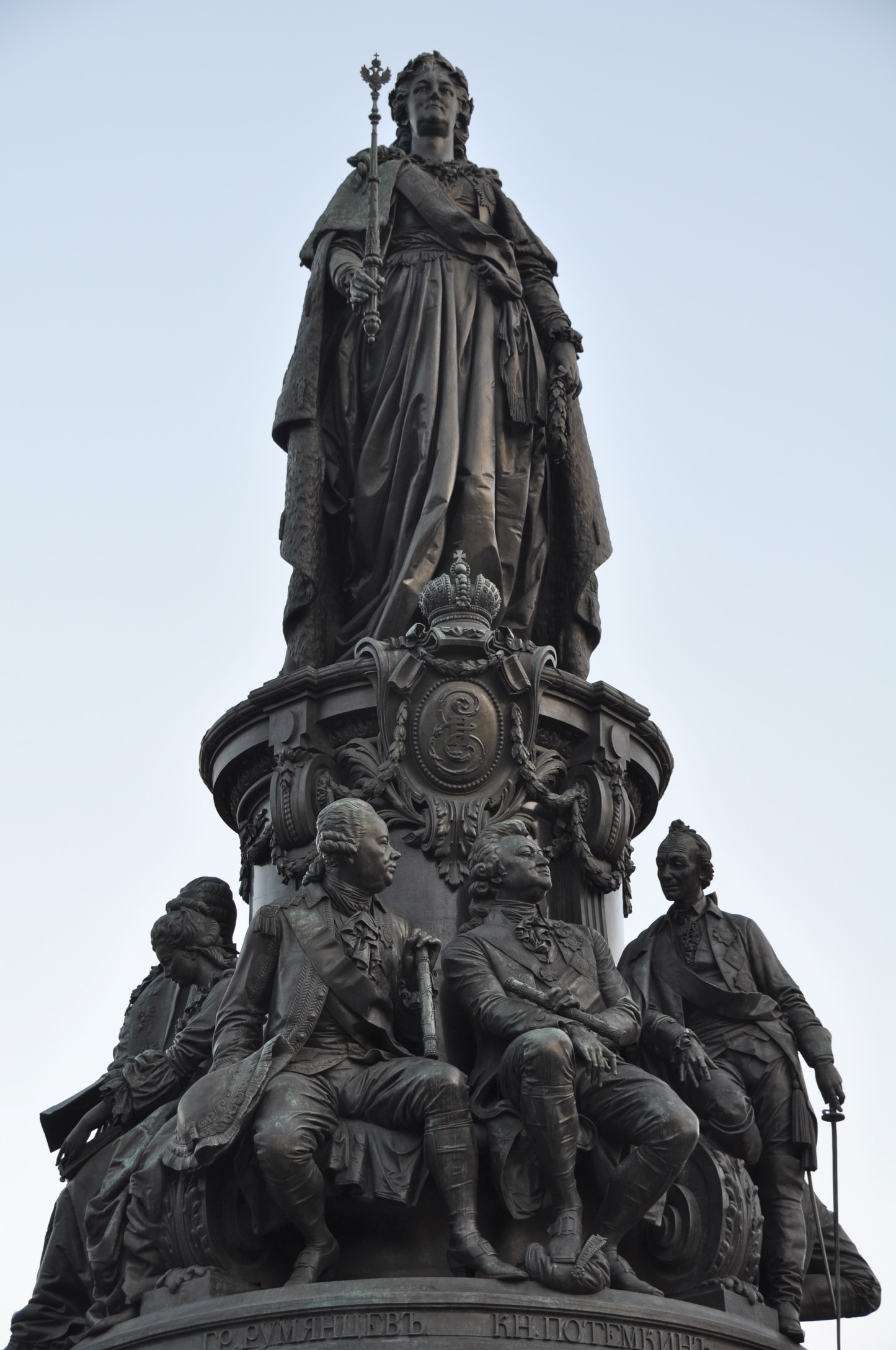
None of this was an aberration from Western values. It was the expression of them. Palmerston’s formulation was not a description of how all states behave. It was a justification for a specific civilisational approach: that power exists to be exercised without ethical constraint, that the strong may do what they will, and that the legitimating language of civilisation, Christianity, and later human rights, are instruments of justification rather than a genuine limits on conduct.
The Berlin Conference of 1884–85 is its most clinical illustration. Otto von Bismarck convened the European powers to divide Africa between them. Not a single African leader was present. A request by the Sultan of Zanzibar to attend was dismissed. The Congo basin — a territory larger than Western Europe, home to millions of people with ancient civilisations, cultures, and governance systems — was assigned as the personal property of Belgian King Leopold II, one of the vilest European monarchs in human history. In the years that followed, hundreds of thousands of Congolese were worked to death on rubber plantations. Those who failed their quotas had their hands amputated. Leopold accumulated one of the largest personal fortunes in history from the proceeds.
This was not an exceptional act of cruelty. It was Palmerston’s formulation taken to its logical and undiluted conclusion.
Whatever the merits claimed for each individually, taken together they represent the same formula: interest declared permanent, leading to the ruthless pursuit of national interests; ethical limits declared situational, that is, practically irrelevant.
The pattern did not end with empire. It changed vocabulary. The wars launched and led by the United States since 2001 — in Afghanistan, Iraq, Libya, Syria and beyond — were conducted in the language of security, liberation, and the defence of human rights. By the most careful independent estimates, their costs have run into the hundreds of thousands of civilian lives, and their stated justifications have repeatedly diverged from their actual outcomes. Whatever the merits claimed for each individually, taken together they represent the same formula: interest declared permanent, leading to the ruthless pursuit of national interests; ethical limits declared situational, that is, practically irrelevant. The vocabulary had changed since 1884. The structure of the choice had not.
The economic register tells the same story. The formal end of colonialism did not end the system. It adapted it. The International Monetary Fund and World Bank, established at Bretton Woods in 1944, became the institutional mechanisms through which the global south’s economic policies were directed from Washington. Structural adjustment programmes imposed fiscal austerity, market liberalisation, and debt dependency on nations that had barely emerged from colonial rule.
Francophone West Africa became perhaps the most striking contemporary illustration of this persistence. Fourteen countries continued to use the CFA franc — a currency whose reserves were held in the French Treasury, whose exchange rate was set in Paris, and whose monetary sovereignty had never been genuinely transferred since formal independence. Long-term analysis tells the structural story: The Ivory Coast reached its peak in income per capita in 1978, in less than two decades after independence. It then stagnated over the next fifty years. Niger reached its highest level in 1965 — the year of independence. Seven decades of formal sovereignty. Not a single decade of genuine economic progress. France’s control was not only monetary. It was political and military. French intelligence maintained deep ties with governing elites. French military bases ensured that no elected government that moved too far from French interests would survive. The system corrupted the democratic process itself.
When Thomas Sankara became President of Burkina Faso in 1983 and attempted to secure genuine sovereignty — nationalising land, refusing IMF debt, building schools and healthcare, and articulating a vision of African self-reliance — he was assassinated in 1987. French agents were present in the capital the following day. Blaise Compaoré, who replaced him, immediately reversed every policy of sovereignty and ruled for 27 years. When a popular uprising removed him in 2014, French troops exfiltrated him to the Ivory Coast. He was later convicted in absentia by a Burkinabe court and sentenced to life imprisonment for Sankara’s murder. The system did not merely extract wealth. It murdered the leaders who sought to end the extraction.
“Anything that maintains us in slavery, we will break those bonds” – Captain Ibrahim Traore
Then, between 2021 and 2023, something changed. A new generation of young, educated, patriotic military officers — shaped by Sankara’s tradition — moved. Mali, Burkina Faso, and Niger formed the Alliance of Sahel States, expelled French and American military forces, and announced their intention to abandon the CFA franc entirely. Burkina Faso’s Captain Ibrahim Traore declared: “Anything that maintains us in slavery, we will break those bonds.” These are not coups in the traditional sense. They are the consequence of a system that used democratic institutions as a mechanism of foreign control for seven decades. As I write this essay, Burkina Faso officially severed all diplomatic relations with France on June 26, 2026. The African nation’s Communications Minister announced the decision on national television, stating that the essential conditions for mutual respect, trust, and non-interference were absent. President Ibrahim Traore accused Paris of harbouring “neo-colonial ambitions,” backing terrorist groups, and acting against Burkinabe interests. African countries are rising against the strangulating control of the West and its neo-colonialism of the last seven decades.
This is the order that India inhabits. This is the order India is being asked to join as a rising power. The contest for a new world order is not simply a geopolitical competition between states. It is a civilisational question —not the one Palmerston’s critics often imagine. The question is not whether a rising power will have permanent interests. Of course it will, and should. The question is whether it will articulate, with equal permanence and equal seriousness, the ethical limits within which those interests are pursued — limits that hold even when honouring them is costly.
India has the history, the philosophy, and the standing to make that commitment. The question is whether it has the will.
—
Further Reading:
On Palmerston’s statement and interest-based statecraft
Lord Palmerston, Speech to the House of Commons, 1 March 1848. Hansard, House of Commons Debates, vol. 97, cols. 66–123.
Kautilya, Arthashastra, Books VI–VII (Mandala theory of interstate relations). Trans. R.P. Kangle, The Kautiliya Arthashastra, 3 vols. (University of Bombay, 1960–65).
On the Islamic Golden Age and knowledge transmission to Europe
George Saliba, Islamic Science and the Making of the European Renaissance (MIT Press, 2007).
Jonathan Lyons, The House of Wisdom: How the Arabs Transformed Western Civilisation (Bloomsbury, 2009).
Dimitri Gutas, Greek Thought, Arabic Culture: The Graeco-Arabic Translation Movement in Baghdad and Early ‘Abbasid Society (Routledge, 1998).
Georges Ifrah, The Universal History of Numbers (Wiley, 2000). On the transmission of Hindu-Arabic numerals, including the zero.
On colonial extraction — the Americas
Dennis O. Flynn and Arturo Giráldez, ‘Cycles of Silver: Global Economic Unity through the Mid-18th Century,’ Journal of World History, 13(2), 2002.
Source for the 150,000-tonne / 80–90% global silver production estimates, 1500–1800.
Earl J. Hamilton, American Treasure and the Price Revolution in Spain, 1501–1650 (Harvard University Press, 1934).
Foundational source for the c. 25,000-tonne figure by 1600.
On the Atlantic slave trade
David Eltis and David Richardson, Atlas of the Transatlantic Slave Trade (Yale University Press, 2010).
The Slave Voyages Database, Emory University. slavevoyages.org.
Basis for the 12–15 million estimate.
On the Berlin Conference and the Congo Free State
Adam Hochschild, King Leopold’s Ghost: A Story of Greed, Terror, and Heroism in Colonial Africa (Houghton Mifflin, 1998).
S.E. Crowe, The Berlin West African Conference, 1884–1885 (Longmans, 1942).
Matthew Craven, ‘Between Law and History: The Berlin Conference of 1884–1885 and the Logic of Free Trade,’ London Review of International Law, 3(1), 2015.
On the Sultan of Zanzibar’s exclusion.
On post-2001 conflicts and civilian costs
Costs of War Project, Watson Institute for International and Public Affairs, Brown University. costsofwar.org.
Cumulative estimates of direct and indirect deaths in post-9/11 wars (Afghanistan, Iraq, Pakistan, Syria, Yemen).
Iraq Body Count project. iraqbodycount.org.
Independent database of documented civilian deaths in Iraq since 2003.
Gilbert Burnham et al., ‘Mortality after the 2003 invasion of Iraq: a cross-sectional cluster sample survey,’ The Lancet, 368(9545), 2006.
One of several widely-cited epidemiological estimates; cited to indicate the range of credible estimates rather than to adjudicate between methodologies.
On Bretton Woods, the IMF/World Bank, and structural adjustment
Eric Helleiner, Forgotten Foundations of Bretton Woods: International Development and the Making of the Postwar Order (Cornell University Press, 2014).
Ngaire Woods, The Globalizers: The IMF, the World Bank, and Their Borrowers (Cornell University Press, 2006).
On the CFA franc and Francophone West Africa
Fanny Pigeaud and Ndongo Samba Sylla, Africa’s Last Colonial Currency: The CFA Franc Story (Pluto Press, 2021).
World Bank, World Development Indicators (databank.worldbank.org).
Basis for the Ivory Coast (1978 peak) and Niger (1965 peak) GDP per capita figures.
On Thomas Sankara and Blaise Compaoré
Ernest Harsch, Thomas Sankara: An African Revolutionary (Ohio University Press, 2014).
On the French intelligence presence following the 1987 coup: reporting by Jeune Afrique and Radio France Internationale (RFI), 1987.
On Compaoré’s 2014 exfiltration: Reuters and Agence France-Presse, October 2014.
On Compaoré’s conviction: ‘Burkina Faso: Blaise Compaoré sentenced to life in prison over Thomas Sankara’s assassination.’ Reuters, 6 April 2022.
On the Alliance of Sahel States (2021–2024)
Formation of the Alliance of Sahel States, September 2023, and withdrawal from ECOWAS, January 2024: Reuters, Al Jazeera, and AfricaNews coverage, 2023–2024.
Captain Ibrahim Traoré, ‘Anything that maintains us in slavery, we will break those bonds.’ Public addresses, widely reported across pan-African and international media, 2023–2024.
On the closure of the US drone facility at Agadez, Niger: ‘Niger orders US military to leave the country.’ BBC News, 17 March 2024.
—
Air Marshal M Matheswaran (Retd) is the Founder-President of The Peninsula Foundation (@TPF_Chennai), an independent policy research think tank in Chennai, rooted in the conviction that governance must serve conscience and that the world order India helps shape must be grounded in ethics, not merely in interests.