Tag: Tamilnadu

  • Using Artificial Intelligence to address Corruption: A proposal for Tamilnadu

    Using Artificial Intelligence to address Corruption: A proposal for Tamilnadu

    Nations must adopt Artificial Intelligence as a mechanism to build transparency, integrity, and trustworthiness, which are necessary to fight corruption. Without effective public scrutiny, the risk of money being lost to corruption and misappropriation was vast. Dr Chris Kpodar, a global Artificial Intelligence Specialist, has advocated the use of artificial intelligence as an anti-corruption tool through the redesigning of systems to address systems that were previously prone to bribery and corruption.


    Artificial Intelligence Tools

    Artificial Intelligence has become popular due to its increasing applications in many fields. Recently, IIT Madras opened a course on B.Tech Data Science in Tanzania, demonstrating the popularity of Artificial Intelligence. The history of Artificial Intelligence goes back to the 1950s when computing power was less, and hardware were huge. These days, computing power has increased exponentially along with the miniaturisation of hardware, leading to algorithms being able to compute larger datasets. The field of AI, however, has gone through ups and downs in terms of popularity.

    Researchers have worked on Neural Networks (Figure below), a mathematical model modelled after neurons in the brain, a foundation unit, and one of the foundations of state-of-the-art AI.
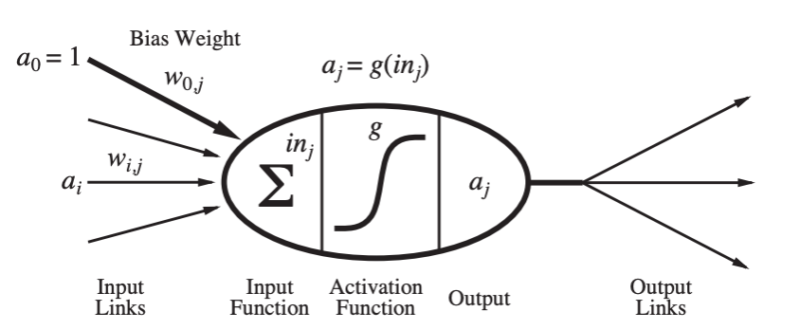
    Artificial intelligence (AI), machine learning, deep learning, and data science are popular terms that describe computing fields that teach a machine how to learn. AI is a catch-all term that broadly means computing systems designed to understand and replicate human intelligence. Machine Learning is a subfield of AI where algorithms are trained on datasets to make predictions or decisions without explicitly being programmed. Deep Learning is a subfield of Machine Learning, which specifically refers to using multi-layers of neural networks to learn from large datasets, mimicking cognition of the neurons in the brain. Recently, the field of AI has resurged in popularity after a popular type of neural network architecture, AlexNET, achieved impressive results in the Image Recognition Challenge in 2012. Since then, neural networks have started to enter into applications in the industry, with colossal research funding mobilised.

    Breakthroughs that can aid Policy Implementation

    There are many types of neural networks, each designed for a particular application. The recent popularity of applications like ChatGPT is due to a neural network called Language Models. Language Models are probability models which ask the question, what is the next best token to generate, given the previous token?

    Two significant breakthroughs led towards ChatGPT, including translating language from one language to another using a machine learning technique called attention mechanism. Secondly, this technique was introduced in transformer-type language models, which led to increased state-of-the-art performance in many tasks in artificial intelligence.

    Transformers, a robust neural network, was introduced in 2017 by Google Researchers in “Attention is All You Need”. This translates into generating human-like text in ChatGPT. Large language models have taken a big step in the technology landscape. As Machine Learning applications are being deployed rapidly, it calls for a governance model for these models, as research in AI models is advancing quickly with innumerable breakthroughs. Earlier in 2019, GPT-2, a Machine Learning model based on transformers, could not solve fundamental mathematical problems such as elucidating numbers from 0-100. Within a year, more advancement in the GPT models led to models being able to perform higher-level scores in SAT exams, GRE, etc. Another breakthrough advancement was the ability of machine-learning programs to generate code, which has increased developer productivity automatically.

     Moreover, many researchers are working on AGI (Artificial General Intelligence), and nobody knows precisely when such capabilities might be developed or researched. Researchers have not settled on a convincing definition of AGI agreeable to everyone in the AI research community. The rate of advancement and investment in AI research is staggering, which calls for ethical concerns and governance of these large language models. India is an emerging economy where all sectors are growing rapidly. India’s economy grows nearly 10% yearly, with the services sector making up almost 50% of the entire economy. This translates to the government enjoying high tax revenues from this sector, generating high-paying jobs. Most of the Indian workforce is employed in the industrial and agricultural sectors.

    Using AI to deal with Corruption and enhance Trust

    The primary issue in India has been corruption at all levels of the government, from the panchayat, district level, and state level to central machinery. Corruption is attributed mainly to regulation, rent-seeking behaviour, lack of accountability, and requiring permits from the Government. Indian bureaucratic system and government employees are among the least efficient across sectors such as infrastructure, real estate, metal & mining, aerospace & defence, power and utility, which are also most susceptible to corruption. Due to inefficiency, the productivity of the public sector is low, impacting the local Indian economy.

    India ranks 85 out of 180 countries using the Corruption Index measured in 2022, with close to 62% of Indians encountering corruption, paying bribes to government officials to get the job done. There are many reasons for corruption in India: excessive regulation, a complicated tax system, bureaucratic hurdles, lack of ownership of work, and the public sector being the least productive organisation. Corruption is dishonest or fraudulent conduct by those in power, typically involving bribery. Bribery is defined generally as corrupt solicitation, acceptance, or transfer of value in exchange for official action. In bribery, there are two actors in the transaction, the giver and the receiver; however, corruption involves primarily one actor who abuses the position of power for personal gain. Bribery is a singular act, while corruption might be an ongoing abuse of power to benefit oneself.

    Trust is a critical glue in financial transactions; where trust between individuals is higher, the economic transactions are faster, and the economy grows, with more businesses moving, bringing capital, and increasing the production and exchange of goods. However, when trust is low, businesses hesitate, and the economy either stagnates or declines. High-trust societies like Norway have advanced financial systems, where credit and financial instruments are more developed, compared with lower-trust societies such as Kenya and India, where many financial instruments and capital markets to raise finances are unavailable. Therefore, public policymakers must seek ways to increase trust in their local economies by forming policies conducive to business transactions.

    The real-estate sector in Tamilnadu: a fit case for the use of AI

    Tamil Nadu is India’s second-largest economy and is the most industrialised and urbanised state in India. Real estate is an economic growth engine and a prime mover of monetary transactions. It is a prime financial asset for most Tamils from many social strata. However, real estate in Tamil Nadu is prone to corruption at many levels. One specific popular method is the forgery of land registration documents, which has resulted in a lack of trust among investors at all levels in Tamil Nadu.

    To address this lack of trust, we can use technology tools to increase confidence and empower the public to create an environment of accountability, resulting in greater confidence. Machine Learning can provide algorithms to detect these forgeries and prevent land grabbing. Tools such as identity analysis, document analysis, and transaction pattern analysis can help to provide more accountability. In addition to the above, machine learning offers many methods or combinations of methods that can be used. One advanced way is using transformer-based models, which are the foundation for language models such as BERT and generative Pre-Trained Models for text-based applications. The original documents could be trained using large language models as a baseline to frequently check and find forgeries. Documents can be encoded to compare semantic anomalies between different types of documents.

    Once forgery is detected, it can be automatically sent to civil magistrates or pertinent authorities. Additionally, the recent introduction of Software repository sites allows the public to be informed or notice any change in the status or activity. Customised public repositories based on GitHub might create immense value for Tamil Nadu’s Department of Revenue, create accountability, increase productivity and reduce workload. The Customised public repositories displaying land transaction activity might inform the public of such forgeries, thus creating an environment of greater accountability and trust for the people. Another popular method can be introduced by introducing Computer Vision Algorithms, such as convolutional neural networks combined with BERT, that can validate signatures, document tampering, and time-frames to flag forgeries. This can be done by training original documents with specific algorithms and checking documents with reasonable doubts about forgery.

    Another primary concern in Tamil Nadu’s Government has been people in positions of power in the government or close to financial oversight. They are more prone to corruption, which can be flagged or monitored using graph neural networks, which can map individuals, connections, and economic transactions in a network to flag which individuals are more likely or prone to corruption. Another method to reduce corruption is to remove personal discretion in the process, which Machine Learning can enable to automate the tasks and documents in land registration; digitisation might help reduce corruption. Large Language Models can also be used as classifiers and released to the public to keep accountability on the Tamil Nadu Government’s spending, so the public is aware and personal gain of Government money can be further reduced this way. Another central area of corruption is the tender, the bidding process for government contracts in Tamil Nadu, such as public development works or engineering projects. Tamil Nadu’s tender or bidding process can be made more public, and machine learning algorithms can be used to check if norms, contracts, and procedures are followed to award tender bids for government projects. To save wasteful expenditure, algorithms can check if objective conditions are met, with any deviations flagged and in the public domain. Given any suspicion, the public can file a PIL in Tamil Nadu’s court system.

    We can argue and conclude that with more deployed machine learning tools being part of Tamil Nadu’s State machinery, we can confidently say that corruption can be reduced to more significant levels by releasing all information to the public and creating an environment of greater accountability.

    References:

    1. Russell, Stuart J.; Norvig, Peter. (2021). Artificial Intelligence: A Modern Approach

    2.Bau, D., Elhussein, M., Ford, J. B., Nwanganga, H., & Sühr, T. (n.d.). Governance of AI models. Managing AI risks. https://managing-ai-risks.com/

    1. S. Department of State. (2021). 2021 Country Reports on Human Rights Practices: India. U.S. Department of State. https://www.state.gov/reports/2021-country-reports-on-human-rights-practices/india/
    1. Devlin, J., Chang, M.-W., Lee, K., & Toutanova, K. (2019). BERT: Pre-training of deep bidirectional transformers for language understanding. In Proceedings of NAACL-HLT (pp. 4171-4186). https://arxiv.org/abs/1810.04805
    1. Radford, A., Wu, J., Child, R., Luan, D., Amodei, D., & Sutskever, I. (2019). Language models are unsupervised multitask learners. OpenAI blog, 1(8). https://openai.com/blog/better-language-models/
    1. Radford, A., Narasimhan, K., Salimans, T., & Sutskever, I. (2018). Improving language understanding by generative pre-training. OpenAI blog, 12. https://openai.com/blog/language-unsupervised/
    2. Bai, Y., Kadavath, S., Kundu, S., Askell, A., Kernion, J., Jones, A., … Kaplan, J. (2022). Constitutional AI: Harmlessness from AI feedback. arXiv preprint arXiv:2212.08073. https://arxiv.org/pdf/2212.08073.pdf,

    https://www.anthropic.com/news/constitutional-ai-harmlessness-from-ai-feedback

    1. Reinforcement Learning with Human Feedback (RLHF), Ouyang, L., Wu, J., Jiang, X., Almeida, D., Wainwright, C. L., Mishkin, P., Zhang, C., Agarwal, S., Slama, K., Ray, A., Schulman, J., Hilton, J., Kelton, F., Miller, L., Simens, M., Askell, A., Welinder, P., Christiano, P., Leike, J., & Lowe, R. (2022). Training language models to follow instructions with human feedback. arXiv preprint arXiv:2203.02155. https://arxiv.org/abs/2203.02155

    Feature Image: modernghana.com
  • The Tamils Are The Original Inhabitants Of Sri Lanka

    The Tamils Are The Original Inhabitants Of Sri Lanka

    Many of history writing across the world is heavily influenced by nationalist narratives, religion, mythologies, and dominant accounts. However, it is now possible to re-establish past histories with the assistance of modern science through the use of anthropology, genetics, linguistics, etc. Sri Lanka’s history is intimately tied to that of the subcontinent, more particularly the Peninsula and Tamilnadu. Justice C M Wigneswaran provides a very incisive analysis of the island nation’s origins.

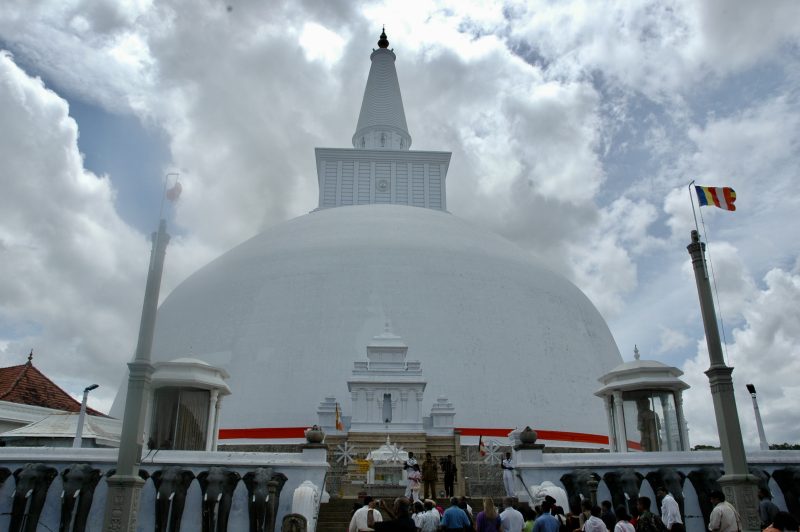
    Ruwanwalisay Temple at Anuradhapura – Image Credit: M Matheswaran

    Someone asked me; We read in the press your response to a question recently. You seem to be making sweeping statements about the Sinhalese. As far as we know the Sinhalese were the original inhabitants of this Island and the Tamils came in the 10th Century AD after the Chola Conquest. What proof have you about what you say?

    My response was; Professor Wijeyanayake from London like many other Sinhala Scholars wrote in the Sunday Observer of 17th November 1996 as follows- “The Origin of the Sinhala Race is in Lanka. There is no scientific evidence of Indians originating in India who spoke Sinhala”. Sinhalese are those who speak the Sinhala Language. Of course these days there are Sinhalese who have forgotten their mother language and have embraced other languages like English and French in their countries of emigration. But in early times the Sinhalese would have been those who spoke the Sinhala Language mainly. Without the Sinhala Language, there could have been no Sinhalese.

    When did the Sinhala Language come into being?

    The earliest Sinhala work was Siyabaslakara around 848 CE (9th Century AD). The next was Dhampiya-atuva Gatapadayo which came out around 918 CE (10th Century AD). Pali words are used both in a modified and pure form quite heavily in this latter work. The first Sinhala grammar Sidath Sangaraya belongs to the 13th Century AD. The inscriptions before the 7th Century AD do not mention Sinhala as a language and ethnicity of the people. The term “Sihala” (Lion in Pali) occurs for the first time in the Dipawansa (5th Century AD). Only once is the term coming up to say the Island was known as Sihala on account of the presence of Lions.

    In the Mahawansa the term Sihala appears twice. But there is no reference to the people called Sinhalese nor the Language called Sinhala. R.A.L.H. Gunawardana in his book “The People of the Lion: The Sinhala Identity and ideology in History and Historiography” (Sri Lanka Journal of the Humanities Vol V:1-2 (1979)) claims that before the 12th Century AD the Sinhala identity did not cover a whole people in Sri Lanka but only a small ruling class. This meant even by the 12th Century AD Sinhala had not become a full-fledged people’s language yet. What you have been fed to believe as per your question is pseudo-history created before the 1970s.

    After the 1970s even Sinhala historians have begun to doubt the story of Sri Lanka’s history starting with the coming of Vijaya from North India. Now our history books do not start with the coming of Vijaya as before. They start with the Stone Age civilization which was long prior to (the fictitious) Vijaya landing in Sri Lanka. Our history books now accept that permanent settlements, agriculture, use of skills, use of iron, urbanisation etc took place in this Island before the coming of (the fictitious) Vijaya. It is interesting to note that none of the books on the ancient history of any of the States in North India refers to the emigration of a person called Vijaya with 700 followers from their shores at any time in their ancient history. So now we start history from dates anterior to the coming of (the fictitious) Vijaya. Historically it is more plausible to believe that Mahawamsa written in Pali was a fiction written for the glorification of Buddhism. In fact, the author mentions so at the end of every stanza.

    But so far our Sinhala historians have not officially identified who these people who lived in this country before the coming of (the fictitious) Vijaya were. This is because any attempt, to tell the truth, will be beneficial to the Tamils and the pseudo-history of the Sinhalese hitherto purveyed would get exposed! I am told there was pressure recently to prevent the author of “Demala Baudhayo” bringing out a reprint of his book.

    The importance of the 1970s and the post-1970s period lies in the fact that scientific archaeological research began to take place here from then on. Not only that, our local researchers were helped by erudite foreign archaeologists from France, Germany, Britain and USA together with UNESCO experts. The pseudo-Sinhala Buddhist historians found it difficult to make progress due to this.

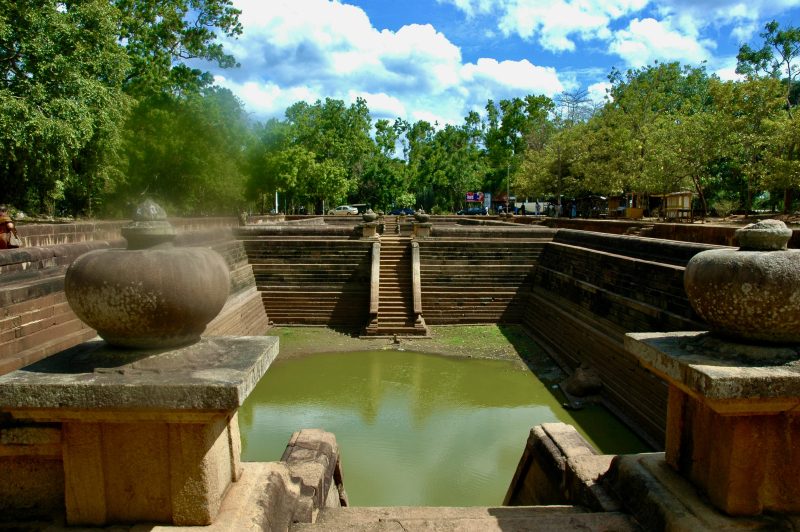
    A view of the Twin tanks: Archaelogical site at Anuradhapura – Photo Credit: M Matheswaran

    There is now archaeological evidence that pre-historic Stone Age people lived on this Island from over 125000 years ago according to excavations made in Iranaimadu in Kilinochchi District and in certain areas in Southern Sri Lanka. Dr Siran Deraniyagala brought these matters out, through his researches.

    The Stone Age could be generally divided into three periods 1. Paleolithic (Old Stone Age) (Before 10000 BC) 2. Mesolithic (Middle Stone Age) (Between 10000 BC and 8000 BC) 3. Neolithic (New Stone Age) (from 8000 BC to 3000BC). (Greek – lithos – Stone). But in certain regions, the Mesolithic period may have started even before 10000 BC.

    There is evidence that from 30000 years ago the Mesolithic people lived in our Hill Country as well as the Low Lands. About 75 evidences have been unearthed. Also, there is evidence to show that majority of these Mesolithic people lived mainly in the Northern and Eastern parts of Sri Lanka. They led a nomadic life. Their advancement in civilization is perceivable from the findings in caves, hills and on level ground.

    Thus the idea that the early inhabitants of Sri Lanka came from North India is now not accepted. It is agreed that long before the time of Mahawamsa, Sri Lanka enjoyed a culture similar to South India and those ancients were the progenitors of the present Sinhalese and Tamils.

    They attribute close similarities in lifestyle between these people and those who lived in the South of present Tamil Nadu. These are confirmed by experts in the fields of archaeology, humanities, philology and history. About 200 words found in the Tamil Language spoken by these people were taken into the Sinhala language later.

    It has been authoritatively said that the stone implements used by our Mesolithic people were the same as those used in Thirunelveli District in South India. According to Professor Indrapala, this civilization spread from South India to North Sri Lanka and thereafter spread to other parts of Sri Lanka.

    Around 3000 years ago early Iron Age was introduced to this Island. There too we see very close similarities between what was found in Southern Tamil Nadu and Sri Lanka. Vimala Begley who conducted researches in Kantharodai in the 1970s concluded that those who inhabited the Jaffna Peninsula in ancient times had very close relationship with the Southern part of present Tamil Nadu.

    Their cultural affinity in Sri Lanka extended from Kantharodai up to Puttalam. Pomparipu in the Puttalam District especially had very close resemblance to what is found in Kantharodai. Professor Sudarshan Seneviratne too has confirmed this finding. Professor Indrapala too confirms that the culture of the Stone Age people in Sri Lanka came within the ambit of the South Indian cultural ambience of that time.

    Thus the idea that the early inhabitants of Sri Lanka came from North India is now not accepted. It is agreed that long before the time of Mahawamsa, Sri Lanka enjoyed a culture similar to South India and those ancients were the progenitors of the present Sinhalese and Tamils. Professor Senaka Bandaranayake has said that these ancients had no ethnic differences but only cultural differences. These differences he says could have existed even before the time of the visit of the so-called Vijaya to the Island. If we examine the culture and life habits of the ancient Stone Age people they had a habit of inscribing their name or the names of those who shaped the clay pots and utensils, on them. This habit is seen to have existed both in South India and Sri Lanka during that period. This habit is not visible in any other part of India. These writings on clay pots have been unearthed in Tamil Nadu and in Anuradhapura. Anuradhapura pots belong to a period over 2750 years ago. The writings on pots have been identified as Tamil letters in the Tamil Language. Writing started in North India only about 2300 years ago. But both in Tamil Nadu and Sri Lanka these writings have been found to exist much earlier. Now historians believe that the art of writing went from the South to North India.

    Recent Keeladi excavations in Madurai, South India has shown evidence of a civilization anterior to all others in India. Thus, before the introduction of Buddhism to Sri Lanka, the fact that the progenitors of the present Sinhalese and the Tamils lived here, has been accepted scientifically. The recent DNA tests confirmed this.

    When we examine the writings in Sinhala, Professor Fernando, Professor Saddha Mangala Karunaratne and Professor Ariya Abeysinghe have said that before the North Indian Prakrit was introduced with Buddhism into Sri Lanka, the Script similar to the South Indian Script was available in Sri Lanka. We could gather from their researches that Tamil Script and Tamil Language and Dravidian words were in use in Sri Lanka before Sinhala Language came into use. That is why I boldly said the language of our ancients was Tamil and the original indigenous population of Sri Lanka were Tamil.

    Buddhism spread in this Island from the 3rd Century BC onwards. Over 1500 identified inscriptions confirm this. These inscriptions have Brahmi script from North India plus Tamil Script inscribed on them. There was no Sinhala script nor Sinhala language nor Sinhalese people then. Thus it is clear that the Tamil Language was in use in Sri Lanka prior to the introduction of Buddhism and before the introduction of the North Indian Brahmi Script.

    Even though Professor Paranavithana tried to identify the North Indian Prakrit as an old Sinhala Script and tried to show wherever Prakrit was in use the Sinhalese lived there, this statement of the Professor is now not accepted because with the spread of Buddhism, the Prakrit script too spread all over South and South East Asia and was in use for over 700 years as the script of inscriptions. Prakrit was not old Sinhala. If it was, the Sinhala language should have been spoken in other South East Asian countries too.

    But in Tamil Nadu the language of the Buddhist inscriptions was Tamil. If we examine the 1500 Brahmi inscriptions in Sri Lanka even though Northern Brahmi was generally used, in addition, many Tamil words were also used. Specially the names of individual Tamils were referred to in Tamil. Relationships among individuals were referred to in the Tamil Language. Place names have been written in Tamil. Even titles of Tamil rulers were written in Tamil. This shows the existence of the Tamil language in Sri Lanka before the introduction of Buddhism and hence Tamils were the original inhabitants of this Island at the time Buddhism was introduced.

    If we examine the evolution of the Sinhala language we have a parallel in the evolution of Malayalam. The present Kerala was part of Tamil-speaking regions in Tamil Nadu. They were ruled by Chera Kings. The transformation of Tamil to Malayalam took place due to the heavy influence of Sanskrit from the 10th  Century AD on the Tamil language. Tamil plus Sanskrit brought in Malayalam. Hence I referred to a new language in the offing in Chennai today. Tamil plus English might produce Tamilish in 25 to 50 years.

    Similarly, the introduction of the Pali language in Sri Lanka as the language of Buddhism when it mixed with the local Tamil language it developed into a new language called Sinhalese around the 6th or 7thCentury AD.

    The evidence for this could be found in Sigiriya. Sigiriya inscriptions of 5th Century AD portray early Sinhalese not yet developed into a proper language. Thus there is no evidence that the Sinhala language existed before the 7th Century AD. The Sinhala Script has developed due to the mixing of Brahmi letters with the Pallava period grantha letters.

    The Sinhala literature like Rajavaliya and Poojavaliya belongs to the 13th Century AD.

    Your question contains a reference to the Tamils coming here only during the Chola conquest in 10thCentury. There had been Tamils living on this Island from a long, long time ago. May be from the time of the Lemurian Continent which is now under the Indian Ocean. The earliest Tamil Sangam period and the Second Sangam period (Muthal Sangam and Idai Sangam) have been referred to in the last Sangam period (Kadai Sangam) literature and the literary works of the earlier Sangam Periods are referred to in the Kadai Sangam literature. Tamil is one of the earliest languages of this World if not the earliest. There have been Pandya, Pallava, and Chola conquests of Sri Lanka from ancient times. Thus there have been waves of Tamil intrusions. But the original Tamils of Sri Lanka have been occupying this Country from over 3000 years ago. The present tendency to refer to Buddhism as that of the Sinhalese and Hinduism as that of the Tamils is erroneous. When religions are introduced into a Country they are not introduced to be followed only by particular races. When Buddhism was introduced into this Island there were no Sinhalese. Thus the Tamil King Devanampiya Theesan got converted to Buddhism.

    There is considerable evidence to show the existence of Tamil Buddhists in Pali literature and Brahmic inscriptions. Tamil Kings were given the titles Buddha thasan and Buddhadevan when they supported Buddhism and Buddhist causes.

    Up to 15 th or 16 th  Century there were Tamil Buddhists according to Pali literature. The inscriptions of Nainatheevu in North Sri Lanka refer to Tamil Buddhists. Professor Sunil Ariyaratne in his “Demala Baudhayo” refers to Tamil Buddhists.

    In recent times Sinhalese portraying themselves as Buddhists and Tamils as Hindus have brought about polarization says Professor Pushparatnam. This could have been avoided he says.

    When I was living in the old Anuradhapura Town in the 1940s there were Tamils who owned lots of lands around Nuwara Wewa who were more or less Demala Baudhayos. Even I used to go to Ruwanwelisaya and Mahabodhi to worship with my parents (both Hindus). We joined the Buddhists who came from nearby villages to do “Pongal” during Poson. Buddhist philosophy influenced me considerably. Together with Dr Adikaram and others, we were votaries of Philosopher J. Krishnamurthi whose teachings were close to Buddhist philosophy. Of course, later, Hindu Saints were able to point out the limitations of the Buddhist philosophy to me.

    Professor Pushparatnam has said even the Mahawansa is a useful reference Book to prove the existence of Tamils at the time of the arrival of Vijaya.

    Mahawansa refers to 700 Tamil Brides from Madurai together with 1000 Tamil families employed in 18 professions being brought down to Sri Lanka on Vijaya’s request. That means more Tamil families came into the Country from Madurai than the 701 who came from elsewhere! This is according to the Mahawansa!

    Even the so-called statement of Dushta Gamini that the Tamils are on one side and the sea on the other side refers to the existence of a large amount of Tamils in the country at that time says Professor Pushparatnam. Ellalan was a Tamil King thus how could anyone say Tamils for the first time arrived at the time of the Chola conquest in the 10th century AD?

    Finally a word about Homeland of the Tamils. Before the Bakthi Cult was born in Tamil Nadu there is evidence of Tamils living outside the North and East as well. Pali Literature and certain inscriptions refer to the presence and influence of Tamils in Anuradhapura.

    Before Independence, the influence of Tamils in Anuradhapura was considerable in the Old Town. The new Town was constructed, one is forced to deduce, to reduce and negate the Tamil influence in Anuradhapura.

    Mahawansa refers to 32 Petty Tamil Kings Dutugemunu had to overcome before reaching Ellalan’s Capital. Coins of that period have been unearthed which point to Tamil presence from South to North. There are Tamil letters in those Coins. Names of Tamil Petty Kings are found in some of them. After the Bakthi Cult prospered in the North and East many Tamils living in other parts of Sri Lanka preferred to go to the North and East since the famous Hindu Temples lay there. This was a time when Jainism and Buddhism were beginning to go out of vogue due to the re-emergence of Saivaism consequent to the Bakthi Cult. The Thevarams of Nayanmars in South India referred to Thiruketheeswaram and Thirukoneswaram in Sri Lanka.

    Especially there is reference to Trincomalee being a full-fledged Saivite Tamil City. When the Cholas were ruling from Polonnaruwa their commercial outlet was Trincomalee. The North and East were distinct areas of Tamil habitation during the Chola Rule. The Jaffna Kingdom was consequent and subsequent to the Chola Rule. From the 13th Century to the 17th Century the Jaffna Kingdom existed. Puttalam came under the rule of the Jaffna King. Udapu is still a Tamil Village.

    When the Dutch during their rule brought out Coins they referred to the North and East separately and had them minted in Tamil. Thus the North and East were the homelands of the Tamils.

    To conclude – the Tamils were the Original inhabitants of this Island and there have been several waves of Tamil conquest but they only added to the Original indigenous Tamils who continued to live here from pre-historic times. Chola conquest was only one such intrusion from South India. Sinhala Language and Sinhala Race are very recent chronologically though the Sinhalese and the Tamils have had common progenitors from ancient times.

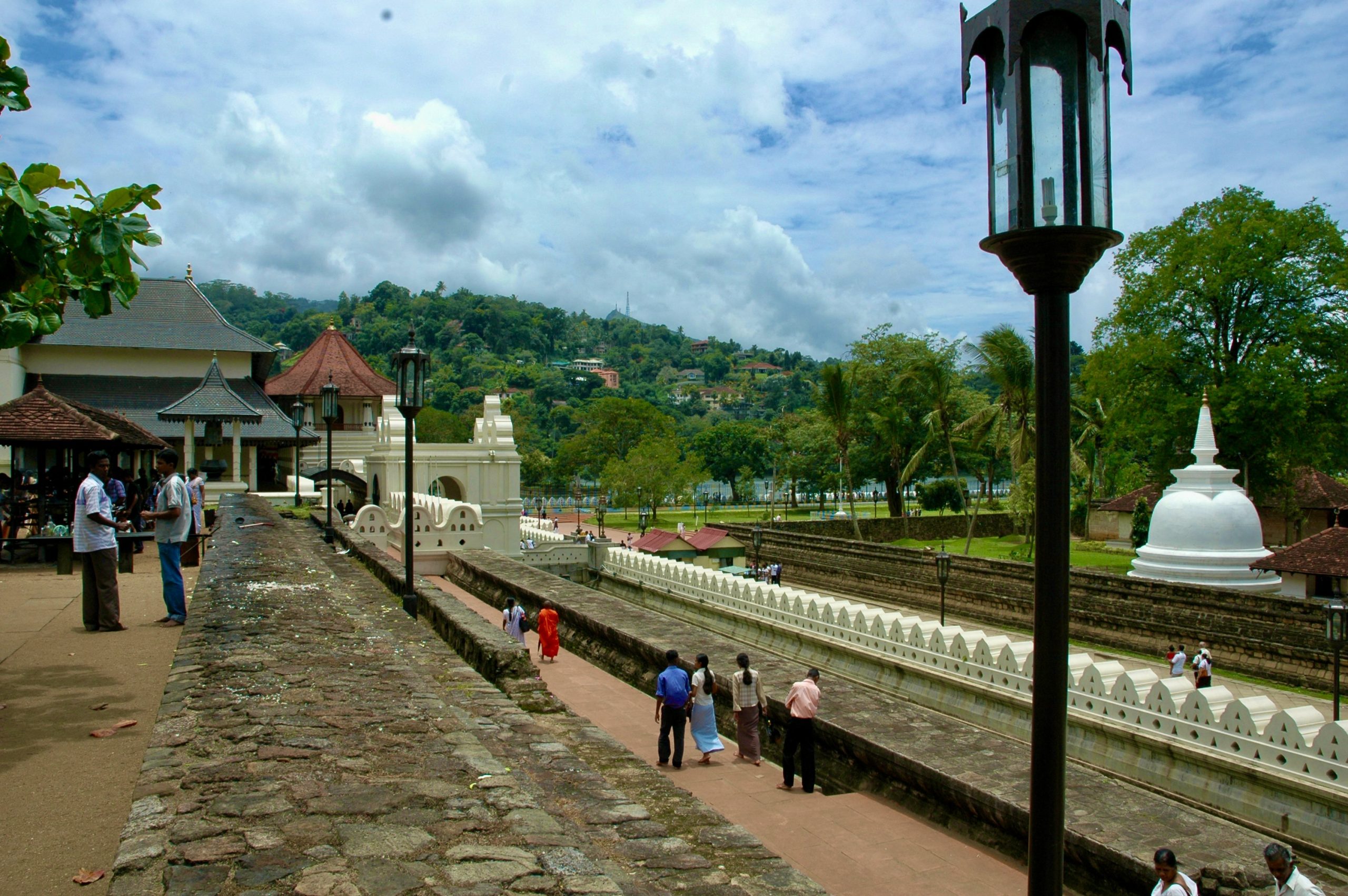
    Feature Image: Kandy Temple Precincts – Photo Credit: M Matheswaran

    This article was published earlier in Colombo Telegraph.

  • Drought or Floods? : Tamil Nadu Needs An Integrated Water Management Policy

    Drought or Floods? : Tamil Nadu Needs An Integrated Water Management Policy

    Tamil Nadu not only requires a more sustainable and scientific approach to water management but an integrated development model that no longer separates the human environment, basic needs, ecological justice and public accountability   

    Every time we are faced with drought or floods, we all complain about the absence of a more sustainable water management policy in the state.  Politicians and the political parties blame each other and present competing narratives of their achievements when people are caught in deep crises of survival either due to bad drought or worse floods.  The bureaucrats, police, public charity and the brave hearts work round the clock while the government monitors the rescue, relief and resettlement of the victims though patterns and intensity of engagements differ between the floods and drought situation.

    We then return to our normal selves when the floods recede and the victims of extreme drought disappear from our sight.  What happened to the excessive water during the floods and the thirsty/hungry people in drought situations who seemed to have gone out of sight? It is important to argue for a more sustainable water management policy and at the same time explore the challenges in developing and executing such a policy. We do not have an open and democratic media/socio-political environment to discuss and debate between the ministers, bureaucrats, experts, non-state actors and creative members of the civil society beyond the blame game. A curious gap is that there are no solutions emerging while causes are either understated or overemphasized by different experts and groups depending on their professional background and personal worldview.


    The government appears to be in a catch-22 situation over urbanization, industrialization, population growth, migrations, and the urban slums.  The impact of rural poverty, state of agriculture, unemployment, migrations as well as the level of the rural-urban divide has not been studied adequately even in a developed state like Tamil Nadu.  But there is no escape from the truth that the government is the major violator and path setter for more violations of environmental principles and laws of nature by the greedy builders and corporate interests.

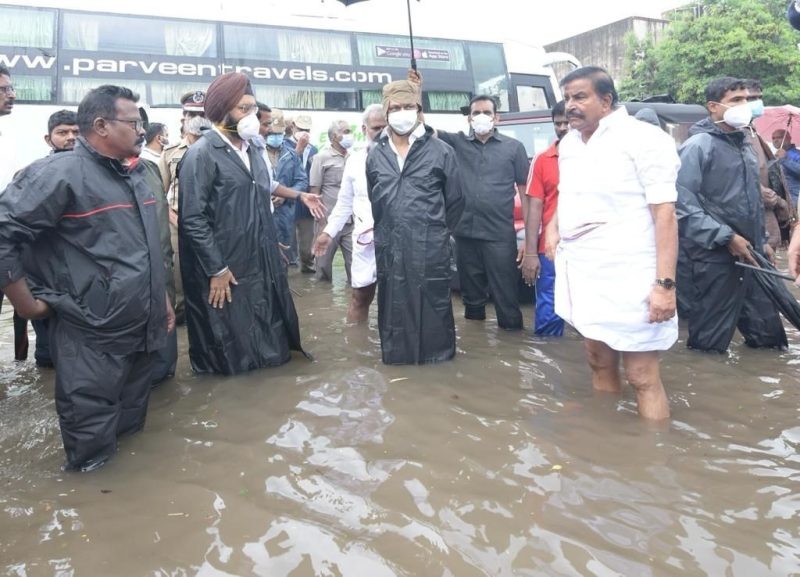
    It may be relevant to recall here the Chennai floods in 2015 and the worse water shortage in less than four years time in 2019.  Besides rapid industrialization and massive urbanization issues, Chennai is also faced with the challenges of climate change which is altering the weather patterns resulting in deadly floods and prolonged droughts.  Given the nature of challenges, there is a need to move beyond developing an appropriate water management policy and strengthening climate change resilience towards addressing core concerns of our democracy such as the absence of public accountability and rights without responsibilities.


    Chennai’s water bodies have shrunk at an alarming rate without much public attention. Every lake that has disappeared in Chennai had been part of our ecological system. Pallikaranai marshland has unfortunately been forced to yield land to hospitals, government buildings and educational institutions including (paradoxically) the Indian Institute of Technology – Madras (IIT-M) and National Institute of Ocean Technology.

    Chennai’s water bodies have shrunk at an alarming rate without much public attention. Every lake that has disappeared in Chennai had been part of our ecological system. Pallikaranai marshland has unfortunately been forced to yield land to hospitals, government buildings and educational institutions including (paradoxically) the Indian Institute of Technology – Madras (IIT-M) and National Institute of Ocean Technology. Today, Ennore creek faces a much bigger threat than ever before.  It is time we discuss more openly about our public policy, political culture, and abuse of social power, corruption in public life and the lack of environmental ethics. In intrinsic terms, this reveals about a political society without a conscience for environmental justice which forms the basis of social justice, distributional justice and good governance.

    The percentage culture and corruption prevalent among the politicians cutting across the party and political loyalties and the nexus between the politicians, bureaucrats and the business interests are one of the most unfortunate but successful stories of decentralization of public administration in Tamil Nadu.  If these arguments appear unreasonable, then how do we explain the rise and role of sand mafias, stone quarry contractors, timber lobbies, water industry and corporate bodies engaged in mineral extraction and exploitation?  These are not unspecified and general observations because of the fact that these individuals and the corporates control the lakes, rivers, forests, seashores, land access and ultimately the policy process within the government. Although slum dwellers, settlers along the river banks and seashores as well as forest people appear as main violators of the laws of State, yet the truth is vastly different.  The Palar River in the north, Cauvery River flowing through the west to east and the Tamiraparani River in the south of Tamil Nadu bear testimonies to this brutal reality of sand quarrying and criminal nexus between politicians, bureaucrats, industrialists and the sand mafia in Tamil Nadu.

    We need to question our materialistic approach to progress in the name of growth and development.  It is not adequate to boast about our progress in social justice and the inclusive model of development without environmental justice and responsibility to our future generations.  Tamil Nadu not only requires a more sustainable and scientific approach to water management but an integrated development model that no longer separates the human environment, basic needs, ecological justice and public accountability.

  • Bengal’s thinking is clear: will rest of India follow?

    Bengal’s thinking is clear: will rest of India follow?

    The second wave of Covid-19 began on February 10 when India reported 11,000 new cases. In the next 50 days, the daily average was 22,000 cases. In the following 10 days the daily average touched 89,800. We are now adding over 400,000 a day. India has never been engulfed by a crisis of this order.

    We are woefully short of hospital beds, oxygen, Remdesivir and Tocli-zumab, vaccines, ambulances and sadly even space in our crematoria. The growth and spread are expected to scale to almost a million a day. In two months, India has become the world’s basket case. Yet, on January 28 this year, speaking to the World Economic Forum in Davos, Prime Minister Narendra Modi showed a blissful and disturbing ignorance of the perfect storm looming. The committee of scientists monitoring the virus warned the PMO of the gathering storm. He was not interested. He was crowing about his perceived “achievement” of beating back the much-mutated “Chinese virus”. He was so wrong, and the country is paying a huge price. There is no Modi image of competence left.

     Prime Minister Modi’s inability to defend India against the second Covid-19 wave, and his inability to cajole the Chinese from withdrawing from areas they occupied in Ladakh now make him an easy target.

    The elections to the four states and Puducherry, which he was so focused on, have been his undoing. He began campaigning on February 5 and 7 in Assam and West Bengal. After that he addressed 20 more rallies in West Bengal and six more in Assam. He also addressed 10 rallies in Tamil Nadu, three in Kerala and one in Puducherry, in all around 40 giant rallies criss-crossing across in IAF Boeings. I wouldn’t even hazard the true cost to the exchequer, but I have heard it said the PM himself is liable to a charge of Rs 6 per air km. Other costs are borne by the PMO.  But the cost is not important. The time spent on huckstering is important. He lost almost a month campaigning, instead of managing the engulfing crisis. I always had a low opinion of his intellect, but even he could have surmised the risks posed to the nation by the renewed pandemic. Clearly, he factored winning West Bengal was more important and worth the cost. Mr Modi himself cheerfully paraphrased what Gopal Krishna Gokhale said almost 100 years ago: “What Bengal thinks today, India thinks tomorrow”!

    West Bengal has unambiguously expressed what it is thinking. It has rejected Mr Modi and his message and campaign-style, lock, stock and barrel. A subservient Election Commission helpfully broke up West Bengal’s polls into eight phases starting March 27 and closing April 29. During this period the daily Covid-19 cases rose in West Bengal from 812 to 17,403. Breaking it into eight phases didn’t help the BJP either. It lost in every phase and got double digits only in four. West Bengal has a sizable Muslim electorate and Mr Modi didn’t mince words in targeting them by making it appear they were Mamata Banerjee’s personal votebank. He didn’t bother to even conceal what he thought of them. His electoral style touched a new low, even by his standards and most certainly by the standards expected of a PM, when he jibed her by catcalling “Didi-O-Didi”. Urban Bengal responded to this by defeating the BJP soundly in all urban constituencies. There is a message here. All over the country the BJP and RSS have strong urban bases, but urban and urbane Bengal administered a resounding slap to gutter politics. With no record to show, Mr Modi’s politics are nothing but that now.

    There was no surprise in Assam. The BJP was returned by almost the same margin as in 2016, getting a majority with the AGP’s nine seats. The Congress lacked a visible local leadership who could match wits with the BJP’s Hemanta Biswa Sarma. Tamil Nadu was as expected. The two so-called national parties were clinging to crumbs thrown by the two so-called Dravidian parties. In Kerala, Pinrayi Vijayan showed why he’s India’s topmost and only surviving commissar. The DMK’s Stalin made no bones about what he thinks of Mr Modi’s Hindu and Hindi-centric politics. The Modi government used every means, including ED raids, to slow down Stalin. The ED even raided Stalin’s daughter.

    So where does our politics go from here? One clear conclusion is that both the BJP and Congress were dealt severe blows. It’s interesting the BJP’s campaigns were entirely shouldered by Narendra Modi and Amit Shah. None of the other top BJP leaders even bothered to show up anywhere. What shouldn’t be missed is that the Raksha Mantri, a former BJP president, was the first from the party to congratulate Mamata Banerjee. In Assam, Mr Sarma’s supporters have gone public crediting the victory to their leader. Mr Sarma has already fired a shot across Sarbananda Sonowal’s bow, saying he was no longer interested in being just a minister in someone’s Cabinet. The numbers might work for him, as he needs just a dozen MLAs to cross over and give Assam a new government. Mr Sarma was a Congress satrap till Rahul Gandhi insulted him by playing with his dog rather than listening to him. Rahul will be all ears now.

    Mamata Banerjee’s stunning victory puts her squarely on the centre stage of Opposition politics. Joining her there will be Lalu Prasad Yadav, released on bail by the Supreme Court despite the government’s strenuous objections. Tejashwi Yadav has shown he’s capable of leading a party when the RJD came so close to upstaging the BJP-JDU alliance in Bihar. Rajasthan’s Ashok Gehlot and Punjab’s Amarinder Singh have emerged as fairly independent Congress satraps. Uddhav Thackeray has shrugged off the Shiv Sena’s pariah status by providing Maharashtra with good leadership and a penchant for making politics the art of the possible. In Telangana, KCR has put the BJP in its place by a resounding win in Nagarjunasagar after its surprise showing in the Dubbaka and GHMC polls. YSRC scored a resounding win in Tirupati with the BJP candidate, a retired chief secretary, losing her deposit. The anti-BJP lineup now has seven chief ministers, excluding Naveen Patnaik. Seven CMs will mean the election and propaganda machines can be kept well-greased and the powder kegs dry and replenished. Prime Minister Modi’s inability to defend India against the second Covid-19 wave, and his inability to cajole the Chinese from withdrawing from areas they occupied in Ladakh now make him an easy target. The Gujarat model has been long exposed as bogus. There is light seen at the end of the tunnel.

    Image Credit: Patrika.com
  • Tamil Civilisation and the Lost Land of Lemuria/Kumari Kandam

    Tamil Civilisation and the Lost Land of Lemuria/Kumari Kandam

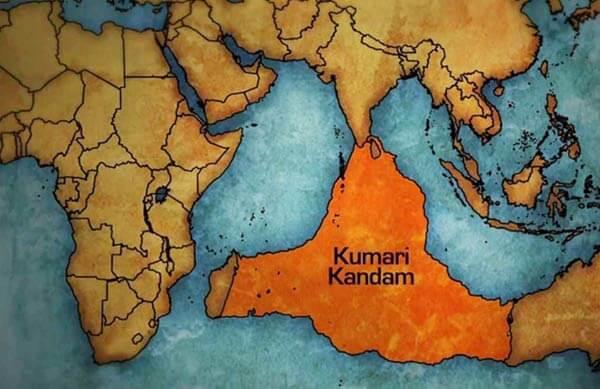
    Lemuria came to be identified as Kumari Kandam, the ancestral homeland of the Tamils, lost to the ravaging ocean in the distant past, due to what is called “Kadal Kol” in Tamil.

    The concept of the lost land of Lemuria hitherto a talking point in the west finds a new focus and interest in the study of the origins of Tamil Civilisation at the beginning of the 20th century. This was a direct result of the new consciousness of the ethnic and linguistic identity that emerged in Tamil speaking regions of South India. By the Tamil enthuse Lemuria came to be recast as the birthplace of the Tamil civilization. It came to be identified as Kumari Kandam, the ancestral homeland of the Tamils, lost to the ravaging ocean in the distant past, due to what is called “Kadal Kol” in Tamil.

    Tamil Nadu Government, during January 1981 at the Fifth International Conference of Tamil Studies held in Madurai, screened a documentary named “Kumari Kandam” both in Tamil and English. The documentary, produced with the financial support of the Tamil Nadu Government,  traced the roots of Tamil, its literature and culture, to the very beginning of time in Lemuria otherwise known as Kumari Kandam in Tamil. In this documentary, the Paleo history of the world is anchored around Tamil land and language. Thus Sclater’s[1] lost land of Lemuria was re-established in the timeless collective consciousness as a catastrophic loss of prelapsarian Tamil past. Even earlier to this, in 1879 Geological Survey of India brought out in the manual of GRGl, a discussion on the Mesozoic land bridge between Southern India and Africa. Dr.D.N. Wadia, a famed Professor of Geology, mentioned in 1990 “The evidence from which the above conclusion regarding an Indo-African land connection is drawn, is so strong and so many-sided that the differences of opinion that exist among geologists appertain to the main conclusion being accepted as one of the settled facts in the geography of this part of the world.[2]

    E.M. Forster in his famed novel ” A Passage to India “ (1984) begins his stunning stanza line “The Ganges, though flowing from the foot of Vishnu through, Siva’s hair, is not an ancient stream. Geology, looking further than religion, knows of a time when neither the river nor the Himalayas that nourished it existed, and an ocean flowed over the holy places of Hindustan. The mountains rose, their debris silted up the ocean, the gods took their seats on them and contrived the river, and the India we call immemorial came into being. But India is far older than anything in the world”.[3]

    In the ethnology chapter of the Manual, Maclean brought the findings of Ernest Haeckel about Lemuria as a primeval home of man. Maclean also draws a further conclusion from the German Biologist’s theory of the origin of various traces of mankind on the submerged Lemuria continent and reiterated that it was the primaeval home of the ancestors of India and Ceylon.

    Thus the fabled Kumari Kandam, which was based on Tamil Literary tradition, so far can receive immediate credibility through western studies. The foundation for this claim was laid by Charles D. Maclean Book “The Manual of the Administration of the Madras Presidency” published in 1835” Mr Maclean was an Officer of Indian Civil Services. In the ethnology chapter of the Manual, Maclean brought the findings of Ernest Haeckel about Lemuria as a primeval home of man. Maclean also draws a further conclusion from the German Biologist’s theory of the origin of various traces of mankind on the submerged Lemuria continent and reiterated that it was the primaeval home of the ancestors of India and Ceylon.[4] He suggested that Southern India was once the passage ground by which the ancient progenitors of northern and Mediterranean races proceeded to the parts of the globe which they now inhabit from Lemuria.[5]

    However, there is a distinct difference in perception of the Lemuria inhabitants from the point of view of Western Scholars and the Tamil enthuse. According to Western Scholars, the primitive inhabitants of Lemuria are barely human and do not represent the trace of civilization. However, the Tamil scholars hold Lemuria or Kumari Kantam as the birthplace of the Tamil Language and cradle of Tamil Civilisation. The antiquity of the Tamil language got a boost with the publication of Campbell’s Book “The competitive grammar of Dravidian Langauge”. J. Nellai swami Pillai wrote in the journal “The Light of Truth” or “Siddantha Deepika” that if you can believe in the tradition of there having been a vast continent south of Cape Comorin, all humanity and civilization flowed east and west and north, then there can be nothing strange in our regarding the Tamilians as the remnants of a pre-diluvian race. Even the existing works in Tamil speak of three separate floods which completely swamped the extreme southern shores and carried off with them all its literary treasures of ages.[6]

    Nella Swami Pillai gives a cautious conclusion that his theory stands on no serious historical or scientific evidence. The same was enthusiastically taken up fully by a well-known Tamil scholar Maraimalai Adigal.

    Though the name Lemuria came into the Tamil world only in 1903, it started gaining significance among the Tamil populous. Shri V.G.Suryanarayana Sastri started using the name Kumarinadu in his book “Tamilmoliyin varalaru. Thiru T.V.Kalyanasundaram the famous Congress Nationlist, and a noted Tamil scholar wrote emphatically that the Lemuria of “Western Scholars” like Ernst Haeckel and Scott Elliot was none other than the Kumarinadu of Tamil literature”.[7]

    The very name Kumari is suggestive of the pristine chastity and everlasting youth of the Tamil land. Later the legends linked the Devi Temple at Kanyakumari to Kumari Kantam or Kumar Nadu. The Kumari Kantam as mentioned in the old Tamil classics, has no reference to the Mesozoic continent of the Indian ocean. There is no reference to the old boundaries of Asiatic tablelands. The Tamil literature speaks of them as the original inhabitants of the great territory opened by two seas on the East and West, by Venkata hills and submerged rivers Pakruli and Kumari on the South.[8] Scholars like Somasundara Bharathi and others also invented hackers’ concept of Lemuria being the cradle of mankind, which implies that the ancient Tamil region is the birthplace of human beings and the Tamils were the first humans.

    Kumari Kantam was having a breadth of 700 kavatam south of Cape Cameron containing 49 principalities, 2 rivers called Pakruli and Kumari flowed there and it also had a hill called Kumari Koodu. The major cities in Kumari Kantam were Thenmadurai and Kapatapuram.

    The features of Kumari Kantam were referred to by Adiyarku Nallar, the commenter of Silapathikaram. Kumari Kantam was having a breadth of 700 kavatam south of Cape Cameron containing 49 principalities, 2 rivers called Pakruli and Kumari flowed there and it also had a hill called Kumari Koodu. The major cities in Kumari Kantam were Thenmadurai and Kapatapuram. This is also referred to in Tholkappia Orrai of Ilam Pooranar Nachinarkku Iniyan Perasiriyar.

    The Tamil Scholars, V.G. Suryanaryana Sastri and Abraham Pandithar lament the loss of works such as Mudunarai, Mudukurugu, etc, which had been swallowed by the ocean. These are derived from the fact that several poems in the Sangam anthology of later age refer to oceanic threat and consequent loss of lands and lives.

    The Tamil Scholar K.Anna Poorni delineates the extent of Kumari Kantam as she concludes in Tamilagham “ Today, the Tamilnadu that we inhabit consists of 12 districts within its limits. A few centuries ago. Cranach and a part of the Telugu land were part of Tamilnadu. Some thousands of years ago, the northern limit of Tamilnadu extended to the Vindhya mountain and the southern limit extended 700 Kavatam to the south of Cape Kumari which included regions such as Panainatu, mountains such as Kumari Kotu and Mani Malai, cities such as Muttur and Kapatapuram and rivers such as Pahruli. All these were seized by the ocean, so say scholars. That today’s the Indian Ocean was once upon a time a vast landmass and that that is where the man first appears has been stated by several scholars such as Ernst Haeckel and Scott Elliot in their books, History of Creation and Lost Lemuria. The landmass called Lemuria is what Tamilians call Kumarinadu. That which is remaining after this ancient landmass was seized by the ocean is the Tamil Motherland in which we reside today with pride.


    References

    [1] Philip Lutley Sclater was a zoologist and naturalist who studied extensively the presence of fauna and other species in different regions. He found that more than 30 species of Lemur monkeys inhabited Madagascar while they were hardly to be found in Africa but were seen in lesser number of species in India. Explaining the anomalies of the Mammal fauna of Madagascar, Sclater propounded that the Lemurs must have inhabited a lost continent in the Indian Ocean. Termed ‘Lemuria, this continent must have extended across the Indian Ocean and the Indian Peninsula to the further side of the Bay of Bengal and over the great islands of the Indian Archipelago. David Bressan, ‘A Geologists’ Dream: The lost continent of Lemuria’ in www.blogs.thescientificamerican.com

    [2] Wadia D.N. 1919, Geology of India for students, London: Macmillan – 1939, Geology of India, 2nd ed. London: Macmillan.

    [3] E.M.Forster, “A passage to India”: Harcourt Brace, New York 1984, pp 135-136.

    [4] Maclean Charles. D. “The Manual of the Administration of the Madras Presidency”, Vol.I, Asian Educational Publication, pp-33-43.

    [5] Ibid 111.

    [6] Nella Swami Pillai. J, “Ancient Tamil Civilisation in the light of truth” or Siddhanta Deepika. No. 5, pp 109-113.

    [7] T.V.Kalyanasundaram, “Indiyavum viduthalaiyum”, Charu Printing Press, Madras, P 106.

    [8] Sesha Iyengar K.G. Chera King of the Sangam Period, 1937, pp 658.

  • Analysing Denmark’s Offshore Wind Energy Sector: Lessons for India

    Analysing Denmark’s Offshore Wind Energy Sector: Lessons for India

    Globally, Europe has the highest capacity of power generated from offshore wind energy. Amongst the European countries, Denmark, the UK and Germany have been pioneers and are currently leading as the largest power producers from offshore wind energy. Danish assistance has been in high demand to help countries shorten their implementation time for offshore wind turbine projects. In 2019, India entered into a bilateral agreement with Denmark to develop an offshore wind market and related technical capabilities. According to a document published by the Danish government, their authorities have specialised technical knowledge that can help Indian authorities establish framework conditions for the rollout of offshore wind power.

    Denmark’s Offshore Wind Energy Sector  

    The Danish Government has set a target of reducing greenhouse gas emissions by 70%, as compared to 1990 levels, by 2030 and having 100% of Danish energy supplied through renewable sources by 2050, apart from achieving net-zero emissions by the same time. The scarcity of proper onshore sites and the abundance of shallow waters with wind resources drove its move to offshore wind, in the early 1990s,. In Denmark, there is a strong symbiosis between energy and industrial policy because of many leading offshore wind energy companies having Danish roots such as DONG, Vestas, Bladt, Siemens Wind, etc. India must achieve such a symbiosis in its offshore wind policies so that the industry can be successful in the long term.

    Denmark’s ambitious targets coupled with their evolving policies in terms of bureaucratic procedures, environmental safety, and finance, among others, have driven the growth of the offshore wind energy sector since the 90s. This analysis looks at each of these segments.

    Consent Procedures:         The Danish Energy Agency (DEA) has been a single point of access to all offshore wind energy companies when it comes to issues related to permits. Meaning, the DEA grants all permits which include permits from other appropriate government authorities such as the Danish Nature Agency, Ministry of Defence, and the Danish Maritime Authority. This is the one-stop-shop and has been adopted not only in Denmark but in many other European countries. Such a method ensures rapid and un-bureaucratic application processing and ease of doing business. This also avoids a lot of confusion.

    Grid Connectivity:             The financing of the grid connection for offshore wind farms depends on how it is established:

    • Enterprises can follow the Government’s action plan for offshore wind development wherein the DEA will invite bids to tender for pre-specified sites or
    • Enterprises can follow the ‘open-door principle’ wherein independent applications can be made for any site and upon complete assessment by the DEA, it will invite bids to tender for the site, given that the results of the assessment are positive.

    In the first case, the grid operator will finance the connection, including step-up transformers. Such socialisation of grid costs is an attractive feature for project developers in Denmark.

    However, in the second case, the responsibility falls on the developer. We may also expect costs of any necessary grid reinforcement to be borne by the developer. The three private offshore wind farms established in Denmark, following the ‘open-door principle’ – Samsø, Rønland, and Middelgrunden – have had no notable problems. These projects are, however, within 3km of the coast, which would imply that the grid connection costs were not exorbitant.

    Environmental Assessment:          In Denmark, an extensive environmental assessment takes place before the construction of an offshore wind farm. The DEA provides companies or enterprises a license to conduct preliminary studies, including environmental (Environmental Impact Assessment) and technical (ground investigation) studies, either directly after a tender (first process) or following the receipt of the first satisfactory planning documentation (second process).

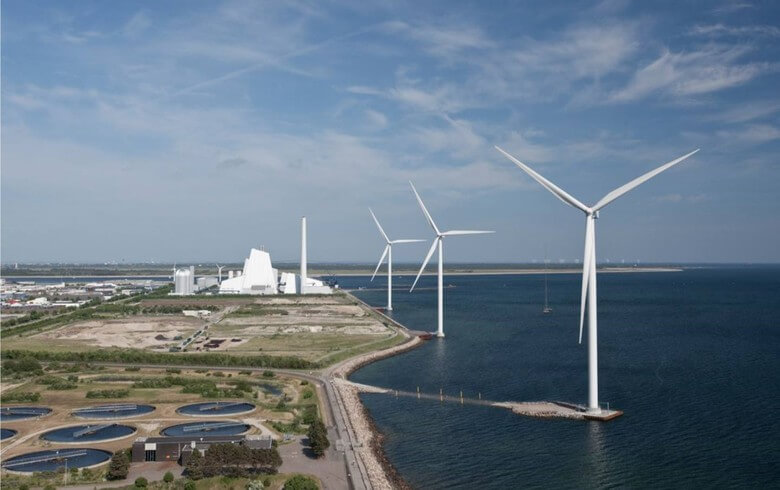
    For instance, in the case of the Anholt farm, one of the largest offshore wind farms with a capacity of 400 MW, the project team performed an extensive environmental assessment that included the impact on marine animals in the area and their habitats, noise calculations, air emissions, and the potential risk to ship traffic. Using data from other wind farm projects like Denmark’s Nysted Wind Farm, and undergoing their analysis, the Anholt project team projected only minor, insignificant affects.

    Financial Incentives:          In Denmark, they support offshore wind farms through a feed-in tariff system, which is set through a competitive auction process. Power off-take in Denmark is largely managed through the DEA. There is no renewable purchase obligation in place in Denmark, but electrical power from renewable energy has priority access to the grid. In some cases, the owner may choose to sell the electrical power to utilities or other power suppliers through a Power Purchase Agreement (PPA). If the power price drops to zero or negative, there is an oversupply of electricity – then renewable projects do not receive any support. Hence this motivates generators to curtail output and help supply-side grid management.

    De-risking the development process:          The Danish Government undertakes geotechnical studies, wind resource assessment, and environmental surveys before a site being leased. The lease areas are then auctioned off to the lowest bidder. This hugely benefits developers as the site is effectively de-risked, leading to a lower tender price. If this were not the case, the developers would have to include risk provisions and contingency, owing to uncertainty regarding the ground conditions. Further, de-risking a site would increase willingness to plan and bid for the sites leased.

    Simply put, the Danish offshore wind energy policies developed by the DEA and the Government have evolved over the years to tackle situations as they occur. This has led to sustained growth in the sector and has succeeded in powering close to 50% of the country’s electricity demand. Besides successfully developing its sector, it has been an outstanding example to many countries in Europe such as the UK and Germany. The UK has adopted the one-stop-shop model to ease procedural difficulties. Germany has adopted the open-door procedure of establishing offshore wind farms.

    India’s Offshore Wind Energy Sector

    The offshore wind energy sector in India is in its nascent stage. Its 2015 National Offshore Wind Energy Policy shows that the Ministry of New and Renewable Energy (MNRE) will act as the nodal Ministry for the development of Offshore Wind Energy in India that will monitor offshore wind energy development in the country. It will also work closely with other government entities for the use of maritime space within the Exclusive Economic Zone (EEZ).

    The Ministry has set a short-term target of 5.0 GW of offshore wind installations by 2022 and a long-term target of 30 GW by 2030 which, according to government documents, is expected to give the confidence to project developers in the Indian market. Over 95% of commercially exploitable wind resources are concentrated in seven states – Andhra Pradesh, Gujarat, Karnataka, Madhya Pradesh, Maharashtra, Rajasthan, and Tamil Nadu. But the land resources required for onshore wind projects are gradually becoming a major constraint. This could very well cause an increase in the market-determined tariffs of onshore wind energy in the future. Offshore wind power, however, offers a viable alternative in such a scenario. The Indian government, like Denmark, has to make policies to the best of their effort that will bring confidence to developers and de-risk the development of the sector to further encourage developers.

    Although India has a huge potential in the renewable energy sector, the developers’ issues remain unresolved. For instance, Gujarat and Tamil Nadu have most of the high potential sites off their coasts to develop offshore wind energy. But a major concern for offshore wind developers would be the problem of grid integration. The two states already have a high degree of solar and wind renewables integrated into their power grid. By adding on power generated through offshore wind energy, they will face a significant hurdle with the evacuation and integration of this additional power. Without proper renewable energy storage systems, there is also the added burden to maintain an equilibrium between the supply and demand of power generated through the variable sources as otherwise, there will be a great deal of wastage and an unnecessary surge in the prices.

    Adding on to the problems faced by developers, benefits such as accelerated depreciation were recently withdrawn and as a result, investments have slowed down. Thus, project developers not only want accelerated depreciation to be reintroduced, but they also want assurance from the government that such fiscal benefits will continue for the long-term. If these fiscal benefits are reintroduced, developers will feel more optimistic about their prospects in the sector. Further, it would also encourage small developers to invest more in the sector.

    Another area that is causing considerable angst for the wind project developers in India is the delay in realising the payments due to them from the state electricity boards. These delays affect the cash flows, thereby threatening the viability of many of these projects. Such experiences will make offshore project developers cautious in venturing into making large investments into the sector.

    In terms of policies that Indian policymakers can adopt from Denmark are the one-stop-shop and an open-door procedure of establishing offshore wind farms. Having the MNRE as a single point of access would make the bidding and tendering process more efficient. This is because a developer has to coordinate with various departments such as the MNRE, the ministry of defence, the ministry of external affairs, nature and wildlife, etc before they can start producing in an offshore wind farm. It would also benefit to have an open-door procedure, but only in the long term. Initially, though, the government should identify possible sites and work on de-risking the development process to encourage more participation in the bidding process.

    Conclusion

    In line with its Paris Agreement commitments, India is working to ensure that by 2030, 40% of its power generation capacity will come from non-fossil fuel sources. Currently, renewable energy makes up 36% of India’s power capacity through mainly small and large hydro, onshore wind, and solar energy. Producing power through offshore wind energy will be a welcome addition to the existing sources.

    During the RE-Invest 2020 conference, the MNRE Joint Secretary announced that the Indian government is looking into setting up structures for power purchase agreements and offshore wind auctions. Thus, to successfully implement its plans, it will require further offshore wind resource data and analysis to identify viable project sites and, revive industry demand for this market.

    Feature Image Credit: www.renewablesnow.com

    Image: Anholt Offshore Wind Farm


  • PDC 4 : Keezhadi archaeological findings project new light on Indian History

    PDC 4 : Keezhadi archaeological findings project new light on Indian History

    Carbon dating of unearthed artefacts found at Keezhadi point to the Sangam Age being 300 years earlier than previously believed, challenging current understanding of history. Structural remains found in the Vaigai plains show the handy skills of the people and high standards of living in the Sangam era. Also spurring the language debate, engravings of Tamil-Brahmi existing at an earlier age point to older origins of the Tamil language. These evidences point to the importance of expanding archaeological research in order to understand the history of Peninsular India. Join us as we dig deeper into history!

    Dr S Vasanthi, Former director of the archaeological department, Government of Tamil Nadu led the discussion on common artefacts and items found in Keezhadi excavation. The recent discovery in keezhadi is similar to the other excavation that was undertaken in different parts of Tamil Nadu. The discussion commenced by highlighting the significance of scientific approach in studying history and civilization. Research methodology employed in studying any civilization has to be sound and unbiased as possible. The artefacts and items explain the life style and civilization but the governance structure, political situation is largely obtained from the literature and manuscripts. An enlightening session about other archaeological excavation in India at different time periods revealing similar cultural aspects of civilization encouraged participants to advance their understanding of the subject.

    PDC Past Event :   07 Dec 2019

    pdc-4-1