Tag: Taiwan

  • The Great Chips War

    The Great Chips War

    The supply chain disruptions for semiconductor chips and the increasing sanctions imposed by the US on high-tech chips access to China and Russia has signalled the critical relevance of control over this technology and process for national security. Chip design and manufacture involve heavy capital investments and access to special machinery that is monopolised by very few American-controlled/influenced companies in Europe and East Asia. India, having missed the boat earlier due to poor investment decisions, has recognised chip manufacturing as a critical strategic industry and is investing efforts to establish significant capabilities. This could take years as challenges still remain.  – TPF Editorial Team

    Following the US Commerce Department’s announcement of severe new restrictions on sales of advanced semiconductors and other US high-tech goods to China, the Sino-American rivalry has entered an important new phase. Even under the best circumstances, China will have a difficult time adapting to its new reality.

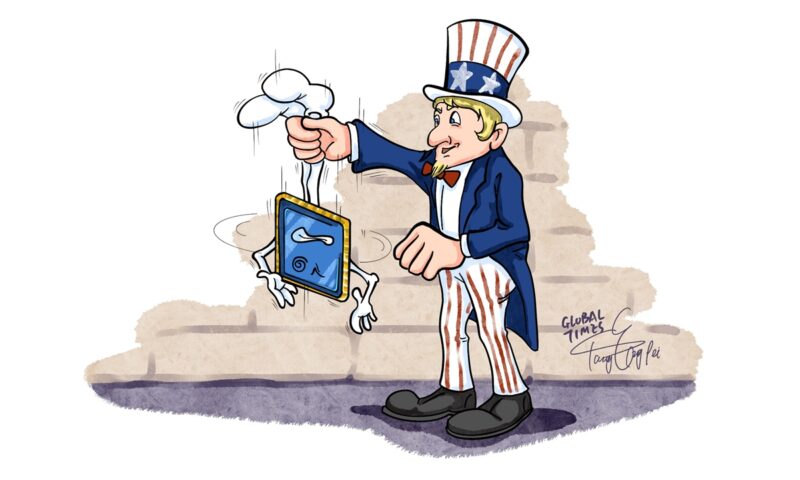
    In addition to dealing with the fallout from open warfare in eastern Europe, the world is witnessing the start of a full-scale economic war between the United States and China over technology. This conflict will be highly consequential, and it is escalating rapidly. Earlier this month, the US Commerce Department introduced severe new restrictions on the sale of advanced semiconductors and other US high-tech goods to China. While Russia has used missiles to try to cripple Ukraine’s energy and heating infrastructure, the US is now using export restrictions to curtail China’s military, intelligence, and security services.

    The new chip war is a war for control of the future.

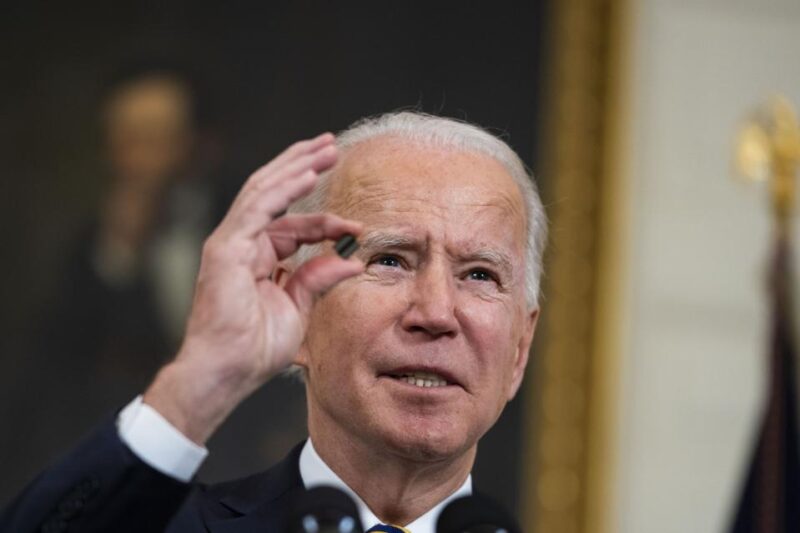
    Moreover, in late August, US President Joe Biden signed the CHIPS Act, which includes subsidies and other measures to bolster America’s domestic semiconductor industry. Semiconductors are and will remain, at the heart of the twenty-first-century economy. Without microchips, our smartphones would be dumb phones, our cars wouldn’t move, our communications networks wouldn’t function, any form of automation would be unthinkable, and the new era of artificial intelligence that we are entering would remain the stuff of sci-fi novels. Controlling the design, fabrication, and value chains that produce these increasingly important components of our lives is thus of the utmost importance. The new chip war is a war for control of the future.

    The semiconductor value chain is hyper-globalized, but the US and its closest allies control all the key nodes. Chip design is heavily concentrated in America, and production would not be possible without advanced equipment from Europe, and fabrication of the most advanced chips – including those that are critical for AI – is located exclusively in East Asia. The most important player by far is Taiwan, but South Korea is also in the picture.

    In its own pursuit of technological supremacy, China has become increasingly reliant on these chips, and its government has been at pains to boost domestic production and achieve “self-sufficiency.” In recent years, China has invested massively to build up its own semiconductor design and manufacturing capabilities. But while there has been some progress, it remains years behind the US; and, crucially, the most advanced chips are still beyond China’s reach.

    It has now been two years since the US banned all sales of advanced chips to the Chinese telecom giant Huawei, which was China’s global technology flagship at the time. The results have been dramatic. After losing 80% of its global market share for smartphones, Huawei was left with no choice but to sell off its smartphone unit, Honor, and reorient its corporate mission. With its latest move, the US is now aiming to do to all of China what it did to Huawei.

    This dramatic escalation of the technology war is bound to have equally dramatic economic and political consequences, some of which will be evident immediately, and some of which will take some time to materialize. China most likely has stocked up on chips and is already working to create sophisticated new networks to circumvent the sanctions. (After Huawei spun it off in late 2020, Honor quickly staged a comeback, selling phones that use chips from the US multinational Qualcomm.)

    Still, the new sanctions are so broad that, over time, they will almost certainly strike a heavy blow not only to China’s high-tech sector but also to many other parts of its economy. A European company that exports to China now must be doubly sure that its products contain no US-connected chips. And, owing to the global nature of the value chain, many chips from Taiwan or South Korea also will be off-limits.

    The official aim of the US policy is to keep advanced chips out of the Chinese military’s hands. But the real effect will be to curtail China’s development in the sectors that will be critical to national power in the decades ahead.

    The official aim of the US policy is to keep advanced chips out of the Chinese military’s hands. But the real effect will be to curtail China’s development in the sectors that will be critical to national power in the decades ahead. China will certainly respond with even stronger efforts to develop its own capabilities. But even under the best circumstances, and despite all the resources it will throw at the problem, any additional efforts will take time to bear fruit, especially now that US restrictions are depriving China of the inputs that it needs to achieve self-sufficiency.

    The new chips war eliminates any remaining doubt that we are witnessing a broader Sino-American decoupling. That development will have far-reaching implications – only some of them foreseeable – for the rest of the global economy.

    Ukraine is already repairing and restarting the power stations that have been hit by Russian missile barrages since the invasion began in February. But it will be much more difficult for China to overcome the loss of key technologies. As frightening as Russia’s twentieth-century-style war is, the real sources of power in the twenty-first century do not lie in territorial conquest. The most powerful countries will be those that master the economic, technological, and diplomatic domains.

    This article was published earlier in Project Syndicate.

    Images Credit: Globaltimes.cn

  • The Curious Case of Indian Silence over damning UN Human Rights Report on China

    The Curious Case of Indian Silence over damning UN Human Rights Report on China

    Not surprisingly, India has not come out with any condemnation of China for its atrocities in Xinjiang, a classic example of India in recent times trying to steer clear of global contestations.

    Down the ages, the phenomenon of imperial overreach has been prevalent across the world.  The evils for which it gets perpetrated would, by and large, be known to those who succumbed to it for supposedly national aspirations, religious fervour or even self-glory by some megalomaniacs!

    That the country relentlessly aspiring with rapidity to be the next global superpower, China, can be unquestionably placed in the category of an imperialist power brooks no emphasis. China thus, without remorse or any humanitarian considerations pursues its ambitions of forcible, bordering on evil, integration of people of all faiths and regions in its vast nation. Its threat of military intervention in tiny Taiwan in recent months bespeaks China’s hegemonistic ambitions.

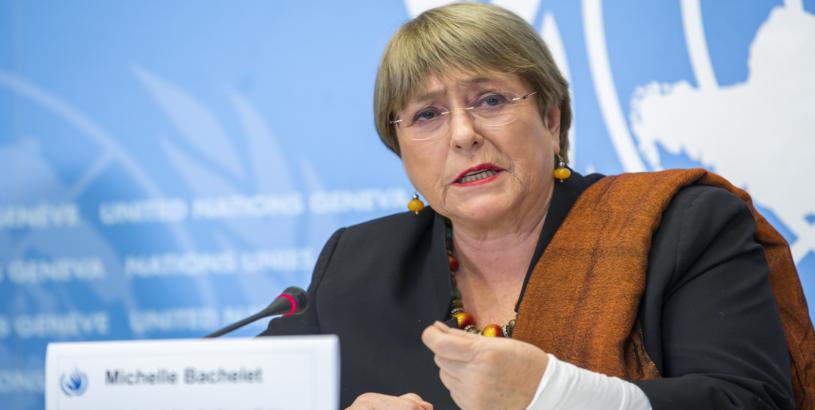
    Though rather late, the UN has rightly condemned China’s woeful human-rights record in its restive Xinjiang province where for the last many years, China has been committing genocide on its Muslim minorities, the Uyghur and Turkic communities. That the world, at large, and the Islamic nations, in particular, have cast a blind eye on this monumental human tragedy conveys, unmistakably, how the sheer pursuit of mere national interests dwarfs humanitarian considerations elsewhere. The significance of the UN Report on Human Rights just released, accordingly, cannot be understated.

    [powerkit_button size=”lg” style=”info” block=”true” url=”https://www.southasiamonitor.org/index.php/indo-pacific-china-watch/curious-case-indian-silence-over-damning-un-human-rights-report-china” target=”_blank” nofollow=”false”]
    Read More
    [/powerkit_button]

  • The Geopolitical Consolidation of Artificial Intelligence

    The Geopolitical Consolidation of Artificial Intelligence

    Key Points

    • IT hardware and Semiconductor manufacturing has become strategically important and critical geopolitical tools of dominant powers. Ukraine war related sanctions and Wassenaar Arrangement regulations invoked to ban Russia from importing or acquiring electronic components over 25 Mhz.
    • Semi conductors present a key choke point to constrain or catalyse the development of AI-specific computing machinery.
    • Taiwan, USA, South Korea, and Netherlands dominate the global semiconductor manufacturing and supply chain. Taiwan dominates the global market and had 60% of the global share in 2021. Taiwan’s one single company – TSMC (Taiwan Semiconductor Manufacturing Co), the world’s largest foundry, alone accounted for 54% of total global revenue.
    • China controls two-thirds of all silicon production in the world.
    • Monopolisation of semiconductor supply by a singular geopolitical bloc poses critical challenges for the future of Artificial Intelligence (AI), exacerbating the strategic and innovation bottlenecks for developing countries like India.
    • Developing a competitive advantage over existing leaders would require not just technical breakthroughs but also some radical policy choices and long-term persistence.
    • India should double down over research programs on non-silicon based computing with a national urgency instead of pursuing a catch-up strategy.

    Russia was recently restricted, under category 3 to category 9 of the Wassenaar Arrangement, from purchasing any electronic components over 25MHz from Taiwanese companies. That covers pretty much all modern electronics. Yet, the tangibles of these sanctions must not deceive us into overlooking the wider impact that hardware access and its control have on AI policies and software-based workflows the world over. As Artificial Intelligence technologies reach a more advanced stage, the capacity to fabricate high-performance computing resources i.e. semiconductor production becomes key strategic leverage in international affairs.

    Semiconductors present a key chokepoint to constrain or catalyse the development of AI-specific computing machinery. In fact, most of the supply of semiconductors relies on a single country – Taiwan. The Taiwan Semiconductor Manufacturing Corporation (TSMC) manufactures Google’s Tensor Processing Unit (TPU), Cerebras’s Wafer Scale Engine (WSE), as well as Nvidia’s A100 processor. The following table provides a more detailed1 assessment:

    Hardware Type

    AI Accelerator/Product Name

    Manufacturing Country

    Application-Specific Integrated Circuits (ASICs)

    Huawei Ascend 910

    Taiwan

    Cerebras WSE

    Taiwan

    Google TPUs

    Taiwan

    Intel Habana

    Taiwan

    Tesla FSD

    USA

    Qualcomm Cloud AI 100

    Taiwan

    IBM TrueNorth

    South Korea

    AWS Inferentia

    Taiwan

    AWS Trainium

    Taiwan

    Apple A14 Bionic

    Taiwan

    Graphic Processing Units (GPUs)

    AMD Radeon

    Taiwan

    Nvidia A100

    Taiwan

    Field-Programmable Gate Arrays (FPGAs)

    Intel Agilex

    USA

    Xilinx Virtex

    Taiwan

    Xilinx Alveo

    Taiwan

    AWS EC2 FI

    Taiwan

    As can be seen above, the cake of computing hardware is largely divided in such a way that the largest pie holders also happen to form a singular geopolitical bloc vis-a-vis China. This further shapes the evolution of territorial contests in the South China Sea. This monopolisation of semiconductor supply by a singular geopolitical bloc poses critical challenges for the future of Artificial Intelligence, especially exacerbating the strategic and innovation bottlenecks for developing countries like India. Since the invention of the transistor in 1947, and her independence, India has found herself in an unenviable position where there stands zero commercial semiconductor manufacturing capacity after all these years while her office-bearers continually promise of leading in the fourth industrial revolution.

    Bottlenecking Global AI Research

    There are two aspects of developing these AI accelerators – designing the specifications and their fabrication. AI research firms first design chips which optimise hardware performance to execute specific machine learning calculations. Then, semiconductor firms, operating in a range of specialities and specific aspects of fabrication, make those chips and increase the performance of computing hardware by adding more and more transistors to pieces of silicon. This combination of specific design choices and advanced hardware fabrication capability forms the bedrock that will decide the future of AI, not the amount of data a population is generating and localising.

    However, owing to the very high fixed costs of semiconductor manufacturing, AI research has to be focused on data and algorithms. Therefore, innovations in AI’s algorithmic efficiency and model scaling have to compensate for a lack of equivalent situations in the AI’s hardware. The aggressive consolidation and costs of hardware fabrication mean that firms in AI research are forced to outsource their hardware fabrication requirements. In fact, as per DARPA2, because of the high costs of getting their designs fabricated, AI hardware startups do not even receive much private capital and merely 3% of all venture funding between 2017-21 in AI/ML has gone to startups working on AI hardware.

    But TSMC’s resources are limited and not everyone can afford them. To get TSMC’s services, companies globally have to compete with the likes of Google and Nvidia, therefore prices go further high because of the demand side competition. Consequently, only the best and the biggest work with TSMC, and the rest have to settle for its competitors. This has allowed this single company to turn into a gatekeeper in AI hardware R&D. And as the recent sanctions over Russia demonstrate, it is now effectively playing the pawn which has turned the wazir in a tense geopolitical endgame.

    Taiwan’s AI policy also reflects this dominance in ICT and semiconductors – aiming to develop “world-leading AI-on-Device solutions that create a niche market and… (make Taiwan) an important partner in the value chain of global intelligent systems”.3 The foundation of strong control over the supply of AI hardware and also being #1 in the Global Open Data Index, not just gives Taiwan negotiating leverage in geopolitical competition, but also allows it to focus on hardware and software collaboration based on seminal AI policy unlike most countries where the AI policy and discourse revolve around managing the adoption and effects of AI, and not around shaping the trajectory of its engineering and conceptual development like the countries with hardware advantage.

    Now to be fair, R&D is a time-consuming, long-term activity which has a high chance of failure. Thus, research focus naturally shifts towards low-hanging fruits, projects that can be achieved in the short-term before the commissioning bureaucrats are rotated. That’s why we cannot have a nationalised AGI research group, as nobody will be interested in a 15-20 year-long enterprise when you have promotions and election cycles to worry about. This applies to all high-end bleeding-edge technology research funding everywhere – so, quantum communications will be prioritised over quantum computing, building larger and larger datasets over more intelligent algorithms, and silicon-based electronics over researching newer computing substrates and storage – because those things are more friendly to short-term outcome pressures and bureaucracies aren’t exactly known to be a risk-taking institution.

    Options for India

    While China controls 2/3 of all the silicon production in the world and wants to control the whole of Taiwan too (and TSMC along with its 54% share in logic foundries), the wider semiconductor supply chain is a little spreadout too for any one actor’s comfort. The leaders mostly control a specialised niche of the supply chain, for example, the US maintains a total monopoly on Electronic Design Automation (EDA) software solutions, the Netherlands has monopolised Extreme UltraViolet and Argon Flouride scanners, and Japan has been dishing out 300 mm wafers used to manufacture more than 99 percent of the chips today.4 The end-to-end delivery of one chip could have it crossing international borders over 70 times.5 Since this is a matured ecosystem, developing a competitive advantage over existing leaders would require not just proprietary technical breakthroughs but also some radical policy choices and long term persistence.

    It is also needless to say that the leaders are also able to attract and retain the highest quality talent from across the world. On the other hand, we have a situation where regional politicians continue cribbing about incoming talent even from other Indian states. This is therefore the first task for India, to become a technology powerhouse, she has to, at a bare minimum, be able to retain all her top talent and attract more. Perhaps, for companies in certain sectors or of certain size, India must make it mandatory to spend at least X per cent of revenue on R&D and offer incentives to increase this share – it’ll revamp things from recruitment and retention to business processes and industry-academia collaboration – and in the long-run prove to be a lot more socioeconomically useful instrument than the CSR regulation.

    It should also not escape anyone that the human civilisation, with all its genius and promises of man-machine symbiosis, has managed to put all its eggs in a single basket that is also under the constant threat of Chinese invasion. It is thus in the interest of the entire computing industry to build geographical resiliency, diversity and redundancy in the present-day semiconductor manufacturing capacity. We don’t yet have the navy we need, but perhaps in a diplomatic-naval recognition of Taiwan’s independence from China, the Quad could manage to persuade arrangements for an uninterrupted semiconductor supply in case of an invasion.

    Since R&D in AI hardware is essential for future breakthroughs in machine intelligence – but its production happens to be extremely concentrated, mostly by just one small island country, it behoves countries like India to look for ways to undercut the existing paradigm of developing computing hardware (i.e. pivot R&D towards DNA Computing etc) instead of only trying to pursue a catch-up strategy. The current developments are unlikely to solve India’s blues in integrated circuits anytime soon. India could parallelly, and I’d emphatically recommend that she should, take a step back from all the madness and double down on research programs on non-silicon-based computing with a national urgency. A hybrid approach toward computing machinery could also resolve some of the bottlenecks that AI research is facing due to dependencies and limitations of present-day hardware.

    As our neighbouring adversary Mr Xi says, core technologies cannot be acquired by asking, buying, or begging. In the same spirit, even if it might ruffle some feathers, a very discerning reexamination of the present intellectual property regime could also be very useful for the development of such foundational technologies and related infrastructure in India as well as for carving out an Indian niche for future technology leadership.

    References:

    1. The Other AI Hardware Problem: What TSMC means for AI Compute. Available at https://semiliterate.substack.com/p/the-other-ai-hardware-problem

    2. Leef, S. (2019). Automatic Implementation of Secure Silicon. In ACM Great Lakes Symposium on VLSI (Vol. 3)

    3. AI Taiwan. Available at https://ai.taiwan.gov.tw/

    4. Khan et al. (2021). The Semiconductor Supply Chain: Assessing National Competitiveness. Center for Security and Emerging Technology.
    5. Alam et al. (2020). Globality and Complexity of the Semiconductor Ecosystem. Accenture.

  • Taiwan Elections 2020: Emphasising Taiwan’s Democracy, Nationalism and Sovereignty

    Taiwan Elections 2020: Emphasising Taiwan’s Democracy, Nationalism and Sovereignty

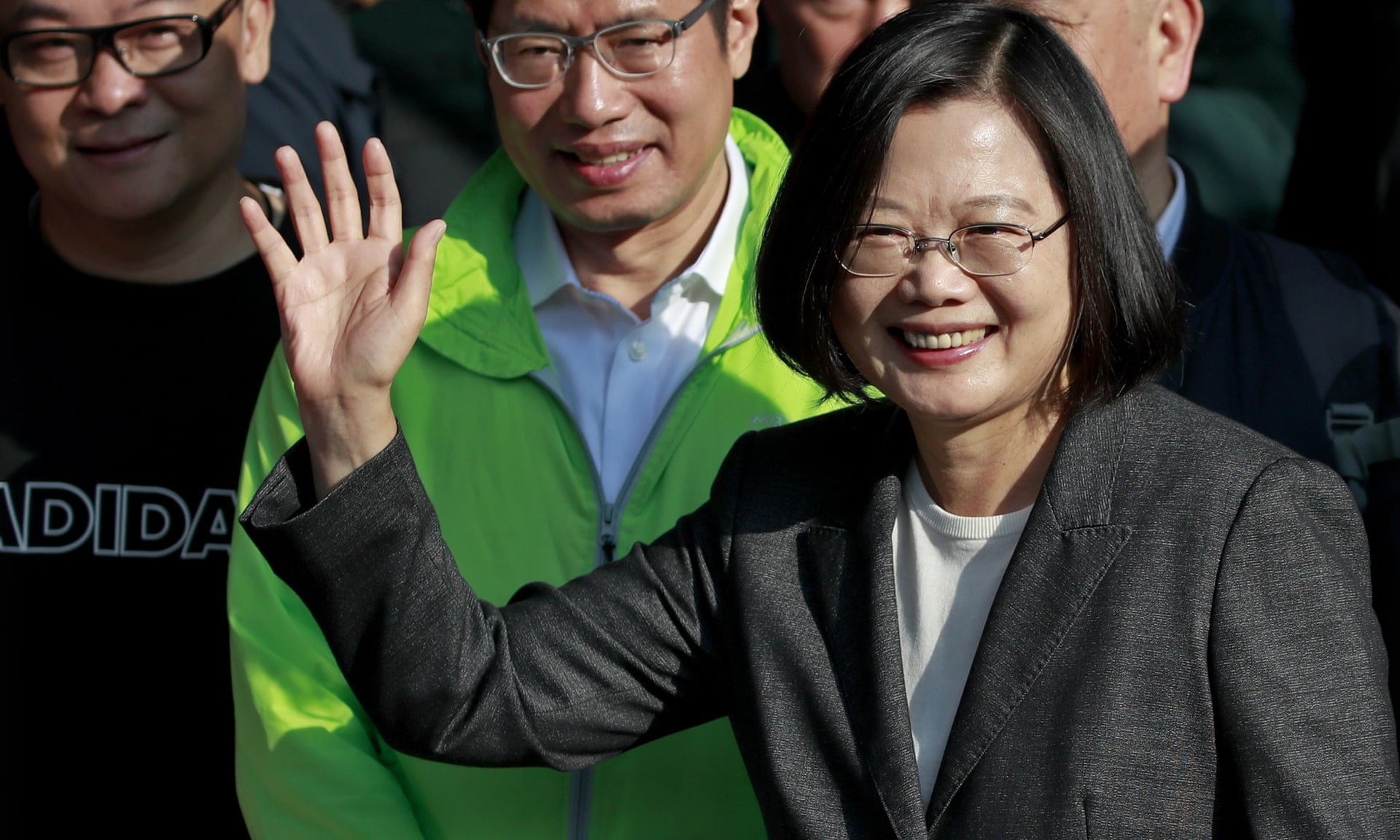
    Taiwan’s first female President, Tsai Ing-Wen of the pro-democratic DPP Party won a landslide victory for second term in the national elections held in January. China condemns Tsai’s victory by reiterating its “one country, two systems model.
    Election Results: Voice for Democracy and Sovereignty

    Taiwan’s president, Tsai Ing-wen won re-election on January 11rth  by a historic landslide, a decisive result widely seen as a rebuke to Beijing’s efforts to integrate Taiwan into the ‘one-China’ concept. The DPP (Democratic Progressive Party), rode on Tsai’s popularity and maintained control of the Legislative Yuan, the country’s parliament. DPP has consistently taken a very ‘Taiwan nationalistic’ approach and has been a strong opponent of Beijing’s ‘one-China policy’ and the so-called ‘1992-consensus’. This landslide victory and a second term gives Tsai the power to uphold Taiwan’s commitment to democracy. Taiwanese voted to reject China’s “one country, two systems model” while still maintaining support for Tsai’s stand on the “1992 consensus”, which would dictate the Cross-Strait ties based on “peace, parity, democracy and dialogue”.

    On winning the elections, President Tsai remarked – China must ‘face reality’ of Taiwan’s independence and called on China to ‘review’ it’s current policy toward the de facto nation that Beijing claims is part of its territory.

    China refuses to acknowledge the victory of pro-democratic forces and maintains that this development would not alter its “one-China” principle. China’s Foreign Ministry stated that “regardless of what happens in Taiwan, the basic facts won’t change: there is only one China in the world and Taiwan is part of China.”

    In the voting week, Xi Jinping ushered in a range of measures “to further promote economic and cultural exchanges and cooperation between the two sides of the Taiwan Strait”. Despite these positive announcements, he sent a Chinese aircraft carrier to sail through the Straits to intimidate, should Tsai’s victory initiate a declaration of independence.

    The Chinese army also conducted a naval and air force drill on 9-10 February in a threatening attempt to which Washington responded with the US Air Force sending two surveillance planes as an expression of solidarity with Taiwan.

    Election results and impact on KMT

    In the aftermath of the astounding defeat in January, the opposition KMT has been forced to re-examine its policies and priorities. The party elected Mr Johnny Chiang, a 48-year old lawyer, as its president in March first week. Chiang represents the younger generation who are more focused on separate Taiwan identity, reflecting DPP’s resonance across the young voters. KMT has some serious issues to resolve if it wants to remain relevant in Taiwan. It is constrained by its linkage to the inconvenient history of Taiwan and a support base that is seen as focused on benefitting from cross-Strait engagement, and in some cases, unique access to the CCP through party-to-party ties. The main internal issue is the party’s cross-Strait policy with China, whether 1992 consensus will endure as the foundation for official mechanisms. Chiang is seen as one who will most likely ‘discard’ the 1992 consensus arguing that the consensus has lost its utility and undergone ‘distortion’ when linked with the ‘one country, two systems’ model used in Hong Kong.

    Background: 1992 Consensus – discarded by rising Taiwanese identity?

    Taiwan was ruled for more than three decades by the nationalist army, the Kuomintang (KMT),which fled to the island in 1949 after being defeated by the Chinese Communist Party (CCP) and created a rival government, the Republic of China, better known as today’s Taiwan. It has since transformed into a multiparty democracy, under a government and political system, completely separate from China’s. KMT’s position stems from the legacy of the Chinese civil war with the CCP, which is a complicated history of KMT and CCP vying to represent ‘one China’ as the ‘Republic of China’ by KMT and the ‘People’s Republic of China’ by CCP. KMT, in view of this history, is seen as the most pro-mainland of Taiwan’s two major political parties. In contrast, the DPP has always maintained much tougher stance with Beijing. It has played a prominent role in democratisation of Taiwan and places greater emphasis on uniqueness of Taiwanese identity and a history of more than 100 years that is separate from that of China’s. From the late 1980s when democratisation of Taiwan began, more and more Taiwanese are embracing a Taiwanese consciousness and favouring independence even though maintaining status quo still remains the majority priority for the moment. Majority of the youth, and 60-70% of Taiwanese are fiercely conscious of their Taiwanese identity, and view Taiwan as an independent and sovereign nation-state. This also means that the idea and legacy of nationalist party’s ROC is  seen as impractical, in consonance with geopolitical realities.

    The 1992 Consensus, seen as having enabled the growth of Taipei-Beijing cooperation, revolves around the issue of ‘one-China’ interpretation – ‘that there is only one China and that Taipei and Beijing agree to disagree on which government is its legitimate representative’ has been the foundation of cross-Strait relations. It was curated by the KMT and the PRC wherein in principle they agree that there is “One China”. However, the contentious terminology “One China” can be interpreted by either side having accorded its own meaning. The CCP believes “one China” is the “People’s Republic of China,” while Taiwan believes “one China” should mean the ROC established in 1912 and hitherto exists.

    The KMT government in 2008-16, led by Ma Ying-jeou used the so-called 1992 Consensus to strengthen economic, trade and cultural relations between Taiwan and PRC. It led to rapid development of  economic links  and integration with PRC while political issues were kept away. Trade, indirect investment, and travel via Hong Kong grew steadily. By 2014, over 40% of Taiwan’s trade was with the mainland, and some 80% of its foreign direct investment (FDI) went to China; Taiwan businesses operated more than one hundred thousand businesses on the mainland. Taiwan-China two ay trade in 2019 was USD 244.35 billion. The trade balance has, consistently been in Taiwan’s favour.

    KMT’s strategy, under Ma’s leadership, focused on reviving Chinese nationalism and was aimed at anchoring Taiwan in the Chinese nation, bridging the gap with PRC, opposing Taiwan independence, favouring reconciliation and eventually unification between the two sides of the Straits. By 2012-13 this approach gave rise to suspicions amongst the Taiwanese about Ma’s rapprochement policy. Paradoxically it strengthened the predominance of Taiwanese identity, which is stronger amongst the youth. This resulted in KMT’s internal fractures in 2012-13, its loss in local elections of 2014, the turbulence of the Sunflower revolution of 2014, and its huge loss to DPP in the presidential elections of 2016.

    The ideological battle between the Democratic Progressive Party(DPP) and the Kuomintang (KMT) has persisted since 2016 (when Tsai became President) and the DPP refused to recognise the “1992 consensus”. In 2000, Tsai as the minister of Mainland Affairs Council (MAC) said, “The so-called ‘one China, differing interpretations’ is only a usage by our side to describe the process of the meeting. It is a way of description that the new government can accept, but it does not mean that we have accepted Beijing’s ‘one-China, two models principle.’

    Though DPP lost the local elections in 2018 to the pro-China Kuomintang party (KMT), and had no hopes of winning the presidential 2020 elections, Tsai has been trying to replace the Chinese identity with the Taiwanese identity by promising people that the Taiwanese sovereignty will be protected. By articulating “maintenance of status quo”, she indicates that she may not actually pursue outright independence in order to maintain a peaceful environment that helps growth and development; in effect allowing PRC to see it as a support for “One China” in principle and being open to cross-Strait dialogue. But she makes it clear to rest of the world – “we don’t have a need to declare ourselves an independent state. We are an independent country already and we call ourselves the Republic of China, Taiwan.”

    Diversifying Economic and Trade Strategies

    During her presidency in 2016, she had initiated “new south-bound policy (NSP)” to strengthen relations with selected countries in South and South-East Asia and gain entry into regional blocs. As the US unveiled its Indo-Pacific strategy of Free and Open Indo-Pacific (FOIP), Taiwan saw great benefits in dove-tailing it’s NSP strategy into the Indo-Pacific. The NSP has made notable gains in the first term, and Tsai’s re-election offers great opportunity to diversify the gains in the second term. The Chinese have been  aggressively countering this strategy by compelling nations to switch allegiance to China. This had resulted in Taiwan having only close to 16 diplomatic allies which include small nations like Belize and Naru. Despite this, major nations have come around the issue to strengthen ties with Taiwan through economic and cultural centres. Nevertheless, the ‘New South-bound Partnership’ strategy is a conscious effort by Taiwan to reduce its economic dependency on the mainland. Taiwan has aggressively pursued economic partnerships with countries like India, and has encouraged investments by Taiwanese companies. Its investments in South-East Asia has more than doubled in this period.

    China has also been accused of meddling with local Taiwanese elections in 2018, according to Wang William Liqiang, a self-identified Chinese spy presently seeking political asylum in Australia. As a counter-strategy and to prevent foreign influence in the country’s elections, Taiwan’s legislature passed the anti-infiltration act on 31 December 2019, which criminalises external meddling. According to MAC Chief Chen Ming-tong, “[the act] aims to counter infiltration”. He added that it acts “as a corrective measure to ensure normal cross-Strait exchanges and reduce politically-motivated infiltration and intervention by Beijing. The Act prevents hostile external powers from engaging, through local collaborators, in illegal lobbying and election campaigning, disrupting rallies and assemblies, and making political donations.”

    Rising anti-Chinese sentiment has gained momentum due to the recent protests in Hongkong. Young voters have been deeply influenced by this and are supporting Tsai. This is supplanted by the economic slowdown which affected Taiwan and has divided the Taiwanese voters—those who support the Economic Cooperation Framework Agreement (ECFA) with China and those who don’t.

    Taiwan had also altered its economic policy since the election of DPP in 2016, wherein industrial restructuring has resulted in a large businesses (heavy industries) moving to China in order to reduce the labour cost. This has led to an increase in trade and investment in China. However, the catch is that since both governments don’t recognise each other, the Taiwanese companies are exposed to high risk and no dispute settlement is prevalent currently nor is it guided by international norms. China continues to be Taiwan’s largest trading partner, accounting for nearly 30% of the island’s total trade. However, Taiwan’s investment into the mainland has been declining over the last five years, and so also mainland’s investment in Taiwan.

    The Future

    The ‘one-China policy’ is a zero-sum game between the PRC and the ROC. China has always reiterated that only by accepting China’s authoritarian rule can the Taiwanese people attain prosperity and peace. From the beginning of 2005, the “carrots and sticks” policy has been predominant in the Cross-Strait relations. Since China’s policy has backfired, she is capable of adopting coercive measures—economic crippling, isolation by cutting off diplomatic allies, direct invasion or meddling with internal politics. If Beijing decides to use force, it could spiral into a regional conflict inviting Taiwan’s allies and heavy economic repercussions.

    China’s isolation strategy with respect to Taiwan is a constant challenge, which influences majority of the Taiwanese to maintain status quo in current environment. Status quo can mean different things to different people. Chinese president Xi’s aggressive articulation in 2019 of ‘one-China policy’ with respect to Taiwan and the events in Hong Kong has triggered a massive nationalistic fervour in support of democracy and Taiwan identity amongst the younger population.

    China has repeatedly said that it will bring Taiwan under its authority by any means necessary, including force. Analysts believe Xi Jinping aims to achieve that by 2049, the deadline for the country to achieve its ‘great rejuvenation’. Beijing’s refusal of renouncing the possible use of force for unification is reflected in the continued military build-up on the Fujian coast. By 2014, PLA had over 1500 ballistic and cruise missiles targeting Taiwan, ten times more than in 2000, and more accurate and destructive than in 2000.

    Chinese state media have downplayed President Tsai’s election, but there is no doubt that China considers it as a major setback to its reunification efforts. The election has resulted in a cooling off period for cross-Strait relations, and the global ‘Corona Virus pandemic’ has only added to put this off any priority for some time.

    Only time will tell if Taiwan and China manage to engage in dialogue and come to a consensus regarding their irreconcilable differences. As democracy and  pro-democratic forces continue to strengthen and sustain Taiwanese identity and nationalism, Taiwan’s functioning as a sovereign independent state is stronger than ever, while Beijing’s strategy of geo-economic boxing-in Taiwan into accepting its ‘one-China’ policy looks less probable. On the other hand, giving legitimacy to Tsai’s government will be a tricky call for many countries as they have to walk a tight rope in order not to rupture relations with China. How different nations recognise and engage with the new Taiwanese government will definitely be a contributing factor in determining Taiwan’s future.