Tag: Sovereignty

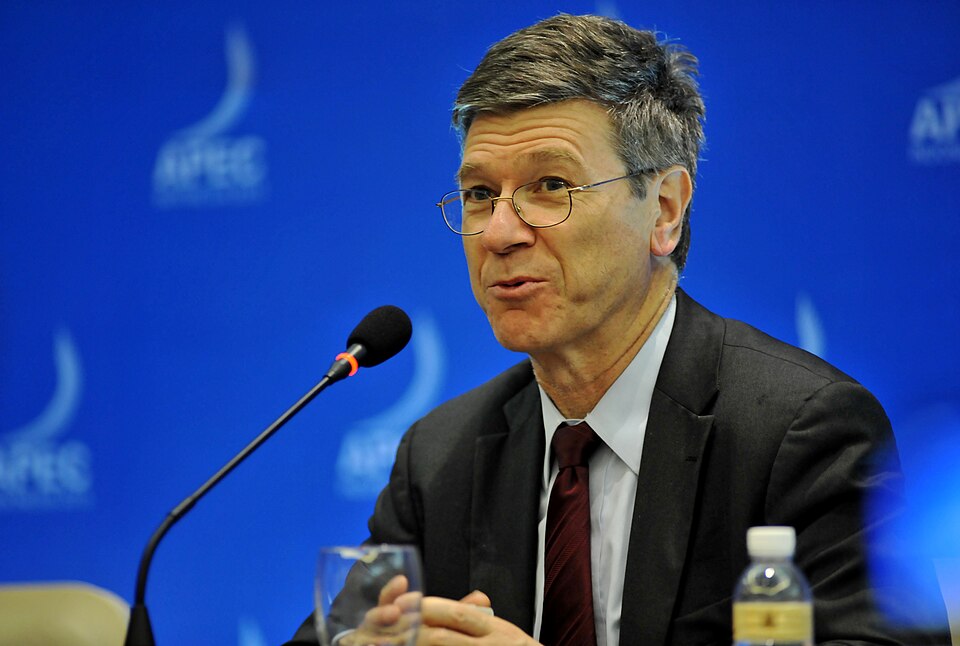
  • Jeffrey D. Sachs: Briefing of the UN Security Council on Venezuela

    Jeffrey D. Sachs: Briefing of the UN Security Council on Venezuela

    Jeffrey D. Sachs: Briefing of the UN Security Council on Venezuela
    January 5, 2026
     

    Mr. President,
    Distinguished Members of the Security Council,

    The issue before the Council today is not the character of the government of Venezuela.

    The issue is whether any Member State—by force, coercion, or economic strangulation—has the right to determine Venezuela’s political future or to exercise control over its affairs.

    This question goes directly to Article 2(4) of the United Nations Charter, which prohibits the threat or use of force against the territorial integrity or political independence of any state.

    The Council must decide whether that prohibition is to be upheld or abandoned.

    Abandoning it would carry consequences of the gravest kind.

    Background and context

    Since 1947,United States foreign policy has repeatedly employed force, covert action, and political manipulation to bring about regime change in other countries. This is a matter of carefully documented historical record. In her book Covert Regime Change (2018), political scientist Lindsey O’Rourke documents 70 attempted US regime-change operations between 1947 and 1989 alone.

    These practices did not end with the Cold War. Since 1989, major United States regime-change operations undertaken without authorization by the Security Council have included, among the most consequential: Iraq (2003), Libya (2011), Syria (from 2011), Honduras (2009), Ukraine (2014), and Venezuela (from 2002 onward).

    The methods employed are well established and well documented. They include open warfare; covert intelligence operations; instigation of unrest; support for armed groups; manipulation of mass and social media; bribery of military and civilian officials; targeted assassinations; false-flag operations; and economic warfare aimed at collapsing civilian life.

    These measures are illegal under the UN Charter, and they typically result is ongoing violence, lethal conflict, political instability, and deep suffering of the civilian population.

    The case of Venezuela

    The recent United States record with respect to Venezuela is clear.

    In April 2002, the United States knew of and approved an attempted coup against the Venezuelan government.

    In the 2010s, the United States funded civil society groups actively engaged in anti-government protests, notably in 2014. When the government cracked down on the protests, the US followed with a series of sanctions. In 2015, President Barrack Obama declared Venezuela to be “an unusual and extraordinary threat to the national security and foreign policy of the United States.”

    In 2017, at a dinner with Latin American leaders on the margins of the UN General Assembly, President Trump openly discussed the option of the US invading Venezuela to overthrow the government.

    During 2017 to 2020, the US imposed sweeping sanctions on the state oil company. Oil production fell by 75 percent from 2016 to 2020, and real GDP per capita (PPP) declined by 62 percent.

    The UN General Assembly has repeatedly voted overwhelmingly against such unilateral coercive measures. Under international law, only the Security Council has the authority to impose such sanctions.

    On 23 January 2019, the United States unilaterally recognized Juan Guaidó as “interim president” of Venezuela and on 28 January 2019 froze approximately $7 billion of Venezuelan sovereign assets held abroad and gave Guaidó authority over certain assets.

    These actions form part of a continuous United States regime-change effort spanning more than two decades.

    Recent United States global escalation

    In the past year, the United States has carried out bombing operations in seven countries, none of which were authorized by the Security Council and none of which were undertaken in lawful self-defense under the Charter. The targeted countries include Iran, Iraq, Nigeria, Somalia, Syria, Yemen, and now Venezuela.

    In the past month, President Trump has issued direct threats against at least six UN member states, including Colombia, Denmark, Iran, Mexico, Nigeria and of course Venezuela. These threats are summarized in Annex I to this statement.

    What is at stake today

    Members of the Council are not called upon to judge Nicolás Maduro.

    They are not called upon to assess whether the recent United States attack and ongoing naval quarantine of Venezuela result in freedom or in subjugation.

    Members of the Council are called upon to defend international law, and specifically the United Nations Charter.

    The realist school of international relations, articulated most brilliantly by John Mearsheimer, accurately describes the condition of international anarchy as “the tragedy of great power politics.” Realism is therefore a description of geopolitics, not a solution for peace. Its own conclusion is that international anarchy leads to tragedy.

    In the aftermath of World War I, the League of Nations was created to end the tragedy through the application of international law. Yet the world’s leading nations failed to defend international law in the 1930s, leading to renewed global war.

    The United Nations emerged from that catastrophe as humanity’s second great effort to place international law above anarchy. In the words of the Charter, the UN was created “to save succeeding generations from the scourge of war, which twice in our lifetime has brought untold sorrow to mankind.”

    Given that we are in the nuclear age, failure cannot be repeated. Humanity would perish. There would be no third chance.

    Measures required of the Security Council

    To fulfill its responsibilities under the Charter, the Security Council should immediately affirm the following actions:

    1. The United States shall immediately cease and desist from all explicit and implicit threats or use of force against Venezuela.
    2. The United States shall terminate its naval quarantine and all related coercive military measures undertaken in the absence of authorization by the Security Council.
    3. The United States shall immediately withdraw its military forces from within and along the perimeter of Venezuela, including intelligence, naval, air, and other forward-deployed assets positioned for coercive purposes.
    4. Venezuela shall adhere to the UN Charter and to the human rights protected in the Universal Declaration of Human Rights.
    5. The Secretary-General shall immediately appoint a Special Envoy, mandated to engage relevant Venezuelan and international stakeholders and to report back to the Security Council within fourteen days with recommendations consistent with the Charter of the United Nations, and the Security Council shall remain urgently seized of this matter.
    6. All Member States shall refrain from unilateral threats, coercive measures, or armed actions undertaken outside the authority of the Security Council, in strict conformity with the Charter.

    In Closing

    Mr. President, Distinguished Members,

    Peace and the survival of humanity depend on whether the United Nations Charter remains a living instrument of international law or is allowed to wither into irrelevance.

    That is the choice before this Council today.

    Thank you.


    Courtesy: commondreams.org
  • BRICS, SCO, and Beyond: Multilateralism as a Sovereignty Safeguard:

    BRICS, SCO, and Beyond: Multilateralism as a Sovereignty Safeguard:

    Introduction

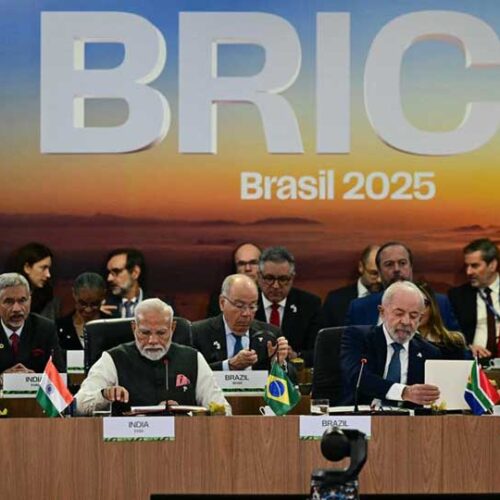
     In an era marked by profound geopolitical transformations and the gradual erosion of the Western-dominated liberal world order, emerging multilateral institutions have emerged as crucial pillars for safeguarding state sovereignty. The BRICS coalition and the SCO represent more than mere economic or regional partnerships– they embody a new paradigm of multilateralism that prioritises sovereign equality, non-interference, and consensus-based decision-making. As traditional multilateral institutions struggle to adapt to contemporary power dynamics, these alternative frameworks offer developing countries pathways to maintain autonomy while engaging meaningfully in global governance.

    The significance of these institutions extends beyond their immediate membership. They represent what scholars term “non-Western multilateralism”- a system of international cooperation that explicitly challenges the hegemonic tendencies of Western-led institutions while promoting a more inclusive and equitable global order. This emerging multilateral architecture does not seek to destroy existing institutions, but rather create parallel frameworks that better reflect the interests and values of the Global South.

    The Crisis of Traditional Multilateralism

    The contemporary crisis of multilateralism stems from structural imbalances that have persisted since the establishment of the post-World War II international order. Traditional institutions such as the IMF, the World Bank, and the UNSC reflect power distributions that no longer reflect current global realities. The Global South, which represents over 80% of the world’s population, remains underrepresented in decision-making despite its growing economic significance.

    This crisis has been further aggravated by the instrumentalisation of multilateral institutions by dominant powers. The “weaponisation of finance” through unilateral sanctions and conditional lending has prompted developing countries to seek alternatives that respect their sovereignty. Recent developments, including the blocking of Russian assets and the use of SWIFT as a political tool, have demonstrated how traditional financial architecture can be used to coerce sovereign states. Moreover, the decline of American hegemony has created what scholars describe as a “multipolar reality” without corresponding multilateral adaptation. The US, while maintaining significant capabilities, faces increasing challenges to its global leadership from rising powers, internal polarisation and diminished moral authority. This hegemonic transition has created space for alternative arrangements to emerge and flourish.

    BRICS: Institutional Innovation and Economic Sovereignty

    BRICS has evolved from an economic concept to a comprehensive institutional framework that challenges Western financial dominance through concrete initiatives. The New Development Bank (NDB), established in 2014 with $100 billion in authorised capital, provides infrastructure financing without the political conditionalities typically imposed by Western institutions. Unlike the World Bank or the IMF, the NDB operates on the principle of equal governance, with founding members maintaining equal voting rights regardless of their economic contributions. The bank’s commitment to financial sovereignty is evidenced by its promotion of local currency lending, reducing dependence on the US Dollar and enhancing monetary autonomy for member states. Since its establishment, the NDB has approved over $32.8 billion across 96 projects, extending beyond the original BRICS members to include countries like Bangladesh, the UAE, Egypt, and Algeria. This expansion demonstrates the institution’s growing appeal as an alternative development finance mechanism.

    The Contingent Reserve Arrangement (CRA)[1], BRICS $100 billion financial safety net, further exemplifies this sovereignty-preserving approach. Unlike IMF bailout programs that typically require structural adjustment policies, the CRA provides emergency liquidity support without compromising domestic policy autonomy. This mechanism reflects BRICS’ broader commitment to “sovereign equality”- the principle that all states, regardless of size or power, possess equal rights in international affairs. BRICS has also pioneered what can be termed “multipolarity without hegemony”[2]. Unlike traditional power blocs dominated by a single leader, BRCIS operates through consensus-based decision-making, preventing any member from imposing its will on others. This approach has enabled the organisation to survive even amid tensions between members, such as the China-India border disputes, demonstrating institutional resilience.

    SCO: Security and Sovereignty in Eurasia

    The Shanghai Cooperation Organisation presents a different but complementary model of sovereignty-preserving multilateralism. Founded in 2001 and now encompassing ten full members from Kazakhstan to Iran, the SCO operates under the “Shanghai Spirit”- a framework emphasising mutual trust, mutual benefit, equality, and respect for civilisational diversity. This principle explicitly rejects hegemonic behaviour and promotes what member states call “sovereign equality”.   The SCO’s approach to security cooperation illustrates how multilateralism can enhance rather than diminish sovereignty. Unlike NATO’s collective security model, which subordinates national decision-making to alliance commitments, the SCO’s Regional Anti-Terrorist Structure (RATS) operates through voluntary coordination and information-sharing while respecting member states’ autonomous security policies. This flexibility allows diverse political systems- from China’s one-party rule to India’s democracy- to cooperate without ideological convergence.

    Recent SCO initiatives further demonstrate this sovereignty-preserving orientation. The organisation’s condemnation of Israeli airstrikes on Qatar in 2025 emphasised violations of sovereignty and territorial integrity, reaffirming members’ commitment to the UN Charter and international law. Similarly, the SCO’s consistent opposition to unilateral sanctions and “use of force” reflects its members’ shared experience of external pressure and desire for autonomous development. The proposed SCO Development Bank, approved during the 2025 Tianjin Summit, represents the organisation’s evolution toward comprehensive economic cooperation while maintaining its sovereignty-centric principles. This institution aims to reduce dependence on Western-controlled financial mechanisms.

    Beyond BRICS and SCO: The Emerging Multipolar Architecture

    The significance of BRICS and SCO extends beyond their individual contributions, encompassing their role in fostering a broader “alternative multilateral order”. This emerging architecture is characterised by overlapping institutional arrangements that provide developing countries with multiple options for international cooperation. The intersection between BRICS and SCO- with China, Russia, India and Iran participating in both organisations-creates synergies that multiply their collective influence. This networked approach to multilateralism offers several advantages for sovereignty preservation.

    First, it provides “institutional balancing” against Western dominance without creating rigid opposing blocs. Countries can selectively engage with different institutions based on their specific interests and needs, maintaining strategic autonomy while benefiting from multilateral cooperation. Second, the proliferation of alternative institutions creates competitive pressure on traditional multilateral organisations to reform. The success of the NDB and AIIB has prompted the World Bank to reconsider its lending practices, while BRICS expansion has encouraged greater Global South representation in G20 deliberations. Third, these institutions promote what scholars term “civilisational diversity” by accommodating different political systems and development models without imposing uniform standards. This approach contrasts sharply with the liberal internationalist emphasis on convergence toward Western norms and institutions.

    Challenges Ahead

    Despite their achievements, BRICS and SCO face significant challenges that constrain their effectiveness as sovereignty safeguards. Internal heterogeneity presents the most fundamental obstacle. BRICS encompasses liberal democracies, authoritarian systems, and hybrid regimes with vastly different economic structures and foreign policy priorities. This diversity, while philosophically valuable, complicates coordination on specific issues and limits the depth of integration possible.

    The organisation also suffers from what critics describe as “institutional impersonation”, rather than genuine innovation. The NDB, despite its rhetoric of alternative development finance, continues to rely heavily on US Dollar funding and has yet to break from neoliberal lending paradigms fundamentally. Similarly, the SCO’s expansion has diluted its cohesion without proportionally enhancing its capabilities.

    Geopolitical tensions among members pose additional challenges. China-India border disputes, Russia-Iran competition in Central Asia and Brazil’s complex relationship with both Washington and Beijing create centrifugal forces that limit institutional effectiveness. The organisations’ consensus-based decision-making, while respecting sovereignty, can also enable paralysis when member interests diverge significantly. Moreover, these institutions seem primarily reactive rather than proactive in their approach to global governance, except for the SCO. They struggle to develop comprehensive solutions to transnational challenges such as climate change, cross-border terrorism, pandemic response, or financial instability.

    Implications for Global Governance

    The rise of BRICS, SCO and similar institutions signals a fundamental transformation in global governance architecture. Rather than replacing existing institutions, they are creating a phenomenon of competitive multilateralism, a system where multiple institutional frameworks compete for legitimacy and membership. This competition has both positive and negative implications for international cooperation. On the positive side, institutional competition encourages innovation and responsiveness to members’ needs. The success of alternative development banks has prompted traditional institutions to reform their practices and increase the representation of developing countries. Competition also gives smaller states greater bargaining power by offering alternative forums to address their concerns.

    However, competitive multilateralism also risks fragmenting global governance and reducing its effectiveness in addressing transnational challenges. If great powers increasingly retreat into separate institutional ecosystems, the coordination necessary to manage global problems may become more difficult. The Ukraine conflict has already demonstrated how geopolitical divisions can paralyse international institutions and hinder collective responses to security threats.

    The success of these institutions lies in creating alternatives to traditional development finance, providing platforms for South-South cooperation and articulating alternative visions of international order for contemporary global governance. However, their ultimate impact will depend on their ability to transcend their current limitations and develop more sophisticated approaches to balancing the preservation of sovereignty with practical international cooperation. Their continued evolution will significantly influence whether the emerging multipolar world becomes characterised by cooperation or competition, inclusion and fragmentation.

    Notes:

    [1]Wso, A.A. & Mahmood, R.M. (2025). The Role of BRICS in Reshaping the Global Order: Confronting Western Hegemony in a Multipolar World. European Scientific Journal, ESJ, 21 (17), 24. https://doi.org/10.19044/esj.2025.v21n17p24

    [2] ibid

  • PDC 6: Concept and relevance of Nationalism in the 21st century

    PDC 6: Concept and relevance of Nationalism in the 21st century

    PDC Past Event :  25th Jan 2020

    The concept of nationalism and its influence in shaping the modern world system is undeniable. According to Anderson, humans consider themselves as part of imagined communities based on some common features and derive collective responsibility to that idea. This feeling over time results in identifying a language, shared heritage, and so on to develop uniqueness and distinctness of their community from others. Across history, there are various instances of multiple nations existing under a common kingdom like the Roman Empire, Austria-Hungary, etc. However, post the thirty year war and the Treaty of Westphalia, modern nation states evolved and nationalism became a primary force in shaping these entities. This found its final expression in John Locke’s philosophy that rejected the divine rights of the king and stressed that all persons are endowed with natural rights, and rulers failing to protect them should be removed, with force if necessary. These rising concepts drove the masses towards liberty, equality and fraternity resulting in the French revolution and the American war of independence. The race between powerful states and the spread of colonialism ensured that a national identity could be forged only with a population within a defined territory, ruled by a legitimate government. This Western notion of modern nation states was applied to all regions of the world, altering the natural course of evolution of the nationalism process in these regions. From Africa to Asia, territorial claims and the forging multiple nations to form nation states resulted in various challenges that still remain. For instance, Iraq was formed based on its oil reserves and not in its civilizational bonds. It brought forged the Shia, Sunni and Kurd communities with differing histories and no common bond into a single nation state, resulting in a fragile state with implications even felt today.

    Interestingly, globalisation and its standardising imperatives have stimulated nationalism rather than dissolving its validity. It is argued that self- determination in the 21st century, especially when the global culture is increasingly unified, intensifies due to revival of nationalism. As communication and movement is eased, often the unique identity is weakened. These disruptors to national identities are seen as threats, which is used by politicians and world leaders to strengthen the existing uniqueness of their states. However, these nationalistic drives disregard the diversity that exists in each nation state, creating domestic challenges, particularly for minorities. Electoral politics further divides the people by creating a nation of us vs them, often painting others as potential threats. This has manifested into modern challenges of immigration, terrorism and so on. The rise of hypernationalism in modern day politics can be traced along these lines. By imposing a common national identity, it affects the subnational sentiments of the people since nationalism is more local than national. Singapore, for instance, thrives by creating an equal space for the various sections of its people. While nationalism is a requirement for the functioning of any nation, hypernationalism is a threat to its very existence.