Tag: social security

  • Invisible Labour, Indispensible Work: Ensuring Rights for Women  Domestic Workers

    Invisible Labour, Indispensible Work: Ensuring Rights for Women Domestic Workers

    A persistent socio-economic issue requiring ongoing attention is the need for specific legislation to safeguard the social security of women workers in the “unorganised” sector. Although the government has expressed its aim to implement a National Policy for Domestic Workers to provide protection and social security benefits, it remains largely unrealised as a deferred vision. This highlights and clearly emphasises the neglect of the workforce within the “grey economy”, as termed by UN Women.[1]

    The Gendered, Unregulated, and Unorganised Workforce

    According to data from the e-eShram portal, which maintains records of the unorganised workforce, the total number of women domestic and household workers registered on the portal as of March 2023 is 2.67 crore (out of a total of 2.69 crore). This staggering figure not only highlights the economic vulnerability faced by women but also the gender disparity.

    However, what is more alarming is that these statistics reflect only the registered segment of the workforce. The absence of reliable data on unregistered domestic and household workers raises serious concerns regarding the invisibility and exploitation of millions who remain outside the ambit of any regulatory or welfare framework.

    International Legal Framework: The ILO Convention
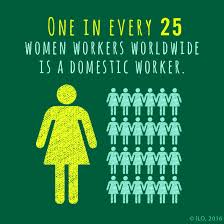
    Article 1 of the Domestic Workers Convention of 2011[2] (Convention 189) defines domestic work as work performed in the household, and a domestic worker as a person engaged in domestic work with an employment relationship, and carrying it out on an occupational basis.[3] The Convention mandates the protection of domestic workers by ensuring equal treatment, decent working conditions, fair wages, and prohibiting all forms of abuse and exploitation.

    The Domestic Workers Recommendation, which supplements Convention 189, further recommends, inter alia, the creation of a model employment contract, a minimum standard for “live-in domestic workers”, and the promotion of awareness and training programmes.

    India’s Position

    Although India is a signatory to the Convention, its continued abstention from ratification has constrained the formulation and effective implementation of a comprehensive national policy for domestic workers, despite repeated governmental declarations of commitment in this regard.

    Entry 24 of List III (Concurrent List) of the Constitution empowers both Parliament and State Legislatures to enact laws on labour welfare. However, this concurrent competence has resulted only in a fragmented legal framework, marked by uneven levels of protection. In the absence of comprehensive central legislation, domestic workers are left in a legal vacuum, with existing legal frameworks offering only minimal and indirect protection.

    Existing Legal Protection in India

    1. The Unorganised Social Security Act of 2008[4]

    The Unorganised Social Security Act of 2008 is the first legislation to recognise “unorganised workers.” Section 2(n), which defines the wage worker, includes “workers employed by households, including domestic workers.”

    Section 2(m)[5] further states that the unorganised workers are the workforce not covered by any of the social security legislations, such as:

    • Employee’s Compensation Act, 1923 (3 of 1923),
    • The Industrial Disputes Act, 1947 (14 of 1947),
    • The Employees’ State Insurance Act, 1948 (34 of 1948),
    • The Employees Provident Funds and Miscellaneous Provision Act, 1952 (19 of 1952),
    • The Maternity Benefit Act, 1961 (53 of 1961) and
    • The Payment of Gratuity Act, 1972 (39 of 1972)[6]

    2.  Other Statutory Protections

    According to the Child Labour (Prohibition & Regulation) Act, 1986, employment of children below the ages of 14 and 15 years in certain prohibited occupations, including domestic work or service, is prohibited.

     The Sexual Harassment of Women at Workplace (Prevention, Prohibition & Redressal) Act, 2013, extends protection to women engaged in household work against sexual harassment under Section 2(e), and provides redressal through an inquiry into the complaint under Section 11.[7]

    Section 27 [8] of the Minimum Wages Act, 1948,[9] empowers the appropriate State governments to fix a minimum wage by adding an employee to the Schedule. Thus, some states have added the category of “domestic work” into the schedule to provide a statutory protection of minimum wages through State laws. According to the PIB[10], the State Governments of Andhra Pradesh, Jharkhand, Karnataka, Kerala, Odisha, Rajasthan, Haryana, Punjab, Tamil Nadu and Tripura have included domestic workers in the schedule of the Minimum Wages Act.

    The Conundrum between Fair Wages & Minimum Wages

    A common misunderstanding about the minimum wage is that it is synonymous with a fair wage. While minimum wages provide a baseline, they do not necessarily equate to fair wages. The factors used to determine and compute a minimum wage change with the inevitable fluctuations in economic factors, such as the cost of living, employer capacity, purchasing power, and other market conditions. Wage is not something that is required for mere existence but is necessary for leading a decent livelihood, and that is what amounts to “fair wage.”  The Supreme Court in the landmark cases of Maneka Gandhi v Union of India[11] and Olga Tellis v. Bombay Municipal Corporation[12] has held that “right to life under Article 21 is not just about physical survival but includes the right to live with human dignity.

    The Hon’ble Supreme Court, while recently hearing the case of Ajay Malik v. State of Uttarakhand,[13] where it directed the rescue and rehabilitation of a woman who was abused while employed as a domestic worker, noted the “incontrovertible demand” for a national domestic worker’s law. The court in this case also highlighted the plethora of attempts taken by the Parliament to legislate on this matter through various bills, such as

    1. The Domestic Workers (Conditions of Employment) Bill of 1959,
    2. The House Workers (Conditions of Service) Bill of 1989,
    3. The Housemaids and Domestic Workers (Conditions of Service and Welfare) Bill, 2004,
    4. The Domestic Workers (Registration, Social Security and Welfare) Bill, 2008,
    5. The Domestic Workers (Decent Working Conditions) Bill of 2015,
    6. The Domestic Workers Welfare Bill, 2016,
    7. The Domestic Workers (Regulation of Work and Social Security) Bill, 2017, was never enacted afterwards.

    The National Policy on Domestic Workers calls for the inclusion of social security protections, such as “life and disability cover, health and maternity benefits & old age protection,” for domestic workers within the existing legislation of the Unorganised Workers’ Social Security Act, 2008. However, with the enactment of The Code on Social Security, 2020 (CoSS), the 2008 Act is repealed, and its provisions are subsumed in the Code.

    The social security schemes are operating in the interim through the executive scheme (eShram)[14].

    Why do Domestic workers require a central legislation?

    The key question is why domestic workers require central legislation and what objective it aims to serve. The scope of the term domestic worker is so broad that it includes chores ranging from washing utensils and cleaning the house to even serving as caretakers; ironically, their scope for legal protection remained confined due to their engagement in private homes. This leads to the perception that any form of regulation is “illegitimate or an intervention into the private affairs.”[15] However, the private nature of labour naturally places the domestic workers in a vulnerable position, often prone to abuse by the employers. Hence, the objective of the law should not be just to prevent abuse against domestic workers and to ensure a social welfare scheme, but also to empower the section to adopt vocational or skill training to equip them with the means for a self-sufficient life.

     Policy Recommendations

    The problems faced by the domestic workers cannot be tackled in isolation; they require not only the legislation of a central law but also its effective implementation. This can be done with the assimilation of the new mandates into the existing structure. The central legislation should facilitate the following:

    1. Mandatory registration of domestic workers in the E-Shram portal, conferring an obligation upon the employer to register their domestic workers in the national register of the E-Shram portal, in case of failure on the part of the workers.
    2. Establish a national helpline number with a domestic workers’ welfare board to report and track the incidents of both violence by and against the domestic workers.
    3. Ensuring skill training for domestic workers through self-help groups, as well as regional skill-training programmes under the supervision of taluk-level officers, to prevent stagnation in centralised schemes.


    Endnotes:

    [1] UN Women, “Women in Informal Economy,” UN Women, available at https://www.unwomen.org/en/news/in-focus/csw61/women-in-informal-economy

    (last visited Oct. 5, 2025).

    [2] International Labour Organization, Domestic Workers Convention, 2011 (C-189), Article 1.

    [3] International Labour Organization, Domestic Workers Convention, 2011 (No. 189), ILO NormLEX, Instrument ID: 2551460.http://www.ilo.org/dyn/normlex/en/f?p=NORMLEXPUB:12100:0::NO:12100:P12100_INSTRUMENT_ID:2551460:NO

    [4] The Unorganized Workers’ Social Security Act, 2008, No. 33 of 2008.https://labour.gov.in/sites/default/files/unorganised_workers_social_security_act_2008.pdf

    [5] The Unorganized Workers’ Social Security Act, 2008, No. 33 of 2008, §2(m).

    [6]  Ministry of Labour & Employment, Government of India, “Unorganized Worker” (labour.gov.in).

    [7] The Sexual Harassment of Women at Workplace (Prevention, Prohibition & Redressal) Act, 2013, No. 14 of 2013 §11.

    [8] The Minimum Wages Act, 1948, No. 11 of 1948, §27.

    [9] The Minimum Wages Act, 1948, No. 11 of 1948., https://clc.gov.in/clc/sites/default/files/MinimumWagesact.pdf

    [10]Press Information Bureau, Government of India, “National Policy for Domestic Workers” (Press Release, 12 September 2019). https://www.pib.gov.in/Pressreleaseshare.aspx?PRID=1564261

    [11] Maneka Gandhi v. Union of India, (1978) 1 SCC 248.

    [12] Olga Tellis v. Bombay Municipal Corporation, (1985) 3 SCC 545

    [13] Ajay Malik v. State of Uttarakhand, 2025 SCC OnLine SC 185

    [14] Ministry of Labour & Employment, Government of India, e-Shram Portal, https://eshram.gov.in/

    [15] Vanessa H. May, Unprotected Labor: Household Workers, Politics, And Middle-Class Reform in New York, 1870–1940, 12 (2011)
  • Falling Consumption Expenditure: Need for Labour Market Reforms

    Falling Consumption Expenditure: Need for Labour Market Reforms

    Government withholding consumption expenditure data on the grounds of data quality has stirred many criticisms from economists and other interest groups. Growing concern over falling rural consumption especially amidst economic slowdown has crystallized a categorical debate on the nature of slowdown. Irrespective of the validity of methodology employed, low consumption expenditure can sequel falling growth rates. Slowdown of the automobile industry as a case, sluggish growth and rising unemployment corroborate the unofficial claims on falling consumption expenditure. According to Business Standard report, the average amount spent per month by an individual declined from INR 1501 in 2011-12 to INR 1,446 2017-18. Although falling rural consumption expenditure evinces an economic malaise, issue of inefficient labour market has received less attention. Consumption is considered an important way to assess the health of an economy according to neoclassical economists. Multiple theories on income and consumption relationship are advanced in the field of economics. According to permanent income hypothesis, consumption expenditure varies in relation to the expected future income. In simple terms, an individual’s consumption will be distributed across their lifetime based on the permanent income they are expected to receive. Every theory has reiterated the central role of income in determining the consumption levels of the individuals. 

    Income insecurity in Informal sector

    A study conducted  on consumption spending in Ghana concluded that income and inflation had a long-run relationship on consumption expenditure. The Monthly Per capita Consumption Expenditure (MPCE) in 2011-12 revealed that urban MPCE was higher by 84 percent than rural MPCE. India, operating as a dual economy, considers casual wages and regular salaries as a proxies to study informal and formal sector. The wage differential among salary earning individuals operating in informal and formal sector was higher than casual labourers’ wages. Increasing number of regular employees working in informal sector shifted the concern to penetration of ‘informality’ across the labour market.  Post globalization labour market has theoretically encouraged organized sector but the wage employment in the organized sector has employed more casual labourers with no social security. A new layer of casual labours was created post reforms to cushion the weight from competitive prices. Fragmentation within the organized sector with growing contractual labourers has weakened the expected income levels which could directly affect consumption behaviour. Working-poor in India are highly concentrated in the organized sector as casual labourers and self-employed with a combined share of 51 percent of the total workforce as of 2012.

     A recent report on consumption expenditure points out that rural monthly consumption has fallen by 10 per cent from INR 643 to INR 580 indicating a need to accumulate more income in rural India. The main industries functioning under informal structure were construction, manufacturing and wholesale-trade employing majority of unskilled and semi-skilled labourers. In 2011-12, rural employment contributed 76 percent of total informal sector labourers in the three main sectors. Almost 80 per cent of rural workers are engaged in casual employment and despite a moderate growth in casual wages over the years; it amounted to only 36 percent of a regular worker’s earnings. Increasing share of informal employment within the organized sector coupled with poor social security has reduced expected financial flow of labourers. State induced social spending would propel consumption levels to a limited extent but the underlying crisis in the rural labour market would continue to contract long term consumption expenditure. Total social sector spending as a percentage of GDP has reduced from 2.7 per cent in 2000 to 2 percent in 2014. Reduced government spending and lack of labour market reforms are responsible for poor disposable income in the rural economy. 

    Rural labour market instability

    Casual labourers have constituted consistently 28 percent in Indian rural labour force since 1983. The periodic labour force survey report (2017-18) observed a decline in the share of self-employment in both rural and urban sectors. The unemployment rate in urban sector is 7.3 percent, comparatively higher than rural unemployment rates of 5.8 percent. A major portion of rural labourers are associated with the casual sector in rural areas with unstable income and weak social security. For instance, average earning per day in public workfare programme such as MGNREGA has fluctuating wage rates in rural areas, recording as low as INR 136 in 2018. Such a precarious structure in the labour market has diluted the spending capacity of rural residents in the recent times. According to the usual status in employment, there is a moderate increase in casual labourers and salary earners but the self-employment rates have been on the downtrend. In 1983, 60 percent were self-employed, which has gone down to 57 percent in 2018 despite the attractive loan schemes introduced by the government. 

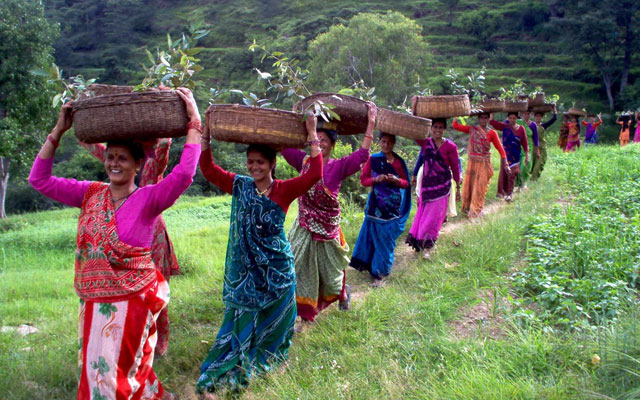
    Female workers’ earnings play a vital role in determining the consumption health of an economy, a drastic fall in female work participation deserves an in-depth investigation. Falling participation rate could mean either women drop out due to social conditions or due to unavailability of jobs matching their skills. While sufficient literature studying these two areas are available, the first issue can be viewed with scepticism as earnings of men have increased significantly while women’s wages have stagnated. Although overall women in the workforce have reduced, 73 percent of women are engaged in agriculture as primary activity compared to 50 percent of men. A deceleration in agriculture and low investment on public infrastructure in the past few quarters have  decimated the consumption capacity of rural India. Women being the bigger component of agricultural labour force, and with factors of social discrimination, tend to have lower wage rates, thereby contributing significantly to reduced capacity for consumption and expenditure.

    Labour market reforms needed to revive long term consumption

    It would be erroneous to isolate the core economic problem to be categorical- the structural issue or cyclical slowdown can be both demand-side and supply-side driven. The whole economic apparatus is strongly integrated and a supply-side constraint can indirectly choke the demand which would, in turn, weaken the growth. Many economists have recommended the need for structural reforms; labour and capital relations have to be redefined as a measure to redistribute the resources. Further, the labour code on wages, 2019 has invited criticisms on grounds of poor protection for informal labourers and favouring corporate profit. Financial ecosystem requires corporates to make profits but a stagnant reinvestment convulses the cycle. Deepening crisis in the economy is conspicuous and falling consumption reiterates the need for better land and labour reforms. 

    Closer examination of the rural labour structure provides a bleak picture of low-income concomitant with minimum social and economic security, thus seriously impacting rural economic consumption. According to the PLFS report, the percentage of rural regular salaried employees with no job contracts increased from 58 percent in 2004 to 69 percent in 2018. Around 88 percent of rural female casual labourers against 84 percent of rural male casual labourers had no union or association. Absence of union is a proxy for weak bargaining power which eventually distorts the real market wages for the labour. Systematic labour market reform is critical especially for fixing the minimum wages and restructuring the labour market. Failure of manufacturing and service sectors to absorb the excess unskilled labourers from the agricultural sector has posed a major challenge. A short term cash transfer or providing welfare schemes should not be mistaken for structural reform. Enhancing the skill levels of rural labourers so as to enable their displacement to the manufacturing sector would augment employment and income. 

    Effect of demonetisation on the informal rural economy cannot be underestimated; removing 80 percent of currency from the economy damaged small and medium scale businesses operating on cash. ‘Make in India’ has not succeeded in accelerating business entrepreneurship in the country. Only 5 % of the adult population manages to establish a business that survives for longer than 42 months according to Global Entrepreneurship Monitor, a rate that is the lowest in the world. Financial investment in medium scale and small scale industries has been poor due to bureaucratic hurdles and unfavourable business environment leading to world’s highest business discontinuation rate of 26.4 %.

    From the supply side, low reinvestment despite a reduction in interest rate has exacerbated the falling consumption situation. Slowing automobile industry and consistent downtrend in manufacturing have contracted the capacity for employment generation in the industrial sector. CMIE has observed corporate profits to be more volatile than wages in the last two decades. The standard deviation of increased profit was recorded to be 32 percent as compared to 6.3 percent in the wage share. The erratic change in profit component implies entrepreneurs are more likely to be discouraged to invest in a business and play it safe. This invariably allows only the big corporate companies to survive. Low share of labour income in the economy is undoubtedly a structural phenomenon; the state’s apathy to induce private capital investment is detrimental to the labour market as well. 

    Reforms should have distinct rural and urban labour market strategies

    Departing from viewing economy in a political lens, a state must prioritize market reforms especially labour reforms. It is the state’s responsibility to ensure efficient allocation of resources and guarantee economic development and welfare of people. The slogan of ‘minimum government and maximum governance’ can be realised only through radical reforms and policy changes.

    The problem of shrinking consumption in rural areas is an outcome of constraints in the supply-side and unorganized labour market. Mere infusion of money as a solution is neither practical nor sustainable; a long term strategy to improve the structure of the rural economy is necessary to address the current economic crisis. Policies should be directed towards energising the informal sector, provide social security and economic dynamism that accelerates capital formation and induces private investment to support business growth. Consumption levels can be revived by making demand side and supply side changes simultaneously; increasing public gross capital formation and encouraging private investment by improving the investment climate would revive private consumption. A clear distinction has to be drawn between rural and urban labour markets, reforms to monitor the movement and prices will emerge as a structural reform to support both growth and development. 

    Manjari Balu is a Research Analyst with TPF. Views expressed are her own. 

    Image credit: www.newskarnataka.com