
Tag: social media

  • COVID-19: Anti Coronavirus Measures and their Environmental and Social Impact

    COVID-19: Anti Coronavirus Measures and their Environmental and Social Impact

    In the bleak reality of the corona virus outbreak, all human activity slowing down or being halted, has brought about one positive change – for the environment. Fuel consumption going down, factories shut, and fewer vehicles on the road has resulted in carbon emissions reducing, leading to less pollution both in the air, on land and in water.

    Air pollution

    To measure the Air Quality Index (AQI), System of Air Quality and Weather Forecasting and Research (SAFAR), under the Ministry of Earth Sciences, Government of India, has 6 categories for air quality. Ranging from 51- 100 is known as “satisfactory” or “very good”, from 101-200 is “moderate”, from 201-300 is “poor” 300-400 is seen as “very poor” and lastly, between 401-500 fall under the “hazardous.” In New Delhi, known as the world’s most polluted capital city, governmental lockdown orders have resulted in the Air Quality Index dropping to a level considered “satisfactory.” Images of clear blue skies in the capital have been released showing the absence of smog. Other major pollution emitting cities such as Mumbai is at the moderate level, and Pune is at a satisfactory level. It is no doubt that the reduction in the number of vehicles on the road has resulted in better AQI during the virus outbreak.

    Furthermore, European Space Agency (ESA) satellite images show that nitrogen dioxide (NO2) levels over China due to industries, power plants and vehicles have plunged drastically between January and February 2020. It is hoped that observations such as these will encourage a quicker shift to clean energy sources for the betterment of society.

    Water pollution

    Venice, Italy, connected solely by canals and also a popular tourist destination, saw its canals virtually empty once lockdowns were announced. The deprivation of tourists cut back much of the pollution and as a result, the polluted canal waters were seen to be clearer. Other activities requiring travel over water, including trade and leisure activities on ships being reduced also works in favour of the environment. The planet is definitely benefitting from the measures against the pandemic.

    Fuel consumption and price

    Fuel consumption has dropped notably worldwide, as industries and factories have either cut back or suspended their activity; many people are no longer commuting, but working from home. These factors are also leading to a significant drop in fuel prices. Indian demand dropped 10-11% in the first two weeks of March alone. According to the International Energy Agency (IEA), there has been a 90,000 barrel per day drop from 2019, in the global oil demand. In restricting the movement of people, both within cities and across national and international borders, the drop in demand has hit the tourism industry hard.

    The tourism industry

    Though business is affected, it is definitely a time for nature to rejuvenate and replenish in this time of lockdown. One of the major players of the tourism industry, the airline industry could take a hit up to $113 billion according to the International Air Travel Association. With travel cuts, cancellation of flights and lower demand in many countries, this has been an eye-opener in the amount of pollution caused by these activities. Deserted streets, at popular tourist locations such as Venice, New York City, Paris leave an eerie impression, but on the positive side shows the implementation of lockdowns and cooperation of people in going back home.

    Outcomes

    The all India three week lockdown will definitely see a reduction in pollution and improvement in quality of air, though cooperation of the people remains a worry. The outbreak of the virus has shone light on the much needed assessment required on the grave damage human activities have done to ecosystems, and consider the need to protect the future of those ecosystems. As the majority of the international system moves activity to the digital platform, nature is rejuvenated in the absence of humans. But more importantly, it is hoped that businesses will strategize on systemic changes, such as providing work from home options as this means less people commuting, less traffic, and less pollution.

    If COVID-19 is teaching us one thing, it is how interconnected and interdependent all systems are. Human ignorance and irresponsibility is only fueling the spread of the virus. Though the unpredictability of the pandemic has caught us off guard, it serves as a good wakeup call to make much needed change in various levels of individual choice, organizational and business strategy and governmental action. Pandemic response has taken priority in governmental agenda globally over tackling climate change issues, strategies being used in pandemic response have unintended favourable outcomes for the environment, simultaneously.

    Social Impact

    Little is mentioned about the social behaviour implications of the virus spread. One major positive outcome could be the health and hygiene habits that have been announced in keeping healthy in times of pandemic crisis. Awareness has brought to the forefront the importance of a simple action such as washing hands. The World Health Organization has a set of guidelines that would help in the fight against the outbreak. Social activity changes, such as remaining indoors, not being able to go out for a meal, movie or meet with friends has left many discussions on the ramifications on mental health. While this is a very real issue, it is vital to the health and wellbeing of everyone that containing the spread of the virus is the primary need of the hour.

    Views expressed are author’s own. 
  • Local Protests: A New Status-Quo in Political Lifestyle?

    Local Protests: A New Status-Quo in Political Lifestyle?

    Hong Kong and Chile convulse, Lebanon possibly spiralling into a civil strife, and sanctions induced discontent paralysing Iran, a pattern of global protests is increasingly evident. The global political landscape is currently marked by frequent mass protests, and this wave is geographically much broader and unfolding in countries at different stages of development. Unlike earlier protest movements that aimed at radical political change and revolutionising the existing order, the modern demands abandon this narrative of overthrowing the system instead aiming for democratisation of the established institutions. In other words, the anti-government protests cropping up in various parts are not trying to dismantle the democratic structures but to redefine its scope and depth.

    New Wave of Protests – questioning inept governance

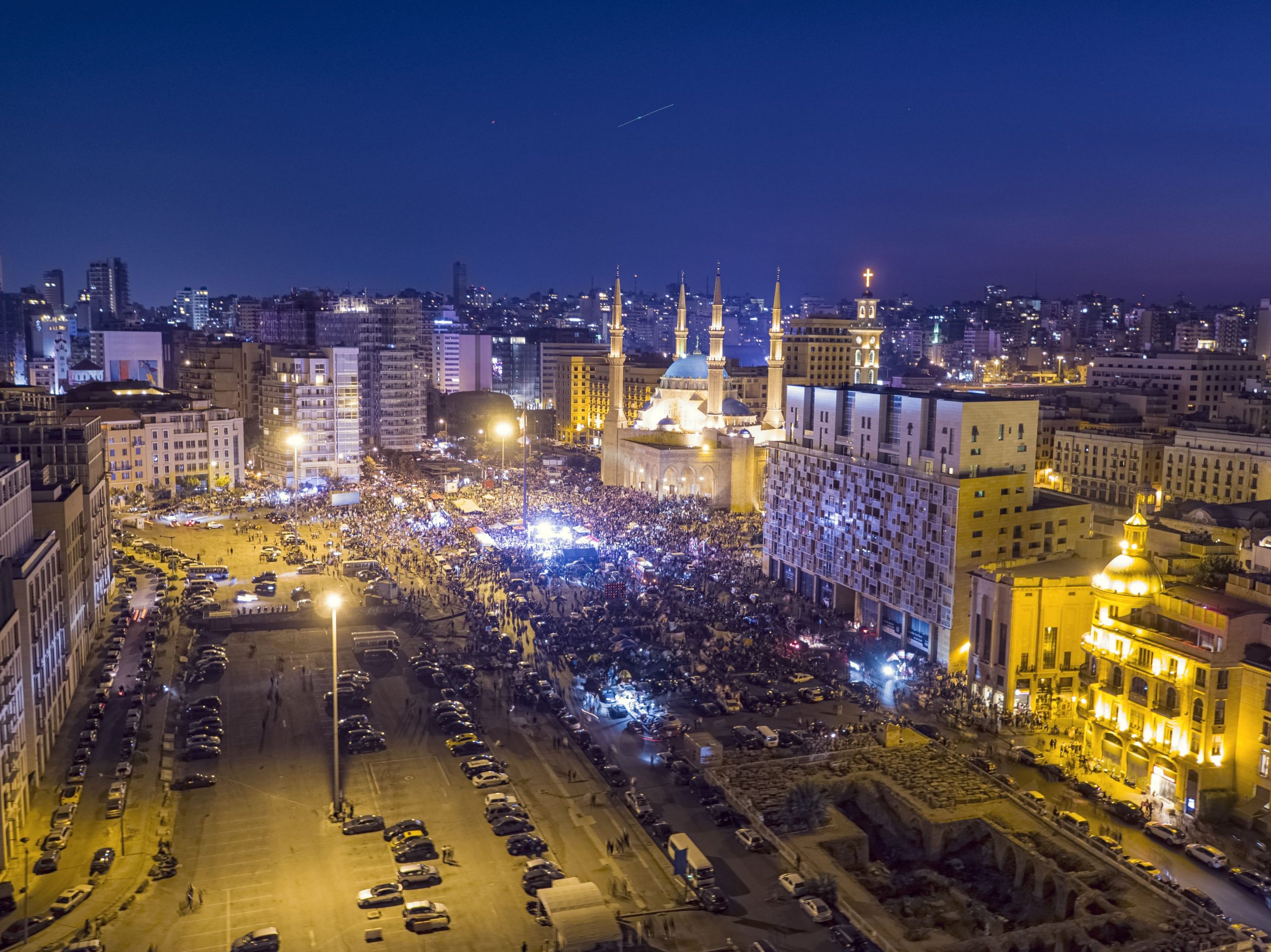
    In contrast to the previous waves of uprising like the Pink Tide in Latin America or the Arab Spring, that was spreading in a particular region with similar agenda, the recent protests are occurring in different zones and is marked by the uniqueness of initial triggers and demands put forth by the protestors. In Lebanon, the discontent was sparked by regressive taxes proposed (mainly Whatsapp tax) but turned into massive demonstrations, transcending sects and classes, calling for a technocratic government in the backdrop of sectarian political regime, widespread corruption and mishandling of the economy. The Yellow Vest movement in France originally against the fuel tax snowballed into nationwide protests to address the socio economic inequalities, stemming from high unemployment and stagnating economy. Protests in Chile against hiked transport fares escalated to countrywide riots revealing the dissatisfaction with the pro rich growth, heavily privatised welfare system and pro market regime. On observation, these isolated protests by themselves can be a defining feature of the current wave of protests, different from the previous waves that were characterised by common contestations.

    Despite being unrelated events with independent agendas, the countries undergoing mass protests share similar trends of inequality and economic downturns. Further scrutiny beyond the seemingly small initial triggers reveal an evident pattern of economic anger and insecurity in these nations. Experts have suggested that Hong Kong’s pro democracy movement is also fuelled by wide income inequality (highest among developed nations), especially in the last 45 years since its handover to the Chinese. The Latin American region, witnessing the most number of countries breaking into sustained protests, is the world’s most unequal zone. In addition to inequality, sustained unrest in states like Colombia, Catalonia to Iraq and Egypt, the protests are driven by slowing economic growth, mounting public debt and austerity measures. Even in populist and authoritarian regimes, citizens are demanding an end to corruption and restoration of democratic rule of law. For instance, long serving, extremely popular, leftist leader Evo Morales was forced to resign in Bolivia after protests erupted accusing him of undermining democracy to extent his rule. There are increasing clashes against repressive democracy in Russia, and revolts against autocrats in Slovenia and Czech Republic.

    Leaderless or smart mobilization?

    Interestingly, a majority of the modern protests are leaderless, led by students and youth. In Hong Kong, the protests are gaining momentum through the active involvement of the students while in Chile the unrest for systematic change was ignited after school students launched a campaign to end the 4 percent subway fare increase. Niall Ferguson noted that this demographic trend of the young leading the demonstrations is a repeat of the 1960s, which like the present had an excess of educated youth over the number of available jobs. Another similarity amongst the protests is the urban-centric mass unrest. According to migration theorists, uncontrolled urbanisation resulting in rural to urban movements is a major cause for the ongoing demonstrations. Pushed into informal settlements in cities, often ignored by authorities and without basic social coverage, the urban area becomes a ground for discontent. For instance, in Haiti the protests began due to gasoline and food scarcity. Therefore, the socio-economic marginalisation of the urban poor is a significant yet overlooked factor that drives people to the streets. This is also compounded by a lack of faith in the government. More than the poor state policies adopted and prevalent corruption, in some protesting nations, there is deep distrust among the citizens. Hong Kongers believe that their government does not have legitimate powers over Beijing, and in countries like Lebanon, Chile or Ecuador, reversal of the initial triggers did not stop the dissenters from demanding a new government.

    The youth bulge and the shrinking economic opportunities only partly explains the global protests. The reach and accessibility of social media and free messaging apps have exploded in the past decade. In addition to acting as a medium to organise and sustain mass protests, these channels are also used to express political frustrations. Unlike before when media had a monopoly over mass reach, individuals and groups have the capacity to mobilise and garner support over specific issues. While the protests seem unconnected, it is possible to see a copycat element in the way protests are carried out. The coverage of news and faster reach makes it possible for protestors to adopt methods of action that were successful elsewhere. It is also harder for states to contain and repress dissenting voices. Thus, the spread of communicative technology and social platforms offer a conducive environment for protests. 

    Social Media enables activism

    The ability of electronic media to break down physical barriers and bring more events to global audiences might be increasing the visibility of protests, which would have otherwise remained local. Data from GEDLT Project, which has been tracking protests around the world from the past 40 years, reveals that the frequency of protests has not significantly increased. However, the intensity and the length of protests have improved. Despite a spike in these political activities wherein citizens are actively mobilising to pursue their demands, there has been a decline in the success rate of protests. A recent study highlights the staggering decline in success rate of protests from 70 percent in 1990s to 30 percent in 2010. Some highlight the “smart” methods adopted by regimes to prevent and suppress clashes like reinforcing loyalty of the elite, infiltrating and dividing the opposition, etc. For instance, in Lebanon, the initially united protests has created anti protest groups that supports the Hezbollah. Governments are also adopting a strategy of blaming foreigners and outsiders to reinforce support from the public. For instance, China is building a narrative of US backed forces disrupting Hong Kong to get an advantage in the ongoing trade war, which has strengthened after US signed a Hong Kong Human Rights and Democracy law. Iran’s authorities are also blaming outsiders, especially the US, for the violence that ensued after state raising gasoline prices by 50 percent.

    Overall, there is an influx in political activism. Global unrests are now spreading and have significant implications for countries everywhere. With electronic media and its potential for mobilisation, it is now easier to bring issues to national discourse. However, while the willingness and ability of mass political activism to recur and cause disruptions have increased manyfold, its success rates have decreased. It may be said that the political frustrations and the current protests will not bring a major transformation in the political structures but rather it is a new status quo in the nature of political lifestyles.  

    Renuka Paul is a Research Analyst with TPF. She holds a masters in Public Policy.

    Image: Aerial night shot of Beirut Downtown, Lebanon during protest against Government, Lebanese revolution – Phot by Ramzi – Licensed from www.stock.adobe.com