Tag: Skills

  • Need to Redefine MGNREGS: Response for a  post pandemic Economy

    Need to Redefine MGNREGS: Response for a post pandemic Economy

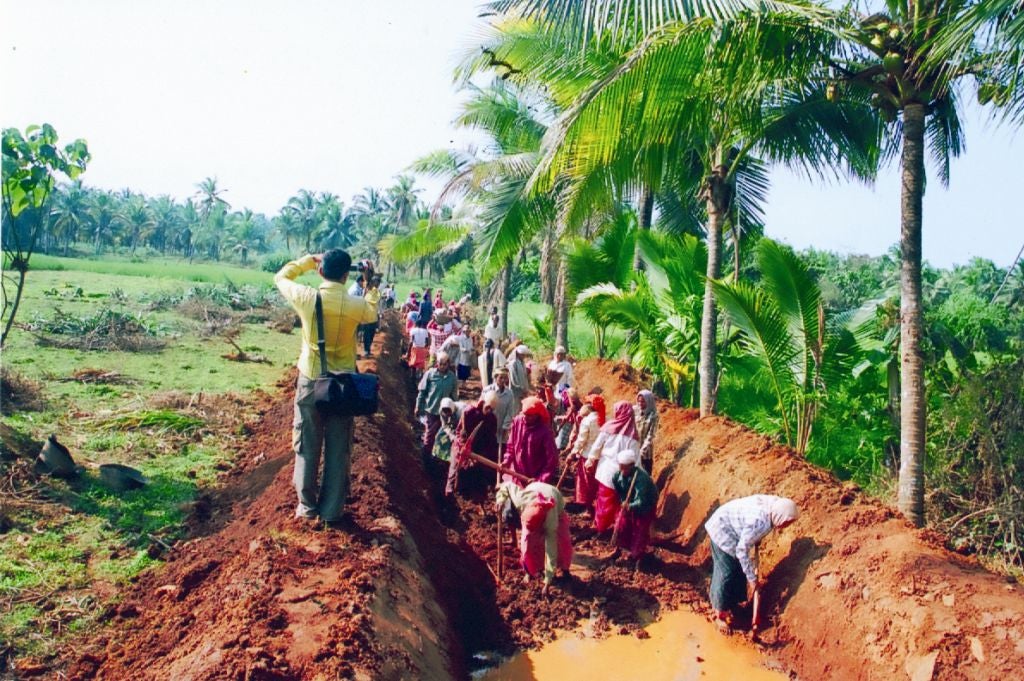
    The Union budget 2020 was heavily criticized for allocating only INR 60,000 crore on the UPA flagship program, Mahatma Gandhi National Rural Employment Guarantee Scheme (MGNREGA). Discontent continues even after the relief package mentioned INR 200 per person will be paid for the next three months. With 7.6 crore workers registered under MGNREGA program around one trillion (INR) would be required to fulfill the promise. The pandemic has disrupted almost every physical activity, thereby disrupting the physical labour economy. The unfolding crisis across the country and  the poor health infrastructure especially in rural areas poses a major challenge to combat the spread of the virus .  According to the National Health Report, India’s government hospitals average a low figure of one bed per 1844 patients.  The magnitude of the health crisis becomes apparent with the inadequacy in health infrastructure in rural India. The ongoing COVID-19 crisis is reshaping the entire global economy and is expected to be a stress test for government institutions. Even after the crisis, policy making and social programs will remain the key areas in which continuous revision must happen – to build a resilient economy in the long run. As the pandemic influenced financial crisis looms large, it is opportune to discuss public employment programs in bridging infrastructure gaps and financial losses. 

     Demand driven workfare programs intend to provide 100 days of employment for rural households. This scheme was launched with an objective to alleviate poverty and create public assets.   Recognising the vagaries of the agriculture sector to provide stable employment, the program sought to guarantee minimum income for subsistence level labourers and also internalized short term shocks in the rural economy. In principle, the ‘right to work’ element offered a legitimate progress in public-policy discourse by empowering women and marginalized communities to work. The laudable results of the employment program have more or less achieved its social objectives by increasing individual asset creation and enhancing savings rate. Almost 50 percent of the population dependent on agriculture fall back to government employment schemes in times of labour market failure. Low productivity, inadequate modern technology, high dependence on rainfall and bottlenecks to reach the market are primary sources of such failures. Execution of public employment in India is  plagued by rampant corruption and efforts to effectively implement the scheme faces hurdles and results in marginal progress. In the wake of economic slump with falling consumption in rural India and high unemployment rates, infusing cash in the hands of people is always the priority. However, marginal increase in budget allocation for public work programs has invited criticism from the economists – expecting the rural economy to struggle with slow recovery. With acute shortage of skilled labourers and an education system failing to impart quality skill education, a public employment program can be more dynamic in resolving the socio-economic and food security problems. The primary objective is to offset short term economic disturbance and smoothen consumption expenditure, but the development of the program in responding to the needs of the community is also important.  Successful implementation of an employment program must factor-in convergence with other departments, quality of assets created and skill levels imparted under the program. .The three-week lockdown due to covid-19, further extended by two weeks, has exposed the inadequacy of public health infrastructure, more so in rural areas and for informal labour groups, to address their health and the resulting financial hardship. Converging the needs of villages to enhance better response during a crisis with the employment program would result in bringing accountability and creating assets.

    India has experimented with a plethora of universal public programs such as Public Distribution System and Integrated Child Development Scheme (ICDS). In a similar vein, MGNREGS has been an important public work programme with the aim of reducing poverty and enhancing income levels. At this juncture, revising and reviewing MGNREGA scheme with the objective to reduce leakage in the system is a priority. A clear balance between the twin objective of providing employment and creating infrastructure has been missing in the literature. The gap between theoretical policy and reality has raised  concern and the need to review the current approach . The obvious gap in infrastructure requirements identified during the time of crisis must converge with public programs. Such carefully designed schemes with tangible objectives will provide economic security in the short run and improve rural infrastructure in the long run. 

    Work completion rate can be used as a proxy for productivity because individual labour productivity is hard to ascertain with heterogeneous work projects. Although the official MGNREGA website suggests an average of 90 percent of work completion, open government data shows a decline in work completion rate from 43.8 percent in 2008-09 to 28.4  percent in 2015-16. Financial support through employment should account for both quality of assets created and the process of such creation. This would internally check and balance the operation of the scheme and intuitively bring in accountability. At present, the scheme contains the above mentioned elements but has not been used to evaluate the execution of the program. Convergence between departments to create assets and the work completion rate might explain the effectiveness of a program in physical terms. 

    An efficient model should enhance the skill levels of rural youth and is more than necessary to counter the loss of jobs already happening due to coronavirus lockdown. Unskilled and semi-skilled labourers will face lay-offs as industries with the recent norm on social distancing adjust to capital intensive businesses. The percentage of rural population in the age group of 15-59 receiving vocational training has reduced from 1.6 percent in 2011 to 1.5 percent in 2015-16. Unemployment rate among rural youth (15 to 29) has increased from 5 percent in 2011 to 17.4 percent in 2017-18. Although the highest unemployment rate is observed among rural females, the employability of rural youth reduces as education increases. The paradox of educated unemployment is not complex to decode, but a significant skill gap is the fundamental problem from the labour supply side. The Expanded Public Works Program (EPWP) introduced in South Africa to address the skill gap among the youth has succeeded in reducing poverty and unemployment rates. The program has been designed to create labour intensive projects not limited to infrastructure but extends to social, cultural and economic activities. The percentage of young workers under this scheme witnessed a rise from 7.73 % in 2017-18 to 10.06 % in 2019-20 in reference to the low levels of employment. This would mean the nature of the guarantee program has shifted from giving opportunities for seasonal unemployed to educated unemployed. The change is indicative of the deeper crisis faced in the rural economy and calls for a sustainable plan to use public programs as a tool to also impart skill training for the rural youth. State’s increasing dependence on work programmes to create employment needs to be revised based on community requirements. While enhancing rural employment is the immediate concern, the process of achieving it suffers from various executive problems such as corruption among government staff and individual’s lack of willingness to work. Amidst the lockdown situation due to COVID-19, unemployment will increase sharply. A well-devised strategy to address economic losses on priority and emphasis on health infrastructure through public employment must resonate in policy-making after the impact of the coronavirus crisis subsides. 
     

  • Budget 2020: Rhetoric vs Reality

    Budget 2020: Rhetoric vs Reality

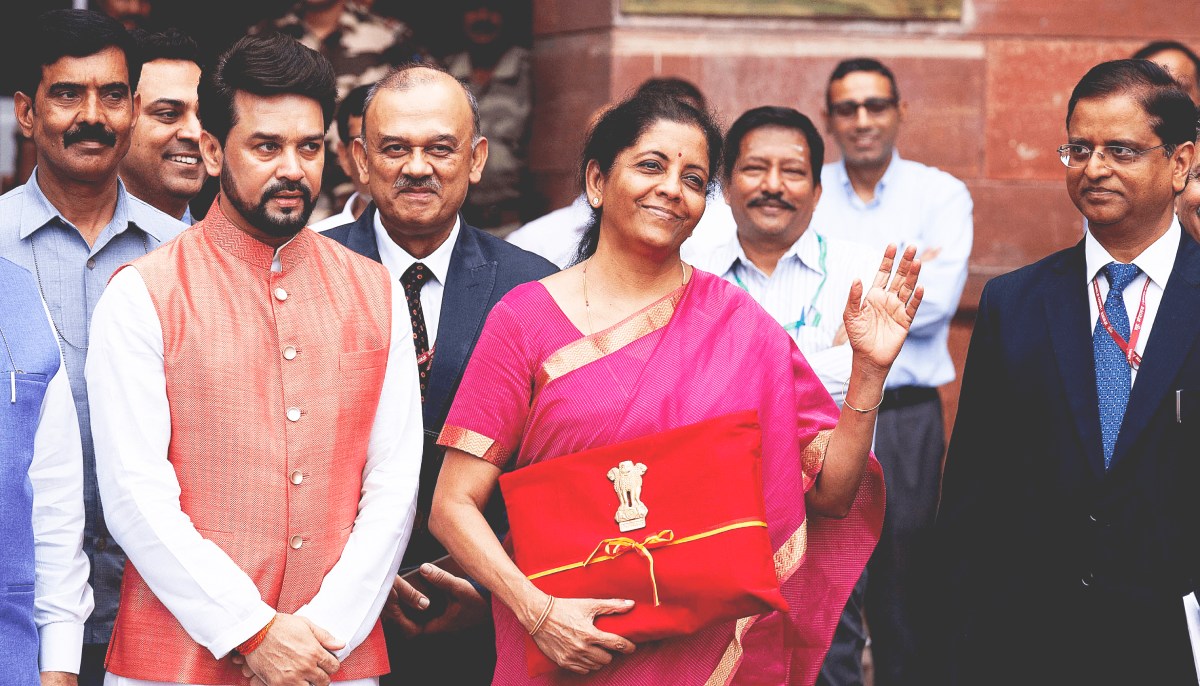
    Sharing structural similarities with the 1991 economic conditions, , the current decline in Indian economy is in desperate need  for radical reforms to energize the growth. Faced with severe fiscal constraints, the optimistic projection of revenue by the government   seems more of a challenge than realistic prospects for economic growth. Tax revenue is expected to fall short by INR 2.5 lakh crores in FY20 as the GDP records an 11- year low of 4.5 %.  As against the target of INR 24.6 lakh crores, there is likely to be a shortfall of INR 2 lakh crores for the current fiscal year. Expenditure cannot only depend on the expected revenue and fall in revenue collection will become a grave concern to achieve the fiscal deficit target set at 3.5 percent .  The budget is expected to balance deficit and growth by laying down a plan for fiscal consolidation and pushing the growth fundamentals. The Finance Minister in her speech mentioned three pillars under which the budgetary allocation has been rationalized. There is a need for deeper examination of budget proposals  beyond the slogans of the budget speech in order to comprehend the government’s long-term economic strategy.

    Aspirational India

    The agriculture sector with poor growth rate yet employing 50 percent of the workforce required significant capital infusion. 2.6 lakh crore has been allocated to agriculture & allied activities out of which 75,000 crores are dedicated to double farmers’ income. In reality, implementing a cash transfer scheme with a huge quantum of finance is a strenuous task facing  challenges on the ground. Schemes such as setting up solar panels and village storage run by Self Help Groups will act as a non monetary support measure. However, infusion of cash in rural credit structure and ease in acquiring credit facilities is largely ignored. The absence of  adequate investment for R & D in agriculture is a major shortfall in the budget. A target to increase the milk production capacity to 108 million tonnes is ambitious, yet no road map has been laid down to enhance the capacity in the current structure.  Weak consumption and high unemployment has contracted rural economic growth but the budget has failed to directly inject finance to increase effective demand. Sharp cuts in MGNREGA budget is giving rise to concerns as the total money in circulation in the economy continues to be low.

    Income insecurity will weaken the consumption demand for a few more quarters, arresting the medium-term growth. Healthcare Sector has been allocated  a total of 67,000 crores which is a significant increase of 10 percent compared to the last budget. The government’s flagship healthcare program, Pradhan Mantri Jan Arogya Yojana or  Ayushman Bharat, is allocated 6,400 crores which is the same as the previous year along with the National Rural Health Mission being allotted 28,000 crores. The Finance Minister has approved a Private-Public Partnership (PPP) between private medical colleges and hospitals in the country. The initiative is aimed to improve the skill levels of enrolled students to export their services abroad. Effectiveness of the PPP model in healthcare will depend on the amount of scrutiny and quality checks placed at the execution stage. Highest decline in funds was for Rashtriya Swasthya Bima Yojana from Rs 156 crores to Rs 29 crores, and Food Safety & Standards Authority of India was reduced to Rs 283.71.

    The draft of National Education Policy in 2019 invited multiple debates but achieving quality education has been the common goal across all levels of education. Human capital investment and skill development has been crucial to the 2020 budget with an allocation of almost 1 lakh crore for education and training. Breakup of funds for education under primary, secondary and higher education was not spelt out.  Finance minister citing the increase in gross enrolment ratio of girls in education has clearly missed the data on falling rates of women in labour force. The narrow lens of viewing enrolment number as a measure  women empowerment has to be revisited to achieve gender equality status. Encouraging apprenticeship and internships in rural areas for engineering and technical graduates is an important mention as the students lack experiential learning. Higher education population stands at around 36.6 million, surging the demand for  institutions offering graduate courses. The Government due to its limited fiscal capacity has allowed private institutions to address the demand for higher education. Despite this opening up tertiary education remains at only 25.8 percent of Gross Enrolment Rate. Quality in higher education is still a distant dream in India and it is important to dedicate funds to improve the quality of higher education in particular.

    Economic Development 

    Under Economic Development, promoting MSME sector and developing infrastructure have been the focus areas. Setting up NIRVIK scheme for higher export credit disbursement and facilitating investment clearance cells is a favourable move for medium and small scale business. Primarily, encouraging potential start-ups to equip their operations  with technology and managerial skills for creating export market demand must take precedence.

    National Logistic Policy is underway to revamp the transport infrastructure and new trains are to be operated under PPP. 100 new airports to be developed under UDAAN scheme is expected to create substantial employment in infrastructure sector. Linking basic Bharatnet services to 1 lakh gram panchayats is a notable initiative to improve the internet connection at local unit level. An exclusive direct investment in disruptive technology and artificial intelligence continues to be absent indicating India’s lag in becoming more competitive. Failure of the ‘Make in India’ initiative to materialize as expected is a relevant evaluation to reframe the fund allocation to accelerate indeginious production. Foreign trade of India presents a grim picture with exports slipping by 1.8 % in the last few months.  Although the political aspect of ditching Regional Comprehensive Economic Cooperation (RCEP) played well, quitting a multilateral trade deal has reduced the scope to upgrade domestic technologies. Frailty of the economy has clearly reduced the incentive for small businesses to invest in production and service despite schemes dedicated for this domain. Entrepreneurship culture in a favourable environment to undertake small businesses with insurance cover should aim at utilizing the existing human and capital resources through upgraded technology. A National Pipeline project has been proposed to ensure public spending on road, irrigation, power (conventional and renewable), railways and housing. Under this project, substantial funds are allocated for roads and least is for rural infrastructure. A prepaid  ‘smart metering’ system is to be substituted for conventional energy meters. On the financial front, tax concessions for corporate companies and foreign investment have been proposed. Reducing income tax slabs cheered the middle class but it has been a necessary and not sufficient condition to push the economy in a growth trajectory. Extension of tax holiday for real estate corporations would not qualify as fiscal stimulus with poor housing demand. As Dr Rathin Roy, economist suggests, either productivity should improve for pushing the demand at existing wage or minimum wage should increase. Decoding his post-Keynesian idea, structural crisis present in India offers much more complexity in practice. Land, labour and capital market reforms are inevitable to catch the growth momentum in the long run. Revising tax structure under Goods & Service Tax (GST) does not count for a structural reform to revive growth and scant attention has been paid for resolving systemic issues using budget as a tool. 

    Caring India

    The last pillar of the budget, emphasizing the importance of national and social security,  allocated funds for marginal groups, senior citizens and women, adopting a populist measure.  Over 6 lakh anganwadi workers are to be given smartphones and the budget estimate for nutritional related programs stands at 35,600 crores. Proposals were made to establish Indian Institute of Heritage and Conservation along with the development of 5 archaeological sites.  Major schemes like PM KISAN, Direct Benefit Transfer, Pradhan Mantri Awas Yojna and ICDS (Integrated Child Development Service) witnessed a jump from revised budget estimates of 2019-20. The Finance Minister in her budget had mentioned a number of schemes aimed at the Environment, Pollution and Climate Change. It includes 4,400 crores for the Clean Air Policy, 460 crores for Pollution Control and 3,100 crores for the Ministry of Environment, Forest and Climate Change. The last budget witnessed reduction in GST rates on Electric Vehicles (EV) and an annual tax reduction of up to 1.5 lakhs on interest paid to purchase EVs. However, the current budget has increased the custom duties to curb the import of cheap materials from China making the vehicles more expensive. National Adaptation Fund for Climate Change (NAFCC) is a central sector scheme set up to support concrete adaptation activities that mitigate the adverse effects of climate change. The Budget missed out on the replenishment of the much-needed NAFCC and has ignored it for two consecutive years. The overall fund allocation for Climate Change and Environment has increased by 5 per cent in the budget. Promoting sustainable business practices at micro levels is a key in tackling climate change. Accommodating the green budget would demand more involvement beyond mere budget allocation, effective plans need to be developed that can constantly track the progress of India’s climate change dialogue and advocacy.

    The defence budget for 2020-21 stands at 3.37 lakh crores, constituting 1.5% of the GDP, excluding pensions. Capital and revenue expenditure is valued at 1.18 and 2.18  lakh crores and pension at 1.33 lakh crores. This will affect several big projects taken up by the armed forces to build capabilities against Pakistan and China as there has been only a marginal increase in capital expenditure compared to previous year (1.08 lakh crores). Armed forces will be forced to cut down on arms and equipment purchases, thereby diluting the state’s priority on national security. However, with adequate government support there is scope for the private sector to bridge  the gap in areas of maintenance and logistics of the armed forces. Corporate tax cuts in the manufacturing sector, strategic disinvestment in Central Public Sector Enterprises (CPSE) and abolition of ‘angel tax’ for start-ups is appreciable. However, more involvement and sincere efforts should be undertaken by the Government to enhance private sector involvement in creating additional funding for developing a robust defence industry and meeting the needs of the armed forces at the same time.

     A recent study by Oxfam reported that 73% of the total wealth is owned by 1% of India’s population, as a result the number of billionaires has increased to 120 in 2019 from nine in 2000. A funding strategy that does not  attend to the growth of income among masses would lead to furthering the inequality and handicap the long term growth of an economy. Budget continues to be a powerful instrument to reallocate resources through fiscal policies and reduce economic inequality in a country. Facing a high risk of missing the demographic dividend, the budget was expected to make radical and structural reforms. Immediate measures to revitalise economic wealth among middle-class and rural residents is the need of the hour. The ostensible budget might garner popularity but the foundation to achieve India’s growth potential remains insufficient. Choice between managing fiscal deficit at the cost of reduced demand and initiating growth at the cost of huge fiscal deficit summarizes budget decisions. Biting the fiscal bullet, the finance ministry has assumed more accountability in explaining every component of expenditure but has failed to provide confidence for a resurgent Indian economy. Micro level assessment reveals a rosy picture but the exercise has undoubtedly choked the Indian economy in the short run.

    Contributions by

    Manjari Balu and Swaminathan S are Research Analysts with TPF.

    Aditya Balakrishna is an Intern with TPF.

    Views expressed are their own.

    Image Courtesy: Sanjay Rawat // www.fortuneindia.com