Tag: Security

  • What the Global Economy and Security Require

    What the Global Economy and Security Require

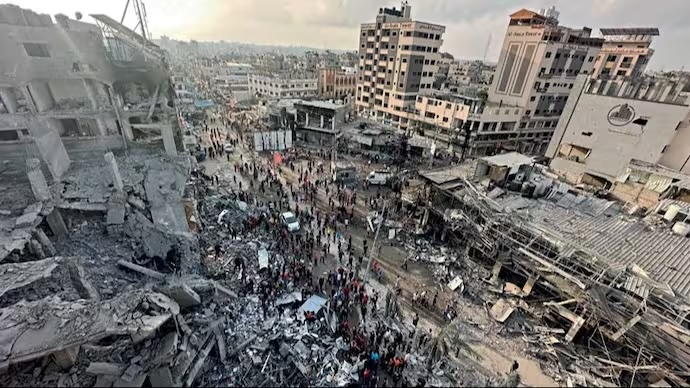
    With the new year 2024 well underway, the world is afflicted with wars, economic challenges, and the larger issues of climate change impact that threaten the very survival of the planet. It is paradoxical to see that great powers are still focused on competition and conflict. The year ahead portends continued conflicts, wars, and the weaponisation of economic infrastructures, demonstrated by Israel’s genocidal war against the Palestinians. Carla Norrlof highlights the increase in geopolitical conflicts and the complex relationship between economics and security. The article, like most Western academics, looks from the American perspective. and may miss the larger worldview.

    – Team TPF

    This article was published earlier in Project Syndicate.


    If America and its allies are to maximize both security and prosperity in the coming years, policymakers and strategists will have to understand the complex interplay of forces that is making the world more adversarial and fraught with risk. The global environment demands a comprehensive new economic-security agenda. The global order is undergoing significant changes that demand a new economic-security agenda.

    From hot wars and localized insurgencies to great-power standoffs, geopolitical conflict has made the complex relationship between economics and security a daily concern for ordinary people everywhere. Complicating matters even more is the fact that emerging markets are gaining economic clout and directly challenging traditional powers’ longstanding dominance through new networks and strategic alliances.

    These developments alone would have made this a tumultuous period marked by economic instability, inflation, and supply-chain disruptions. But one also must account for rapid technological advances – which have introduced new security risks (such as arms races and cyber threats) – as well as natural risks such as pandemics and climate change.

    To navigate this dangerous new world, we must reckon with three interrelated dimensions: the effects of geopolitics on the global economy; the influence of global economic relations on national security; and the relationship between global economic competition and overall prosperity.

    Each pathway sheds light on the multifaceted interplay between economics and security. We will need to understand all of them if we are to tackle the varied and complex challenges presented by our highly interconnected global system.

    As recent years have shown, geopolitics can profoundly affect the global economy, reshaping trade, investment flows, and policies sometimes almost overnight. Aside from their devastating human toll, wars like the Russian invasion of Ukraine and Israel’s campaign in Gaza often reverberate far beyond the immediate theater of conflict.

    For example, Western-led sanctions on Russia, and the disruption of Ukrainian grain exports through the Black Sea, caused energy and food prices to soar, resulting in supply insecurity and inflation on a global scale. Moreover, China has deepened its economic relationship with Russia following the mass exodus of Western firms in 2022 and 2023.

    Similarly, Israel’s bombing of Gaza has destabilized the entire Middle East, especially tourism-dependent neighbouring countries such as Egypt, Jordan, and Lebanon. Meanwhile, Yemeni Houthi rebels, long supplied by Iran, have been attacking cargo ships in the Red Sea, leading international shipping firms to suspend or adjust their routes and directly impeding trade through the Suez Canal – a major artery of global commerce.

    We are witnessing the destabilizing effects of natural threats as well. The COVID-19 pandemic drove a massive shift away from cost-effective “just-in-time” supply chains to a “just-in-case” model aimed at strengthening resilience during disruptions. And, more recently, an El Niño-induced drought has diminished the capacity of the Panama Canal – another major artery of global commerce. Whether for geopolitical or ecological reasons, rerouting around these new bottlenecks inevitably increases shipping costs, causes delivery delays, disrupts global supply chains, and creates inflationary pressure.

    Turning to the second dimension – the implications of global economic relations for national security – it is clear that countries will be more likely to adopt bold or aggressive security policies if they already have a web of economic ties that can either attract support or dampen opposition. China, for example, is counting on economically dependent countries within its Belt and Road Initiative to accept its political influence and longer-term bid for hegemony. Many countries also now rely on China for critical defence-related supply-chain components, which leaves them vulnerable diplomatically and militarily.

    More broadly, global connectivity, in the form of economic networks and infrastructure, is increasingly being weaponized for geopolitical ends. As Russia’s war on Ukraine shows, economic ties can create dependencies that raise the cost of opposing assertive security policies (or even outright aggression). The implicit threat of supply disruptions has a coercive – sometimes quite subtle and insidious – effect on a country’s national security objectives. Owing to the network effects of the dollar system, the United States retains significant leverage to enforce international order through coercive sanctions against states that violate international norms.

    Trading with the enemy can be lucrative, or simply practical, but it also alters the distribution of power. As Western governments learned over the past two decades, the advantages conferred by technological superiority can be substantially offset by forced technology transfers, intellectual property theft, and reverse engineering.

    The third dimension – the relationship between global economic competition and prosperity – has been complicated by these first two dynamics, because the pursuit of material well-being now must be weighed against security considerations. Discussions in this area thus centre around the concept of economic security, meaning stable incomes and a reliable supply of the resources needed to support a given standard of living. Both Donald Trump’s “Make America Great Again” slogan and President Joe Biden’s “Build Back Better” plan reflect concerns that economic relations with China harm US prosperity.

    The challenge for the US and its allies is to manage the tensions between these varying economic and security objectives. There is a potential conflict between adapting to market- and geopolitically-driven shifts in economic power and sustaining the economic strength to finance a military force capable of protecting the global economy. The US, as the dominant power, must remain both willing and capable of preserving an open, rules-based global economy and a peaceful international order. That will require additional investments in military capabilities and alliances to counteract territorial aggression and safeguard sea lanes, as well as stronger environmental policies and frameworks to distribute global economic gains according to market principles.

    By attempting to mitigate security risks through deglobalization (reshoring, onshoring, and “friend-shoring”), we risk adding to the economic and security threats presented by a more fragmented world. Though economic ties with rivals can create dangerous dependencies, they also can act as a safeguard against hostility.

    All governments will need to grapple with these tensions as they develop a new economic-security agenda. The world is quickly becoming more adversarial and fraught with risk. To maximize both security and prosperity, we will have to understand the complex interplay of forces that are creating it.

    Feature Image Credit: India Today
  • Security through Deterrence and Power Projection

    Security through Deterrence and Power Projection

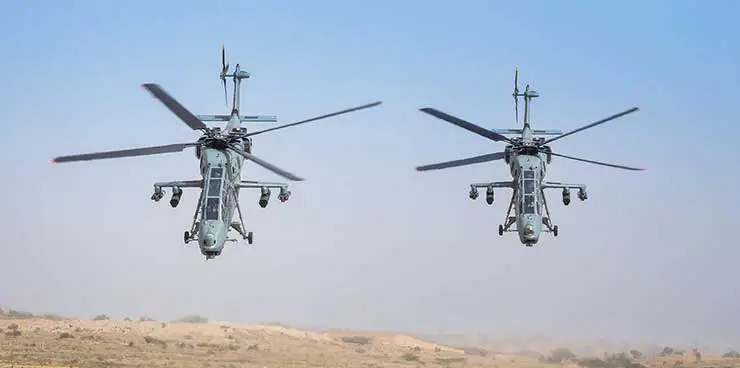
    Having lost out big time due to short-sighted piecemeal procurements, India’s acquisition process needs an overhaul and improve its track-record. With correct lessons derived and applied diligently, India can truly emerge as a globally competitive defence manufacturer and achieve control over critical technologies.

    This October 8th the IAF completes 90 years of glorious service to the nation. The past nine-decades is a saga of critical contribution to nation-building, warfighting, support to civil administration, air defence, international cooperation and peace keeping, military diplomacy, and deterrence of adversaries. The demand on these roles of the IAF have increased substantially in recent decades. Kargil to Balakot and Ladakh exemplify the value of the IAF as a critical tool of state power. In the 21st century, aerospace power has emerged as the critical tool of deterrence and power projection. The ability of the IAF to provide an array of choices to the national leadership depends on its force structure and the pace of modernisation. IAF’s 100th anniversary is just ten years away and there are, as Robert Frost said, miles to go. Modernisation is a continuous process. Sustaining the optimal force structure despite the delays of modernisation should remain the paramount task.

    [powerkit_button size=”lg” style=”info” block=”true” url=”https://raksha-anirveda.com/security-through-deterrence-and-power-projection/” target=”_blank” nofollow=”false”]
    Read More
    [/powerkit_button]

  • On Metaverse & Geospatial Digital Twinning: Techno-Strategic Opportunities for India

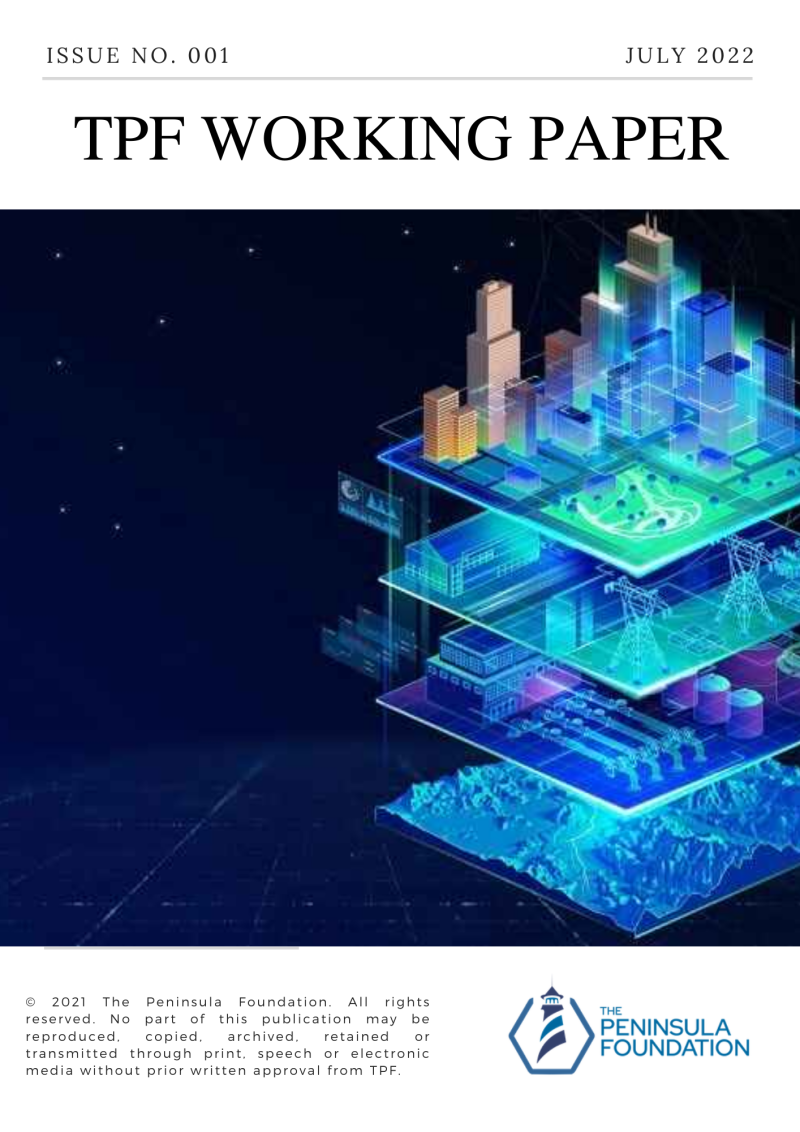
    On Metaverse & Geospatial Digital Twinning: Techno-Strategic Opportunities for India

    [powerkit_button size=”lg” style=”info” block=”true” url=”https://admin.thepeninsula.org.in/wp-content/uploads/2022/07/TPF_Working-Paper_MetaGDT-1.pdf” target=”_blank” nofollow=”false”]
    Download
    [/powerkit_button]

    Abstract:

    With the advent of satellite imagery and smartphone sensors, cartographic expertise has reached everyone’s pocket and we’re witnessing a software-isation of maps that will underlie a symbiotic relationship between our physical spaces and virtual environments. This extended reality comes with enormous economic, military, and technological potential. While there exist a range of technical, social and ethical issues still to be worked out – time and tide wait for no one is a metaphor well applied to the Metaverse and its development. This article briefly introduces the technological landscape, and then moves over to a discussion of Geospatial Digital Twinning and its techno-strategic utility and implications. We suggest that India should, continue on the existing dichotomy of Open Series and Defence Series Maps, initiate Geospatial Digital Twins of specific areas of interest as a pilot for the development, testing, and integration of national metaverse standards and rules. Further, a working group in collaboration with a body like NASSCOM needs to be formed to develop the architecture and norms that facilitate Indian economic and strategic interests through the Metaverse and other extended reality solutions.

    Introduction

    Cartographers argue that maps are value-laden images, which do not just represent a geographical reality but also become an essential tool for political discourse and military planning. Not surprisingly then, early scholars had termed cartography as a science of the princes. In fact, the history of maps is deeply intertwined with the emergence of the Westphalian nation-state itself, with the states being the primary sponsors of any cartographic activity in and around their territories[1].
    Earlier the outcome of such activities even constituted secret knowledge, for example, it was the British Military Intelligence HQ in Shimla which ran and coordinated many of the cartographic activities for the British in the subcontinent[2]. Thus, given our post-independence love for Victorian institutions, until 2021 even Google Maps had remained an illegal service in India[3].

    One of the key stressors which brought this long-awaited change in policy was the increased availability of relatively low-cost but high-resolution satellite imagery in open online markets. But this remote sensing is only one of the developments impacting modern mapmaking. A host of varied but converging technologies particularly Artificial Intelligence, advanced sensors, Virtual and Augmented Reality, and the increasing bandwidth for data transmission – are enabling a new kind of map. This new kind of map will not just be a model of reality, but rather a live and immersive simulation of reality. We can call it a Geospatial Digital Twin (GDT) – and it will be a 4D artefact, i.e. given its predictive component and temporal data assimilation, a user could also explore the hologram/VR through time and evaluate possible what-if scenarios.

    [powerkit_button size=”lg” style=”info” block=”true” url=”https://admin.thepeninsula.org.in/wp-content/uploads/2022/07/TPF_Working-Paper_MetaGDT-1.pdf” target=”_blank” nofollow=”false”]
    Read the Full Paper
    [/powerkit_button]

  • The Gated Republic: India’s Public Policy Failures and Private Solutions

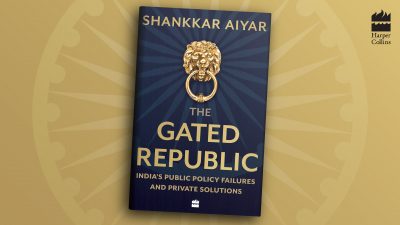
    The Gated Republic: India’s Public Policy Failures and Private Solutions

    Book Review
     
    The Gated Republic: India’s Public Policy Failures and Private Solutions
    Author: Shankkar Aiyar
    Publisher:  Harper Collins India
    Date: 01 September 2020
     

    India has always been statist. All its political parties are Statist in one way or the other; from Jawaharlal Nehru to Narendra Modi, the State has been thought of as the most important player in economic and social affairs. However, even with all this undue importance, the Indian State has failed to deliver even basic goods to its citizens in more than seventy years since independence. Political journalist and author Shankkar Aiyar analyses these government failures and explores the private solutions offered for such problems in his new book The Gated Republic: India’s Public Policy Failures and Private Solutions.

    Without engaging in the debate on how small or big a government should be, the author asserts that providing basic amenities is a moral obligation of the State to its citizens. The basic amenities namely Water, Health, Education, Power and Security are the titles of the chapters where he analyses issues surrounding each one of them individually. The issues are well researched, and every argument is substantiated with facts, so much so that one might find the sheer number of facts overwhelming.

    Shankkar Aiyar, however, does not stop with just facts, he gives us anecdotal stories on how failed government policies affect real people. And disproportionately such affected people are poor. Aiyar argues that this is because ‘those who can find solutions- where they find them and when they can pay for them- have already migrated to private solutions. Two conclusions can be deduced from this analysis. One, the poor are left out without even basic amenities of life, thereby increasing inequality. And two, the people who can pay for private solutions are ‘paying for services they have already been taxed for’. Either way, the author argues that the government has let down its citizenry.

    The fact that there is a rationed hourly quota for water in Mawsynram, the region of the highest rainfall in India and that even after seventy-three years after independence, less than 50% of class V students can read class II level text is a testament to the magnitude of the failures of the government.

    The State is, however, not ignorant of these issues. ‘Every decade saw a new committee’ and Aiyar lists out all of them from various sectors, sometimes even from the British period. In public policy, it is said that what gets measured gets managed but even with so many committees, there have not been desirable improvements. The fact that there is a rationed hourly quota for water in Mawsynram, the region of the highest rainfall in India and that even after seventy-three years after independence, less than 50% of class V students can read class II level text is a testament to the magnitude of the failures of the government. It is not that the government is not doing anything, but this dire situation is the result of sloth-like bureaucracy and something Aiyar calls the ‘announcement approach’ of the politicians. Aiyar argues that successive governments have stopped themselves with lucrative announcements and rebranding of old schemes with new slogans instead of rectifying ill-thought-out policies. For example, he talks about the Accelerated Rural Water Supply Program (ARWSP) which was introduced in 1973. Through the years it has gone through different transitions from being included in the twenty point program during the emergency to Technology Mission on Drinking Water in 1986, Rajiv Gandhi National Drinking Water Mission in 1992, becoming a separate Department of Drinking Water under Ministry of Rural Development in 1999, morphing into the Department of Drinking Water and Sanitation in 2010 and finally becoming Drinking Water and Sanitation Ministry in 2011. Now the ministry is renamed as the Ministry of Jal Shakthi. Even after all these measures, clean piped water is still a distant dream to many Indians.

    In a democracy, incompetent policies and politicians should be punished in the polls but Aiyar argues that there is a ‘divorce of authority from accountability’. He does not dwell too deep into why such a gap between government failures and electoral politics exists because the question, although imminent to understand this state of affairs, is beyond the scope of the book. However, he points out at various places in the book where such a gap exists and how ‘normal’ it has come to be. For example, the use of tanker lorries by the governments to ferry and provide water to its citizens is a shift from the actual problem of the lack of capacity to provide piped water. And the fact that water tankers are a ‘normal’ in reality is a testament to how public policy failures are divorced from electoral politics.

    Although people have not kept the State accountable, they have come up with solutions to address government failures on their own. There is an opinion echoed by many others that in India that problems are solved not by the government but despite the government. Aiyar explores so many places where the above statement holds. We get to know about ‘Bisleri’, the first bottled water and how its name evolved, the story of Apollo group of hospitals, many budget private schools and teaching fellowships, the ubiquity of inverters, private security firms who grossly outnumber police force 83:17 and so on. Each private solution is the result of incompetent government services and inefficient public policies. Aiyar dives deep into how the solutions came to be and how it has helped normal people. Take, for example, the power sector. Even though India is the world’s third-largest electricity producer, not every household has electricity. And inverters, diesel and battery, have made a huge impact on households. So much so that, in 2011, the sixty-eighth National Sample Survey (NSS) report created a new entry for inverters in household consumption of goods and services. Aiyar discusses many other problems and their private solutions in the book.

    What is interesting is that people, even poor people, prefer private solutions though it is costlier. For example, the author points out that about ‘78% of rural and 81% of urban Indians’ preferred private hospitals. This shows a lack of faith in government services. These are the symptoms of decades of ill-thought-out public policies that do not address the root cause of the issue.

    What is even more interesting is that now, these private solutions are rebranded as government initiatives. The Adoption of water purifiers and dispensers in government offices and public places is an example of such rebranding. More recently, NEET coaching classes by government schools in Tamilnadu can also be boxed into that category. While both measures are desirable, they are only short-time fixes that address the symptoms of government failure. Through these measures, the author argues that the tragedy of the issue is lost, and the irony is ignored.

    the book paints a rather gloomy picture of the state of affairs where people are exiting from government services for private solutions. Although this ‘exodus’ is natural for rich people, abject government failures are pushing everyone into private solutions irrespective of affordability.

    To summarize, the book paints a rather gloomy picture of the state of affairs where people are exiting from government services for private solutions. Although this ‘exodus’ is natural for rich people, abject government failures are pushing everyone into private solutions irrespective of affordability. The book argues that people are assembling themselves into gated communities where these failures of government policies are taken care of by private solutions. The author has accomplished what he has set out to do- to show us in a platter, the sorry state of public policies and the many failures that it begot. It remains for the civil servants, politicians and the voting citizens on what their line of action will be.

  • Post-Millennium Trends in the Global Energy Security

    Post-Millennium Trends in the Global Energy Security

    The concept of energy security has been at the front and center of many important changes in international relations and international law since the 1970s. While the 1970s witnessed a series of international and domestic contests and cooperation on energy security, in the recent past the situation has been slightly different. In particular the speed of evolution and the fleshing out of the scope and content of energy security has been quite dramatic. The period from 2000 to 2019 has been transformational in multiple ways in respect of the evolution of the concept of energy security, including power structures where sources of military and economic power are not necessarily overlapping. The simultaneous transformation of Russia, India, France, Japan, Germany and UK as multi-regional powers having pockets of influence much beyond their immediate neighborhood is underway. In essence, the North-South divide and East-West geographical construct and post World War 2 multilateralism are losing relevance. A deep study of these changes is required and the first two decades of the twenty first century offer a useful time frame. The book is an attempt to encapsulate the trends indicative of this emerging energy security architecture.

  • TPF Conference India and the Indian Ocean Region

    TPF Conference India and the Indian Ocean Region

    TPF Conference

    “India and the Indian Ocean Region: Dynamics of Geopolitics, Security, and Global Commons”

    Venue: WCC, Chennai

    Registration

    08:15 to 09:00

    Speakers

    Inaugural Session (9:00 to 10:45)

    dr-lilian-i-jasper
    Dr Lilian Jasper

    Principal, WCC, Chennai

    Dr Lilian Jasper
    Welcome Address
    air-marshal-m-matheswaran-avsm-vm-phd-retd
    Air Marshal M Matheswaran

    President, The Peninsula Foundation, Chennai

    Air Marshal M Matheswaran AVSM VM PhD (Retd)
    Presidential Address and Overview
    ashok-kumar
    Vice Admiral Ashok Kumar

    AVSM VSM Vice Chief Of Naval Staff HQ

    Vice Admiral Ashok Kumar AVSM VSM Vice Chief of Naval Staff
    Inaugural Address

    Prof Kanti Bajpai

    LKYS of Public Policy, NUS, Singapore

    Prof Kanti Bajpai
    Key Note Address

    COFFEE BREAK

    10:45 to 11:10

    Special Lecture 11:15 to 12:00

    Dr. Padma Subrahmanyam, Padma Bhushan awardee/Classical Dancer
    India’s Art & Culture in IOR

    Session I (12:00 to 13:30)

    Cmde Uday Bhaskar (Retd) – Director, Society for Policy Studies, New Delhi

    Indian Ocean: Culture, Civilizations and Connectivity

    Mrs G Padmaja – Former Regional Director, National Maritime Foundation, Vizag

    Topic: Historical and Cultural Dynamism of the Indian Ocean

    Dr. Vijay Sakhuja – Trustee, The Peninsula Foundation, Chennai

    Topic: Cargos and Commodities: Then and Now

    Dr. D Dhanuraj – Chairman, Centre for Public Policy Resrarch. Cochin

    Topic: Impact of Trade and Migration Flows: Past and Present

    LUNCH BREAK

    13:00 to 14:15

    Session II (14:15 to 15:45)

    Dr. TCA Raghavan – Director General, Indian Council for World Affairs, New Delhi

    Power Politics in IOR: Geostrategies and Geo-economics

    Dr Lawrence Prabhakar – Associate Professor, Madras Christian College, Chennai

    Topic: Competing Pivots: China, US, Japan, Russia, India and the EU

    Dr Arvind Kumar – HOD, Department of Geopolitics, Manipal University

    Topic: Geopoltics of Energy in the IOR

    Dr Jabin Jacob – Associate Professor, Shiv Nadar University, Noida

    Topic: China’s BRI: Contrasting Responses

    COFFEE BREAK

    15:45 to 16:00

    Session III (16:00 to 17:30)

    Vice Admiral Shekhar Sinha (Retd)- Trustee, India Foundation, New Delhi

    India’s Strategic Interests in the IOR- Maritime Security, Power Projections and Evolving Partnerships

    Cmde Somen Bannerjee – Senior Fellow, Vivekananda International Foundation, New Delhi

    Topic: India’s Maritime Security and Power Projection

    Amb Antonio Chiang – Policy Advisor to the President; Board Director, Institute for National Defence and Security Research

    Topic: Strategic Partnerships: India and ASEAN

    Group Captain PB Nair – Directing Staff, Defence Services Staff College, Wellington

    Topic: Air and Space: Dimension of India’s IOR Strategy

    End of Day 1 – 17:30

    Network Dinner (By Invitation)

    19:30 to 22:00

    Gold Sponsors

    Event Sponsors

    Speakers

    Panel Discussion (9:00 to 11:00)

    Topic – India’s Strategic Approaches in IOR: Between Aspirations and Contradictions

    Moderator

    Air Marshal M Matheswaran AVSM VM PhD (Retd)

    Prof Kanti Bajpai – Panelist

    Dr TCA Raghavan – Panelist

    Amb Antonio Chiang – Panelist

    Lt Gen SL Narasimhan – Panelist

    Cmde Uday Bhaskar – Panelist

    COFFEE BREAK

    11:00 to 11:15

    Session IV (11:15 to 12:45)

    Dr. Joshua Thomas – Deputy Director, ICSSR, NERC, Shillong

    International Cooperation and Global Commons

    Dr Suba Chandran – Professor and Dean, School of Conflict and Security Studies, NIAS, Bangalore

    Topic: Cultural Legacies and Competing for Zones of Influence: India, China and External Powers

    Rear Adm S Shrikande AVSM (Retd) – Goa

    Topic: International Institutions: SLOCs, Chokepoints, Freedom of Navigation

    Rear Adm K Swaminathan – FOST, Southern Naval Command, Cochin

    Topic: India’s Ability to Provide Net Security and Balance Global Public Goods

    LUNCH BREAK

    12:45 to 13:45

    Session V (13:45 to 15:15)

    Lt Gen SL Narasimhan – Director General, Centre for Contemporary Chinese Studies, MEA

    Transnational Issues, Threats and Challenges in the IOR

    Dr R P Pradhan – Associate Professor, BITS, Goa

    Topic: India and the Blue Economy: Evolving Partnerships

    Dr Arabinda Acharya – Associate Professor, International relarions, NDU, Washington

    Topic: Non Traditional Security Threats: Piracy, Maritime Terrorism, Climate Change, Illegal, Unreported and Unregulated (IUU) Fishing, Illegal Immigration, and Smuggling of Arms and Drugs

    AVM Ashutosh Dixit – AD Commander HQ, Southern Air Command, IAF, Trivandrum

    Topic: International and Regional Cooperation in Disaster Management

    COFFEE BREAK

    15:15 to 15:30

    Valedictory Session (15:30 to 17:00)

    Air Marshal M Matheswaran AVSM VM PhD (Retd) – Chairman and President, The Peninsula Foundation, Chennai

    Topic: President’s Introduction

    Dr TCA Raghavan, IFS (Retd) – Director General, Indian Council of World Affairs, New Delhi

    Topic: Valedictory Address

    Brigadier Albert Pakianathan VSM and Bar – Director- Research and Admin, The Peninsula Foundation, Chennai

    Topic: Vote of Thanks

    View Event Gallery

    [sc name=”donte”]