Tag: Russia

  • The Ukraine crisis: Its impact on India

    The Ukraine crisis: Its impact on India

    India has to tread a fine line in this imbroglio: Taking care of the welfare and evacuation of Indian students and the possibility of an oil price hike.

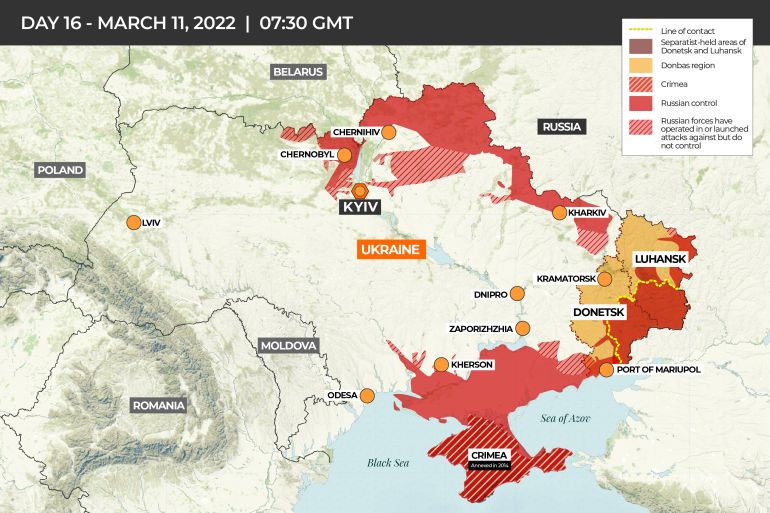
    The face-off over Ukraine between Russia and the United States and its Nato allies has been dominating the headlines for a while now with tensions ratcheting up as we receive dire public warnings every day of a Russian invasion any day now. Clearly, the possibility of Russian intervention there, and the consequent escalation of sanctions against them, is very real and concerning.

    While Ukraine may be a developing country and the poorest in Europe, by no means is it a pushover. It is the second-largest country there, behind Russia, by area, and in terms of population the eighth largest with its 42 million inhabitants. It has been independent since 1991, following the collapse of the Soviet Union, though it had been a part of the Russian Empire and the Soviet Union since the 18th century. If there is one lesson that Putin and the Russian military should have learnt from America’s disastrous interventions in Iraq and Afghanistan is that invasions are relatively easy to accomplish, but keeping restive and hostile populations under control is a wholly different proposition.

    [powerkit_button size=”lg” style=”info” block=”true” url=”https://www.dailypioneer.com/2022/columnists/the-ukraine-crisis–its-impact-on-india.html” target=”_self” nofollow=”false”]
    Read More
    [/powerkit_button]

  • 100 Years after the End of the First World War: Are we slipping again into a World War?

    100 Years after the End of the First World War: Are we slipping again into a World War?

    In view of the developments in Ukraine, the question arises whether there could be a repetition of the First World War in slipping into a new World War that no one intended. This original thesis is accentuated in different ways, whether in the form that European politicians behaved like “somnambulists (Clark) or just failed (Münkler). The blame for the war was also sought in Serbia or Vienna. Hereby the original thesis of the main war guilt of Germany is questioned, as it was fixed in the Treaty of Versailles and by the historian Fritz Fischer as the “grip on the world power” of Germany. However, if the causes of the First World War and, above all, its escalation are no longer seen in the German Empire alone, but are more or less equally distributed among the major European powers, this does not mean that “nothing and nobody” is responsible for the primordial catastrophe of the 20th century: Nationalism, arms race, industrialized warfare, pure power politics – all these are factors that contributed decisively to the First World War. Moreover, it should be emphasized, which even today is far from being overcome in many parts of the world. Against the backdrop of the Ukraine War, a much-discussed book by the highly influential American political scientist Robert Kagan takes on a whole new relevance. Kagan suggests the idea that Europeans could live in a paradise of peace and order after World War II only because the Americans were prepared to confront possible threats to that peace decisively and violently. Thanks to America’s power, Europeans could have indulged in the belief that (military) power was no longer important. But does the principle follow from this that law and order must be upheld in dealings with one another, but in the violent “jungle, we must follow the laws of the jungle”? Or, conversely, is it not the case that state warfare and the exercise of violence that does not adhere to its self-imposed conventions and limitations will stir up more violent resistance than they, in turn, can fight?

    Kagan is partly correct. All modern states are based on the state’s monopoly on the use of force, and almost all of them have emerged through a violent process-remember the English, American, and French Revolutions, the German wars of unification, the wars of decolonization, and the emergence of new nation-states after World Wars I and II. Therefore, however, states do not as such embody an order of violence. Hegel had argued that violence is the appearing beginning of the state, but not its substantial principle. Nor is order powerlessness, as Robert Kagan’s much-discussed book on “Power and Powerlessness” in the New World Order suggests. Does political power come from the barrels of guns, as Mao Tse Tung suggested? If so, the Soviet Union should never have collapsed because gun barrels were more than enough for the Red Army.

    Kagan assigns the opposition of power and order thinking to contemporary American and European thinking but admits this has not always been the case. As he points out, the situation was just the opposite for a long time. The Americans up to Woodrow Wilson at the beginning of the last century, he says, were committed to thinking of order and a world-political idealism of spreading human rights, while the Europeans remained committed to pure thinking of power until World War II. What is astonishing, if we take Kagan’s own analysis seriously, is why he does not ask to what final conclusion this “pure power thinking” among Europeans led – to nothing other than the catastrophes of World War I and World War II. Kagan may be right about one thing: in view of the “state-failure” problems in numerous Third World states on the one hand (emphasized by the Europeans in the anti-terror struggle) and those of the so-called “rogue states” on the other (on which American interest focused under Bush), illusions about the end of history and a largely peaceful, because economically determined, 21st century is fast fading. However, this cannot mean developing a new metaphysics of struggle and self-assertion that only force can enforce.

    Historical Traditions

    In determining the political sphere in categories of power or order, Kagan finds himself in a long ancestral line of the history of political ideas. Dolf Sternberger distinguished three different roots of the concept of politics: cooperation, following Aristotle; demonology, starting from Machiavelli; and eschatology, as he essentially saw it realized in Marxism, starting from the church father, Augustine. Sternberger’s distinction is phenomenological still valid today, even if his evaluations are problematic because he saw himself in the tradition of the Aristotelian concept of politics and – as the term demonology already shows – fiercely fought the opposite position.

    How are these distinctions to be understood? Here are two quotations: Aristotle begins his work on politics with the definition: “Everything that is called state is obviously a kind of community, and every community is formed and exists for the purpose of obtaining some good.” In contrast, Jean Bodin, perhaps the most important constitutionalist of the 16th century, referred directly to Aristotle. However, his position should be read as his deliberate inversion: “Republic is a lawful government over several households and what is common to them, with sovereign power.” Precisely because Bodin modelled his work on Aristotle’s, the contrast between the two determinations jumps out all the more clearly: on the one hand, a community for the sake of a common goal; on the other, rule endowed with sovereign power. Marx’s eleventh Feuerbach thesis best describes the third dimension of Sternberger’s distinction: “The philosophers have only interpreted the world differently; what matters is to change it.” In contrast to Sternberger’s notion of demonology, however, one side of this line of tradition is by no means “Machiavellianism,” a struggle for power for power’s sake. Instead, it claims to constitute an (absolute) power out of insight into the violence of human nature, which prevents the struggle of all against all.

    Sternberger emphasizes the fundamental difference between the first two concepts of politics when he asks in summary: “Is it the conflict of interests, powers, beliefs, and wills that thus characterizes the political in its peculiar essence? Or is it rather the balance, the compromise, the contract, the common rule of life. And conversely asked: should we interpret peace – civil peace as well as peace among nations – as the abolition and overcoming, as the negation of politics, or, on the contrary, as its completion?”

    Struggle for power and domination, on the one hand, negotiation and the establishment of order on the other, are the two opposite definitions of the essence of politics that run through the history of political ideas. As antipodes may be mentioned only: Thucydides and Plato resp. Aristotle, Machiavelli and Erasmus of Rotterdam, Hegel and Kant, Schmitt and Arendt, recently Foucault, resp. Luhmann and Habermas.

    If we take a closer look at this line of ancestors, it should be enough reason to warn us not to reduce politics to pure power politics. Thomas Hobbes, for example, with his conception of the state monopoly on the use of force, justified internal peace and the avoidance of civil war, but at the same time advocated an absolute sovereign. And Carl Schmitt stands paradigmatically for the problem of reducing politics to pure power politics. For it was not personal opportunism or immoderate ambition that justified his closeness to the National Socialists, but the extreme consequence of his reduction of the political to the distinction between friend and foe in a crisis-ridden world-historical situation. Carl Schmitt wrote in this regard: A total state “does not allow any anti-state, state-inhibiting or state-dividing forces to arise within it. It does not think of handing over the new means of power to its own enemies and destroyers. Such a state can distinguish friend from foe.” The reduction of the political to only one of two sides, the exercise of power or reliance on the establishment of order, has always led to problematic consequences in historical development. Against the false alternative between power or order and their immediate connection in order of power, the “middle” between power and order has to be found again. Violence cannot establish peace, but it can limit other violence to such an extent that other than violent structures come into play. Perhaps America and Europe have more to learn from each other than either side realizes.

    Developments after September 11

    Especially after the attacks of September 11, hardly any author in his assessment of the events could do without reference to Carl Schmitt’s world-famous definition of the political as the distinction between friend and foe. Even before the attacks, however, the political theory had already noted the shift from “Kant to Schmitt” as a consequence of the crisis of the political. Finally, George W. Bush elevated Schmitt’s definition of the political to a quasi-official governmental program in the United States. In this perspective, Robert Kagan denies that Europe and the USA still have a common view of the world at all. “Americans are from Mars, and Europeans are from Venus.” By this, he means that Europe lives in a Kantian fantasy world of eternal peace, while America is called upon and alone empowered to create order in Hobbesian anarchy on a global scale.

    Schmitt as the “mastermind” of the Western world? The tendency to refer back to Schmitt is not unproblematic, however. The possible linking of politics and political theory to Carl Schmitt’s definition of the political cannot, in principle, disregard Schmitt’s temporary proximity to the National Socialists. For it was not personal opportunism or immoderate ambition that justified this closeness, but the extreme consequence of his reduction of the political to the distinction between friend and foe in a crisis-like world-historical situation. Carl Schmitt wrote about this, as indicated: A total state “does not allow any anti-state, state-inhibiting or state-dividing forces to arise within it. It does not think of handing over the new means of power to its own enemies and destroyers……. Such a state can distinguish friend from foe.” Are we not already living in such a total surveillance state?

    The reduction of the political to a pure struggle for power, to a pure friend-enemy distinction, has problematic consequences, as is revealed especially in Schmitt. Conversely, the reduction of the political to the establishment of the agreement, of acting together, leads either to “apolitical” idealism or violent utopianism, as was shown especially in Marxism/communism. But which is now the solution? The distinction between friend and foe is a precondition of political action, but it is not its goal – the goal of politics regarding war and violence is the “mediation” of friend and foe. Or as Yitzhak Rabin described it: Peace is not made with friends, but with enemies! This is the art of politics, to enable a peaceful conflict resolution with opponents instead of falling into the traps of pure power politics – this is the lesson of the First World War then and today.

    Feature Image Credit: powervertical.org 


  • US Foreign Policy Is a Cruel Sport

    US Foreign Policy Is a Cruel Sport

    The Russia- Ukraine conflict escalated into a full-blown as Russian President Vladimir Putin ordered special military operations into Ukraine. In this global geopolitical chessboard, Ukraine is a pawn and a tragic victim. However, the causes of this war lie squarely in the decades-long aggressive strategy employed by the US and its European allies in expanding NATO at the expense of Russia’s security and strategic interests. Henry Kissinger’s, in his 2014 article, sounded prophetic – “if Ukraine is to survive and thrive, it must not be either side’s outpost against the other — it should function as a bridge between them.” He categorically stated Ukraine must not join NATO. Diana Johnston’s article clearly brings out the reasons for the current mess and how the USA’s aggressive and deeply self-centred foreign policy has created much of the mess in today’s world.

    The Peninsula Foundation is happy to republish this article with the author’s permission. The opinions expressed are the author’s own.

    The article was published earlier in Consortium News.

    – Editorial Team


    In the time of the first Queen Elizabeth, British royal circles enjoyed watching fierce dogs torment a captive bear for the fun of it.  The bear had done no harm to anyone, but the dogs were trained to provoke the imprisoned beast and goad it into fighting back.  Blood flowing from the excited animals delighted the spectators.

    This cruel practice has long since been banned as inhumane.

    And yet today, a version of bear baiting is being practised every day against whole nations on a gigantic international scale.  It is called United States foreign policy. It has become the regular practice of the absurd international sports club called NATO.

    United States leaders, secure in their arrogance as “the indispensable nation,” have no more respect for other countries than the Elizabethans had for the animals they tormented. The list is long of targets of U.S. bear-baiting, but Russia stands out as a prime example of constant harassment.  And this is no accident.  The baiting is deliberately and elaborately planned.

    As evidence, I call attention to a 2019 report by the RAND Corporation to the U.S. Army chief of staff entitled “Extending Russia.” Actually, the RAND study itself is fairly cautious in its recommendations and warns that many perfidious tricks might not work.  However, I consider the very existence of this report scandalous, not so much for its content as for the fact that this is what the Pentagon pays its top intellectuals to do: figure out ways to lure other nations into troubles U.S. leaders hope to exploit.

    The official U.S. line is that the Kremlin threatens Europe by its aggressive expansionism, but when the strategists talk among themselves the story is very different.  Their goal is to use sanctions, propaganda and other measures to provoke Russia into taking the very sort of negative measures (“over-extension”) that the U.S. can exploit to Russia’s detriment.

    The RAND study explains its goals:

    “We examine a range of nonviolent measures that could exploit Russia’s actual vulnerabilities and anxieties as a way of stressing Russia’s military and economy and the regime’s political standing at home and abroad. The steps we examine would not have either defense or deterrence as their prime purpose, although they might contribute to both. Rather, these steps are conceived of as elements in a campaign designed to unbalance the adversary, leading Russia to compete in domains or regions where the United States has a competitive advantage, and causing Russia to overextend itself militarily or economically or causing the regime to lose domestic and/or international prestige and influence.”

    Clearly, in U.S. ruling circles, this is considered “normal” behaviour, just as teasing is normal behaviour for the schoolyard bully, and sting operations are normal for corrupt FBI agents.

    This description perfectly fits U.S. operations in Ukraine, intended to “exploit Russia’s vulnerabilities and anxieties” by advancing a hostile military alliance onto its doorstep, while describing Russia’s totally predictable reactions as gratuitous aggression.  Diplomacy involves understanding the position of the other party.  But verbal bear baiting requires total refusal to understand the other, and constant deliberate misinterpretation of whatever the other party says or does.

    What is truly diabolical is that, while constantly accusing the Russian bear of plotting to expand, the whole policy is directed at goading it into expanding!  Because then we can issue punishing sanctions, raise the Pentagon budget a few notches higher and tighten the NATO Protection Racket noose tighter around our precious European “allies.”

    For a generation, Russian leaders have made extraordinary efforts to build a peaceful partnership with “the West,” institutionalized as the European Union and above all, NATO. They truly believed that the end of the artificial Cold War could produce a peace-loving European neighbourhood. But arrogant United States leaders, despite contrary advice from their best experts, rejected treating Russia as the great nation it is and preferred to treat it as the harassed bear in a circus.

    The expansion of NATO was a form of bear-baiting, the clear way to transform a potential friend into an enemy. That was the way chosen by former U.S. President Bill Clinton and following administrations.  Moscow had accepted the independence of former members of the Soviet Union.  Bear-baiting involved constantly accusing Moscow of plotting to take them back by force.

    Russia’s Borderland

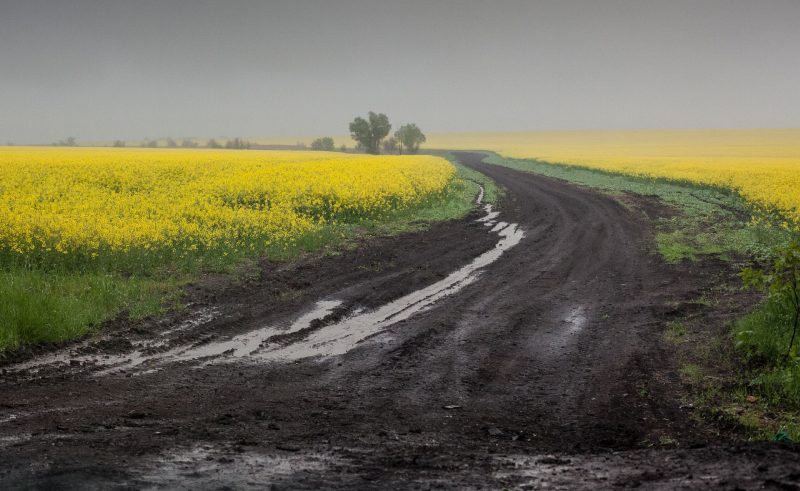
    An unpaved road to Lysychansk, Lugansk, March 2015. (Rosa Luxemburg-Stiftung, Flickr, CC BY 2.0)

    Ukraine is a word meaning borderlands, essentially the borderlands between Russia and the territories to the West that were sometimes part of Poland, or Lithuania, or Habsburg lands.  As a part of the U.S.S.R., Ukraine was expanded to include large swaths of both.  History had created very contrasting identities on the two extremities, with the result that the independent nation of Ukraine, which came into existence only in 1991, was deeply divided from the start.  And from the start, Washington strategies, in cahoots with a large, hyperactive anti-communist anti-Russian diaspora in the U.S. and Canada, contrived to use the bitterness of Ukraine’s divisions to weaken first the U.S.S.R. and then Russia.  Billions of dollars were invested in order to “strengthen democracy” – meaning the pro-Western west of Ukraine against its semi-Russian east.

    The 2014 U.S.-backed coup that overthrew President Viktor Yukanovych, solidly supported by the east of the country, brought to power pro-West forces determined to bring Ukraine into NATO, whose designation of Russia as the prime enemy had become ever more blatant. This caused the prospect of an eventual NATO capture of Russia’s major naval base at Sebastopol, on the Crimean peninsula.

    Since the Crimean population had never wanted to be part of Ukraine, the peril was averted by organizing a referendum in which an overwhelming majority of Crimeans voted to return to Russia, from which they had been severed by an autocratic Khrushchev ruling in 1954.  Western propagandists relentlessly denounced this act of self-determination as a “Russian invasion” foreshadowing a program of Russian military conquest of its Western neighbours – a fantasy supported by neither facts nor motivation.

    Appalled by the coup overthrowing the president they had voted for, by nationalists threatening to outlaw the Russian language they spoke, the people of the eastern provinces of Donetsk and Lugansk declared their independence.

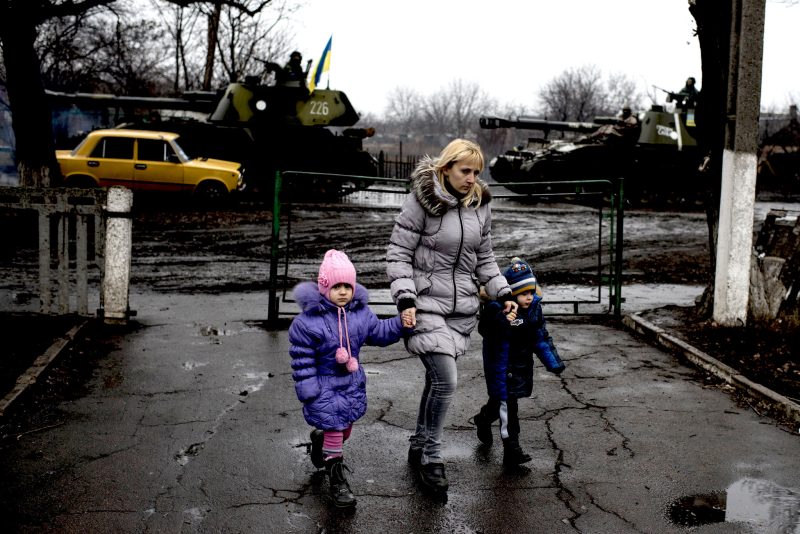
    March 2015: Civilians pass by as OSCE monitors the movement of heavy weaponry in eastern Ukraine. (OSCE, CC BY-NC-ND 2.0)

    Russia did not support this move but instead supported the Minsk agreement, signed in February 2015 and endorsed by a UN Security Council resolution. The gist of the accord was to preserve the territorial integrity of Ukraine by a federalization process that would return the breakaway republics in return for their local autonomy.

    The Minsk agreement set out a few steps to end the internal Ukrainian crisis. First, Ukraine was supposed to immediately adopt a law granting self-government to eastern regions (in March 2015). Next, Kyiv would negotiate with eastern territories over guidelines for local elections to be held that year under OSCE supervision.  Then Kyiv would implement a constitutional reform guaranteeing eastern rights. After the elections, Kyiv would take full control of Donetsk and Lugansk, including the border with Russia.  A general amnesty would cover soldiers on both sides.

    However, although it signed the agreement, Kyiv has never implemented any of these points and refuses to negotiate with the eastern rebels.  Under the so-called Normandy agreement, France and Germany were expected to put pressure on Kyiv to accept this peaceful settlement, but nothing happened. Instead, the West has accused Russia of failing to implement the agreement, which makes no sense inasmuch as the obligations to implement fall on Kyiv, not on Moscow.  Kyiv officials regularly reiterate their refusal to negotiate with the rebels, while demanding more and more weaponry from NATO powers in order to deal with the problem in their own way.

    Meanwhile, major parties in the Russian Duma and public opinion have long expressed concern for the Russian-speaking population of the eastern provinces, suffering from privations and military attack from the central government for eight years. This concern is naturally interpreted in the West as a remake of Hitler’s drive to conquest neighbouring countries.  However, as usual, the inevitable Hitler analogy is baseless. For one thing, Russia is too large to need to conquer Lebensraum.

    You Want an Enemy?  Now You’ve Got One

    Germany has found the perfect formula for Western relations with Russia: Are you or are you not a “Putinversteher,” a “Putin understander?” By Putin, they mean Russia, since the standard Western propaganda ploy is to personify the targeted country with the name of its president, Vladimir Putin, necessarily a dictatorial autocrat.   If you “understand” Putin or Russia, then you are under deep suspicion of disloyalty to the West.  So, all together now, let us make sure that we DO NOT UNDERSTAND Russia!

    Image Credit: metro.co.uk

    Russian leaders claim to feel threatened by members of a huge hostile alliance, holding regular military manoeuvers on their doorstep?  They feel uneasy about nuclear missiles aimed at their territory from nearby NATO member states?  Why, that’s just paranoia, or a sign of sly, aggressive intentions.  There is nothing to understand.

    So, the West has treated Russia like a baited bear.  And what it’s getting is a nuclear-armed, militarily powerful adversary nation led by people vastly more thoughtful and intelligent than the mediocre politicians in office in Washington, London and a few other places.

    U.S. President Joe Biden and his Deep State never wanted a peaceful solution in Ukraine, because troubled Ukraine acts as a permanent barrier between Russia and Western Europe, ensuring U.S. control over the latter.  They have spent years treating Russia as an adversary, and Russia is now drawing the inevitable conclusion that the West will accept it only as an adversary.  The patience is at an end. And this is a game-changer.

    First reaction: the West will punish the bear with sanctions!  Germany is stopping certification of the Nordstream 2 natural gas pipeline.  Germany thus refuses to buy the Russian gas it needs in order to make sure Russia won’t be able to cut off the gas it needs some time in the future.  Now that’s a clever trick, isn’t it!  And meanwhile, with a growing gas shortage and rising prices, Russia will have no trouble selling its gas somewhere else in Asia.

    When “our values” include refusal to understand, there is no limit to how much we can fail to understand.

    To be continued.


    Feature Image: nato.int

  • Vietnam and Russia Commit to Engagements across Domains

    Vietnam and Russia Commit to Engagements across Domains

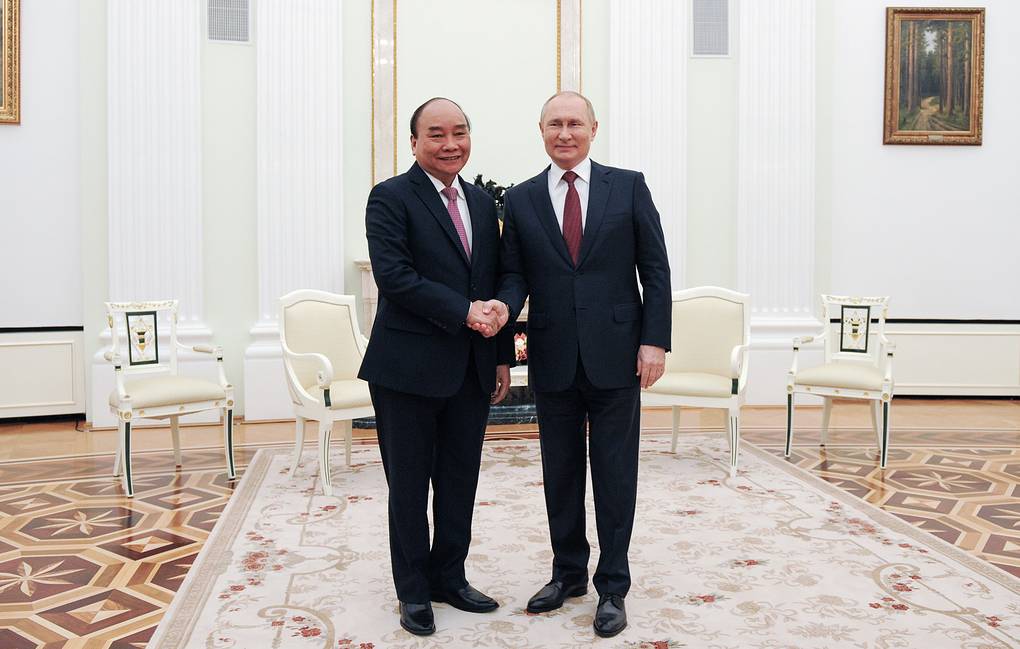
    Vietnamese President Nguyen Xuan Phuc has completed a “very successful and meaningful” visit to Russia with both sides making commitments to reinforce the comprehensive strategic partnership that spans multifaceted engagements across domains. Vietnam figures prominently in the Russian foreign policy and their bonhomie is best demonstrated by the fact that President Vladimir Putin has visited the country five times, a number more than any other country.

    Russian President Vladimir Putin and President of Vietnam Nguyen Xuan Phuc made a statement in the wake of their talks in Moscow – “The relations of comprehensive strategic partnership between the Russian Federation and the Socialist Republic of Vietnam are based upon years-long traditions of friendship and mutually beneficial cooperation, laid down by the previous generations. They have been tested by time, they are not affected by conjuncture oscillations, and serve as an example of mutually respectful cooperation that corresponds to the basic interests of the two countries”

    President Nguyen Xuan Phuc’s visit to Russia merits attention from at least five perspectives. First at the politico-diplomatic levels: both sides have a common understanding of international issues; they endorse a multipolar world order; guided by the principles of resolving major conflicts in the world through diplomacy based on respect for international law. Moscow also acknowledges the increasing role of the ASEAN and Vietnam as important Member State. Russia has also agreed to “explore promising areas of cooperation” within the framework of the ASEAN Outlook for Indo-Pacific.

    Second, the Vietnam-Russia bilateral trade has made significant strides. Their bilateral trade reached US$4.05 billion in the first ten months of 2020 and Russia ranked 24 among 129 countries and territories investing in Vietnam. Russia plans to increase its offshore energy business in the country and the joint statement notes that “creation of favourable conditions for the expansion of activities of Russian and Vietnamese oil and gas companies in the territories of the two states and the implementation of joint projects in third countries in accordance with international law, including the 1982 UN Convention on the Law of the Sea, and the national legislation of Russia and Vietnam”;  however, it is important to mention that there are frequent standoffs. For instance, there was a major standoff in the Vanguard Bank involving 50 Vietnamese and 40 Chinese vessels over the operations of the drilling rig Hakuryu 5 operated by Russia’s Rosneft in Vietnam’s oil and gas Block 06-01.

    Third, their bilateral defence and security cooperation is well established and in September this year, Russian Foreign Minister Sergey Lavrov and his Vietnamese counterpart Bui Thanh Son announced plans to ramp up military-technical cooperation including setting up a centre for nuclear science and technologies in Vietnam. Vietnamese military has acquired Russian origin naval and air platforms (Kilo Class submarines and SU-30MKK fighter jets) and the bilateral trade in arms increased from US$ 293 million (1993-99) to US$ 6514 million (1999-2018) and constituted nearly 84 per cent of all its military purchases.

    Fourth is about the COVID-19 pandemic that continues to rage in the world and its new variant Omicron bringing new fears. Vietnam has been impacted severely by the pandemic and has recently begun to open up. The US and China have provided it with vaccines. During President of Vietnam Nguyen Xuan Phuc visit to Russia, the  Russian Direct Investment Fund has signed an agreement for the “expansion of cooperation with partners in Vietnam aimed at the production of the Russian Sputnik V vaccine” involving the Russian pharmaceutical company Binnopharm Group and Vietnam’s T&T GROUP. RDIF, leading to creating a full-cycle production of Sputnik V in Vietnam.

    Fifth is the US-led Indo Pacific initiatives that clearly target China.  It merits mention that the joint statement issued at the end of the Summit notes that Russia and Vietnam “do not enter alliances and do not sign agreements with third countries to carry out actions that harm each other’s independence, sovereignty, territorial integrity and basic interests,” and that “the development of Russian-Vietnamese relations is not aimed against any third side.”

    Vietnam has no plans to align with the US’ Indo Pacific strategy or any US initiatives that target China even though it has disputes with China in the South China Sea. Russia has stayed clear of the South China Sea disputes and has not supported China. It is conscious that it enjoys cordial relations with the majority of the ASEAN Member States.

    Meanwhile, the Russian Navy recently conducted joint exercises with the ASEAN navies including the Vietnamese Navy. The Russian ambassador to the ASEAN has stated that the exercises were about “peace, stability and prosperity in the region,” and the Indonesian first fleet commander said the exercise “enhance the interoperability and understanding between the Russian and ASEAN militaries”. Interestingly, these exercises are also being viewed as signalling ASEAN’s principle of non-alignment, particularly in current times of high regional tensions given that the ASEAN navies held similar exercises with the PLA Navy. The ASEAN Member States routinely conduct bilateral military-naval exercises with the navies of the US, Japan, Australia, India, France and the UK.

    Vietnam has adopted a pragmatic foreign policy and successive leadership have successfully managed tensions in the South China Sea. Likewise, Russia has major stakes in augmenting regional stability which provides for crucial convergences between Hanoi and Moscow.


    Feature Image Credit: tass.com

  • The Fall of Kabul and dealing with the Taliban 2.0

    The Fall of Kabul and dealing with the Taliban 2.0

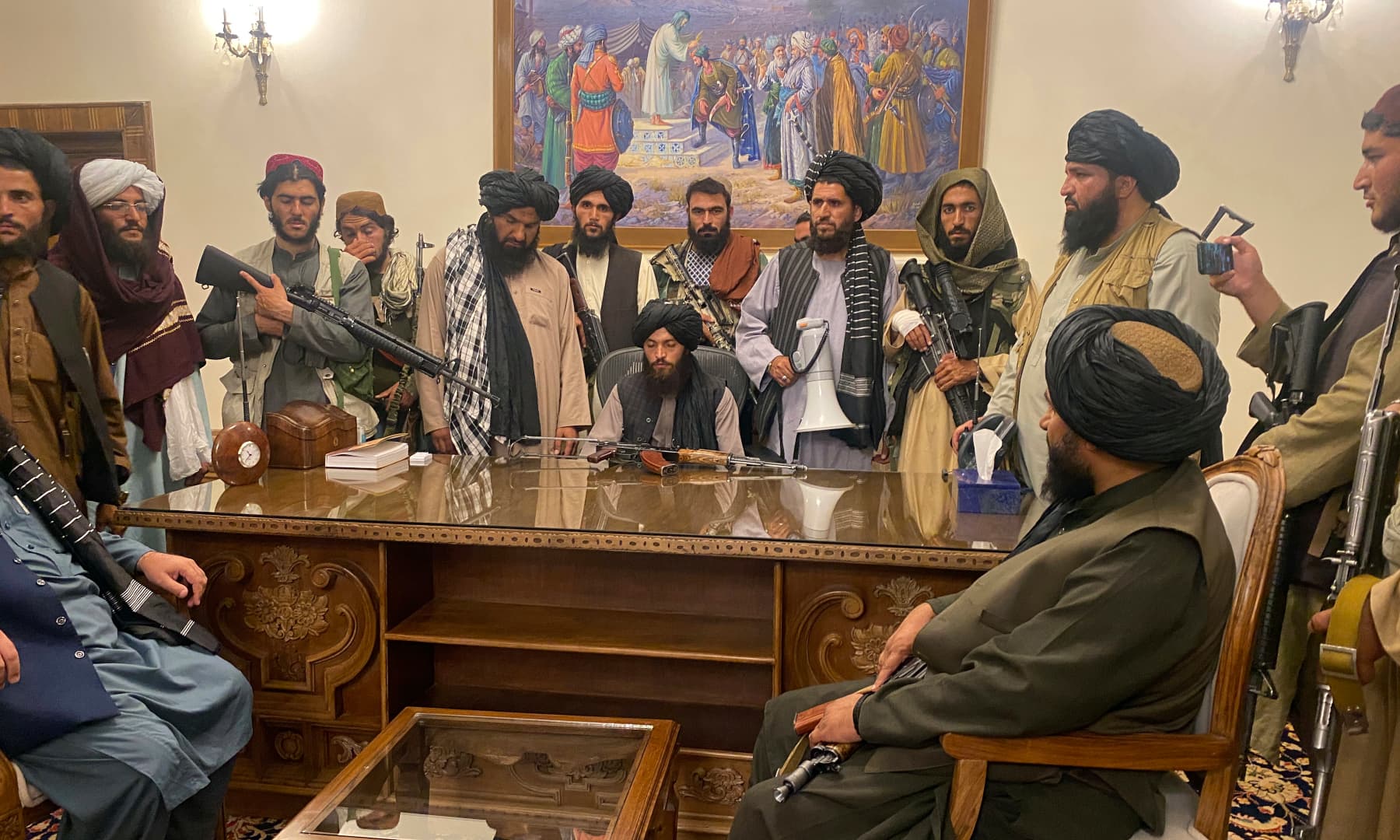
    The debacle of the democratic apparatus in Afghanistan was inevitable. After pumping billions in aid and significant bloodshed, the US government ended its longest war in defeat, the war in Afghanistan under the euphemism of ‘Global War on Terror’. Right after occupying the White House, the Biden administration has followed the path of its predecessors and commanded the complete withdrawal of troops from Afghanistan. The 2020 – Doha peace agreement between the US government and the Taliban brought a scant number of outcomes. Even during the presence of international forces in Afghanistan, the Taliban leaders disrespected the peace agreement and violated significant features of the agreement – that is a ceasefire. Following the agreement, over 5000 prisoners belonging to the separatist groups- were released by the Afghan government, under pressure from the US. Quite naturally, these prisoners were back with their militant outfits, thus strengthening the Taliban’s fighting capability.

    As of now, India has not taken any part in the peace negotiations with the Taliban. One of the major reasons is in the past the Indian government has never recognised the Taliban as a legitimate actor and vouched for a peace negotiation that should be Afghan-led, Afghan controlled and Afghan-owned. Currently, there are speculations about the likely power structure and composition of the government in Afghanistan, but it is quite clear the Taliban will govern the country by Sharia law. At this time of fast transition, the countries in South Asia are seeking to gain diplomatic leverage in the situation.

    India has a huge stake in Afghanistan’s reconstruction. In 2016 Indian Prime Minister and Afghan President Ashraf Ghani inaugurated the Salma dam project in Afghanistan. This 200 million dollar project is part of the larger developmental approach of the Indian government to Afghanistan. But recently, the equipment of the Salma dam was captured by the Taliban. In this scenario, it is unlikely that the Dam project will receive further Indian logistical support in future. Similarly, uncertainty beleaguers the Chabahar Project. India was one of the largest bilateral donors to Afghanistan during the war on terror. It ranges from infrastructure building to the promotion of democracy and small development projects. Almost $3 billion has been invested in and on Afghanistan in capacity building, education, infrastructure and security counts. This developmental commitment has made India the most dependable country and strategic partner for Afghanistan so far. However, now that the Taliban is in full control, the Indian government needs to find a diplomatic solution on how to go ahead with the various projects and commitments in Afghanistan.

    Except for Panjshir province, the entire country is under Taliban control. The president, head of the state, has left the country. Led by interim President Amrullah Saleh and Ahamad Masoud, the Resistance Force from Panjshir Valley is fiercely fighting against the Taliban. Under such circumstances, the conservative approach of the Indian government, as it has begun to talk to the Taliban, could ruin the decades’ long reputation and developmental efforts in Afghanistan. India has legitimate concerns in Afghanistan and should protect its interests carefully. The absence of the US forces and elected Afghan government makes the task very difficult for the government of India. In the past, the Indian government cooperated with the elected Afghan government based on their shared interests and values of democracy, freedom, rule of law and respect for human rights. But the past approach may not work anymore under the Taliban leadership. In the past, the Ministry of External Affairs stated that it is in touch with ‘various stakeholders’ in Afghanistan and other regional countries. Indian officials believe that a ‘double’ peace’ i.e. one within Afghanistan and around the country is necessary for the region. To ensure safety for the Indians living in Afghanistan, the government has already evacuated all Indians employed by the Indian embassy. India has also started emergency E-visa facilities for Afghan citizens. With regard to the diplomatic relationship with the Taliban, the government is following a ‘wait and watch policy with its extended neighbour. The Taliban leadership has announced that they would like to have good relations with the Indian government and access to the Indian market through Pakistan. The Taliban also wants these two countries to resolve their issues as its interests are linked to the two countries. The government of India is yet to respond. The Afghan media personnel, translators, performance artists, civilians are being hunted down by the Taliban soldiers. In this scenario, India will carefully assess the situation and the reliability of the Taliban to make its further move.

    While India is still on the horns of a dilemma over the direct dialogue with the Taliban, India’s arch-rival Pakistan is busy re-establishing its hold and is trying to isolate India diplomatically from the region. Pakistan was one of the first countries to recognise the Taliban as a legitimate actor in the 90s. Last year, the government of Pakistan welcomed an Afghan Taliban delegation led by Mullah Abdul Ghani Baradar. In the meeting, Pakistan showed their support for peace and blamed India as a spoiler of peace in the war-torn country. But reports suggest otherwise. According to the US Defense Intelligence Agency, Pakistan harbours Taliban leaders along with other insurgent groups such as the Haqqani network, Jaish-e-Mohammed and Laskar-e-Taiba. Such groups have the potential to disrupt the security and stability in South Asia. The report also says that the strategic objective of the Pakistan government is to counter the Indian influence in Afghanistan. In a recent interview, Pakistan foreign affairs minister Shah Mahmood Qureshi said that the violence in Afghanistan led to a refugee exodus to Pakistan but they cannot take more refugees. Last year, the High Council for National Reconciliation leader Abdullah Abdullah said that Pakistan holds the key role in the Afghan peace process and India should keep their profile low in the Afghan situation.

    As the Taliban emerges in its second avatar while reframing its extremist Islamic ideology, China is poised to become the critical player in the region.  Under a slew of conditions negotiated with the Taliban, China will enhance its role through rapid investments and enabling Afghanistan to integrate into its Belt and Road Initiative. An unstable, dry and war-torn Afghanistan doesn’t offer any attractive economic proposition at the moment. As the economic challenges loom on the Taliban government, it can’t simply sustain on drugs. The Taliban have to rely on China, Pakistan and some Central Asian republics to rebuild its economy. Afghanistan’s unexploited mineral wealth, worth a trillion or more, is a great opportunity for the Taliban to leverage economic gains by engaging China, Iran, Russia, and Turkey. An alliance of China, Pakistan, Iran or Turkey may lead to the marginalisation of India’s role and effectiveness in Afghanistan.

    Whether India will recognize the Taliban is not clear yet but India can’t simply meditate either. Under India’s presidency, the UN Security Council passed Resolution 2593 on Afghanistan. Chairing a session India’s Foreign Secretary Harsh V Shringla has clarified that India won’t tolerate if Afghan territory turns into a sanctuary of terrorists and threat for the neighbouring states. Apart from human rights, Shringla emphasized Women’s participation in society.

    India along with its all partners should advocate for strict observation of the Taliban led governance. Having invested over $3 billion over the last two decades in the reconstruction of Afghanistan, India’s considerable contribution cannot be ignored. The recent meeting between India’s envoy Deepak Mittal and the Taliban’s foreign minister-designate Stanekzai at the Taliban’s request signals a possibility for a changed approach and environment from that of the Taliban 1.0. India’s immediate priority should be the safe evacuation of the Indian origin people and stranded Afghans.


    Image Credit: www.dawn.com

  • Calling Putin a ‘killer’ with ‘no soul’ is not exactly diplomatic finesse

    Calling Putin a ‘killer’ with ‘no soul’ is not exactly diplomatic finesse

    Category: External Article – ‘Responsible Statecraft’

    Title: Calling Putin “a killer” is not exactly diplomatic finesse

    Author: Anatol Lieven

    The Biden administration has created an completely unnecessary confrontation with Russia at a time when reasonable working relations with Moscow are extremely important for achieving two immediate and key administration goals: rejoining the nuclear agreement with Iran, and a peace settlement in Afghanistan facilitating U.S. military withdrawal from that country and an end to America’s longest war.


    Read More

  • What Putin nemesis Alexei Navalny is, and what he is not

    What Putin nemesis Alexei Navalny is, and what he is not

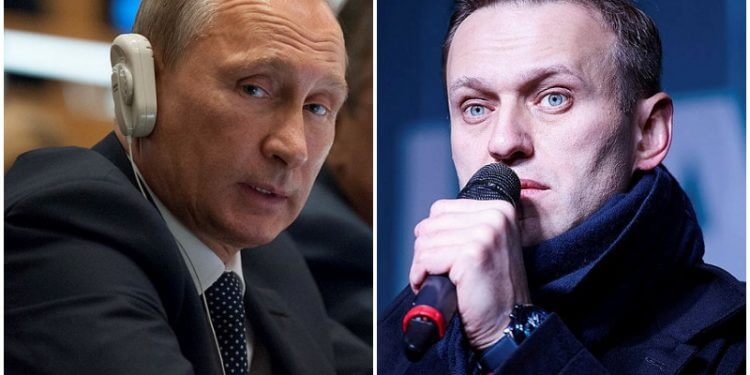
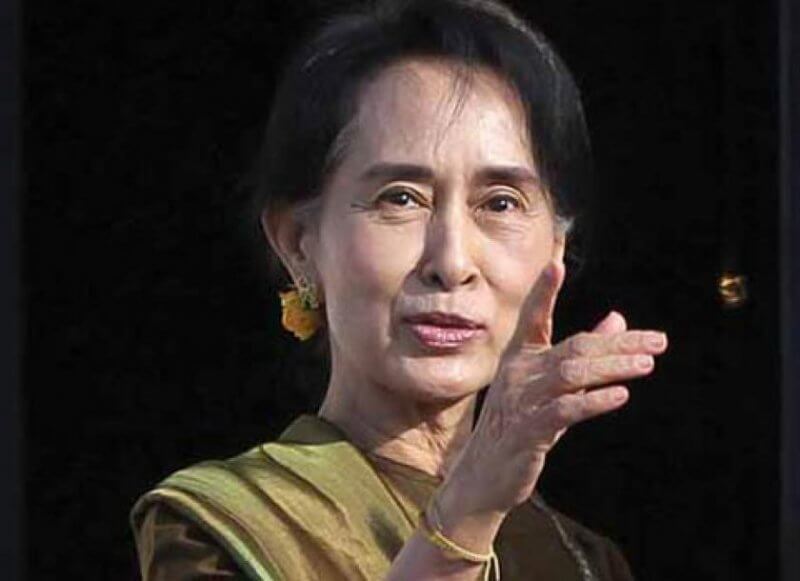
    Anatol Lieven highlights America’s blundering tendency to view world personalities in typically American lens, ignoring the realities of them being citizens of their countries and focusing on their national interests . He uses the examples of Russia’s Navalny and Myanmar’s Aung San Suu Kyi to make his point emphatically. His analysis is relevant to other countries as well. 

    This article was published earlier in Responsible Statecraft

    It is very human and natural to admire courage and resolution — these are qualities that Russian opposition leader Alexei Navalny possesses to a quite remarkable degree. It is also natural to sympathize with suffering — and Navalny has suffered and very nearly died for his beliefs and goals. And of course it is natural to feel disgust with the increasingly criminal behavior of the Putin administration in Russia.

    However, admiration, sympathy and disgust are emotions, not arguments or analysis, and should be employed with great caution in the formulation of state policy.

    In his confirmation hearings, now-Secretary of State Anthony Blinken pledged Biden administration support for Navalny and called him “a voice for millions and millions of Russians.” Statements by the U.S. embassy in Moscow on the Navalny movement have come very close to calling for the end of the present Russian government.

    Recent weeks have seen a tremendous outpouring of American sympathy for Navalny and his movement against the Putin administration. In his confirmation hearings, now-Secretary of State Anthony Blinken pledged Biden administration support for Navalny and called him “a voice for millions and millions of Russians.” Statements by the U.S. embassy in Moscow on the Navalny movement have come very close to calling for the end of the present Russian government. The semi-official American Radio Free Europe/Radio Liberty is openly and passionately supportive of Navalny’s movement. Richard Haas, President of the Council on Foreign Relations, proposed that Navalny be awarded the Nobel Peace Prize.

    Such overt U.S. support is not wise. In the first place, it may actually hurt the cause of progressive reform in Russia. The Russian government, like those of Iran and China, has relentlessly propagated the idea that the opposition is being backed if not bankrolled by Washington in order to weaken their countries; and indeed, Russian liberals have done themselves terrible damage by allowing themselves to be cast as representatives of the West, not of the Russian people.

    The second, very familiar problem is the hypocrisy involved. In the latest volume of President Obama’s memoirs, “A Promised Land,” he describes how Hillary Clinton — who relentlessly presented herself in public as an advocate of spreading democracy — argued that Washington should support Egyptian President Hosni Mubarak’s brutal 2011 crackdown on Arab Spring opposition protests on the grounds that he was a U.S. ally and his fall would lead to chaos and Islamist revolution. In her early public statements, as well, she warned against hastening Mubarak’s exit.

    In proposing Navalny for the Nobel Peace Prize, Haas seems to have forgotten the last time the honor was given to an opposition politician.

    An even greater problem presents itself when one looks at the actual politics of some of the opposition figures who draw such waves of American and Western enthusiasm. In proposing Navalny for the Nobel Peace Prize, Haas seems to have forgotten the last time the honor was given to an opposition politician. The award to Aung San Suu Kyi in 1991 was supposed to be for “her non-violent struggle for democracy and human rights… one of the most extraordinary examples of civil courage in Asia in recent decades.”

    After Suu Kyi joined the government in Myanmar she’s been damned in the West for her failure to prevent or condemn the savage state persecution of Myanmar’s Rohingya minority, and most of her human rights awards (though not the Nobel prize itself) have been revoked.

    After Suu Kyi joined the government in Myanmar she’s been damned in the West for her failure to prevent or condemn the savage state persecution of Myanmar’s Rohingya minority, and most of her human rights awards (though not the Nobel prize itself) have been revoked. What her previous Western admirers are not doing — what they almost never do — is to ask themselves why they so completely misunderstood her before.

    But she is a Burmese politician, not a Western democratic leader, and in building her up as a liberal heroine, the Western media and activists willfully ignored not just the political realities of Myanmar, but her own Burmese nationalist antecedents.  

    (Just in the last 48 hours, Suu Kyi has been detained in an apparent military takeover of her democratically elected government and Biden is predictably mulling over his options for reviewing sanctions and taking “appropriate action.”)

    Like Navalny, Suu Kyi is indeed an exceptionally brave and determined human being and in her way a fine leader; just as Navalny might make a fine Russian president. But she is a Burmese politician, not a Western democratic leader, and in building her up as a liberal heroine, the Western media and activists willfully ignored not just the political realities of Myanmar, but her own Burmese nationalist antecedents.

    There are two factors at work here. The first is a basic human one. Courage, like hard work and self-sacrifice, is a quality that it is humanly impossible not to admire, but the possession of it says absolutely nothing at all about the goals to which they are put. All the leaders of the ghastly totalitarian revolutions of the 20th century were exceptionally brave and determined men.

    The second factor relates to some enduring and seemingly incorrigible flaws in most Western reporting and analysis. One of them is the tendency to personalize issues, whereby “Putin” is used as a synonym for the whole Russian state, and “Navalny” is now being presented as a synonym for the entire, enormously disparate Russian opposition. The merest glance at the groups represented at the pro-Navalny demonstrations reveals that together with genuine liberal democrats, there are also numerous Communists and extreme nationalists whose anti-Western positions are much more extreme and reckless than those of Putin himself. As Aleksandr Baunov of the Carnegie Moscow Centre has written:

    Saturday’s protests were undeniably anti-regime, anti-elite and anti-corruption but not necessarily liberal, pro-Western and pro-democracy. It’s not surprising that such protests frighten not only the authorities, but also successful members of society: even those who don’t consider themselves supporters of the regime.

    In their blind demonization of Putin, and consequent sanctification of Navalny, Western commentators seem to be implicitly assuming that should Navalny win power (which he almost certainly will not), Russia’s foreign policy would change radically in a pro-Western direction. This is nonsense. Navalny’s supporters are backing him out of (entirely justified) fury at Russian state corruption, lawlessness, and economic failure, not to change foreign policy. Every independent opinion poll has suggested that Putin’s foreign and security policies have enjoyed overwhelming public support; and above all, there is very little in Navalny’s own record to suggest that he would change them.

    As a 2013 essay by Robert Coalson in The Atlantic documented, Navalny supported the Russian war with Georgia in 2008. He has expressed strongly ethno-nationalist attitudes towards the Caucasian minorities in Russia, and previously made opposition to illegal immigration a key part of his platform. In October 2014 he suggested to a reporter that if he became president he would not return Crimea, which was annexed by Russia earlier that year, to Ukraine (though he also said in that same interview that, “It’s not in the interests of Russians to seize neighboring republics, it’s in their interests to fight corruption, alcoholism and so on — to solve internal problems.”

    Rather like Donald Trump concerning American interventionism, Navalny has strongly condemned Russian military intervention in the Middle East on the grounds of cost and irrelevance to real Russian interests; but (as with Trump), that does not necessarily say much about what he would actually do if in power. Apart from anything else, Russia, like the U.S., has a foreign and security establishment “Blob” with firmly established and deeply held collective views on Russia’s vital interests.

    It is to remind Americans that he is a Russian politician, not an American one; that he will respond to Russian realities, not Washington fantasies; and that in the end, U.S. administrations will have to deal with whatever government is in power in Moscow.

    To recall this is not to condemn Navalny. It is to remind Americans that he is a Russian politician, not an American one; that he will respond to Russian realities, not Washington fantasies; and that in the end, U.S. administrations will have to deal with whatever government is in power in Moscow. Russian governments will defend Russian interests, along lines that are mostly quite predictable if one knows Russian history and culture. The sooner we realize this, and stop setting up plaster saints in the hope that they will perform miracles, the better for U.S. foreign policy overall.


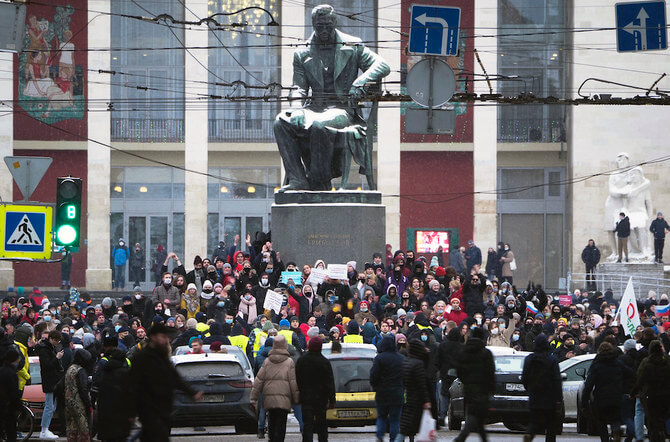
    Feature Image – Protesters gather near a monument of Russian playwright Alexander Griboyedov during a protest against the jailing of opposition leader Alexei Navalny in St. Petersburg, Russia, Sunday, Jan. 31, 2021. www.arabnews.com
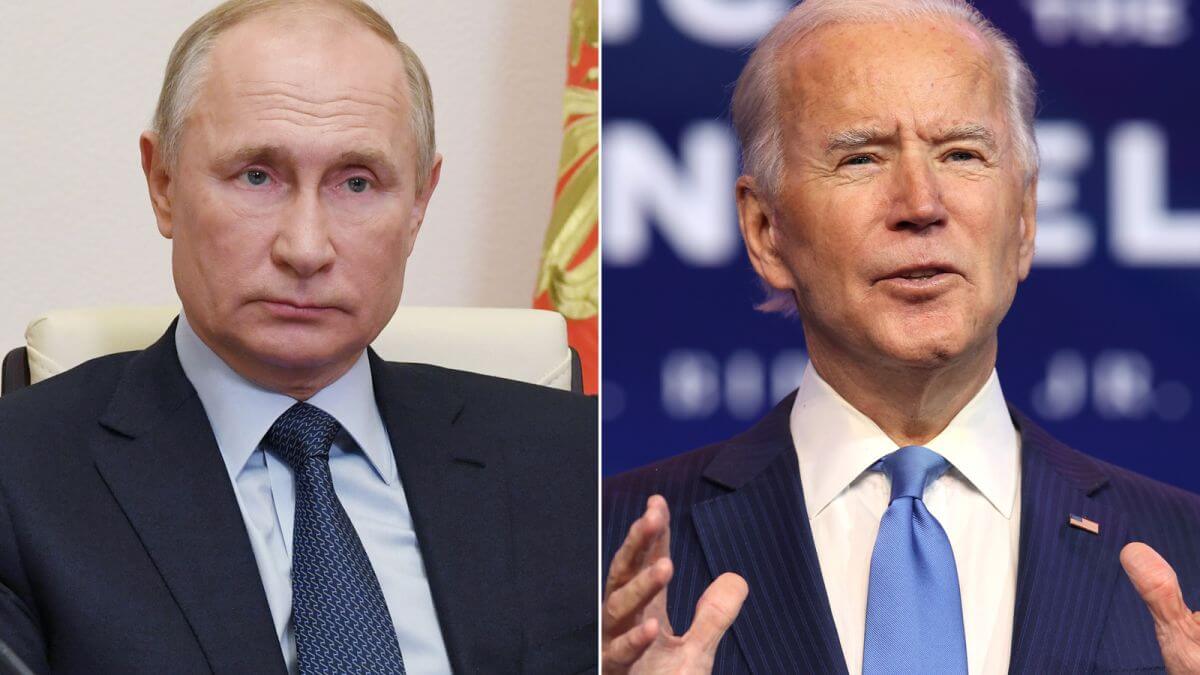
    Image – 
    Navalny and Putin: www.hilltimes.com
    Image – Aung San Suu Kyi: www.mmtimes.com

  • US strategists lost empathy, along with their wars

    US strategists lost empathy, along with their wars

    This article was published earlier in Responsible Statecraft.

    The great realist thinker Hans Morgenthau stated that a fundamental ethical duty of the statesman is the cultivation of empathy: the ability through study to see the world through the eyes of rival state elites. Empathy in this sense is not identical with sympathy. Thus, George Kennan’s deep understanding of Stalinism led to an absolute hostility to that system.

    This kind of empathy has very valuable consequences for foreign policy. It makes for an accurate assessment of another state establishment’s goals based on its own thoughts, rather than a picture of those goals generated by one’s own fears and hopes; above all, it permits one to identify the difference between the vital and secondary interests of a rival country as that country’s rulers see them.

    A vital interest is one on which a state will not compromise unless faced with irresistible military or economic pressure. Otherwise, it will resist to the very limit of its ability, including, if necessary, by war. A statesman who sets out to challenge another state’s vital interests must therefore be sure not only that his or her country possesses this overwhelming power, but that it is prepared actually to use it.

    Geopolitical power is really, in the end, local and relative: it is the power that a state is willing to bring to bear in a particular place or on a particular issue relative to the power that a rival state will bring to bear. Furthermore, the degree of the willingness to mobilize and use power and to make sacrifices depends ultimately on whether the issue concerned is believed to be a vital national interest. If it is only a secondary interest, then it is one on which the statesman should be prepared to make concessions and seek compromise.

    The first step in this process of empathy is simply to listen to what the other side says. This however is not in itself enough, for they may of course be exaggerating an issue’s importance as a bluff or a negotiating gambit. It is therefore also necessary to study in depth the history, politics and culture of the country concerned. Thus, despite what Chinese officials say, we might doubt that they would actually go to war if Taiwan declares independence. A study of modern Chinese history, and of the importance of nationalism to the legitimacy of the Chinese state, makes clear that they are not bluffing.

    What makes this search for understanding easier is that foreign and security establishments generally hold historically-derived doctrines about their country’s vital interests that are relatively easy to identify given study and an open mind.

    The greatest enemy of an open mind and a capacity for empathy is self-righteousness. One aspect of self-righteousness is a confusion between basic moral commitments and the inevitable moral compromises forced upon state representatives trying to defend their country’s interests in a morally flawed and chaotic world.

    The morality of Western policymakers lies in their commitment to Western democracy, and their renunciation of absolutely immoral means: notably the mass murder of civilians. This commitment however, while it may restrain Western democracies from the most evil actions, does not confer some kind of innate innocence on their conduct of policy.

    This is especially true of the Middle East where I have worked for a number of years. Given the nature of this region, any outside state, democratic or otherwise, seeking to play an important role there will inevitably be compelled to engage in certain immoral actions — including alliances with corrupt and murderous dictatorships. What Western policymakers can, however, be blamed for is the pretense that because our systems are democratic, this somehow in itself makes these immoral actions better than those same actions when engaged in by other states.

    The least excusable Western failure of empathy since the end of the Cold War has been with regard to Russia because — by contrast to some Middle East countries, let alone North Korea — the attitudes and beliefs of the Russian establishment are not hard to understand, at least for anyone with a minimal grasp of Russian history and culture. Moreover, the realism of Russian policymakers fits the mindset of many American security officials.

    The vital interests of Russia are adhered to by the Russian establishment as a whole. They consist chiefly of a belief that Russia must be one pole of a multipolar world — not a superpower, but a great power with real international influence. Also: that Russia must retain predominant influence on the territory of the former Soviet Union, that any rival alliance must be excluded, and that international order depends on the preservation of existing states. In addition, as with any political system, there is a commitment to the existing Russian political order and a determination that any change in it must not be directed from outside.

    There are obvious tensions between some of these Russian interests and secondary U.S. interests, but on one issue — the danger from Sunni Islamist extremism and terrorism — a vital interest of Russia is completely identical with our own. Because of this danger, U.S. administrations, like the Russians, have often supported existing authoritarian Muslim states for fear that their overthrow would lead to chaos and the triumph of Islamist extremism.

    In Syria, Russia followed the policy of the U.S. in Algeria 20 years earlier — and indeed in its support for General Abdel Fattah al-Sisi in Egypt today. Russian fears of an ISIS takeover of Syria if the state collapsed were echoed in briefings to President Obama by the CIA. Yet a Western narrative has emerged of Russia engaging in wicked support for “brutal dictatorships” in the Middle East, and that this policy in turn is linked not to fear of Islamist extremism, but implacable anti-Americanism and reckless geopolitical ambition.

    Straightforward Western prejudices (now dignified with the abominable euphemism of “narratives”) are part of the reason for these false perceptions derived from the Cold War. The collapse of Communism, however, also led to a growth in Western hubris that led Western policymakers to fail either to listen to their Russian colleagues when they stated Russia’s vital interests, or to study Russia in sufficient depth to understand that they were not bluffing but really meant what they said. Instead, you had the tragicomic picture of American officials lecturing Russian officials on the “real” interests of Russia.

    As a result, U.S. and British officials ignored Russian warnings that if Washington persisted in trying to extend NATO membership to Georgia and Ukraine, Russia would fight. And when Russia did fight — albeit in a very limited way — this was taken as a sign not of a Western failure to listen, but of Russian “madness,” aggression, and evil. Though if one thinks of the Monroe Doctrine, Russian concerns in this regard should hardly be incomprehensible to an American official. It should also have been easy enough to accept the Russian point that this was a vital interest for the sake of which Moscow was prepared to make very important concessions to Washington on other issues.

    Instead, the United States establishment embroiled itself in confrontations with Russia, only to recognize at the last moment in Georgia in 2008 and Ukraine in 2014 that these countries were not in fact American vital interests, and that the U.S. was not prepared to fight to defend them. An additional danger therefore in refusing to study other countries’ vital interests is that it makes it more difficult to think seriously about your own. We had better hope that in dealing with the vastly more formidable challenge of China our policy elites will engage in real study, eschew self-righteousness, and identify and not attack the vital interests of China, as long as Beijing does not seek to attack our own.

    This article is republished with the permission of the author and Quincy Institute.
    Image credit: Pexels
     
  • International Institutions in post-Covid Era

    International Institutions in post-Covid Era

    Pandemic exposes inadequacies in the 21st century world

    At the Munich Security Conference 2020, the Indian External Affairs Minister stated that multilateralism has weakened, and attributed it to the inadequacy of international institutions, established seventy-five years ago, to cope with the challenges of 21st century. This was just before the coronavirus became a global pandemic. Today, among other aspects of society that are challenged by the pandemic, its impact on the world has exposed the inability of international organizations to develop a globally cooperative strategy. The September edition of the UNSC meeting held regarding the coronavirus pandemic saw the United States, China, and Russia fight bitterly over responsibility and responsiveness to the pandemic. Instead of building constructive solutions to face the challenge each country focused on accusing others. Similarly, although the Covid-19 global response pledging event secured 7.4 billion euros, their origins (whether new or retargeting of approved grants), method of fund application, proposed call for global research sharing platforms are either ambiguous or not yet set up. Hence, although international organizations have promoted dialogue, the jury is still out on their efforts towards alleviating the crisis or cushioning its impact. The pandemic thus leads to questions about their effectiveness and what post-covid international institutions might look like.

    Given the manner in which various nation-states represent, contribute to, and run international organizations it is definitive that the nature of international institutions is susceptible to change.

    Institutionalism and International Organisations

    International Organisations such as the United Nations and its predecessor the League of Nations mark the variety of multilateralism brought to life based on the theory of institutionalism. Institutionalism originated from the thought that if humans are fundamentally good but act otherwise it is because of anarchy in the international system, and through institutions fostering international cooperation anarchy can be countered to promote the fundamental good in human nature. The final goal of institutionalism stood to promote supranational organizations. However, there have been drawbacks in bringing practicality to this theory. These institutions are built on belief (an individual external factor to the institution itself brought by participants) and power in international institutions is extended when states surrender part of their sovereignty. The changes and differences in individual beliefs cause significant changes in institutions in both the way they operate and the consequences of their operations. Given the manner in which various nation-states represent, contribute to, and run international organizations it is definitive that the nature of international institutions is susceptible to change. Hence, better international coordination and responses to the past crisis such as the 2008 financial crisis, controlling the Ebola breakout in West Africa were also a result of the leftist individual beliefs of participants. However, with global politics inclining towards the right, with waves of hyper-nationalism sweeping across nations, efforts towards multilateralism have taken a back seat. Stephen Walt maintained that the pandemic will reinforce nationalism as the world retreats from hyper-globalization to reduce future vulnerabilities and will create a world that is ‘less open, less prosperous, and less free’. The pandemic has put the world on a trajectory towards the right with politicians becoming more authoritative, and thus multilateralism will see significant changes in the post-covid era.

    Rise of narrow Nationalism and Right Wing Politics

    Despite the rise of right-wing politics globally, the benefits of multilateralism cannot be foregone. Multilateralism in international institutions in past crises followed a model wherein the United States took the lead across various organizations and coordinated the world towards a united response. Since such leadership has been replaced with great power politics, multilateralism has taken an operational role instead of a supervisory role. The main difference between the two roles is that the latter had better potential to progress as a supranational organization while the former traverses as a platform offering supporting services to different countries. Examples of this are efforts led by NATO to use their airlifting capabilities to move vital medical equipment and food supplies, and WHO’s initiative to share guidelines and important research to countries who then took individual decisions. In the current trajectory, these changes in institutional consequences can lead towards three possibilities in the future of multilateralism:

    At the risk of sounding highly pessimistic, the institutional belief in multilateralism is likely to see a steep decline and sovereignty surrendered to international organizations will erode. The role of the UN and its organs may change focus on global data collection, analysis, and politically motivated discussions from the current (weakening) narrative of progress, development, conflict prevention, and resolution.

    • As Robert Kaplan argues, Coronavirus has become the watershed movement segregating the upcoming era as Globalisation 2.0 with the rise of autocracies, social and class divides, and new emerging global divisions. This image of globalization 2.0 can be used to reflect on what the next era of multilateralism will be. In the continuing trajectory with no clear international leadership, international institutions would reduce to becoming a platform of dialogue in great power politics with the initiative and effectiveness of resolutions substantially watered down. At the risk of sounding highly pessimistic, the institutional belief in multilateralism is likely to see a steep decline and sovereignty surrendered to international organizations will erode. The role of the UN and its organs may change focus on global data collection, analysis, and politically motivated discussions from the current (weakening) narrative of progress, development, conflict prevention, and resolution. For instance, the pandemic-induced embargo on the movement of people would in turn catalyse the degeneration of organs such as the UNHCR as the dialogue focuses on data collection and blame allocation instead of refugee crisis management. The international political narrative will shift from globalism to regionalism for effective conflict resolution.


    • As US-China rivalry hampers effective policymaking, relatively smaller powers will lead the narrative in these institutions. The foundations for this possibility are already evident. The United Kingdom and other European countries have been increasingly calling for global summits to promote multilateralism. Their efforts can be theorized to be an enmeshment strategy similar to that used by small states in ASEAN. The objective of this strategy is to alleviate the high risks of major powers directly competing by creating interdependence (if not directly between the great powers) among the various actors in the system through increased multilateral participation to an extent that great powers are tied down in this system and their interests are intertwined such that conflict would become costly. Thus smaller powers prevent the complete breakdown of international organizations by continuing to promote dialogue and ensure the persistence of multilateralism, albeit weaker, but prevent the division into two great-power blocs as with the first scenario. This approach where smaller states remain neutral to great power influences would in turn result in the latter’s effort to win over small states characterized by the exploitation of the cold war by small states. Although the US has so far managed to step away from this, with the oncoming elections it is likely that a change in administration would enable the enmeshment strategy to prevent an extreme global division.


    • Taking an optimistic view, the pandemic may catalyse the trajectory towards Ikenberry’s Multilateralism 3.0 where power in the institutions is more reflective of present-day world powers. Given the shift in American foreign policy and lack of initiative, the pandemic could become an important shaper for other Asian powers to get higher representation to balance China’s rise. Although this demonstrates an idealistic situation far from the rightist trajectory, Ikenberry concedes to the fact that in the short-run countries will be nationalistic but in the long run, democracies will break out from the authoritarian, nationalistic regimes to promote a pragmatic and protective internationalism. Ikenberry makes this interpretation based on the enlightenment world leaders had following the destruction and suffering from the world wars. Hence, the pandemic marks the starting point for the butterfly effect which will lead to wartime-like geopolitics, followed by enlightenment to build stronger international institutions with representations reflective of the new world order and better capable of dealing with issues the current institutions struggle to resolve.

    Conclusion

    Although international cooperation would be the sensible means to navigate through the pandemic and other crisis induced by the pandemic, due to factors external to the institution, such as domestically controlled participant change – multilateralism will see considerable weakening. Among the three possibilities identified for the future of international institutions, only time can tell which path the world will take. However, a combination of the second possibility in the short run progressing to the third over the long run is the most optimistic option to work upon for a better pathway to navigate through this crisis.

    Image: Pixabay

  • The Geopolitics of Syria’s Reconstruction

    The Geopolitics of Syria’s Reconstruction

    Introduction

    Syria’s territories are controlled by a variety of actors – Al Assad’s regime (with Russia and Iran as its supporters); Kurdish dominated self-administration (with a small number of US troops supporting them); Turkey and its affiliated militias; and the Syrian Salvation Government affiliated to the Hay’at Tahrir al-Sham (HTS), a former al-Qaida offshoot.

    Fragmentation of the state’s territories, as the state lost control of its territories, resulted in the emergence of a network of localised war economies with numerous local and foreign actors being involved. War economies emerged in territories held by Assad’s regime as well as those under the control of various other opposition parties, characterised by an increase in smuggling of goods (among which essential goods, crude oil and arms were popular), extortion, rent seeking for essential services, and taxation of goods at checkpoints established by the warring parties, including local warlords, opposition armed groups or regime’s militias. The Syrian Arab army is also reported to have engaged in rent seeking behaviour through the establishment in recaptured territories (Hinnebusch, 2020).

    Another area of priority for armed opposition groups is the border crossings with Turkey whose access they have sought to control. The Ahrar-Al Sham group, established control over the Bab al-Hawa crossing between 2015-16, and earned around $5 million per month. Armed opposition groups have been involved in conflict with each other over control for border crossings, particularly conflict between Hay’at Tahrir al-Sham (HTS) and Ahrar al-Sham in 2017 (al-Kattan, 2017).

    The Syrian army (that was cross-sectarian) is in crisis of its reducing force size as it is hampered by resistance to conscriptions and many desertions. The Alawite sect was co-opted into the state’s army, political and security apparatus, resulting in tensions along sectarian lines. Another significant development was that those among the pre-war elite who advocated for a political solution based on power sharing were expelled from it, resulting in the contraction of the core to comprise of individuals along sectarian lines. Further, pro-regime militias emerged as pro-government communities were forced to rely on themselves for their defence, leading to a widespread localisation of power to fiefdoms (al-Kattan, 2017).

    The political, economic and security dimensions of the conflict which led to the emergence of war economies has been accompanied by shift of composition of the economy marked by the emergence of ‘war commanders’ and a decentralised elite, who capitalised on evading sanctions, served as middlemen between the armed groups of the state and opposition and established monopoly upon the supply of goods and services.

     These developments further led to the emergence of new centres of power which existed alongside the existing regime that consolidated its power by strengthening its relations with the new elite, army and security sector.

    The domestic dynamics of the Syrian conflict are closely related to a wider geopolitical struggle among regional and external actors who act as patrons for the domestic actors.

    In addition, by portraying itself as a bulwark against radical Islamism and strengthening its relations with influential individuals in minority communities and providing them with disproportionate authority within their societies, the regime’s efforts have redefined existing social hierarchies and co-opted pro-regime minority leaders to power. The regime’s policies, throughout the war, have not only strengthened the neo-patrimonial nature of the State and its relations with its multiple networks but lead to the decentralisation of a system of neo-patrimonialism (Middle East Institute & Etana Syria, 2020).

    The domestic dynamics of the Syrian conflict are closely related to a wider geopolitical struggle among regional and external actors who act as patrons for the domestic actors. The Syrian conflict that began as an internal conflict emerged into a proxy conflict where regional struggle for influence played out between the ‘resistance axis’ comprising of Hamas, Hezbollah and Iran, and Sunni dominated ’moderate’ states comprising of Saudi Arabia, Qatar and Turkey. The latter wished replace the Assad regime that was aligned towards the ‘resistance axis.’ Iran considers the Syrian conflict as threat to its survival and its ability to support Hizbollah against Israel.  The rival axes instrumentalised sectarianism as a part of their discourse and in their support for proxies. However, the interests of those within the Sunni camp clashed (with Turkey and Qatar’s support for the Muslim Brotherhood and Saudi Arabia and UAE against the Muslim Brotherhood and its version of political Islam) resulting in division of the Sunni camp further leading to the division of their proxies (Aita, 2020).

    The global struggle for power between the US and Russia, with the former promoting a liberal world order and advance its hegemonic interests, and the latter interested in increasing its sphere of influence, limiting US intervention while emphasising on state sovereignty. Russian intervention in Syria in support of the Assad regime tilted the power balance in its favour allowing the regime to gain control of its lost territories.

    Image Credit: Al Araby

    US sought to limit direct intervention in Syria while relying on proxies and financial sanctions (that it pursued along with the EU) to pressurise Assad’s regime to compromise to a solution that would promote its interests. Assad’s regime, due to its connection Iran, Shia militas in Iraq and Hezbollah in Lebanon, was able to manage despite the external pressure it faced. US attention and efforts were diverted to controlling ISIS. In 2019, while US withdrew from Northern Syria due Turkish intervention against the Kurdish forces, it announced it would redeploy its forces to the energy reserves in Deir ez-Zor to prevent Assad’s forces or ISIS from gaining control over them (Hinnebusch, 2020).

    The geo-political struggle for influence in the Syrian conflict among regional and global actors, has also transcended into efforts to capitalise on Syria’s post-war reconstruction efforts and business.

    With diversion of US efforts towards constraining ISIS, Russian intervention, growing differences between Saudi and Qatar, Saudi and UAE intervention in Yemen, have all resulted in a gradual withdrawal of the GCC, leading to a rise in the role played by Turkey, Iran and Russia. Turkey’s role and interests evolved from installing a Brotherhood government and targeting the regime to controlling the Syrian Kurdish PYD, which it views as a terrorist organisation. The threat of a confrontation with Moscow in Syria allowed it to participate in the Astana Process and a gradual realignment of its policy with that of Russia’s policy. More recently, Turkey and Russia have brokered a ceasefire deal in Idlib.

    The geo-political struggle for influence in the Syrian conflict among regional and global actors, has also transcended into efforts to capitalise on Syria’s post-war reconstruction efforts and business.

    This paper explores the local, regional and international dimensions of reconstruction and development Syria while analysing the impact the war has had on the political economy of Syria.

    Internal dynamics of Syria’s reconstruction

    The internal dynamics of Syria’s reconstruction are characterised by conflict among Syrian actors (supported by external actors) for resources and instruments that would lead them to strengthen their control. The regime views reconstruction efforts as a means to consolidate its authority and power over the country.

    Image Credit: NYT

    While the efforts made by the regime to consolidate its power and authority served its objectives and reduce the costs of governance, they have led to the decentralisation of political and security apparatus at the local levels. In addition, Iran and Russia continue to establish relations based on patronage with several Syrian clients. The integration of Hezbollah, Iraqi Shi’i militias and Iran’s revolutionary guards, have further loosened the control the regime holds over the security apparatus and strengthened sectarianism.

    The efforts of Assad’s regime have been directed at satisfying its loyalist elite on whom it is vitally dependent to legitimise its authority and power, and to a lesser extent the public.

    The regime sought to prevent local security apparatus from capitalising on their autonomy by incorporating them into the newly established units under centralised defence forces as in the case of the 5th Army Corps, although this was only partially successful. Russian intervention and participation in the conflict allowed it to establish order in the army.  The paucity of manpower further prevents the regime from extending its authority over the entire country, forcing it to continue to depend on its relations with tribal leaders and local warlords (Hinnebusch, 2020).

    The efforts of Assad’s regime have been directed at satisfying its loyalist elite on whom it is vitally dependent to legitimise its authority and power, and to a lesser extent the public. It encouraged its loyalists to participate and reap benefits off the war economies during the war as its authority over its local proxies declined, while the threat of being targeted by the opposition has ensured that the elites remain loyal. With the localisation of war, the regime has strengthened its relations with the elite while consolidating its power by encouraging investment of income and revenues earned through illicit means into the formal economy. The elite, the warlords, who are partners in the conflict are increasingly participating in the formal economy by setting up formal companies and businesses. However, there remains much to be done to fully integrate them into the productive economy, discourage involvement in rent seeking, and to promote the revival of a productive economy (Sinjab, 2017).

    One of the major effects of the conflict and its resulting socio-economic and political patterns has been the lawlessness, that serves as a deterrent to socio, economic and political cohesion, further preventing the investments required for reconstruction.

    Legislation aimed at Reconstruction

    The regime’s economic strategy for reconstruction namely the ‘National Partnership’, enforced in 2016, allows public bodies to form private investment companies while supporting the establishment of private firms.

    Image Credit: BBC

    Private investors are encouraged to investing in the remaining public property allowing the government to retain its influence on the economic movements. This serves the purpose of attracting new investors to invest in lucrative opportunities while the investments serve to support regime’s prime customers and clients. The legislation also enables them to obtain and secure public sector properties at the cost of the state treasury’s finances, thereby raising a doubt regarding the ability of the ‘new elite’ to alter the nature of the enterprise. Another significant measure taken by the regime as part of its reconstruction repertoire are property and urban reconstruction laws, including the Law 66 of 2012 and Law No 10 of 2018, that expropriate land and property from displaced opposition supporters in substandard living conditions and reallocate them to new upscale housing. This is meant to gather the support of the regime’s loyalists. The regime by creating uncertainty about the security of the property could discourage all investors with the exception of a few capitalists (Daher, 2018).

    Despite the fact that restrictions on capital movement makes it very difficult to attract investments into Syria, the Syrian government is implementing policies and schemes to attract financial aid from outside. It intends to tax finance inflows ranging from money sent by expatriates into Syria for humanitarian aid, which must be channelled through NGO’s funded by the regime. It also intends to attract $100 billion worth Syrian currency held outside Syria through tax concessions and by launching the Syrian International Business Association (SIBA) under the auspices of World Bank. Analysts warn about the difficulties associated with investments from other nations. They suspect that given the dispersion of investments, diaspora would find it difficult to compete with loyalists for reconstruction contracts and there may be issues with fraudulent officials and widespread corruption. The assets of those businessmen who left the state have been frozen. Lastly, the US and EU-imposed multilateral sanctions led to Syria being cut off from the international banking system(Aita, 2020).

    The Syrian Government has declared that reconstruction contracts will be granted to its supporters and not countries who supported its opposition. It has also offered concessions in order to attract investments from Russia and Iran, but this may jeopardize Syria’s financial independence in the coming years.

    Reconstruction of Syria would lead to stronger relations with Iran and Russia followed by simultaneous decline in relations with the West (to whoom it exported a major portion of its oil ) and the Arab Gulf. Previous economic partners may engage in reconstruction in areas where there is negligible regime-control. The reconstruction parameters are bound to affect Syria’s social fabric. The gap between the rich and the poor has widened due to the war economy. The rigged economy will put the interests and benefits of the common people in peril.

    Geopolitical Dynamics of Reconstruction

    The geopolitical struggle over reconstruction among competing players at the regional level is centred around increasing one’s own influence, either through direct intervention or proxies. Considering that different parts of Syria is under the control of different parties there is every chance that Syrian reconstruction effort may not be an integrated effort across the nation but rather take the form of parallel reconstruction initiatives across the many different areas of Syria.

    The global geo-economic factors influence whether resources become available for reconstruction and on what terms. Because the powers that are geopolitically strongest on the ground in Syria (Russia, Iran) are geo-economically weaker than those who lost the geopolitical conflict (US, EU, Gulf), the latter are using the capital that they can withhold and obstruct or seek to leverage their contribution to effect the looming winding down of the military conflict on their terms. They, together with the World Bank, are making their participation conditional on a political settlement. Specifically, this will affect whether the regime will be able to reconstitute authority over the country’s territory and its reconstruction, or will be forced into some sort of power-sharing/territorial confederation or, these failing, reconstruction deepens fragmentation. If the parties do not reach a compromise the outcome could be a frozen conflict consolidated by separate and minimalist reconstruction tracks.

    Further, regional and global actors that have not participated in the conflict happen to be economically stronger and have the means to mobilise resources. Their support and resources to fund the reconstruction and development of Syria remain contingent on the ability of Assad’s regime to fulfil their conditions of a political settlement.

    Russia’s Reconstruction Support

    Russia’s role in Syria’s reconstruction have been driven by the benefits a stable Syria could provide it. It has provided Assad’s regime with support in economic and military terms and settled Syria’s debt. Russia also seeks to renew and recoup its pre-war investments in infrastructure and energy sector, and establish new contracts in geo-strategic areas. Assad’s regime has been granted a preferential role in redevelopment of its energy and infrastructure sectors. The state of the Russian economy has made lesser resources available for investment. The risk of investing in Syria due to the political and security climate and the threat of being targeted by US sanctions have led to minimal investment into Syria. The entities that have invested are operated/owned by oligarchs close to Putin, and those under sanctions, for instance, Gennady Tim-Chenko’s construction company (Van Veen, 2020).

    Russia has realised that it lacks the resources to actively finance Syria’s reconstruction effort and instead focussed its efforts on building the state institutions necessary to provide adequate security infrastructure, which is an important pre-condition for any reconstruction effort.

    Russia has realised that it lacks the resources to actively finance Syria’s reconstruction effort and instead focussed its efforts on building the state institutions necessary to provide adequate security infrastructure, which is an important pre-condition for any reconstruction effort. Simultaneously it tried to seek support from the European Union and international organisations to create the necessary infrastructure required to facilitate the return of refugees based out of Europe while ensuring the attainment of a political settlement that helps Bashar Al Assad to stay in power (Daher, 2018).

    Image Credit: NYT

    Russia has also worked with the Assad regime to implement policies aimed at the return of refugees thereby addressing some of the requirements and requests of the European Union. However, Bashar Al Assad has so far only paid lip service to such requests.  For instance a law intended to promote reconstruction projects has been amended under Russian pressure but without any major changes to its provisions and was used to expropriate the property of Syrians who fled abroad.

    Iran’s Role

    Iran has provided Assad’s regime around $16billion worth of financial aid since 2012.It has provided an additional $3.5 million in 2013 which was further extended by $1 billion in 2015 and $6.4 billion and $700million to pro-Iran militias in Syria.   It has expressed its interests in participating in the reconstruction of Syria. Iranian entities were awarded numerous contracts worth millions of dollars to initiate redevelopment of the electricity infrastructure by the central government as well as local governments but are yet to be implemented. The Iranian Revolutionary Guards, who have considerable experience in participating in the reconstruction of Iran after the Iran-Iraq war and own vast construction companies in Iran, have entered into agreements in the sectors of mining and communications. While Iran has stated it would offer $1 billion for reconstruction, the amount it pledged is a minuscule amount of the total funds required. Iran’s participation in Syria’s reconstruction is also likely to be limited due to the impact of US sanctions on its own economy(Van Veen, 2020).

    Diminished role of US, EU and Arab States

    As for regime controlled parts of Syria, Washington moved to block reconstruction funding in these areas. US pundits argued that the regime would inevitably be empowered by reconstruction and should not be rewarded for its brutal repression of the uprising; anti-regime interest groups moved not only to preclude US funding but also to erect obstacles to others participating in reconstruction. In April 2018 the US Congress passed the No Assistance for Assad Act (NAAA) which was designed to prevent any drift from humanitarian assistance to reconstruction stabilization, and according to Faysal Itani, had the effect of ‘killing any World Bank dreams to get funding to operate in Syria’. Indeed, the US has a long history of directing the flow of world financial capital via sanctions, conditionality, etc. for its geopolitical purposes; in Syria, it seeks to manipulate money (geo-economics) to obtain what it could not achieve via geopolitics: specifically, keeping Syria a failed state that would make it a resource-draining burden for Russia and its allies.

    The US has used its influence in North-Eastern Syria, to counter efforts by the Assad regime to consolidate its power over Syria which is a precursor to a “nationally integrated” reconstruction. Establishing control over energy reserves is essential for Assad’s regime to pursue its reconstruction efforts successfully. The US, by controlling reserves in the North-East Syria, has been able to deprive Syria’s access to essential resources.

    US efforts in reconstruction have been motivated by its interests to deter any reconstruction efforts sponsored by the regime through geo-economics measures such as sanctions, when its geo-political efforts have had limited success in motivating Syria and its allies in pursuing a political solution in line with US policy interests.

    The US campaign against ISIS devastated Raqqa but reconstruction there has remained limited to stabilization measures. The Trump administration tried to get the Saudis to assume the burden of reconstruction (asking for $4 billion). The US goal was to start enough reconstruction to deter any move in the area to join regime sponsored reconstruction efforts (Alaaldin et.al., 2018; Burcher, 2018; Harris, 2018; US Congress, 2018;). US efforts at convincing Saudi Arabia to undertake reconstruction efforts have not been successful as the latter offered relatively smaller amount (al-Khateb, 2020).

    US efforts in reconstruction have been motivated by its interests to deter any reconstruction efforts sponsored by the regime through geo-economics measures such as sanctions, when its geo-political efforts have had limited success in motivating Syria and its allies in pursuing a political solution in line with US policy interests.  It simultaneously blocked reconstruction funding directed towards territories under the control of the regime. The Caesar Act, now incorporated into the National Defence Act of 2020, targets investment into Syria, through individuals and businesses coming into the ambit of the UN sanctions (Hinnebusch, 2020).

    While the EU has provided substantial aid to Syrian refugees in Syria’s neighbouring countries, it has made its aid and participation in reconstruction contingent on efforts to reach a political solution that is in accordance with ‘UNSCR 2254 and the Geneva Communique’

    The EU has been affected by the Syrian Conflict due to the influx of refugees and large-scale migration of its citizens to partake in terrorist activities. While the EU has provided substantial aid to Syrian refugees in Syria’s neighbouring countries, it has made its aid and participation in reconstruction contingent on efforts to reach a political solution that is in accordance with ‘UNSCR 2254 and the Geneva Communique’ (Van Veen, 2020).

    Russia is making efforts to broker a political settlement of sorts, with Turkey’s support, to convince EU to invest in reconstruction to enable refugees to return. While the EU seems to be relying on the inability of Syria’s allies to support its funding and thus force Assad to agree to the EU’s conditions, the regime does not seem to be interested in accepting EU conditions and give up its power in return for support of its reconstruction. However, individuals EU states have participated in reconstruction efforts in a limited manner in both the regime-held as well as opposition-held areas.

    Turkey continues to be one of Syria’s top trading partners. Numerous Syrian businessmen who have been exiled have invested in Turkey, around 26% of foreign investment in Turkey in 2014 originated from Syrian businessmen, particularly in its border regions with Syria. While a number of exiled Syrian businessmen supported the opposition, their investment would be instrumental, if mobilised, in territories held by Turkey and its militias at a time when refugees are returning to the region. While the Syrian government is against the participation of Turkey in the reconstruction of Aleppo, Russia’s efforts in mediation would lead Turkey to participate in the reconstruction process. Turkey has invested significantly in establishing institutions facilitating the governance of areas under its control and also in building economic infrastructure in these areas (Daher, 2018).

    While Jordan and Lebanon have expressed interest in participating in the reconstruction of Syria, the resources they can mobilise are limited.  The Gulf countries have, no doubt the resources required for reconstruction, but have made their role in Syria’s reconstruction contingent on withdrawal of Iran and its proxies and in case of some countries, a regime change. The UAE as expressed its interest in participating in Syria’s reconstruction so as to limit Iran’s influence. However, Yazigi (2017) states that reconstruction efforts, in the case of  Lebanon, were contingent on a solution that emphasised upon power-sharing, backed by regional and international actors and substantial financial aid from Saudi Arabia. It is unlikely that either of the two scenarios would play out in the case of Syria.

    China: A Possible Contender?

    the Chinese state considers Al Assad’s regime as a bulwark against terrorism and its relations with the regime an asset in combating Uighurs who are participating on the behalf of terrorists.

    China has expressed its interest in participating in the reconstruction of Syria to advance its interests through investments in economy and geo-strategic areas such as the maritime sector, and to develop and connect its Belt and Road Initiative in the region. Given China’s interests, size and nature of China’s capital, China becomes a viable partner in the reconstruction of Syria.  China conducted a trade fair in 2018, which was attended by 1,000 Chinese companies and witnessed an investment of $2 billion for the reconstruction and development of Syria’s industrial sector. Private investors have been concerned about the widespread corruption in Syria and the threats of being targeted by US sanctions. Moreover, the Chinese state considers Al Assad’s regime as a bulwark against terrorism and its relations with the regime an asset in combating Uighurs who are participating on the behalf of terrorists.

    Conflict Resolution vs Conflict Management

    Given that the warring parties consider the conflict to be more-or-less of a zero-sum game, territorial and social fragmentation of Syria, it would be extremely difficult for them to pursue means to resolve the conflict through creating the need for the conflict to be managed and downsized (Dacrema, 2020). The non-recognition of certain non-state actors by the rival sides and questions regarding the participation of non-state actors in negotiations, which would only serve to legitimise them further, complicates the process of negotiating a solution.

    Temporary Arrangements

    A strategy that would allow for the management of the conflict would be to negotiate temporary agreements and deals. Turkey and Russia have been able to broker temporary ceasefires at multiple instances, throughout the conflict, in the Idlib region. Temporary arrangements would help build confidence among the warring parties in the long run, and reduce the possibility of escalation of war (Dacrema, 2020).

    Conclusion

    Given that the warring parties prefer a status quo in comparison to the resolution of a conflict and value their geo-political and economic interests, it is highly unlikely that parties would push for resolution of the conflict. In consideration of a political stalemate, reconstruction efforts among the warring parties are likely to take place parallelly, as they have played out with the localisation of the conflict. While resources in the territories held by the regime are being diverted to areas that have remained loyal during the conflict and/or areas of strategic importance with areas formerly occupied by opposition forces receiving relatively lesser attention; territories under Turkish control and those held by the Kurdish forces have witnessed efforts aimed at stabilising the territories.

    Russia and EU have the potential and the leverage required to emerge as power brokers in the reconstruction and initiate the process in a manner that promotes social, economic and political cohesion in the long run.

    Russia and EU have the potential and the leverage required to emerge as power brokers in the reconstruction and initiate the process in a manner that promotes social, economic and political cohesion in the long run. The likelihood of being able to convince themselves that the possibility of achieving one’s interests alongside the other is a far better option in comparison to its alternative of a failed state, which threats both their interests. However, their ability to convince their allies and their clients (in this instance, Assad regime is Russia’s client) and the mistrust between both the parties as well as between their allies poses a challenge.

    Russia’s efforts in brokering a constitutional committee for Syria under the aegis of the UN is an indicator of a compromise. Hinnebusch (2020) suggests that “it is not impossible to move incrementally toward a minimalist sort of political settlement that might acquire enough international legitimacy to open the door to some reconstruction funding.” While the likelihood of this occurrence is difficult amid conflicting interests, it cannot be overruled.

    The humanitarian aspects of the conflict and urgent need for reconstruction to alleviate tangible and intangible costs of the conflict have largely been ignored. The warring parties have been preoccupied with advancing and fulfilling their interests at the cost of ordinary Syrians. There is a need for parties to acknowledge and make efforts towards the realisation of the urgency of reconstruction that is vital for securing the social and economic interests of ordinary Syrians. The likelihood of the same, however, is questionable.


    References

    Aita, S. (2020). Reconstruction as a political-economy issue: The case of Syria. Retrieved 28 June 2020, from https://www.thecairoreview.com/tahrir-forum/reconstruction-as-a-political-economy-issue-the-case-of-syria/

    al-Kattan, R. (2017). Retrieved 25 June 2020, from https://www.atlanticcouncil.org/blogs/syriasource/the-economic-case-for-syria-s-stabilisation/

    al-Khateb, K. (2020). US outsources Syria aid to Gulf. Retrieved 4 July 2020, from https://www.al-monitor.com/pulse/originals/2018/08/us-outsources-syria-aid-gulf.html

    Dacrema, E. (2020). Three Concepts to Understand the Future of Syria. Retrieved 25 June 2020, from https://www.oasiscenter.eu/en/what-future-for-postwar-syria

    Daher, J. (2018). The political economic context of Syria’s reconstruction : a prospective in light of a legacy of unequal development. Retrieved 3 July 2020, from https://core.ac.uk/display/162303203

    Hinnebusch, R. (2020). The Battle over Syria’s Reconstruction. Retrieved 1 July 2020, from https://www.globalpolicyjournal.com/articles/development-inequality-and-poverty/battle-over-syrias-reconstruction

    Human Rights Watch. (2019). Rigging the System. Retrieved 25 June 2020, from https://www.hrw.org/report/2019/06/28/rigging-system/government-policies-co-opt-aid-and-reconstruction-funding-syria#_ftn114

    Middle East Institute, & Etana Syria. (2020). Manufacturing Division: The Assad Regime and Minorities in South-west Syria. Retrieved 2 July 2020, from https://www.mei.edu/publications/manufacturing-division-assad-regime-and-minorities-south-west-syria

    Sinjab, L. (2017). How Syria’s War Economy Propels the Conflict. Retrieved 25 June 2020, from https://syria.chathamhouse.org/research/how-syrias-war-economy-propels-the-conflict

    Veen, E. (2020). The geopolitics of Syria’s reconstruction: a case of matryoshka. Retrieved 27 June 2020, from https://www.clingendael.org/publication/geopolitics-syrias-reconstruction-case-matryoshka

    Yazigi, J. (2017). Analysis: No Funds to Foot Syria’s Reconstruction Bill. Retrieved 1 July 2020, from https://www.newsdeeply.com/syria/community/2017/12/04/analysis-no-funds-to-foot-syrias-reconstruction-bill


    Main Image Credit: Palmyra before its destruction by ISIS – www.citymetric.com