Tag: Renewable Energy

  • Technology, Politics and China’s Quest for Energy Dominance

    Technology, Politics and China’s Quest for Energy Dominance

    [powerkit_button size=”lg” style=”info” block=”false” url=”https://admin.thepeninsula.org.in/wp-content/uploads/2022/05/Technology-Politics-and-Chinas-Quest-for-Renewable-Energy-Dominance-3.pdf” target=”_blank” nofollow=”false”]
    Download
    [/powerkit_button]

    Abstract:

    This paper will empirically investigate the role of technology in international politics through a case study of China’s development of renewable energy infrastructure (solar PV and wind energy) and its impact on international politics. This paper looks at how technology helps shape a state’s identity using renewable energy technology as an explanatory variable. The paper employs Grygiel’s Model of Geopolitics to analyse the case study; geopolitics because much of China’s development in the renewable sector has been a function of its geography and abundance of natural resources.

    Introduction:

    China has experienced decades of near double-digit economic growth and since the 2000s, has witnessed a growing population and rapid industrialization that has correspondingly driven demand for energy. Its expeditious implementation of economic reforms has elevated it to the status of a global power capable of challenging the US-established status quo. Stability is increasingly being viewed as a function of China’s behaviour vis-à-vis its strategic rivals, primarily the US, and to a lesser extent Japan, India, Russia and the littoral states of Southeast Asia. But more importantly, it has been China’s near fanatic fervour to rise as a technologically superior state, as the US emerged post the World Wars, that has generated interest. The modernization of its military, near the meteoric rise of installed capacities for renewable sources of energy and technological revolution, underscores the importance and role technological advancement plays in a state’s development. Technology and international politics have a near symbiotic relationship and the former has the potential to fundamentally alter the way states exercise their sovereignty in pursuit of their national interests.

    [powerkit_button size=”lg” style=”info” block=”true” url=”https://admin.thepeninsula.org.in/wp-content/uploads/2022/05/Technology-Politics-and-Chinas-Quest-for-Renewable-Energy-Dominance-3.pdf” target=”_blank” nofollow=”false”]
    Read the Full Paper
    [/powerkit_button]

  • Climate Change: A Review of the Rural Electrification Policies and Barriers to adopting Renewable Energy in Rural India

    Climate Change: A Review of the Rural Electrification Policies and Barriers to adopting Renewable Energy in Rural India

    Energy is crucial for a country’s growth and sustainable development. But over one-third of the world’s population, mostly consisting of people in rural areas of developing countries, do not have access to clean, affordable energy.

    The climate crisis is a battle that countries have been fighting for decades now. The policies and strategies developed by different countries have helped in small ways in achieving their energy and climate goals. One strategy among all countries is the development and improvement in the use of renewables. Various studies, across different fields, have shown us the need for countries to shift to this alternative set of energy sources that will sustain life in the long run. The use of renewable energy in both urban and rural areas should be monitored and developed to achieve the sustainable development goals that countries have vowed to achieve.

    Energy is crucial for a country’s growth and sustainable development. But over one-third of the world’s population, mostly consisting of people in rural areas of developing countries, do not have access to clean, affordable energy. This is an important factor contributing to the low standards of living in rural areas of developing countries.

    In India, more than two-thirds of the population live in rural areas whose primary source of income is agricultural activities. But a large proportion of the rural population does not have consistent access to energy. To this population, new alternative sources of energy remain unaffordable and inaccessible due to poverty and lack of adequate infrastructure, respectively. Hence, we find that the rural populations continue to use traditional sources of energy such as coal, fuelwood, agricultural waste, animal dung, etc. Not only do these cause pollution and quick erosion of natural resources, but they impact negatively on people’s health. The need for transitioning to the use of renewable energy, especially in the country’s rural areas is of prime importance. But, to achieve this, the government must bring out policies that will guide this transition. Moreover, it is important that the government positively supports companies – both private and public – that generate the required technology and research that transforms the available renewable energy sources into energy that the public can consume.

    Rural Electrification in India

    The Electricity Act of 2003 enabled the building of electricity infrastructure across the rural and remote regions of the country and thus, easy access to electricity for most of the people. The Indian Government launched the Rajiv Gandhi Grameen Vidyutikaran Yojana (RGGVY) in 2005, to extend electricity to all unelectrified villages. The programme focused largely on developing electrification infrastructure across villages in India and providing free connections to all rural households living below the poverty line. Further, state governments received a 90% grant from the central government which aided in extending electrification infrastructure to over one lakh villages during the period 2005–2013. Moreover, the central government worked towards increasing implementation efficiencies by engaging central PSUs in some states.

    In 2015, the NDA Government launched the Deen Dayal Upadhyaya Gram Jyoti Yojana (DDUGJY) under which, the villages that remained un-electrified under the RGGVY, were electrified. The scheme has also been significant in supporting distribution networks in rural areas, largely concerning metering distribution transformers, feeders, and consumers in rural areas (Gill, Gupta, and Palit 2019).

    The central government further introduced standalone mini-grids programs, under the DDUGJY in 2016. Guided by the National mini-grid policy, State governments also contributed through various mini-grid policies to promote decentralised renewable energy solutions. Further, the Unnat Jyothi Affordable LEDs for All was introduced to encourage the efficient use of energy and under this scheme, LED bulbs were distributed to all households with a metered connection at subsidised rates. The Ujwal DISCOM Assurance Yojana was also introduced under the DDUGJY to allow a financial turnaround and operational improvement of Discoms. According to the UDAY scheme, discoms were expected to improve operational efficiency and bring AT&C losses down to 15%.

    While the schemes were successfully implemented then, the rate of rural household electrification was still slow. Evaluations of the schemes found various limitations, such as high upfront connection costs, poor quality of supply, poor maintenance services, to name a few. Additionally, some states had also started initiating their electricity-access programmes to accelerate the electrification process, such as the West Bengal Rural Electrification Programme, the Har Ghar Bijli scheme in Bihar, the Bijuli Bati mobile-based app to enable last-mile connectivity and household connections in Odisha (Gill, Gupta, and Palit 2019). To address this issue, the central government then launched the Pradhan Mantri Sahaj Bijli Har Ghar Yojana (PM Saubhagya) in September 2017, with the ambitious target of providing electricity connections to all un-electrified rural households by March 2019. Under this scheme, the government has electrified all of 597,464 census villages in the country (Bhaskar 2019).

     Barriers to adopting Renewable Energy in Rural Areas

    This section focuses on the issues that restrict the efficient adaptation of renewable energy in rural areas. As the government continues to promote renewable energy in rural communities, it should keep in mind these following limitations and develop mechanisms to overcome them as and when they arise. While employing renewables to supply electricity, the problem of grid integration arises. Most electricity grids and the technology used, are designed and placed around fossil fuels. However, when they transition now to more non-conventional forms of energy such as wind and solar, the designs and placements of power generation systems have to change rapidly. Thus, heavy emphasis should be placed on improving the research and infrastructure required to make this transition as smooth as possible. That is, the government should research the most optimal locations for wind turbines and solar panels, as not all lands in rural areas can be employed for this purpose. Otherwise, it may negatively impact the quality of agricultural lands. Upon conducting the required research, the infrastructure to connect all areas to the electricity grids must be developed and well-financed by the government to satisfy the energy demands of the rural population. For instance, in Germany, while the wind power potential is in the northern regions, major demand for it is in the southern region. Thus, the country’s energy transition process emphasizes upgrading the electricity grid infrastructure that would make it possible for power to flow from north to south (UNCTAD 2019). Further, the planning should also focus on balancing the energy mix in the power grid. The transition to renewables will not be a quick one, which implies that for the short term the power grid will be a mix of different sources of energy. Thus, the plans should design the grids in such a way that the proportion of each energy source balances one another so that there is no leakage or wastage in the system, especially given the fact that energy storage technology is still underdeveloped in the country.

    For many years now, there has been an emphasis on the potential of decentralised electricity comprising off-grid or mini-grid systems to help with rural electrification. The government introduced a national mini-grid policy in 2016 to promote decentralised renewable energy. With the increase in the use of solar energy, solar-powered mini-grid systems were found to be more economical and accessible to rural households (Comello et al. 2016). These systems could substantially improve the people’s standard of living and eliminate the use of harmful fuels such as kerosene oil for simple household appliances such as lamps and cooking stoves. However, an IEA report found evidence that this potential is limited, and would not be beneficial for large, productive, income-generating activities. Thus, mini-grids are often considered a temporary solution, until grid connectivity is achieved (IEA 2017).

    Whether a grid system or an off-grid system is implemented, high connection charges will automatically limit the rural population’s ability to connect to the grid.

    A major challenge that the government must keep in mind is affordability. Whether a grid system or an off-grid system is implemented, high connection charges will automatically limit the rural population’s ability to connect to the grid. On the one hand, better access to electricity will increase productivity and lead to the growth and development in the region but on the other hand, most of the rural communities live below the poverty line and will not be able to afford the connection, even if they have access to it. While decentralised energy sounds economical and sounds like an obvious solution, it is also limited in capacity.

    Another factor that the government must keep in mind for the adaptation of renewable energy in rural areas is the situation of state and private distribution companies (discoms) in India that play a pivotal role in the rural electrification process. While the government set the goals and adopted a strategy to electrify all rural households under the Saubhagya scheme, it was the discoms’ responsibility to implement these strategies and achieve the goals. A TERI report found that the discoms had difficulty carrying out the electrification process because the strategy adopted by the government had not considered the difference in demographics in the rural areas (Gill, Gupta, and Palit 2019). That is, each area differs in population size, density, and topography and the discoms found it hard to implement a similar strategy to all places alike. Moreover, the financial status of many state-run discoms has been stressed over the past year due to increasing losses and lack of adequate support from the respective State governments. Over the past year, dues to power generators have increased to Rs 1.27 trillion (Economic Times 2021). The annual 2021 budget’s outlay of over Rs 3 trillion, to be spent over five years, to improve the viability of state-run discoms, is a step in the right direction. The TERI report also found that discoms face institutional burdens in the electrification process (Gill, Gupta, and Palit 2019). The companies are most often strapped for time and must deal with huge amounts of paperwork. Simultaneously, they have to be physically present to install the necessary infrastructure and manage the labour employed in different states. In the end, it remains to be seen how the discoms will manage to monitor and review the electricity infrastructure in the rural areas, especially given the huge amounts of debt that they are trapped in.

    The government must also work towards increasing and incentivising private sector participation. While the private companies were interested in taking up tenders for the production of electricity through renewable energy sources in the past, the recent withdrawal of benefits such as accelerated depreciation has been a cause for concern. Companies like Suzlon Energy Ltd. face lower returns on their investment, thus deterring them from investing in future projects. Removal of benefits also discourages smaller companies that are looking to invest in this sector as it increases not only the cost but uncertainty about the government’s policies. Companies will refrain from investing if they do not anticipate a high return in the future. For grid connection systems to be successful and efficient in the long term, the government must ensure a strong governance structure, and a stable and enabling policy environment that constantly encourages fresh private sector participation. Concerning the rural electrification process, the government must encourage private sector participation because it would complement the public sector companies thus sharing the burden of production, installations, and technology as well as the process of maintenance and regular checks once the grid connection is complete.
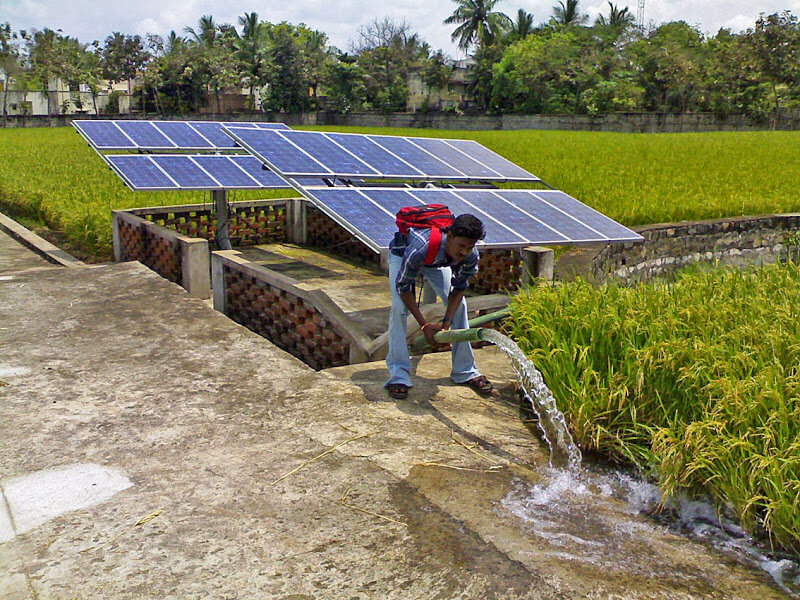
    A shift to renewable energy in rural areas will no doubt have a positive impact on the health and well-being of the population. It will also improve the standard of living and in most cases, the productivity of the people. But the change has to be a gradual process. Even if renewable energy and electricity are affordable and accessible to the people, alternative cooking fuels and technology will take time to be accepted in practice as they may not have the same performance quality as traditional stoves and appliances that the people are used to. To overcome this hurdle, the government must ensure that the policies formed will guide the adjustment to renewables for many years to come. Moreover, the government must spread knowledge and awareness about the benefits of shifting to appliances that are sourced through renewable sources of energy. Besides, some rural households collect firewood for not just individual consumption but also to sell it (IEA 2017). This is a source of income for these households hence, the government should tread carefully when they implement programs that seek to reduce the collection and use of firewood. For years now, the government has promoted and subsidised the use of LPG within rural communities, as an alternative for other harmful sources of energy. While it has helped improve people’s health to some extent, it would be beneficial for the government to gradually nudge the decrease in the use of LPG and increase the use of renewable alternatives. Apart from the definite benefits to the environment, such a change would serve to reduce the rural-urban energy gap in India.

    The shift to renewable energy sources holds huge amounts of risks and uncertainty. But, despite this, there is a need to make long-term, accurate forecasts of energy demand and develop drafts of policies beforehand that would guide the process of supplying energy to satisfy the demand. Energy supply projects necessitate this because they have long gestation and implementation periods. With the climate crisis advancing rapidly, it would serve the government well to be prepared.

    International Collaboration

     International cooperation can play a crucial role in expanding the distribution of renewables. It can help countries benefit from shared infrastructure, technology, and lessons. The challenge thus lies in designing policies that will facilitate this technology and infrastructure transfer, especially in countries where the renewable energy sector is emerging. International organizations such as the Commission on Science and Technology for Development can play an important role in supporting such collaborations. Policies should also facilitate mechanisms that will help improve the current capabilities in developing countries.

    For instance, the Indo-German Energy Programme – Access to Energy in Rural Areas was signed to create a favourable environment for rural renewable energy enterprises so that they can provide easily accessible energy services to the rural population.

    The bilateral collaboration brought in local and international professional expertise to support private sector development, to identify and improve viable sources of finance, and to help design government schemes to achieve sustainable energy security and provide clean cooking energy solutions to the rural population. The GIZ – the German Corporation for International Cooperation – worked closely with India’s Ministry of New and Renewable Energy (MNRE) to successfully implement the program. The program succeeded in training more than 10,000 professionals to qualify as energy auditors. It has also helped increase private sector investment and develop a calculation to determine the CO2 emissions for the Indian electricity supply grid.

    Way Forward

     Research and innovation are essential to improve renewable options for producing clean cooking fuel. There is also a need for location-based research to produce appropriate workable technologies. Long-term policies and outcomes are important to consider. So, conducting significant research will not only help understand the present conditions but will also help policymakers make informed decisions in the future. It is also important to educate and communicate to the rural population about the relative advantages of using modern energy sources over traditional sources. For instance, consumers may be unaware of the health impacts of using traditional sources of energy for cooking. Moreover, they may distrust conventional alternatives due to their unfamiliarity with them. Thus, the responsibility falls on the government to properly inform them of the need for the shift to renewables and curb the spread of misinformation.
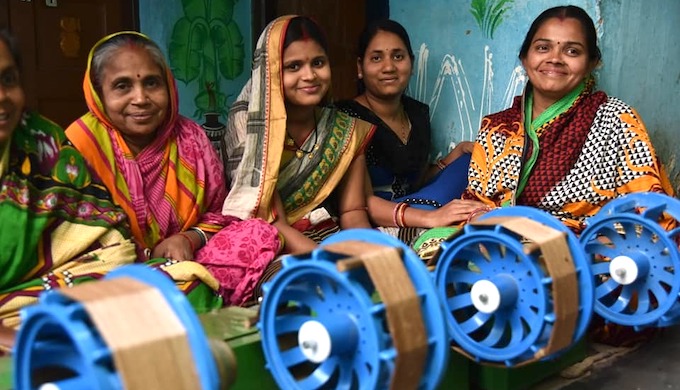
    Further, alternative solutions will only succeed if they are established in cooperation with the local users. “The women in rural areas play an important role when it comes to energy transition” (IEA 2017). Several initiatives such as the Global Alliance for Clean Cookstoves, SEforALL, and ECOWAS address the joint issues of gender empowerment, energy poverty, health, and climate (IEA 2017). Training and capacity building are key to the shift to renewable sources of power. And in rural energy applications, this can be improved by taking into account the gender issues that plague society. There is a high possibility that rural engineers, once trained, might migrate to urban areas in search of more lucrative work. In response to this, the Barefoot College International Solar Training Programme takes a different approach to capacity-building in rural areas and trains the grandmothers in villages who are more certain to stay and help develop the community.

    a shift to clean energy in rural areas that houses the section of the population that lives below the poverty line will be more successful if it is seen as a strategy to broaden community development.

    Thus, a shift to clean energy in rural areas that houses the section of the population that lives below the poverty line will be more successful if it is seen as a strategy to broaden community development. This includes higher employment, better infrastructure, roads, and telecommunications.  This process requires careful design of policies and the establishment of a supportive environment that includes not just innovative business models but also maintenance systems that will sustain the development in the long run.

    Conclusion

     To summarize, rural electrification and the transition to renewable energy in rural areas have been a part of the government’s agenda for many years now, irrespective of the ruling party at the centre. Necessary policies have been introduced to guide the process. While it is great that the government recently achieved universal electrification, it remains to be seen whether the quality of power provided to these villages meets the needs of the population. Further, in this process, state-owned discoms have taken a serious financial hit and it is a tough road to recovery from here. Adding on, the COVID pandemic has slowed down the development and recovery of these discoms. The government should first increase budget outlays in the following years and create a system to monitor the use of these finances. Second, it could turn to privatisation. Privatising discoms on a larger scale would reduce the financial and risk burden on the government and ensure efficient functioning of the companies. Additionally, it is important that while policies are being designed, the deciding parties have a complete understanding of the socio-economic situation of the communities within which they will make changes. To do this, experts who have studied the layout of these rural areas extensively should be involved in the process, along with leaders from the respective districts who are bound to be more aware of the situation and the problems in their areas. More importantly, the government should keep the process of the transition to alternative energy sources transparent and keep an open line of communication with the rural population to earn their trust before they make significant changes. Finally, India is one of the largest consumers of different renewable sources of energy. While it is important to make changes to the policies in this sector, it is also imperative that the government tries to maintain stability in policies that support the companies which help satisfy the growing energy demand in the country.


    References

    1. Bhaskar, Utpal. 2019. “All villages electrified, but last-mile supply a challenge.” mint, December 29, 2019. https://www.livemint.com/industry/energy/all-villages-electrified-but-last-mile-supply-a-challenge-11577642738875.html.
    2. Comello, Stephen D., Stefan J. Reichelstein, Anshuman Sahoo, and Tobias S. Schmidt. 2016. “Enabling Mini-grid Development in Rural India.” Stanford University. https://law.stanford.edu/wp-content/uploads/2016/04/IndiaMinigrid_Working_Paper2.pdf
    3. Economic Times. 2021. “Discom debt at Rs 6 trillion; negative outlook on power distribution: ICRA.” The Economic Times. https://economictimes.indiatimes.com/industry/energy/power/discom-debt-at-rs-6-trillion-negative-outlook-on-power-distribution-icra/articleshow/81431574.cms?from=mdr.
    4. Gill, Bigsna, Astha Gupta, and Debajit Palit. 2019. “Rural Electrification: Impact on Distribution Companies in India.” The Energy and Resources Institute. https://www.teriin.org/sites/default/files/2019-02/DUF%20Report.pdf.
    5. IEA. 2017. “Energy Access Outlook: From Poverty to Prosperity.” International Energy Agency. https://www.iea.org/reports/energy-access-outlook-2017.
    6. UNCTAD. 2019. “The Role of Science, Technology and Innovation in Promoting Renewable Energy by 2030.” United Nations Conference on Trade and Development. https://unctad.org/system/files/official-document/dtlstict2019d2_en.pdf.

    Feature Image: The Better India 

    Image 1: www.alliancemagazine.org

    Image 2: indiaclimatedialogue.net
  • Retrofit Winglets for Wind Turbines

    Retrofit Winglets for Wind Turbines

    Retrofit Winglets for Wind Turbines

    Vijay Matheswaran1 and L Scott Miller2
    Wichita State University, Wichita, KS 67260
    Patrick J Moriarty3
    National Renewable Energy Laboratory, Golden, CO 80401

    The benefits of using winglets on wind turbines has been well documented. However, adding winglets to wind turbine blades leads to significant increases in blade root bending moments, requiring expensive structural reinforcement with cost and weight drawbacks. A unique design philosophy for retrofitting winglets on existing wind turbines is presented. These retrofit winglets offer an increase in power produced without the need for structural reinforcement. Predicted performance and cost benefits are illustrated via a study using the NREL 5MW reference wind turbine. The addition of winglets resulted in a 2.45% increase in Coefficient of Power (Cp) and 1.69% increase in Annual Energy Production (AEP).

    Nomenclature

    Cp = coefficient of power

    V¥ = freestream velocity

    𝑟i = blade section radius

    𝜃t = blade section twist

    𝐼$ = Initial Cost per year

    𝑀$ = Annual Operating Expense

    Et = Annual Energy Output

    I. Introduction

    The idea of winglets on wind turbines is one that has been periodically explored in the past few decades. The earliest studies incorporating blade tip devices on wind turbines were done by Gyatt and Lissamann1. Drawing from advanced tip shapes that were being applied to fixed wing aircraft to reduce drag, the authors tested four tip designs on a 25kW Carter Wind Turbine in San Gorgonio Pass, California. Further studies were carried out in subsequent decades. Van Bussel2 developed a simple momentum theory for blade winglet configurations. Imamura et al.3 analyzed the effects on winglets on wind turbines using a free-wake vortex lattice method. Guanna and Johansen4 developed a free wake lifting line model to compute the effects of winglets, comparing it with CFD results obtained using EllipSys3D. Johansen and Sorenson5 did further studies on increasing power coefficient with the use of winglets, showing that adding winglets definitely changes the downwash distribution, leading to an increase in the power produced by a wind turbine.

    While the benefit of adding winglets has been well documented, there are drawbacks to adopting the traditional method of doing so. The addition of large, heavy winglets to maximize aerodynamic benefit leads to significant increases in root bending moments. Imamura et al.6 analyzed the effects of winglets on wind turbine blades using a free-wake vortex lattice method. Their study showed that a winglet at an 80°cant angle and height of 10% of the rotor radius resulted in a 10% increase in the blade root flapwise bending moment. This situation may require blade structural reinforcement, making winglets an expensive and often infeasible proposition. In order to address this, a novel design philosophy has been developed, allowing the use of retrofit winglets that offer an increase in power produced, but without the need to structurally reinforce the blade. This paper outlines the design philosophy, tools

    used and results from initial simulations.

    II. Design Philosophy for Retrofit Winglets

    The key differentiator between this study and prio winglet studies is the design philosophy: designing a lightweight winglet at minimum cost that, while providing an improvement in the turbine’s Coefficient of Power (Cp), does not require blade structural reinforcement. Such a winglet does not seek to maximize Cp, but rather minimize blade bending moments with an acceptable increase in Cp. This is accomplished by balancing the centrifugal force and aerodynamic normal force generated by the winglet. Balancing forces minimizes increases in blade root bending moment, negating the need for an exceptionally strong winglet and allowing it to be light, and requiring noreinforcement of the main blade. Savings in weight are strongly related to cost, so a lighter winglet implies a cheaper, more cost effective one. Accordingly, the best winglet is not one that offers the maximum increase in Cp, but rather offers an increase in Cp while ensuring forces are balanced within a threshold. Figure 1 presents a freebody diagram of the retrofit winglet. A qualitative plot highlighting the design philosophy and the optimal design space is presented in Figure 2. To be able to guage the effects of winglets developed using the mentioned design philosophy, it was decided to use the NREL 5MW wind turbine7 as a reference turbine, and implement a vortex lattice method and cost function to evaluate aerodynamic efficacy and feasibility. The NREL 5MW reference wind turbine is a conceptual three-bladed upwind turbine that was primarily designed to support concept studies. It is heavily based on the Repower 5MW wind turbine; however, in cases where detailed information is not available, data from publicly available conceptual studies is used.

    1 PhD Candidate, Department of Aerospace Engineering, AIAA Student Member

    2Professor and Chair, Department of Aerospace Engineering, AIAA Associate Fellow

    3Team Lead, Wind Plant Aerodynamics, AIAA Member


    Click here for access to the Paper

  • Vietnam: Economic Prospects in Post Second Wave Covid-19

    Vietnam: Economic Prospects in Post Second Wave Covid-19

    The global community is into the ninth month of the COVID-19 pandemic and international efforts to develop a vaccine are at advanced stages.  Meanwhile in Russia over 250 Moscow residents received a dose of Sputnik V[i] and the Chinese Center for Disease Control and Prevention (CDC) has announced that the vaccine will be ready by November this year.[ii]Similarly, many American, British, European, and Indian companies are developing the vaccine which is at different levels of trials.  While the above progress is very encouraging, the global COVID-19 infections continue to rise and as on 13 October, according to the World Health Organisation (WHO), the total confirmed cases of COVID-19 were 37,601,848 people including 1,077,799 deaths.[iii] The top four countries with the highest infections were the US, India, Brazil and Russia.

    Vietnam’s COVID response since 23 January 2020, when the first case was detected, has been noteworthy. It successfully contained the spread of the virus by instituting local quarantine measures in early stages, declaring a state of emergency in February, and banning flights to and from China. For the next two months, Vietnam maintained strict COVID related measures including national lockdown and it was only in late April that some restrictions were removed in localities if they had contained the virus; but non-essential public services remained suspended. The opening up continued slowly with the resumption of flights to select destinations and cross-border travel restrictions were lifted. Meanwhile, Vietnam registered to buy a Russian Covid-19 vaccine as also developing vaccine on its own.

    In August, the second largest COVID-19 outbreak (after Danang) was reported in Quang Nam Province. The ‘second wave’ has now been successfully controlled.

    However, in July, Danang, a tourist hotspot, reported several new cases and a massive evacuation of nearly 80,000 tourists was undertaken. In August, the second largest COVID-19 outbreak (after Danang) was reported in Quang Nam Province. The ‘second wave’ has now been successfully controlled. As of 15 September, in Vietnam (total population 95,540,000) there were 1063 cases; 35 deaths; 261,004 tests had been conducted, and 11cases per million was recorded.[iv]

    Vietnam’s economic outlook in the ‘post-COVID Second Wave’ is a mixed bag of opportunities and challenges. There are at least four issues which merit attention. First, the Vietnamese economy, like any other global economies, suffered due to the pandemic. The 2020 first-half growth was about 1.8% compared with 7% in 2019 (year-on-year), but the Vietnamese economy has shown enormous resilience when compared with major global economies who have recorded negative growth. This is due to the proficient handling of the pandemic and the country is now on a quick and steady recovery path. The HSBC has revised Vietnam’s 2020 growth forecast from 1.6% to 3.0%.[v]

    It is also important to mention that the Vietnamese government has offered attractive incentives to multinational investors to help them “move up the value chain” and build supply chains in the country.

    Second, there are clear signs that Vietnam continues to be an attractive destination for foreign investments. This trend is not only due to global conglomerates moving out of China and seeking new destinations with attractive options for setting up of their businesses, but Vietnamese handing of the pandemic has provided them enormous business confidence in the country. According to the Ministry of Planning and Investment, total foreign investment in the first half was worth US$18.47 billion.[vi] Japanese (Panasonic), South Korean (LG Electronics), US (Foxconn; Apple) and the European (Heineken) companies moved to Vietnam. It is also important to mention that the Vietnamese government has offered attractive incentives to multinational investors to help them “move up the value chain” and build supply chains in the country.

    Third, is about renewable energy. Vietnam’s current energy generation mix is skewed towards coal (18,516 MW) and hydrocarbons (8,978 MW). Notwithstanding the COVID-19, the country’s average electricity consumption per day during the first few months of 2020 was 615 million KWh, an increase of 7.5 per cent compared with 2019.[vii] It is estimated that “Vietnam’s energy demand will increase by over 10 per cent by the end of 2020, followed by an eight per cent growth per year in 2021 to 2030.” The “government wants to reduce its greenhouse gas emissions by eight per cent by 2030” for which investments in renewable sources of energy such as solar and wind would have to be made,

    Fourth, is about immersion in Industry 4.0 technologies. There are now clear trends of widespread digital transformation across the globe and is impacting every aspect of the industry from commercial operations, technology management, use in fintech to support banking and financial services, new business models through analytics, and human resource management.  These technologies can potentially boost productivity and improve Vietnam’s GDP. For that innovative national policies for growth are needed. Also, the human resource would require ‘up-skilling, reskilling and retooling’ to embrace these technologies.  The industry leaders too have to recognize the importance of educating themselves and using new technologies as also adopting innovative models for their operations.

    Vietnam should build upon its successes of handling the COVID-19 pandemic and ‘build back better’ by offering long-term stimulus for investments and accord high priority to zero-carbon technologies to spur inclusive and resilient growth.

    Finally, Vietnam should build upon its successes of handling the COVID-19 pandemic and ‘build back better’ by offering long-term stimulus for investments and accord high priority to zero-carbon technologies to spur inclusive and resilient growth. It must adopt strategies for investments in technologies, products and services as also create new jobs tailored for Industry 4.0.


    Notes

    [i] “Russia Covid-19 vaccine: Over 250 people in Moscow get inoculated, says report”, https://www.livemint.com/news/world/russia-covid-19-vaccine-over-250-people-in-moscow-get-inoculated-says-report-11600085464168.html  (accessed 16 September 2020).
    [ii] “China coronavirus vaccine may be ready for public in November: Official”, https://www.hindustantimes.com/world-news/china-coronavirus-vaccine-may-be-ready-for-public-in-november-official/story-1DzVCBrdOwleJXxuw0wvyI.html  (accessed 16 September 2020).
    [iii] “WHO Coronavirus Disease (COVID-19) Dashboard”, https://covid19.who.int/?gclid=CjwKCAjwzIH7BRAbEiwAoDxxTlG5T6XZYiHVHBesW5cmAa9DKUytaVgH01haDH10TpmFA3OP-2s_phoCk9sQAvD_BwE  (accessed 16 September 2020).
    [iv] “Southeast Asia Covid-19 Tracker”, https://www.csis.org/programs/southeast-asia-program/southeast-asia-covid-19-tracker-0#National%20Responses  (accessed 16 September 2020).
    [v] “Vietnam’s positive growth in Q2 defies market expectations: HSBC”, http://hanoitimes.vn/vietnam-positive-growth-in-q2-defies-market-expectations-hsbc-313035.html  (accessed 16 September 2020).
    [vi] “Vietnam expects imminent new wave of foreign investment”, https://www.nationthailand.com/news/30392781?utm_source=homepage&utm_medium=internal_referral  (accessed 15 September 2020).
    [vii] “Assessing Vietnam’s Economic Prospects for Foreign Investors After COVID-19”, https://www.vietnam-briefing.com/news/assessing-vietnams-economic-prospects-foreign-investors-after-covid-19.html/  (accessed 15 September 2020).

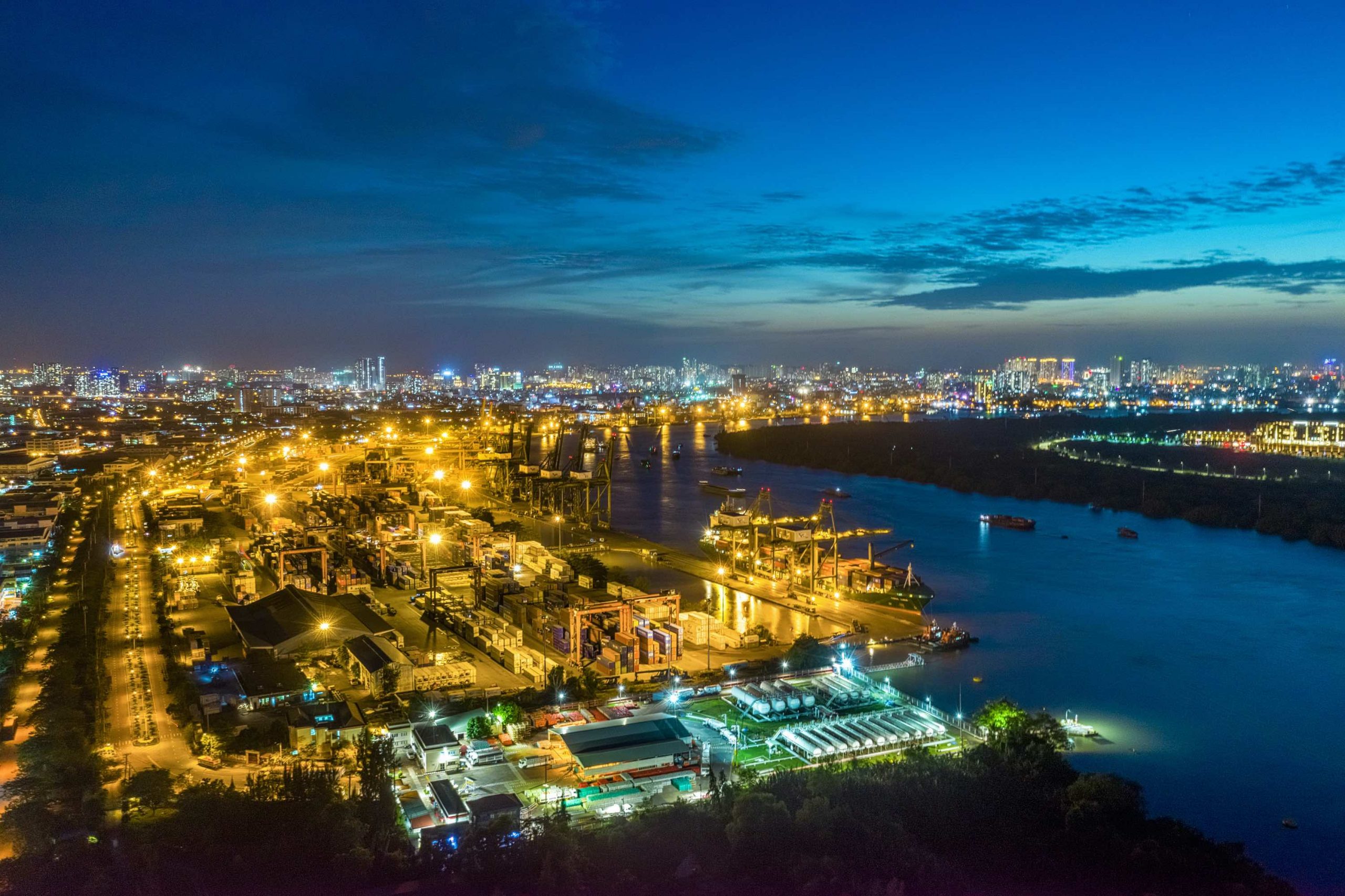
    Image: Ho chi-min City

  • China’s Climate Diplomacy and Energy Security

    China’s Climate Diplomacy and Energy Security

    Sakshi Venkateswaran                                                                                July 14, 2019/Analysis

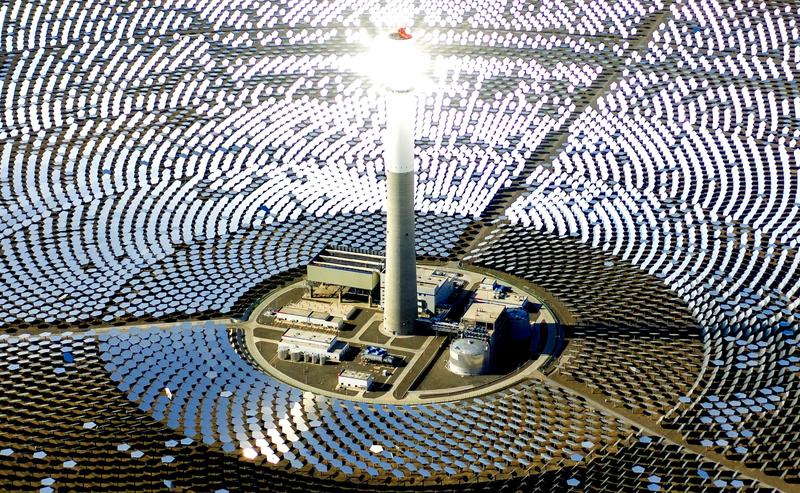
    In the last two years, China has become the leading destination for energy investment. A significant portion of this investment lies in the renewable energy sector of China that has undergone rapid development, accounting for about 45% of global investment(126.6 billion) in 2017. The country overtook Germany in the production of solar panels and solar energy generation in 2014 and in 2015 China’s production of wind energy accounted for one third of global wind energy capacity and needless to say, China has always dominated the market in the production of hydro energy. This has led to widespread speculation of the country being a “renewable energy superpower” following a report by the Global Commission on the Geopolitics of Energy. It has also taken active steps to combat climate change in the form of revamping its energy policies. However, these positive shifts are not without issues. China still remains a net importer of coal and highest emitter of greenhouse gases. This article attempts to understand China’s climate change diplomacy against the backdrop of its energy security concerns and if there is any truth to China becoming a renewable energy superpower.

    The 2018 UN Intergovernmental Panel on Climate Change (IPCC) report highlighted that there was only 12 years to control global warming temperatures to 1.5 °Cfollowing which even a half degree rise would prove catastrophic in the form of unprecedented floods, droughts and millions being pushed towards poverty.  Even maintaining the 1.5 °C would require a complete overhaul in the energy, transportation, infrastructure and industrial sectors and global carbon emissions would need to reach net zero by 2050. The Paris Climate Accord was instrumentalized with the intention of capping carbon emissions and containing global warming temperatures below 2 °C. Since the Paris Agreement in 2015, perceptions toward climate change has seen massive shifts following extreme weather patterns in several countries. For one, the US has been strong in their intention to withdraw from the Paris Agreement while several others have taken steps to address climate change by decisive shifts in environmental and energy policies. Chief among them has been China’s actions to counter the climate crisis by investing in renewable energy.

    With a population of more than 1.4 billion and a boom in growth since the 2000s, China has been experiencing rising living standards and industrialization. As a consequence, China’s energy consumption has seen a surge as well. Historically, China’s major sources of energy have been its vast domestic coal reserves and imports of crude oil and natural gas from Russia and Middle East. This has resulted in China competing with the US for the position of being the largest emitter of carbon dioxide. In acknowledgment of this, the Chinese have been the first to invest billions in renewable energy.

    China’s Energy Landscape

    China’s investment in renewable energy began as early as 1949 with the construction of the world’s largest hydroelectric plant, the Three Gorges Dam over the Yangtze River. The reason the Chinese shifted towards hydroelectric energy was the rising dependency on imports and harmful effects to the environment due to the usage of coal. Prior to the Sino-Soviet split in 1960, China had been importing close to 50% of its oil from the Soviet Union. However, a combination of losing the Soviet’s support, economic collapse and a shift from being a net exporter of oil to being a net importer in 1993 accelerated China’s desire for energy self-sufficiency. Since the 2000s the country’s oil and natural gas imports from Russia and Middle East have exhibited a dramatic increase. In 2016 China’s imports of crude oil reached a record high of 68%while natural gas imports hit 33% in 2017.

    Concern regarding the emission of greenhouse gases and inefficient use of coal for power generation prompted a shift in the subsequent energy policies that China released. The Chinese established several economic and technological policies to promote energy conservation. An energy saving branch consisting of a three-tier system was set up within the central and local governments and enterprises in the 1980s. Under the 1988 Energy Conservation Law numerous policies were implemented beginning with the ‘Energy Conservation Propaganda Week’ in an attempt to increase energy efficiency and energy conservation. The government also began providing loans and tax incentives to entrepreneurs who developed small hydropower and wind power plants.

    Even the 13th Five Year Plan by the Energy Bureau of China revealed its plans to restrict coal to 58%of its energy mix by 2020 as opposed to previous levels of more than 60%. The country’s shift to renewable energy has garnered itself the title of being the world’s renewable energy superpower”; a title that has increasingly found its way into academic and policy circles.

    China’s Climate Diplomacy

    Climate change or rather, the climate crisis has metaphorically lit a fire under the member states signed on to the Paris Agreement to combat the greatest threat posed to mankind. Germany has rallied several EU member states to achieve “climate neutrality” by 2050 with net zero carbon emissions. Amidst mounting public pressure and weekly climate protests by students (Fridays for Future), several governments have convened in Bonnin Germany from June 17th to 27th of this year for a climate summit to address the carbon emissions. China has been proactive in that regard; having already shifted to electric vehicles and invested in technologies of carbon capture and storage among other initiatives. China’s share of electricity generation from renewable energy accounted for 26.4%in 2017. The country has also made large investments in the power sector in Africa, specifically for electricity generation in the last 20 years. They contributed up to 30% of capacities of which 56%of the total capacity comprised of renewable sources in 2016.

    Given these numbers regarding renewable energy and its position on climate change, it might be reasonable to speculate that China’s behavior in the international system — its dispute over the South China Sea (SCS) with the Southeast Asian countries, challenging the established status quo of the US as a superpower, the Belt and Road Initiative (BRI) and increasing energy diversification in Russia, Central Asia, Latin America and Africa — is an attempt at addressing its current energy insecurity.

    China claims the entirety of the SCS on the basis of historicity, what they refer to as the nine dash line; a claim that is contested by several countries in Southeast Asia. According to reports by the World Bank the SCS has proven reserves of natural gas and oil. China’s rising energy security concerns over the Malacca Strait, Strait of Lombok, Sunda and Ombai Weitar and the Persian Gulf compound its behavior regarding the SCS as more than 50% of China’s trade travels these waters. Another issue that arises is US’s presence and influence it wields in the region.

    In the last 10 years China’s imports of crude oil from the Middle East has been on the decline. Russia, Angola, Brazil and Venezuela have increasingly taken up a major portion in China’s energy mix (14%, 12%, 5.1% and 4% respectively). The influence that the US wields in the Middle East and the general instability pose a very credible threat to China’s imports. Recently, with the US unilaterally leaving the Iran nuclear deal and the return of sanctions on the country, any state continuing to trade with Iran has been under economic fire from the US (China, India, Turkey etc.). In such a scenario China’s focus on renewable energy would prove an alternative as well as a challenge to the US’s power in the international system. 

    Addressing the climate crisis has been on the agenda of energy policies of several countries. That China has taken a massive step towards that end impacts US’s credibility on that front. The Trump administration has made their position on climate change explicitly clear with their decision to withdraw from the Paris Climate Accord. China’s renewable energy generation will damage US’s optics. Barring this, investment in renewable energy could have an effect on the economies of oil rich countries in the Middle East. China’s ambitions to challenge the existing global order by strengthening their military and economy depend upon its strategies to combat their energy insecurity. Hence, the strategic value in investing in renewable energy.

    However, China’s energy shifts do not come without its own set of logistical issues. In spite of leading most of the world in the production of wind, solar and hydro energy, the percent of these in domestic electricity generation remains low. Only 19.2%, 3.8% and 1.2% of hydro, wind and solar power was utilized for domestic electricity generation in spite of a net installed capacity of 344 GW, 148.6 GW and 77.5 GW respectively in 2016. Though there has been incremental rises in these numbers, China still has a long way to go before attaining energy self-sufficiency. China still relies on heavy imports of coal from its neighbours such as Australia, Mongolia, Indonesia and Russia. The country’s usage of coal rose by 1% in 2018 though its share in the energy mix decreased to 59%, a 1.4% decrease from 2017.

    Conclusion

    The blame and burden for finding a solution to the climate crisis cannot solely rest on the shoulders of developing economies contrary to frequent statements made by the US President who blames Russia, China and India for climate change while ignoring the US’s emission of greenhouse gases. The bottom line is that the US and most of the West had almost 200 years to industrialize and develop their economies. Countries such as India and China have only experienced industrialization and a developing economy in the last 50 or so years. In such a situation, the scale to measure with whom the blame for climate change lays is skewed. Specifically in the case of China, a burgeoning population drove the need for rapid growth. Therefore, it is still a commendable fact that China has been environmentally conscious in the development of its economy. It remains one of the few countries on track to meet the Paris Climate Agreement targets for carbon emissions. 

    All this aside, it is rather premature to refer to China as a “renewable energy superpower” at this point in time. The numbers regarding the use of renewables in domestic electricity generation do not paint a picture of a country poised to change its energy dependency from fossil fuels to renewable energy. China’s goal of becoming a global superpower by 2049 does not just include powering up economically and militarily. Even a developed economy implies growth across the entire country and not just in certain provinces, as is the present situation in China. But it is increasingly becoming evident that any country that reaches their target to combat climate change along with being an economic and military powerhouse stand to become a global influencer and dictate the terms of the international system. If recent developments are any indication, China needs to continue its sustained efforts at decarbonization to attain the influence and recognition it seeks from the international community.

    Sakshi Venkateswaran is a Research Intern at The Peninsula Foundation.

    Image by Skeeze from Pixabay.